




Abstract
Background
Our Victims of Crime Act (VOCA)-funded Trauma Recovery Center (TRC) provides psychosocial and financial support, including home food delivery, to patients who are victims of crime (VOC). The degree to which hospital-based, direct-to-client food delivery to violently injured patients reaches food insecure communities is unknown.
Methods
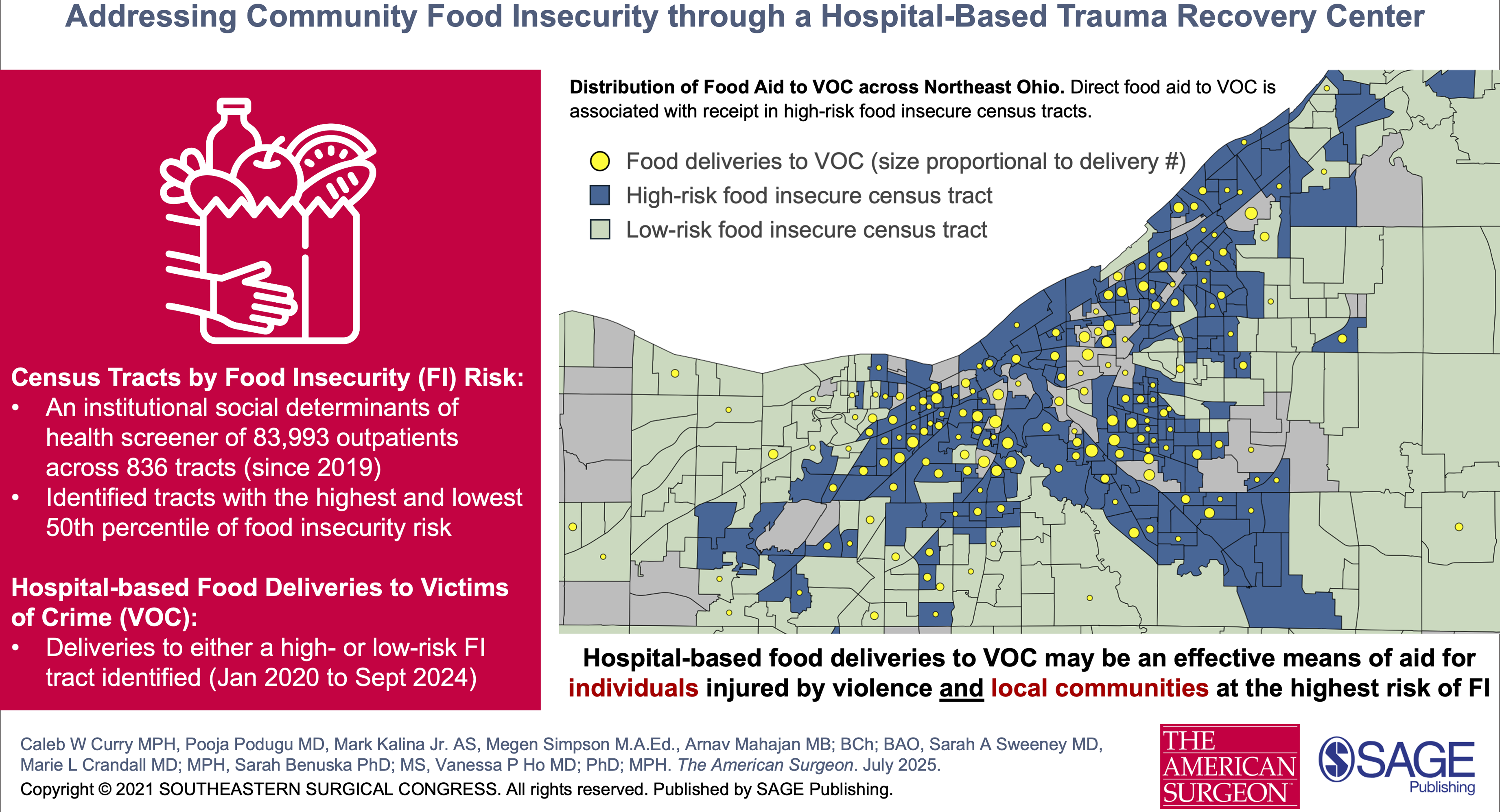
Data from a hospital-administered social needs questionnaire (2020-2024) assessing pediatric and adult outpatients at our urban, safety-net hospital were used to compare rates of patient-reported food insecurity (FI) across 836 regional census tracts. Tracts above the 50th percentile for FI were deemed high-risk food insecure. Direct-to-client food deliveries between 01/2020 and 09/2024 were geolocated to census tracts. Chi-square and geographic information system mapping estimated the association of food deliveries with census tract FI risk.
Results
The prevalence of FI in our outpatient population (15.6%) was greater than the national average (12.8%). 347 deliveries to VOC were made, representing $53,173. A total of 156 census tracts received delivery, of which 122 (78.2%) were high-risk food insecure. Of all 836 regional tracts, significantly more high-risk food insecure tracts received aid than low-risk tracts (29.2% vs 8.1%; P < 0.001). Over 70% of VOC receiving aid screened positive for FI, regardless of tract-level risk.
Discussion
Hospital-based food delivery to violently injured patients reaches high-risk food insecure communities. Such food delivery services may be an effective means of aid for both local communities at the highest risk of FI, as well as individuals at the highest risk of FI regardless of area risk.
Get full access to this article
View all access options for this article.