




Abstract
Background
The aim of this study was to evaluate the effectiveness of a modified reconstruction technique—anchored straight stomach reconstruction—in reducing the incidence of delayed gastric emptying (DGE) after pancreaticoduodenectomy (PD) and its impact on postoperative nutritional recovery.
Methods
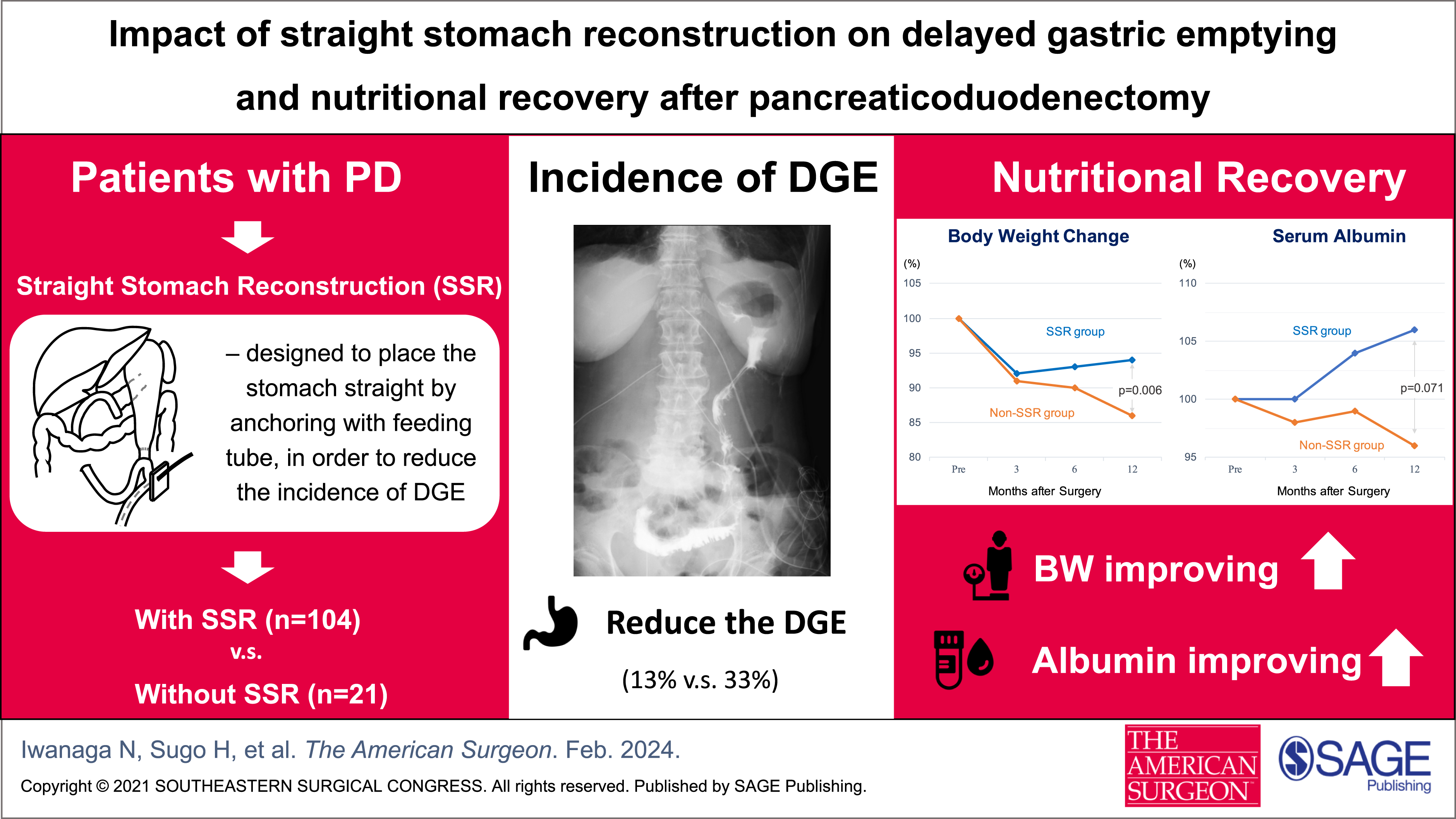
A case series analysis of 125 consecutive PD patients was conducted: 104 of them had undergone anchored straight stomach reconstruction (SSR group) and the remaining 21 without (Non-SSR group). The incidence of DGE and the change in postoperative nutritional status (body weight and serum albumin level during 12 months post-surgery) were compared.
Results
The incidence of DGE in the SSR group (13%) was significantly lower than that in the Non-SSR group (33%) (P = .018); further the significant DGE (grade B or C) was only 5%. Comparison of nutritional status showed that SSR facilitated a prompt recovery of body weight and serum albumin level at 6 months after PD. At 12 months after surgery, body weight gain was significantly better in the SSR group than in the Non-SSR group (P = .006), and albumin level tended to be higher in the SSR group (P = .071).
Conclusion
Straight stomach reconstruction is able to reduce DGE in patients after PD and also improves their postoperative nutritional recovery.
Keywords
Get full access to this article
View all access options for this article.