




Abstract
Background
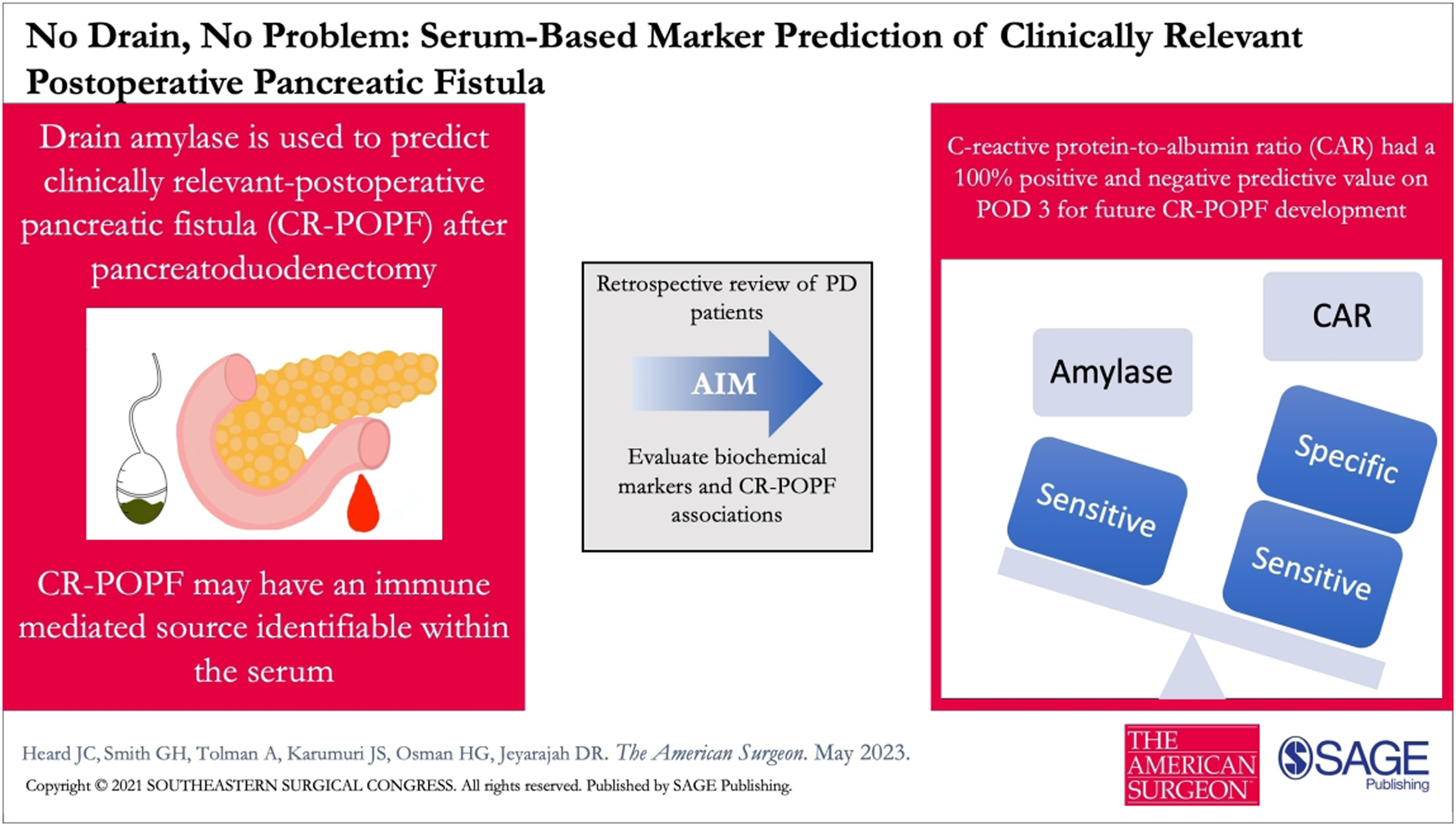
Postoperative day (POD) 1 drain amylase concentration (DAC) is considered the most accurate predictor for the development of a clinically relevant postoperative pancreatic fistula (CR-POPF) after pancreaticoduodenectomy (PD). Recent studies have associated drain placement with negative postoperative outcomes. This study aims to evaluate multiple biochemical markers and their associations with CR-POPF development in order to identify a reliable, non-drain dependent alternative to DAC.
Methods
This is a review of 53 consecutive PD patients between 2021 and 2022. Albumin, C-reactive protein (CRP), C-reactive protein-to-albumin ratio (CAR), DAC, white blood cell count, and procalcitonin values were compared by CR-POPF status. The discriminatory abilities of CAR, CRP, and DAC for CR-POPF were compared using receiver operating characteristic (ROC) curves.
Results
Six of 51 included patients developed a CR-POPF. Receiver operating characteristic curve analysis produced an area under the curve of .977 for POD 1 DAC (cut-off 5131.0 IU/L, sensitivity 100%, specificity 95.5%), .858 for POD 1 CRP (cut-off 52.5 mg/L, sensitivity 100%, specificity 72.7%), and 1.000 for POD 3 CAR (cut-off 99.2, sensitivity and specificity 100%). POD 3 CAR produced a positive and negative predictive value of 100%.
Conclusion
The CAR and CRP provide early and accurate identification of patients with post-PD CR-POPFs. These markers offer a method of safe CR-POPF detection, when the gold standard DAC is unavailable, ultimately allowing for early intervention and patient rescue.
Keywords
Get full access to this article
View all access options for this article.