




Abstract
This historical retrospective details the life and legacy of Dr LaSalle D. Leffall Jr, a leader in the field of surgical oncology, passionate surgical educator, and indelible mentor. His courage,
Dr LaSalle Doheny Leffall Jr was born on May 22, 1930 in Tallahassee, Florida to 2 educators, LaSalle Leffall Sr and Lula Jordan (Figure 1). His father was a professor of agriculture at Florida Agricultural and Mechanical College (FAMU), a historically black college in Tallahassee. His mother, Martha Leffall, was also an educator. Leffall was raised in nearby Quincy, Florida. He graduated as valedictorian from Wallace S. Stevens High School at the age of 15 and matriculated to FAMU, where he graduated summa cum laude, in Biology and English, 3 years later at the age of 18. Dr LaSalle D. Leffall Jr American College of Surgeons photo.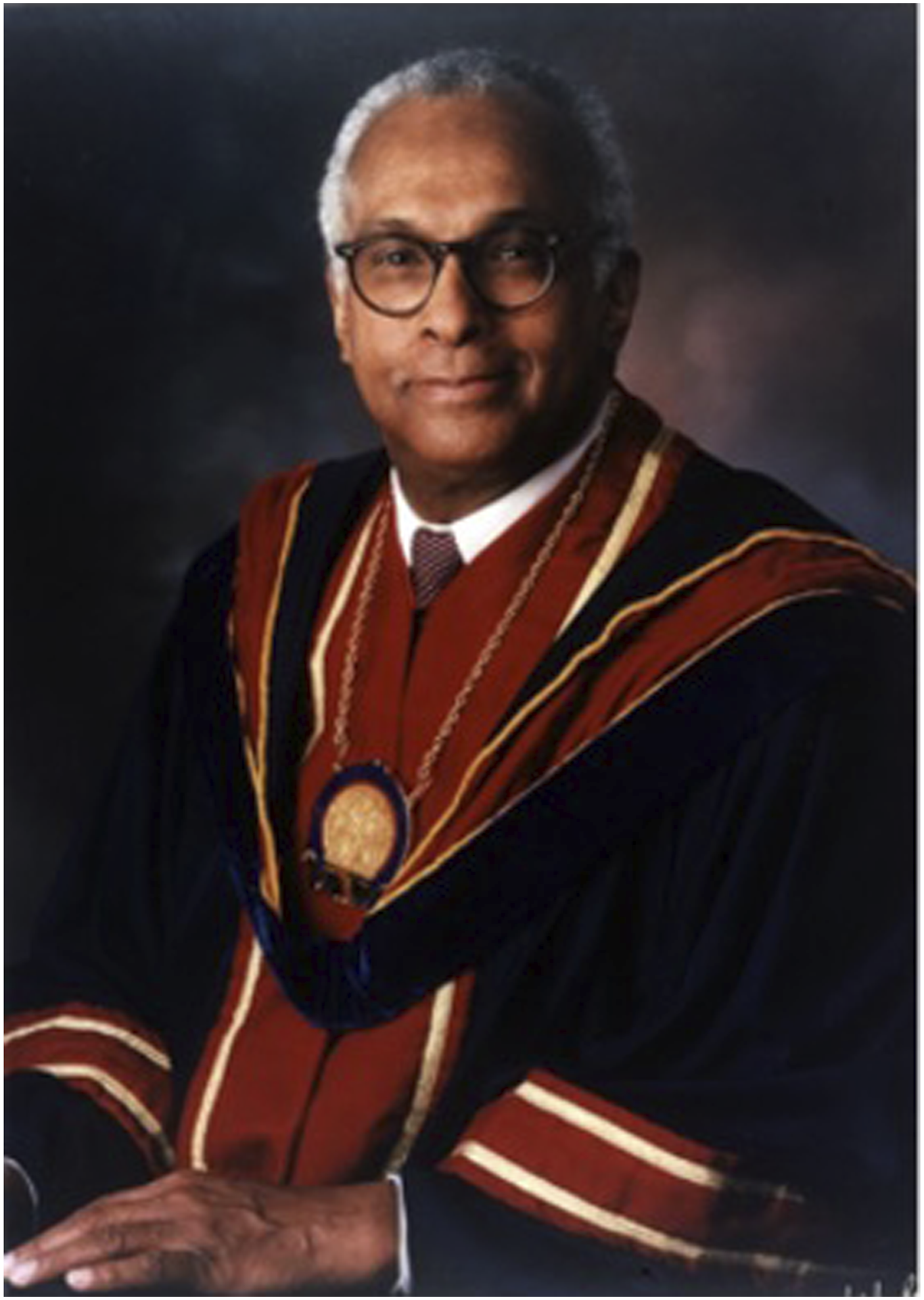
Leffall subsequently applied for admission into medical school but was initially rejected by Howard University College of Medicine. The FAMU President William H. Gray travelled to Howard and personally advocated for Leffall’s admission to the Howard medical school dean. After this remarkable show of support, Leffall was accepted at Howard and graduated first in his class in 1952. During his fourth year at Howard, Leffall met his future wife, Ruth McWilliams. McWilliams would describe her initial impression of Leffall as “...clean-cut, nice, intelligent, exceedingly kind to people and interested in his work.” The couple would marry in 1956 and had 1 son, LaSalle “Donney” Leffall III.
While at Howard, Leffall received academic instruction from prominent African American surgeons including Drs Charles Drew, Jack White, and Burke Syphax. Following his medical school graduation, Leffall interned at Homer G. Phillips Hospital in St. Louis (1953-54) and he returned to Washington D. C to complete his surgical residency at D.C. General Hospital and Freedmen’s Hospital (1954-56). He served as the chief resident at Freedman’s Hospital (1956-57), followed by a fellowship in surgical oncology at Memorial Sloan-Kettering Hospital (1957-59). He was the third African American to do so, following in the footsteps of his mentor Dr White who was the first.
After completion of his surgical oncology fellowship, Leffall entered military service. Before being deployed overseas with the Army Medical Corps, Leffall was assigned to a base in Texas. At 1 point during his service, he and 3 white fellow soldiers went to the movies 1 day; the attendant refused to admit Leffall. Leffall would later reflect that, “Of all the things I have experienced, I think that hurt worse than anything else. Here I am, on my way to help the men and women who are defending our country, and I can’t go to a movie with my colleagues.”
Leffall served as chief of general surgery at the U.S. Army Hospital in Munich, Germany (1960-1961) for 2 years. In 1962, motivated by his love of teaching, he returned to his alma mater and joined the surgical faculty at Howard. In 1970, Leffall succeeded Syphax as Chair of the Department of Surgery at Howard—Leffall would continue to lead the department for the next 25 years. Dr Leffall held true to his passion and love for education and recalled that teaching medical students and residents the principals of surgery and oncology was one of the joys of his vocation.
Dr Leffall dedicated his career in academia to championing the cause of improving the health of the Black community in the United States thorough increasing the focus of oncologic detection and treatment in African Americans.1,2 Leffall went on to become the first Black President of the Society of Surgical Oncologists (1978) and American Cancer Society (1979), where he launched initiatives focusing special attention on racial disparities in cancer treatment (Figure 2). Dr Leffall as a surgical resident at Freedmen’s Hospital.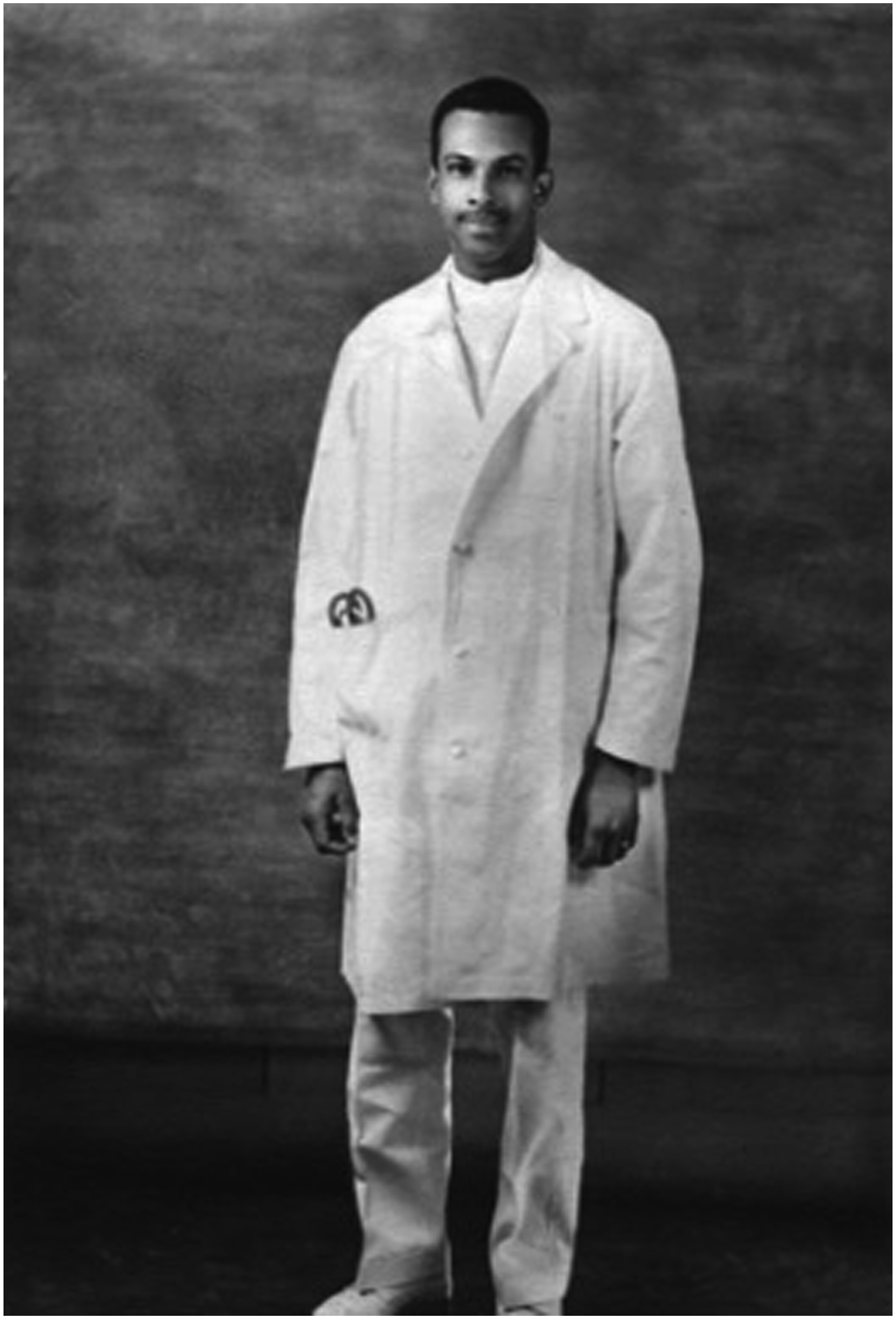
In 1992 he was named the Charles R. Drew Professor in Surgery, becoming the first endowed chair in the history of Howard’s Department of Surgery. 3 Three years later, he was elected the first African American president of the American College of Surgeons (1995). 4 He would later chair the National Dialogue on Cancer (1998), Susan G. Komen Breast Cancer Foundation (2002-07), and the President’s Cancer Panel (2002-11). He was honored with membership in several international surgical organizations, including the Royal College of Surgeons of England, Deutsche Gesellschaft fuer Chirurgie (German Surgical Society), Société Internationale de Chirurgie, the West African College of Surgeons, and the College of Surgeons of South Africa.
In a 1979 interview with the Washington Post, Dr LaSalle Leffall was quoted stating that he “often wondered of the price of courage” 5 after witnessing the public trials of Muhammad Ali, who just years earlier, defiantly abstained from the 1967 draft for the Vietnam War based on his principles of religion and racial equality. 6 At the time of his comments to the Post, Leffall had established a reputation as a giant of surgical oncology. He remarked, “I can’t afford ever to do less than the best. I don't mind being the first, but I don’t want to be the only. But I can’t afford to be second-rate.”
In a time where surgeons were notorious for being impetuous and quick tempered, Dr Leffall was a mild-mannered man known to his junior colleagues for listening, providing insightful and decisive advice and commentary. 7 Dr Wendy Greene, a graduate of both Howard University School of Medicine and its surgical residency, recounted the impact that Leffall had on her surgical career: “I am reminded of him waxing poetically on the importance of the ‘Grace Notes’ of life. These are the notes that add something extra to the daily chords of life and the care we provide to patients. I learned early on those meaningful conversations require a good listening ear for the spoken and unspoken concerns of the patient.” Leffall embodied the very essence of courage, inspiring generations of medical practitioners and patients alike. Yet, the true measure of his valor transcended the personal sacrifices he made, as his unwavering determination and selflessness reshaped the landscape of American surgery, touching the lives of countless individuals afflicted by the scourge of cancer. For Leffall, the ultimate price of courage was not the cost of his own well-being but rather the depth of his commitment to serving his fellow citizens, a legacy that will endure for generations to come.8,9
Footnotes
Declaration of Conflicting Interests
The author(s) declared no potential conflicts of interest with respect to the research, authorship, and/or publication of this article.
Funding
The author(s) received no financial support for the research, authorship, and/or publication of this article.
