




Abstract
Background
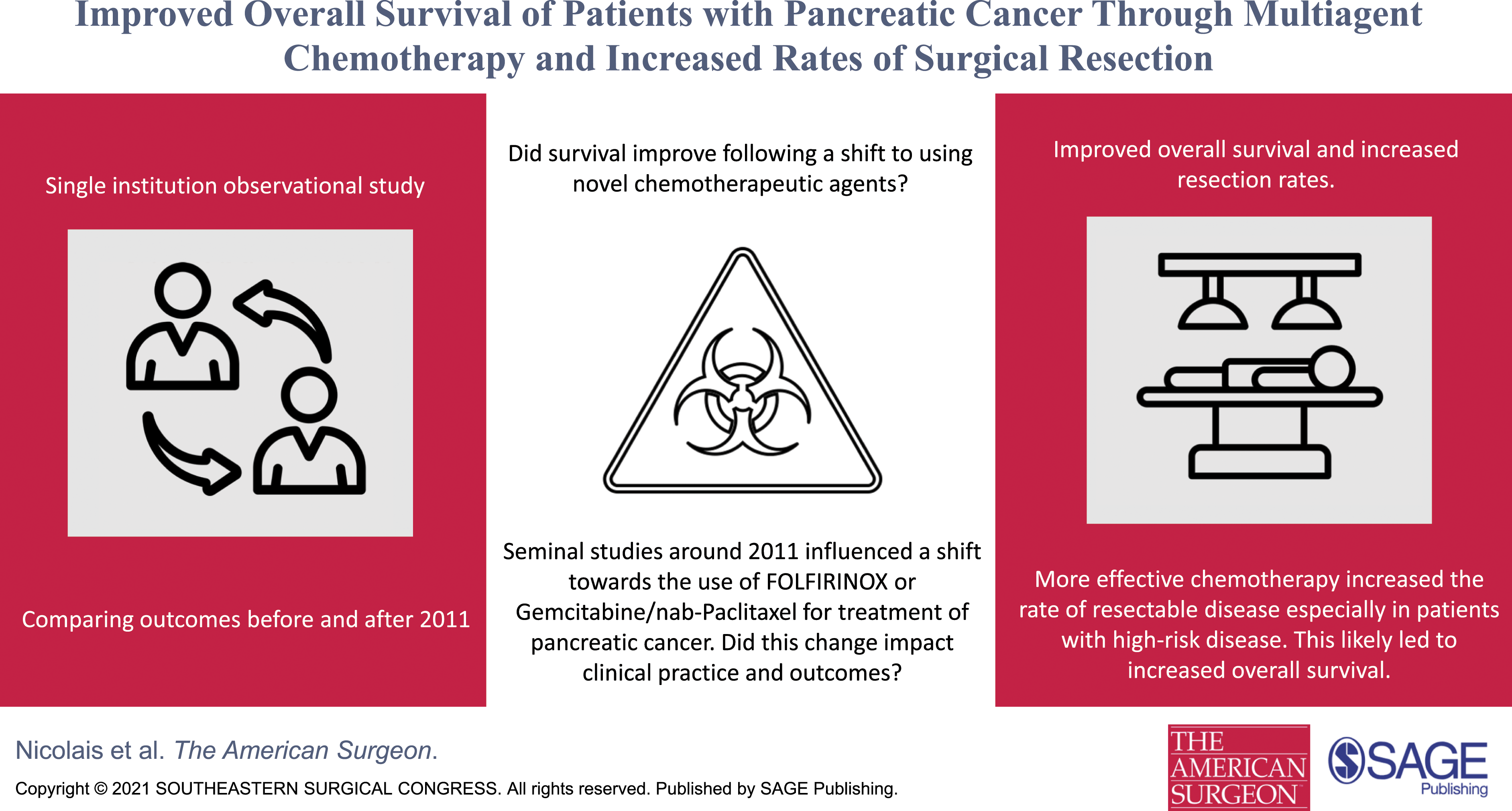
Seminal trials have demonstrated improved survival in pancreatic adenocarcinoma with novel multiagent chemotherapy regimens. To understand the clinical ramifications of this paradigm shift, we reviewed our institutional experience.
Methods
This retrospective cohort study utilized a prospective database at a single institution to study all patients diagnosed with and treated for pancreatic adenocarcinoma between 2000 and 2020.
Results
1,572 patients were included of which 36% were diagnosed before (Era 1) and 64% after (Era 2) 2011. Survival improved in Era 2 (Median survival 10 vs 8 months, HR .79; P < .001). The survival advantage for Era 2 was primarily seen in patients with high-risk disease (12 vs10 months, HR .71; P < .001). A similar trend was noted for patients undergoing surgical resection (26 vs 21 months, HR .80; P = .081) and with imminently resectable tumors (19 vs 15 months, HR .88; P = .4); however, this was not statistically significant. There was no survival advantage for patients with stage IV disease (4 vs 4 months). Patients in Era 2 were more likely to undergo surgery (OR 2.78; CI 2.00-3.92, P < .001). This increase was driven primarily by increased surgical resection for those with high-risk disease (42 vs 20%, OR 3.74; P < .001).
Discussion/Conclusions
This single institutional study showed improved survival after the shift to novel chemotherapy regimens. This was driven by improved survival for patients with high-risk disease and may be due to more effective eradication of microscopic metastatic disease with adjuvant chemotherapy and increased resection rates.
Get full access to this article
View all access options for this article.