




Abstract
Background
The impacts of social stressors on violence during the coronavirus disease 2019 (COVID-19) pandemic are unknown. We hypothesized that firearm purchases and violence would increase surrounding the pandemic. This study determined the impact of COVID-19 and shelter-in-place (SIP) orders on firearm purchases and incidents in the United States (US) and New York State (NYS).
Methods
Scatterplots reflected trends in firearm purchases, incidents, and deaths over a 16-month period (January 2019 to April 2020). Bivariate comparisons of SIP and non-SIP jurisdictions before and after SIP (February 2020 vs. April 2020) and April 2020 vs. April 2019 were performed with the Mann-Whitney U test.
Results
The incidence of COVID-19 in the US increased between February and April 2020 from 24 to 1 067 660 and in NYS from 0 to 304 372. When comparing February to March to April in the US, firearm purchases increased 33.6% then decreased 22.0%, whereas firearm incidents increased 12.2% then again increased by 3.6% and firearm deaths increased 23.8% then decreased in April by 3.8%. In NYS, comparing February to March to April 2020, firearm purchases increased 87.6% then decreased 54.8%, firearm incidents increased 110.1% then decreased 30.8%, and firearm deaths increased 57.1% then again increased by 6.1%. In both SIP and non-SIP jurisdictions, April 2020 firearm purchases, incidents, deaths, and injuries were similar to April 2019 and February 2020 (all P = NS).
Discussion
Coronavirus disease 2019–related stressors may have triggered an increase in firearm purchases nationally and within NYS in March 2020. Firearm incidents also increased in NYS. SIP orders had no effect on firearm purchases and firearm violence.
Introduction
The emergence of severe acute respiratory syndrome coronavirus-2 (SARS-CoV-2), the etiologic agent of coronavirus disease 2019 (COVID-19), has caused substantial dislocation to American society and the health care system, especially in areas most affected such as the northeast United States (US). Since the first documented human-to-human transmission in the US, 1 by the end of April 2020, there were 1.064 million cases and 57 320 deaths reported secondary to COVID-19 in the US.2,3 Approximately 28.5% of US cases occurred within New York State (NYS),4-7 which has been referred to as the American epicenter. 6
Social relationships have been known to affect somatic illness for more than 30 years 8 and pose increased risk of mortality when disrupted. 9 Community containment, 10 whether in the form of social distancing or community quarantine, is among numerous public health responses to mitigate the spread of viral illness during the pandemic that are intended to slow the dissemination, “flatten the curve,” and prevent the US health care system from becoming overwhelmed. 11 Furthermore, mathematical models suggest that some form of community containment may be necessary in the US until 2022. 12 This may have unintended consequences. 13
Potential Stressors During the Coronavirus Disease 2019 Pandemic.
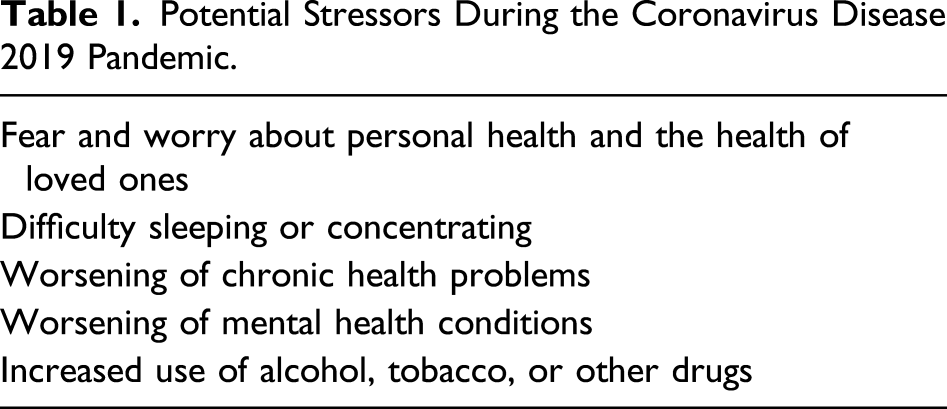
The economic impact of COVID-19 has also been substantial, with the unemployment rate increasing in the US by 10.3 percentage points, the largest increase since January 1948. 20 These stressors can result in a host of psychological and behavioral consequences leading to increased rates of suicide and violence.21-24 The prevalence of suicide has been increasing in the US for decades. Among the 48 344 US suicides in 2018, 24 432 (50.5%) were committed with firearms. 25 Considering (a) that purchase of a firearm is a risk factor for suicidality, (b) that a purported “coping mechanism” or response to economic crisis in the US to COVID-19 may be protective firearm ownership, 26 and (c) that since February 2020, there has been an increase in firearm sales across the US, 27 it is warranted to examine firearm sales and injuries in relation to the pandemic from a public health perspective. Considering further that increased purchasing of firearms may be related to fear and anxiety surrounding the virus, we hypothesized that COVID-19 triggered a sudden increase in firearm purchases as well as an increased rate of firearm violence in the US.
We specifically examined NYS for a possible paradox of increased firearm purchases and violence; in that, the acknowledged “epicenter” has among the most restrictive gun laws in the country. 28 Additionally, we evaluated the effects of shelter-in-place (SIP) orders, which are estimated to have affected 95% of the US population at some point, 29 on firearm purchases and deaths, hypothesizing that there have been increased firearm purchases and deaths in non-SIP jurisdictions in April 2020 compared to a historical control (April 2019) and pre-COVID, pre-SIP February 2020.
Materials and Methods
This study was deemed exempt by the University of California, Irvine Institutional Review Board. Data from January 2019 through April 2020 were analyzed retrospectively. Coronavirus disease 2019 data, including the number of confirmed cases and number of COVID-19-related deaths by state in the US, were obtained from the Johns Hopkins University Center for System Science and Engineering databank. 30
Information on firearm purchases by state was obtained through the Federal Bureau of Investigations Criminal Justice Information Services Web site within the National Instant Criminal Background Check System (NICS) report. 31 Every time a person attempts to purchase a firearm, NICS staff performs a background check on the buyer and records the individual in this system.
Firearm violence data were obtained from the Gun Violence Archive, an independent organization for evidence-based firearms research. 32 Data on firearm incidents (defined as all types of shootings, such as firearm deaths, firearm injuries, accidental shootings, hate crimes, domestic violence, home invasions, and defensive gun use, but excluding real-time data on firearm suicides, and armed robberies with no injuries reported) were also collected. In order to adjust all statewide data per capita, available 2018 US Census Bureau 33 data were collected.
SIP Orders in the US.
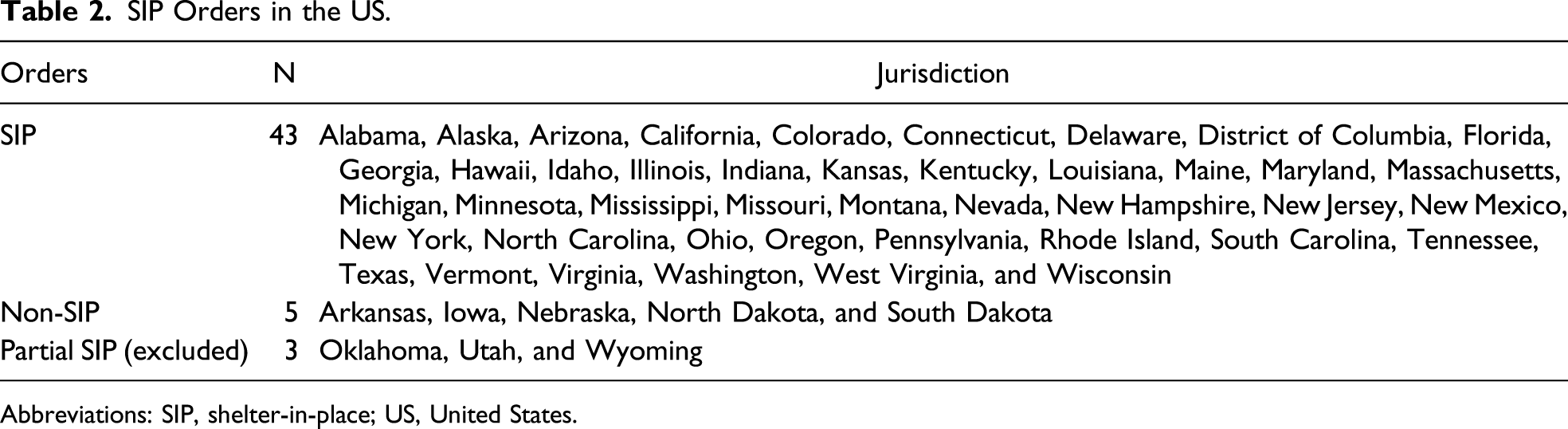
Abbreviations: SIP, shelter-in-place; US, United States.
Statistical Analysis
National and NYS trends (January 2019-April 2020)
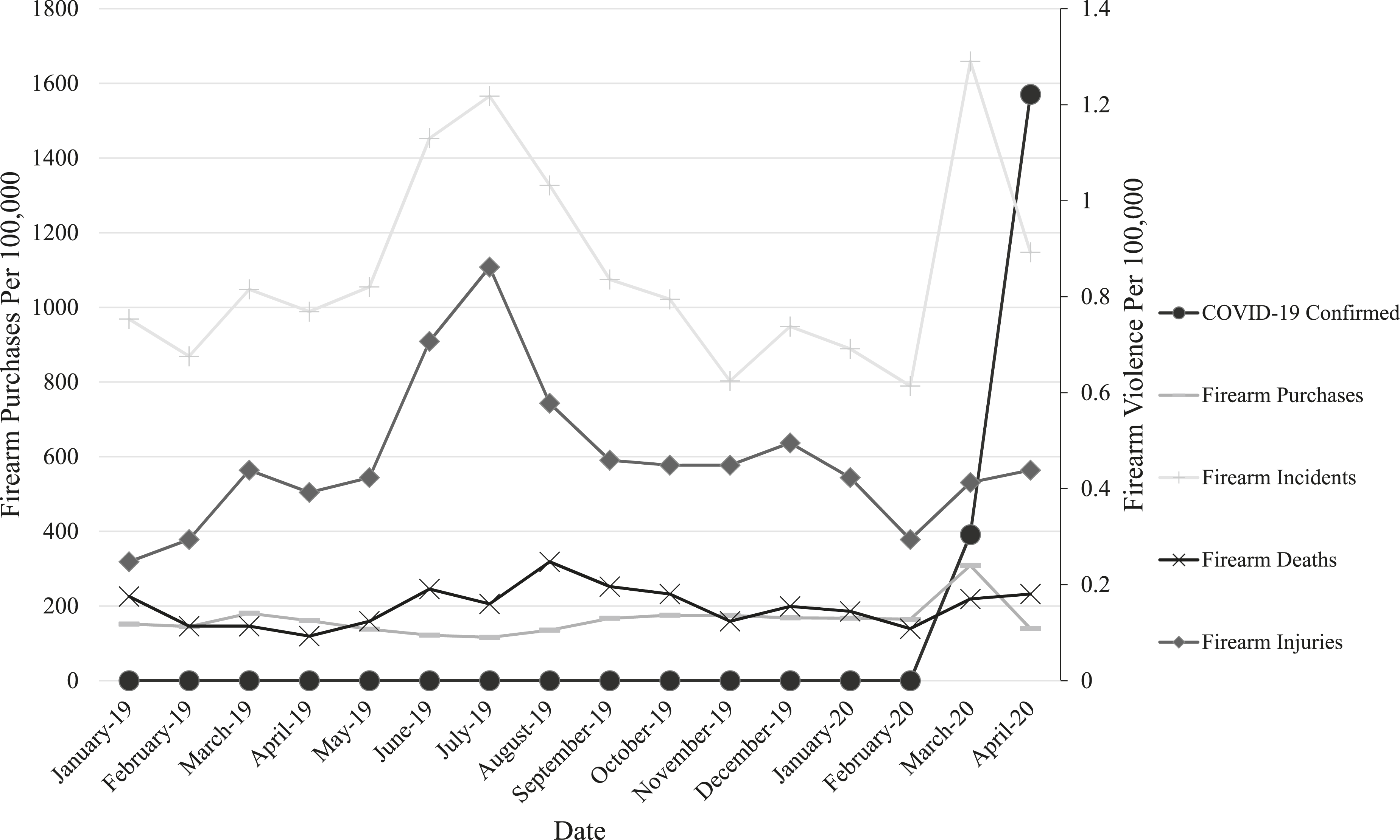
For national data, a scatterplot was created to reflect trends in the total number of firearm purchases as well as firearm incidents, deaths, and injuries over a period of 16 months (January 2019 to April 2020) (Figure 1). NYS data were plotted over the same 16-month period to include rates of COVID-19 confirmed cases, firearm purchases and firearm incidents, deaths, and injuries (Figure 2). National firearm purchases, firearm violence trends, and COVID-19 cases, total. Trends in US national total COVID-19 incidence, firearm purchases and firearm incidents, deaths and injuries from January 2019 to April 2020. New York firearm purchases and firearm violence trends per 100 000. Trends in New York COVID-19 incidence, firearm purchases and firearm incidents, deaths and injuries per 100,000 individuals from January 2019 to April 2020.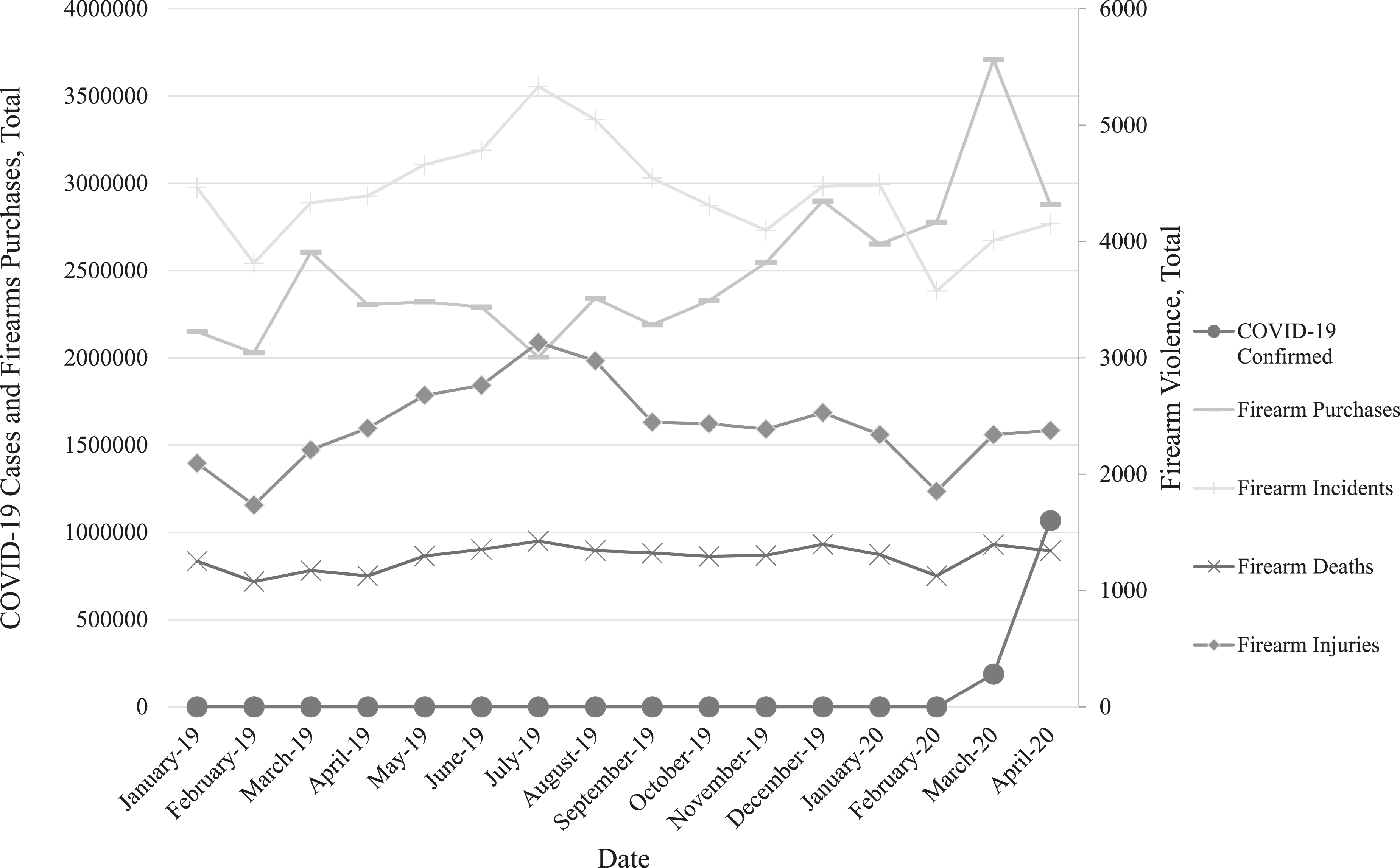
SIP and non-SIP jurisdictions: Firearm purchases and deaths (April 2019 vs. April 2020 and February 2020 vs. April 2020)
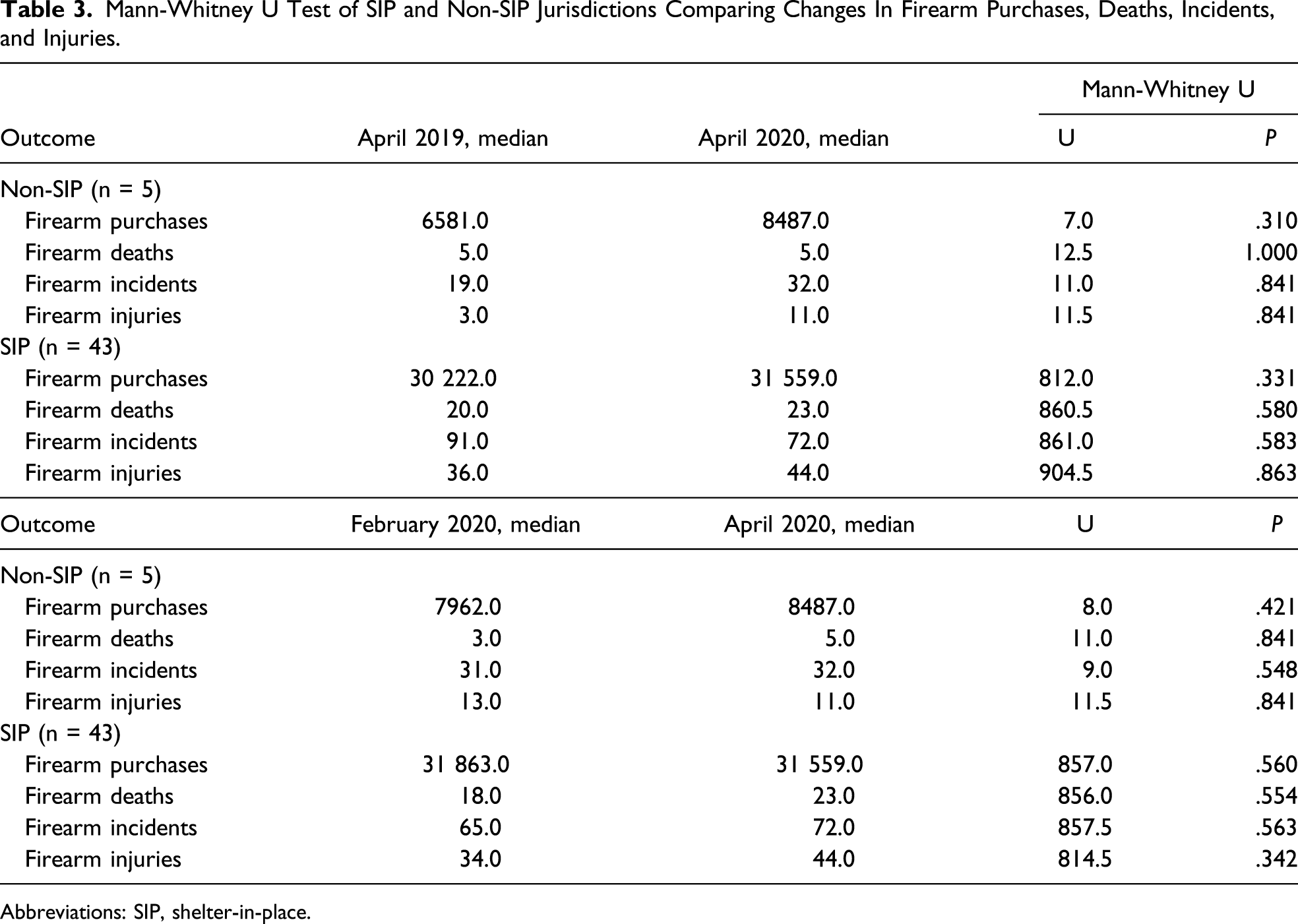
The two-sided Mann-Whitney U test for groupwise comparisons was performed to determine if firearm purchases and firearm incidents, deaths, and injuries differed in non-SIP and SIP states, respectively, between April 2019 (historical control) and April 2020. In addition, a comparison between February 2020 and April 2020 was performed (before and after SIP). Data from March 2020 were excluded as the majority of jurisdictions included in this analysis implemented SIP orders in mid-to-late March. Alpha was set at .05. Statistics were performed on IBM SPSS Statistics for Windows, version 24 (IBM Corp, Armonk, New York).
Results
National Trends
National data covering this time period show that COVID-19 cases increased exponentially between February and April 2020. In February, the US reported 24 confirmed COVID-19 cases. In March, 187 832 cases were documented, whereas in April, 1 067 660 cases were reported.
Firearm purchases across the US also increased dramatically in March 2020. US firearm purchases in February 2020 totaled 2 776 294, which increased to 3 709 356 in March 2020 (+33.6%). Purchases in March 2019 equaled 2 604 770, which increased 42.4% in March 2020. The March 2020 increases in US purchasing were mitigated in part by a decrease of 22.0% in April 2020. Total US firearm incidents also increased from 3575 to 4010 (12.2% increase) and increased further by 3.6% in April 2020. Total firearm deaths increased from 1127 to 1395 (23.8% increase) from February to March 2020 and then decreased to 1342 (−3.8%) in April 2020, while total firearm injuries increased from 1853 to 2340 (+26.3%) and then increased again to 2376 (+1.5%) (Figure 1).
NYS Trends
NYS’s first COVID-19-positive patient was reported on March 2, 2020. By April 30, 2020, the state had 304 372 COVID-19 cases. NYS firearm purchases and firearm violence trends over a 16-month period show peak rates of firearm purchases and firearm incidents in March 2020 (Figure 2). In February 2020, NYS reported purchases of 31 863 firearms (164.4 purchases per 100 000) and in March 2020, 59 787 (308.5 per 100 000) (+87.6%). In April 2020, firearm purchases decreased to 27 035 (139.5 per 100 000) (−54.8%). Firearm purchases in March 2020 were also 70.8% increased from March 2019 (35 004 purchases). From February to March to April 2020, the number of firearm incidents increased from 119 (.6 per 100 000) to 250 (1.3 per 100 000), a 110.1% increase, then dropped to 173 (.9 per 100 000) (−30.8%). Total number of firearm injuries increased from 57 (.30 per 100,000) to 80 (.41 per 100,000), a 40.4% increase, then increased to 85 (.43 per 100 000), a 6.3% increase (Figure 2). The NYS’s number of firearm deaths increased as well, from 21 in February 2020 (.11 per 100 000) to 33 in March 2020 (.17 per 100 000), a 57.1% increase. In April 2020, the number of firearm deaths increased again to 35 (.18 per 100 000), a 6.1% increase.
Non-SIP Jurisdictions: Firearm Purchases, Incidents, Injuries, and Deaths
Mann-Whitney U Test of SIP and Non-SIP Jurisdictions Comparing Changes In Firearm Purchases, Deaths, Incidents, and Injuries.
Abbreviations: SIP, shelter-in-place.
SIP Jurisdictions: Firearm Purchases, Incidents, Injuries, and Deaths
For SIP jurisdictions (n = 43), when comparing April 2019 to April 2020, firearm purchases (medians: 30 222 vs. 31 559, P = .33), deaths (medians: 20 vs. 23, P = .58), and firearm incidents (medians: 91 vs. median: 72, P = .58) were similar. Firearm injuries in April 2019 also were similar to injuries in April 2020 (median: 36 vs. 44, P = .86) (Table 3). When comparing February 2020 to April 2020, firearm purchases (medians: 31 863 vs. 31 559, P = .56), deaths (medians: 18 vs. 23, P = .55), incidents (medians: 65 vs. 72, P = .56), and injuries (median: 34 vs. 44, P = .34) also were similar (Table 3).
Discussion
Whereas the devastating clinical effects of COVID-19 are evident, effects of this pandemic on other factors such as firearm use are unclear. Trends nationally and in NYS reveal a relationship between COVID-19 prevalence and firearm purchases. Around the time that SARS-CoV-2 transmission accelerated, both NYS and national data show markedly increased firearm purchases. Purchases in March 2020 increased in NYS ∼71% and nationally ∼42% compared with March 2019, and in NYS ∼88% and nationally ∼34% compared with February 2020. Purchases declined in NYS and nationally in April 2020 compared with the prior month, but the effects on firearm incidents and deaths were mixed. In addition, firearm purchases, incidents, injuries, and deaths were similar for both SIP and non-SIP jurisdictions whether comparing April 2019 to April 2020 or February 2020 to April 2020, indicating that SIP orders were not impactful on decisions to purchase or discharge firearms.
Although numerous factors could confound an analysis of this type, including not only SIP orders but also local gun laws, local COVID-19 prevalence that varied widely state to state, and historical gun ownership by state, the psychology behind firearm ownership is controversial and debated. Some authors have opined that ownership is rooted in fear34-37 or other forms of distress, such as community containment. 38 The United States surveys collected from 1990s onward show that the most frequent avowed reason for firearm ownership is self-protection. 34 Historically, NYS gun ownership is low. NYS ranked 48/50 in terms of highest firearm ownership/purchasing per 100 000 individuals. 39 In 2020, NYS ranked 4/50 in terms of most strict gun legislation. 28 However, NYS persons purchased firearms avidly during the COVID-19 pandemic, but a surge in March 2020 largely subsided by the following month, whether due to market saturation or subsidence of the trigger for an impulsive purchase.
In addition to the increase in firearm purchases seen in NYS, there was also an apparent increase in firearm incidents in March 2020, despite that around 5% of people decamped during the pandemic.29,40 New York State was under SIP orders only beginning March 22, 2020. That SIP orders had no effect on firearm purchases, incidents, injuries, or deaths may reflect the 3-week period earlier in March wherein people had the option to leave the state, make a purchase, or both.
Possible explanations for the lack of impact of SIP orders on firearm purchases and violence are psychological and economic stress related to COVID-19, including the collapse of US financial markets in response to European contagion beginning the week of February 24, 2020. Economic stress has been associated with potential firearm-related incidents such as robbery41,42 and domestic violence. 43 Using a retrospective database of firearm purchasing after more than 100 mass casualty events involving firearms, Liu et al concluded that gun ownership is influenced by media coverage and perceived incident severity. 44 Stress and anxiety are demonstrated predictors of improper firearm storage, which may portend firearm-related incidents. 36 Accessibility to a firearm has been proved to increase risks of suicide 45 and firearm-related incidents.46-48
Due to the use of retrospective databases, this study is subject to several limitations including coding errors, missing data, and reporting bias. With regard to COVID-19 data, because of limited availability of testing in the US until relatively recently, COVID-19 confirmed cases and COVID-19 deaths are certainly underestimated, but to an unknown degree. This underestimation is likely not uniform across all states or even within individual states, as the recent upsurge in testing has demonstrated. For example, cases and deaths within NYS are concentrated in the New York metropolitan area downstate, home to about one-half of the state’s population, as compared with the less densely populated areas of upstate New York, an amalgam of smaller cities, and vast rural and wilderness areas that have been less affected.
The National Instant Criminal Background Check System firearm purchase data not only reflect legal firearms purchases but also include failed attempts by virtue of failed background checks. This is a substantial limitation in that one quarter of American gun owners reported that their most recent firearm purchase was obtained without a background check. 28 In addition, although the Gun Violence Archive utilizes multiple sources to track firearm incidents, the definition is imprecise and thus may not capture all instances of firearm violence across the US. Furthermore, certain areas and states are potentially underrepresented due to less media coverage, resource discrepancies, or geographic limitations. Finally, as this is a retrospective analysis with numerous confounders, such as the coincident and possibly consequential economic crisis, this study cannot draw conclusions regarding cause and effect. Despite these limitations, we believe we are the first to evaluate COVID-19’s impact on NYS and national trends of firearm purchases and firearm violence.
This study found coincident increases in firearm purchases and the prevalence of COVID-19 cases nationally, and particularly within NYS, despite gun laws that are among the strictest in the country. At the same time, an increased rate of firearm incidents occurred in NYS. It is possible that these trends were triggered by COVID-19-related stressors. Contrary to our hypothesis, both non-SIP and SIP jurisdictions had similar rates of firearm purchases, injuries, and deaths from April 2019 to April 2020 and from February 2020 to April 2020. Whereas SIP orders may be effective at preventing the spread of SARS-CoV-2, they had no effect to curtail firearm violence in relation to the COVID-19 pandemic and might have had an obfuscatory exacerbating effect. Future research will be necessary to elucidate the COVID-19-related stressors that may have encouraged increased firearm purchases and whether mitigation will lead to reduced firearm violence.
Footnotes
Declaration of Conflicting Interests
The author(s) declared no potential conflicts of interest with respect to the research, authorship, and/or publication of this article.
Funding
The author(s) received no financial support for the research, authorship, and/or publication of this article.