




Abstract
Childbearing norms and discourse influence social interactions and policy priorities, reflecting and reinforcing social stratification. We propose a theoretical framework that systematically explains stratification and discrimination in childbearing norms. The theory of socially sanctioned reproduction (TSSR) emphasizes how childbearing and reproductive norms are shaped by individual and intersectional attributes of both evaluators and those evaluated, underscoring multidimensionality and intersectionality in childbearing norms. We empirically examine this theory through paired conjoint survey experiments with a population-based sample of women ages 18 to 34 in Pernambuco, Brazil—a highly unequal, multiracial context. In our novel application, respondents assessed profiles of hypothetical married women with randomly varying attributes and reported whether they were well-suited for childbearing. Findings show how intersectional attributes and in-group/out-group dynamics, principally along race and SES lines, define childbearing norms. Black women receive less approval if in low- versus high-SES positions, whereas White women receive similar levels of approval regardless of SES. We find that these discriminatory patterns are shaped by the social attributes of evaluators themselves, suggesting othering and group attachment processes. Our theoretical and empirical frameworks can be extended to study norms in other highly contested areas of reproductive and family life.
Childbearing norms define the socially prescribed and proscribed conditions for pregnancy and motherhood, influencing how women’s fertility is perceived. Numerous examples illustrate how women who deviate from these norms contend with sanctions, including social disapproval and stigma. This includes women who are seen as defying age norms around childbearing (teenage mothers, older mothers) (Hallgrimsdottir and Benner 2014; Settersten 2004), family structure norms (single mothers) (Hurst 2022), and quantum norms (childless women, women with many children) (Ashburn-Nardo 2017; Mueller and Yoder 1999). Childbearing norms have also long shaped population policy, from the early twentieth-century eugenics movement, which led to the sterilization of low-income, non-White, and disabled individuals (Solinger 2007), to the Malthusian-driven fears of overpopulation in the late twentieth century, which prompted fertility control across the Global South (Ehrlich 1968; Lam 2011). Today, the significance of childbearing norms is evident globally in the continued targeting of minoritized women in neo-Malthusian framings of environmental concerns (Fletcher, Breitling, and Puleo 2014; Ojeda, Sasser, and Lunstrum 2020), as well as in the scapegoating of women without children, derogatorily labeled “childless cat ladies,” who are blamed for social unraveling and the so-called “baby bust” (Cavendish 2024; Cohen 2024).
These examples highlight how childbearing norms and discourse are central to social life, influencing both everyday interactions and policy priorities, often reflecting and reinforcing social stratification. Yet, to our knowledge, no comprehensive theoretical framework or empirical analysis systematically uncovers multidimensional stratification, that is, stratification based on attributes of both evaluators and those evaluated, in childbearing norms. A significant body of literature examines women’s preferences about their own childbearing (Cleland, Machiyama, and Casterline 2020; Coombs 1974; Thomson 1997; Trinitapoli and Yeatman 2011) and women’s experiences of stratified motherhood (Edin and Kefalas 2005; Geronimus 2023), but this is the first study to theoretically and empirically examine childbearing norms by analyzing how attitudes toward others’ childbearing are shaped by attributes of both evaluators and those evaluated.
Individual attitudes about and approval of others’ childbearing reflect internalized injunctive norms on what people ought to do (Horne and Mollborn 2020). Collectively, these attitudes reflect the social approval for childbearing that women across different social groups would receive if they have children (or remain childless). These attitudes reveal the degree of flexibility women have to exercise their reproductive autonomy, making this examination central to reproductive justice efforts aimed at identifying and dismantling all barriers—not just legal—restricting reproductive freedoms and access to maternal and child support. Such theoretical and empirical intervention is especially pertinent due to the growing politicization of childbearing and the potentially harmful consequences for minoritized individuals or people who deviate from social expectations. Indeed, the theory we develop can be extended to incorporate other relevant attributes and to examine social norms in other contentious areas of reproductive and family life.
We propose a theory of socially sanctioned reproduction that is grounded in (1) potential mothers’ intersecting attributes and (2) evaluators’ attributes. We test this theory using a paired conjoint or multidimensional choice survey experiment (Hainmueller, Hangartner, and Yamamoto 2015; Hainmueller, Hopkins, and Yamamoto 2014) applied to a population-based sample of 1,639 women age 18 to 34 in the state of Pernambuco, Brazil. As a test case, Pernambuco allows us to observe and understand childbearing norms given its high level of inequality, restricted contraceptive availability, and exposure to successive public health shocks with fetal risks. In our innovative empirical approach, respondents compared side-by-side profiles of hypothetical married women with randomly varying social and demographic attributes and reported whether these women were well-suited for childbearing during the Covid-19 pandemic. We focus on this period because the pandemic revealed and intensified inequalities across all life domains.
Our study makes important contributions to sociology. First, we underscore stratification and discrimination in childbearing norms, going beyond previous studies that address areas such as health, education, and the labor market (Bertrand and Duflo 2017; Brown 2018; Buchmann and Hannum 2001; Costa Ribeiro 2006, 2011; Harris and Schorpp 2018; Pager and Shepherd 2008; Posselt and Grodsky 2017). We propose a theory to explain childbearing norms, with extensions to the study of other norms, such as those around abortion, adoption, romantic relationships, and marriage. We emphasize how childbearing norms are constructed via intersectional attributes of both potential mothers and their evaluators, informing in-group/out-group dynamics. We demonstrate how childbearing approval mirrors existing social divisions—particularly at the intersections of race and class—and reveal patterns of discrimination that meaningfully shape maternal and child well-being. These patterns further reveal in-group/out-group processes of othering, internalized oppression, and group attachment that suggest entrenched discrimination in childbearing norms. Our empirical findings align with a social-cultural imaginary that has historically oppressed low-SES Black women and placed them in inferior positions in multiracial countries like Brazil and the United States.
Second, we expand the fertility literature by arguing for the centrality of analyzing childbearing norms as a sociopolitical construct and a key dimension of social stratification. Prior studies typically proxy childbearing norms using behavioral regularities (e.g., group-level aggregate fertility outcomes [Croll 1985; Thomson and Goldman 1987]) or measures of ideal family size (Behrman 2023; Hagewen and Morgan 2005), which may not capture the multidimensional nature of childbearing approval. Other work examines perceived reactions to one’s own fertility (Mollborn, Domingue, and Boardman 2014), but not stratified approval of others. Some studies have used direct survey questions to examine attitudes about the quantum, timing, and sequence of others’ fertility (Billari et al. 2011; Cherlin et al. 2008; Liefbroer and Billari 2010; Liefbroer, Merz, and Testa 2015), but these measures are subject to social desirability bias and do not capture implicit tradeoffs. Our theoretical argument, coupled with our conjoint experimental approach, addresses these limitations, enabling us to develop and test a novel framework on childbearing norms. Our proposed extensions also lay the groundwork for advancing research on other reproductive and family norms.
Finally, we make a significant methodological contribution to the sociological literature. Conjoint experiments are increasingly used to study attitudes and preferences given multidimensional choices, for example, political choices (Berz and Jankowski 2022; Horiuchi, Smith, and Yamamoto 2020), immigration attitudes (Hainmueller et al. 2015) and perceptions (Flores and Schachter 2018; Schachter 2016), and neighborhood preferences (Mummolo and Nall 2017). Our study is the first to apply conjoint experiments to study childbearing norms, while charting extensions to other reproductive and family norms. This empirical approach aligns with our theoretical framework, recognizing that individuals draw on multiple, intersecting attributes when evaluating women’s suitability for having children in ways that relate to their own attributes. Importantly, our experiment is applied to a representative sample of peers—women of childbearing age—rather than often-used convenience or quota-based samples.
Background
Brazil and Pernambuco as Context
Brazil is one of the most unequal countries in the world, with persistently high and historically-rooted inequalities along SES and racial lines (Costa Ribeiro 2006). The coastal state of Pernambuco, in the northeastern region, is of particular interest. As the country’s seventh most populous state (Instituto Brasileiro de Geografia e Estatística 2024a), Pernambuco’s inequality patterns reflect that of Brazil as a whole (Instituto de Pesquisa Econômica Aplicada 2024), although it performs worse across some socioeconomic indicators (Instituto Brasileiro de Geografia e Estatística 2024b).
Pernambuco experienced high levels of Covid-19, like the rest of the country, and it was the epicenter of the Zika epidemic in 2015–17 (Pan American Health Organization and World Health Organization 2017), placing pregnancy and the social approval for childbearing at the forefront of social life. This recent exposure to successive shocks, coupled with persistently high inequality, especially in terms of reproductive experiences (described in more detail below), makes Pernambuco a particularly important site for examining childbearing norms.
The Significance of Childbearing Norms
Studying childbearing norms is central to sociological research. Attitudes about who should and should not have children can shape fundamental interactions in women’s daily lives and inform policy responses, including reproductive healthcare that women do (or do not) receive.
Adolescent mothers, single mothers, older mothers, women living with HIV/AIDS, and childless women are often targets of social disapproval, which can negatively affect their well-being and that of their children. Adolescent motherhood is associated with undesirable outcomes (Geronimus 2023; McDermott and Graham 2005; Wiemann et al. 2005; Yardley 2008) and is often described in derogatory terms, such as an “epidemic” (Bohn 2019). Single mothers suffer widespread stigma—for instance, nearly half of Americans believe that single mothers are bad for society (Hurst 2022). Women infected with HIV/AIDS face discrimination when looking to fulfill their reproductive goals (Iliyasu et al. 2017), and low-SES and young pregnant women experience discrimination in healthcare (Okoro, Hillman, and Cernasev 2020; Sewpaul et al. 2021). These groups can also internalize such vulnerability, believing they will be penalized for deviating from social norms (Bohn 2019).
Childbearing norms can further threaten women’s reproductive autonomy by influencing public actions, policies, and regulations. 1 As women in less advantaged positions typically face greater structural barriers and scrutiny, they are more likely to bear the brunt when reproductive care is restricted. For example, despite strict abortion restrictions, high-SES women typically manage to access safe pregnancy interruption, whereas others contend with unsafe pregnancy termination (Cisne, Castro, and Oliveira 2018; Diniz, d’Oliveira, and Lansky 2012).
During times of structural uncertainty, such as economic shocks or public health crises, childbearing norms often take center stage as discourse around fertility avoidance resurges and intensifies (Coutinho et al. 2021; Garver, Trinatapoli, and Yeatman 2020; Hartmann 2014; Romero 2015; Senderowicz and Valley 2023). Such discourse was widespread during the Zika and Covid-19 crises, with public officials in Brazil urging women to delay pregnancy (Cauterucci 2016; Simões 2021).
Social and Demographic Attributes
Socioeconomic status and race
SES and race are key markers of social stratification (Bonilla-Silva 2001; Carvalhaes, Senkevics, and Costa Ribeiro 2022; Costa Ribeiro 2006; Maia and Sakamoto 2015; Telles 2004; Treiman 2004) that are likely salient in shaping childbearing norms. Across multiracial countries, these markers have long structured the lives of low-income and non-White mothers, who have faced barriers to providing safe conditions for their children (Cooper 2014; Dow 2019; Heringer and Miranda 2005; Kimbro and Schachter 2011; Nomaguchi and House 2013; Picanço, de Oliveira Araújo, and Covre Sussai 2021) and been depicted as irresponsible and overly reliant on public assistance (Hancock 2004; Ribeiro 2018).
SES and race are intrinsically connected in Brazil (Gonzalez 1984, 1988; Ribeiro 2018; Roth-Gordon 2016; Silva and Reis 2016). Individuals who attain higher wealth or income remain somewhat protected by the country’s flexible racial boundaries (Ianni 1960; Schwartzman 2007). 2 However, Black women have historically experienced limited social mobility (Costa Ribeiro 2011) and faced persistent discrimination (Carneiro 1999; de Santana Pinho and Silva 2010) that has kept them in inferior positions, particularly low-SES positions, perpetuating distinctions rooted in a history of enslavement and oppression (Figueiredo 2008; Ribeiro 2018).
These inequalities are sharply reflected in pregnancy and motherhood experiences (Carneiro 1999). In Brazil, low-income and non-White women have had to rely on the chronically underfunded public health system (SUS), which has put them at greater risk of poor antenatal care, obstetric violence, and preventable maternal deaths (Burgard 2004; Costa Oliveira and Kubiak 2019; Leal et al. 2017; Lima, Pimentel, and Lyra 2021), as well as pre-term and low-weight births (Falcão et al. 2020; Rebouças et al. 2024). Such imposed overreliance on SUS has also contributed to a culture of condemnation around low-SES and non-White women’s reproductive lives (Caldwell 2017), reinforcing negative perceptions of their motherhood—a central feature of women’s social representation in Brazilian society (da Silva et al. 2022; Figueiredo Souza 2009; Lopes 2022; Roth 2020; Scavone 2004). Paradoxically, poor Black women contend with perceptions of being bad mothers despite their continuing role as caregivers to children in wealthy and White families, underscoring how whiteness establishes distinctions between White and Black women (Carneiro [1985] 2019).
The pandemic further amplified such inequalities and discrimination. In addition to higher Covid-19 infection (de Souza Santos et al. 2021) and mortality (Baqui et al. 2020) rates, Black and Parda women faced Covid-19 maternal mortality rates that were almost double that of White women. Individuals in the Northern regions, where most of the population is Black or Parda, had an even higher risk of contracting severe Covid-19 (Maia et al. 2023). These groups were disproportionately likely to experience unemployment, temporary layoffs, income loss, and increasing labor informality (Silva and Silva 2021), and non-White mothers also faced disproportionate increases in depression and anxiety (Mola et al. 2021).
Age and parity
Age and parity, the number of live births a woman has had, also stratify childbearing and mothering experiences, likely shaping childbearing norms. Delays in childbearing and declining family size reflect widespread shifts in social norms, such that women who significantly exceed the average age of childbearing 3 or the ideal family size of two are often subject to social disapproval, especially given medical discourse on health complications for pregnancies over age 35 (Budds, Locke, and Burr 2013; Hallgrimsdottir and Benner 2014; Shaw and Giles 2009). These narratives were likely more salient during the pandemic, as Covid-19 infections have been linked to pregnancy complication risks (Celewicz et al. 2023), and the pandemic underscored the importance of parental investments in children (da Silva et al. 2020).
In Brazil, these demographic markers are significant given sustained increases in the average age at first birth and declines in preferred and actual family size (Bello 2024; United Nations Population Division 2010). Despite narrowing differences, low-SES women continue to have higher fertility than high-SES women (Bello 2024). Low-SES and Black women in the Northeast still contend with limited availability of contraceptive methods and overreliance on sterilization (Caetano and Potter 2004; Caldwell 2017; Cavenaghi and Alves 2019), likely due to the late implementation of family planning policies that trailed the country’s fertility decline (Amaral 2019; Osis et al. 2006; Potter et al. 2001). 4
Theorizing CHILDBEARING NORMS: The social sanctioning of reproduction
Building on this background information, we propose the theory of socially sanctioned reproduction (TSSR). This framework is necessary to better understand how norms surrounding reproduction and family formation—and particularly childbearing for this study—reflect and contribute to social stratification. With the increasing politicization of childbearing and deepening disparities in reproductive well-being, it is especially clear that not all births are afforded equal social approval or sanctioning, and such differences have key implications for the well-being of women and children. The TSSR offers the necessary conceptual and analytic tools to systematically examine the stratification and discrimination processes underlying the construction of such norms.
We argue that reproduction and family formation norms in general, and childbearing norms in particular for this study, are stratified along SES and race lines, and these attributes intersect with each other, and with age and parity. We further argue that to fully understand the social underpinnings of reproductive sanctioning requires incorporating the attributes of both evaluators and those being evaluated. Doing so illuminates how in-group/out-group dynamics inform the process of stratification and discrimination. We organize our theoretical framework into three subsections, while acknowledging that the processes we describe unfold simultaneously.
Stratification and Discrimination
Drawing on existing models of social stratification and discrimination, we theorize about stratification in social approval for childbearing. Under a just reproductive framework, all women would be deemed equally worthy of childbearing under any circumstance. This framework underscores that the right to have (or not have) children, and to decide when, should be universal. Yet, existing stratification patterns are likely reflected in social approval for childbearing.
Socioeconomic disparities in exposure and sensitivity to challenging life circumstances can translate into socioeconomic variation in perceptions of who is well-positioned to have children. Women in socially advantaged groups have multiple resources (wealth, knowledge, connections, good health) they can harness to limit exposure to disruptions, unlike their disadvantaged counterparts, making them more likely to be perceived as well-positioned for secure childbearing, and less sensitive to compounding vulnerability during a novel shock, such as Covid-19 (Clouston and Link 2021; Torche, Fletcher, and Brand 2024; Torche and Nobles 2024). Compared to less privileged women who have likely suffered chronic stress, allostatic load, and weathering from repeated life insults (Geronimus 2023), advantaged women may be deemed more able to cope with the uncertainty and stress of pregnancy.
An alternative perspective is that women in disadvantaged groups may be seen as distinctly well-prepared to manage childbearing, especially during the pandemic, because of their prior exposure to disruption and stress. Following biopsychosocial models that emphasize resilience or adaptation from stress habituation (Feder, Nestler, and Charney 2009; Feder et al. 2010), potential mothers in disadvantaged groups may be seen as uniquely well-positioned to have children during uncertain times due to prior “stress inoculation.”
Both scenarios align with a discrimination framework, where social approval for childbearing varies depending on perceived differences in exposure and sensitivity to stressors. When variation in childbearing approval reflects differences observed at the group level, a statistical discrimination process is likely in play (Aigner and Cain 1977; Phelps 1972). This means that absent information on the specific woman being evaluated for childbearing, evaluators are using knowledge about the resources (exposure) and vulnerability (sensitivity) of the social group that potential mothers belong to as a proxy to determine whether they should (or should not) have children during the pandemic.
When variation in childbearing approval does not fully align with target group characteristics, it suggests that ethnocentric biases or cognitive distortions (Hurwitz and Peffley 1997; Reinarman and Levine 1989) are influencing evaluations of childbearing appropriateness. Psychological analysis has shown how widely held beliefs about individuals in a particular group (stereotypes) are often inaccurate—they reflect inflated or biased perceptions of group-level differences (Quillian and Pager 2010). So, in evaluating a person’s appropriateness for childbearing, evaluators may be influenced by skewed perceptions about which women can safely have children during Covid-19.
We argue that all these processes likely contribute to meaningful stratification in social approval for childbearing, mainly reflecting SES and race inequalities. We hypothesize that women in socially disadvantaged positions will receive less approval for childbearing than women in advantaged positions, as they might be perceived as more exposed and sensitive to stressors. Alternatively, if frameworks of resilience or adaptation from stress habituation predominate, women in disadvantaged positions will receive more approval.
An Intersectional Perspective
Our theoretical argument also draws on an intersectionality perspective (Crenshaw 2017) to explain stratification in childbearing approval. Individual attributes of those being evaluated are important, and we start our empirical analysis by looking at attributes independently for ease of interpretation, but we do not consider the implications of each attribute in isolation in our theoretical framework. Instead, we argue that attributes intersect to create intersectional groups, each with their own distinct combination of social advantage and disadvantage when being evaluated for childbearing. In other words, we look at interlocking systems of discrimination (Combahee River Collective 1977) that create a “matrix of domination” (Hill Collins 2000) shaping whether women receive approval for pursuing a personal goal—childbearing.
An intersectional perspective accounts for how different social attributes, for example, race and SES, work together to determine relative social advantage. We apply an intercategorical approach to intersectionality, in which already-established analytic attributes that describe social life (Cho, Crenshaw, and McCall 2013; McCall 2005) produce distinct advantages and disadvantages. As such, relationships of structural inequality between intersectional groups are at the center of our analysis, rather than identity.
This theoretical argument is reflected in our empirical application, as we interact attributes that underscore structural inequalities. We look at how SES interacts with race, and then how these social attributes interact with demographic attributes to determine women’s position within the broader social hierarchy. We argue that, in some cases, these attributes combine to produce a compounding effect, wherein intersectional attributes lead to multiple forms of discrimination when being evaluated for childbearing. For example, low-SES Black women may receive less approval for childbearing than low-SES White women as they may be perceived as uniquely vulnerable and poorly resourced to have children during Covid-19. Their perceived disadvantage would not simply be the additive effect of being Black and in a low-status occupation, but the multiplicative, compounding effect of their race and class.
In other cases, women’s intersectional attributes may lend them privilege. For example, low-SES White women may receive differential (higher) levels of approval as their higher position in the racial hierarchy provides them privilege in a way that does not extend to low-SES Black women. In this case, White women’s racial attribute may be offsetting the effect of low SES.
Women’s SES likely also intersects with their demographic attributes to shape childbearing approval. Low-SES women who are older (age 35) may receive less approval for childbearing than younger women (age 25), due to health concerns associated with older-age pregnancies, especially for women perceived as lacking resources to manage such risks. These intersecting differences are likely more pronounced for evaluations of Black women than White women, given the centrality of race in Brazil.
Overall, we argue that the intersection of profile attributes will pattern childbearing approval, producing unique, multiplicative implications. We hypothesize that the intersection of social attributes with each other and with demographic attributes creates compounding or offsetting effects in childbearing approval, following an intercategorical intersectional framework.
In-Group/Out-Group Dynamics
We add further nuance to our theoretical argument by incorporating respondents’ attributes. Our multidimensional framework accounts for in-group/out-group dynamics by examining how stratification in childbearing approval is produced by variation in the evaluations of respondents from socially advantaged versus disadvantaged groups. For this, we draw on social identity theory (Tajfel 1978) and interactionist theories on the reproduction of inequality (Schwalbe et al. 2000). We note, however, that we do not observe the personal interactions between groups.
We theorize that patterned childbearing approval may be produced through othering—the process of portraying and treating those in other groups as fundamentally different, typically in ways that marginalize them (Schwalbe et al. 2000). Othering can translate into respondents from advantaged backgrounds assuming that social differences reflect disadvantaged groups’ relative deficits (or strengths) in terms of having children during Covid-19. When stereotypes about the limited resources and increased vulnerability of disadvantaged groups predominate, evaluators from advantaged groups may offer less approval to those in disadvantaged groups. Drawing on their positive social identity or positive in-group evaluation (Ashmore, Deaux, and McLaughlin-Volpe 2004; Dasgupta 2004), advantaged evaluators may assert their in-group preferences and out-group bias by providing less childbearing approval for out-group versus in-group members.
Alternatively, when stereotypes about the resilience of disadvantaged groups predominate, a different type of othering may emerge. Advantaged respondents may offer women in disadvantaged groups relatively more approval for childbearing—particularly if perceptions about the distinct adaptation capabilities of those who have previously endured multiple stressors are reinforced during Covid-19.
Patterned approval for childbearing may also arise from the affective element of social identity, that is, when an individual’s emotional attachment toward their own group results in in-group preferences, regardless of positive in-group evaluation (Ashmore et al. 2004). In this scenario, respondents from socially disadvantaged groups may offer in-group members more approval because as members of the same group, they may be acutely aware of the rewards childbearing may bring to their in-group members. Their affiliative orientation can mean they have a more intimate understanding of the limitations overwhelming in-group members’ ability to fulfill their reproductive desires during any period of their lives, and thus they may be less stringent in offering social affirmation for childbearing during difficult periods (Geronimus 2003).
On the other hand, respondents in socially disadvantaged groups may not necessarily view their group members favorably for childbearing. Socialization processes can result in double consciousness (Du Bois [1903] 1989) or the internalization of social hierarchies and beliefs about one’s own group’s inferiority (Dasgupta 2004; Pyke 2010). In this case, respondents in disadvantaged groups may see their own group members as poorly positioned for pregnancy during a crisis (heightened exposure and sensitivity to stressors), following the advantaged group’s perceptions of them. Disadvantaged individuals may not be able to imagine hypothetical women from similarly disadvantaged backgrounds successfully managing childbearing during a chaotic time, as their own history and present-day realities, marked by cumulative disadvantages, may shape their perceptions of who has the appropriate conditions for childbearing.
We therefore argue that incorporating respondents’ attributes adds a crucial dimension to the study of reproductive sanctioning, allowing us to move beyond observed patterns of discrimination to infer the type of discrimination being exercised. We hypothesize that childbearing approval will be shaped by attributes (especially SES and race) of both the profile and respondents in ways that underscore in-group/out-group dynamics and suggest othering, internalized oppression, or group attachment.
Putting It All Together
Figure 1 depicts each pillar of the TSSR with their corresponding conceptual process, analytic implementation, and potential extension. The first pillar describes patterned sanctioning and discrimination based on individual profile attributes. The second pillar, intersectionality, adds complexity by uncovering how intersecting attributes produce distinct advantages/disadvantages in sanctioning. The third pillar incorporates evaluators’ attributes to understand in-group/out-group dynamics in sanctioning. The fourth column outlines the focal outcomes for this study—childbearing norms, operationalized as social approval for childbearing—which are analyzed using conjoint experiments. This column also shows how TSSR concepts and analytic tools can be extended to study other reproductive and family-related norms.
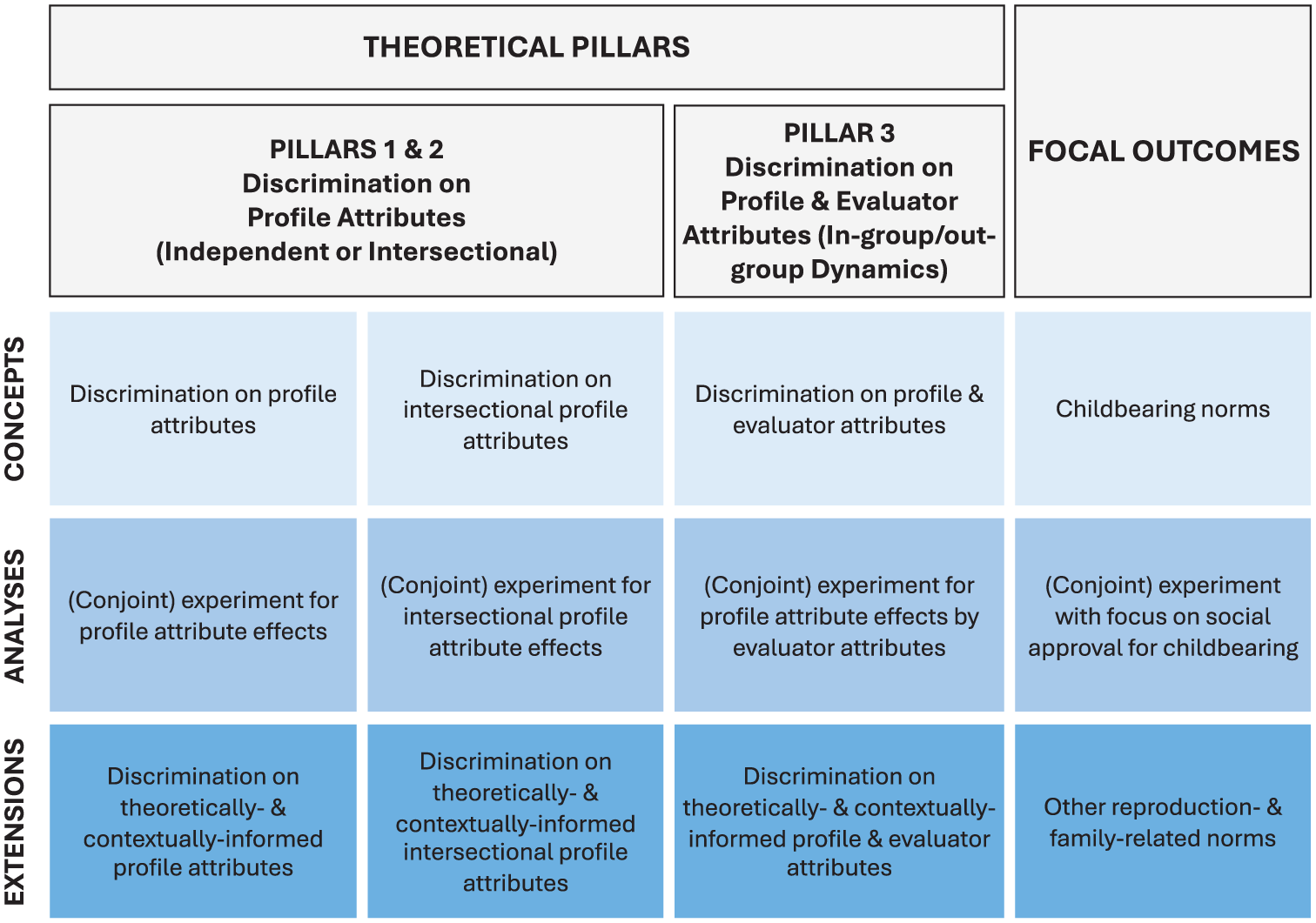
Theory of Socially Sanctioned Reproduction (TSSR): Concepts, Analyses, and Extensions
Although we present our argument in three separate subsections (corresponding to the three pillars), we contend that these processes unfold simultaneously. Independent and intersectional profile attributes, along with respondent attributes, inform the in-group/out-group dynamics at play. These dynamics, in turn, shape observed patterns of discrimination in childbearing approval, reflecting stratification in childbearing norms. This multidimensional lens—where we jointly consider profile and respondent attributes to theorize in-group/out-group dynamics—is essential to understanding the social elements of reproductive sanctioning.
Hypotheses
The contextual and theoretical considerations we discussed generate our hypotheses. For brevity, we specify hypotheses that stem from the assumption that women in socially disadvantaged groups will be perceived as being highly exposed and sensitive to external stressors, and thus less suited for childbearing during Covid-19.
Hypothesis 1: Discrimination. The attributes of women’s profiles will be associated with childbearing approval.
Specifically, women in socially advantaged positions (White/high-SES) will receive more approval than women in socially disadvantaged positions (Black/low-SES), reflecting discrimination. Following the presentation order of our argument, we first identify attributes that are significant individually to anchor the interactions in Hypothesis 2.
Hypothesis 2: Intersectionality. The intersection of profile attributes will pattern childbearing approval.
Specifically, social attributes interact with each other (Hypothesis 2.1), with demographic attributes (Hypothesis 2.2), and in three-way combinations (Hypothesis 2.3) to shape combinations of groups of women who are differentially likely to receive childbearing approval, reflecting long-standing social hierarchies and an intersectional framework.
Hypothesis 2.1: SES and race will interact to form compounding and offsetting effects in childbearing approval.
We predict that all women with low-SES will receive less approval, but Black women will face starker compounding/offsetting effects from low/high SES. That is, the disparity in approval for women in low- versus high-SES occupations will be significantly higher for Black women than for White women (smaller magnitude of difference or no significant difference by SES). We test this via two-way interactions between SES and race.
Hypothesis 2.2: Among older women and women with two children, those in socially advantaged groups will receive significantly more approval than those in disadvantaged groups. Among younger women and women with no children, the disparity in childbearing approval for those in socially advantaged versus disadvantaged groups will be less pronounced.
We test Hypothesis 2.2 via two-way interactions between significant social attributes (identified in Hypothesis 1) and each demographic attribute (age and parity).
Hypothesis 2.3: SES will interact with race and each of the demographic attributes (age, parity) to form compounding and offsetting effects in childbearing approval.
Individuals in disadvantaged groups (e.g., Black women) will face the starkest difference in childbearing approval within each age and parity group if they have low versus high SES. That is, women will receive significantly less approval if in low- versus high-status positions. Women in more advantaged groups (e.g., White women) will experience no significant differences or small differences in approval based on their SES. Women who are advantaged on one dimension but not necessarily another (e.g., younger Black women; Black women with no children; older White women; White women with two children) will also experience less SES-based disparity in childbearing approval compared to women who are highly disadvantaged (e.g., older Black women; Black women with two or more children). We test this via three-way interactions, focusing on SES differences in childbearing approval for each combination of race and age as well as race and parity groups.
Hypothesis 3: In-Group/Out-Group Dynamics. Childbearing approval will further be informed by respondents’ attributes, reflecting in-group/out-group dynamics and discrimination processes of othering, group attachment, and internalized oppression.
We test Hypothesis 3 by looking for varied responses to profile attributes across stratified samples of respondents.
Hypothesis 3.1: Following an othering process, respondents with privileged attributes (White or high-SES) will be more likely to offer childbearing approval to women with privileged attributes than to women with disadvantaged attributes (Black or low-SES).
Hypothesis 3.2: Following a group attachment process, respondents with disadvantaged attributes (non-White or low-SES) will be more likely to offer approval to women with disadvantaged versus privileged attributes.
Hypothesis 3.2a: Alternatively, following an internalized oppression process, respondents with disadvantaged attributes (non-White or low-SES) will be less likely to offer childbearing approval to women with disadvantaged versus privileged attributes.
Figure 2 presents an example of our conceptualization of in-group/out-group dynamics. Profiles of disadvantaged (A) and advantaged (B) potential mothers are likely to be seen differently by respondents from similar versus dissimilar backgrounds, reflecting varying group dynamics. Our analysis examines this variation by looking at how profile attribute effects differ across respondent attributes.
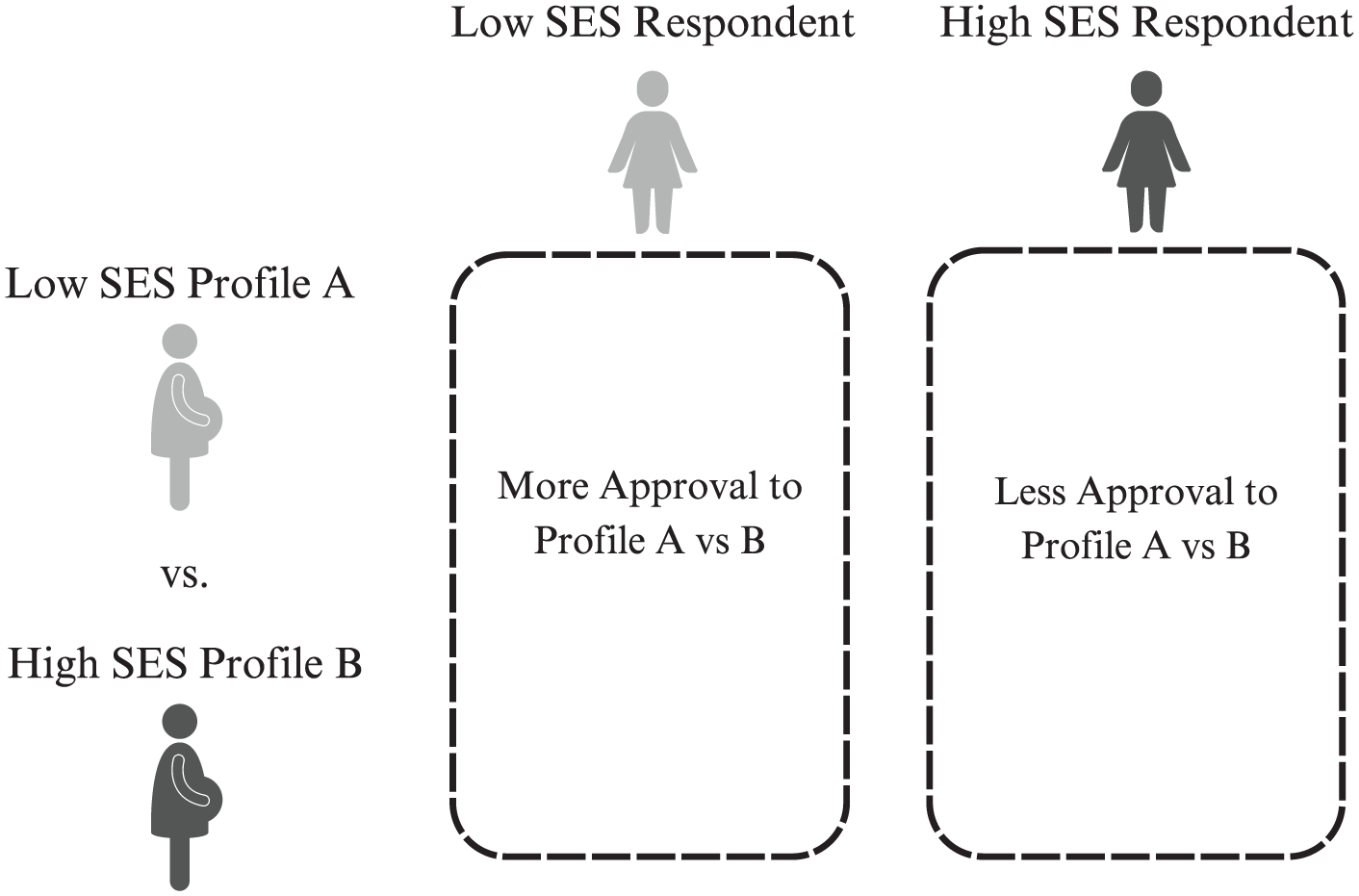
In-group/Out-group Dynamics in Social Sanctioning of Reproduction
Data and Methods
Data
We examine the TSSR using data from the Demographic Consequences of Zika and Covid Study (DZC-1)—an ongoing panel study in Pernambuco, Brazil. Wave 1 (W1) included 25-minute phone surveys with a population-based sample of 3,989 women, age 18 to 34, from May to September 2020. These women were selected using random digit-dialing techniques with a dual frame design from a sampling base of more than 19 million randomly-generated cell phone numbers from Brazil’s government concession. 5 Brazilian Census data show that 94 and 88 percent of women in this age-group own a cell phone in the metropolitan regions of Recife and Pernambuco, respectively (Instituto Brasileiro de Geografia e Estatística 2021), highlighting the wide reach and representativeness of our sampling base. Our sample distribution matches the population distribution in terms of age, race, education, and area. In September and October 2020, we re-contacted W1 respondents via Whatsapp to participate in a follow-up conjoint survey experiment. We successfully recruited 1,639 respondents for this experiment.
Compared to the full sample of W1 respondents, our analytic sample respondents were more likely to be younger (ages 18 to 24), childless, and have a mother with high school education or more. We account for non-response in the conjoint survey using adjustment weights. The adjustment factor is the inverse of the response probability estimated with a logistic regression model that regresses the response indicator on various demographic and baseline survey variables. Our study results are similar even when we do not use this adjustment factor.
The Conjoint Experiment
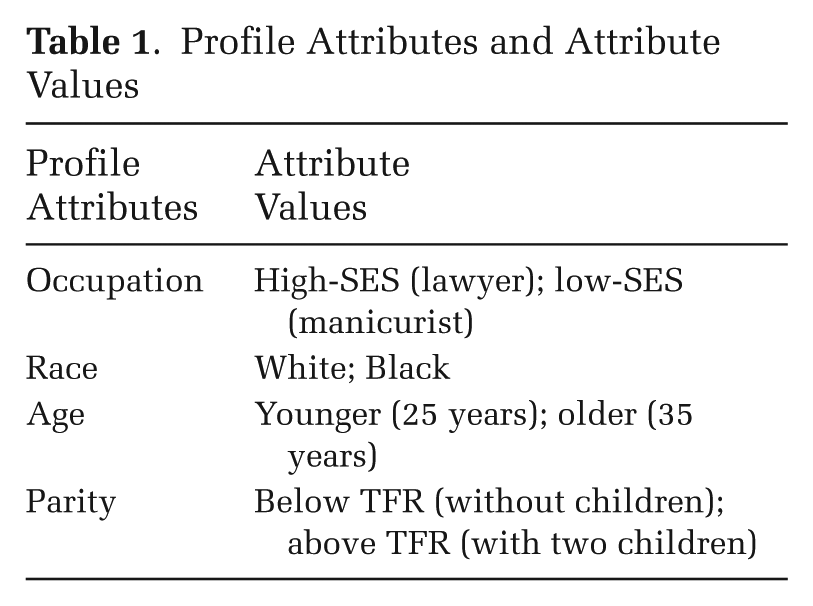
We used a multidimensional choice experiment to examine how social and demographic attributes shape childbearing approval (Hainmueller et al. 2014). We created profiles of hypothetical married women that varied along race, occupational status (proxy for SES), age, and parity. We held marriage constant in all profiles to isolate attitudes regarding childbearing and not confound them with norms on marital status. Conjoint experiments are ideal for limiting social desirability bias (Hainmueller et al. 2015; Hainmueller et al. 2014), which is likely to be high given the sensitivity involved in probing for attitudes toward others’ childbearing.
Table 1 displays the values associated with each attribute. The attribute values, or “treatments,” were randomized in the survey application to estimate the causal effect of each attribute while treating all other attributes as being uncorrelated with the attribute of interest. With all possible combinations of attribute values, we get 16 profiles of hypothetical married women.
Profile Attributes and Attribute Values
We randomly assigned two pairs of hypothetical profiles to each respondent and asked them to evaluate and report if they would advise each profile to get pregnant during the pandemic (yes/no). The wording in Portuguese was “Você aconselharia a ela engravidar agora, durante a pandemia de Covid-19?” We estimated the “treatment” effect of each attribute, net of all other attributes, similar to a factorial experiment. This gives us the average marginal component effects (AMCEs). The derived AMCEs indicate whether each attribute matters for childbearing approval and how much each attribute matters relative to others.
We used a paired conjoint design, that is, a design where respondents view two randomly assigned profiles side-by-side when making their evaluations, because it improves respondent engagement compared to non-paired designs (Hainmueller et al. 2015). Each respondent evaluated four profiles (two pairs), with varying combinations of occupational status, race, age, and parity. Our analytic dataset thus contains 6,556 observations. The experiment was implemented using Qualtrics and sent to respondents via Whatsapp.
A possible limitation of experiments administered via Whatsapp is that respondents may respond inattentively. To check for attentiveness, we incorporated a question that asked respondents to select the color red from a list. The original wording in Portuguese was “Por favor, selecione a cor vermelho abaixo.” We complement our main results with a sensitivity check that focuses only on the 1,554 respondents (N = 6,216) who passed this check.
Variables
Our main dependent variable is childbearing approval, measured using the above-mentioned experiment. We designed the experiment to present respondents with opposite-end values for each attribute when evaluating profiles. 6 Accordingly, the main profile independent variables are occupation (high-SES/lawyer and low-SES/manicurist), race (White and Black), age (25 and 35 years), and parity (no children and two children). The main respondent independent variables are race (White and non-White), SES (high-SES/mother had some college education or more, and low-SES/mother had high school education or less), 7 parity (no children and one or more children), and age (18–24 and 25 or older). These respondent categories do not exactly match the profile categories but represent the same concepts of SES, race, age, and parity. These categories better capture the variety of respondents’ characteristics. We use respondents’ maternal education as a proxy for SES because respondents are young, and their own educational and occupational trajectories are still ongoing. We consider respondents’ race as White versus non-White and run sensitivity checks for alternative classifications.
We also identify respondents’ level of Covid-19 knowledge. We asked whether respondents agreed with the following statements using a five-point Likert scale: (1) pregnant women are at a higher risk of contracting severe forms of Covid-19; (2) Covid-19 can be transmitted through coughing and sneezing; (3) one of the best ways to prevent Covid-19 is thoroughly washing hands; and (4) if the mother has/had Covid-19, she should not breastfeed. Respondents who agreed/strongly agreed with the first three statements and disagreed/strongly disagreed with the last statement were classified as having a high level of knowledge about Covid-19. Nearly a third of respondents were in this category. We used this knowledge index in a robustness check, which we discuss in detail in the Results section and the Appendix.
Table 2 displays respondents’ characteristics. Among respondents, 43 percent had at least one child, 68 percent were non-White, 55 percent were in the older age group (ages 25 to 34 years), and 84 percent had a mother with high school education or less.
Conjoint Experiment, Respondents’ Attributes, DZC Wave 1 (Col. %)
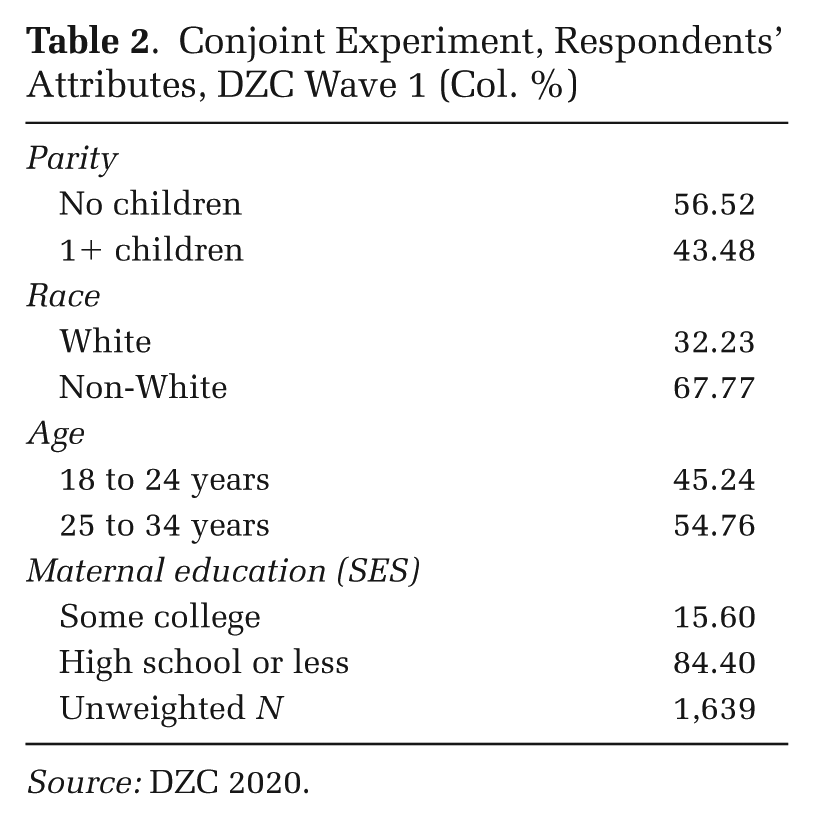
Source: DZC 2020.
Empirical Models
We organize our analyses to align with the three pillars of our theoretical framework. First, we examine the independent effects of each randomly-assigned profile attribute on childbearing approval. Second, we use two- and three-way interaction effects to determine how intersecting attributes matter. Third, we analyze profile “treatment” effects separately by respondents’ attributes.
For all estimations, we use conditional logit models to estimate childbearing approval (McFadden 1972) and vary the independent variables and interactions included. Conditional logit models are commonly used in choice modeling, where respondents are presented with multiple alternatives, each characterized by a set of attributes (Louviere, Flynn, and Carson 2010). In our case, each respondent

where
In these models, the effect of one attribute may differ depending on other attributes (Hainmueller et al. 2014). For instance, the effect of occupation on the probability of profile
Results
Table 3 displays the AMCEs of each treatment/attribute on approval (Equation 1). Model 1, which uses the full set of responses, suggests that occupational status plays a central role in shaping childbearing approval. On average, women in a low-status occupation are 3.3 percentage points less likely to receive childbearing approval compared to those in a high-status occupation (reference category). These results align with Hypothesis 1.
Average Marginal Component Effects for Childbearing Approval During the Covid-19 Pandemic
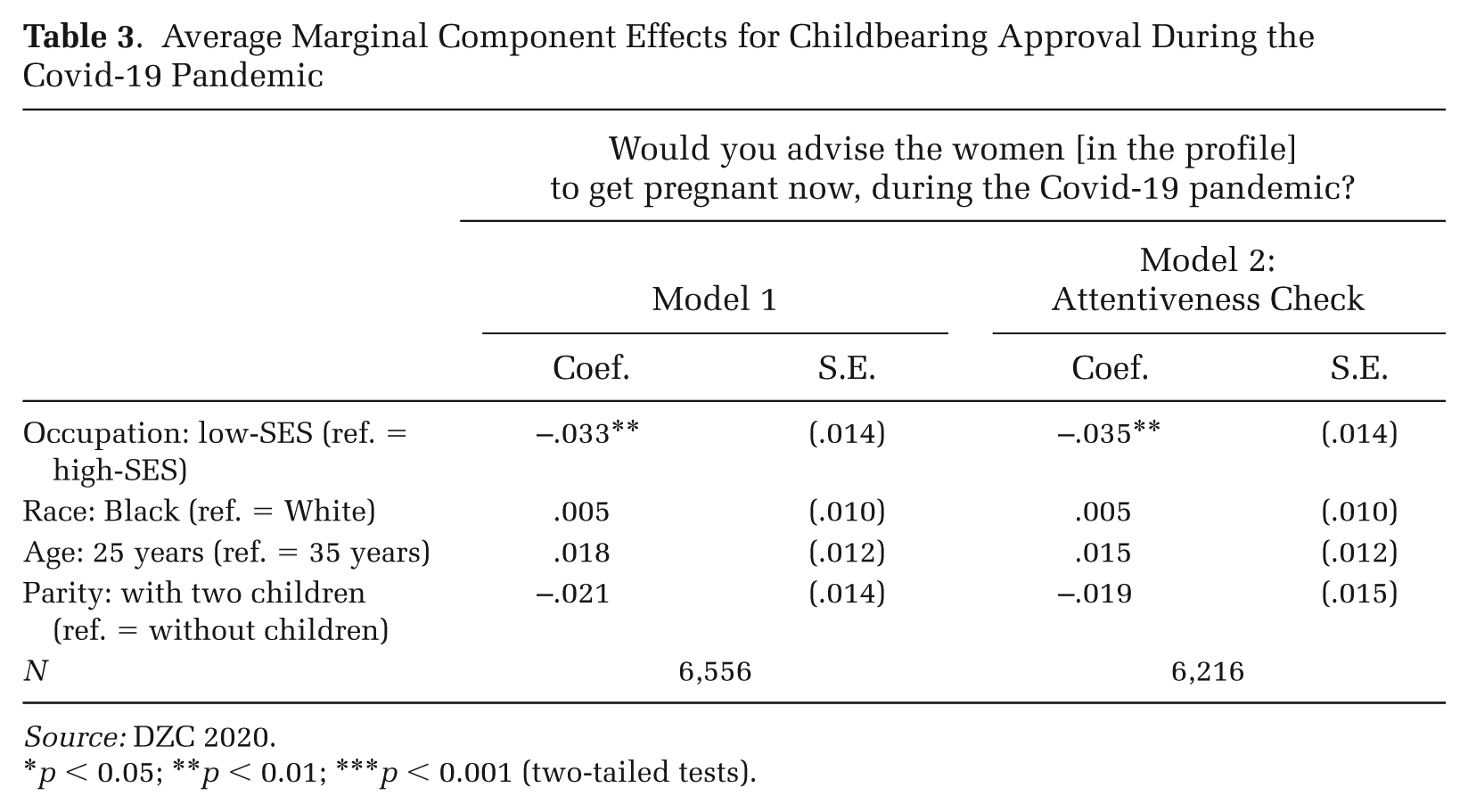
Source: DZC 2020.
p < 0.05; **p < 0.01; ***p < 0.001 (two-tailed tests).
This finding is robust to a sensitivity check for respondent attentiveness. Model 2, which uses the subsample of respondents who successfully passed the attentiveness check, also shows that women in low-status occupations are relatively less likely to receive approval. We test for an alternative explanation of our findings—that childbearing approval varies by Covid-19 risk exposure of manicurists versus lawyers, rather than their status—but this explanation does not hold (see the Appendix). We find no difference by whether respondents had high versus low knowledge of Covid-19.
Following our theoretical expectations of the significance of intersectional attributes for childbearing approval (Hypothesis 2), we next focus on how occupational status (the main independent attribute in Table 3) interacts with other profile attributes.
Two-Way Interaction Effects
Figure 3 presents results from interactions between occupational status and each of the other attributes. The figure plots the probabilities of receiving approval for every profile combining occupation with each of the other attributes in turn, for women in high-status and low-status occupations. We also tested for whether the difference in approval given to women in high- versus low-status occupations in each subgroup is significantly different (see Figure 4).
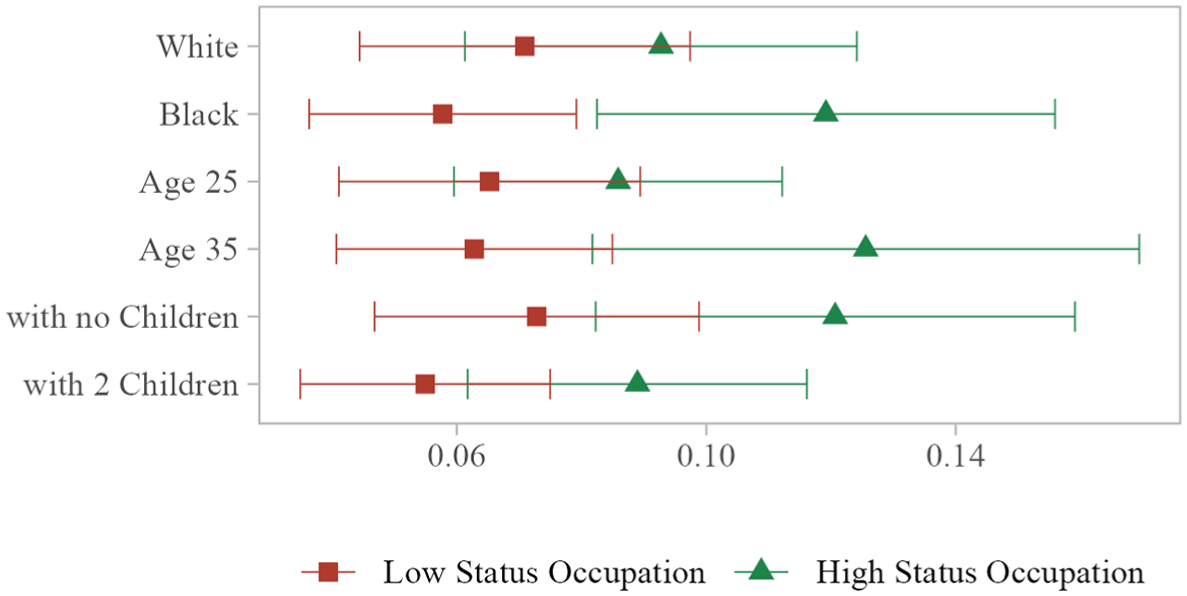
Predicted Probability of Receiving Childbearing Approval across Race, Age, and Parity Categories by Occupational Status
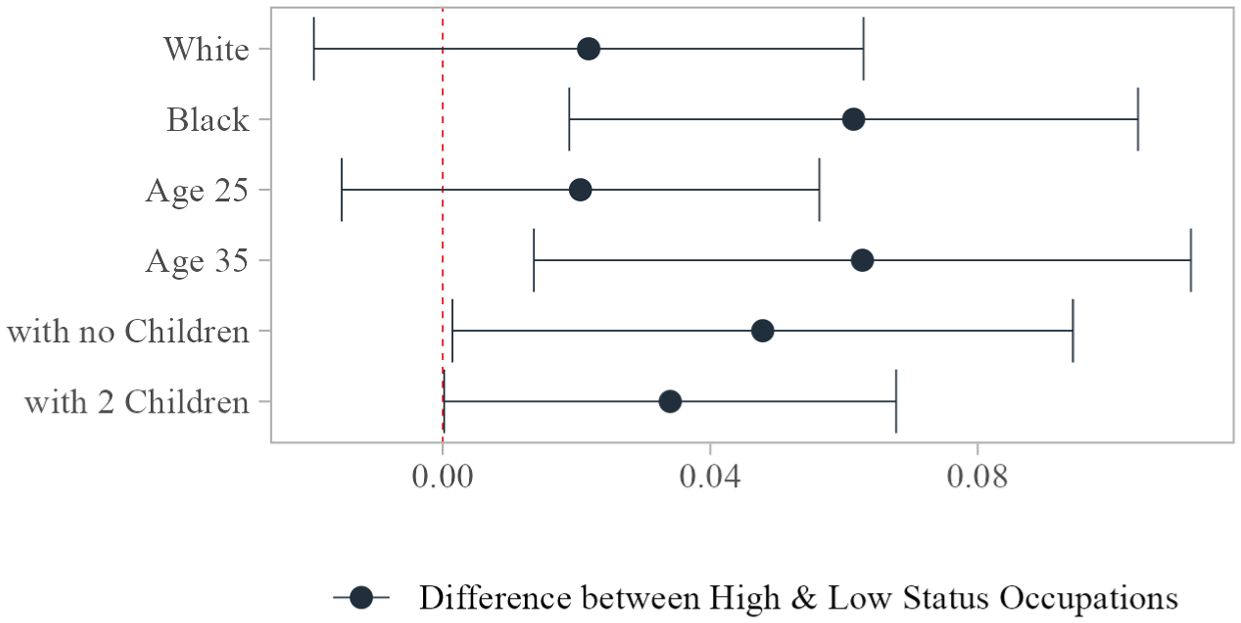
Difference in Predicted Probability of Receiving Childbearing Approval between High- and Low-Status Occupations by Race, Age, and Parity
Figure 3 shows that women in high-status occupations are more likely to receive childbearing approval than women in low-status occupations, but the extent to which occupational status matters for approval varies across profiles’ attributes. Younger women and White women do not receive significantly different advice based on their occupation. Women with no children, women with two children, older women, and Black women, on the other hand, are significantly more likely to receive social approval for childbearing if they are in high- versus low-status occupations. One of the most notable differences is for Black women, whose predicted probability of receiving approval more than doubles if they are in a high- versus low-status occupation (predicted probabilities of 0.12 versus 0.05 in Figure 3), with a statistically significant difference at the 5 percent level (Figure 4). We see similar differences in approval among older women in high- versus low-status occupations.
These results add important nuance to our initial findings. They underscore how occupational status matters more for certain subgroups, modifying perceptions of Black women and older women as potential mothers in ways that do not apply to White or younger women.
Three-Way Interaction Effects
As occupational status and race yield some of the starkest differences in childbearing approval, we further extend our analysis by examining how occupation and race interact with age and parity in three-way interactions. Figure 5 plots the results from this analysis. We show the probabilities of receiving approval for every profile, combining occupation with each of the two demographic attributes for Black and White profiles. We tested whether the approval given to women in high- versus low-status occupations within each race and age combination group, and within each race and parity combination group, is significantly different (see Figure 6).
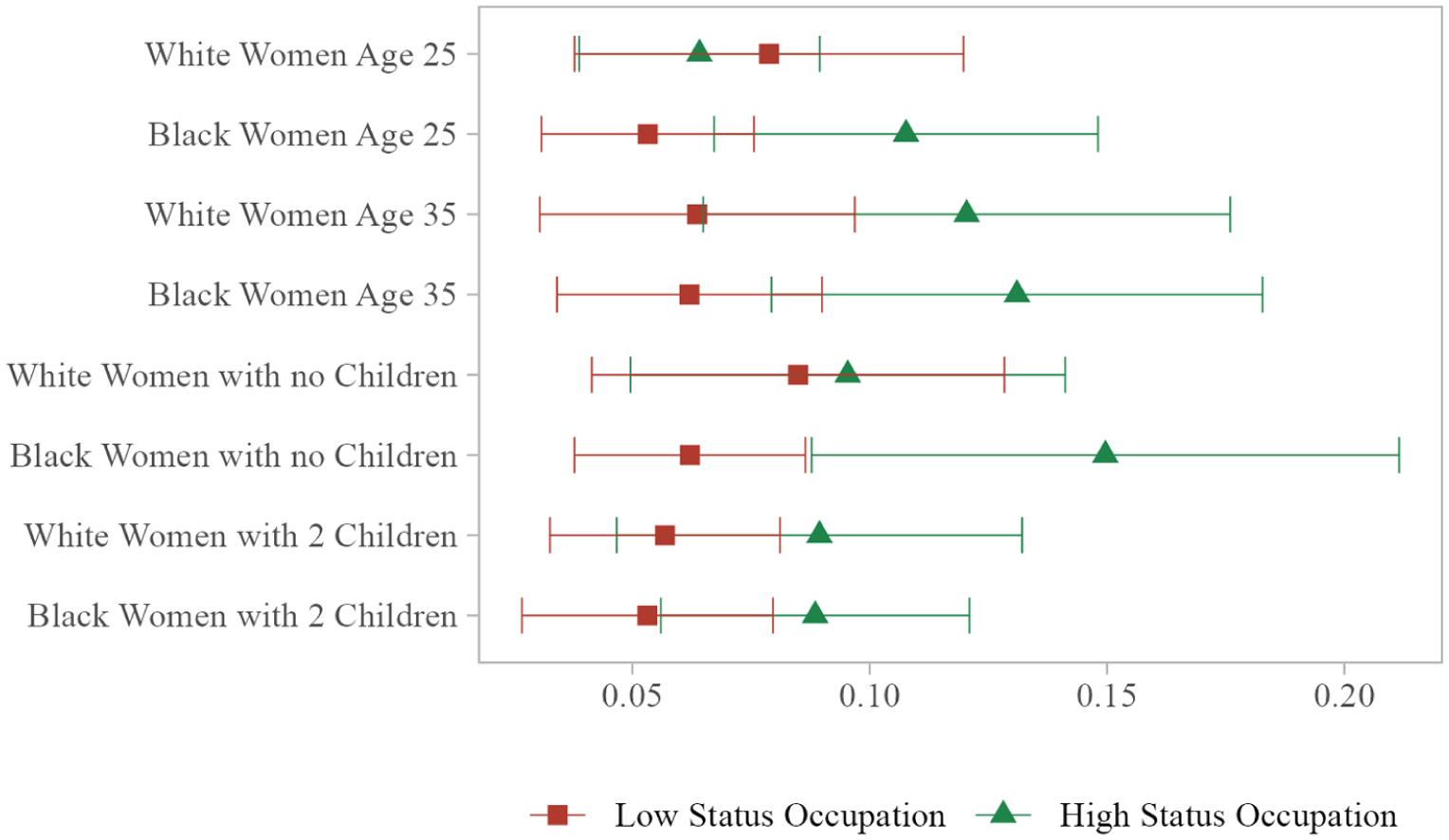
Predicted Probability of Receiving Childbearing Approval across Age and Parity Combinations by Occupational Status and Race
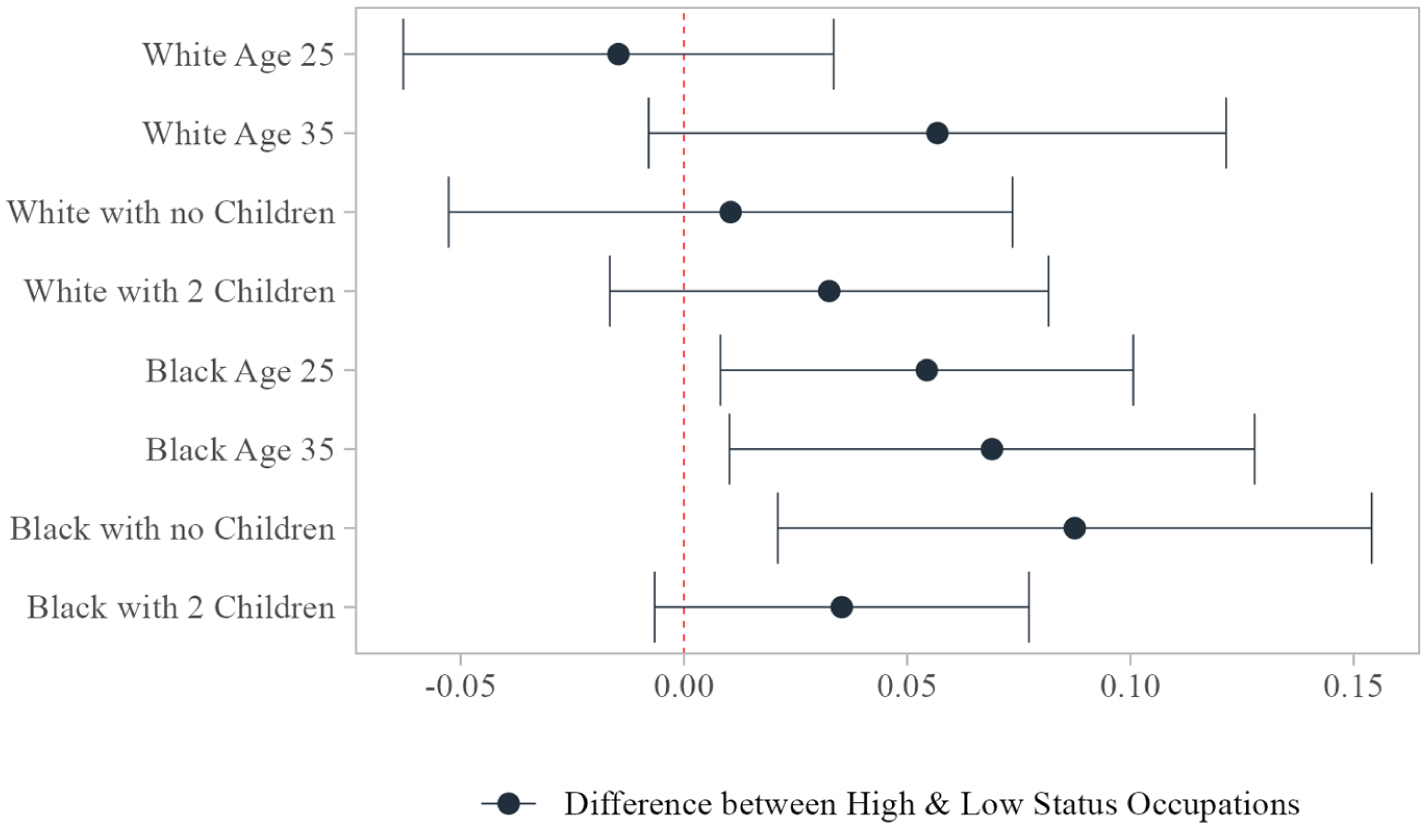
Difference in Predicted Probability of Receiving Childbearing Approval between High- and Low-Status Occupations: By Race & Age Combinations and Race & Parity Combinations
In line with our previous results, women in low-status occupations are generally less likely to receive approval for childbearing, and occupational status is particularly important when assessing Black potential mothers. Across most demographic groups, Black women are significantly less likely to receive approval if they are in low- versus high-status occupations. We see the most notable difference for Black women with no children, whose probability of receiving approval almost triples if they are in high- versus low-status occupations. Their White counterparts, in contrast, are afforded greater flexibility (and less scrutiny) for having children, as their probability of receiving childbearing approval does not vary significantly by their occupation.
Figures 5 and 6 also suggest that our prior findings of differential approval for older women in high- versus low-status occupations are mainly driven by differential approval for Black older women. White older women do not receive significantly different approval for childbearing based on their occupation.
The findings across Figures 3, 4, 5, and 6 support Hypothesis 2. These results highlight the significance of class privilege for Black women and underscore the importance of considering intersecting attributes for childbearing approval (Hypothesis 2.1). Black women in low-status occupations are likely seen as multiply disadvantaged and especially ill-suited for childbearing, consistent with deeply rooted systems of inequality and discrimination. Their higher-SES counterparts receive more childbearing approval, as class-based privileges likely offset some of the perceived disadvantages from being Black. White women, in contrast, experience fewer class-based contingencies for childbearing approval, likely due to their privileged racial position.
Respondents’ Attributes
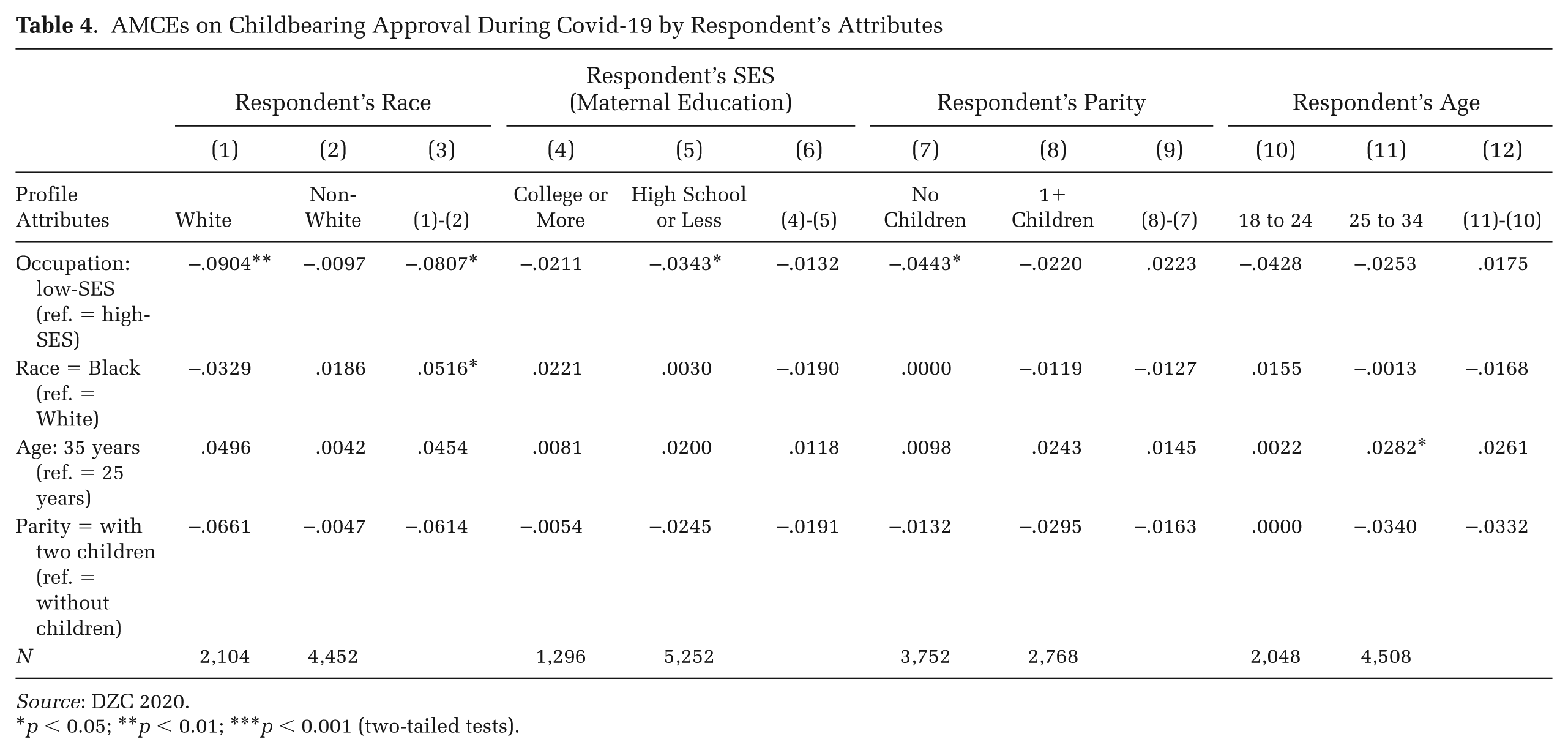
We next examine how in-group/out-group dynamics shape stratification in childbearing approval. Table 4 displays the AMCE of randomized profile attributes (treatment effects) separately by each respondent attribute value. The table also shows results from checks to see if responses to the treatments are significantly different across stratified samples. We examine variation by respondent’s race (columns 1–3), SES (columns 4–6), parity (columns 7–9), and age (columns 10–12).
AMCEs on Childbearing Approval During Covid-19 by Respondent’s Attributes
Source: DZC 2020.
p < 0.05; **p < 0.01; ***p < 0.001 (two-tailed tests).
We observe key variation according to SES treatment—non-White respondents did not give significantly different approval to women with low- versus high-SES, but White respondents were less likely to give women with low-SES approval to have children. Column 3 confirms that this varied response to the SES treatment significantly differs for non-White versus White respondents. Compared to non-White respondents, White respondents are 8 percentage points less likely to give women in low-SES groups childbearing approval. This result suggests the findings in Table 3 are mostly driven by the perceptions of White respondents, who are more likely to exercise class-based discrimination.
Another notable finding is how White versus non-White respondents respond to the racial attributes of potential mothers. Non-White respondents are more likely to offer childbearing approval to Black women compared to White women, whereas White respondents do not offer significantly different approval based on the race treatment. Column 3 shows this difference in response to the race treatment is statistically significant. Non-White respondents are 5 percentage points more likely than White respondents to give Black women approval. None of the other differences based on respondents’ attributes are statistically significant. Findings from sensitivity checks show similar results when we disaggregate the non-White group and model responses of our Parda and Preta respondents separately.
The different responses to SES and race treatments by White and non-White respondents highlight how in-group/out-group dynamics and different underlying discrimination processes contribute to observed stratification in childbearing approval. In line with Hypotheses 3.1 and 3.2, we find suggestive evidence of othering and group attachment as main processes underlying discrimination. Among respondents in privileged social positions (in this case, White), we see some evidence of othering, as they treat women in less-privileged positions as fundamentally different. Conversely, respondents in less-privileged social positions (in this case, non-White) are likely exercising group attachment. These respondents offer in-group members (Black women) relatively more childbearing approval, perhaps because their group affiliation and affinity provide them insight into group members’ capabilities and the meaning that childbearing would bring to their lives.
Conclusions and Discussion
This is the first study to propose a theoretical and empirical framework for analyzing the social sanctioning of reproduction. Focusing on childbearing norms, we use novel conjoint experiments applied to a population-based sample to highlight multidimensional stratification and discrimination. Our findings offer new insights into how deeply rooted systems of inequality and discrimination shape the intimate sphere of childbearing, and underscore how intersectional attributes and in-group/out-group dynamics influence childbearing approval. Because perceptions of women’s childbearing have potential consequences for maternal and child well-being, it is important to conceptualize childbearing norms as a key source of inequality. By integrating the literatures on social stratification, discrimination, and fertility, this study highlights the mechanisms defining childbearing norms. With the growing politicization of childbearing and increasing disparities in reproductive healthcare access and outcomes, this intervention is especially pertinent for reproductive justice everywhere.
Our theory of socially sanctioned reproduction posits that intersectional profile attributes and evaluator attributes together shape reproductive and family formation norms. Through an intercategorical approach to intersectionality, our empirical findings highlight the significance of intersectional profile attributes, as SES and race jointly matter for childbearing approval. Black women in low-status occupations across most demographic groups—without children, older, and younger—receive less approval compared to Black women in high-status occupations. In contrast, White women across all demographic groups have greater flexibility for childbearing, as they do not receive significantly different approval based on their SES.
These findings reveal discriminatory patterns that reflect the unfavorable conditions and perceptions toward Black women in low-SES groups in Brazil and across most multiracial countries. Empirical research across various contexts and time periods shows that low-SES Black women experience heightened scrutiny in their reproductive lives—in terms of the number of children they have (Merchant 2021; Schultz 2021; Soss, Fording, and Schram 2011), when they have children (Kaplan 1997), the family context in which they have children (Baker and O’Connell 2022; Roberts 2002; Soss et al. 2011), or their children’s behaviors and outcomes (Elliot and Reid 2019; Turner 2020). Our findings substantiate and extend this research by revealing how childbearing approval is a domain where disadvantaged women—particularly those disadvantaged at the intersection of SES and race—are discriminated against and denied full reproductive freedom.
Such discriminatory patterns are especially significant in Brazil, where race and class are deeply intertwined. Powerfully illuminating the structural barriers and enduring marginalization faced by Black individuals, Brazilian singer Elza Soares famously sang, “a carne mais barata do mercado é a carne Negra” [the cheapest meat in the market is Black meat] (Soares 2002). Similarly, Brazilian activist and academic Bento (2022) observed that if poverty had a color, it would be Black. Our study builds on these observations by highlighting that not only do Black individuals experience limited opportunities for social mobility, but Black women with low SES are further penalized within these unequal systems through diminished or conditional social approval for childbearing.
In this light, our study speaks to broader debates on race stratification in Brazil that consistently challenge the myth of racial democracy despite the country’s more flexible race boundaries (Guimarães 2006; Telles 2004). These debates have spurred affirmative action and quota policies (Silva, Leão, and Grillo 2020), improving non-White and low-SES individuals’ access to higher education and government positions in the past few decades (Carvalhaes et al. 2022). There has also been a marked shift in how racial inequalities are publicly discussed, with conversations around racism becoming more commonplace (Giraut 2023). However, as our findings indicate, these advancements coexist with persistent discrimination, as racialized ideas continue to inform everyday life, including in seemingly personal decisions around having children.
Possible explanations for the discriminatory patterns we observe include statistical discrimination and cognitive distortions and ethnocentric biases. Women in multiply disadvantaged groups may be perceived as highly exposed and sensitive to social stressors, and therefore insufficiently prepared for childbearing. Evaluators may be operating in a statistical discrimination framework, extrapolating from the average characteristics of different social groups to make assumptions about the conditions experienced by individual women in those groups. Evaluators’ responses may also reflect ethnocentric biases or cognitive distortions, as respondents may have classed and racialized notions of who is better-suited for having children, particularly during Covid-19. In either case, these findings make clear that perceptions of who is well-suited for childbearing are rooted in biases and discriminatory assumptions.
Our TSSR also emphasizes the importance of considering evaluators’/respondents’ attributes, as the resulting in-group/out-group dynamics offer critical insights into the types of discrimination processes shaping childbearing norms. Supporting this theoretical argument, our empirical results reveal that respondents in more- versus less-advantaged positions respond differently when evaluating socially disadvantaged women for childbearing. White respondents are more likely than non-White respondents to exercise SES-based discrimination in evaluating women’s profiles. Non-White respondents, on the other hand, are more likely than White respondents to approve of Black women’s childbearing. This suggests that socially advantaged respondents likely see their similarly advantaged peers as more deserving of and suitable for childbearing. These results suggest an “othering” process in which low-SES women are viewed through deficit-based, stereotypical frameworks by more privileged respondents (Schwalbe et al. 2000), reinforcing social hierarchies and consequent disadvantages (Geronimus 2023).
Findings that non-White respondents affirm childbearing for Black potential mothers reflect group attachment processes and a community-building framework. Disadvantaged respondents, recognizing that the pandemic disproportionately affected their communities, offer Black women more approval, as they likely view childbearing as a means of rebuilding and reinforcing family and community bonds. Childbearing may also be viewed as an adaptive strategy—one that enables socially disadvantaged women to pursue family formation within their more precarious or structurally constrained lives (Geronimus 2003). This interpretation aligns with the theorizing of Brazilian Black feminist scholars, who emphasize that redefining motherhood allows Black women to resist social structures that privilege whiteness and limit their autonomy (Carneiro 2010). These patterns hold when we model Parda and Preta respondents separately, suggesting an affiliative orientation toward Black rather than White women among Parda respondents. This underscores the conceptual validity of using a combined non-White category, at least for analyzing childbearing norms, with key implications for studying racial inequality and discrimination in Brazil.
By acknowledging the role of evaluator attributes, our theoretical model and empirical analysis provide more nuanced insights into how reproductive norms are constructed through social mechanisms and in-group/out-group dynamics. In doing so, we respond to calls among Black activists in Brazil to center the role of White individuals in reinforcing stereotypes that devalue low-SES Black women (Bento 2022). Whiteness in Brazil operates as a pact that deflects attention from how the White population reproduces a system of oppression that maintains its privilege. Our study challenges this complicity by highlighting the role of White women in the stigmatization of poor Black motherhood. We advance the literature on race stratification and whiteness in Brazil and in other multiracial contexts by presenting a theoretical argument and empirical application that underscore how privilege and disadvantage, along intersecting race, SES, and demographic lines, are entrenched through group-based dynamics.
Our theoretical and empirical analyses deepen sociological understandings of how intercategorical intersectional attributes and in-group/out-group dynamics together shape stratification and discrimination in one of the most central events of family life. This work has significant implications for how sociologists think about inequalities in childbearing norms and in reproductive and family formation norms more broadly.
Implications for Studying Social Stratification, Reproductive Norms, and Family Norms
Theories of discrimination have long been used to understand variation in housing, healthcare, education, and labor market opportunities, to name a few. This study extends these frameworks to analyze the social sanctioning of reproduction. The TSSR emphasizes broader patterns of social exclusion by considering how profile and evaluator attributes shape stratification and discrimination in reproductive and family norms. The framework’s analytic strengths lie in its use of an intercategorical intersectionality approach and multidimensional (in-group/out-group) lens as theoretical tools to identify relevant structural markers of stratification and processes of discrimination. In the context of the Covid-19 pandemic, the TSSR is particularly relevant. Prior work has shown how racial and class minoritized groups were at greater risk of experiencing negative health/mortality and economic consequences during the pandemic; our empirical findings show how these inequalities extended to reproductive life.
Stratification in childbearing and other reproductive and family formation norms can have meaningful implications for how women’s reproductive lives are socially understood and valued. Our study analyzed childbearing norms, highlighting SES and race-based variations in social approval for childbearing. These differing perceptions of childbearing matter, as they can affect the quality of care women receive from healthcare providers, shape beliefs about who is “deserving” of social assistance or job benefits, and influence women’s everyday interactions with neighbors and key community figures. Such perceptions are meaningful in general but are especially important during a public health crisis like Covid-19, when risks for women and babies are heightened and community support can be critical for well-being. SES and race differences are particularly notable here, as they can translate into additional layers of discrimination for people who already occupy less privileged social positions within systems of oppression.
Importantly, the utility of the TSSR as a theoretical framework for illuminating stratification and discrimination extends beyond our empirical application. Our findings on childbearing norms in Pernambuco, Brazil, are highly relevant as the state’s and country’s socioeconomic and racial inequalities resemble those of other multiracial/multiethnic countries, like the United States, Mexico, and South Africa, even if specific social and historical aspects differ. The TSSR can also be extended to study how other theoretically and contextually relevant attributes matter for childbearing norms, with attribute selection informed by an intercategorical intersectionality approach. For example, in the United States, the TSSR could be used to examine how the intersection of class, race, birthplace, and immigration status influence childbearing norms, especially as nativist reactions to immigrant fertility have heightened. Given current political discussions on pronatalism, the TSSR could be used to understand if increased childbearing is viewed favorably for all U.S. women and families. Following advances in legal status afforded to same-sex unions in recent decades, the TSSR could also be used to identify if there is enduring stratification and discrimination in parenthood norms for same-sex versus different-sex couples, and the theoretical mechanisms that explain observed patterns.
In this respect, the TSSR represents a major advancement for how we study childbearing or fertility norms. Existing studies have largely focused on individuals’ views about their own childbearing, with less attention to how social norms about childbearing are constructed via the attributes of evaluators and those evaluated. When studies have considered social approval toward others’ childbearing, they have relied on measures like ideal family size or direct attitudinal questions on quantum/tempo conditions that do not capture social complexities about how different groups are subject to different perceptions and standards. The TSSR, coupled with an empirical approach using conjoint experiments, addresses these limitations and offers a road map for extensions (see Figure 1). Conjoint experiments provide analytic scope for examining intersecting attributes and group-based dynamics that better reflect real-world social sanctioning while also minimizing social desirability bias.
The TSSR can also be extended beyond childbearing norms to encompass norms around other contentious areas of reproductive and family life. For instance, the TSSR could be used to examine how child adoption norms or pregnancy termination norms are stratified by social attributes, and the mechanisms explaining these processes. The importance of the TSSR combined with conjoint experiments as tools for analyzing patterns and processes of discrimination is especially relevant in today’s political climate, where individuals perceived as deviating from traditional reproductive, childbearing, or family forms are increasingly targeted.
Limitations and Directions for Further Research
Some caveats bear noting. Because fieldwork took place during Covid-19 and we asked respondents about childbearing approval during this period, we are unable to delineate if the observed patterns would hold under other conditions. Our results may reflect amplified inequalities due to the pandemic or preexisting disparities in childbearing approval. Supporting the latter, differences in childbearing approval by non-White and White respondents—who were evaluating potential mothers under identical Covid-19 conditions—point to entrenched discrimination. Regardless, it is notable that we systematically uncover stratification and discrimination in childbearing norms—an understudied dimension in the sociological literature. Future research can build on these findings to disentangle contextual influences and dynamism in childbearing norms across different periods and scenarios.
Another limitation is that our empirical analysis does not capture childbearing norms among other demographic groups (notably, older women and men). While our focus on women of reproductive age is highly significant, as these women are likely contemplating childbearing and have an intimate understanding of the circumstances potential mothers are navigating, a study of broader age–sex groups would capture norms in society at large. This broader framing could reveal further variation in how different groups define childbearing approval. For instance, older individuals are more likely to hold racist stereotypes (Horowitz, Brown, and Cox 2019; Schuman et al. 1997; Welch and Sigelman 2011), so it is possible they would show more marked discrimination and othering in childbearing approval. We might also find different in-group/out-group processes when including male respondents, as the criteria for evaluating childbearing is often gendered. Future work could examine such varying perspectives by drawing on experiments that uncover the processes through which different groups form their stratified childbearing attitudes. Qualitative insights can also be used to understand discrimination processes for different groups, and whose evaluations are most salient for potential mothers.
Finally, the extent to which our findings are replicable across other contexts remains to be seen. Pernambuco is characterized by high levels of socioeconomic and racial inequality, which allows us to identify discrimination in childbearing norms. To this end, because Pernambuco’s levels of inequality are comparable to the country, there is little reason to believe the observed patterns would differ substantially from the rest of Brazil. Similar inequalities characterize social life in other contexts, and as indicated in the previous subsection, our theoretical and empirical frameworks can be extended to highlight relevant axes of stratification for these contexts. Going forward, such analyses centered on childbearing and other reproductive- and family-related norms are going to be increasingly pertinent to ensure all individuals have access to safe conditions to pursue their family goals without fear of being devalued or stigmatized.
Footnotes
Appendix
Acknowledgements
The authors would like to thank Julia Behrman, Molly Dondero, Marissa Thompson, Florencia Torche, and Jenny Trinitapoli for their comments on earlier drafts of this paper. They also thank the ASR editors and anonymous reviewers for their helpful comments. The authors thank Nykia M. Perez Kiebler and Laura VanDruff for editorial assistance.
Funding
This research was funded by grant R01HD091257, Reproductive Responses to the Zika Virus Epidemic in Brazil, and grant 2R01HD091257-07, Reproductive and Child Health Trajectories in Successive Novel Infectious Disease Crises, both awarded to PI L. J. Marteleto by the Eunice Kennedy Shriver National Institute of Child Health and Human Development (NICHD). This research was also supported by grant P2CHD042849, awarded to the Population Research Center at the University of Texas at Austin by the NICHD, as well as grant P2CHD044964, awarded to the Population Studies Center at the University of Pennsylvania by the NICHD.

IRB Note
This study was conducted under Institutional Review Board approval #2018-01-0055 from the University of Texas at Austin and is now under Institutional Review Board approval #853752 at the University of Pennsylvania upon the PI’s institutional change; as well as the Brazilian National Commission for Research Ethics (also known as CONEP, or Comissão Nacional de Ética em Pesquisa) study approval CAAE: 34032920.1.0000.5149.
Data Note
Data are available upon request.