



Abstract
This article analyzes growth strategies in the context of digital transformation in all political, social, and economic scopes that were accelerated by the pandemic. The article also focuses on the specific case of digital native brands which have emerged in a disruptive way. The study was carried out by using electronic surveys from April 2020 to November 2021 of 50 professionals in leading technology companies and startups. The study takes into account the results obtained in research carried out during the last 8 years by combining both the methods of in-depth interviews and documentary analysis in tracking the strategies of technology companies. The results show that growth strategies in digital economy are focused on decision making based on data combined with creative actions such as digital content, influencer marketing, media, events, and newsjacking. This growth strategy is applicable to all areas, especially politics.
Keywords
Introduction
The pandemic has accelerated the digitization (Amankwah-Amoah et al., 2021) of society in all political, social, and economic realms. In this context, native digital companies (Prensky, 2001) that are heirs to the so-called new economy (Kelly, 1997) experience exponential growth.
The communication strategies carried out by technology companies are encompassed within a planned and coordinated action approach referred to as growth hacking (Chen, 2012; Conway & Hemphill, 2019; Ellis, 2010; Ellis and Brown, 2018; Holiday, 2014; Patel and Taylor, 2014).
The growth hacking approach was born in the field of digital economy but is applicable to all types of organizations. It combines data-driven decision making based on specific objectives and key performance indicators (KPIs) (Parmenter, 2015) with large doses of innovation and creativity. Its goal is to achieve these objectives in the shortest possible time.
The aim of this research is to analyze the communication strategy that supports the growth of digital native companies as a disruptive element that transforms economic, political, and social life (Doligalski et al., 2021; Hodson & McMeekin, 2021) and inspire other organizations, specifically those in the political sphere that are undergoing digital transformation (Chadwick, 2013; Hoff et al., 2000; Lofgren & Smith, 2003). The research results are presented in the following pages.
The analysis of strategic decisions made on the part of the technology sector is valuable in the research of communication disciplines that are constantly evolving, including digital marketing (Tuten & Solomon, 2018), advertising (Rust & Oliver, 1994), journalism (Harcup & O’Neill, 2017), corporate communication, and public relations (Oliver, 2004). The analysis is also valuable for specific hybrid techniques such as influencer marketing (Brown & Hayes, 2008), newsjacking (Scott, 2010, 2011), and crisis communication (Coombs, 2014; Fearn-Banks, 2016; Jin, 2010; Jin et al., 2012). Knowing how these communication actions are planned, whether in owned, paid, or earned media (Burcher, 2012; Tuten & Solomon, 2018), provides essential information for effective communication aligned with growth objectives in the current digital paradigm.
Theoretical Framework
The network society (Castells, 2004) is increasingly using digital channels to communicate. (Chaffey and Ellis-Chadwick, 2019; Dubber, 2014; Howard, 2006; Miller, 2020; Qvortrup, 2006; Thompson, 2005; Wellman and Haythornthwaite, 2002). The communicative digitalization phenomenon has accelerated since the COVID-19 pandemic (Amankwah-Amoah et al., 2021), shaping a context of increasing communication complexity (Campbell & Marks, 2015; Howe & Teufel, 2014; Pulizzi, 2015) that forces organizations in all fields, be it political or business, to a transformation inspired by digital natives. (Prensky, 2001).
The type of companies that make up the digital ecosystem have an integrated approach (Kliatchko, 2005; Kotler, 2003; Schultz and Kitchen, 2000) to their communication strategies (Austin & Pinkleton, 2000; Grunig & Hunt, 1984; Smith, 2013) based on a growth strategy approach called growth hacking (Chen, 2012; Ellis, 2010; Ellis and Brown, 2018; Holiday, 2014; Patel and Taylor, 2014; Troisi et al., 2020), which is data-driven decision making (Parmenter, 2015) combined with the drive for innovation and creativity in order to achieve the company’s objectives as quickly as possible.
The communication plans of digital native companies follow the classical strategic planning model with four phases of research, action, communication, and evaluation (Marston, 1963), albeit with greater flexibility. When considering their strategies, digital native companies combine actions from different disciplines to take advantage of synergies with the aim of connecting with audiences in order to win their complicity in disseminating their messages (Berger & Milkman, 2012; Jurvetson & Draper, 1997; Rosen, 2002; Rushkoff, 1994; Maskeroni, 2016).
The differentiation between owned, earned, and paid media (Burcher, 2012; Tuten & Solomon, 2018, pp. 22) that is used to classify the various communication actions that are combined and integrated, was created for digital communication but is now used for any virtual or physical strategy, whatever the chosen channel. The organization’s own channels, such as websites, apps, blogs, newsletters, or social networks, are considered its own media. Paid media are mainly those derived from an investment in advertising, influencer marketing, or branded content, in any of its possible mediums. Finally, one of the most widespread practices in the communication strategy of digital native companies is that which focuses on earned media, which include various public relations actions (Bernays, 1923; Grunig and Hunt, 1984; L’Etang, 2009; Marston, 1963; Steinberg, 1975) in order to generate notoriety.
Among the public relations actions carried out by technology companies, the organization of events takes place in person, especially during the health crisis, online or a hybrid of the two. As detailed in the results of this study, other essential areas in the integrated public relations strategy of digital native companies is publicity seeking media appearances due to the credibility it brings compared to advertising (Skard & Thorbjørnsen, 2014) and digital communication (Evans et al., 2021; Tuten & Solomon, 2018). The aim is to achieve interaction and mentions in social networks and to gather information on target audiences to further feed back into this process, turning the public into prosumers, brand ambassadors, or activists, just as it happens in politics (Ritzer et al., 2012; Toffler, 1980; Yamamoto et al., 2020).
This entire integrated communication strategy in owned, paid, and particularly in earned media, is closely aligned with the media agenda (McCombs & Shaw, 1972), using techniques such as newsjacking, which consists of disseminating brand messages in relation to a current event (Scott, 2010, 2011) while taking into account the importance of crisis communication management (Coombs, 2014; Fearn-Banks, 2016; Jin, 2010; Jin et al., 2012) at all times.
The typical technology-based strategic approach to growth hacking (Chen, 2012; Ellis, 2010; Ellis & Brown, 2018; Holiday, 2014; Patel & Taylor, 2014; Troisi et al., 2020) combines data-driven decision making based on specific objectives and KPIs, using creativity to achieve this in the shortest possible time with a minimum investment and is transferable to organizations in other fields such as political, social, and any other type of company, since all are undergoing a process of digital transformation.
Methodology
The research was conducted telematically between April 2020 and November 2021, at the height of the COVID-19 pandemic, using a survey. The quantitative research methodology using questionnaires (Sallot et al., 1997) makes it possible to collect and process a great deal of information in order to draw objective conclusions from the responses of the people in the sample.
This survey-based method has been used to monitor changes in social phenomena, including feminism (Gorelick, 2011; Jouet, 2018; Tessler & Warriner, 1997) or perception of the climate emergency (Pidgeon et al., 2008; Reynolds et al., 2010).
Submitting and collecting survey responses in a digitized manner, as has been done for this research using the Microsoft Forms tool, enables immediate collection of information and facilitates further analysis (Jamsen & Corley, 2007).
In this study, the responses to the survey were provided by 50 professionals responsible for the communication strategy of digital native companies, which provides insight into the strategic communication decisions made by technology companies during the health crisis. This crisis has led to the acceleration of the digital transformation process of other political, economic, and social organizations.
The survey was developed from a theoretical perspective, following Marston’s (1963) Research, Action, Communication, Evaluation (RACE) model of strategic planning. The survey includes questions on research, planning, execution, and evaluation of the results of the actions carried out by digital native companies.
The combination of closed-ended questions with related open-ended questions allows the researchers to extract qualitative information that is useful for the interpretation of the results presented in this article.
The survey questions are based on the knowledge the researchers gained over the last 8 years, combining in-depth interviews and documentary analysis to monitor the communication strategies of technology companies within the framework of this study. The objective is to obtain quantitative results that are useful in analyzing the communication strategy of digital native companies in the current digitalization context accelerated by the pandemic. These findings may prove valuable for other organizations in business, political, and social spheres.
Results
The study results based on telematic survey responses from 50 communication managers of digital native companies illustrate the process of strategic planning for communication actions (Marston, 1963) carried out by technology companies. This process is carried out in four phases: research, planning, communication, and evaluation.
The responses from the first phase of the RACE strategic planning model (Marston, 1863) of the study show that 93% of the professionals responsible for communication in the digital native companies surveyed conduct research before planning their communication strategy (Figure 1).
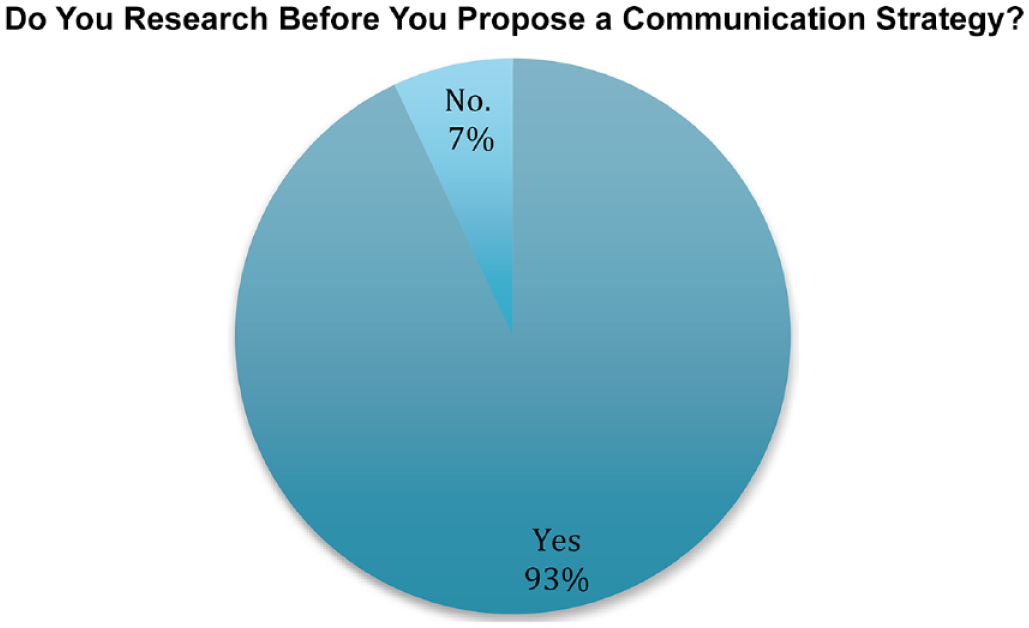
Research.
The research draws from multiple information sources, including big data generated by the brand's own platforms, but also from controlled experimentation with actions focused on the paid or earned channels (Tuten & Solomon, 2018). Experimentation using the virtuous circle of constant innovation of the Lean Startup (Ries, 2011) method’s own create-measure-learn process is one of the central axes of the strategy focused on growth-specific actions (Chen, 2012; Conway & Hemphill, 2019; Ellis, 2010; Ellis & Brown, 2018; Holiday, 2014; Patel & Taylor, 2014; Troisi et al., 2020). Besides research acting as the starting point for the entire communication strategy, it is also present during the implementation of actions, with decision making based on real-time data, while establishing strategic plans on a regular basis, as is shown below.
The communication plan, as an instrument that provides the general framework for actions, with anticipation, a proactive approach, and concrete objectives, remains useful in the digital era (Ang, 2021) due to the need to integrate channels and gain consistency in messages. In terms of periodicity, however, their approach is increasingly short-term. This is confirmed by the results obtained in the second section (Figure 2) that shows when and how companies in the digital economy plan their communication strategy. 70% of respondents say they plan their communication strategy quarterly, compared to 20% annually—annual periodicity is even more common in non-technology companies—and 10% do not have a given frequency.
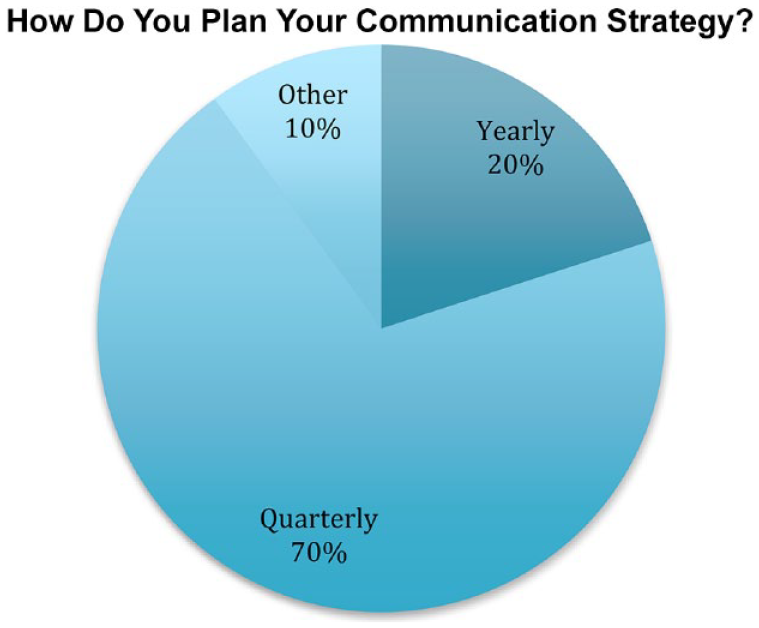
Communication plans.
It is necessary to set SMART (Specific, Measurable, Achievable, Relevant, Time-Bound) objectives at the planning stage (Gregory, 2000, p. 96). To this end, KPIs are established (Figure 3). These indicators monitor and evaluate the achievement of objectives (Parmenter, 2015). This is part of the growth hacking approach (Chen, 2012; Conway & Hemphill, 2019; Ellis, 2010; Ellis & Brown, 2018; Holiday, 2014; Patel & Taylor, 2014; Troisi et al., 2020), which involves data-based decision making.
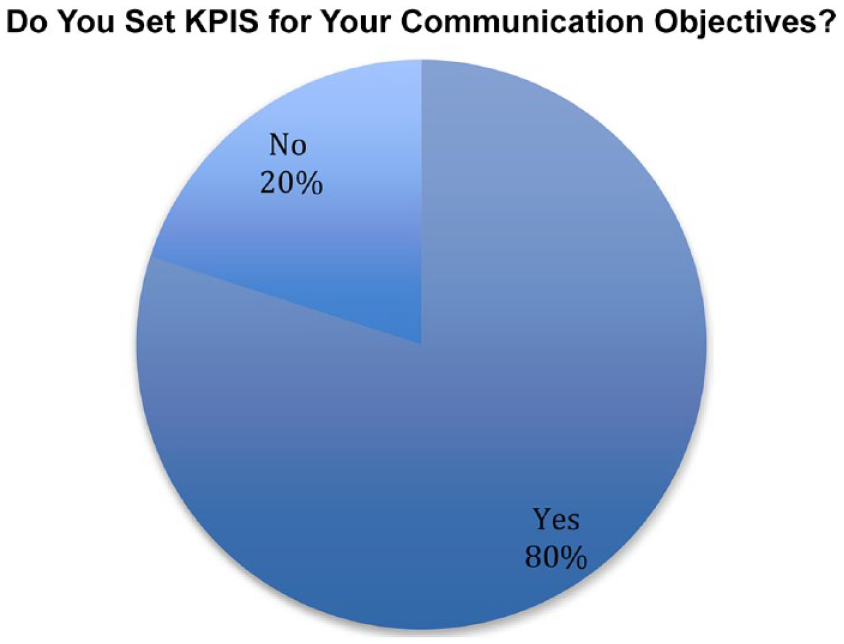
Key performance indicators.
The communication strategy of the digital economy classifies its actions in three areas: owned media, earned media, and paid media (Burcher, 2012; Tuten & Solomon, 2018, pp. 22). Regarding this classification (Figure 4), 57% of communication managers consider the media earned as a priority through corporate communication and public relations actions as detailed below (Figure 5).
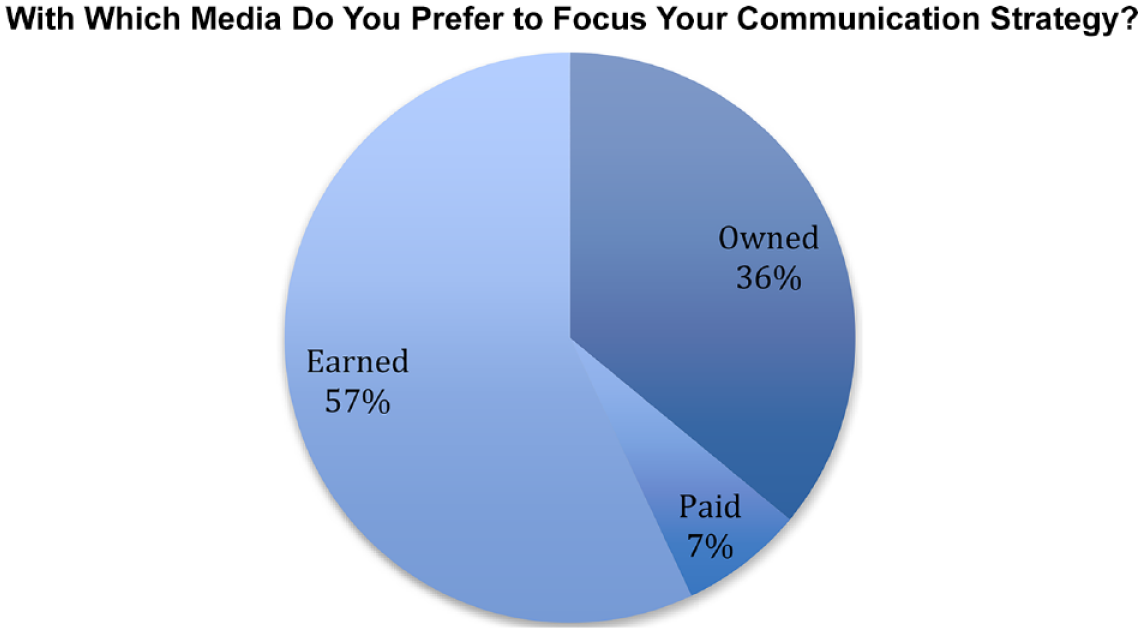
Owned, paid, and earned media.
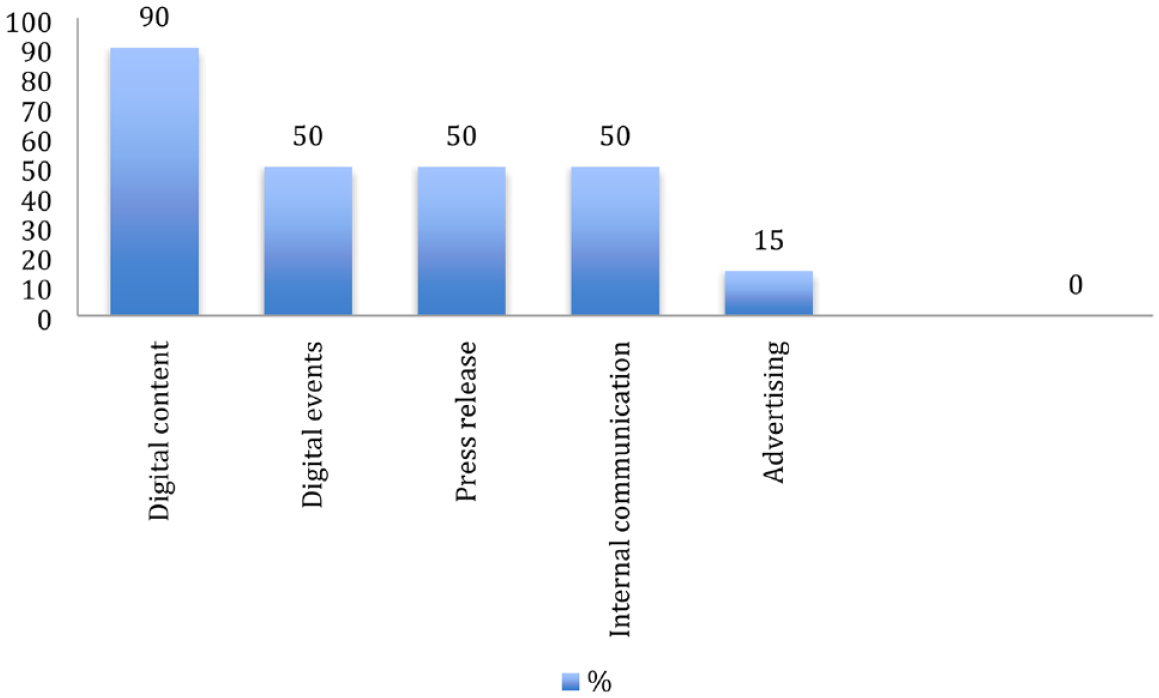
Communication actions.
Thirty-six pecent focus their communication on their own media, mainly through the creation of digital content on their own channels, such as web pages, apps, and newsletters. Only 7% opt for paid media, such as influencer marketing, advertising, and branded content (Zomeño & Blay-Arráez, 2021) as they prefer to obtain maximum growth with minimum investment. However, they do not fully disregard this as it allows for enhanced visibility, combined with the transparency and credibility that can be achieved through owned or earned media.
In response to the multiple-choice question on what type of actions they carry out, 90% of those surveyed revealed that they produce and disseminate digital content. Fifty percent of respondents indicated that they organize events (in person, online, and hybrid), carry out publicity initiatives, such as sending press releases, and are responsible for internal communication. During the pandemic, the activity in the internal communication area escalated as it become necessary to manage the organizational changes resulting from the health crisis (Ruck & Men, 2021).
Regarding the construction of messages, 30% have used newsjacking techniques (Scott, 2010, 2011), relating their message to current events (McCombs & Shaw, 1972).
As for paid media, specifically advertising, is used by only 11% of those surveyed. This is the same percentage for influencer marketing as well.
Social networks are the priority external communication channel in the digital companies’ strategies. The press, television, and radio have also been prominent channels, although to a lesser extent than digital media (Figure 6).
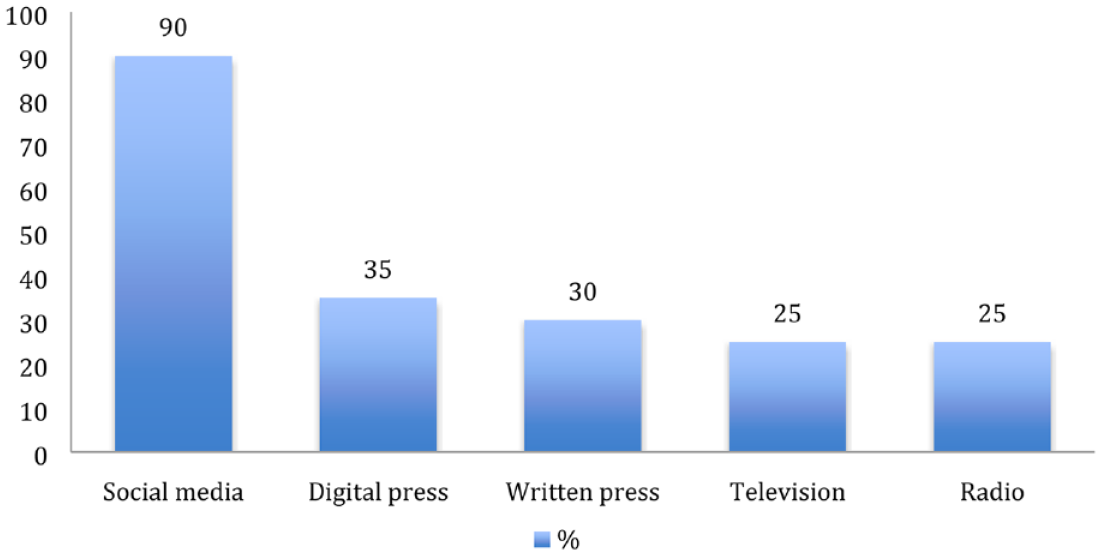
Communication channels.
Ninety percent of digital-native company managers turn to social networks in search of interaction with the public, without abandoning the media that allows them to gain visibility and, above all, adds credibility to their messages. Thirty-five percent prioritize the digital press (Steensen, 2011) as a channel due to the possibility it gives them to disseminate content through these networks. These social networks are their priority channel given that their audience is found there and they can even make their messages go viral (Berger & Milkman, 2012; Jurvetson & Draper, 1997; Maskeroni, 2016; Rosen, 2002; Rushkoff, 1994) and also provide them with information in real time.
Nevertheless, the media’s sustained ability to massively influence public opinion (Bogart, 1989; Lippmann, 1992) and their agenda of priority issues (McCombs & Shaw, 1972) keeps traditional media in the focus of technology companies' communication strategy. 30% focus on print, 25% on television, and another 25% on radio, despite the fact that they all compete with each other and with social networks for the public’s attention, while they also feed off of one another (Jenkins, 2006). Social networks have become the main source of information and dissemination (Waters et al., 2010), becoming the great repository of information of humanity (Negroponte, 1995).
All actions are part of a single integrated communication strategy (Schultz & Kitchen, 2000) based on the previously established communication plan, which is constantly reviewed and is seen as a flexible tool with the capacity to react and take advantage of opportunities with techniques such as newsjacking (Scott, 2010, 2011) and to respond quickly and correctly to possible communication crises (Coombs, 2014; Fearn-Banks, 2016; Jin, 2010; Jin et al., 2012; ). They are susceptible to being corrected or improved based on constant evaluation (Figure 7), following the virtuous circle create-measure-learn (Ries, 2011).
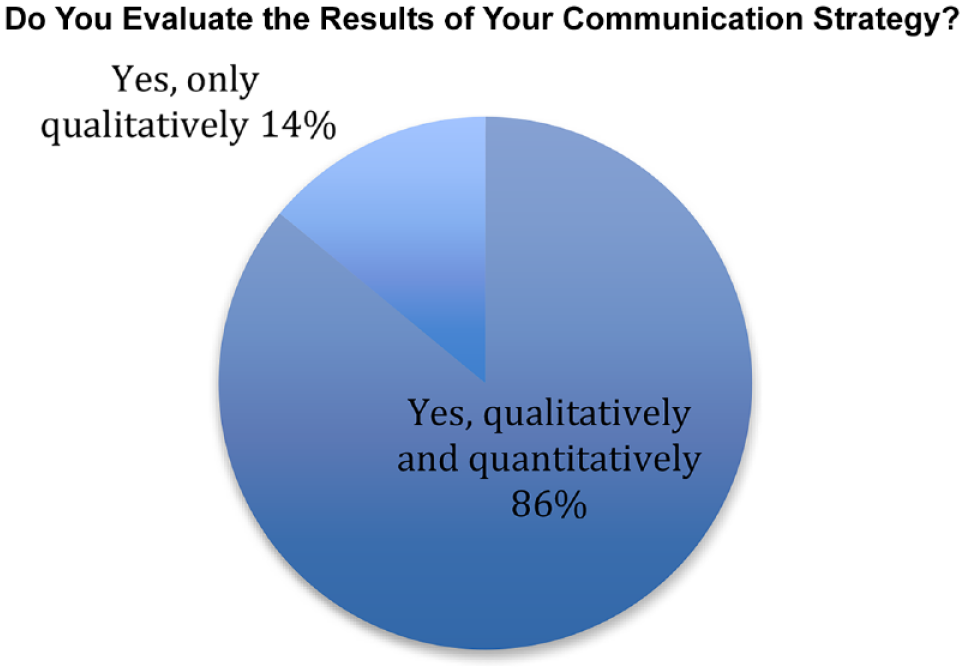
Evaluation.
Evaluation is the central axis of the virtuous circle of digital strategic planning (Ries, 2011) that maintains the essence of leadership through management objectives. Therefore, all digital native company communication managers who responded to the survey confirm that they perform an evaluation of the results obtained by their communication strategy. The approach of data-driven decision making based on previously established indicators is confirmed, as 86% of them make this assessment both quantitatively and qualitatively, compared to 14% who only do so qualitatively.
The assessment is based on key indicators previously established to measure the achievement of objectives. In order to determine its effectiveness, it is also common to compare these results with the volume of investment made to carry it out. It is called return on investment, that is, how much business has been generated for each euro invested. In the case of actions in social media, it is especially important to bear in mind that communication actions in this area are not free, since they require resources, including time and technology (Blanchard, 2011).
Conclusions
The research presented in this article provides a detailed understanding of how digital native companies strategically plan communication (Prensky, 2001). The results presented provide value for the various disciplines related to integrated marketing communication (Kliatchko, 2005; Kotler, 2003; Schultz & Kitchen, 2000; ) such as digital marketing (Tuten & Solomon, 2018), advertising (Rust & Oliver, 1994), journalism (Harcup & O’Neill, 2017), and public relations (Oliver, 2004).
The communicative strategy of new economy companies (Kelly, 1997) focuses on the growth hacking approach (Chen, 2012; Conway & Hemphill, 2019; Ellis, 2010; Ellis & Brown, 2018; Holiday, 2014; Patel & Taylor, 2014; Troisi et al., 2020), incorporating an approach where the audience becomes prosumers who play the role of brand activists, as they also do in politics (Ritzer et al., 2012; Toffler, 1980; Yamamoto et al., 2020).
In a coordinated manner, technological companies combine actions in owned and earned media and to a lesser extent in paid media (Burcher, 2012; Tuten & Solomon, 2018), as well as in diverse channels. They prioritize social networks and digital media, while confirming the credibility and visibility provided by the press, radio, and television, with a process of constant feedback. Knowing the particularities of this strategy, which combines data-driven decision making with creativity and innovative techniques such as newsjacking (Scott, 2010, 2011), provides relevant information when it comes to achieving concrete and measurable communication objectives (Drucker,1954; Parmenter, 2015), with a minimum investment in the shortest possible time. It is, therefore, a source of inspiration for all types of organizations, whether business, political, or social, usually anchored in communication practices bound by protocols and procedures that are incompatible with the immediacy and increasing communication complexity of the digital era (Campbell & Marks, 2015; Howe & Teufel, 2014; Pulizzi, 2015), which has been accentuated by the pandemic (Amankwah-Amoah et al., 2021).
Footnotes
Declaration of Conflicting Interests
The author(s) declared no potential conflicts of interest with respect to the research, authorship, and/or publication of this article.
Funding
The author(s) received no financial support for the research, authorship, and/or publication of this article.