




Abstract
This article describes the history, development, and current position of Dutch foundations. In the past, the philanthropy sector and foundations initiated many nonprofit services in the Netherlands. Along with the growth of the welfare state, philanthropy was sidelined. Due to public funding, the pillarized Dutch nonprofit sector extended strongly. However, despite its large scale it shows a special feature. Most nonprofits are still privately governed institutions although publicly funded. In the 1980s, governmental budget cuts forced the nonprofits to embrace the market as income source. A dualistic model got dominancy or state or market. At the end of the 20th century, however, philanthropy revived and a new philanthropy sector emerged. The article addresses the issue of the role of philanthropy in changing (European) welfare states. Are we experiencing further marketization and privatization—toward a so-called Anglo-Saxon shareholder model—or are we seeing a continuation of the so-called Rhineland, multistakeholder model of government, market, and philanthropy?
Introduction
The Netherlands has—insofar as data from international research are available—one of the largest nonprofit sectors in the world (Salamon, Sokolowski, & Associates, 2004). It originally started as a private initiative and got increasingly funded by the government in the 20th century. This happened within the “mold” of pillarization, the unique political–institutional Dutch solution that allows Protestants, Catholics, and others living apart (within their own pillars) to come together (Lijphart, 1968). Since the growth of the welfare state, government funding has favored each of the three pillars—Catholic, Protestant, and humanist/socialist—and the number of nonprofit organizations has tripled. State funding also has sidelined Dutch philanthropy, including foundations. However, at the end of the past century philanthropy re-occurred, and a new Dutch philanthropy sector emerged.
This makes the issue of foundations intriguing and challenging. Philanthropy is about private initiative: “private action for the public good” (Payton, 1988; Schuyt, 2013). We are currently seeing civic initiatives, a steep growth in foundations, an increase in corporate social responsibility and crowdfunding activity, and many other signs of self-reliance.
If we are to compare the United States, Germany, and the Netherlands from a philanthropic foundation point of view, we have to address the issue of the role of philanthropy in (European) welfare states. Are we experiencing further marketization and privatization—toward a so-called Anglo-Saxon shareholder model—or are we seeing a continuation of the corporate, so-called Rhineland, multistakeholder model?
Should we analyze the revival of philanthropic activity in the context of a dualistic social model (a residual model of social services) or within the context of a diversified one (an institutional model of social services)? These are the main questions that will be answered in this article. It opens with a sketch of the institutional context of foundations in the Netherlands. Second, foundations are introduced, discussing how they operate and what they aim at. Then foundations are placed within the typology regime.
The article ends with an open question about the role of philanthropy and foundations: Should philanthropy be evaluated as a “functional prerequisite” of raw capitalism in a dualistic residual social model, as a “committed contributor” in a diversified institutional social model, or as something in between?
The Institutional Context of Dutch Foundations
In the past, poverty relief, medical care, and education were privately organized and funded by religious institutions, churches, and foundations (de Swaan, 1988; van Leeuwen, 2000). Until the end of the 19th century, private and philanthropic initiatives were assigned the primary responsibility. After World War II, government funding overtook the pillarized private nonprofit sector. According to the principle of proportionality, public financing multiplied. For this reason, as said, the Netherlands got a very large nonprofit sector, although with a unique character: a private, state-funded, nonprofit sector. As a result, philanthropy was sidelined as a source of income for nonprofits.
If we look at the surrounding countries, for example, Germany and the United Kingdom, and if we also compare the Netherlands with the United States, then we come to the conclusion that the Netherlands is lagging behind in its philanthropic funding of its nonprofit sector (see Table 1).
Sources of Civil Society Organization Revenue (Salamon et al., 2004, p. 33).
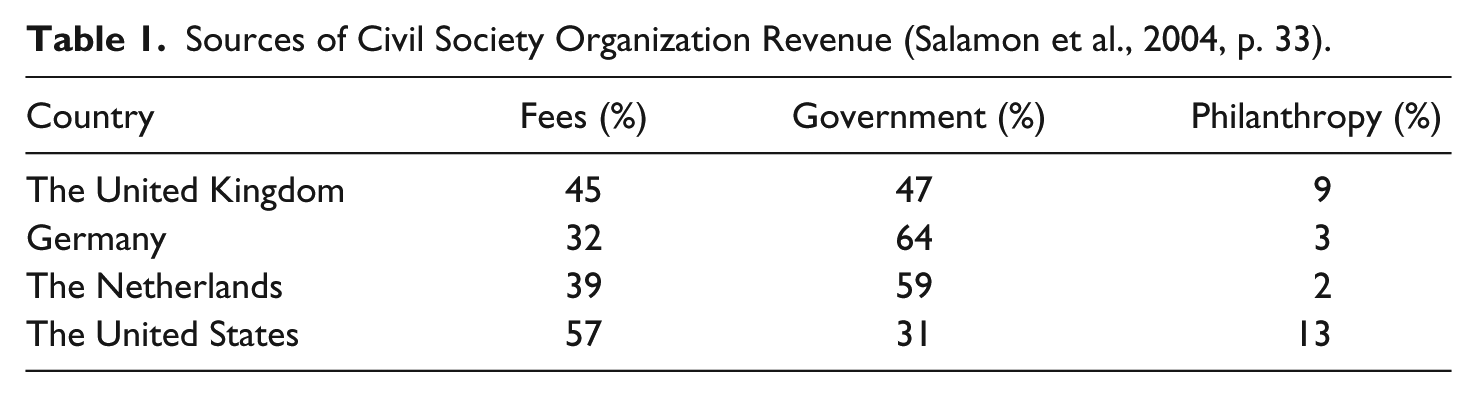
After the period of growth of the welfare state, financial cutbacks forced the nonprofit sector to embrace the “market” to acquire additional funding. That time, a dual, neoliberal social model gained dominancy in the Netherlands: state or market.
However, after 1993, a state-independent, philanthropy sector reemerged in the Netherlands. Fund-raising and endowed foundations stepped up and became more visible. They created national umbrella associations to enhance their profiles and professionalism. In 1995, the philanthropy mapping study “Giving in the Netherlands” was also launched (Bekkers, Schuyt, & Gouwenberg, 2017). This philanthropy revival was not limited to the Netherlands: During the 1990s, a strong growth in foundations was taking place all over Europe (Gouwenberg et al., 2015; Hoolwerf, Karamat Ali, Gouwenberg, 2015). The Dutch nonprofit sector rediscovered philanthropy as a source of income next to the government and the market. Foundations re-entered the domains of poverty relief, health, education, and culture.
The historical and current position of the Dutch foundations—as separate part of the nonprofit sector—placed between the state and the market is illustrated in Figure 1.
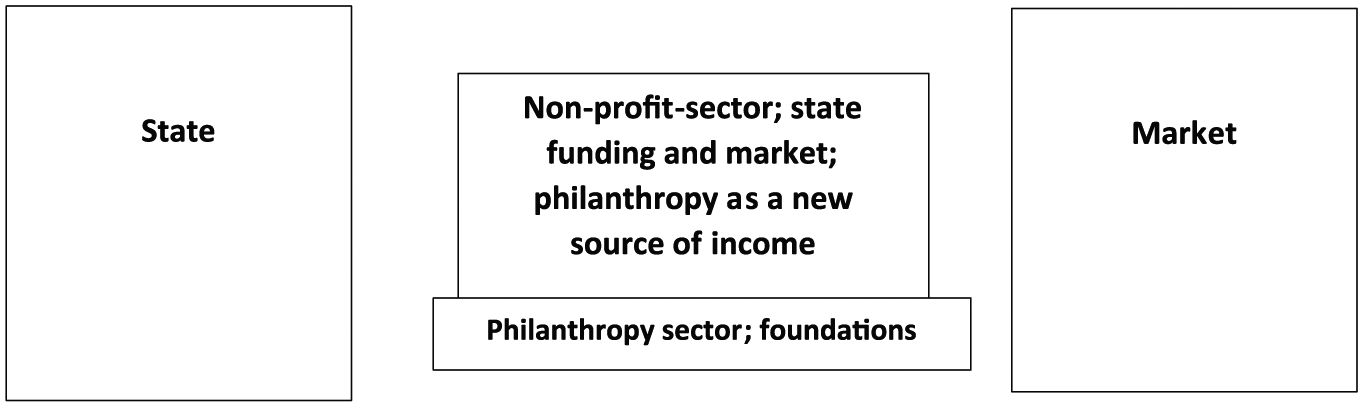
The institutional context of Dutch foundations and nonprofit sector
Dutch Endowed Foundations
The Netherlands harbors a wide variety of foundations that roughly can be distinguished into three categories: fund-raising foundations, hybrid foundations, and endowed foundations. Fund-raising foundations raise donations from the public at large, like the Cancer foundation or the Kidney foundation. Endowed Foundations are philanthropy driven, 1 formal organizations that are (1) asset-based to a significant extent, (2) private, (3) self-governing, (4) nonprofit distributing, and (5) serving a public purpose (Anheier & Daly, 2007; Salamon & Anheier, 1992). Hybrid foundations gather characteristics of both.
On fund-raising foundations and hybrid foundations information is available; in 2015, they donated 3.5 billion euros to good causes. International aid and social welfare goals (national) benefitted most. Compared with the United States and Germany, updated and correct data on endowed foundations unfortunately are missing.
However, some data sources contain relevant information. The Dutch Treasury manages a database with data from institutions that qualify as public benefit institutions (ANBIs), whereby they are exempt from inheritance and donation tax and can receive donations that are deductible for the donor. As of January 2017, there were more than 43,000 accredited ANBIs (Ministry of Finance of the Netherlands, 2017, p. 14). Among them, the estimated number of endowed foundations is between 4,500 and 6,000.
Endowed foundations are not obliged to make themselves publicly known as such. Only if they apply for an ANBI status they have to offer information to the public. If the founder or founding members prefer anonymity they only have to visit a notary to register in the Chamber of Commerce under “foundation.” They get a fiscal number and are known by the (Tax) authorities from then. They are not obliged to make themselves traceable for the general public. If they then obey the formal civil law rules, nobody will know about their existence. In the United States or Germany, this would be impossible.
First research on the Dutch endowed foundations was conducted in 2000 and 2004 (Gouwenberg & Schuyt, 2000, 2004). The EUFORISTUDY, presented in 2015 included R&I (research and innovation) foundations only (Hoolwerf et al., 2015). These researches do not rely on representative samples. What we do know is the “Giving in the Netherlands” survey on endowed foundations (Bekkers et al., 2017). The Dutch umbrella association of endowed foundations, FIN, that represents more than 340 members has asked its members to cooperate with researchers from the Center for Philanthropic Studies at the VU University Amsterdam by reporting in questionnaires about their granting behavior, beneficiary goals, and assets.
For a macroeconomic overview of the “Giving in the Netherlands 2017” edition, the research concentrated on the largest foundations (with a budget of <€1 million) according to the so-called Pareto principle, which assumes that a small proportion of foundations are responsible for the most expenses.
In 2015, 72 foundations contributed €435 million to good causes. 2 Table 2 clearly shows that the Pareto principle also applies to the total group of foundations. A small number (n = 6) are responsible for the largest part (61%) of the expenses.
Total Expenditure of Endowed Foundations in 2015 in Million Euros and Numbers of Categorized Foundations.
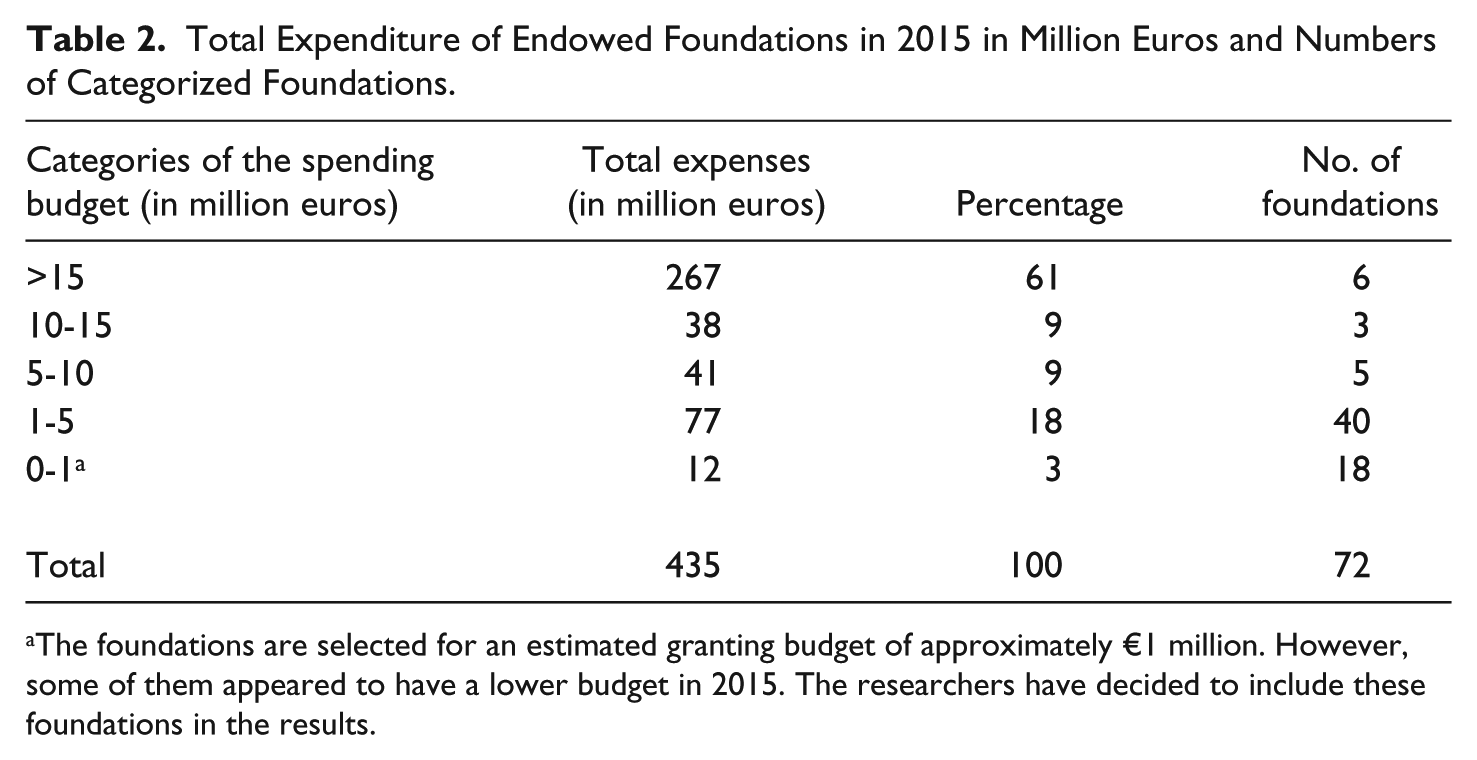
The foundations are selected for an estimated granting budget of approximately €1 million. However, some of them appeared to have a lower budget in 2015. The researchers have decided to include these foundations in the results.
However, the 72 selected foundations are different in nature. Not every foundation is endowed; some receive their budgets from a single structural source annually: a family or a company.
Benefitted Goals and Purposes
For many years “culture” and “social welfare” (national) score highly as the foundations’ favorite goals (Table 3). In 2015 however, one single foundation spent a large budget for “International aid”; we consider this result as “outlier.”
Benefitted Foundation Goals (n = 72) in 2015 a in Million Euros.
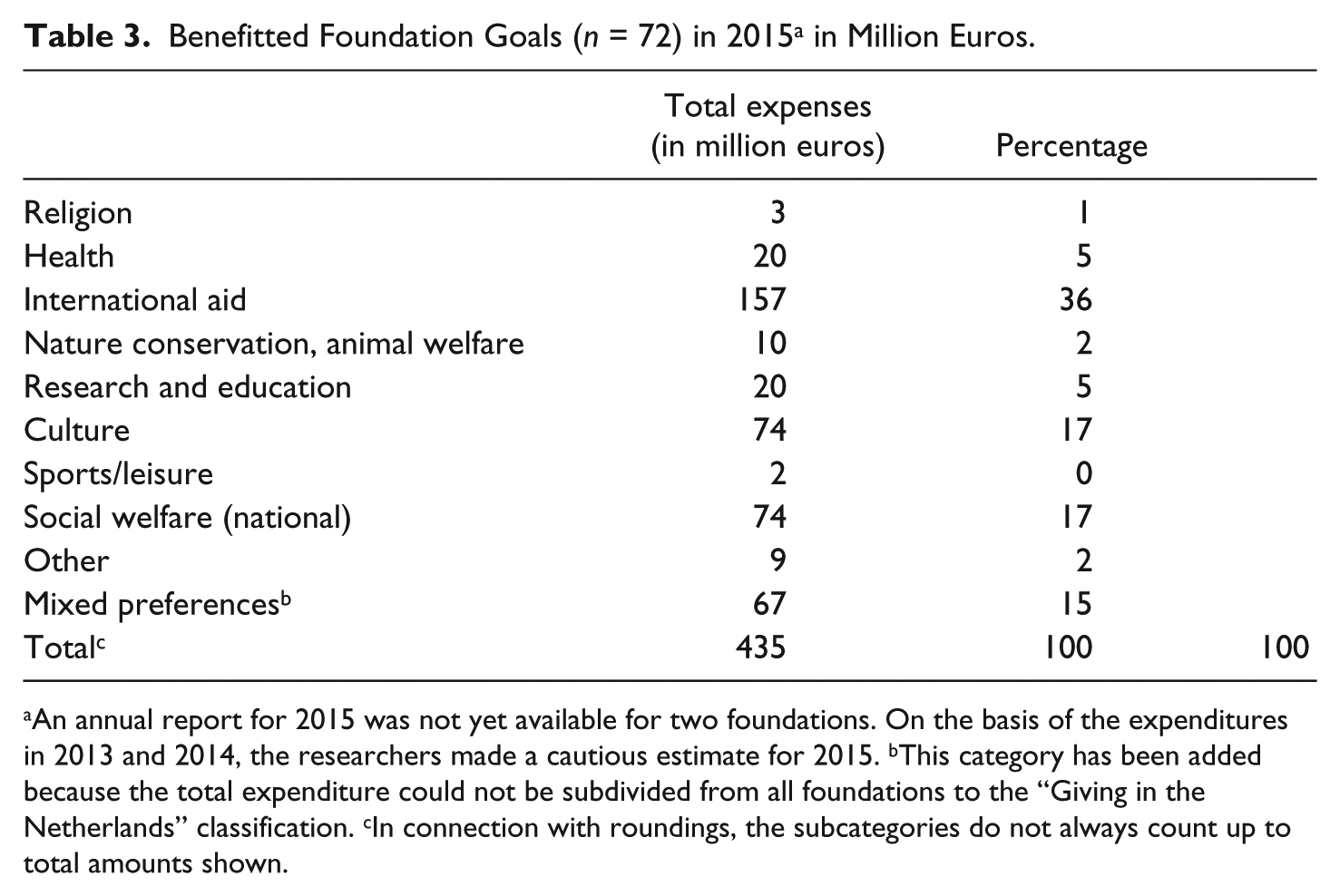
An annual report for 2015 was not yet available for two foundations. On the basis of the expenditures in 2013 and 2014, the researchers made a cautious estimate for 2015. bThis category has been added because the total expenditure could not be subdivided from all foundations to the “Giving in the Netherlands” classification. cIn connection with roundings, the subcategories do not always count up to total amounts shown.
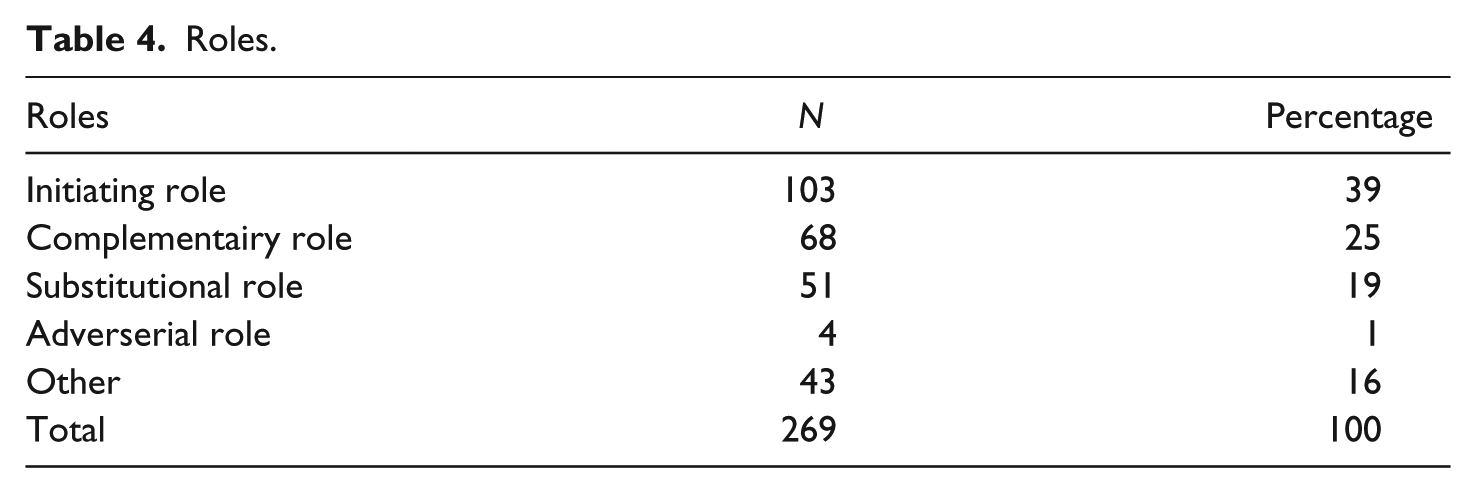
If the benefitted goals represent the purposes the Dutch foundations want to achieve, they will be placed at the relief and protection sides of the “Foundation Triangle.” Not all of them will fit in; many foundations perform as change agents. In the outdated research on Dutch foundations, conducted in 2000, many of them emphasized their initiating roles (Table 4). As second best, they play a complementary role to government services. It is interesting to note that very few foundations regard themselves as having an adversarial role (Gouwenberg & Schuyt, 2000).
Roles.
As Table 2 proves, the foundation population is skewed regarding its size: It comprises a small number of very large ones, a group of medium-sized ones, and the majority of unknown small foundations. Among the larger ones, particularly the new founded, some provide services to fill in gaps in refugee policies (e.g., Verre Bergen Foundation, Rotterdam) or substitute in the case of severe cuts in public libraries (Foundation 1818, the Hague). A number of foundations run programs on special issues, such as “active aging,” poverty relief, youth/next generation, and “loneliness.” They partly change from grant makers to operating foundations.
If we look at the development of the foundation community in the Netherlands over the past two centuries, three main developments stand out. First, there has been a remarkable increase in the number of foundations. Second, the focus of these foundations has expanded and diversified enormously. Networks of foundations, however, are lacking in many cities as well as regular contact with local authorities. This particularism may express social entrepreneurship, but the downside implies a scattered field of separately acting institutions, not being aware of their contingencies to others. The third development is that the foundations’ original role of providing social welfare services changed to cope with increasing poverty and refugee problems.
Position of Dutch Endowed Foundations
Until recently, there was very limited supervision of the activities of these organizations (Gouwenberg, Van der Jagt, & Schuyt, 2007). However, from January 1, 2014, the Dutch Tax Authority demanded that, to keep their fiscal benefits, foundations that apply and qualify for ANBI status must publish online information about their mission, income, expenses, and salaries, as well as a recent policy document. However, regarding foundation grants, an obligatory annual payout as applies for U.S. foundations does not exist in the Netherlands. Foundations are held to donate “a reasonable amount” in comparison with their endowment. The FIN also successfully lobbied an allowance for wealthy family foundations not to publish personal information on their websites.
In the Netherlands, foundations can undertake commercial activities. With the introduction of the Law on Giving (Ministry of Finance of the Netherlands, 2012), ANBIs can undertake commercial activities without losing their ANBI status, as long as these commercial activities are aimed at financing the foundation’s public benefit goals.
Along with the growth in the philanthropy sector, FIN and other philanthropic branch organizations came together for lobbying and advocacy purposes in a national umbrella organization called the “Collaborative Branch Organizations of the Philanthropy Sector” (SBF), founded in 2010.
In 2011, the Dutch government and SBF signed a Covenant (a copy of the United Kingdom’s “Compact” and, later, “Big Society”). Through collaboration, the Dutch government and SBF aim to improve their exchange of knowledge and information, as well as their joint policies and funding, to develop innovative ways of financing societal initiatives, to strengthen the infrastructure of the philanthropy sector, to improve the transparency of the philanthropy sector, and to strengthen the general public’s trust in philanthropic organizations (Covenant “Room for giving,” 2011).
However, since 2013 the rapprochement between the national government and the Dutch philanthropy sector (including the FIN) has diminished. During this time period, the transparency issue has led to the question being asked “State-control or self-regulation?” particularly with regard to the governance requirements of the numerous Dutch fund-raising foundations. Should the Netherlands copy the U.K. model (a closed philanthropic market with entrée-control) governed by the Charity Commission or opt for a self-governing system? The Dutch SBF has chosen the latter, perhaps also encouraged by the fear of FIN and their endowed members being controlled by the government too much. As a result, the “control debate” encouraged the philanthropy sector to reconfirm its independency.
Notwithstanding these political developments, the endowed foundation community has been collaborating with the government when the impact and effectiveness of their projects could be increased. In the domain of relief from poverty, foundations work together on a local level; the same applies to national foundations for caring for the elderly.
Only one example of ongoing collaboration between foundations and the government should be mentioned. In 2014, the so-called “Major Alliance” was established. Motivated by a need for more mutual contact, coordination, and joint initiatives, some of the largest foundations, industry, and the government have been exchanging their knowledge and experience of social issues (Major Alliance, www.maatschappelijkealliantie.org).
So far, we have discussed the situation of foundations between the state and the market; we have tried to shed light on the foundations’ purposes. Unfortunately, we have out-of-date information on what foundations actually do. As mentioned previously, research on foundations—and research on Dutch philanthropy in general—is scarce. The Dutch philanthropy sector does not show a strong commitment to map its performance. The United States and Germany do a slightly better job.
Dutch Foundations Within the Regime Typology Framework
Macroeconomic estimates of total giving by households, legacies, foundations, companies, and charity lotteries only exist in two countries in the world: the United States since 1955 and the Netherlands since 1995. The annual financial contribution of the Dutch philanthropy sector totals €5.7 billion (a lower bound estimation 3 ), or 0.85% of the Dutch GDP (gross domestic product) in 2015 (Bekkers et al., 2017). “Giving in Germany” does not exist. In the feasibility study titled “Giving in Europe”—first published in 2017—Germany’s total giving in 2013 was estimated as 1.1% of its GDP (Hoolwerf & Schuyt, 2017). The United States’ total giving in 2015 was 2.1% of its GDP (average 1.9%; Giving USA, 2016).
Endowed foundations contributed only €435 million in 2015, or 8% of total philanthropic giving. Although we are missing representative data on foundation giving, we must not exaggerate the social significance of the Dutch endowed foundation community.
Looking at these figures, we should keep in mind that in the Netherlands and Germany the core social services—social security, education, and health—are all regulated by the government. In the Netherlands, these services are mainly paid by government taxation, by obligatory insurance, and, to some degree, by (additional) fees (also regulated by the government). In the United States, fees dominate their social service provision. Anheier and Daly (2007) therefore considered the United States to belong to the liberal model. High stratification and low de-commodification of the capitalist market have created a residual model of government social services on one hand, and a large private nonprofit sector, including flourishing philanthropy, on the other. Germany has an institutional model of government-regulated and funded nonprofits, which covers social services. Germany belongs to the corporate model. The Netherlands is corporate-like. It differs from Germany in terms of less strict ruling. Dutch endowed foundations, for example, have successfully attained limited transparency in certain domains. Pluralism and tolerance still survives (Van der Ploeg, van Veen, & Versteegh, 2017).
Policy Recommendations
In the Netherlands, next to an institutional model of government social services, a large nonprofit sector, state-funded, exists in the domains of education, health, culture, and social welfare.
The Dutch philanthropy sector, including foundations, used to be a niche player, but it has been re-entering the large nonprofit sector more and more. This development is not exclusively caused by governmental budget cuts, it also expresses a cultural shift toward private initiative and commitment to the public good.
Since the eras of government funding and forced marketization, the Dutch nonprofit sector has embraced philanthropy as a new constituent of citizen commitment. In contrast to the residual U.S. nonprofit model (fees, philanthropy, and minimum government), the Netherlands is now exploring a diversified, institutional, social model (a high level of government funding, fees, and increasing philanthropy).
However, it is difficult to predict in what direction the social model will develop. Governments, including the Dutch, often consider philanthropy to be an easy additional source of income for their own policies. They force, or “invite”, nonprofits to raise philanthropic contributions (in kind: voluntary; and/or financial: gifts, legacies, and sponsorships). Otherwise, they have a somewhat critical stance toward private philanthropy, mostly suspecting that “the rich want tax reductions,” a lack of democratic control or the threat of uncontrolled financial transfers—terrorism. These arguments consequently cause governments to focus on a more legal regulation of philanthropy.
What will happen in the years ahead not only depends on the policies governments implement but also depends on the strategies—internal and external—the Dutch philanthropy sector chooses. Has the sector organized itself adequately? Is it increasing its lobbying activity and political influence? Has it successfully strengthened its societal legitimacy and constituency? And, is it exploring any opportunities to forge an alliance with the large nonprofit sector in order to maintain and increase independence for both?
Footnotes
Declaration of Conflicting Interests
The authors declared no potential conflicts of interest with respect to the research, authorship, and/or publication of this article.
Funding
The authors received no financial support for the research, authorship, and/or publication of this article.