



Abstract
We provide an overview of what has happened for women over the past 50 years as they worked to break through professional barriers in economics, policy, and institutional leadership. We chart the progress of women in higher education at the college level and beyond and then examine women’s representation at the upper levels of academia, government, law, medicine, and management. We begin our description of trends in 1972, when Title IX was enacted to prohibit sex-based discrimination in federally funded educational programs. The data paint a picture of considerable progress but also persistent inequities. We then go on to consider possible explanations for the continuing gender differences and some of the empirical evidence on the factors identified.
Keywords
In 1976, Rebecca “Becky” Blank graduated college as an economics major from the University of Minnesota; despite having been told after taking a career aptitude test that she “would make a great secretary,” she was part of a rising wave of women who were completing college in the U.S. In an era when only 12 percent of economics majors were women, she had demonstrated her exceptionalism by choosing to major in economics; then, in 1983, when only 15 percent of doctoral degrees in economics were awarded to women, she completed her PhD in that field. Her journey of breakthroughs and exceptionalism continued when she became an assistant professor at Princeton University at a time when only 14 percent of assistant professors in economics were women. In 1989, she moved to Northwestern University, where she received tenure at a time when fewer than 5 percent of full professors in economics were women. Her academic scholarship on the determinants of labor supply and unemployment, the role of gender and race in labor markets (including an impactful review piece with Altonji [Blank and Altonji 1999]), and inequality more broadly have changed how these issues are understood by academics and policymakers alike.
In 1997, she had the opportunity to put her knowledge into direct policy practice when she was appointed a member of President Clinton’s Council of Economic Advisers. It came as no surprise to those who knew her when, in 1999, she was selected to become the inaugural dean of the Ford School at the University of Michigan. This position leveraged her scholarly achievements and policy interests and allowed her to develop new skills in management and fundraising. In 2009, she returned to Washington, DC, to work in the Commerce Department, where she would later serve as acting secretary at a time when only about a third of cabinet positions were held by women. As Becky would joke, the career aptitude test turned out to have been right when she finally did become a secretary—Secretary of Commerce.
In 2013, when only 18 percent of universities with “very high research activity” had a woman president, Becky Blank showed us again what it meant to be a breakthrough leader by becoming chancellor of the University of Wisconsin. Figure 1 provides a visual description of Blank’s professional career and many of the exceptional contributions that Becky made in economics, policy, and leadership at some of our most important institutions.
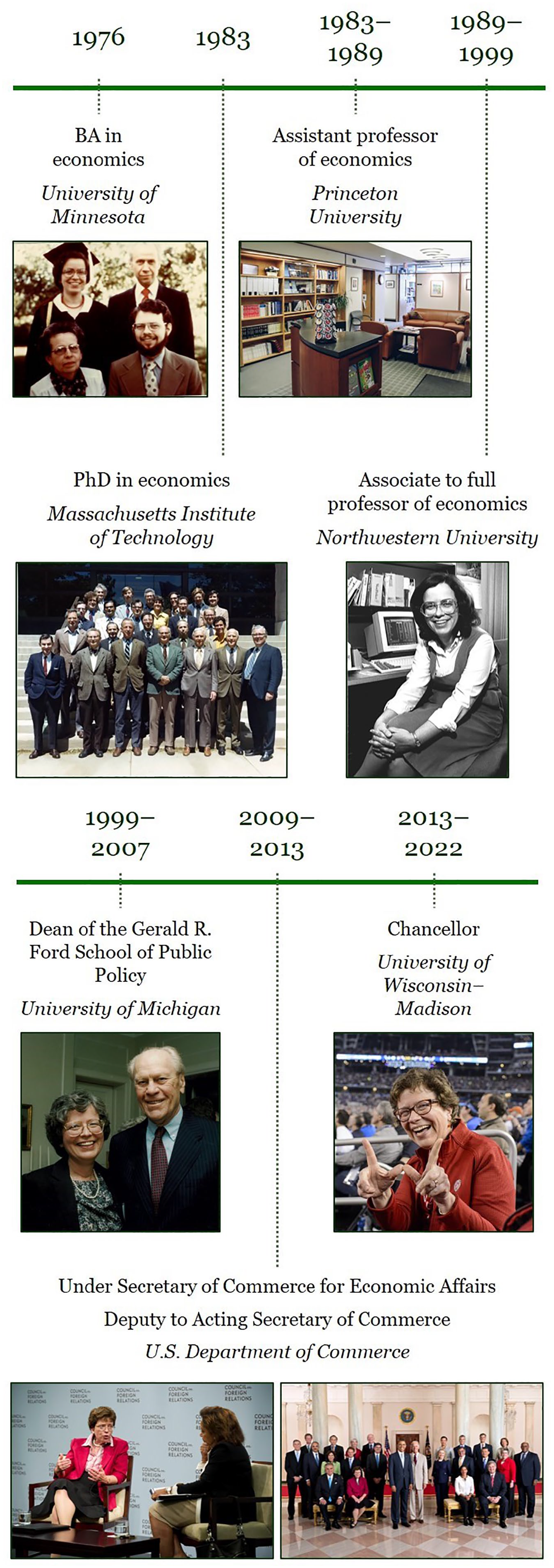
A Timeline of Rebecca Blank’s Professional History
Rebecca Blank’s remarkable life in academic discovery and public service inspires the rest of this article, which assesses what has happened for women over the past 50 years as they worked to break through professional barriers in economics, policy, and institutional leadership. We begin with measurement—something Becky advocated in her work, charting the progress of women in higher education at the college level and beyond and then examining women’s representation at the upper levels of academia, government, law, medicine, and management. Our analysis begins in 1972, when Title IX was enacted, prohibiting sex-based discrimination in federally funded educational programs. The data paint a picture of considerable progress but also persistent inequities. We then go on to consider possible explanations for the continuing gender differences and some of the empirical evidence about the factors identified.
Trends in Gender Differences in Educational Attainment and Leadership Positions
In her 2006 lecture “The Quiet Revolution That Transformed Women’s Employment, Education, and Family,” Claudia Goldin discusses how “women’s increased involvement in the economy was the most significant change in labor markets during the past century.” She highlights the dramatic changes in women’s educational attainment that began in the 1970s and helped expand their horizons of what was possible for them to do and altered their identities such that they “could ‘make a name’ for themselves before having to choose to change their name” (Goldin 2006).
Figure 2, using data compiled by Blau and Winkler (2022), shows the dramatic changes that have occurred in women’s educational attainment in the U.S. over the past 50 years. By 1980, women had achieved parity with men in receiving bachelor’s and master’s degrees; by 2010, they achieved parity in PhDs. Today, women are more likely than men to achieve these degrees; by 2020, they had exceeded parity in receiving professional degrees, such as in law and medicine.
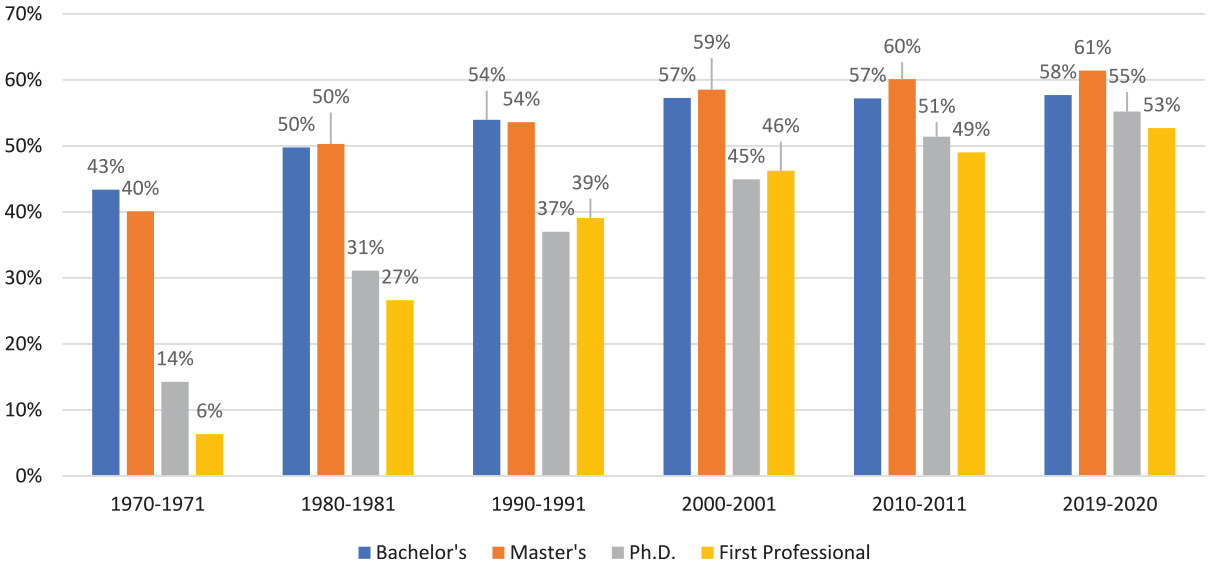
Percentage of Degrees Awarded to Women by Type and Year
While women have now exceeded parity in higher education attainment in the U.S. across all degree levels, parity has been more elusive in some disciplines at both the undergraduate and graduate levels, including economics. The National Center for Science and Engineering Statistics ([NCSES] 2023) reports that in 2020, women comprised just 43 percent of undergraduate majors in the physical and earth sciences, 26 percent of majors in math and computer science, and 24 percent in engineering. Economics is another field that has seen progress over the past 50 years at the undergraduate level, but progress has stalled. In Figure 3, using data from the American Economic Association’s Committee on the Status of Women in the Economics Profession (CSWEP) annual survey of economics departments (CSWEP 2021, 2024), we see a large increase in the percentage of women who chose economics as their college major between the 1970s and 1980s, but this quickly leveled off with women comprising just 36 percent of economics majors in 2022. At the doctoral level, women have likewise seen slow progress, but again, this has leveled off over the decade to just over 30 percent.
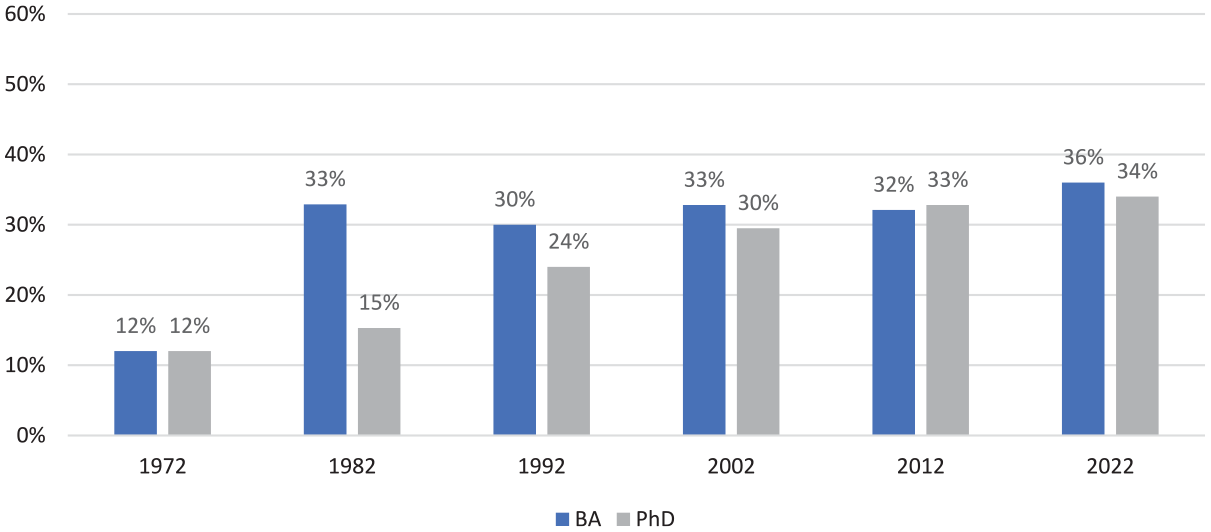
Percentage of Economics BA and PhD Degrees Awarded to Women by Year
Along with the increase in the share of women completing doctoral degrees (shown in Figure 2), we have seen a steady increase in the percentage of faculty by rank who are women. Women achieved parity with men at the assistant professorship level in 2012 and are close to parity at the associate level in 2022. However, as shown in Figure 4, the percentage of women who are full professors in 2022 is just 35 percent. In economics, however, the level of representation is much lower, with the percentage of women full professors not rising to more than 10 percent until the 2010s; in 2022, it was just 18 percent even though women have been 30 percent or more of PhD graduates for the past 20 years.
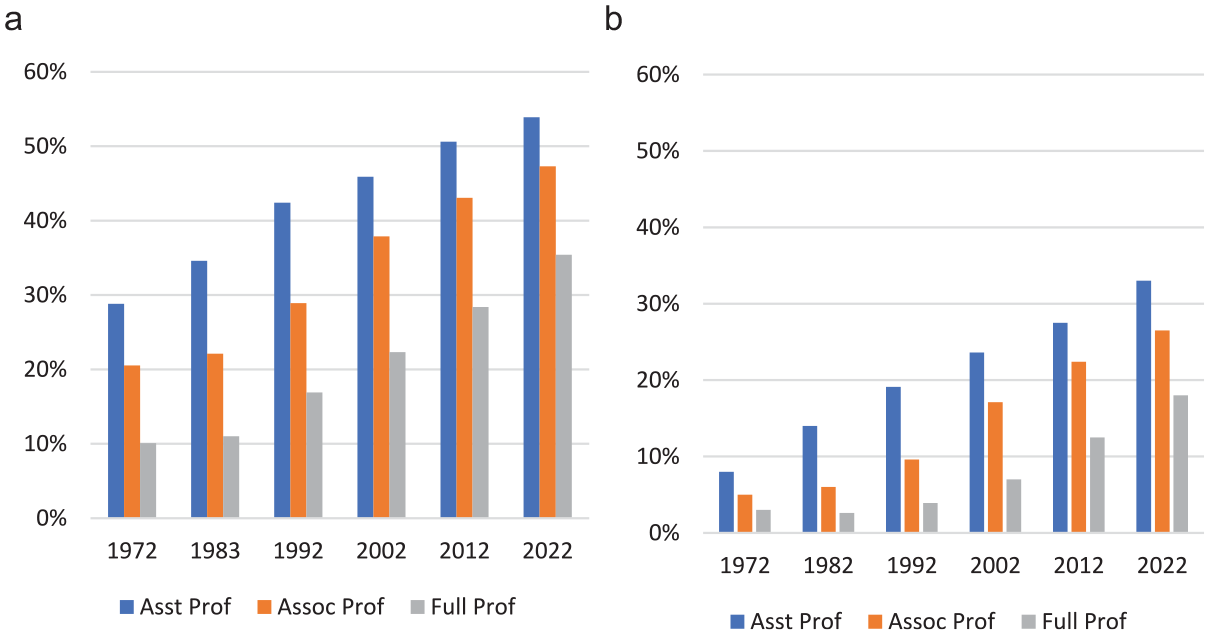
Percentage of Faculty by Rank Who Are Women. (a) All Fields (Full-Time). (b) Economics.
In colleges and universities, the internal pipeline to the presidency most often begins with the faculty: The presidencies of these institutions are often filled by people who have been deans or provosts, and those jobs are most often filled by people promoted from the faculty. Progress in the representation of women in senior leadership positions in academia has followed the path of representation of women at the full-professor level with a lag. However, as discussed by Bray et al. (2020), women are still more likely to hold the least senior administrative positions and are typically the lowest paid among higher education administrators. The representation of people of color among higher education administrators is even worse. Fuesting (2023), using data from the College and University Professional Association for Human Resources (CUPA-HR) survey of higher education administrators, finds that “in 2022, people of color were underrepresented among higher ed administrators in comparison to U.S. graduate degree holders, accounting for only 18 percent of higher ed administrators but 31 percent of U.S. graduate degree holders. To reach parity with U.S. graduate degree holders, the representation of people of color among higher ed administrators would need to increase by 69 percent.”
Using data from the 2022 CUPA-HR survey of higher education administrators, which covers more than 800 colleges and universities in the U.S., Fuesting (2023) finds that only 33 percent of all college and university presidents in the institutions surveyed were women, up from 21 percent in 2002. In a separate analysis of R1 universities (i.e., top-tiered doctoral institutions designated by the Carnegie Classification System to provide a very high level of research activity [Indiana University Center for Postsecondary Research 2018]), we find just 28 percent of the presidents are women by January 2024. Although R1 institutions represent less than 4 percent of all degree-granting institutions in the U.S., they are on the forefront of advancing research and innovation and receive the bulk of federal research dollars; they are also the institutions where most of the professoriate obtain their doctoral degrees.
Figure 5 plots the percentage of R1 university presidents who are women from 1972 to 2024. The 1990s saw a marked increase in the representation of women, from 4 percent in 1990 to 12 percent in 2000, but the trend leveled off around the time of the Great Recession in 2008 and fell from 2013 to 2018; it has since risen sharply to 28 percent.
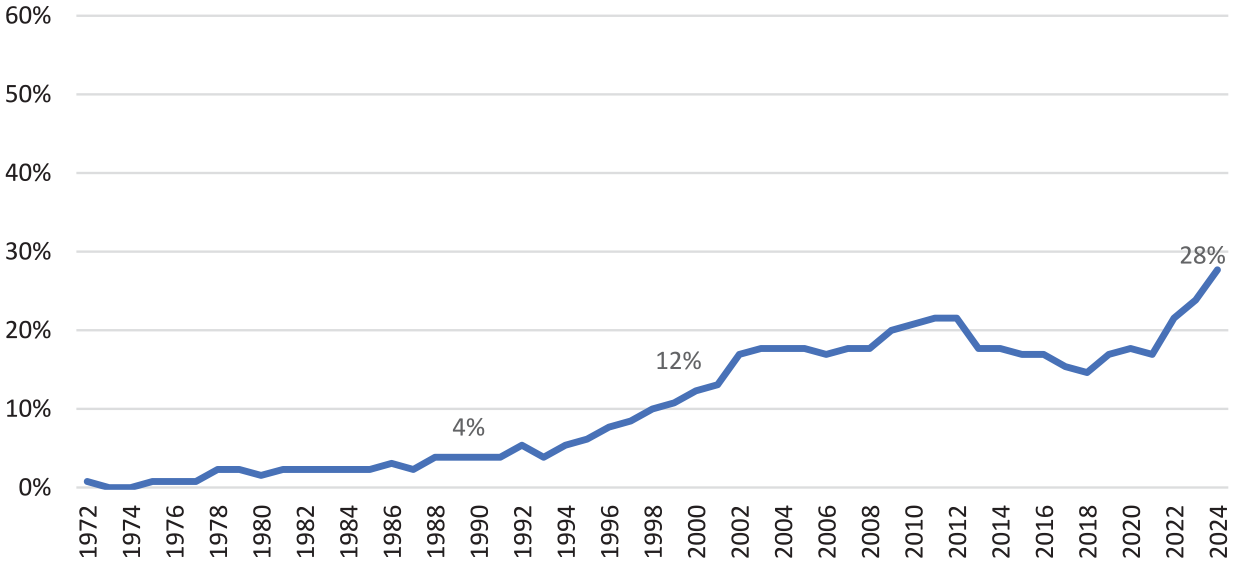
Percentage of R1 University Presidents Who Are Women
Moving from higher education to the political arena, we see that women’s progress has been slow and has yet to reach anything near parity. Data compiled by the Pew Research Center and summarized by Schaeffer (2023) does show a very gradual increase in the percentage of elected women at the state and federal levels over the past 50 years. In 1973, no women served in the U.S. Senate or as governors (Figure 6). By 2023, the share of women in the Senate had increased to 25 percent and in governor’s mansions to 24 percent; women comprised just 29 percent of the House of Representatives and 33 percent of the membership of state legislatures. And let us not forget the executive branch, where we have yet to see a female president as of this writing, and the first female vice president only took office in 2021.
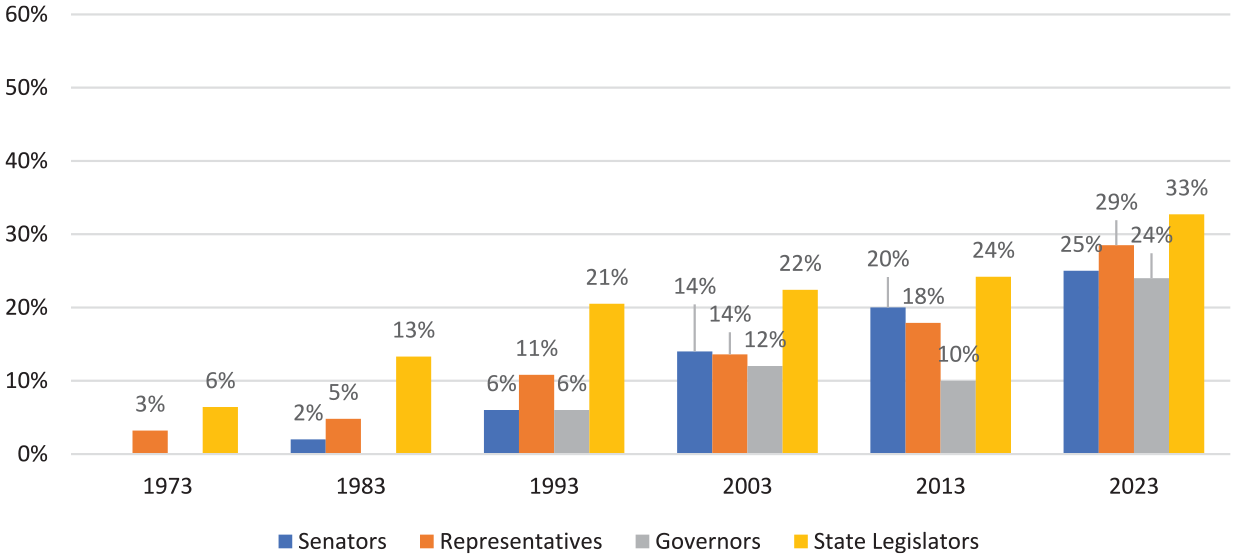
Percentage of U.S. Senators, U.S. Representatives, Governors, and State Legislators Who Are Women
Female representation in senior positions in the executive branch—those filled by the president—is also important. Figure 7 presents additional data from the Center for American Women and Politics (2024) at Rutgers University on gender representation in the executive branch at the federal level. It shows the maximum percentage of women serving concurrently in a cabinet position by each presidential administration. Although we have seen more success in gender parity at this level over the past 50 years, the progress might best be described as having significant potholes in the past 20 years. For example, during the second Clinton administration, women held more than 40 percent of cabinet positions. This share fell during the subsequent Bush administration, rose in the Obama administration to a maximum of 35 percent in his second term, fell sharply in the Trump administration to slightly over 25 percent, and is now over 50 percent in the Biden administration.
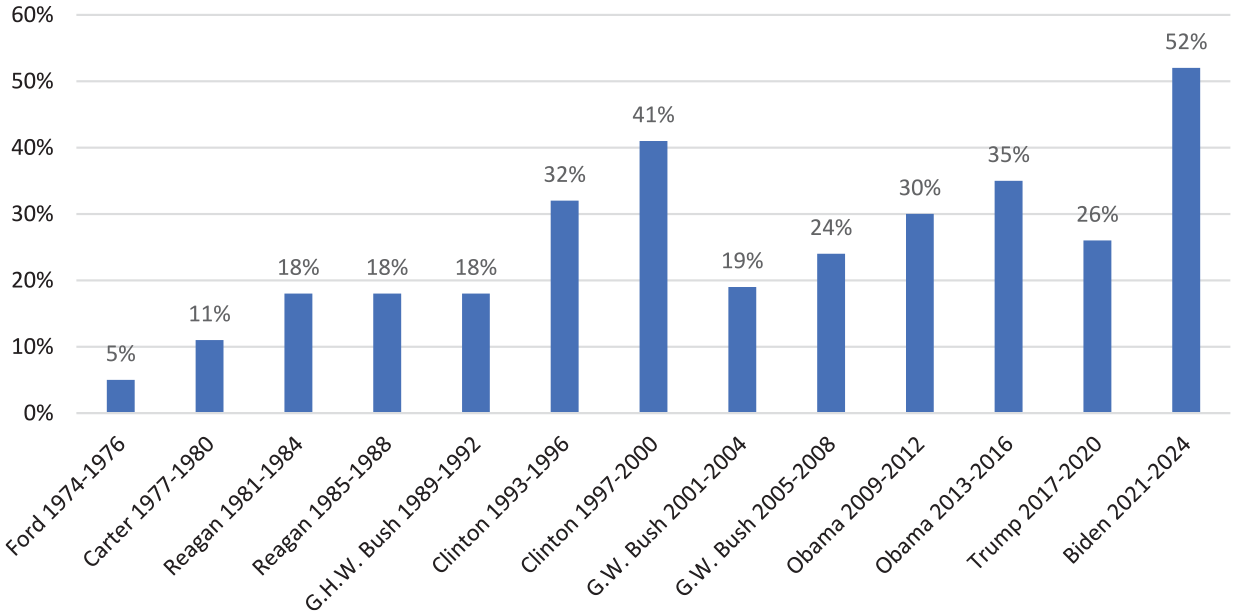
Maximum Percentage of Cabinet Positions Held by Women
The Federal Reserve system plays a key policymaking role in the economy. Given the relatively low percentage of women economists—and the role of our presidents (to date, all male) in nominating members of the Fed’s board of governors—we might expect that gender representation would be low among board members and presidents of regional Federal Reserve banks. Yet when we examine trends over the past 50 years, as shown in Figure 8, we see significant progress toward gender parity by 2024.
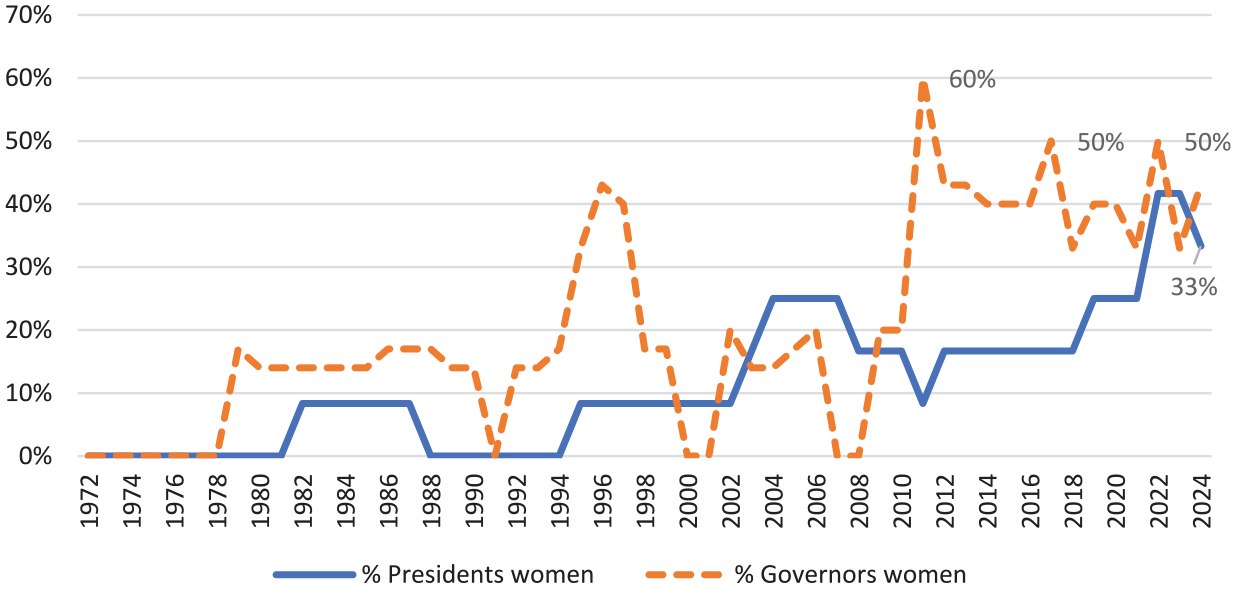
Percentage of Federal Reserve System Leadership Who Are Women
In Figure 8, we plot the share of women serving as president of the 12 regional Federal Reserve banks and as governors of the Federal Reserve System from 1972 to 2024. Given the small numbers in play, these data are lumpier than those depicted in earlier charts; and when you look at the percentage of women who were governors of the Federal Reserve system, you see evidence of potholes. Governors of the Federal Reserve Board are nominated by the president and confirmed by the U.S. Senate. The maximum number of governors is seven, but the nature of the confirmation process means that, at any given time, there may be fewer than seven in office. In contrast, presidents of regional Federal Reserve Banks, subject to the approval of the board of governors, are appointed by the individual regional bank’s class B and C directors (those not affiliated with a supervised entity). In 2011, 2017, and 2022, we see parity or more (in 2011) in the gender representation of members of the board of governors. Over time, we see a steadily rising trend in the representation of women as regional presidents; however, the drop in the share of presidents who are women in 2024 merits watching.
As discussed earlier, women achieved parity in educational attainment in professional degrees overall by 2020. In law, where women comprised only 20 percent of first-year law students in 1973, they reached parity in representation in law school graduation in 2000 and today represent more than 55 percent of law school graduates (American Bar Association 2023). The share of law school deans who are women has also increased markedly over the past 20 years, from 10 percent in 2000 to 43 percent in 2022 (Fenwick 2023). However, women’s progress as practitioners has been slower (from 3 percent in 1970 to 38 percent in 2022); this lag reflects, in part, a timing issue, with the stock of current practitioners being those who completed their studies at a time when women were less well represented. Representation of women as equity partners in law firms has been even slower, with just 22 percent in 2020. Among federal judgeships, which include the Supreme Court, just 32 percent of federal judges in 2021 were women (Forster-Long, LLC 2021).
In 1980, 25 percent of medical school graduates were women; but by 2023, women had reached more than parity, with 55.4 percent of matriculants being women (Association of American Medical Colleges [AAMC] 2019, 2023). Progress in academic leadership in medicine has been slower, however, with no women serving as medical school deans in 1980 and just 27 percent by 2023 (AAMC 2024). In addition, the representation of women differs sharply across specialties. For example, among residents in 2022–2023, women made up 87 percent of OB/GYN residents and 74 percent of pediatric residents, compared to 20 percent of orthopedic surgery residents and 24 percent of neurosurgeons (Brotherton and Etzel 2023).
Gender differences in women’s representation in management mirror the types of disparities we see in academia, law, and medicine. Beginning with management training, we see that, according to data cited by Fraser and Watson (2020) from the Association to Advance Collegiate Schools of Business (the accrediting body for business school programs), 44 percent of MBA graduates and 40 percent of doctoral graduates in business are women—with enrollment over the past decade increasing just 5 percent for women in MBA programs and 2 percent for women in doctoral programs. Of business and management faculty, just 38 percent of assistant professors, 33 percent of associate professors, and 20 percent of full professors are women. Similarly, women make up only 20 percent of business school deans.
Women’s representation in corporate leadership, especially at the largest firms, has been even slower to increase. Katharine Graham of The Washington Post Co. was the first woman CEO to make the Fortune 500 list, in 1972; and, as shown in Figure 9, it was not until after 2000 that we started seeing a rise in women CEOs of these largest firms. Even so, in 2022, women represented only 9 percent of Fortune 500 CEOs. Board representation looks a bit better with women now making up 30 percent of board members in Fortune 500 firms. And when we look at entrepreneurs more broadly, the U.S. Small Business Administration (2023) reports that more than 40 percent of small businesses in the U.S. are owned by women.
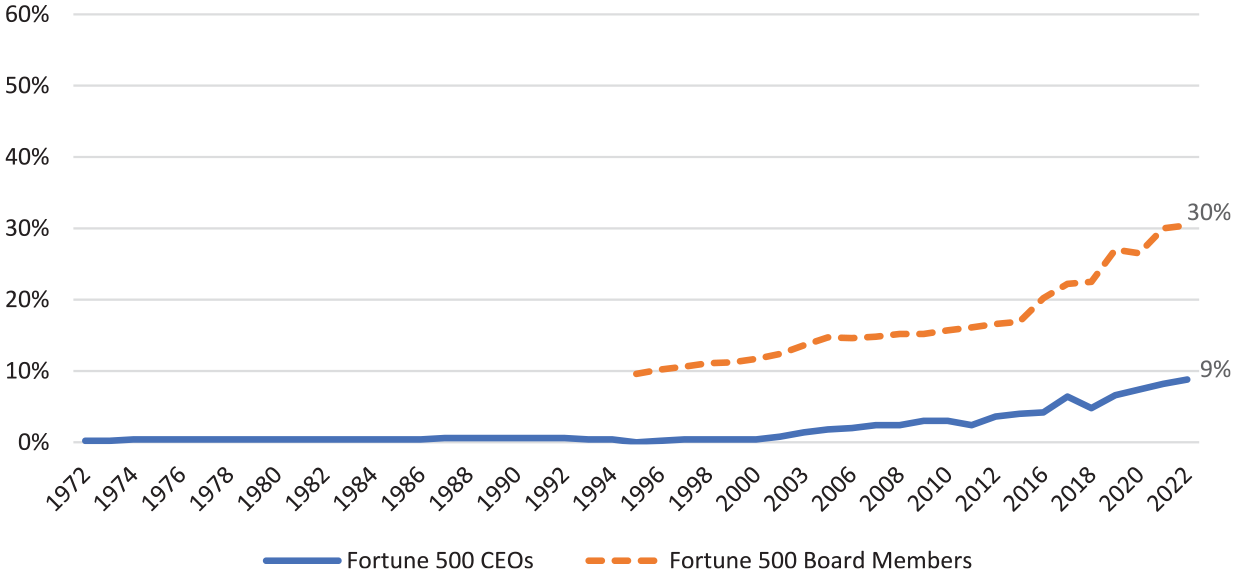
Percentage of Fortune 500 CEOs and Board Members Who Are Women
Explanations for Gender Differences in Representation at the Top
Given these persistent gender differences, what might explain the apparent glass ceilings that we see for women in the top tiers of economics, policy, and leadership? One approach to understanding this is to divide the potential sources into supply-side (pipeline) versus demand-side (discrimination) factors. However, there are some significant caveats and limitations to this approach. Specifically, some factors may well affect both supply and demand. For example, accepted gender norms and stereotyping or the anticipation of, or experience with, discrimination can affect both women’s behavior and their treatment. Hence, we do not attempt to make a strong categorization here.
Despite the marked increases in women’s education and occupational shifts from predominantly female positions (e.g., teacher, nurse, librarian, social worker) to a varied group of professions, including formerly predominantly male professions (e.g., lawyer, physician, professor, manager), the pipeline to top leadership positions in these fields takes time. In addition, the pipelines might be leaky, the reasons for which we will discuss shortly. There may also be low turnover in positions that can block the upward progress of later arrivals entirely (e.g., the incumbency advantage for Congress, boards of directors, CEO positions, college presidencies) or, even when entry occurs, slow shifts in the overall composition of the category (e.g., senior faculty positions).
In addition, we still observe that having children imposes significantly larger penalties on the career trajectories of women than on those of men (e.g., Cortés and Pan 2023; Kleven, Landais, and Søgaard 2019; Waldfogel 1998). 1 Children can negatively impact a range of decisions relating to attachment to the labor force as well as the choice of occupation, occupation level, and firm. Although these decisions might be attributed to supply-side considerations, they can also be affected by women’s experience with or anticipation of discrimination, including discrimination based on parenthood.
As for other factors that may be impacting the career trajectories of women, a useful starting point is to consider gender differences in human capital, particularly education and experience. Given that, as we have seen, women have now exceeded men with respect to the completion of higher education at all levels—bachelor’s, master’s, PhD, and professional degrees, such as law and medicine—we do not expect this dimension of human capital to be an important source of current gender differences in these types of positions (allowing, of course, for pipeline effects). Moreover, for the labor force as a whole, gender differences in experience have been greatly diminished and now do not account for much of the wage differential (Blau and Kahn 2017). Nevertheless, research indicates that gender differences in experience and hours worked remain salient, particularly in high-skill jobs. This differential arises, in part, from the high penalties women in these fields pay for the shorter hours worked or employment interruptions often associated with children (e.g., Bertrand, Goldin, and Katz 2010; Noonan, Corcoran, and Courant 2005).
Goldin (2014) has argued that some skilled jobs require long hours and work performed at particular times and places and consequently disproportionately reward those who can more readily comply. That is, such workers receive a “compensating differential” (i.e., a payment compensating them for accepting a job “disamenity” or an undesirable feature like longer hours). Goldin (2014) argues that a key factor behind such job requirements is a lack of substitutability between workers. So, for example, in a high-powered law firm, knowledge about the particulars of an important client’s work may rest with one lawyer—making it important that the individual is present. Given the gender division of labor in most families, men will be more willing to accept these job features, and this will generate a gender wage gap within occupations, especially in fields like law and business, where she finds evidence of this pattern. Goldin’s analysis provides an alternative to human capital theory for the impact of hours and workforce interruptions on women’s advancement. In the human capital analysis, the higher pay received, for example, by those working longer hours would reflect that they had learned more due to the additional time spent on the job, enhancing their skills, and hence were more productive for that reason. Goldin’s focus is on within-occupation gender pay gaps. However, it is reasonable to infer that this factor—lack of flexibility or long hours—might cause differences in women’s access to higher-level jobs and leadership positions and even affect their occupational choices more broadly.
There is also extensive research on how women and men may differ in their noncognitive skills and psychological attributes. Such differences may have contributed to the lack of parity in the representation of women in leadership positions. This includes gender differences in negotiation, risk aversion, and some evidence that women disproportionately shy away from competitive work settings (for a review, see Blau and Kahn 2017). However, some factors likely limit the impact of noncognitive skills on gender gaps. For one, although some noncognitive factors may favor men, others, like interpersonal skills, appear to favor women (Borghans, ter Weel, and Weinberg 2014). Further complicating matters, competitiveness and excessive risk-taking may not be optimal in all circumstances. Negative reactions to women acting in “unfeminine” ways may diminish their returns to doing so. For example, as discussed below, female managers who initiated negotiations in an experimental setting were found to elicit negative responses, whereas the same was not true for males.
More broadly, stereotyping and the persistence of traditional gender roles are themselves important sources of gender differences. Social psychologists have found evidence of targeted forms of prejudice against women as they gain access to high-status, high-paying, male-dominated jobs that are thought to require characteristics stereotypically ascribed to men. And this kind of stereotyping and discrimination can negatively affect female attitudes and behavior, where women perceive a cost to acting in ways that conflict with their gender identity. Moreover, adherence to stereotypes can produce self-expectancy effects and self-fulfilling prophecies that also become a barrier to advancement (see, e.g., Bertrand and Duflo 2017; Eagly and Karau 2002). In this vein, Sandberg (2014), former chief operating officer of Meta and author of Lean In, discussed the “tyranny of low expectations” in her Harvard Class Day address in 2014.
Then there is outright discrimination. If we look at the caseload at the Equal Employment Opportunity Commission (EEOC) in 2019, for example, more than 23,000 cases were filed with the EEOC citing sex discrimination that year. But discrimination need not be overt and conscious to create more subtle barriers to women’s advancement, especially in predominantly male settings. These include an absence of role models, exclusion from mentor-protégé relationships, and exclusion from informal networks (for a review, see Blau and Winkler 2022). Moreover, it is important to bear in mind that the experience of discrimination, both personal and observed, and the anticipation of experiencing it, can impact behavior and diminish expectations of success that, in turn, become self-fulfilling prophecies. We discuss some evidence of such mechanisms below.
Empirical Evidence on the Explanations for Gender Differences
Turning to empirical evidence on the sources of gender differences, Francine Blau and Kahn (2017) provide a comprehensive analysis of trends in and determinants of the size of the gender wage gap. As shown in Figure 10, over the 1980–2010 period, the gender wage gap closed more slowly at the top of the wage distribution than at the middle or the bottom, both unadjusted and controlling for covariates. These covariates included education, actual labor market experience, occupation, industry, union coverage, race/ethnicity, and region. For those at the 10th percentile, by 2010, controlling for covariates, the female-to-male wage ratio was almost 97 percent and 92 percent at the median. But for those at the 90th percentile, even after controlling for covariates, the wage ratio was just under 84 percent. This finding is consistent with the notion of glass ceiling issues hindering progress. The remaining shortfalls are unexplained by the included covariates. While the unexplained gap is suggestive of discrimination, it is potentially a biased measure. It will overestimate discrimination if important omitted variables favor men. It will underestimate discrimination if we include as controls factors that could reflect discrimination (e.g., occupation, industry), if women are better endowed than men with respect to omitted factors, or if there are feedback effects. For this reason, it is interesting to consider some other types of evidence that point to the role discrimination may play.
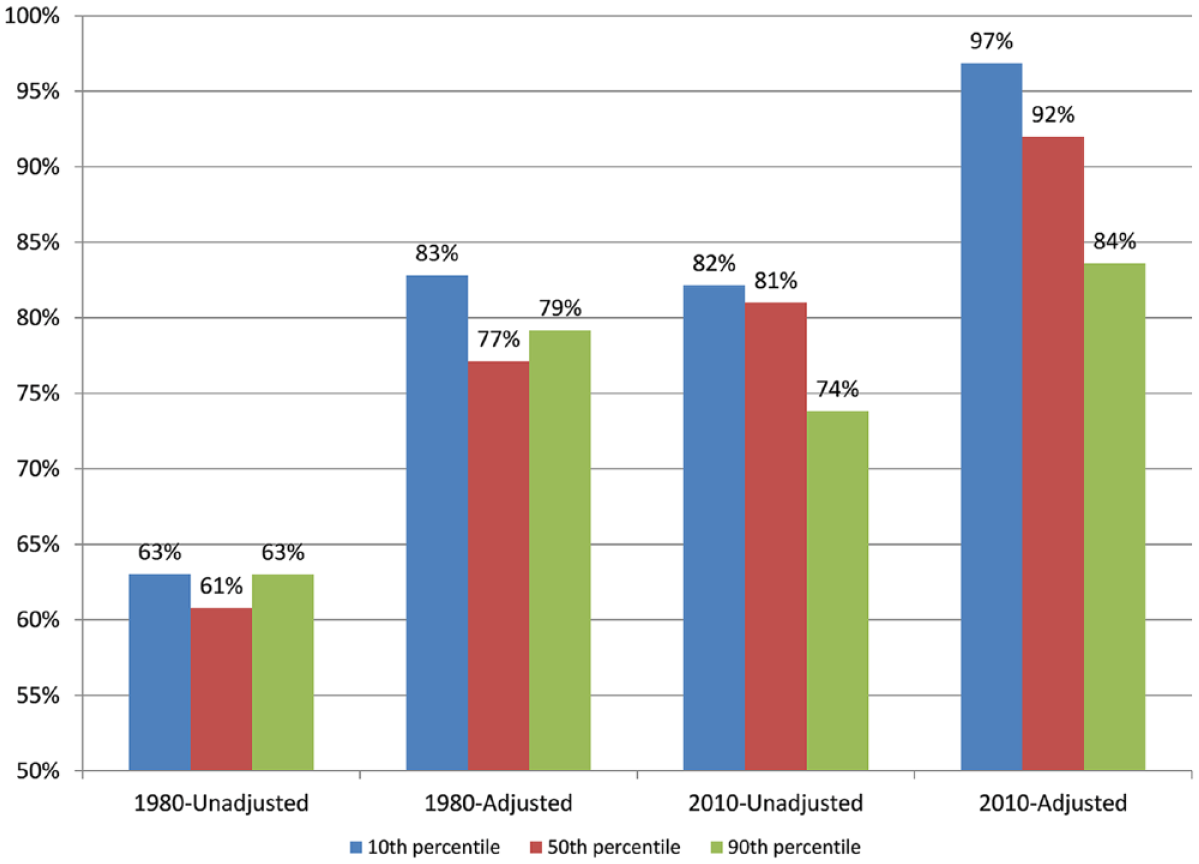
Female to Male Wage Ratios by Percentile, Unadjusted and Adjusted for Covariates
Blau and Kahn (2017) argue that similar types of analyses applied to subgroups that are presumably more homogeneous may be instructive in that those groups likely suffer less from omitted variable bias, although the authors acknowledge this could still be a factor. Both the Noonan, Corcoran, and Courant (2005) study of lawyers and the Bertrand, Goldin, and Katz (2010) study of MBAs find an important role for factors like hours worked and workforce interruptions in accounting for gender pay differences. In a similar vein, as discussed previously, Goldin (2014) finds evidence that gender differences play a role in causing gender pay gaps, specifically in the returns gleaned from working long hours. Nonetheless, importantly, both the Noonan, Corcoran, and Courant (2005) and the Bertrand, Goldin, and Katz (2010) studies also find evidence of unexplained gaps after controlling for an extensive list of covariates, including hours, work history, and performance in school. 2 (Goldin [2014] did not examine this issue.)
Within academia, in fields that have historically had a lower representation of women, we see some progress, but evidence of barriers persists within some subfields. Starting with economics, we see in recent research by Ginther and Kahn (2021) that women are still significantly (18.5 percent) less likely to be promoted to associate professor after controlling for cumulative publications, citations, grants, and grant dollars. However, interestingly, women have almost achieved parity in research-intensive institutions, while significant gaps remain at less research-intensive institutions. In contrast, in biomedical science, physical science, political science, mathematics and statistics, and engineering, Ginther and Kahn (2021) find no significant difference in promotion currently. A recent review and meta-analysis of research on STEM fields, including economics, found evidence of bias against women in teaching ratings and salaries but not in hiring, grant funding, journal acceptances, and recommendation letters (Ceci, Kahn, and Williams 2023). However, the authors acknowledge that, even in the areas in which they found no evidence of bias disadvantaging women, “broad societal structural factors may still impede women’s advancement” (15).
In addition, as Blau and Kahn (2017) point out, results from studies with experimental and quasi-experimental designs also provide evidence of discrimination. Two hiring studies that are particularly relevant to our focal group are Moss-Racusin et al. (2012) and Reuben, Sapienza, and Zingales (2014). Moss-Racusin et al. (2012) is a field experiment in which science faculty (from biology, chemistry, and physics) at six large, research-intensive universities were asked to provide feedback on pseudo application materials for a science laboratory manager position by a college senior who ultimately intended to go to graduate school. The faculty were told that their responses would provide feedback to help the student’s career development. The application was randomly assigned to be from a male or a female student. It was found that both male and female faculty rated male applicants as significantly more competent and suitable for the position and selected a higher starting salary for them. They also offered more career mentoring to the male applicants. These results are especially striking in light of the fact that the underrepresentation of women in STEM is so frequently bemoaned. The Reuben, Sapienza, and Zingales (2014) study is a laboratory experiment in which some subjects (“employers”) hired other subjects (“applicants”) to perform an arithmetic task that men and women performed equally well, on average. It was found that when employers had no information about applicants other than sex, both male and female employers were twice as likely to hire a man as a woman. Gender discrimination in hiring was reduced, but not fully eliminated, when employers had information about applicants’ previous performance on the arithmetic task. A notable feature of this study is that it provides evidence on the role of unconscious stereotypes in influencing discrimination. Specifically, the authors find that the extent of subjects’ bias about women’s performance is correlated with their score on a measure of implicit stereotypes. 3
Another study in the hiring arena that is worth mentioning, although it applies to the whole labor force, is by Correll, Benard, and Paik (2007). Using both laboratory and field experiments, the authors found that participants had less favorable views regarding the résumés of equally qualified mothers relative to those of nonmothers. In the lab experiment, this corresponded to a lower evaluation for mothers and in the field experiment to lower callbacks for mothers. Fathers were not disadvantaged relative to nonfathers. This suggests that the negative effect of motherhood in the labor market may have a demand-, as well as a supply-side component.
While much of the testing for bias or discrimination has focused on hiring, evidence has emerged that suggests that bias on how performance is perceived and rewarded adversely affects women. One area in which evidence of such bias has been detected is college teaching: Women receive less favorable evaluations than men do for what appears to be similar performance. For example, Mengel, Saurermann, and Zolitz (2019) leveraged data from a major Dutch university where, within each course, students were randomly assigned a male or a female section instructor. Women received systematically lower teaching evaluations even though students’ grades and time studying were not affected by their instructor’s sex. The lower evaluations of female instructors were driven by male students and were larger in mathematical courses. Lower evaluations were especially pronounced for junior women. 4
Another study suggesting the presence of bias focused on the behavior of referring physicians in the face of information on surgeons’ performance. Sarsons (2017) found that referrals to female surgeons dropped more sharply than male surgeons after a patient death, whereas referrals to male and female surgeons responded similarly to a good patient outcome. Moreover, after a bad experience with one female surgeon, physicians became less likely to refer patients to other female surgeons.
Finally, it is of interest to take note of the subjective perceptions that discrimination is an issue in the economics profession. In 2019, the American Economic Association (AEA) fielded a survey of economists regarding the professional climate in the field. Upon the release of the final detailed results of the survey (Allgood et al. 2019), the past, current, and future presidents of the association acknowledged that “many members of the economics profession have suffered harassment and discrimination during their careers, including both overt acts of abuse and more subtle forms of marginalization” and stated that the AEA leadership “takes these issues extremely seriously” (Bernanke, Yellen, and Blanchard 2019).
Studies of the kind we have reviewed thus far generally do not account for gender differences in noncognitive skills, so a question arises about the magnitude of its potential role. Unfortunately, because much of the evidence on gender differences in noncognitive skills comes from laboratory or field experiments, it is difficult to infer what the impact of these differences would be on, say, the gender pay gap. However, summarizing a subset of analyses that use survey data to quantify the effect of noncognitive skills on the gender pay gap for broad groups of workers, Blau and Kahn (2017) found these factors account for only a small to moderate share of the gap (see their Table 7). While this does not speak directly to our focal group, it is not unreasonable to assume the impact may well be small here as well. For one thing, there is some evidence that gender differences in noncognitive skills within fields or occupations are smaller than they are for broader groups. For example, while women are found to be more risk averse than men in samples drawn from the general population or university students, studies focused on, for example, mutual fund managers or entrepreneurs find little or no evidence of gender differences in financial risk preferences (Croson and Gneezy 2009). This finding may show that similar individuals select into the area or that those who enter with different preferences may learn from the environment and, over time, become more similar to their peers. In either case, it suggests that differences within an area will be smaller than they are for broader aggregates. However, a study of recent MBA graduates from the University of Chicago Booth School of Business found a gender difference in a measure of willingness to compete that was correlated with earnings and helped to account for the gender gap in compensation—although this factor accounted for relatively little of the gender gap (Reuben, Sapienza, and Zingales 2015, as cited in Bertrand 2018). Another unresolved issue is highlighted by Bertrand (2018), who pointed out that some research findings suggest that the extent of gender differences in behavior may depend on the “specific domain (e.g., ‘male job’ or ‘general job’)” (214).
A further important point is that, as noted earlier, women may face negative responses when they act in ways that are perceived as unfeminine. Such reactions leave them to navigate a dilemma: If they behave in the “appropriate” female way, they may lose out because they are perceived as lacking in attributes desirable for the job; but if they act in a manner perceived to be appropriate for men, they may elicit a negative response for being unfeminine. For example, when Bowles, Babcock, and Lai (2007) asked study participants to evaluate managers based on a transcript or a video of a job placement interview, they found that participants responded negatively to female managers who initiated negotiations for higher compensation, with subjects reporting they would not like to work with those women. However, the same behavior by male managers had little effect on subjects’ willingness to work with them.
We previously noted that role models, mentors, and peers can be important in influencing women’s entry into and outcomes in historically male-dominated fields, and some research, including experimental evidence, supports that case. To examine the effect of a faculty member’s gender on student outcomes, two studies drew on data about United States Air Force Academy students who were randomly assigned to professors for a number of required standardized courses in math and science. Carrell, Page, and West (2010) found that having a female professor had a strong positive effect on female students’ performance in math and science classes, their likelihood of taking future math and science courses, and their likelihood of graduating with a STEM (science, technology, engineering, and mathematics) degree. The effects were largest for female students with very strong math skills, the most likely candidates for careers in science. Mansour et al. (2022) further found that, among high-ability female students, being assigned a female professor led to substantial increases in the probability of working in a STEM occupation and the probability of receiving a STEM master’s degree.
In recent research, Butcher, McEwan, and Weerapana (2023) examined the incidence of majoring in economics among students admitted to an all-female college, Wellesley, comparing those who did and did not choose to attend. They found that those who enrolled were more likely to major in economics, with 44 percent of the difference explained by the greater exposure to female instructors and students at Wellesley.
Finally, we would point to the positive effect of the mentoring program of the AEA’s Committee on the Status of Women on the outcomes of participating female junior faculty. Applicants were randomly assigned to participate in the program, which was a two-day mentoring program that also emphasized networking among the participants. The evaluation of the program by Ginther et al. (2020) found women who participated were more likely to stay in academia and achieve tenure in top-ranked schools. The authors believe the results speak to the importance of not only mentors but also peer networks.
Conclusion
This article examines both women’s progress in breaking through the glass ceiling and the remaining significant gender gaps in representation at the higher levels. We began by reviewing women’s considerable progress in narrowing and, indeed for the most part, reversing gender gaps in higher education, with women now comprising the majority of recipients of bachelor’s, master’s, and PhD degrees and attaining more than parity among those receiving professional degrees. On the other hand, while there have been important gains in women’s access to high-level positions in academia, government, law, medicine, and management, considerable gender differences remain.
We then discussed some explanations for the persistence of gender gaps and the empirical evidence of the impact of various factors. The evidence suggests that gender differences in qualifications and noncognitive skills play a part, as do the different responses of men and women to the long hours required to succeed in some areas. However, there is also evidence that even accounting for such factors, discrimination and stereotyping, both conscious and unconscious, and subtle barriers and roadblocks are part of the explanation for the persistent gender differences we document. Our consideration of these issues serves to highlight Rebecca Blank’s exceptionalism in building the outstanding career she did, including the attainment of high-level positions in academia and government. It also underscores how important her achievements are to younger women seeking to follow in her footsteps.
Footnotes
NOTE: We are grateful for the helpful comments of Leslie McGranahan, Diane Whitmore Schanzenbach, and participants at the Authors’ Conference in Memory and Honor of Rebecca M. Blank, Federal Reserve Bank of Chicago, February 22–23, 2024. We thank David Titus for excellent research assistance.
Notes
Francine D. Blau is Frances Perkins Professor of Industrial and Labor Relations and professor of economics emeritus at Cornell University. She has received the IZA Prize in Labor Economics and the Jacob Mincer Award from the Society of Labor Economists. She has written extensively on gender issues, wage inequality, and immigration.
Lisa M. Lynch is Maurice B. Hexter Professor of Social and Economic Policy at Brandeis University’s Heller School for Social Policy Management. At Brandeis, she was provost, interim president, and dean of the Heller School. She studies racial and gender disparities in the labor market and the impact of organizational innovation.