




Abstract
Information and Communication Technologies (ICTs) offer valuable tools for fostering social cohesion and conflict resolution, yet little is known about women's roles in this domain. This study draws on 14 interviews to explore how female Cameroonian peacebuilders used ICTs during the Anglophone Crisis. Findings indicate that low-tech tools, like WhatsApp groups, play a key role in information dissemination, while more advanced technologies remain largely absent despite their growing presence in peacebuilding literature. Whilst this study demonstrates the capacity of ICTs to promote women's involvement in peacebuilding by facilitating participation, protection, and prevention, it also examines existing challenges, including restricted accessibility and technology-facilitated violence. By exploring the intersection of digital peacebuilding and the UN's Women, Peace, and Security Agenda through the lens of the Cameroonian case, we propose an intersectional feminist digital peacebuilding framework, incorporating gender-responsive and locally grounded strategies to better support women's engagement in peacebuilding efforts.
Introduction
Although women 1 are disproportionately affected by conflict, they are frequently excluded from peacebuilding processes (Acilar and Sæbø, 2023; Chitando, 2021). This persistent marginalisation underscores the need to explore new avenues that may enable more inclusive participation. In this regard, Information and Communication Technologies (ICTs) have become important instruments in conflict resolution and peacebuilding. As digitalisation accelerates, ICTs increasingly shape how people engage in peace-related activities, offering new tools, platforms, and communication channels. On the one hand, digital spaces hold significant potential to promote gender equality through their inclusive, accessible, and flexible character (Buzatu et al., 2021; Hirblinger, 2020; Krystel et al., 2023; Schirch, 2020). On the other hand, ICTs also risk reinforcing existing inequalities. Persistent social and economic disparities often limit women's online participation (Ahmed and Madrid-Morales, 2021; Hustead, 2024), and ICTs are not inherently gender-neutral, frequently amplifying underlying structural inequalities (Arimatsu, 2019). Marginalised groups, including women, face significant obstacles to digital inclusion, not least due to technology-facilitated (gender-based) violence (Buzatu et al., 2021; Fal-Dutra Santos and Pourmalek, 2022).
At the same time, international policy agendas have increasingly emphasised women's participation in peace and security (Brown, 2018; Hofstetter, 2021). Central to this development is the UN Security Council's Resolution 1325 and the Women, Peace, and Security (WPS) Agenda, which call for gender-responsive peacebuilding and the meaningful inclusion of women at all levels of decision-making (O’Reilly, 2019; UNDP, 2019; United Nations Security Council, 2000). However, digital dimensions remain largely absent from existing (gender-sensitive) peacebuilding frameworks, while gender perspectives are likewise insufficiently integrated into digital peacebuilding approaches. This is despite growing recognition of the relevance of ICTs for contemporary peacebuilding. Although recent UN debates have increasingly highlighted the importance of women's engagement with technology and the creation of inclusive digital ecosystems (UN Women, 2022), this emerging awareness has yet to translate into concrete, context-sensitive policies. Local dynamics, intersecting inequalities, and structural barriers, particularly those affecting black, rural, or otherwise marginalised women, shape who can participate in peacebuilding and how. Therefore, intersectional approaches are essential to understanding and designing more inclusive digital and non-digital peacebuilding efforts (Krystel et al., 2023).
This paper examines how women peacebuilders from the Anglophone regions in Cameroon use ICTs in their peacebuilding initiatives. Despite their active involvement in conflict resolution (Annan et al., 2021), their contributions largely remain underrepresented due to patriarchal structures (Fonkeng, 2023; Fransen, 2022). Some of the underlying tensions of the Anglophone Crisis can be traced to colonial-era policies and the marginalisation of the Anglophone minority by Francophone-led governments (Beseng et al., 2023). After decades of non-violent resistance, the peaceful demonstrations of 2016 were met with repression and violence (Sunjo and Tata, 2025). Consequently, many citizens, including women, have turned to ICTs for peace-related activities, making Cameroon a particularly relevant site for studying digital peacebuilding. Drawing on 14 interviews with women peacebuilders from Cameroon's Anglophone regions, as well as theoretical insights from digital peacebuilding scholarship, the WPS Agenda, and intersectionality, this study proposes an intersectional feminist digital peacebuilding framework (see Figure 1). The goal of the framework is to analyze and improve how ICTs can support peacebuilding in ways that meaningfully include women and other marginalised groups, while accounting for the multiple, intersecting forms of exclusion that shape their participation.
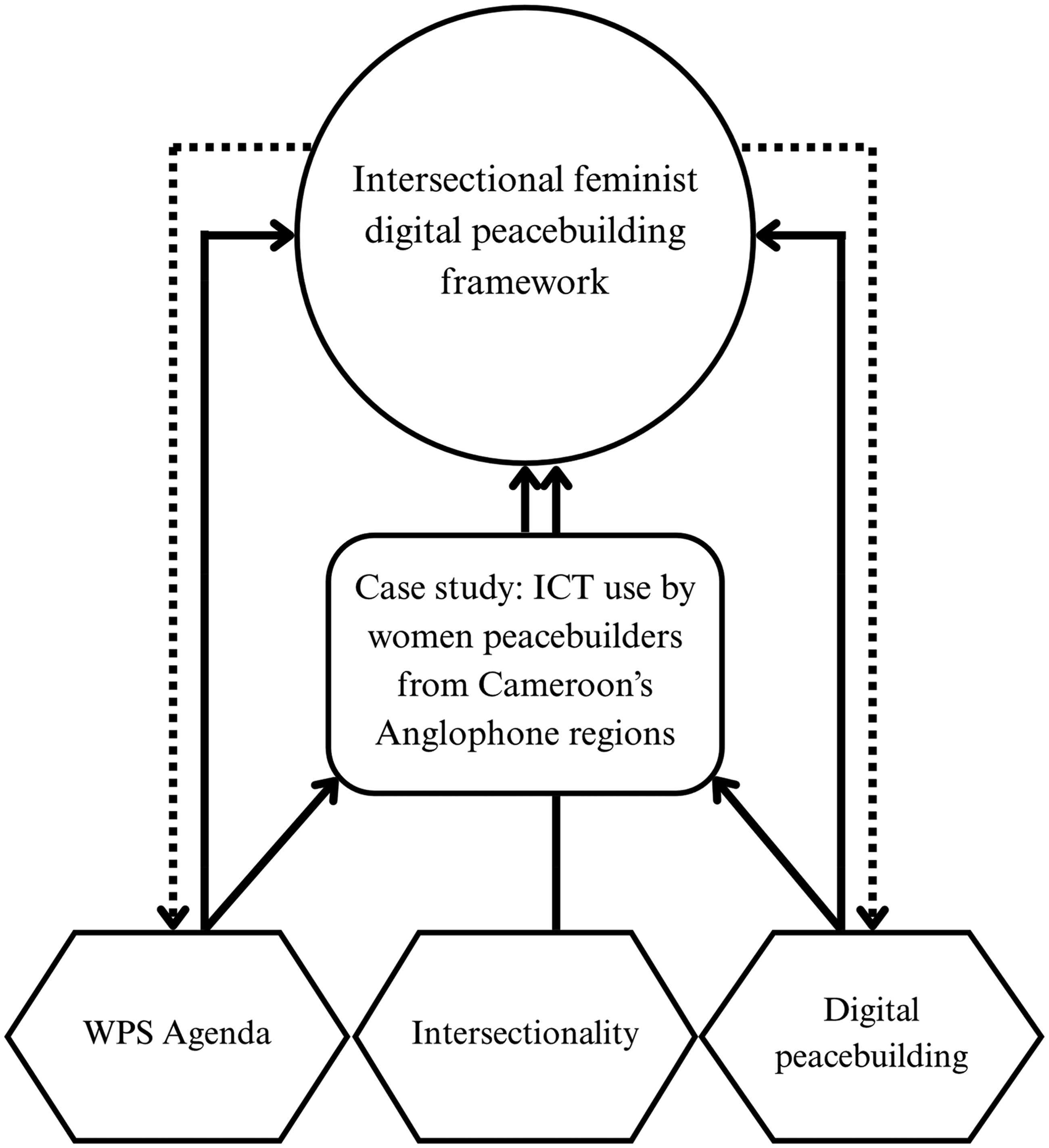
Overview of How the WPS Agenda, Intersectionality, Digital Peacebuilding, and the Case Study Inform the Intersectional Feminist Digital Peacebuilding Framework. WPS Agenda: Women, Peace and Security Agenda; ICT: Information and Communication Technology. Source: Own depiction.
Technology, Gender, and Peace: The Intersection of ICTs and Women’s Role in Peacebuilding
The following section presents literature on women's roles in peacebuilding, digital peacebuilding, and the nexus between the two.
Women’s Roles in (Digital) Peacebuilding
Gender-sensitive research highlights the importance of women's meaningful participation in peacebuilding, including in African contexts (Chitando, 2021). Studies show that women's inclusion improves the quality, implementation, and durability of peace agreements (Krause et al., 2018) and fosters more effective, compromise-oriented conflict resolution (Good, 2024). Peace negotiations can also drive political reforms, enhancing women's political involvement post-conflict (Anderson, 2016). Arostegui (2013) argues that women's experiences in conflict, combined with their roles as combatants, peacebuilders, and activists, make them valuable assets in peacebuilding.
In practice, however, women's participation in peacebuilding is often absent or confined to informal political channels, minimising their potential (Krause et al., 2018; Ron et al., 2021; Stasiulis and Yuval-Davis, 1995). Although initiatives like the WPS Agenda and the African Women Solidarity Peace Forum have expanded opportunities for women's participation and elevated local actors (Arostegui, 2013), they are often criticised for colonial legacies and insufficient attention to gender norms and intersectionality in the Global South (Chitando, 2021; Parashar, 2019). Furthermore, ICTs are rarely emphasised in these frameworks and forums. Studies by Sharland et al. (2021) and Fal-Dutra Santos and Pourmalek (2022), for instance, show that key documents, like National Action Plans on WPS and the State Party report linked to the Convention on the Elimination of all Forms of Discrimination against Women, have given minimal attention to the opportunities and risks of ICT use in relation to gender and peace, indicating a lack of in-depth analysis by normative and legal bodies on the gender-technology relationship (Buzatu et al., 2021; Leogah Forkwa, 2024). Nevertheless, there are indications that attention to technologies and gender in peacebuilding is growing, including advocacy and violence monitoring (O’Reilly, 2019). Buzatu et al., (2021: 210), for example, proposed a typology of ICT use by female peacebuilders, employing the WPS Agenda as a framework.
The WPS Agenda focuses on four interconnected pillars: (1) participation (advocating for women's leadership in decision-making), (2) protection (safeguarding women from conflict-related violence), (3) prevention (addressing root causes of conflict), and (4) relief and recovery (prioritising women's needs in humanitarian assistance) (O’Reilly, 2019). Over 100 countries have developed national action plans based on these pillars, often alongside local or regional plans. However, while protection, especially from sexual and gender-based violence (GBV), has received more attention; participation, leadership, and prevention have been sidelined, reflecting male dominance in peace and security. Chitando (2021) outlines how African women have been active in peacebuilding, despite ongoing efforts to have their voices and actions sidelined. She states, “even if many of the official histories of peacebuilding in Africa neglect to tell the story of women, the reality is that African women have been and are actively involved in peacebuilding” (p. 16).
Digital Peacebuilding
The advent of ICTs has given rise to a new theoretical understanding in the field of peacebuilding: digital peacebuilding. This theoretical framework seeks to illuminate how ICTs are used in peacebuilding and illustrates the relationship between digital and non-digital realms (Sokfa, 2024). Scholars agree that ICTs benefit peacebuilding while recognising associated challenges such as digital exclusion (Hirblinger, 2023; Schirch, 2021). Schirch (2020), for instance, identified 25 spheres where ICTs contribute to peacebuilding efforts, including citizen journalism, gaming for peace, and digital fact-checking. Sokfa (2024) examined how major African institutions, including the African Union, use ICTs for peacebuilding, adopting early warning and response systems to prevent conflict escalation. Additionally, ICTs can sustain (intergroup) solidarity and support grassroots communities to take ownership of peace initiatives (Ron et al. 2020). Regarding ownership, the affordability, availability, and prevalence of ICTs have shifted the ability to mobilise from formal peacebuilding organisations to local communities (Bennett and Segerberg, 2012). These affordances create opportunities to shift power balances and disseminate counter-narratives (Strand and Svensson, 2022) that promote peace and help to dismantle deeply entrenched gender stereotypes that have historically obstructed the perception of women as peacemakers.
Numerous scholars argue that the positive effects of ICTs on transforming power dynamics are frequently depicted too optimistically (Ahmed and Madrid-Morales, 2021). While ICTs can promote gender equality in peacebuilding by amplifying women's voices and creating safer spaces (Njeru, 2009), concerns remain that they may reinforce existing gender inequalities (Brown, 2018; Krystel et al., 2023). Vlahakis (2018) and Brydolf-Horwitz (2022) explore how the convergence of factors such as race, gender, and class, among others, often results in disproportionate experiences of violence, as posited by the concept of intersectionality (Crenshaw et al., 2013). Studies have demonstrated that women occupying (high-ranking political) positions, such as politicians and activists, are particularly susceptible to technology-facilitated (gender-based) violence (Leogah Forkwa, 2024). Additionally, the responsibility of (predominantly unpaid) care work within families represents a substantial barrier to women's involvement in (online) peacebuilding activities (Bermúdez, 2022). To address these challenges, Buzatu et al. (2021) recommend that ICT companies and other stakeholders engage intensively with local grassroots women-led organisations, while others prefer increased access to technological tools for targeted digital literacy training for women (Acilar and Sæbø, 2023; Leogah Forkwa, 2024).
The Anglophone Crisis and the Role of Women and Technology in Peacebuilding
The underlying causes of the Anglophone Crisis in Cameroon can be traced back to the period of independence in 1960–1961 and the unequal colonial partition of German Kamerun (1884–1916) between the French and British following the First World War (Awasom, 1998; Konings and Nyamnjoh, 1997). The marginalisation of the Anglophone minority by the Francophone-dominated government led to demands for greater autonomy, resulting in violence. After a shaky unification in 1961, the central state, dominated by a Francophone majority, systematically eroded the political autonomy of Anglophones that had been enshrined in the Federal constitution, guaranteeing a distinct common law system and educational system (Beseng et al., 2023). These guarantees were quashed following a contentious referendum in 1972 establishing a highly centralised Gaullist state with significant personalisation of power by President Ahmadou Ahidjo and his successor, President Paul Biya (Osei et al., 2025). Women had active roles in all aspects of the development of this state, including as activists concerned with shaping a more just society, leading up to and following independence in public spheres such as leading petitions to international bodies, and in more private settings such as influencing family politics and decision making (Mougoué, 2019; Terretta, 2013). The long-simmering discontent over political underrepresentation, economic neglect, and cultural assimilation escalated in 2016 when peaceful protests led by Anglophone teachers and lawyers were met with a violent government crackdown. This violent response radicalised the movement, transforming demands for a return to a federal state into an armed secessionist conflict, resulting in widespread atrocities and a severe humanitarian crisis now in its ninth year and routinely ranking among the most neglected crises globally (Sunjo and Tata, 2025).
The conflict has disproportionately affected women and children (Beseng et al., 2023). According to the 2023 WPS Index, which evaluates women's well-being, inclusion, and security, Cameroon ranked 161 out of 177 countries (GIWPS and PRIO, 2023). Konai (2024) highlights the underrepresentation of women in leadership positions in the government and in major national dialogues on peace. However, along with Ashu (2020) and Fonkeng (2023), she emphasises the vital role women play in informal peace-making efforts. For now, existing narratives of the conflict often overlook the critical agency of women as peacebuilders and the emergent, double-edged application of technology in these efforts (Asangna, 2023).
The Cameroon WPS National Action Plan recognises the significant role of media, especially local radio and television, in fostering community peace (Republic of Cameroon, 2017). Radio remains crucial in Cameroon, as the population struggles with unreliable electricity and connectivity, with only 43.9 per cent of the population having access to the internet (Kemp, 2024). Leogah Forkwa's (2024) thesis on cybersecurity challenges for women in the Anglophone regions highlighted that most women use ICT, particularly WhatsApp, for socio-political activities. Despite their engagement, “debates about the ongoing crisis in Cameroon ignored how women have resisted and continue to resist the tempestuous political landscape in unique ways, exercising both individual and collective authority” (Fonkeng, 2023, 121).
The polarising role of ICTs in the conflict has been widely explored. Tatchou Nounkeu (2020) notes that while they have enabled Cameroon diaspora communities to mobilise opposition to the government, they have also facilitated the spread of disinformation and hate speech, complicating efforts toward conflict resolution. Similarly, Agborsangaya Nkongho (2018) posited that SM functioned as a conduit between the diaspora and the Anglophone communities in Cameroon, thereby mitigating the information deficit caused by mainstream media during the government's internet shutdown in 2017. This bridge facilitated the strengthening of advocacy and international visibility of the conflict and the forging of strategic alliances.
Methodology
This section presents the approach to case selection, interview recruitment, and data analysis.
Case Study
Using a case study approach allows for an in-depth understanding of a unique, complex case (Stake, 1995). This case study examines how women peacebuilders in Cameroon's North-West and South-West regions used ICTs during the 2023 Anglophone Crisis, focusing on the social, gendered, and historical contexts rather than evaluating their ICT work. This perspective aligns closely with the “local turn” in peacebuilding, which challenges liberal approaches and emphasises that peacebuilding should be guided by the perspectives of those directly affected, as well as with feminist peacebuilding theories that stress the value of diverse local experiences (Fal-Dutra Santos and Pourmalek, 2022; Öjendal et al., 2017). Given the sensitivity of the research context, careful attention was paid to ethical considerations, adherence to the do-no-harm principle, and safeguarding the security of the collected data (Fujii, 2012). Institutional Review Board approval was secured.
Participant Recruitment and Interview Process
Given the limited research on women's perspectives in digital peacebuilding, we conducted 14 online semi-structured interviews with female peacebuilders involved in the Anglophone Crisis. The interviews (x̄ = 56 min) were conducted via the secure Jitsi Meet platform between April and October 2023. A Cameroonian researcher and co-author recruited participants through purposive and snowball sampling, selecting key female peacebuilders (often in leadership roles) from the North-West and South-West regions of Cameroon, who used ICTs for activism. The women were identified through their public presence in media, through the researchers’ awareness of their work, and the suggestions of women who were included, providing a range of perspectives. The interviewees provided verbal informed consent. To minimise financial burdens, mobile data costs were covered, and no additional compensation was provided.
The interviews explored women's use of ICTs in peacebuilding, as well as the related gender dynamics, challenges, and opportunities. The interviews, conducted in English, were guided by an abductively developed questionnaire based on the key topics identified in the literature review and the goals of the study, which included the role of women in peacebuilding, their use of ICTs, and their understanding of the WPS Agenda. The interview process allowed for dialogue to explore participants’ perceptions of the intersection of gender, technology, and peacebuilding. Interviews continued until data saturation was achieved, ensuring a comprehensive understanding of the topic. In the analysis below, quotes are cited as “I#” (e.g. “I9” = Interviewee 9). In sensitive cases, attribution is withheld.
Data Analysis
For coding, the interviews were first automatically transcribed securely offline using Open Whisper AI, then manually corrected, formally anonymised, and sensitive information removed. Then, researchers familiarised themselves with the data, generating initial codes, partially supported by MAXQDA. These codes were organised into potential themes to identify broader patterns, following Braun and Clarke's (2022) thematic analysis process. The thematic organisation was guided by the WPS Agenda and the literature on digital peacebuilding research, meaning that the four pillars of the WPS Agenda and key aspects of digital peacebuilding were taken as starting points for the development of codes. Besides deductively developed codes, inductive codes emerged from the data. In total, 1.766 codes were categorised into main themes.
Braun and Clarke (2022) emphasise the researcher's active role in identifying themes, rejecting the idea that themes simply “emerge” from data. Acknowledging this, our diverse research team, comprising a Cameroonian male expert in peace and conflict studies, a Canadian female scholar with long-term engagement in Cameroon, and a German female specialist in digital peacebuilding and gender studies, collaborated to interpret the data. Our varying experiences and cultural backgrounds shaped the coding process, influencing theme identification and the prioritisation of key interview aspects.
Empirical Findings
The findings are structured into three parts: (1) an examination of how interviewees utilise ICTs, (2) an analysis framed by the pillars of the WPS Agenda, and (3) a discussion of the challenges and limitations of ICTs in peacebuilding. Following O’Reilly's (2019) observation that the WPS pillars are interrelated and fluid, the analysis does not impose rigid distinctions between them.
Women’s Use of ICTs in Daily Life
Understanding interviewees’ ICT usage and external influencing factors was key to analysing their role in peacebuilding. All participants highlighted ICTs, especially SM, as integral to their daily lives for communication (I9, 2023), information, work (I2, 2023), and leisure (I12, 2023). ICT use intensified during the Anglophone Crisis and the COVID-19 pandemic, as restrictions and safety concerns limited physical mobility and heightened the need for rapid information sharing. Most respondents indicated that they used ICTs daily: “Before the crisis, you could be there occasionally because you want to do your research or talk to family members. But it was not a daily thing. [Now] they pick [things] up and they bring it to the forum and discussions” (I9, 2023). ICT usage was impeded by high internet costs (I12, 2023), a lack of personal devices (I13, 2023), and connectivity issues. Alternative methods were needed to relay (digital) messages in person, which sometimes involved sharing a phone or facing uncertainty about who was accessing messages when a woman had to borrow a device. WhatsApp and Facebook were the most used platforms for personal and professional purposes, as they were accessible on smartphones, which most women owned in contrast to laptops or computers. The key affordances of these applications, including rapid information dissemination, group formation, and the capacity to convey sentiments using “likes” or “emojis”, enhanced effectiveness in supporting collaborative communication in users’ peacebuilding efforts (I6/7/11, 2023). The capacity to establish large WhatsApp groups proved crucial, enabling the rapid circulation of information not only about violent incidents but also about ongoing events and activities (I3, 2023). When using WhatsApp, individuals could access phone numbers, status updates, and other personal information, potentially increasing the risk of unauthorised sharing of private details in ways that make women feel unsafe. When internet access was limited, traditional phone calls and text messages were utilised as alternatives (I5/8, 2023).
Regarding the acquisition of skills for the management of SM, nine respondents indicated having taught themselves, while five stated having received training. Despite frequent SM use, several interviewees identified lacking technical expertise, with I7 suggesting that patriarchal structures may contribute, as men are more likely to engage with technology: “You will have parents buying a phone for a boy whom they think he has the right to have a phone because technology is a men's thing. [They will] buy a girl, maybe a doll (…). It's a habit or something which has been socially ascribed to us. It makes the boys, or the men, more interested in technology issues and women shy because it is not really their thing” (I7, 2023).
Opportunities for Participation and Prevention: The Role of ICTs in Women’s Peacebuilding Initiatives
Since the onset of the crisis, interviewees increasingly relied on ICTs to, amongst others, support grassroots peacebuilding, reconciliation efforts, and preserve historical memory, aligning with the participation pillar of the WPS Agenda. A key theme among interviewees was the empowering potential of digital tools to enhance their involvement in activities like de-escalating violence, creating safer spaces, and promoting a culture of peace. To disseminate messages of peace, women asserted that while radio remains a significant platform for discussing the crisis (I6/13, 2023), SM is now of greater importance. The interviews revealed that apps, including Facebook, WhatsApp, Twitter/X, LinkedIn, and Signal, were employed depending on the target audience and the objective. WhatsApp (groups) were primarily used for internal communication with other women's organisations to share peacebuilding ideas and foster solidarity (I7, 2023). The capacity to establish extensive groups wherein expeditious information dissemination and the orchestration of campaigns could be readily accomplished was frequently cited (I8, 2023). Twitter was instrumental in advocacy efforts to engage decision-makers, promote conflict resolution, and ensure women's meaningful participation at all levels of peacebuilding processes (I1/2/6/7/11, 2023). I4 (2023) emphasised that technology provided a platform for amplifying voices and facilitated international recognition and access to high-level forums, such as the UN Security Council, where some women were invited to testify about the humanitarian crisis in Cameroon.
Additionally, interviewees (I1/2/5/7/9/10/12, 2023) noted that social media has enabled dialogue between conflicting parties, helping ease the humanitarian crisis, reduce movement restrictions (I1/5/7, 2023), and even support ceasefire negotiations (I7, 2023). It also offers safer avenues for community participation, including peacebuilding, allowing Cameroonians to engage without the risks associated with in-person involvement, as I2 explained: […] the context in which we work, face-to-face, is not very safe, because every time you go out there, you’re at risk. It's better for us to harness digital spaces to do the work that we are doing and try to reach out to many more people without actually exposing ourselves to kidnapping or stray bullets and all of that. (I2, 2023)
ICTs and Protection from Violence
Safeguarding women's rights during and after conflict is a fundamental pillar of the WPS Agenda. Protection encompasses ensuring safety from all forms of violence, including GBV. Women recounted their experiences of feeling increasingly unprotected both online and offline. Instances of technology-facilitated violence (TFV) varied from general to explicit, targeted threats directed at themselves, their families, and their organisations. Regarding the risk of hate speech and disinformation escalating into physical violence, I10 (2023) shared that disinformation has been published about her after having attended a lamentation campaign. I11 (2023) noted that each SM post had the potential to distress those involved in the conflict: Posting about your work on social media, especially in connection with the peacebuilding process and the ongoing conflict, will not please everyone. You are worried because they pick up on you. When we said the major national dialogue was not inclusive, the government was angry and asked us to dissolve the group. (I11, 2023) Calling on the government and the separatist fighters to sit on the dialogue table is something that very few women had the courage at that time to get themselves into, because we have families. So, that fear of being kidnapped either by the separatists or being detained by the military forces is something that lives with you. We were trained on how to build websites, blogs, how to create social media platforms. I used that knowledge on the [second organisation] to train women, to train other organisations, so that together we can contribute significantly to putting an end to the ongoing armed conflict. (I5, 2023) it's very difficult to communicate with them because network [internet] sometimes is a very big issue. Some of them don’t even [have internet possibility], I mean, some of them stay right deep in the forest. So, it's very difficult to communicate with them. We must communicate with somebody who lives in an area where you can call or send a text message, and they go to transmit the information or give them the information and tell them on this day, on this time, these people will be coming. (I7, 2023)
I5 and I13 (2023) described training bloggers, developers, and designers to combat online hate speech and disinformation, while I9 and I13 (2023) conducted information checks. I6 (2023) emphasised raising awareness of hate speech, noting its rise in response to women's leadership in patriarchal communities. She highlighted platforms like Facebook, where women frequently face hate speech, as sites of public vulnerability, and argued that awareness helps them counter such attacks. Interviewees talked about receiving messages from the separatist fighters, reporting that part of the separatists’ appeal to local women was that they would be protected and have better lives. I3 recounted the story of how women refused “protection” from the armed non-state groups, expecting that the normative role of the government would be to protect them from attack, even though they did not consistently do so: “So when we went to the streets, we refused [the armed groups]. We moved with peace plants, and we refused to be protected by each of the armed groups, because [we believed] the state had to come in to protect us” (I3, 2023). During the demonstrations, the interviewees emphasised that they were unarmed peacebuilders, and as mothers and women, they were protecting their communities. I3 (2023) explained, “we cannot sit and see the community perishing. All of the planning was done on social media in our groups. Then, we had to go into the field, and people were shocked – how can these women be so daring?”
ICT Use for Relief and Recovery
The pillar relief and recovery of the WPS Agenda focuses on addressing the immediate and long-term needs of women affected by conflict and includes humanitarian assistance, psychological support, economic empowerment, and education programs (UNDP, 2019). Some interviewees highlighted that, outside their own organisations, very limited efforts had been made to prioritise women's needs. Even when invited to participate in educational or planning events, they stated that it would mostly be to increase the number of participants, rather than to address their concerns and needs. Women felt they needed to put in extra effort for their voices to be taken into account in humanitarian efforts for relief.
When the conflict began, women could not easily mobilise offline to ensure their needs were met and thus began mobilising online. As I4 (2023) stated, “we suggested that we should do online recruitment of women … the 150 women who are peacebuilders, we recruited them online.” Many interviewees mentioned participating in programs to build women's digital skills for advocacy but provided no evidence of government involvement in these efforts. The interviewees acknowledged that their advocacy for inclusion in peacebuilding education was vital in a patriarchal context where women have historically been sidelined, even in decisions affecting them. In the current context, the interviewees insisted that they would use SM to push for changes in attitudes by making their voices heard in both the peacebuilding and post-conflict reconstruction phases.
The Complexities of Using Social Media for Collaboration
Women emphasised the value of SM for collaboration but also discussed their challenges at various levels. The utilisation of SM in the context of peacebuilding has been shown to both augment the benefits and mitigate the risks of collaboration, thereby helping to address the challenges posed by in-person meetings while concurrently introducing new risks. Interviewees stressed the need to balance online and in-person relationships in their peacebuilding work. They discussed coordinating within women's groups to use ICTs effectively, the challenges of collaborating with other women's groups and mixed-gender groups, and the difficulties of engaging with government actors. Interviewees stressed that digital communication is costly and time-consuming, as crafting careful posts adds to the effort. They described creating rules for internal and public SM use and developing strategies to mitigate risks, such as lost phones or potential infiltrators. However, maintaining security across platforms remained a heavy responsibility that consumed significant time and resources.
All interviewees highlighted the complexity of utilising SM for collaboration. The patriarchal societal structure experienced by the interviewees had a pervasive influence on their professional endeavours, including their efforts to collaborate with other peacebuilding groups and various organisations in a broader context. They articulated that male counterparts frequently sought to dominate discourse and dictate the agenda. This dynamic has led to a decline in trust among the interviewees when working with these groups, despite the recognition of the importance of maintaining connections with them. Furthermore, interviewees noted that interactions with these groups posed a heightened risk of harm, including GBV. Consequently, several interviewees mentioned making the difficult decision to reduce or withdraw from SM, a choice with lasting implications for participation and for whose voices are heard (I10, 2023). In addition to the risk of abduction and emotional distress from TFV, the broader reach of traumatic information posed a significant challenge. For instance, I2 (2023) described the impact of overexposure to traumatic events on SM: “You’re exposed to information you didn’t want to see. It traumatises you. I pulled back a bit from too much exposure on social media, Facebook, with so many things being posted online.” Similarly, I13 (2023) pointed out the persistence of TFV, noting how old posts resurface, bringing back the same pain and marginalisation as before.
Discussion
The following section builds upon the above-generated findings, linking them back to the literature on digital peacebuilding, intersectionality, and the WPS Agenda, thereby discussing them in a larger context and examining their wider implications. These reflections eventually led to the proposal of an intersectional feminist digital peacebuilding framework.
Cameroonian Women in Digital Peacebuilding and Limiting Factors
This study focuses on how women peacebuilders in the Anglophone regions use ICTs in their peacebuilding efforts. Despite the ongoing crisis and related challenges, women spoke out about their experiences using ICTs and expressed their desire to see more women involved in meaningful ways in peace negotiations. From an intersectional feminist perspective, these experiences need to be understood not only in terms of gender but also in relation to intersecting axes of inequality, including ethnicity, class, and geographic marginalisation, which shape access to digital spaces (Crenshaw et al., 2013). In the Anglophone regions, the reliance on ICTs should be seen in relation to the militarised environment and the fragmentation of public space caused by the crisis. Women's physical mobility is often disproportionately restricted by checkpoints, military surveillance, and the threat of arbitrary arrest, prompting them to turn to (anonymous) digital platforms as alternative spaces for organising, expression, and community building (Krystel et al., 2023; Nguijoi et al., 2025). Feminist scholars highlight that when physical civic space contracts, digital spaces become gendered substitute publics, where women can establish visibility and agency despite heightened risks (Women of Uganda Network, 2021).
The findings indicate that while women actively participate in peacebuilding efforts and leverage ICTs, especially SM, to promote their initiatives and foster connections, they remain relatively underrepresented in formal peacebuilding processes compared to men – a pattern observed in many other (African) contexts (Chitando, 2021; Fonkeng, 2023). This shows that the dynamics observed in the interviews have deep roots in Cameroon's history and are deeply rooted in postcolonial governance structures (Beseng et al., 2023; Fonkeng, 2023). Male-dominated decision-making reflects enduring gendered political hierarchies that structured earlier moments of resistance and crisis (Fonkeng, 2023). Our findings indicate that, despite decades of sociopolitical change, patriarchal norms continue to define who is considered legitimate in shaping peace processes; patterns that ICTs can partially challenge but cannot entirely dismantle.
In Cameroon, formal peace talks have been dominated by male actors, with women's participation largely limited to informal mediation or humanitarian roles. This phenomenon continues despite the significant roles women play at the grassroots levels in conflict resolution and reconciliation (Beseng et al., 2023; Chitando, 2021; Fonkeng, 2023; Konai, 2024). In many contexts, women's engagement in traditional peacebuilding methods is constrained by intersecting factors such as patriarchal structures, restrictive cultural norms (e.g. the expectation that women shoulder most care work), and mobility constraints due to security threats. This is indicative of a layered insecurity, where gendered risks accumulate across both physical and digital environments.
These findings correspond with reports of the risks faced by human rights activists and women's groups across Cameroon (Fransen, 2022). For instance, in December 2024, the Minister of Territorial Administration temporarily suspended the work of Redhac, the Network of Human Rights Defenders in Central Africa (Human Rights Watch, 2024). Anecdotal reports are that these kinds of edicts have led to significantly reduced activity by many of the women's peace groups. However, while their public presence may appear quieter, they continue to operate and engage in civic spaces through strategies of adaptive resistance (Bakah, 2025). Efforts to silence women extend beyond removing dissenting voices – they also reinforce patriarchal control by framing women's political engagement as transgressive.
Digital Peacebuilding and the WPS Agenda
Combining the WPS Agenda with digital peacebuilding clarifies how ICTs support women's roles in peace processes. This perspective helps identify digital peacebuilding elements within the WPS framework and assess their application in Cameroon, while highlighting areas needing improvement. These insights are valuable for policy recommendations and for identifying where greater support or change is needed at the policy-practice nexus. Table 1 summarises how the pillars of the WPS Agenda can be mapped onto Schirch's 25 spheres of digital peacebuilding and Hirblinger's conceptualisation of digital peacebuilding, as applied to the Cameroonian context. Elements highlighted in
Overview of WPS Pillars, ICTs Used, and Concrete Empirical Examples.
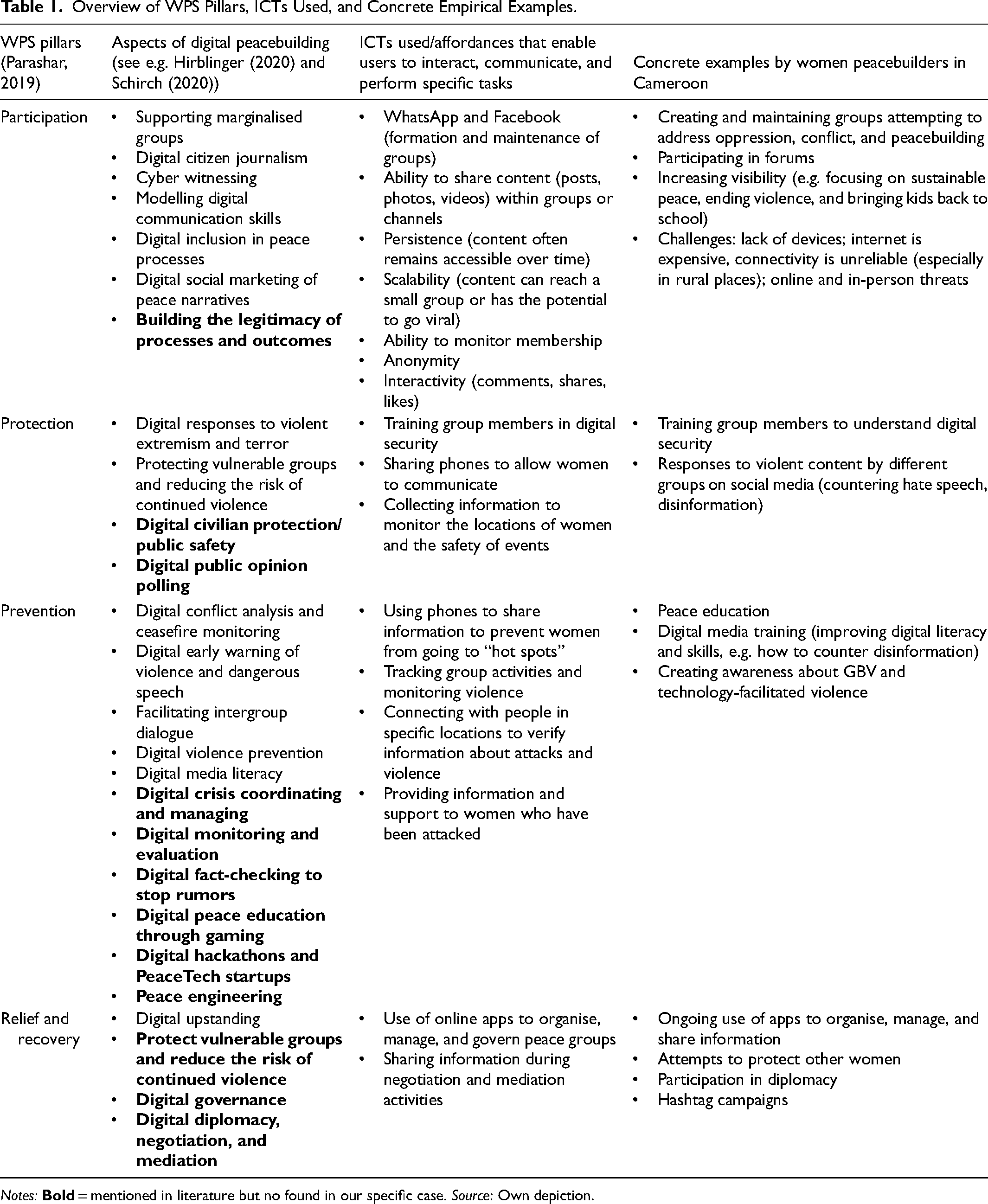
Notes:
Table 1 demonstrates that all four pillars were addressed in this study, though to varying extents. The pillar of participation stands out as especially important, with all women actively seeking to engage in public discussions on peacebuilding and violence. Across interviews, respondents described using ICTs for dialogue, advocacy, lamentation campaigns, and education. Recognising the centrality of women's voices, peacebuilding efforts must ensure that digital, asynchronous alternatives complement offline forums, thereby expanding inclusive spaces where women can meaningfully contribute and influence decision-making at local, national, and global levels (Krystel et al., 2023).
Participation was primarily facilitated by using user-friendly options, such as creating large-scale groups on WhatsApp to communicate and disseminate information swiftly. However, the high cost of mobile data remains a barrier, and many women still need support in developing further ICT skills. Therefore, it is essential to have reliable and low-cost internet and enhance women's digital access and literacy. Additionally, with respect to the pillar of participation, online advocacy by women peacebuilders should translate into tangible influence at the policy level, whereby initiatives on WhatsApp and Facebook should be formally recognised within national dialogues, and online petitions and campaigns should be incorporated into policy consultation processes. Women reported that ICT facilitated dialogue among conflicting parties by providing informal communication avenues that can help to mitigate humanitarian crises by being a crucial part of information sharing and negotiations.
Activities like awareness-raising (a key activity for these interviewees), while primarily aligned with participation, can also contribute to prevention by fostering education and understanding about peacebuilding and reconciliation. The pillar of prevention is significant in that it aims to reinforce women's rights and provide support within communities. Nevertheless, it is beneficial to identify avenues for intensifying efforts and bolstering women's daily activities. Building on these insights, policymakers, governments, and NGOs could explore ways to design programs and policies that effectively incorporate technology to support and strengthen women's peacebuilding efforts. Moreover, it would be helpful to train women peacebuilders to use ICTs for monitoring “hot spots”, reporting threats, but also to counter disinformation campaigns. It is necessary to support women's organisations to lead fact-checking and hate speech monitoring, since disinformation disproportionately undermines women's credibility.
The pillar protection, especially regarding the safeguarding of individuals from violence, seemed to be less present. Nonetheless, several interviewees described taking part in digital security trainings, underscoring that holistic protection must also encompass security in the digital sphere. Others reported creating their own peer-support groups in response to the lack of formal resources, highlighting both the unmet need for comprehensive protection mechanisms and women's agency in building community-based security practices. More broadly, many interviewees reported feeling insufficiently protected from, e.g. governmental entities, and experiencing a pervasive sense of insecurity, both in the digital sphere and in public spaces, particularly when engaging in actions such as public protest. This concern is also highlighted in Cameroon's National Action Plan for the 1325 resolution (2017), which emphasises the need for comprehensive support, including psychological, legal, economic, and medical assistance for survivors. While “comprehensive support” is stressed, the digital dimension is often overlooked in official documents and support programs, despite the increasing overlap between digital and physical spheres. Accordingly, official frameworks, such as the WPS National Action Plan, should integrate holistic security measures encompassing digital, physical, and psycho-social protection (Higson et al., 2016).
Table 1 indicates that the pillar relief and recovery are relatively underexplored within Cameroon, highlighting considerable potential for further development. For example, supporting women in leveraging ICTs for mobilising aid, documenting community needs, and coordinating relief efforts could be especially valuable for displaced women in remote areas. Psychosocial support can also be enhanced via ICTs by expanding women-led initiatives that provide counselling and trauma recovery through platforms such as WhatsApp, recognising that in-person counselling would be better but is often not available (Ngwa et al., 2024). Furthermore, integrating digital skills training into recovery programs could promote economic empowerment and help reduce women's economic vulnerability.
Regarding the digital peacebuilding spheres, the results indicate that certain areas prominent in the literature, such as digital election monitoring or gaming for peace, were not identified in our interviews, suggesting opportunities for further exploration in future research. This does not indicate these practices are absent in Cameroon – ICT use is individual, and others may use it for different purposes. Nonetheless, our findings offer valuable insights into the current priorities of women peacebuilders in Cameroon when using ICT for peacebuilding. Thus, this study serves as a reality check, highlighting which aspects of digital peacebuilding are practical and commonly used by female Cameroonian peacebuilders and how aspects of the WPS Agenda can be combined (better) with aspects of digital peacebuilding. The findings reveal that rather lower-tech and easily accessible solutions, such as popular social media platforms and messenger groups, are predominantly used, while advanced technologies like Artificial Intelligence (AI), and large datasets have not played a significant role for our interviewees. This finding contrasts with some of the current prominent literature on digital peacebuilding that emphasises AI's growing importance in peacebuilding (see e.g. Giovanardi, 2024; Panic and Arthur, 2024). Although AI is increasingly employed in certain contexts, we contend that for many Cameroonians, such technologies remain largely inaccessible due to challenges including high costs, electricity shortages, and limited internet connectivity. Consequently, policy recommendations for ICT integration should take local needs and realities into account, rather than promoting technologies or approaches that are ill-suited to the context. In this regard, we concur with the position of researchers who advocate for a more nuanced approach to understanding the influences of local circumstances on technology (Pyae, 2018).
Intersectional Feminist Digital Peacebuilding Framework
Although there are initial ideas on how to apply gender-sensitive and intersectional approaches to digital peacebuilding (see e.g. Brown, 2018; Krystel et al., 2023), much remains to be done. Thus, we propose an intersectional feminist digital peacebuilding framework (see Figure 2) that serves both as an analytical lens and as a practical, context-sensitive guide for researchers, practitioners, and policymakers.
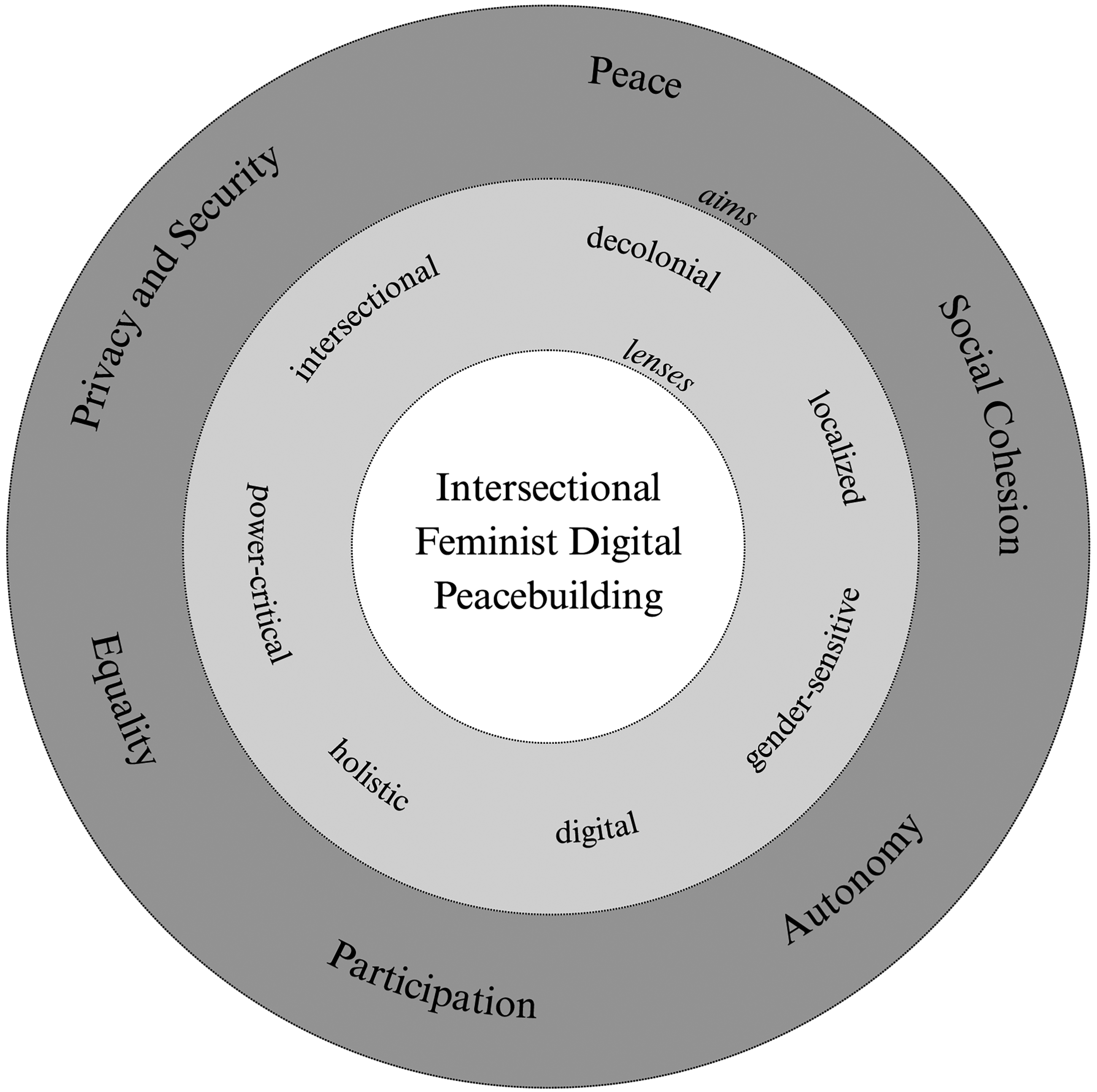
Intersectional Feminist Digital Peacebuilding Framework.
The framework proposed in this study emerges from a synthesis of several key elements: the WPS Agenda, scholarship on digital peacebuilding (e.g., Hirblinger, 2020; Schirch, 2020), intersectional approaches (e.g. Carastathis, 2014; Crenshaw et al., 2013; Krystel et al., 2023), and empirical insights from Cameroonian women peacebuilders. In light of critiques that peacebuilding initiatives often fail to provide opportunities for women to participate, and that the WPS Agenda carries colonial legacies and limited intersectional awareness (Chitando, 2021; Parashar, 2019), it is essential to integrate these perspectives. Bringing the WPS Agenda and digital peacebuilding into dialogue with intersectional and locally informed feminist approaches makes it possible to design (digital) peacebuilding initiatives that genuinely reflect women's diverse lived experiences in contexts like Cameroon. At the core of the framework are several analytical lenses (e.g. being power-critical, intersectional, gender-sensitive, and grounded in local, embodied realities) that should guide all dimensions of (digital) peacebuilding. The frameworks’ overarching aim is to create conditions in which women, and other often marginalised individuals, can participate equally and safely in peacebuilding processes, with privacy, autonomy, and protection understood in relation to their specific social positions.
Unlike many traditional peacebuilding frameworks that treat intersectionality (including gender), technology, and local context as secondary considerations, an intersectional feminist approach places power, inequality, marginalisation, and situated lived experience at the centre of analysis (Carastathis, 2014; Chitando, 2021; Good, 2024; Krause et al., 2018; Krystel et al., 2023). This perspective acknowledges that conflict, technological engagement, and peacebuilding processes are experienced differently across social groups, especially among women, Black Indigenous, and People of Colour communities, and those living under patriarchal or authoritarian systems, such as in Cameroon (Chitando, 2021; Parashar, 2019). By foregrounding these dynamics, the framework facilitates more nuanced analyses and encourages practitioners to tailor interventions to women's actual needs, avoiding Western-centric assumptions and ensuring responsiveness to local realities (Fal-Dutra Santos and Pourmalek, 2022; Öjendal et al., 2017).
A locally informed lens in the case of Cameroon shows that low-tech platforms like WhatsApp dominate, and advanced tools, such as AI systems, are often inaccessible due to cost and connectivity problems. This lens ensures that digital peacebuilding strategies reflect practical constraints rather than importing digital assumptions from the Global North. Furthermore, a localised lens ensures that digital peacebuilding strategies remain attuned to rapidly changing cultural, socio-economic, and political dynamics. Local priorities often intersect in complex ways with global platform governance structures, producing tensions between community needs and the visibility or constraints imposed by global digital infrastructures (Sokfa, 2024). These tensions point to a structural dependency: while digital platforms enable visibility and mobilisation, they also shape what can be seen, amplified, or silenced. Effective peacebuilding must therefore reconcile local knowledge and practices with broader technological constraints and governance regimes.
A power-critical approach highlights how structural inequalities (e.g. historical marginalisation of Anglophone communities and persistent patriarchal structures) shape whether and how women use ICTs for peacebuilding. It reframes digital participation not as a neutral act, but one embedded in layered risks. An intersectional lens further shows that digital peacebuilding cannot be designed as a one-size-fits-all model. For example, a rural Anglophone woman with limited financial resources may face greater obstacles, such as poor connectivity or shared device use, compared to urban women with more stable access.
Measures to strengthen security and prevent technology-facilitated (gender-based) violence need therefore to be tailored to these layered realities. Since digital security is both a technical and socio-political concern, insufficient digital security awareness can increase women's exposure to exploitation and TFV, undermining their ability to use ICTs for peacebuilding. Targeted capacity-building, such as locally adapted digital security training, helps women to strengthen their security, and navigate digital risks effectively. At the same time, ICTs offer opportunities to transform power dynamics by granting women greater access to information, resources, and platforms historically dominated by men. Yet these potentials are constrained by structural biases: men's greater historical access to technology, algorithmic systems that marginalise underrepresented groups, and socio-cultural barriers that limit digital literacy. Addressing these inequities through workshops tailored to women's needs, accessible design, and attention to gendered digital divides (Acilar and Sæbø, 2023) is crucial to ensuring women can fully engage with and benefit from digital peacebuilding.
Participation requires not only access but meaningful inclusion. Sustainable digital peacebuilding depends on local and inclusive participation, which involves examining how platform design, digital literacy, and socio-technical systems shape who is able to engage and whose voices are heard. Gender-sensitive metrics are essential here: tracking access to ICTs, digital security training, and the quality, not just quantity, of participation helps reveal whether women's contributions are recognised and valued. Acknowledging structural, institutional, and organisational barriers enable targeted action to reduce the inequities that continue to limit women's digital and political participation. Indicators used need to focus attention on the complexity of women's participation, safety, and leadership, and consider power differentials and decision making. More robust indicators can lead to more nuanced understandings of how power and privilege shapes participation.
Finally, a holistic understanding of peacebuilding recognises that digital interventions alone are insufficient for creating sustainable peace. Digital tools must complement, not replace, non-digital, community-based, and relational forms of peacebuilding. Combining digital strategies with traditional peacebuilding practices ensures that technology serves to reinforce, rather than overshadow, the face-to-face engagement, trust-building, and local organising that underpin meaningful and lasting peace.
Conclusion
This study has examined how women peacebuilders in Cameroon's Anglophone regions engage with ICTs to advance their peacebuilding efforts, while simultaneously navigating barriers of access, patriarchal structures, and TFV. Despite long-standing recognition of the need for women to be included as equal participants in peacebuilding and the potential for ICTs to facilitate their involvement, both remain underutilised. Combining the WPS Agenda with digital peacebuilding is crucial as it highlights the importance of understanding how women leverage ICTs to shape peace processes, amplify their participation, and drive more inclusive and resilient outcomes. Integrating the WPS Agenda with nuanced understandings of the different access points for ICTs is especially important in conflict-affected and patriarchal societies like Cameroon, where women are often overlooked. Looking ahead, it would be important to explore how intersecting social identities shape women's access to and use of ICTs for peacebuilding across contexts to refine the feminist digital peacebuilding framework and test its applicability beyond Cameroon.
Although the world is increasingly digitalised, much of the WPS Agenda still relies on analogue assumptions about how to ensure the equal participation of women in all levels of peace and security processes. In light of the growing centrality of ICTs to peacebuilding and the persistent exclusion of women from formal peace processes in Cameroon, an intersectional feminist digital peacebuilding framework offers a valuable analytical lens for understanding how women peacebuilders could be more effectively supported in digital peace efforts. It enables a shift from abstract commitments to gender inclusion toward context-specific, digitally informed strategies that reflect the realities of Anglophone women's lives.
The study also highlights the need to address structural inequalities, enhance digital security capacities, and recognise the value of low-tech solutions in environments where connectivity and affordability remain significant barriers. Furthermore, it highlights that digital peacebuilding should complement, rather than replace, physical, community-based peace efforts, which remain vital for building trust and establishing local legitimacy.
Footnotes
Acknowledgements
We would like to express our gratitude to the interviewees for their valuable contribution in sharing their insights. In addition, we extend our appreciation to Dr Julius Nganji for his contributions and guidance during the project's nascent stages. We would also like to acknowledge the assistance of Daniela Forero Nuñez and Maike Salzmann in formatting and proofreading, respectively.
Declaration of Conflicting Interests
The authors declared no potential conflicts of interest with respect to the research, authorship, and/or publication of this article.
Ethical Approval and Informed Consent Statements
IRB (Institutional Review Board) approval for the study was obtained from the Technical University of Darmstadt (EK2022/79) and the McMaster University in Canada. Before participating in the study, all interviewees provided verbal informed consent after being fully briefed on the study's purpose and the intention to publish a paper based on the findings. Ethical considerations played a crucial role throughout the research process, ensuring principles such as do-no-harm were upheld. Data security measures were also implemented, including the use of a secure application (jitsi meet) to conduct the online interviews. After the interviews were conducted, all data was encrypted on a USB stick using VeraCrypt for added protection.
Funding
This contribution was funded by the German Federal Ministry of Research, Technology, and Space (BMFTR) as part of TraCe, the “Regional Research Center Transformations of Political Violence” (01UG2203E), as well as by the Hessian Ministry of Higher Education, Research, Science and the Arts within their joining support of the National Research Center of Applied Cybersecurity ATHENE.
