




Abstract
Homegrown concepts are increasingly viewed as indigenous alternatives to challenge long-standing Western hegemony in development co-operation and insert non-Western agency. Drawing on two African cases from Ghana and Rwanda, this article develops a framework to demonstrate the strategic ambiguity as Global South states seek influence in their international encounters. While the two countries closely follow the existing logic of development co-operation, they subtly challenge its dominant epistemology. Rwanda's Imihigo-driven donor self-assessment forum and Ghana's Sankofa-informed diaspora investment forum are two cases of similar but different concepts that typify the simultaneous coupling of indigenous and co-operation norms for international leverage. Together, they highlight the power and limits of homegrown concepts to drive the South's agency in the international arena of co-operation.
Introduction: Pitfalls of Global South International Agency
The Global South's internationalism, characterised by dynamic global encounters among countries that seek co-operation on mutually beneficial political and economic interests (Gorman and Seguin, 2020; Halliday, 1988), has generated a long-standing debate on agency among southern states, variously described as soft, elusive, and passive (Abrahamsen, 2020; Brown, 2012; Fisher, 2020; Tella, 2021). 1 Global development co-operation offers a particularly rich area for analysing this agency. It is an arena in which enormous external resources are paired with claims to superior knowledge by Global North agencies, and in which “collective debates” on sustainable co-operation are, in fact, conducted exclusively by Global North experts (e.g. Brigaldino, 1997; Keijzer and Schulting, 2018). Oft-cited claims of apolitical co-operation mechanisms (e.g. partnerships) instead cloak the marginalisation of the South. 2
This epistemic and policy dominance spurs African indignation and a forceful demand to centre indigenous alternatives in intervention and knowledge-creation processes (Chilisa, 2020; McDonnell, 2014). Critical accounts on Africa cite collective action, strategic balancing, and decoupling of international norms as pragmatic ways for African agents to leverage global co-operation (Brown, 2012; Coffie and Tiky, 2021; Whitaker, 2010). 3 From a cultural standpoint, Gyekye (1997: 270) persuasively asserts Africans’ agency in rejecting irrelevant cultural norms in their global engagement. Yet, expectations about cultural alternatives that markedly break from mainstream internationalism differ among regional and national elites (Diawara, 2000; Matthews, 2018). The African Union (AU) clearly prefers the current internationalism to the extent it assures Africa's interests (AU, 2015: 9). However, besides Pan-African activists who reject internationalism outright (e.g. Kémi Séba), other Africanist critics (e.g. James Shikwati) are in favour of replacing aid-based co-operation with revamped indigenous enterprises to address pressing local needs while restoring Africa's dignity (see Abrahamsen, 2020; Neubert, 2009). Thus, calls for indigenous alternatives to inform internationalism exist alongside pragmatic co-operation preferences. Strikingly, a systematic analysis of (indigenous) alternatives in development co-operation is missing.
An underexplored theme in the study of internationalism is how Global South states strategically align homegrown cultural ideas with global narratives to resist domination and gain leverage. Southern states deploy indigenous cultural practices and perceptions of reality to protest against domination, but they also reinterpret them to advance their interests (Chilisa, 2020; Diawara, 2000). Because homegrown ideas need only be connected in some way to cultural heritage to seem authentic, they are mutable and constantly redefined (Hobsbawn and Ranger, 1983; Wagner, 2016). In this article, I use an analysis of the agency and counter-narratives in homegrown alternatives deployed by African actors in development co-operation encounters to demonstrate how Global South states use cultural concepts to seek international leverage.
The impulse to integrate culture in global co-operation is neither new nor peculiarly African. International development co-operation strongly emphasises policies that integrate and promote cultural heritage (Matthews, 2018; UNESCO, 2019). Consequently, the South can attempt to use cultural assertiveness to tip the balance of power in global co-operation. However, global counterparts may respond to this pressure by only nominally embracing cultural heritage, given extant beliefs that culture can be a barrier to development (Förster and Koechlin, 2018). 4 In addition, to overcome this barrier Global South states may craftily align their alternatives with familiar practices in international co-operation. However, their concepts must seem different enough to gain local support. In other words, homegrown concepts must be both similar yet different to dominant concepts in development co-operation – a difficult balance. Aware that the cultural heritage of the South is evaluated differently from its Western counterparts (see Förster and Koechlin, 2018; Malunga and Holcombe, 2014), I ask the question: how and to what extent are African agents able to insert cultural ideas in development co-operation encounters?
Rwanda's Imihigo and Ghana's Sankofaism offer useful cases to study the South's agency in development co-operation. I specifically examine how the two homegrown ideas inform the countries’ co-operation goals and how their international partners receive these norms. By analysing the strategic coupling of co-operation norms with homegrown ideas, this article contributes to current debates on Africa's emergent agency through context-specific frameworks (see Fisher, 2020). It demonstrates the role of indigenous cultural ideas in shaping knowledge systems on the global stage. The rest of the article unfolds as follows: I briefly discuss the context of homegrown ideas and the embedded agency used for internationalism. Next, I discuss the two cases to demonstrate how Global South agents use these homegrown ideas as local alternatives in development co-operation encounters. The discussion and conclusion sections entreat us to see agentic strategies like recipients’ assessment of donor performance, and the creation of forums for development in Africa as temporally situated and to consider what they obfuscate.
Homegrown Leverage: Understanding the South's Strategic Internationalism
Numerous development co-operation programmes seek to redefine relations with the Global South through planned interventions that prioritise co-operative internationalism, that is, collaborative action involving ex-pats and recipient country agents (Gorman and Seguin, 2020; Keijzer and Schulting, 2018; Ostrom, 2014). These goals aside, external experts continue to be intensely criticised for their authoritative claims to policy knowledge and their tendency to employ sophisticated mechanisms to circumvent accountability, while instrumentalising local partners to ward off legitimacy pressures (Corbridge, 2007; Rottenburg, 2000; Sabbi, 2017). Consequently, many call for more agency on the part of local partners and greater integration of local cultural norms in international development (Diawara, 2000; Malunga and Holcombe, 2014). Yet, analyses of how local state agents in the South use cultural norms in co-operation encounters remain rare. To help fill this gap, I focus on development co-operation as a “significant site of power” where Global South agents confront the hegemonic positioning of external experts (Brown, 2012; Coffie and Tiky, 2021). Beyond engaging in reactive strategies, I show how two Global South states navigate contingencies and privilege proactive engagement with transnational actors (Wiener, 2017). They strategically insert homegrown ideas into development co-operation by demonstrating how these ideas are compatible with global co-operation norms and help advance the interests of their international partners.
The Concepts of Imihigo and Sankofaism
To understand how Rwanda and Ghana leverage the local cultural concepts of Imihigo and Sankofaism in their relations with foreign donors, it is important to first clarify the two concepts and their application in the politics of each country. Rwanda and Ghana are both major donor funding recipients with much of that funding channelled to the local level through fiscal decentralisation (Grimm, 2013; Hasselskog, 2018; Rana and Koch, 2022). Although their political regimes differ, 5 both countries follow a “no-party” local government system as the basis for achieving state-led developmental goals (Crook, 1999; Hasselskog, 2018). Their local contexts are also sites for the persuasive renewal of pre-colonial cultural ideas as models for national politics and international development exchanges.
Rwanda's Imihigo system has been a signature element of the ruling Rwanda Patriotic Front's (RPF) decentralisation programme since 2006. It is represented by the annual performance contract signed between the President and district mayors and promises to deliver effective decentralisation. It emerged as a cultural impulse to boost citizen participation and deliver responsive local services (MINALOC, 2017). 6 Despite doubts about its cultural origin, a patchwork of practices link Imihigo to pre-colonial military and public works groups that pledged ambitious goals to the monarch. Importantly, the pre-colonial warriors’ pledges were paired with rewards for success and shame for unmet goals (Kamatali, 2020: 61–62). Currently, state agents draw on Imihigo's claim to tradition, fuse it with modern norms, and zealously rationalise its cultural content as a homegrown innovation that delivers effective governance (Kamuzinzi and Rubyutsa, 2019; Klingebiel et al., 2019). Drawing on Imihigo's claim to tradition certainly suits the government's efforts to establish culture-based developmental goals (MINALOC, 2017).
Through Imihigo, the government retains control over local development agendas by enforcing strict adherence to set targets (Hasselskog, 2018; Klingebiel et al., 2019). After mayors conclude their Imihigo commitments with the President, districts plan, monitor, and document progress periodically, culminating in annual evaluations. Districts are assessed on government-set performance targets, in addition to achievements on annual action plans, citizen participation, and citizen satisfaction. Underperforming districts get advice to remedy their shortcomings, but persistent failures could see their executives dismissed. Inadequate local revenues leave most districts dependent on central government grants and transfers to meet their Imihigo targets. Residents contribute to Imihigo implementation through Umuganda – the mandatory once-a-month communal work during which residents construct infrastructure and engage in other livelihood activities (MINALOC, 2017; RGB, 2016). Imihigo's strategic link to popular public administration concepts creates acceptability and influence in international development circles. Not only has this acceptability turned Imihigo into the government's co-operation policy, it also offers the regime a rare chance to question development aid and co-operation activities. It also helped create a framework to assess the performance of donors, which I discuss later.
Ghana's Sankofaism differs from Imihigo in that it is more a developmental philosophy based on a cultural renaissance paradigm than a specific administrative practice. Based on Ghana's Akan cultural concept of Sankofa, it signifies to “return for” or “go back for” something (Apoh, 2020: 29; de Witte and Meyer, 2012; Gyekye, 2013: 175). Specifically, Sankofaism indicates a recourse to the past in one's progressive pursuits. 7 However, what exactly constitutes progress in Sankofaism has spurred an intellectual dialogue, which extends to broader regional debates on culture. Some scholars (e.g. Dzobo, 1981: 33) favour restoring cultural ideas if these mentally liberate and enhance Africa's identity on the international scene. From this standpoint, Sankofaism succeeds if it counters internationalism's political and cultural domination, hence its popularity in decolonial theorising (Shilliam, 2015; Temple, 2010: 135–138). Others strongly caution against romanticising aspects of Africa's pre-colonial heritage that may impede political and societal development. Indeed, Gyekye (1997: 233, 2013: 175–176) chastises a “wholesale revival of the cultural past” as naive Sankofaism that disregards how societal changes affect heritage. 8
I concur with Gyekye: a critical Sankofaism, which carefully assesses and selects relevant elements of Africa's cultural heritage, is a more useful strategy for informing contemporary internationalism. Advocates of critical Sankofaism articulate agency by bridging the past and present with the future. Critical Sankofaism grants its users the capacity to proactively evaluate and imagine “alternative possibilities” for contemporary processes (Emirbayer and Mische, 1998: 962). With some contradictions, advocates strategically invoke Sankofaism in rejecting colonialism. Kwame Nkrumah's Pan-African project and Jerry Rawlings’ heritage tourism appropriated Sankofaism to construct Ghana's national identity, foreign policy, and state legitimacy (Engmann, 2021; Hess, 2006). In the process, however, perhaps inadvertently, Nkrumah and Rawlings overlooked biases in selecting cultural concepts that privileged certain cultural groups in Ghanaian politics. Ultimately, this bias challenged the formation of a national identity and foreign policy based on Sankofaism. Nonetheless, Sankofaism is legitimised by its critique of the colonial project in global co-operation processes. One example of Sankofaism in practice is the economic forum for diasporan investment, procured through Sankofaism and the year of return events, which I discuss later.
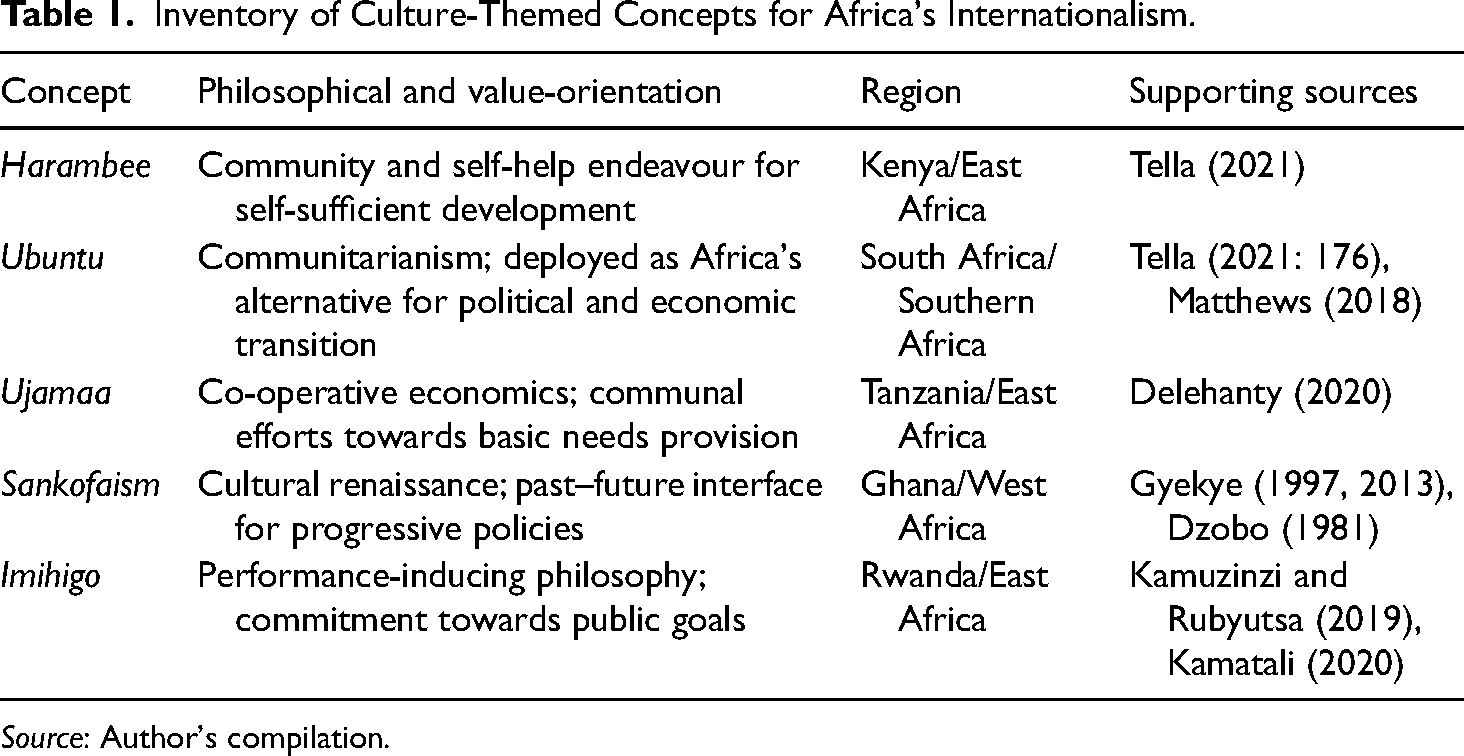
Broadly, the two concepts of Sankofaism and Imihigo align with other culturally themed African philosophies that seek alternatives for international co-operation based on African cultural ideals of community and progress. Table 1 shows these overlaps, particularly the assumption of public virtue as a basis for community welfare, that is, for progress. This alignment with a larger African project is particularly clear under Sankofaism, which is often invoked concurrently with Pan-Africanism, in large part because Kwame Nkrumah popularised it as part of the project of political emancipation for Africa (Fuller, 2008; Temple, 2010). Indeed, Sankofaism aligns with the African Renaissance goal of deploying the past to build a new African personality. Recent AU reforms reference Sankofaism ostensibly to highlight its logic of community in strengthening Africa's political and economic integration. At the international level, Sankofaism and Imihigo are offered as cultural practices that engender effectiveness and the common good – prerequisites of current international co-operation (see Gorman and Seguin, 2020; Halliday, 1988).
Inventory of Culture-Themed Concepts for Africa's Internationalism.
Source: Author's compilation.
Similar, but Different: Crafting Global South Agency through Strategic Ambiguity
I argue that African states’ strong push for cultural heritage in global co-operation programmes offers them a “non-coercive capability” (Tella, 2021) to leverage international negotiations. Still, international development partners and experts generally remain sceptical of cultural concepts from the South, raising the question of how African agents successfully overcome, and gain legitimacy in, a hegemonic system of development co-operation. Extant scholarship on Africa's international agency points to a strategic alignment whereby Global South states selectively conform to some international norms while rejecting others when regional alternatives fit better (Sabrow, 2020; Whitaker, 2010). I contend, however, that given their commitment to confronting international co-operation norms rather than simply rejecting them (Wiener, 2017), African agents do not simply acquiesce to the status quo but instead show initiative. They creatively foreground homegrown concepts as ontologically indigenous to satisfy cultural sympathisers while presenting them as indigenous alternatives that are compatible with existing co-operation norms (Diawara, 2000; Hasselskog, 2018).
Still, African agents need to reconcile cultural alternatives with norms of international co-operation to overcome prejudice against the South's cultural norms (Förster and Koechlin, 2018). State agents are among those who benefit the most from co-operating internationally and, thus, have little reason to retreat from it even if they disagree with certain international co-operation norms (Gorman and Seguin, 2020). Neither do they want to engage in costly deceptions. The concept of ambidexterity in organisational studies broadly captures how agents confront the difficult choice between competing domestic and international priorities (Eisenberg, 1984; Tushman and O’Reilly, 1996). The primary argument is that agents can take advantage of the inevitable ambiguities of social interaction. Being purposefully ambiguous allows them to accomplish set goals without sacrificing the flexibility to adapt to emergent needs (Eisenberg, 1984; Tushman and O’Reilly, 1996). African state agents’ strategic recourse to ambidexterity allows for a dynamic international insertion and the simultaneous co-existence of homegrown and international co-operation norms that leverage both external and internal constituencies.
Being strategically ambiguous allows states under competing domestic and international pressures to strategically couple global norms with cultural ideas that increase their legitimacy at home and abroad. Obviously, the contemporaneous recourse to culture and mainstream development models would initially seem contradictory. But, as a strategy, this non-confrontational pragmatic approach blends assertiveness with flexibility to secure and sustain access to external support and domestic loyalty. Through ambidexterity, Global South agents couple sameness (i.e. alignment with established international norms) with difference (i.e. ideas unique to the local context) and, thereby, leave room for manoeuvre. 9 Projecting similarity engenders co-operation with external actors while creating dynamic local support in favour of cultural alternatives for international co-operation. Importantly, this strategy reveals African agents’ ability to respond to current and future societal pressures through creative imaginations on the global stage that bring the past and the present together (Emirbayer and Mische, 1998; Neubert and Scherer, 2014). As Corbridge (2007) hints, the international development system uses the principle of difference and similarity to legitimise itself. Given this context, it is not surprising that African state officials are likely to use the same strategy to achieve their goals in international engagement, as the next sections demonstrate.
Research Design and the Two Case Studies
Although homegrown concepts depict cultural reality, they also follow the normative views of national and domestic elites (Chilisa, 2020; Hasselskog, 2018). To probe how these cultural ideas and elites’ normative views interact in shaping development co-operation practices, my analysis draws on the extended case study approach, which allows me to trace my observations, based on interviews conducted over several years, and articulate them in the wider context of Ghana and Rwanda's internationalism (see Burawoy, 1998; Small, 2009). The Ghana case study draws on seventy-eight in-depth interviews out of a larger dataset that I collected between 2013 and 2022 in nine districts. 10 In Rwanda, I conducted forty-eight interviews between 2018 and 2023 in four districts. 11
Because local governments engage with heritage-informed projects, I primarily interviewed local councillors in the two countries. To gain analytical leverage, I also conducted expert interviews with selected bureaucrats, academics, and development partners. Because the identity of these interviewees could easily be uncovered, I refer to them as “experts Rwandan,” “experts Ghanaian,” and “experts expatriate.” Additionally, I conducted content analysis of official publications by the governments, their external partners, and credible media. These sources shed light on how Rwandan and Ghanaian agents strategically influence development co-operation goals. My personal observations further enrich this data. 12 I transcribed and processed the interviews and the reports in MAXQDA data analysis software. After iteratively analysing the interviews and publicly available data, I categorised emergent patterns into themes to unearth how broader patterns of local agency are crafted through homegrown concepts.
Rwanda's Imihigo and the Donors’ Coordination Framework
As discussed earlier, Imihigo's prominence begins in the local arena, where it is presented by national officials as an instrument for effective participation, service delivery, and political accountability. Analysis of its role in development co-operation must begin with how elected local officials who nominally represent the population engage with Imihigo's top-down demands. Several elected councillors claimed to craft political space out of Imihigo by leveraging set targets for their respective groups. For example, some councillors contended that they insert their peculiar local needs just as their districts conclude their Imihigo priorities. One of them bluntly stated that “we ensure that Imihigo targets emerging from the cells are included in the [finalized] Imihigo targets” and periodically update the population about “progress on these needs.” 13 This effort to craft political space was typical of groups whose activities influenced the local budget, including the federation of local businesses. According to one of their representatives, they prioritise targets that “commit to specific projects such as building a car park, investment in tea and coffee plantations […] We focus on innovation and encourage the people to save.” 14 Economically less influential councillors made similar agency claims. A youth representative, ordinarily perceived to defer to authority, claimed to alter set Imihigo targets to fit the youth's concerns by promoting the popular co-operative “akarima k’igikoni [backyard farming] and chicken-rearing projects.” 15 A councillor for citizens with special-needs mentioned that he sends “the special needs of the members to the sector council [to] discuss in relation to the budget and these are adopted as priorities. Most of our targets are accepted.” 16 A women's group representative advocated for women's wellbeing targets and “mobilize[d] women to join and contribute [to group savings] so they can acquire health insurance.” 17
The success of these micro-level negotiations has broader effects on Rwanda's internationalism. Informed by questions of “national ownership” in the aid effectiveness debate (Keijzer et al., 2020; Rana and Koch, 2022), the Rwandan government uses Imihigo as a signal of its efforts to own the development agenda by revitalising its heritage. This strategy pays off as it draws the praise of international donors who are incentivised to align their resources with local priorities. For example, district officials submit Imihigo priorities to donors for them to “choose their contribution from our [the districts’] action plan[s].” 18 At the same time that local leaders use the Imihigo process to gain donor support, they lack the autonomy to make many decisions and have little space for officially criticising top-down decisions by the central government of Rwanda. Donors are connected to local actors through the Joint Action Development Forum (JADF), a government platform joining civil society, transnational actors, and state entities in dialogue on local development. Although a sort of “voluntary entity,” the government regulates the forum's operations and funds (RoR, 2015: 34ff). Donors expect their support to strengthen local government capacity and use Imihigo's strong focus on performance for their own reporting of this capacity impact (Klingebiel et al., 2019; World Bank, 2018). The system serves their reporting needs well, and they praise it for energising public policy. Indeed, according to Klingebiel et al. (2019), by emphasising Imihigo's performance attributes, both national and local leaders are able gain greater international support for Imihigo targets.
The World Bank (2018: 52–56) has praised Rwanda for fusing tradition with modernity in Imihigo to support the performance of public agencies. The bank further contends the mechanism underpins Rwanda's impressive economic gains. Rwandan agents reinforce their reputation by regularly updating Imihigo and through self-promotion. One expert indicated that the Rwanda Governance Board (RGB) continually “derives ‘new generations’ of Imihigo” while another agency “the Rwanda Cooperation Initiative markets them” abroad. 19 The government sends officials across Africa, delivering “lectures on the innovative homegrown solutions” 20 that promote “the philosophy of Imihigo” and push other African societies to “search for their own Imihigo.” 21 Rwanda's achievements and this self-promotion, in turn, enhance Rwanda's leverage in recipient–donor relations.
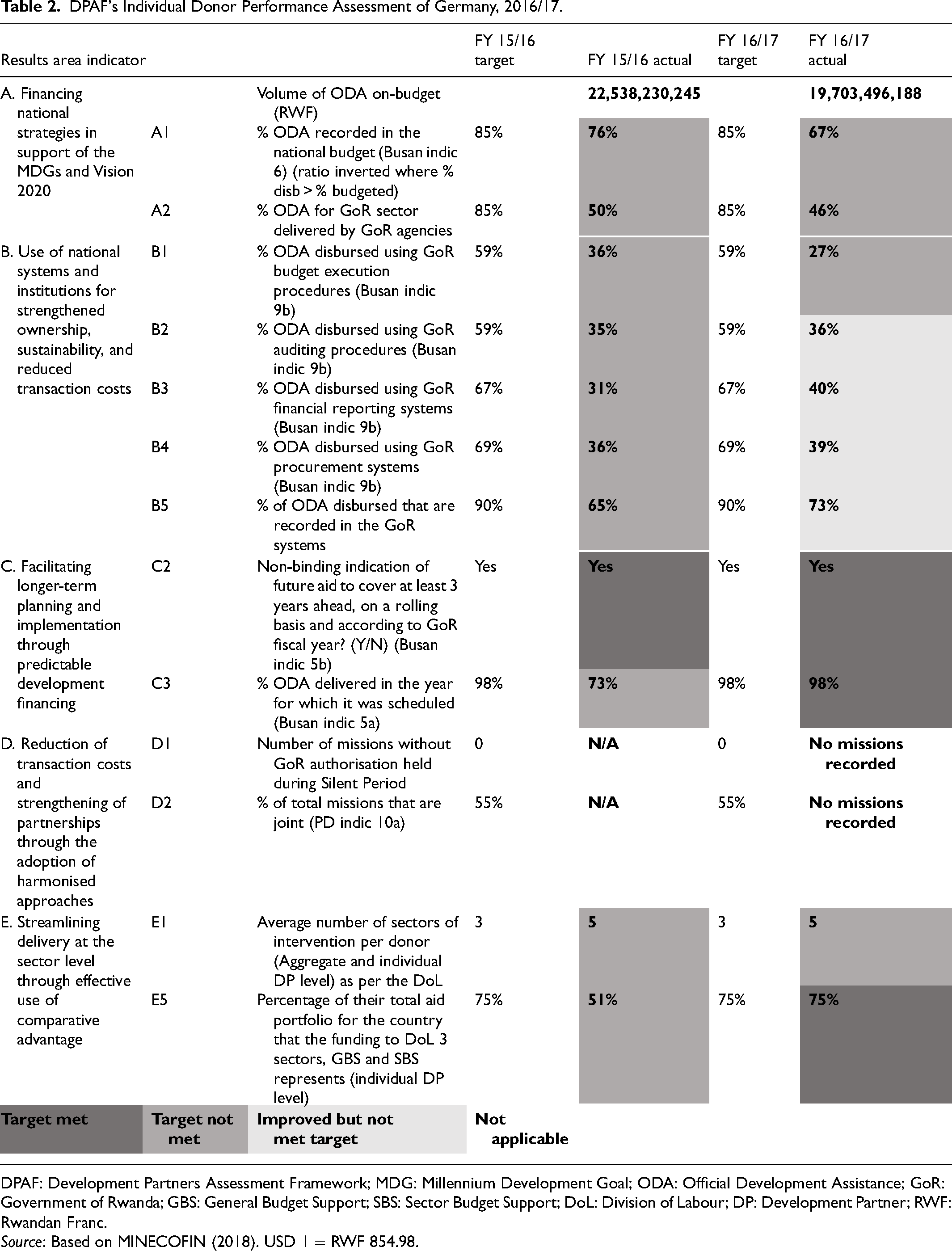
Rwanda's relations with donors occur under the Development Partners Assessment Framework (hereafter, DPAF) and its related forum. Although founded in 2006 following the Paris Declaration on aid effectiveness, the government only intensively used DPAF and forum DPAF to assess donor performance after 2012 when donors suspended budget support (Grimm, 2013; Rana and Koch, 2022) and Imihigo became the government's key co-operation policy. The DPAF and its related forum, constituted of donors and high-ranking Rwandan officials, fulfil at least three roles. First, the forum deliberates and reviews progress on donor activities and budget support for the government. Second, its quarterly meetings facilitate dialogue on the reform of Rwanda's public financial management aimed at achieving “a common voice” for the government (PEFA, 2022: 127; Sinnett et al., 2017: 102). The DPAF obliges donors to operate accounts with Rwanda's central bank, ostensibly to improve transparency and government ownership of the reform process. However, it cascaded into further donor funding commitment to the country's public finance management reforms (PEFA, 2022; Sinnett et al., 2017). Third, the DPAF imposes the so-called “donor division of labour,” with each donor allowed to support a maximum of three sectors. By pre-assigning donors to specific sectors, the regime aims to eliminate inter-ministerial competition for funds among agencies (MINECOFIN, 2018).
Although the assignments generally mirror the preferences of donors, the limitation and pre-assignment were part of Rwanda's effort to regulate and leverage the opportunities provided by co-operation partners. As Table 2 illustrates, the regime consequently creates graphic assessments of each donor's performance. 22 As noted, the imposition of the DPAF and its forum overlapped with the strategic mobilisation of Imihigo narratives and practices. By emphasising Imihigo, Rwandan officials are able to incentivise donor support and assert the government's power to decide on co-operation priorities. The more donors embrace Imihigo because of its positive impact on local capacity, the tighter the regime is able to regulate them. Imihigo creates international leverage. One expert recollected how Imihigo developed from an “abstract contract of the responsibility to deliver [results quickly and strategically] into a brand of homegrown solutions.” By drawing donors into a system of domestically determined targets, rather than allowing or encouraging donors to fund whatever projects in whatever sectors they wanted, they were able to leverage Imihigo into “new form of budget support.” 23 Presumably, this allowed Rwanda to avoid the loss of control that other countries suffered with the end of budgetary support.
DPAF's Individual Donor Performance Assessment of Germany, 2016/17.
DPAF: Development Partners Assessment Framework; MDG: Millennium Development Goal; ODA: Official Development Assistance; GoR: Government of Rwanda; GBS: General Budget Support; SBS: Sector Budget Support; DoL: Division of Labour; DP: Development Partner; RWF: Rwandan Franc.
Source: Based on MINECOFIN (2018). USD 1 = RWF 854.98.
The revitalisation of Imihigo and the related use of the DPAF and its forum allowed Rwandan officials to both appeal to and mobilise donors while regulating their activities and resources. Undoubtedly, Rwanda generates considerable leverage by centralising, harmonising, and controlling its aid policy, which enables it to steer donors towards its national priorities. Much of this agency derives from Rwanda's effective leadership and its increasingly strong ownership of its development agendas despite being highly dependent on aid (see Brown, 2012; Busse et al., 2013). Some donor participants in forum DPAF seemed convinced that the regime “whether you like it or not, has a very clear view on how Rwanda should develop, and it expects donors to fit into that” (Provost, 2014). Echoing this view, one expert stated “Rwanda definitely knows how to get [things] done,” 24 which underscores the view that the strategies are not just benign but a clever response to managing donors’ perception of the government's priorities and image. One ex-pat was forthright, describing Rwandan officials’ conviction that “international partners would fit their cooperation goals into a [Global] South initiative.” 25 Imihigo certainly has its benefits, as it induces local people into action and helps harmonise donor support around local and national priorities. But it is a well-crafted strategy that builds on Rwandan heritage to reinforce the authoritarian RPF regime's legitimacy and international credibility. The RPF government uses Imihigo and related tools like forum DPAF and the JADF platform to exact conformity to its programmes. As one expert puts it, “the RPF is [the] thinking organisation behind Rwanda's engagement” 26 particularly with global actors.
Sankofaism and Ghana's “Beyond the Return” Forum
Although Ghana's 1992 Constitution establishes Sankofaism as a driver of development, 27 it is not a national policy like Imihigo. Because Ghana's foreign policy carefully balances international reputation with local political realities (see Tieku and Odoom, 2012), the country's transnational partners get the chance to essentially frame co-operation priorities via the colossal funding for such agendas. The space offered to transnational partners invariably restricts Ghana's effort to front alternative co-operation norms. The limit on Ghanaian control over developing alternative co-operation norms is evidenced by district-level agents’ frequent complaints of built-in funding restrictions and counterproductive expectations among donors, including reporting styles that do not “conform to the local system of reporting” and force Ghanaian actors to “[keep] parallel formats of reporting.” 28 But high-ranking bureaucrats roundly rebuffed such criticisms. As one official reacted, “donors normally buy into our policies, but they don’t form part of our policy formulation.” He contended that Ghanaian officials no longer “allow [donors] to come and dictate to us.” 29 But given these high-ranking bureaucrats enjoy praise from their transnational counterparts (Gorman and Seguin, 2020; Sabbi, 2017), they may have little incentive to pursue alternatives to current co-operation norms.
Mainly chieftaincy actors popularise Sankofaism by legitimising and reconstituting the local government arena into sites of debate on societal transformation and development co-operation. Chieftaincy actors actively foreground themselves as indigenous trustees and insert heritage in development negotiations. Using Sankofaism, chieftaincy actors negotiate development outcomes on two levels. First, elected councillors draw on district officials’ reverence for chiefs to rally their support for local development. Tapping into this reverence, one councillor stated that he “arrange[s] with Nananom [chiefs] to organize some [farm resources] for district officials who wield control over resources for development.” 30 By joining the chiefs’ reputation with informal incentives, some councillors convinced district officials to “understand the challenges we face in [their] electoral area” 31 but also extracted the resources needed for community development. Despite the benefits, this co-operation between chiefs and elected local officials sometimes proves challenging. Some chiefs interfere with and undermine formal structures for development. One councillor bemoaned how this co-operation allowed chiefs in his ward to unliterally expand the (official) unit committee for development. That interference, the councillor noted, meant “the unit committee is not active.” 32 Second, chieftaincy actors deploy Sankofaism to craft agency in the international arena independently of state structures. Ghanaian chiefs appoint expatriates and celebrities as honorary “development chiefs” who negotiate international co-operation, foreign donations, and contribute to providing local services. 33 Overall, chieftaincy actors fill a crucial epistemological gap in transnational co-operation, serving as a launchpad for government-led internationalism.
Indeed, the Ghanaian state has worked, with some success, to place Sankofaism on the global agenda as a subtle reminder of international co-operation agencies’ entanglement with slavery and colonialism. For example, Germany's diplomacy on the restitution of colonial artefacts borrows Sankofaism logic. Germany's cultural and foreign ministries invoked Sankofaism not only to repatriate artefacts but also to learn from the country's past experiences in Africa and shape current internationalism (Apoh, 2020; Hickley, 2019). Ghana's administrations particularly focus on Sankofaism. Building on earlier initiatives, particularly John Rawlings’ Pan-African festival and John Kufour's resettlement programme for diasporan Africans (Engmann, 2021; Tetteh, 2019), 34 President Akufo-Addo in 2019 launched the Year of Return (hereafter programme YoR) in Washington DC, emotionally appealing to the African diaspora to embark on a “birthright journey home for the global African family [building] on Ghana's 2002 Citizenship Act and Right to Abode […] [which grants] ease of travel, residency, and citizenship” (Morrison, 2020).
Programme YoR concretely articulated Sankofaism by repositioning Africa in international politics. Programme YoR was strategically planned and executed to coincide with the commemoration of the “400th anniversary when [enslaved] Africans arrived at Point Comfort, Virginia, in 1619” (United States Congress, 2018). This way, programme YoR could provoke international political debates with epistemological overtones. The response to this call was enormous. Over 750,000 people visited Ghana by December 2019 (van Wyk, 2020). This initiative succeeded by changing the concept of a return home for the diaspora. As Brah (1996: 192) observes, home may be a desire for identity but need not result in a return to a physical place of origin. However, Ghana's Sankofaism-inspired programme steered this desire for home towards a return to the African continent and inserted Ghana into global political debates. It also generated political benefits for the governing New Patriotic Party (NPP). 35
When then-US House Speaker Nancy Pelosi, the third highest ranking US official, travelled with members of Congress to Ghana, programme YoR offered a propitious occasion to link the Ghanaian government's initiative with political demands in the USA and elsewhere. Symbolically, Nancy Pelosi addressed Ghanaian lawmakers at the same time that then-US President Donald Trump spoke at the Virginia commemoration, which black lawmakers had boycotted to express their resentment over Trump's pejorative comments on minorities (see Kokutse, 2019). 36 Given the international spotlight on the Ghana event, Trump probably felt compelled to acknowledge slavery's barbarism, even if he did so warily. Barely a year after the Ghana event, some US congress members made demands for racial justice while donning Ghana's Kente cloth (Paquette, 2020), viewed as a continuing demonstration of their ontological embeddedness in slavery and diasporan identity.
The African Sankofa Savings Account was, by far, the most ambitious expression of Ghanian agency in using Sankofaism to procure economic co-operation. Programme YoR was undoubtedly economically valuable, with Ghana reaping an expected “$925 million from tourism” (Morrison, 2020). But the programme's overarching goal of intensifying economic co-operation led to the immediate launch of two follow-up forums. Beyond the Return invited Africans in the diaspora to participate in a trade and investment co-operation forum to help impart development knowledge and skills. The allied African Sankofa Savings Account was the government's policy framework offering diasporan businesses the opportunity to invest their money in Ghana with the administration guaranteeing to manage the invested funds productively (MoF, 2020). Gauging from the target dividend, the buoyant feeling of Ghana's finance minister was unsurprising. He held that “the level of remittances that we [are] experiencing […] hopefully will be over US$3 billion. Our deep feeling is that this new account will rival that in a period of a year or two” (Emi, 2020).
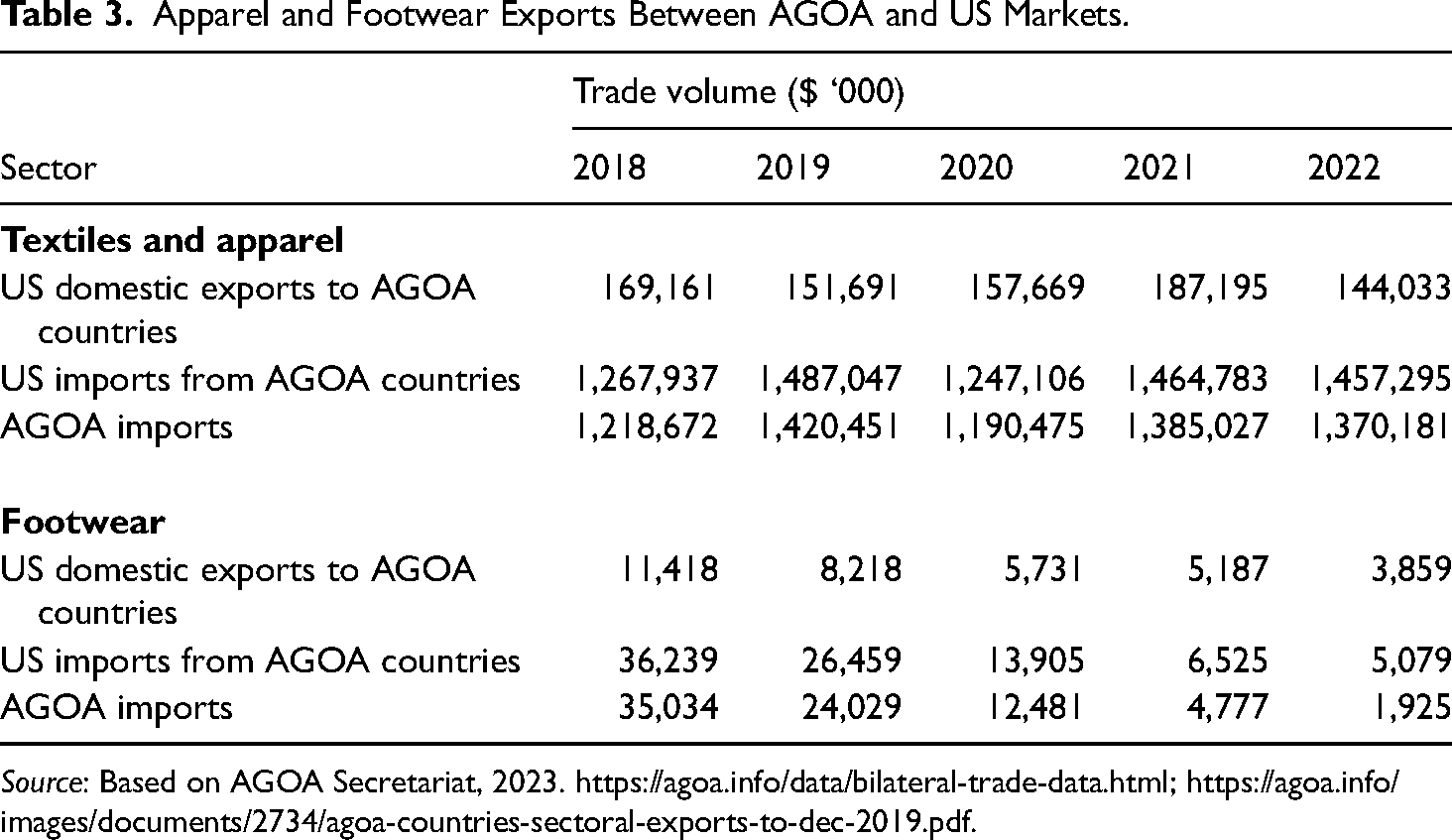
Although the investment project did not take off as the government hoped, it forms part of the government's Diaspora Engagement Policy that envisages a new Ghana's diaspora as an outlet for development co-operation. Programme YoR created access to a mix of global political actors and celebrities who fundraised for investment to augment official development assistance. With global superstars such as Idris Elba and Naomi Campbell attending programme YoR (Morrison, 2020), Ghana shored up its international reputation, which helped to increase the flow of foreign direct capital. Importantly, Nancy Pelosi discussed a strengthening of economic and trade ties and emphasised that “America is strongly committed to economic progress in Ghana – a commitment enshrined and advanced over the course of many years from the Millennium Challenge partnership and the Africa Growth and Opportunities Act” (Knott, 2019).
To put Nancy Pelosi's comments in context, her trip to Ghana fit the global search for alternatives to development co-operation that transcend foreign aid, which is criticised for impoverishing countries in the Global South (see Lyman, 1989; Reinert, 2008).
37
Pelosi revisited US international co-operation activities in Ghana and beyond and held meetings with leaders of local businesses with US interests. Thus, the forum sought a fresh perspective on USAID's co-operation programmes for the continent. Remarks at programme YoR rehashed the view that a deepening of bilateral co-operation would foster economic growth and broadly transform livelihoods in Ghana and Africa. Her Ghana counterpart justified enthusiastically why continuing co-operation mattered, stating: when you look at stability in terms of our politics […] and the support we always get from the U.S. government […] there is a lot for us to offer and a lot they can give in terms of bringing in investment […]tapping in on our natural resources and building capacity. (Knott, 2019)
Apparel and Footwear Exports Between AGOA and US Markets.
Source: Based on AGOA Secretariat, 2023. https://agoa.info/data/bilateral-trade-data.html; https://agoa.info/images/documents/2734/agoa-countries-sectoral-exports-to-dec-2019.pdf.
The focus on the African diaspora was consequential because the diaspora constitutes a key actor in development policy. As Mohan and Zack-Williams (2002: 219) argue, diasporan actors not only influence political debates but also – and more importantly – contribute “to international developmental efforts which impact positively on the national and local levels.” Programme YoR became the clarion call among African Americans, the African diaspora and lead politicians even as they observed the 400th anniversary of slavery. These actors encouraged and pushed internationalism to engage anew with past injustices whose consequences persist today.
Homegrown Agency or Naive Romanticism? A Discussion
The foregoing shows that Sankofaism and Imihigo offer active homegrown strategies for international co-operation: they adapt to the varying expectations of the different constituencies by being compatible with existing co-operation norms but culturally different from the former. Embedded in the broader African renaissance paradigm, they show a rediscovered African past with renewed agency on the part of national and local African actors on the global stage. Sankofaism successfully projects a communitarian virtue for Africans, the diaspora, and the South more broadly. Until recently, Ghana's Sankofaism, like other indigenous African concepts, was widely viewed as a development alternative, but leaders lacked a clear political strategy for bringing it to the global political stage. But programme YoR has demonstrated that Sankofaism offers leaders an opportunity for strategic agency that goes beyond its use as a normative guide for development co-operation. The two cases show African agents’ capabilities to reshape the international system, raising questions about the often-simplistic assumptions of unrestrained Western dominance in international co-operation. A close analysis of both Sankofaism and Imihigo help unpack the possible alignment of indigenous practices with established development co-operation norms as a strategy for Africans to influence global discourse and practice.
This agency is not merely symbolic. Bolin (2021), for example, demonstrates how Rwanda has turned another heritage-based framework, agaciro signifying independence, self-sufficiency, and dignity, into a foreign policy strategy. Rwanda uses agaciro in renegotiating its international encounters and substantially shores up the regime's sovereignty claims. At the same time, Sankofaism and Imihigo offer a lens to understand the instrumentalisation of tradition in internationalism. Hobsbawn and Ranger (1983: 1) highlight how concepts making claims to some venerable past practices may surprisingly have been “constructed and formally instituted” to create a desired “continuity with the past” (see also Wagner, 2016). However, this apparent romanticisation of cultural heritage should not be seen as irrational. Notably, the clever insertion of indigenous epistemological ideals in international co-operation reveals contradictions, including what the concepts overlook and leave out of sight, sometimes advertently.
Our two cases offer a channel to understand the ambivalence and contradictions in projecting African agency in global co-operation. One paradox of Imihigo's international credibility is the mutable character of Rwanda's cultural narrative. To be sure, much of Imihigo's success comes from Rwanda's unique advantages. Its pre-colonial boundaries largely coincided with current state borders, with a single language, and with a more centralised authority than much of post-colonial Africa (see Boyd, 1979; Busse et al., 2013). Thus, Rwandan regimes easily diffuse and enforce political control. This control includes the Imihigo-informed DPAF, which compels donors to self-assess their activities, and ultimately grants Rwanda leverage in international encounters. Rwandan officials adapt Forum DPAF strategically to international co-operation norms to enhance Rwanda's leverage, turning it into a strong international player despite depending heavily on external support (Keijzer et al., 2020; Rana and Koch, 2022).
However, the RPF government's narrative to recover the pre-colonial unity for post-genocide Rwanda carefully places cultural heritage behind Rwanda's foreign policy goals, creating international credibility and state legitimacy. Unsurprisingly, there is no systematic questioning of the insertion of culture in national life nor the centring of Imihigo in internationalism. 40 Markedly, Rwanda's homegrown concepts generally did not evolve from a critique of cultural heritage, which would have been contrary to the official transcript. Rwanda's success in pushing these narratives is partly driven by President Kagame's outspoken preference for an African version of development. Consequently, Rwandan officials commit to, and sometimes overstretch, the cultural narrative. Officials in Rwanda's cultural institutions unequivocally front culture in their developmental ambitions, including “to establish effective mechanisms to research, re-write and widely disseminate Rwandan History” (MINISPOC, 2015: 24). Their key source for this exercise is the well-known but controversial philosopher and linguist Alexis Kagame. 41 As one official bluntly mentioned, privileged and exclusive access to the royal court aided “educated Alexis Kagame, who knew how to put things […] in oral format into a written format [to contact] the traditional advisors so they tried to talk to him [Kagame].” 42
However, the history he wrote came from a centralised Tutsi monarchy, which encourages the selective use of heritage. Successive Rwandan regimes have reinterpreted the past to bolster their political position. One expert fumed at earlier post-colonial regimes that “rebuffed culture and tradition [i.e., the monarchy] and preferred a continuity with the Belgian colonial administration structures.” 43 Still, the current regime claims to tie many of its policies and initiatives to Rwanda's traditions. Rwanda's vision 2020 policy document revered the pre-colonial monarchy for creating the “possibility of expression and questioning the [sic] authority,” denouncing coercive colonial administration and post-independence governments for undermining this traditional accountability. It drew overstretched parallels with the RPF's efforts to improve participation and “multipartyism” (RoR, 2000: 30). The RPF seeks to revitalise tradition and to restore Rwanda's “near-perfect” pre-colonial era with a view to improving Rwanda's international image, all the while ignoring fundamental societal tensions and political demands (see Bolin, 2021; Turner, 2013).
Similarly, Ghanaian administrations have drawn on Sankofaism to legitimise their populist agendas, often without a clear commitment to their ideals. Nkrumah's promotion of Sankofaism to support his symbolic nationalism starkly contrasted with those of his arch-rival Kofi Busia whose economic policy and cultural views Nkrumah perceived to have aided colonialism (Agyeman, 1988; Fuller, 2008). Later, the Rawlings’ government initially drew inspiration from cultural heritage only to give way to the Bretton Woods institutions’ neoliberal proposals in exchange for external funding (Sabbi, 2017). Rawlings admitted the urgency for him to craft heritage tourism around “Ghana's cultural heritage sites” to earn much needed foreign exchange much as the government inserted Ghanaian culture in international encounters (Engmann, 2021: 730). Some in Ghana's cultural scene view Sankofaism as a micro-hegemonic attempt to project Akan customary ideals as national identity (de Witte and Meyer, 2012; cf. Dzobo, 1981). Specifically, programme YoR directed visitors to cultural heritage sites in southern Ghana, while northern Ghana – from where significant numbers of slaves were sent to the coast – was excluded from the political debates and forums on Sankofaism (see Yeboah, 2019). Including these sites could have provoked enhanced discussions on the aforementioned investment opportunities.
Both cases tell us about the ongoing reconstitution of the international system epistemologically and in everyday practices through culturally informed co-operation forums in Africa. The clever ability to leverage development co-operation through indigenous ideas evinces a strategic countering of international hegemony by rejecting assumptions about the superiority of expert knowledge over local practices (McDonnell, 2014). In the sense of Diawara (2000: 365), these strategies highlight how states in the Global South “play with constraints imposed on them and the resistance potentials they mobilize against them.” Development agencies appear to acquiesce to local cultural ideas in part because the ever-increasing scrutiny on aid accountability pushes development co-operation actors to embrace homegrown ideas despite their often-obvious hesitation (Cherlet, 2014; Rottenburg, 2000). Local rationalities generate legitimacy for both donors and local counterparts. Since hegemonic global engagement will not be overcome by adding indigenous concepts, it behoves genuinely committed international actors and local partners to define and own the homegrown ideas they value.
Concluding Remarks
A lingering desire of the Global South is to influence, to the extent they can, the content of international co-operation norms despite their dependence on them and the “multifaceted crises” they often face, many of them rooted in colonialism (Brigaldino, 1997: 51). I have presented two cases demonstrating how the Global South pursues this desire and asserts agency by strategically inserting indigenous ideas compatible with co-operation norms. The cases illustrate a new strategy of deploying homegrown concepts into development co-operation. Despite traces of romanticism in both Sankofaism and Imihigo, it appears Global South agents attempt to avoid naive romanticisation of culture by carefully balancing local expectations and practical realities. Certainly, African agents are aware of the masked pre-tensions and hegemony in global encounters, but international co-operation remains a necessity. Still, nominally promoting indigenous ideas and practices that challenge “epistemic privilege” risks essentialising them and undermining existing “beneficial synergies” between local agents and external partners. To the extent that the Global South offers alternatives to development co-operation's hegemonic and often cajoling set of practices, we can argue it is successful at asserting international agency.
Indeed, Ghanian and Rwandan actors deploy Sankofaism and Imihigo successfully in international co-operation, albeit subtly, through their simultaneous adaption and promotion of these indigenous concepts as similar to but different from existing norms of international development co-operation. They build on the momentum of similar concepts such as Ubuntu, through which other African actors have sought to influence current internationalism in the spirit of the African Renaissance. One caveat emerges, though. The cases presented here offer a striking example of the political leadership that commits to inserting cultural heritage as an alternative to leverage internationalism. However, the political implications of this agency are evident as regimes often mobilise the same cultural concepts for peculiar interests to hide the diversity of local cultural heritage and projects of local cultural and political domination. These calculated uses of cultural heritage suggest scholars and practitioners should be wary of entirely embracing the homegrown ideas African governments advance in international co-operation. The discussion has focused on the success of two reputed countries in the international development system. Whether the countries’ existing credibility drives their success with indigenous ideas or vice versa is beyond the scope of this article. On balance, the emerging debate on homegrown ideas portends a necessary first step to leveraging African agency in the international development system.
Footnotes
Acknowledgements
I am particularly grateful to Raoul Bunskoek and Calum Brett Houston for in-depth discussions and helpful suggestions on earlier drafts. I appreciate the valuable feedback from the three anonymous reviewers and the journal's editors, particularly Martha Johnson, Amanda Coffie, and Maxine Rubin. The author is solely responsible for any errors.
Declaration of Conflicting Interests
The author declared no potential conflicts of interest with respect to the research, authorship, and/or publication of this article.
Funding
The author disclosed receipt of the following financial support for the research, authorship, and/or publication of this article: The research for this article was generously funded by the Fritz Thyssen Stiftung (Grant number: Az. 40.17.0.002EL) and the German Research Foundation (DFG) (Grant number: NE640/9-1).
