




Abstract
Since the early 2000s, armed attacks and inter-ethnic violence have increased in parts of northern Kenya's Baringo County. This article examines how the Maa-speaking Il Chamus men respond to the growing insecurity as they draw on long-standing notions of morality and on the Kenyan state. In contrast to tropes of (agro)pastoralist northern Kenya being plagued by inter-ethnic animosity, lawlessness, and absence of governance, Il Chamus men situate inter-ethnic violence and gun ownership in notions of peace, prosperity, and security and engage the Kenyan state in an effort to achieve these values. Analyses of men in precarious conditions as experiencing “waithood” and turning to violence “in search of respect” need to be complemented by attention to emic notions of morality, masculinity, and intergenerational hierarchy, albeit not as simple remnants of “culture” but as points of debate in contemporary contexts of political and ecological insecurity.
Introduction
Since 2005, the Il Chamus, who inhabit the lowlands of northern Kenya's Baringo County, have experienced increasing insecurity and armed attacks from neighbouring ethnic groups. Il Chamus are one of three Maa-speaking groups, along with more numerous and well-known Maasai and Samburu, in which age-group–related ritual complex is highly relevant and organizes much of the passage of time. Rituals that separate age grades of men–circumcision of boys as initiation into the status of moran and ceremonies in which morans “graduate” to the status of junior elders–are central. Many people, elders and youth alike, consider morans as young men crucial to the provision of protection and peace, an issue that has become increasingly central in the contemporary context of insecurity and violence.
Take, for instance, Robin, a member of the National Police Reserve (NPR) forces from Kiserian.
1
Kiserian is a location on the southeastern shores of Lake Baringo that has been gravely affected by recent inter-ethnic conflicts. The National Police Reservists are a government-backed and government-armed community policing force, currently of around 50 Il Chamus men, who have been mobilized and tasked with responding to violence since 2013. When I asked Robin why he had joined the Reservists despite the dangers of the job, he framed his eagerness in terms of duty bestowed upon initiated morans: A moran is just, for this land, these kids… He looks after children, he looks after the land, he looks after the cattle, and the wealth of this place. So you have to do that, you have to take that gun, because you belong to the morans. And you are the soldiers of this community. So, when it comes to taking a gun, you don’t take it for granted. You take it like you have been chosen, by the community. Once you have been circumcised, you are told, “come up.” “The problem has gone,” “no more problem” (Swahili: Shida imeanda). As in, me, when I was circumcised, I was told by my dad: “come up my boy, problems are gone. We are now secured. Because we have many morans now.”
Robin interpreted his NPR membership in terms of duty bestowed upon him by the Il Chamus community as belonging to a moran age grade. He equated morans with “soldiers,” evoking a common association of morans with young “warriors” on whom the community relies for security.
However, at the time of our interview in September 2019, Robin was no longer a moran. He had not been one for over a decade. Moranhood certainly did not overlap with his membership in NPR security forces: when he was enlisted and given a government-provided gun in 2017, he was well into his junior elderhood. He was a part of the Lkileku age group, senior to the Lmeingati age group, the active morans in 2019, whose initiations started in 2007. Only one year after our interview, Robin's age group was actively involved in organizing initiations for a new cohort of young boys on their way to initiation into morans, making him one of the senior elders. Yet, despite attending and participating in his age group's ceremonial graduation into elderhood in 2005, he still considered himself a “soldier” with a duty to “protect the community.”
Such discrepancies between proclaimed customary masculine and age-related duties and state-sponsored provision of security abound in Il Chamus’ Baringo County and demand a re-thinking of facile associations between young men and armed violence in northern Kenya. This article examines how the Il Chamus men have responded to growing threats to security in Baringo County in order to contribute to the growing anthropological literature on men and masculinities in precarious conditions. It unpacks meanings of moranhood, notions of respectability, and positions of National Police Reservists in order to situate men, violence, and gun ownership in northern Kenya in notions of peace, prosperity, and security, rather than inter-ethnic animosity, lawlessness, and absence of governance, common tropes of northern Kenya and (agro)pastoralist groups. The article shows that the men's response to insecurity is grounded in emic notions of morality that point to values of respect and peace; that they draw from and re-negotiate age-grade-related notions of youthhood and elderhood; and that they have responded to insecurity by engaging (rather than rejecting) the Kenyan state, while simultaneously fashioning themselves as “local” Il Chamus men neglected by the postcolonial state. The theoretical implication is that analyses of young men as experiencing “waithood” (Honwana, 2012) as a consequence of contemporary political economy, and approaches to men in precarious situations who engage in violence and illicit activities “in search of respect” (Bourgois, 1996), need to be complemented by attention to long-standing emic notions of gender, generation, and morality. These notions, however, are not simple remnants of “culture” or “tradition,” but rather dynamic points of debate employed by the men themselves in a contemporary context of political and ecological insecurity.
Youthhood, Masculinity, and Searching for Respect
For many young men everywhere, social and economic changes since the 1980s have transformed pathways to social adulthood. In many societies in the global South, but increasingly also beyond, the experience of youth has become protracted, as employment opportunities for young men have diminished, and educational opportunities for young women have increased (Inhorn and Smith-Hefner, 2020). The “contemporary predicament of youth” (Comaroff and Comaroff, 2000: 306), more specifically young men, has been analysed through terms like “timepass” (Jeffrey, 2010), “boredom” (Mains, 2007; Masquelier, 2013), and “waithood” (Honwana, 2012) that suggest a protracted liminal time between childhood and adulthood, a temporal stagnation. The experience of delayed adulthood is often frustrating, especially for young men who desire social adulthood and feel stuck in waiting, but many seek to use it productively. Whether passive or active, desirable or not, the experience of social adulthood slipping away and becoming increasingly delayed and uncertain has been identified as the norm rather than an exception.
In Maa-speaking agro-pastoralist societies, among whom are Kenya's Il Chamus, moranhood is a cultural institution that seemingly formalizes the liminal period between childhood and elderhood by way of rituals that guide a generation of men through different life stages, that is, age grades. Moranhood is a crucial category that refers to young men in a transitional stage of preparation for the status of elderhood (Spencer, 1988; Holtzman, 2002). Different from waithood, however, moranhood is not simply a liminal time between childhood and adulthood but rather a central cultural institution, celebrated as culturally distinctive for Maa-speaking groups, that provides men with a sense of belonging to a generation and frames their relationships with their juniors and elders. On the surface, institutions of age groups and moranhood make the pathway to social adulthood more predictable, as men always progress through ritually marked stages around every 12 years. However, this temporality of aging has been reconfigured at least since the 1980s, if it ever was clear-cut. For the Maasai in Tanzania, “[a]ge-grades are still an organizing principle of masculine subjectivity and social relations and their fundamental apparatus has remained much the same […] But the experience, attitudes, and practices of being an age-set member have changed” (Hodgson, 1999: 142). The meanings and practices of youth have undergone significant transformations in other pastoralist societies as well (e.g., Hutchinson, 1996; Spencer, 1998). For instance, young Samburu men have in recent decades used new possibilities to accumulate wealth, at first sight disrupting the Samburu temporality of aging, but in fact reimagining the long-standing orders of moranhood and elderhood (Meiu, 2017). In general, Maa notions and practices of moranhood do not neatly map onto youthhood, as initiation and “graduation” ceremonies have less to do with biological aging and more with progression through time (punctuated by age-grade-related ceremonies), incorporation into a social system, and attainment of authority, power, and responsibilities (Marmone, 2020). Masculinity is therefore a more appropriate analytic than youth, and moranhood and age-grade-related expectations provide a unique entry point to temporalities of masculinity in contemporary Africa, not as static categories and remnants of “culture” but as meaningful categories employed by men (and women) in various ways in rapidly changing and precarious contexts.
Ethnographic accounts of Maa moranhood have largely focused on more numerous Maasai and Samburu. 2 These studies demonstrated that moranhood is a crucial category for locating men in local configurations of gender and generation, but is frequently conflated with “tradition” and “warriorhood,” at the expense of the diversity of morans’ societal roles and masculine subjectivities (Hodgson, 1999; Meiu, 2017; Galaty, 2002; Kasfir, 2002; Holtzman, 2004; Marmone, 2017; Spencer, 1965, 1988). Notably, for all Maa-speaking groups, moranhood does not simply refer to “warriorhood,” even though the two are frequently conflated: the Maa word “moran” (lmurran) refers rather to a man who is circumcised (Hodgson, 1999: 126; Marmone, 2021: 18, n.3). For contemporary Il Chamus men and women, moranhood is also a crucial category; however, it is particularly unstable and negotiable. Age status is always situational and relational, rather than a linear trajectory (Durham and Solway, 2017), and this is particularly relevant for Il Chamus, who have a complex history of incorporating and transforming cultural elements of surrounding ethnic groups, such as the Samburu (Little, 1998). Instead of considering how Il Chamus men disrupt or reproduce some discursively constructed “customary order,” it is more productive to analyse how men invoke and use moranhood and age-group membership in relation to, on the one hand, local notions of morality, and on the other, security and state apparatus, in order to construct and perform masculine subjectivities. Such an approach is particularly relevant for the analysis of Il Chamus men, who are occasionally characterized as “unfinished” or “lesser” pastoralists. For instance, the neighbouring Pokot consider the Il Chamus weak, unable to defend, and easy to raid, and they see no need to seek spiritual backing from a prophet before raiding them (by contrast, they do ask for spiritual backing before raiding Turkana, whom they consider brave and good warriors) (Bollig and Österle, 2007: 27). Paul Spencer, who famously studied how Maa elders exert control over young men, inferred that Maasai and Samburu would see the Il Chamus as a “paler and imprecise reflection of the ideal” (Spencer, 1998: 180). Il Chamus, and in particular men who have sought to adapt to increasing insecurity in contemporary Baringo, provide a privileged vantage point for examining masculine subjectivities in Maa societies.
As a response to a proliferation of studies of men in the context of unequal power relations (Connell, 1995; Connell and Messerschmidt, 2005) and the changing political economy (Cornwall et al., 2016), a number of analysts of masculinity have recently argued for a need to focus on issues of morality. Many have drawn from the increasingly influential “anthropology of the good” (Robbins, 2013) and have applied concepts like “moral laboratories” (Mattingly, 2014) and “moral breakdown” (Zigon, 2007) to young men facing unemployment in Niger (Masquelier, 2019) and Uganda (Baral, 2016), or have emphasized that masculinities emerge from men's attempts to perform as “good men” (Smith, 2017). Drawing on Lambek's discussion of “ordinary ethics” (2010) and Fassin's version of “moral economies” (2009), Spall has argued that moralized gendered discourses need to be taken seriously, and not conflated with issues of power and politics: “[a] move to collapse the moral into the political, assuming that the former is ‘really’ all about the latter, risks failing to understand why and how discourses of masculinity come to have such emotive power for many men, and play such an important role in constituting their social reality” (Spall, 2020: 12; see also: Khan, 2018; Kovač, 2021; Schulz and Janson, 2016).
Considering rural eastern Africa in particular, Heald has argued that many debates about the gendered identity of Gisu men (in areas of eastern Uganda that border Kenya) are played out as moral debates: “[t]hey are about the distribution of rights and privileges; about the nature of ethical action and the arenas in which that is displayed, judged and reflected upon” (Heald, 1999: 3). However, Heald's analysis of values of self-control and responsibility revolves around Gisu belief that proclivity towards violence is inherent in the nature of men. The analysis draws from the Gisu men's (probably underserved) reputation for violence among Ugandans in general, as well as Gisu cultural notions of violence as inherent to masculinity (Heald, 1989). Violence (especially inter-ethnic violence) has been a recurring subject in anthropological accounts of eastern African (agro-)pastoralist groups, interpreted as essential for young men's attainment of status and respectable adulthood (Bollig and Österle, 2007), a result of a hyper-masculinist ideology promoted by militaries and militias (Hutchinson, 1996; Hutchinson and Jok, 2002), or a desire for proving one's manhood or achieving a military victory (Holtzman, 2016: 14–15). Il Chamus, however, have an entirely different reputation: even before colonization, European explorers referred to them as “most pleasing natives,” a stark contrast to “the ferocious and arrogant warriors of Masai country” (Thomson, 1887: 234). 3 Such characterizations make Il Chamus evocations of morans as brave “soldiers” that much more striking, and invite analysis–inspired by a range of studies that examine gender and generation in Maa societies beyond participation in violence and warfare (e.g., Hodgson, 1999; Holtzman, 2009; Marmone, 2020; 2022; Meiu, 2017; Straight, 2007)–that contextualizes young men's response to recent insecurity in wider and more pertinent notions of morality.
Il Chamus men's emphasis on “protecting the community” as a duty suggests that the focus on morality is relevant. More specifically, our Il Chamus interlocutors emphasized the importance of nkanyit, a common moral disposition found among Maa-speaking groups (Hodgson, 2005; Holtzman, 2009; Spencer, 1965), a complex term that points to the performance of respect for elders (and as will become clearer, to “discipline”). This is interesting, because “respect” has become a focus of a number of studies of men in violent and precarious circumstances, in Africa and beyond. Many of these argue that men, in the absence of opportunities for stable livelihoods, engage in violent or illicit activities in order to gain “respect” from their social surroundings (Bourgois, 1996; Enria, 2016; Iwilade, 2014; van Stapele, 2021; Vigh, 2017), thus theorizing respect as a gendered moral disposition and aspiration achieved through violence and illegality (cf. Masquelier, 2019; Thornton, 2016). Il Chamus indeed find themselves in increasingly violent and (economically, politically, and ecologically) precarious circumstances, but their uses of nkanyit–similar to those among other Maa groups–do not revolve around notions of violence, but rather discipline, humbleness, and respect for elders. In addition, they prioritize other ways of performing respectful manhood, such as marriage, establishing a household, and fathering children. Departing from the focus on violence is here especially important, since northern Kenya is commonly portrayed in international and Kenyan media as “the valley of death” 4 teeming with “killing fields” 5 and “bandits” 6 motivated by a purported timeless culture of violence (Straight, 2009; 2020) and since the so-called "AK-47 frontier" of access to unregulated weapons is said to have moved further south to encompass Baringo County Lowlands (Little, 2019: 152).
To demonstrate these points, we first outline the history of Il Chamus near Lake Baringo, with particular attention to moranhood, insecurity, and the role of (post)colonial states. We then explore emic notions of respectability, the relevance of age groups and moranhood, and positions of police reservists and government employees. We conclude by summarizing some theoretical implications for studying men and masculinities in precarious contexts of insecurity and (latent) violence, in Africa and beyond. 7
Il Chamus in Baringo County
Il Chamus is considered the second smallest ethnic group in Kenya, with a population of around 35,000. The group has a long history of irrigated agriculture that pre-dates colonialism: indigenous large-scale irrigation was the norm in the nineteenth century, and it was flexible, dynamic, and sophisticated (Anderson, 2002: 285). The south of Lake Baringo was in the late nineteenth century considered a granary, a place for farming integral to the surroundings of livestock keeping by pastoralist groups (Little, 1992). In the eighteenth and nineteenth centuries, cultivating and irrigating Il Chamus incorporated many cattle-herding immigrants who were fleeing droughts and violence. Il Chamus clans from the late eighteenth-century document this: they show traces of lineage both from agriculturalists (Marakwet and Tugen) and pastoralists (Uasingishu and Loosegelai Maasai and Samburu) (Little, 1998: 445–446). The Il Chamus have always straddled between pastoralism and agriculture and analysts of their mixed and fluid economy sometimes referred to them as “cultivating pastoralists” (Anderson, 1988). Their pastoral orientation came to prominence gradually in the nineteenth century: under the influence of surrounding pastoralists, many Il Chamus strongly oriented themselves towards herding cattle. This is when one can also trace the emergence of age-grade structures typical of Maa-speaking groups (Anderson, 1981; Little, 1992).
Over the years, Il Chamus have been on the receiving end of a number of development programs orchestrated by (British) colonial and (Kenyan) postcolonial governments. Most of these were informed by an anti-pastoralist ideology that considered sedentary agriculture civilized, and pastoralism backward, and were designed to steer Il Chamus away from cattle herding and towards cultivation (Anderson, 2002: 293; Little, 1992: 164–165). However, ironically, the Il Chamus’ orientation towards pastoralism and cattle herding in the early 1900s was aided by the interventions of the British colonial state. The British established an administrative post in Loiminange (today called Kiserian) in 1900, and the Il Chamus were put under protection by the state. Several grazing disputes with the Pokot, their Kalenjin-speaking pastoralist neighbours, were resolved by the colonial government in favour of the Il Chamus. The British soon moved their post to Mukutani, further east of Loiminange and Lake Baringo, in order to police the area. Il Chamus families and notables followed them and established themselves there. This opened up new areas for the Il Chamus to graze their cattle. The Il Chamus seized the opportunity and increased their herds. Moreover, in the same period, the British employed the Il Chamus as allies for punitive raids against the Kalenjin and the Turkana, and the participants brought back raided cattle from these raids and were remunerated by the British state. This considerably contributed to Il Chamus orienting themselves to pastoralism (Anderson, 1988: 253–254). Thus, pastoralism historically developed among the Il Chamus through the incorporation of immigrants from other pastoralist groups and was eventually enabled by the interventions of the British colonial state.
Despite having diversified their livelihoods towards non-pastoralist economic activities (especially agriculture) since at least the early 1980s, Il Chamus leaders have often emphasized their pastoralist identity, partly as a response to the attention of international human rights groups to the rights of pastoralists (Little, 2013: 99–100). The Il Chamus leaders have called on the 1934 Kenya Land Carter Commission through which they were awarded lands southeast of Lake Baringo (Arabel, towards Laikipia) important for Il Chamus herders. In the process, they emphasized their Maasai pastoralist identity to get access to these lands (in practice, many Tugen have settled there for agriculture) (Little, 1992: 136). Since the political retirement of Daniel Arap Moi, the Tugen president of Kenya from 1978 until 2002, they have argued to be awarded a political constituency, and to be recognized as a separate ethnic group, pastoralist and marginalized, but distinct from the Maasai (Little, 2013).
Since the early 2000s, the Il Chamus livestock-based economy has been declining at a previously unprecedented rate (Little, 2021). Reasons for dramatically diminishing cattle herds are numerous: loss of pastures due to the spread of the invasive prosopis plant; larger and more frequent cattle raids and encroachment on grazing lands from neighbouring groups; droughts, floods, and epidemics; and families’ preferences to invest more towards agriculture, migration, wage labour, education, and small-scale business (Little, 2021: 182–184). When dealing with bouts of drought many depended on pumping water from Lake Baringo to their (now largely privately owned) farms, again drawing on long-term experience of irrigation and farming in an unstable climate. Some families were also burning prosopis plants and selling charcoal (Little, 2019), albeit dependent on frequently changing government rules on whether this activity was legal or not. Elders and young men argued that recent conflicts and insecurity have made people wary of cattle raids and discouraged families from keeping large herds.
Despite the shrinking herds, cattle have retained a crucial role in social life as “objects at once economic and symbolic […] between a material economy of things and a moral economy of persons” (Comaroff and Comaroff, 1990: 195–196). Everyday verbal expressions related to cattle were central in establishing long-term relations, for instance, between families in marriage, as well as between different positions in society based on age or gender. Cattle were considered preferable for establishing long-term investment and wealth and were regularly used in age-grade-related rituals (Figure 1). The importance of cattle was also central to the position of the new National Police Reservists, who were considered aware of the value of cattle in local patterns of exchange and sociality and were unafraid to risk their lives to retrieve cattle stolen in raids.
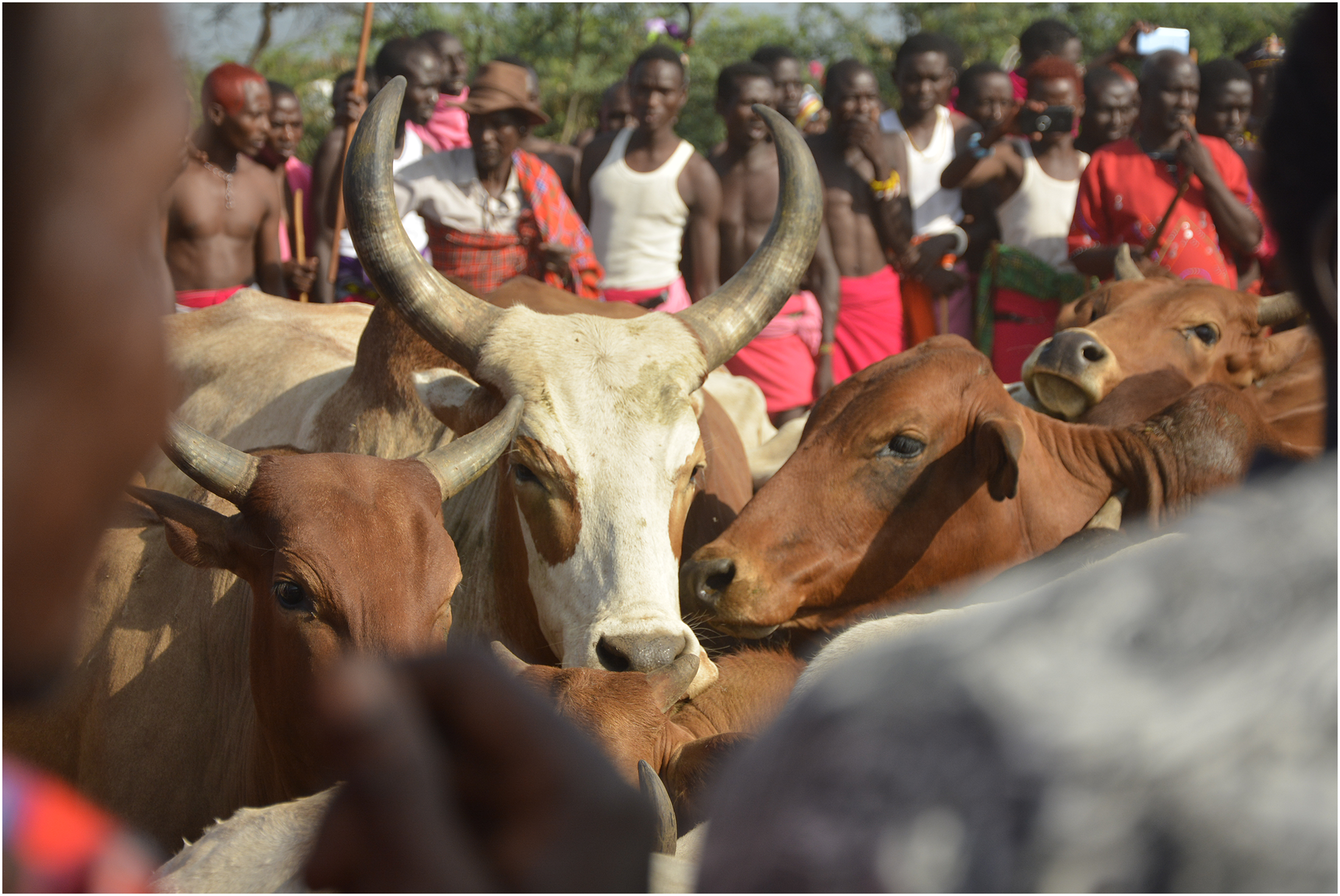
Morans and elders gather around cattle in preparation for a ceremony. Baringo County, Kenya, August 2019. Photo by Uroš Kovač.
According to many prominent (and less prominent) Il Chamus, the recent insecurity in lowlands east and south of Lake Baringo had very little to do with the pastoralist cattle-raiding “tradition” and much more with local and national politics, economics, and access to land. This echoes recent analyses that trace the causes of increasing violence in Baringo to issues of political competition and access to arable land (Greiner, 2013; Little, 2016). The recent situation of insecurity escalated on March 27, 2005, Sunday evening, when a few young Pokot men attacked an Il Chamus family in a village on the eastern shore of Lake Baringo and took their animals. The next morning, a larger team of Pokot young men attacked another nearby village. Il Chamus families were forced to flee southwards and eastwards. The attacks continued, on a daily basis, for several weeks, and more people were further displaced and killed, and thousands of cattle were stolen. After these first strikes, attacks have occasionally repeated, despite the peace meeting in 2011 (Greiner, 2013: 227; Little, 2019: 151).
In areas east of Lake Baringo, there is a longer history of instability. The conflicts between the three ethnic groups in Baringo County (Il Chamus, Tugen, and Pokot) can be traced back at least to the beginning of the twentieth century when all three sought territorial expansion and migration. However, the magnitude of the conflict in 2005 was higher, and a far cry from simpler matters of raiding cattle. Jonathan, a senior elder in his fifties, a member of the Lmepoiye age group, and a prominent medical professional, was displaced from his home in 2005 and still unable to return in 2019. He reflected: Now the attacks are not so much about livestock. They shoot a human being on sight. Sometimes you think there is serenity and peace, but then the attack comes. Pokot morans are just a conduit. They implement the attack, but there is political gain behind it. It is also a land issue, they want to dislodge us from the land.
Some Il Chamus families have started returning to their households east of Lake Baringo, but insecurity continues, and large parts of the area are still designated as no-man's-land. 8
It was in this context of insecurity that the Il Chamus applied for hiring and training of National Police Reservists. The NPR (previously known as Kenya Police Reservists, KPR) are trained and armed by the Kenyan state as a local security force to police areas of persistent conflict. The first forces were established in colonial Kenya, in 1948, when they were called “Tribal Police,” and since 1958 the “Administration Police.” They were retained in postcolonial Kenya but withdrawn from urban areas in 2003. The key role of the NPR in rural areas, especially in northern Kenya, is to protect pastoralist cattle enclosures and caravans from cattle raiding by other pastoralist groups (Mkutu, 2015: 202–204). The NPR have been a constant presence in predominantly pastoralist rural northern Kenya but among the Baringo County's Il Chamus only since 2013. By 2019, around 50 Il Chamus men have been hired, trained, and armed by the Kenyan government. The Reservists have a number of security-related tasks, such as providing security during election cycles and suppressing large-scale production of local illegal alcohol brew. In areas close to the boundary between the Il Chamus and the Pokot, the Il Chamus NPR are tasked with surveying the area for the presence of Pokot young men planning attacks or cattle raids, confronting and suppressing them, and recovering the eventual stolen cattle.
Discipline, Respect, and Peace in Times of Insecurity
Men were not mobilized into National Police Reserves at random; rather, local notions of morality were central. The hiring was for the most part a prerogative of respected Il Chamus elders and individuals employed in government-related positions, such as chiefs and assistant chiefs. The elders and chiefs looked for men who had no criminal record, no history of alcohol abuse, and no reputation for causing physical altercations. But more than this, they looked for individuals who possessed nkanyit: those who had cool tempers, avoided conflicts, and paid respect to their social surroundings, especially the elders.
The notion of nkanyit appears in almost all ethnographic accounts of Maa-speaking groups. For Spencer, nkanyit, which he translated as “a sense of respect,” was a “keystone of Samburu morality” (Spencer, 1965: 94), a central virtue expected of adult men and women. Nkanyit was a virtue that served to reproduce the social order by instilling boundaries, relationships, and hierarchy between generations of men. It condensed a number of context-dependent related values, such as respect, duty, and honour but also shame, politeness, and decency (Spencer, 1965: 24). For Holtzman (2009), nkanyit, similarly to the English notion of “respect,” is inherently ambiguous: it can refer to an expression of an internalized sense of respect but also the performance of respect in socially appropriate situations. It can express either virtue, morality, and “genuine” affect or skills of duplicity, diplomacy, and performance. Central to nkanyit is the ability to avoid openly breaching respect and social norms: one does not openly contradict elders but might employ other subtler ways of undermining authority. Nkanyit however is not simply a false morality or hidden immorality: it is the duplicity that makes morality as a principle possible (Holtzman, 2009: 122–149). Hodgson (2005), who writes about Maasai Christian women, also notes that nkanyit is grounded in appropriate forms of address, greeting, and outward behaviour, especially towards older men. She adds that focus on outward appearance allowed the Christian women to perform protocols of respect to male leaders, while also in effect ignoring (or secretly ridiculing) their requests, making the duplicity of nkanyit a form of women's agency that can undermine the authority of men (2005: 184, 195).
The Il Chamus morans did not adhere to some of the restrictions described by Holtzman (2009) as central to the instilling of nkanyit, such as restrictions of eating food seen by women or eating only in the presence of other morans. Even though some of our interlocutors evoked these practices as a part of a constructed “tradition” as practiced in the past, the practices of spatially separating morans from women and elders, a supposed cornerstone of Maa groups, was quite short-lived among the Il Chamus, practiced only roughly between the 1930s and 1950s (Little, 1998: 449). But our Il Chamus interlocutors did espouse nkanyit as one of the central virtues, for both men and women. Those who spoke English often translated nkanyit as “discipline,” rather than “respect.” Generally, they would refer to nkanyit as “discipline” when describing the values of men who avoided open conflicts and acted as “humble” or “polite,” especially towards their elders: that is, did not act in ways that openly contradicted social norms grounded in age-group–related hierarchy.
Specifically, “discipline” was the key criterion for (assistant) chiefs tasked with recruiting National Police Reservists. The chiefs substantiated “discipline” as a category for recruitment in two ways. The first one referred to what they called the men's “character,” which included the avoidance of domestic conflicts and altercations with neighbours. The chiefs were thus not selecting men with a reputation for violence, but to the contrary, men with a reputation for avoiding open conflicts with their social surroundings, especially with elders. The second way that the chiefs referred to “discipline” was in terms of military discipline: they required men willing to follow orders of their official superiors who might order them to fight against the encroaching “enemy,” which in this context referred to young Pokot men. “Discipline” as nkanyit thus involved respect for hierarchy in two ways: the avoidance of open intra-group confrontation that would threaten the normative social order–respect for Il Chamus elders; and the preparedness to engage in inter-group confrontation when (and only when) ordered by government-hired chiefs–respect for the military and government-related authority.
Furthermore, notions of (male) respectability in the context of insecurity and conflict were inextricable from more general markers of respectable male adulthood, namely, getting married, establishing a homestead, and fathering children. Moses, a young assistant chief in his thirties who worked in an area particularly prone to conflicts, explained: Especially nowadays, we want morans to marry as early as possible, because, for example, if there is an incident where you fight with Pokot, and you are killed, and you are not married, that thing is not good to our culture. They cannot even call your name. They say, that is not a man, because there is not somebody to call… You must have children, so that people can say “somebody was killed, and he had two children.” People are then very happy about you, even if you die, because you had children.
Il Chamus men, especially those in boundary areas who engaged the Pokot in altercations, were therefore encouraged to marry and father children as early as possible, in order to fulfil “customary” norms of respectable male adulthood, what Moses referred to as “our culture.” However, the context and meanings of “marriage” need further explanation and historical contextualization. Morans often claimed to have been “married” without having undergone marriage ceremonies or making bridewealth payments, two central aspects that make a customary Il Chamus marriage “official.” Many were instead in “come-we-stay” cohabitation relationships with their “wives.” A common pattern was this: young men would initiate relationships with young women, who would soon bear children. A man was expected to begin providing for the child and ideally would use a piece of land granted by his family to build a house and begin cohabiting with his wife, thus founding a homestead. The young couples would refer to their “come-we-stay” relationships as marriages; however, they were not “official” according to custom: the bride's family reserved the right to “take back” the bride since the husband had not begun making the bridewealth payments in animals. The families of the cohabitants would put occasional pressures on the couples to plan marriage ceremonies and payments of bridewealth; however, it was not unusual for couples to cohabit for 7 years before conducting a marriage ceremony.
Moreover, cohabitation practices and early marriages were increasingly common throughout (pastoralist) Kenya (Meiu, 2017: 187–190; Marmone, 2021: 29, n. 17), whereby young couples had greater autonomy in choosing their partners and planning their relationships. They contrasted the long-standing norms of marriage in Maa societies documented by anthropologists (e.g., Spencer, 1965; 1988) in which elders exercised control over morans by prohibiting them from marrying before ritual graduation to elderhood. Our interlocutors referred to this change in marriage patterns as a break from “traditional” practices that have taken place since the 1990s. Such practices of greater autonomy and cohabitation were however not entirely new. Spencer (1998) showed that Il Chamus men transitioned from considerable freedom in choosing a marriage partner, towards arranged marriages and polygyny, as they transitioned from irrigation or mixed economy towards pastoralism. Even then, the Il Chamus men retained a lot more autonomy in their marriage arrangements than morans in other Maa societies (Spencer, 1998). Furthermore, contemporary early cohabitations and delayed bridewealth payments were not only results of insecurity or nationwide trends: men were increasingly moving away from cattle ownership and towards farming, trade, education, and wage labour (Little, 2021) and were less likely to inherit animals (that they would use for bridewealth) from their family elders.
Even though many men and women were postponing official marriage ceremonies, it would be misleading to claim that they were experiencing a form of “waithood” found in many societies in Africa and elsewhere, by which respectable social adulthood, usually performed through marriage and bearing children, was being postponed due to men's financial constraints and women's educational opportunities (Inhorn and Smith-Hefner, 2020). Rather, the meaning and temporality of marriage were transforming. While Il Chamus elders occasionally complained about “come-we-stay” marriages and young women's early pregnancies, long-term cohabitations were common and not necessarily disrespectful. Most important was a demonstration that cohabitation would become an “official” marriage by means of a marriage ceremony and payment of bridewealth at some point in the future. The performative respectability (Hodgson, 2005; Holtzman, 2009) of come-we-stay marriages was grounded in a promise and an expectation that the marriage would become “official” in the future. Having children and cohabitation have become the norm, and respectable adulthood was increasingly grounded in expectations, future promises, and demonstrations of striving towards a “traditional” form of marriage.
In the contemporary context of insecurity, some of our interlocutors worried that the prevalence of cohabitation would negatively affect the men's willingness to pick up arms. For instance, Jackson, a 28-year-old unmarried moran from Meisori–an area that was generally peaceful and less affected by insecurity and displacement–argued that the young men are nowadays less likely to engage in combat and perform their duty of “protecting the community” because they feared making their “wives” (i.e., co-habitants) into widows and their children fatherless. “Community” here refers to the Il Chamus group as a whole, the “Il Chamus community,” an increasingly important notion in the context of ethnicization of politics in Kenya (Lynch, 2011). The ethnicized politics was a particularly poignant process for the Il Chamus, as they have long sought to identify themselves as an ethnic group distinct from other Maa-speaking groups, and sought to engage the Kenyan state in order to obtain status as a marginalized group and argue for political representation–a legal and political battle that is still underway (Little, 2016; Odhiambo, 2015). Here, the concern was that the young “married” morans would not be willing enough to sacrifice themselves and their immediate families and interests for the Il Chamus “community.”
However, the men were quite willing to “protect the community” despite the dangers, and their wives, even when expressing fears of safety, rarely discouraged them, especially if they aspired to join the National Police Reservists. Take, for instance, Esther, who was displaced from her home in 2005 and eventually settled in a safer part of Kiserian. Her husband, a member of the Lkileku age group, owned a weapon and frequently fought the encroaching Pokot in the volatile areas of Rugus. Eventually, he was hired as a police reservist. During periods of intense conflict, he would be away for 3 weeks at a time, and Esther was concerned: “You might not hear anything about him, only hear the gunshots in the distance. It is scary.” And yet, she was supportive: she argued that his deployment was beneficial to both the “community” and their family. Her husband was frequently called to survey the volatile areas, and he would inform her and his brothers about impending dangers, which allowed the families to redirect and conceal their grazing animals on time. Esther herself also regularly informed the neighbours about imminent conflicts. Moreover, as an NPR, her husband received a monthly fee of 5000–10,000 Kenyan shillings (40–80 euros), an irregular but helpful amount that allowed them to invest in farming. 9 NPR deployment was considered dangerous but also necessary and beneficial for both the “community” and the individual families.
Finally, as demonstrated by Robin's example from the beginning of this article, the men's desire to “protect the community” was grounded in their sense of duty: for them, circumcision marked the beginning of a period of moranhood in which they were tasked with providing “security” to the “community.” The men especially emphasized the provision of “security” as their main role, one that separated the uncircumcised boys from circumcised morans. The term they used for security–seriani–had a much more general meaning than the one referring to the protection against attacks: it referred more generally to “peace” or “well-being.” Serian was a common everyday greeting, most commonly directed to elders and communicating respect, and anticipated a positive answer (ooiye). A Maa dictionary (Payne and Ole-Kotikash, 2008) translates seriani and its derivatives with a variety of different terms: peace, safety, security, well-being, absence of danger, and even “wholeness” for northern Maa speakers (Samburu and Il Chamus). For instance, some Il Chamus Christians discussed obtaining seriani after their conversion to Christianity. Daniel, born in 1977 and initiated into the Lkileku age group, said that he used to abuse alcohol and quarrel with his wife, until he joined the Christ Dominion Church. His domestic life changed for the better, and they found peace (seriani)–he stopped drinking, and they stopped quarreling and started farming, buying animals, and accumulating resources. In this context, seriani referred to peace at home, in the sense of absence of conflict, as well as prosperity and well-being. Therefore, while recent conflicts made the issue of security and protection from attacks a central concern, especially for the men, seriani referred to a more general experience of peace, safety, and prosperity that was integral to the well-being of individuals, families, and the “community.”
Age Groups, Moranhood, and Police Reservists
The members of the Lmeingati age group, who were initiated into moranhood starting in 2007 (until their “graduation” to elderhood in 2020; see Figures 2 and 3), especially considered themselves tasked with maintaining security and peace through fighting against other ethnic groups. However, not all forms of violence against another group were considered equally legitimate (see also: Straight, 2017). In one of the more poignant stories, a group of Lmeingati morans organized a raid on a Pokot village, framing it as “revenge”: an attempt to recover some of the numerous heads of cattle stolen by the Pokot young men. However, they were ambushed and returned without any cattle and with several casualties. A reason for their failure, I was told, was that they had never consulted with elders: the morans never received elders’ blessings to raid the “enemies.” Elders in general were seen as unlikely to encourage morans to conduct such attacks and rather preferred to engage the Kenyan government, or if possible, elders of other ethnic groups.
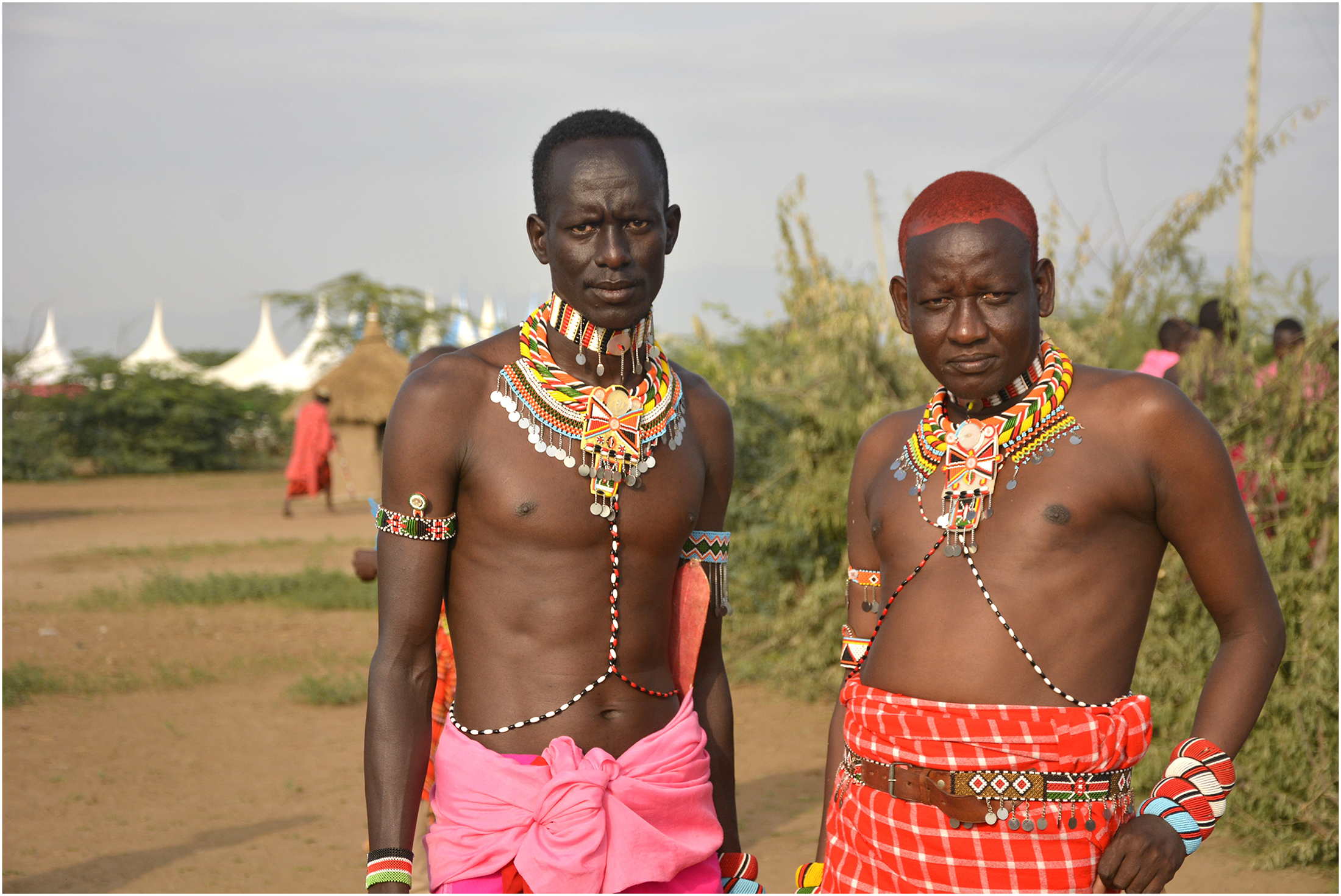
Wilson Tiren (authors’ research assistant) and Joseph Olenaso, on their way to one of morans’ “graduation” ceremonies. Baringo County, Kenya, August 2019. Photo by Uroš Kovač.
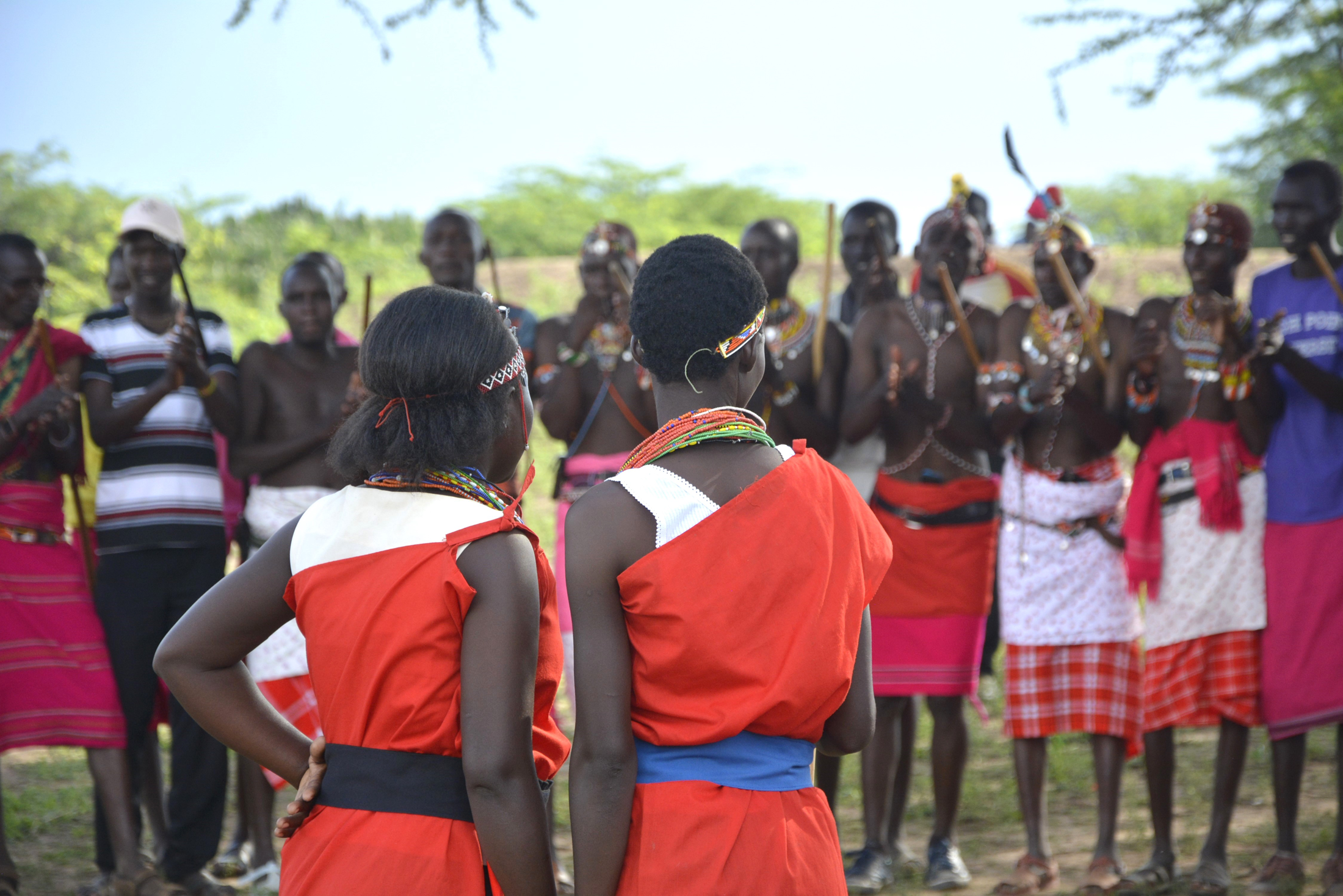
Dancing at a ceremony. Baringo County, Kenya, August 2019. Photo by Uroš Kovač.
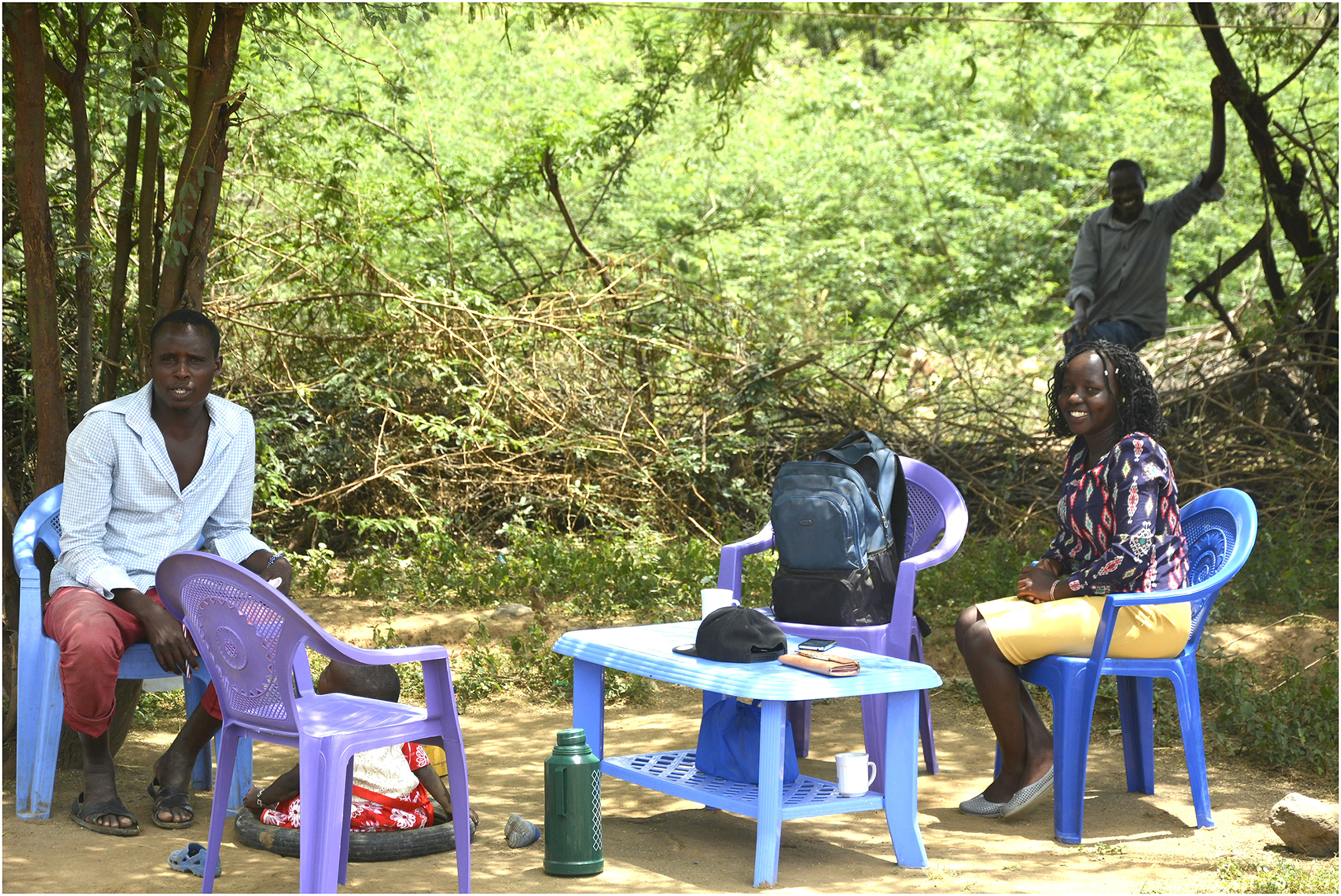
Glen Nakure and Maurine Keis (authors' research assistants) preparing for an interview. Baringo County, Kenya, October 2019. Photo by Uroš Kovač.
The debates over the role of inter-ethnic violence in morans’ self-fashioning as Il Chamus men were reflected in debates about the meaning of Lmeingati, the name of their age group. The name, given to the age group by elders who led the boys’ initiation into adulthood, was likely derived from the Maa verb a-ingatie, which refers to hogging–taking a greater share of something, more than one is entitled to (Payne and Ole-Kotikash, 2008). The meaning and interpretation of the Lmeingati age-group name was however not straightforward: there were disagreements about the complex meanings and about intentions behind the act of naming. The name could refer to a desire for prosperity for a new generation of morans, an encouragement to act in times of challenges, and a recognition of a period in which insecurity and inter-ethnic violence had a profound impact on people's lives. One of our interlocutors, a moran who lived close to the border with the neighbouring Pokot group, interpreted the name Lmeingati as an elders’ wish that the Pokot would not manage to flee with Il Chamus cows. For another moran, from Mukutani, a contested area most prone to conflict between the two groups, the name needed to be interpreted in the context of contemporary inter-ethnic altercations: Lmeingati referred to the need for the Il Chamus initiates to respond with force to the challenges posed by the neighbouring Pokot young men who raided their cattle and sought to take over their grazing grounds. For both of these morans from border areas, belonging to the Lmeingati age group was inextricable from inter-ethnic violence.
However, for elders who were actively involved in naming the age group in the early 2000s, the name was inextricable from elders’ blessing of a new cohort of initiates, and an expression of a much more general desire for prosperity that had little to do with violence. According to one elder–notably, a chief of Salabani, an area that was not significantly affected by inter-ethnic violence–the name Lmeingati meant that “they shall have access to everything they need.” Elders like him insisted that the term had little to do with violence, and more with prosperity “in all spheres of life.” The same elder criticized the morans for allegedly confusing their age-group name with the word lmangati, which referred to “enemies,” in particular “strangers” and aggressors from other ethnic groups (Payne and Ole-Kotikash, 2008; see also: Lesorogol, 2022: 161–162; Straight, 2017: 498–499). 10 With such misunderstanding, the elder argued, morans could conflate the encouragement to do well and prosper with the encouragement for violence. There were a number of other interpretations of the name Lmeingati, similarly framed in general terms, such as “nothing shall go without them attending to it,” referring to insecurity around Kiserian, or “nothing shall escape,” referring to Il Chamus cattle that were at danger of being stolen. All the groups–both morans and elders from both affected and non-affected areas–agreed that the name of the age group referred to an encouragement: either to persevere in challenging times or to properly respond to inter-ethnic violence. As one elder put it: “With the name, you are giving them strength.” Age-group naming was a way in which elders expressed desire and instilled encouragement and a sense of duty to a new generation of young men, as well as a way of reflecting on a contemporary situation of outstanding insecurity and inter-ethnic conflict. However, the naming of an age group was not intended to encourage morans to fight in order to achieve status as men (although it was at times interpreted as such by some morans), but rather to encourage them to maintain peace and security and to express a desire for prosperity and well-being.
Moreover, despite the fact that morans were expected to be the main participants in inter-ethnic conflicts, providing security to the community was not a role exclusively ascribed to them. Rather, it was a role that followed men throughout their lives. While some young men, members of the Lmeingati age group, who were morans in 2019, expressed relief after participating in appropriate ceremonies in 2020 that allowed them to “graduate” to the status of elders, they saw little difference in their role in the community, even after the initiation of a new cohort of boys into moranhood. This was because the provision of security was not directly tied to the status of moranhood, but rather related to the possession of youthful energy, which people (men and women) supposedly possessed until around age 50, long after the ending of young men's moranhood period.
For instance, many of the men in the first cohort of police reservists were not morans, but rather, like Robin quoted at the beginning of this article, members of Lkileku, junior elders and one generation older than the Lmeingati morans, or even Lmepoiye, senior elders. 11 One explanation for enlisting men of advanced age, rather than the young “warriors,” was that they, as more experienced elders, were needed to guide the subsequent cohort of young men in the important work of handling firearms, navigating the terrain, and maintaining peace. Some of our interlocutors considered this as departing from the “traditional” role of young morans as “soldiers” and fighters. And yet, at the same time, the reasoning behind hiring elders first resembled the common practice of elders guiding young men in organizing and executing crucial age-grade-related rituals, bestowing blessings upon them, and advising them. In this sense, the hiring of police reservists followed the norms of what Il Chamus men and women referred to as “culture,” not in the sense of employing “warriors” but rather reproducing notions of intergenerational hierarchy. The maintenance of security was thus an issue of gender and generation, but it did not directly correspond to young men's status as “warriors” or “soldiers” in the age-grade-related hierarchy. Here we begin to understand why Robin, quoted at the beginning of this article, felt a duty to own a gun and join the NPR even though his “warriorhood” days were officially over.
At times, maintaining security in contested areas was indeed contingent on age-group membership, albeit not in a straightforward way of taking part in violence as a member of an age group initiated into moranhood. Consider, once again, Moses, who in his early thirties started his job as a government-appointed assistant chief of volatile Rugus. As a new and young assistant chief, his first challenge was to recover the cattle that Il Chamus morans from nearby Arabal stole from Tugen families in an act of retaliation for an earlier conflict. After succeeding, he was tasked with convincing another group of Il Chamus morans to avoid retaliating against Pokot herders. The morans doubted that the Kenyan government would fulfil their promise of retrieving stolen cattle, and were preparing to take justice into their own hands, without elders’ blessings or government's permission. Moses was in a unique position to persuade the morans otherwise: he was a well-known assistant chief, as well as a Lmeingati moran himself. As an age-group member, he had access to all the morans’ meetings, and using his negotiation skills persuaded the young men to hold off the attack. Fulfilling masculine duties of protecting the community and providing peace was therefore contingent on belonging to an age group and an age grade but was grounded in skills of negotiation and persuasion, as well as authority of a government-related position.
Finally, when it came to government-sponsored police reservists, key providers of security in volatile areas, these were ideally men who were aspiring to build a “local” future, that is, to start a household and settle in rural Il Chamus areas. Take, for instance, Thomas, a police reservist and a member of the Lmeingati age group, but at the age of 38 one of the oldest morans in 2019. Thomas was from Kiserian and from a wealthy family: his father had four wives, and Thomas was granted control of no less than 38 acres of family land. He distributed parts of that land to his brothers and stepbrothers, who farmed and lived there. In 2019, he owned very few animals–only eight cows and four goats. He used to own many more though, and he lost all in recurring raids since 2005–in one raid, he lost sixty-one cows, in another 215 goats. Thomas never attended school: as a young man, he was designated by his father to take care of the animals, while other sons were sent for higher education, some of them becoming doctors and teachers.
Contrast this with the example of William, a Lmeingati moran from Kiserian in his mid-twenties. William was very eager to join police reservists in 2019. Coming from a wealthy family, 12 he had to relocate several times because of violence and insecurity, his family had lost more than 100 heads of cattle since 2005, and he participated in several dangerous missions aimed at retrieving stolen animals. He was clearly qualified for an NPR position. However, in 2016 and 2017, when the NPR was hiring, he was still considering migrating to larger trading centres or pursuing a university education in larger towns. This was likely the reason he was not selected. The NPR had to be “local” men: those who sought to build households and start families in Il Chamus areas, rather than those who sought to migrate in search of higher education or wage labour.
Notably, joining police reservists allowed men to engage the Kenyan state on their own terms. For Thomas, one of the main benefits of being a police reservist was having a “government gun” in his possession. In earlier years, like many other men in bordering areas, he had to resort to using “illegal guns,” which was risky: the guns privately owned by local men were illegal and the state policemen were formally obliged to sanction their use (even though they often looked the other way). With the possession of the “government gun,” the NPR men could use the government-provided “legal” firearms to maintain security without fear of sanction. Moreover, as some of the most respected and well-off Il Chamus men were civil servants–policemen, military officials, and government-related administrators–becoming a member of the National Police Reserves–a government-related position–inspired respect among neighbours and family members. The respect afforded to the police reservists stemmed both from their capacity to fulfil their role of “protecting the community,” as well as from their capacity to hold a “government job,” despite the meagre pay.
At the same time, the police reservists clearly distinguished themselves from the policemen (askari in Swahili), especially those deployed from elsewhere in Kenya, by underlining they were not regularly paid, did not have stable jobs, and were (despite these difficulties) much more eager and effective in retrieving stolen cattle and maintaining peace. While the policemen, often deployed from different parts of Kenya and from different ethnic groups, had little understanding of the value of cattle and saw little value in possibly losing their lives for the sake of a few animals they did not own, the “local” men were prepared to put their lives on the line in order to retrieve stolen animals, some of which they themselves owned. The state is thus a crucial point of reference for the construction of masculine subjectivities, albeit not simply through the reproduction of state ideology and power, or simply through resistance to it, but rather through an engagement with the state in order to fulfil “local” norms of gendered morality while simultaneously claiming the position of marginality and neglect. 13
Conclusion
Analyses of masculinity in precarious circumstances in Africa and beyond have become overdetermined with ethnographies of criminality and violence. Such analyses have often been crucial in demonstrating that causes of violence are to be found in politics and economics, rather than inherent to gender or an imagined “culture.” And yet, in a region like northern Kenya, facile causal links between youthhood, masculinity, violence, and “culture” are still drawn almost automatically, especially in popular and journalistic accounts. The Il Chamus historical ethnography shows, however, that the nexus of gender and generation is more clearly articulated through long-standing notions of peace, morality, and prosperity, even–and perhaps especially–in circumstances of political, economic, and ecological uncertainty.
One example is the notion of nkanyit that encompasses ideas (depending on the context) of “respect” and “discipline,” which contributes to the way a notion of respect has been deployed in analyses of (young) men. Through analyses of men as being “in search of respect” (Bourgois, 1996), an elusive notion of masculine respect has often been used to explain imbrications of violence, criminality, and masculinity in precarious conditions. However, a notion like nkanyit and the way it is deployed and negotiated by the Il Chamus men relates to performative morality that has little to do with violence and more with its prevention and suppression. Furthermore, contemporary Il Chamus marriage practices provide additional nuance to accounts of youth as being stuck in “waithood” (Honwana, 2012). On the surface, moranhood is an institutionalized waithood, in which young men are forced to wait for elders’ permission to access adulthood through marriage, and one that has positive connotations such as playful youthfulness. However, as “come-we-stay” cohabitations have become common throughout Kenya, for the Il Chamus men the promise of marriage comes earlier, and hence adulthood comes earlier, not as an established status, but as a demonstration of aspiration for “customary” gender and generational roles. Pathways to manhood are not linear, despite long-standing institutions that make them appear as such.
Notions like nkanyit and moranhood, far from isolated “indigenous” ideas, have been profoundly shaped by the colonial, postcolonial, and contemporary state. Despite the narratives of (agro)pastoralist northern Kenya as remote and beyond the reach of the government, masculinities here are and have for long been shaped by the state, both through its (often misguided) interventions and through men's active engagement with it. In contemporary times of increasing insecurity and threat of violence, the role of the state has become especially visible through the activities of police reservists, who fulfil masculine duties of providing security by drawing from state resources, while simultaneously fashioning themselves as “local” Il Chamus men marginalized by the state. Here masculinities are rarely grounded in isolated and clearly outlined domains of social life but rather subject to negotiation, and located at intersections between different structures of power and notions of morality.
Footnotes
Acknowledgments
We would like to thank all the Il Chamus research participants and their families in Baringo County for their knowledge, patience, and hospitality. Special thanks are reserved for Wilson Tiren, Glen Nakure, and Maurine Keis, our research assistants who guided us through interviews and ethnographic fieldwork and made this research project possible. Thank you to the African Inland Church (AIC) in Kiserian for hospitality, the British Institute in Eastern Africa (BIEA) in Nairobi for logistical assistance, and the “Future Rural Africa” Collaborative Research Centre at the Universities of Cologne and Bonn for research support and funding. Finally, thank you to Bruce Whitehouse for editing this special collection on masculinities in Africa, Africa Spectrum editor Tim Glawion for patience and support during revisions, and two anonymous reviewers for critical comments and linguistic expertise. This study has received ethics approvals from the National Commission for Science Technology and Innovation (NACOSTI) in Kenya and the Ethics Committee of the Medical Faculty of the University of Cologne in Germany.
Declaration of Conflicting Interests
The authors declared no potential conflicts of interest with respect to the research, authorship, and/or publication of this article.
Funding
The authors disclosed receipt of the following financial support for the research, authorship, and/or publication of this article: Collaborative Research Centre 228 “Future Rural Africa” based at the Universities of Cologne and Bonn, funded by the Deutsche Forschungsgemeinschaft (DFG, German Research Foundation)–Project-ID 328966760–TRR 228.
