



Abstract
Can diaspora houses be used as a site to explore transnational citizenship? Based on ethnographic fieldwork in Eritrea, this article shows that different kinds of remittance houses reify different categories of transnational citizens with various sets of rights and duties. Drawing on studies on state–diaspora relations and remittance houses, I illustrate the key role that housing plays in the Eritrean state’s efforts to build a loyal diaspora. By looking at housing projects (state-led and individual) over the last thirty years, the article shows how different groups of emigrants – based on their relationship to the state of origin as well as their status in their country of residence – have been more or less able to realise their aspirations to build a house back home. By doing this, I show the importance of considering remittance houses as not only transnational cultural artefacts but also political claims to membership.
Introduction
In the last decade, a growing number of studies have illustrated migrants’ capabilities of engaging in transnational relations with their country of origin (Glick Schiller et al., 1995; Levitt, 2001) and vice versa. Researchers have investigated diasporas’ key role in the economics and politics of their homelands as well as the mechanisms used by the countries of origin to control and benefit from their growing emigrant populations (Barry, 2006; Collyer and King, 2015; Fitzgerald, 2008).
As I argue in this article, emigrants’ housing investment in their home country represents a privileged site to analyse the relationship between emigrants and their state of origin. Drawing from the literature on state–diaspora relations (Collyer, 2006; Gamlen, 2008), housing can be seen as one of the many ways in which the state performs its “transnational governmentality.” This is defined as “home governments’ efforts [to] control diasporas, to mobilise national identities and to institutionalise the links between migrants and their home societies” (Collyer, 2006: 838). By allowing members of the diaspora to build a house back home, governments bind their extra-territorial citizens to the home country through a range of rights and obligations.
As usefully illustrated by the literature on remittance housing (Boccagni et al., 2020), a house represents much more than property: it embodies feelings of home, belonging, and membership. This is why housing is a tool for governments to physically exert their power over a diasporic population and to imaginatively and symbolically control the transnational space (Collyer and King, 2015). By determining who can and cannot build a house back home, the government defines the boundaries of national membership and monopolises the practices through which emigrants perform their belonging to their local community. This article aims to contribute to the literature on transnational governance by illustrating the role that housing plays in homeland governments’ attempts to manage different groups of the diaspora.
Remittance housing can also, however, be seen as a site of transnational citizenship (cf. Bauböck, 2010; Fox, 2005). Citizenship here is intended not only as a transnational articulation of ascribed statuses but also as a lived experience of engagement and political claims to belonging. Drawing from the literature on “acts of citizenship” (Isin and Nielsen, 2008), this article aims to show that the material culture and the practice related to remittance houses can represent a way in which members of the community, formally excluded from citizenship, reclaim their membership. I consider the building of remittance houses under the umbrella of “acts of citizenship,” defined as “those moments when, regardless of status and substance, subjects constitute themselves as citizens” (Isin, 2008: 18). Through housing, emigrants attempt to recreate a space for themselves to perform their commitment and their belonging to their families as well as to the nation. Given its worldwide diaspora and its complex divisions, the case of Eritrea provides insight into what transnational citizenship in particular means in contexts characterised by authoritarian rule.
After showing the significance of studying remittance housing as a key tool of state–diaspora relationships, the article illustrates the mechanisms of transnational governmentality in Eritrea through housing. These mechanisms have produced emigrant groups that have differential access to land and housing and that perform their social, political, and cultural membership to Eritrea in different ways. Drawing on interviews with public officers, ethnographic fieldwork, and informal conversation with migrants and their families, the article shows how different housing projects since after the birth of the nation in 1991 embody specific experiences of transnational citizenship and political claims towards the home country.
Remittance Houses and Transnational Governmentality
Housing financed by migrants in their country of origin was at first studied as another kind of remittance or simply as an economic investment. However, a growing amount of research points to the fact that these houses represent much more than an economic enterprise. Even if most emigrants may not return to live in their home country, constructing a house back home is a way to claim membership of the community, to support their families while showing commitment despite their absence, and to display an improved socio-economic status (Codesal, 2014; Erdal, 2012; Lopez, 2015; Sinatti, 2009; Smith and Mazzucato, 2009; for a full review and typology, see Boccagni et al., 2020). Importantly, these houses reflect emigrants’ integration process, as the migrants’ ability to visit home and to pay for these houses depends on their circumstances in their new country of residence (Codesal, 2014; Lopez, 2015).
These houses have been investigated as “transnational relational spaces” (Erdal, 2012) insofar as they reflect the emigrants’ and their families’ ongoing socio-economic and cultural connections. Migrants, their families, and their communities interact through these houses by arranging construction works, by sending and receiving remittances, and by using these places as sites for marriages, funerals, and other family gatherings. They crystallise feelings, aspirations, and practices connected to the idea of “home” (Boccagni and Pérez Murcia, 2020), belonging (Erdal, 2012) and identity (Leinaweaver, 2009).
While all the above aspects have been investigated to a large extent in the literature, less has been said about the role of the state of origin in shaping the possibility for emigrants to have a house back home. What I argue here is that remittance houses – intended as a transnational field of relationships, aspirations, and practices – should be studied as the result of transnational governance as well as subjects’ attempts to comply or subvert its mechanisms. As such, they can illuminate both the mechanisms used by the state to rule over its transnational population and the ways in which emigrants respond to them.
Remittance housing represents a key area of the “transnational state governmentality” (Collyer, 2006; Délano and Gamlen, 2014). Housing can be used to reward loyal groups in the diaspora, to co-opt dissenting groups, and to exclude others. Tsourapas (2020) argues that authoritarian states often develop a multi-tiered policy that favours specific communities abroad over others on the basis of their perceived utility. Through remittance houses, governments can acquire foreign currency from a dispersed diaspora and conveniently establish boundaries between who belongs and who does not. Remittance housing can function as a stabiliser for authoritarian regimes (Glasius, 2018).
To see how migrant housing can be used by government as a stabilisation factor, it is useful to draw on the concepts of diaspora building and diaspora integration mechanisms (Gamlen, 2008). Diaspora-building mechanisms include the construction of diaspora representation in the national community and the bureaucratic structures used to rule over diaspora’s matters. Diaspora-integrating mechanisms concern the extension of citizenship rights and duties across borders . As I show in later sections, these two mechanisms significantly overlap in the way the Eritrean state employs housing as a tool of transnational governance. By allowing only loyal citizens to access the land, the Eritrean state has used housing to symbolically reinforce a specific and exclusive definition of diaspora. Moreover, it has created a housing bank, which supervises requests for building housing on Eritrean land. As this article illustrates, housing reflects as well as reproduces a “differentiated, hierarchical and unequal system of citizenship” (Riggan, 2013; Woldemikael, 2013: xi).
From the point of view of emigrants, building a house back home – be it in the hometown, in the nearby city, or in the capital – can be interpreted as individual claims for belonging to the nation, to the local community, and family (Osili, 2004). It is a political act that can represent either loyalty or resistance to the state project as developed by authorities. To use the vocabulary of the literature on acts of citizenship, housing is a space to explore how subjects reconstitute themselves as citizens (Isin, 2008). As I show in the Eritrean case, housing financed by informal remittances in the attempt to defy state control over emigrants’ resources reflects the efforts of those migrants – excluded from the right to be Eritrean citizens – to display their belonging to their families and communities. Even if these practices are not meant to be explicitly rebellious acts, they are aimed at subverting established categories of formal citizenship, which is why the government has consistently punished these attempts. Looking at irregular housing as acts of citizenship allows the researcher to understand how struggles over citizenship take place in a covert and implicit way in an authoritarian context. It also allows us to expand the understanding of acts of citizenship by examining how materiality and material culture play a role in manifesting citizenship.
Before moving on to the analysis of diaspora housing in Eritrea, it is key to define what remittance houses are in the first place. Boccagni and Pérez Murcia (2020) define them as “emigrants’ transnational housing investments in the country of origin.” This is a useful definition – also in the case of Eritrea – as it allows a grasping of the key ingredients of the phenomenon – transnationalism, housing, and migration – while accounting for the variety of forms, locations, functions and dynamics behind these constructions.
In Eritrea, I found a significantly different situation from what is normally described as remittance landscape. Remittance architecture is not as flamboyant as documented in other countries of emigration (Boccagni and Pérez Murcia, 2020; Lopez, 2015; Sinatti, 2009). Except for some neighbourhoods, it is difficult to distinguish emigrants’ houses from local ones. Private investment in housing has been limited – partly to preserve the heritage of colonial modernist architecture in Asmara, Eritrea (Denison et al., 2017; Rodwell, 2004; Tecle-Misghina, 2015), and partly to comply with a war economy. Moreover, as my research participants often pointed out, almost all houses could be called remittance houses. As most families in the country survive thanks to remittances, their houses are also materially affected by emigration. It is worth recognising that these are not necessarily houses owned by emigrants, but rather, family houses that have been renovated thanks to the contributions of relatives abroad. They are not necessarily different or exceptional compared to other surrounding houses. These reflections are crucial in understanding the multiple ways in which emigrants engage in housing back home in spite of state prohibitions.
Methodology
Between September and December 2018, I conducted fieldwork research in Eritrea to investigate how migration influences the feelings, ideas, and practices of home for migrants and their left-behind kin. A focus on remittance houses was key to understand the impact of migration on home cultures both in terms of material artefacts as well as the emotional and social processes related to them.
That was not my first time in the country (Belloni, 2019a). However, unlike my first visit in 2013, my research in 2018 was officially hosted by the Research and Documentation Centre and the Party of Freedom Democracy and Justice (PFDJ) Research Office in Asmara. This official liaison allowed me to access a number of public sites and figures. I conducted interviews with public officers working for the government party; the Ministry of Infrastructure, Land, and Environment; and the Urban Development Section of Asmara municipality. These interviews were useful to understand public regulations about land property, housing, and public heritage.
My position of guest researcher at the PFDJ office made it more difficult for me to gain trust among locals (Belloni, 2019b). My topic of investigation was not helpful in the matter: the negative government propaganda towards contemporary emigration – which is mostly irregular, covert, and severely sanctioned – has turned the widespread culture of migration into a secretive business (Belloni, 2019a). Moreover, given the strict government rules on housing and construction since 2006, people tend not to speak openly about housing. I was nevertheless able to gather biographic interviews, conduct participant observation with migrant families, and review official documents and narratives.
In Asmara, I conducted several neighbourhood walks with at least one key informant living in the neighbourhood (Kusenbach, 2003) to understand the impact of migration on the architecture and social fabric of specific neighbourhoods. Similar walks were conducted in rural and semi-urban areas, mostly in the south of Eritrea, with the support of local inhabitants, whom I met through previously established networks.
Frequent home visits to Eritrean emigrants’ extended families in Asmara as well as in other rural and semi-rural areas were crucial means to appreciate the ongoing connection between migrants abroad and their left-behind kin in terms of economic remittances, gift exchanges, and transnational communication. Given the context of research, all research participants have been anonymised and details about places and people changed in order to guarantee their privacy and safety.
Sacrifice and Land: The Meaning of Citizenship in Eritrea
Eritrea has often been defined as a diasporic state, with at least 1.5 million people living abroad out of a population of four million (Iyob, 2000). The diaspora has emerged as a result of a lack of basic liberties since the 1960s combined with continuous wars (independence war from 1961 to 1991; border conflict from 1998 to 2001; and a state of no-peace–no-war from 2001 to 2018). Since the times of the independence struggle (1961–1991), Eritrean emigrants living and working in the Middle East, Europe, and the USA have mobilised to support private families and the national cause. Funds and material assistance were flowing from the diaspora into guerrilla fronts, especially the Eritrean People’s Liberation Front (EPLF), which still rules the country today under the name of PFDJ. At the time, the link between the diaspora and the nation was not formalised; all Eritreans carried an Ethiopian passport until 1991. “What defined membership was not a legal identity or a place of residence – Bernal (2004: 17) writes – but a subjectivity and the practice of political participation and commitment to the nationalist movement.”
When independence was gained in 1991, the diaspora was not forgotten. Since then, the government has applied both “diaspora-building” and “diaspora-integrating mechanisms” – to use Gamlen’s terms (2008) – to reinforce the link with its worldwide dispersed population. The government allowed all Eritreans abroad to gain a passport (nationality was given on the basis of descent from at least one Eritrean parent) and to invest in housing. Moreover, the debt of the nation to the diaspora has been publicly celebrated and often stated in public discourse and state propaganda. Migrants and martyrs are the two key figures that have shaped the “sacrificial citizenship,” as Bernal (2014: 33) argues: “the martyr […] represents the essence of the social contract between Eritreans and the state in which a citizen’s role is to serve the nation and sacrifice themselves for the survival and wellbeing of the nation.”
Rights and duties, however, are different for local and diaspora citizens. Resident citizens – except for the political elite and those connected to it – have been asked to contribute to the defence and development of the country with their labour in exchange for an extremely limited set of rights; most personal rights (freedom to move within and outside the country, to study what one pleases, to choose one’s own profession, etc.) as well as religious and civil liberties are curtailed. Citizens abroad are instead requested to contribute economically to the nation by paying 2 per cent of their annual income (Poole, 2013). This tax started during the struggle as a voluntary offer, and it increasingly became a state-enforced practice for Eritreans abroad (Hirt and Mohammad, 2018). Besides problematic state enforcement mechanisms (Bozzini, 2015), Eritreans abroad pay this tax not only out of sincerely felt patriotic duty but also to keep their rights as external citizens, such as access to consular services, maintenance of the right to visit Eritrea, and to own property. 1
This 2 per cent tax is only a portion of the resources that the Eritrean state extracts from its diaspora. The state has implemented elaborate financial policies in order to benefit from emigrants’ remittances to their families or to direct diaspora investments (housing is a key field of this policy). Although official data are not available and the existing reports are outdated, it is estimated that formal remittances make up one-third of the state budget (Tewolde, 2005). This means that the survival of the state depends on the capability of the government to control the gate through which these resources flow. This is what Poole (2013) calls the gatekeeper state. This is why policies against black market, informal remitting mechanisms, and irregular housing investment have been priorities ever since.
The weight of the sacrifice requested of local citizens became increasingly unbearable after the end of the 1998–2000 border conflict with Ethiopia (and the situation remains practically unchanged today even after the 2018 peace agreement 2 ). The eighteen-month national (civil and military) service, which was meant to enable young Eritreans to become adult citizens, has not fulfilled its promise: younger generations have been stuck for decades working in public employment, mostly as soldiers and teachers with low salaries that do not enable them to help their families and pursue their aspirations (Belloni, 2019a; Hirt and Mohammad, 2018). This became the main reason that hundreds of thousands of Eritreans have fled since 2000.
This situation led to the emergence of a narrative that puts two groups of nationals abroad in opposition: the group of those who left the country before independence are celebrated as heroes, while the group of those who fled the country irregularly after independence – the refugees – have been publicly defined as deserters (Hepner, 2009). The first group has formal citizenship rights, whereas the second does not. This has a direct impact on their possibility to build a house back home. In Eritrean public discourse, the word “diaspora” thus refers to the first group of emigrants. Often represented as a group of people unshakably loyal to the nation, the old diaspora is far from being a united community. Many among them have grown increasingly dissatisfied with the PFDJ rule (Berekteab, 2007; Hirt and Mohammad, 2018). Likewise, different generations of people with different backgrounds and political ideas have often been classified as a “refugee generation” that is uniformly opposed to the government; yet attitudes towards the home government are quite ambivalent among them (Belloni, 2019c).
Diverse loyalties and backgrounds determine different relationships between subjects and the government, both within Eritrea as well as in the diaspora. This led to the emergence of a complex system of graduated citizenship (Riggan, 2013; Woldemikael, 2018), where the local political elites – historically part of the EPLF front – are at the top (they are also internally stratified), followed by the diaspora, the residents and, lastly, the refugees. However, as Woldemikael (2018) writes: “Although the entire edifice makes the government look like a bureaucracy that functions as an efficient, modern, rational legal system, in fact it is not.” As most commentators highlight, arbitrariness and exceptions are part of the everyday functioning of local and transnational governance in Eritrea.
These groups have different access to housing and land acquisition in Eritrea, but the boundaries between groups are far from being clear-cut. The following examination of the housing situation illustrates that even formal diaspora citizens have had difficulties building – or keeping – a house back home. This is due partly to the erratic nature of power in the authoritarian rule and partly to the socio-economic and legal circumstances of these emigrants in their new country of settlement. As literature on remittance housing has widely showed, an irregular status and limited socio-economic resources may hinder the possibility of migrants to realise their dream of a house back home (cf. Codesal, 2014; Lopez, 2015) . Moreover, the study of housing illustrates that diaspora citizens, refugees, and their left-behind family members are all part of a political eco-system that traps them into financing the rule from which they seek to escape. Finally, it is important to notice that the Eritrean transnational state continuously reframes its relationships with the group of the excluded citizens, attempting to transform them into productive loyal citizens (Riggan, 2016). It is now common practice for former escapees to sign an apology letter at an Eritrean embassy, through which they recognise having committed a felony towards the nation and promise to contribute to the national development by paying the 2 per cent tax. In this way, even those who had initially been excluded by external citizenship can be included again in the population of citizens (Riggan, 2016). 3
All the above issues go beyond a simple discussion on property rights. The possibility of acquiring land and building a home on it has historically determined people’s identity. By controlling access to land, the government controls the source of people’s identity and prevents refugees from expressing their belonging and performing their social and political membership in their communities (Boccagni and Pérez Murcia, 2020; Osili, 2004). The word geza in Tigrinya – the most spoken language in the country – refers to the physical general structure of the house as well as to the lineage, the family one belongs to (Hammond, 2004; Smidt, 2007; Tronvoll, 1998). Attribution of cultivation land marked the membership of a family man to his addi – village (Kibreab, 2009; O’Kane, 2012). For families – not only the rural ones, but also those that have recently urbanised – having a house in the village of origin represents their roots and is a key asset to claim their belonging there. Even if nobody among those left behind lives in the village any longer, a family is expected to maintain a house there for the sake of burials, which must take place in the village of origin even if one has lived abroad one’s whole life.
Traditional land laws were partly reformed at independence time (Mengisteab, 1998; Tikabo, 2003) but have remained key in the understanding of the current land proclamation and in people’s perception of who belongs (O’Kane, 2012). According to contemporary national laws, the achievement of citizenship rights is tightly linked to the possibility of having two kinds of land (the land of cultivation – gebri – and land for construction: tiesa) (Government of Eritrea, 1994). Only those who have fulfilled their national duty by completing their tiesa national service, or those emigrants abroad who pay their 2 per cent tax, can acquire land and the possibility of building a house. Deserters – who are numerous in the country – and irregular emigrants are excluded. However, even those who comply with national service have a hard time enjoying their rights to land: first, even if they obtain government land, they rarely have the money – or the material – to build; second, if they build it, they cannot be there, as most of them are posted as soldiers or teachers in remote areas away from their homes (Belloni, 2019a).
This background is crucial for understanding why housing has been the key to the government maintaining a strong bond with its members of the diaspora, as well as the key to migrants remaining “Eritreans.” The house, as a physical structure, represents not only traditional family lineages and forms of membership but also the accomplished status of Eritrean citizenship. Transnational governmentality of remittance houses takes place at the intersection between family obligations, feelings of belonging, and traditional community membership rooted in land management and sharing, as the following stories exemplify.
Eritrean Housing Policies: The Peace Time
In 1994, the Eritrean government created the Housing and Commerce Bank, which aimed to “alleviate the acute housing shortages of the country by providing mortgage loans to individual customers, as well as financing the fast development of housing complexes in the country” (Housing and Commerce Bank Webpage: https://erhcb.com/hist.htm; accessed 16 October 2020). This institution is the one that supervised the housing projects in Asmara and Massawa, to which citizens need to apply to buy a piece of land, a house, or an apartment. Although I was not able to find any official data about it, officers and locals I interviewed confirmed that the vast majority of the housing complexes financed by the Housing and Commerce Bank have been bought by Eritreans in the diaspora. Their aspiration to build a house back home has eased the chronic lack of foreign currency in the country (significantly, all the housing prices listed on the website of the Housing and Commerce Bank are expressed in euro).
Right after the end of the war in 1991 and up until 1998, Eritrea experienced a period of relative peace. After thirty years of conflict, the ex-EPLF guerrilla fighters became the rulers of the country and started a number of economic and civil reforms over land distribution, women’s rights, and business organisation. In this period of hope, many Eritreans abroad planned to return; even those who did not think of returning desired to have a house back home. Several groups in the diaspora established associations that would facilitate the construction of houses in Asmara. The task of these associations was to mediate between the government housing regulations, the finance institutions, and the owners of the properties (Yohannes, 1999).
The remittance landscape of Asmara has been significantly changed by these projects. Many neighbourhoods were built in those years, such as Enda German or Enda America – respectively called the houses of the Germans and the houses of the Americans, referring to the country of settlement of the owners(Figure 1).
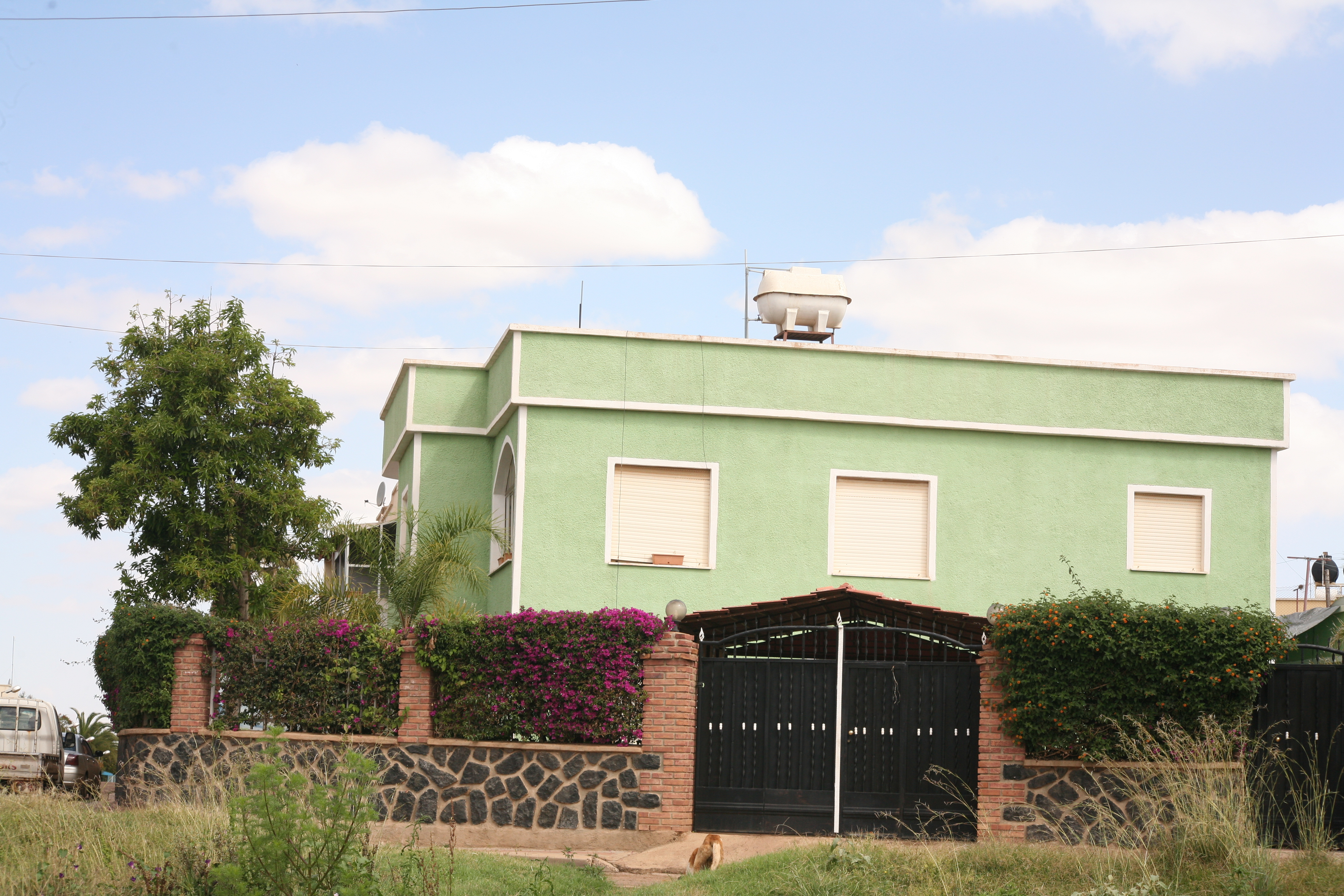
German Houses in Asmara.
These instances show that migrants have played a privileged position as investors in the housing market, and that external citizens in Eritrea enjoyed a somehow higher status than their local counterparts in Eritrea (Riggan, 2013). However, looking at the family history surrounding these buildings tells a more nuanced story even about those members of the diaspora who managed to secure the right to have a house back home. While wandering around these neighbourhoods (September–December 2018), my informants pointed out that most of these houses were either left uninhabited, given to local relatives, or rented out. Not many of these citizens abroad have actually returned. As a new border conflict began in 1998, many who had returned left again due to the insecurity and instability.
While I was staying in Asmara (during the year 2018), I visited the family house of Adonay, one of my long-term research participants. His family was scattered all around the world, as is the case for most Eritreans. Adonay was a refugee in Ethiopia, the parents with the two youngest children resided in Uganda, and one sister lived in the USA. The house in Asmara was inhabited by three sisters. It had been built in the 1990s by their uncle who used to work in Italy. The uncle, now deceased, had been crucial to the family’s survival during and after the war. He also restored the old family house in their village of origin, replacing an old hudmo with a more modern merebba, of which the family was extremely proud.
Unfortunately, the uncle had only been able to come to Eritrea on two occasions since he left in the 1980s. Engaged in the politically opposed front during the struggle (the Eritrean Liberation Front), the uncle had never felt comfortable under PFDJ rule. Although he wanted to stop paying the 2 per cent tax, he never dared do so for fear of losing his family’s and his own properties. Since 2008, he faced severe economic constraints, as his business in Italy had become bankrupt, and most of his money had been invested in helping nephews and nieces to escape from Eritrea. Although he had permanent legal status in Italy his limited resources significantly impacted his chances to access his rights as a citizen of Eritrea.
This story illustrates how, through housing and the 2 per cent tax, the Eritrean state has successfully co-opted the web of obligations and practices that link families in the country and emigrants. Despite political antipathy towards the government, the uncle kept paying his contribution to make sure that his family could inhabit his house. The house represented his ongoing connection and commitment to the family. While paying for it, however, he was financing the same regime that pushed his nieces and nephews to escape from the country. Not only could he not make Eritrea his home anymore, but his family was increasingly becoming part of the excluded citizens. Not only PFDJ opponents, but also those who mostly believed in the government have to juggle their membership to Eritrea in creative ways.
Enda Bonda: The Houses of the Patriots
During the border conflict, the Eritrean government called upon the support of the diaspora to build up the foreign currency needed for military expenditure. In particular, Eritreans in the diaspora were asked to invest in financial state titles, or “bonds.” In return for the support, the state promised to issue licences to build on the land. Thus, following the 2000s, many members of the diaspora started building houses through private and public developers in Asmara. Many neighbourhoods or blocks are called Enda Bonda, referring to the story behind these constructions.
Some of these neighbourhoods were completed, but many others remained unfinished due to restrictions on construction from 2006. This represented a disappointment for many diaspora citizens, who had invested much of their savings there. Berhane, whom I met in Asmara in September 2018, was one of them. Like many other Eritreans with strong patriotic feelings, he had voluntarily supported his country during the 1998–2000 border conflict. “Our children were dying at war. I would have given everything to help them,” Berhane told me while we walked through his neighbourhood. After several years spent in Australia working as a professional, Berhane decided to return to his homeland in spite of the difficult situation.
To thank him for his support, the government allowed him to secure some land to construct his house in the outskirts of Asmara. Berhane was single and thought that he would get married after completion of the house, but things did not go as planned. The construction of the neighbourhood stopped in 2006: although private houses had mostly been built, the construction company did not complete the road network or the infrastructure for electricity and water. Big palaces built with different designs ranging from Arabic-looking architecture to American villas were deserted, and the land in between these should-be-beautiful mansions became grazing fields for animals and public latrines for the locals (Figure 2). Although he had given up his life abroad, Berhane could not really settle back home, as his wedding nest was not ready for his new life. The incomplete housing construction delayed his private dreams for a family for years. His house, a rare instance of the realisation of migrants’ aspirations for return (Anwar, 1979), stands as an example of the unfilled promises that may await returnees.
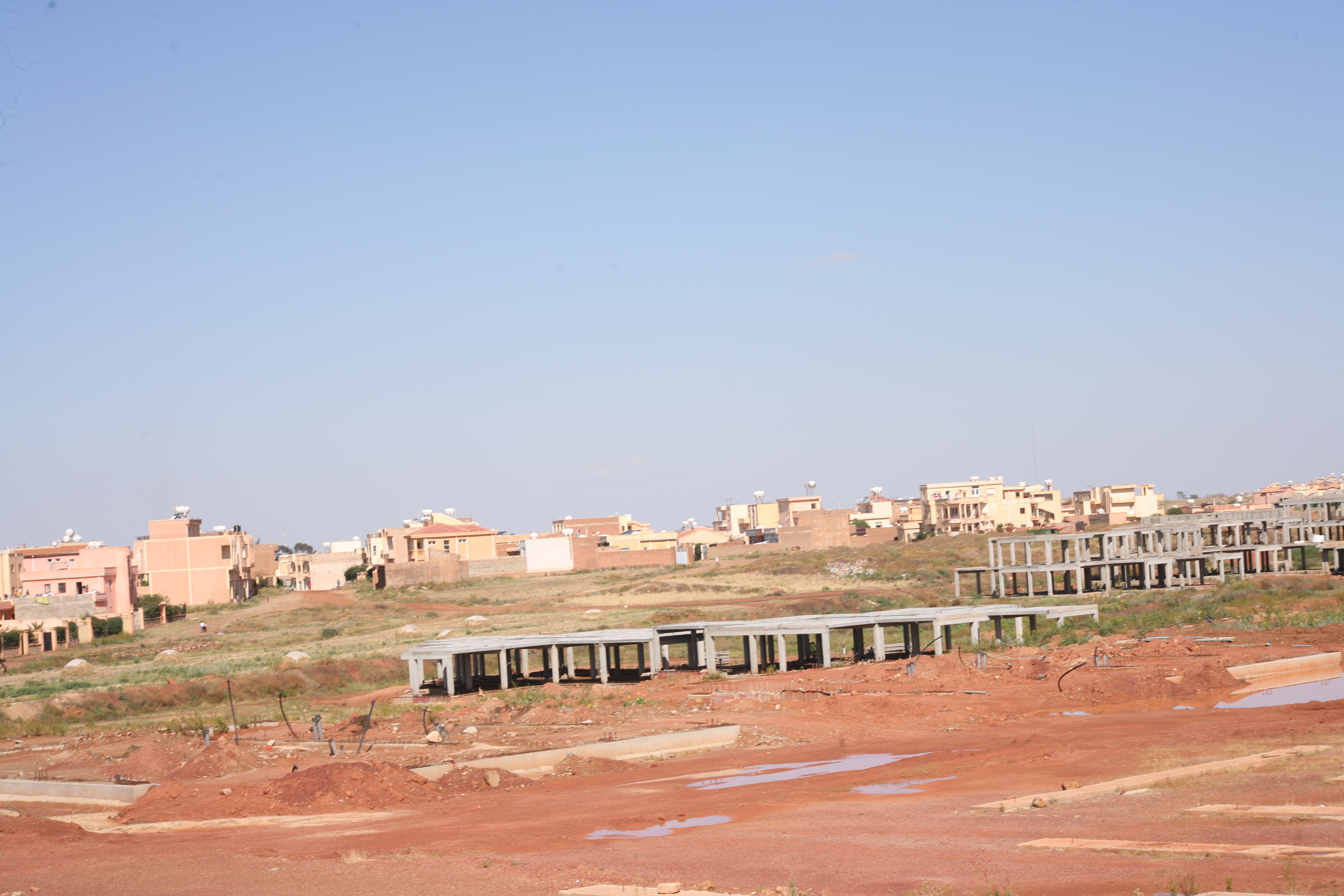
Incomplete Neighbourhood in Asmara.
Although Berhane physically returned and worked for the government, he remained registered as a “diaspora citizen” living abroad. This enabled him to avoid periodic military training and community service. He was, however, asked to pay the 2 per cent tax. This kind of arrangement is common and results in a double absence (Sayad, 1999), as these citizens are formally invisible in Eritrea as well as in their registered country of settlement. The opposition between external citizens – those who can mainly enjoy the rights of citizenship without obligations – and internal citizens – those who have to bear the duties (Fitzgerald, 2006; Riggan, 2013) – becomes even more problematic in this case. This status embodies the paradox of the articulation of diaspora and resident citizenship rights in a context in which people’s possibility to be at home can only be realised by being formally absent.
High Rent and Broken Houses: The Situation after the Ban on Construction
Although the war with Ethiopia formally ended in 2000, the situation between Ethiopia and Eritrea remained tense. Diplomatic and trade relations were not restored and the border was highly militarised, hindering the passage of goods as well as people. This “no-peace–no-war” situation kept both countries in a state of perennial alert. Within this atmosphere, much of the national economy, even long after the year 2000, remained focused on military expenditure and other “national priorities.” Construction was not part of it. According to the public officers whom I interviewed, this decision was due to the limited availability of cement. As foreign trade was largely impossible and foreign currency limited, those interested in building would not be able to access enough cement from the Massawa factory or import it from abroad. As a way to prevent smuggling and black-market activity, the government placed a general ban on housing construction, which was still in effect at the time of writing this article.
This meant that many housing projects remained unfinished, private developers were put out of business, local and transnational citizens could not build private houses in cities, and the distribution of land for construction (tiesa) was blocked in most parts of the country. According to official data provided by the Ministry of Land, Environment, and Infrastructure, 4 the distribution of tiesa was stopped suddenly after 2013, and in many districts around Asmara no land has been distributed since 2000. This does not mean that construction completely stopped – some public projects were carried out, as I illustrate later.
This house ban impacted everyone: locals as well as people in the diaspora, older generations of migrants as well as younger generations. As is clear in the case of Berhane, even the most patriotic citizens could not complete their projects. However, it is arguable that the heaviest price of this government decision was paid by the younger generations – both the locals as well as the migrants.
The local youth had to deal with the worsening of an already chronic shortage of housing (Arneberg and Pedersen, 1999) that increased the price of rent in urban and semi-urban areas. Notwithstanding a cap on rent prices regulated by the government according to metres squared and location, all the houses I visited in Asmara were rented for higher prices. Rents ranged between 500 and 2000 nakfa (the standard currency unit of Eritrea, abbreviated internationally as ERN) a month for a one-room house (and 1000 ERN is the average salary of a mid-level public employee). Many cancelli 5 tended to be overcrowded, with complex rules and limited access to the shared toilet. One recently married couple, whom I interviewed in Asmara, shared a house with ten other families, each of them occupying one room. They lived in a 3m2 room where they managed to fit one TV, one small gas burner for the coffee ceremony, and a bunk bed. However, the neighbours did not allow them to use the toilet, and the couple was obliged to use the surrounding fields. This was a common situation among young couples I met.
The ban has been especially detrimental to the younger generations of migrants who wish to invest in a house. Although the ban seems to have been less strictly enforced in rural areas, urban areas have been maintaining these stringent regulations, and some of those who dared to circumvent the ban were severely punished. This is the case of some migrants who built houses in the 2010s in Adi Qaiyeh, a university town in the South of the country. As I was told by local informants in December 2018, many people from the city had migrated to Israel. Given the irregular status of most Eritrean migrants in Israel (Müller, 2016), opening a local bank account there was impossible and remitting back home was then the main way of saving. However, keeping money in bank accounts in Eritrea was not an option either. In order to clamp down on the currency black market and informal systems of money transfer from abroad (hawala), the Eritrean government limited the amount of money that a private person could withdraw from their own bank account to 3000 nakfa per month (about 150 euro). This made bank saving extremely unattractive – investment in housing seemed the only possible solution for many families. Some tried their luck circumventing the construction ban through informal arrangements and corruption of local officers (fieldnotes, Adi Qaiyeh, 2018). These houses, reifying escape and informal remittances simultaneously, could be considered one of the few evident challenges to the gatekeeper state (Poole, 2013) in recent years.
Whole neighbourhoods were built and some years later demolished as the government discovered the irregularities and the local administrative corruption linked to it. This happened not only in Adi Qaiyeh, but also in other urban areas and in Asmara, where it was still possible to see the results of bulldozers’ work during my walks (Figure 3). As several residents of Adi Qaiyeh mentioned to me, demonstrations arose to protest against this demolition, but all protest was quickly silenced and people I met did not feel comfortable talking about those times. Ruins stood there, however, as a clear reminder of government punishments towards any formal or informal contestation. At the same time, these ruins could also be read in the frame of "acts of citizenship": while trying to circumvent the ban and building a place for themselves back home, younger generations of refugees implicitely challenged authorities and attempted to regain space in the political and social landscape of their communities of origin.
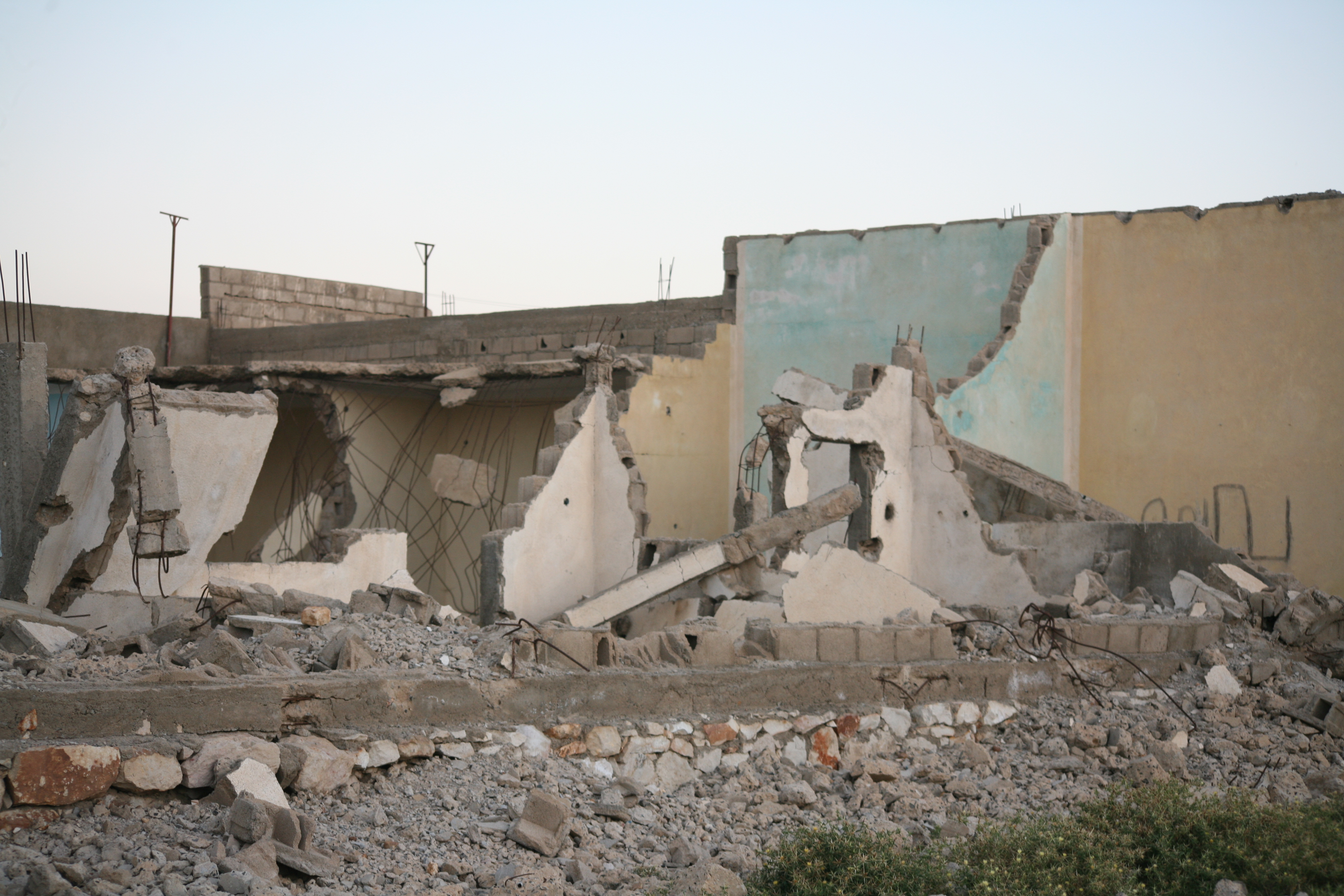
Demolished Houses in Adi Qaiyeh.
Restoration and Small Adaptation: The Housing Aspirations of Non-Citizen Nationals
Although the construction ban has severely limited the possibilities of locals and their children abroad building new houses, restoration/construction continues to be carried out in villages and to a lesser extent in urban areas. No matter how impossible returning to Eritrea seems to emigrants, the younger as much as the older generations of emigrants show a continuous commitment to their families and their communities. Investing in houses seems to be a way to reify/manifest their presence, even if from afar (compare Dalakoglou, 2010). These houses remain important to celebrate weddings of younger siblings, to mourn the loss of a deceased relative and to make sure that dear ones back home still feel cared for. When I visited Eritrea in 2018 right after the historical peace agreement with Ethiopia, everyone in the villages was preparing for building or renovating something. Mountains of sand and blocchetti (cement blocks) – transported from Ethiopia thanks to the open border policy at the time – lay at the side of each house. Everyone seemed to be waiting for the moment when national policies on construction would change.
In the city, construction had to be less visible as controls are stricter, so while the exteriors remained untouched, many of the interiors I visited had undergone some renovation financed by remittances. The old Sembel village, for instance, consists of social housing built by the Ethiopian Emperor and distributed to poor families. Initially these houses comprised one room and a small courtyard at the front. The shared toilets lay in a series together with public kitchens in between two rows of houses. Thanks to remittances, some families I have followed in the last decade (Belloni, 2019a) had recently managed to make some improvement. "I did not have a kitchen before - a lady in her 80s proudly told me - my children sent me money from the USA to build this cooking space in the garden. Now I can have a separate sleeping/sitting room!". Most of the elderly people I visited there knew that their children would never be able to visit their renovated homes and felt saddened by their solitude. However, the improvement of their living environment was often interpreted as a sign of the care and the love they received from their far-away children (Dalakoglou, 2010).
The villages that I visited in the surrounding areas of Asmara and in the south were characterised by a double architectural design. On the one hand, there were the old hudmos – traditional stone houses; on the other hand, there were more modern small houses built with cement and often painted with colours – merabba. "All these houses are built with migrants' money!" one of my local guides told me. After daily survival, the first important use of remittances was the improvement of the living environment of their left-behind kin, even if, at times, the houses were destined to be left abandoned (see also Codesal, 2014). As the migration of Eritreans remains massive, often the only people to take care of homes are the elderly. Once they pass away, these properties are likely to be left empty. "My children want me to renovate this house - a mother of six, recently widowed, told me while pointing at a hip of construction material in her backyard - but I am alone here, with the dog ... I would like to visit them someday in Norway". The tension between the hope of her children's unlikely return, the fear to leave the village and the desire to join her children was palpable in her words.
The paradox of remittance houses as potential return hubs (Erdal, 2012) is even more evident for younger migrant generations. Here the return is not only unrealisable because emigrants build a life elsewhere (Boccagni and Pérez Murcia, 2020; Erdal, 2012), but also because their citizenship rights were interrupted from the moment they escaped the country and sought asylum against the persecution of the government. From then on, returning forever becomes impossible, as do visits back home, even to say goodbye to a dying relative. The impossibility is engendered not only by the fear of government retaliation, but also by the regulations of their new countries of asylum, which forbid refugees from returning, even only temporarily, unless they want to give up their refugee status.
Besides the ruins of the demolished houses, these micro-construction interventions remain the only instances of resistance against the gatekeeper state (Poole, 2013) and its ability to channel different migration resources the national projects. Through these micro-constructions, which are not officially authorised and have been mostly financed through remittances transferred in informal ways, the last generation of non-resident Eritreans entertain their connection to their families, renew their ongoing commitment to their villages of origin, and perform their belonging to the community. They representthe resisting membership claims of a population of nationals excluded from the national narrative and from citizenship. -These micro-constructions demonstrate the significance of looking at materiality, and more specifically at housing, to understand how refugees abroad manage to perform "acts of citizenship" back home even if in context of authoritarian rule.
Looking Ahead: The Latest Projects
Notwithstanding the difficult housing policies of the government, Eritreans abroad remain committed to buying properties back home. Three housing projects from 2013 are still advertised on the website of the Housing and Commerce Bank of Eritrea: Sembel, Space 2000 and Halibet. 6 The most recent state-led projects were commissioned to the Piccini construction company, 7 an Italian-based company closely associated with the Eritrean government. This latter project is providing 500 housing units, and most of them have already been sold to diaspora citizens.
These construction models are probably going to continue in the near future. In one of the latest interviews by Eritrean President Isaias Afwerki (February 2020), construction has emerged as a key point for internal affairs. In the interview, he mentioned that the government will continue to carry out the construction of housing as in previous years. 8 This will probably mean that construction projects will be mainly state led, with few possibilities for private initiative and that Eritreans in the diaspora will remain the main investors for the sector. While the local labour force is still mobilised through national service, the exercise of property rights by external citizens is likely to reinforce the illiberal atmosphere back home.
Conclusions
This article showed that remittance houses can be a key site to explore both the mechanisms of transnational governance and migrants’ practices of transnational citizenship. By delving into different stories of families and their houses, I illustrated that migrants’ investment in housing is used by transnational states to not only gain resources from diaspora but also insure collaboration. By regulating the access of migrants to housing, the government can control the most important sources of Eritrean identity, which manifest in the membership rooted in the village, access to the land, and the performance of care towards families. The stories of Adonay’s family house, of Berhane, and of the refugees from Adi Qayeh exemplify the different and overlapping emotional, social, and political meaning of houses – as tokens of commitment towards families, return hubs, investments, and claims for membership – that the government controls through land and housing policies. Since citizenship is stratified in Eritrea along relationship of loyalty towards the political establishment, the government engages in the management of diaspora housing to reproduce different strata of citizens with different rights to land and property. It awards loyal citizens by allowing them to build in advantageous areas; it coerces dissident members to economically support the government for the sake of keeping their properties and thus protecting their families’ well-being; and it symbolically and practically excludes rebel sectors of the population from performing their belonging to the local and national community by constructing a house back home.
The other key contribution of this article is to show how remittance housing is an important lens for analysing transnational citizenship as a lived experience emerging from the tension between belonging, claims, and ascribed status (Isin and Nielsen, 2008; Müller, 2016). The article showed how irregular housing and micro-constructions financed by informal remittances represent a way for excluded citizens - mostly younger refugees - to subvert the boundaries of membership set by the government while performing belonging to the local community and care for the left-behind families. Building a house back home in spite of the government prohibition, and keeping a connection to the village or the neighbourhood in spite of public ostracism may be interpreted as attempts to re-inscribe the boundaries of who has the right to belong and who does not. These practices, moreover, weaken the gate-keeper state (Poole, 2013), as these houses are mostly financed by informal remittances from which the government cannot benefit. Housing is thus a political field used by those in power to exclude those who rebel their rule but is equally used by the excluded citizens to reclaim a space for themselves in the homecountry. Attempts to defy construction regulations can thus be considered as "acts of citizenship": they are instances of an implicit, symbolic, and material struggle over citizenship in a context marked by authoritarian rule.
Footnotes
Declaration of Conflicting Interests
The author(s) declared the following potential conflicts of interest with respect to the research, authorship, and/or publication of this article:
Funding
The author(s) disclosed receipt of the following financial support for the research, authorship, and/or publication of this article: This research has been conducted in the frame of the ERC HOMInG project (https://homing.soc.unitn.it/the-project/). The HOMInG project received funding from the European Research Council (ERC) under the EU Horizon 2020 research and innovation program (grant no. 678456).

Notes
Author Biography
Email: