



Abstract
In this article, we explore the evolving interplay between populism, technocracy, and affective polarization in current politics. More specifically, we evaluate how populist and technocratic ideologies shape antipluralist attitudes and affective polarization among the Finnish electorate. Populism and technocracy, often perceived as contrary political positions, can converge by challenging established democratic processes, political institutions, and knowledge sources. Theoretically, we contend that populist and technocratic attitudes can share the common ground of resisting established political norms, asserting legitimacy claims, and defining boundaries of inclusion and exclusion. Based on a representative population survey (N = 1563), we show the connections between populism, technocracy, and affective polarization, focusing on the mediating role of antipluralist attitudes. Overall, by delving into the tensions of populism and technocracy, this article offers new perspectives related to the ideological and epistemic dynamics behind affective polarization in European multiparty systems.
Keywords
Introduction
Recent academic research on the intersection of populist attitudes and support for expertise in political decision-making reveals a surprising trend: Despite the traditional view that populism is inherently hostile to expert knowledge, supporters of populist parties in European multiparty systems often endorse expert-led governance (Bertsou and Caramani, 2022; Fernández-Vázquez et al., 2023). This rhetoric underscores the evolving nature of the right-wing populist movements’ ideology and of their engagement with established knowledge-based institutions. European right-wing populists as emerging political challengers have pledged to reorganize the democratic system by challenging entrenched actors, rules and practices that are alleged to contribute to the erosion of political integrity. Simultaneously, they base their rhetoric claiming their dependence on scientific knowledge, facts and expertise in the decision-making. (Scanni, 2023; also Saresma and Palonen, 2022; Ylä-Anttila, 2017, 2018) This convergence is particularly striking given that populism has long been seen as fundamentally opposed to the technocratic politics that rely on specialized expert knowledge (Bickerton and Accetti, 2021; Guasti and Buštíková, 2020).
Moreover, previous scholarship indicates that the ideas of populism and technocracy are deeply intertwined by blending antipluralist sentiments to establish distinct and exclusive boundaries within society (see Bertsou and Caramani, 2022; Caramani, 2017; Treib et al., 2023). Although populism and technocracy are often perceived as opposed ideologies, they share fundamental antipolitical and antipluralist tendencies (e.g. Bertsou and Caramani, 2022; Bickerton and Accetti, 2021; Buštíková and Guasti, 2019; Caramani, 2017; Esmark, 2020; Friedman, 2019; Scanni, 2023). These common tendencies become apparent when considering two key aspects. First, populism and technocracy can challenge representative democratic processes and political parties, casting doubt on the integrity of political intermediators and their commitment to the common good (e.g. Caramani, 2017). Second, both may exhibit antipluralist tendencies by striving to dictate what is deemed legitimate in society: populism seeks to define legitimate segments of the “people” (Akkerman et al., 2014; Herkman, 2018; Mudde, 2004), while technocracy asserts authority over what is considered legitimate knowledge and forms of governance (Esmark, 2020; Friedman, 2019). Therefore, despite their apparent disparities, populism and technocracy share the common ground of resisting established political norms, asserting legitimacy claims, and delineating clear boundaries of inclusion and exclusion.
These antipluralist tendencies are closely intertwined with the phenomenon of affective polarization, which involves the emotional dynamics that shape the relationships between different political groups (Iyengar et al., 2012; Lelkes, 2018; Saarinen, 2022; Wagner, 2021). Today, right-wing populist agendas are increasingly being justified through appeals to “expertise,” “knowledge,” and “facts” (Ylä-Anttila, 2018). By providing a more precisely articulated epistemological foundation for their political motives, these technocratic ideals may further reinforce exclusionary, antipluralist attitudes. Therefore, it is crucial to examine the ideological conditions under which populist and technocratic ideas influence the affective polarization of the electorate.
To examine these conditions, we based our investigation on a representative population survey (N = 1563) from Finland. Our analytical approach unfolds in three main dimensions. First, we explore the interconnections between populism, technocracy, antipluralism, along with their relationship with respondents’ out-group attitudes, which can be seen as manifestations of affective polarization. In our analyses, we assess the exclusionary tendencies of both populism and technocracy as distinct yet parallel dimensions. Second, we assess whether and how antipluralist attitudes, specifically attitudes that advocate the exclusion of certain groups from democratic processes, mediate the links between populism, technocracy, and affective polarization. Lastly, by performing moderated mediation analyses, we investigate the respondents’ party preference intersections within this framework, shedding light on the ideological underpinnings of the interplay between technocracy, populism, antipluralism, and affective polarization.
The article is organized as follows. We begin by introducing our conceptual and theoretical framework. We provide a brief overview of the Finnish political landscape and explain Finnish parties’ relations to populism, technocracy, and affective polarization. Before delving into the empirical analyses, we detail our analytical approach, including the data sources, variables, and statistical techniques. In the concluding section, we summarize our findings and consider them in relation to previous debates on the ideological basis of affective polarization. In addition, we consider the limitations of our study and suggest potential avenues for future research.
Exclusionary elements within populism, technocracy, and affective polarization
The term “political polarization” typically encompasses two key dimensions, namely, affective polarization and ideological polarization (Lelkes, 2018). Historically, academic discourse focused primarily on ideological polarization, which refers to differences in political opinions among political groups and representatives, typically along the left–right or conservative–liberal spectrum (see Dilger, 2025; Goossen, 2025). While political polarization is often viewed negatively, ideological polarization, from a democratic perspective, can be positive or at least neutral, as it has been shown to increase political participation (Kleiner, 2020). However, during the 2010s, public and academic attention has shifted toward affective polarization, which focuses on the emotional attitudes political party supporters hold toward one another (Lelkes, 2018; Reiljan, 2020; Saarinen, 2022; Wagner, 2021). Affective polarization is typically measured by surveys that assess the extent to which citizens attribute negative traits to members of opposing political groups (Reiljan, 2020; Wagner, 2021). Thus, in contemporary discourse, the evolving emphasis on affective polarization underscores the growing significance of understanding not only the differences in political stances but also the emotional dynamics between different political factions.
While ideological polarization may have certain positive effects on democratic systems, affective polarization is widely regarded as harmful to democracy. Studies have shown that heightened affective polarization leads to increased political engagement but also decreased satisfaction with democratic institutions (Wagner, 2021). Although this increased engagement may present short-term benefits, the long-term effects of affective polarization are detrimental, as it fosters exclusionary sentiments and undermines the legitimacy of political outgroups. Furthermore, while affective polarization can drive political participation, it does not significantly boost voter turnout among previously disengaged citizens (Phillips, 2024). In sum, while ideological polarization may invigorate democratic participation, affective polarization poses a deeper threat to the social cohesion and legitimacy of democratic societies.
Similar to affective polarization, previous research has shed light on the shared characteristics between populism and technocracy, emphasizing their common dissatisfaction with traditional democratic institutions and political actors, including politicians, political parties, and traditional media (e.g. Bertsou and Caramani, 2022; Buštíková and Guasti, 2019; Christensen and Setälä, 2023; Friedman, 2019; Snegovaya, 2020; Treib et al., 2023). According to the classic definition of Cas Mudde (2004: 543), populism is an ideological perspective that typically divides society into two opposed groups: “elites” and the “people.” The idea of populism rhetorically professes unity and a single, unwavering national will while simultaneously suppressing the inherent diversity within a multivoiced democracy. Within the realm of right-wing populism, alongside its stance against “elites,” nativism has become key, which privileges the rights and status of ethnically “native” people within a state (Christensen and Saikkonen, 2022; Herkman, 2018; Mudde, 2004; Ylä-Anttila, 2017, 2018). Consequently, ethnic minorities and immigrants are often positioned outside the defined boundaries of “the people.”
Likewise, technocratic expert power can have harmful effects on the pluralistic principles (e.g. Bertsou and Caramani, 2022; Esmark, 2020; Friedman, 2019; Snegovaya, 2020). Technocracy, often characterized by civil servant or expert power, typically involves a mode of governance in which authority for societal decision-making is delegated to groups of experts, with a significant focus on scientific and technical expertise 1 (Esmark, 2020: 3–8). The concept of technocracy suggests that political authority is vested in technical elites rather than in democratically elected officials, thereby potentially undermining the principles of representative democracy. Moreover, the technocratic approach aims to replace the value, ideology, and interest conflicts intrinsic to democratic systems by emphasizing “efficient management” (e.g. Bertsou and Caramani, 2022; Caramani, 2017).
Many scholars have argued that the strong similarities between populism and technocracy have led to the emergence of “technopopulism” or “technocratic populism” (e.g. Buštíková and Guasti, 2019; Caramani, 2017; Esmark, 2020; Fernández-Vázquez et al., 2023; Friedman, 2019; Guasti and Buštíková, 2020). This concept refers to the blending of populist rhetoric with appeals to expertise, where politicians employ populist language while proposing technocratic solutions to political and democratic crises, positioning themselves as capable experts (Bickerton and Accetti, 2021). Today, this fusion of populist and technocratic logics is evident, particularly as right-wing populists attempt to shift policymaking away from ideological conflicts and toward epistemological debates. For instance, Ylä-Anttila (2018) notes that right-wing populist parties often rhetorically champion expertise by emphasizing terms like “knowledge,” “truth,” and “evidence.” However, their reliance on alternative sources, referred to as “counterknowledge,” distinguishes them from the traditional understanding of mainstream expert consensus (Ylä-Anttila, 2018). Friedman (2019) describes this dynamic through the concept of naïve technocratic realism, in which opinions are framed as direct reflections of reality. Today, the combination of naïve technocratic realism and “counterknowledge” has become a key rhetorical strategy among right-wing populists, used to delegitimize political opposition.
In summary, the interplay of populism, technocracy, and affective polarization can constrain and undermine pluralist democracy and its core institutions. To better understand contemporary European multiparty systems, it is essential to scrutinize how these antidemocratic tendencies converge. Then, while populist and technocratic ideas often intersect in various European contexts (e.g. Bertsou and Caramani, 2022; Fernández-Vázquez et al., 2023), their distinct and parallel impacts on social differentiation should still be analyzed. Then again, despite their intersection, both populism and technocracy may carry unique implications for antipluralism and affective polarization, manifesting differently across political contexts. To fully grasp how these ideologies foster exclusionary and antagonistic attitudes toward other political groups, it is crucial to assess the extent to which support for populism and technocracy independently contributes to affective polarization. Accordingly, we propose the following hypotheses:
To understand how populist and technocratic attitudes influence affective polarization, we specifically examine antipluralist attitudes as transmitters of ideological values. In addition, our objective was to understand whether antipluralist sentiments serve as a mediating element, especially for those citizens who advocate the exclusion of certain groups from democratic processes. Thus, we examine how antipluralist attitudes mediate the relationships among populism, technocracy, and affective polarization. We pose the following hypotheses:
Party-political tensions of populism, technocracy, and affective polarization
The 20th-century political landscape, defined by the traditional left and center-right poles, has been challenged in many European multiparty settings by the emergence of a third pole represented by the radical right (Oesch and Rennwald, 2018). Research suggests that within this tripolar political space, rising tensions influence perspectives on populism, technocracy, and affective polarization (Bertsou and Caramani, 2022; Harteveld et al., 2022; Saarinen, 2022). This research uses Finnish society as a case study to explore how support for populist and technocratic ideas influences exclusionary attitudes in European multiparty systems. To fully understand these dynamics, it is essential to recognize the critical role that societal and political contexts play in shaping political landscapes. As a result, we focus on the distinctive features of the Finnish political system and its parties to provide a more nuanced analysis of how these ideologies interact and manifest within this specific context.
Finland presents a compelling case due to its parliamentary political culture, which is deeply rooted in the Nordic tradition of science-based, polarization-mitigating, and consensus-oriented decision-making (Lehtonen and Ylä-Anttila, 2024; Qadir and Syväterä, 2021; Sivonen and Syväterä, 2023). In this context, political legitimacy is strongly tied to expertise, creating significant pressure on political elites to emphasize knowledge-based rhetoric (see Qadir and Syväterä, 2022; Sivonen and Syväterä, 2023). This emphasis on expertise may not only shape political decision-making but also incentivize voters to reward such actions. Therefore, Finland's political culture, which prioritizes expertise-based rhetoric, offers a unique context for examining how populist and technocratic logics intersect and the tensions they produce.
The Finnish political system follows the structure of the Western European multiparty system and uses open-list proportional representation. Before 2011, the Finnish multiparty system was primarily dominated by the “old establishment,” which included the moderate right-wing National Coalition Party (NCP), the center-right Centre Party (CPF), and the center-left Social Democrats (SDP). During this era, Finnish political parties formed stable majority governments through strong coalitions, emphasizing interparty collaboration to establish government programs (Koivula et al., 2020). However, in the 2011 election, the populist radical-right Finns Party (FP) achieved a landslide victory, emerging as a dominant political force and gradually replacing the CPF among the “traditional big three” parties. This transition has generated a gradual shift toward more affective, antipluralist, and conflict-oriented forms of rhetoric in Finnish politics (Herkman, 2018; Saarinen, 2022).
Although Finland's level of affective political polarization remains relatively low according to international comparisons, recent years have revealed signs of intensification. In Finland, affective polarization has become stronger, particularly between conservative parties, such as the FP and Christian Democrats (CD), and their counterparts on the liberal-left spectrum, namely, the Green League (GL) and the Left Alliance (LA). This tension extends to supporters of the SDP, which hold a predominantly negative stance toward the FP. Similarly, supporters of the right-wing Movement Now (MN) exhibit adverse emotional attitudes toward the liberal-left parties (Kekkonen, 2023; Saarinen, 2022; Westinen et al., 2020). These trends underscore the existence of a pronounced emotional schism and political conflict in Finland, particularly between groups aligned with or opposed postmaterialist, leftist, and value-liberal objectives related to issues such as combating climate change and safeguarding minority rights (Dilger, 2025; Herkman, 2018; Koiranen, 2022; Saarinen, 2022). Accordingly, these heightened emotional dynamics highlight divergences in core values and policy priorities among the polarized factions within the Finnish political landscape.
The evolution of political dynamics in Finland mirrors the patterns observed in other European multiparty systems (Gidron et al., 2023; Oesch and Rennwald, 2018). In this context, new political battles concern the ascendance of right-wing populism, notably embodied by the rise of the FP throughout the 2010s. The FP underwent a significant ideological and rhetorical overhaul following Jussi Halla-aho's promotion to chair in 2017, as the party diverged from its traditional center-leftist antiestablishment populism and labor-oriented roots (Arter, 2024; Hatakka, 2021; Herkman, 2018). This transformation persisted during Riikka Purra's tenure as chair since 2021, firmly cementing the FP's core ideology within the realm of the populist radical right. Notably, while maintaining the party's working-class tradition, the supporter base has diversified considerably over the last decade; a critical faction of FP supporters now involves educated experts, particularly from the technical and commercial domains (Sivonen et al., 2018; Westinen et al., 2020; see also Johansson Sevä and Öun, 2024).
Compared to the emergence of populism in the Finnish political landscape, technocracy has a more ambivalent relationship with traditional ideological dimensions. Comparative studies have suggested that in well-established democratic nations, the backing for technocracy tends to be lower compared to countries with developing democratic traditions (Bertsou and Pastorella, 2017; Migchelbrink, 2023). However, in Finland, there has been a notable upward trend in citizen support for expert rule in political decision-making that deviates from this established pattern (Rapeli, 2016; Saikkonen, 2023). Approximately half of Finns endorse a political system steered by unelected experts. Notably, this support tends to be more pronounced among younger generations, individuals with lower levels of education, and those dissatisfied with the functionality of democracy (Saikkonen, 2023; see also Bengtsson and Mattila, 2009). Overall, these shifts in attitudes signify a departure from conventional democratic norms, both in the Finnish and European contexts.
Previous research indicates that technocracy garners support among various segments of the electorate. In European multiparty systems, support for technocracy is common among economically right-wing citizens who advocate the idea of neoliberalism (Bertsou and Caramani, 2022; Bertsou and Pastorella, 2017). However, earlier research shows paradoxical tension regarding the relation between trust in science-based institutions and support for technocracy. Research indicates that trust in science and science-based institutions does not necessarily equal preference for expert governance over elected officials (see Migchelbrink, 2023; Saarinen et al., 2020). These nuanced relationships illustrate the complex interplay between technocratic leanings and political affiliations in the electorate.
Moreover, right-wing populist movements have excelled in blending populism with technocracy while navigating a complex relationship with liberal democracy (Fernández-Vázquez et al., 2023; Heyne and Lobo, 2021). This fusion of ideologies is not limited to Finland but extends to right-wing populist representatives worldwide, who have effectively harnessed technical and scientific arguments to bolster their policies and connect with their supporters, as demonstrated by various studies (e.g. Bickerton and Accetti, 2021; Guasti and Buštíková, 2020; Ylä-Anttila, 2018). These technocratic arguments could be indicating the broader exclusionary stance that is rhetorically backed with knowledge-based claims build on specific epistemological understandings, and, then, can even more profoundly generate negative perceptions of political out-groups among the public.
To summarize, it is evident that in the Finnish political landscape, ideologies of populism and technocracy have different weight among different political groups. Similarly, in Finland negative attitudes toward political out-groups are highlighted among those political groups that are more clearly formed around the postmaterial political struggles, namely supporters of the liberal-left or conservative-right parties. Therefore, to better understand the current ideological conditions leading to polarization and exclusion, we evaluate in which political conditions populism and technocracy directly or indirectly enhance affective polarization. Accordingly, we pose the following hypotheses:
Research design
Data analyses are divided into three phases (see Figure 1). First, we test H1 and H2 by modeling the direct effects between the dependent and independent measures with OLS regression models controlling for age, gender, education level, and residence area. In the subsequent phases concerning mediation analyses, our aim is to test H3–H6 by evaluating the types of mediation and nonmediation in the models, initially among all respondents (H3 and H4) with mediation models and then at values of party groups (H5 and H6) by using the moderated mediation models (see Hayes, 2015). To more precisely probe the conditional indirect effects and to test the hypotheses, we measure standard errors and confidence intervals, which are calculated using bootstrapping methods by conducting 5000 replications (see Hayes, 2015; Preacher et al., 2007). 2
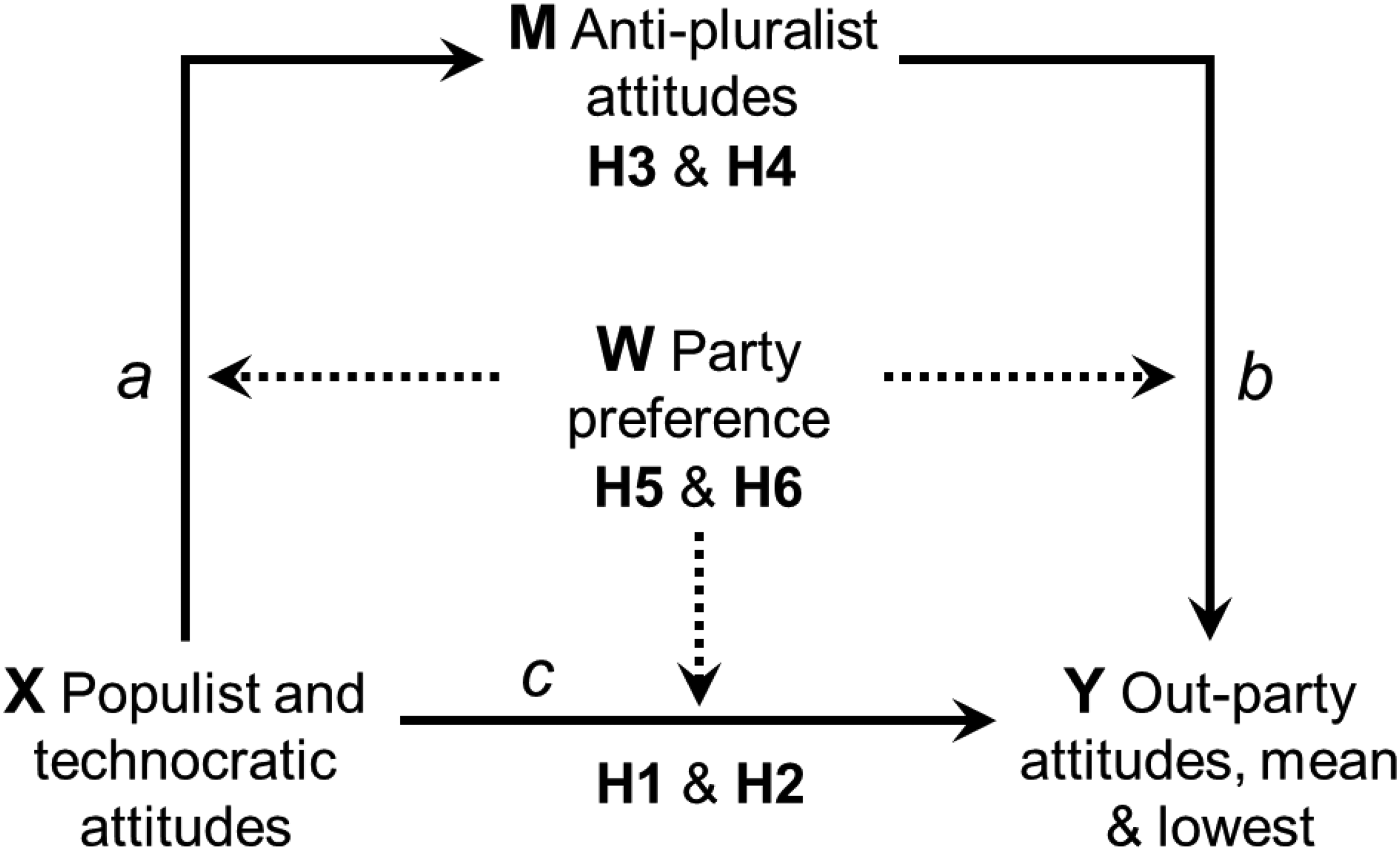
The analytical outline of the study.
Following Zhao et al. (2010), we identify mediation types when assessing the connections between populism, technocracy, antipluralism, and affective polarization. According to Zhao et al., there are five parallel types of mediation and nonmediation:
Complementary mediation: Mediated effect (a x b) and direct effect (c) both exist and point in the same direction. Competitive mediation: Mediated effect (a x b) and direct effect (c) both exist and point in opposite directions. Indirect-only mediation: Mediated effect (a x b) exists but no direct effect. Direct-only nonmediation: Direct effect (c) exists but no indirect effect. No-effect nonmediation: Neither direct effect nor indirect effect exists.
Considerations of these different types of mediation could show whether and how our theoretical assumptions regarding the mediating role of antipluralist attitudes function in an empirical setting. Theoretically, it is the most rewarding if the models reveal indirect-only mediation, which indicates that the total effect of the independent variable is explained by the indirect effect via antipluralist attitudes. However, because we suggest that the dynamics between the independent and dependent variables are conditional on political preferences, it would be highly interesting if other types of mediation, nonmediation, and even noneffect nonmediation would emerge.
Data
Our empirical analyses are based on the Religious and Societal Attitudes survey, which was conducted during October and November 2022 and comprised 1563 respondents. The survey was initiated by sending invitations via mail to a randomly selected sample of Finnish speakers aged 18–74 years, totaling 6000 individuals. Recipients were asked to complete the survey online through the RedCap software. The initial sample was obtained from the Finnish population register, a provided by the Digital and Population Data Services Agency, a government organization in Finland. During the data collection, ethical and privacy-related risks were minimized by adhering to the ethical principles outlined by the Finnish National Board on Research Integrity and complying with the EU's General Data Protection Regulation. These considerations were integrated with strict attention to data protection guidelines when handling, storing, and disseminating the data.
The response rate was approximately 26% and the initial analyses indicated a slight bias in the final sample concerning age and area of residence (Hjelm et al., 2023). To address this bias, the data were corrected by applying poststratified weights to mitigate discrepancies related to age, gender, and territorial distribution. These weights were employed to align the demographic distribution of our sample with the official population distribution of Finnish citizens as reported by the Official Statistics of Finland. In the following sections, we describe our primary analytical components; descriptive statistics are presented in Tables A3 and A4 of the online appendix.
Dependent variables: Measures for affective polarization
Affective political polarization is often assessed using various scales, including those based on instruments such as the feeling thermometer, character trait meter, confidence meter, and social distance meter (Druckman and Levendusky, 2019; Reiljan, 2020; Wagner, 2021). In our study, we employed a measurement method that is similar to the feeling thermometer, which has proven to be a valuable proxy for gauging partisan affect in multiparty systems (Gidron et al., 2023; Reiljan, 2020). In our dataset, the respondents were initially presented with the following question: “How do you feel about the following parliamentary parties?” They were provided with a response scale ranging from 0 to 10, where 0 indicated “very negatively,” 5 indicated “neutral,” and 10 indicated “very positively.”
We created two parallel variables by using these questions and comparing them with the variable that measured the respondents’ party preferences (see the Moderating Variable section). First, to establish the measure for average out-group attitudes, we computed the mean of each respondent's attitudes toward all the other parties, excluding the party they preferred the most. Second, to create the measure for minimum out-group attitudes, we identified the party that the respondent disliked the most and used the corresponding value as the indicator for this measure.
Independent variables: Populism and technocracy
The variable of gauging support for populism was derived from four specific survey items (see Table 1). In the initial survey, the respondents were presented with four distinct claims to assess their opinions, as outlined in Table 1. The respondents could choose their answer on a 5-point Likert scale (1 = “totally disagree,” 2 = “somewhat disagree,” 3 = “neither agree nor disagree,” 4 = “somewhat agree,” and 5 = “totally agree”). These items were designed to encompass dimensions in populist attitudes similar to those put forth in prior survey research (see Akkerman et al., 2014; Bertsou and Caramani, 2022; Castanho Silva et al., 2020; Weßels et al., 2021). The measure for the respondents’ support for technocracy was based on four distinct items (Caramani and Bertsou, 2022; Fernández-Vázquez et al., 2023; Weßels et al., 2021). However, compared to the measures proposed by Caramani and Bertsou (2022) and Fernández-Vázquez et al. (2023), our measure focused exclusively on the expertise dimension.
Phrasing of the original items for measuring populist and technocratic attitudes.
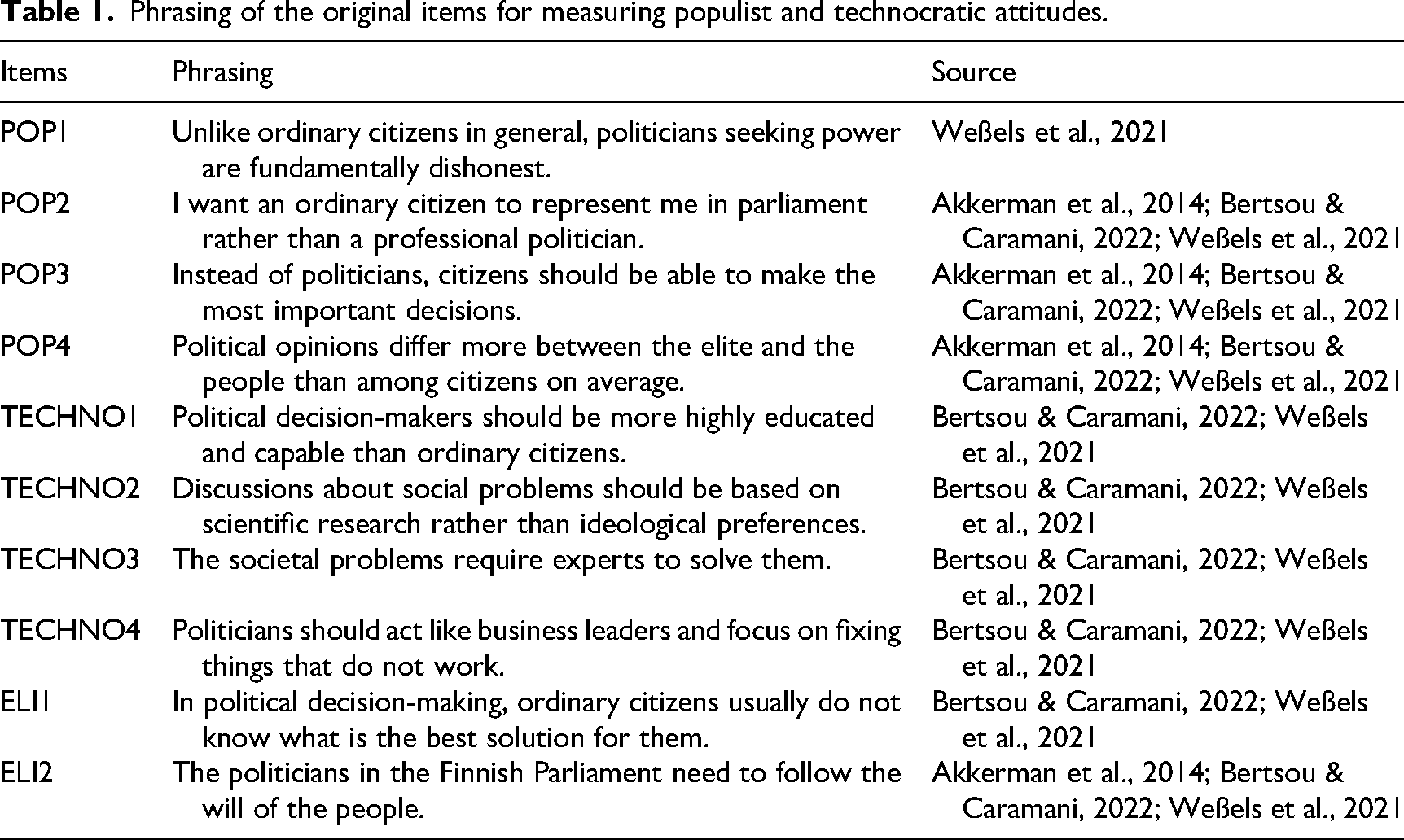
All populism items loaded to the same dimensions, and factor loadings varied between .568 and .788. The populist component's rotated eigenvalue was 2.31 (proportion of variance explained 24.9%). Again, all technocracy items quite clearly loaded to the same dimension (eigenvalue 1.65; variance explained 15.6%), and factor loadings varied between .436 and .696. More information concerning the formation of the measures and the solution of principal component analysis (PCA) is provided in the online appendix (see Table A1).
Mediator: Antipluralism
Similar to forming the measures for populism and technocracy, in the formation of the measure for support of antipluralism, we used PCA. The linear measure was based on the following four items:
For a functioning democracy, it is important that different opinions and values are represented in political decision-making (reversed); Finland would do better if some of the current parliamentary parties were abolished; The parliament's activities are ineffective because in Finland, too much attentions is given to the interests of various special group; and In Finland, the rights of ordinary Finns are not sufficiently taken care of.
The goal was to create a composite variable that encapsulates support for antipluralist attitudes concerning policymaking in the Finnish parliament. Accordingly, the initial propositions were designed to gauge the legitimacy associated with how different interest groups are represented in parliament (see Bertsou and Caramani, 2022; Bickerton and Accetti 2021; Caramani 2017; Christensen and Setälä, 2023; Treib et al., 2023). The first item sought to assess the respondents’ perceptions of pluralist views in the policymaking process, the second item addressed pluralism among political parties, and the third and fourth items were intended to capture the respondents’ views on pluralism in civil society. Again, the participants could indicate their answers on a 5-point Likert scale (1 = “totally disagree,” 2 = “somewhat disagree,” 3 = “neither agree nor disagree,” 4 = “somewhat agree,” and 5 = “totally agree”). 3
Moderator: Party preference
We determined the respondents’ political orientations using a variable based on their party identifications. Initially, the respondents were asked which political party they felt closest to. At the time of the survey, the government included the SDP, the CPF, the GL, the LA, and the Swedish People's Party (SPP). The other four parties, FP, NCP, CD Party, and MN, formed the opposition. In the original question, the respondents could specify a nonparliamentary party in an open-answer field or select the “None of the parties” option. However, due to the limited number of cases, we aggregated the data into four categories to measure the respondents’ party-political orientations. In this categorization, we followed the idea of a tripolar political space in European multiparty contexts (Oesch and Rennwald, 2018).
4
These categories were as follows:
Liberal-left, including respondents who felt closest to the SDP, GL, or LA. Conservative-right, including respondents who identified with the FP, CDP, or MN. Center-right, including respondents who felt a connection with the NCP, CPF, or SPP. No preference, including respondents who did not favour any of the parliamentary parties.
Control variables: Sociodemographic background
In addition to the primary explanatory and mediating variables, our models included several control variables. These sociodemographic controls encompassed gender, age, education level, and area of residence. Regarding gender, respondents had the option to select from three categories: “Female,” “Male,” and “Other.” However, due to the limited number of respondents identifying as nonbinary, we focused our analysis on comparing the differences between the first two categories. Age-related information was collected by asking respondents to report their year of birth in an open-question format. We categorized the respondents’ education based on the International Standard Classification of Education, allowing the respondents to choose from 10 different education categories. To determine the residence area, we used the respondents’ postal codes, which were subsequently removed once the data collection process was complete.
Results
OLS regression analyses: Direct associations between attitude scales
As Figure 2 illustrates, most possible associations between support for populism, technocracy, antipluralism, and affective polarization exhibited statistically significant correlations. The associations presented in Figure 2 were controlled for the respondents’ age, gender, education, and residence area. The full regression models with and without the control variables are presented in the appendices (Tables A5–A12). The support for populist attitudes exhibited a statistically significant correlation with antipluralist attitudes (B = .548, p < .001) and with both measures for affective polarization (out-group mean: B = –.288, p < .001; out-group lowest: B = –.112, p < .05). Surprisingly, technocracy exhibited a statistically significant correlation with one of the two measures for affective polarization: although the correlation with the measure for the lowest attitudes toward other parties was statistically significant (B = –.122, p < .01), the correlation with the measure for the mean attitudes was not significant (B = –.011, p = .814). In addition, technocratic attitudes and antipluralist values shared a statistically significant relation (B = .088, p < .001). There were statistically significant correlations between the measure for antipluralist attitudes and both affective polarization measures (out-group mean: B = −.390, p < .001; out-group lowest: B = –.340, p < .001).
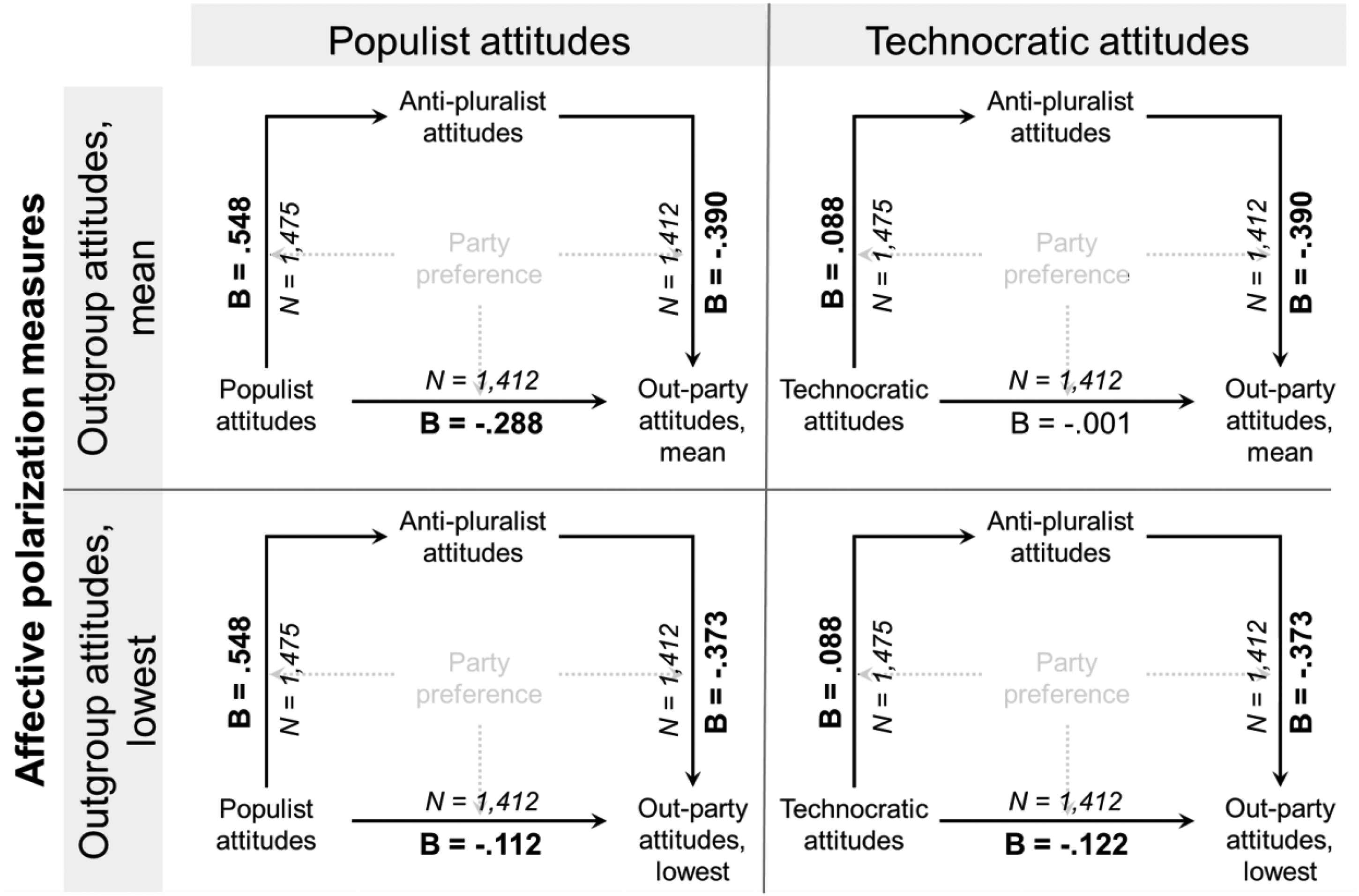
Regression coefficients for direct associations between populism, technocracy, antipluralist attitudes, and out-group attitudes. Coefficients with statistical significance (p < .05) are shown in bold font. The regression models are detailed in Tables A5 to A12 in the appendix.
Mediation analysis: Itemizing direct effects and indirect effects using antipluralist attitudes
The mediation analyses showed that antipluralist attitudes effectively mediated the effects of populist and technocratic attitudes on out-party attitudes (see Figure 3 and Tables A13–A15). Following the typology of Zhao et al. (2010), we assessed mediation types between the dependent and independent variables and evaluated whether they constituted complementary mediation, competitive mediation, indirect-only mediation, direct-only nonmediation, or if there were no effects between the independent and dependent variables. We found that antipluralist attitudes mediated a statistically significant proportion of the effects in every model. However, the only model in which the effect was completely explained by the mediation via antipluralism was the association between technocratic attitudes and the variable indicating the mean of out-party attitudes. In the rest of the cases, the direct effect between the dependent and independent variables remained or became statistically significant.
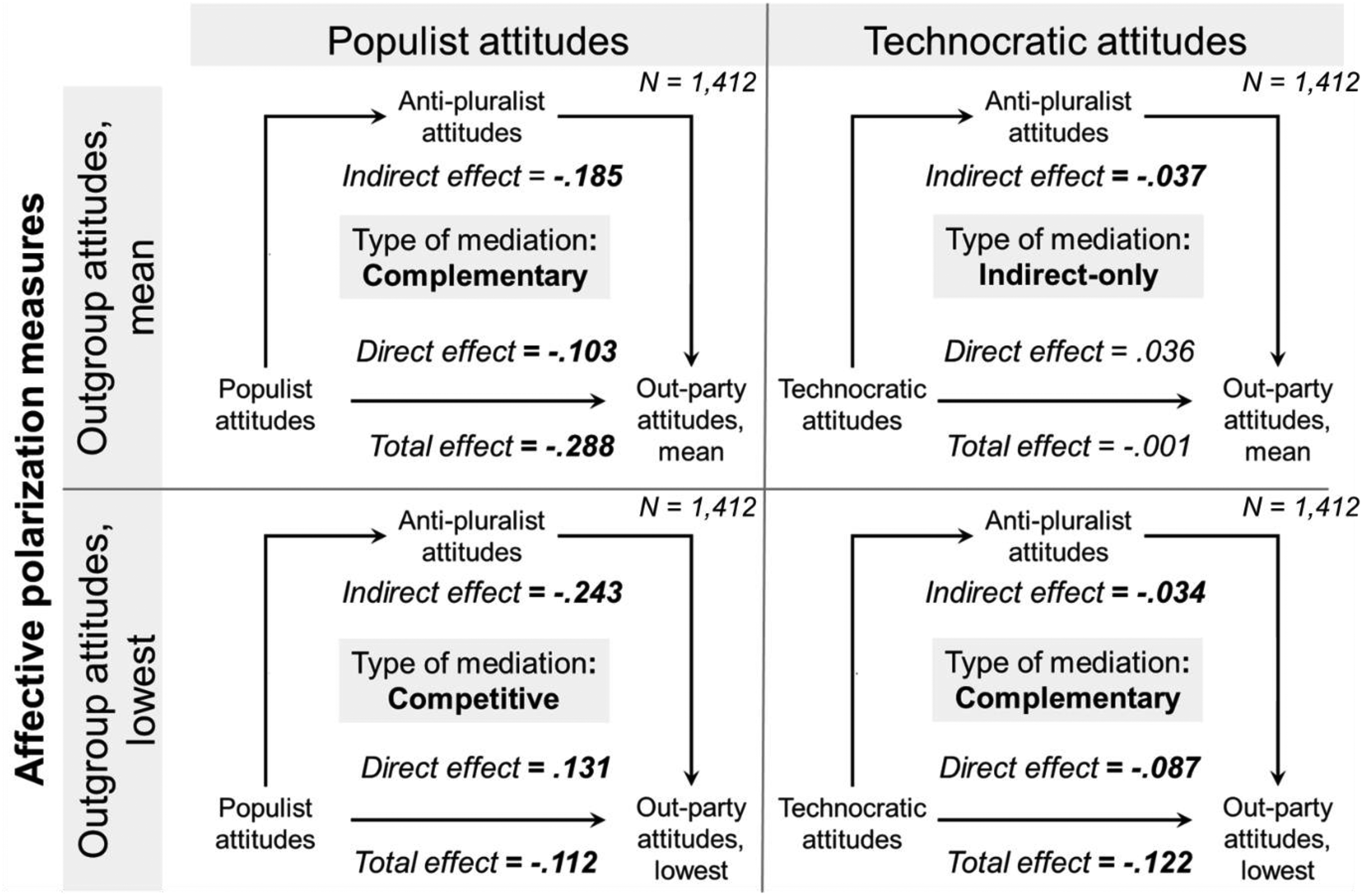
Total, direct, and indirect effects in the mediation models and the mediation type. Effects with statistical significance (p < .05) are shown in bold font. The mediation models are detailed in Tables A13 to A15 in the appendix.
However, it is noteworthy that the direction of the direct effects varied between the models. In the cases in which we predicted changes of the mean of the out-party attitudes with variation of populist attitudes as well as when predicting the lowest out-party attitudes with the variation of technocracy, the direction of the relationship was parallel to the indirect effect through antipluralism. The shared direction between the effects indicated a complementary mediation type. At the same time, when predicting the lowest out-party attitudes with populist attitudes, the direct effect was positive. This combination represented a competitive mediation type, which indicates an ambivalent relationship between the dependent and independent variables. The existence of complementary and competitive mediation indicates the probability of other potential mediators (Zhao et al., 2010).
Competitive mediation between populist attitudes and the affective polarization measure indicates that, instead of populist attitudes increasing exclusionist attitudes, they actually decrease them. Thus, it seems that antipopulist attitudes increase exclusionist sentiments among the public when the indirect effect through antipluralist values are controlled for. Accordingly, the original total effect was divided in the opposite directions after considering mediation via antipluralist values; these observations require additional analyses.
Moderated mediation analysis: Mediation types by party groups
In the final phase of our analyses, we assessed the conditional direct and indirect effects among party groups by conducting a moderated mediation analysis. 5 The results presented in Figure 4 and Tables 2 and 3 offer intriguing insights. When we initially examined the relationship between support for populism and average out-group attitudes, we found that the original complementary mediation types split into two distinct types among the party groups: indirect and complementary mediation. When the interaction terms were added to the models, this division delineated two blocks. The first comprised the liberal-left and center-right segments, indicating indirect mediation. Meanwhile, the second block included the conservative-right and no preference groups, indicating a complementary mediation pattern. Consequently, our empirical findings partially support the theoretical proposition that antipluralism mediates between populist attitudes and affective polarization, albeit with some limitations, as the direct effect remained significant among conservatives and the no preference group. Complete regression models are presented in the online appendix.
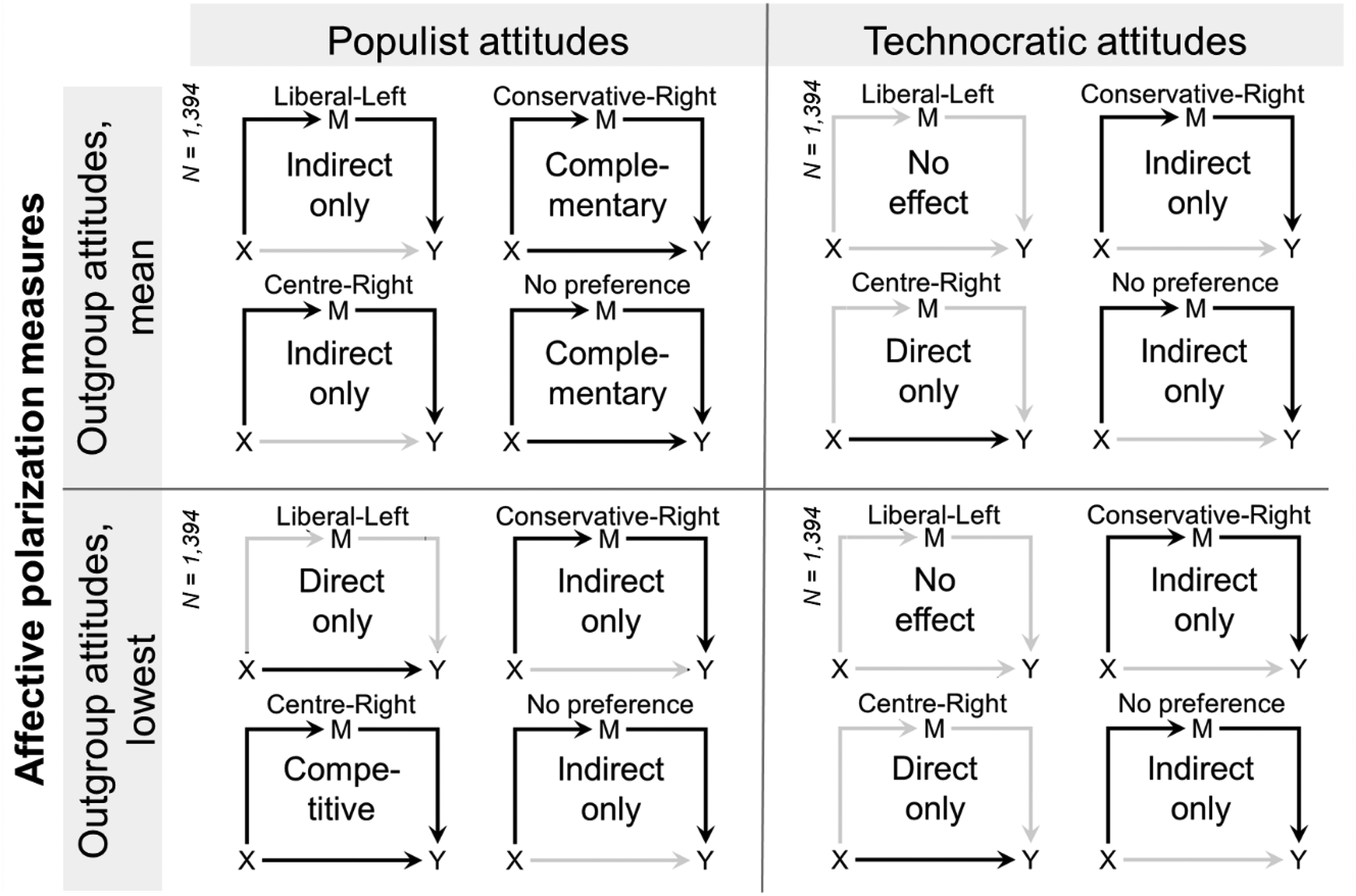
Types of mediation and non-mediation within party groups in the moderated mediation models. Effects with statistical significance (p < .05) are shown in bold font. The full moderated mediation models are detailed in Tables A20 to A21 in the appendix.
Conditional total, direct, and indirect effects of support for populism and technocracy on out-group attitudes among the liberal-left and conservative-right groups.
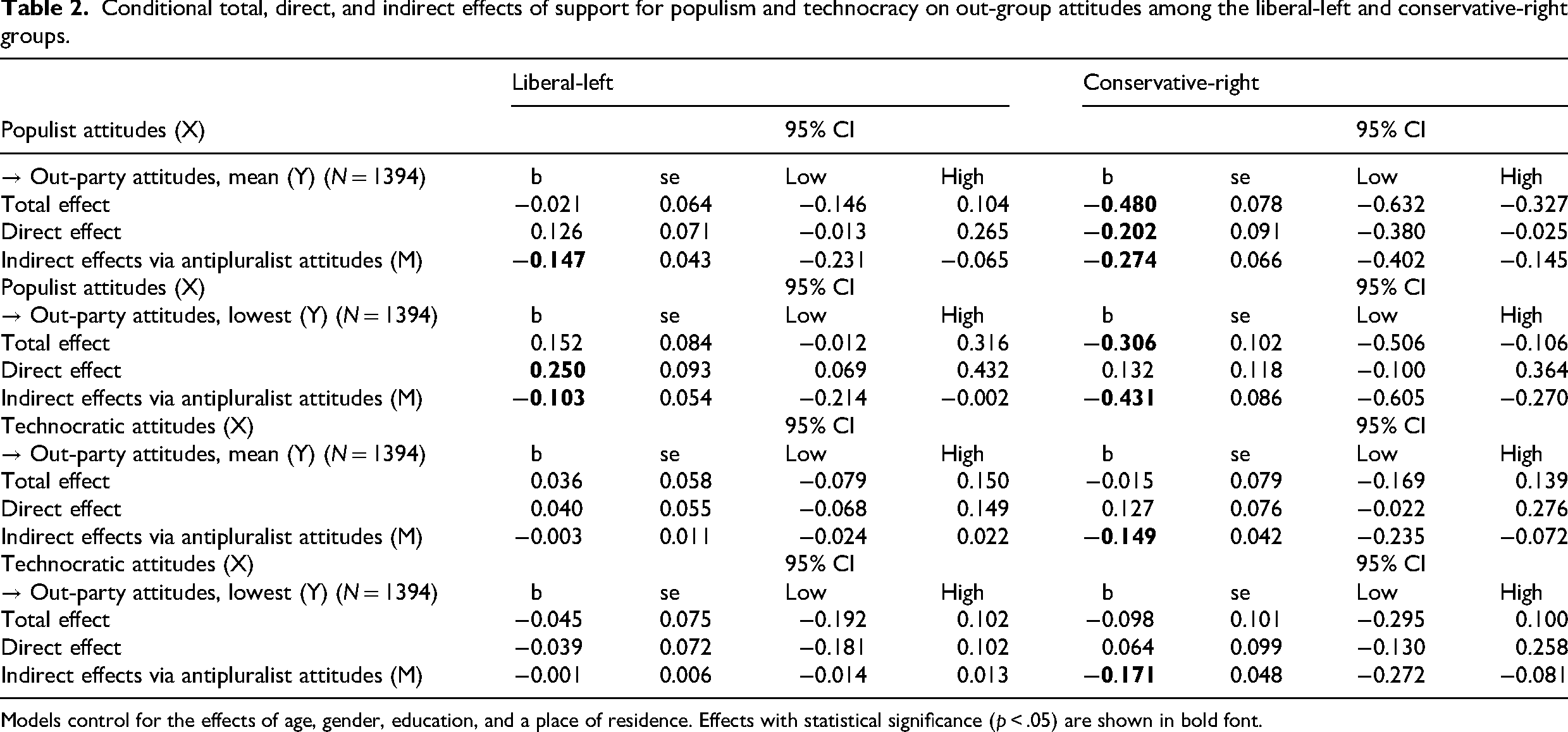
Models control for the effects of age, gender, education, and a place of residence. Effects with statistical significance (p < .05) are shown in bold font.
Conditional total, direct, and indirect effects of support for populism and technocracy on out-group attitudes among the center-right and no preference groups.
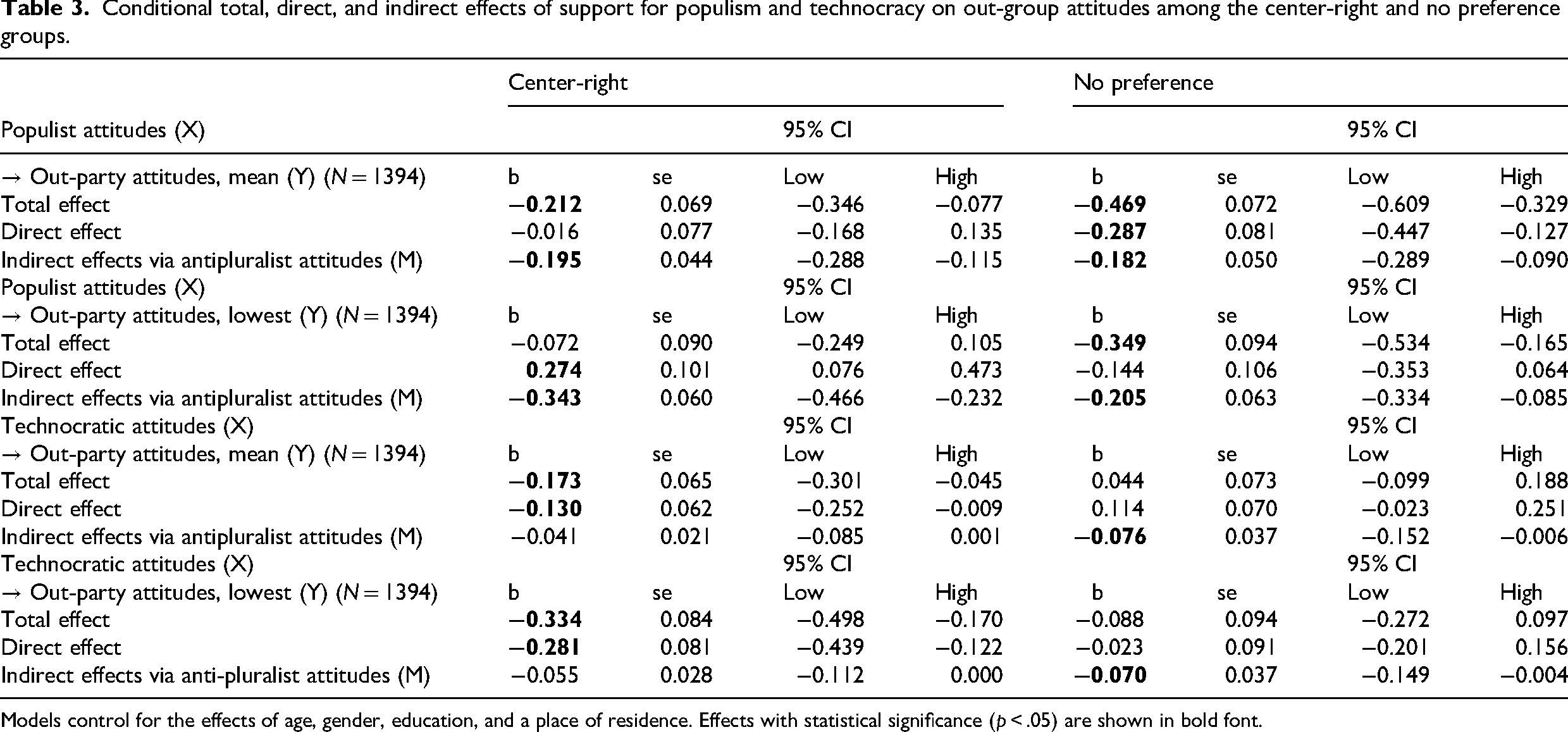
Models control for the effects of age, gender, education, and a place of residence. Effects with statistical significance (p < .05) are shown in bold font.
When examining the relationship between support for populism and the lowest values of out-group attitudes, the mediation dynamics revealed a more pronounced divergence compared to the mean of out-group attitudes. Notably, among the conservative-right and no preference groups, a shared occurrence of indirect mediation was evident. Conversely, the liberal-left group exhibited a contrasting direct-only nonmediation pattern. For the center-right, a competitive mediation type emerged, signaling intricate interplays among the variables. More specifically, for this group, the direct impact of supporting populism predicted more favorable attitudes toward the least preferred political group. However, the indirect effect through antipluralism counteracted this trend. Interestingly, among the liberal-left, a direct-only nonmediation pattern could be observed. At the same time, similar to the center-right, the original negative direct effect in this group underwent a reversal, which suggests that support for populism predicts reduced levels of affective polarization within the liberal-left.
Assessing technocracy as the explanatory variable, we observed moderate yet intriguing shifts in mediation dynamics. Exploring the relationship between support for technocracy and the average of out-group attitudes, we identified two patterns. Once more, the conservative-right and no preference groups exhibit parallel mediation dynamics, characterized by indirect-only mediation. Similarly, the liberal-left and the center-right groups share similarities, lacking statistically significant indirect effects in either group. However, an intriguing observation emerged within the center-right group, where a significant direct-only nonmediation effect was evident.
An examination of the relationship between support for technocracy and attitudes toward the least favored out-group revealed consistent indirect mediation within the conservative-right and no preference groups. Conversely, the liberal-left group exhibited no statistically significant effect in this regard. Again a significant direct-only nonmediation effect was significant in the center-right group. This distinctive finding suggests that within the center-right group, technocracy is a factor that directly contributes to the generation of affective polarization. Thus, the center-right stands out as the sole political group in which technocracy plays a direct role in fostering such polarization.
Discussion and conclusions
Although previous studies have revealed connections between populism, technocracy, and affective polarization (Bertsou and Caramani, 2022; Fernández-Vázquez et al., 2023; Harteveld et al., 2022), they did not consider how and in what ideological conditions populism and technocracy contribute to affective polarization of the public. Consequently, we assessed how populist and technocratic ideologies shape the emergence of antipluralist attitudes and affective polarization among Finnish voters. To better understand the antipluralist tendencies related to technocracy and populism as well as their connections to affective polarization of various political groups, we explored the following: (1) direct associations between ideological dimensions, (2) mediation of antipluralist attitudes between independent and dependent variables, and (3) direct and indirect effects within various ideological groups. These analytical standpoints revealed interesting dynamics.
Hypotheses concerning the first analysis phase (H1–H2) were confirmed, other than technocracy's statistically insignificant correlation with respondents’ average attitudes toward political out-groups. Our theoretical framework was based on the notion that both populism and technocracy tend to propose exclusionary solutions to societal issues: populists prioritize decisions based on the will of the “people,” while technocracy emphasizes expertise in identifying and implementing “objective” solutions to societal challenges (e.g. Bertsou and Caramani, 2022; Esmark, 2020; Herkman, 2018; Mudde, 2004; Snegovaya, 2020). Although populism, technocracy, and affective polarization could be treated as independent theoretical concepts, our empirical findings highlight shared ideological elements among them. Based on our empirical analysis, the relationships remained significant after controlling for respondents’ social backgrounds.
In the second analysis phase, we aimed to explain how technocracy and populism influence affective polarization by examining how antipluralism mediates the relationship between the independent variables (technocratic and populist attitudes) and the dependent variables, specifically measures of affective polarization. Partly confirming H3 and H4, our findings underscore the significance of antipluralist attitudes as mediators between these independent and dependent variables. However, although antipluralist attitudes played a prominent mediating role, in most cases, the total effect was only partially explained through an indirect effect via antipluralist attitudes. Notably, the sole instance when the effect was fully explicated by the indirect effect occurred when analysing the connection between technocracy and average attitudes toward other parties. The absence of a statistically significant total effect complicates result interpretation. Nevertheless, the analysis revealed a clear indirect effect, demonstrating that support for technocracy generates more negative attitudes toward other parties through antipluralist sentiments.
Examining the relationship between support for populism and attitudes toward the least favored party revealed a shift in the original negative correlation between these variables when mediated by antipluralism. This adjustment signifies that, with the mediation effect of antipluralism considered, negative attitudes toward populism become the explanatory factor for negative attitudes toward the least favored party. This finding contradicts our initial hypothesis H1 related to the correlation of populist attitudes with affective polarization and, instead, suggests the existence of a nonlinear association between these variables. When the competitive indirect effect is considered, the polarizing effect of pro-populist attitudes becomes insignificant, revealing an opposite dynamic at the other end of the spectrum.
In summary, the mediation analyses confirmed theory-based assertions regarding technocracy and populism as exclusionary ideologies (e.g. Bertsou and Caramani, 2022; Esmark, 2020; Friedman, 2019). Our findings indicate that both technocratic and populist ideologies significantly contribute to the emergence of affective polarization, primarily due to their close association with antipluralist attitudes. This suggests that both ideologies foster a perception favoring the limitation of certain political groups’ representation within democratic systems. Together, these findings reinforce the notion that the ideologies of populism and technocracy are instrumental in nurturing a viewpoint that advocates restrictions on the representation of specific political groups within the political landscape.
In the concluding analysis phase, we sought to identify the conditions under which mediations through antipluralist attitudes occur and how they differ across party-political groups. Accordingly, our aim was to discern whether mediation dynamics varied across the following party groups: liberal-left, conservative-right, center-right, and no preference group. Confirming hypotheses H5 and H6, our investigation into these conditional mediations revealed a disintegration of the initially observed mediation types into a spectrum of other mediation patterns. Based on these analyses, we identified three key observations pertinent to each party group.
First, a notable similarity emerged in how attitudinal dimensions functioned among the conservative-right and no preference groups. Both groups displayed a correlation between heightened affective polarization and the influence of the ideologies of populism and technocracy, significantly mediated by antipluralist values. Within these groups, the significance of the indirect effect through antipluralist attitudes remained consistent across all possible combinations of the independent and dependent variables. This uniformity suggests a consistent and robust pattern in which antipluralist attitudes play a pivotal mediating role, contributing significantly to the dynamics between attitudinal dimensions. These findings hint at parallel roles played by technocracy and populism within these political segments, potentially indicating the emergence of technopopulist sentiments among these respondents (e.g. Bickerton and Accetti, 2021; Buštíková and Guasti, 2019; Fernández-Vázquez et al., 2023). Furthermore, existing research supports the idea that within the conservative right, alternative knowledge strategies and logic may easily blend with technocratic ideals. For instance, according to populist logic, opponents are not just wrong in morals or knowledge but fundamentally differ in their foundational epistemological premises about the world (Ylä-Anttila, 2018), which constitutes a favorable terrain for the ideological amalgamation of technocracy and populism (see Friedman, 2019).
Second, our findings present a significant contrast with the observed dynamics within the liberal-left and center-right groups. Within the liberal-left group, the significance of the indirect effect was evident solely when evaluating the link between populist attitudes and average attitudes toward political out-groups. In addition, technocratic attitudes display no clear association with affective polarization in the liberal-left. However, within the liberal-left, what stands out is the reversal of the original observed direction of direct effects when assessing the influence of populist attitudes on the least favored party. This flip in the direction of the effect suggests that for the liberal-left and center-right, opposition to populist attitudes serves as a catalyst, exacerbating affective polarization. Such opposing dynamics highlight populism as a political cleavage for ideological polarization that then transforms into forms of affective polarization (e.g. Iyengar et al., 2012; Lelkes, 2018). Accordingly, in the Finnish context, both supporting and opposing populist values generate exclusionist tendencies against political opponents, which suggests a potential curvilinear relationship between populism and polarization, emphasizing exclusionary sentiments at both ends of the spectrum. Future research should consider potential nonlinear associations among these factors to comprehensively understand their interplay and impact on political polarization. 6
Third, in the center-right segment, contrary to the liberal-left's pattern, we observed an alternative dynamic regarding the impact of populist attitudes on attitudes toward the least favored political party. Unlike the original total effect, the direct effect of populist attitudes showed an opposite trend revealing similar dynamics as in the liberal-left. However, the dynamic unfolded into a competitive mediation scenario: The indirect effect via antipluralist values emerged as significant and contrary to the direct effect. Further distinguishing itself from the liberal-left, the center-right also demonstrated a sustained and meaningful indirect effect between populist attitudes and average attitudes toward other parties. Taken together, the results related to the center-right suggest a nuanced dual role of populist attitudes within the group. Similar to the conservative-right, support for populism indirectly heightens negative attitudes toward political out-groups, while opposition to populism does so directly, as in the pattern observed in the liberal-left. Future studies on the specific out-groups impacted by these distinct effects could shed more light on this intricate relationship.
In addition to the ambivalent dynamics between populist attitudes and affective polarization, the moderated mediation analyses yielded intriguing observations related to technocracy's direct impact on attitudes toward the least favored party within the center-right. The results suggest that technocracy operates as a direct contributor to increased affective polarization, but exclusively so within the center-right group. It seems that, contrary to other political groups, within the center-right, technocratic attitudes function as an individual value dimension contributing to more negative attitudes toward other political groups. This means that among a particular segment of the Finnish electorate, support for technocracy increases the more negative views toward political opponents but does not provoke antipluralist sentiments that promote exclusion of these groups from parliamentary politics.
Overall, our findings show that technocratic and populist perspectives operate differently across various political factions, which helps to better understand the current tripolar political space (Oesch and Rennwald, 2018). Results underscore that both populism and technocracy contribute significantly to increased affective polarization, notably intensifying divisions between political camps, particularly among ideological opposites. However, our research is limited by its focus on Finland, which affects the generalizability of the results. While Finland shares similarities with other Nordic countries, such as low levels of affective polarization, overemphasis on decision-making based on expertise, and high trust in institutions and one another (Goossen, 2025; Kekkonen, 2023; Saarinen et al., 2020; Sivonen and Syväterä, 2023), these findings may not translate as easily to other contexts. For instance, the dynamics of populism and technocracy could unfold quite differently in two-party systems or in societies characterized by low trust or higher levels of both ideological and affective polarization.
The data and methods used in the study also have limitations. One crucial limitation is related to the relatively low correlation observed between items despite a robust theoretical foundation and compelling empirical evidence derived from the principal component analysis. This hints at the less-than-ideal reliability of our measures. To enhance the reliability of composite measures in future studies, it is imperative to incorporate more nuanced individual elements, as suggested, for example, by Bertsou and Caramani (2022). Additionally, the COVID-19 pandemic has especially elevated technocratic expertise in political decision-making (Frandsen and Laage-Thomsen, 2020; Lehtonen and Ylä-Anttila, 2024; Lidskog and Standring, 2020), likely altering public perceptions of technocratic governance and deepening political divides. This highlights the necessity for longitudinal research across diverse contexts to better understand how societal disruptions influence political attitudes over time. The survey approach employed in this study, while valuable, also has inherent risks and limitations. Specifically, the relatively low response rate introduces the possibility of selection bias and social desirability bias, which may skew the findings toward an overemphasis on a polarized setting. Furthermore, while our quantitative analysis provides important insights, the integration of more in-depth qualitative methods is crucial for exploring the ideological links between populism, technocracy, and polarization within different political groups. Such methods would offer a more nuanced and comprehensive understanding of the tensions and connections between these attitudinal dimensions.
Supplemental Material
sj-docx-1-asj-10.1177_00016993251388315 - Supplemental material for Populism, technocracy, and affective polarization: Evaluating antipluralist dynamics
Supplemental material, sj-docx-1-asj-10.1177_00016993251388315 for Populism, technocracy, and affective polarization: Evaluating antipluralist dynamics by Ilkka Koiranen and Arttu Saarinen in Acta Sociologica
Footnotes

Funding
The authors disclosed receipt of the following financial support for the research, authorship, and/or publication of this article: This research was supported by a Research Grant from the Finnish Cultural Foundation.
Declaration of conflicting interests
The authors declared no potential conflicts of interest with respect to the research, authorship, and/or publication of this article.
Statement of replication
Supplemental material
Supplemental material for this article is available online.
Notes
References
Supplementary Material
Please find the following supplemental material available below.
For Open Access articles published under a Creative Commons License, all supplemental material carries the same license as the article it is associated with.
For non-Open Access articles published, all supplemental material carries a non-exclusive license, and permission requests for re-use of supplemental material or any part of supplemental material shall be sent directly to the copyright owner as specified in the copyright notice associated with the article.
