




Abstract
Schools and childcare infrastructures are key in shaping parents’ daily routines and well-being. Focusing on COVID-19 school disruptions, we examine how women's time use and psychological well-being changed as schools and childcare facilities closed and later reopened during the first wave of the pandemic in Denmark (April 1–June 26, 2020). Using data from a longitudinal opt-in online survey with Danish residents, we find that the reopening of schools and childcare facilities was associated with declines in mothers’ childcare time and increases in their paid work time. Global measures of mothers’ psychological well-being, based on questions about life satisfaction and feelings during the last week, show only few trends over the period of reopening. The clearest one is a decline in worriedness that is, however, observed among women without co-resident children as well. Measures of the emotional experience of day-to-day activities from an activity sampling module reveal that mothers’ experiences of care work improved substantially as schools reopened. After full reopening, mothers reported much lower levels of negative emotions during care work, while no similar trend was found for other activities. These findings indicate that schools and childcare facilities play a crucial role for maternal well-being in pandemic and non-pandemic times.
Introduction
Women—especially mothers—remain the primary providers of unpaid domestic care. As such, their time use, daily routines, and well-being are likely dependent on outside options for care provision (Ferragina, 2019; Schober and Stahl, 2016). The closing and (re)opening of schools and childcare facilities during COVID-19 thus presents a unique opportunity to study how the (non)availability of these infrastructures shapes women's daily lives.
Previous research suggests that women, and especially mothers, experienced larger-than-average declines in well-being during COVID-19, across countries like China (Tan et al., 2022), Germany (Hiekel and Kühn, 2022; Li et al., 2022), Italy (Babore et al., 2023), the UK (Blanden et al., 2021), and the US (Ruppanner et al., 2021). This study focuses on Denmark, a country with high preschool childcare enrollment and a relatively egalitarian gender division of labor, though women still spend more time on unpaid work and less time in paid employment than men (Esping-Andersen et al., 2013; Thévenon, 2011; Thielemans et al., 2019). We analyze changes in mothers’ time use and psychological well-being over three months, covering the initial COVID-related closings of schools and childcare facilities and their gradual reopening (April 1–June 26, 2020). Two prior studies found that the psychological well-being of adults improved somewhat during the first Danish lockdown (Andersen et al., 2021; Sønderskov et al., 2020). We extend this research by focusing specifically on mothers—a group disproportionately affected by school and childcare closures—and by employing a more nuanced approach to measuring psychological well-being.
We address three research questions: (1) How did mothers’ time use change as Denmark left the lockdown and children returned to schools and kindergartens? (2) How did their self-reported overall psychological well-being develop over this period? (3) How did their self-reported experience of specific daily activities—childcare in particular—change?
We argue that mothers’ overall well-being, but especially their experience of care work, is likely to have improved as schools and childcare facilities reopened. Many mothers may have struggled with care work during the lockdown, due to the sheer amount of additional obligations (Gershuny, 2013) and the need to balance care with paid work, potentially while working from home and “multitasking” (Dunatchik and Speight, 2020). Consequently, school and daycare reopening should have resulted in overall improvements of mothers’ well-being as well as more positive and/or fewer negative emotions during care work.
Our study not only contributes to our understanding of the gendered psychological repercussions of COVID-19; it also adds to a broader sociological literature on how school and daycare infrastructures shape maternal outcomes (e.g. Schmitz, 2020; Schober and Stahl, 2016). The sudden disruptions to these infrastructures during COVID-19 present a unique opportunity to explore their roles in shaping mothers’ routines and psychological well-being. Other periods of extended closures, such as summer holidays, may be less informative because they are expected and coincide with a general slowdown in work and family life (but see Price and Wasserman, 2024). However, we acknowledge that COVID-related school and childcare disruptions do not constitute a clean natural experiment, as the early months of the pandemic were marked by heightened uncertainty and disruptive changes in other domains (e.g. contact restrictions). Where possible, we compare the trajectories of mothers with those of non-mothers to account for broader population-wide trends. It is important to recognize the limitations of this difference-in-differences (DID) approach, however, as there are many reasons why the experiences of mothers and non-mothers might have differed in the absence of school and childcare disruptions.
A key contribution of our study is to provide evidence on the emotional experience of day-to-day activities, in addition to global measures of psychological well-being. Although such episodic emotional experiences are a critical aspect of psychological well-being (e.g. Kahneman et al., 1999, 2004; Knabe et al., 2010), few studies have examined them in the context of COVID-19 and none have specifically investigated the effects of school disruptions on mothers (Lades et al., 2020; Stieger et al., 2021).
Data and methods
Data and sample
We use data from the Danish Corona Diary Study (DCDS), an opt-in online survey of Danish residents conducted during the first wave of the COVID-19 pandemic. The survey was offered in English and Danish and promoted through social and print media. The ethics committee of the Department of Psychology, University of Copenhagen, approved the study before data collection. All participants gave informed consent.
Similar to other opt-in surveys fielded during COVID-19 (e.g. Li et al., 2022), women are highly overrepresented among respondents, accounting for almost 80% of completed survey waves, which is why we restrict the analysis to women. Other groups (e.g. university-educated and foreign-born individuals) are overrepresented as well. All analyses use post-stratification weights to correct for selective participation and changes in sample composition (see Section S1 in the Online Supplement for details).
Table 1 presents descriptive statistics for women with and without co-resident underage children, before and after applying post-stratification weights. For simplicity, we will refer to the former as “mothers” and to the latter as “non-mothers,” noting that many non-mothers may have adult or non-co-resident underage children.
Socio-demographic profile of analytic sample.
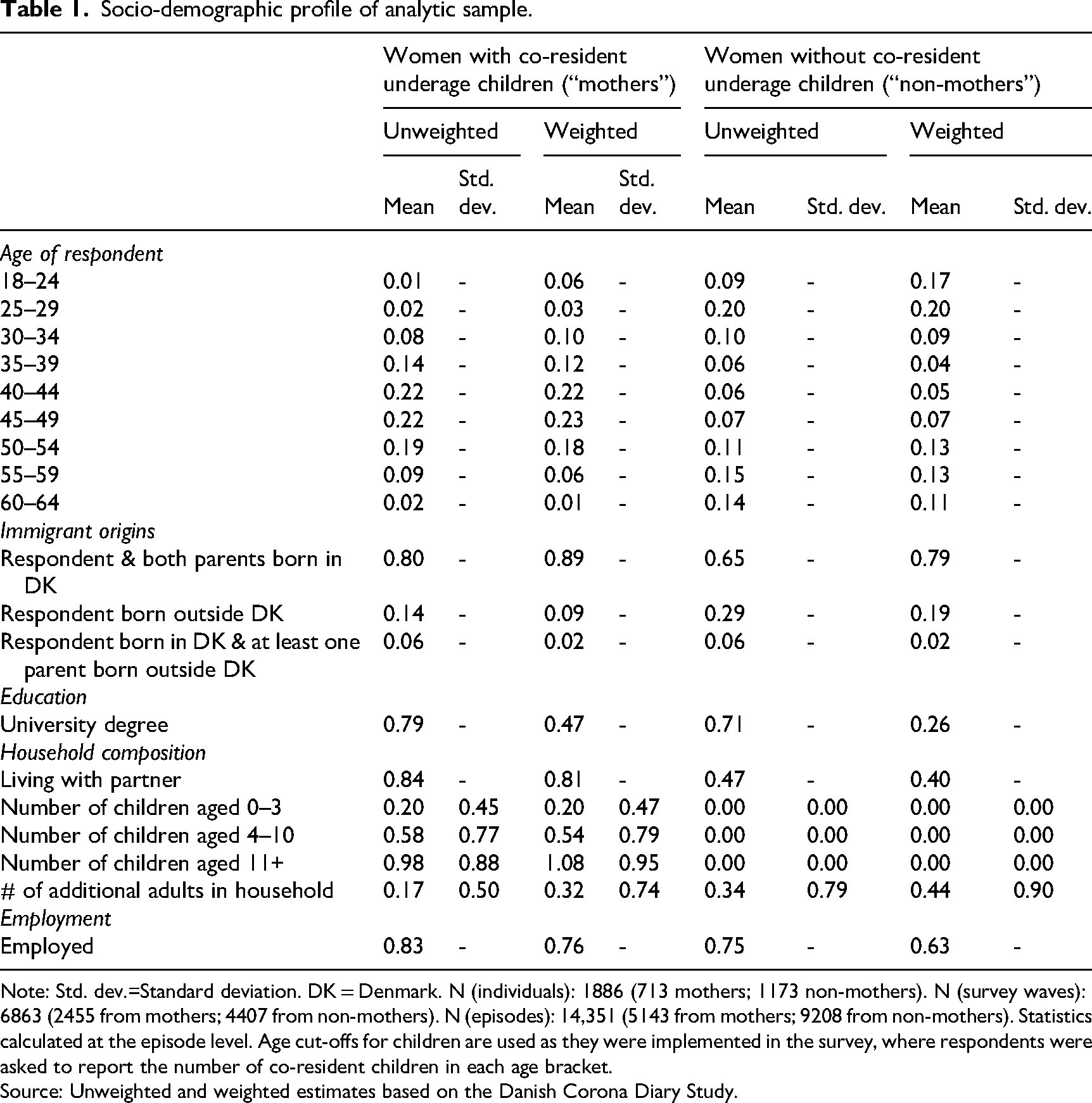
Note: Std. dev.=Standard deviation. DK = Denmark. N (individuals): 1886 (713 mothers; 1173 non-mothers). N (survey waves): 6863 (2455 from mothers; 4407 from non-mothers). N (episodes): 14,351 (5143 from mothers; 9208 from non-mothers). Statistics calculated at the episode level. Age cut-offs for children are used as they were implemented in the survey, where respondents were asked to report the number of co-resident children in each age bracket.
Source: Unweighted and weighted estimates based on the Danish Corona Diary Study.
The DCDS is a longitudinal study with approximately weekly surveys waves. Respondents received the first of up to three re-invitation emails on the sixth day after completing a wave but often responded with some delay (for details, see Section S1 in the Online Supplement). The first surveys were conducted on April 2, 2020, less than 3 weeks after the start of the first Danish lockdown (including school closings, which took effect on March 16; see Figure 1 below). New respondents were continuously recruited. Attrition rates were quite high, with 34% of respondents in our sample completing only one wave. Reassuringly, systematic analysis of attrition patterns revealed no strong selectivity concerning the outcomes of interest (see Section S2 in the Online Supplement). Although mothers with young children were more likely to quit the survey, we correct for this with the weighting and regression adjustments described in this section.
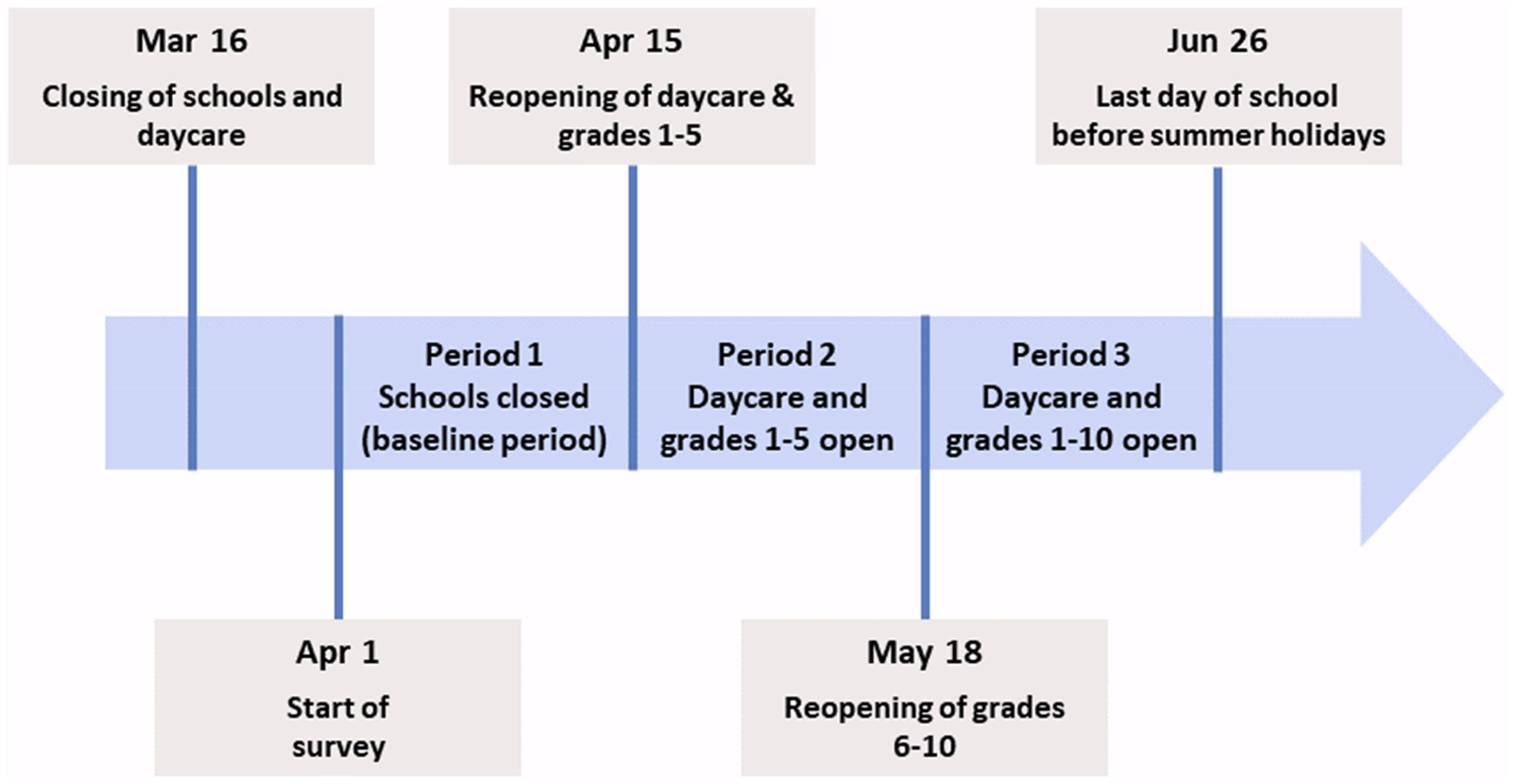
Timeline of school closings and reopening during the first wave in Denmark. Note: Data collection began on April 2, 2020. April 1 is the day prior to the first surveys and the first one for which activity episode data is available. Source: authors’ elaboration based on Melnick and Darling-Hammond (2020) and Danish Ministry of Higher Education and Science (2020).
Time use and psychological well-being measures
The primary focus of the DCDS was on time use and psychological well-being. A distinctive feature is the collection of data on the emotional experience of up to three activity episodes from the day before each interview. Our approach was inspired by the “Day Reconstruction Method” (Kahneman et al., 2004), the main difference being that we collected information on a random sample of activity episodes instead of an entire day (see also Krueger et al., 2009). We first asked respondents when they woke up and fell asleep. We then divided awake time into equal segments (three in a respondent's first survey wave, two in subsequent ones) and randomly selected one “anchoring time” from each interval. Respondents reported the start and end time of the activity episode underway at each anchoring time, their primary activity, a potential secondary activity (e.g. watching TV while doing the dishes), who they interacted with, and how they felt regarding specific emotions.
Respondents could select activities from a list of 20 predefined categories or provide them in open-ended form. To study time use, we group the responses into eight broad primary activity categories: care work (incl. homeschooling), housework, paid work (incl. studying), screen time, socializing (incl. remote interactions via phone or video calls), exercise (incl. recreational walking), personal care (incl. eating and napping), and other leisure activities. Together, these eight categories account for 93.5% of all reported activity episodes. For further details, see Section S1 in the Online Supplement.
Global psychological well-being measures were collected at the beginning of each wave. A first question probed respondents’ overall satisfaction with their lives, followed by questions about the intensity of six feelings during the past week: worried, exhausted, stressed, able to enjoy day-to-day activities, unhappy/depressed, lonely (see Section S1 in the Online Supplement for question wordings).
To capture emotional experiences, we draw on a set of questions from the activity sampling module that asked respondents to report, for each episode, the intensity of the following ten feelings: happy, worried, stressed, lonely, useful, criticized/hassled, angry, loved/liked, impatient/restless, unfocused.
Both global and episode-level feelings were rated on five-point scales ranging from 1 “not at all” to 5 “very much” and 1 “extremely dissatisfied” to 5 “extremely satisfied” for life satisfaction (see Table 2 for weighted means and standard deviations).
Means and standard deviations of well-being measures.
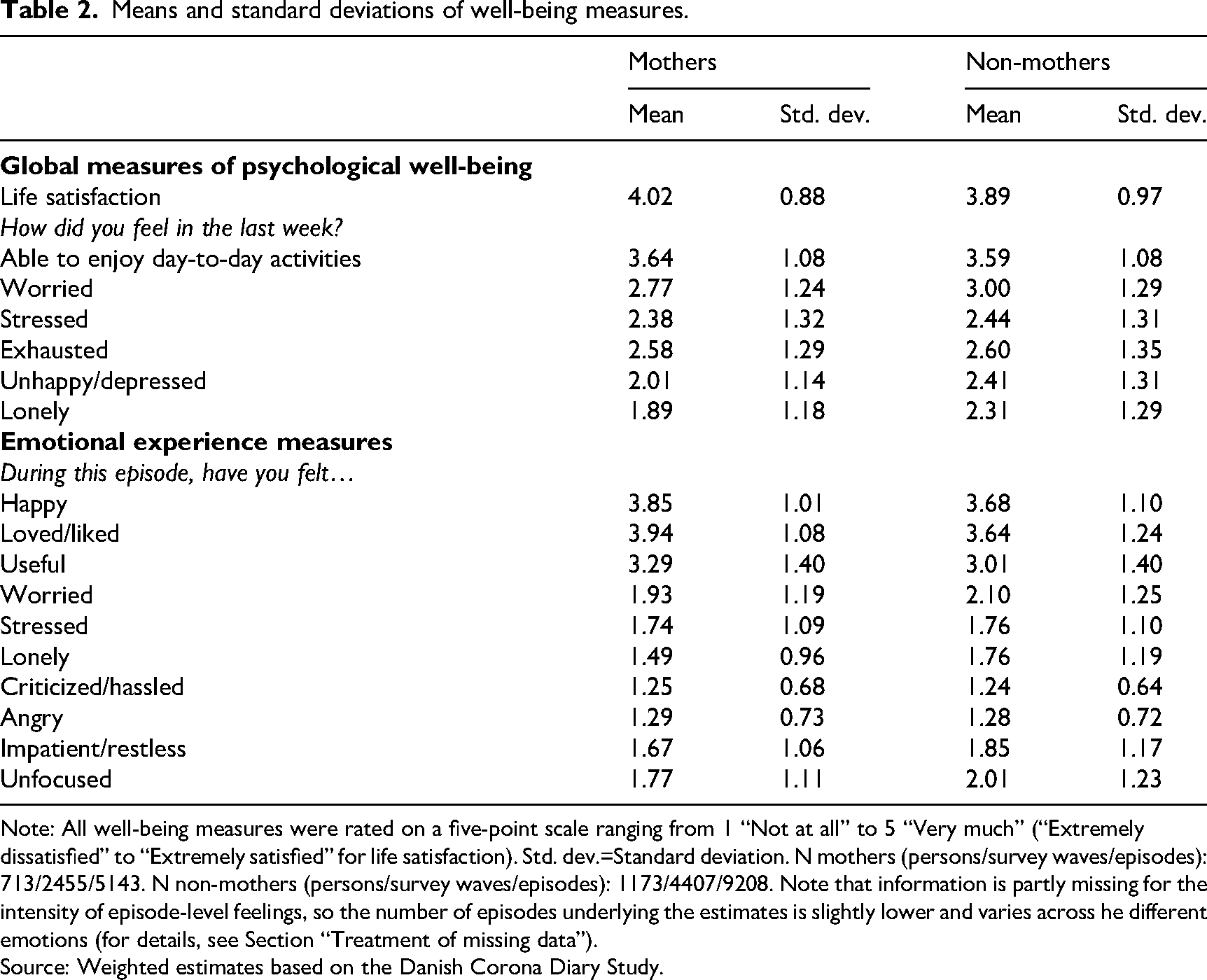
Note: All well-being measures were rated on a five-point scale ranging from 1 “Not at all” to 5 “Very much” (“Extremely dissatisfied” to “Extremely satisfied” for life satisfaction). Std. dev.=Standard deviation. N mothers (persons/survey waves/episodes): 713/2455/5143. N non-mothers (persons/survey waves/episodes): 1173/4407/9208. Note that information is partly missing for the intensity of episode-level feelings, so the number of episodes underlying the estimates is slightly lower and varies across he different emotions (for details, see Section “Treatment of missing data”).
Source: Weighted estimates based on the Danish Corona Diary Study.
Treatment of missing data
The case numbers reported in this paper refer to the analytic sample after deleting cases with missing information on any of the variables used in the analyses, except episode-level feelings. Excluding respondents with missing values on the global measures of psychological well-being and/or the control variables described below leads to the exclusion of 83 respondents (4.2% of the cases meeting the sample restrictions). The remaining respondents were questioned about a total of 15,727 episodes, 1293 (8.2%) of which have no valid activity information. We used multiple imputation to assess possible biases due to this missing data. This exercise, described in Section S3 in the Online Supplement, suggests that episodes with missing activity information are less likely to be paid work episodes and more likely to be screen time episodes, compared to those with valid information. Despite this selectivity, the imputations indicate that any resulting biases would be very small. We therefore exclude episodes with missing activity information (as detailed in the Online Supplement, information on emotional experiences is generally missing for these episodes as well).
We retain activity episodes with valid activity and partially missing information on the episode-level emotional experience measures. Incompleteness regarding emotional experiences is related to activity type, so requiring valid information for all experience measures would lead to biases in the time use analysis (e.g. underestimation of “other leisure” time because emotional experience reports are more likely to be incomplete for this activity). This means that analyses involving episode-level experience measures are based on varying subsets of episodes with valid activity information. The number of available episodes is lowest for feeling “loved” (mothers: 4969; non-mothers: 8678) and highest for feeling “stressed” (mothers: 5130; non-mothers: 9179).
Empirical strategy
Our study spans three periods (see Figure 1). Period 1, the baseline period, extends from April 1, 2020—the first day included in the activity sampling module—until April 14, 2020, covering the last two weeks of Denmark's first lockdown, with daycare facilities and schools closed from March 16. 1 Period 2 runs from April 15 to May 17, when daycare facilities and grades 1–5 were open again. However, in-person attendance initially remained optional and did not return to pre-pandemic levels right away (according to Melnick and Darling-Hammond, 2020, 80–90% of primary school students but only half of preschool and kindergarten children had returned by the second week of reopening). Period 3 runs from May 18, the day when grades 6 to 10 reopened, until June 26, the last day of school before the summer holidays.
We model all outcomes using linear regression, treating the data as (repeated) cross sections and clustering standard errors at the respondent level. Analysis of within-person changes (e.g. fixed-effects regression) is not possible because many respondents participated in only one or two waves. 2 We present results as (differences in) adjusted predictions for the three periods defined above, holding key characteristics constant by setting them to their mean values for mothers over the whole observation period. Specifically, we control for the respondent's age (5-year groups), immigrant origins (respondent and both parents born in Denmark; respondent born in Denmark but at least one parent born abroad; respondent born abroad), higher education degree, living with a partner, number of children in three age groups (0–3; 4–10; 11–17), number of additional adults in the household, an indicator for being employed, and day of episode/interview (weekend vs. weekday). Additionally, we adjust for the natural logarithm of sunshine hours, precipitation in millimeters, and maximum temperature in degrees Celsius, as weather conditions might impact time use, reported well-being, and the experience of daily activities (for further details, see Section S1 in the Online Supplement).
We proceed in three steps. First, we examine women's time use, specifically period differences in the probability that a randomly sampled episode falls into a given activity category. Second, we analyze overall trends in global psychological well-being and the emotional experience of daily activities. Third, we assess changes in episode-level feelings by type of activity. In Steps 1 and 2, we compare mothers with non-mothers, adjusting predictions for non-mothers by setting all covariates except number and age of children to the respective means for mothers (see Table 1 above). These “DID” estimates, calculated by subtracting adjusted period differences for non-mothers from those for mothers, reveal whether mothers’ trajectories over the period of reopening were unique to this group or indicative of broader trends affecting non-mothers as well. In the main article, we only report period differences relative to the period of school closings (Period 1). Section S4 provides additional results that include comparisons between Periods 2 and 3.
The comparison with non-mothers is not feasible in the third step, where we are particularly interested in the experience of childcare, an activity rarely undertaken by non-mothers. We therefore conduct a within-group comparison and examine whether changes in mothers’ experience of childcare differed systematically from those observed for other activities.
Results
Time use
Figure 2 illustrates that the time mothers spent on childcare and homeschooling declined as schools reopened, but exclusively from the second to the third period. While 8.7% and 8.2% of activity episodes fell into this category in Periods 1 and 2, respectively, only 4.6% did so in the final one, a statistically significant decline (p < 0.05, two-tailed) relative to both of the preceding periods (only the difference to Period 1 is shown in the figure; see Figure S2 in the Online Supplement for an amended version that includes the comparison between Periods 2 and 3). Possible explanations for the lack of change in care work and homeschooling time during the first weeks of reopening include a gradual return to daycare and in-person instruction, as well as care responsibilities for older siblings affected by the continued closing of grades 6 and above. Mothers’ involvement in paid work increased substantially over the reopening period. This change occurred already after the first period and was more pronounced than for non-mothers, who also increased their paid work time somewhat (i.e. the mother/non-mother period difference is smaller than the simple period difference for mothers).
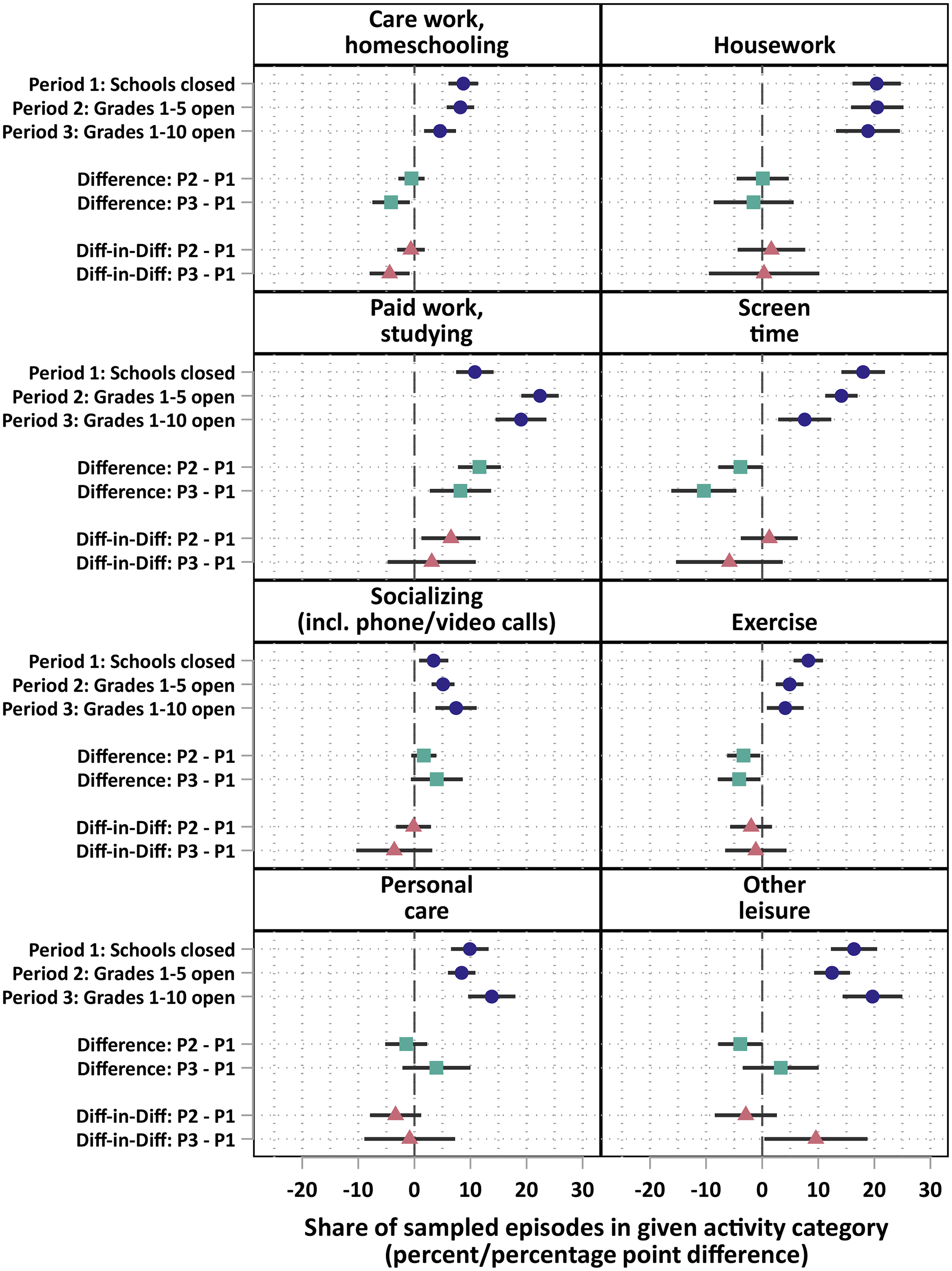
School reopening and mothers’ daily activities. Note: The figure shows adjusted predictions, with age (5-year groups), education, migration history, partnership status, number and age of children, number of adult household members, weekend vs. weekday, and weather measures (sunshine hours, rainfall, maximum temperature) set to their respective (weighted) means for mothers over the whole observation period. Within each subgraph, the triplet of circles at the top shows the percentage of activity episodes falling into each activity category for mothers. The pair of squares in the middle shows the difference to the baseline period for mothers. The triangles at the bottom (“Diff-in-Diff”; DID) compare these period differences with the corresponding ones for non-mothers, setting all covariates except number and age of children to the same values as for mothers. Period changes for non-mothers are subtracted from those for mothers, so positive DID estimates mean that a given outcome a) increased more strongly for mothers than for non-mothers, b) decreased less strongly for mothers than for non-mothers, or c) increased for mothers, while decreasing for non-mothers (and vice versa for negative DID estimates). Confidence intervals (95%) are corrected for clustering at the person level. N mothers (persons/survey waves/episodes): 713/2455/5143. N non-mothers (persons/survey waves/episodes): 1173/4407/9208. Source: Weighted estimates based on the Danish Corona Diary Study.
Turning to the remaining activities, housework time remained stable over the observation period, for both mothers and non-mothers. Mothers’ screen and exercise time more or less continuously decreased from the first to the third period, while socializing time increased. DID estimates for these activities are mostly close to zero and statistically insignificant, indicating similar trends among non-mothers. Personal care and “other leisure” time show no clear trends.
Overall psychological well-being and experience of daily activities
Figure 3 depicts how mothers’ overall psychological well-being evolved over the school reopening period, in terms of both global measures of psychological well-being (left panel) and the intensity of ten feelings during sampled activity episodes (right panel). Given the large number of outcomes, we now only show adjusted differences (dark symbols) among mothers and DID-style comparisons with non-mothers (lighter symbols).
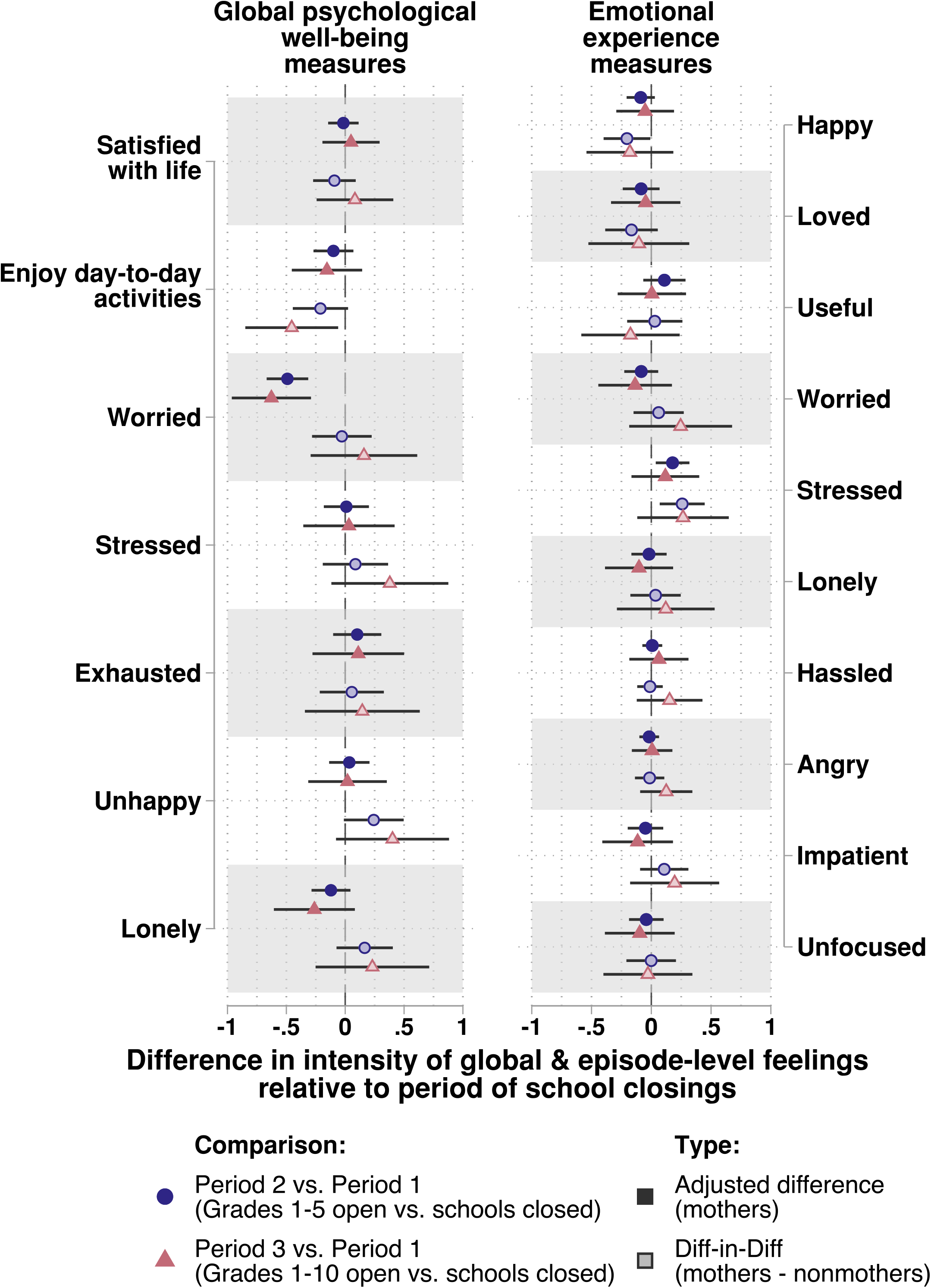
School reopening and mothers’ psychological well-being. Note: Circular markers depict estimated differences between Period 2 and Period 1; triangular markers depict estimated differences between Period 3 and Period 1, with negative (positive) estimates indicating a decrease (increase) relative to Period 1. Adjusted differences, represented by darker, fully filled shapes, are differences in the average intensity of feelings for mothers, adjusted by setting age (5-year groups), education, migration history, partnership status, number and age of children, number of adult household members, weekend vs. weekday, and weather measures (sunshine hours, rainfall, maximum temperature) to their respective (weighted) means for mothers over the whole observation period. “Diff-in-Diff” (DID) estimates, represented by lighter, partially filled shapes, compare these period differences with the corresponding ones for non-mothers, setting all covariates except number and age of children to the same values as for mothers. Period changes for non-mothers are subtracted from those for mothers, so positive DID estimates mean that a given outcome a) increased more strongly for mothers than for non-mothers, b) decreased less strongly for mothers than for non-mothers, or c) increased for mothers, while decreasing for non-mothers (and vice versa for negative DID estimates). Confidence intervals (95%) are corrected for clustering at the person level. N mothers (persons/survey waves/episodes): 713/2455/5143. N non-mothers (persons/survey waves/episodes): 1173/4407/9208. Information is partly missing for the emotional experience measures, so the number of episodes underlying the estimates is slightly lower and varies across he different emotions (for details, see Section “Treatment of missing data”). Source: Weighted estimates based on the Danish Corona Diary Study.
The most notable trend in Figure 3 is a decline in global worriedness during the last week. Compared with the school closing period, mothers’ adjusted level of worriedness is estimated to have been .49 points lower in the second and .63 points lower in the third period. These differences are statistically significant and considerable, given a standard deviation of 1.24 in the mothers-subsample (see Table 2 above). This trend is not specific to mothers, however: the corresponding DID estimates are statistically insignificant and close to zero, indicating that non-mothers experienced similar declines in global worries. 3 A plausible explanation for this result is a gradual adaptation to an unprecedented pandemic threat and accumulating evidence that worst-case scenarios were not materializing.
We observe a few other noteworthy trends in the global measures of psychological well-being. Mothers’ levels of loneliness appear to have decreased over time—although differences to the baseline period do not reach statistical significance, and DID estimates even suggest a slight (statistically insignificant) increase relative to non-mothers. The remaining facets of global psychological well-being show little change among mothers. However, for at least two measures (enjoyment of day-to-day activities, unhappiness), DID estimates indicate that mothers’ well-being declined relative to the comparison group (lower ability to enjoy activities, greater unhappiness), reflecting favorable trends among non-mothers.
With respect to episode-level feelings, DID comparisons suggest that mothers saw a decline in feelings of happiness and an increase in feelings of stress relative to the non-mothers. A plausible explanation for these trends is the reallocation of mothers’ time away from low-stress and high-happiness activities (screen time, exercise) and towards paid work, a high-stress and low-happiness activity (see Figure 2 above). Consistent with this interpretation, period differences in episode-level feelings become more muted once activity type is controlled for (results not shown).
Experience of care work and other activities
Figure 4 examines how the experience of specific activities changed over time, with the most striking results observed for care work and home schooling. For all negative emotions, except feeling “hassled,” the average reported intensity during childcare was (marginally) statistically significantly lower in the final period compared to the first (additionally, the intensity of one positive emotion—feeling “useful”—seems to have decreased). The magnitude of these changes is substantial, ranging from −0.39 (hassled) to −1.13 (unfocusedness) scale points, or −0.57 and −1.02 standard deviations, respectively. There are indications that the decline began already during the first month of reopening (Period 2), but differences from the baseline period are not statistically significant, except for worriedness (p < 0.01, two-tailed) and unfocusedness (p < 0.1, two-tailed). This pattern is consistent with the timing of the decline in mothers’ childcare time (see Figure 2 above).
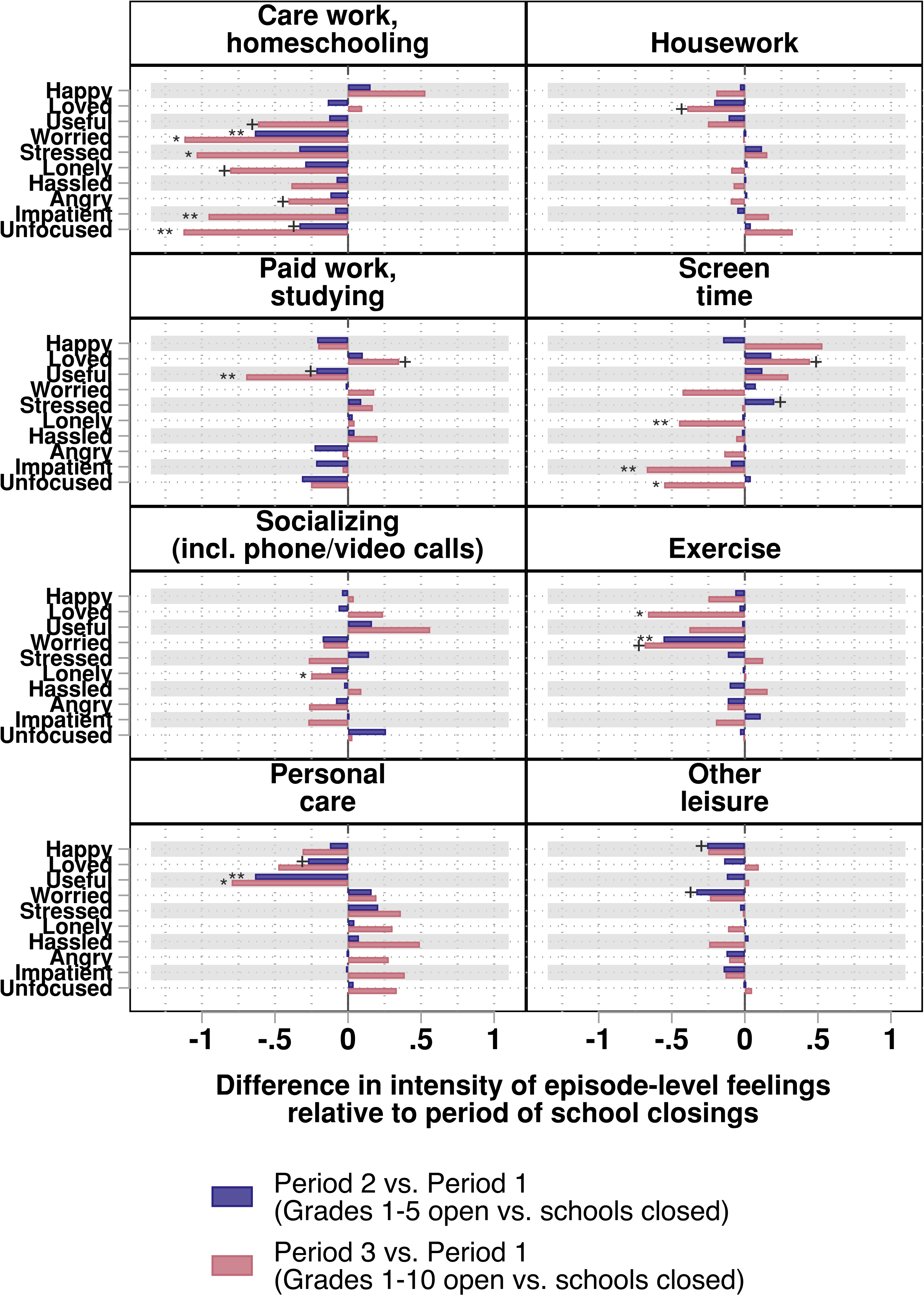
Mothers’ experience of daily activities before and after school reopening.
Note: The figure shows period differences in adjusted predictions, with age (5-year groups), education, migration history, partnership status, number and age of children, number of adult household members, weekend vs. weekday, and weather measures (sunshine hours, rainfall, maximum temperature) set to their respective (weighted) means for mothers over the whole observation period. Standard errors corrected for clustering at the person level. Negative (positive) estimates indicate a decrease (increase) relative to Period 1. Symbols indicate two-sided p-values for the period difference: + p < 0.1; * p < 0.05; ** p < 0.01 (two-tailed). N (persons/survey waves/episodes): 713/2455/5143. Information is partly missing for the emotional experience measures, so the number of episodes underlying the estimates is slightly lower and varies across the different emotions (for details, see Section
Comparisons with other activities reveal that the marked decline in the intensity of negative emotions is specific to care work. This is confirmed by formal tests interacting an indicator variable for care work (vs. all other activities) with the period indicators. 4 Only for screen time do we find some evidence of a qualitatively similar, though less pronounced, trend. Interestingly, personal care time shows the exact opposite trend—a decline in positive and an increase in negative emotions from the first to the final period.
Figures S5 and S6 in the Online Supplement show that patterns are similar when the analysis is restricted to mothers of young children and when homeschooling episodes are excluded. The only noteworthy difference is that the emotional experience of socializing time appears to have improved for mothers of young children (at least one co-resident child aged 10 or younger). At the same time, the improvements found for screen time are weaker for mothers of young children (Figure S5) than for mothers overall (Figure 4).
Discussion and conclusions
This study has examined how women's time use, psychological well-being, and experience of daily activities changed as schools and childcare facilities reopened during the COVID-19 pandemic in Denmark. Using unique data that capture the emotional experience of day-to-day activities, our study critically adds to previous work on the well-being and mental health effects of COVID-19 school disruptions (e.g. Hiekel and Kühn, 2022; Li et al., 2022) and of childcare and school infrastructures more broadly (Schmitz, 2020; Schober and Stahl, 2016).
We have three main results. First, reopening of schools and childcare facilities was associated with declines in mothers’ childcare and with increases in their paid work time. The decrease in childcare time occurred with some delay, likely reflecting a gradual return to normal operations. These findings, based on an activity sampling approach that is less likely to be distorted by recall errors than “stylized” self-reports of weekly hours (Kan and Pudney, 2008), align with previous research. They indicate that school reopening significantly boosted mothers’ participation in employment—and that school closures had the opposite effect (Craig and Churchill, 2021; Pasqualini et al., 2022).
Second, we find a few overall trends in mothers’ well-being, among them a decline in global worriedness. This trend is not specific to mothers, however, and likely due to factors other than school reopening, such as the realization that worst-case pandemic scenarios were not coming true. Regarding the emotional experience of activities, there is some evidence that mothers’ overall stress levels increased over our observation period, while feelings of happiness decreased—particularly in comparison to non-mothers. These trends may be, at least in part, an indirect effect of school reopening, which facilitated women's return to paid work, an activity linked to higher stress levels and lower happiness than most other activities (Knabe et al., 2010). Nonetheless, this return to work likely offers important benefits, including a greater sense of purpose, as well as the economic stability and independence afforded by paid employment.
Third, and perhaps most critically, our study reveals that mothers’ experience of care work changed substantially as schools and daycare facilities reopened, although these effects appear to have materialized with some delay. During the final stage of reopening from mid-May to mid-June, 2020, Danish mothers felt much less worried, stressed, lonely, angry, impatient, and unfocused while doing care work, relative to the period of full school closures. Strikingly, we do not observe comparable improvements in mothers’ experience of other activities. These results suggest that women's care responsibilities came with significant psychological challenges during COVID-19 school closures and that reopening played a crucial role in alleviating them.
Although we observe improvements in mothers’ experience of care work during the reopening period, mothers’ overall psychological well-being—whether assessed through global measures or at the activity episode level—did not improve. One speculative explanation is that Denmark had among the shortest periods of school closures in Europe during the first wave of COVID-19 (as well as during subsequent waves). This might explain why the negative experience of care work during the lockdown did not “spill over” into mothers’ overall well-being. Although we cannot investigate this empirically, it seems plausible that such spillovers partly account for the more substantial negative well-being impacts found in other countries (e.g. Babore et al., 2023; Li et al., 2022; Ruppanner et al., 2021).
Beyond the pandemic setting, our results carry implications for literature examining the importance of childcare and schools for maternal well-being. For example, Schober and Stahl (2016) found that county-level availability of full-day care positively correlates with satisfaction in family life and overall life satisfaction among partnered mothers in East (but not in West) Germany. In another German study exploiting age cut-offs in childcare entitlements, Schmitz (2020) found that access to childcare increases maternal life satisfaction, particularly for mothers with strong labor market attachment. Our analysis complements these studies by using COVID-related disruptions as a unique source of variation in childcare and school availability, highlighting the experience of care work as a potential pathway underlying earlier findings. Future research should further explore this mechanism beyond the pandemic context.
Our study has four limitations. First, it relies on a convenience sample, and while we have used weighting and regression adjustments to address selectivity, we acknowledge that our sample is not fully representative of the Danish population. Second, we could not compare women/mothers with men/fathers due to small sample sizes for the latter group. Third, our activity sampling module covers only a small random subset of activities on the day before the interview. We cannot examine how school reopening changed the structure and organization of mothers’ days and whether this partly accounts for the improved experience of care work after reopening (e.g. because the latter less often had to be squeezed in between other activities). Fourth, our design does not support strong causal claims. The observed trends might be influenced by factors beyond school reopening, including the easing of other COVID-related restrictions. Additionally, the comparison with non-mothers is useful only to the extent that their trajectories reflect the experiences mothers would have had in the absence of school reopening.
Despite these caveats, our study adds to scientific and policy debates by highlighting the importance of school and daycare infrastructures for mothers’ well-being. Its implications extend beyond the setting of a major public health crisis. In some sense, the latter simply provides a unique opportunity to study the role of taken-for-granted institutions such as schools. Viewed this way, our results underscore the critical role of schools and childcare infrastructures in mothers’ daily lives—a role that was essential in the COVID-19 context but likely remains similarly important in non-pandemic times.
Supplemental Material
sj-docx-1-asj-10.1177_00016993251379178 - Supplemental material for Schools, childcare infrastructures, and mothers’ time use and psychological well-being: Evidence from the COVID-19 pandemic in Denmark
Supplemental material, sj-docx-1-asj-10.1177_00016993251379178 for Schools, childcare infrastructures, and mothers’ time use and psychological well-being: Evidence from the COVID-19 pandemic in Denmark by Jan P Heisig, Pablo Gracia, Thomas Morton, Séamus A Power, Merlin Schaeffer, and Rebecca Udsen in Acta Sociologica
Footnotes

Funding
The author(s) disclosed receipt of the following financial support for the research, authorship, and/or publication of this article: This research was supported by a COVID-19 research grant from the Faculty of Social Sciences, University of Copenhagen.
Supplemental Material
Supplemental material for this paper is available online.
Notes
Author biographies
References
Supplementary Material
Please find the following supplemental material available below.
For Open Access articles published under a Creative Commons License, all supplemental material carries the same license as the article it is associated with.
For non-Open Access articles published, all supplemental material carries a non-exclusive license, and permission requests for re-use of supplemental material or any part of supplemental material shall be sent directly to the copyright owner as specified in the copyright notice associated with the article.
