




Abstract
This article explores the rise and fall of social investment (SI) practices in Swedish local government to examine how public-sector reforms are enacted—and undone—in practice. While SI initially promised more preventive, evidence-based and cost-efficient welfare, its local implementation through SI Funds (SIFs) reveals a more complex story. Based on a decade of ethnographically informed research, the study traces how SI was popularized in the early 2010s, supported by national networks, consultants, and policy entrepreneurs. However, despite early enthusiasm, most SIFs were dissolved within a few years, leaving little appetent institutional trace. The article argues that public-sector reforms do not simply unfold through political endorsement or formal adoption; they must be continually translated into workable practices by local actors. These translations rely on fragile assemblages of people, resources, and legitimacy. Once these assemblages disintegrate, reforms collapse—not due to conceptual failure, but due to organizational fatigue, shifting priorities, and loss of support structures. The Swedish SI case thus offers broader insights into why some reform efforts endure while others dissolve. It highlights the contingent, negotiated, and ephemeral nature of public-sector change initiatives, contributing to scholarship on not only SI but also reform dynamics and the politics of implementation in contemporary governance.
Reform initiatives in public sector and services often define a desirable future state toward which we ought to strive—a state at which governance and organizations are more innovative, more efficient and based on democratic public values. Pollitt and Bouckaert (2017) argue that “waves of reforms” has swept across societies the last 30–40 years bringing disparate ideas of productivity, market orientation, trust, collaboration, and coproduction to the agendas’ of public administrations. However, reform is not equivalent to change, as a government or organization may undergo several reforms but emerge with little change (Brunsson, 2009: 6). Social investment (SI) serves as an example of a “reform wave” that has swept across many countries in recent decades, yet we know surprisingly little about the actual changes it has brought about, particularly at subnational levels. SI initiatives—aimed at enhancing peoples’ skills, education and well-being to reduce future social costs—began to emerge across the international community and on the level of international organizations such as the OECD, UNICEF, the EU and the World Bank in the late 1990s (Jenson and Saint-Martin, 2003; Mahon, 2008). Crucial to this “wave” was not only that social policy and economic growth were to be seen as mutually reinforcing, but that social policy was in fact to be regarded as an investment and a precondition for economic growth. As with many popular reforms, SI has been adopted in many countries, in many different contexts but also been called by many names including social development, the developmental welfare state, the enabling state, inclusive liberalism or the SI perspective (Hamerijck, 2017; Morel et al., 2012). SI is, as such, an idea that has traveled to many places and contexts. However, what SI becomes when it is adopted and implemented in different subnational contexts is not certain.
In this article, I trace the SI wave, what held it together and how it came to materialize, at the local level, in political decisions and organizational practices in Sweden in the middle of the 2010s and then rather abruptly almost disappeared just a few years later. In the wordings of Nicolini et al. (2003: 19), I study “…the way in which legitimate knowledgeable practices emerge, are sustained, become durable, and eventually disappear.” Inspired by translation theory (Clarke et al., 2015; Røvik, 2023) and the concept of assemblage (Deleuze and Guattari, 1988), I aim to investigate the “translation” of an SI perspective into local government practices and how the disparate elements of an SI wave brought together, and forged connections between, actors, recourses, and artifacts to enable (and hinder) particular courses of thinking and acting (Clarke et al., 2015: 49; cf. Murray Li, 2007). Hence, the main matters of concern here are: how do diverse actors, resources, and forms of knowledge come together to create and sustain the local practices of SI? What drives their alignment, and what are the concerns or interests that hold these assemblages together?
This research sheds light on how reforms, even when widely accepted and at a policy level adopted, can evolve, sustain, or dissipate over time, depending on how they are interpreted and acted upon. The article contributes to the literature on SI in that it investigates the less studied and almost neglected local practices of SI (Baines et al., 2019; Oosterlynck et al., 2019; Scalise and Hemerijck, 2024), and through an organizational perspective with specific focus on actors and actor constellations and how they operate to determine what SI is or becomes. The missing subnational and organizational foci in SI research is particularly concerning in the context of contemporary European welfare states (Sabel and Zeitlin, 2017), which have been shaped by processes of “policy rescaling” as well as a reorganization of policy-specific actors’ configurations (Knuth, 2014). It is also a contribution to the overarching (academic as well as public) debates on public reform initiatives as fads and temporary gestures that risk undermine the trust and legitimacy of public-sector services.
The article is structured as follows. After this introduction, I situate the study in relation to the literature and practices of SI. After that I introduce the organizational theories of translation and assemblage to then explore the ethnographically inspired methods used to gather empirical material. Following this is the analysis where the SI practices in one municipality is analysed but also related to broader developments in Sweden during the same period. Finally, is a summarizing discussion with conclusions.
SI—in theory and practice
SI policies emphasize proactive and preventive measures to address social issues and promote social well-being (Hamerijck, 2017; Morel et al., 2012). It builds on the conception that investments early in people's lives will lead to both socially and economically positive long-term outcomes (Midgley, 2017). The concept of SI surfaced in political and academic debates in the 1990s to modernize the welfare state and ensure its long-term sustainability (Hamerijck, 2017: 6). It arose as a critique of both the Keynesian welfare state and neoliberalism yet also represents a combination of these paradigms aiming to—“sustain a deep normative commitment to social justice while aspiring to create a robust and competitive knowledge-based social market economy” (Esping-Andersen et al., 2002; Hamerijck, 2017: 6–7; Morel et al., 2012: 10). Similarly, Hansen and Triantafillou (2011: 197) argue that with SI, “a new regime of rationality has emerged in which economic and social objectives, which were previously thought to be at odds with one another, have become increasingly aligned.”
One of the first steps toward a materialization of SI beyond rhetorical debate was taken by the OECD in 1996 as they organized a conference concerning how to rethink social policy in terms of positive economic output. Following this line of thought, the EU took onboard the idea of social policy as a “productive factor” just a few years later and incorporated it into the Lisbon Agenda of 2000 and later on also in Europe 2020—both 10-year strategies for “smart,” “sustainable,” and “inclusive growth” in the EU: “‘Preparing’ people to confront risks throughout their lives, rather than simply ‘repairing’ the consequences, is key to the SI approach,” it was argued (EC, 2015: 4). The EU also launched an SI package in 2013 that offered a policy framework guiding the Member state's policies toward SI (Jacobsen and Rangvid, 2023). As such, the EU, and the OECD, have been important protagonists for SI and influenced what it might and might not entail in practice (see la Porte and Palier, 2022; Zeitlin and Pochet, 2005). In some European countries, SIs have been a way to attract private capital to public services, whereas the Nordic countries (at least initially) focused more on how to effectively utilize existing public funding (Jacobsen and Rangvid, 2023).
The scholarly interest in SI has grown in tandem with this development, but scholars have also been an integrate part of its movement. In the late 1990s, scholars like Esping-Andersen (1996) and Giddens (1998) argued for a new welfare state architecture centered around the rationale of SI. In line with this research, considerable attention has been directed toward “big policy” (Brown-Collier, 1998) and the state level (Michel, 2015; Morgan, 2012; Solga, 2014), as well as the international level (Astor et al., 2017; Vandernbroucke, 2017), where SI is characterized as a “transformative wave” (Hemerijck, 2012: 33) and described as both an emerging paradigm and an SI welfare state (Morel et al., 2012). There are surprisingly few studies dedicated to SI in terms of “little policy” (Brown-Collier, 1998) and the local level where much of the actual practices of an SI perspective can be expected to occur. Even in greatly centralized systems of public administration (e.g. France or Sweden), SI measures such as “childcare services, active labor market polices (ALMPs) and even minimum income benefits – are provided, if not designed, locally” (Scalise and Hemerijck, 2024: 531; see also Scalise, 2020). As such, how local actors, including municipalities, turn reform ideas of SI into practices matters for what SI is or could be.
Even though this lack of subnational research on SI has been acknowledged and received some attention—contributing insights on subnational regulation and policy capacities (Scalise and Hemerijck, 2024), specific SI policy programs and initiatives (Baines et al., 2019) and broader social innovation policies with some similarities to SI (Oosterlynck et al., 2019)—little to no attention has been given to local level organization and practices. Scalise and Hemerijck (2024) provide an excellent account of the institutional capacities at the subnational level in Spain, France and Sweden. However, since their analysis is focused on policy-level dynamics, they risk overlooking important events, practices, and actors. For instance, in their discussion of the Swedish case, there is no mention of SIFs or consultants—two major components explaining how and why SI was popularized in Sweden in the 2010s (and how and why it faded away a few years later).
There is a vast literature more broadly on the local practices of policy—see for instance the immense literature originating from Lipsky's street-level bureaucracy (1980) or the writings on practice theory and policy interpretation (e.g. Nicolini, 2013). However, we know little about the specificity of organizational arrangements that constitute local SI work.
Even though parts of the SI literature are more prescriptive in character there is a critical line of research about SI's limits, biases, unintended consequences, and adverse effects (Nolan, 2013). As an example, one set of critiques has been targeting the socioeconomic consequences of the SI strategy's focus on the future were “today's poor have been left aside” (Morel et al., 2012: 15) in policy initiatives. Another, related, critique is that it is plagued by what Cantillon (2011) calls “perverse Matthew effects” where the middle class disproportionally benefit from SI interventions at the expense of the worse off (Hamerijck, 2017: 16). More related to local practices, there is critique targeting the notion of SI as a single model or policy easily transferable between different contexts. Studying SI initiatives in the oil and gas sector, Rabello (2021) found that projects deemed successful in one context could turn out to be harmful in another “due to the disconnection between the social program design and the communities’ perceptions of what they need” (Rabello, 2021: 30). This kind of critique brings forth the need of more up-close studies related to the movement, adoption, and translation of SI.
The translation and assemblages of SI
To understand the relations between “big” and “little” policy and what happens as SI travels from one context to another and transforms from a wider reform idea to local government practices, I have turned to theories of assemblage and translation—found in the writings of scholars such as Czarniawska and Sevón (1996), Latour (2005), Callon (1999), DeLanda (2016), and Clarke et al. (2015). These theories have developed as a critique of, or an alternative to, theories of (policy) diffusion where processes of local adaptation and organizational change often are gone missing. From a translation perspective, SI is an abstract idea that can materialize, or translate, into concrete objects (texts, presentations, policy documents, rules and regulations), organizations and practices. As such, SI is not one thing, but an assemblage of “things” that shares some common features (such as the idea of preventive policy initiatives). An idea, or policy, or practice that “move” will inevitably change in content as well as in form—meaning a transformation of how it is interpreted, understood, presented, and practiced. In his seminal work on the domestication of the scallops and fishermen of St Brieuc Bay, Callon (1984) talks about translation as moments “during which the identity of actors, the possibility of interaction, and the margins of maneuver are negotiated and delimited” (Callon, 1984: 59). As such, the notion of translation does not (only) refer to linguistic translation but rather to the process through which actors, both human and nonhuman, enroll and mobilize others to act in a network. Policies are continuously performed practices of translation as they are “interpreted, enacted, and assembled” (Clarke et al., 2015: 9). Latour (2005: 39) argues that actors “transform, translate, distort, and modify the meaning or the elements they are supposed to carry.” As a result, things may get lost in translation while unanticipated meanings and affects are gained.
The concept of translation contributes to SI scholarship by highlighting how policies are not simply transferred from one context to another but actively reshaped by actors, institutions, and local contexts. Rather than viewing SI as a fixed model or policy, translation theory emphasizes how key intermediaries—such as policymakers, consultants, and advocacy groups—reinterpret and modify SI to fit specific institutional logics, political priorities, and organizational practices. Translation theory allows an examination of why SI initiatives evolve, succeed, or decline, as their durability depends on continuous alignment and reinforcement by key actors or actor constellations. By adopting a translation perspective, SI research moves beyond top-down policy diffusion models to explore how ideas materialize and transform in practice. Translation is therefore a potential struggle and a “political project, with a need for a critical research agenda to uncover what gets transferred, who gets to translate and who the losers and winners are within the travels of a particular policy” (Clarke et al., 2015: 48).
For such a critical agenda, I turn to the concept assemblage (DeLanda, 2016; Deleuze and Guattari, 1988), a relational construct, composed of “heterogeneous and emergent component parts” that are arranged together toward certain strategic ends (Savage, 2020: 319)—in my case toward local government SI practices. An assemblage is not a “random assortment of things,” to paraphrase Savage (2020), but an arrangement of strategic relations between various components—such as groups of people, organizations, policy documents, or tools of assessment—that share certain capacities when arranged in a certain way. With such an approach it is possible to analyze the relations and the dynamics of power that enable some arrangements to emerge, while constraining others. How the components are brought together plays a crucial role in determining the attributes of the assemblage (see Murray Li, 2007). Modifying the arrangement of components or introducing and eliminating elements would yield varied properties and outcomes. Central to theories of translation and the concept of assemblage is also the notion of instability due to the ongoing need for alignment between actors with varying interest, resources, and agendas (see Callon, 1984). Assemblages continuously needs to be performed or enacted or it starts to dissolve—if central actors withdraw or if resources are depleted, the assemblage can quickly unravel and the network will start to crumble (Law, 2004).
Translators and processes of editing
Pivotal for the enactment of an assemblage are proficient actors—here understood as translators (Røvik 2023) that mobilize, align, and forge connections between components and various actors to achieve specific organizational outcomes. The role of the translator has been described as the role of a “change agent” able to leverage resources to create new institutions or modify existing ones (Battilana et al., 2009; Garud et al., 2007). In translation theory, focus is placed on the role of these actors, seen as mediating actors “partly involved in identifying and translating representation of (desired) source practice, and partly involved in translating images and representations to new practices in recipient units” (Røvik, 2023: 17). Translators not only facilitate the movement of meaning, resources, and influence within a network, but also play a key role in aligning the interests of various actors to enable collective action and coordination. Røvik even argues that translators are the key factor that explains outcome of knowledge transfer processes, both success and failure, and call therefor for more research that “tap into the micro-processes of translation” (Røvik, 2023: 18).
To tap into the microprocesses of translation, Sahlin-Andersson (1996) propose that acts of translation transpire through editing—processes where actors reformulate or reframe a policy to fit a specific context, please certain stakeholders or to legitimize it in relations to a specific audience (see Mörth, 2003). She argues that there are three sets of “editing rules” that are of general interest when studying translation of policy. The first set of rules concerns the context and the exclusion of time- and space-bound features. When a policy is “moved,” “local prerequisites are deemphasized or omitted” and as a result “distanced or decoupled from time and space” (Hopwood and Jensen, 2019; Sahlin-Andersson, 1996: 85). As an example, widely circulated concepts and policies tend to be formulated in general and abstract terms (Gondo and Amis, 2013), which presumably makes them more mobile (see Callon, 1984). The second set of rules concerns the formulation and labeling of a policy. Here the process of editing is about attention and attraction—issues that are perceived as new and extraordinary or formulated in dramatized ways attract attention (Sahlin-Andersson, 1996: 87) and thus affect what and how a policy is edited. A third set of rules concerns logic and entails the reembedding of a policy in a more rationalistic manner where causes and effects are stated and outcome of a policy presented as resulting from identifiable activities (Carlsson, 2022; Sahlin-Andersson, 1996: 88). In such a way, the policy “represent easily transportable, reproducible, and diffusible sheets of paper” (Callon, 1984: 71). These “papers” sometimes contain scientific concepts and findings to explain the rationale, or logic, of the policy but also to legitimize it as “serious and true” (Sahlin-Andersson, 1996: 88).
In sum, the theoretical approach adopted here places an emphasis on the assemblage of SI and processes of translation therein—in essence how translating actors edit the components of the assemblage to make it coherent and act as a whole.
The ethnography of Swedish SI
The analysis builds on extensive empirical material from qualitative fieldwork conducted between 2012 and 2023 in Sweden. In this section the Swedish SI case is introduced and an overarching narrative of the rise and fall of SI. Following that, the details of how this was studied in terms of methods and empirical material as well as the analytical approach is presented.
The Swedish case
Sweden, and its local government context in particular, is an interesting case for the study of translation processes and SI. Sweden operates as a unitary state with a decentralized structure, adhering to the Scandinavian tradition of robust local self-governance with a notably high degree of local autonomy (Loughlin, 2001: 5). Municipalities (r 290) in collaboration with regions (r 20) are responsible for providing a significant proportion of all public services, and as a result many SI activities transpire on these levels. Even though the traditional narrative on SI takes its departure in the late 1990s, Morel et al. (2012) argue that there are traces to be found in two influential Swedish politicians of the early 1900s. In 1935 Alva and Gunnar Myrdal published a book in which they launched the idea of “productive social policy” where the costs for social policy are to be viewed as “SIs” (Myrdal and Myrdal, 1934: 244). So, the notion of SI is not new to the Swedish context, and their work appears to have influenced (at least indirectly) policy makers around the globe. Even though many welfare states arguable are influenced by the spouses Myrdal's SI ideas, the connections to the social-investment-“movement” of the early 2010s is not particularly obvious or explicit. In Sweden, a great SI enthusiasm started to take shape around 2010 and proliferated in relation to a series of formative moments and key translating actors, but declined just a few years later, around 2018–2019.
The ethnographic study of SI
This “rise and fall” of SI has been studied through an ethnographically inspired study for a period of 11 years: “…it is in practice, in fact, that knowledge comes to life, stay alive, and fades away” (Nicolini et al., 2004: 26). Inspired by institutional ethnography, my entry point to the field has been the everyday practices and experiences of individuals (Nicolini, 2009: 122). However, these practices are also analyzed as “hooked into, shaped by, and constituent of the institutional relations under exploration” (DeVault and McCoy, 2006: 18)—in my case, the broader SI movement. Institutional ethnography does not restrict the fieldwork or the analysis to organizational boundaries. Rather, it places the experiences of individuals within a multilevel setting in which actions taken at one site affect and are affected by the organizational and institutional environment. I started my fieldwork in 2012 in one medium-sized Swedish municipality where I followed and interviewed civil servants at different levels and politicians about practices of SI. However, much of their practices involved interactions with other municipalities, the regional and national government, various network organizations and consultants, so my fieldwork came to include them as well (Table 1).
Interviewees.
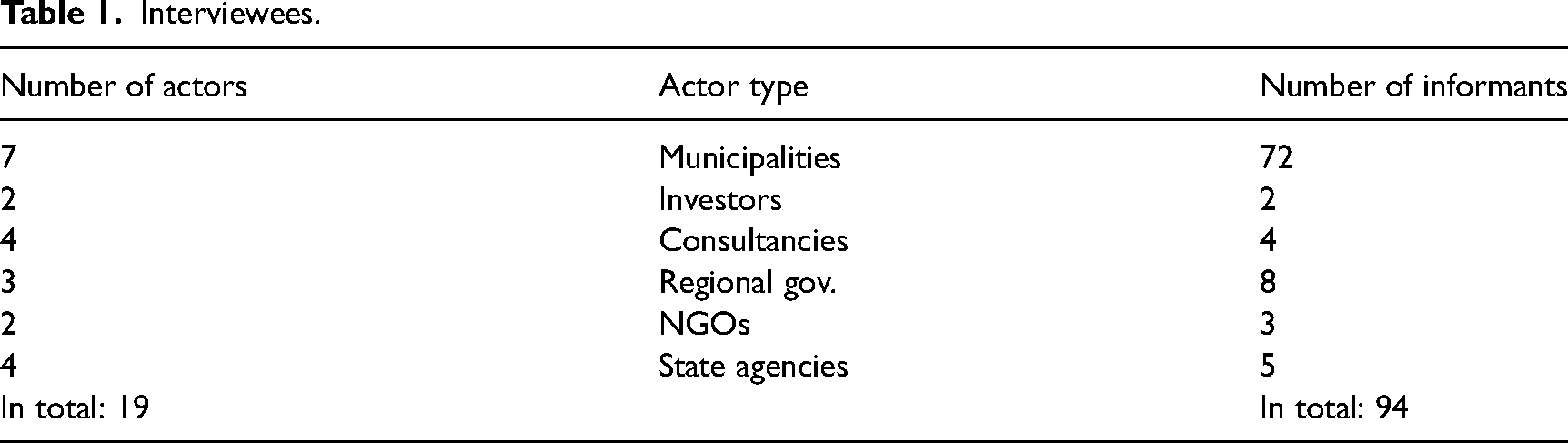
In total, I conducted 94 well planned semistructured interviews (Devault and McCoy, 2006) with civil servants, managers, politicians, and consultants. I used a snowballing procedure where one interviewee led me to another (Noy, 2008). I also met several of them at conferences and seminars and rather quickly it became evident that the Swedish SI “landscape” was rather secluded to a hand full of key actors.
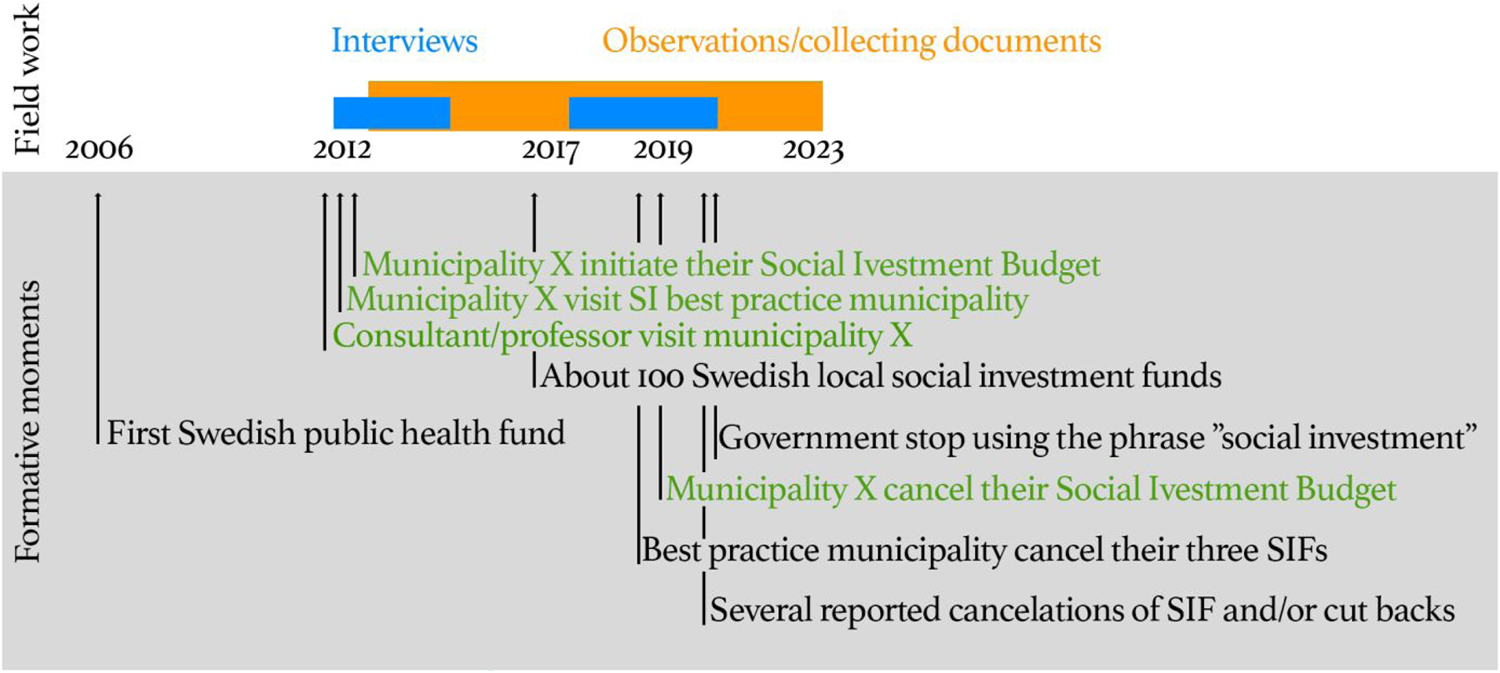
Field work and Formative moments.
The fieldwork took place between 2012 and 2023 with varying intensity. A series of interviews were conducted from 2012 to 2017, followed by another series between 2018 and 2020. Throughout the period, observations were made at SI-related seminars and conferences, both local and international. While the interviews were recorded and transcribed afterward, the events were documented through field notes and the collection of reports and PowerPoints. Both the interviews and the fieldnotes revolved around questions of SI-practices—what are people doing when they say they engage in SI work, from where did they found inspiration, what has been difficult and what do they define as success?
The analysis was conducted through an abductive logic of inquiry (Alvesson, 2009) where I first located key translators in the material and systematically teased out how they were connected to each other (via projects, networks, or written reports). I then worked to construct what Rutzou and Elder-Vass (2019) call a formation story that account for how “things come to be the way they are” (p. 411). To tease out this story, I zoomed in on one municipality, referred to as Municipality X, and how their SI practices came to be, but also ceased to exist. The starting point here was the public health coordinator/strategist (a position held by six different people during the fieldwork). Their stories/experiences snowballed me to their colleagues, managers, politicians, public health strategists in other organizations, consultants, government agencies, conferences, network meetings, and so on, and all this is analyzed as “hooked into […] and constituent of the institutional relations” (DeVault and McCoy, 2006: 18) of SI. As the formation story took shape, formative moments and key actors emerge as several actors referred to them as pivotal for SI. The actions of these key actors, and the perceived consequences of them, were analyzed through theories of translation and assemblage focusing on processes of editing.
Translating SI to a Swedish context
The translation of SI into local government practices is here described in relation to a few key translating actors and formative moments. The section starts with a brief contextualization of Swedish SI practices. Following that, I zoom in on Municipality X and their environment to give empirical accounts on how processes of translation transpired in practice. Finally, I zoom out to analyze the broader declining interest in SI in terms of translation.
A formative moment in the Swedish case occurred around 2009 when the Swedish Association of Local Authorities and Regions (SALAR) chose to translate their governmental assignment to combat mental illness in terms of SI. SALAR is an employers’ organization that represents and advocate local and regional government, with all Swedish municipalities and regions as members. The manager at SALAR at the time said that the government's assignments were “rather loosely formulated from the state's side,” but it materialized through several large development projects, where SI served as the theme connecting the initiatives (interview 86, 2015). The government did not use the term SI at this point but did so later. It was SALAR that adopted the idea of SI, and all actions related to mental health (projects, conferences, networks, and meetings) were geared toward or presented in relation to the loosely defined concept of SI.
Even though advocates, including SALAR, placed great hope in SI as a means of achieving paradigmatic changes (Morel et al., 2012) in the early 2000s, the most tangible and widely adopted outcome in the Swedish case has been the so-called SIFs. Simply put, SIF is a blueprint model for establishing an internal municipal project-funding system, from which employees can apply for funds to finance preventive initiatives with the aim of avoiding future costs (Balkfors et al., 2020). By administrating these as project funds, it is argued that it becomes possible to invest in activities that span several years, in contrast to what regular municipal budgets typically allow. The first version of SIF was initiated in 2006 in a municipality where a professor of political economy/consultant, let us call him Barry, was the main source of inspiration. The municipality set aside SEK 8 million in a public health fund. Over a period of seven years, this fund financed 90 projects and according to the calculations of Barry, three of the 90 projects alone generated an annual profit for the community of SEK 40–50 million. Based on these kinds of figures and the intensive promotion by both SALAR and Barry, the establishment of SIFs became a common practice in Sweden. By 2017, approximately 100 out of the 290 municipalities had implemented one, and about 20 were considering doing so (Hultkrantz and Vimefall, 2017). These funds ranged from SEK 2 million to 500 million, sourced from the municipal budget or surplus, and were found in both large cities and small municipalities, governed by right-wing as well as leftwing majorities. Thus, they were widely distributed across the country (Balkfors et al., 2020).
Zooming in on local practices
Long before any discussions of SI or SIF took place in Municipality X, a municipality of approximately 32,000 inhabitants, with an organization employing about 2500 full time staff, Karin—a 30-year-old university graduate—began her career as a teacher in 1969. She held that position for 20 years before getting the opportunity to transition into a new role, a “dedicated position on public health, crime prevention, and integration” (Interview Karin, 2019). This role, known as public health coordinator, she held for 22 years. She describes this work as being deeply integrated with the local community, maintaining close connections with various associations, churches, and voluntary organizations around the municipality, while also staying in close contact with municipal staff. In 2011, Karin retired, and with her departure, the role of public health coordinator changed significantly. Andrea, who succeeded Karin, describes how the position translated into a more “strategic” role, becoming more closely tied to management and the politics of the organization (Interview Andrea, 2014). The position also relocated to the centrally based Department of Development. Andrea explains that she had to “define the role [herself] as there were no clear guidelines on what a public health strategist's responsibility should entail” (Interview Andrea, 2018). In practice, this meant that Andrea had to identify “desired practices” (Røvik, 2023) elsewhere and adapt them to her role and organization. In many respects, she found inspiration in a network of other municipal public health strategists, as well as through seminars and conferences organized by SALAR. She spent almost two years developing and formulating her own role and the municipalities’ public health strategy—a role and a strategy that, according to her, became heavily “influenced by SI ideas” (Interview Andrea, 2018). Andrea describes this as an editing process, where she gathered bits and pieces from her surroundings to construct something coherent that made sense for both her and the organization. This took place at the same time as SALAR began promoting their work, and launching initiatives under the banner, of SI. In addition to attending various SI meetings organized by SALAR, she also built connections with public health strategists in other municipalities with whom she met regularly. Internally, she had a working group of civil servants assisting her in this work. Andrea's primary inspiration, or “(desired) source practice” (Røvik, 2023), mostly came from SALAR and other municipalities, rather than from internal political or managerial directives. However, her “recipient units” (Røvik, 2023 :17)—or the target for translation—were her own organization and role. The first step was to “align the goals and understandings of the working group” closest to her (Interview Andrea, 2014). Andrea told me that the working group wanted the municipality to shift away from top-down “plans of action” for public health and move toward more bottom-up SI initiatives. When arguing for this, Andrea found support, and arguments, in other municipalities and in her network of public health strategists (Interview Andrea, 2014).
Following these two formative years, Andrea went on maternity leave, and Mona took over as public health strategist. Andrea did not return, eventually leaving the municipality for another job. Between 2011 and 2019, five different people held the role of public health strategist, in contrast to the previous 22 years when it had been held by a single person—Karin. Like Karin, they all appeared committed to public health issues and were very network-oriented (interviews, Karin; Andrea; 16; 23; 27). Unlike Karin, however, their networking activities spanned the entire country and involved meetings, field trips and conferences primarily focused on SI. They seemed to have more in common with SI “experts” in other organizations, in their network, than with colleagues in their own organization. While Karin described her work to be very close to the local community, all five succeeding public health strategists describe their work as being more aligned with other organizations’ efforts with SI. One testament to this is the network of public health strategists that met regularly even though Municipality X changed their strategist five times. The public health strategists’ efforts were more focused on processes of “reembedding” (Carlsson, 2022) the ideas of SI in their organization and to legitimize it—rationalizing the causes and effects of SI projects and ensuring they appeared “serious and true” (Sahlin-Andersson and Sevón, 2003: 264).
So, Municipality X’s approach to public health shifted to a “strategic” and managerial level within the organization, with a focus on SI rather than public health. At the same time, considerable freedom was given to the “public health strategist” to define what this shift should entail. But why did the organization choose to move public health to a “strategic” position at this time, and why did they initiate an SI fund?
Translators
Around the time Karin retired, and the role of the public health strategist was constituted, the professor/consultant Barry visited Municipality X. More than 250 employees, including the management team and politicians, attended his talk. According to the municipal councilor at the time, they were “head over heels” after hearing him speak: … I mean, it really hits you! […] He brings solutions! When he explains how extremely important it is that we work preventively! […] It was almost like a revival meeting, […], He is so wise! So incredibly understanding and knowledgeable. So, when we left the seminar, many of us said, “we really need to get this going here!.” (Interview municipal councillor, 2013)
The comparison with a revival meeting is striking, as Barry, the professor/consultant, had spent several years traveling across the country, “preaching” the principles of SI and SIF. In addition to giving talks like this, he was frequently invited to participate in conferences, contribute to projects aimed at developing methods for municipal SI work, and worked as a consultant, conducting socioeconomic calculations for various municipalities. As such he has been a dominant translator (Røvik, 2023), and a carrier of ideas (Czarniawska and Sevón, 1996), in the Swedish contextualization of SI. About the same time as Barry visited Municipality X, in early 2012, the financial manager from the city of Norrköping—a Swedish SI pioneer—was invited to talk about their experiences of SIF. It was also during this period that Andrea was hired as the public health strategist. She describes how these disparate activities all seemed to gravitate toward the same thing: …it all fell into place, and it seemed natural—our bottom-up perspective, the seminar held by [Barry], and the inspiration from Norrköping. The idea with a social investment fund seemed so obvious when the idea came from so many different sources at the same time. (Interview, Andrea 2014)
Barry has evidently been an important translator of the SI perspective into the Swedish context and a key pillar in spreading the phenomena among municipalities. As a professor, he carries certain legitimacy, and his academic background in political economy is also relevant. It allows him to explain the rationale behind SI using academically laden concepts that are perceived as legitim and “true” (Sahlin-Andersson and Sevón, 2003: 264). When he gives his talks, or when others refer to him, there is often a strong emphasis on socioeconomic evaluation, calculations, and models to assess public health projects (Field notes from conferences in Stockholm, 2018; Tomellila, 2014). The emphasis is placed on models for calculation and budgeting techniques rather than specific interventions for public health. Another important actor in the translation of SI is the one of “best practices”—the role played by Norrköping in the quote above. In Norrköping, both SALAR and Barry devoted time and energy to make SIF happen, but also to spread the word of its existence to other municipalities. During my field work, I accompanied Andreal and her network of public health strategists to Norrköping in 2014. During this trip, we met with the municipality's leading politician, public health strategist, and financial manager—all crucial actors in getting their SIF up and running. At this event, the visiting public health strategists were provided with, or discovered, arguments to use within their own organization: …we learned a lot from Norrköping … of the importance of having the financial manager on-board … the importance of marketing SIF within the municipality [… but also to] not be too harsh when specifying the criterions for the SIF, as that might lead to fewer project proposals. (Interview Andrea, 2014)
In this way, the public health strategists played a pivotal role in moving SI and SIF knowledge between municipalities but also in the processes of turning this knowledge into practical municipal work. Within their own organizations, the public health strategists are caught in the middle—between political and managerial leadership on one side and the civil servants expected to apply for and executing SI projects on the other. “We had to inspire the politicians,” one of the public health strategists told me, but continued to describe that when their political program for public health where set—a program they managed to phrase in terms of SI—they “started to work with how to manage and implement the goals through various working groups … we involved people from communication … to spread the word” (Interview public health strategist, nr 16, 2014). Their in-between position in the organization fosters them to act as intermediaries (Callon, 1991) aiding the translation of political and managerial initiatives (top-down) into civil servant practices, while also translating civil servant practices (bottom-up) into SI reports and figures (and in some cases into best practices). In this process, the blueprint model or concept of an SIF appears to have served as a device making the vague concept of SI both more tangible and manageable. However, the public health strategists did not stand alone in the work of aligning their actions with a “SIF model.” The aforementioned organization, SALAR, has published a series of reports where SIF serve as the guiding principle: Implement SIs (2014), Description of Roles in SIs (2015), The Organization and Governance of SI (2015), Checklist for Politicians and Decision Makers (2015). All these reports promote SIF as a vehicle for SI. During a period of a few years, one could observe how both actors (SALAR, consultants, public health strategists) and various components (calculation techniques, seminar presentations, and network discussions) gravitated toward SIF. As a result, by 2017, around 100 municipalities explicitly referred to their public health work as SIs and had implemented one or more SIFs (Balkfors et al., 2020). The first Swedish “public health fund” described above was reframed during this time in terms of SIF, project evaluations were transformed into SI calculations and as indicated above, SI networks were established to support the development of additional SIF initiatives. Hence, SIF constituted an actor that helped align other actors and components, allowing them to function as a seemingly coherent whole.
From an SI perspective to a budget post in practice
In late 2012, Municipality X allocated SEK 2 million to an SI Budget, deliberately avoiding the term fund. Unlike a dedicated financial fund, it was simply a budget item within the annual municipal budget, reflecting a common approach to initiating SIFs in Sweden (Hultkrantz and Vimefall, 2017). This distinction was largely driven by the municipal financial manager, who argued that existing regulations did not permit the establishment of a fund. His skepticism was widely shared among financial professionals in Swedish local government: When this came, (the idea of a social investment fund), it turned the stomachs of all the economists inside out … investments are traditionally related to something which is to be held permanently, as stated in the law, so when you make this kind of ‘soft’ allocation and invest in those kinds of … you know … could we really call that an investment? This was something really difficult for the entire economic profession to digest … (but at the same time), everyone seemed to agree, that this had to be done. (Interview, financial manager at Municipality X, 2014)
As a member of a national SI network initiated by SALAR, the financial manager regularly discussed ways to adapt SIFs to municipal regulations. Over 100 municipalities implemented SIFs, but in varied forms—while Municipality X treated it as a budget line item, Norrköping managed it more like a financial fund, reinvesting savings from successful projects (Balkfors et al., 2020).
This illustrates Sahlin-Andersson's (1996) “rules of editing,” where policy translation is shaped by local constraints. Policy transfer is rarely straightforward; rather, it is a process in which various connections are forged (Murray Li, 2007) between actors and components, and where sometimes only parts of broader reform ideas or policies are translated to fit a specific context, forming a cohesive assemblage (Clarke et al., 2015).
As SI ideas spread through consultants, academics, seminars, and conferences, municipalities were eager yet uncertain about implementation. “This is great, but how do we make it happen?” asked Andrea in Municipality X (Interview, 2014). The “solution” took the form of a specific model or device—SIF—that was expected to deliver SI. This marked a first step in the translation process, incorporating only select aspects of the broader SI perspective. As the SIF concept materialized and “moved,” more translators became involved, continuing to edit—cut and paste—to ensure it aligned with the regulations, operations, organizational structures, and priorities of Swedish municipalities.
When Norrköping's SIF was promoted as best practice, many municipalities adopted the model—sometimes without a clear plan. In one case, a public health strategist recalled that while politicians and management were highly enthusiastic (after a seminar with Barry), they left all implementation responsibilities to him: “They wanted an SIF, but once we had one, they had no idea what to do with it” (Interview, 13).
Local practices of SI
In a Swedish popular science paper, Barry argued that SIF should transform municipal organization, governance, resource allocation, and evaluation. However, as shown above and in the gray literature (Balkfors et al., 2020), SIF was instead translated into constrained municipal budgets and small-scale social projects. Despite political and managerial enthusiasm for SI and SIF, implementing broader organizational and governance changes proved challenging.
Between 2013 and 2018, Municipality X's SI budget funded 18 projects, ranging from SEK 200,000 to 1 million. The head of the development department described them as “organizational lubricant”—temporary initiatives improving operations rather than true SIs. A project manager noted that their projects, like those in other municipalities, did not align with the principles of SI: “Even if it is under the flag of SI, it really is something rather different” (Interview, 20, 2019).
Debates within Municipality X's SI working group cantered on whether to fund fewer large-scale projects with potential for organizational impact or multiple smaller initiatives to encourage engagement and creativity (Interview, public health strategist, 16, 2019). Initially, they favored smaller projects but shifted to larger ones as others did so. Throughout, they looked to peers, consultants, and SALAR for guidance.
The fall of SI
Even as projects grew bigger, they appeared to have limited impact on regular municipal operations. For evaluation, each project produced its own “follow-up reports,” which often stated results in vague terms and lacked data demonstrating economic gains or savings. This was a concern for Mona, the public health strategist at the time. On the one hand, the municipality lacked resources and expertise to evaluate projects as SIs, but on the other hand, she felt pressure to measure effects, because everyone is talking so much about it. I’m wondering how much longer we can talk about learning or organizational development to the politicians … Perhaps they think (the SIF) isn’t leading anywhere and that they could use the money for something else instead. (Interview, Mona, 2019)
This highlights how processes of translation are shaped not only by the translators’ perception or will but also by the environment they operate within. Mona's concerns proved valid: a few months later, politicians and management decided to broaden (edit) the definition of what an SI project could be, to attract more applicants. During a period when no public health strategists was active due to maternity leave and a prolonged hiring process, the SIF was even used to fund a venue for ping pong, without any clear indication that it qualified as an SI. Following this, the SI working group adjusted the funding criteria from “preventive initiatives” to “promoting initiatives.” As a result, projects no longer had to be preventive interventions intended to yield future cost savings but could now simply promote public health.
This shift represents a significant translation of SI and the SIF model, marking what could be seen as a formative moment in the decline of SI and SIF. The following year, in 2018, the already limited SIF-budget faced major cuts, and in 2019, politicians eliminated the budget entirely. The last person to hold the public health strategist position was, unlike her predecessors, hired on a temporary contract in mid-2018; her job description excluded any mention of SI or SIF, focusing instead on children's rights, equality and Agenda 2030. When I talked to her in early 2019, she explained that with the disappearance of SIF, public health work also faded, as they had been so closely linked (interview, public health strategist, 2019). Later that year, she resigned, and the municipality subsequently hired a sustainability strategist to work with Agenda 2030. SI was no more.
Zooming out, one can observe similar trends in other municipalities. During this period, several municipalities reported canceling their SIFs, while others noted a decrease in SI-related activities and efforts (Balkfors et al., 2020). The city of Malmö, a trendsetting municipality, not only liquidated its three SIFs totaling SEK 150 million but also discontinued several services previously devoted to SI. Additionally, after 2019, the phrase “SI” disappeared from the Government assignments to SALAR, and SALAR, consequently appeared to stop explicitly advocating SI and SIF (no conferences/meetings or network activities between 2019 and 2023). Another possible contribution to the declining municipal interest in SI and SIF might also be that Barry, the consultant/professor, retired in 2018 leaving one important position as advocate and translator vacant.
This decline is also evident in the broader public debate in Sweden. A search of a Swedish database that includes both print and online media shows only a handful of mentions of “SI” from 1985 to 2010. However, starting in 2011, there was a notable increase, with over 400 mentions annually, until 2019, when the numbers began to decline.
Summarizing discussion
The aim of this article is to investigate how SI translates into local government practices, examining how actors and resources have been brought together to function as a cohesive whole and how that whole in time disintegrates. Through an ethnographically inspired study of the Swedish context, the article illustrates how the SI perspective was popularized in the early 2010s by a few prominent advocates within, or in relation to, Swedish local governments. The most tangible and fashionable outcome of this advocacy was the establishment of municipal SI funds in approximately 100 municipalities over a span of a few years. The initial enthusiasm generated by advocates for SIF as an effective vehicle for delivering SI attracted considerable interest and engagement. However, after a few years, the appeal of these project funding systems waned. Several SIFs faced early termination, which in turn contributed to a broader decline in interest and support for SI initiatives overall. This shift highlights potential challenges in sustaining local momentum from wider reform initiatives.
Several factors contributed to the decline of interest and activity in the Swedish case. One factor was the retirement of a key translating promoter—Barry, the professor/consultant. His absence meant less of a momentum related to SI, fewer seminars and an important missing intermediary actor. Another factor was the declining support and advocacy from SALAR, an organization who initially played an essential part in the materialization of Swedish local SI work and many of the local SIF. Hence, central actors withdrew, and resources were depleted as the assemblage began to unravel and enter processes of disorganization while, at the same time, alternative “solutions” gained traction. In Municipality X (as in many other Swedish municipalities at the time), Agenda 2030 emerged as a priority; in Norrköping, there was a shift towards social impact bonds, while Malmö, another trend leading actor, instead focused their attention on green bonds.
In terms of translation, the Swedish SI case illustrates its practices and consequences. SI encompasses ideas that are both appealing to local government and abstract enough to allow for various interpretations of what it is or could be in practice. The case illustrates the pivotal work of translators forging alliances (local as well as national) and editing processes to enable SI to both “materialize” and “travel.”
Both SALAR and Barry, along with some municipal front runners and networks of public health strategists, came to advocate SIF as the vehicle for delivering SI. Throughout their efforts (meetings, seminars, and projects), they continuously refined their understanding of how SIF represented SI in practice, but they also adapted their own roles in relation to these concepts and to each other. In the wordings of Latour (2005), SIF became somewhat of an obligatory passage point—through which actors, ideas, or artifacts had to pass for SI to take shape. Consequently, roles within the actor network were redefined (e.g. coordinators became strategists, and civil servants became project applicants), and components were translated (e.g. a public health fund became an SI fund and plans of action transformed into project funding systems) to aligned with SIF.
Thus, SIF constituted an actor with which other actors forged connections and established relationships. SIF aided what Callon (1991) call punctualization—“the successful association of heterogeneous bits and pieces into a coherent thing that remains, by and large, durable over time and space and easy to understand and interface with” (Gehl, 2016: 37). The translation of SI to local government practices was about transforming an abstract idea into concrete practices but also the formation of a unity or whole with some stability. However, the case also illustrates the dissolution, or depunctualization (Callon, 1991), of the assemblage—processes where the “whole” broke up into smaller parts or exposed the assemblage's “internal heterogeneity to view” (Gehl, 2016: 38). When important translating and intermediary actors no longer worked to uphold the assemblage, each component (municipality, public health strategist, and SIF) where left alone, and locally it appeared difficult to uphold momentum and keep connections durable, so many of the initiatives faded away and energy were placed elsewhere.
The translation perspective adopted here reveals certain aspects of SI and its practical applications, while also shedding light on why certain reform ideas “succeed” or, conversely, unravel. The SI perspective is a complex concept, not easily summarized in an elevator pitch. However, SIF is somewhat less abstract. When framed as funding for projects that invest in people's lives to prevent future costs, SI becomes concrete, manageable but also portable. The reduction of complexity—the punctualization of SIF as a coherent independent entity—enhances its mobility (see Callon, 1984: 71). Yet, what is lost in the reduction of complexity must be reconstructed as the idea is reintegrated into new contexts (Sahlin-Andersson, 1996). Someone, or something, must fill in the blanks when an idea or policy is moved from one place to another and here translators play a crucial role, editing the idea or policy to fit “recipient units” (Røvik, 2023: 17). In Municipality X, the public health strategists carried out much of this translation work. They drew inspiration from Barry, from SALAR, and other municipalities, but also from the general idea of SIF as they worked to align their organizational environment to fit an SI perspective. As Svensson et al. (2024) note, strategists in public organizations often operate with ambiguous role descriptions, necessitating self-construction of their own role and environment. In the SI case, public health strategists were, in many respects, left to shape their own roles and build alliances—often finding more in common with actors outside their own organization than within. One can think of the Swedish SI case as an assemblage held together by the actions and advocacy of first and foremost SALAR, Barry and a few municipal front runners. Their actions, seminars, publications, and projects were pivotal in the forging of connections between public health strategists and SIF initiatives around the country. However, as their advocacy and actions faded, so did the connections and the assemblage started to crumble. A good example of this is when the management in Municipality X decided to fund a ping pong venue during a period when the public health strategist was absent. She carried the role of a translator but also an intermediary adapting the SI idea to fit local government practices and to legitimize them through connections to other SIF initiatives, other municipalities, to SALAR, to Barry and to the SI perspective. But without these connections, working via the public health strategist, the SI budget became detached from the wider assemblage and the concept of SI. For an assemblage to endure, it must be continually maintained and enacted; otherwise, it enters a process of disorganization.
Footnotes
Funding
The author disclosed receipt of the following financial support for the research, authorship, and/or publication of this article: This work was funded by Forskningsrådet om Hälsa, Arbetsliv och Välfärd.

Author biography
Mats Fred is a senior lecturer in political science at Lund University. He received his PhD from Malmö University in 2018 and has since developed a research profile combining public administration and organization studies. His work focuses on how reform and innovation unfold in practice within the public sector, with particular interest in temporary forms of organizing. He has published widely on social impact, public-sector innovation, and the organization of public services in both national and international journals.
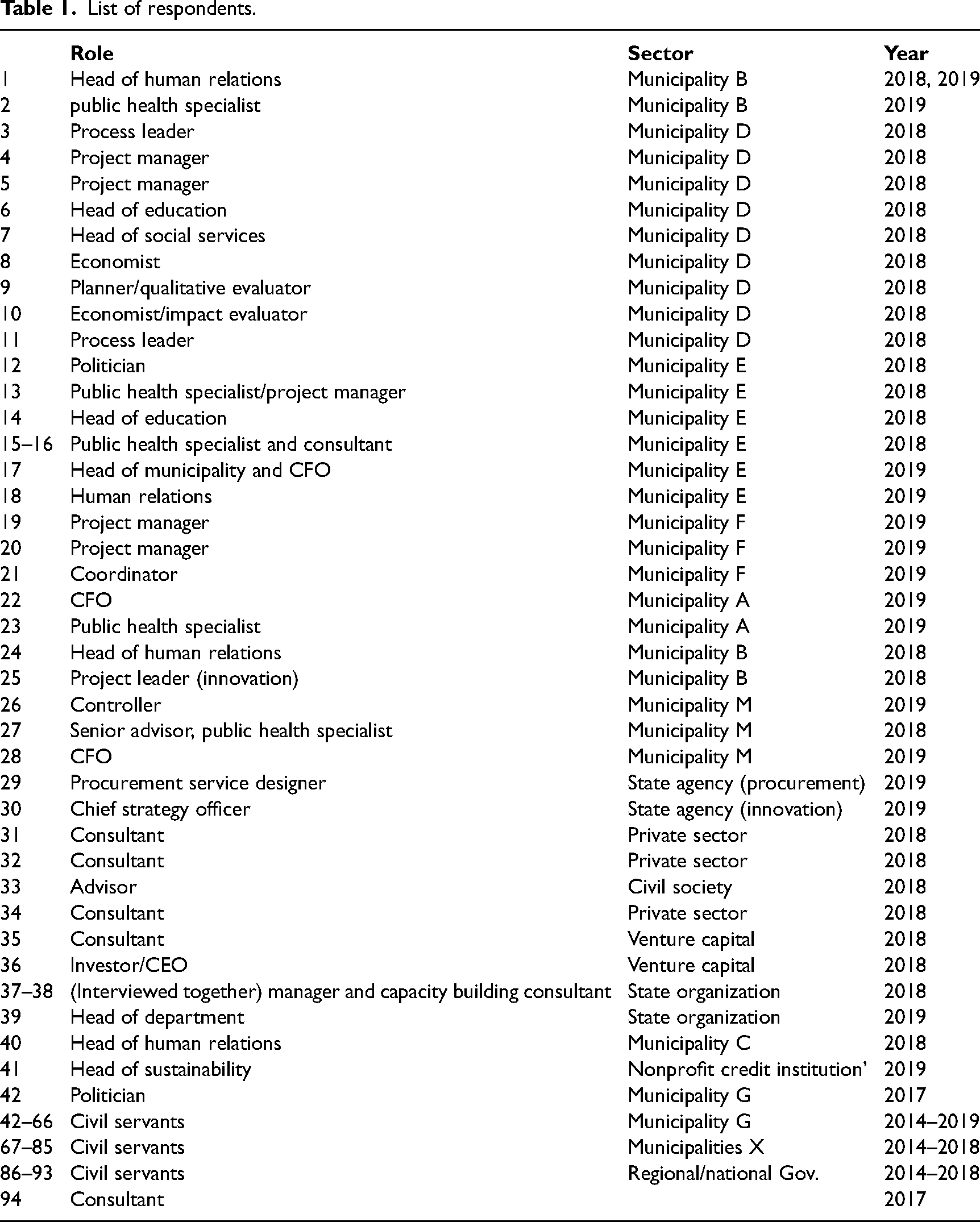
Appendix 1.
List of respondents.
|
|
|
|
|
| 1 | Head of human relations | Municipality B | 2018, 2019 |
| 2 | public health specialist | Municipality B | 2019 |
| 3 | Process leader | Municipality D | 2018 |
| 4 | Project manager | Municipality D | 2018 |
| 5 | Project manager | Municipality D | 2018 |
| 6 | Head of education | Municipality D | 2018 |
| 7 | Head of social services | Municipality D | 2018 |
| 8 | Economist | Municipality D | 2018 |
| 9 | Planner/qualitative evaluator | Municipality D | 2018 |
| 10 | Economist/impact evaluator | Municipality D | 2018 |
| 11 | Process leader | Municipality D | 2018 |
| 12 | Politician | Municipality E | 2018 |
| 13 | Public health specialist/project manager | Municipality E | 2018 |
| 14 | Head of education | Municipality E | 2018 |
| 15–16 | Public health specialist and consultant | Municipality E | 2018 |
| 17 | Head of municipality and CFO | Municipality E | 2019 |
| 18 | Human relations | Municipality E | 2019 |
| 19 | Project manager | Municipality F | 2019 |
| 20 | Project manager | Municipality F | 2019 |
| 21 | Coordinator | Municipality F | 2019 |
| 22 | CFO | Municipality A | 2019 |
| 23 | Public health specialist | Municipality A | 2019 |
| 24 | Head of human relations | Municipality B | 2018 |
| 25 | Project leader (innovation) | Municipality B | 2018 |
| 26 | Controller | Municipality M | 2019 |
| 27 | Senior advisor, public health specialist | Municipality M | 2018 |
| 28 | CFO | Municipality M | 2019 |
| 29 | Procurement service designer | State agency (procurement) | 2019 |
| 30 | Chief strategy officer | State agency (innovation) | 2019 |
| 31 | Consultant | Private sector | 2018 |
| 32 | Consultant | Private sector | 2018 |
| 33 | Advisor | Civil society | 2018 |
| 34 | Consultant | Private sector | 2018 |
| 35 | Consultant | Venture capital | 2018 |
| 36 | Investor/CEO | Venture capital | 2018 |
| 37–38 | (Interviewed together) manager and capacity building consultant | State organization | 2018 |
| 39 | Head of department | State organization | 2019 |
| 40 | Head of human relations | Municipality C | 2018 |
| 41 | Head of sustainability | Nonprofit credit institution' | 2019 |
| 42 | Politician | Municipality G | 2017 |
| 42–66 | Civil servants | Municipality G | 2014–2019 |
| 67–85 | Civil servants | Municipalities X | 2014–2018 |
| 86–93 | Civil servants | Regional/national Gov. | 2014–2018 |
| 94 | Consultant | 2017 |