




Abstract
Prior research has found that high levels of work–family conflict negatively impact women's well-being. However, variations in the effects of work–family conflict on women based on class have been understudied. Moreover, most estimates of work–family conflict did not distinguish between work-to-family and family-to-work conflict. This study uses data from a cross-sectional phone survey of Icelandic women to assess the association between work–family conflict (in both directions) and symptoms of depression and anxiety among women of differing class positions. Key findings showed that (a) work-to-family and family-to-work conflict were positively related to symptoms of anxiety and depression among all women, but these relationships were contingent on class; (b) working-class women are more likely to experience symptoms of depression and anxiety due to work-to-family conflict than women of higher social strata; and (c) working-class women are more likely to experience symptoms of depression due to family-to-work conflict than women of higher social strata. The results demonstrate the need for further research on how women's ability to reconcile work and family varies by class and how public policy can account for such differences.
Introduction
The gender revolution of the mid-20th century resulted in extensive changes in the social, economic and policy realms. With their unprecedented entrance into the paid labour market, accompanied with extended reproductive rights, women moved toward greater independence. However, these changes were limited to the public sphere, with domestic life remaining largely unchanged and women still more likely than men to manage household affairs (Ragnarsdóttir et al., 2023). In light of these circumstances, some have argued that the gender revolution resulted in the unintended consequence of a doubled burden, with women left struggling to balance paid labour with family life (Hochschild and Machung, 1989). A vast amount of research exists on work and family, two important and closely intertwined domains of people's lives, and much of this research has concentrated on the difficulty in balancing work and family, particularly for women. However, fewer studies have examined the consequences of work–family conflict (WFC) 1 for women across the class spectrum (Tunlid, 2020).
Research on WFC has largely focused on highly educated and/or high-income women and emphasized their difficulties with balancing motherhood and their careers (for critical discussions, see Teo, 2016; Warren, 2015). This focus on women of higher social strata has revealed a nexus of social problems. Upper-middle-class and upper-class women face unique stressors in the workplace: the jobs these women hold often require long hours, unflagging commitment and working in traditionally male-dominated spaces. At the same time, upper-middle-class women experience the demands of so-called ‘intensive parenting’, which, as the term suggests, involves constant maternal vigilance.
Research has shown that this struggle to strike a balance between work and family life can have negative consequences for women's mental well-being. Women who experience high levels of WFC show more depressive symptoms, have more marital problems, have poorer health and experience reduced life satisfaction (e.g. Carlson et al., 2020; Viertiö et al., 2021). However, in terms of both sampling and diagnosis, the literature has painted a picture in which the burden of juggling work and family responsibilities, and the emotional distress that comes with these tasks, is more a struggle reserved for elite women.
This study seeks a more complete understanding of the complex relationship between WFC, mental well-being and the intersections of class and gender. People's ability to respond to family needs while at work (e.g. picking up a sick child from school or taking a family member to an appointment) and their ability to respond to work needs outside regular work hours (which might entail outsourcing housework and finding babysitting or extracurricular activities for their children) depend on their employment conditions, financial resources and social networks. Thus, we argue that the barriers and resources related to the pursuit of work-family balance are structured in the first place by class position. Working-class women have always combined paid work with unpaid domestic work. Research has shown that they work longer days than other women, have less flexibility in their occupations and have fewer financial resources to outsource unpaid domestic work (Chung, 2019; Lott, 2020; Teo, 2016). Working-class women also tend to have smaller social networks and fewer people they can turn to for assistance (Horvat et al., 2003). As a result, we believe that working-class women are more likely to experience emotional distress due to WFC than women of higher social strata.
We use Iceland to examine the relationship between WFC and women's mental well-being and how this relationship varies by class. Iceland is a comparatively egalitarian country and has been widely cited as the ‘most gender equal’ country in the world (Oddsson, 2022; The World Economic Forum, 2023). While recent literature has complicated this picture (Auðardóttir, 2022; Símonardóttir, 2024), Iceland's relative equality makes it an ideal test case. Iceland has been categorized, among the Nordic countries, as a social democratic welfare state (Esping-Andersen, 1990; Nolan et al., 2016), and as such, it has relatively strong family policies that stress the importance of gender equality and socialize the cost of family life to an extent (Jónsson, 2018). Public policies in Iceland encourage and normalize female workforce participation and dual-earner households (Arnalds et al., 2022b; Gornick, 1999; Mandel and Semyonov, 2006). Icelandic women actively participate in the labour market and have the highest ratio of labour force participation among The Organisation for Economic Co-operation and Development (OECD) countries (OECD, 2024).
Iceland has seen women rise to the highest echelon of economic and political power but has not been spared the societal pressure put on women to have children and be intensely engaged in their care. Given that Iceland ranks highly in measures of social and gender equality, it serves as a strong test case for research on inequality between women. If differences in class inequality among women are found in Iceland, a country with comparatively low inequality, class differences in other countries are likely to be greater. Specifically, we inquire as to whether WFCs in relation to these gender changes, exemplified in Iceland, have resulted in unforeseen consequences for women and if these consequences are unequally felt across social classes.
In what follows, we begin by establishing the background context for our study. We then discuss existing literature on WFC and the Icelandic context before presenting our hypotheses. We then present our findings from a national survey conducted on a sample of Icelandic women in 2022 2 and examine the relationship between WFC and mental well-being (depression and anxiety) and if that relationship is contingent on class. Our findings reveal that the association between WFC and symptoms of depression and anxiety are more pronounced for working class women than women of higher social strata. This suggests that the literature on the outcomes of WFC may have been too focused on the unique psychological stresses of the pressure of high earning/highly educated women. This further suggests a greater need for an intersectional approach to WFC and mental well-being. This intersectional approach to WFC and well-being may be particularly insightful in Nordic societies, which have often been taken as models of gender equality.
Background
Historically, research on inequality concentrated on either class or gender, rarely combining the analysis of gender and class. This literature was centrally concerned with growing gaps between groups – with people differentiated by race, age, gender, education and income. More recently, researchers have observed rising inequality within these groups (McCall, 2000; VanHeuvelen, 2018). There is considerable literature on income inequality among men, between men and women, and a smaller but growing body of literature on income inequality among women (Gornick et al., 2019; Korpi et al., 2013; Mandel and Semyonov, 2006). In general, this literature concludes that there is increasing polarization among women. One line of analysis has concluded that growth in economic opportunity for affluent women was gained on the shoulders of working-class women (Esping-Andersen, 2009).
For women to partake in employment to the same degree as men, they need to have the time and opportunity to do so. Time constraints stemming from the amount of time women must dedicate to unpaid domestic labour frequently affect their access to paid work (Ragnarsdóttir et al., 2023). Research has found that women are more likely than men to make adjustments to their work schedules to accommodate domestic duties, such as responding to responsibilities at home by modifying or reducing their paid employment (Geist, 2005; Símonardóttir and Gíslason, 2018). Women's ability to outsource childcare and other domestic work has therefore been seen as a crucial factor in achieving gender equality in the labour market, a circumstance that has prompted an array of research. This research suggests that outsourced childcare and domestic work is primarily performed by lower-class women (Teo, 2016).
Studies on gendered work and household responsibilities have used different terms to describe the challenges people face when balancing their career and family responsibilities. In our study, we draw on scholars such as Haslam et al. (2015) and Molina (2021) and use the phrase work-family conflict (WFC). These conflicts appear in different dimensions within work–family boundaries, and put in simple terms, WFC refers to when employment and family responsibilities affect one another negatively. An important distinction is made between work-to-family conflict (work negatively impacting family) and family-to-work conflict (family engagement negatively impacting work) (Haslam et al., 2015). These are two directional components of WFC that have different antecedents and consequences and can be conceptualized as separate but related constructs (Molina, 2021). Even though several studies on WFC have made this distinction in their analyses (Amstad et al., 2011; Byron, 2005), the class disparities in women's resources and barriers when it comes to juggling work and family have often been overlooked.
Working-class women are more likely to work long hours, hold multiple jobs, have less flexibility and engage in precarious work (Kossek et al., 2006). These employment situations have been shown to increase WFC, particularly for women who struggle with childcare. Holding multiple jobs, having less flexibility with one's work schedule and having fewer resources to outsource domestic work and childcare are factors that increase family-to-work conflict more than work-to-family conflict. Molina (2021: 9) found that ‘[e]conomic hardship emerges as the most important predictor of family-to-work conflict’, further underscoring the importance of distinguishing between family-to-work and work-to-family conflict, perhaps more specifically when examining the impact of WFC on women across the class spectrum. Thus, in our study, we examine separately the impact of work-to-family conflict and family-to-work conflict on the mental well-being of women of differing class positions.
WFC and mental well-being
WFC affects women's lives greatly, as evidenced by several studies that focused on different dimensions of balancing paid work and unpaid domestic labour. Extensive scholarship has revealed the tenacity of traditional gender roles, pointing to the considerable work yet to be done in achieving gender equality in work and family life. Women feel more rushed in their daily lives and have less control over their time outside of the workplace than men do. Mothers’ recreational time is more often shared with their children, and they are more likely to multitask (Craig and Brown, 2017; Sullivan and Gershuny, 2018). Studies have shown that these imbalances negatively impact relationships (Carlson et al., 2020), including the relationship between mother and child (Vincent, 2010).
However, despite the vast number of studies that have focused on difficulties and conflicts in balancing work and family life, research on how this situation impacts the mental well-being of women, such as their depression and anxiety levels, is relatively limited (with some notable exceptions including Allen et al., 2000; Amstad et al., 2011; Kelloway et al., 1999). Women have generally reported more psychological distress, such as anxiety and depression, than men (OECD, 2017; Viertiö et al., 2021). Women also take more sickness absences than men, with WFC possibly contributing to this difference (Nilsen et al., 2017). This is also the case in the Nordic context (Antai et al., 2015).
Many studies have focused on the association between different economic and labour market situations and mental well-being. Financial difficulties and economic insecurity have proven to be risk factors for poorer mental health (Baranowska-Rataj, 2022; Einarsdóttir et al., 2022; Thomson et al., 2022), especially among women (Holden et al., 2016; Nagasu et al., 2019). This pattern is particularly salient for working-class women (Warren, 2015). Even so, some have argued that it is not enough to look at income alone in the study of mental health, as there are several contextual measures related to economic hardships other than income that correlate with mental health. For example, a Swedish study showed that among women, exposure to long-term economic difficulties was significantly linked to anxiety; however, low income alone was not (Ahnquist and Wamala, 2011). Similarly, a study of factors associated with depression symptoms among workers in Iceland showed that reported material shortage proved to be the strongest risk factor for depression (Einarsdóttir et al., 2022).
Furthermore, several studies indicated an association between employment conditions and mental health among women. For example, precarious work (e.g. job insecurity, job loss and temporary work), which women more often engage in, was found to negatively impact their mental health (Benach et al., 2014; Padrosa et al., 2022. Furthermore, holding multiple jobs and being a low-income woman were factors associated with a higher likelihood of depression (Bruns and Pilkauskas, 2019). Viertiö et al. (2021) explored several factors contributing to psychological distress in the Finnish working population, one of which was WFC. Even though work-to-family conflict has been found to be more common, Viertiö et al. (2021) found that family-to-work conflict was more strongly associated with psychological distress (stress, anxiety and depression) among both men and women.
While flexible work arrangements have been associated with positive mental health (Moen et al., 2016), research has shown that access to such arrangements are dependent on, for example, socioeconomic status and gender, in men's favour (Chung, 2019; Magnusson, 2021). Yucel and Fan (2023), who distinguished between work-to-family and family-to-work conflict in their research, found that flexibility at work lowered psychological distress, both in relation to work-to-family and family-to-work conflict. Flexibility was particularly beneficial to women who simultaneously had to care for children and elderly family members, showing how WFC is not limited to women with young children (see also Guille et al., 2017; Maeda et al., 2019).
Taken together, there are significant correlations between various forms of disadvantage, such as low-wage employment, long-term poverty and material shortage, precarious work and well-being, among women. Possible implications of WFCs should not be overlooked in studies on the realities of working-class women and their mental well-being. However, most research on WFC has overlooked class dimensions or focused on high-income women and ignored the particular struggles working-class women might face when trying to balance work and family life. Moreover, most research has concentrated on work-to-family conflict, but we argue that family-to-work conflict also significantly impacts women's mental well-being and should not be ignored.
WFC: the class dimension
In recent years, there has been increased criticism of middle-class bias in research on the realities of working women, stressing the importance of the class dimension (Teo, 2016; Warren, 2015, 2017). Warren (2015) argued that by focusing too heavily on time at work in research on work–life balance, the main policy solution is assumed to be to reduce working hours. This focus ignores the realities of people in precarious working and economic conditions who suffer from low wages and possibly jobs paid by the hour who cannot disregard money in their everyday lives, are not able to reduce their working hours, and in fact may work too few hours to make ends meet (Skeggs, 2011; Warren, 2015). Middle-class worries tend to dominate the discourse around WFC, overlooking the diverse needs of women of different classes (Teo, 2016).
Furthermore, issues of inequality, traditionally centred around wealth distribution and social class, have been overshadowed by an individualistic focus on personal choices and actions when discussing poverty and privilege (e.g. Gillies, 2005). This focus can obscure socially constructed inequalities, such as class and gender, and the constraints different economic circumstances impose on women's lives (Auðardóttir, 2022; Teo, 2016). Indeed, research has shown that low-income families experience greater constraints in striking a balance between work and family (Dunatchik, 2023) and that unpaid domestic work is usually more equally divided in higher-income households and households with a higher educational level (Altintas and Sullivan, 2016; Quadlin and Long, 2018), further underscoring the importance of looking specifically at the class dimension in studies on WFCs.
As stated in the introduction, WFC is intensified when people find themselves trying to balance a career with the demands of intensive parenting. In many countries, greater parenting expectations and more time spent by parents actively engaging with their children have become more common (Craig and Brown, 2017; Ramey and Ramey, 2009), to the extent that it can affect women's choices to have children (Símonardóttir, 2024). Meeting these demands of constant maternal vigilance can be quite difficult for working mothers since female-dominated occupations offer less flexibility, especially low-wage jobs occupied by working-class women who tend to have the least flexibility and the strictest work schedules (Gerstel and Clawson, 2014; Magnusson, 2021).
In addition to having less flexibility at their workplace, working-class mothers also have fewer financial resources to pay for childcare (Lott, 2020; Teo, 2016) and outsource domestic work (Schneider and Hastings, 2017). Research has suggested that women who have more monetary power prioritize outsourcing housework, such as cleaning and food preparation over outsourcing childcare, which may result in them experiencing reduced sleep, and lack of leisure time and personal care (Lightman and Kevins, 2021; Ramey and Ramey, 2009).
This outsourcing of housework and childcare supports middle- and upper-class mothers’ ability to engage in intensive mothering, which has become an important means of class reproduction among higher-income families. A study on gendered and classed experiences of WFC among single mothers in Sweden showed the different means women leveraged in balancing motherhood and work. Middle-class women had better access to economic capital and flexible working hours, which reduced the gap between what they perceived as proper motherhood and their realization of that role. However, working-class mothers experienced high levels of conflict in fulfilling the motherhood role they perceived to be culturally appropriate due to their low income and precarious working conditions. They even experienced difficulties in utilizing the support offered to them by the welfare state, as the public childcare system lacked the flexibility they needed to balance work and family due to their irregular and precarious work schedules (Roman, 2019). Thus, working-class mothers, even in social welfare regimes, are likely to be more dependent on social networks for help with childcare when working unregular hours or to buffer themselves against different threats resulting from life disruptions and limited resources (Horvat et al., 2003). Therefore, having an established support network is important, since poor social networking has been demonstrated to increase depressive symptoms in women (Mandelli et al., 2015).
Taken together, research suggests that working-class women face societal pressure to engage in intensive mothering but lack the resources that women of higher socioeconomic status have (e.g. outsourcing ability and flexibility at work) and face unique barriers (e.g. greater difficulty in finding childcare due to irregular working hours).
WFC in the Icelandic context
For years, Iceland has ranked highly in international indices of equality. A 2022 Statistics Iceland report found that economic inequality was relatively low in Iceland compared to other European countries. Iceland's Gini coefficient was the third lowest in Europe, with an index of 24.2, whereas the average Gini coefficient among The European Union countries was 29.6 (Statistics Iceland, 2022). Gender inequality is also relatively low in Iceland. Icelandic women's labour force participation rate was among the highest in Europe, and the gap between women's and men's labour force participation was lower in Iceland than in other high-income countries (The World Bank, n.d.). Since 2009, Iceland has topped the Gender Gap Index, an index tracking countries’ gender parity across four key dimensions: economic participation and opportunity, educational attainment, health and survival and political empowerment (The World Economic Forum, 2024).
Iceland's Nordic-style welfare state has a long history of policymaking oriented toward economic and gender equality focused particularly on the implementation of policies that support working families. In Iceland, there is a comparatively long history of generous parental leave (Eydal et al., 2018), and Icelandic fathers have been forerunners regarding paternity leave take-up, with only Swedish fathers taking an equally high total number of days of leave (Arnalds et al., 2022a). Iceland also offers low-cost public preschool for children 18 months of age and older, and almost all children attend preschool from the age of two (Statistics Iceland, 2024). Similarly, public after-school care is widely available for elementary school children, and most municipalities offer a sports and leisure subsidy for children and teenagers.
Iceland is often heralded for its achievements in social equality, including class equality and gender equality. Everything we know about Iceland would suggest that women are a comparatively equal group, but we also know that literature on WFC has tended to focus more on women of higher social classes. This study uses Iceland as a strong case to test the hypothesis that the psychological burden of juggling work and family falls hardest on working-class women.
Study hypotheses
Research on WFC has demonstrated that women struggle to balance work and family and that this struggle has varying consequences for their public and private lives. In this study, we test the relationship between work-to-family and family-to-work conflict on women's mental well-being, by class. We organize women into three categories, where each category is a distinct class group defined by women's occupations. Research has shown that working-class women are more likely to work longer workdays and have less flexible jobs than women of higher socioeconomic status. They also have a harder time outsourcing domestic work and are more socially isolated (Magnusson, 2021; Schneider and Hastings, 2017; Teo, 2016). Taking this into account, we propose that the impact of WFC on mental well-being is more pronounced for working-class women. We hypothesize that women who experience family-to-work or work-to-family conflict will experience more depression and anxiety net of their demographic background (Figure 1, Path a). Moreover, we hypothesize that the impact of WFC on depression and anxiety is contingent on their class position, with working-class women experiencing worse mental well-being than women of higher social strata (Figure 1, Path b).
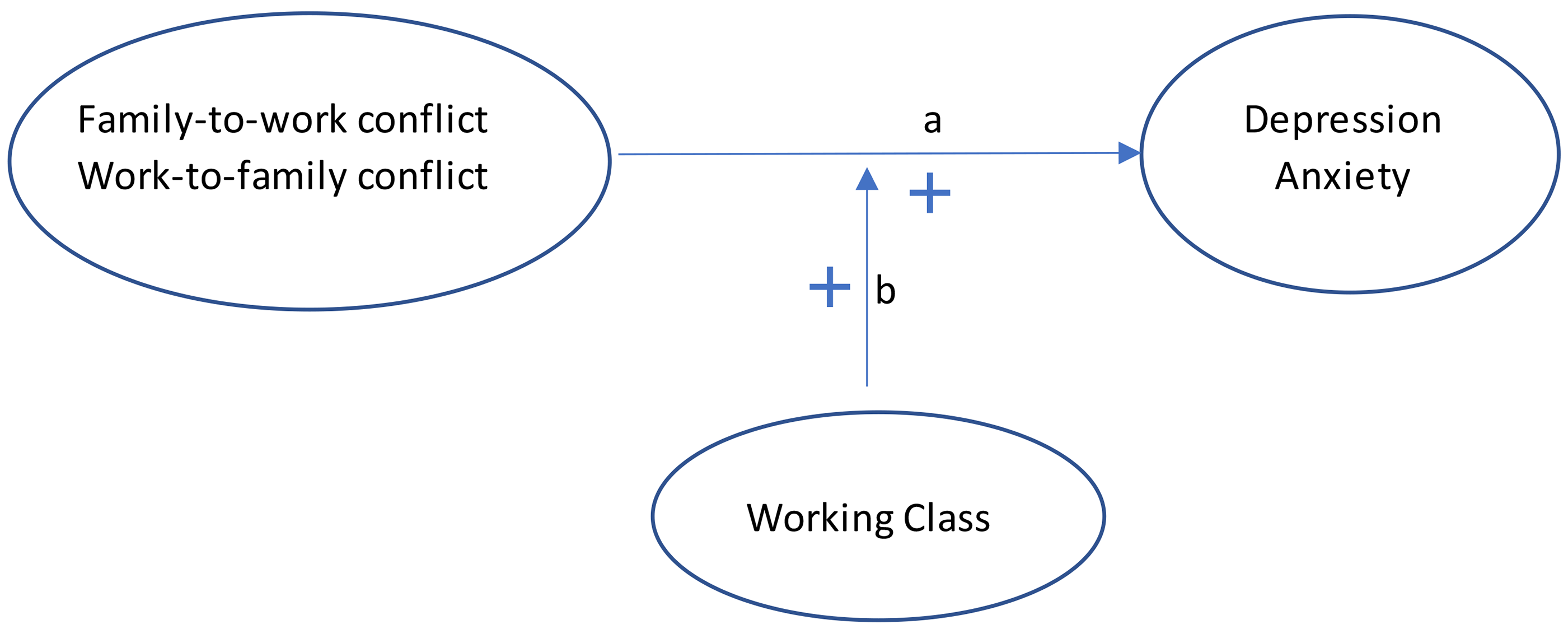
Hypothesized effects of work–family conflict on mental well-being and the interaction effect of work–family conflict and class.
Methods
Data were obtained through phone interviews with a sample of 3361 women aged 25 to 64. Trained interviewers phoned the women in our sample and interviewed them in Icelandic, English or Polish. Past research on social class has established that working-class individuals are harder to survey because they are less likely to have a registered phone number and are more likely to speak non-native languages (Kleiner et al., 2015). These challenges are perhaps even more formidable in Iceland, which has a large population of immigrant workers for whom Icelandic is a second language (recent census data show that 16.3% of the Icelandic population is foreign born and 34.2% of the total immigrant population comes from Poland).
We took two steps in the sampling procedure to address this challenge and ensure that the survey reached women across the class spectrum. First, we hired interviewers who could conduct the interviews in Icelandic, Polish or English. Second, we obtained a probability sample of all women in Iceland (aged 25–64) who had an Icelandic identification number from Iceland's National Registry. At the time of the survey, immigrants were 16.3% of the total population. People of Polish origin were by far the most populous group (34% of the total immigrant population). We then drew a second probability sample from the member registry of the Efling trade union. Efling is the second-largest trade union in Iceland, with approximately 30,000 members, and covers all areas of labour except commerce and trade. The Efling trade union's members include factory workers and workers in the health sector, the public sector, the food sector and hotels and restaurants. Just under half of the members of Efling are of Icelandic origin, 19% are of Polish origin and 32% come from various other countries (Efling, 2022).
The sample we drew from the National Registry consisted of 1932 women and from the Efling trade union 1429 women, making a total of 3361 women. The response rate from the National Registry was 40.5% (782 answers), while the response from the labour union Efling was 32.8% (469 answers). Thus, the final response rate was 37.2% (1251 answers). We examined how the sample reflects the selected population parameters of age, education and citizenship status. The sample reflected these parameters quite well, although women with primary education were slightly underrepresented (constituting 13.2% of the sample but 18.1% of the population). As of this paper's writing, 85% of women aged 25 to 64 in the population hold Icelandic citizenship, and in our sample, 83% of the women held Icelandic citizenship. This indicates that our efforts to reach women who were not born in Iceland were successful.
To compensate for the different probabilities of being sampled in the two datasets, we obtained a survey weight. We calculated the probabilities of selection weight and the nonresponse adjustment weight to produce the final survey weight (Heeringa et al., 2010). Before applying the weight in our regression analysis, we standardized the weights by calculating the normalization factor to ensure that the number of participants remained constant. For the purpose of this study, we limit our analysis to women who were employed at the time of the survey, leaving us with a sample size of 1068.
Dependent variables
We use the Depression Anxiety Stress Scale (DASS) 21 to measure states of depression and anxiety. DASS 21 is a self-report scale designed to measure the three related negative emotional states of depression, anxiety and stress. Thus, the scale is divided into three subscales with seven items for each. Each of these items is rated on a 4-point Likert scale describing frequency or severity over the past week to emphasize states over traits. The scores range from 0 (‘Did not apply to me at all’) to 3 (‘Applied to me very much or most of the time’). The result is a scale for each negative emotional state that ranges from 0 to 21. The scales are then multiplied by two to make them comparable with the DASS 42 scale (Lovibond and Lovibond, 1995: Ronk et al., 2013). In our analysis, we used two subscales: depression and anxiety. The state of depression was measured with the following statements: ‘I couldn’t seem to experience any positive feelings at all’, ‘I found it difficult to work up the initiative to do things’, ‘I felt that I had nothing to look forward to’, ‘I felt sad and depressed’, ‘I was unable to become enthusiastic about anything’, ‘I felt I wasn’t worth much as a person’ and ‘I felt that life wasn’t worthwhile’. The Cronbach's alpha was 0.89.
State of anxiety was measured with the following statements: ‘I was aware of dryness of my mouth’, ‘I experienced difficulty breathing (e.g. excessively rapid breathing or breathlessness in the absence of physical exertion)’, ‘I had a feeling of shakiness (e.g. legs going to give way)’, ‘I was worried about situations in which I might panic and make a fool of myself’, ‘I felt terrified’, ‘I was aware of the action of my heart in the absence of physical exertion (e.g. sense of heart rate increase or heart missing a beat)’ and ‘I felt scared without any good reason’. The Cronbach's alpha was 0.82.
Independent variables
WFC was measured with two variables: one capturing family-to-work conflict and the other work-to-family conflict. Inspired by Haslam et al.'s (2015) WFC scale (WAFCS), we used one of the items designed to measure work-to-family conflict: ‘Work-related concerns or responsibilities often distract me when I am with my family’. We then flipped the item to assess family-to-work conflict: ‘Family-related concerns or responsibilities often distract me at work’. Both items were queried on an ordinal scale ranging from 1 (very seldom) to 5 (very often). We found that the two variables are moderately correlated r = .34 but still have sufficient unique variance for independent examinations. 3
Moderator variables
To measure class, we relied on the European Socio-economic Classification (ESeC). The ESeC is an occupation-based classification that categorizes respondents to a class based on their occupation (International Standard Classification of Occupations-88). The idea is that in a market economy, the occupational division of labour generates social inequalities and the life chances of individuals and families are largely determined by their occupation. Thus, we can expect people in the same class to have similar life outcomes, to have access to the same resources, and to face similar barriers (Erikson and Goldthorpe, 1992; Rose and Harrison, 2007). The complete ESeC scheme identifies 11 classes, but the 11-class scheme can then be condensed into seven-, five- or three-class versions. To obtain enough respondents for each class position, we relied on the three-class version featuring the salariat class, the working class and the intermediate class. The salariat class is characterized by having the highest incomes, contract security, career growth and employee benefits. Representatives of the working class characteristically have short-term contracts. The members of this class earn less on average than members of the salariat, and their incomes vary based on how much they work. Their employers also do not offer them employee benefits like members of the salariat. Finally, the intermediate class consists of people who cannot be placed into either the salariat or working class based on their employment contracts. Representatives of this class are characterized by greater economic and social insecurity than the members of the salariat class, but they have a good chance to accumulate economic capital in the labour market.
We asked respondents to name their primary occupation at the time of the survey. If they were not working at the time, we asked them to tell us about the last job they held. However, for the purposes of this study, we restricted our analysis to women who were employed at the time of survey. We organized women's occupations according to ISCO guidelines and then organized the women into ESeC class positions. In our regression model, we use two dichotomous variables, salariat class and intermediate class, with working class as the baseline group.
Control variables
Our goal was to test the association between WFC and mental well-being and see if this association is different for women of different classes. We tried to limit the influence of confounding variables by controlling for characteristics likely to influence levels of WFC. We controlled for household income, as higher household income facilitates the outsourcing of domestic chores. We controlled for marital status and the presence of children in the household as well as age of respondents and their birth right citizenship. Research in Iceland has found that women of foreign origin more often have lower-paying jobs than women born in Iceland as well as smaller social networks (Ragnarsdóttir et al., 2024).
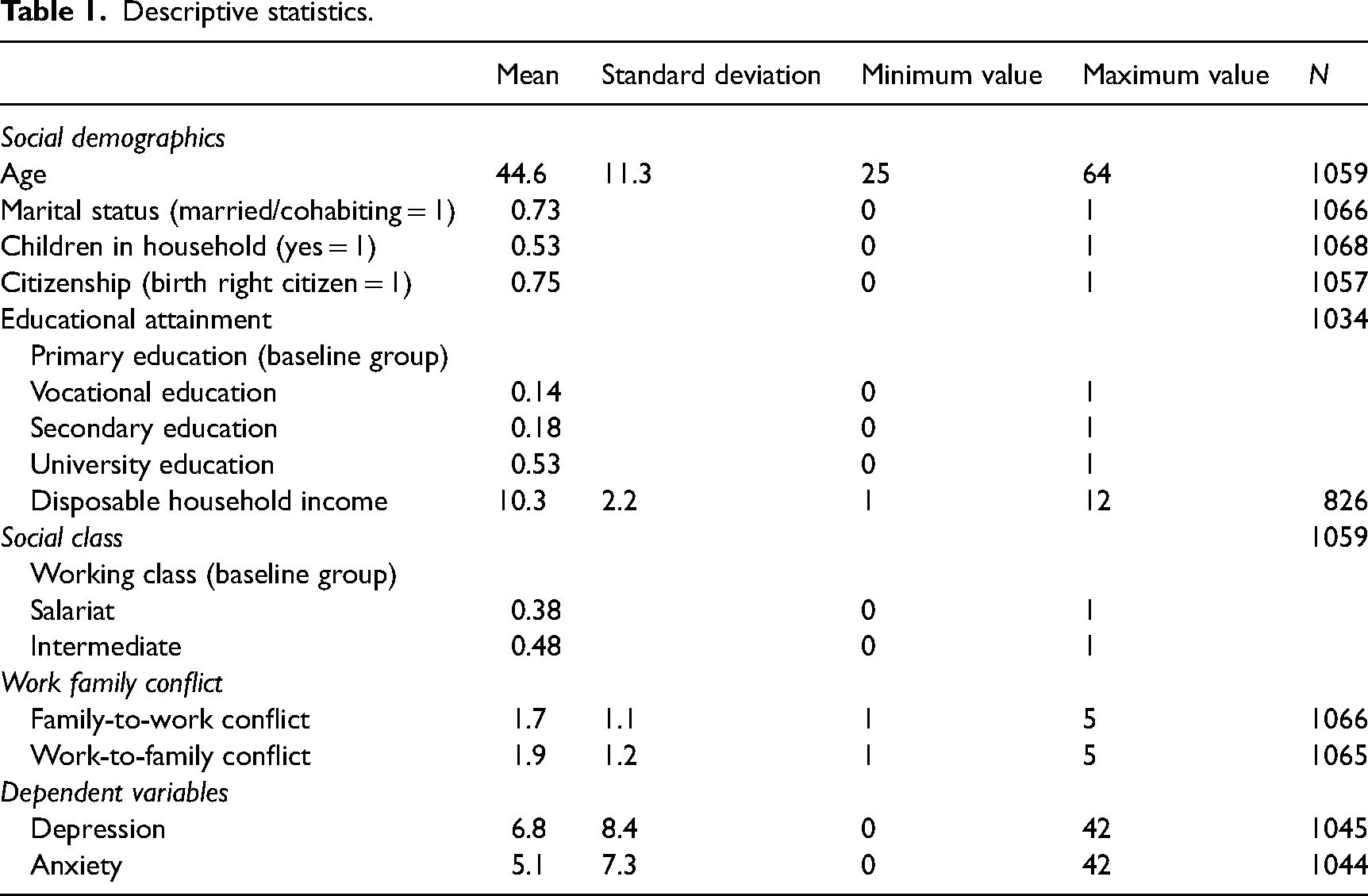
Disposable household income was measured with a ranked scale ranging from 1 (lowest income category) to 12 (highest income category). Age was treated as a continuous variable, and we allowed for the nonlinear effect of age by also including age squared in the regression analysis. Marital status was a dichotomous variable, coded 1 for those who were married or living with a partner and 0 otherwise. The presence of children in the household was a dichotomous variable coded 1 if there were children in the household who were under the care of the respondent and 0 otherwise. Birth right citizenship was measured with a dichotomous variable coded 1 for women who have always had Icelandic citizenship and 0 if otherwise. Table 1 shows the descriptive statistics for all variables.
Descriptive statistics.
Results
Comparing the three social classes in Iceland
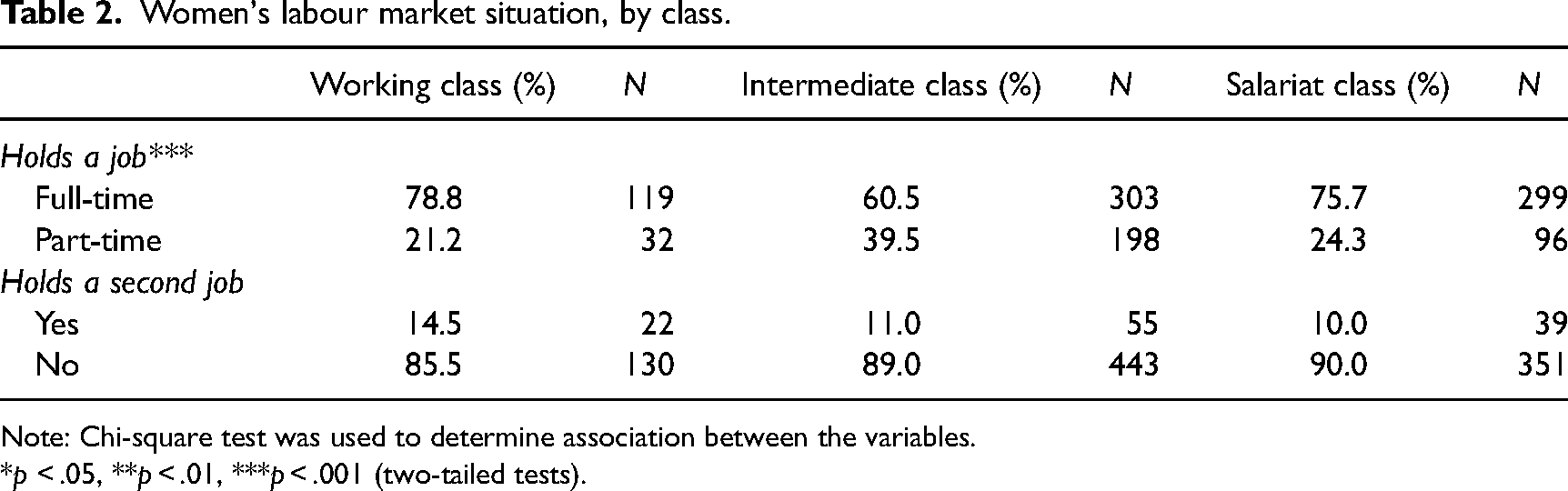
We began our analysis by exploring whether the patterns described in prior research on the differences between working-class women and women of higher social strata were reflected in our data. To start, we examined women's labour market situations. All women in our sample were employed at the time of the survey. Table 2 shows that working-class women were most likely to work full time, with 79% of working-class women employed full time, compared with 76% of women in the salariat class and 61% of women in the intermediate class. Our data showed that working-class women were also more likely to hold multiple jobs; 15% of working-class women reported holding a second job, compared with 10% of women in the salariat class and 11% in the intermediate class. When the women were asked to estimate the total number of hours they worked per week at their main job and their second job (if applicable), working-class women reported slightly more total hours, but the difference between the groups was not statistically significant and not shown in table.
Women's labour market situation, by class.
Note: Chi-square test was used to determine association between the variables.
*p < .05, **p < .01, ***p < .001 (two-tailed tests).
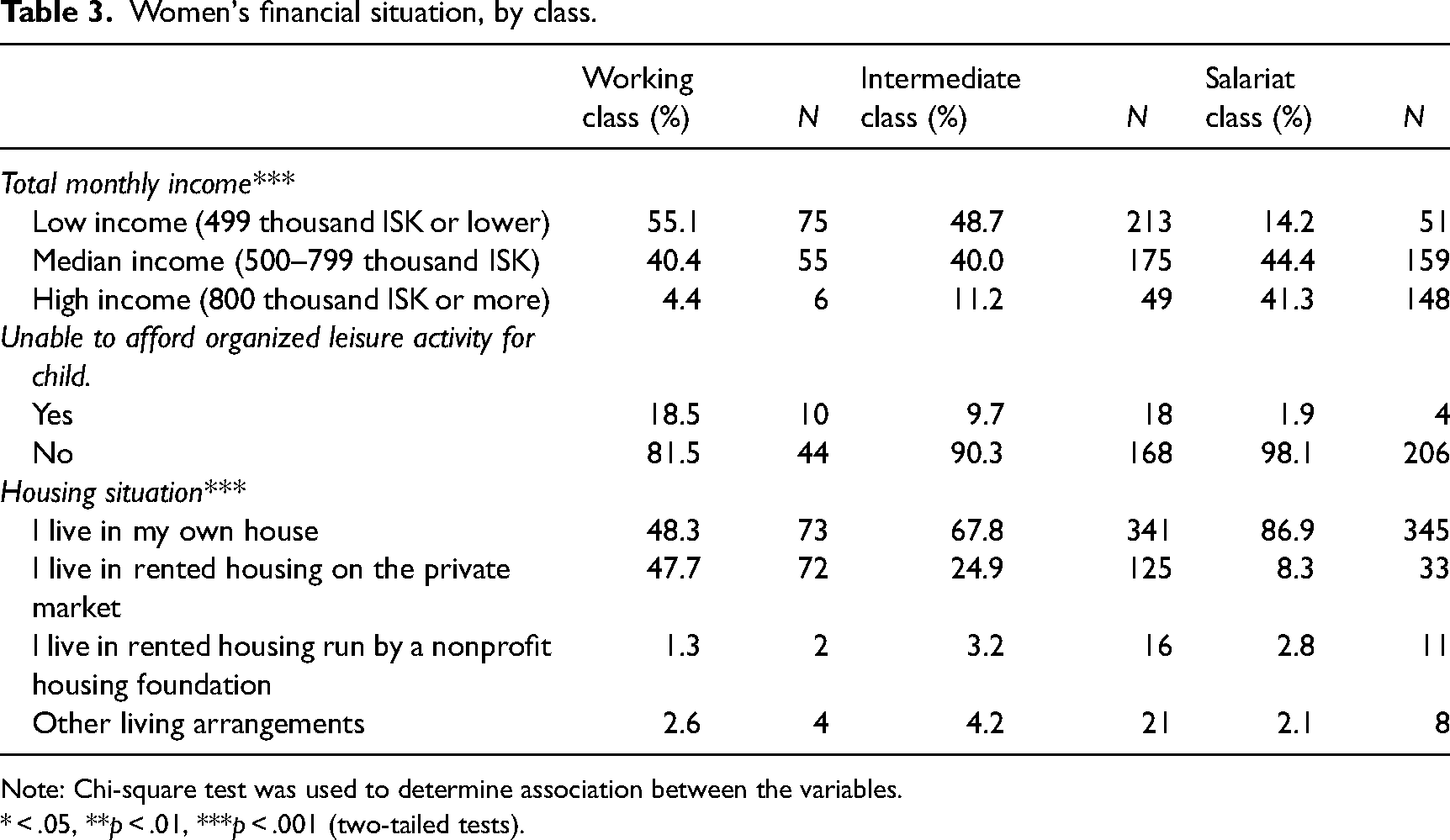
Next, we explored various metrics related to women's financial situations (Table 3). Respondents were asked about their total monthly income before taxes and deductions. For ease of interpretation, the answers were organized into three groups: low, median and high income. Over 55% of working-class women fell into the low-income category in comparison to 49% of women in the intermediate class and 14% of women in the salariat class. About 19% of working-class women reported not being able to pay for extracurricular activities for their children despite public subsidies, compared with 10% of women in the intermediate class and 2% of women in the salariat class. Working-class women were also less likely to own their home (48% compared with 68% of the intermediate class and 87% of the salariat class). 4 About 48% of working-class women were renting in the private market compared with 25% of women in the intermediate class and 8% of women in the salariat class.
Women's financial situation, by class.
Note: Chi-square test was used to determine association between the variables.
* < .05, **p < .01, ***p < .001 (two-tailed tests).
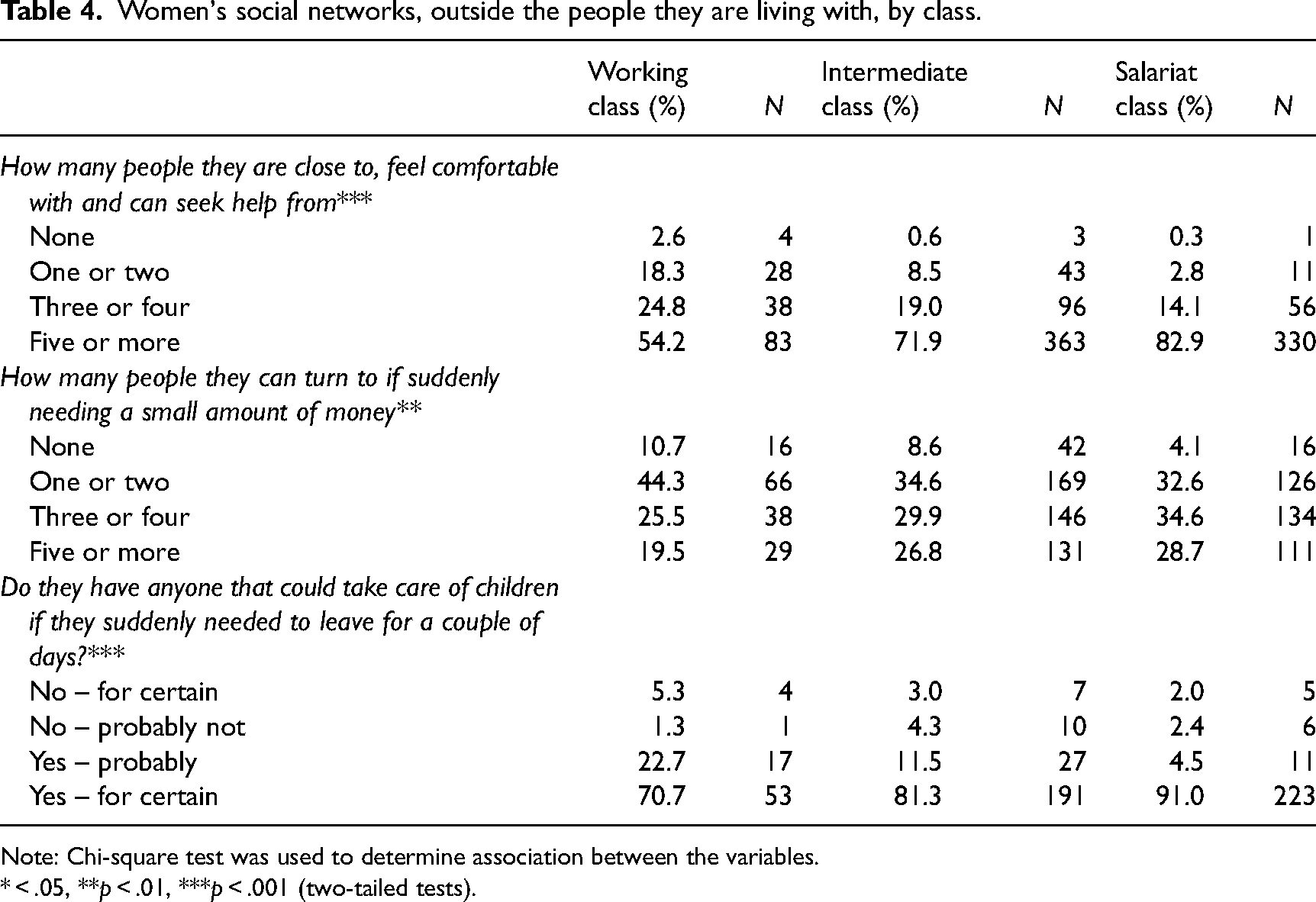
Finally, we found that working-class women in Iceland had a smaller social network than women of a higher social class (Table 4). When asked how many people, apart from those they lived with, they felt close to, comfortable with and could seek help from, 21% of working-class women reported having 0–2 people compared with 10% of women in the intermediate class and 3% of women in the salariat class. Respondents were also asked how many people they could turn to if they suddenly needed a small amount of money. About 10% of working-class women stated they had no one, compared with 9% of the intermediate class and 4% of the salariat class. Finally, about 8% of working-class women reported not having anyone they could ask to take care of their children for a couple of days if they suddenly needed to leave town. In comparison, 7.2% of women in the intermediate class and 4.6% of women in the salariat class reported having no one to turn to.
Women's social networks, outside the people they are living with, by class.
Note: Chi-square test was used to determine association between the variables.
* < .05, **p < .01, ***p < .001 (two-tailed tests).
The association between work-to-family conflict and mental well-being
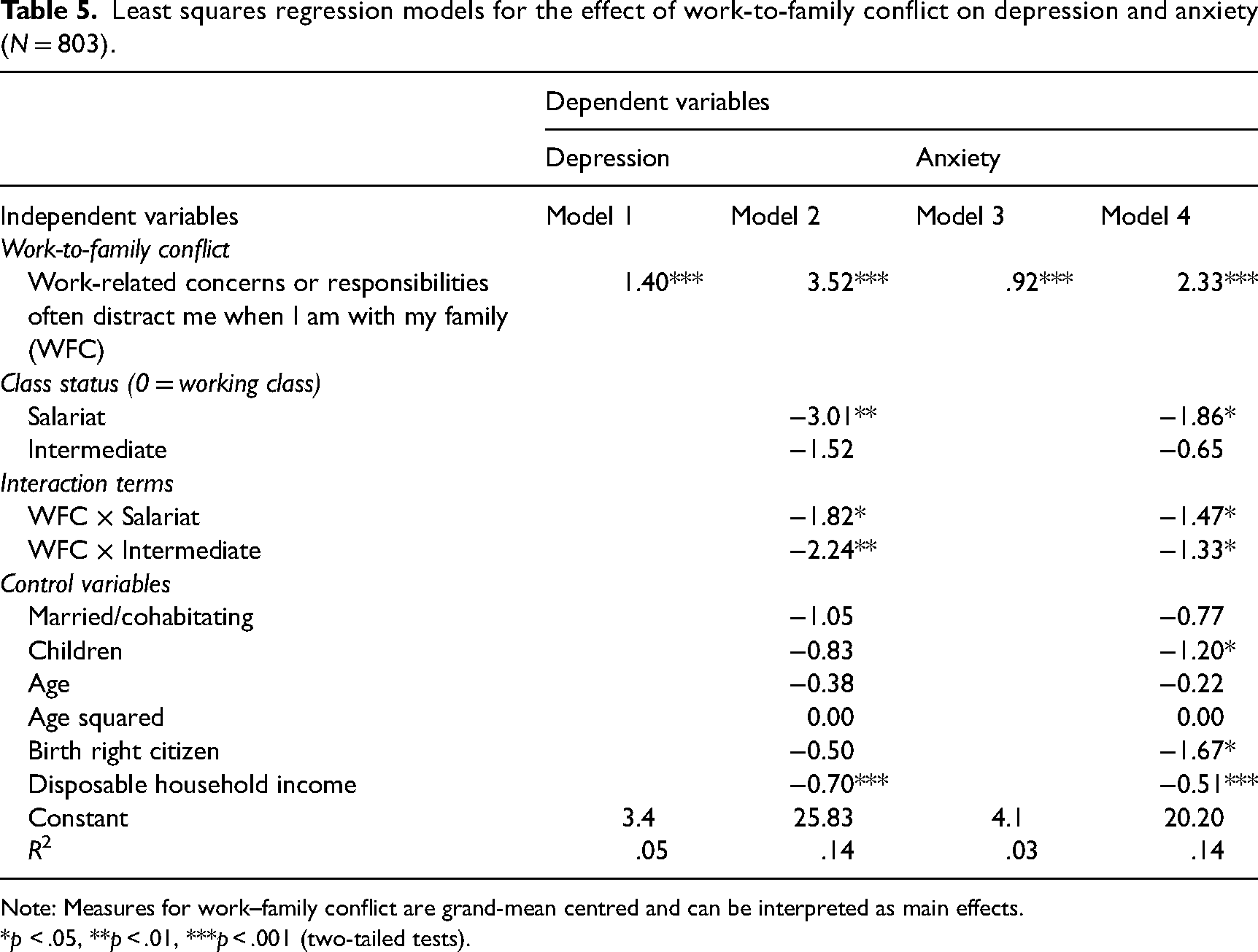
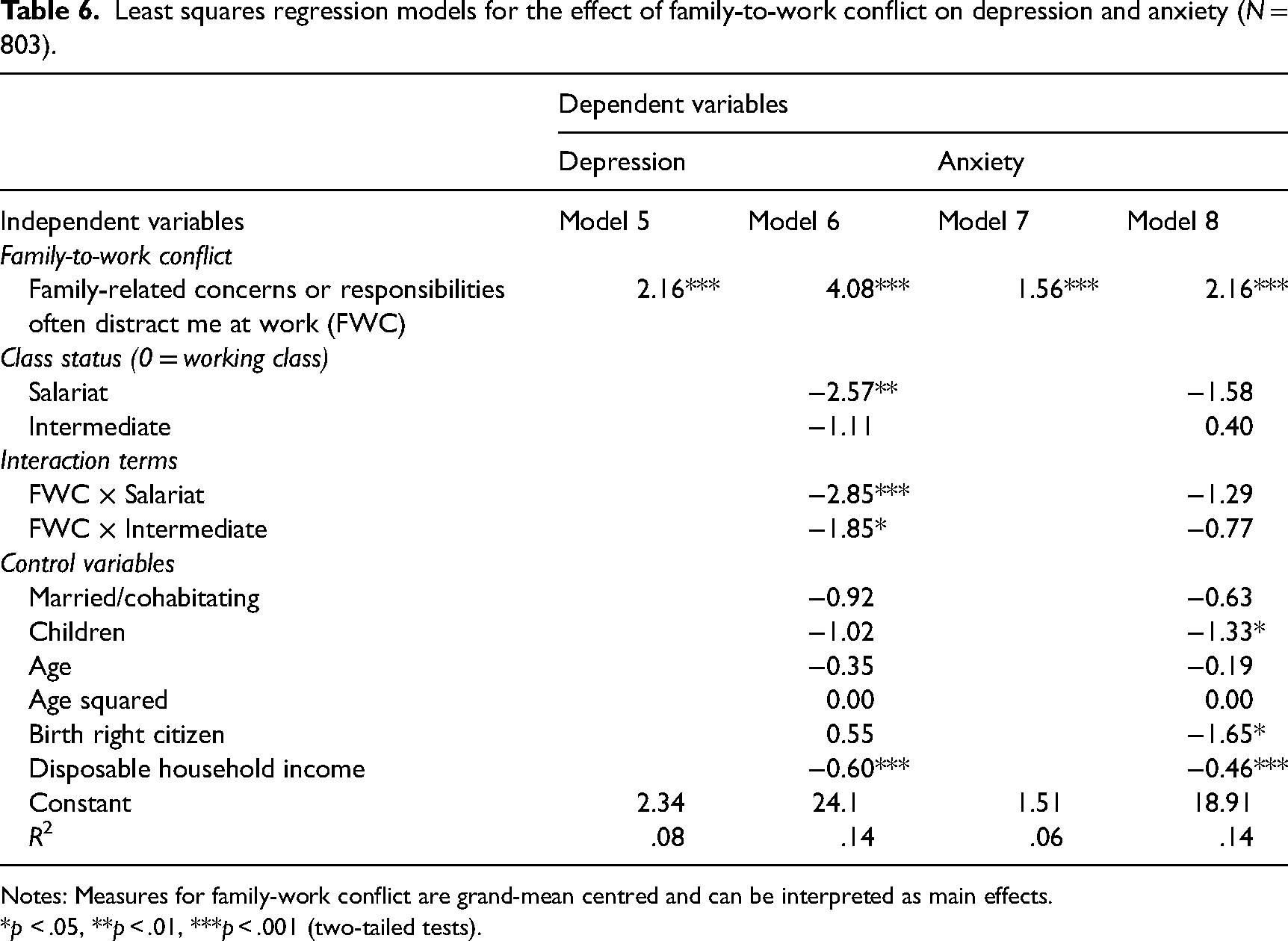
We tested the hypotheses presented in Figure 1 using regression models presented in Tables 5 and 6. In Table 5, we estimated the association between work-to-family conflict and depression (Models 1 and 2) and work-to-family conflict and anxiety (Models 3 and 4). In Table 6, we estimated the association between family-to-work conflict and depression (Models 5 and 6) and family-to-work conflict and anxiety (Models 7 and 8).
Least squares regression models for the effect of work-to-family conflict on depression and anxiety (N = 803).
Note: Measures for work–family conflict are grand-mean centred and can be interpreted as main effects.
*p < .05, **p < .01, ***p < .001 (two-tailed tests).
Least squares regression models for the effect of family-to-work conflict on depression and anxiety (N = 803).
Notes: Measures for family-work conflict are grand-mean centred and can be interpreted as main effects.
*p < .05, **p < .01, ***p < .001 (two-tailed tests).
The associations between work-to-family conflict and depression and anxiety are presented in Table 5. The main effects of work-to-family conflict on depression are presented in Model 1 and that on anxiety in Model 3. The interaction terms and controls were included in Models 2 (depression) and 4 (anxiety). The results for work-to-family conflict support our hypotheses. As predicted (Figure 1, Path a), work-to-family conflict was found to have a significant positive relationship with both depression (b = 1.40) and anxiety (b = 0.92) (see Table 5). Moreover, Models 2 and 4 included the interaction terms, which were all significant. The relationship between work-to-family conflict and depression was found to be contingent on class status, and so was the relationship between work-to-family conflict and anxiety. As predicted (Figure 1, Path b), the relationship between work-to-family conflict and depression was significantly more pronounced for working-class woman than women in the salariat class (b = −1.82) and for women in intermediate class (b = −2.24). This means that for every one unit increase in work-to-family conflict working-class women score an additional 3.52 points on the depression scale, while women of intermediate class score 1.7 points (3.52–2.24) and women of salariat class score an additional 1.28 points (3.52–1.82), while holding control variables constant. Additionally, the relationship between work-to-family conflict and anxiety was significantly more pronounced for working-class women than women in the salariat class (b = −1.47) and for women in the intermediate class (b = −1.33). In other words, with a one unit increase in work-to-family conflict working-class women score an additional 2.33 points on the depression scale, while women of salariat class score an additional 0.86 point and intermediate class 1.00 point.
Finally, we found that disposable household income had a significant negative relationship with both depression (b = −0.70) and anxiety (b = −0.51). Women who had birth right citizenship experienced less anxiety (b = −1.67) than women who had not always had or did not have an Icelandic citizenship. Women who had children in their households were significantly less likely to be anxious (b = −1.20). All other control variables were insignificant.
We further examined these interaction effects through Figures 2 and 3. Figure 2 displays the relationship between work-to-family conflict and depression for the three subgroups (salariat class, working class and intermediate class). The results illustrate the pattern in the interaction effects. When concerns and obligations related to family interfered with work, their association with symptoms of depression was most pronounced for working-class women. The relationship was weaker among the intermediate class and weaker still for the salariat class. In other words, the difference in depressive symptoms between women of working class and both intermediate and salariat class widens as WFC scores increase.
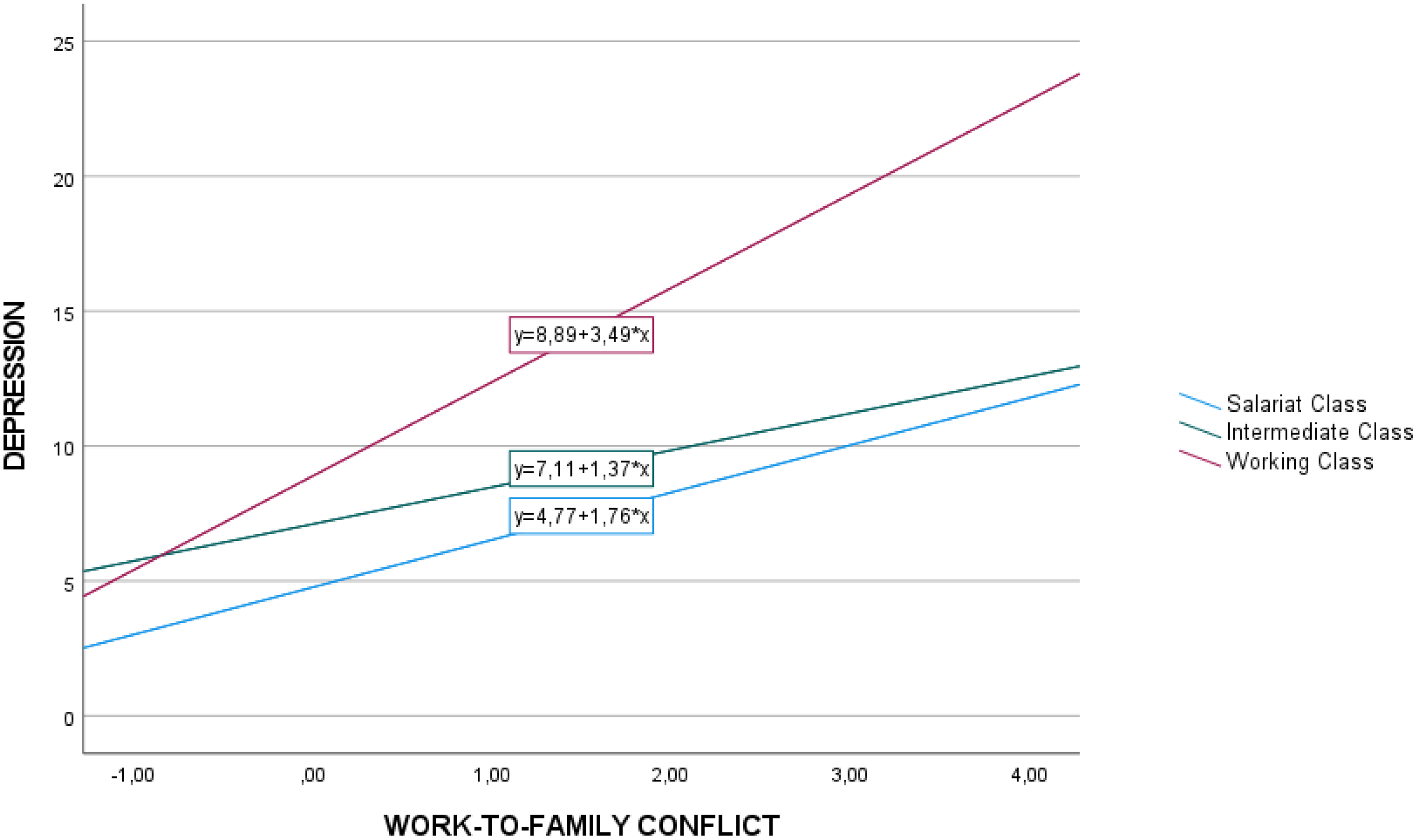
The partial slope effect of work-to-family conflict on depression in three subgroups: working class, intermediate class and salariat class. All control variables from Table 5 have been set at their grand means.
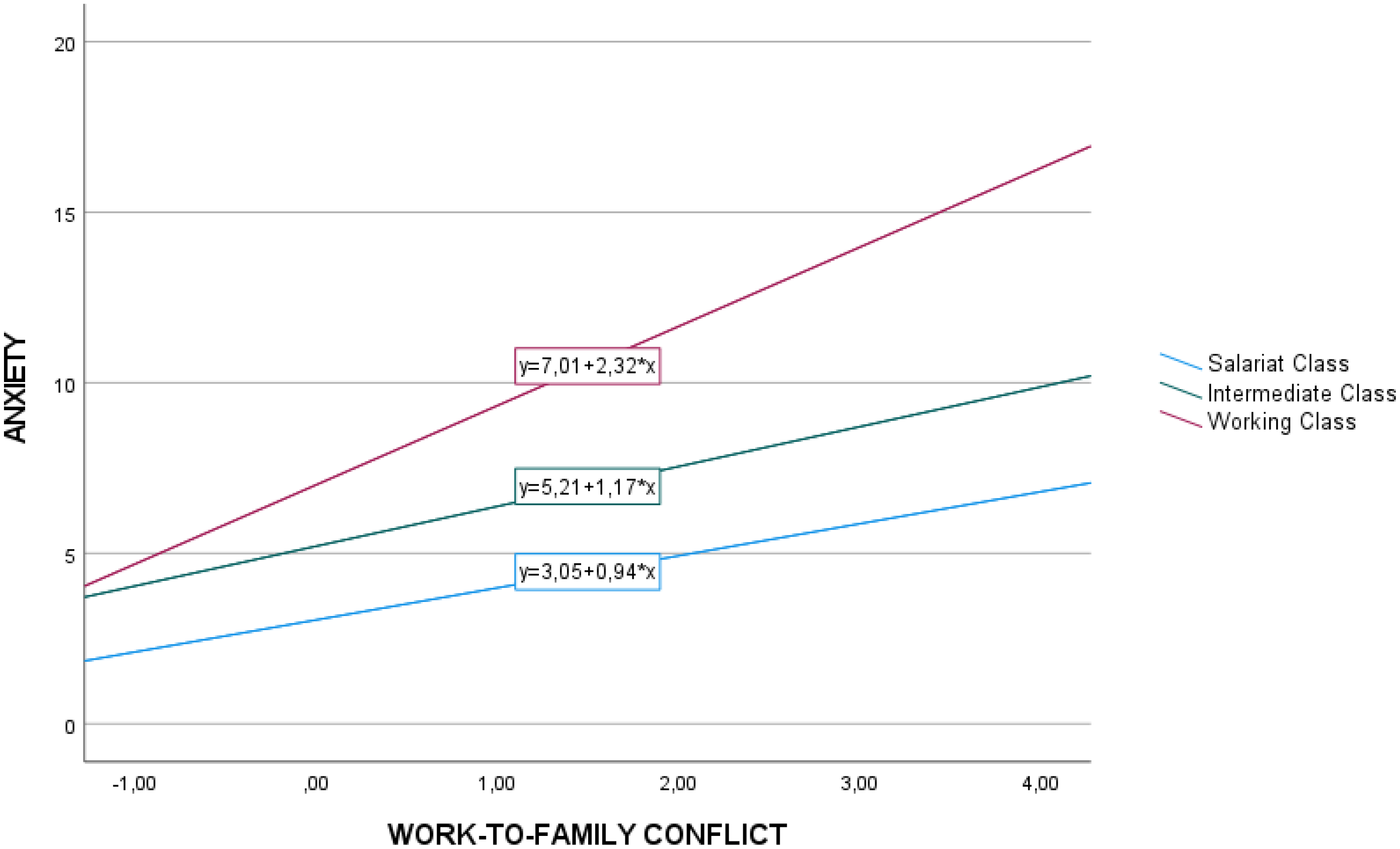
The partial slope effect of work-to-family conflict on anxiety in three subgroups: working class, intermediate class and salariat class. All control variables from Table 5 have been set at their grand means.
Figure 3 displays the association between work-to-family conflict and anxiety in the three subgroups. Again, when concerns and obligations related to family interfered with work, their association with symptoms of depression was most pronounced for working-class women. The relationship was weaker for the intermediate class and weaker still for the salariat class.
The association between family-to-work conflict and mental well-being
Table 6 shows the main effects of family-to-work conflict on depression (Model 5) and anxiety (Model 7), and Models 6 and 8 include the interaction terms and the control variables.
The results lend partial support for the hypotheses. As predicted (Figure 1, Path a), family-to-work conflict had a significant and positive association with both depression (b = 2.16) and anxiety (b = 1.56) (Table 6). The more that family concerns interfered with work, the more depressed and anxious the women in our sample felt. Model 6 includes the interaction terms which were both statistically significant. The relationship between family-to-work conflict and depression was contingent on class status. Thus, as predicted (Figure 1, Path b), the relationship between family-to-work conflict and depression was significantly more pronounced for working-class women than women in the salariat class (b = −2.85) and women in the intermediate class (b = −1.85). This means that for every one unit increase in family-to-work-conflict working-class women score an additional 4.08 points on the depression scale while salariat class scores an additional 1.23 points (4.08–2.85) and intermediate class 2.23 points (4.08–1.85), while holding control variables constant. Model 8 estimates the effects of family-to-work conflict on anxiety, including the interaction terms. However, in this case, the interaction terms were insignificant.
The control variables for the models in Table 6 were associated with depression and anxiety, as we predicted. We found that disposable household income had a significant negative relationship with both depression (b = −0.60) and anxiety (b = −0.46). As we expected, women with higher disposable household income were less likely to be depressed or anxious. We also found that women who had children in their household were significantly less likely to be anxious (b = −1.33), as were women who had birth right citizenship (−1.65). All other control variables were insignificant.
We further examined the interaction effects from Model 6 through Figure 4. Figure 4 displays the relationship between family-to-work conflict and depression for the three subgroups. The results illustrate the pattern in the interaction effects. When concerns and obligations related to family interfered with work, the association with symptoms of depression was most pronounced for working-class women. The relationship was weaker for the intermediate class and weaker still for the salariat class. In other words, the difference in symptoms of depression for women of different class widens as family-to-work conflict scores increase. 5
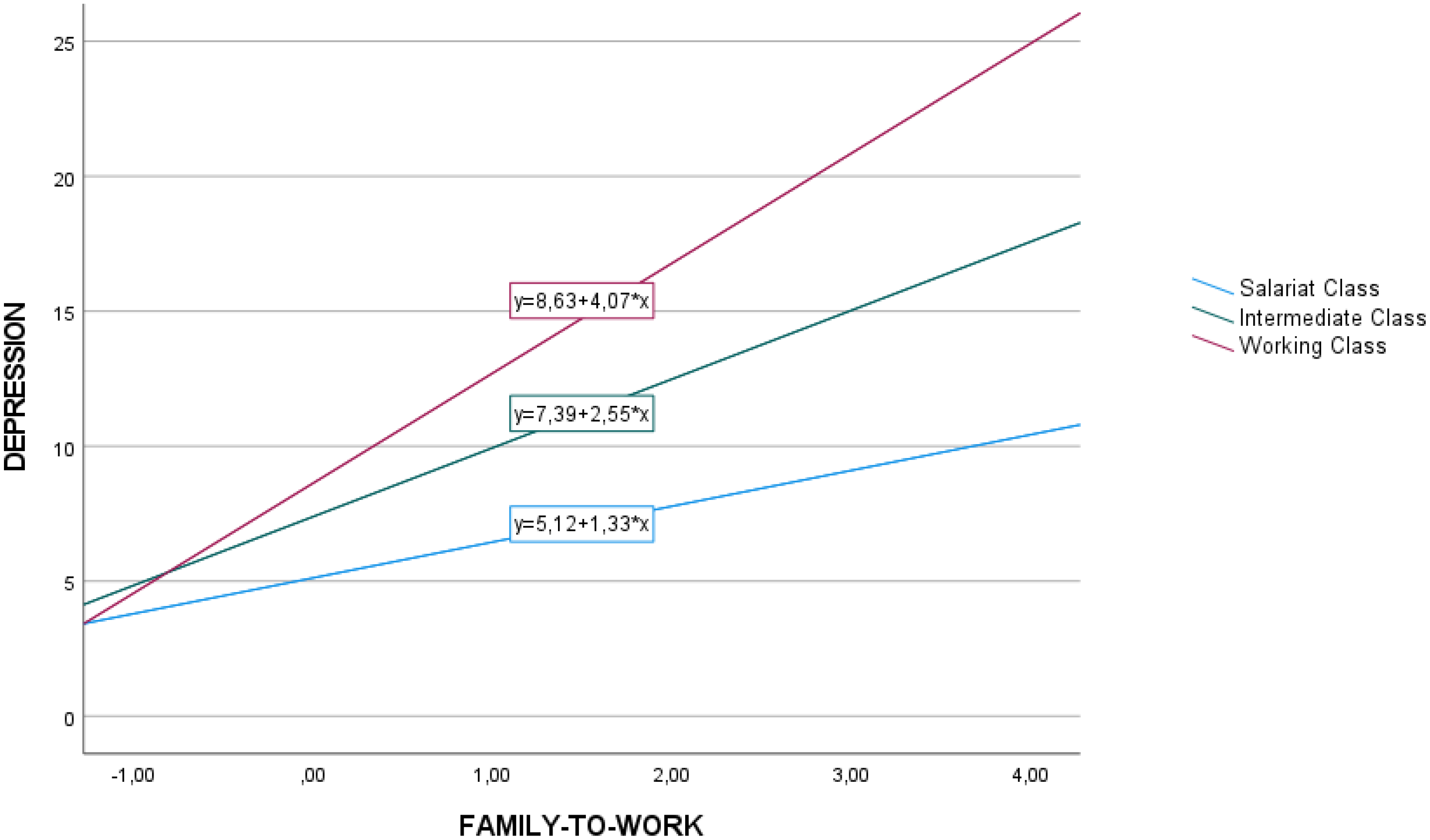
The partial slope effect of family-to-work conflict on depression in three subgroups: working class, intermediate class and salariat class. All control variables from Table 6 have been set at their grand means.
Conclusion
In this article, we explored whether the unintended consequences of a double burden initiated by the gender revolution are unequally felt across social classes. A special focus has been on enhancing the understanding of the complex relationship between WFC, mental well-being and the intersections of class and gender. Most research on WFC has focused on the struggles faced by women in the upper-middle class, but treating women as one homogeneous group is problematic, as the barriers and resources related to the pursuit of work–family balance are structured by class position in the first place. We relied on the ESeC class schema, which defines social classes based on aggregates of like positions in the labour market. Position in the labour market is the root of socioeconomic inequality and life chances in Western countries, and occupation is an indicator of these inequalities. As we demonstrated, class matters when analysing the relationship between WFC and mental well-being. Working-class women experience more symptoms of anxiety and depression due to WFC than women in the intermediate or salariat class.
We tested our hypotheses in the context of Iceland, a comparatively class and gender egalitarian country with relatively strong family policies. Exploring class differences in the association between WFC and mental well-being in the Icelandic context can be seen as a robustness test. The possible differences are likely to be even greater in more unequal countries.
Our analysis revealed three key findings. First, the main effects of family-to-work conflict and work-to-family conflict on depression and anxiety were statistically significant. The more WFC (work-to-family or family-to-work) women experienced, the more symptoms of depression and anxiety they reported. These findings support our first hypothesis. Second, when we introduced the interaction terms and the controls, we found that the association between work-to-family conflict and depression and anxiety was contingent on class. The relationship between work-to-family conflict and depression and anxiety was more pronounced for working-class women than women in the salariat and intermediate classes, lending support for our second hypothesis. Third, we found that the association between family-to-work conflict and depression was contingent on class. Again, the relationship between family-to-work conflict and depression was more pronounced for working-class women than women in the salariat and intermediate classes. These findings lend partial support for our second hypothesis as we did not find that the association between family-to-work conflict and anxiety was contingent on class.
While our findings indicate several clear patterns, we can only speculate as to the reasons why the relationship between WFC and mental well-being was more pronounced for working-class women. Working-class women have different resources and face different barriers than other women when it comes to juggling family and work. Additionally, working-class women are more likely than other women to hold multiple jobs, work long hours and be engaged in precarious work (Kossek et al., 2006). Research has shown that they have less flexibility at their workplaces than women of higher socioeconomic strata (Magnusson, 2021; Schneider and Hastings, 2017) and that flexibility lowers psychological distress (Yucel and Fan, 2023). Moreover, working-class women have fewer financial resources for outsourcing domestic work and childcare (e.g. cleaning, eating out and putting their kids in extracurricular activities) (Teo, 2016). They also have smaller social networks than women of higher socioeconomic strata, making it even more challenging to balance work and family due to lack of help (Horvat et al., 2003). Our analysis revealed that many of these patterns held true for working-class women in Iceland. Despite being a very equal nation by many measures, we found evidence of class inequality among women.
The combined impact of little flexibility with work and fewer resources for outsourcing makes it particularly difficult for working-class women to respond to family needs while at work. Additionally, working-class women are more likely to live in households that are less gender equal (Altintas and Sullivan, 2016; Quadlin and Long, 2018), further increasing their burden. Working-class women are also not exempt from the pressure of living up to the standards of intensive mothering and being actively involved in their children's daily activities (Craig and Brown, 2017). At the same time, they deal with the strain of not being able to meet the demands of what is perceived and is socially accepted as (middle class) motherhood (Auðardóttir, 2022), possibly impacting their mental well-being.
This study has limitations. First, it was non-experimental and did not directly test causal statements. In a cross-sectional study of this kind, we could only examine whether the statistical patterns were consistent with our theoretical argument. A longitudinal study might be beneficial to solve the problem of causality.
Furthermore, our analysis contained only one item out of five from the complete WAFCS (Haslam et al., 2015). Applying the entire WAFCS would increase the reliability of the measure and more likely cover the full range of the construct. We hope our findings might inspire future research to examine class division in WFC using a multi-item scale. Family-to-work conflict has been investigated less frequently than work-to-family conflict which makes it challenging to surmise why the relationship between family-to-work conflict and depression was contingent on class but the relationship between family-to-work and anxiety was not. Anxiety and depression are separate conditions, but they often occur together. The lack of class research on the relationship between WFC and mental well-being means that there is insufficient context to explain this divergence. Further research is needed on anxiety and depression in people of different social classes and on how work-to-family and family-to-work conflict are related to those conditions.
In conclusion, examining the interplay between class and WFC showed that women are not a homogeneous group. This implies that the literature on WFC and mental well-being may have concentrated too much of its attention on the unique stresses of upper-middle and upper- class women at the expense of a fuller understanding of the relationship between WFC and mental well-being across the class spectrum. Women of different social classes face unlike barriers and do not have access to the same resources when it comes to juggling work and family. Thus, the positions of working-class mothers, even in social welfare regimes such as Iceland, need careful consideration, as their working conditions might hinder them from fully accessing support provided by the formal welfare system. It is therefore our hope that our findings will motivate future research on the classed dimensions of public support for people trying to balance work and family.
Footnotes
Data availability

Funding
The authors disclosed receipt of the following financial support for the research, authorship, and/or publication of this article: This work was supported by the Jafnréttissjóður and Byggðarannsóknasjóður (grant number 2105-0061).