




Abstract
Leaving the parental home is a key step in successful transitions to adulthood. Early home-leaving (HL) is associated with lower educational attainment, but the role of early versus later home-leaving in the intergenerational transmission of education has not been assessed in previous research. We used a longitudinal register-based total sample of families in Finland to examine whether the association between parental and offspring education differs between early (below age 19) and later home-leavers, including a comparison between early and later leaving siblings. We found the lower probability of completing any secondary degree among early leavers to be larger among those with lower-educated than higher-educated parents. In contrast, in continuing to tertiary-level education, the educational disadvantage among early leavers was much larger among offspring of the higher-educated parents. Differences by HL across levels of parental education persisted adjustment for other parental and childhood resources, although only modest evidence of moderation was found when comparing early and later leaving siblings. Our findings on weaker intergenerational transmission of education among early leavers with an advantaged background, and accumulation of disadvantage among early leavers with less advantaged background suggest that timing of HL has an independent role in educational inequalities.
Keywords
Introduction
Leaving the parental home is an important transition to adulthood that entails an increased distance to the material and social resources of the parental home. As all of these family resources are not easily transferable, early nest-leavers may have less parental support and control during important educational transitions. Although leaving the parental home at a young age is fairly common in many countries, the typical timing and context of the transition into independent living is socially stratified (Billari et al., 2019; Furstenberg, 2010). Parental resources tend to have a strong influence on both home-leaving (HL) and educational choices: with the exception of leaving home to attend school, lower parental social background predicts early leaving (Bernhardt et al., 2005; Blaauboer and Mulder, 2010; Iacovou, 2010) and lower educational attainment (Jæger and Holm, 2007; Triventi, 2013). Furthermore, early HL has been shown to associate with lower educational attainment and aspirations (Goldscheider and Goldscheider, 1993; White and Lacy, 1997), although evidence for more recent cohorts and countries outside the United States is lacking. However, to our knowledge, no study has yet considered the contribution of the timing of HL to the intergenerational transmission of education.
The intergenerational transmission of resources that contribute to offspring’s educational attainment is a long process that may involve anything from material support to unintentional socialisation. An extensive body of research in social stratification and mobility has investigated how families transmit resources from one generation to another by concentrating on the role of family size and structure along with parenting behaviours and strategies (Breen and Goldthorpe, 1997; Breen et al., 2014; Mare and Chang, 2006; McLanahan and Percheski, 2008). The immediate exposure to parental resources is inevitably shorter among children leaving home at younger ages, but the interrelationships between family resources and the timing and context of HL are complex. Any moderating effects of early leaving on resource transfers are likely to reflect the available resources. For example, early leavers with advantaged family background have more to lose in case of disrupted resource transfers compared to those from less affluent backgrounds. In contrast, in disadvantaged families precisely the lack of resources may push young people out of the parental home at a premature age, which may in itself be detrimental for educational attainment even if there is not much to lose in terms of family resources. Even without any loss of family resources, early HL requires youth to devote part of their personal resources into managing independent living, possibly at the cost of focusing on longer-term goals such as higher education (Elder, 1998). Timing of leaving the parental home may thus indirectly enforce educational disparities according to parental background.
Using total population data extending from birth to early adulthood, we examine the moderating role of HL age in the intergenerational transmission of education. Family background is taken into account by adjusting for several measures of parental and childhood resources, and by comparing the educational attainment of early and later leaving siblings. Finland, a Nordic welfare state with late tracking and low institutional stratification in the educational system, and a low median age for HL, provides an excellent context for studying early HL and education from the perspective of intergenerational resource transfers. This study advances the literature by showing that previously largely disregarded age-normative life events such as HL may play a significant role in processes of social stratification that work through educational attainment.
Background
From the life course perspective, transitions across the life course are linked to family relationships and other social ties (Elder, 1998). The family of origin and the success of resource transfers between generations exert a powerful influence on the opportunities and constraints children face in life. The positive effect of higher-educated parents on their children’s schooling is well known (Barone and Ruggera, 2018; Lucas, 2001; Pfeffer, 2008). Parental resources help offspring to acquire personal resources, and create favourable circumstances that facilitate successful transitions to adulthood and socioeconomic attainment (Coleman, 1988; Esping-Andersen, 2011). The direct transfer of resources includes intentional parental investments such as material support, transmission of skills and aspirations, and encouragement, whereas indirect transfer of resources refers to socialisation and other unintentional forms of transmission such as modelling of parental behaviours and interaction. Parents with a higher level of education and other socioeconomic resources are also often better able to reinforce their offspring’s level of academic performance and influence their educational choices (Boudon, 1974).
Leaving the parental home is a normative event in the transition to adulthood, although considerable variation exists in the timing and context of home-leaving (Billari and Liefbroer, 2010). Previous research has shown the timing of leaving to be strongly linked to parental resources: lower social background, non-intact and one-parent family structure, presence of siblings, negative family atmosphere and conflicts, for example, have been identified as risk factors for early leaving (Bernhardt et al., 2005; Blaauboer and Mulder, 2010; Herzig, 2019). Leaving the parental home is therefore not an autonomous decision of a young individual, but parental influence and social norms play a focal role in HL (Aassve et al., 2013). A recent study suggests that social stratification in demographic behaviours such as timing of HL, results from young adults’ differing intentions, differing capabilities to realise their intentions, and differing structural opportunities (Billari et al., 2019). Decisions on HL may be tied to educational choices, and in the specific context of leaving for school, early HL has also been associated with a privileged background, at least in the United States where children with lower parental background were less likely to leave home for college (De Marco and Berzin, 2008; Mulder and Clark, 2002). Part of the association between parental background and HL may in fact relate to the route out of the parental home: while leaving for school is more common among those from advantaged backgrounds, housing transitions related to early parenthood and leaving to live with a partner, for example, are more common among youth from less advantaged families (Bernhardt et al., 2005; Blaauboer and Mulder, 2010; Schwanitz et al., 2017).
Although early HL has been linked with various negative outcomes such as youth poverty (Aassve et al., 2007; Ayllón, 2014; Kauppinen et al., 2014), early family formation (Bernhardt et al., 2005), health problems (Wickrama et al., 2010), and excess mortality in early adulthood (Remes and Martikainen, 2012), it remains unclear if a longer co-residence with parents would benefit offspring similarly regardless of their family background. In ideal conditions, living in the parental home provides young people with material and emotional support, allowing them time to gain maturity, focus on studies, and prepare for solo-living and financial independence. In the worst of conditions, however, leaving the parental home may also offer an escape from a straining and stressful situation. Whatever the push and pull factors for early HL are, we argue that: (a) independent living at a very young age is resource-consuming; and (b) early HL is likely to affect resource transfers between generations as all family resources may not be easily transferable.
According to the theory of compensatory advantage (Bernardi and Triventi, 2020; Conley, 2004; Goldthorpe, 2007), well-off parents are able to support their offspring and compensate for harmful experiences whether or not living together. Effectively maintained inequality theory (Lucas, 2001; see also Goldthorpe, 2007) also suggests that parents with higher social position can regulate the extent to which they utilise the available resources. Less affluent parents, on the other hand, have fewer resources and the burden of independent living falls on the young individual – some early home-leavers need to make do with scarce childhood family resources, other adverse childhood experiences, and independent living at a young age without parental support. The timing of HL may thus strongly contribute to the accumulation of advantage and disadvantage (DiPrete and Eirich, 2006) across the early life course. On the other hand, the Blaxter, or “floor effect” hypothesis (Bernardi and Boertien, 2016; Blaxter, 1990; Jackson, 2009) suggests that as the chances of favourable adult outcomes such as higher education are initially much smaller among those with less advantaged background, the influence of negative life events and circumstances is lesser. Thus, early leaving would have worse consequences among those who have more to lose. Early residential independence may result in missing out on some of the advantages linked to an affluent family background, for example, social and cultural capital (Vryonides, 2007), leading to a situation in which early HL is relatively more harmful for those from an advantaged background. In contrast, early leavers with a less advantaged background have less to lose as the overall level of parental resources is lower.
Finally, considering the association between early HL and lower educational attainment, it is important to note that leaving the parental home at a very young age is more or less selective. Lack of resources and childhood adversities may operate as push factors for leaving, introducing a spurious correlation between early HL and disadvantageous adult outcomes. Furthermore, coming from a disadvantaged background increases the likelihood of both early HL and lower educational attainment. Apart from direct effects of limited resources that promote early leaving, economic and material hardship may increase parental distress and family conflicts resulting in disrupted parenting (Duncan and Brooks-Gunn, 2000; Heckman, 2006). Similar effects on parenting and losses of family resources have been reported to relate to family instability (Björklund and Sundström, 2006; McLanahan and Percheski, 2008; Steele et al., 2009). Although the mechanisms have been less studied, young parental age (Powell et al., 2006) and parental health problems, including substance abuse (Bratti and Mendola, 2014; Sieh et al., 2010) have also been suggested to negatively associate with resource transfers relating to children’s educational attainment.
Finnish context
Compared to many countries, Finns leave the parental home relatively early. The median age for leaving is 20 years, by which point the great majority have finished secondary-level education. Based on the long-term cultural norms and values, and the institutional context in terms of education, employment and welfare systems, the transition to adulthood in Finland is typical of the social democratic welfare regime (Buchmann and Kriesi, 2011) where the young people’s own income and employment appear less important in their HL decisions (Ayllón, 2014). Housing benefits provided by the state make independent living possible even without a steady income. No tuition fees are collected at any level of education, and a monthly student benefit is available to students in secondary or tertiary education. Institutional stratification and tracking in the educational system are weaker than in most Western countries. After the uniform compulsory education until age 16, upper secondary education divides into general (academically-oriented) and vocational (prepares for specific mostly manual/lower non-manual professions) education lasting 2−4 years: all academic and most of the vocational qualifications give eligibility for any tertiary education in either academically-oriented universities or practically-oriented polytechnics. Previous studies have indicated that the influence of family background on educational attainment in the Nordic countries including Finland is somewhat weaker compared to other Western countries, possibly because schooling is state-financed and therefore less dependent on parental economic resources (Pfeffer, 2008; Triventi, 2013).
Aims
This study examines the associations between parental and offspring education, and HL age, with specific focus on the potential moderating effect of the timing of leaving. Based on the assumptions presented in the previous section, we formulate two competing hypotheses illustrated in Figure 1. First, the compensatory advantage hypothesis (a) suggests that parents with higher social position have the tools and resources to compensate for disruptions in resource transfers or potential negative consequences of living independently at a young age. Therefore, the intergenerational transmission of education among offspring of highly-educated parents (left panel) would not differ between early and later leavers. Alternatively, the Blaxter hypothesis (b) suggests that the moderating effect of early leaving would be stronger among children from advantaged backgrounds as they have more to lose. Gaining full advantage from highly-educated parents’ resources may be difficult when living independently, leading to lower educational attainment among early than later leavers. Among offspring of lower-educated parents (right panel), the two hypotheses suggest opposite effects. According to the compensatory advantage hypothesis (a), there would be a moderating effect of HL as early leavers from a less advantaged background face a double burden of low childhood family resources and living independently at a young age. Alternatively, following the Blaxter hypothesis (b), the educational attainment of children of lower-educated parents would not differ between early and later leavers as they are less likely to attain higher education anyway and have less to lose in terms of disrupted resource transfers.
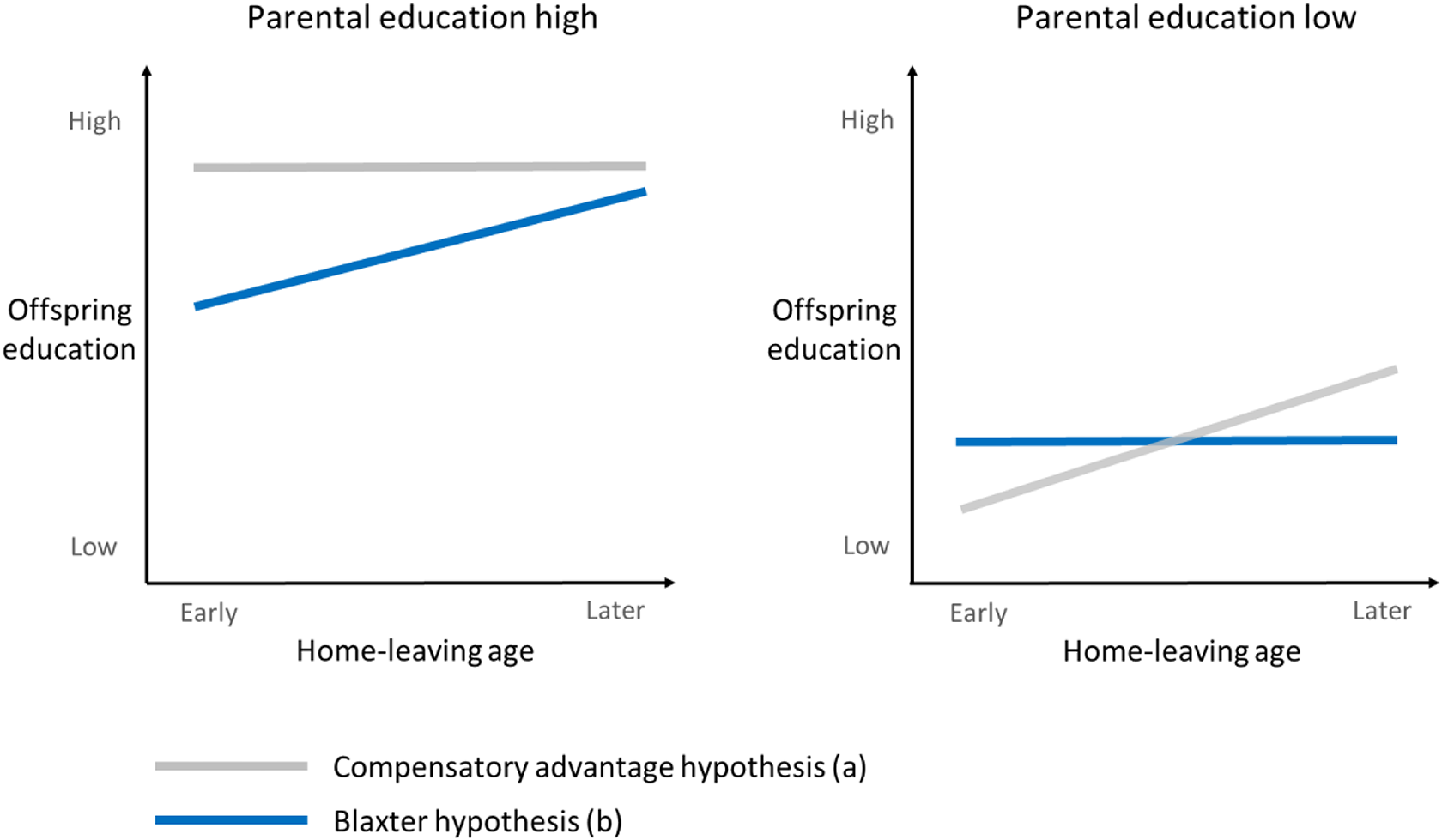
The competing hypotheses for the potential moderating role of early versus later home-leaving age in the intergenerational transmission of educational attainment.
Next, in order to take into account selection into early HL and to assess how other parental and childhood resources may confound the association between parental and personal education among early and later home-leavers, we adjust our models with family socioeconomic background, residential conditions, family structure, and parental and childhood health problems. Finally, we focus on families with at least two same-sex siblings and compare early and later leavers in within-family analyses to account for all family resources and confounding factors that are shared between siblings. Although our focus lies on comparing early and normative HL, it should be noted that very late leavers are also a selected population characterised by lower educational attainment, but the underlying factors and mechanisms may differ from the early leavers.
We study both attaining secondary-level qualifications (any secondary degree, and academic/vocational degree) and continuing to tertiary-level education as family background has been shown to influence school continuation choices differently at each transition (Lucas, 2001). As both HL patterns and educational attainment differ between men and women, we analyse men and women (and same-sex siblings) separately and present all results by gender.
Data and methods
The study is based on longitudinal administrative register data from three decades, 1987–2017. From a total sample of all children aged 0−14 years in year 2000 in Finland, we included birth cohorts 1986–1991, who could be followed for HL between ages 16 and 26. We measured educational attainment at age 26 in 2012–2017. For all the children and their parents, the data included annually updated information on living arrangements and residential conditions, education, employment, income, and health care records. From the baseline population of 383,226 children at age 15, we excluded children born abroad unless they had a native mother tongue (2.1%), those who had missing data at age 15 or on more than three years between ages 0 and 15 years (0.7%), those living outside families at age 15 (1.8%), and those who could not be linked to either of their parents (0.1%). Loss to follow-up due to emigration or death by age 26 was 2.2% and the final sample size was n = 357,910. In the within-family analyses, we included all individuals (n = 85,626) who had left home by age 26, had at least one same-sex sibling and could be linked to both parents. The number of siblings that differed on early/later leaving was 10,521 among women and 6275 among men.
Parental education, educational outcomes and HL age
We assessed three educational outcomes at age 26: (a) completing any secondary-level degree; (b) completing an academic secondary-level degree instead of vocational training; and (c) completion or current enrolment in tertiary education. Ongoing education was deduced from being registered as a student in an educational institution providing tertiary education. Parental education was defined as the highest completed degree or certificate among biological parents, measured when the child was aged 15 and classified into: (a) basic (9 years or less); (b) secondary (10–12 years); or (3) tertiary (13 years or more) education. Children were considered to have left the parental home if they were not living with either of their parents at the end of the year. Age at HL was collapsed into six categories: 16–17; 18; 19; 20; 21–26 years, or never left by age 26. Ages 16–17 were combined due to few very early leavers, and ages 21–26 due to our focus on early leavers. In preliminary analyses we also found no major differences among those leaving after the median age (20 years). In all the regression models, we compared early leavers (ages 16–18) to later leavers (ages 19–26), excluding those who never left by age 26 (5.6%).
Parental and childhood resources
Household income was based on the Tax Administration’s database, and consists of wages, salaries, entrepreneurial income, and pensions, unemployment benefits, and some of the other social security benefits. Household income was measured as a two-year average when the child was aged 14–15, and divided by the weighted sum of household members according to the modified Organisation for Economic Co-operation and Development equivalence scale (first adult aged 18 and over contributes 1.0, subsequent over 13-year-olds 0.5, and children aged 0–13 years 0.3). For the analyses, household income was divided into quintiles. Parental unemployment identified long-term unemployment (at least six months in a given year) of either parent when the child was aged 0–15 years and was classified into: (a) those with no experience of parental unemployment; (b) those with parental unemployment in less than five years during their childhood; and (c) those with parental unemployment in five or more years during their childhood. Housing tenure was measured at age 15 and divided into: (a) owner-occupied; and (b) rented or other.
Family structure was based on information on the child’s living arrangements between ages 0–15 years and classified into: (a) intact two-parent family; (b) continuous single-parent family or one change in family structure; (c) multiple changes in family structure or living outside families at least once; or (d) child placed in out-of-home care at least once by age 15. Parental age refers to the age of the mother, or the father in male-headed one-parent families. The categories refer to parental age at child’s birth: below 20; 20–24; 25–29; 30–34; and 35+ years. Parental health problems were measured by inpatient or specialised outpatient care between the child’s birth and age 15, excluding complications of medical and surgical care, and pregnancy and childbirth. Hospitalisations due to (a) somatic illness, (b) injuries, poisonings and other external causes, (c) mental illness, and (b) substance use-related diagnoses were assessed separately. Childhood health problems were similarly measured in ages 0–15, except for care episodes due to substance use, which were combined with other external causes due to small numbers.
Four factors reflecting the residential conditions of the parental home were included in the multivariate analyses, all measured at age 15. House type was categorised into: (a) detached house; (b) row house; (c) apartment building; and (d) other or unknown. As another indicator of housing conditions, a measure of crowding (the number of household members exceeding the number of rooms) was also included. A separate measure for the number of children below age 18 in the household identified families with one, two, three, and four or more children. Finally, a measure of geographical area derived from the hospital districts in Finland (n = 20) was used to adjust for regional differences in HL and educational attainment. All models were also adjusted for birth year to account for cohort differences.
Methods
First, we describe the associations between parental education and completing a secondary-level degree and continuing to tertiary-level education by HL age. We used linear probability models to further assess differences in the probability of completing (a) any secondary degree and (b) an academic instead of a vocational secondary-level degree among early leavers as opposed to later leavers. In the crude model 1, parental education was used to predict educational attainment in interaction with HL age, adjusted for birth year. In the adjusted model 2, we included residential conditions (house type, crowding, number of co-resident children, and geographical area), household income, parental unemployment, and housing tenure, parental age and family structure, and parental and childhood health problems to assess the extent to which these factors may confound the association between parental and personal education among early and later home-leavers. We also tested for potential interactions between HL and household income, family structure, parental age, and parental health problems, but none of these appeared to confound the associations by parental education. In addition to the between-family models that compared early and later leavers in different families, we compared educational outcomes between early and later leaving same-sex siblings. In these within-family analyses that adjust for all potential confounding factors shared among siblings, we used the crude model described above to predict siblings’ educational attainment (model 3).
Next, we assessed the probability of continuing to (c) tertiary-level education among those who had completed a secondary degree in a similar fashion. Although almost all secondary-level degrees give eligibility for tertiary-level education, continuing to tertiary level is considerably more likely among those with an academic secondary degree. Therefore, we included an additional adjusted model (2a) that was also adjusted for track choice, that is, for completing either an academic or a vocational secondary degree. The within-family models are also shown adjusted for track choice.
As we found significant interactions by offspring sex (women tend to leave the parental home earlier, and have higher educational attainment than men), we conducted separate models for men and women, and in the within-family models, same-sex siblings. We report all results from the models using average marginal effects by parental education, that is, the percentage point difference in the educational outcome among the early leavers as opposed to later leavers. We used linear probability models rather than binary logit models for ease of interpretation, to avoid problems in comparing nested models (Uanhoro et al., 2019), and to include also those siblings who do not vary on the dependent variable in the estimations (Allison, 2009). We calculated robust standard errors, clustered at the family level. In all models, we tested whether the coefficients for early leaving were equal in each level of parental education using a t-test. As our analyses are based on total population data, the p-values are, however, of lesser importance than with sampled data.
Results
Both early HL and lower parental education were strongly associated with lower educational attainment by age 26 (Table 1). The early leavers were also much less likely to complete an academic instead of a vocational secondary degree. Overall, those with less advantageous family resources were more likely to leave home early and less likely to complete a secondary degree and continue to tertiary education.
Distribution (%) of study participants by educational outcomes by age 26, age at leaving the parental home, parental education, and measures of other parental and childhood resources.
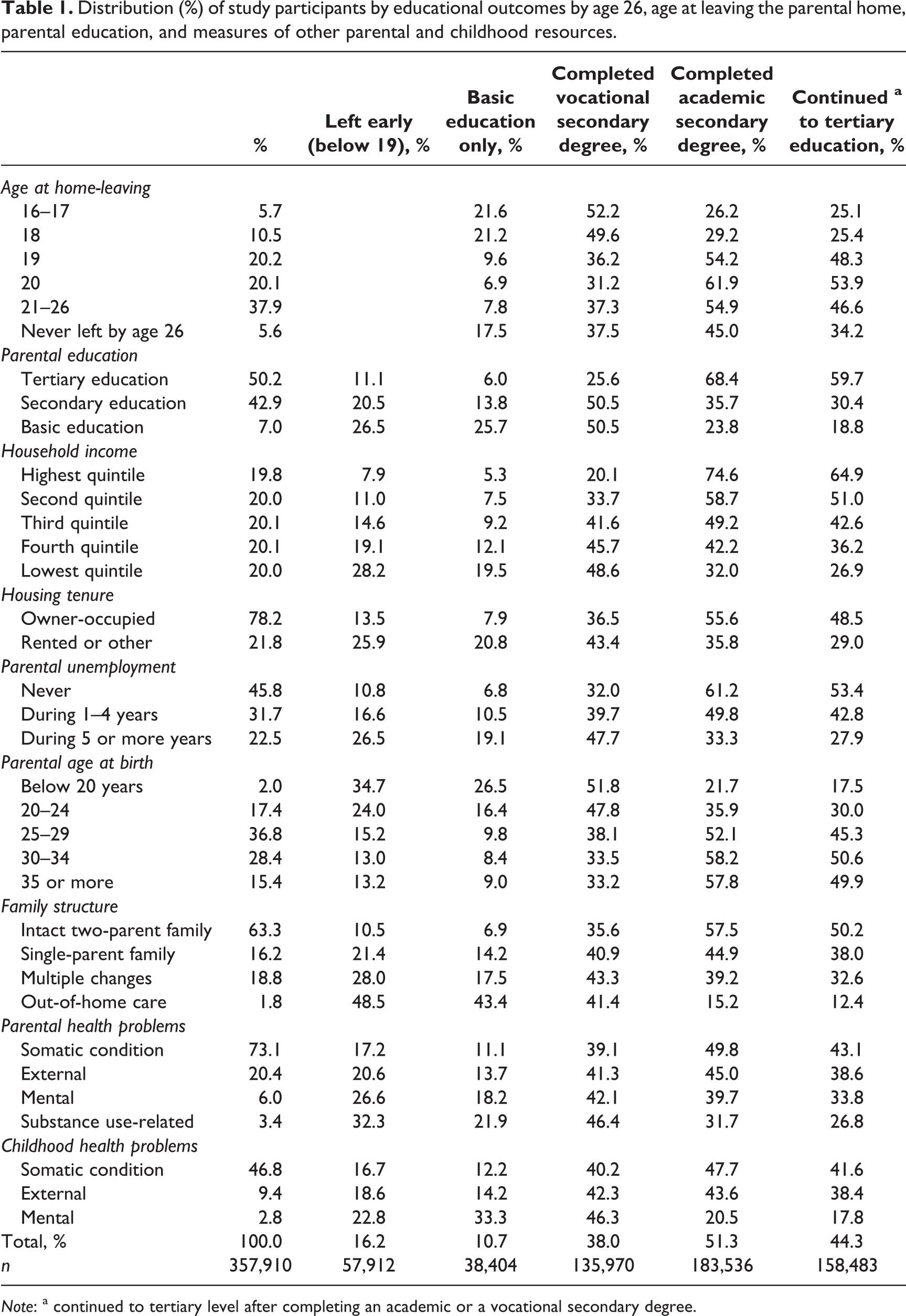
Note: a continued to tertiary level after completing an academic or a vocational secondary degree.
Figure 2 shows the proportion of young women and men completing any secondary education, an academic secondary-level degree and continuing to tertiary-level education by parental education and HL age. In obtaining any secondary education (a), the difference between offspring of the highest and lowest educated parents was somewhat larger among the earliest leavers, with a relatively high proportion of early leavers with only basic parental education not completing any secondary degree (over 30% among women and over 40% among men). In contrast, in completing an academic secondary-degree (b), and continuing to tertiary education (c), the differences between offspring of the highest and lowest educated parents among early leavers were much smaller than among those leaving later. Among women who had left home below age 19, the proportion continuing to tertiary level was about 40% among offspring of the highest educated parents and below 20% among offspring of the lowest educated parents whereas the difference among later leavers was much larger, about 70% versus 35%. A similar pattern was observed among men.
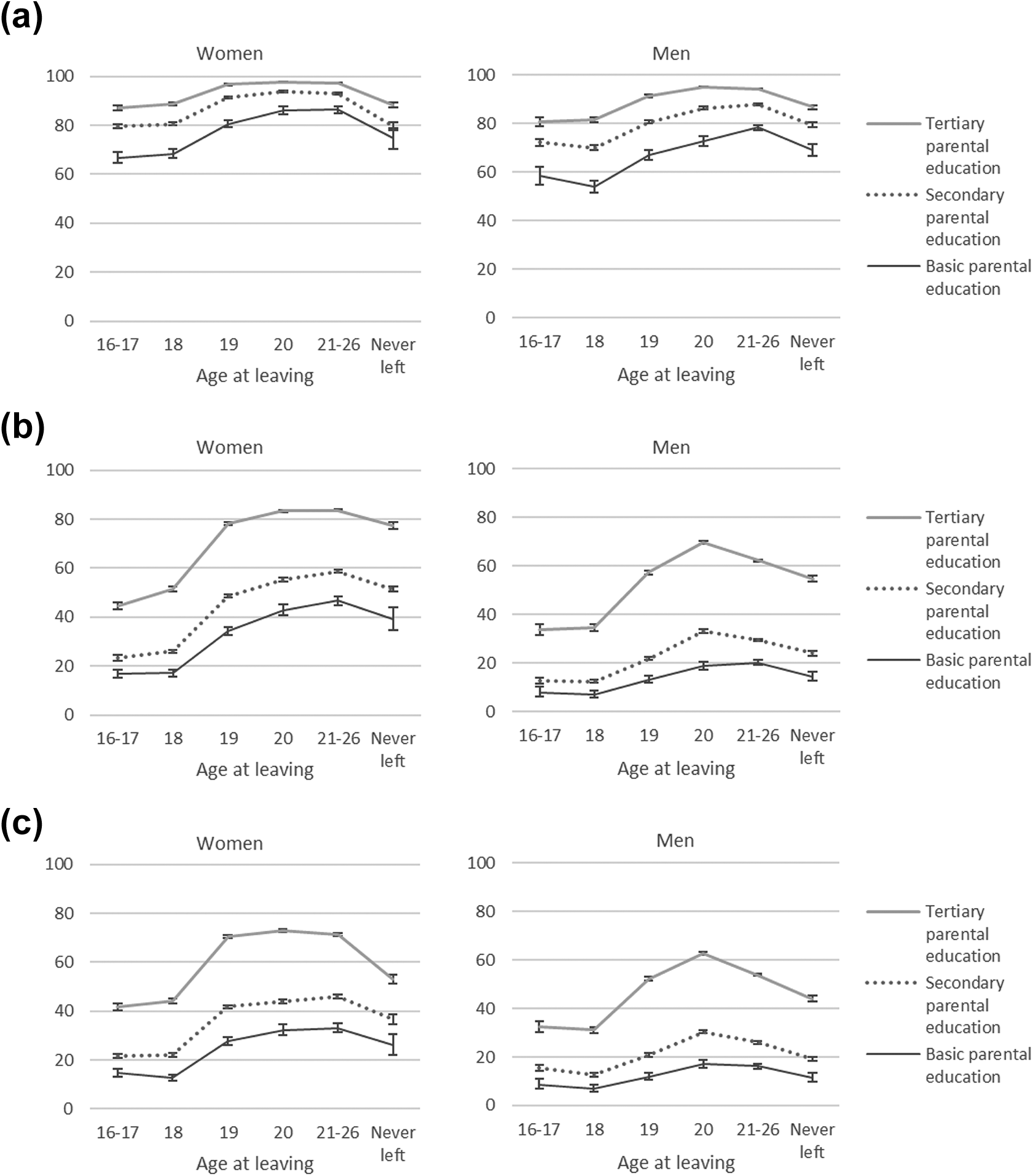
Proportion (%) of young adults (a) completing any secondary degree, (b) completing an academic secondary degree, and (c) continuing to tertiary level by age 26, women and men by parental education and home-leaving age. 95% confidence intervals shown in error bars: (a) completed any secondary education (%); (b) completed an academic secondary degree (%); and (c) continued to tertiary education (%).
Completing secondary-level education
Table 2 presents differences in completing any secondary education (a) or an academic (b) secondary degree between early and later leavers by parental education. Small p-values indicate that the coefficients for early leaving differ between offspring of higher and lower educated parents. Compared to later leavers, early leavers were less likely to complete any secondary education at all levels of parental education, but the differences were larger among offspring of the lower educated parents. The lower probability of completion among early leavers varied between 9–16 percentage points in women and 13–19 percentage points in men (panel a, crude model 1). Adjustment for residential conditions and other parental and childhood resources (model 2) attenuated the differentials between early and later leavers, suggesting that some of the educational disadvantage among the early-leaving offspring relate to experiences of another social disadvantage. However, no major changes were observed in the relative differentials by parental education: the attenuation was similar across levels of parental education. In within-family models (model 3), the probability of obtaining a secondary degree was 4–8 percentage points lower among the early-leaving siblings, with no differences by parental education.
Difference in the probability of completing a) any secondary degree, and b) an academic secondary degree by age 26 among early (below age 19) as opposed to later leavers by parental education, men and women who had left the parental home by age 26.
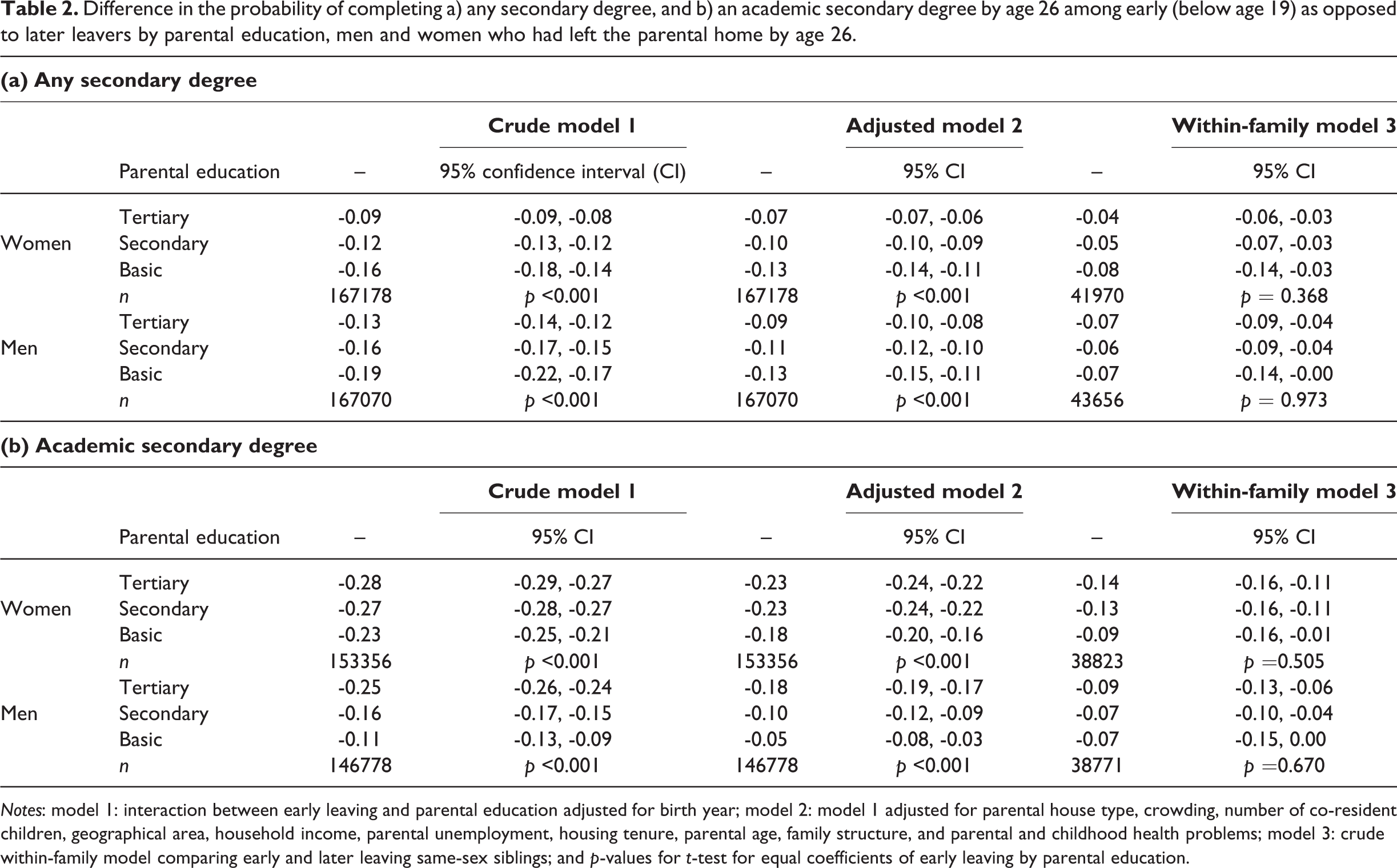
Notes: model 1: interaction between early leaving and parental education adjusted for birth year; model 2: model 1 adjusted for parental house type, crowding, number of co-resident children, geographical area, household income, parental unemployment, housing tenure, parental age, family structure, and parental and childhood health problems; model 3: crude within-family model comparing early and later leaving same-sex siblings; and p-values for t-test for equal coefficients of early leaving by parental education.
Among those who completed any secondary degree, early leaving was associated with not completing an academic, but a vocational secondary degree (Table 2, panel b). In contrast to completing any secondary education, the relative differences were largest among offspring of highest educated parents, particularly among men: early leavers with tertiary educated parents were 25 percentage points less likely than later leavers to complete an academic secondary degree, whereas this difference was 11 percentage points among men with basic educated parents (model 1, panel b). As in completing any secondary education, the differences by HL age attenuated when adjusted for other parental and childhood resources (model 2), but the relative differences by parental education remained. In within-family models (model 3), there was no evidence of moderation by HL age. As the confidence intervals widened in comparing same-sex siblings of the lowest educated parents, we also ran supplementary models only adjusting for sex (see Online Appendix Table A1). This within-family model showed modest support for differing associations between parental and offspring education by HL age: the probability of attaining an academic secondary degree was 12 (tertiary parental education) and 7 (basic parental education) percentage points lower (p = 0.067) among early-leaving than later-leaving siblings.
Continuing to tertiary-level education
Compared to later leavers, the proportion continuing to tertiary education was much lower among the early leavers, and the relative educational disadvantage to later leavers was particularly strong among children of the highest educated parents (Figure 2(c)). Table 3 shows the difference between early leaving and later leaving offspring by parental education in continuing to tertiary-level education conditional on completing secondary education. The pattern of associations was similar to completing an academic secondary degree, and adjustment for other parental and childhood resources introduced no major change to the relative differentials by parental education. However, when adjusted for educational track (an academic or a vocational secondary degree), the differences across levels of parental education diminished to 1–7 percentage points. The weaker association between parental and offspring education among early leavers in entry to tertiary education thus appeared to be largely determined already at the secondary level, essentially by the early leavers’ low likelihood of completing an academic secondary degree. The modest differences by parental education remained nevertheless statistically significant, among women even in the within-family analyses (Table 3).
Difference in the probability of completing or continuing to tertiary education by age 26 among early (below age 19) as opposed to later leavers by parental education, men and women who had left the parental home by age 26.
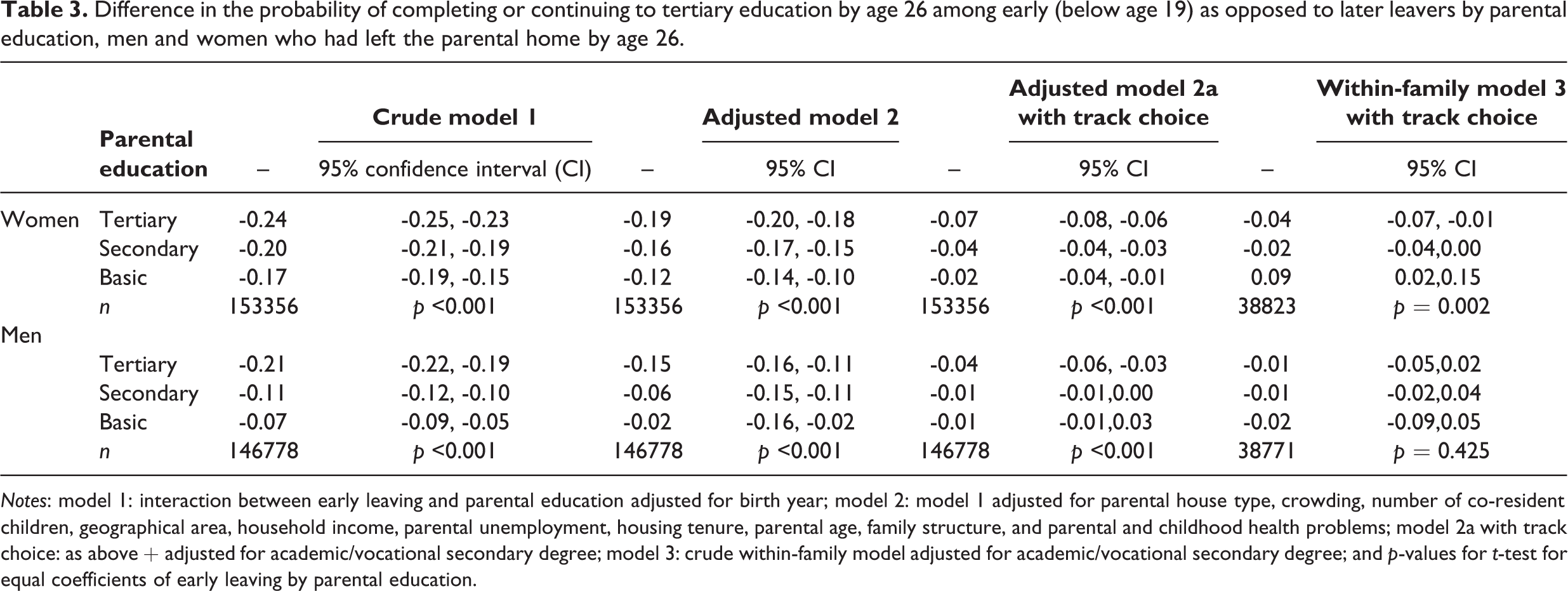
Notes: model 1: interaction between early leaving and parental education adjusted for birth year; model 2: model 1 adjusted for parental house type, crowding, number of co-resident children, geographical area, household income, parental unemployment, housing tenure, parental age, family structure, and parental and childhood health problems; model 2a with track choice: as above + adjusted for academic/vocational secondary degree; model 3: crude within-family model adjusted for academic/vocational secondary degree; and p-values for t-test for equal coefficients of early leaving by parental education.
Discussion
This study examined the timing of leaving the parental home and educational attainment with the assumption that HL may have a moderating role in the intergenerational transmission of education. Our study has two contrasting key findings. First, early HL lowered the probability of completing any secondary-level education less among offspring of highly-educated parents than those with lower parental education. The differences by parental education attenuated when adjusted for other childhood family resources, and no evidence of moderation was found in comparison of early and later leaving siblings. These findings lend some support to the compensatory advantage theory (hypothesis a), indicating that higher family resources buffer from any harm relating to early leaving while accumulation of disadvantage occurs among children with less advantaged background. Second, an opposite pattern was found in completing an academic secondary degree and continuing to tertiary-level education. The differences between early and later HL were largest among offspring of the highly-educated parents. This suggests weaker intergenerational transmission of education among early leavers with an advantageous parental background, a finding consistent with the Blaxter hypothesis (b). Thus, when it comes to following the academic educational path, a path that has been shown to be particularly decisive in the intergenerational transmission of education (Härkönen and Sirniö, 2020), early leavers from an advantaged background appear to have more to lose. However, in within-family analyses we only found differences between offspring of lower educated and higher educated parents among sisters, and none among brothers.
Our findings are new compared to the existing literature, and suggest that not only the amount and type, but also the transfer time of family resources count. A longer co-residence with parents allows more time for resource transfers and enables a longer period of immediately available support and control that may reinforce socioeconomic attainment. Naturally, easily transferable resources such as financial support are less affected by a physical distance, but the more subtle processes of socialisation that contribute to educational attainment (Georg, 2016) may necessitate a shared living environment. Interestingly, the timing of HL appeared to play a role regardless of the level of parental resources, rejecting the Blaxter hypothesis of no moderating effect of HL among offspring of lower-educated parents who would have less to lose in leaving early. The fact that early HL showed a persistent association with lower educational outcomes even among siblings lends support to the interpretation that early HL and independent living at a young age may have detrimental consequences for educational attainment. This might relate to reduced availability of parental support, but for some young adults, adopting adult roles and responsibilities prematurely may also induce chronic stress that affects educational attainment (Dupéré et al., 2015; Wickrama et al., 2010). Moreover, living independently at a young age may bring about economic hardship (Ayllón, 2014; Kauppinen et al., 2014), practical challenges of managing everyday life, and emotional strain, such as insecurity and loneliness. Lesser parental control might play a significant role particularly in late adolescence when health-compromising and risky behaviours such as substance use tend to increase with increasing independence (Stone et al., 2012; Wiium et al., 2015). Generally, compared to living in the parental home, living independently is less likely to allow youth to fully focus their own time and resources on long-term goals such as higher education (Elder, 1998). Additionally, living independently may also promote achievement of self-sufficiency, making lower degrees and vocational education with earlier transition to paid employment a more attractive option. Breen et al. (2014) have also suggested that time discounting preferences, that is, preference for higher returns in the future (often provided by academic, higher degrees) over more immediate returns (vocational education), play a crucial role in educational decision-making.
Early HL may associate with lower educational aspirations (Goldscheider and Goldscheider, 1993), but reverse causality in the sense that school dropout and early employment would lead to early HL appeared to be a lesser issue: the great majority of youth were enrolled in education when leaving, although they may have dropped out later on. Also, in contrast to previous results on HL and education in the United States (White and Lacy, 1997), early leaving was associated with lower educational attainment regardless of whether the youth were registered as students or not when leaving. In order to assess whether different routes out of the parental home could affect our results, we conducted additional analyses separating the early leavers according to their student status when leaving (see Online Appendix Table A2). Even among offspring of the lowest educated parents, almost 80% of early leavers were registered as students at the end of the year of HL. While student status was strongly associated with higher educational attainment as expected, early leaving was associated with lower educational attainment both among students and non-students. Broadly in line with this result, a recent study from the United States showed a clear penalty in later economic outcomes among those who had left the parental home before college, regardless of whether they attained a college degree or not (Sironi and Billari, 2020). In obtaining any secondary degree, the largest relative disadvantage among early-leaving offspring of basic educated parents seen in our main results appeared to stem from the early leavers who were not students, while in obtaining an academic secondary degree and tertiary education the relative educational disadvantage was largest among offspring of highly-educated parents regardless of student status. Although rare in Finland, another route out of the parental home that could affect our results is early parenthood. In the current sample, the proportion of under 20-year-olds living with their own or their partner’s children was 1.7%. While early parenthood increased both the likelihood of early HL and lower educational attainment, it only explained a minor proportion of the lower educational attainment of the early leavers and the differences by parental education remained similar (see Online Appendix Table A3).
As childhood adversities and scarcity of material and social resources in the parental home may encourage early leaving, we tested for such confounding by adjusting the models for multiple measures of parental and childhood resources and conducting within-family analyses. Even among offspring of the lowest educated parents, adjustment for other family resources and unmeasured confounding among siblings could not explain the poorer educational outcomes of those leaving early. Despite the diversity of the family resources, we were able to account for in the analyses, the earliest leavers are probably still selected on factors not captured by our resource measures. Also, we could not assess whether the timing of HL was intentional or involuntary, but unintended transition timing has been suggested to be more likely among children of less affluent families (Billari et al., 2019). Perhaps more importantly, with administrative data we cannot assess negative family atmosphere and conflicts that have been shown to predict early leaving (Bernhardt et al., 2005), although difficulties in the parent–child relationship are likely to affect the transfer of resources and the leverage parents have over their children’s decisions regardless of residential arrangements (Swartz et al., 2011). The extent to which children from one-parent and non-intact families are exposed to the resources of both biological parents may vary according to the timing and type of family changes, as well as family socioeconomic background. However, we argue that regardless of family history there is a crucial difference between living independently at a young age as opposed to living in a family, whether the family is an intact two-parent, one-parent, or a reconstituted family. Previous research on intergenerational socioeconomic attainment in Finland has also concluded that potential bias in ignoring variation in parental socioeconomic position due to household changes during childhood is likely to be small (Erola et al., 2016).
Within-family analyses, a fixed-effects study design that has rarely been used in previous research on HL, allowed us to control for any measured or unmeasured factors that are shared between siblings and thus provided stronger evidence for an independent role of early HL. Such unmeasured family-level factors relevant to the interests of this study could be parental expectations and involvement, shared values, cultural capital, family functioning, genetic endowment, living conditions, and neighbourhood effects. However, within-family analyses also have limitations. Parent–child relationships may differ, and siblings may differ in their exposure to childhood disadvantage, something that our within-family models do not capture. The within-family models are also limited to a sub-population of families with at least two siblings. As a sensitivity analysis, we carried out between-family analyses among the smaller within-family sample (see Online Appendix Table A4). Compared to the estimates from the adjusted population-averaged models among those with at least one same-sex sibling, the differences attenuated in the fixed-effects models, suggesting that unmeasured family characteristics further explained up to a half of the lower educational attainment of the early leavers, and nearly all differences by parental education. The estimates from the population-averaged models in the within-family sample were generally close to those of the overall population models, but on average the sibling population was socially more advantaged, and the educational disadvantage of early leavers appeared to be slightly less. Within-family models may thus only partly capture the social disadvantage that is more prevalent in the overall population.
Despite the fast-growing literature on the transition to adulthood, previous studies on the relationship between HL and educational outcomes remain few, although the existing evidence does link higher educational attainment and better economic outcomes quite consistently to normative timing of HL (De Marco and Berzin, 2008; Sironi and Billari, 2020; Skogbrott Birkeland et al., 2014; White and Lacy, 1997). Overall, the determinants of HL have so far received more scholarly attention than the consequences of leaving, particularly with regard to education and socioeconomic attainment (Sironi and Billari, 2020). Given that early age at HL has been linked to disadvantageous outcomes in several countries (Ayllón, 2014; Kauppinen et al., 2014; Wickrama et al., 2010), associations similar to the ones observed here may well exist in other societal contexts. The important role of HL in successful transitions to adulthood is highlighted by the non-negligible prevalence of early leaving and its strong link to lower educational attainment: in this study almost one in six adolescents had left home below age 19, and one in five among them had not completed any secondary education by age 26.
In conclusion, the decision to leave the parental home and educational choices are both linked to the material, cultural and social living conditions in childhood and adolescence, which are highly influenced by parental education. In today’s society, youth are argued to be ever more dependent on the resources of their parents and other social networks in making the transition into adulthood (Furstenberg, 2010). This study suggests that the timing of HL plays a role in the process of intergenerational transmission of educational attainment, although comparison between early and later leaving siblings provided only modest evidence for differences across levels of parental education. Nevertheless, not only the level, but also the immediate exposure to family resources appears to matter for successful resource transfers between generations. To enhance understanding of mechanisms underlying intergenerational transmission of advantage, the timing of resource transfers, one indicator of parental involvement, should be integrated in future studies. Such a perspective recognises intergenerational transmission as a dynamic process over the life course and provides new insights into the transition to adulthood and socioeconomic attainment.
Supplemental material
Supplemental Material, sj-pdf-1-asj-10.1177_00016993211028905 - Early home-leaving (HL) and educational attainment − The moderating role of HL in the intergenerational transmission of education
Supplemental Material, sj-pdf-1-asj-10.1177_00016993211028905 for Early home-leaving (HL) and educational attainment − The moderating role of HL in the intergenerational transmission of education by Hanna Remes, Outi Sirniö and Pekka Martikainen in Acta Sociologica
Supplemental material
Supplemental Material, sj-xlsx-1-asj-10.1177_00016993211028905 - Early home-leaving (HL) and educational attainment − The moderating role of HL in the intergenerational transmission of education
Supplemental Material, sj-xlsx-1-asj-10.1177_00016993211028905 for Early home-leaving (HL) and educational attainment − The moderating role of HL in the intergenerational transmission of education by Hanna Remes, Outi Sirniö and Pekka Martikainen in Acta Sociologica
Footnotes
Declaration of conflicting interests
The author(s) declared no potential conflicts of interest with respect to the research, authorship, and/or publication of this article.
Funding
The author(s) disclosed receipt of the following financial support for the research, authorship, and/or publication of this article: Hanna Remes and Pekka Martikainen are funded by the Academy of Finland (Grant Nos.: 294861 and 308247). Outi Sirniö is funded by the Academy of Finland Flagship Programme (Grant No. 320162).

Supplemental material
Supplemental material for this article is available online.
References
Supplementary Material
Please find the following supplemental material available below.
For Open Access articles published under a Creative Commons License, all supplemental material carries the same license as the article it is associated with.
For non-Open Access articles published, all supplemental material carries a non-exclusive license, and permission requests for re-use of supplemental material or any part of supplemental material shall be sent directly to the copyright owner as specified in the copyright notice associated with the article.
