



Abstract
The development of a common standard of consumption is one goal of the ongoing harmonization of the EU member states’ economies. As a result, the degree to which household deprivation affects people’s economic stress should converge. Based on comparison theory, such convergence could be one indicator for Europe growing together (‘Europeanization’). The association between deprivation and economic stress is tested across and between 28 EU countries with EU-SILC data. Moreover, it is examined whether this association changed between 2007 and 2015, as the great recession starting in 2008 affected European countries differently. The results show that, given a certain level of household deprivation, people judge their situation differently across Europe. Whereas economic stress levels are higher in relatively poor countries, the deprivation-stress link is stronger in rich countries. Across-time comparisons suggest no decline in the extent to which a country’s deprivation level moderated the effect of household deprivation on economic stress. The findings support the persistence of national reference groups against which individuals judge their own economic situation.
Keywords
Introduction
The concept of material deprivation (or deprivation hereafter) gained prominence in the literature because it is a relative concept that explicitly takes into account what is considered a ‘normal’ level of consumption in a society (Fahey, 2007). It rests on the idea that deprivation is an ‘exclusion from ordinary living patterns, customs and activities due to lack of resources’ (Townsend, 1979). This idea is in line with comparison theory (Jasso, 2006), or its predecessor, reference group theory (Hyman, 1968; Merton and Rossi, 1950; Stouffer, 1949). It postulates that people compare the levels of their holdings of goods to the levels they desire or expect or think appropriate, thereby experiencing well-being, happiness, or another ‘comparison outcome’, like economic stress.
Regardless of whether people perceive themselves as part of a larger European stratification system (Bedük, 2018), it is valid to question whether a common standard of consumption relating to an acceptable level of participation in one’s own society is about to develop in Europe. Whelan and Maître (2009) call this question the weak version of the reference group thesis. It suggests that the development of a common standard of consumption alongside the convergence of the economies in Europe can be interpreted as an indicator of growing social cohesion in Europe. However, as there are other, more central aspects of social cohesion, we use the term ‘Europeanization’ (Borneman and Fowler, 1997; Olsen, 2002) to refer to the growing together of European countries in the sense of comparison theory.
A process of convergence among European countries has been described and analyzed empirically on the basis of macro-indicators, such as gross domestic product per capita and the Gini coefficient (Heidenreich and Wunder, 2008), unemployment rates of specific groups (Heidenreich, 2015), and income distributions (Heidenreich, 2016). However, the last decade was one of considerable ‘external shocks’. The collapse of the investment bank Lehman Brothers in September 2008 was the starting point of a chain of events with negative repercussions in many European states, resulting not only in an economic depression but also in a severe financial, economic, and sovereign debt crisis that affected European countries quite differently, and therefore might have counteracted socioeconomic convergence.
First, this article tackles the question of whether the variation in the impact of deprivation on economic stress between the countries was significant before the onset of the financial crises. The empirical issue addressed is whether the effect of deprivation on economic stress has been moderated by a country’s deprivation level, as comparison theory suggests. Secondly, whether this variation between the countries has diminished over time in the course of the great recession, or whether it has, on the contrary, increased is also analyzed. To this end, whether the extent of the aforementioned moderation has changed over time is investigated.
The appropriate analysis technique for addressing these questions and for identifying a trend in the relationship between deprivation and economic stress is a comparison of cross-sectional data at the household level while taking the nested structure of the data at the country level into account. Therefore, multilevel OLS regression analysis with two levels is applied, and the estimated effects of deprivation on economic stress and their variance terms are compared across data cross-sections for every two years between 2007 and 2015. As comparing cross-sections does not allow for statistically testing whether the variation in the impact of deprivation on economic stress between the countries changed significantly over time, additional analyses are conducted. Panel fixed-effects regression is employed to test whether economic stress in Europe increased significantly across European countries after the onset of the financial crisis, and also whether the impact of deprivation on economic stress changed at the country level during that time. The most comprehensive database for this research agenda, the EU-SILC, encompasses a reasonable number of 28 countries beginning with 2007, when Romania and Bulgaria joined the European Union (27 EU member states, excluding Malta but including Norway and Iceland).
Relative deprivation and economic stress from the perspective of comparison theory
Material deprivation is defined as an involuntary lack of goods, services, and activities that are considered as key conditions for life and social participation in a particular society (Townsend, 1979: 31). Comparison theory is concerned with the question of relevant social context (Jasso, 2006; Pedersen, 2004) is the nation state nowadays the frame of reference, the ‘society’ Townsend spoke of? The smallest reference group is comprised of personal acquaintances–– people who are in a similar status group with regard to occupational position and life course stage (Hyman, 1968). At a larger scale, the unity people normally refer to as society is the nation state, and not, e.g. Europe. It is therefore reasonable to assume that reference groups are normally found within national borders. Empirical evidence in support of this assumption comes from a survey that asked people to compare their standard of living with that of people living in other countries (Delhey and Kohler, 2006): the percentages of ‘don’t know’ answers were considerably higher compared to when respondents were asked to compare their standard of living with citizens of their own country. Therefore in this article a ‘simple reference group thesis’ (Whelan and Maître, 2009) is applied: a convergence in the impact of material deprivation on economic stress in Europe is seen as an indicator for the development of a common standard concerning an acceptable level of participation in one’s own society.
Claims for a Europe-wide perspective for understanding relative deprivation with respect to the reference groups people adopt, that is, with respect to the standards against which they judge their situation (Fahey, 2007), can be put into practice within a multilevel and longitudinal research design. When people judge their situation similarly across countries at a certain level of deprivation, national reference groups are unimportant in Europe. In this case, no significant cross-level interaction effect between household deprivation and mean country deprivation on economic stress is found. But when people judge their situation differently across countries, as comparison theory suggests, a significant cross-level interaction is found (hypothesis 1a). Such a finding would support the notion that national reference groups are quite important.
The direction of the cross-level effect is also important if one is found. At first sight surprisingly, the impact of deprivation on economic stress was found to be significantly higher in the Social Democratic welfare regime type compared to other welfare regime types (Whelan and Maître, 2009), as well as higher in averagely rich compared to poor countries (Whelan and Maître, 2013). These findings somewhat correspond with findings that deprived individuals mobilize less support through social networks in more generous welfare states (Böhnke, 2008; Reeskens and van Oorschot, 2014). Against the background of comparison theory (Jasso, 2006) and deprivation theory (Townsend, 1979) these findings support the view that being deprived in a relatively rich country that emphasizes equal opportunities for all citizens is especially stressful. Therefore, if a significant cross-level effect is found, one can expect a negative direction (hypothesis 1b), indicating a larger impact of household deprivation on economic stress in wealthy countries compared to poorer countries.
In addition to the wealth level of a country, welfare policies also likely influence economic stress in the face of deprivation. Public transport systems, libraries and swimming pools, school canteens and holiday programmes for children and teenagers, for example, might compensate for the lack of privately-owned goods and services. Social programmes that cover large segments of the population, high levels of social assistance and public healthcare, and other resource factors were found to reduce the risk of deprivation (Halleröd, 1996; Israel and Spannagel, 2019; Layte et al., 2001). If not controlled for, the differences in the extent to which countries aim to support the poor with the provision of public goods and services, but also with transfer payments, might influence the extent to which deprivation impacts economic stress, and it might bias the analysis of variation in this regard between the countries. Welfare regime types (Esping-Andersen, 1990; Juhasz, 2006) cluster the main differences in welfare policies (Layte et al., 2001). The five welfare regime types relevant for Europe are the Social Democratic, the Liberal, the Corporatist, the Southern European, and the Post-Communist type. Especially in the Social Democratic welfare regimes of the Nordic countries, the welfare state plays a substantial redistributive role and strives to provide high standards of living for everybody. Expenditure on social services is highest in countries belonging to this regime type and has an equalizing effect (Esping-Andersen, 2015).
The impact of deprivation on economic stress during the great recession
The development of social inequality over time is a highly contested question, including the discussion about adequate measurement techniques of both the underlying items and the assessment of trends. In this article, the discussion cannot be acknowledged fully; instead, major contributions with regard to a Europeanization of social inequality are described alongside their respective research design.
Beckfield (2006) argued that income inequality increased significantly in Western European countries between the 1970s and the end of the 20th century, and that half of this increase could be explained by political and economic integration. This analysis was based on national Gini coefficients and used random effects models, but it included only 12 countries. Therefore, the finding about the impact of political and economic integration on growing inequality is questionable, as simulation studies suggest that 25 cases are required at the very minimum to produce reliable country-level estimates (Bryan and Jenkins, 2016).
On the basis of comparisons of the deviations in gross domestic product (GDP), it was argued that in the decade before the beginning of the financial, economic and sovereign debt crisis, the European labour markets became more inclusive and economic disparities between European countries diminished (Heidenreich, 2016; Heidenreich and Wunder, 2008). Between the mid-1990s and the accession of eight post-socialist countries in 2004, the between-nation inequalities had fallen by 45 percent, measured in mean logarithmic deviation (MLD) of the GDP (Heidenreich and Wunder, 2008). Because at the same time that within-nation inequalities had increased, the overall reduction in regional inequalities was smaller, about 16 percent. The authors estimated similar trends for market income and disposable income. For the period 2005–2013, it was shown that the economic differences in the EU 25, measured in MLD, were rather stable until 2010 and then increased, which is seen as a consequence of the financial and sovereign debt crisis (Heidenreich, 2016).
Whelan and Maître (2009) analyzed the relationship between consumption deprivation and economic stress across 24 European countries, developing the idea of a ‘weak reference group thesis’ in contrast to a strong version. The present study adopts major parts of Whelan and Maître’s (2009) research design by using the same variables, but it applies a longitudinal research design by analyzing five cross-sections of EU-SILC data between 2007 and 2015 and a mixed-effects multilevel approach. This article goes a step beyond the existing literature, because it analyzes for the first time how the variation in the impact of deprivation on economic stress has developed over time. In view of the aforementioned empirical evidence, a naïve hypothesis about ongoing social integration in Europe, which is paralleled by an ongoing Europeanization of social inequality and therefore a shrinking variation in the impact of deprivation on economic stress over time, seems unlikely. Instead, it can be expected that the respective variation increased during the great recession (hypothesis 2), as the financial crisis affected the European countries quite differently. The crisis led to economic depression in all European countries; however, those that had to accept austerity measures as a precondition for the European Union’s bailout were most strongly affected. These were Greece 2010–2018, Ireland 2010–2013, Portugal 2011–2014, Spain 2012–2014, and Cyprus 2013–2016 (https://www.esm.europa.eu/financial-assistance). There is evidence for increased poverty levels in South European countries (Hick, 2016) and for increased levels of economic vulnerability in Ireland (Whelan and Maître, 2014), in the post-recession period. The recent political turn to the right in some European countries is attributed to feelings of uncertainty and concern about future economic prospects among these countries’ citizens (Bansak et al., 2016; Decker, 2016; van Prooijen et al., 2018), which might also result in increasing economic stress at certain levels of deprivation in these countries.
To test whether mean economic stress increased significantly in Europe during the great recession (hypothesis 3a), a panel data set with country-year information has been constructed. Based on this data set, it is also possible to test whether the impact of deprivation on economic stress at the country level increased significantly over the years (hypothesis 3b).
Data, variables, and method
Data from the European Union Survey on Income and Living Conditions (EU-SILC; http://ec.europa.eu/eurostat/web/income-and-living-conditions/data/database) are used, gathered in 2007, 2009, 2011, 2013, and 2015, spanning nine years in total. The five cross-sections are each restricted to 28 countries, i including all members of the European Union in 2007 plus Norway and Iceland but excluding Malta due to data problems. This research design maximizes the stability of the database, which is necessary when analyzing the variation in a relationship within a diverse entity like Europe.
The dependent variable, subjective economic stress, was measured as the ability to make ends meet. The question was: ‘A household may have different sources of income and more than one household member may contribute to it. Thinking of your household’s total income, is your household able to make ends meet, namely, to pay for its usual necessary expenses?’ which was coded from 1 ‘with great difficulty’ to 6 ‘very easily’. This variable was reversely coded to reflect economic stress, and it was normalized to have a range of zero to one.
The main independent variable, material deprivation, was measured as an index of nine items that were found to reflect a household’s consumption level (cf. Whelan and Maître, 2009): not being able to keep the home adequately warm; arrears on mortgage or rent payments; arrears on utility bills; arrears on hire purchase instalments or other loan payments; no capacity to afford paying for a one-week annual holiday away from home; no capacity to afford a meal with meat, chicken, fish (or vegetarian equivalent) every second day; no capacity to face unexpected financial expenses; does not have a computer because cannot afford it; does not have a car because cannot afford it. These items reflect the current position of research in deprivation studies (Boarini and Mira d’Ercole, 2006), and they are normally additively combined to form an index (Bedük, 2018; Betti et al., 2015). Starting in 2009, affirmative answers on having arrears were differentiated between ‘yes, once’ and ‘yes, twice or more’. For reasons of comparability, both were combined to ‘yes’. The additive index required at least six out of nine possible answers, otherwise it was coded as ‘missing’. It was normalized to range from zero to one. Cronbach’s alpha lay between 0.77 and 0.80 in each of the five cross-sections, which is acceptable. Alternative specifications of the deprivation index, i.e. the exclusion of the item ‘no capacity to face unexpected expenses’, or the usage of all items offered in EU-SILC, did not result in substantially different estimates. A factor analysis on the basis of a special module on deprivation in the EU-SILC data in 2009 showed that the nine items listed above are the major constituents of two dimensions, labelled basic and consumption deprivation (Whelan and Maître, 2012). They capture the inability to participate in customary standards of living due to inadequate resources and limited capacity for current expenditure, and therefore fit well with the understanding of material deprivation outlined above (Townsend, 1979). Furthermore, it was found that only the basic deprivation dimension varied significantly across countries, and that it was most strongly correlated with household income and economic stress. Therefore, the authors conclude that it ‘comes closest to capturing an underlying dimension of generalized deprivation that can provide the basis for a comparative European analysis of exclusion from customary standards of living’ (Whelan and Maître, 2012).
Other household characteristics controlled for in the models are family type, number of household members, health of the household’s head, his or her educational level, his or her occupational status and home ownership. Each of these characteristics was found to influence a household’s risk of deprivation significantly (Ayala et al., 2011; Barcena-Martin et al., 2014; Barnes et al., 2002; Bedük, 2018; Ervasti and Venetoklis, 2010; Vandecasteele, 2011; Whelan et al., 2004; Whelan et al., 2008; Whelan and Maître, 2012).
At the country level, the influence of mean country deprivation on a household’s economic stress level is estimated, following a common method of estimating the influence of context variables on nested subjects (Snijders and Boskers, 2012). Additionally, the influence of welfare regime type ii (Esping-Andersen, 1990; Juhasz, 2006) is estimated, because welfare policies can be expected to be important moderators with regard to the question of how much impact material deprivation has on a household’s risk of social exclusion in various fields of daily life. Welfare state regime types have previously been analyzed in studies on the relationship between deprivation and economic stress (Whelan and Maître, 2009, 2012) or well-being (Reeskens and Vandecasteele, 2017). Moreover, this modelling approach is in line with comparison theory, which postulates that actors compare their holdings to the mean level in the reference collectivity times an individual-specific constant, which captures everything that is unknown about how this actor chooses the comparison holding (Jasso, 2006). However, it should be kept in mind that considering welfare regime types does not allow for testing the impact of welfare policies on the relationship in question, as these country clusters also differ in many other aspects such as political history, labour markets or population structure (Esping-Andersen, 2015).
As the main aim of this article is to assess trends in the variation of the impact of deprivation on economic stress, we refrain from additionally analyzing the level of or variation in wealth of the countries, as problems of multicollinearity would arise if additional measures such as the GDP or the Gini coefficient were considered in the models. The same problem applies when additional effects of employment or unemployment rates were estimated, as they are correlated with country-level deprivation. For each of the full models in the trend analysis, multicollinearity was tested using variance inflation factors (Gujarati, 2002: 351 ff.); they are all acceptable (all VIF < 5.0, except for ‘Post-Communist Countries’ with a VIF of 5.9 in 2009). As a sensitivity test of the underlying notion that the great recession is mainly responsible for the observed relationship between deprivation and economic stress, the influence of a relative change in long-term unemployment will be examined. It was measured by the European Statistical Office (Eurostat) as the relative change in long-term unemployment rates between a time-point t, that is a given year, and t-3 that is three years before. This indicator was chosen because the relative change might capture the perception of crisis much better than the level of such indicators, as people likely get used to a certain level of unemployment over time.
All metric independent variables were centred at the grand mean to facilitate interpreting the effects and to reduce correlation when forming interactions and squared terms (Enders, 2013). In the following paragraphs, the course of the analysis is described.
Firstly, the relationship between material deprivation and economic stress was plotted for the year 2011 iii on the basis of OLS regression models for each country separately, to depict the form of the relationship. This analysis revealed a curvilinear relationship, that is to say, economic stress increases as deprivation increases, but with a decreasing steepness.
Secondly, based on the preceding analysis for each country, a curvilinear relationship between economic stress and material deprivation at the household level was estimated stepwise with data from 2011, using mixed-effects multilevel OLS regression (Snijders and Boskers, 2012). In this analysis, similarities between respondents at the country level are systematically taken into account. Furthermore, the amount of variance in economic stress attributable to country differences, in particular with regard to deprivation, can be estimated. In the course of this stepwise analysis, both the intercept of economic stress and the slope of material deprivation are allowed to vary across the countries. The intercept reflects the average level of economic stress in each country, and the slope of deprivation reflects the degree of impact deprivation has on economic stress. Additionally, a cross-level interaction term between a household’s material deprivation and mean deprivation in the respective country was introduced, which allows to determine the amount of variation in the relationship between material deprivation and economic stress across the countries. For the year 2011, the mean values of economic stress and the distribution of the dependent and independent variables in the analytical sample of 28 countries are depicted in Tables A1 and A2 in the supplement.
Third, the full multilevel model was applied to the five biannual cross-sections between 2007 and 2015 to assess the development of the association between deprivation and economic stress in Europe. The models were estimated with restricted maximum likelihood (REML), to avoid downward bias in the variance components considering the small number of level-two groups, with only 28 countries (Snijders and Boskers, 2012: 56).
Fourth, a panel data set was constructed that included information about mean deprivation and mean economic stress in the 28 EU countries over the five years of the cross-sections between 2007 and 2015. Panel fixed-effects regression was used to test whether mean economic stress due to deprivation increased significantly during the analyzed period. Moreover, it was tested whether the marginal effect of deprivation on economic stress increased significantly at the country level. These methods allow for estimating net effects free of other influences that might vary across the countries (Allison, 2009), e.g. welfare type influences. The data set contains N = 140 country-years, consisting of 28 groups of countries with five observations each.
Fifth, a sensitivity test was conducted, based again on the full multilevel model for 2011. Introducing the relative change in unemployment rates between 2008 and 2011 makes it possible to examine whether the estimated association between deprivation and economic stress is attributable to the great recession.
Findings
Relationship between deprivation and economic stress in Europe
Preliminary analysis using OLS regression for each of the 28 countries separately reveals that in 2011, which is in the middle of the analyzed period, economic stress in all countries analyzed increases with increasing levels of deprivation, whereas the steepness of the slope decreases. In most countries, the plots reveal a decline in impact after reaching an extreme point, indicating that the lower middle classes feel economically more stressed than the poor. This finding corroborates notions that the middle class feels economically more under pressure, whereas the poor have not much left to lose (Schimank, 2015; Whelan and Maître, 2013). This curvilinear relationship can be modelled with the introduction of a quadratic term for deprivation into the equation.
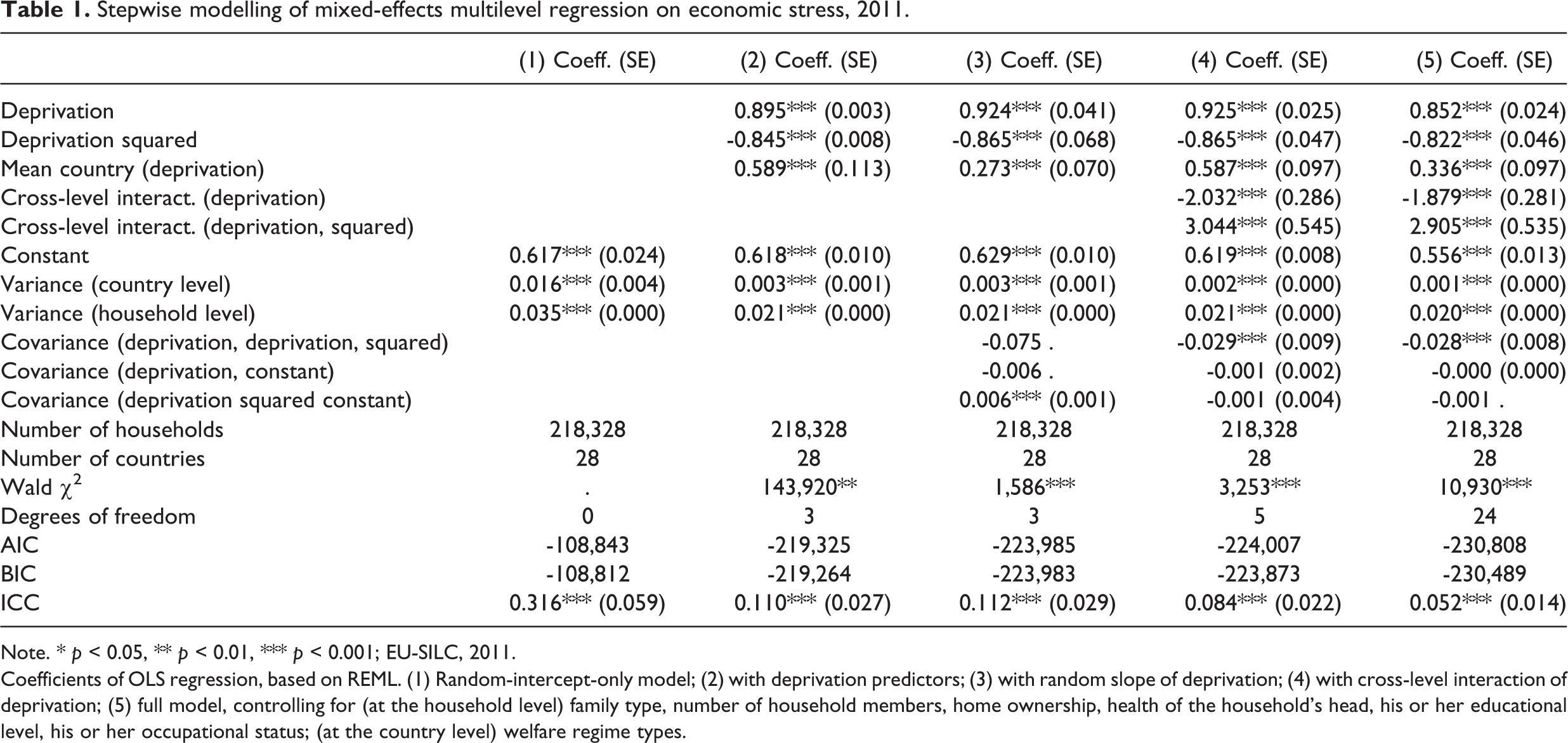
Table 1 shows the results of a stepwise mixed-effects multilevel regression on subjective economic stress for 2011. In light of these estimates, the increasing complexity of the models is justified from both a theoretical and a methodological perspective.
Stepwise modelling of mixed-effects multilevel regression on economic stress, 2011.
Note. * p < 0.05, ** p < 0.01, *** p < 0.001; EU-SILC, 2011.
Coefficients of OLS regression, based on REML. (1) Random-intercept-only model; (2) with deprivation predictors; (3) with random slope of deprivation; (4) with cross-level interaction of deprivation; (5) full model, controlling for (at the household level) family type, number of household members, home ownership, health of the household’s head, his or her educational level, his or her occupational status; (at the country level) welfare regime types.
Model 1 in Table 1 is a random-intercept-only model. The intraclass correlation (ICC) suggests that about one-third of the variance in economic stress is due to country-level differences. Therefore, estimates of influences on economic stress would be severely biased when analyzed across countries without taking the clustering of the data at the country level into account. The introduction of deprivation at the household and country levels reduces this variance by 20 percentage points and improves the fit of the model strongly (Model 2). Both measures of deprivation contribute significantly to the explanation of a household’s economic stress level. In Model 3, the impact of deprivation on economic stress is allowed to vary across countries. The average impact of deprivation at the country level is strongly reduced, whereas the fit of the model is again slightly improved. The decrease in the impact of deprivation on economic stress at the country level suggests that this impact is not equally distributed across the countries. This notion is tested in Model 4, where a cross-level interaction of deprivation at the household level and the country level is introduced. This interaction is negative, indicating that economic stress decreases with increasing country-level deprivation. Or, to put it the other way around: in poorer countries people feel less economically stressed by deprivation than in richer countries. This relationship persists in Model 5, where control variables at the household level are introduced. However, in Model 5 the impact of country-level deprivation markedly decreases because welfare regime types are also considered. This finding underpins the importance of considering different worlds of welfare when estimating the impact of country-level deprivation on economic stress across the regimes as not considering them would result in a severe overestimation of the country-level impact of deprivation on a household’s economic stress.
According to the fit statistics AIC and BIC, the full Model 5 is the best model. It explains 90 percent of the variance in economic stress at the country level and 58 percent at the household level (R2 calculated according to Snijders and Boskers, 2012: 101 ff.).
The impact of deprivation on economic stress across countries
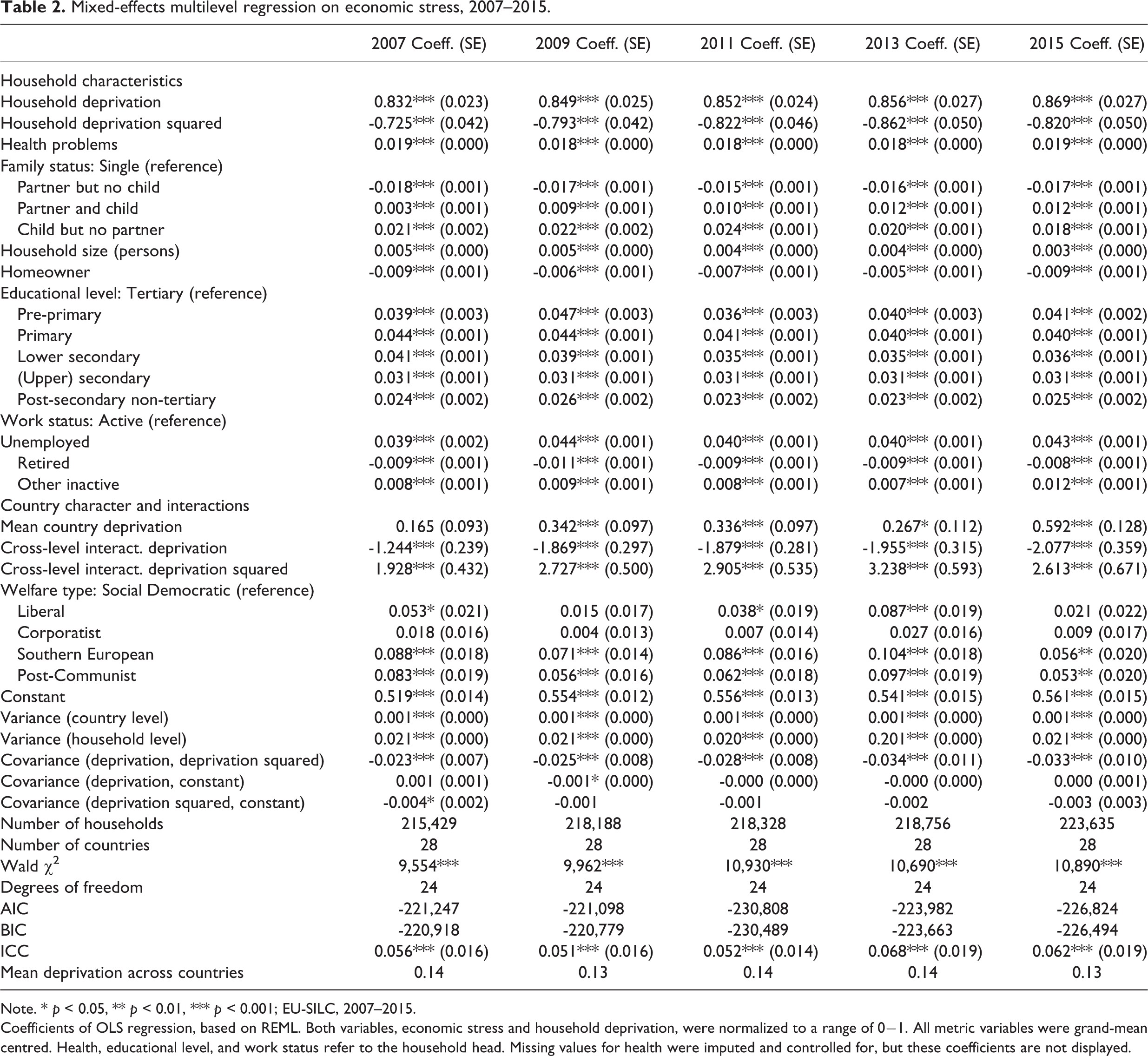
In the next step, the full model estimations were repeated for every second year between 2007 and 2015, to assess the development of the relationship between deprivation and economic stress. Table 2 shows this relationship over time, with other influences controlled for in each of the models. Because this relationship is estimated with five variables at two different levels, the overall impact of deprivation on economic stress is not easily judged from this table; it will therefore be presented step-by-step.
Mixed-effects multilevel regression on economic stress, 2007–2015.
Note. * p < 0.05, ** p < 0.01, *** p < 0.001; EU-SILC, 2007–2015.
Coefficients of OLS regression, based on REML. Both variables, economic stress and household deprivation, were normalized to a range of 0−1. All metric variables were grand-mean centred. Health, educational level, and work status refer to the household head. Missing values for health were imputed and controlled for, but these coefficients are not displayed.
The estimates in the upper part of Table 2 show that deprivation is by far the most important predictor of economic stress in households, but its impact increases only up to a certain stress level. The negative quadratic term for deprivation reveals that beyond that point, the impact of deprivation levels out.
As the cross-level interaction of deprivation is significant in each of the analyzed years (see the middle part of Table 2), hypothesis 1a is clearly supported. Given a certain level of deprivation, people judge their situation differently across European countries. The negative sign supports hypothesis 1b: On average, people in wealthier countries feel more stressed at higher levels of deprivation compared to people in poorer countries (see also Figure 1). Further analyses based on the full model illustrate this finding for the wealthiest and the poorest countries in 2011. Relatively deprived people––i.e. those in the fourth quartile of household deprivation––living in Norway, Sweden, Luxembourg, the Netherlands, Denmark, Austria, or Finland, feel significantly more stressed compared to people at similar deprivation levels living in other parts of Europe. Correspondingly, relatively deprived people living in Bulgaria, Latvia, Romania, Hungary, Lithuania, and Greece, feel less stressed compared to people at similar deprivation levels living in other parts of Europe. iv
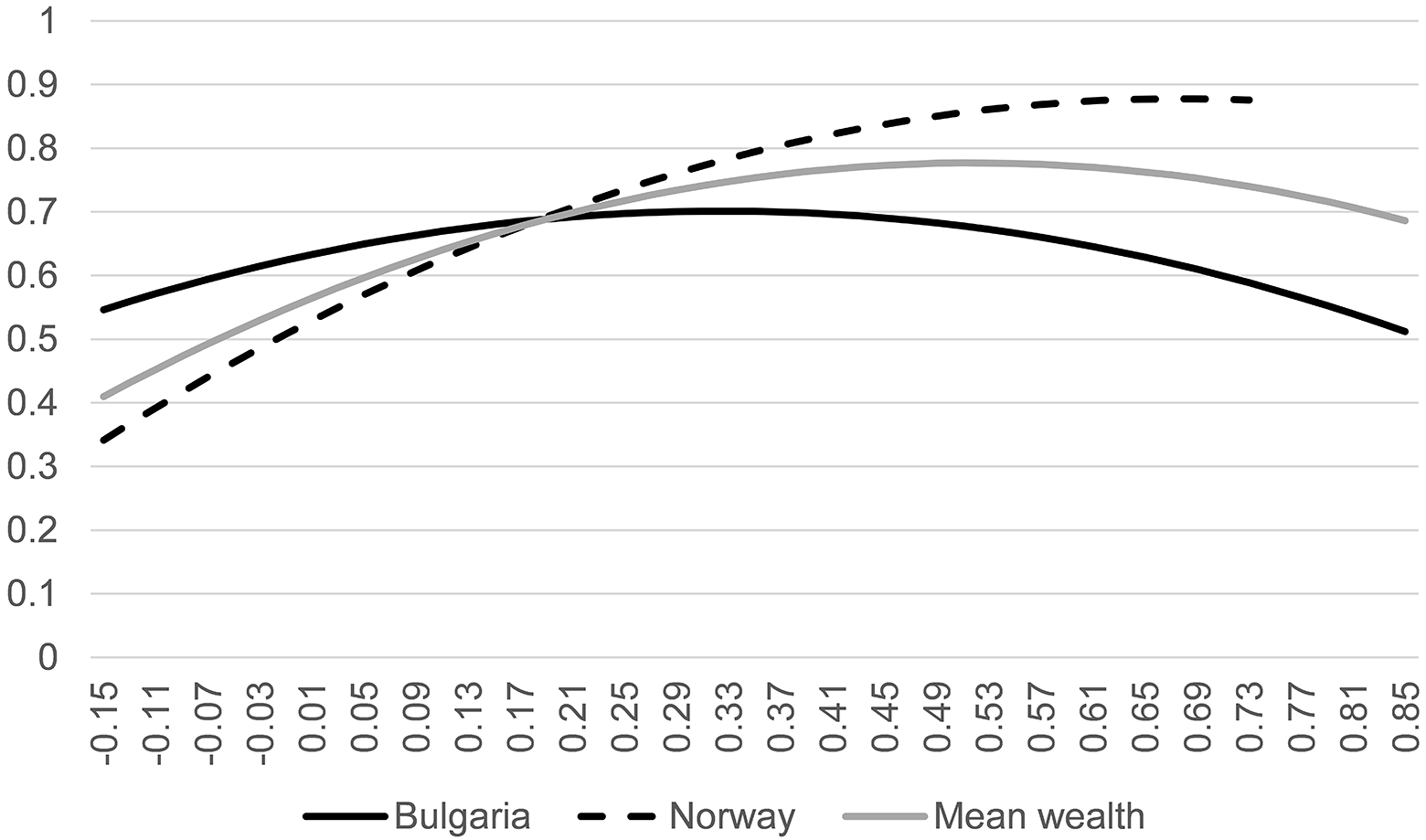
Economic stress at different levels of deprivation in two EU countries (2011).
Where the household is located in Europe is also important. Compared to people living in Social Democratic welfare states, people in Southern European and Post-Communist countries on average felt more economically stressed in each of the analyzed years, controlling for deprivation levels and other household characteristics. Whereas there was no difference in economic stress perception in Corporatist welfare states, in 2007, 2011, and 2013 people living in Liberal welfare states were also more stressed than those living in Social Democratic countries. These findings corroborate the notion that differences in welfare policy regimes are important for economic stress. At similar levels of deprivation, people living in Social Democratic and Corporatist countries are, on average, less economically stressed than those living in other parts of Europe. However, one should keep in mind that findings about associations with categories of country groupings are not causal explanations. Whether differences in policies, political systems, labour markets, population structure, political history or other aspects are responsible for this finding is not examined here.
The extent of variation in the impact of deprivation on economic stress can be judged from the covariance of deprivation and its squared term across countries. The respective row in the lower part of Table 2 shows that this covariance increased in absolute values up to 2013 and then stabilized (see also Figure 2), which corroborates hypothesis 2. However, with this research design it is not possible to test whether this increase in variation was statistically significant.
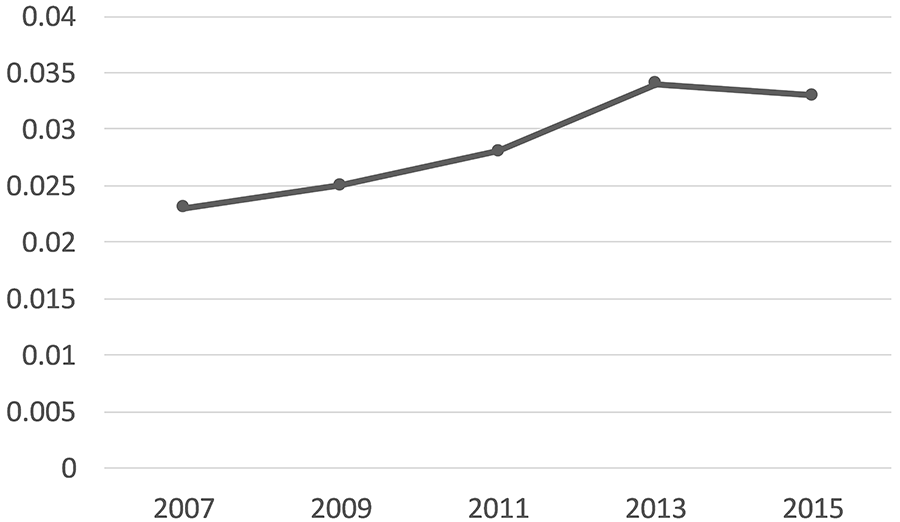
Variation of the impact of deprivation on economic stress across 28 EU countries 2007–2015.
Other estimates in Table 2 are as expected. People with health problems, families with dependent children and unemployed or otherwise economically inactive individuals feel, on average, more economically stressed at any given deprivation level. The contrary is true for homeowners, for childless couples and for highly educated individuals.
How the impact of deprivation on economic stress developed during the great recession
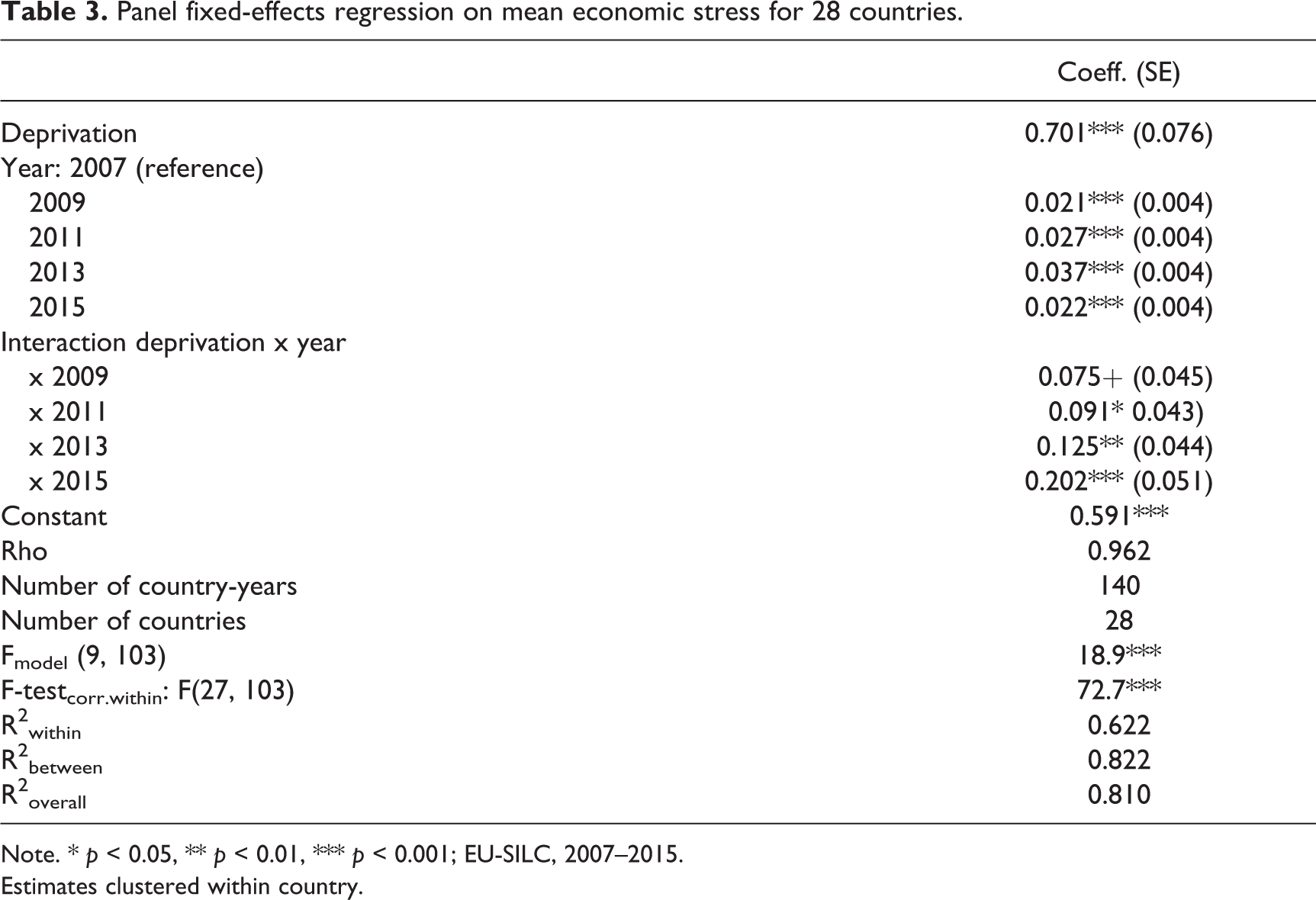
The estimates in Table 2 showed increased covariance in the impact of deprivation on economic stress across European countries over the timespan 2007–2015. To test whether the association between deprivation and economic stress differs significantly between the years on the country level, fixed-effects models were estimated. For this purpose, the 28 countries form a panel data set with repeated measurements at five time points, resulting in N = 140 country-years. With panel fixed-effects regression (Allison, 2009), the impact of mean deprivation on mean economic stress in each of the five years can be assessed, net of other country characteristics. The estimates are depicted in Table 3.
Panel fixed-effects regression on mean economic stress for 28 countries.
Note. * p < 0.05, ** p < 0.01, *** p < 0.001; EU-SILC, 2007–2015.
Estimates clustered within country.
The interaction terms in Table 3 show that the mean impact of deprivation on economic stress increased across the 28 European countries between 2007 and 2015. Figure 3a illustrates the development of economic stress during the great recession, making use of margins that have been calculated from the estimates in Table 3. Compared to the base year 2007, in each of the following years significantly larger levels of economic stress are estimated on the country level. This finding supports hypothesis 3a: In the great recession, mean economic stress increased significantly in Europe. The curve of mean economic stress peaked in 2013, and it has fallen again afterwards. But in 2015, the last year of our observation, mean economic stress was still significantly higher than before the crisis. Hypothesis 3b is not supported: The relative impact of deprivation on economic stress did not increase significantly at the country level during the great recession (see Figure 3b). Therefore, it can be concluded that mean economic stress in Europe increased due to averagely larger levels of material deprivation in Europe.
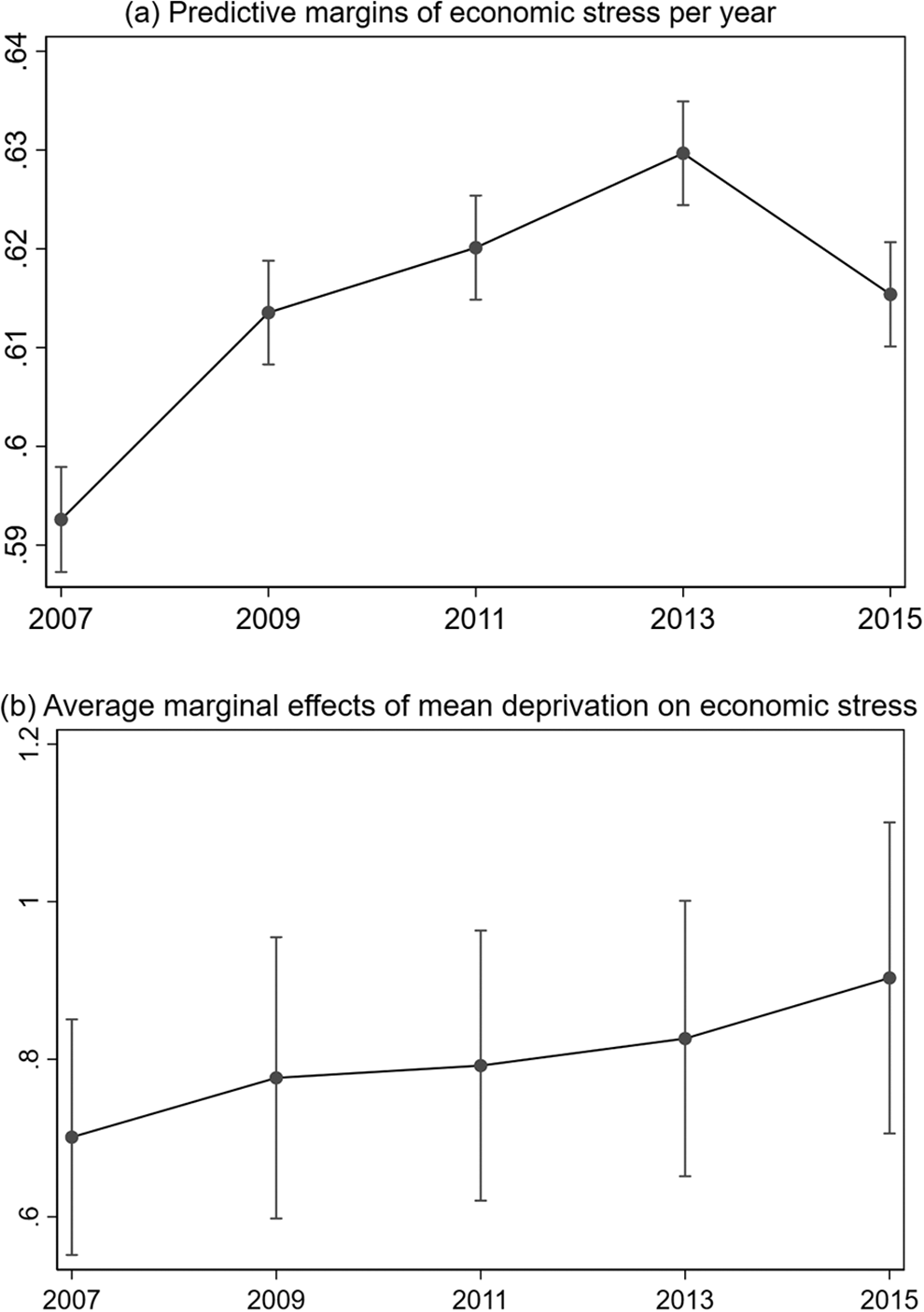
Margins of economic stress and deprivation across 28 EU countries, 2007–2015.
Does the great recession explain the impact of deprivation on economic stress?
The underlying hypothesis of this article is that the great recession undermined Europeanization because it was responsible for increased levels of deprivation in some European countries, thereby increasing the variance in economic stress between the countries. The analysis supported the hypothesized development; however, this finding does not prove a causal impact of the great recession on economic stress. Our means to statistically test such an impact are rather limited, as crises and recessions are complex and therefore hard to measure with a limited number of indicators, and because our data at hand is mainly cross-sectional. Nevertheless, a rudimentary test of the underlying hypothesis regarding the impact of the recession is conducted that might serve as a sensitivity test.
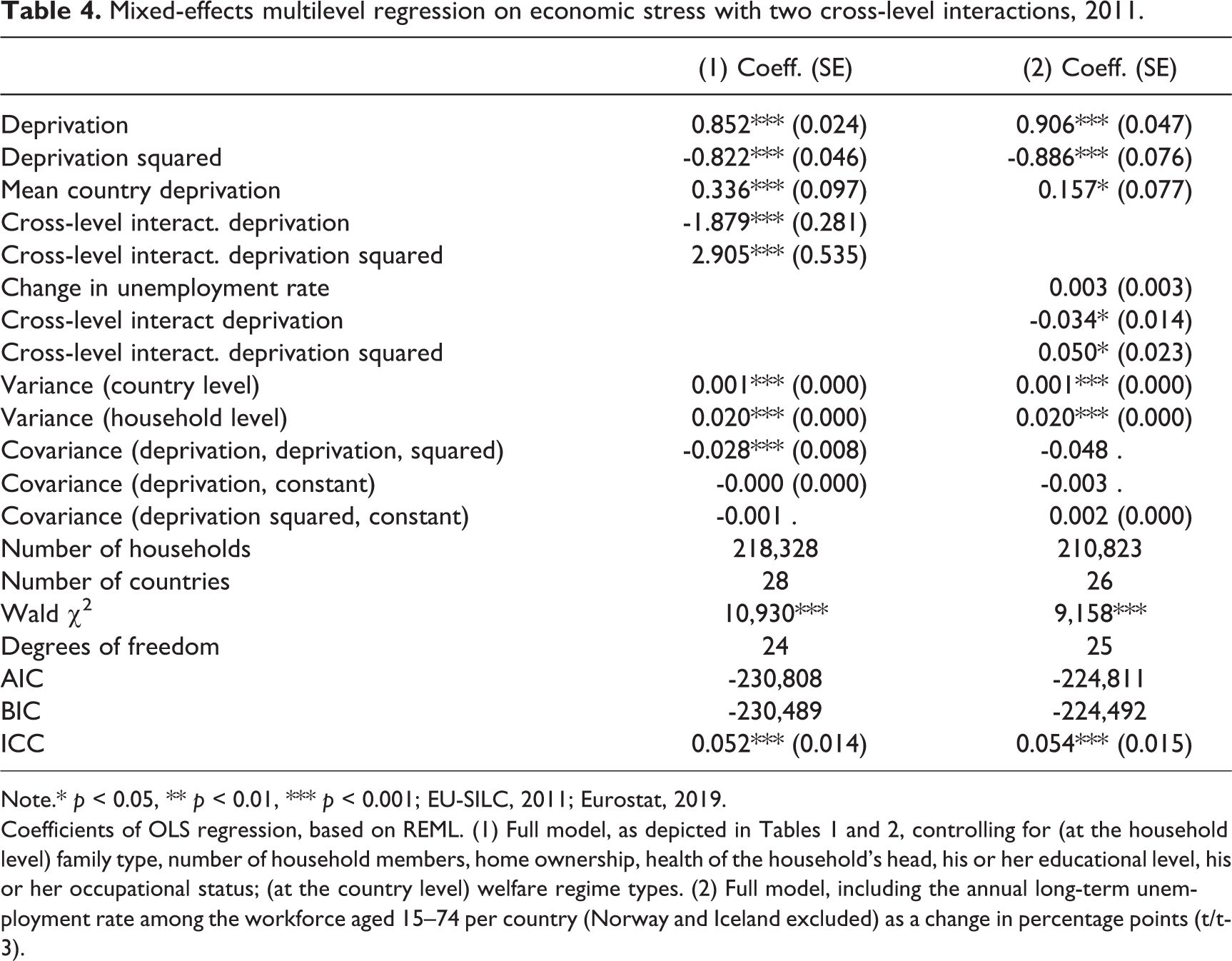
Mixed-effects multilevel regression on economic stress with two cross-level interactions, 2011.
Note.* p < 0.05, ** p < 0.01, *** p < 0.001; EU-SILC, 2011; Eurostat, 2019.
Coefficients of OLS regression, based on REML. (1) Full model, as depicted in Tables 1 and 2, controlling for (at the household level) family type, number of household members, home ownership, health of the household’s head, his or her educational level, his or her occupational status; (at the country level) welfare regime types. (2) Full model, including the annual long-term unemployment rate among the workforce aged 15–74 per country (Norway and Iceland excluded) as a change in percentage points (t/t-3).
In Table 4, mixed-effects multilevel regression on economic stress with two cross-level interactions is depicted for the year 2011, when the great recession was in full progress in most European countries. Model 1 in Table 4 repeats the estimates known already from Table 1 and Table 2, for reasons of comparability. In Model 2, the relative change in a country’s unemployment rate is additionally considered, and cross-level interaction terms with household deprivation and its square term are introduced. The estimates show that whereas the relative change in a country’s unemployment rate is positively but not significantly associated with a household’s economic stress, considering it at the same time reduces the impact of mean country deprivation markedly. From these estimates it can be concluded that the relative change in the unemployment rate explains a great deal of the impact of mean country deprivation on a household’s economic stress. The estimates suggest that the increase in economic stress due to deprivation is at least partly explained by a larger share of deprived families who were not deprived before. The cross-level interaction is again significantly negative; therefore, in countries with increasing unemployment rates, household deprivation has on average less impact on economic stress compared to countries with stable or decreasing unemployment rates. This finding corroborates the importance of national reference groups for subjective economic stress, and it is in line with earlier findings (Whelan and Maître, 2013): Being deprived does induce considerable economic stress, but less so in surroundings where relevant others experience the same fate.
Conclusion
The development of internationally equal living conditions is one of the most important political goals of the European Union. This goal has been challenged by the financial and debt crisis that began in 2008 and was followed by the great recession. These external events affected European countries quite differently. This contribution asks the ‘simple reference group question’ (Whelan and Maître, 2009), whether in Europe the association of material deprivation with economic stress is similar across countries and examines how this association developed during the great recession. Small variations in this association across countries could be interpreted as a sign of Europeanization with regard to the socioeconomic sphere, whereas a substantial variation would signify persisting differences between national societies. The association between deprivation and economic stress, and its development over time, were analyzed with data from the European Study of Income and Living Conditions (EU-SILC), using biannual cross-sections between 2007 and 2015, and applying mixed-effects multilevel and panel fixed-effects regressions.
First, a stepwise multilevel analysis with growing complexity of the models for 2011 was used to assess whether people in Europe judge their situation similarly across countries at a certain level of deprivation. The results showed that this is not the case. Instead there is substantial variation between the countries in this regard, as people in poorer countries on average feel less economically stressed by deprivation than people in richer countries. This result corroborates earlier findings (Whelan and Maître, 2013), and it holds under control of welfare regime types. Welfare regime types were found to be important over and above country-level deprivation. People in Southern European and Post-Communist countries feel on average more stressed at given levels of household- and country-level deprivation compared to people living in Social Democratic countries. As welfare regime types are taken into account, and as the models fit well and leave only a small part of the variance at the country level unexplained, the estimates of the impact of deprivation on economic stress are rather ‘conservative’.
Second, over the timespan of nine years between 2007 and 2015, the variation in deprivation’s impact on economic stress across European countries did increase up to 2011, and then stabilized. Such a development confirms our expectations, as the financial crisis affected European countries differently. Although we were not able to test whether the increase in variation of the association between deprivation and economic stress across the countries was statistically significant, the comprehensiveness of the models and their very good fit statistics allow us to conclude that this finding is substantial.
Third, the proposition that there was a significant increase in mean economic stress at the country level during the great recession was tested. In support of this expectation, significantly higher levels of mean economic stress after the onset of the financial crisis in 2008 were found across the European countries. These elevated levels were found to be mainly attributable to increased mean levels of deprivation. The hypothesis that the impact of deprivation on economic stress increased at the country level during the great recession was not supported. Overall, the findings suggest the persistence of national reference groups against which people compare their holdings. No evidence was found for a ‘Europeanization’ of social comparisons.
As a sensitivity test, an additional analysis was conducted to assess the underlying hypothesis about the crisis’ causal impact. The economic hardship people experienced in each country during the peak of the financial crisis was captured by the relative change in long-term unemployment rates between 2008 and 2011. Higher rates indicate a growing number of deprived families from the middle classes that had not been unemployed before. This indicator explains a great deal of the effect of mean country deprivation on economic stress. Therefore, this analysis supports the view that the findings of this study concerning the development of economics stress in Europe are attributable to the great recession. One strength of this analysis can be seen in the application of mixed-effects multilevel models that allow more precise assessments of the effects in question compared to previous analyses. Moreover, this seems to be the first study with repeated analyses of this relationship over time. However, there are also potential shortcomings.
A clear limitation of this study is that its analytical design was not suited to explain the potential causes of variations in the relationship between deprivation and economic stress at the country level. Instead, welfare regime types were considered in order to control the differences in the extent to which countries aim to support the poor. The analyses showed that not controlling for the worlds of welfare––or other suitable country-level influences––would severely bias the estimates of the relationship between household deprivation and economic stress (see Table 1). However, this finding does not prove the influence of welfare policy on the relationship in question. It would be desirable if this gap would inspire further research. As welfare regime types differ in many aspects, i.e. welfare policy, education policy, female labour force participation, etc. further studies might test whether certain country-level conditions moderate the impact deprivation has on economic stress.
The analysis was based on a relatively low number of 28 countries, which is close to the minimum number required for multilevel analysis to yield reliable results (Bryan and Jenkins, 2016). Because holding the number of countries stable was important for this analysis, the observation window was rather short, comprising only nine years. Another prerequisite for valid results was the stability of the main predictors. Starting in 2009, affirmative answers on arrears were differentiated between ‘yes, once’ and ‘yes, twice or more’. Both answers were combined to ‘yes’ in this analysis, to ensure comparability with earlier survey waves. Although the possibility of bias due to a change in the answer categories of the questionnaires could not be ruled out, it seemed unlikely because mean deprivation across countries did not increase in 2009 when the categories were changed (see the last line in Table 2).
Another restriction of the analytical design of repeated cross-sectional multilevel models is that we were not able to statistically test whether the increased variation in the impact of deprivation on economic stress across the countries was statistically significant. However, as outlined above, the comprehensive design and fit statistics of the models speak for the validity of this finding. The additional analysis conducted to rudimentarily test the underlying assumption of the crisis’ impact made use of aggregate data from Eurostat, which was not available for all countries. The analysis of the influence of long-term unemployment rates on economic stress was restricted to EU countries, excluding Norway and Iceland. But as the additional analysis was not part of the trend analysis and instead aimed at identifying causal relationships, this restriction might be of minor importance.
This paper contributes to the body of research on the development of social inequality in Europe from a birds-eye perspective. Other studies found an increase in poverty and economic vulnerability in those European countries that suffered most during the great recession. This study complements these findings by pointing to an increased variance across the countries regarding the extent to which deprivation is associated with economic stress.
Supplemental Material
Supplemental Material, sj-pdf-1-asj-10.1177_00016993211001121 - How material deprivation impacted economic stress across European countries during the great recession. A lesson on social comparisons
Supplemental Material, sj-pdf-1-asj-10.1177_00016993211001121 for How material deprivation impacted economic stress across European countries during the great recession. A lesson on social comparisons by Stefanie Kley in Acta Sociologica
Footnotes
Acknowledgement
The author thanks Johannes Huinink and Martin Heidenreich for their kind support.
Funding
The author(s) disclosed receipt of the following financial support for the research, authorship, and/or publication of this article: This research was partly supported by the German Research Foundation [FOR 1539].

Supplemental Material
Supplemental material for this article is available online.
Notes
References
Supplementary Material
Please find the following supplemental material available below.
For Open Access articles published under a Creative Commons License, all supplemental material carries the same license as the article it is associated with.
For non-Open Access articles published, all supplemental material carries a non-exclusive license, and permission requests for re-use of supplemental material or any part of supplemental material shall be sent directly to the copyright owner as specified in the copyright notice associated with the article.
