




Abstract
The removal of phenolic compounds from aqueous solutions using novel adsorption techniques becomes a key research item. Of those, nanoparticles in particular, the low-cost and the high-strength aluminum oxide nanoparticles showed promising results in pollutant uptake and increase in the adsorption efficiency. This study examined various physicochemical process parameters such as temperature, pH, initial phenol concentration, and adsorbent doses, in addition to the impact of those parameters on the adsorption removal mechanism of phenol. The results highlighted that aluminum oxide nanoparticles successfully exhibited superior phenol removal from an aqueous solution in addition to a high potential regeneration of the consumed nanoparticles by HCl. For the adsorbent mass of 0.5 g, phenol adsorption uptake reached 92%. Kinetic studies performed using several models demonstrated the data best fitting with a pseudo-second-order kinetic model. Examining equilibrium studies of various isotherms, the adsorption data of phenol into aluminum oxide nanoparticles was confirmed to be controlled by film diffusion and best represented by the Langmuir isotherm. The maximum capacity of adsorption was 16.97 mg/g. For thermodynamics studies, the results indicated that the adsorption process can vary between endothermic and exothermic reactions. Such relative differences in heat generation and spontaneity in adsorption processes were demonstrated and confirmed by principal component analysis (PCA). This evidence is key for future investigations for the efficiency of adsorption conditions concerning the contaminant type and adsorbate compounds.
1. Introduction
Phenol is a common aromatic hydrocarbon, which is toxic and very soluble in water [1]. It exists in high concentrations in various types of wastewater, such as pesticide, chemical manufacturing, pulp, plastic, textile, coke manufacturing, dyes, and resin-manufacturing effluents [2]. Its concentration in effluents can range from 1 mg/L to several hundred milligrams per liter [3]. Due to its deployment as raw material or intermediate compounds or being generated as a final product, large quantities of phenolic compound effluent possess issues [4]. Phenol can cause severe health problems to the skin, eyes, lungs, liver, kidneys, and central nervous system [2]. Phenol is also toxic to plants and aquatic life [3]. The phenol concentration in wastewater should not surpass 1 mg/L according to the Environmental Protection Agency [2]. As a result, wastewater containing phenol should be treated before discharging it into the environment. Several technologies can be used to reduce the concentration of phenol in wastewater, such as chemical oxidation, electrochemical techniques, membranes, and biological treatment methods. However, chemical techniques are expensive and can produce harmful byproducts [5, 6]. Nonetheless, the biodegradation of phenol using biological processes is still a challenge because it can inhibit microorganisms at high concentrations [7, 8]. Alternatively, the removal of phenol using membrane technologies is associated with a very high cost.
Adsorption is one of the technologies that can remove phenol from wastewater by transferring it from the liquid phase to a solid surface [9–11]. The development of various adsorption technologies in comparison to other chemical technologies can be attributed to their low cost and their simplicity. It is also insensitive of toxic substances [12]. Additionally, adsorption proved to be successful in the removal of both inorganic and organic pollutants from wastewater [13–16] and highly efficient at low concentrations of contaminants [4] with a minimal byproducts. Various types of adsorbents have been examined in the removal of different pollutants [17, 18]. Moreover, coupling nanotechnology with adsorption has been found to be very efficient. Nanoparticles have a large surface area and can be supported on various materials [19]. Several types of nanoparticles have been examined in the uptake of pollutants from aqueous solutions [20]. For instance, carbon nanotubes have been employed in the removal of heavy metals [21]. Iron oxide nanoparticles and copper oxide nanoparticles have been used in the removal of arsenic from wastewater [22, 23]. Similarly, the removal of various contaminants from aqueous solution such as arsenate, chromium, and mercury was attained using zirconium-based nanoparticles [24], carbon nano-onions [25], and nano-titanium dioxide [26], respectively.
Aluminum oxide nanoparticles are among the first inorganic nanoparticles to be examined as an adsorbent material. This is due to their high efficiency in pollutant uptake and their high strength and low cost [27]. The main disadvantage is the separation process when applied on a full scale. A previous study has shown that aluminum oxide nanoparticles were able to remove orange G and their adsorption capacity was 93.3 mg/g [27]. Another study used aluminum oxide nanoparticles in the removal of cadmium and lead, and the adsorption capacities were 78 and 217 mg/g, respectively [28]. A third study showed that thiophenes can be adsorbed using aluminum oxide nanoparticles [29]. Another study examined the ability of aluminum oxide nanoparticles to remove methylene blue, and the maximum capacity of adsorption was
While aluminum oxide powder was previously examined to remove phenol from aqueous solution and showed good results in the adsorption process [34], it can be hypothesized that applying aluminum oxide material in a nanoscale can improve the adsorptive removal efficiency of the pollutants. Given these facts and the apparent research gaps, examining the ability of aluminum oxide in the form of nanoparticles as an adsorbent [35, 36] is crucial. Moreover, phenol can cause severe environmental and health problems if it is not removed from wastewater. To the best of the authors’ knowledge, the phenol removal from an aqueous solution using aluminum oxide nanoparticles has not yet been studied. The overall objective is to study the capacity of aluminum oxide nanoparticles to remove phenol from an aqueous solution in different experimental conditions. The manuscript also presents detailed information and investigations regarding the adsorption kinetics, adsorption capacity, equilibrium, thermodynamics, and isotherm interpretation in addition to the regeneration and desorption potential of the adsorbent.
2. Materials and Methods
2.1. Preparation of Aluminum Oxide Nanoparticles
The preparation of aluminum oxide nanoparticles was performed using the c-precipitation technique with aluminum sulfate and sodium hydroxide precursors as described elsewhere [37]. 0.1 M of aluminum sulfate was dissolved in a distilled water, and the solution was then preserved under constant stirring for one hour. After the complete dissolution of the aluminum sulfate, 0.2 M of sodium hydroxide solution was added. The white creamy solution was left to settle overnight, and then, the supernatant was carefully discarded. The precipitate was washed several times using distilled water and then was dried overnight at 80°C. Complete conversion of aluminum hydroxide into alumina during drying was attained. The Brunauer–Emmett–Teller (BET) surface area was determined by N2 adsorption/desorption. The X-ray diffraction (XRD) pattern was obtained for aluminum oxide nanoparticles using X’Pert Pro with a monochromator with Cu radiation. Measurements were performed at 45 kV and 35 mA. The reflection peaks were obtained using a 0.03°/s scanning velocity at 2θ from 10° to 70°.
2.2. Adsorption Experiments
Batch experiments of adsorption were conducted at
2.3. Kinetics, Equilibrium, and Thermodynamics
Several modeling techniques can be used to predict the efficiency of the adsorption process [39]. Adsorption experiments were conducted at different contact times (5–120 min) to perform kinetic studies. The thermodynamic experiments were performed at four different temperatures ranging from 30°C to 60°C while the equilibrium models were studied at the equilibrium contact time (2 h). To perform the kinetic calculations, the following linear equations were used for the PFO and PSO kinetic models, the Elovich model, intraparticle diffusion model, and Boyd model [40]:
The amount of adsorbed phenol onto aluminum oxide nanoparticles at equilibrium can be expressed using several adsorption isotherms. The following four isotherms (Langmuir, Freundlich, Dubinin-Radushkevich, and Temkin) have been used in equilibrium studies. The linear forms of these isotherms are stated as follows:
Statistical analyses such as one-way analysis of variance (ANOVA) and Tukey pairwise comparisons in Minitab were performed to compare and determine the significant similarity and differences between different conditions and the characteristics of their samples. For any statistical differences, various key parameters and normality of the data were considered (i.e., analysis of data distribution was pre-examined for normality to decide the applicable test). To compare the significant differences in the values of the mean of the datasets, the
3. Results and Discussion
3.1. Characterization of Aluminum Oxide Nanoparticles
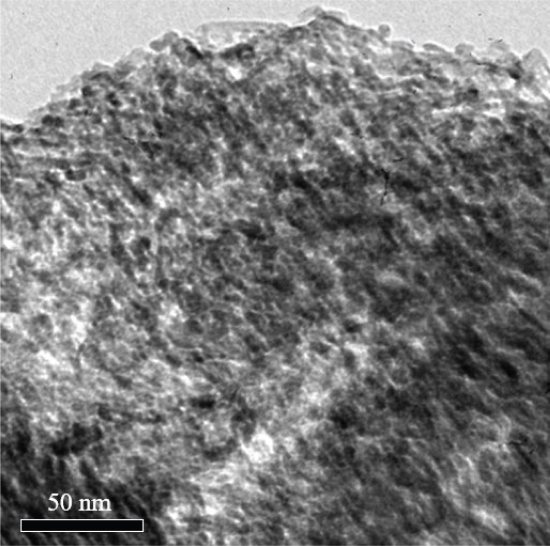
Figure 1(a) shows the aluminum oxide XRD spectra. The adsorbent is crystalline in nature due to the presence of peaks. The Brunauer–Emmett–Teller (BET) surface area was found to be 6.26 m2/g, and this is consistent with Prabhakar and Samadder [42]. Fourier-transform infrared (FTIR) spectroscopy was performed for the aluminum oxide nanoparticles, as shown in Figure 1(b). The peaks observed at 615 and 636 are assigned to the aluminum oxide stretching. The peak at 1127 indicates the triply degenerate vibrational mode of the sulfate ion. The peaks at 1646 and 3526 are related to the bending and stretching vibration mode of a water molecule [4]. The examination of the surface of the aluminum oxide nanoparticles was performed using a transmission electron microscope. Figure 1(c) reveals that all particles are well crystallized, and the size of the particles is in the nanorange.

The characterization of the aluminum oxide nanoparticle adsorbent material using (a) the X-ray diffraction pattern, (b) Fourier-transform infrared spectroscopy, and (c) transmission electron microscopy image.

As illustrated in Figure 2, the zero charge point (

Plot of the pH drift method.
3.2. Influence of the Initial pH, Initial Adsorbent Dose, and Stirring Speed
Various effects of the experimental operating conditions were investigated as depicted in Figures 3(a)–3(c). The effect of the initial pH was investigated to demonstrate its impact on the adsorption process (Figure 3(a)) and the removal efficiency of phenol at various initial pH values (2, 4, 6, 8, 10, and 12). The results demonstrated that the best removal efficiency was obtained at a pH of 6 with 85% removal. At higher pH values, the removal efficiencies were lower than those obtained at lower pH values. This phenomenon could be related to the

The removal efficiency of phenol at (a) various pH levels at an applied adsorbent


With regard to the initial adsorbent dose (Figure 3(b)), the effects of different adsorbent doses of aluminum oxide nanoparticles ranging from 0.1 g to 0.5 g were examined. The adsorption stages usually encompass an initial stage followed by a second stage. A high mass transfer driving force is expected by the high phenol concentration at the initial stages of the adsorption process. For adsorbent mass of 0.5 g, the phenol adsorption uptake reached to 92%. The increase of the initial aluminum oxide concentration from 0.1 g to 0.3 g led to 30% increase in the removal efficiency. However, the maximum uptake reached a plateau above 0.5 g of adsorbent mass. It is worth noting that the available adsorption sites could increase with the increase of adsorbent doses that leads to a greater ability to adsorb phenol. This reflects the high dependence of the adsorption process on the initial concentration, and the increase in initial concentration could have a significant effect on the final equilibrium time [48, 49].
The effect of the stirring speed on the removal efficiency of phenol was determined (Figure 3(c)). The overall trend is the increase of the removal efficiency of phenol with the increase of stirring speed. However, when we applied various stirring speed range (50 rpm to 300 rpm), a plateau was observed with a slight decline above a stirring speed of 200 rpm. This phenomenon where the efficiency of the phenol removal had a cut off stirring speed at 200 rpm can be attributed to the available adsorption sites. The high stirring and mixing speeds are able to force the phenol to penetrate the micropores and reach more available adsorption sites. However, at a stirring speed of more than 200 rpm, the high speed caused shear forces that led to the desorption of phenol from the surface of the adsorbent and resulted in a decrease of the adsorption capacity (i.e., removal efficiency) [50]. It is worth remarking that the adsorbed molecules could also create repulsive forces during the later stage of adsorption which can be boosted at high stirring speed. The former fact indicates the major effect of stirring speed as a major factor in the determination of the mechanism of adsorption and adsorption rates [49].
3.3. Influence of the Initial Phenol Concentration and Contact Time
The adsorption kinetics is important for the selection of the optimum operating conditions for the full-scale adsorption processes [49]. Thus, the effects of the initial concentration of phenol and the contact time were investigated, as shown in Figure 4. The results showed that the removal efficiencies increased rapidly in the first 20 min and more than 50% of the removal was achieved for all concentrations. Subsequently, the removal efficiencies increased slowly until reaching equilibrium after 2 h. The maximum removal efficiency during the entire experiment duration was obtained at 400 mg/L at a removal efficiency level of 92.5%. The results revealed that the initial concentrations have a significant effect on the removal efficiencies of phenol. To grab a better understanding, at the low phenol concentrations (<400 mg/L), their removal efficiencies increased due to the high adsorption sites present in the aluminum oxide nanoparticles, which can accommodate these ranges of phenol concentrations. The combination of the large number of vacant and available adsorption sites with the high concentration of the adsorbate at the initial stage could provide a high driving force for adsorption at these moderate and small concentrations. On the other hand, at higher concentrations, the available sites of adsorbent are not adequate to accommodate higher concentrations, so the removal efficiencies decreased. Using this hypothesis, the number of available sites could also decrease with time while the adsorbate molecules start to compete for the remaining sites and the adsorbed molecules start to create repulsive forces during further adsorption. The kinetics section illustrated later can highlight these findings with respect to the adsorption rate and the potential of the fast adsorption process on the exterior surface of the adsorbent at the initial stage while at the later stages, dominating most of the exterior sites, the adsorbate molecules could start penetrating the pores to reach the interior adsorption sites at a slow process.

Removal efficiency of phenol at various initial concentrations at
3.4. Kinetic Studies
The linearized forms of the pseudo-first-order (PFO), pseudo-second-order (PSO), intraparticle diffusion, and Elovich and Boyd kinetic models are depicted in Figure 5. Generally, a good fit of the experimental data to the different models was observed. The results illustrate that the correlation coefficient (

Kinetic studies: (a) pseudo-first-order (PFO), (b) pseudo-second-order (PSO), (c) intraparticle diffusion, (d) Elovich, and (e) Boyd kinetic models.
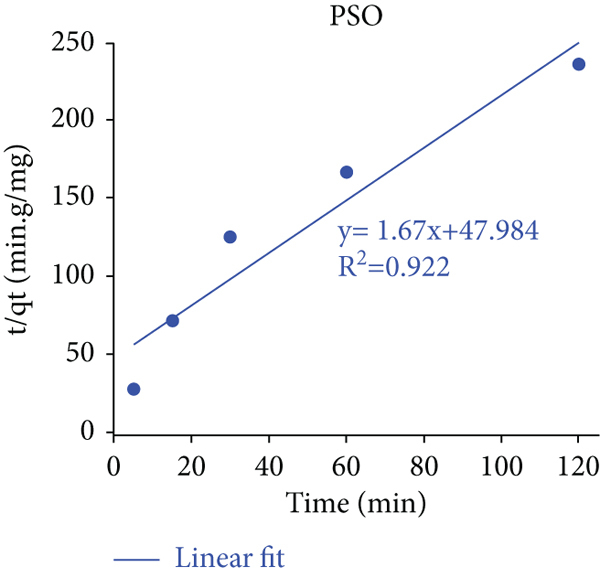


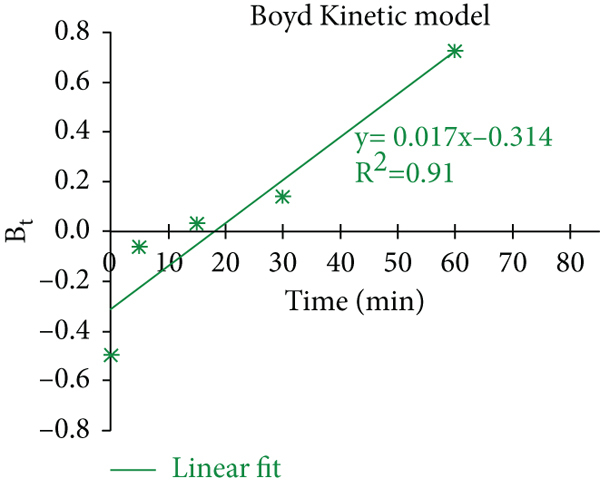
Because the three kinetic models cannot describe the mechanism of diffusion, additional models were tested to determine the rate-controlling steps in the phenol adsorption. During the phenol uptake, three successive steps can occur. First, phenol transfers from the bulk solution to the external surface of the nanoparticles in a step called film diffusion. Second, phenol moves through the interior particles of the nanoparticles in a step called particle diffusion. Third, phenol attaches to the interior surface of the nanoparticles in a step called adsorption. Figure 5(c) shows the linear form of the data using the intraparticle diffusion model. Because the data can be divided into three linear portions, the process of adsorption is controlled through a multistep mechanism. The value of
3.5. Equilibrium Studies
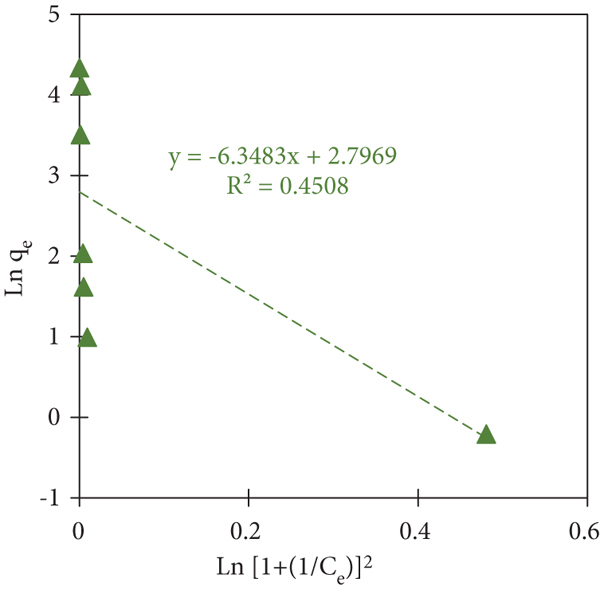
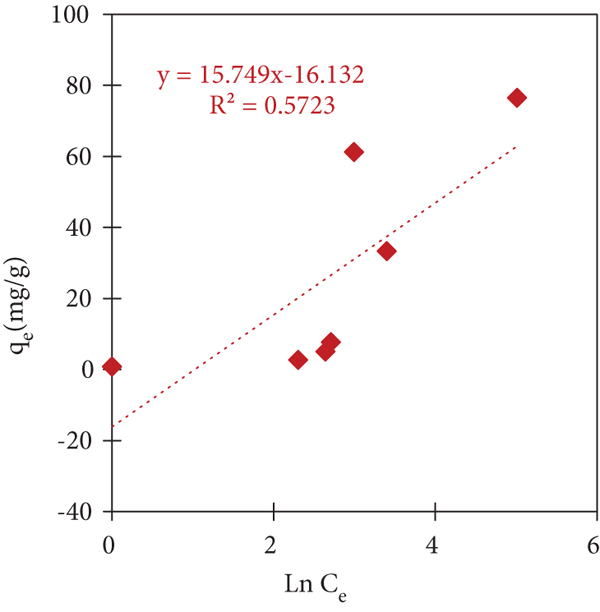
Four different isotherms were examined to find the appropriate model for the design process. Each isotherm has certain assumptions. In the Langmuir isotherm, all sites of adsorption have the same energy. In the Freundlich isotherm, the adsorption occurs on a heterogeneous surface. In the Dubinin-Radushkevich isotherm, it interprets the porous structure of the surface of the nanoparticles. In the Temkin isotherm, a linear decrease in the heat of the adsorption occurs along with the coverage of the surface. Figures 6(a)–6(d) reveal the linear plots of the four isotherms. The results demonstrate that the maximum coefficient of correlation was obtained using the Langmuir isotherm (

Isotherms: (a) Langmuir, (b) Freundlich, (c) Dubinin-Radushkevich, and (d) Temkin.

Comparison of the maximum capacities of the adsorption of phenol onto different materials.
The removal efficiencies of phenol, using aluminum oxide nanoparticles, are higher than those obtained when using adsorbents with a large particle size and are quite similar to those obtained from some other nanoparticles. For example, vernadite was used for the removal of phenol, through the adsorption process, and the maximum removal efficiency was approximately 85% [56]. On the other hand, phenol removal was examined using nano-zero-valent iron and supported nano-zero-valent iron and the removal efficiencies were approximately 94% and 90%, respectively, which is close to the values obtained in this study [57]. When the phenol removal efficiencies are compared with those of other treatment technologies, the adsorption process using nanoparticles shows excellent results. In a study using the electrocoagulation technique with zinc electrodes, the maximum efficiency of phenol removal was 85% [58]. In another study, microbial fuel cells were used to remove phenol and the maximum removal efficiency reached was 63% [59]. Therefore, the use of aluminum oxide nanoparticles for phenol removal is better than the use of other treatment technologies, not only because there is high removal efficiency but also because other systems are more complex. Moreover, metal oxide adsorbents can provide an additional benefit, since adsorbents can be used, after the adsorption process, in a photocatalytic oxidation reactor where further removal of phenol can be achieved [60].
3.6. Thermodynamics
Figure 7 reveals the linear plot of the thermodynamic equation (

Linear plots of data for the thermodynamic model.
Thermodynamic model parameters.
The principal component analysis (PCA) was performed to further reveal the relative influence of aluminum oxide nanoparticles on adsorption and various adsorption parameters (Figure 8). The respective contribution to the total variance in PCA analysis of all treated samples was manifested by varying percentages of 68 and 31.2 for both axes PC 1 and PC 2, respectively. The variations in the PC1 direction contributed to 68% of the total variations, and this attributes to the broad separation of the adsorption-treated samples in this direction. The data for high temperatures (50 and 60°C) and high concentration samples (700 and 1000 mg/L) denoted as (T60, C1000; T60, C700; T50, C1000; and T50, C700) were clustered together in the right quadrants. The temperature at 60°C only (T60, C700 and T60, C1000) was singled out in the top-right quadrant. For the low concentrations and low-temperature treatment (T30, C70; T30, C100; T40, C70; and T40, C100), the samples were associated in few groups and clusters directed to the opposite direction of PC1.

(a) Score plot for PCA analysis of treated samples, PC 1 (68%) and PC 2 (31.2%). (b) Biplot and loading plot of PC1 and PC2 with project lines of all treated samples where sample loadings are represented as vectors radiating from the origin. Sample scores are color coded and indicated by symbols according to each temperature; samples that are similar will plot near to each other (clustered together).

Generally, group 1 and group 2 samples exhibited a weak association with phenol removal and
In the same sense, a cluster analysis was performed to examine the influence of aluminum oxide nanoparticles on adsorption and correlate it with the PCA observations (Figure 9). Similarly, the cluster analysis emphasized four main clusters of data at a similar level of 53.11 in which cluster 1 encompassed (T30, C100; T30, C70; and T40, C70); cluster 2 included (T30, C1000 and T30, C700); cluster 3 included (T60, C100; T50, C100; T40, C100; and T50, C70); and cluster 4 encompassed (T60, C1000; T60, C700; T50, C1000; T50, C700; T40, C1000; and T40, C700). The results indicated that metrics based on concentration and adsorption temperatures are favorable for multivariate analysis and PCA assessment to categorize adsorption conditions based on their relative performances.
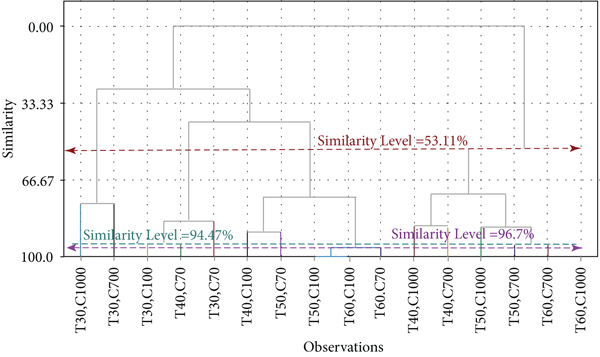
Dendrogram of the cluster analysis for all treated samples based on adsorption conditions. At a similarity level of 51.1, 4 main clusters were observed similar to PCA.
3.7. Regeneration of the Nanoparticles
It is important to study the regeneration ability of the consumed adsorbent to reduce the cost of the process of adsorption and to decrease the problems associated with the disposal of the consumed material [30]. In practice, regeneration studies have been performed using solvents, such as acids. Hydrochloric acid (HCl) has been used for desorption experiments, and various concentrations have been used ranging from 0.2 to 1 N HCl. Table 3 displays the desorption efficiencies at various HCl concentrations. The results demonstrated that HCl could remove up to 50% of the amount of the phenol on the nanoparticle surface and an approximately constant value of removal was reached at 0.8 N HCl and higher.
Desorption efficiencies at various HCl concentrations at the initial concentration of phenol of 400 mg/L.
4. Conclusion
Aluminum oxide nanoparticles successfully exhibited superior phenol removal from an aqueous solution in addition to a high potential regeneration of the consumed nanoparticles by HCl. The nanoparticles were crystalline in nature due to the existence of peaks. At higher pH values, the removal efficiencies were lower than those obtained at low pH values. The maximum removal efficiency of phenol reached 92.5% in which an increasing trend of efficiency was observed with the increase of the dose. The results reveal that the efficiency of the removal of phenol increased with increased stirring speeds. Kinetic studies showed that the data fit the PSO kinetic model. The adsorption of phenol onto aluminum oxide nanoparticles is controlled by film diffusion. Based on the equilibrium experiments, the data demonstrated the best fit with the Langmuir isotherm. The results indicated that the process of adsorption is endothermic due to the positive sign of
Footnotes
Data Availability
All the data used to support the findings of this study are included within the article.
Disclosure
This research did not receive any specific grant from funding agencies in the public, commercial, or not-for-profit sectors.
Conflicts of Interest
The authors declare that they have no conflicts of interest.