




Abstract
This work describes an experimental study on the possibilities of harvesting energy from tree trunks in order to power sensor nodes for environmental monitoring, particularly in wild forests. As the trunk of a living tree can be divided into isothermal subvolumes, which are generally referred to as annual rings, and the trunk is a good heat storage material, depending on the tree dimensions and its species, it can potentially offer different temperature gradients according to the tree trunk depths. The hypothesis is to consider the application of this temperature gradient on the faces of a Peltier cell to obtain electrical energy. In order to evaluate this hypothesis, a wireless sensor network was developed for measuring internal temperature of trunks from different trees. The experimental results show that it is possible to obtain a sufficient temperature gradient to harvest energy from tree trunks. Additionally, it is also shown that it is possible to harvest thermal energy during the day and during the night while photovoltaic cell only works under sunlight.
1. Introduction
Wireless sensor networks (WSNs) are an important technology for large-scale monitoring, which provides sensor measurements at high temporal and spatial resolution [1–4]. A typical WSN is composed of different sensor nodes distributed in a region or environment to be monitored. These sensors communicate wirelessly with a sink node, which sends the gathered data to the control station for processing and evaluation of the data [5].
In most cases, the sensor nodes in WSNs are equipped with low-cost, low-power, low-complexity hardware and single-chip radio transceivers [2, 6]. A wireless sensor network can monitor one or more variables in a specific region or event. Variables as temperature, wind speed, humidity, vibration, and pressure, among others, are usually monitored in such networks [7].
An important application of WSN is in environment monitoring (Environmental Sensor Network, ESN) that has attracted considerable research interests in recent years [4] since it can be applied in pollution monitoring, meteorological conditions measurement (e.g., temperature, wind velocity, solar radiation, and atmospheric precipitation), forest fire, seismic activity, volcano monitoring, and so forth [5].
A very significant issue related to ESNs is that the sensor nodes are usually powered by the battery with limited capacity, which restrains the lifetime of the network [6], and used-up batteries are potentially dangerous for natural environments [8]. Furthermore, batteries need to be regularly replaced or recharged, which may be very difficult, dangerous, or even impossible in remote or inaccessible locations [6, 8, 9] and can imply additional costs and complexity to regularly replace or charge batteries [10].
A critical characteristic of WSN is its lifetime, which is defined as the round number when the first node runs out of energy [9]. In order to maximize the lifetime, it is required either to use high-capacity batteries, consequently, bigger battery size (however, this can increase the danger for natural environments), or to design low-power node circuits. These approaches could extend the WSN lifetime as far as possible, but it will be always finite, in other words, only as long as the battery lasts.
However, in order for an ESN to operate in an energy autonomous, maintenance-free manner and with infinite lifetime (taking only the battery capacity into consideration), it needs to be powered from environmental energy [11]. In this context the energy harvesting technology has emerged.
Energy harvesting is defined as the practice of capture, accumulation, and storage of energy from surrounding environmental sources [12–18]. Energy harvesting devices are potentially attractive as alternatives for batteries in low-power wireless sensor nodes or to extend battery lifetime by charging rechargeable batteries [19]. Environmental Sensor Networks are potentially beneficiaries of energy harvesting improvements.
In another context, the development and adoption of ESNs into real scenarios motivated several opportunities for applications in the agriculture and forestry fields, although such scenarios lead to real challenges and problems [20]. One of the real practical problems, as said before, is the usage of batteries and what to do with used-up ones. One solution is to not use batteries and to adopt a particular approach based on energy harvesting suitable for the agriculture and forestry field.
Taking this particular situation into consideration, the goal of this work is to describe the proposal to harvest energy from tree trunks to maintain wireless sensor nodes active for longer periods. To the best of our knowledge, the energy harvesting of sensor nodes from tree trunks is a novel and viable approach to extend environmental monitoring. The objective is the deployment of a long-term operational WSN for environmental monitoring. Variables as temperature, humidity, and pressure among others can be gathered from trees in order to better monitor the impacts of human activities in urban or wild forests. The obtained experimental results show the viability of WSN nodes based on energy harvesting from tree trunks for environmental monitoring.
The remainder of this paper is organized as follows: Section 2 introduces the proposed energy harvesting system and thermoelectric generation in detail. Section 3 presents some background about the behavior of tree internal temperature. Section 4 discusses the proposed idea of harvesting energy from tree trunks. Section 5 shows experimental results. Section 6 concludes the paper and gives possible future directions.
2. Energy Harvesting System
Energy harvesting is defined as the practice of capture, accumulation, and storage of energy from surrounding environmental sources [12, 13, 15–18] where the energy source can be one or a combination of the available sources such as solar, light, temperature, motion, or electromagnetic waves.
Energy harvesting devices are potentially attractive as alternatives for batteries in low-power wireless sensor nodes or to prolong battery life by charging rechargeable batteries [24].
Figure 1 presents a basic architecture of an energy harvesting based sensor node. The main components of the energy harvesting part are (I) the energy transducer, (II) the energy management circuit, and (III) optional storage devices as batteries or supercapacitors. The energy transducer performs the conversion of a primary energy source (like solar, thermal, mechanical vibration, etc.) to electrical energy and the energy management circuit carries out voltage rectification, conversion, regulation, and so forth.
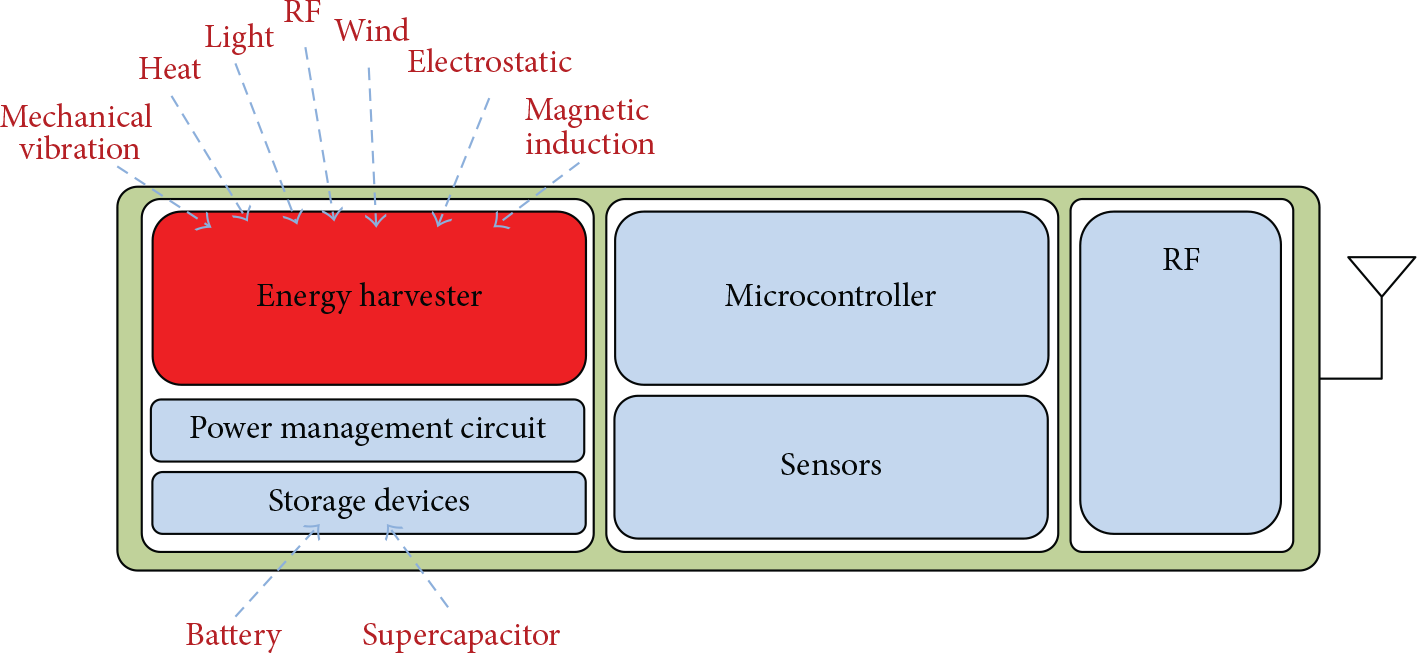
Basic architecture of an energy harvesting based sensor node.
In the next section, we will focus on some explanation about the behavior of tree internal temperatures and the basic idea to harvest energy from a tree trunk.
3. Behavior of Tree Internal Temperature
Under the tree bark there is a living organism full of life-giving processes hidden from human view, and one of these processes is the ability of trees to absorb water and mineral nutrients from the soil and to collect carbon dioxide and solar energy with their leaves [25]. As a consequence, tree trunks can store considerable amounts of energy in the form of heat where the correspondent heat storage rate (e.g., in J s−1, or W) can be represented as follows:

In this way, according to the tree trunk dimensions and its species, its heat storage can potentially be important for obtaining different temperature gradient

Tree trunk cross section [21].
As described, a tree trunk is a living organism and in conjunction with its heat storage characteristic, as shown in (1), it is believed that the temperature gradient
With this assumption, it is straightforward to consider the temperature gradient of trees in order to generate energy taking a well-known transductor of temperature to electrical voltage, the Peltier cell.
3.1. Peltier Cell
Thermoelectric module can operate either as an electric generator or as a cooling/heating device since it is used for conversion between thermal and electrical energy and vice versa [16, 24, 27–29]. A thermoelectric module consists of an array of p- and n-type semiconductor based thermocouples placed between two ceramic plates, as shown in Figure 3, where these thermocouples are connected electrically in series and thermally in parallel.

Thermoelectric module and its internal structure (source: adapted from [22]).
When working as an electric generator, a thermoelectric module is denominated a thermoelectric generator (TEG), or a Peltier cell, and the generated electric energy is proportional to the temperature gradient on its faces. Typically, commercial modules are made of
In general, when applying a temperature gradient
In the next section, we will describe the implemented WSN and the procedures to measure internal and external temperature of tree trunk under field conditions.
4. Proposed WSN to Measure Tree Trunk Temperature
In order to measure the internal and external temperature of the tree trunk and its variation in a specific period of time, a WSN was set in a star topology consisting of two sensor nodes installed on two trees and a sink node connected to a base station (a PC computer in a laboratory), as shown in Figure 4.
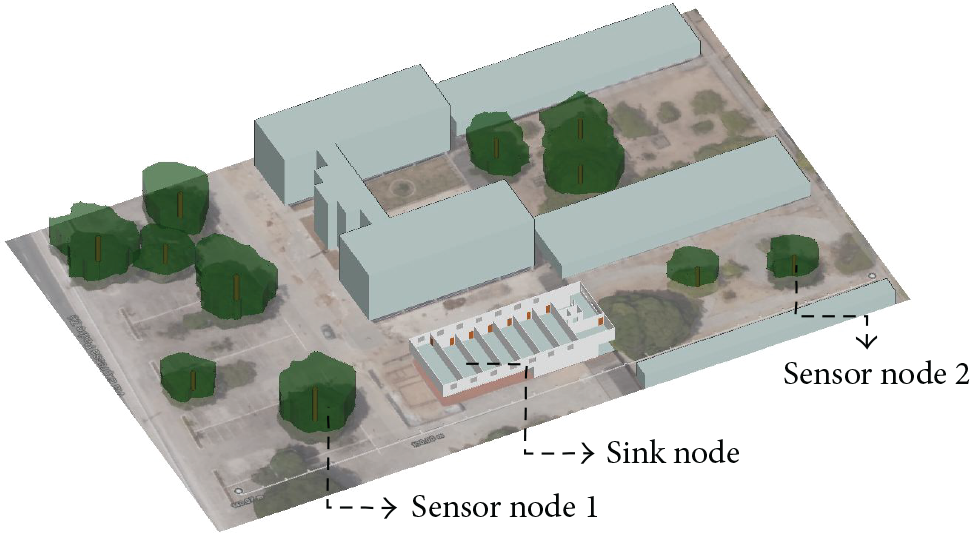
Developed WSN for tree trunk's temperature monitoring.
This WSN was implanted at the parking lot of the Center of Technology at the Federal University of Paraíba, Brazil, and the sensors were installed into tree trunks, whose species is Adenanthera pavonina, commonly called red lucky seed, which is a medium-sized to large deciduous tree, 6–15 m height and up to 45 cm diameter, depending on its location [31].
The sensor nodes are based on Namimote, shown in Figure 5, which is a wireless sensor node that aims to provide a low-cost and multipurpose sensor node platform for wireless sensor networks [23] and was developed by the Namitec project (INCT Namitec, http://www.namitec.org.br/), as a part of an investment from the Brazilian government. Namimote is comprised of a microcontroller unit (MCU), which has an embedded IEEE 802.15.4 transceiver, and three onboard sensors: luminosity, temperature, and three-axis accelerometer, as can be seen in Figure 6. Additionally, Namimote presents a general purpose input/output (GPIO) with digital and analog for any type of expansion and its RF port feeds a power amplifier (PA) to provide long range links [23].

Namimote [23].

Block diagram of Namimote sensor node [23].
As the main objective of this work is to measure the temperature gradient
The two sensor nodes are shown in Figure 7, where each was mounted into a plastic case and composed of an external antenna and the three temperature sensors that were mounted in a measurement stick. Each measurement stick is a PCB of different length where in an end the TMP36 integrated circuit was welded, as shown in Figure 8. The temperature measurement sticks are of three different lengths: 100 mm, 75 mm, and 50 mm.

Namimote-based sensor node cases.
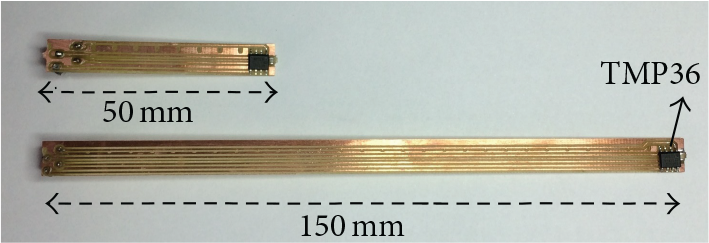
Temperature measurement stick.
The sensors were calibrated in order to minimize the error during the measurements. The next step was drilling the trees. As shown in Figure 9, three holes were made with a depth of 100 mm, 75 mm, and 50 mm on both trees. Those holes have a slight slope of approximately 20° to ensure that when it rains, there will be no water going into them. Also, they were filled with small pieces of wood and white glue, since closing them is essential to keep the tree safe from parasites.
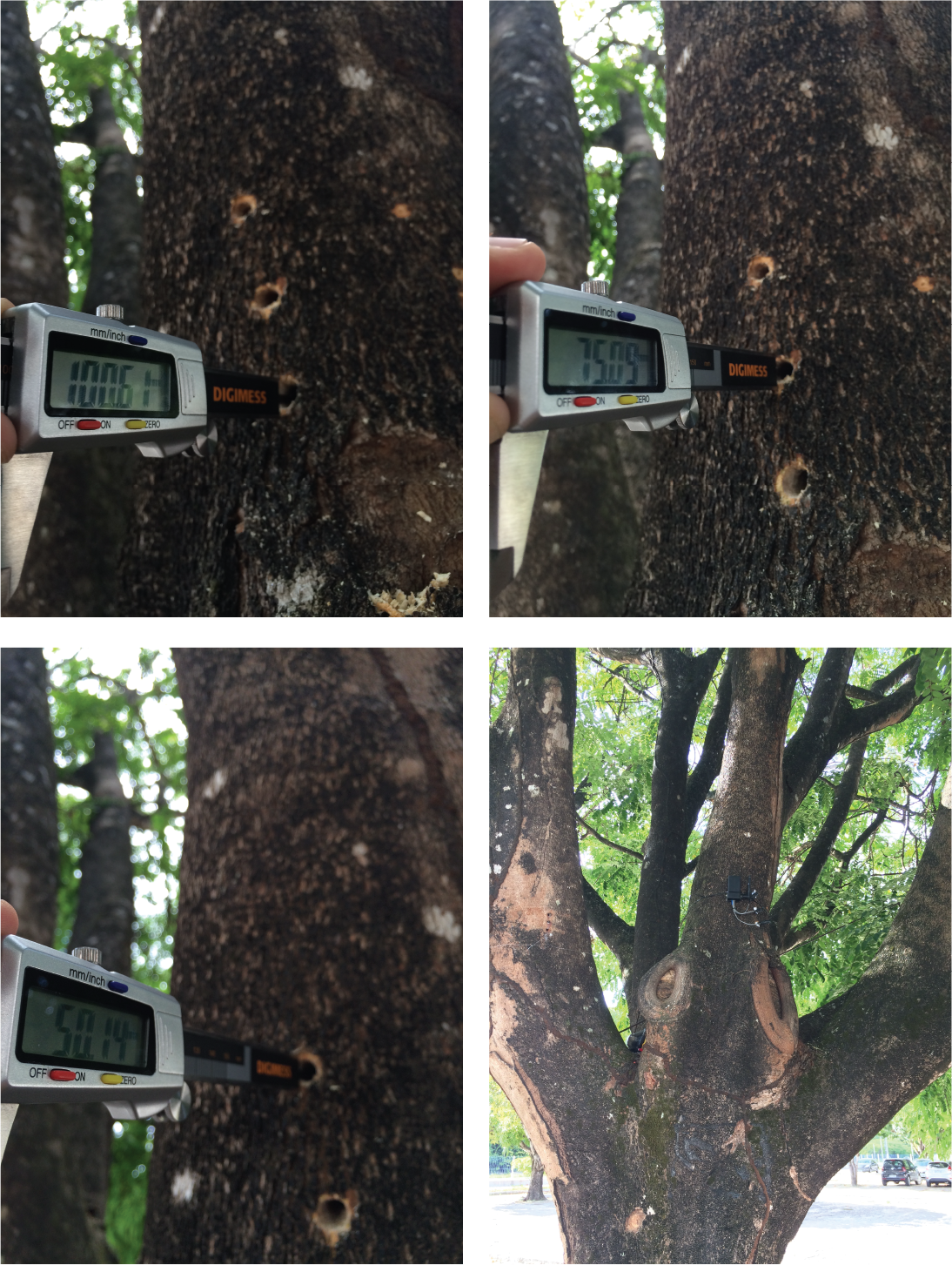
Sensor nodes installation.
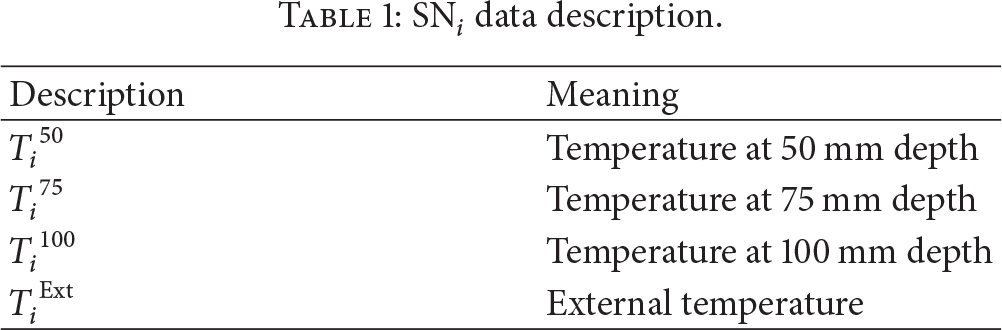
As shown in Figure 4, the two Namimote-based sensor nodes (SN1 and SN2) send data within a chosen specific time interval of 30 seconds to the sink node at the laboratory. The data of the sensor node
In the next section, we will show the experimental results detailing the most important remarks.
5. Experimental Results
The experimental results obtained are concerned with the measured data
Figure 10 shows the data from

Obtained data from
Figure 11 shows the obtained data of SN1 considering the period of Jan. 19 to Jan. 23, 2016.

Obtained data from
Figure 12 shows the temperature gradient values (

Obtained temperature gradient values (
Figure 13 shows the data from

Obtained data from
Figure 14 shows the obtained data of
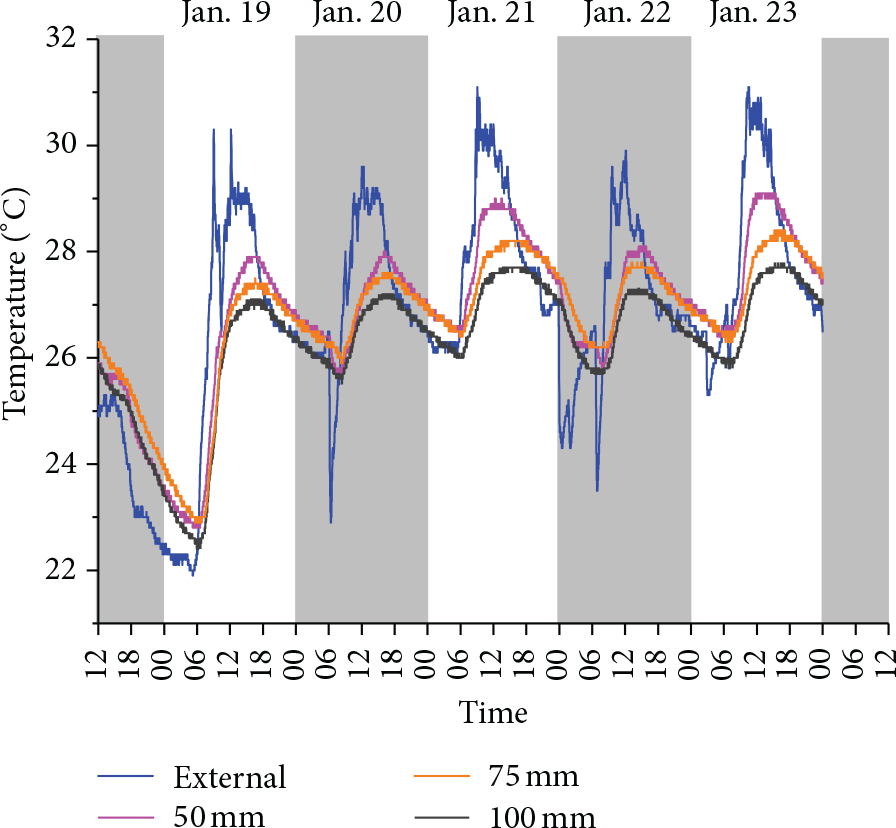
Obtained data from
Figure 15 shows the temperature gradient values (

Obtained temperature gradient values (
One can verify from the experimental results that, especially from those of Figures 12 and 15, the values of
The experimental results also confirm the expected behavior of tree trunk temperature gradient; that is, living tree trunks control their internal temperature related to the external temperature and, as a result, some level of temperature gradient is observed making energy harvesting possible. This behavior is expected to be seen in a generalized way; however, at least three points have direct influence on the results, namely, the environment where the experiment has been conducted, geographic location, and the species and diameter of the trees.
Taking into account the environment, location, and tree characteristics in which the experiment was conducted, it is observed that the deeper the sensor is installed the higher the gradient value obtained during daylight is. Nevertheless, this behavior changes at night. For instance,
Finding the optimal depth is important because it provides continuous energy harvesting, since it works for both positive and negative temperature gradients, meaning that it would be able to collect energy during daylight and night. In practice, the optimal depth depends on the environment, location, and tree characteristics.
The order of magnitude of the harvested energy from tree trunks has been evaluated through an experimental setup based on a thermoelectric generator testing platform proposed in Veras et al. [32]. This testing platform can generate any arbitrary temperature gradient from −20°C to +20°C and apply it to a thermoelectric generator.
As an example, the temperature gradient pattern

Obtained open-circuit voltage pattern.
A proposed energy harvesting power conditioning system could be based on the voltage step-up converter integrated circuit LTC3108 from Linear Technology. This step-up converter can achieve a regulated DC voltage of 3.3 V needed to power a sensor node. The 20 mV red line, shown in Figure 16, is the minimum voltage that the step-up topology of LTC3108 operates as input voltage. As can be observed in Figure 16, the most voltage signal is above the 20 mV red line. The 35 mV green line is the average voltage level during the shown period. In this way, the voltage level above 20 mV can be effectively harvested and stored in a supercapacitor, since LTC3108 is capable of managing energy and use only when a certain level is achieved.
Preliminary results show that the energy needed to power a sensor node SoC, such as CC2530 from Texas Instruments, can be stored in about each 200 ms that is the time period that LTC3108 needs to store the specific amount of energy from the proposed tree trunk harvester.
6. Conclusions and Possible Future Directions
This work described a study on the possibilities of harvesting energy from tree trunks in order to power sensor nodes for environmental monitoring, particularly in wild forests. The experimental apparatus employed that was composed of a wireless sensor network based on Namimote nodes and the applicability of our results by the use of Peltier cells to convert temperature gradient into electric voltage were detailed. The experimental results show the viability of harvesting thermal energy during the day and during the night while photovoltaic cells only work under sunlight. As possible future directions in the continuation of this research, installing the first tree's trunk temperature gradient based energy transducers, probably based on a rod with high thermal conductivity, and extending the number of trees and their kinds, in different locations, with sensor nodes installed in order to confirm the applicability of the proposed method in large scale are expected.
Footnotes
Competing Interests
The authors declare that they have no competing interests.
Acknowledgments
This project was financially supported by the CNPq, Brazil (Grant Procs. 573738/2008-4 INCT NAMITEC), and PNPD CAPES, Brazil (Grant Procs. PNPD 2878/2011). The authors would like to thank the Federal University of Paraíba, the State University of Rio Grande do Sul, the University of Washington Tacoma, Hugo César Rocha Libório Tenório for technical support to this research, and PIBIC/CNPq/UFPB for scholarships.