




Abstract
WSNs are complex systems that are mainly limited by the battery life of the nodes in order to have an adequate performance. During the operation of the system, it is not uncommon to have a portion of nodes with low energy levels while other nodes have high energy levels. Nodes with very low residual energy must reduce their energy consumption since their operational lifetime is almost over. In this paper, we consider cluster-based WSNs for the event detection where there is a high concentration of high energy nodes and low concentration of low energy nodes. Building on this, we propose extending the battery life of low energy nodes in both the cluster formation and the steady-state phases. For the former, energy efficiency is achieved by means of assigning prioritized access to the shared channel to low energy nodes while delaying the contention access of high energy nodes which can support higher number of collisions before energy depletion. For the latter, we consider the duty-cycle of nodes where the sleep and active modes have dwelling times related to their residual energy levels. The system and the impact of the proposed residual energy-based mechanisms are mathematically evaluated using Markovian models.
1. Introduction
Wireless sensor networks (WSNs) can be designed for either continuous monitoring (CntM) [1, 2] or event-detection driven (EDD) applications [3, 4]. EDD WSNs are deployed over a target area to supervise certain phenomena of interest. Once an event occurs, it is reported to the sink node by the sensors within the event area. Each node takes readings from the local environment and processes and transmits the sensed data to the sink node. In this type of WSNs, communications are only triggered by the occurrence of a prespecified type of events. As opposed to EDD applications, CntM WSNs are deployed in order to examine the evolution of certain parameters, which are refreshed periodically at the sink node. Some applications require a combination of both EDD and CntM [5]. CntM applications are well suited for cases when it is important to gather as much information as possible from the monitored phenomena in the area of interest while EDD is preferred when relevant predetermined changes in the environment occur.
WSNs are composed of a large number of sensor nodes limited in computational and memory capabilities. There are a large number of applications for WSNs [3]. Some of those applications need practically total autonomy from human intervention. In such cases, it is not possible to attend the network and constantly replace nodes' batteries in case of total energy depletion. As such, energy balancing is a major issue [6]. However, it is not uncommon to find nodes with high energy levels and nodes with low energy levels. Some of the reasons for finding low and high energy nodes in WSN are the following: Nodes are redeployed in functioning WSNs. Specific routing protocols are used that established preferred routes to the sink node which may deplete the energy of the nodes in such route much faster than the rest of the nodes. When the sensed event occurs more frequently in a certain zone of the surveilled area, nodes closer to the event zone report data more frequently than the rest of the nodes, depleting their energy much faster.
Building on this, in cluster-based event reporting WSNs, it is not uncommon to find uneven energy consumption among nodes [7]. For instance, nodes selected to act as cluster heads (CHs) consume more energy than cluster members (CMs). Note that the cluster that detects the event is formed for the duration of such event. Then, if it is active for long times, nodes in the CH role will have much lower energy levels than nodes that act as CMs. Also, events may be more common to occur in certain areas of the surveyed area. As such, nodes placed in the zones of high activity consume much more energy than nodes placed in zones where events rarely happen. Another situation that causes uneven energy consumption occurs when a routing protocol is used such that it selects routes in the network that make an intensive use of nodes closer to the sink. Another common situation that causes nodes to have different energy levels is that, for some applications, once a portion of nodes of the network have depleted their energy, it is possible to deploy new nodes within the surveyed area. For example, to maintain some QoS (Quality of Service) in terms of coverage in a WSN, it is necessary to have some kind of alarm system when the coverage of the network falls below a certain level. Node redeployment should be used in this case [8].
The benefit of extending the life of nodes with low energy levels is twofold. For WSNs, the lifetime of the system is usually calculated when the first node depletes its energy or a certain number of nodes have depleted their energy (e.g., if 50% of nodes have died, the network is considered also dead.) By increasing the lifetime of nodes with low energy levels, the system lifetime is also increased. On the other hand, numerical results show that, by assigning priority of transmission for nodes in the cluster formation phase, the overall energy consumption is reduced in the system.
Furthermore, in recent years the concept of Energy Harvesting has been gaining relevance in WSNs [9–11]. In some schemes of Energy Harvesting, the nodes that have a low energy level can be recharged. This is done by means of radio frequency (RF) signals in the environment or by high energy RF pulses explicitly used for charging the low energy nodes. By extending the life of low energy nodes, the time between recharges increases
When this situation occurs (i.e., a group of nodes have a low battery level while other nodes have a high or even the maximum battery level), low energy level nodes contend for the use of the shared channel with high level energy nodes. While the latter nodes can support a high number of collisions before total energy depletion, for the former, only a few collisions may entail the end of their lifetime. Furthermore, in case where redeployment of nodes is not a practical option, the use of an energy saving scheme such as the one proposed in this work can extend the system lifetime, as it is proven in Numerical Results. The system's performance is evaluated for a range of parameters and settings. In the Energy Harvesting schemes, the use of the proposed scheme leads to a lower number of recharging cycles of nodes, saving time and energy in the WSN.
Building on this, we are interested in studying different strategies for WSNs with two types of nodes: high energy nodes and low energy ones. The main objective of such strategies is to increase the lifetime of nodes with low energy level as well as the network operation time. Specifically, we consider a cluster-based architecture since this technique has proven to reduce energy consumption in the system [1, 12, 13]. As such, we propose a priority scheme at the cluster formation phase aimed at extending the lifetime of nodes with the lowest energy level. This transmission probability strategy considers a continuous value according to the relationship between the maximum energy level (initial energy of a node) and the current energy level of each node. The proposed transmission schemes are aimed at cluster-based WSNs for EDD applications. The aforementioned schemes encourage the transmission of low energy level nodes before the transmission of high energy nodes. Note that, in general, the number of low energy nodes is lower than high energy nodes. As such, the contention process among low energy nodes entails lower collision probability. On the other hand, contention among high energy nodes entails higher collision probability since the population is higher. In this paper, we study the effect of the transmission schemes for different population densities as well as different energy levels. In the case of the duty-cycle of nodes in the steady state (once the clusters are formed), the dwelling times in the active or sleep modes are also calculated according to the residual energy. In this case, nodes with low energy levels remain longer times in the sleep mode. Evidently, this causes information loss. The system is evaluated in terms of reporting efficiency and energy consumption in order to account for this loss.
The rest of the paper is organized as follows: Section 2 briefly describes the network parameters and environments used throughout the paper. Following this, Section 3 describes the residual energy transmission strategies for both the cluster formation phase and the steady-state phase. Then, the mathematical models are developed in Section 4. Finally, the paper concludes with some relevant numerical results in Section 5 and relevant conclusions.
2. Related Work
Our work focuses on making use of the residual energy of nodes in an efficient manner. This is done by assigning priorities to low energy nodes, thus reducing their energy consumption while maintaining an acceptable operation of the system. As such, this work aims at providing new insights in the area of energy-aware protocols and residual energy methods. As such, in this section we present related works in the previously mentioned research fields.
In the literature, different protocols to increase the system lifetime by means of energy conservation have been proposed, such as [14, 15]. In [14] the authors describe architectural and algorithmic approaches that designers can use to enhance the energy awareness of wireless sensor networks. Specifically, it presents a suite of techniques that perform aggressive energy optimization while targeting all stages of sensor network design, from individual nodes to the entire network. In [15] the authors propose a dual radio channel cooperation scheme with local information to assign priorities in a multihop architecture. However, the particular case of considering different energy levels among nodes in order to assign priorities to low energy nodes was not considered.
Works that have considered the effect of residual energy such as [7, 16–19] also achieve energy conservation. However, these works do not focus on assigning different transmission probabilities. REAR [16] considers residual energy capacity of each sensor node in establishing routing paths and supports multipath routing protocol for reliable data transmission. However, this work does not consider either cluster formation or duty-cycle based on the residual energy as we propose in this paper. Hence, the schemes proposed by REAR can be used as a natural complement to techniques proposed in this paper. In [17] an algorithm that elects the cluster head from the sensor nodes which have more residual energy through local radio communication while achieving well cluster head distribution is proposed. During the CH election, some candidate nodes are elected, and they compete among themselves to become a cluster head. Unlike [17], we aim at reducing the number of contending nodes for low energy nodes thus reducing collision probability. Also, we consider an energy-aware algorithm in the steady-state phase. In [18], the probability to become cluster head is based on the ratio between the amount of residual energy present at each node and the average energy of the network. A similar work is presented in [7] but, here, the distance is also considered for the election of the cluster head. Again, we follow a different approach since we reduce the contending set of transmitting nodes with low energy levels and do not consider the problem of the cluster head selection based on the residual energy value. In [19] the authors propose a protocol where each sensor node is allowed to adjust its duty-cycle according to the current amount of residual energy only. This work is very similar to the proposed protocol in the steady-state phase. The main difference is the relationship between the residual energy of nodes and the average times in the sleep or active states as described in the following sections. Another difference is the mathematical model used to describe the system. Finally, the cluster formation phase is not considered in [19].
In [20, 21] priority is given to packets considering the residual energy of nodes. In these proposals, low energy nodes will only transmit packets with a high priority level while nodes with low priority do not transmit. Hence, the transmission schemes presented in this work can be used in conjunction with other energy conservation strategies previously studied.
Finally, in a previous work [22], we proposed the use of different residual-based strategies for the cluster formation phase. However, we only presented simulation results, while in this paper we develop a mathematical model to study the performance of the system. Additionally we now extend this previous work by considering an energy-efficient strategy for the steady-state phase. Also, this new strategy is mathematically modeled and studied. Both mathematical models are based on Markov chains.
3. System Model
In this section, the main assumptions as well as the parameters used throughout the paper are explained in detail. We focus on a cluster-based WSN for EDD applications. Clustering is one strategy used to reduce energy consumption where the network is formed by groups of nodes, called clusters [1, 23]. Nodes that belong to a specific cluster (cluster members, CMs) only transmit their data to a specific node inside the cluster (cluster head, CH) instead of transmitting throughout the entire network. Then, CHs transmit the collected data from all their CMs to the sink node. The benefits of the clustering technique have been proven in the literature [12]. In the cluster formation phase, nodes transmit a control packet to the entire network using the slotted NP-CSMA (Nonpersistent Carrier Sense Multiple Access) protocol [24]. This is a contention protocol where nodes listen to the medium before transmitting; if the medium is sensed to be idle, the node will transmit; otherwise, the node draws a random waiting time (backoff period) before it tries to transmit again. Specifically, the shared medium is considered to be slotted and nodes (re)transmit according to a geometric backoff with parameter τ. Once the clusters are formed, the CMs transmit in an orderly fashion to their respective CH by means of a TDMA (Time Division Multiple Access) protocol. As we consider an EDD WSN, there is only one cluster at a particular moment in the network, which is formed by all the nodes that hear an event, that is, nodes inside the event area. The network activity ends when the last node of the network depletes its energy.
In order to capture the energy difference among nodes in a WSN due to redeployment of nodes or the use of a particular route to the sink node or the higher occurrence probability of a certain phenomenon in the surveilled area, we consider two types of nodes: those that have high energy and those that have a low level of energy. In order to distinguish these types of nodes at the beginning of the network operation, we consider that


Energy consumption in the network is measured as in [22]: Control packets transmitted in the cluster formation phase consume Control packets received in the cluster formation phase consume Data packets transmitted in the steady-state phase consume Data packets received in the steady-state phase consume Data packets transmitted to the sink node consume
Indeed, it is considered that the packet reception procedures consume small amounts of energy that basically depends on the packet length. As such, a packet received at the cluster formation phase consumes less energy than a packet received in steady state (using the TDMA technique) since cluster formation packets are basically control packets with the information of the node (mainly the node's ID) but no data is transmitted. On the other hand, packet transmissions have to be sufficiently high in order to reach the destination target. As such, the energy needed to reach the sink node is much higher than the energy needed to transmit within the network area or the nodes inside the cluster. On the other hand, it is assumed that a data packet transmitted inside the cluster consumes more energy than a control packet transmitted in the cluster formation phase due to the length of the packet. Note that these values strongly depend on the particular commercial nodes used in the system. We use these values for illustrative purposes. As such, these values only present a case of study in order to study the system's performance. Additionally, since the paper presents analytical results, it is straightforward to produce numerical results for different energy values than the ones considered in this work.
4. Residual Energy Priority Schemes
In this section, the proposed priority schemes to reduce the energy consumption on low energy nodes based on their residual energy are explained in detail. Since a cluster-based WSN is assumed, both the cluster formation and steady-state phases are considered to increment the lifetime of nodes close to their energy depletion.
4.1. Cluster Formation
For the cluster formation phase, we propose a residual energy scheme that reduces the collision probability for low energy nodes. The rationale behind this scheme is that, in general, the number of nodes with low energy levels is low. Consider the redeployment procedure. In this case, the number of new nodes would be much higher than the remaining nodes. For instance, the network manager can decide to redeploy new nodes whenever the number of nonworking nodes is higher than 70%, 80%, or 90% of the total number of nodes in the initial deployment of the network. For the case where the routing protocol establishes a preferred route in the network to report to the sink node, nodes in this route deplete their energy much faster than the rest of the nodes in the system. As such, it is reasonable to consider that the number of low energy nodes (the nodes in this preferred route) is much lower than the high energy nodes (nodes outside this preferred route). Also, in the case where the surveilled event occurs more frequently in a certain region of the network, it is reasonable to assume that the number of nodes that detect such event is much lower than the nodes outside this region.
Building on this, we propose a priority scheme that allows low energy nodes to transmit in average their packets for the cluster formation phase before nodes with high energy level. As such, at the beginning of this phase, the number of contending nodes is low since mostly the low energy nodes are competing for the access to the shared medium while high energy nodes compete for the channel after most of the low energy nodes have successfully transmitted their data packet.
This priority scheme is implemented by allowing nodes to transmit with probability τ given by

4.2. Steady State
In the steady state, transmissions of reporting nodes are assigned to a particular time slot and nodes transmit in a collision-free manner. As such, a priority scheme as the one proposed for the cluster formation phase is no longer adequate. Hence, in this reporting phase, we propose the use of ON/OFF periods as described in [6], where it is clearly stated that many commercial nodes have different off-duty modes and are capable of turning on and off the sensor nodes in order to save energy. However, unlike [25–27], the average times in states active (ON) and sleep (OFF) are calculated according to the residual energy. Indeed, the proposed ON/OFF scheme is developed in such a way as to allow nodes with low residual energy to remain longer times in the OFF period while resting smaller periods of time in the ON mode. Conversely, nodes with high residual energy levels remain longer in the active periods and less time in the sleep mode. Specifically, the ON and OFF exponentially distributed periods with mean are


Note that this scheme reduces energy consumption according to the residual energy level. However, since nodes no longer report continuously but rather only when they are active, there is a loss of accuracy related to the gathered information regarding the event. This reporting efficiency is studied for different system's conditions. Nonetheless, consider that the proposed scheme assumes that the majority of nodes in the system are high energy level nodes. As such, most of the nodes remain long times in the ON period and short periods of time in the OFF periods, achieving high report efficiency. On the other hand, a small number of low energy nodes continue their event reporting but saving as much energy as possible.
The complexity of the proposed residual energy schemes is not too elevated since it is only required for nodes to estimate their current energy level and the initial energy level. From these values, it is possible to calculate both the transmission probability in the cluster formation phase and the duty-cycle in the steady-state phase. As such, the complexity added by these procedure is not higher than those proposed in [7, 17–19].
5. Mathematical Models
In this section, two residual energy-based transmission schemes are presented in order to extend the lifetime of nodes with low energy level. As mentioned before, these strategies are aimed at reducing the energy consumption of low energy level nodes in both the cluster formation and steady-state phase. In this phase, a contention protocol is used under the geometric backoff protocol, and, in the steady state, a collision-free protocol based on TDMA is used. As such, in the former, the main objective is to reduce the collision probability among low energy nodes while maintaining an acceptable level of energy drain for the high energy ones while, in the latter, the use of an ON/OFF protocol with random dwelling times in each state is developed.
Two different Markovian models are presented to model the system in both the cluster formation and steady-state phases as described below. In both cases, the balance equations derived represent a set of linear equations that we numerically solve using the Gauss-Seidel method.
Since an event-detection scheme is proposed, we now calculate the average number of nodes that report an event. To this end, consider that there are


5.1. Cluster Formation
The priority scheme in this phase is aimed at reducing the collision probability of low energy nodes by allowing their packet transmission before high energy nodes as previously explained. This is done by selecting the transmission probability according to (3).
To model this system, a transitory discrete time Markov chain (DTMC) is used where transitions occur at the beginning of the time slots as detailed next. The proposed DTMC is transitory with trapped state being the state (
Recall that the shared channel is slotted and node i transmits with probability
As an example of this procedure, consider the case where only two nodes are reporting to the sink nodes with residual energies of To state To state To state To state
These transitions are valid for the case when To state To state
Finally, the case when
Given the feasible states and their transitions in the previously described DTMC, we can construct the global set of balance equations as follows. The expected number of time slots to reach the absorbent state (


For the case of the energy consumption,

As such, the energy consumption from the state


5.2. Steady State
Recall that the proposed residual energy scheme in this phase is aimed at reducing the time during which low energy nodes remain active transmitting data to the CH while increasing the time during which these nodes remain in the sleep mode. This is achieved by selecting exponentially distributed random times in both the ON and OFF periods with mean given by (5) and (4), respectively.
To model the system in the steady-state phase using the proposed energy reduction scheme, we use an irreducible continuous time Markov chain (CTMC).
The model is also N-tuple stochastic process

It is important to note that, in this scheme, nodes compute the random times in ON and OFF periods based on the residual energy at the beginning of the steady state; that is, the mean times in each mode remain constant throughout the reporting data. In contrast, the priority scheme at the cluster formation phase considered the actual residual energy of nodes at each time slot. The rationale behind this is that, in the steady-state phase, nodes no longer experience collisions. As such, the energy consumption in this phase is much lower than in the cluster formation phase.
Building on this, the evolution of the system when it is in state
Rate

This CTMC is numerically solved. Given the feasible states


As such, the global set of balance equations can be constructed as follows:
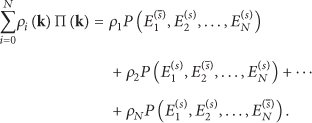
In order to calculate the average energy consumption per frame in the steady state, note that only the nodes in the active state consume energy, while nodes in the sleep mode do not consume energy. Hence, the average energy consumption per frame in state

And the average energy consumption per frame in the steady state can be calculated as

Similarly, the average number of reports per frame in state

And the average number of reports per frame in the steady state can be calculated as

Note that when the ON/OFF protocol is not enabled, the number of reports per frame is simply N. As such, the reporting efficiency of the protocol is defined as

6. Numerical Results
This section presents some relevant numerical results concerning the performance of the residual energy-based schemes for both the cluster formation and steady-state phases. For both schemes, we validate the mathematical model comparing the analytical results to numerical simulation results. Simulations were conducted using a simple discrete event simulator developed in C++. For the numerical results presented in this section, the following parameter values were considered unless otherwise stated:
6.1. Cluster Formation Phase
In this section, only the cluster formation procedure is evaluated and studied. As such, there is no impact of the ON/OFF scheme used in the steady-state phase. We compare the results produced by the residual energy-based scheme to the conventional system, that is, the system where a fixed value of the transmission probability is used throughout the cluster formation phase. For the conventional transmission scheme, the value of the transmission probability for each slot
First, the numerical results obtained using the mathematical model developed above are compared to simulation results in order to validate the analytical model. To this end, Figure 1 shows the (a) average energy consumption and (b) average cluster formation delay in the cluster formation phase using (12) and (9), respectively, for the analytical results. These results show a good match between the analytical results and the simulation results. Hence, we consider the mathematical model validated at this point for the conditions presented in this section.

(a) Average energy consumption and (b) average cluster formation delay for the residual energy-based scheme for different values of p and
The main advantage of using a transmission probability that considers the residual energy of the nodes is now investigated. Figure 2(a) shows the energy consumption in the network for different proportion of high energy nodes and energy difference between the high energy nodes and low energy nodes given by
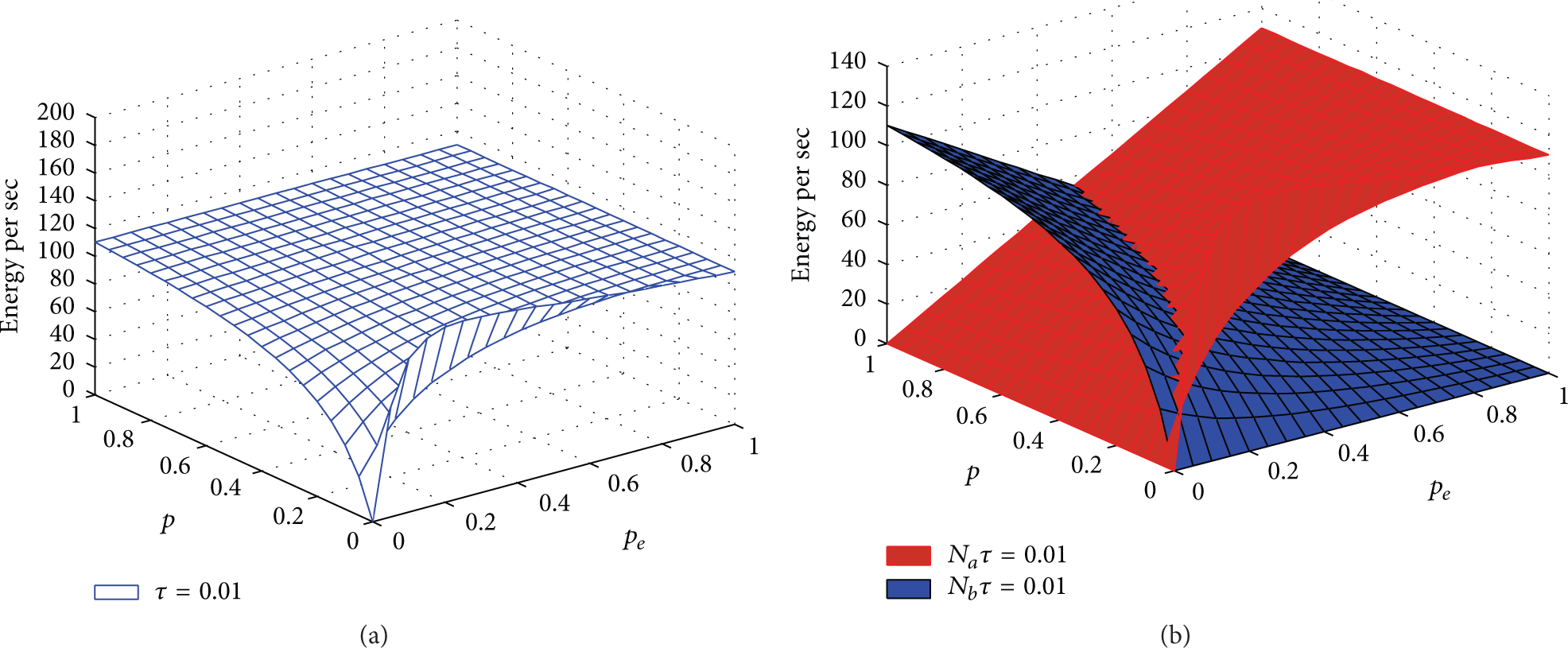
Energy consumption for the conventional WSN for different values of p and
Now, the performance of the residual energy-based strategy in the cluster formation phase is studied as shown in Figure 3. The energy consumption is evaluated for different values of γ. As described in (3), parameter γ establishes the impact of the relationship between the initial energy and the actual level of energy of the nodes. It can be seen that a low value of γ entails a lower energy consumption in the system. It can be observed in Figure 3 that there is an energy reduction close to 75% compared to the conventional transmission protocol. In a more detailed analysis, Figure 4 shows the energy consumption per type of node. A reduced energy consumption for both types of nodes can be seen and not for only low energy ones. Of particular interest, we can observe a high energy consumption for the case

Average total energy consumption for residual energy transmission and residual energy-based scheme, for different values of γ.

Average energy consumption per type of node for residual energy transmission and residual energy-based scheme.
Finally, the average cluster formation delay is studied for both strategies. Figure 5 shows that the residual energy-based strategy entails a longer cluster formation time. Indeed, the proposed strategy has lower energy consumption with the associated cost of higher cluster formation time. However this latency increment is on the order of 0.4 seconds, which, depending on the specific application, that is, the type of event to detect by the WSN, is not considerably high. Also note from (9) that as the value of γ decreases, the average cluster formation delay increases, since nodes take longer periods of time to attempt a packet transmission. Hence, there is a clear relation between the energy consumption and the delay in the proposed scheme. Indeed, the network operator or network manager can adjust the value of γ according to the specific characteristics of the system. Specifically, if a low reporting time is required, a high value of γ should be used, even if this entails a higher energy consumption and a faster depletion of energy for low energy nodes.

Average cluster formation delay for the residual energy transmission strategies in the cluster formation phase (CF) and the conventional system.
6.2. Steady-State Phase
In this section, the performance of the system is studied at the steady-state phase when the residual energy-based reduction strategy is enabled.
First the mathematical model is validated. As such, numerical results obtained using both the analytical model described in (19) and (22) (for the energy consumption and efficiency, resp.) and simulation results are compared. First, the energy consumption is analyzed. Figure 6 shows that there is a good match between the mathematical model and simulation results for any value of number of low energy nodes and energy level difference. From these results, it is clear that as the number of low energy nodes increases, the energy consumption decreases. This is because nodes spend more time in the sleep mode but less time actively reporting data. This is also true for the energy level of low energy nodes. Indeed, as p decreases, the average time in ON mode decreases and the average time in OFF mode increases, consuming less energy in the system. As in the residual energy-based scheme of the cluster formation phase, the highest energy savings are when

Average energy consumption per frame for the analytical and simulations results in the steady state phases for different values of p and

Efficiency per frame for the analytical and simulations results in the steady state phases for different values of p and
Finally, the complete system performance is compared considering the conventional system where no residual energy-based schemes are considered (REF), the system where only the residual energy-based scheme is considered (CF), and both the cluster formation and steady-state phases where the residual energy-based schemes are enabled (RE) as shown in Figure 8. From these results, it is clear that the strategy where the residual energy-based schemes are enabled always achieves the lowest energy consumption in the system for any combination of system variables (

Comparison of the proposed residual energy-based strategies: the conventional system with no residual energy-based schemes (Ref); the system with only the proposed energy saving scheme in the cluster formation; and the system with the proposed strategies at the cluster formation and steady states for different values of (a) p and
Finally, the effect regarding the relation between the energy consumed for a packet transmission and that for reception is studied in the cluster formation phase. Recall that in previous sections it was considered a normalized energy consumption for a packet transmission—that is,

System performance for different normalized energy reception per packet.
7. Conclusion
In this work, two different transmission strategies based on the residual energy of nodes are presented for both the cluster formation and steady states of event reporting driven WSNs.
The proposed schemes are aimed at increasing the life time of the system when the system is composed of low energy nodes and high energy nodes. This situation can be found in many practical systems for diverse reasons, for instance, after a redeployment procedure, or due to the intense use of a particular route selected by the routing protocol, or even because the event occurs more often in a region of the system.
Building on this, the residual energy-based schemes reduce the energy consumption of low energy nodes by assigning a higher transmission probability in the cluster formation phase and increasing the dwelling time in the sleep mode in the steady state.
The use of the proposed strategy conveys a certain negative effect on the system in the form of higher cluster formation delay and reporting efficiency in the cluster formation and steady-state phases, respectively. However, this negative effect does not entail a major system degradation since we consider that the majority of nodes are high energy nodes and only a small portion of nodes are low energy nodes. Furthermore, numerical results show that the energy consumption in the system is decreased for both low and high energy nodes increasing the overall system's lifetime and not only benefiting low energy nodes.
In this work, we study the performance of the system for different values of event arrival rate, event duration, number of low energy nodes, and energy level difference among high and low energy nodes. The system is studied using both analytical model and simulation results. Specifically, the proposed scheme for the cluster formation phase is modeled using a discrete time Markov chain, while the model used for the steady state is based on a continuous time Markov chain. We validate both models through the use of discrete event simulations, proving a good match between the analytical and simulation results.
Numerical results prove that the proposed residual energy-based schemes effectively reduce the energy consumption of low energy nodes compared to the case where no residual energy strategies are enabled. Additionally, it is important to note that even if the use of such schemes increases the cluster formation time and the reporting efficiency is reduced, this effect is highly dependent on the conditions of the system.
Footnotes
Competing Interests
The authors declare that they have no competing interests.