




Abstract
For the purpose of balancing energy consumption of nodes in Wireless Sensor Networks (WSNs for short), a type of energy hole avoiding method based on synchronization of nodes in adjacent annuluses (SNAA for short) is proposed in this paper. The circular network is divided into virtual annuluses with the same width. Nodes are deployed nonuniformly and their number increases in geometric progression from the outer annuluses to the inner ones which could effectively reduce the work load on nodes near the center. Moreover, each node could find its optimal parent by considering the residual energy of each candidate as well as the distance between the two nodes in adjacent annuluses. And on the basis of synchronization of nodes between adjacent annuluses during their transmitting and receiving phases, a sleep scheduling strategy is also proposed to further reduce the energy consumption of nodes in idle listening mode. Simulation results show that SNAA has a superior performance on energy consumption balance compared to the algorithm proposed (Liu et al., 2013; Wu et al., 2008) and it could also mitigate the energy hole problem in WSNs.
1. Introduction
In WSNs, sensor node usually behaves as both data originator and the router [1, 2]. The traffic follows a many-to-one pattern, where nodes nearer to the sink carry heavier traffic loads. Furthermore, they also tend to consume more energy as they are responsible for receiving and forwarding data from the whole network. It leads to a nonuniform energy consumption among nodes, that is, the “energy hole problem” [3]. No more data can be delivered to the sink after an energy hole appears. Moreover, nodes near the energy hole are required to bear the data load of those death nodes so that the energy consumption level will increase more rapidly, leading to extension of the hole, which is called funneling effect [4], and finally premature death or standstill of the entire network. Study shows that, because of the impact of the energy hole, the network residual energy is as high as 90% [5–7] when the network is out of function.
On the other hand, energy balance is also key metrics impacting on the performance of WSNs. One of the most efficient methods to achieve energy balance is to optimize the deployment and configuration of WSNs [8–10]. Currently, random broadcasting and uniform clustering methods are adopted in most multihop networks [11]. By communicating among nodes and sleep scheduling, it could save more energy to extend network lifetime. However, it is difficult to achieve an energy balance [12]. Therefore, how to design a flexible deployment and broadcasting model for nodes is a chief problem in WSNs [13].
2. Related Works
In recent years, maximizing the network lifetime and energy balancing of WSNs have drawn much attention [1, 4]. Many different schemes have come forward adopting different means to prolong network lifetime and increase energy efficiency. CH rotation schemes, for example, LEACH [14] and HEED [15], are proposed to balance the energy consumption by periodically performing CH rotation among all sensor nodes in cluster. However, random number of CHs in each round causes uneven energy consumption leading to formation of energy hole [5, 7].
2.1. Nonuniform Node Distribution Strategy for Mitigating the Energy Hole Problem
Li and Mohapatra [16] present the first mathematical model towards the characterization of the energy hole problem. They consider sensor nodes distributed following the URP (Uniform Random Placement) law in a circular region divided into concentric coronas. They observe the impact of the following four factors on the energy hole problem: node density, hierarchical deployment, source bit rate, and traffic compression. They show that simply adding more nodes to the network does not solve the problem. By computing network lifetime after deployment, Hou et al. [17] adjust the location of relay nodes to maximize the network lifetime. But this method takes a heavy cost for the process of iteration and cannot adapt itself to varied networks.
Liu et al. [4] proposed that node density should be proportional to the distance from sink. They formulated algorithms for deployment of nodes to achieve application required first node die time (FDT) and all nodes die time (ADT). Furthermore, they also proved that network lifetime can be maximized by using specific transmission radius of nodes. Moreover, Olariu and Stojmenović [5] have also proposed that adding more nodes to the areas with heavier traffic is a natural way to mitigate the energy hole problem, thus creating different node densities in different areas. This is also the basis of the network model in SNAA.
Lian et al. [18] propose a nonuniform node distribution strategy to increase the network data capacity. Additional nodes acting as pure relays are added to the network. A routing algorithm is also proposed in which some nodes sleep once in a while to save energy. However, it cannot achieve energy balance. Meanwhile in SNAA, an optimal sleep scheduling strategy is proposed, which could effectively save energy for nodes near the center and also mitigate the energy hole problem.
2.2. Achieving Energy Balance with the Help of Mobile Sink or Optimized Deployment
Recently, much research has also proven that the exploitation of mobile sinks could improve the performance of WSNs and mitigate the energy hole problem [19]. Di Francesco et al. [19] proposed that, due to the limited power of nodes, using one or more mobile sinks for data collection in WSNs is an effective method to solve the hotspot problem. Moreover, the number of dropped packets is reduced due to the movement of the mobile sink closer to the sensor nodes in the sensor field [20]. A type of data collection method with the help of multiple mobile sinks is proposed by Ren and Liang [21] which reduce not only the energy consumption of the whole network but also the transmission delay. In [22], path constrained sink mobility is used to improve the energy efficiency of single-hop sensor networks which may be infeasible due to the limits of the path location and communication power.
Moreover, there is also considerable literature addressing various aspects of energy balancing problem in WSNs. Fan et al. [23] propose a type of deployment strategy with relay nodes to ensure energy balance. By computing the most proper transmission distance, several relay nodes are set between source nodes and the base station to achieve balance in the energy consumption of sensor nodes and relaying nodes. However, this strategy takes a considerable cost in time and cannot be applied in large scale networks; Fei [24] proposes a grid based network deployment algorithm. In this algorithm, each grid defines an inner node, which has the least distance from the grid center, as its cluster. Besides, it utilizes the gateway to gather the information in a cluster and then deliver it to the nearest cluster head. This deployment strategy owns the advantages for the convenience of information management and data fusion. But it should be noted that energy unbalance is also a key problem in this network.
Besides optimizing deployment schemes, heterogeneous initial energy allocation and heterogeneous modulation modes are proposed by some literatures as well to solve energy hole problem. In a circular network, Soltan et al. [25] choose noncoherent BFSK with low complexity and high SNR for the nodes near the base station and coherent BPSK with high complexity and relative low SNR for the nodes far from the base station. But this method cannot achieve self-adaptation in a varied network. What is more, heterogeneous modulation causes low transmission efficiency. In [26], Giridhar and Kumar also formulate the maximization of the network lifetime as a linear programming problem. They derive the lifetime bounds of WSNs with two regular topologies, namely, linear and two-dimensional networks. They conclude that simply transmitting data to the nearest neighbors can achieve near-optimal network lifetime asymptotically. Thus, in SNAA, each node transmits data to the optimal parent node according to their distance and the residual energy of the parent, which effectively reduce energy consumption on data uploading.
2.3. Mitigating the Energy Hole Problem in Circular Network
Ren et al. [27] propose a distance-based energy efficient placement in circular networks. Though coverage has been taken into consideration in this deployment, it fails to analyze the energy consumption on the condition of data fusion. In addition, [2, 4, 5] provide a similar method in which circular networks are to be divided into several annuluses with different radius. By utilizing the method to figure out the minimum value of the objective function, it is easy to get the optimum radius for each annulus. However, it also ignores the network coverage problem. In [28], the circular network is divided into subfields by first dividing the network into coronas and then further dividing the coronas into sectors. This logical division of network could reduce the probability of emergence of energy hole. However, within subfields, nodes suffer long distance communication when their CHs are at the other end.
Wu et al. [29] proposed that, in a circular multihop sensor network (modeled as concentric coronas) with nonuniform node distribution and constant data reporting, the unbalanced energy depletion among all the nodes in the network is unavoidable. This is due to the intrinsic many-to-one traffic pattern of WSNs [29]. Nevertheless, nearly balanced energy depletion in the network is possible if the number of nodes increases in geometric progression from the outer coronas to the inner ones except the outermost one [29]. Therefore, Wu et al. [29] proposed a type of nonuniform node distribution strategy to achieve nearly balanced energy consumption in the network. A fixed ratio about the number of nodes in the two adjacent annuluses is adopted and a distributed shortest path routing algorithm is tailored for this nonuniform node distribution strategy.
Based on the above researches and taking a real physical environment into account, a type of nonuniform node distribution strategy is proposed in this paper to mitigate the energy hole problem in WSNs. The contributions of this paper can be concluded as follows.
Firstly, with the help of the nonuniform deployment strategy, the number of nodes increases from the outer annuluses to the inner ones. It could not only reduce the work load on nodes near the center but also mitigate the energy hole problem in circular network.
Secondly, nodes in the two adjacent annuluses are synchronous during their transmitting and receiving phases which enhances the bandwidth utilization as well as the efficiency of data collection.
Finally, as for nodes in idle listening mode, a type of sleep scheduling strategy is adopted to further reduce its energy consumption. In addition, more and more nodes in the same annulus could be as the relay which could effectively avoid the hotspot phenomenon.
The remainder of this paper is organized as follows: the related works as well as the virtual annulus based network model are described in Sections 2 and 3, respectively. In Section 4, synchronization of nodes in adjacent annuluses and the sleep scheduling strategy are described in detail. Experimental results of SNAA are shown in Section 5 and the conclusion is provided in the last section.
3. Network Model
As mentioned above, the sink-based data gathering method is widely used in WSNs [1–6]. Similar to [4, 29], network in this paper is defined as a circular area with a radius R, while the static sink node is deployed at the center O, whose coordinate is
Without loss of generality, the energy consumption model of nodes in SNAA is the same as [14], as shown in Figure 1. Both the free space and the multipath fading channel models were used, depending on the distance between the transmitter and receiver [14].

Radio energy dissipation model in WSNs [14].
In formulas (1) and (2),
To transmit a c-bit message for a distance d, the radio expends


3.1. Single-Hop Data Transmission Mode
In this mode, each node


Circular network in single-hop data transmission mode.
In (3),

Thus, total energy consumption of all nodes in a single round could be expressed as

It is assumed that nodes in the network have been randomly deployed with a uniform distribution. So,

Therefore, the expectation distance between the node and sink in single-hop data transmission mode is


Therefore, the single-hop data transmission mode is only suitable for the network with small radius and less nodes.
3.2. Multihop Data Transmission Mode in WSNs
Since the limitation of the transmission distance of one node, the cluster-based topology is widely used in large scale deployed sensor networks. Similar to [4, 29], the circular network is divided into N virtual concentric annuluses with the same width


Circular network in multihop data transmission mode.
In formula (9),


Therefore, the expectation value of the single-hop communication distance between nodes in the adjacent annuluses is


It is easy to know that data generated in the jth annulus could be transmitted to sink after
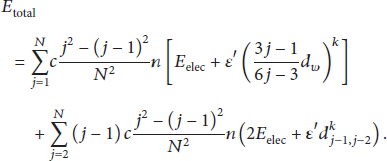
Thus, in a multihop sensor network, energy consumption on data transmission is related to the number of nodes, the number of hops, and the single-hop communication distance.
On the other hand, in a multihop circular network, nodes in the inner annulus near the sink consume more energy on data receiving and transmitting [10–12]. Furthermore, as known from formula (11), in a uniform distributed sensor network, the value of


Node deployment model in SNAA.
Thus, from the
4. Method Description
4.1. Optimal Parent Node Selection
In order to reduce the high load on relay nodes in a cluster-based sensor network and also to mitigate the energy hole problem, some definitions are described as follows.
Definition 1 (the optimal hop distance
).
According to the above analysis, it is known that, in SNAA, node in the jth annulus only needs to communicate with one node in the

Definition 2 (region for candidate parent nodes).
To reduce the communication cost on parent finding, a virtual circle about node
According to the energy consumption model of nodes in [14], it is known that the communication cost of
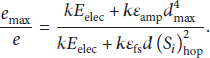
According to [14],
Moreover, in (18),

So SNAA could effectively reduce energy consumption on communication, especially for the high value of j and

OptDistance( CandiRegion(d): return the candidate region of Weight(): return the weight of the candidate parent node. Sleep(): go into sleeping mode. Receive(): return the amount of data received by node. Collect(): return the amount of data collected by node. Transmit(data): transmit data.
(01) Input: (02) (03) for each node (04) OptNode = (05) if(OptNode == Null) (06) (07) else (08) if(OptNode.Receive() != 0) (09) Transmit(OptNode.Receive() + OptNode.Collect()) (10) else (11) Transmit(OptNode.Collect()) (12) endif (13) endif
Furthermore, the size of the candidate region is related to the probability of nodes to find their parent. In Figure 5, the area of

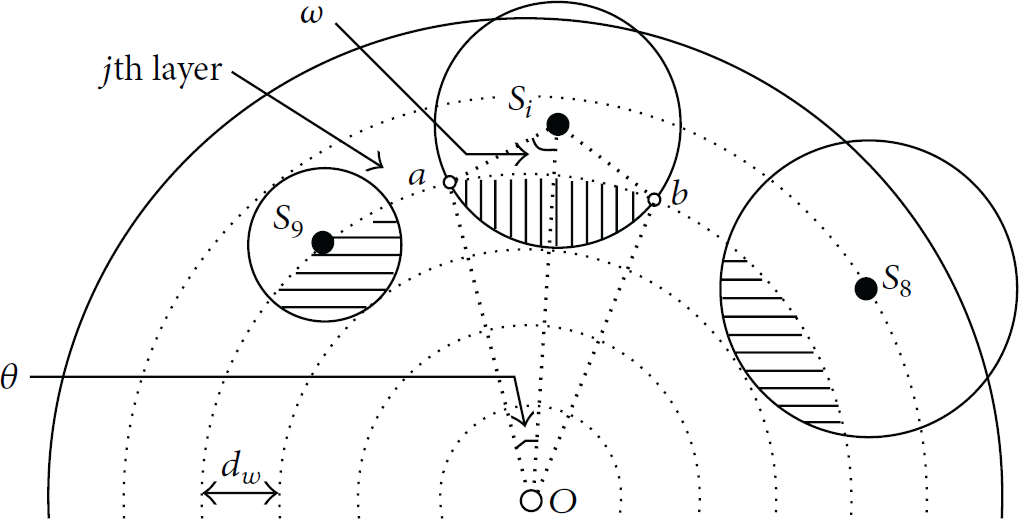
Analysis about the deployment of nodes.
From the definition of

When

Thus, in the case of uniform distribution, when the value of

4.2. Data Uploading Strategy Based on Synchronization of Nodes in Adjacent Annuluses
As mentioned before, in the cluster-tree based network, the burdens on the relay nodes as well as the sink are obviously higher than the leaf nodes. Therefore, the “hotspots” may appear in the center of the network. In addition, cooperation between nodes is more and more important during the data transmitting and receiving phases. Thus, a type of data uploading strategy based on synchronization of nodes is proposed as follows.
T is defined as one round of execution time in SNAA.

Working flowchart of nodes in data uploading phase.
At the beginning of each round, all the nodes in the network continue sampling in

Network topology in
Nodes in the
Similarly, at the end of

Network topology in
From the analysis above, it is well known that, after one-round time of T, data generated in the jth annulus (including data sensed by nodes in this annulus and data received from the outer annuluses) could be transmitted to the nodes in the
4.3. Discussion about Node Sleeping in SNAA
As mentioned in Section 4.2, nodes which could not be selected as the parent or nodes that have no next-hop neighbors go into sleeping mode in SNAA, while in WSNs, since the existence of energy consumption on state switching, quantitative analysis should be considered to determine the working statement of nodes. As shown in Figure 9,
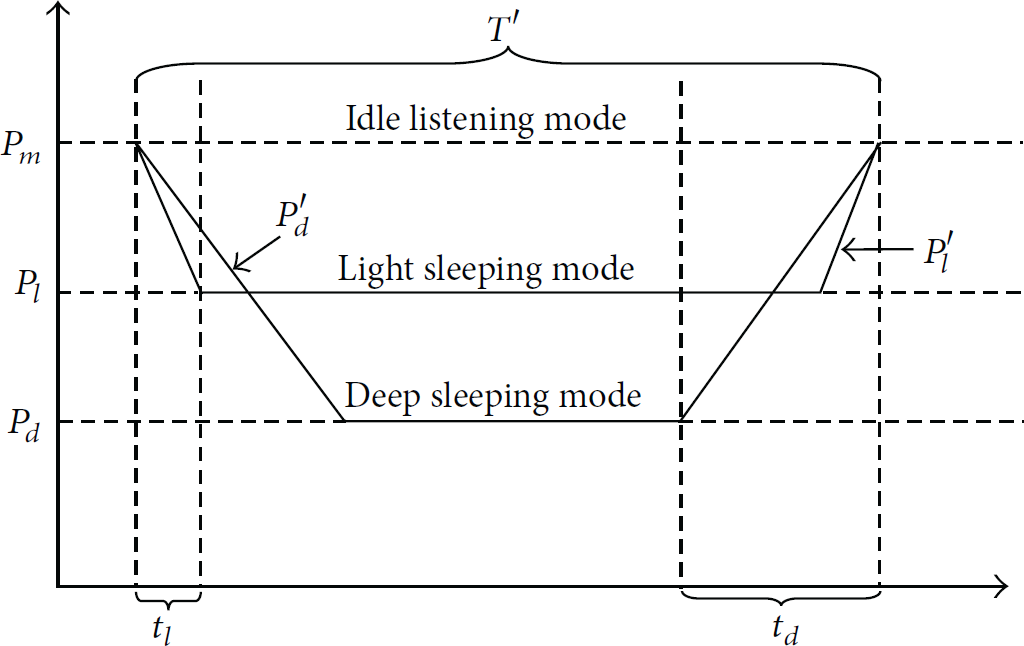
Power consumption under different working modes.
Thus, energy consumption of node

In addition,

It is not difficult to know that when
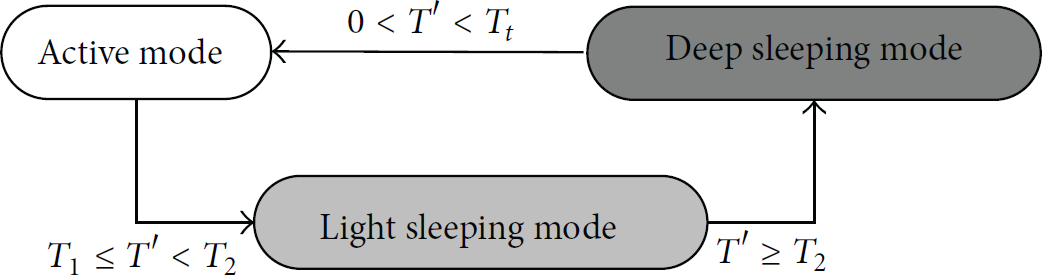
Mode selection for
On the other hand, to further mitigate the energy hole problem, all the nodes in the network should check their residual energy
4.4. Discussion about the Value of T in SNAA
As mentioned before, in SNAA,

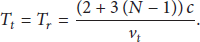
However, in SNAA, owing to the sleep scheduling strategy, it may not ensure that each node could upload data to its parent during one period of T. In the worst case, in a transmission path from the node in the Nth annulus to sink, data will be temporarily stored in each node for the time of T. Meanwhile, during this time, the node could also generate c-bit data. Thus, the possible maximum amount of data uploaded from one node in the jth annulus to its parent in the

5. Experimental Results and Analysis
The performance of SNAA on energy balance, network lifetime, and the efficiency of data collection are analyzed with the help of Omnet++4.0 and Matlab 7.0. Furthermore, we compare SNAA with the geometric proportion deployment strategy proposed by Wu et al. [29] and the energy hole mitigating algorithm with the optimal width of annulus proposed by Liu et al. [4], respectively. Parameter values of this simulation are shown in Table 1.
Parameter values of simulation.

5.1. Discussion about the Value of q
Similar to [29], the nonuniform deployment model is adopted in SNAA, which could reduce the burden of nodes near the center and achieve energy balance. As mentioned in Section 3.2, the value of q is not only important for the probability that nodes find their parent in the candidate region, but also related to the redundancy of network. Thus, it is discussed as follows.
According to formula (16) as well as the parent selection strategy in SNAA, for a node 
For convenience, the values of N and δ are set to be 4 and 0.8 in (30). The relationship between
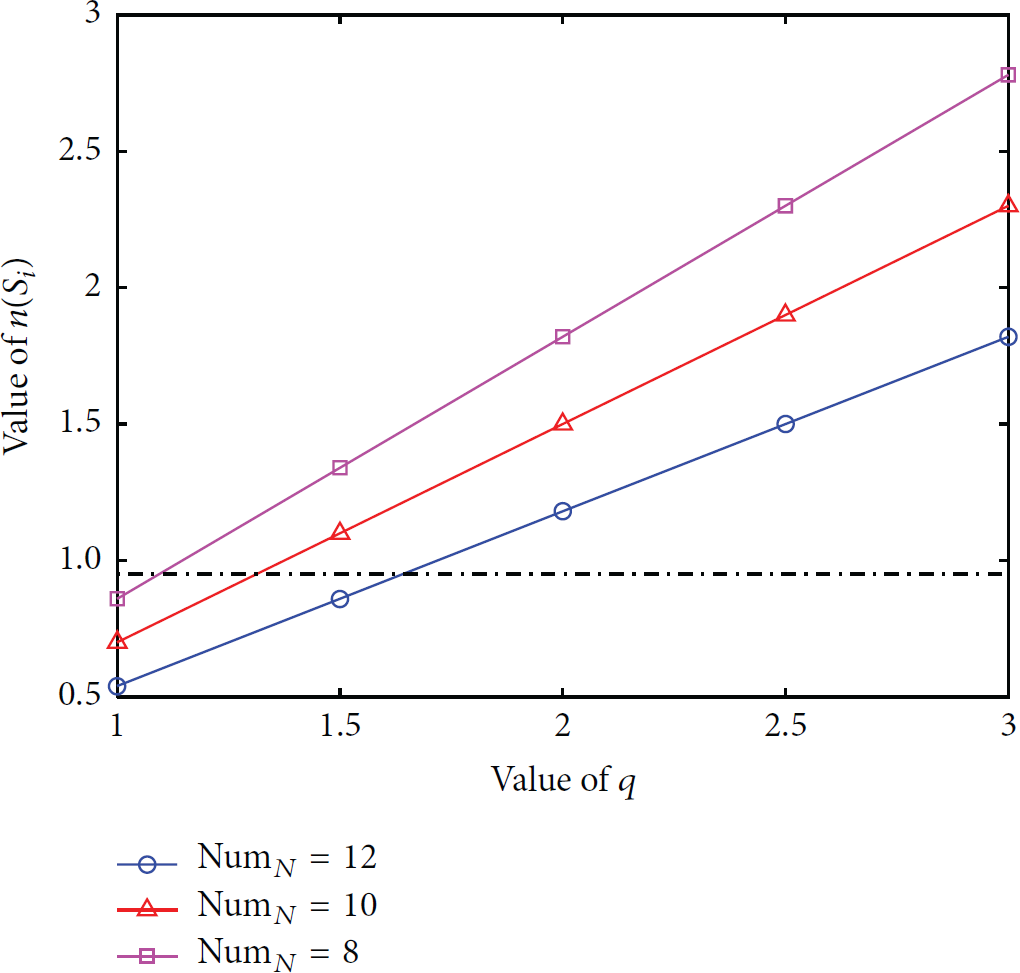
Number of nodes in the candidate region with the increase of q.
On the other hand, the value of
Figure 12 shows the residual energy of nodes at the end of the network lifetime. It is obvious that the residual energy of each node has a low value in Figure 12 (not higher than 2.2 J), which has a good performance on energy balance. Moreover, the residual energy of nodes in the same annulus is nearly the same which could effectively mitigate the energy hole problem.

Residual energy of nodes.
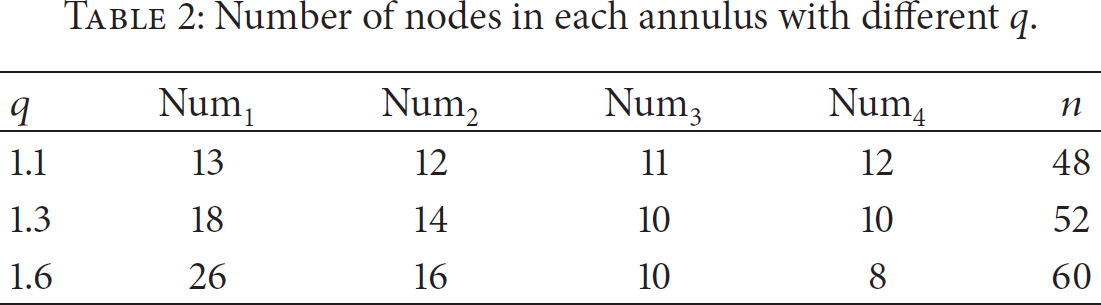
The deployments of nodes in this experiment are shown in Figures 13–15 and the numbers of nodes in each annulus are shown in Table 2. According to formula (24), it is known that the number of nodes in the Nth annulus should be not less than
Number of nodes in each annulus with different q.

Network deployment when

Network deployment when

Network deployment when
Figures 16 and 17 describe the total residual energy about all nodes as well as the mean value of residual energy of each node in SNAA, respectively. It is known that, at the end of the network lifetime, total residual energy is no more than 1.8%

Total residual energy about all nodes.

Mean value of residual energy of each node.
Variance of the residual energy, the network lifetime, and the data received by all nodes during their lifetime are shown in Table 3. It is known that there are little differences about the network lifetime under different deployment model. However, when
Variance of residual energy, network lifetime, and data received by all nodes during their lifetime.

5.2. Analysis on the Value of χ
As mentioned above, all the active nodes check their residual energy at the end of each T in SNAA. When
Parameter values in Section 5.2.

The total residual energy about all nodes and their variances with different values of χ are shown in Figures 18 and 19, respectively. It is known that, at the end of the network lifetime, the two kinds of values are relatively stable no matter what the value of χ is. This is because a relatively reasonable deployment strategy is used in SNAA and the optimal parent selection scheme is also proposed by considering the residual energy as well as the communication distance of nodes. From Figures 18 and 19, it is also known that the best value of χ is 50%. When χ is small, it is not easy for nodes to go into sleeping mode; thus, the “hotspot” may appear. On the contrary, nodes may frequently enter into sleeping mode when χ is large. This could save more energy, but the efficiency is relatively low. Therefore, the value of χ should be neither too large nor too small.

Total residual energy about all nodes with different values of χ.

Variances of residual energy with different values of χ.
Figure 20 shows the data receiving rate with different χ. At the end of the network lifetime, there are still some data being transmitted and not received by sink. Thus, few pieces of data could be discarded in SNAA. It is known from Figure 20 that when

Data receiving rate with different values of χ.
5.3. Comparison with Other Energy Hole Mitigating Methods
To further analyze the performance of SNAA on energy balance as well as the execution efficiency, we compare it with the other two energy hole mitigating methods in [4] and [29], respectively. Values of parameters used in these experiments are shown in Algorithm 1 and Table 3, while
The residual energy of the whole network in the three methods is shown in Figure 21. The value in SNAA decreases slowly and tends to be stable. This is because each active node in SNAA collects, sends, and receives data synchronously in T, which ensures that the energy consumption values about them are nearly the same. Although the algorithms in [4, 29] could also mitigate the energy hole problem, their residual energy decreases a little faster than SNAA. Furthermore, it is known that the network lifetime in [4, 29] is 1600 and 1200 rounds, respectively, which is also shorter than SNAA. Thus, SNAA could effectively prolong the network lifetime by reducing the energy consumption on communication as well as idle listening.
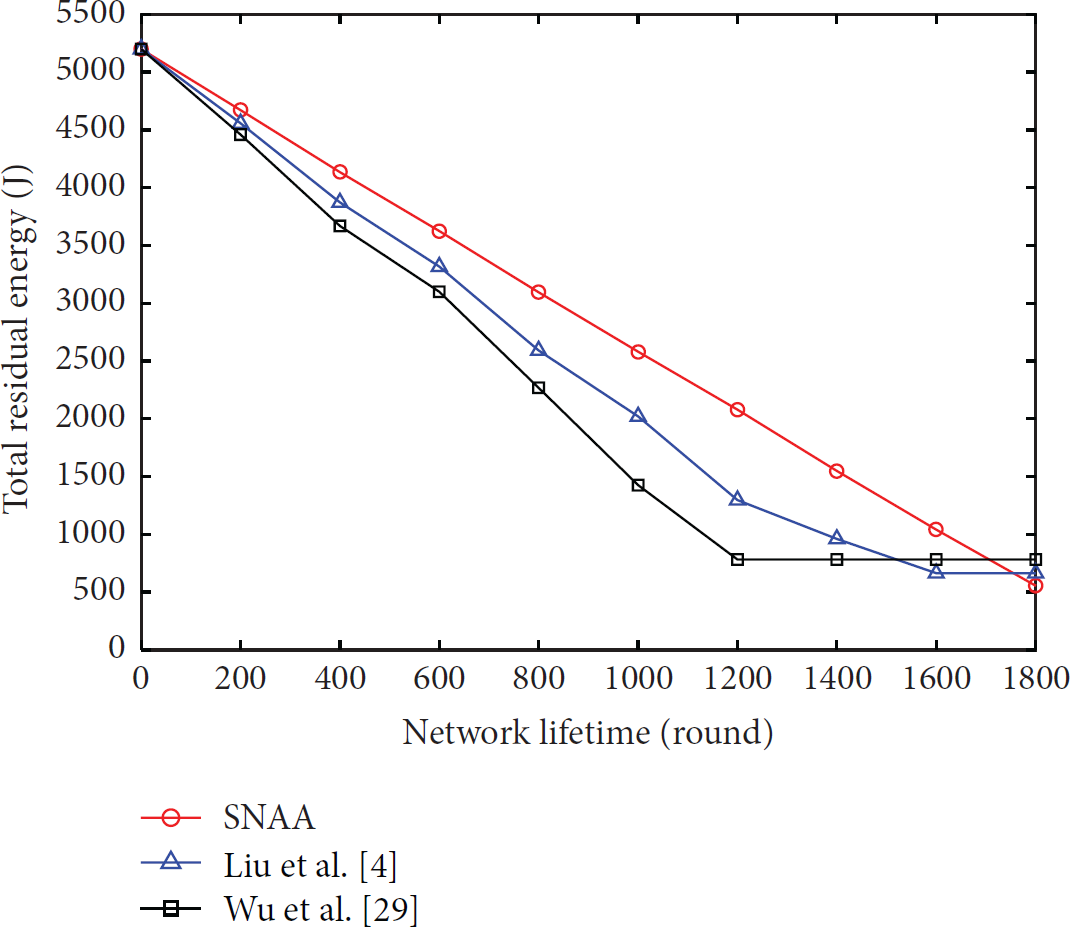
Total residual energy in different algorithms.
Figure 22 shows the variation of the residual energy about all nodes in the three algorithms. Due to the nonuniform deployment strategy which reduces the energy consumption of nodes near the center, both of the algorithms show a good performance on energy balance. With the help of the optimal width of the annulus, nodes are deployed proportionally in [4], but the “unbalanced load problem” for nodes is not considered. While the value of the proportion in [29] is a little big, more nodes could be deployed near the center. In addition, the parent selection strategies in [4, 29] are only based on the residual energy of the candidate nodes and the communication distance between the nodes in adjacent annuluses is not considered. Therefore, the effect of SNAA on energy balance is better than the two others.
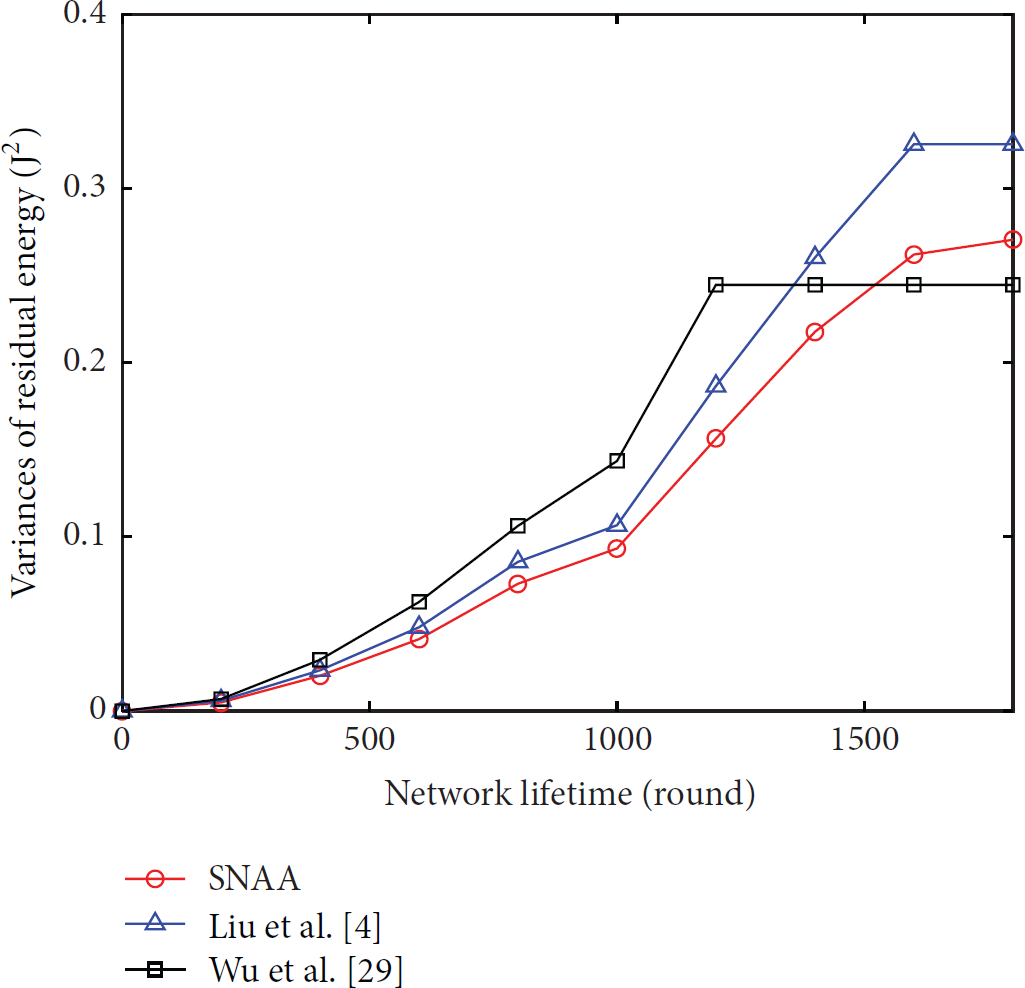
Variation of the residual energy in different algorithms.
Network lifetime in the three algorithms with different network sizes is shown in Figure 23. It is known that the values are relatively stable in [4, 29]. With the help of the sleeping scheduling strategy, there may be more and more nodes that could go into sleeping mode in SNAA. Therefore, the network lifetime increases with the increase of the number of annuluses. However, if

Network lifetime in different algorithms.
6. Conclusion
To achieve energy balance in a circular sensor network, a type of energy hole avoiding method based on synchronization of nodes in adjacent annuluses is proposed in this paper. Nodes are deployed nonuniformly in each annulus, which effectively reduces the energy consumption on nodes near the center. Furthermore, the optimal parent node selection method and the sleep scheduling strategy are also proposed in SNAA to further mitigate the energy hole problem. However, the problem on data transmission delay is also important in the circular network and should be studied in our future work to further improve the performance of SNAA.
Footnotes
Competing Interests
The authors declare that they have no competing interests.
Acknowledgments
The subject is sponsored by the National Natural Science Foundation of China (61373017), Jiangsu Provincial Research Scheme of Natural Science for Higher Education Institutions (14KJB520029), Open Project of Provincial Key Laboratory for Computer Information Processing Technology of Soochow University (KJS1327), and Open Project of Jiangsu High Technology Research Key Laboratory for Wireless Sensor Networks (WSNLBZY201517).