




Abstract
Over the last couple of years, video service distribution among smart phones and other mobile video devices is becoming increasingly popular in sensor networks. However, the huge energy consumption caused by video encoding and transmitting and the slowly evolving battery technologies become the major bottlenecks that hinder the development of video streaming services. Hence energy efficient video coding and transmitting solutions are required to be investigated. Yet, energy consumption reduction of mobile video devices will be accompanied with Quality of Experience (QoE) degradation of video applications. Such diverse tendency makes it difficult to encode and transmit video streams with less energy as well as better QoE. This paper analyzes the major energy consuming factors in mobile video devices. A specific energy consumption model concerning encoding bitrates and transmitting power level is built. Further, a noninvasive QoE perceptive model is adopted so that the energy efficiency problem becomes a cross-layer optimization problem. Chaos particle swarm optimization is used to solve this cross-layer optimization problem with fast convergence. By this method, energy consumption of mobile video device is minimized with acceptable QoE for video users. At last, Pareto front of energy and QoE is analyzed to certify the performance of our method.
1. Introduction
By the end of 2019, mobile data traffic is expected to grow at a Compound Average Growth Rate (CAGR) of around 45 percent [1]. This will result in an increase of around 10 times by the end of 2019. Users are consuming more data traffic per subscription, mainly driven by video services. Video streaming services, such as Netflix, HBO, and Vimeo, have shown very strong uptake in mobile devices. New video technologies such as High Dynamic Range (HDR) [2] and ultra-high definition (UHD) [3] videos will become more common. With providing truly immersive QoE to the users, they will bring about more bitrate to wireless networks and more energy consumption for video devices. In addition, operators are increasingly making their own TV services available as streaming services on mobile networks. This is facilitated by the higher network speeds that come with High Speed Packet Access (HSPA) and Long Term Evolution (LTE) development. It is increasingly common to share video clips over mobile networks and smart mobile devices make up an increasing capacity of video capture, processing, and viewing. This has contributed to the growth in mobile data traffic. Cisco Forecast [4] shows that, until 2017, 70 percent of mobile data traffic will be video traffic. Video applications must be the primary service in wireless sensor networks. However, there are two challenges confronted by the development of video applications in mobile devices.
Firstly, huge energy consumption of encoding and decoding and big data rate in radio interface for video streaming bring great challenges for energy saving of mobile video devices. In future, with the development of HDR and UHD, video devices may require more energy consumption. However, battery is usually adopted as the energy source of mobile video devices. In spite of several decades' development, unfortunately, the capacity of battery is still the bottleneck of the development of pocket devices, while the hardware of mobile devices is frequently updated. In addition, for mobile video devices, high complexity of video processing algorithms and large bitrate of video streaming data will considerably cut down the life of batteries. Energy efficient method should be proposed to reduce the energy consumption of video streaming and extend the lifetime of battery significantly. Therefore, as there is no significant advance in battery technology, energy efficient mechanism for video encoding and transmitting becomes a crucial issue to be investigated.
Secondly, wireless multimedia sensor networks deeply change the interactive mode between cyber space and physical space, which have been applied in areas such as military, health care, traffic control, and disaster resistance. Multimedia sensors such as video sensors and image sensors are engaged in perception, processing, and transmission not only for simple data information but also for multimedia information. However, dynamic and unpredicted interference in wireless sensor networks will make a big dent in quality of video services. In addition, video service is a kind of service with strong content correlation; QoS metrics, such as throughput, delay, and jitter, cannot fully reflect the user perceived quality of video service. QoE, which depicts the approximate subjective experience of services in wireless sensor networks by terminal users, is increasingly adopted as the metric for video quality. With regard to video services in wireless sensor networks, how to dynamically accommodate video encoding scheme and manage radio resources so that QoE of mobile video services could be assured is an issue that urgently needs to be addressed.
Therefore, in wireless sensor networks, video devices need not only to assure the QoE for video applications, but also to deal with the huge energy consumption generated by high data rate of video streaming. Appropriate strategy profile should be picked out to guarantee the QoE of video applications, while minimizing the energy consumption of mobile video devices. However, there are conflicts between these two objectives. Reducing energy consumption of video streaming is always in the price of degradation of transmitting power level, which will lead to degradation of the QoE for video services. Meanwhile, enhancement of QoE is always in the price of enhancement of transmitting power level, which will lead to extra energy consumption of video services. Therefore, it is necessary to find an appropriate tradeoff between energy saving and QoE, so as to reduce the energy consumption caused by video streaming with assurance of QoE.
In this paper, as shown in Figure 1, we propose a QoE perceptive cross-layer energy efficient (QP-CEE) method for mobile video devices, to dispose of the energy efficiency problem and QoE assurance problem together. Energy consumption of mobile devices is reduced, and QoE of video applications in mobile video device is enhanced through dynamic regulation of transmitting power level, modulation and coding scheme (MCS), and encoding bitrate of video streaming. By elaborative analysis of the encoding and transmitting process of mobile video device, a comprehensive energy consumption model for video encoding and transmitting is established. A noninvasive QoE perception model is adopted in terms of the mean opinion score (MOS). The proposed QoE perception model is significant in its own right as the optimization of QoE is crucial for mobile video services. Energy efficiency problem is modeled as a joint optimization problem including optimization of QoE and energy consumption. Then chaos particle swarm optimization algorithm is adopted to search for optimal power level and video encoding rate in parallel, so that the energy consumption is minimized and QoE of video applications is ensured. Finally, Pareto front of energy and QoE is analyzed to certify the performance of the proposed method. There are three main contributions in this paper. Firstly, encoding bitrate, modulation and coding scheme, and transmitting power level are investigated simultaneously, by which multilayer (including application layer and physical layer) performance gain is achieved. Secondly, an energy efficient method based on QoE perception is proposed, and both requirements of mobile user for video quality and minimization of energy consumption for mobile devices are achieved. Thirdly, chaos particle swarm optimization is adopted to solve the optimization problem. In one aspect the search process is not apt to converge to local optimum solution. In the other aspect time delay for solving the cross-layer optimization problem can be shortened by parallel process, which can meet the real-time requirements for video services such as video live and video conference.

Framework of QoE perceptive cross-layer energy efficiency method for video devices.
The rest of this paper is arranged as follows. In Section 2, state-of-the-art research about QoE perception method, energy saving strategy, tradeoff method of QoE, and energy saving is surveyed and summarized, and the open questions and possible research directions are analyzed. In Section 3, the uplink energy efficient scenario for mobile video devices is described. The energy consumption model for mobile video devices is proposed in Section 4. In Section 5 joint optimization problem of QoE and energy consumption is investigated, and chaos particle swarm optimization method is adopted to find optimum encoding bitrate and power level. Evaluation and analysis for our work are carried out in Section 6. In Section 7 we conclude our work in this paper.
2. Related Work
Various energy efficient methods have been proposed to improve the energy efficiency of wireless networks. Specially, for video streaming with growing popularity, the large energy consumption generated by encoding and transmitting constantly drives researchers to investigate energy efficient techniques. A lot of work has been done on software and hardware of mobile devices to extend the battery lifetime. For example, low complexity encoding strategies [5–7], low power embedded video coding algorithm [8], adaptive power control strategies [9–11], and joint encoding and hardware adaptive method [12] are proposed as the possible solutions. However, performance enhancement resulting from these researches cannot meet the increasing requirements of energy saving by users.
Recently, researchers believe that cross-layer design plays an important role in energy efficiency methods for multimedia systems [13, 14]. Joint video encoding and wireless transmission control [14, 15] is proposed to implement the cross-layer design for mobile video stream applications. For mobile video devices, energy consumption is primarily caused by encoding and transmission. However, in [5–15], the authors propose energy efficiency method, while there is no system level energy consumption model to support their methods. Power-rate-distortion model [16, 17] is proposed to analyze the energy consumption of video applications, by extending traditional R-D analyzed model. Researchers from Simon Fraser University propose a novel energy efficient method [18–20] through choosing the most suitable number of encoding layers. Unfortunately, QoE is not considered as an optimization target for these energy efficient methods.
Actually, to ensure QoE of emerging video applications for users, QoE perception and prediction model have been deeply investigated recently. Amounts of objective video quality assessment methods are proposed to perceive the quality for video applications [21–23]. However, these distortion based methods always calculate video quality through measuring the distortion between source video and received video and then mapping this distortion to MOS or other QoE metrics. The MOVIE model presented in [24] is a full reference model developed from the spatial-temporal features of the video. Full reference video quality prediction models are difficult to implement for real-time monitoring due to their complexity. In order to estimate user experienced video quality, methods with no reference are also employed. Many existing quality metrics usually use bit-error rate that has low correlation with user perceived video quality. The no reference video quality estimation method proposed in [25] estimates video quality degradation with respect to human perception that is measured as video quality metric scores, which require too much processing power that cannot be obtained in handled mobile devices. The model presented in [26] combines video content features with the distortions caused by the encoder. The work in [27] introduces a “relative quality” metric (rPSNR) over IP networks from network distortions only by developing an approach that is capable of mapping network statistics, for example, packet losses, available from simple measurements, to the quality of video sequences reconstructed by receivers. Some researches [28, 29] prove that video quality is affected by parameters associated with the encoder (e.g., source bitrate) and the network condition (e.g., packet loss). Khan et al. [30] propose a QoE perception model based on video streaming, by comprehensive analysis of video content, encoding bitrate, and transmitting power level. However, for mobile video devices, it is not practical to merely enhance QoE for video applications without any care for huge energy consumption caused by video encoding and transmitting.
There are few researches on joint optimization of QoE and energy. Current researches on tradeoff between QoE and energy consumption in wireless networks focus on theoretical analysis, which always have high complexity, and cannot be used in practical scenario. Liberal et al. propose [31] a low encoding complexity and transmitting power consumption method, by dynamic heuristic programming other than joint optimization. In [32], the authors propose a new metric EE-QoE, which denotes QoE improvements per unit power. This metric is applied into wireless cellular networks with interference limit. However, these methods lead to high complexity. Therefore, for mobile video devices with limited computational capacity, a novel practical joint QoE and energy efficient method with low complexity is urgent to be proposed.
In this paper, a QoE perceptive cross-layer energy efficiency method for mobile video devices is proposed to jointly optimize the energy consumption and QoE for mobile video services. Comprehensive optimization model of QoE and energy consumption is investigated and rapid cross-layer optimization method based on chaos particle swarm optimization (CPSO) algorithm is adopted to make the video device learn appropriate encoding and transmitting parameters in real time.
3. Energy Efficient Scenario for Mobile Video Devices
3.1. Transmission Scenario of Video Services
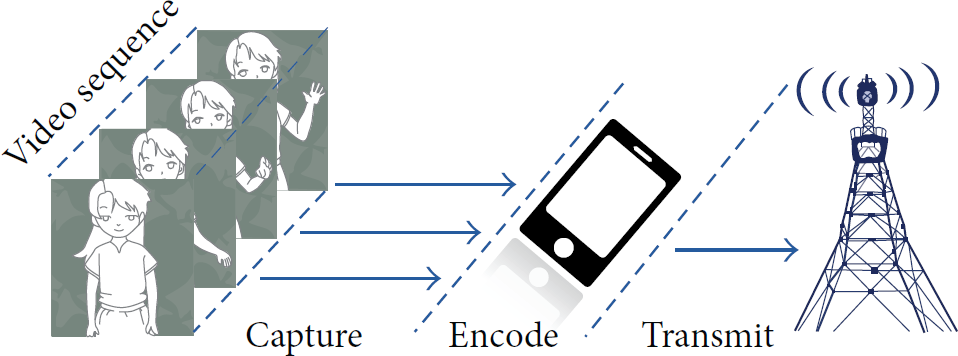
To focus on the energy efficiency problem caused by video services on mobile devices, we assume that there are only real-time video services, such as gaming, video live, and video conference, running on the mobile video devices for simplicity. This assumption is reasonable as in all kinds of mobile services video services are the main source of energy consumption. One obvious characteristic of these services is the requirement of real-time processing. Hence mobile devices need to encode and decode video streaming in real time. In this paper, appropriate resource portfolio in radio uplink is investigated, by which not only QoE assurance of video users but also minimization of mobile device's energy consumption could be achieved. Figure 2 shows a typical scenario for real-time video services.
Scenario for real-time video services.
3.2. Major Energy Consuming Factors
Previous studies have shown that [33] there are many impact factors for energy consumption of video devices, including service type, mobile network, transmitting power level of mobile device, screen, Bluetooth, wireless local network, and GPS. Since energy consumption of factors such as screen, GPS, and Bluetooth could be optimized from operation level rather than algorithm level, in this paper we primarily investigate the two factors, encoding bitrate and transmitting power level of mobile devices, which have specific impact on energy consumption on mobile devices. To explore the relationship in qualitative level of these two factors and two objectives associated with energy efficiency problem such as energy consumption and QoE, an experimental test is implemented. Two different types of mobile devices, HTC One and HUAWEI Honor, are selected as the test devices. Test video clips that come from LIVE database [34] with a QCIF resolution are used in this experiment. As shown in Table 1, a set of samples of encoding bitrate and normalized transmitting power level are selected as the input arguments, and the corresponding normalized transmitting power consumption is measured. We assess the MOS value of video clips through subjective marking by users according to ITU's specification [35] for video quality assessment. Then the relationships are figured out by artificial neural network toolbox in MATLAB. Finally, energy consumption and QoE (measured by MOS) curves of encoding bitrate and transmitting power level are drawn up, respectively.
Samples of encoding bitrate and normalized transmitting power level.

3.2.1. Encoding Bitrate
To study how the encoding bitrate influences the energy consumption and QoE of video services in UMTS, we change the bitrate from 50 kbps to 150 kbps. Power level of mobile devices is 20 dBm, video stream is encoding by H.264, and Bluetooth and GPS are both turned off. The relationship of QoE and energy consumption to encoding bitrate is depicted in Figure 3.

Impact on energy consumption and QoE by video bitrate (the power level of mobile devices is 20 dBm).
Energy consumption of video devices can be divided into encoding energy consumption and transmitting energy consumption. With the growth of encoding bitrate, less encoding energy consumption is required for the same video sequence. As the encoding energy consumption decreases, the encoder will generate more encoded video data, which implies more energy consumption is required for video transmission in wireless channels. When the growth rate of video transmitting energy consumption exceeds the decent rate of video encoding energy consumption, the whole energy consumption will decline with the growth of encoding bitrate. As illustrated in Figure 3, energy consumption of video devices is first decreasing with the improvement of video encoding bitrate due to the decrease of encoding energy consumption and then increasing with the growth of transmitting energy consumption, while QoE of video applications is increasing all the time.
3.2.2. Transmitting Power Level
To study the impact on energy consumption and QoE by transmitting power level, we change the transmitting power of mobile video devices. Bluetooth and GPS are turned off, and the encoding bitrate of video stream is fixed on 100 kbps. The relationships of QoE and energy consumption to transmitting power level are depicted in Figure 4. It shows that energy consumption of mobile video devices is increasing with the improvement of transmitting power level, as well as the QoE of video services.
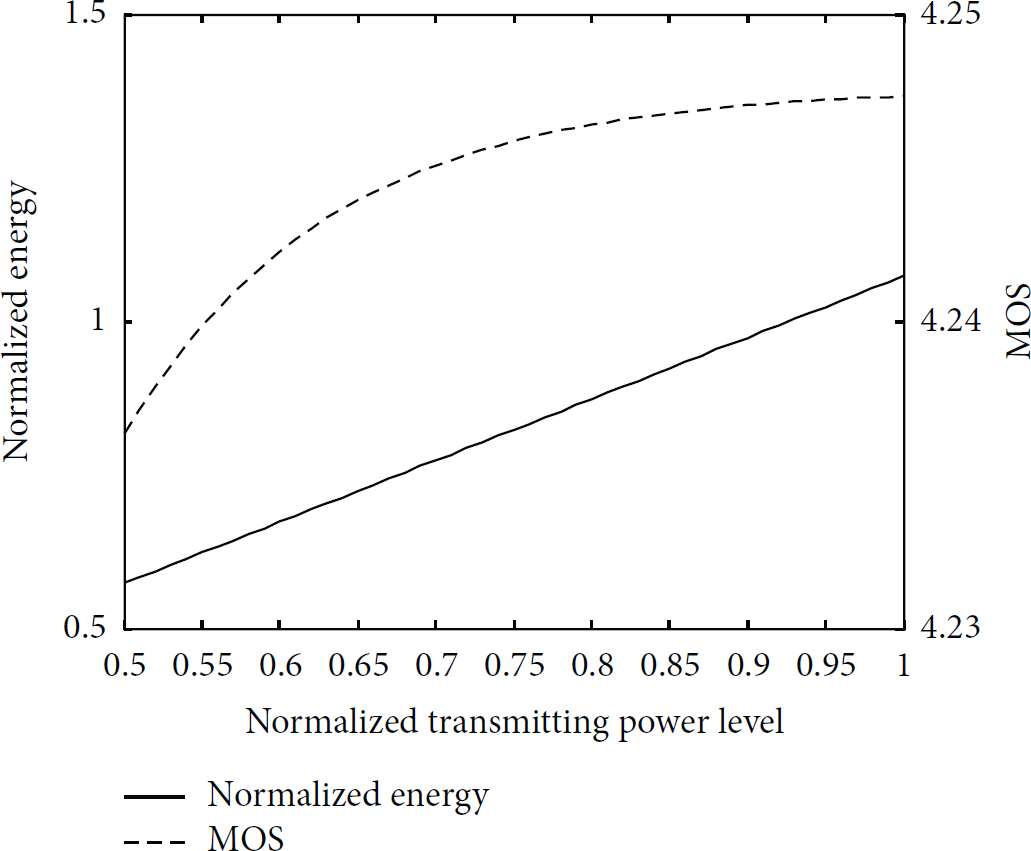
Impact on energy consumption and QoE by transmitting power level (the encoding bitrate of video stream is fixed on 100 kbps).
Consequently, both the video encoding bitrate and transmitting power lever have a close relationship with QoE and energy consumption of video services. By the above qualitative analysis, it is easy to conclude that, through dynamic adjustment of transmitting power level and encoding bitrate, appropriate energy consumption and QoE tradeoff could be achieved. In the following section, we will investigate the specific quantitative relationship of these two configurable factors to energy consumption and QoE of video services.
4. Energy Consumption Model for Mobile Video Devices
For mobile video devices, energy consumption model denotes the energy consumed by encoding and transmitting for video streaming. As video traffic is delivered through wireless channels, encoding bitrate is constrained by the channel capacity, which is dependent on the transmitting power of mobile devices.
4.1. Energy Consumption Model for Video Devices
Energy consumption in video devices can be divided into two parts, power consumption caused by video encoding and power consumption caused by video transmitting. Let P denote the total power consumption of mobile device. Define 
Obviously, 

For diverse microprocessor with dynamic voltage regulation ability, the range of γ is
Generally, two different video encoding schemes are involved. One scheme is that video sequence is considered to be steady, and the optimal encoding power level is determined through statistical averaging method [36]. All video frames are encoded with this constant encoding power level. The other scheme is that encoder divides video sequence into different video segments [17], and then resource allocation strategy is optimized in terms of video segments to minimize the overall power consumption. As its adaptive characteristic, for the same video sequence, the second scheme consumes less energy than the first one. Define S as the input video sequence, which is divided into several video segments 

Therefore, energy consumption of mobile video device can be calculated by

4.2. Encoding Bitrate Constraint Based on Automatic Modulation and Coding
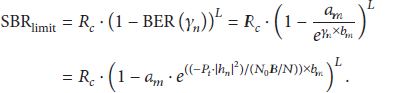
The available transmitting bitrate for video streaming depends on the bit-error rate (BER), which can be expressed by

Automatic modulation and coding (AMC) has different alternative of constellations of modulation and rates of error-control codes based on the time-varying channel quality, which can effectively enhance the throughput of wireless communication systems [37]; with AMC, the bit-error rate can be depicted by
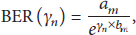
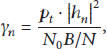
Modulation mapping model.

Source bitrate of video streaming should satisfy the following constraint:

That is,

5. QoE Perceptive Cross-Layer Energy Efficient Method
To ensure QoE of video services in mobile devices, a noninvasive video QoE perception model based on parameters associated with encoder and wireless channel is adopted to perceive video quality. Through combining this QoE perception model and the energy consumption model for mobile video devices, a QoE perceptive cross-layer energy efficient model can be established. Finally, CPSO algorithm is adopted to solve this cross-layer optimization problem.
5.1. Noninvasive QoE Perception Model for Video Streaming
For mobile video services, mean opinion score (MOS) is usually used as metric for QoE measurement. The MOS values range from 1 to 5, representing video quality from “bad” to “excellent.” MOS is a subjective evaluation from the perspective of user experience, which can be approximated by some objective perception models. In order to restrain the high complexity of traditional distortion based QoE perception models, a content-based, noninvasive QoE perception model [30] for video services is presented, which can be expressed by

Here,
Coefficients of QoE perception model.

The basic idea in this model is to move away from the use of individual network parameters, such as packet loss probability or delay, towards perceptual-based approach, in order to achieve the best possible perceived video quality. This model takes into account quality degradation caused by the wireless channel and the encoder, by combination of parameters associated with the encoder and the wireless channel for different types of content.
5.2. Cross-Layer Energy Efficiency Problem
On the basis of the proposed energy consumption model in Section 4, to minimize the system power consumption as well as ensuring video user's perceived quality, the optimization problem can be formulated by

Figure 5 shows the QoE perceptive cross-layer energy efficiency framework. In this framework, these cross-layer parameters are adaptively regulated to figure out the optimum strategy profile, so as to minimize the power consumption of mobile video devices and ensure the quality of video services. As a result, energy consumption is reduced and the operational lifetime of the device is lengthened.

QoE perceptive cross-layer energy efficiency framework.
5.3. Chaos Particle Swarm Optimization Algorithm
Particle swarm optimization method was originally presented by Eberhart and Kennedy in 1995 [38], inspired by social behavior of bird flocking in the process of migration and clustering. Particle swarm optimization method does not require a centralized control node and each individual has only limited intelligence. Through a number of information interactions of individuals, swarm can put up strong intelligence. However, due to the inherent inertness of particles, optimization process is often prone to converging to local optimal solution. Value of parameters and convergence of optimization are the key factors influencing the performance and efficiency of algorithms. In order to guarantee the global convergence of particle swarm optimization, chaos theory is introduced in this paper.
Chaos refers to irregular or chaotic motion generated by some nonlinear systems, and the kinetics law of these systems can determine the unique evolution of the system status over time from previous experience system. The basic idea of chaotic particle swarm optimization algorithm mainly embodies that the chaotic sequence is used to improve the diversity of population and ergodicity of particle searches, without changing the randomness nature of original particle swarm optimization. Many neighborhood points of local optimal solution by chaotic sequence in the iterative process, which can help inert particles escape from local extreme point and search for the global optimal solution as soon as possible.
In this chaotic particle swarm optimization algorithm, according to formula (14), a constrained optimization problem is formulated. In order to find a feasible optimal solution for this constrained cross-layer optimization problem, modification [39] of the objective function is implemented to convert the original constrained optimization problem to an unconstrained problem. Firstly, the constraint condition is replaced by the following two inequalities:

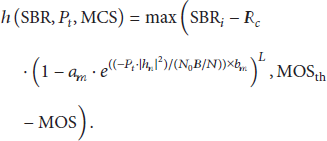

Therefore, chaotic particle swarm optimization algorithm could be used to solve this unconstrained cross-layer energy efficiency problem, and the power consumptions of encoding and transmitting are minimized under condition of satisfying the MOS requirements for each video segment.
The objective function 
We consider a swarm consisting of m particles: 

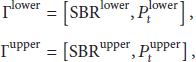

Then, in order to find an optimal solution, each particle 


Particles will search iteratively in terms of fitness in the search space, until the user-defined termination criterions are satisfied. Initial particles may be selected from chaotic sequences, and initial velocity could be randomly generated. The CPSO method is presented in Algorithm 1.
Algorithm 1 (CPSO algorithm).
Set Initialize particle Consider While ( Update velocity of particle
Update position of particle Calculate the fitness value Consider Consider Consider Optimize the global position by chaotic sequence. Generate chaotic vector sequence Consider If ( End if. End while.

6. Simulation Results and Analysis
In this section, we evaluate the performance through MATLAB. In order to conveniently validate the proposed optimization algorithm, three video sequences (Suzie, carphone, and football) that come from LIVE database [34] with a QCIF (
6.1. Performance Analysis of QP-CEE Method
According to the ITU-T criteria [40], MOS are divided into five grades. The higher value denotes the better perceptive video quality. In this paper, we adopt 3.5 as the threshold of acceptable video quality for users, which is

Therefore, the QoE constraint for QP-CEE method could be denoted by

To demonstrate the performance of the proposed QP-CEE method, we compare it with two traditional distortion based energy efficient methods, max SBR method and max Pt method. Max SBR method adopts maximum encoding bitrate and adaptive transmitting power level, while max Pt method employs maximum transmitting power level and adaptive encoding bitrate.
The normalized energy consumption and MOS of test video sequences using different methods are shown in Figures 6 and 7, respectively. As the alternative energy consumption levels and encoding bitrate are discrete values rather than continuous values, the suboptimal video encoding bitrate and transmitting power level could be figured out by our proposed QoE perceptive cross-layer energy efficiency method.

Energy consumption under different energy efficient methods.

MOS value under different energy efficient methods.
Figure 6 shows the minimum energy consumption of video frames. Here, the energy consumption is normalized by the maximum energy consumption. In Figure 6, we compared the energy consumption by different strategies. Through calculating the minimum energy consumption of video encoding and transmitting in mobile video devices, the proposed QP-CEE method can effectively reduce energy consumption and extend the battery lifetime.
Figure 7 depicts the MOS values of video frames using different methods. As Figure 7 shows, on the basis of noninvasive QoE perception model of video streaming, the proposed cross-layer energy efficient method guarantees the QoE of mobile video services.
The average energy consumption and MOS of Three video clips are shown in Table 4. As different test video clips vary in video content and structure, the average values of energy consumption and MOS achieved by energy efficient method are distinct from each other. Obviously, our proposed QP-CEE method reduces the energy consumption of mobile video devices while maintaining the perceptive quality of video applications surpassing the threshold.
Average energy consumption and MOS.

6.2. The QoE-Energy Consumption Tradeoff
We have evaluated the performance of the proposed method with a given MOS value through the above analysis. In order to analyze the global performance with dynamic MOS values of our proposed cross-layer energy efficient method, tradeoff between energy consumption and QoE in mobile video devices is studied in this subsection. Based on the proposed energy consumption model and QoE perception model, Pareto fronts of energy consumption and QoE are figured out:


Pareto front of QoE and energy consumption for Suzie, carphone, and football.
We compared the MOS-energy tradeoff curves of the proposed QP-CEE method with power-rate-distortion (P-R-D) [17] method in Figure 9. P-R-D method is an energy efficient method developed on the basis of P-R-D model, which is regularly used as the video energy efficient methods. In Figure 9, average energy consumption and MOS of these three video sequences are calculated to depict the tradeoff curves. It is not hard to learn that, for the same energy consumption, the MOS value of the proposed QP-CEE method is higher than P-R-D method. For the same MOS value, the energy consumption of the proposed QP-CEE method is less than P-R-D method. Therefore, Figure 9 shows that the energy efficient methods from the viewpoint of QoE lead to better performance gains in mobile video devices compared with those methods from the viewpoint of video distortion. Meanwhile, these two curves are increasing closer with the increase of energy consumption. It means that when the target MOS values gradually reach the available upper limit, the possible energy efficient gains of QP-CEE method are diminishing.

Pareto front of P-R-D model and QP-CEE model in video for carphone.
6.3. Quantitative Convergence Analysis
Since our proposed QP-CEE method is designed to operate on mobile devices for real-time video streaming, requirements for convergence rate are very strict. Hence, the search process of particles should steadily converge to a suboptimal solution rapidly.
Chaotic particle swarm optimization algorithm has excellent convergence properties. Figure 10 shows the convergence of CPSO in our evaluation, and for various types of test video sequences, it can steadily converge to a suboptimal solution after about 48–58 times iteration, with small variance. As nowadays mobile video devices are increasingly smart and intelligent, these iteration calculations could be accomplished quickly. Therefore, the real-time requirements could be achieved.

Convergence of chaotic particle swarm optimization algorithm.
7. Conclusion
We proposed a QoE perceptive cross-layer energy efficient method for mobile video devices in wireless sensor networks. Influences on energy consumption and QoE of video services by video encoding bitrate and transmitting power level are analyzed, respectively. The energy consumption model and QoE perceptive model for mobile video devices are proposed, by which a cross-layer optimization problem is formulated, and chaos particle swarm optimization is adopted to solve this optimization problem with fast convergence property. In addition, the energy consumption minimization problem restrained by QoE and the tradeoff problem between QoE and energy consumption are evaluated and analyzed in this paper, which demonstrates the performance of the proposed energy efficient method. By the proposed QP-CEE method, appropriate tradeoff between QoE and energy consumption is figured out, and the search process of particles steadily converges to a suboptimal solution rapidly, which can satisfy the requirements of real-time video applications.
We propose a joint optimization framework including model construction and optimization problem solving in this paper, which can be applied to different types of networks and different resolutions of video services more than UMTS and QCIF. Hence, in future work, QoE perception models corresponding to other network types such as 4G/5G and video resolutions such as CIF/VGA/WVGA/UHD may be applied to this framework.
Footnotes
Conflict of Interests
The authors declare that there is no conflict of interests regarding the publication of this paper.
Acknowledgments
This work is supported by the National Natural Science Foundation of China (61271179), Beijing Municipal Science and Technology Commission Research Fund Project (D151100000115002), and the Fundamental Research Funds for the Central Universities (2014ZD03-01).