




Abstract
By exploiting the spatial diversity of multiple wireless nodes, cooperative communication technique is a promising technique for spectrum sharing to improve spectrum efficiency. In this paper, the incentive issue between relay nodes' (RNs') service and source's relay selection is investigated in the presence of the asymmetric information scenario. Multiuser cooperative communication is modelled as a labour market, where the source designs a contract and each relay node decides to select a contract item according to hidden information in order to obtain the best profit. The optimal contract design under both symmetric information and asymmetric information is presented based on contract theory. The contract-theoretic model for ability discrimination relay selection is formulated as an optimization problem to maximize the source's utility. A sequential optimization algorithm is proposed to obtain the optimal relay-reward strategy. Simulation results show that the optimal contract design scheme is effective in improving system performance for cooperative communication. This paper establishes a valuable cooperative communication mechanism in cognitive radio networks.
1. Introduction
Due to the steadily increasing number of wireless devices and applications, the demand for wireless spectrum has increased dramatically. However, a great number of licensed spectra are not effectively utilized, resulting in spectrum wastage [1]. To cope with such a dilemma, cognitive radio [2, 3] has been introduced by enabling the secondary users to opportunistically use the vacant spectrum unharmfully, which is assigned to the primary users. By obtaining spatial diversity and combating detrimental effects of wireless channels, cooperative communications technique [4–6] is considered as an effective method to improve spectrum efficiency.
Designing a cooperative communication mechanism in cognitive radio networks (CRNs) is considerably challenging. First, relay nodes (RNs) are selfish [7] and may compete for the limited spectrum resources (e.g., battery, power, and bandwidth) and only aim at maximizing their own benefit [8]. Thus, the potential relays may not be willing to cooperate without any additional incentives, which bring about a much more challenging problem to cooperative communication. Secondly, various relay selection algorithms require near-complete network information to select potential RNs effectively. However, due to the mobility of wireless users and the effects of shadowing and fading of the wireless channels, network information (e.g., locations, channel conditions, and QoS requirements) may not be available to all users [9]. Moreover, this network information may belong to users privately and users may not be willing to share this information, which results in asymmetry information between the source and RNs [10]. In this paper, we intentionally concentrate on robust cooperative communication mechanism to address these challenging issues.
The above cooperative incentive issues in relay selection have been investigated recently, the most often used being the auction mechanism [11–13]. However, when PUs own spectrum demands are high or the condition of the source's wireless channel is poor, there will be hardly any spectrum left for auction. Therefore, in this study, we intentionally concentrate on an alternative approach, based on contracts, towards the cooperative communication between one source and multiple RNs under asymmetric information scenario. Contract theory [14, 15] investigates how to design the mutually agreeable contract among economic players in the presence of asymmetric or incomplete information scenarios [16]. A principal-agent model for the source and RNs is utilized, where the source acts as the principal and each SU is an agent [17]. Contract-based solutions have been suggested for cooperative systems that are either resource exchange based, integrated contraction based, profit incentive based, or dynamic trading based [9, 18–20]. Unlike the existing literature, in this paper, considering the different ability of RNs, the source pays different basic wage to RNs for their different relay efforts. Moreover, the source offers RNs a fixed bonus coefficient related to relay performance in order to motivate them to work hard. Furthermore, potential RNs are classified into multiple user types according to their hidden information (e.g., channel condition, battery technology). We refer to this as ability discrimination relay selection.
In this paper, the incentive issue between RNs' relay service and source's relay selection is exploited in CRNs and an efficient contract-theoretic model for ability discrimination relay selection is developed under asymmetric information scenario. The main contributions of this paper are as follows:
By exploiting the cooperation mechanisms and design challenges in cooperative communication, the contract-theoretic model for ability discrimination relay selection is proposed to describe collaborative schemes in CRNs. A parameter named bonus ratio is introduced in this model to motivate RNs to work hard. RNs' basic wage paid by the source is various with their different relay efforts. And multiple RNs are classified into different types according to their hidden information. On the shoulder of contract theory, the optimal contract design in the presence of both symmetric information and asymmetric information is presented. Under symmetric information, the optimal contract is feasible if and only if it is individually rational (IR) for each RN. And, under asymmetric information, the necessary and sufficient conditions for a contract to be incentive compatible (IC) and IR are systematically characterized. To effectively select potential RNs to participate in cooperative communication, an optimization problem is formulated, which maximizes the source's utility while meeting the IC and IR conditions of each RN. A sequential optimization algorithm is proposed to obtain the optimal relay-reward strategy. The performance of optimal contract-based cooperative communication mechanism is demonstrated through simulations.
The remainder of the paper is organized as follows. The system model and problem formulation for contract-based CSS is introduced in Section 2. Then, the optimal contract designs under both symmetric information and asymmetric information are presented in Sections 3 and 4, respectively. Numerical simulation results are given and discussed in Section 5, and Section 6 concludes the paper.
2. System Model and Problem Formulation
Figure 1 shows a typical CRN with a particular wireless node acting as a source and multiple RNs. The source consists of a source transmitter (ST) and a source receiver (SR). In this cooperative communication scheme, the distributed space-time-coded protocol [21] is considered and relay selection is conceptually like the labor market. The employer, the source, recruits some RNs to cooperatively relay the traffic at high power levels, which is against RNs interests. And the employee, RN, chooses one of the contract items to maximize his/her utility. To deal with the problem of conflicting objectives between the source and RNs, a contract with several different items related to different combinations of effort level (e.g., relay power) and salary is utilized. With proper choice of space-time codes, RNs' simultaneous relay signals do not interfere with each other at the source receiver (SR). By motivating RNs to truthfully reveal their hidden information, not only can the source enjoy a significant throughput gain due to the cooperation, but also the RNs obtain certain reward, resulting in a win-win situation.

Cognitive radio network.
2.1. Source Modeling
In this subsection, the source model related to RNs' relay powers
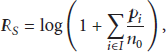
Without loss of generality, the payment

Then, the source's objective is to design a contract to maximize its utility as follows:

2.2. Relay Node Modeling
Considering that the ith RN has the relay channel gain (
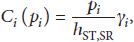
To facilitate the following discussions, the ith RN's type is defined as

Then, the ith RN's utility can simply be given by

To facilitate later discussions, by making

2.3. Contract Formulation
In this subsection, the contract mechanism is investigated to resolve the conflicting objectives between the source and RNs in the presence of hidden information. Due to the hidden information of RN's private type, the source needs to design a contract to incentivize the RNs to participate in relay communications to improve the source's utility. The contract items describe the RNs' relay performance and source's relay reward.
Essentially, RN's private type can be divided into two categories: continuous and discrete. Considering the practical application, the contracts can be easily and efficiently broadcasted as a finite number of values. Therefore, in this paper, N RN types are considered, which are denoted by set
The optimal contract design for the symmetric and asymmetric information scenario is investigated in Sections 3 and 4, respectively. And the symmetric information scenario is considered as a benchmark. Without loss of generality, the values of
3. Optimal Contract Design under Symmetric Information
In the symmetric information scenario, the source knows precisely each RN's type information. The source only needs to make sure that each RN accepts only the contract item designed for its type with nonnegative utility. In particular, the contract needs to satisfy the following IR constraint to ensure that each type-

Then, to maximize the source's utility, an optimal contract under symmetric information can be designed as follows:

Lemma 1.
To obtain the source's maximum utility, each RN achieves zero utility; that is,
Proof.
By contradiction, suppose there exists an optimal contract item (
Based on Lemma 1, the source's utility maximization problem in (9) can be simplified as

Since

Lemma 2.
To obtain the source's maximum utility, only the contract item for the lowest type
Proof.
This theorem can be proved by contradiction. Suppose there exists an optimal contract item with
The source's utility achieved by allocating positive relay power only to the lowest type RNs can be denoted by

Since

By setting

Obviously, the right inequality of (14) is exactly equal to

This contradicts the above assumption and thus completes the proof.
Using Lemma 2, the optimization problem in (11) can be further simplified as

At this point, the source's optimization problem from involving
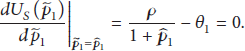
Then, the second-order derivative of problem (16) is

4. Optimal Contract Design under Asymmetric Information
In this section, the optimal contract design under asymmetric information scenario is presented. Assume that the types of RNs are discrete and belong to a set

IC constraint ensures that each type-
Since the source knows the total number of RNs K, the probability density function of the number of RNs

Then, the contract design optimization problem under asymmetric information is to maximize the source's expected utility subject to the IC and IR constraints; that is,

4.1. Feasibility Conditions for Optimal Contract Design
In this subsection, various feasibility conditions for optimal contract design are presented. Let
Proposition 3.
For any k, j, one has
Proof.
First, we prove that if
Due to the IC constraint in (19), we have

Next, we prove that if
Due to the IC constraint in (19), we have


Since
Proposition 3 indicates that the RN offering more relay power should be given with more reward by the source, and vice versa.
Proposition 4.
For any
Proof.
This proposition can be proved by contradiction. Suppose there exists
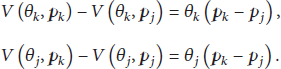
By subtracting the last two equalities, we can have

Thus,

Next, considering the IC constraints for both type-

By combining the last two inequalities, we have

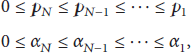
This proposition indicates that, in a feasible contract, a lower type RN should be given with more reward. Thus, combining Propositions 3 and 4, we can conclude that, for a feasible contract, all relay-reward contract items should satisfy
Based on the previous two propositions, we obtain the following theorem, which is essential to the optimal contract design under asymmetric information.
Theorem 5.
For a contract

Proof.
Please refer to Appendix A.
4.2. Optimal Contract Design
In this section, the optimal contract design is investigated. The optimal problem with complicated constraints in (21) is generally nonconvex, making it difficult to efficiently solve for the global optimum [24]. In this paper, a sequential optimization approach is adopted. Firstly, we derive the best reward allocations (
Theorem 6.
Let

Proof.
Please refer to Appendix B.
Based on Theorem 6, the optimal contract design problem in (21) can be simplified as

Note that (33) is a nonconvex optimization problem, making it difficult to solve efficiently. Here, a low computation complexity sequential optimization algorithm is proposed to obtain an approximate optimal solution. First, construct N candidate contracts and then select the one with the largest utility from N candidate contracts as the optimal design strategy. The sequential optimization algorithm is described as follows.
Algorithm 7 (sequential optimization algorithm for contract design under asymmetric information).
Step 1: initiate N, K. Construct N candidate contracts. Step 2: offer the same contract item Step 3: obtain the optimal Step 4: select the best contract out of N candidate contracts to maximize the source's expected utility.
Compared with the exhaustive search algorithm, the computational complexity of the proposed sequential optimization algorithm is much lower, for the optimization of each candidate contract only involves a scalar optimization. Assume that the possible range of
5. Results and Discussion
In this section, numerical results are presented to evaluate the performance of the proposed contract-based cooperative communication method in both symmetric and asymmetric information scenarios.
5.1. Symmetric Information Scenario
The first evaluation method is to analyse the performance of relay selection in the symmetric information scenario.
In Figure 2, we plot the sources optimal utility

The sources optimal utility
In Figure 3, the RNs optimal basic wage
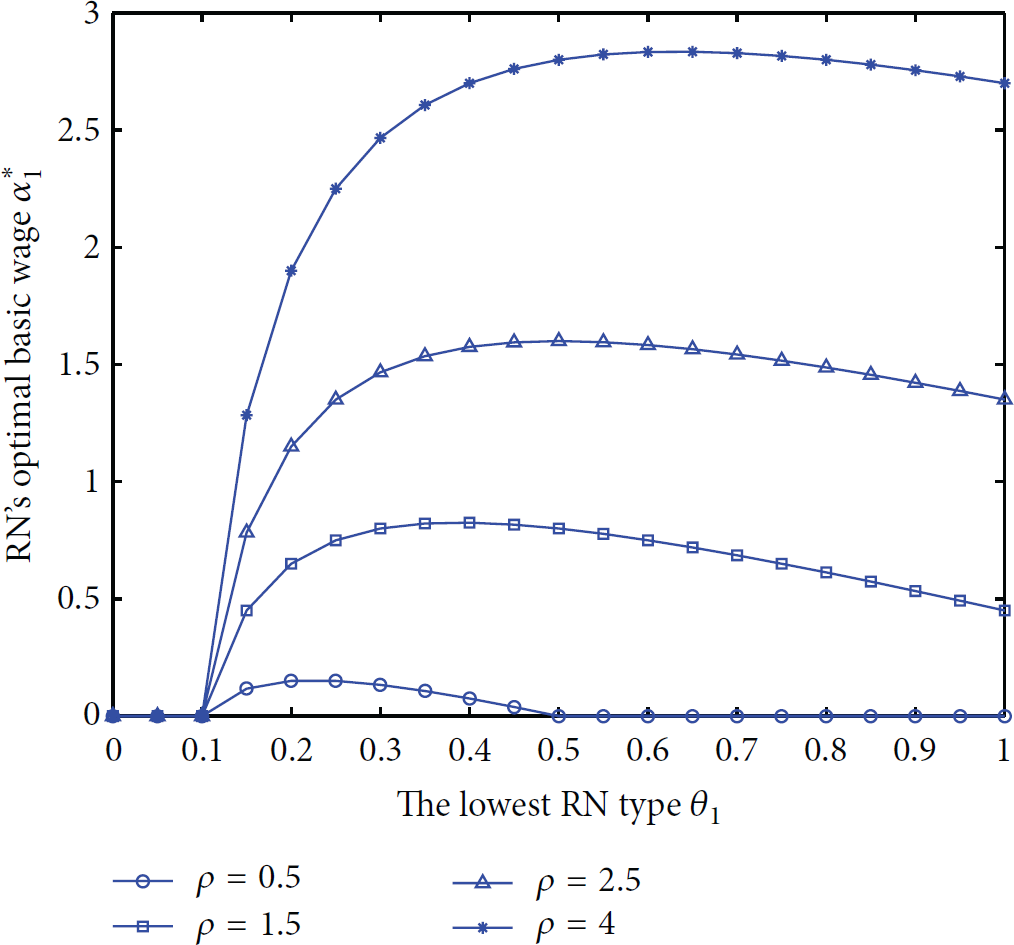
RNs optimal basic wage
Figure 4 shows the relationship between the RNs' optimal basic wage
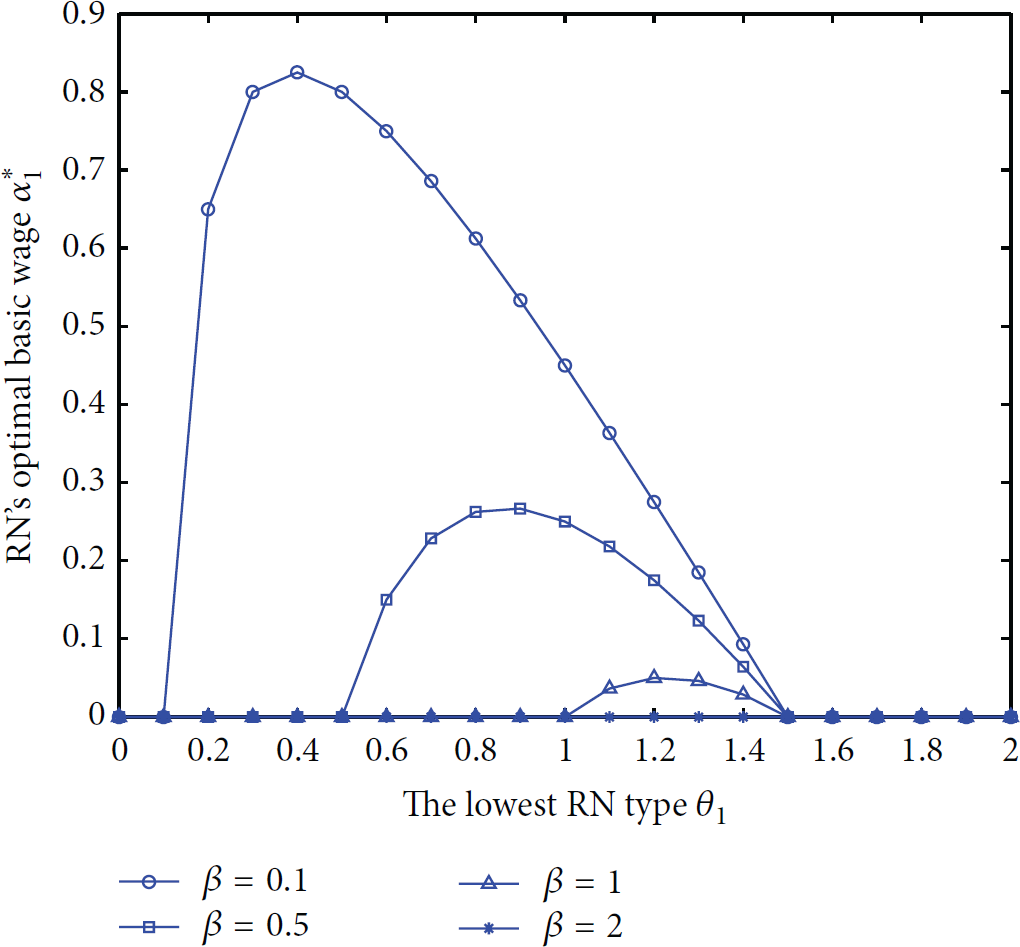
RNs optimal basic wage
5.2. Asymmetric Information Scenario
In the asymmetric information scenarios, the performance of the proposed sequential optimization algorithm is compared with that of the N-dimensional exhaustive search method [25]. The optimal solution is denoted by
Figure 5 shows the source's expected utility obtained with the two candidate contracts of the sequential optimization algorithm (

Comparison between the source's optimal expected utility values using various optimal search methods.
Figures 6 and 7 show the optimal contract design with various probabilities of the low type-
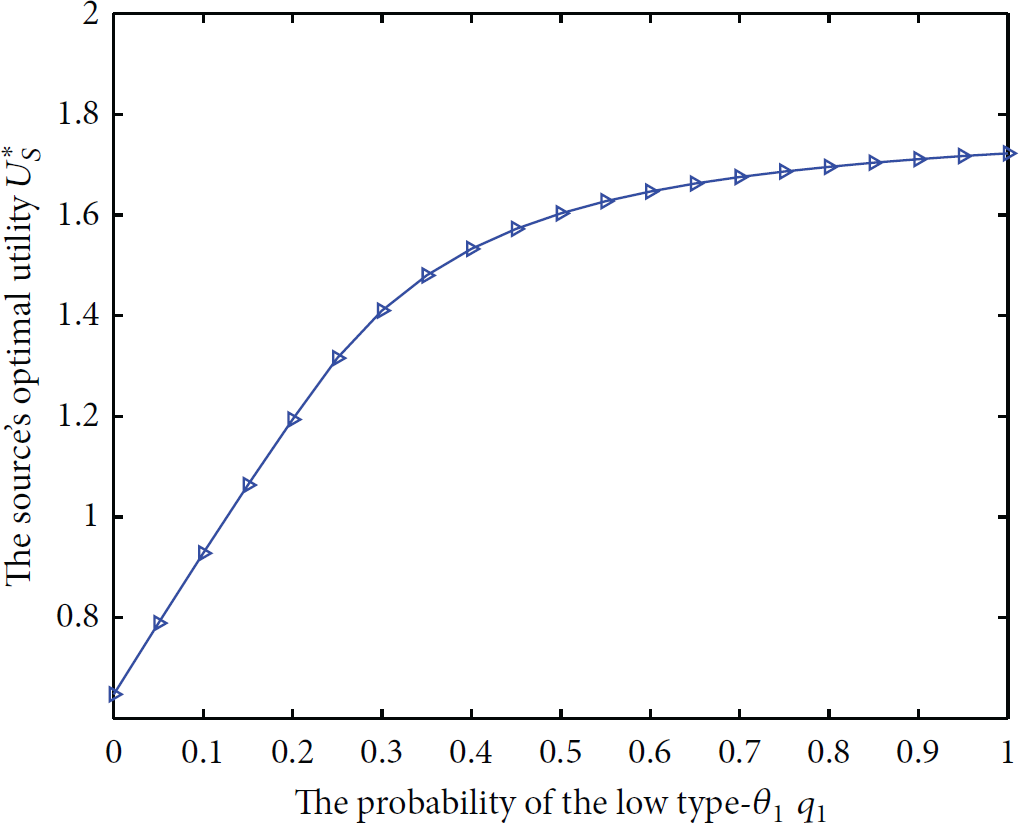
The source's optimal expected utility versus the probability of the low type-

RNs optimal basic wage
Figure 8 shows the source's optimal expected utility under different number of RNs and different probability of the low type-

The source's optimal expected utility versus the total number of RNs K for fixed
5.3. Symmetric Information and Asymmetric Information Scenarios
Finally, the performance of asymmetric information scenario is considered comparing with the symmetric information benchmark. Cases 1, 2, and 3 correspond to cooperative communication scenario of symmetric information, asymmetric information with large

Comparison between the source's optimal expected utility values using various optimal search methods for fixed
6. Conclusion
In this paper, the cooperative communication between one source and multiple RNs is studied. The CRN is modelled as a labour market, where the source designs a contract and each RN decides to select a contract item according to hidden information. Under symmetric information, the optimal contract is feasible if and only if it is IR for each RN. And, under asymmetric information, the optimal contract design meeting both IC and IR conditions is systematically characterized. The contract-theoretic model for ability discrimination relay selection is formulated as an optimization problem where the source's expected utility is maximized subject to the necessary and sufficient conditions of each RN. A sequential optimization algorithm is proposed to obtain the optimal relay-reward strategy. Simulation results show that, due to the asymmetric information, the source's expected utility loss under asymmetric information is small compared with symmetric information. And the proposed contract-theoretic scheme can improve the system performance of cooperative communication. The overall incentive mechanism introduced in this paper is based on RNs' self-interest and fully rational hypotheses. As part of future work, we will incorporate RNs' behavioural and preference characteristics, such as fairness, equity, and reciprocity, in the framework of the standard contract design for the relay incentive mechanism.
Footnotes
Appendices
Conflict of Interests
The authors declare that there is no conflict of interests regarding the publication of this paper.
Acknowledgments
This work was supported by the National Natural Science Foundation of China (no. 61501178, no. 61471162), the Natural Science Foundation of Hubei Province (no. 2015CFB646), Open Foundation of Hubei Collaborative Innovation Center for High-Efficiency Utilization of Solar Energy (no. HBSKFMS2014033), and Ph.D. Research Startup Foundation of Hubei University of Technology (no. BSQD13029). The authors would like to acknowledge the anonymous reviewers whose constructive criticism, comments, and suggestions led to a greatly improved paper.