




Abstract
Software-defined networking (SDN) is currently seen as one of the most promising future network technologies, which can realize the separation between control and data planes. Furthermore, the increasing complexity in future wireless networks (i.e., 5G, wireless sensor networks) renders the control and coordination of networks a challenging task. Future wireless networks need good separation of control and data planes and call for SDN method to handle the explosive increase of mobile data traffic. Relying on a single controller in future wireless networks imposes a potential scalability problem. To tackle this problem, the thought of using multiple controllers to manage the large wide-area wireless network has been proposed, where the load balance problem of multicontroller needs to be resolved. In this paper, we propose a multicontroller load balancing approach called HybridFlow in software-defined wireless networks, which adopts the method of distribution and centralization and designs a double threshold approach to evenly allocate the load. Simulation results reveal that the proposed approach can significantly relieve the working load on the super controller and reduces the load jitter of multicontroller load in a single cluster compared with the BalanceFlow method.
1. Introduction
Hybrid wireless sensor networks consist of wireless networks (such as cellular network) and wireless sensor networks; such network is important to overcome the limitations of conventional sensor network where transmission range and data rate are quite limited. Wireless sensor network uses distributed data sensing and control [1, 2], while traditional wireless network uses centralized infrastructure. In this paper, we study SDN where control and data planes of the network are decoupled, which could be integrated into hybrid wireless sensor networks.
First of all, with the help of TCP/IP protocols, the Internet has made great success during the past decades. However, many challenges have emerged during this process, such as scalability, security, and QoS. The root of these problems lies in the complexity of the control and management planes—the software and protocols coordinating network elements—and particularly the way in which the decision logic and the distributed-system issues are intertwined [3], which call for new Internet architectures. As for Future Internet, software-defined network (SDN) is currently seen as one of the most promising paradigms.
Furthermore, it is envisioned that machine-to-machine (M2M) communications are rapidly developing based on the large diversity of machine type terminals, including sensors, mobile phones, consumer electronics, utility metering, and vending machines. With the dramatic penetration of embedded devices, M2M communications will become a dominant communication paradigm in the communication network, which currently concentrates on machine-to-human or human-to-human information production, exchange, and processing. M2M communications are characterized by low power, low cost, and low human intervention.
M2M communications are typically composed of billions of wireless sensors which will be developed and deployed over the coming years. The capabilities of sensors are generally limited which puts several constraints in M2M communications, including communication spectrum, energy, computation, and storage. These constraints pose a number of unique challenges in the design of network architecture and network control mechanism to achieve a highly connected, efficient, and reliable M2M communication.
This demand generates new requirements for the network architecture, such as flexibility in management and configuration, adaptability, and vendor independence. As one of the key enabling technologies of the future wireless networks (i.e., 5G), SDN offers a logically centralized control model, unprecedented programmability, and a flow-based paradigm that is ideally suited for highly scalable mobile and wireless networks, from access to backhaul and core part. With SDN, network operators can configure the behavior of both the traffic and the network in a centralized way. To meet these requirements, software-defined wireless network (SDWN) is proposed as a cost-effective solution. SDWN decouples the data plane and the control plane, enabling the direct programmability of network control and the abstraction of the underlying infrastructure from the wireless applications. Moreover, nowadays several SDN approaches have been proposed for future mobile networks (including wireless sensors), which provide a software-controlled end-to-end service management framework for future cellular networks. The flexible programmability feature of SDN makes it convenient to deploy cross-layer technological innovations and benefits the current mobile network evolution.
Unlike traditional networks, the control and data planes of the future wire and wireless network are decoupled in SDN [4]. The data plane is a packet-forwarding abstraction whereas the control plane is a centralized network-wide operating system providing open APIs for network applications and services. In SDN, the data plane is controlled by the control plane through a well-defined API. One important feature of SDN is flow table, which makes the controller flexibly configure the network switches. Another feature is that it consolidates the control plane, so that a single software control program controls multiple data planes via a famous protocol called OpenFlow [5, 6]. OpenFlow is a protocol that allows a controller to tell switches where to send packets, how to handle packets, and so on.
In the early days of OpenFlow protocol design, only a single controller is proposed [7, 8]. Since one OpenFlow controller can only support a limited number of flow setups [9, 10], with the increase of network scale and scalability requirements [11], the disadvantages of a single controller are gradually obvious. First, traffic flow to a single controller will grow with the number of switches, resulting in the need of bandwidth between a single controller and switches increasing, but the bandwidth between them is limited. Second, considering the large scale network scenario, there will always be some switches to suffer from the time delay of flow table establishment, so as to reduce the forwarding rate of data plane. Third, due to the performance of the controller processing capacity constraints of the whole system performance, the performance of a single controller is limited. With the expanding of network scale, a single controller will be difficult to deal with. In order to solve these problems, researchers have proposed distributed OpenFlow controller implementations, such as HyperFlow [12] and Onix [13]. These implementations use multiple controllers to manage the entire network and exchange controller information to make sure of the consistency of global information, which achieves the centralized control logic in the domain and improves the scalability of control plane. Moreover, the upcoming Internet2 OpenFlow production deployment also suggests using multiple controllers to manage the large wide-area network.
Although multicontrollers can be used to solve the bottlenecks of a single controller, how to realize the load balancing of multicontrollers working together is a challenging problem, especially for the large scale wireless network. Furthermore, the normal load balance in SDN is only focused on traditional scheme that is adopted in traditional networks, and the multicontroller based method is not carefully considered. The multicontroller based method will improve the whole large scale network performance considering that it holds more information about the whole network state. And the traditional method will not be suitable for the SDWN since the networks become more complex and need more control mechanism to meet the users' diversity requirements. The author of [14] proposes BalanceFlow, a controller load balancing architecture for wide-area OpenFlow networks. BalanceFlow uses CONTROLLER X action for switches and cross-controller communication and elects a controller called super controller to flexibly adjust the flow request without introducing the unnecessary transmission delay. Due to the emergence of the super controller, there is still a centralized control problem. And when frequent load balancing events happen, the stress of super controller limits the scalability of BalanceFlow. BalanceFlow can flexibly tune the flow requests handled by each controller, without introducing unacceptable propagation latencies. Experiments based on real topology show that BalanceFlow can adjust the load of each controller dynamically.
Furthermore there have also been some efforts looking at the use of SDN in wireless networks. OpenRoad [15] project at Stanford University introduced OpenFlow and FlowVisor to wireless networks to enhance the control plane. Base station virtualization from NEC concentrated on slicing radio resources at the medium access control (MAC) layer [16]. CloudEPC from Ericsson modified Long Term Evolution (LTE) control plane to control openFlow switches. SoftRAN [17] from Alcatel-Lucent considered a logically centralized control plane and scalable distributed enforcement of quality of service (QoS) and firewall policies in the data plane.
In this paper, we propose a multicontroller load balancing approach called HybridFlow in SDWN. Unlike BalanceFlow adopting the method of centralization, HybridFlow combines the method of centralization with the method of distribution. In HybridFlow, a super controller manages multiple clusters; each cluster is composed of multicontroller and switches which are in charge of the controller in this cluster, using the idea of centralizing between each cluster and using the idea of distributing cooperation between each controller in the cluster. In addition, we innovatively propose double threshold method of load balancing, where load balancing that happens is divided into the internal cluster and the external cluster according to the threshold. The load balancing scheme will take place within the cluster when a controller is slightly overloaded and uses the super controller to offload the traffic among clusters. In this way, these controllers which are in the clusters handle most of the frequent load balancing and effectively shield the super controller. Compared with BalanceFlow, the design of HybridFlow relieves the working load on the super controller which is potential bottleneck in terms of scalability. Meanwhile, because of using the super controller to distribute load in multiple clusters, compared with the load balancing in a single cluster, HybridFlow can effectively reduce the jitter of the controller load.
The rest of this paper is organized as follows. In Section 2, the design of HybridFlow architecture is given. In Section 3, we will introduce the double threshold load balancing approach. In Section 4, simulation results are presented and discussed. Finally, we will conclude this paper in Section 5.
2. System Model
In this section, we will present the system model of HybridFlow in a multicontroller load balancing scenario. As shown in Figure 1, we model the large scale wireless network consisting of multiple controllers and suppose that the HybridFlow's control plane consists of a super controller and three clusters, where each cluster contains three controllers.

HybridFlow architecture.
Each cluster controller can realize the load balancing in its cluster according to the principle of proximity. The controllers in a cluster can communicate with each other to make load balancing. When the load exceeds the processing limit of a cluster, the controllers in the cluster will transfer network requests to the super controller, which transfers excessive load to other clusters. In this way, we will not frequently transfer requests to super controller to make load balancing, which reduced super controller network overhead compared with BalanceFlow. Moreover, the super controller can realize load balancing among different clusters. It connects the controllers in each cluster, respectively, and monitors the average load status of each cluster in real time. When the following two kinds of circumstances happen, global load balancing occurs. (i) The load of one cluster is beyond its limit. (ii) Average load of one cluster increases suddenly and sharply.
As shown in Figure 2, the load status judgment thresholds are set to distinguish the above two situations. According to the two thresholds and one parameter, by using two thresholds, we can judge where load balancing happens; by using one parameter, we can effectively reduce resource consumption on signaling transmission. The signaling process to interact with other controller will not work when the traffic is low.

An example of distinguishing different situations according to two thresholds.
The problem will be divided into the following four situations: (i) local processing without interaction, (ii) local processing with interaction, (iii) cluster processing, and (iv) global processing.
The horizontal axis is load status value, calculated using the formula

(i) Local Processing without Interaction. In this situation, load status value of controller i is between 0 and parameter 1. It means that its load is lower and can deal with the load by itself.
(ii) Local Processing with Interaction. In this situation, load status value of controller i is between parameter 1 and threshold 1. The load is lower relatively but higher than situation i. The load of one controller can be handled by itself but has entered the excess load of early warming. This controller needs to start collecting load status of other neighbors' controllers in this cluster and be ready to share the load with others.
(iii) Cluster Processing. In this situation, load status value of controller i is between threshold 1 and threshold 2. It means that this controller is overloaded and immediately sends the signaling to notify other controllers in the same cluster to deal with the extra requests. If there is still some load which cannot be processed in the cluster, the overloaded controller will send the signaling to super controller to trigger a global load balancing. In this way, the load status of overloaded controller recovers the normal levels.
(iv) Global Processing. In this situation, load status value of controller i is between thresholds 2 and 1. This situation often happens when its load increases rapidly, which exceeds the processing capacity of the whole cluster. When the super controller obtains this information, overloaded cluster controllers are forced to transfer the excessive load for global load balancing.
3. Double Threshold Load Balancing Algorithm
The main goals of HybridFlow are to make load balancing of multicontroller and reduce the overhead of the super controller. In order to achieve these two goals, we design the double threshold load balancing algorithm. In this model, we set m clusters,
When starting network, each cluster controller uploads the load_notice signaling to super controller. The function of load_notice signaling is to report the

Super controller puts the

Then we will introduce the algorithm based on the four situations mentioned in Section 2.
3.1. Local Processing without Interaction
In this scenario, there is no need to use the algorithm; controllers only need to process the load according to the protocol as status 1 in Figure 2. By setting this status, we can effectively reduce the signaling transmission overhead. When load status value is low, there is no need to exchange information with other controllers.
3.2. Local Processing with Interaction
In this scenario, assume that the load status value

After the controller j receives overload_notice signaling, it will do the following judgment:

The controller j will reply the load_able information when the sub-situation 1 happens and continues

The controller
When subsituation 2 happens, the controllers which receive overload_notice signaling do not do any processing to this signaling. Because this controller also has the possibility of overload and will not receive any load from other controllers.
3.3. Cluster Processing
In this scenario, assume that the controller

The controller

When jointly considering the formulas (7) and (8), we will have the following judgment:

When subsituation 3 happens, this load balancing process is initiated by overloading controller to the cluster internal. It means that the cluster 1 can satisfy the load distribution requirement from the controller
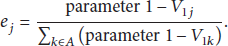
The j controller will be assigned to the load:
When subsituation 4 happens, this load balancing process is initiated by overloading controller to the cluster internal and super controller. In the cluster, only a part of load will be handled; its value is as follows:
Then we will focus on the remaining load balancing processing. The rest of load value


Workflow of signal processing.
By using this signaling, super controller can learn which controller in which cluster needs to be global load balancing and required number. Super controller combines superload_notice signaling and status matrix V in this cycle to do the global load balancing. First of all, super controller immediately checks in
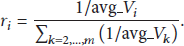
Check the i row of status matrix V to determine the distribution proportion of controller j in cluster i using formula

So the distribution proportion of controller j in cluster i is
3.4. Global Processing
Starting from the network operation, super controller has detected each cluster's average load status value avg_

The overloaded controller will know the amount of the traffic load to be uploaded to super controller by using this signaling. When the controller
4. Simulation Results
In this section, we use computer simulation to evaluate the performance of the HybridFlow architecture and double threshold load balancing algorithm. We first describe the simulation settings and then present the simulation results.
4.1. Simulation Settings
(1 ) Simulation Tools. We simulate the system and algorithm in MATLAB.
(2
) Network Topologies. The simulation is carried out in the topology as follows: there are 9 cluster controllers and one super controller in my system, that is to say,
(
3) Parameter Settings. In double threshold load balancing approach, the maximum working load is set to 800,
( 4) Performance Metrics. Given our objective to make sure of the load balancing in systems, the load jitter is the main metric in our simulation. We will compare multicontroller load jitter between HybridFlow, BalanceFlow, and traditional distribution. We also evaluate working load on super controller. Because there is no super controller in the traditional distribution, we will compare the working load on super controller in HybridFlow and BalanceFlow.
4.2. Performance Evaluation Results
Figure 4 shows the working load on super controller with different architecture. The simulation scene, respectively, is as follows: (1) the blue line is HybridFlow which consists of three clusters and one super controller, three controllers in each cluster. And we use double threshold load balancing approach which is proposed in this paper; (2) the red line is BalanceFlow which consists of nine controllers and one super controller without cluster. And we use a single threshold load balancing approach. The same simulation environment for both of them is as follows: (1) one super controller to do centralized load balancing, (2) the same data receiving rate on each controller, and (3) the same processing capacity on controllers and super controller.

Working load of super controller with the same data receiving rate on controllers.
Through the simulation, we can see that when the network just begins to run, the controllers in the system are at low load, and super controller workload of two methods is similar. But with the increase of time when the whole network load is increased, the working load on super controller in HybridFlow is significantly lower than BalanceFlow. Because in HybridFlow when the load is not higher than threshold 1 or in one cluster the load can be handled, there is no need to do load balancing in super controller. Thus, the load which needs to be handled by the super controller is greatly reduced, so as to relieve the working load of super controller.
Figure 5 shows the load jitter in the system with different architecture between BalanceFlow and HybridFlow. The meaning of load jitter is load standard deviation of nine controllers; when load jitter is smaller, the system load is more balanced. The simulation scene, respectively, is as follows: (1) the blue line is BalanceFlow which consists of nine controllers with one super controller. The overload can be shared between the nine controllers, and there is a super controller to centralized dispatch. And we use a single threshold load balancing approach; (2) the red line is HybridFlow which consists of three clusters and one super controller, three controllers in each cluster. And we use double threshold load balancing approach which is proposed in this paper. The same simulation environment for both of them is as follows: (1) nine controllers to handle the load, (2) the same data receiving rate on each controller, and (3) the same processing capacity on controllers and super controller.

Load jitter of HybridFlow and BalanceFlow with the same data receiving rate on cluster controllers.

Load jitter of HybridFlow and Distribution with the same data receiving rate on cluster controllers.
Through the simulation, we can see that when the network just begins, since the load is lower, the system has not triggered the load balancing mechanism proposed in this paper. So load jitter in two methods is similar. But when the load is increasing, because of the difference between each controller's processing capacities, the differences between each controller's load statuses begin to emerge, which leads to the increasing of load jitter. When they arrive in a certain limit, the processing capacity of each controller is basic saturated, and the maximum quantity of each controller accommodating is the same, so the gap between different controllers' loads is decreasing, which leads to the decreasing of load jitter. When the system is fully saturated, each controller almost has the same number of loads, so the final load jitter is zero. Through the simulation, we can see that in the whole process, load jitter of HybridFlow is not greater than BalanceFlow's. In BalanceFlow, with the control of super controller, there are nine controllers to load balancing. When the load of a certain controller is not more than the threshold, there is no load balancing processing in the system; since the load of each controller is uneven, the value of load jitter is bigger. But in HybridFlow when the load of a certain controller exceeds threshold 1 but is not more than threshold 2, load balancing process is beginning in the cluster; that is to say, when the load between the controllers did not vary a lot, load balancing begins, so this mechanism makes the load jitter decrease obviously. From Figures 4 and 5, we can see that HybridFlow not only can reduce the workload of super controller but also has the better load balancing effect.
Figure 6 shows the load jitter in the system with different architecture between Distribution and HybridFlow. The simulation scene, respectively, is as follows: (1) the green line is Distribution which consists of nine controllers without super controller. The overload can be shared between the nine controllers, but there is no super controller to centralized dispatch. In other words, these nine controllers form one cluster. And we use a single threshold load balancing approach; (2) the red line is HybridFlow which consists of three clusters and one super controller, three controllers in each cluster. And we use double threshold load balancing approach which is proposed in this paper. The same simulation environment for both of them is as follows: (1) nine controllers to handle the load, (2) the same data receiving rate on each controller, and (3) the same processing capacity on controllers and super controller.
Through the simulation, load jitter in HybridFlow is not greater than the traditional method. The tendency of the curves and the reasons are the same as shown in Figure 5. It is showed that the effect of load balancing in HybridFlow is better.
5. Concluding Remarks
In this paper, we propose a multicontroller load balancing approach called HybridFlow in SDN, which adopts the method of distribution and centralization and designs a double threshold approach to evenly allocate the load. Simulation results reveal that the proposed approach can significantly relieve the working load on the super controller and reduces the load jitter of multicontroller load in a single cluster compared with the BalanceFlow method.
Footnotes
Conflict of Interests
The authors declare that there is no conflict of interests regarding the publication of this paper.
Acknowledgments
This work was supported by NSFC (61471056, 61431008), China Jiangsu Future Internet Research Fund (BY2013095-3-1), and BUPT Youth Research and Innovation Plan (2014RC0103).