




Abstract
For emergency information delivery of chain-typed multihop wireless sensor networks in closed long tunnel (CWSN-C), the scheme of sending the same packet multiple times is a good choice. In this paper, taking the application of rigid sliding guide obliquity monitoring in deep shaft as background, the source-aware redundant packet forwarding scheme for emergency information delivery in CWSN-C (SRPFEC) is proposed firstly. Secondly, more of comprehensive factors including application QoS and energy efficiency are considered for determining the number of redundant packets. Then, a method of solving for the number of redundant packets is proposed. Finally, Monte Carlo method and network simulation are employed to study the performances of proposed SRPFEC. The results show that (1) non-ACK scheme is highly suitable for the condition of large network size and hazardous wireless communication environment; (2) the non-source-aware solution is easy to use and is suitable for the occasion where the node could be replaced on demand expediently; (3) the source-aware solution has the better performance in energy efficiency and is suitable for the occasion where the network lifetime needs to be determined before deployment, and the node could not be replaced easily.
1. Introduction
Chain-typed wireless sensor network (CWSN) [1] is a special class of WSNs. It is proposed for a class of applications, which are often limited by the natural formation of landscape or manmade infrastructures of long ranges, such as rivers, coastal lines, highways, and national land borders. Chain-typed wireless sensor networks used in Closed long tunnel (CWSN-C) is the special case of CWSNs, such as CWSN in coal mine laneway [2], city subway [3], and long-distance tunnel [4]. CWSNs in these regions only can be deployed with chain-type topology by the geographical conditions. The classic hierarchy scheme cannot be adopted in these networks for the same reason. Therefore, the packets are usually delivered by a single path.
Taking all the single-hop physical-layer mechanisms like FEC or transmit power variation for granted, the prime mechanisms to improve packet delivery probability are retransmissions and usage of multiple packets [5]. Retransmission schemes are used to ensure the regular packets delivered correctly by adopting ARQ methods. However, they are not suitable for emergency packet delivery due to two reasons:
Deb et al. [6] have proposed a scheme without acknowledgment information for packet delivery at a desired reliability using hop-by-hop broadcast. The scheme is called hop-by-hop reliability (HHR), which does not use MAC-layer acknowledgments but sends the same packet to the next forwarder (or upstream node) multiple times. The number of redundant packets is only determined by the desired end-to-end delivery probability. However, the number of redundant packets also affects performances and lifetime of the CWSN-C in practical applications.
2. Related Work
Due to the particularity of application environments, current researches on CWSN are mainly focused on application layer. Chen et al. [7] found out that adding a few mobile nodes can further extend the network survival time by balancing the energy consumption of nodes. Xijun et al. [8] proposed a node deployment method of double-chain structure with multisinks. The method is suitable for long-distance transmission and can solve the problem that sensor nodes closer to the sink node exhaust their energy earlier. Menon et al. [9] and Zhu et al. [10] built gas monitoring system using CWSN in underground coal mine separately. These works give impetus to the technology of CWSN. However, emergency information has not been considered in these CWSNs specially.
Recently, there are some progresses on emergency information delivery in wireless sensor networks. Cha et al. [11] provided a reliable data delivery scheme for mobile sensor networks with an enhanced delaying technique. The proposed protocol deals well with network partitioning and indefinite link disconnection, which often arises in mobile sensor networks and satisfies the requirement for delivery latency. Zhang and Luo [12] proposed reliability-guaranteed data forwarding protocol of correlated data in wireless sensor networks. It uses combined methods of multipoint coverage and multipath forwarding but not doing in-network data aggregation. Naveen and Kumar [13] proposed a relay selection scheme for geographical forwarding in sleep-wake cycling wireless sensor networks. The local forwarding problem has been formulated as a partially observable Markov decision process in their work. Dubey and Sahu [14] developed a fault tolerant packet forwarding scheme to control redundancy in wireless sensor networks. The proposed algorithm infuses the aspects of the gossip protocol for forwarding packets. Bader et al. [15] proposed an efficient multicarrier position-based packet forwarding protocol for wireless sensor networks. The key of this protocol is eliminating the need for potential relays to undergo a relay selection process. Even though these schemes can not be adopted in CWSN directly, they have laid a great foundation for emergency information delivery in CWSN.
In this paper, we build mathematical models to discuss how to ensure the network application QoS by properly arranging the number of redundant packets based on energy efficiency consideration when the source-aware redundant packet forwarding scheme for emergency information delivery in chain-type multihop wireless sensor networks (SRPFEC) is adopted.
The rest of the paper is organized as follows. In Section 2, the SRPFEC is proposed. The mathematical models for the number of redundant packets based on the application QoS and energy efficiency are discussed in Sections 3 and 4. Section 5 proposes a method of solving for the number of redundant packets. The performances of the proposed SRPFEC are evaluated by simulation in Section 6. Finally, Section 7 concludes the paper.
3. SRPEEC
In this paper, the CWSN-C is considered to be used to monitor the obliquity of rigid sliding guide in deep shaft of coal mine. In this CWSN-C, sensor nodes are used to collect and process the obliquity information periodically but not to forward the information to Sink node unless the obliquity is greater than a certain threshold; thus, all data transmitted over this CWSN-C are urgent.
As shown in Figure 1, sensor nodes

Sketch map of SRPFEC.
Due to the limits of geographical conditions,
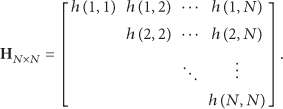
It is obviously true that only the number of forwarded redundant packets
4. Application QoS of SRPFEC
Reaching probability and end to end delay are the key factors of application in CWSN-C, especially for emergency information delivery. As described above, this CWSN-C is used to transmit the alarm data. Meanwhile, the reaching probability and delay of the delivery should be guaranteed.
4.1. Reaching Probability

where
Taking logarithm of (2), we have

Then, using differential principle,

Further, using Taylor mean value theorem,

Taking all nodes into account, inequation (2) should be expressed as follows.
Feasibility Conditions 1. Defining matrix

where

4.2. End to End Delay
Usually, the end to end delay is composed of the network latency,

For
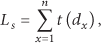
where
For

Then, we have

where
Taking all nodes into account, inequation (11) should be expressed as follows.
Feasibility Conditions 2. Defining matrix

where

5. Energy Efficiency of SRPFEC
In the proposed CWSN-C, sensor nodes are deployed along the deep shaft. It is difficult to replenish new nodes. Therefore, the energy efficiency should be considered.
5.1. Power Consumption Model
To evaluate the energy efficiency, a power consumption model of communication module including wireless transmitting and receiving is needed. It should to be pointed out that, to focus on the packet forwarding scheme, the energy cost of data processing is not considered. The actual power consumption is effected by many factors, such as deployment environment, node manufacture, and interference, so it is difficult to build a precise power consumption model. Without loss of generality,
Assuming that the rigid sliding guide defeat happens at any location in monitoring area with the same probability, let P denote the number of times of the incident happened in unit time; then, the packet receiving and transmission power consumption of node

where
Then, we have the total power consumption of node

As the wireless nodes are isomorphic, we have

where
5.2. Network Lifetime
According to (15) and (16), we have the lifetime of each node
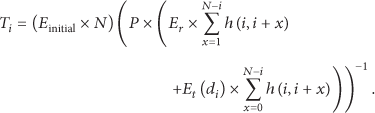
As described above, the energy exhausting of any node will cause the death of this CWSN-C. Then, we have the network lifetime T:

To simplify calculation and compensate preprocessing energy consumption of data collected by sensor, we have

Taking all nodes into account, (19) should be expressed as follows.
Feasibility Conditions 3. Defining matrix
And the lifetime of the CWSN-C can be calculated by

6. Solution of Redundant Packets Arrangement
It seems that all inequalities in Feasibility Conditions 1, 2, and 3 are linearly independent, but Feasibility Conditions 3 is not easy to be expressed by a linear function, whose objective function is to find a minimum value in maximum set. Therefore, the Linear Programming method is not suitable to find
6.1. Solution Analysis
As the solution matrix

where
6.2. Solution Based on Engineering Practice
6.2.1. Search Region
Supporting the application QoS is the primary goal of SRPFEC; thus, the limits of search region are determined by Feasibility Conditions 1 and 2.
Lower Limit α. It is obviously true that the requirement of end to end delay does not affect the lower limit of search region. Therefore, only Feasibility Conditions 1 needs to be considered. As

Therefore, the lower limit

Upper Limit β. It is obviously true that improving the reaching probability of 1-hop will exert a limited influence of global reaching probability in multihop network. It means that increasing the number of redundant packets is meaningless when it exceeds a threshold. Assuming that the accuracy of reaching probability is

Then, we have

6.2.2. Parameters Adjustment
In the proposed CWSN-C, all nodes are deployed with nearly equal interval. That means

Furthermore, in closed deep shaft, the geological structures of all nodes positions are the same. Therefore, they have the same characteristic of electromagnetic wave attenuation approximately. That means

Then, the matrix

In addition, as the lower neighbor node has the heavier network load than the upper neighbor node, it is obviously true that,
The searched solution is named as source-aware solution
7. Performances
In this section, two methods are adopted to study the performances of SRPFEC, which are Monte Carlo simulation with Matlab and network simulation with OPNET Modeler. Rated models and parameters are as follows.
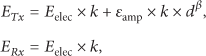
where k is data bits, d is transmission distance,
In addition, to evaluate the performances of SRPFEC intuitively, a solution without source awareness is also needed to compare with
7.1. Evaluation with an Instance
We take the proposed CWSN-C as an instance to evaluate the performances firstly. The related parameters are as follows.
Figure 2 shows the source-aware solution

Solution of redundant packets arrangement.
It is obviously true that the network will face the biggest challenge when the incident happened at the sensing area of node

Network performances.
The application QoS is most concerned about in the CWSN-C. Figure 4 shows the application QoS when the incident happened at the sensing area of each node. It shows that, the end to end delay with non-ACK scheme is only 29.2% of its with ACK scheme, and the difference of end to end delay between non-ACK and ACK increases from 0.08 s to 0.22 s with the routing hops growth. In addition, the end to end delay of
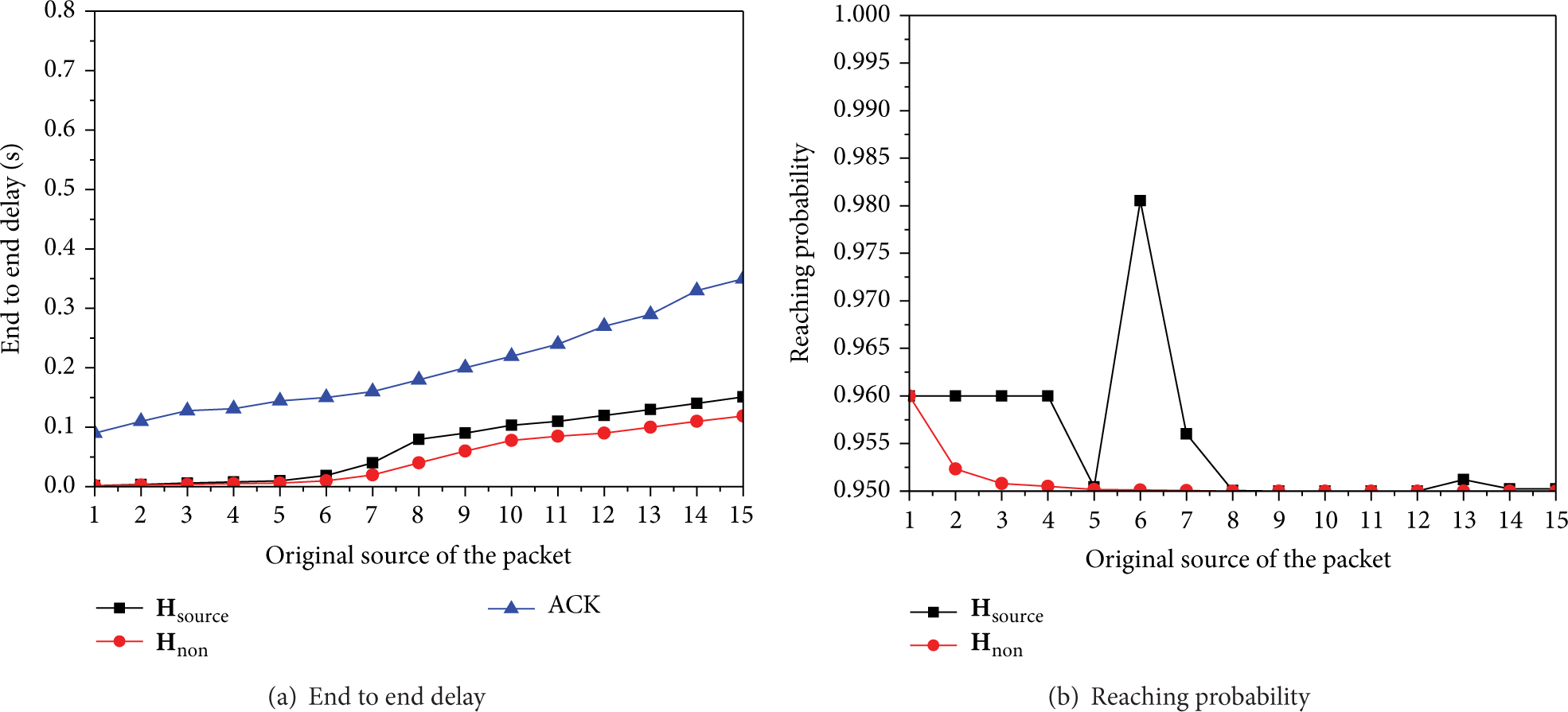
Application QoS.
Figure 5 shows the lifetime of each node in the CWSN-C where the incident happened at the sensing area of each node with equal probability. It shows that the average lifetime of nodes increases from 222.5 days to 246.4 days, and the lifetime of the network extends from 141.1 days to 146 days when the SRPFEC is adopted. Meanwhile, the standard deviation of the average lifetime decreases from 204.2 to 125.2, which means that

Nodes lifetime.
7.2. Further Evaluation
To fully understand the SRPFEC, the performances of CWSN-C in different network environments need to be evaluated. Generally, the main influencing factors of CWSN-C performances are network size and channel quality. Therefore, the performances of SRPFEC with different number of nodes and different PER are discussed.
7.2.1. Number of Nodes
Figures 6–8 show the performances of SRPFEC with different number of nodes when the average packet error rate

Network performances with different number of nodes.

Application QoS with different number of nodes.

Network lifetime with different number of nodes.
7.2.2. PER
Figures 9–11 show the performances of SRPFEC with different PER when the number of nodes

Network performances with different PER.

Application QoS with different PER.

Network lifetime with different PER.
8. Conclusions
Footnotes
Conflict of Interests
The authors declare that there is no conflict of interests regarding the publication of this paper.
Acknowledgments
The material presented in this paper is based upon work supported by the National Natural Science Foundation of China (nos. 61104211 and 51275513), by the Research Fund for the Doctoral Program of Higher Education of China (no. 20110095120005), by China Postdoctoral Science Foundation (nos. 20110491490 and 2014T70556), and by the Priority Academic Program Development of Jiangsu Higher Education Institutions.