The contention based medium access method of 802.11 standards is a fundamental cause of poor downlink goodput and high latency over wireless networks, which makes it impossible to provide QoS guarantees. The intensive channel contention leads to the performance degradation. The problem exacerbates when the traffic asymmetry between the uplink and the downlink is present. While prior research works proposed various mechanisms to alleviate the issue, little was done to specifically address the appropriate parameter setting in a real world network. This study presents a way to obtain the appropriate access parameters that improves the performance of QoS applications over wireless networks. In particular, we propose AQEDCA, a traffic-aware minimum contention window adjustment algorithm. We validate our scheme by the extensive real world network tests and the results show that our scheme improves the downlink goodput up to 199.13%, decreases the latency up to 54.77%, and can achieve tight QoS guarantees as compared to the existing schemes.
1. Introduction
Due to the attractive features including low cost, ease of deployment, and mobility support, the wireless LAN (WLAN) has become the dominant Internet access method and has been widely used in wireless sensor networks (WSNs) [1]. Meanwhile, the number of 802.11 wireless devices, which always contain lots of sensors, such as orientation or acceleration sensors, has grown exponentially in recent years. The rapid growth of the devices and applications often requires WLAN access points () that handle a large number of client stations () with a variety of application quality of service (QoS) demands [2]. Our empirical study, as reported in Section 5, shows that with the default 802.11 protocol underperform in a deployment with dense , for example, a large-scale data collection environment [3, 4]. That is, the observed throughput is much lower than the media access control (MAC) capacity. Our study further reveals that the causes of the above poor performance are as follows.
First, in the default Carrier Sense Multiple Access with Collision Avoidance (CSMA/CA) scheme, need to compete for the same wireless channel with their client ’ uplink traffic to deliver the downlink messages. When the population is getting larger, have less chances to win the channel contention and therefore delay the message transmissions to the . As a result, the buffer is quickly filled up and the extra incoming messages are dropped. The packet loss at the side will trigger the upper layer retransmissions, for example, TCP, which leads to the poor downlink goodput and large response delay.
Second, 802.11 WLAN exhibits the traffic asymmetry [5]. That is, the downlink traffic volume gets much larger than that in the uplink. To achieve the maximum throughput capacity in this traffic pattern, need to have more channel accessing time to deliver the response messages to the . However, the default 802.11 CSMA/CA MAC does not give any advantages in channel contention. When the traffic is saturated in a densely deployed network, for example, a crowded airport or a large conference event, the large downlink data volume will quickly turn to be the network bottleneck as start to drop packets due to the buffer overflow.
This paper aims to address the above performance issues and maximize data throughput in a densely deployed 802.11 wireless network, where the downlink traffic is much greater than uplink traffic, attributable to commonly used client-and-server based applications (e.g., web and email) [5]. We propose AQEDCA, a novel scheme that dynamically tunes the (minimum contention window) parameter of and according to the network conditions. The idea behind AQEDCA is to adjust the 802.11 MAC layer distributed coordination function (DCF) to give more network accessing advantages than to avoid the downlink data loss due to the buffer overflow. The main challenges of our scheme are the precise mechanism design and the minimum contention window tuning timing, as well as the tuning magnitude. In this work, we use the theoretical analysis to derive the appropriate minimum contention window size. We validate our design by real world experiments and the results show a significant throughput enhancement by up to 199.13% and response delay reduction by up to 54.77%. Besides, AQEDCA also achieves an improved Jain Fairness Index by up to 91.28% and 251.95% compared with EDCA [6] and WiFox [5], respectively.
In practice, our scheme is implemented on top of 802.11e [6] protocol. 802.11e is an approved extension to the IEEE 802.11 standard, with a set of quality of service (QoS) enhancements. In 802.11e, an enhanced version of DCF, called enhanced distributed channel access (EDCA), is introduced to differentiate the channel access priority according to the QoS requirements. EDCA ensures that an with high priority traffic (i.e., traffic with real-time requirement) has more opportunities to access the wireless medium than the low priority traffic from other . EDCA achieves the service differentiation through setting different MAC layer parameters.
While EDCA improves the quality of service of real-time traffic, it cannot provide the best performance since its parameters are set in advance and cannot be adapted to the various network conditions. In a dense and heavily loaded network, the fixed contention window sizes in EDCA may throttle the high priority and delay sensitive traffic due to the difficulty in channel accesses. On the contrary, in a light traffic condition, the vacant channels cannot be fully utilized because of the fixed parameters. As we will show in our evaluation, AQEDCA dynamically adjusts the contention window sizes and therefore achieves the significant throughput enhancement in both conditions. Our experiments further show that the traffic-aware contention window size adjustment scheme provides a much better support for QoS applications, such as VoIP.
The rest of the paper is organized as follows. Section 2 discusses the related works. Section 3 describes our system model. Section 4 proposes our algorithm of AQEDCA. Section 5 presents our real world evaluation results and Section 6 concludes the paper.
2. Related Works
Prior research works [7] show that CW (contention window) is one of the important factors affecting the WLAN performance. Thus, there have been tremendous works on performance enhancement of WLANs by adjusting the minimum contention window like AEDCF [8, 9], Idle Sense [10], and so forth. The survey papers [2, 11, 12] give a more full technical description, among which an analytical model of 802.11 DCF is developed in [13] to study the performance of WLAN with asymmetric nonpersistent traffic, namely, VoIP, and many valuable results are obtained which can be used for effective call admission control to guarantee the quality of voice connections. AAP (Asymmetric Access Point) [9] sets the contention window to a constant value for while wireless stations use the Idle Sense access method [10], which ensures that the always obtains about fifty percent of channel access probability independently of the number of contending stations. More recently, the authors of [14] derive the proper contention window size to achieve time fairness and optimal throughput. Coincidentally, based on the CW sizes derived under both saturated and nonsaturated conditions, Hong et al. [15] propose a distributed algorithm that enables each station to dynamically adapt its CW according to the channel congestion status. The authors of [16] adjust the transmission attempt rate and the backoff window size of wireless nodes based on the current network status. The scheme proposed in [17] enhances both delay and throughput by scaling the limit parameters of and TXOP. The authors of [18] configure the contention parameters depending on the number of stations and the traffic they generate based on the multivariable control theory. DCWA [19] dynamically optimizes each active node's backoff process by adjusting its CW to reach the optimal value in saturated network conditions. Authors of [20] propose a new model to derive the optimal contention window to maximize the throughput for a given network scale. To address the QoS requirements on throughput and delay, a new 802.11e configuration [21] computes the optimal parameters for real-time data traffic. Dynamical updating technology [22] is also proposed to accommodate multiple VoIP clients over a WLAN. Two control theory based adaptive algorithms, namely, the Centralized Adaptive Control (CAC) [23] and the Distributed Adaptive Control (DAC) [18], which dynamically tune the CW configuration to optimize performance, are implemented and evaluated in [24]. BDCF is proposed in [25] to achieve both traffic balancing and throughput enhancement. A novel access scheme [26] was proposed for 802.11e WLANs with the goal of improving the QoS of VoIP over WLAN by differentiating the service between the AP and STAs. In the medium access algorithm proposed in [27], each station selects an appropriate contention window size so as to fairly share the channel occupancy time and maximize the throughput under the time fairness constraint.
The above proposals aim to fix or ameliorate the performance degradation problem for 802.11 WLANs. However, the existing solutions do not sufficiently address the problem. The two main limitations of existing solutions are as follows.
First, most existing solutions are not practically deployed and are not tested in real networks with realistic network workloads [5, 24]. Nearly all of them are based on simulation or theoretical analysis except the work of Serrano et al. [24]. There is a significant gap between the results obtained from real network experiments and simulations.
Second, these proposals do not fully consider the asymmetric problem. Although some solutions focus on alleviating the WLAN performance problem caused by the network asymmetric traffic pattern, they mainly aim to allocate the channel resource equally to uplink and downlink transmissions [9, 13, 26–28]. However, the network resource should be adaptively distributed between uplink and downlink according to real-time traffic load.
In this paper, we argue that the improper contention window size and the asymmetry between the downlink and uplink flows have significant impact on the WLAN performance. Thus, AQEDCA is proposed to solve the problem in real WLAN environment. AQEDCA adjusts ’ access probabilities under different traffic conditions based on the object collision probability derived analytically and gives a priority based on the queue length. AQEDCA is implemented at the and is transparent to . To validate our solutions in real WLAN environment, we implemented AQEDCA in the off-the-shelf commercial IEEE 802.11g and 802.11b , constructed a real network testbed of 20 , and tested its performance in terms of throughput and delay following the traffic pattern of real traces [29, 30].
Recently, WiFox [5] was proposed to tackle the problem in a similar way by prioritizing 's channel access and was tested in real network environment. Our scheme differs from WiFox in the way of how to adjust 's priority. While WiFox only uses 's queue length as the reference, AQEDCA also monitors network traffic load. Besides, in AQEDCA, ’ contention window is also adjusted based on the network traffic load of every beacon interval with the consideration that, in WiFox, only increasing the chances for AP to contend for the channel may aggregate the collision rate in heavy load WLAN environment. Our arrangement yields a significant performance enhancement as compared to WiFox, as we will show in Section 5.
3. System Model
IEEE 802.11e provides quality of service (QoS) enhancement through enhanced distributed channel access (EDCA). With EDCA, traffic flows are classified into four Access Categories (ACs). Each AC is assigned with its own MAC parameters and operates independently. In this study, we consider all nodes that operate at a single AC.
We consider a wireless LAN with n nodes: one and () . Each is associated with the and shares the channel with other by means of the modified 802.11 DCF access method with adaptive . Let τ be the access probability of a node, which is actually the probability that the node transmits in a random time slot. This value can be determined as follows [7]:
where W represents the minimum contention window and m denotes the maximum backoff stage.
We denote as the probability of a successful transmission in a randomly chosen time slot. A node can successfully transmit the frame if and only if it is the only node that attempts to transmit. Thus, can be calculated as
Similarly, the probability of an idle slot can be expressed:
The collision probability in a slot then can be expressed:
The system throughput can be determined by the fraction of time the channel used to successfully transmit a packet [7]. Let S be the normalized system throughput. Then we can have
Let be the average packet payload size. The average of successfully transmitted bytes in a given time slot is . The length of a slot time can be any of the following three: idle time, successful transmission time, and failed transmission time due to collision. Let σ be the duration of the idle time slot, let be the average time of a successful transmission, and let be the time duration due to a collision. Then we can obtain the value of S as follows:
4. AQEDCA Scheme
The goal of the proposed scheme is to adjust the value of the minimum contention window size, , of both and , to maximize the downlink throughput, while, at the meantime, maintaining the fairness and controllable message response latency.
4.1. Analysis of Collision Probability
We start the discussion by explaining how to obtain the appropriate to maximize the throughput S. Note that (6) can be transformed to
According to the definition in [7], and with the basic access mechanism can be expressed as
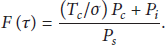
where is the frame transmission time. As described in the equation, and are determined by the parameters of the PHY and MAC layers and the average packet size. Notice that value varies due to the different payload sizes in the real situation. For the sake of simplification, we assume, on average, that the length of the data equals bytes and then estimate the duration of . As a result, we can assume that and are known constants. Thus maximizing S is sufficient to minimize the denominator of (7), which is equivalent to minimizing (9). The following analysis adopts the methodology of Idle Sense [10] to derive the object collision rate (Idle Sense aims to optimize the network throughput based on the optimal number of idle slots calculated with the methodology; however, it does not consider the asymmetric traffic pattern in real WLAN environment):
By inserting , , and from (2)–(4), respectively, into (9) and then setting the first derivative of (9) to zero, we have
where is the optimal access probability that maximizes the network throughput.
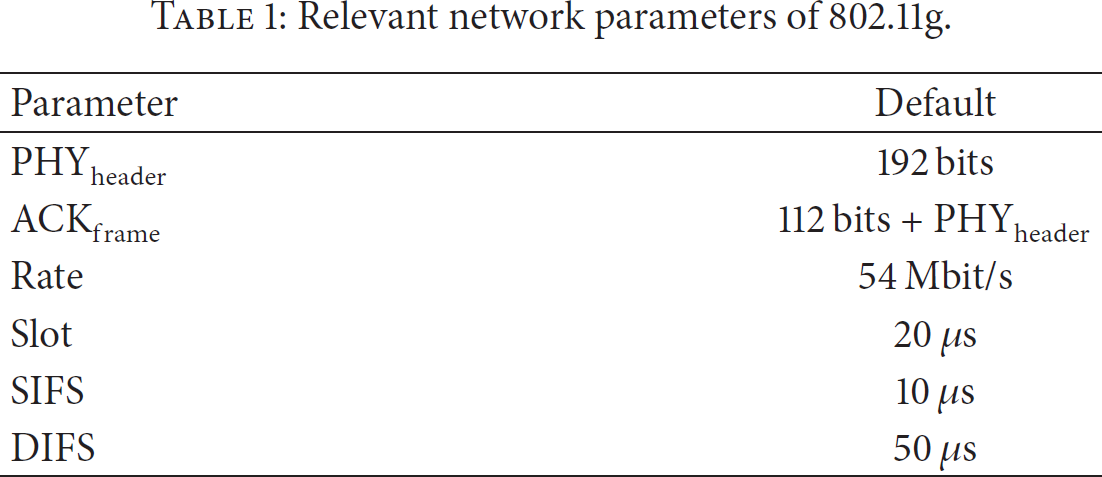
Obviously, is a constant when 802.11 MAC parameters are selected. Let us take 802.11g parameters with basic access mechanism as an example. The default parameter values are reported in Table 1. According to (8), we can get that
Relevant network parameters of 802.11g.
Parameter
Default
192 bits
112 bits +
Rate
54 Mbit/s
Slot
20 μs
SIFS
10 μs
DIFS
50 μs
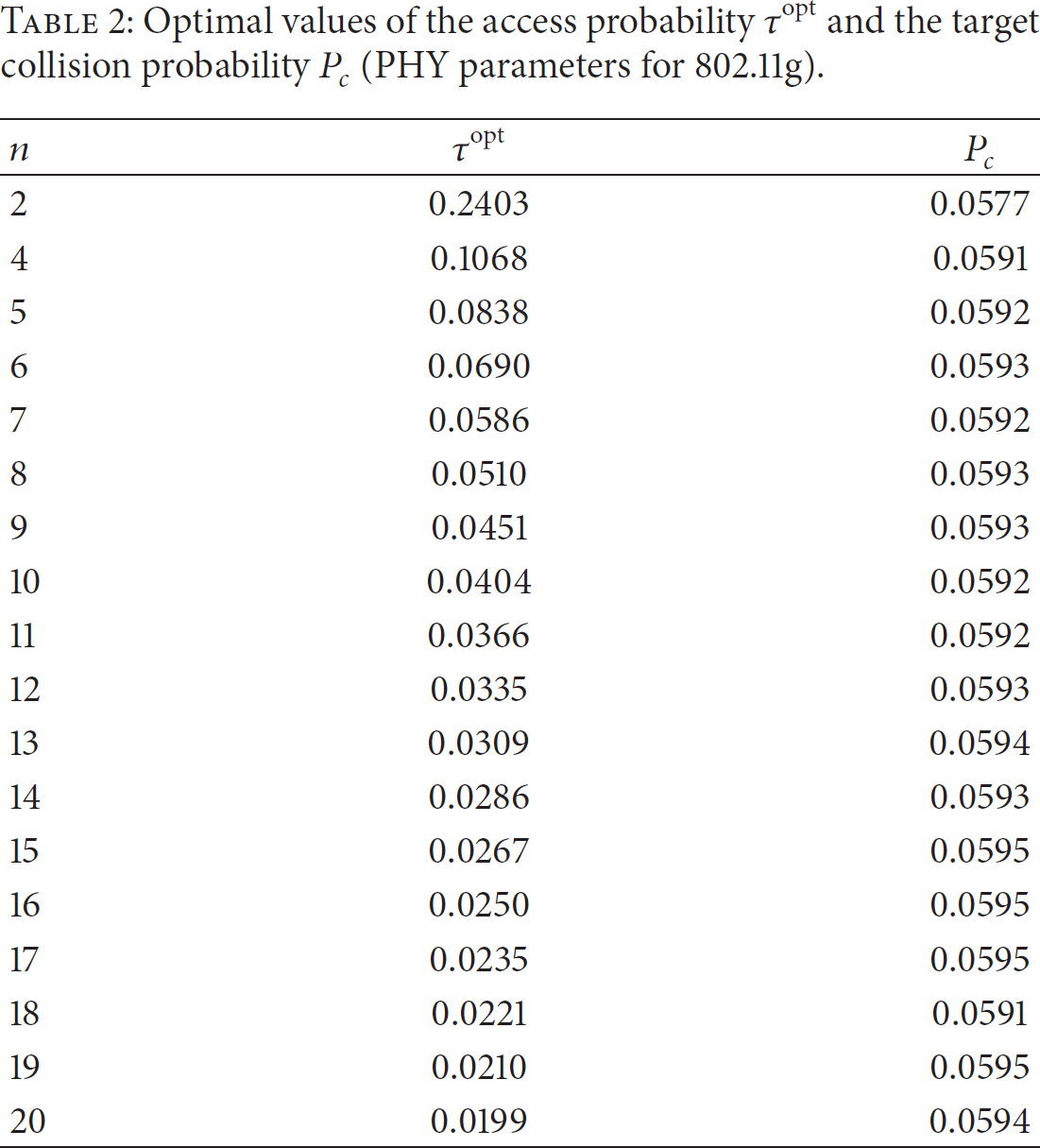
Furthermore, we can obtain by finding the only root of the polynomial in (10). By substituting the obtained into (4), we then compute the collision probability under for a given number of competing nodes, and the results are given in Table 2.
Optimal values of the access probability and the target collision probability (PHY parameters for 802.11g).
n
2
0.2403
0.0577
4
0.1068
0.0591
5
0.0838
0.0592
6
0.0690
0.0593
7
0.0586
0.0592
8
0.0510
0.0593
9
0.0451
0.0593
10
0.0404
0.0592
11
0.0366
0.0592
12
0.0335
0.0593
13
0.0309
0.0594
14
0.0286
0.0593
15
0.0267
0.0595
16
0.0250
0.0595
17
0.0235
0.0595
18
0.0221
0.0591
19
0.0210
0.0595
20
0.0199
0.0594
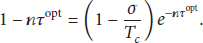
Now let us consider a crowded WLAN, where the number of nodes, n, is large enough. When n is approaching to the infinite (while it is unlikely that n becomes infinitely large in the real world, we merely perform the mathematical derivation here to compute the optimal values as a guidance), (10) can be approximated as follows [10]:
The value of can be determined by numerical analysis. Given the value of in (11), the value of is 0.5239.
Furthermore, when n is large, approximately (4) becomes
The above result leads us to an important conclusion: when the 802.11 MAC parameters are selected, we can immediately compute the target collision probability that maximizes the network throughput. Therefore, the problem of achieving the maximum throughput is reduced to reaching the target collision probability.
4.2. The Algorithm Descriptions
Enlightened by the conclusion made in the previous section, we develop an oriented node access scheme so that the adjustment is transparent to . The adjustment is based on the value of derived in (13). We first summarize the basic idea and then give the detailed explanation.
We assume the time domain is divided into a number of equal time periods. A natural selection of the period duration is the 802.11 beacon period. It is a configurable parameter in the , in a range from 25 ms to 1000 ms in Madwifi driver, and typically configured as 100 ms, as the configuration provides good performance for most applications which have been validated as a good choice by the previous researches [5].
In each time period, the calculates the average of collision probability based on the observed network activities, including the successful data transmissions, transmission failures due to the collision, and its frame queue length. The derived current network collision probability is compared with the target value. If the collision probability is larger, indicating a saturated network condition, the is increased to suppress the nodes' network accesses. If the derived probability is less, however, the is reduced to encourage the nodes' network accesses. receive their updated in the beacon messages. Meanwhile, the 's frame queue length is also monitored and 's is adjusted in a similar fashion with the goal to allow to receive sufficient network access opportunities. This strategy is to reduce 's queue length and offset the traffic asymmetry. Our adjustment algorithm is described in Algorithm 1. As we will show in Section 5, our scheme significantly improves the network performance, including throughput, fairness, and response time, in our real world experiment evaluation.
Algorithm 1: adjustment algorithm.
(1) Input: iteration, , ,
(2) Output: ,
(3)
(4)
(5) ifthen
(6)
(7) else ifthen
(8)
(9) end if
(10) if's buffer is not empty then
(11)
(12) end if
(13) compute 's
(14) compute 's
We now discuss in detail how to determine the network access probability τ and . Let us denote as the collision probability of the in the current period j. Its value can be computed as follows:
where is the number of collisions observed during period j and is the total number of the transmitted packets in the same period. Obviously, .
It is worth noting that the calculation omits the states of the . The reason lies in that, as validated through experiments, in downlink dominated network, the collision probability with or without the states of has little difference. Figure 1 shows the results of the collision probability calculated at the and that of the whole network when the number of downlink UDP flows keeps at 25. As depicted in the figure, when the number of the uplink UDP flows is below 5, that is to say, when the downlink traffic is 5 times larger than the uplink traffic, the difference between the collision rates is very small. In the real world, the downlink traffic is about 4–10 times greater than uplink traffic [5]. Thus, we utilize the 's collision probability for convenience in the estimate procedure. Serrano et al. [24] proposed another way of computing the network collision probability at based on the observation of the retry flag of successful frames. The solution can be combined with ours to improve the accuracy of the calculation of collision probability in the future.
Collision rate.
To minimize the bias against transient collisions, we use an estimator of Exponentially Weighted Moving Average (EWMA) to smoothen the estimated values. Let be the average collision rate in the jth update period. We compute the smoothened value as the following iterative operations:
where α is the smoothing factor.
By comparing with the target value , we apply the AIMD control mechanism to the access probability τ: if , τ is increased additively, which encourages the network accesses; otherwise, τ is decreased in a multiplicative way to quickly relieve the network contention. Note that the value of τ remains unchanged if the is equal to .
Furthermore, to solve the asymmetric problem in 802.11, we prioritize the access probability of in the linear scaling mode as described in the following. The access probability of the , denoted as , is updated linearly as
where ϕ is a priority factor which equals the number of competing , is the current queue length of , and represents the buffer size of . Note that τ is derived from step (5) through step (9) in Algorithm 1. Finally, by combining (16) with (1), we can calculate the values of for and the , respectively. The computed values for are eventually broadcasted through the beacon messages.
5. Performance Evaluations
In this section, we validate the proposed AQEDCA algorithm by performing the extensive real world experiments and compare its performance results with the two existing algorithms: the default 802.11e EDCA and WiFox [5], a recently proposed large-scale 802.11 performance enhancement scheme.
5.1. Implementations
In our experiments, we implement AQEDCA and WiFox as separate Linux drivers on Madwifi, one of the most popular open source device drivers available for Linux. We use the EDCA scheme attached to the default 802.11e driver. Both AQEDCA and WiFox are implemented in the ATH layer, which interacts with net80211 stack layer for exploiting 802.11 functionalities and calls HAL to communicate with the hardware. The jiffies and qdisc length are obtained from the ATH layer to calculate the periods defined in the algorithms and the queue length of . Our implementation obtains the key parameters, including the collision probability and in the following. The collision probability is calculated by dividing the number of retried transmissions by the number of transmitted packets. It is worth noting that the above calculation omits the retransmissions due to the transmission errors for the simplification purpose with the consideration that retransmission errors are rare in our controlled lab environment. Given the collision probabilities, the MAC parameters are calculated by Algorithm 1. In the next time period, the recalculated MAC parameters are assigned and updated through 802.11 beacons.
5.2. Testbed Construction and Experimental Methodology
Our experiment testbed is deployed at our lab and consists of two file servers, one and 20 client stations (). Both the and the are running on Linux computers. As a typical WLAN is single-hop based where a station associates itself with an AP within its direct communication range [15, 26] and most of the existing algorithms are designed for this scenario [5, 13, 19], in our experiments, the 802.11 WLAN is configured in the infrastructure mode. However, it is worth noting that AQEDCA can be easily extended to the multihop case [31, 32].
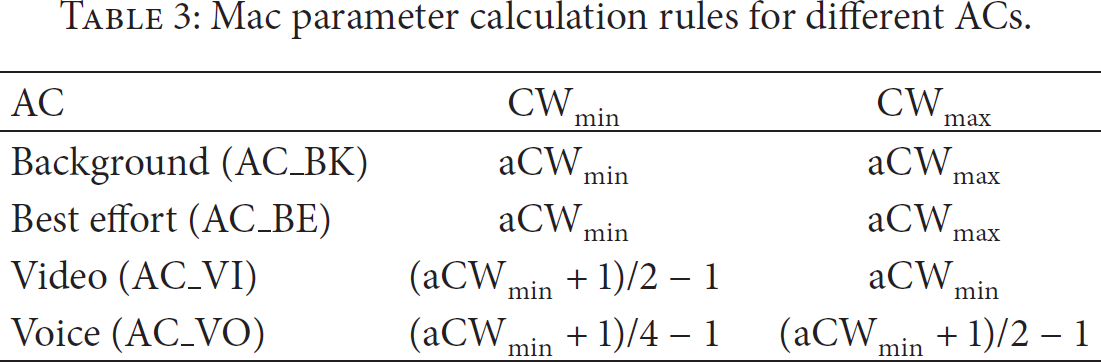
The architecture of the testbed is shown in Figure 2. The is running on a Dell T1500, equipped with the Intel Xeon E5620 (2.4 GHz/12 M), 16 GB RAM, a 600 GB Hard Disk, a D-Link DWL-G520 IEEE 802.11b/g wireless card with Atheros chipset, and Centos with kernel version 2.6.32.279.19.1. The are running on the DELL optiplex 745, equipped with Intel Pentium D 3.4 G processor, 512 MB RAM, 160 GB hard disk, and Fedora 9 OS with kernel version 2.6.25.14. The default buffer sizes of the driver Tx and the interface Tx are 50 packets and 199 packets, respectively. We have two file servers that act as the remote servers over the Internet. The access the file servers through the . All of the tests are performed using the 802.11g physical maximal transmission rate at 54 Mbit/sec with RTS/CTS disabled. The MAC parameters in our experiments are the 802.11e standard. In addition, based on the and calculated in Algorithm 1 of AQEDCA, the parameter computation for different Access Categories (ACs) also follows 802.11e as shown in Table 3.
Mac parameter calculation rules for different ACs.
AC
Background (AC_BK)
Best effort (AC_BE)
Video (AC_VI)
( + 1)/
Voice (AC_VO)
( + 1)/
( + 1)/
Testbed architecture.
To emulate a WLAN environment with the real world traffic pattern, we use Jmeter and iperf to generate network traffic following the traffic pattern captured from real traces [29, 30]. Jmeter generates web requests and the file servers generate replies by sending random sized web objects. We set the average interarrival time of HTTP requests to one second and arrange running 16 HTTP request generation threads at each . In addition, we generate uplink UDP traffic with the rate of 25 kbps from each in our experiments as the background traffic. By varying the number of associated , we evaluate the three mechanisms under various workloads.
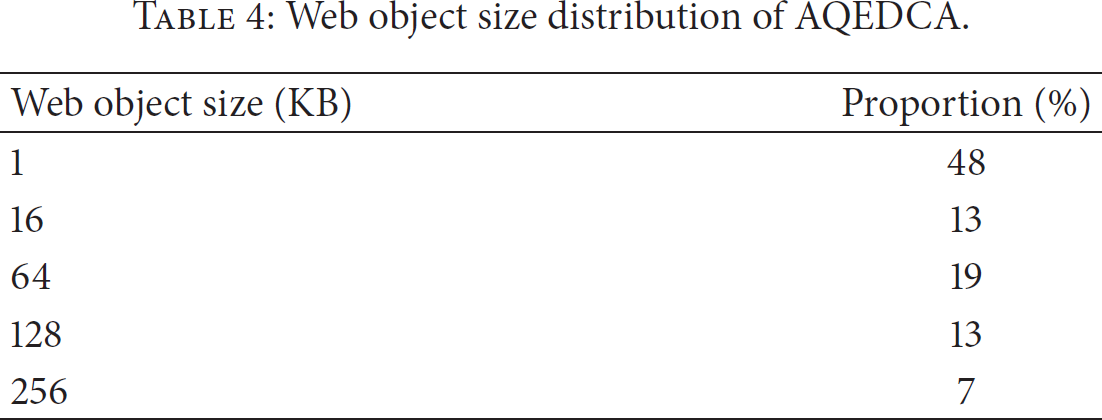
To determine the size of the web objects in our experiments, we conduct the experiments by statistically analyzing the distribution of web object sizes from six typical web sites and plot the corresponding cumulative distribution functions (CDF) as illustrated in Figure 3. These typical web sites include the portal (http://www.yahoo.com/), the government (http://www.usa.gov/), the E-commerce (http://www.amazon.com/), the company (http://www.cisco.com/), the education (http://www.ieee.org/), and the home page of Yale university (http://www.yale.edu/). The figure shows that most of the web objects are smaller than 160 K bytes. In addition to the above web objects, we also include other large online objects, for example, emails, to have a complete object set. The distribution of the object sizes in our experiments is shown in Table 4.
Web object size distribution of AQEDCA.
Web object size (KB)
Proportion (%)
1
48
16
13
64
19
128
13
256
7
Size distribution of web objects.
In our experiments, each data point is obtained by computing the average value of the results from three rounds of execution. Each run lasts approximately 300 s. We list the main parameters of our algorithm in Table 5.
Parameters of AQEDCA.
Parameter
Value
α
0.875
m
3
β
The maximum backoff stage, m, as validated in [7], does not practically affect the system throughput as long as m is greater than four or five. Thus, in our experiments, we give m the value of 7. The parameter of α, when it is chosen in the range of , can achieve good performance in terms of the goodput and delay as evaluated in the previous work [8]. So we set α to 0.875. β and ϵ are given with the empirical value of 5/6 and 0.01, respectively, in our experiments.
We use the following three metrics in our evaluation.
Gain of goodput: the throughput of the completed responses is the key to many web applications. We thus consider this metric in terms of the downlink goodput which is the average throughput of the successful transmissions.
Response delay: it is the duration between the time of transmission and the time of reception of the response. It is also called “elapsed time.”
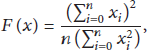
Jain Fairness Index: this metric is defined as follows:
where n is the total number of TCP flows and is the throughput of the ith connection. Note that the fairness index, with the value ranging from 0 to 1, approaches 1 as the resource is more fairly shared. To calculate this metric, we use iperf to generate symmetric TCP traffic where the NIC card works in dual mode; that is to say, the NIC card sends (receives) TCP packets to (from) the file servers simultaneously.
5.3. Experimental Results
As reduced response time for a HTTP request is considered as a more critical metric to users compared with improved goodput for applications such as web [33], we first investigate the response time of the 's HTTP requests and the corresponding queue length at the which is closely related to the response delay.
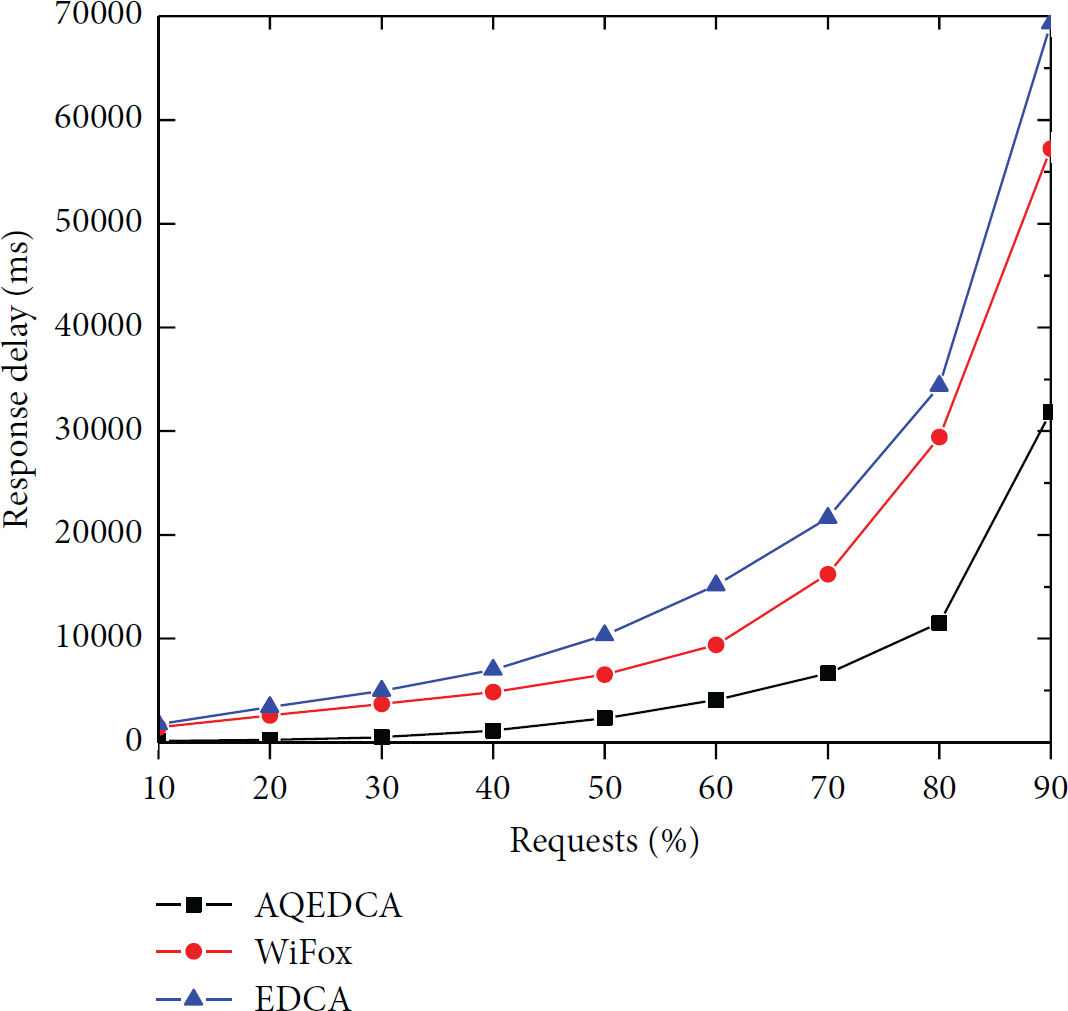
Figure 4(a) plots the average response delay and Figure 4(b) shows the average interface Tx queue length of the . As AQEDCA ensures higher channel access priority to and higher effective channel utilization, the scheme is able to keep small queue length, avoiding queue saturation (as indicated in Figure 4(b)) and consequently achieving low response delay. Figure 4(a) shows that AQEDCA scheme incurs less than 50% response delay compared to that of EDCA and WiFox. In order to illustrate the metric more precisely, Figure 5 is plotted to illustrate the cumulative response delay with respect to the distribution of completed requests when the associated are 20. It clearly shows that the response time in AQEDCA is significantly lower than that of EDCA and WiFox, and more than 80% of the replies are received within 12 ms.
HTTP performance with varying stations.
Requests serve rate when 20 STAs associated.
By comparing Figure 4(a) with Figure 4(b), we find that the 's queuing length in EDCA is holding at a constant value (approximately 170) when the number of changes from 5 to 20, while its response time increases from 1586.74 ms to 15546.13 ms. The reason is, to our observation, that when there are 5 , 's queue is almost full in the steady state as shown in Figure 6. As the number of grows, the saturated queue causes more severe packet losses, which is also witnessed in Figure 4(c). As a result, the are experiencing longer response delay in the EDCA mechanism as more join the network.
AP's queue length varies with elapsed time under EDCA when 5 STAs associated.
In Figure 4(d), we plot the gain on goodput as a function of the varying numbers of the . As described above, the main reason for the poor performance of EDCA is due to the saturated queue caused packet loss and the overhead of dealing with contention. As AQEDCA is designed to solve the problems, the gain on goodput of AQEDCA always outperforms WiFox and the default EDCA. AQEDCA obtains significant goodput performance gains by up to 199.13% and 154.34% compared to the default EDCA and WiFox, respectively.
Figure 7 plots the Jain Index of the competing TCP flows. It demonstrates that the downlink goodput improvements are not achieved at the cost of fairness. In the same figure, there is a sharp decline of the EDCA scheme when the change from 5 to 10. The reason can be clearly explained by Figure 4(c), which shows the retransmission rate increases rapidly with the number of changing from 5 to 10. It is the large number of retransmissions that causes the severe throughput drop on the downlink TCP flows. Our data shows that the ratios of the downlink throughput to the uplink throughput, under 5, 10, 15, and 20 , are 0.568490597, 0.040656595, 0.032953373, and 0.01027193, respectively.
Jain Index with varying stations.
Furthermore, we conducted experiments with varying buffer sizes which are reset with the command, where iperf is used to generate bidirectional TCP streams. Figures 8(a) and 8(b) plot the gain of the goodput and the average RTT of the downlink TCP streams, respectively. From the figures, we can see that AQEDCA is sustainable with varying buffer sizes and always outperforms WiFox and EDCA. In the data analysis process, we found that both AQEDCA and WiFox can control the 's queue length effectively, giving lower TCP retransmission rate, where AQEDCA performs better. The TCP retransmission rate of AQEDCA almost keeps at 10% whatever the size of the buffer is, while WiFox has a small fluctuation from 10% to 15%. However, when it comes to EDCA, no matter how big the buffer is, it always overflows the buffer. Although the larger buffer size leads to a smaller TCP retransmission ratio (29.17%, 31.86%, and 33.13% with buffer sizes 200, 100, and 50, resp.), it gives a small increase with downlink goodput. However, in EDCA, the lower channel access probability of the compared to the makes the downstream severely suppressed by the upstreams under varying buffer sizes.
Performance obtained of different algorithms under varying buffer sizes with bidirectional TCP streams generated by iperf.
5.4. Performance of QoS Applications
Since 802.11e is a standard that supports QoS data communications, we are curious about the impact of QoS applications with our algorithm. In this test, we use VoIP as an example to examine the performance of delay sensitive applications. Based on our testbed, we set up a VoIP environment as follows. We first deploy a VoIP gateway by using Asterisk on one of our file servers and then use one and the other file server acting as two VoIP clients, both running Zoiper SIP softphone. Meanwhile, our 15 are generating bidirectional TCP traffic with iperf as the background traffic. The VoIP traffic consists of a GSM codec stream from the initiator to the recipient and a G.711 codec stream on the reverse direction. Both G.711 and GSM streams have 20 ms frame size with fixed payload (160 bytes and 33 bytes, resp.). During the test, each voice conversation lasts 240 s. Thus, in total, 12000 packets are sent on each direction.
We use two performance metrics, packet loss rate and jitter, to evaluate the quality. The packet loss rate is the ratio of lost packets to the total packets transmitted. The jitter, denoted as , is calculated according to RFC3550 (RTP):
where i is the packet sequence number and D is the packet interarrival delay. Given two packets i and j with their transmission timestamps , and receipt timestamps , , the interarrival delay is defined as
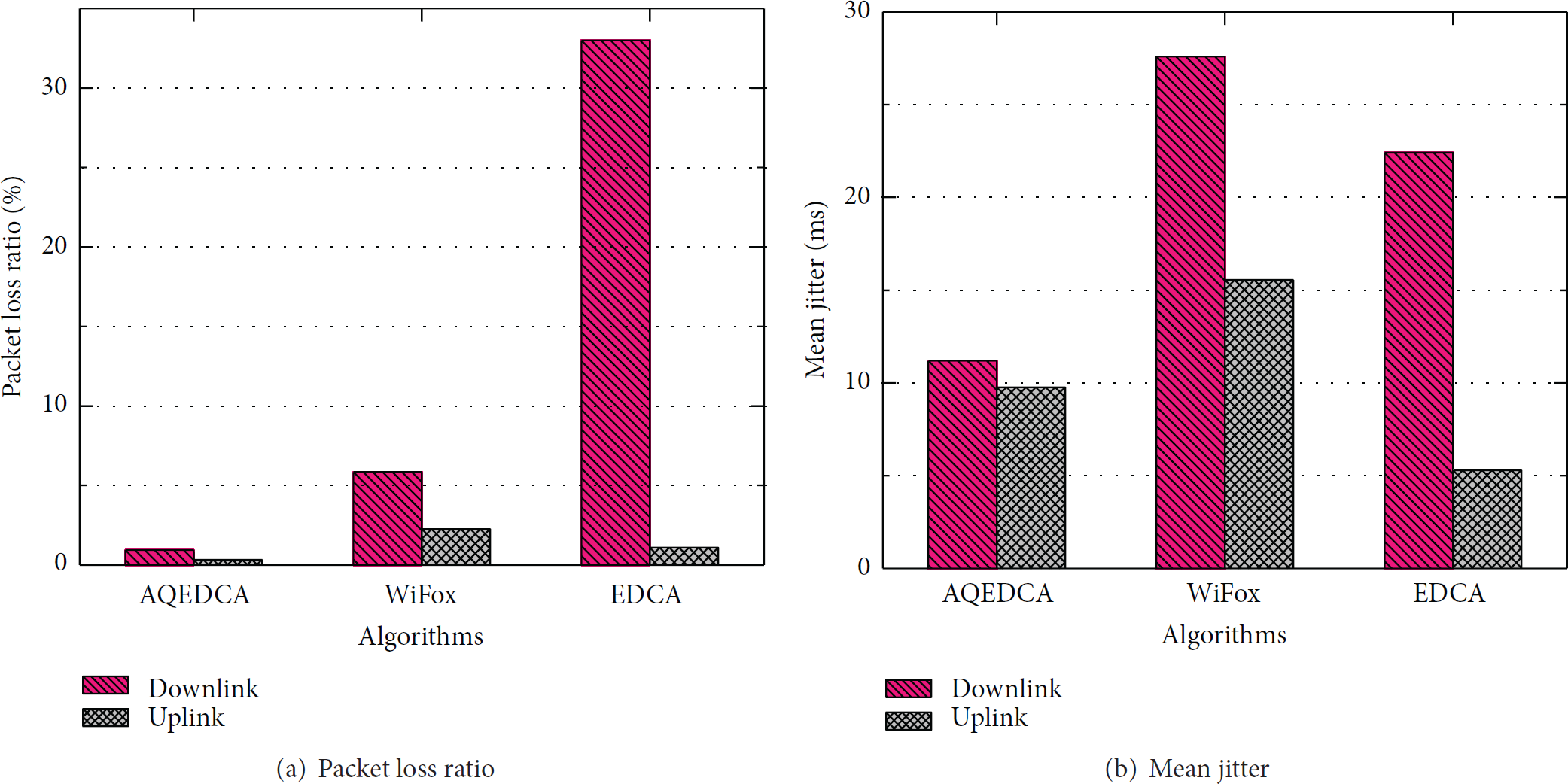
Figure 9(a) illustrates the VoIP packet loss rate under three different schemes. It clearly shows that the AQEDCA scheme achieves the lowest packet loss rate on both downlink and uplink, compared to WiFox and EDCA. Again, the reason is that our scheme effectively controls the 's queue length and thus avoids the buffer overflow in a saturated network scenario. In addition, AQEDCA also achieves a much better balance between the downlink and uplink VoIP traffic, which is crucial for the quality interactive communications.
VoIP performance obtained of different algorithms.
Figure 9(b) plots the average jitter of downlink and uplink VoIP traffic. AQEDCA scores balanced jitter values with less than 12 ms in both directions. The performance of WiFox is the worst with the downlink jitter of 27 ms and uplink jitter of 15 ms. The reason is that WiFox does not support QoS and therefore the VoIP stream has to compete with background traffic for the channel access. One may notice that EDCA gives the best jitter performance on its uplink. The only reason is that the uplink suppresses the downlink and thus causes a much larger jitter on its downlink. The unbalanced jitter values between the two directions normally bring intolerable phone conversation quality.
6. Conclusions
In the paper, we proposed a novel access scheme for 802.11 WLANs with the goal of maximizing the downlink goodput and reducing the access latency. We first presented the theoretical analysis that reveals the relation between the throughput and the access probability. Then, we derived the optimal access probability that maximizes the throughput. We developed a practical scheme, AQEDCA, that enables the nodes to achieve the optimal access probabilities by adjusting their parameters. We implemented the scheme on off-the-shelf wireless network interface cards and extensive experiments were conducted to verify the efficiency of the proposed AQEDCA scheme.
Future investigations will focus on extending our algorithm to the multihop situation. Besides, exploring relationship between the and the access probability in different traffic patterns as well as other effective ways to estimate the network conditions more accurately is also an important future work.
Footnotes
Conflict of Interests
The authors declare that there is no conflict of interests regarding the publication of this paper.
Acknowledgments
The authors would like to acknowledge that this work was supported by the National Natural Science Foundation of China (Grant nos. 61502540 and 61572530), the China Hunan Provincial Science & Technology Program (Grant no. 2012GK4106), the International Science & Technology Cooperation Program of China (Grant no. 2013DFB10070), and the National Science Foundation of USA (Grant no. 1338105).
References
1.
SendraS.LampareroJ. V.LloretJ.ArdidM.Underwater communications in wireless sensor networks using WLAN at 2.4 GHzProceedings of the 8th IEEE International Conference on Mobile Ad-Hoc and Sensor Systems (MASS ′11)October 2011Valencia, SpainIEEE89289710.1109/mass.2011.1062-s2.0-83355164536
2.
DongM.KimataT.SugiuraK.ZettsuK.Quality-of-experience (QoE) in emerging mobile social networksIEICE Transactions on Information and Systems201497102606261210.1587/transinf.2013thp00112-s2.0-84907495049
3.
JiangL.LiuA.HuY.ChenZ.Lifetime maximization through dynamic ring-based routing scheme for correlated data collecting in WSNsComputers and Electrical Engineering20154119121510.1016/j.compeleceng.2014.04.0012-s2.0-84899036051
4.
HuY.LiuA.An efficient heuristic subtraction deployment strategy to guarantee quality of event detection for WSNsThe Computer Journal20155881747176210.1093/comjnl/bxu134
5.
GuptaA.MinJ.RheeI.WiFox: scaling WiFi performance for large audience environmentsProceedings of the 8th ACM International Conference on Emerging Networking EXperiments and Technologies (CoNEXT ′12)December 2012Nice, France21722810.1145/2413176.24132022-s2.0-84871991541
6.
IEEE std 802.11e-2005, 2005
7.
BianchiG.Performance analysis of the IEEE 802.11 distributed coordination functionIEEE Journal on Selected Areas in Communications200018353554710.1109/49.8402102-s2.0-0033749075
8.
RomdhaniL.NiQ.TurlettiT.Adaptive EDCF: enhanced service differentiation for IEEE 802.11 wireless ad-hoc networksProceedings of the IEEE Wireless Communications and Networking Conference: The Dawn of Pervasive Communication (WCNC ′03)March 2003New Orleans, LA, USA1373137810.1109/wcnc.2003.12005742-s2.0-73149084901
9.
Lopez-AguileraE.HeusseM.GrunenbergerY.RousseauF.DudaA.CasademontJ.An asymmetric access point for solving the unfairness problem in WLANsIEEE Transactions on Mobile Computing20087101213122710.1109/TMC.2008.442-s2.0-50049104696
10.
HeusseM.RousseauF.GuillierR.DudaA.Idle sense: an optimal access method for high throughput and fairness in rate diverse wireless LANsACM SIGCOMM Computer Communication Review200535412113210.1145/1090191.1080107
11.
NatkaniecM.Kosek-SzottK.SzottS.BianchiG.A survey of medium access mechanisms for providing QoS in ad-hoc networksIEEE Communications Surveys and Tutorials201315259262010.1109/surv.2012.060912.000042-s2.0-84877577388
12.
CharfiE.ChaariL.KamounL.PHY/MAC enhancements and qos mechanisms for very high throughput WLANs: a surveyIEEE Communications Surveys and Tutorials20131541714173510.1109/surv.2013.013013.000842-s2.0-84888339387
13.
CaiL. X.ShenX.MarkJ. W.CaiL.XiaoY.Voice capacity analysis of WLAN with unbalanced trafficIEEE Transactions on Vehicular Technology200655375276110.1109/TVT.2006.8741452-s2.0-33744518114
14.
LeY.MaL.ChengW.ChengX.ChenB.Maximizing throughput when achieving time fairness in multi-rate wireless LANsProceedings of the IEEE Conference on Computer Communications (INFOCOM ′12)March 2012Orlando, Fla, USAIEEE2911291510.1109/infcom.2012.61957282-s2.0-84861594930
15.
HongK.LeeS. K.KimK.KimY. H.Channel condition based contention window adaptation in IEEE 802.11 WLANsIEEE Transactions on Communications201260246947810.1109/TCOMM.2012.012012.1004722-s2.0-84863180951
16.
JamaliA.HemamiS. M. S.BerenjkoubM.SaidiH.An adaptive MAC protocol for wireless LANsJournal of Communications and Networks201416331132110.1109/JCN.2014.0000522-s2.0-84904802006
17.
NguyenS. H.VuH. L.AndrewL. L. H.Service differentiation without prioritization in IEEE 802.11 WLANsIEEE Transactions on Mobile Computing201312102076209010.1109/TMC.2012.1792-s2.0-84883151296
18.
PatrasP.BanchsA.SerranoP.AzcorraA.A control-theoretic approach to distributed optimal configuration of 802.11 WLANsIEEE Transactions on Mobile Computing201110689791010.1109/tmc.2010.2312-s2.0-79955452602
19.
YuQ.ZhuangY.MaL.Dynamic contention window adjustment scheme for improving throughput and fairness in IEEE 802.11 wireless LANsProceedings of the IEEE Global Communications Conference (GLOBECOM ′12)December 2012Anaheim, Calif, USA5074508010.1109/GLOCOM.2012.6503925
20.
WengC.-E.ChenC.-Y.The performance study of optimal contention window for IEEE 802.11 DCF access controlProceedings of the 75th IEEE Vehicular Technology Conference (VTC Spring ′12)May 2012Yokohama, JapanIEEE1510.1109/VETECS.2012.6240261
21.
SerranoP.BanchsA.PatrasP.AzcorraA.Optimal configuration of 802.11e EDCA for real-time and data trafficIEEE Transactions on Vehicular Technology20105952511252810.1109/TVT.2010.20432742-s2.0-77953729502
22.
KenichiK.TakefumiH.MamoruO.Technique for dynamically updating EDCA access parameters for WLANs2012NTT Access Network Service Systems Laboratories
23.
PatrasP.BanchsA.SerranoP.A control theoretic approach for throughput optimization in IEEE 802.11e EDCA WLANsMobile Networks and Applications200914669770810.1007/s11036-008-0121-x2-s2.0-70450233841
24.
SerranoP.PatrasP.MannocciA.MancusoV.BanchsA.Control theoretic optimization of 802.11 WLANs: implementation and experimental evaluationComputer Networks201357125827210.1016/j.comnet.2012.09.0102-s2.0-84873739077
DongP.WangJ.WangH.PanY.Boosting VoIP capacity via service differentiation in IEEE 802.11e EDCA networksInternational Journal of Distributed Sensor Networks201520151123564810.1155/2015/235648
27.
LeY.MaL.ChengW.ChengX.ChenB.A time fairness-based MAC algorithm for throughput maximization in 802.11 networksIEEE Transactions on Computers2015641193110.1109/tc.2013.186MR32967752-s2.0-84919496126
28.
HuangJ.WangJ.YeJ.A buffer management algorithm for improving up/down transmission congestion protocol fairness in IEEE 802.11 wireless local area networksInternational Journal of Communication Systems201227102228224010.1002/dac.24692-s2.0-84911987693
29.
RodrigM.ReisC.MahajanR.WetherallD.ZahorjanJ.Measurement-based characterization of 802.11 in a hotspot settingProceedings of the Workshop on Experimental Approaches to Wireless Network Design and Analysis (ACM SIGCOMM ′05)August 2005Philadelphia, Pa, USA51010.1145/1080148.10801502-s2.0-84885705278
30.
SchulmanA.LevinD.SpringN.On the fidelity of 802.11 packet tracesPassive and Active Network Measurement: 9th International Conference, PAM 2008, Cleveland, OH, USA, April 29-30, 2008. Proceedings20084979Berlin, GermanySpringer132141Lecture Notes in Computer Science10.1007/978-3-540-79232-1_14
31.
CaiL. X.PoorH. V.LiuY.LuanT. H.ShenX.MarkJ. W.Dimensioning network deployment and resource management in green mesh networksIEEE Wireless Communications2011185586510.1109/MWC.2011.60566932-s2.0-80155179419
32.
CaiL. X.LiuY.LuanT. H.ShenX. S.MarkJ. W.PoorH. V.Sustainability analysis and resource management for wireless mesh networks with renewable energy suppliesIEEE Journal on Selected Areas in Communications201432234535510.1109/jsac.2014.1412142-s2.0-84893323100
33.
RadhakrishnanS.ChengY.ChuJ.JainA.RaghavanB.TCP fast openProceedings of the 7th ACM International Conference on Emerging Networking EXperiments and Technologies (CoNEXT ′11)December 201110.1145/2079296.20793172-s2.0-84889698507