




Abstract
Since a single sensor may be in a fading dip, cooperative sensing among multiple sensors which experience uncorrelated fading is required to guarantee reliable sensing performance. This paper proposes a cooperative sensor selection and power-efficient gathering (CSSPEG) strategy in multihop wireless sensor networks to avoid the “hot spot” problem. Intracluster communication radiuses have different sizes, in which the clusters closer to the base station have smaller size. Furthermore, intracluster member allocation scheme uses cooperative sensor selection and power-efficient gathering strategy. Simulation results show that the proposed CSSPEG can efficiently balance the energy consumption of cluster heads and prolong the lifetime of the network.
1. Introduction
Wireless sensor networks (WSNs) are usually composed of hundreds or thousands of sensing devices, which are deployed over a geographical area for the purpose of target tracking and monitoring physical phenomena [1]. In recent years, WSNs architectures involve many power-limited sensor nodes to enable a large class of applications, such as environmental and building monitoring, pollution monitoring, agriculture, health care, energy management, and eruption monitoring. However, wireless sensor nodes are highly energy-constrained devices, and the sensor is usually powered by battery which is undesirable or even impossible to be recharged or replaced. Collaborative techniques and energy consumption are both critical issues in WSNs.
For reducing energy dissipation and enhancing system lifetime effectively, many clustering algorithms have been proposed. In WSNs, the network is divided into several clusters and one node is selected as the CH (cluster head) in each cluster [2]. The members in each cluster transmit data to their respective CH and the CH in turn forwards the data after aggregating/fusing to sink node through single-/multihop transmission. When the nodes use single-hop communication to reach the sink node located farther away, it will lead to the high burden which is due to long-range communication. A power-efficient solution aims to minimize the communication distance [3], which makes multihop communication essential in case of real life deployment. Data is relayed hop-by-hop by the intermediate node rather than communicating directly with a possibly distant sink node. However, with regard to the multihop transmission, it increases the load on those located near the sink and spares the energy of distant sensors. Therefore, if the energy consumption of sensor nodes is not managed properly, it may result in “hot spot” problem in the network [4].
The dynamic sensor selection optimization strategy refers to the optimization of the tradeoff between energy consumption and effective coverage rate. Moreover, it is usually adopted to enhance energy efficiency and prolong the lifetime of WSNs. The purpose of this paper is to reduce energy consumption through the use of collaborative technologies. Energy consumption and collaborative techniques are two of the most severe constraints of WSNs due to their intrinsic nature. WSNs using cooperative sensor selection optimization technology and power-efficient gathering strategy can effectively reduce energy consumption. In this paper, we propose a dynamic sensor selection optimization and power-efficient gathering strategy for multihop wireless sensor networks to avoid the “hot spot” problem. Intracluster communication radiuses have different sizes; those closer to the base station (BS) have smaller size. On the other hand, a dynamic sensor selection strategy is presented for intracluster member allocation, which restricts the number of nodes with higher burden. Therefore, the CHs of these clusters can preserve more energy for the intercluster relay traffic. Simulation results show that the proposed CSSPEG can efficiently balance the energy consumption of CHs, decrease the dead speed of the nodes, and prolong the lifetime of the network.
The main contributions of this paper include the following: (1) a brief review about the advantages and disadvantages of various existing cluster-based routing protocols in WSNs is presented; (2) a cooperative sensor selection and power-efficient gathering strategy in multihop wireless sensor networks is proposed; (3) an effective cooperative sensor selection optimization model is proposed.
The remainder of the paper is organized as follows. In Section 2, we briefly review related works. Section 3 describes the power-efficient gathering model. Section 4 presents the details of CSSPEG and argues the choice of its parameters. Section 5 shows the experimental simulation results. Finally, Section 6 concludes the paper and discusses some future research directions.
2. Related Works
In recent years, a number of protocols have been proposed to manage and reduce the energy consumption of sensor nodes. In this section, we give a brief review about various existing cluster-based routing protocols in WSNs.
Some protocols require the CH in any cluster to be able to communicate with its neighboring CHs in one hop. Thus, a virtual grid is built, such as BP [5] or EEPA [6]. It is important for the above algorithms to keep the number of clusters as low as possible and the optimal clustering is often defined as the one that minimizes the number of clusters. HEED [7] protocol proved that it can minimize the control overhead and prolong the lifetime of network which is due to the well distribution of CHs. Also, HEED protocol considered the residual energy of sensor nodes and the cost of communication within the cluster during the selection of CHs.
An energy-efficient heterogeneous clustered scheme was proposed in [8], which was effective in prolonging the lifetime of WSNs. The impact of heterogeneity of sensor nodes was studied in terms of their energy, and the residual energy of each node is chosen as a key factor in the process of calculating the weighted election probabilities for CH selection. A novel distributed clustering algorithm was proposed in [9], in which CH nodes were selected following a three-way message exchange. The eligibility to be elected CH was based on its residual energy and degree. An energy-efficient clustering protocol (EECPL) was proposed in [10], which organized sensor nodes into clusters and used the ring topology to send data, so that each sensor node can receive data from a previous neighbor sensor and can transmit data to a next neighbor.
An energy-efficient routing technique, called energy-aware intracluster routing (EAICR), was proposed in [11], which has increased energy efficiency up to 17% and increased the network lifetime up to 12%. EAICR focused on the energy consumed by the packets sent in the network and the residual energy level of sensor nodes at specific time. An efficient approach for clustering aggregation based on data fragments was proposed in [12], which can improve the network performance and reduce the computational complexity.
To minimize the total energy consumption in the network, the expressions for the required CH densities have been studied in a multihop wireless sensor network [13]. However, they did not provide any justification for choosing multihop mode for communication between the sensor nodes and the CHs. It was one of the rare efforts to match the size and shape of clusters to the gathered sensor data: nodes form clusters only if their data were similar and can be aggregated with little or no data loss [14]. In terms of the cluster form, the algorithm adopted a traditional k-hop clustering with random cluster sizes due to the requirement of data similarity. Since the intermediate CH of the routing path spent more time listening or sending data and then consuming more energy, it would exhaust batteries more rapidly than other nodes.
In order to balance the energy level or energy consumption of CHs, an unequal clustering model was first proposed by Soro and Heinzelman in 2005, which was based on unequal clustering size (UCS) [15]. In the case of multihop networks, it was demonstrated that UCS was 10–30% better than existing equal clustering models.
In the energy-efficient unequal clustering (EEUC) algorithm, Li et al. proposed a novel unequal clustering algorithm in which nodes joined clusters of unequal size [16]. In EEUC, even clusters equidistant from the BS may have different number of member nodes, neither too many nor too few. However, EEUC may produce lone nodes since the CH election was random [17]. In [17], a multihop routing protocol with unequal clustering (MRPUC) was proposed. The experimental results demonstrated that MRPUC outperformed an equal clustered version of itself by extending the network lifetime by 34.4%. Zhao and Wang proposed an unequal layered clustering approach (ULCA) for large scale wireless sensor network, which assumed a BS at the center of the grid [18]. The layers closer to the base station were smaller in size giving the inner layers more residual energy for intercluster traffic. When compared to EEUC, ULCA had a better network lifetime and the overhead for clustering the network was much lower, because of the inherent local join and local broadcast mechanism. Bagci and Yazici proposed an energy-aware fuzzy unequal clustering algorithm (EAUCF) which used 2 parameters in order to calculate the competition range of the CH [19]. From the experimental results, EAUCF outperformed EEUC, ULCA, and LEACH for all the performance measures. Liu et al. proposed IEEUC, which was similar to the study in EEUC, since it created unequal sized clusters as they were further away from the base station [20]. The main difference between IEEUC and EEUC lied in the competition radius calculation. IEEUC used the node degree factor, which was based on the number of hops to the base station, to calculate the competition radius.
A new approach was proposed by Jaichandran et al. to mitigate the hot spot problem in WSNs in which an area S is divided into N cells, each of them having at least 1 sensor node, and the sensor nodes cooperated with neighbor nodes to forward sensed data to the base station [21]. Sensor nodes near the base station acted as gateway nodes (G nodes) which tended to die earlier as they had to relay heavy traffic. In [22], an energy-driven unequal clustering (EDUC) algorithm was proposed which discussed the rotation of the role of CH based on either time-driven CH rotation or energy-driven CH rotation approach. In EDUC unequal clusters were formed by having unequal competition ranges. One drawback of EDUC is the used single-hop transmission for intracluster communication. To solve the hot spot problem, Wan et al. proposed an energy-efficient unequal clustering algorithm (EUCA) with the ideal of unequal clustering in the circle area in which the CHs were in charge of different geographical scope according to different distance to the base station [23]. It could reduce the number of cluster members and led to the proportional energy dissipation in each layer.
3. The Power-Efficient Gathering Model
In this section, the power-efficient gathering model in wireless sensor networks is described. The proposed model consists of three parts: the transmitter, the power amplifier, and the receiver.
The energy spent for transmission of an l-bit packet from the transmitter to the receiver at a distance (d) is defined as

Energy consumption to receive procedure and energy for data fusion can be calculated as

Assume that there are N sensor nodes, which are uniformly dispersed within a circular region of radius R. There is a sink without energy constraint in the geometric center of the area.
The network is organized into a clustering hierarchy, in which a set of sensor nodes is grouped and coordinated by a CH. The CHs collect the data and execute fusion function to reduce correlated data produced by the sensor nodes within the clusters [24]. Hence, CHs are required to possess high energy source. When the network becomes large, most of the CHs in the network may not reach the sink directly. Then they transmit packets to the sink in a multihop path via other CHs. To avoid the frequent change of the topology, we assume that the nodes are stationary as supposed in [25].
In [26], simulation results clearly showed that CHs nearer to the BS had lower residual energy compared to CHs further away. To maintain the connectivity of the entire network, it is very important that the CHs closer to the BS should keep alive as long as possible for the intercluster communication. So the number of the nodes in the clusters closer to the BS ought to be smaller than those farther away from the BS. Therefore, we assume that the circular area is divided into M rings

The deployment of sensors in the network.
4. The Proposed CSSPEG Strategy
We characterize key properties of the transmission ranges of CHs by numerical analysis and quantitative methods. The CHs near the sink node are responsible for forwarding the data to the sink in combination with the remoter cluster and their own; thus they usually consume more energy than remote heads. As a result, the nodes near the sink becoming invalid are earlier than the remote ones and lead to network segment. To achieve energy evenly in the network, we divide the circle into concentric rings of thickness R (see Figure 2) and partition all nodes into clusters with unequal size, in which the clusters closer to the base station have smaller size. To balance the energy consumption between all CHs, we propose an intramember allocation scheme, which restricts the number of nodes in some clusters with higher burden. We also propose a communication model which is cost-effective for intercluster transmission.

An illustrative example of different partitions.
4.1. Cooperative Sensor Selection Optimization
The task of CH is to receive the data from the various member nodes of the cluster and send the data to the next hop and forwards messages from neighboring CH. The CHs have to spend extra energy for aggregating data and performing long-range transmission to the distant sink via the intercluster forwarding. Energy consumption for CH is as follows:

In [27], Bhardwaj et al. proved that the hops must be equidistant for convex radios and proposed a solution of optimal routing in a linear sensor network. The question is how to relay data from a sensor, located at distance D from the BS. The optimal number of hops

The optimal routing path is shown as an iterative sequence in Figure 3. Note that sensors do not necessarily transmit to their direct downstream neighbor; some nodes can be left out between successive relays. In Figure 3, the distance to the next-hop node is the characteristic distance.

The routing path with the optimal number of hops.
Therefore, the

Hence, the energy depletion for CH in partition i which relays data from the upstream neighbors to the next-hop node is


To ensure cluster sensor network connectivity, the transmission radius of CH is larger than member nodes. The approximate ratio of
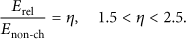
Therefore, the total energy consumption by the CH in partition i is given by

Since CHs far away from the sink transmit their data packets via intermediate CHs in a multihop fashion to the sink node, these intermediate CHs get overloaded and drained out sooner, especially for CHs which are closer to the sink node. In order to handle the load and increase the network lifetime, the transmission range of the CH could be adjusted adaptively. The corresponding transmission range of the cluster heads near the sink is rather short and the range increases gradually as the distance between the sink and CHs of other partitions increases. Due to the number of partitions determined by the transmission radius, the transmission radius of all partitions may be satisfied

The number of neighboring nodes in the range of the normal nodes can be calculated as

Therefore, the transmission radius of the CH in partition i is given by the following equation:

4.2. Power-Efficient Gathering Strategy
To increase the lifetime of WSNs by efficiently balancing energy among nodes, we mainly focus on maintaining a balance of energy consumption of all CHs in different partition. We determine the number of members in each cluster in accordance with the CH node energy consumption equal as much as possible. The resolution for the above question is to allocate a number of limited nodes within each cluster and then append additional nodes according to the burden of CH adaptively.
Let
Then the data from cluster i which will be forwarded to the next CH can be expressed as
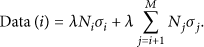
Therefore, the energy consumption of the ith CH during a round is equal to

For convenience, we suppose

In order to balance the energy consumption between all CHs, we propose an intracluster member allocation scheme, which restricts the number of member nodes of some CHs with higher burden. We divide sensor nodes into the normal groups and the additional groups. In this way each CH will have a maximum set of member nodes it can support without much burden [28]. In order to ensure that the energy consumption of all CHs in different partitions in a round is equal, there exists equivalence relation
Hence, we can obtain the following equation:

According to the above assumption and analysis,

Then, we can obtain the relationship between the normal nodes of each cluster in partition i and the additional nodes in partition

This can guarantee that the energy consumption between all CHs balances per round.
4.3. Intercluster Communication
In the process of dynamic sensor selection optimization, each CH should build a multihop path to communicate with the sink. During the process of selecting the next-hop nodes for the CHs, we can find three rules that satisfy the conditions: the low energy consumption, the link distance as short as possible, and the minimal hops to the sink. We assume that the communication distance between CHs is less than
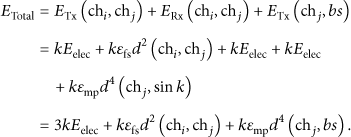
Here, we focus on the objective of selecting the next hop for data forwarding, which increases the lifetime of WSNs. In many systems, the energy of node and link quantities are usually the main factors. However, they should not be the primary factor. We take into consideration not only the energy of node, but also the energy consumption of communication and the maximum and minimum hop count between the neighboring nodes and the sink. The weight function is defined as
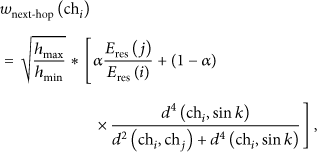
CH i lays neighbor node j to the neighboring CH set and calculates the weight value of the path from j to sink. Then, all weight values are sorted in ascending order and the maximum one could be chosen and its representative CH will be the next-hop node for data forwarding.
Due to the dynamic sensor selection optimization, some CHs may act as intermediate nodes many times, which could tend to die much faster and lead to the “hot spot” problem. To avoid this phenomenon, the threshold
4.4. Update Scheme for Routing
Definition 1.
The number of hops ranges from 0 to 255, and the max number of hops is used for outgoing probe packets. During initialization, the number of hops from the sink node is set to 0. The default number of hops for normal nodes is set as 255, which indicates unreachable state.
Definition 2.
The simplest way to route queries is to flood queries from the sink over the entire WSNs and set up the reverse paths for desired data to be sent back to the sink within intercluster communication. Each CH sets gradients between neighboring ones and reinforces the best route for real data while transferring the exploratory events on the reverse query path. Initially, the sink acts as a data server to send query packets in the way of flooding. The signal contains its identity (ID), the smallest hop count (HC), and the weight value for the next hop.
Definition 3.
To update the hop count, the intermediate CH determines by verifying the packets from the ones much nearer to the sink. The progress depends on its neighboring hop-count values. If the value of HC in the header of the packets plus 1 is greater than the previous one preserved in its own buffer, the node will update the routing tables and broadcast to its one-hop neighbors. Otherwise, the packet will be ignored.
In the establishment phase, the hop value of sink is set to 0. The initial value of the normal nodes is set as 255, which means the host is unreachable and the list of its parent node is empty. To route a data packet toward the destination, a node broadcasts a route request (RREQ) broadcast to its neighborhood. Each node receiving the RREQ keeps track of it until delaying expiration. When the neighbor node receives RERQ, it will check whether the list of parent node is empty. If a route toward the destination exists, it sends a route reply (RREP) packet to the node that has sent the RREQ. The RREP contains the source ID and sequence number from the RREQ.
When a RREQ is received by a CH, it will make the value of HC in the header of the packet plus 1 as a new hop count and compare with the HC value in its route table. If the new value is less than its HC, it proves that the node has sent the RREQ as its parent node. Otherwise, the node discards the RREP packets without any treatment. Additionally, the new HC value is stored instead of the original value.
The above steps will need to be repeated until all CHs in the network record the minimal HC from the sink for completion of routing.
5. Simulation Results and Analysis
The performance of our proposed model via simulation is evaluated in this section. NS2 (Network Simulator version 2) is used as a simulation test tool. NS2 is a publicly available tool for network simulations, built by various researches including LBL, Xerox PARC, UCB, USC/ISI, and many other contributors as a variant of the “Real Network Simulator.” NS2 is a discrete-event driven and object-oriented network simulator. NS2 is intended to simulate and research computer networks, using a discrete-event simulation technique. For simplicity, we assume the probability of signal collision and interference in the wireless channel is ignorable. Since our CSSPEG is based on multihop mode and unequal clustering for sensors, the transmission radius of the CHs in different ring-shaped areas will exert great impact on network. To examine the overall performance and scalability, we will firstly analyze the trends in terms of communication radius, the number of CHs, and the energy consumption of all areas under the condition of the network size being varied. Secondly, we will review the characteristics of CSSPEG by comparing with cluster algorithms such as UCS [15] and EUCA [23]. The specific experimental parameters are shown in Table 1.
Experimental parameters.

In our scenario, we set

The number of CHs varying in different network size.
The transmission radius of the CHs at different area is shown in Figure 5. Each curve corresponds to a particular network size, where the network size is varied from 200 meters to 400 meters. As the network size increases, the transmission range of the CHs increases synchronously. However, we can notice that the transmission range of the inner area is comparatively shorter than those in the outer area; the reason is that smaller size of the clusters nearer to the sink than the remote ones can balance the energy depletion of sensors in the whole network. The CHs near the sink are usually responsible for forwarding the data to the sink from remoter cluster. Thus, they consume more energy than remote heads. The simulation results demonstrate that our strategy can preserve some more energy for the intercluster relay traffic.
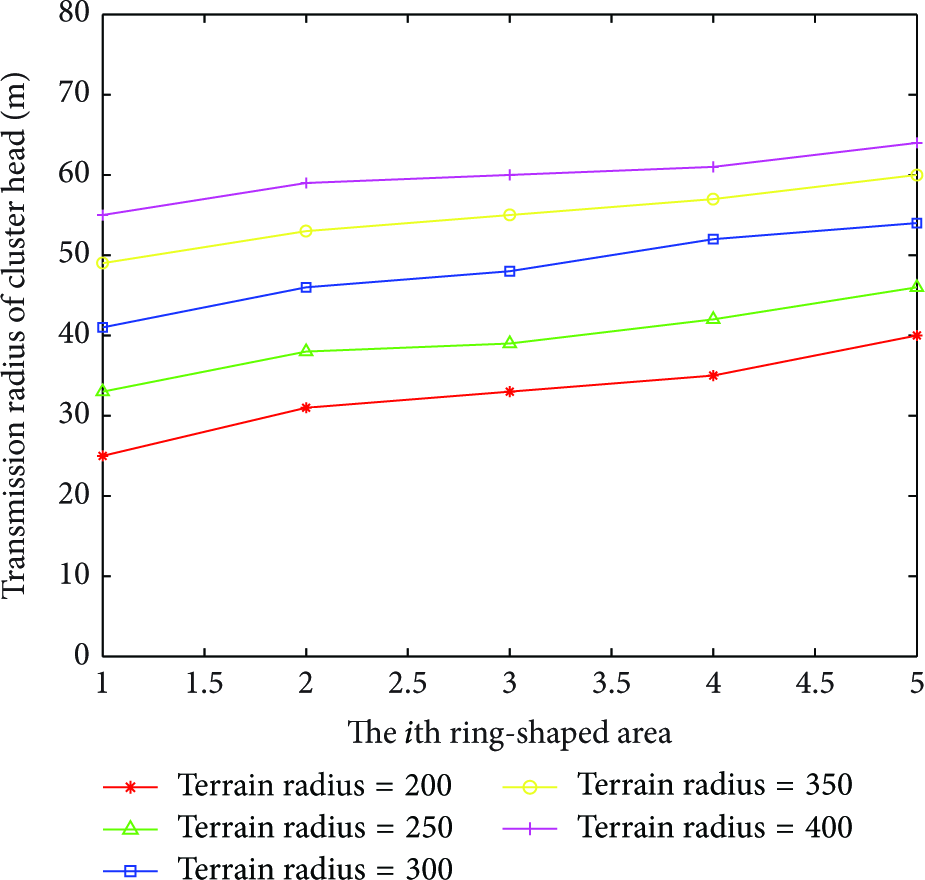
The transmission radii of the CHs in the ith ring-shaped area.
As mentioned in the previous section, the energy hole problem may rise in multihop wireless sensor networks if the CHs which act as intermediate nodes in the routing path are burdened with heavy relay traffic. We analyze the average residual energy of all nodes in different partitions as the network size is 400 m2 specially. As shown in Figure 6, the average residual energy of the nodes in different partitions drops almost simultaneously and demonstrates stability and volatility. Therefore, the proposed strategy can alleviate relay traffic burden on the CH nodes effectively by allocating the member nodes in the clusters and adjusting the transmission radius according to the hop counts.

The average residual energy of nodes in
Next, we verify the lifetime of network and energy efficiency for our strategy. Figure 7 shows the number of active nodes and energy consumption during their lifetime. From Figure 7, it can be seen that CSSPEG is better than the other algorithms, and the lifetime extends about 27.5% and 19.8%. In addition, all the nodes almost died till the round is 500 in UCS and 520 in EUCA; however CSSPEG algorithm requires 560.

The number of active nodes when
Figure 8 shows the total energy consumption over the number of rounds. CSSPEG significantly reduces energy consumption compared to UCS and EUCA because CSSPEG uses an alternative method to adjust the CH's transmission radius based on its location. The method of division into quadrants and the use of multihop for transmission data between the clusters also lead to more efficient energy usage and result in less consumption of energy for both intracluster and intercluster data transmission. The graphs curve shows that the dissipation varied between rounds of CSSPEG is higher than UCS and EUCA. It is evident that CSSPEG has better performance than the other two algorithms in terms of energy efficiency.
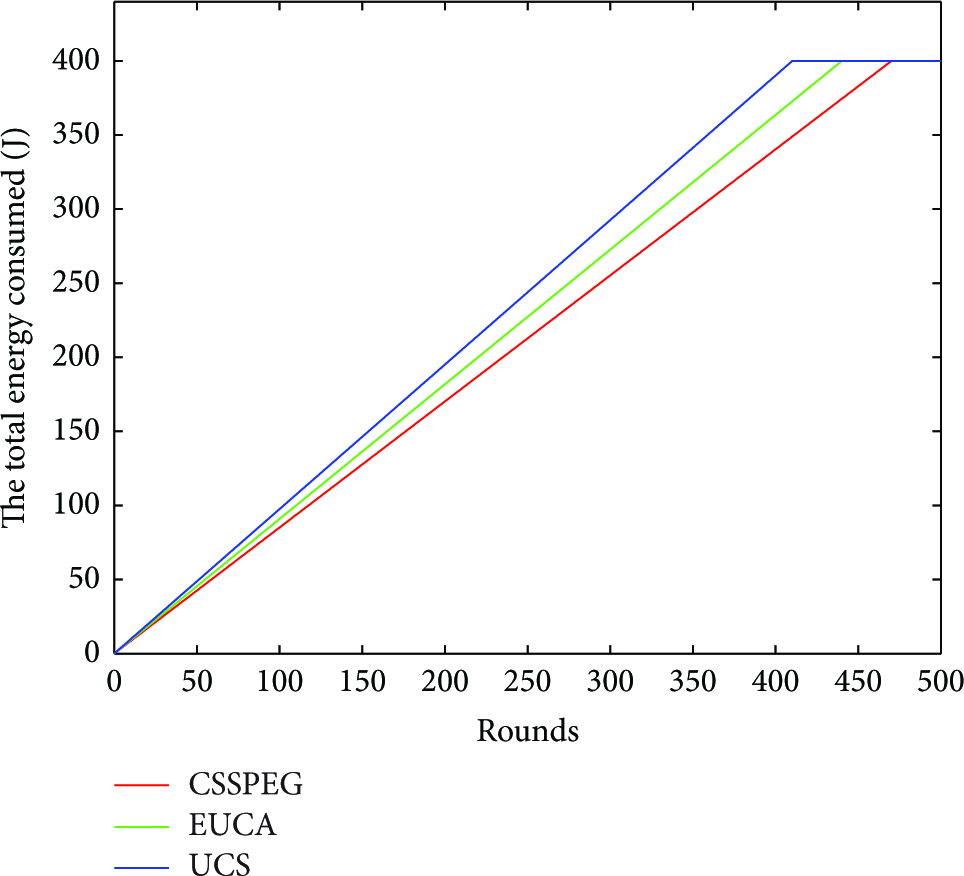
The total energy consumption when
Finally, we carry out the experiment in the environment with more densely deployed nodes in order to investigate the scalability of CSSPEG. The terrain radius is set to 300 and

The number of active nodes when
Figure 10 demonstrates that the total energy consumption of CSSPEG is better than the other algorithms when
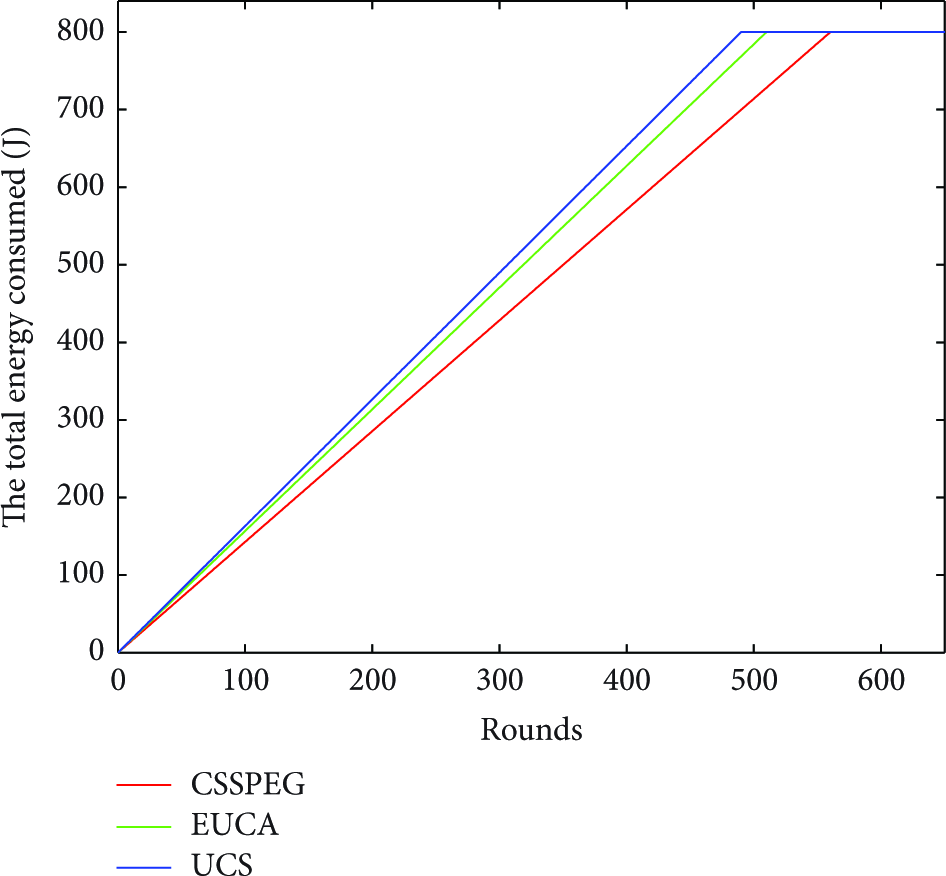
The total energy consumption when
Through the above experimental results, it can be observed that the proposed CSSPEG can efficiently balance the energy consumption of CHs, decrease the dead speed of the nodes, and prolong the lifetime of the network. Thus, the CSSPEG shows effectiveness to improve energy efficiency of WSNs and can be successfully applied to the field of wireless sensor networks.
6. Conclusions and Future Work
Since a single sensor may be in a fading dip, cooperative sensing among multiple sensors which experience uncorrelated fading is required to guarantee reliable sensing performance. This paper proposes a cooperative sensor selection and power-efficient gathering strategy in multihop wireless sensor networks to solve the energy consumption problem. The performance evaluation has been done via different simulations, which shows the proposed CSSPEG strategy can efficiently balance the energy consumption of CHs, decrease the dead speed of the nodes, and prolong the lifetime of the network. In the future, we will try to improve the CSSPEG and try to meet the other requirements in WSNs, such as effective coverage rate of the monitored area.
Footnotes
Conflict of Interests
The authors declare that there is no conflict of interests regarding the publication of this paper.
Acknowledgment
The authors would like to thank the anonymous reviewers for their insightful comments and constructive suggestions that have improved the paper.