




Abstract
The wireless technology is regarded as a paradigm shifter in the process industry. A star-linear industry wireless sensor network (IWSN) for narrow process industries is proposed in this paper. Based on the proposed IWSN, we focus on time-efficient convergecast solutions. We present algorithms to achieve optimal convergecast performance in terms of time slots use. In the proposed IWSN, the field devices (FDs) constitute a set of TDMA (time division multiple access) based star topology clusters, and the cluster heads present a multihop linear backbone. Time slots are scarce communication resource for convergecast in a narrow IWSN. Aiming to use slots efficiently, we design optimal algorithms to improve the polling scheduling in the cluster and the packets forwarding over the backbone. In a cluster, we design a multicycle scheduling algorithm and a fair polling algorithm to improve slots utility of the communication reliability and integrity. Over the backbone, an optimal slots allocating algorithm is designed to maximize the slots performance in terms of the end-to-end communication reliability, based on which a slot-efficient multisuperframe scheduling algorithm is presented. Performance analysis and simulations show that our solution outperforms traditional ones in terms of communication reliability and real-time.
1. Introduction
A growing trend in the process automation is to use wireless technology to reduce cable cost, deployment time, and unlocking of stranded information in previously deployed devices. Based on huge research efforts on IWSN, some professional products and business solutions have been presented for the process automation [1]. Wireless technologies have been regarded as a paradigm shifter in the process industry. Most commercial products tend to present general solutions. However, different scenarios may require different IWSN to match their process characteristics. We consider IWSN for narrow process automation systems in this paper. Some research works have been done for the IWSN with long and linear structure. Aiming at increasing network life time, a routing algorithm has been proposed to realize energy balance in the IWSN for structural health monitoring of long narrow tunnels in [2]. Energy-efficient wireless MAC Protocols for railway monitoring have been designed in [3]. Comparing with above systems, delay and packet loss are main metrics in IWSN for the process industry. Process automation systems have more stringent requirements on reliability, real-time performance. We focus on improving time utility in terms of communication reliability performance in IWSN for narrow process automation systems. In this paper, we present a star-linear IWSN based on the process characteristics. Based on the proposed IWSN, we design a time-efficient convergecast scheduling solution.
There exists a lot of research work done with IWSNs for industrial large-scale production. It is commonly assumed that the IWSN consists of thousands or tens of thousands FDs. This assumption may not be true in process industries. Production availability is of significant importance in the continuous process. Even though there are tens of thousands of FDs that need to communicate, they do not belong to the same network. The FDs are usually distributed over a set of process controllers, divided in several process sections, in order to avoid a complete production stop in case of a non-fail-silent situation in one FD [4]. Furthermore, to cover the process sections efficiently, FDs should be installed manually in groups other than random deploying assumed in most research works. In a narrow process automation system, a long assembly line consists of sensor groups. To capture the aspects of this kind of target process, we propose a star-linear IWSN as shown in Figure 1. The FDs are divided into clusters (field networks, FNs) following process sections [5, 6]. Each cluster is a star topology network. The cluster head (named master) polls the other FDs (named slaves) periodically. A set of masters present a linear-topology backbone network (BN) over which the polled packets are forwarded to the GW hop by hop. Two distinct time-windows, polling cycles and forwarding cycles, are provided in the proposed IWSN. To provide collision free and deterministic communications, TDMA strategy is adopted in both time-windows.
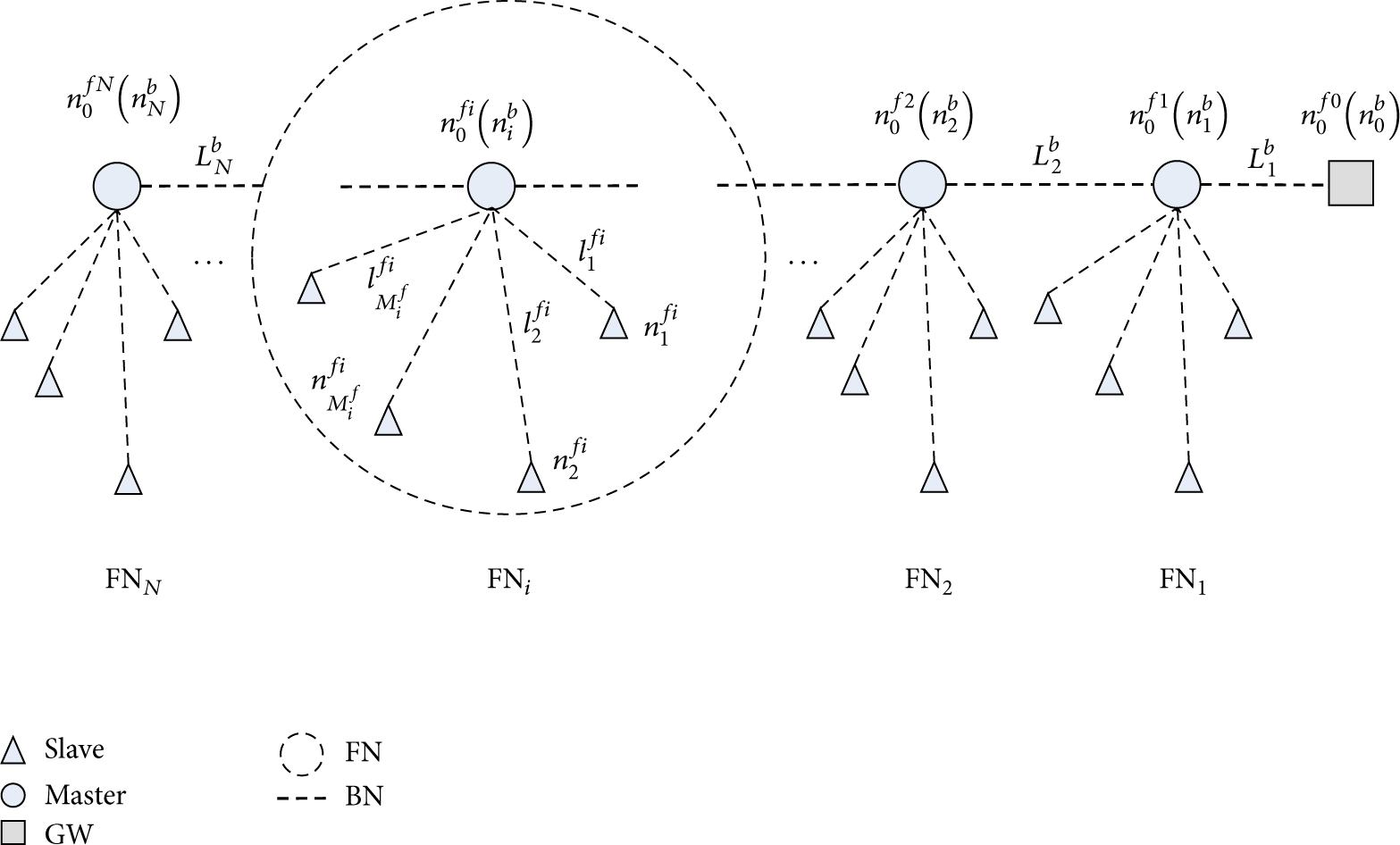
Architecture of the star-linear IWSN.
Over the years, some wireless technology standards for process automation have been put forward. The most remarkable example of this strategy is wireless HART (WH). Another well-known solution, ISA100.11, includes similar technical features to WH. These solutions are based on mesh network topologies, which may not be efficient for narrow process industries [7]. We have studied a two-tier IWSN for narrow process automation [7]. In this paper, different from employing monocycle polling strategy in [7], we consider the multicycle polling method in FN to save slots. Furthermore, we will present optimal slots allocation method over the BN to improve the slot utility in terms of end-to-end communication reliability. Aiming to use slots efficiently, we conduct the actual work in four aspects.
First is arranging slaves into polling cycles following their update rates. The update rates of slaves might be different. Much work is based on monocycle convergecast scheduling, in which all slaves are updated with the same update rate [8, 9]. In this way, some slaves may be updated more than once before their deadline and slots are wasted. For wired field bus systems, [10] presents an earliest deadline first multicycle (EDFM) polling algorithm to arrange minimal number of slaves in a polling cycle. EDFM is based on priority calculating with computational complexity
Second is allocating slots fairly in a polling cycle. Generally, retransmission slots are available in a polling cycle. Slots are allocated to slaves averagely in most wired automation systems (e.g., PROFIBUS-DP and WorldFIP) [11]. Average allocating transmission trials may not be efficient. Time slots may be used luxuriously over high quality links, while low quality links suffer from data delivering failure for using up attempt trials. Slots should be allocated fairly. To exploit the multiuser diversity gain, we adopt proportional fair scheduling (PFS) to address this problem. In PFS, the ratio of the feasible rate to the average throughput for each user is calculated, which is defined as preference metric. For the next slot, the scheduler selects the user with the maximum preference metric to schedule [12]. IWSNs are very different from opportunistic system. Only when the allocated slots sequences are distributed to slaves can the communication schedule be generated. To meet the deterministic requirement of our IWSN, an algorithm is designed to allocate all slots fairly to slaves for the polling cycle.
Third is optimal slots allocating in the forwarding cycle. In the forwarding cycle, the communication reliability will refer to end-to-end reliability other than single-hop link reliability, and slots should be allocated carefully to avoid communication bottleneck. WH adopts an average retransmission schedule. In WH, the furthest end device allocates one slot for each en route network device to the GW, allocating a 2nd dedicated slot on the same path to handle a retry. Another retry is handled by allocating a 3rd slot on a separate path. To improve the end-to-end communication reliability, WH takes channel hopping technique to combat external interference [13]. Reference [14] presents a method to allocate slots optimally to improve communication performance of a multihop link for single channel scene. In this case, all trials may be exhausted and result in communication failure with cochannel interference being presented. Along exploring time and frequency diversity, we design an optimal joint channel-slot selecting method to improve slots gain in terms of end-to-end communication reliability.
Finally, fourth is designing an algorithm to schedule more transactions in each slot in the forwarding cycle. A set of polled packets are to be delivered to GW hop by hop. Communication transactions, including transmissions and retry ones, will be scheduled over BN in forwarding cycles. The general time-constrained scheduling problem is NP-complete even in linear networks. We try to schedule maximal number of transactions at each slot to improve system performance in terms of slots reuse. Some work has been done on designing efficient forwarding schemes in a linear network [15]. To the best of our knowledge, scheduling on forwarding with optimal retransmission has not been described so far in the context of industrial communications. In this paper, a subsection parallel delivering strategy is presented for optimal retransmission scheduling over a linear network.
The rest of this paper is organized as follows. In Section 2, system model and motivation are given. Section 3 presents a low computational complexity multicycle scheduling strategy. Section 4 presents fair slots allocating schemes in the FN. In Section 5, an optimal joint channel-slot selecting method is given over the BN. In Section 6, a subsection parallel delivering strategy is presented for forwarding scheduling. Section 7 gives the numerical results. Finally, we conclude the paper.
2. System Model and Motivation
2.1. Network Model and Available Channels
Consider a star-linear IWSN consisting of a BN and N FNs as shown in Figure 1. Without loss of generality, let
Generally, the FN is a heuristic network in the process automation system. Assume masters are powerful FDs (e.g., actors). Masters can deliver packets with adapt channel hopping technology. The other FDs, for example, sensors, can only communicate over a fixed channel. In general, just as in WH, the system can use up to 15 parallel channels, denoted as
2.2. Scheduling Cycles
In WH, the supported update rates should be defined
As shown in Figure 2, a convergecast cycle is divided into

Operation cycle of the master.
2.3. Available Time Slots and Periodic Communication Transactions
As in most IWSNs, we assume that time is synchronized and slotted based on TDMA strategy. Each time slot allows the transmission of a single packet and the associated link level acknowledgement. We assume a number of retransmission trials are available for the slaves, and extra time slots will be allocated in the periodic window. Let
In the polling cycle of kth primary convergecast cycle, for all slave
2.4. Motivation
A set of periodic communication transactions must be supported in the system, which are interrelated and compete for the shared communication resources. In IWSNs based on TDMA strategy, especially in a narrow process, time slots are scarce communication resource. To improve communication efficiency in terms of slots using, we try to address the following problem.
Design a multicycle scheduling algorithm with lower computational complexity to minimize For given For given Find a parallel delivering strategy to maximize the number of transactions to be scheduled for forwarding in every slot.
3. Arranging Slaves into Polling Cycles
In this section, we design a multicycle scheduling scheme with low computational complexity to minimize
Theorem 1.
The lower bound of
Proof.
In the polling cycle of
Proof is finished.
Theorem 2.
If
Proof.
Consider


Consider
Proof is finished.
Based on Theorems 1 and 2, we can arrange slaves into polling cycles as Algorithm 3, in which the maximum number of slaves to be polled in the polling cycles is minimized.
Algorithm 3.
Multicycle scheduling algorithm is as follows.
Step 1: arrange Step 2: get the slaves of group k with the smallest update rate Step 3: arrange Step 4: if
4. Fair Slots Allocating in the Polling Cycle
Assuming
Consider
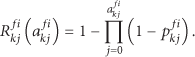
The reliability over link
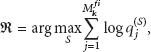
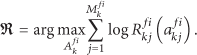
The fair scheduling can be rewritten as follows:

Obviously, we can present many slots allocation policies for polling the slaves in the
Definition 4.
Lemma 5.
Proof.
Consider

Similarly,

Obviously,

Proof is finished.
Theorem 6.
When the retranslation slots are allocated one by one for link
Proof.
Consider the polling scheduling in

There are up to
Proof is finished.
Following Theorem 6, we can get the fair slots allocating strategy for
Algorithm 7.
Fair slots allocating algorithm is as follows.
Step 1.
Let
Step 2.
Get the
Step 3.
Let
Step 4.
If
5. Optimal Slots Allocating for the Forwarding Cycle
The N-hop BN consists of
For all
Let
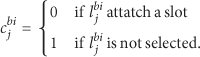
The reliability over link

Let

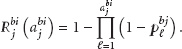
The optimization problem (6) is a nonlinear 0-1 integer programming problem. We introduce an ordering
Definition 8.
Define the slots utility function
Lemma 9.
Proof.
For all

Similarly,


Similar to Theorem 6, we can get Theorem 10 as follows.
Theorem 10.
When the retransmission slots are allocated one by one for
Now, the optimization problem (6) is converted into a conventional resource allocation problem. Similarly, the problem can be solved by employing Algorithm 7 described in Section 4. Different from Algorithm 7, channels will be switched following slots allocating.
6. A Subsection Parallel Delivering Strategy over the BN
Let us consider the forwarding of packets over the BN. An optimal slots allocation sequence has been presented in Section 4. In common hop-by-hop IWSN, bandwidth is especially challenging for delivering packets over long narrow path. In the proposed system, we attempt to schedule more transactions synchronously in each slot to improve throughput over the BN.
Theorem 11.
For all
Proof.
For all
Similar, there are
Links
Proof is finished.
In most exiting works [15, 16], the two-slice scheduling scheme based on temporal separation between the adjacent nodes is adopted for a linear network. A cycle is split into two time slices, named odd slots and even slots. All odd slots construct the odd slice and even ones construct another slice. Nodes located at odd hops away from GW send data in one time slice (e.g., odd time slice) and receive data in another time slice (e.g., even ones). The even nodes run at opposite case. If transactions are always available in all nodes, there are average
Definition 12.
At any slot in schedule S,
Definition 13.
At any slot in schedule S,
The GW is always an empty node, and
Corollary 14.
For all
Based on Theorem 11 and Corollary 14, we design a subsection parallel delivering strategy over the BN. The basic idea of the algorithm is to divide the BN into subbackbone (SBN) with all bounding nodes. A SBN consists of a left bounding node, the nearest right bounding node lying apart from GW, and all nodes between the two bounding nodes. At any slot in the forwarding cycle, nodes located at odd hops away from the left bounding node are scheduled in every SBN until new bounding node(s) appear or current ones disappear.
Algorithm 15.
Subsection parallel packets delivering algorithm is as follows.
Step 1.
Search
Step 2.
Search bounding nodes from GW to
Step 3.
Schedule nodes locating odd hops away from the left bounding node in all SBNs.
Step 4.
If no new bounding node(s) appear or current ones disappear, go to Step 3.
Step 5.
If the convergecast schedule over the BN is finished, scheduling sequence is generated; else go to Step 1.
7. Performance Evaluation
In this section, we evaluate the performance of the star-linear IWSN system through numerical simulations. Firstly, we demonstrate the reliability and integrity of the FN and discuss their performance benefits in real-time. Secondly, we evaluate the end-to-end reliability of a multihop BN constrained with given number of retransmission transactions. Thirdly, the performance of the subsection parallel delivering method is compared with the two-slice ones. We also discuss the way to extend our scheme to the more complex topologies.
7.1. Performance Evaluation on the
We simulate the

Comparison of average, optimal, average with interference, and optimal with interference utility in terms of reliability and integrity.
Polling fair improves slots gain utility, which will bring performance benefits in reliability and real-time. Figure 4 shows the mean reliability curves of each link for 1000 primary convergecast cycles. It is found that the proposed approach attaches more reliability.
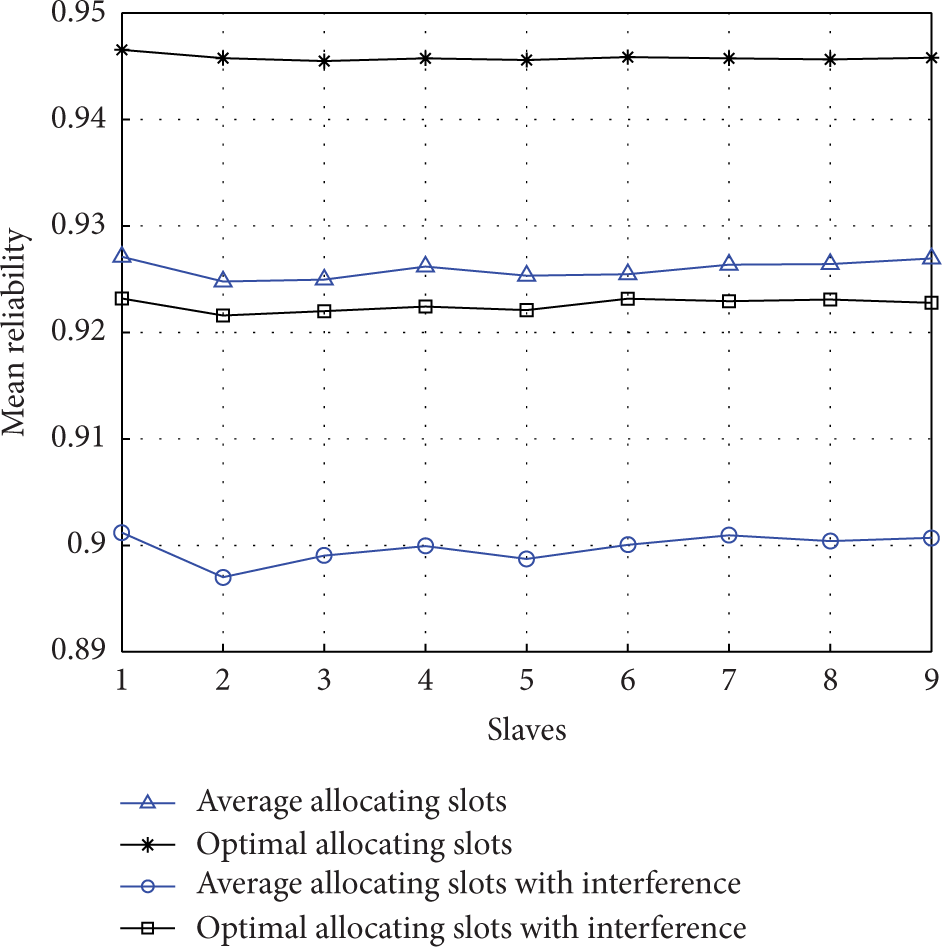
Comparison of average, optimal, average with interference, and optimal with interference utility in terms of link reliability.
Improvement of slots gain utility can act as another aspect. When real-time is more important than reliability in the system, less slots can be expended to catch the same reliability. Figure 5 shows the case where slots are saved by employing optimal slots allocation.

Slots saved curves according to variational resource available.
Obviously, more resources available will result in more slots to be saved. Let communication loss probabilities of masters follow a uniform distribution (1%~67%); the numbers of FNs are set from 2 to 19. We calculate the polling reliability employing optimal slots allocation and compare the result to the conventional average allocation case. The number of time slots consumed is the same
7.2. Performance Evaluation on
Consider a linear-topology BN consisting of 19 masters. Let primary communication loss probabilities of available channels between adjacent masters uniformly distribute in (1%~67%). We evaluate the forwarding performance in terms of the end-to-end communication reliability through numerical simulations. The number of available time slots for the i-hop link between

The end-to-end reliability comparison of average, optimal, average with interference, and optimal with interference utility.
We simulate the forwarding scheduling based on optimal scheduling without interference being present for 1000 forwarding cycles to evaluate the subsection parallel delivering strategy. Figure 7 shows the slots consumed curve for our solution and the two-slice ones. For the 19th link, up to 30 slots are saved when our solution is adopted.

Comparison of slots consumed for subsection parallel packets delivering scheme and two-slice ones.
7.3. Extension to More Complex Topologies
Define the depth of a FD as the number of logical hops from the FD to GW. The GW is at depth zero. All slaves in All FDs in Some slaves are connected to multiple nodes at upper depth, called child nodes. The child nodes are at depth Slaves in the
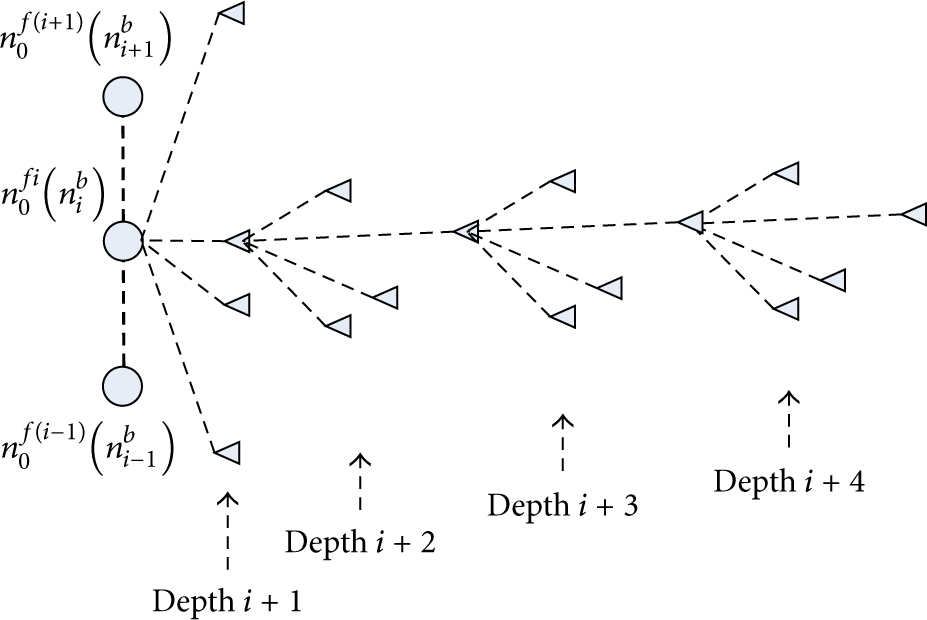
Extension to more complex topologies: FNs act as star-linear topologies.

Extension to more complex topologies: FNs act as two-level star topologies.

Extension to more complex topologies: FNs act as multitree topologies.
8. Conclusions
We have studied the IWNs for the process automation in this paper. To meet the requirement in narrow process industries, we present a star-linear IWSNs based on FNs and BN. Considering that slots are scarce communication resource in this kind of IWSN, we focus on using slots efficiently to carry out convergecast over the proposed IWSN. We designed a multicycle scheduling scheme with low computational complexity to allocate slaves into primary cycles and presented a fair slots allocating method for the FN. Over the BN, we designed an optimal slot-channel selecting scheme to improve the system performance in terms of the end-to-end communication reliability. Based on the optimal slot-channel selecting scheme, the subsection parallel delivering strategy was designed to save slots for forwarding scheduling over the BN. Further discussions on extending our solution to more complex topologies are presented.
Footnotes
Conflict of Interests
The authors declare that there is no conflict of interests regarding the publication of this paper.
Acknowledgments
This work was partially supported by Ministry of Science and Technology of China under National Basic Research Project 2010CB731803, NSF of China under Grants 61221003, 61290322, 61174127, 61273181, and 60934003, and Suzhou Science and Technology Fund SZS201304.