




Abstract
Wireless body area networks (WBANs) can be formed including implanted biosensors for health monitoring and diagnostic purposes. However, implanted biosensors could cause thermal damages on human tissue as it exhibits temperature rise due to wireless communication and processing tasks inside the human body. Again, Quality of Service (QoS) provisioning with multiconstraints (delay and reliability) is a striking requirement for diverse application types in WBANs to meet their objectives. This paper proposes TMQoS, a thermal-aware multiconstrained intrabody QoS routing protocol for WBANs, with the aim of ensuring the desired multiconstrained QoS demands of diverse applications along with keeping the temperature of the nodes to an acceptable level preventing thermal damages. We develop a cross-layer proactive routing framework that constructs an ongoing routing table which includes multiple shortest-path routes to address diverse QoS requirements. To avoid the packets to traverse through heated areas known as hotspot, we devise a hotspot avoidance mechanism. The route selection algorithm of TMQoS selects forwarder(s) based on the intended QoS demands of diverse traffic classes. The performance of TMQoS has been evaluated through simulation which demonstrates that the protocol achieves desired QoS demands while maintaining low temperature in the network compared to the state-of-the-art thermal-aware approaches.
1. Introduction
As of now, the extensive proliferation of Micro-Electro-Mechanical Systems (MEMS) [1] as well as the ever-increasing development of wireless networking technologies fostered the widespread utilization of e-healthcare applications in the medical sector. Wireless body area network (WBAN) is such a recent technology for promoting e-healthcare which exploits intelligent, low-power, miniaturized biomedical sensor nodes to monitor body functions and the surrounding environment.
An implanted biosensor is a special type of sensor that detects a physiological change in the biological environment and transmits the information to a controller device, known as Body Coordinator (BC) exploiting wireless communication. Since the propagation loss around the human body is very high [2], the direct communication between the sensors and the BC is not always possible, especially when low transmission power of the radio is required to save the precious energy available in the sensor nodes. It necessitates multihop communication where the biosensors cooperatively relay each other's sensed information towards the BC. However, the multihop communication poses significant challenges for a reliable and real time delivery of the sensitive information due to the unpredictable and dynamic behaviour of wireless channel inside the human body, which in turn entails the design of an effective intrabody communication protocol that could provide a reliable and timely data delivery to the BC through multihop data transmission.
An implanted biosensor, although it could provide accurate information due to its proximity to the body organ, it has thermal effect on human tissue [3]. The human tissue absorbs heat due to the radiation from wireless communication and power dissipation of an implanted sensor resulting in temperature rise. Some organs [4] could suffer from thermal damage due to the temperature rise even with modest heating. Hence, minimizing temperature rise is considered as one of the important design considerations while devising intrabody communication protocols for such a network with implanted biosensors.
Although WBAN was initially motivated with vital sign monitoring application, it has facilitated nowadays more wider range of applications [5] having distinct Quality of Service (QoS) requirements. Considering the different application requirements of WBAN, the most important QoS metrics are delay and reliability, together, which we denote as multiconstrained QoS. Devising communication protocols for WBAN satisfying the multiconstrained QoS is an extremely challenging problem. The situation could be even harder when a WBAN will be equipped with a number of simultaneous applications with diverse QoS requirements. For instance, a patient can be equipped with cardiac defibrillator/pacemakers, respiration monitoring sensors, and pH-level monitoring sensors. The pacemakers require real time delivery of data with higher reliability. However, the applications such as respiration monitoring and pH-level monitoring have strict reliability requirements although those applications could tolerate delay to some extent. An effective communication protocol is thus required to meet such multiconstrained QoS demands of heterogeneous applications.
Some recent studies [6–9] proposed thermal-aware routing protocols with the aim of minimizing thermal effect on human tissue. These protocols mainly focused on selecting routes based on minimal temperature and also avoiding hotspot(s). The important concerns for ensuring the QoS are not considered on those thermal-aware protocols. On the other hand, very few routing protocols [10, 11] exist in the literature which considered QoS provisioning for WBAN. However, those protocols mainly considered inter-BAN routing and ignored the thermal effect of implanted biosensors.
In this paper, we propose TMQoS, a thermal-aware multiconstrained intrabody QoS routing for wireless body area networks, which ensures the multiconstrained QoS requirements for diverse applications and also maintains an acceptable temperature rise throughout the network. We classify the traffic based on their multiconstrained QoS demands. We develop a cross-layer proactive routing framework which maintains an ongoing routing table containing routes with minimum hop count to the BC through periodic beacon exchanges. This routing framework estimates hop-to-hop delay, link reliability, and node temperature and exchanges those metrics through beacon packet among neighboring nodes to have an end-to-end estimate of delay, reliability, and temperature of the routes from the nodes to the BC. We further devise a hotspot avoidance mechanism aiming to avoid routes containing hotspot(s) and keeping the temperature rise of the nodes to an acceptable level thus preventing thermal damage of the tissue. We develop a multiconstrained QoS-aware route selection algorithm which chooses the forwarder node(s) based on desired QoS demands of diverse traffic classes. Furthermore, we perform extensive simulations to evaluate the performance of TMQoS compared to the state-of-the-art protocols.
The rest of the paper is organized as follows. Section 2 summarizes the related works. Section 3 states some preliminaries behind our protocol design. Section 4 presents the detailed design of TMQoS protocol. Section 5 demonstrates the performance of TMQoS using simulations. Finally, Section 6 provides our concluding remarks.
2. Related Works
To date, a number of potential contributions to thermal-aware routing protocol design can be found in [6–9]. TARA [6] is one of the primitive protocols in this series. TARA forwards data packets based on localized temperature information and hop counts to the destination. A node listens to its neighbor activities and counts the number of packet transmission and reception. Based on this, a node evaluates the communication radiation and power dissipation of neighbors and estimates the temperature changes. A node defines the neighbor(s) as hotspot if the estimated temperature exceeds a certain threshold. TARA avoids the hotspot(s) by establishing another route toward the destination using a withdrawal strategy where a packet is sent back to its previous sender if all the neighbors are identified as hotspots. The sender then attempts to select alternate route to detour the hotspot(s). After cooling the temperature beneath some threshold, those hotspots can be considered for later routing. TARA suffers from high end-to-end delay, lower reliability, as well as high energy consumption since the packet needs to traverse many hops due to this withdrawal strategy.
Similar to TARA, Bag and Bassiouni [7] proposed LTR, where a node always chooses the “coolest” neighbor for data forwarding. To avoid the routing loop, each packet maintains a small list of nodes which it has most recently visited and ignores those nodes if they are the coolest ones. Because of the greedy approach, a packet in LTR is not always directed to the destination which significantly increases the hop count, thus resulting in higher delay and low reliability. In the same study, the authors of LTR presents a modified version of LTR, known as ALTR where packet is routed using shortest hop algorithm if it exceeds a certain threshold,
To address the problems of LTR and ALTR, the authors in [9] presented LTRT, which selects a least temperature route from all possible routes from a sender node to a destination exploiting the Dijkstra's algorithm. Similar to the previous thermal-aware protocols LTRT also exploits temperature metric in choosing its forwarder and ignores the QoS metrics (i.e., delay, reliability) which prevents in ensuring the desired QoS demands of the traffic.
QoS provisioning for WBAN has received exiguous attention so far. Liang et al. [10] proposed a QoS-aware routing service framework for biomedical sensor networks. Exploiting the cross-layer design, the proposed work aims to provide prioritized routing service and user specific QoS support. In the proposed routing service framework, routes are determined by user specific QoS requirements, wireless channel status, packet priority level, and sensor node's willingness to be a router. Furthermore, the routing service can send feedback on network conditions to the user application, so the application service level can be adjusted to adapt to the network conditions. This protocol, however, does not clearly define how the routing algorithm works. More importantly, the essence of temperature rising is totally overlooked in this work. Exploiting the geographic location, DMQoS [11] proposes a multiobjective QoS routing protocol for biomedical wireless sensor networks. This protocol considers the traffic diversity and provides differentiation in routing using QoS metrics. However, it mainly considers much less energy constrained inter-BAN routing and ignored the thermal effects that could cause in the context of intra-BAN routing. Moreover, the assumption of knowing the coordinates of a node using GPS or other location detection system is also not feasible for tiny body sensor nodes.
As discussed above, the existing thermal-aware routing protocols for WBAN considered only temperature as a routing metric and focused on minimizing the temperature rise of the nodes, avoiding the QoS issues. These protocols thus cannot meet the multiconstrained QoS requirements if diverse types of traffic exist in the network. In contrast, the state-of-the-art QoS-aware protocols for WBAN totally ignored the temperature metric in choosing the route which is an essential parameter for intra-BAN routing. The absence of an effective and complete solution considering both temperature rise and multiconstrained QoS for intra-BAN communication environment motivated us to devise TMQoS routing protocol.
3. Preliminaries
3.1. System Models and Assumptions
We consider a deployment scenario, in which diverse types of WBAN nodes are placed in (i.e., implanted) a human body, while there is a Body Coordinator denoted as BC attached to the body surface, serving as the central data sink for the WBAN as shown in Figure 1(a). A set of WBAN nodes are the Reduced Function Devices (RFD), which have only sensing and transmission capabilities while BC is considered as Full Function Device (FFD) having some enhanced functionalities (i.e., data processing, exchanging control and management packets etc.). The WBAN nodes are usually battery powered and hence energy constrained. The BC, in contrast, is assumed to have an external power supply with higher processing capabilities than WBAN nodes. The BC processes the received data from the nodes and then sends it to monitoring station (MS) or server through other networks (i.e., cellular, WLAN, or wired) and this communication paradigm is out of the scope of this paper.

Network model.
We model the above deployment scenario as a connectivity graph,
3.2. QoS-Aware Traffic Classification
TMQoS is mainly designed for the QoS provisioning of traffic with diverse requirements while avoiding the hotspots. Considering delay and reliability as the primary QoS constraints in the context of WBAN, we classify the traffic as follows.
C1: both delay and reliability constrained. This type of traffic has stringent delay and reliability requirements. A number of medical applications, for instance, electroencephalogram (EEG), electrocardiogram (ECG), electromyography (EMG), and so forth, generate real time medical continuous data which need to be delivered within a certain deadline with higher reliability. C2: reliability constrained, nondelay constrained. The traffic belonging to this type has strict reliability requirements but can tolerate delay. An example of this type includes respiration monitoring and pH-level monitoring. This type of traffic can be processed offline and hence nondelay constrained, but packet losses may cause disastrous consequences. C3: delay constrained, nonreliability constrained. A certain deadline for this type of traffic must be satisfied; however, it can tolerate some packet losses. Examples of this type include telemedicine video streaming application. Although, the packet loss for this type of applications degrades the quality to some extent, however, the traffic validity is still preserved. C4: nondelay, nonreliability constrained. This type of traffic does not have any strict delay or reliability constraints. The regular measurement of patient's physiological parameters such as temperature and pressure corresponds to this class of traffic.
The traffic type for the sensors could be set a priori of attaching with the body or can be reset through special MAC command packets sent by the BC.
4. Proposed Protocol
4.1. Protocol Architecture
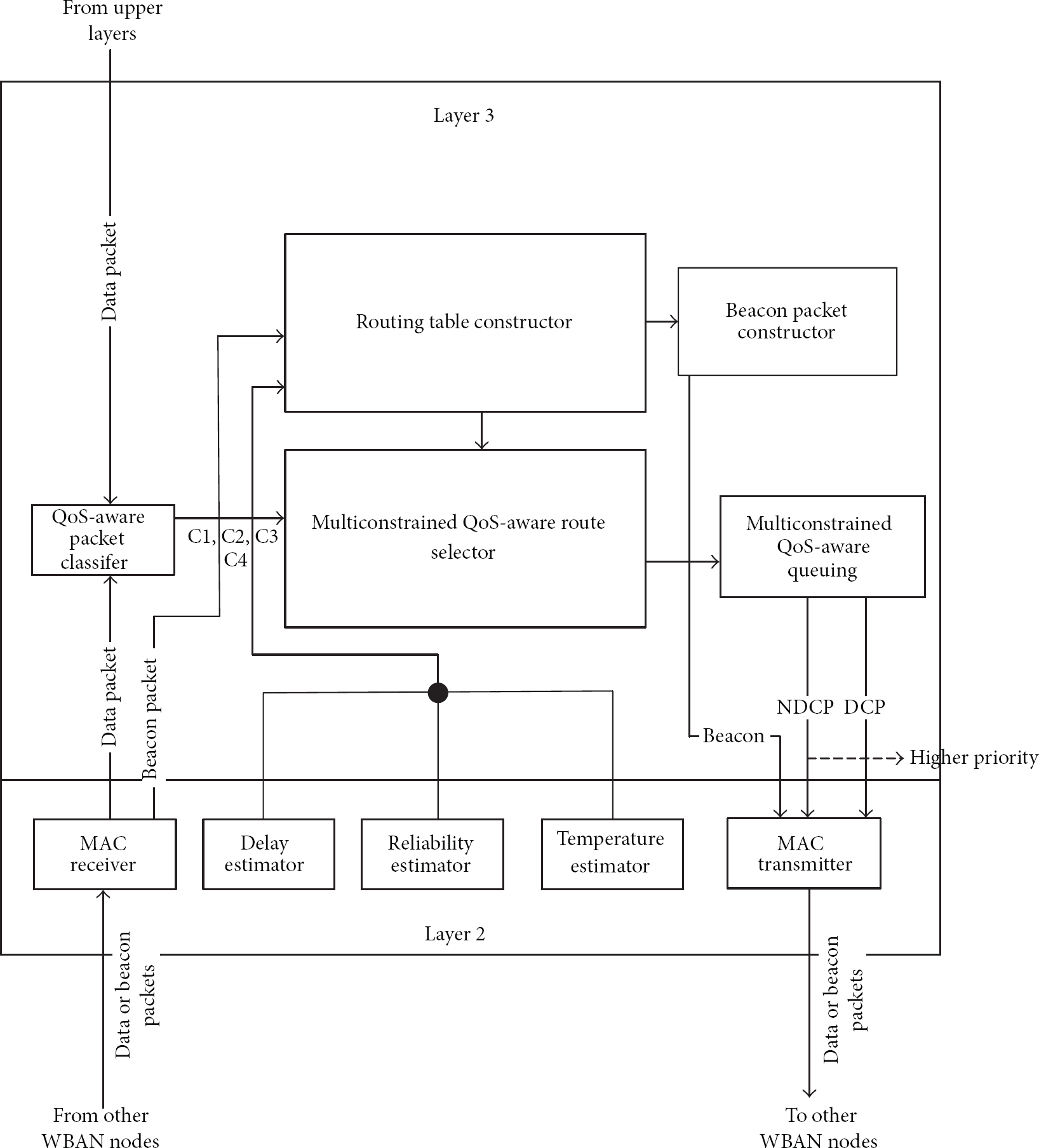
Figure 2 illustrates the different modules and their associated interactions for our proposed TMQoS routing protocol. The proposed routing protocol exploits the cross-layer interactions between layer 2 and layer 3.
TMQoS Routing Architecture.
TMQoS is a kind of proactive routing protocol that intends to maintain an ongoing routing table. Similar to the other proactive routing protocols, TMQoS constructs and maintains a routing table with information from neighbouring nodes. TMQoS uses a beacon packet to exchange information among neighbouring nodes with the aim of routing table creation and maintenance. Upon receiving a beacon packet from the neighbouring WBAN nodes through MAC receiver module, the routing table constructor module constructs or updates the routing table by estimating the values of delay, reliability, temperature, and hop count. The delay estimator and the reliability estimator modules in layer 2 estimate the hop-to-hop delay and the link reliability for particular neighbouring nodes and send the feedback to the routing table constructor module. Also, the temperature estimator module measures the node temperature and provides it to the routing table constructor module to update the temperature value. The routing table constructor module employs a hotspot avoidance mechanism if the node is identified as “hotspot” from the feedback sent by the temperature estimator module. The beacon packet constructor module constitutes a beacon packet from the current information of the routing table and sends it to the MAC transmitter module for further transmission to the neighbouring WBAN nodes.
Upon receiving a data packet from the upper layers or other neighbouring WBAN nodes, QoS-aware traffic classifier module categorizes the data packets according to their multiconstrained QoS requirements as described in Section 3 and directs it to the multiconstrained QoS-aware route selector module to identify the most suitable route based on its QoS demands. After choosing the appropriate route, the multiconstrained QoS-aware route selector module passes the data packet to the multiconstrained QoS-aware Queuing module that maintains two separate queues for storing delay constrained packets (DCP) (i.e., C1 and C3) and nondelay constrained packets (NDCP) (i.e., C2 and C4), where DCP queue is treated as higher priority queue. The data packet, upon appropriately scheduled, is further directed to the MAC transmitter module for its transmission to the intended WBAN node.
4.2. Beacon Packet and Routing Table
As a proactive routing protocol, every node
The change of the values in the beacon packet might occur when the state of the network changes dynamically. It may be due to the changes in the locally estimated values of the parameters or when a node receives a beacon packet from a neighbour node with updated values or when a new node is added to the routing table. Once a node obtains a path to the sink node, it broadcasts a periodic beacon packet to its neighbouring nodes. Since the parameter values for the BC are constant, the BC only sends a void beacon packet, which is a type of beacon packet containing nothing. A node, upon receiving a void beacon packet from a neighbour, responds to the node with its own beacon packet. Thus, a new node collects routing information by broadcasting void beacon packet to its neighbouring node, and creates its own routing table with beacon packet from its neighbouring nodes.
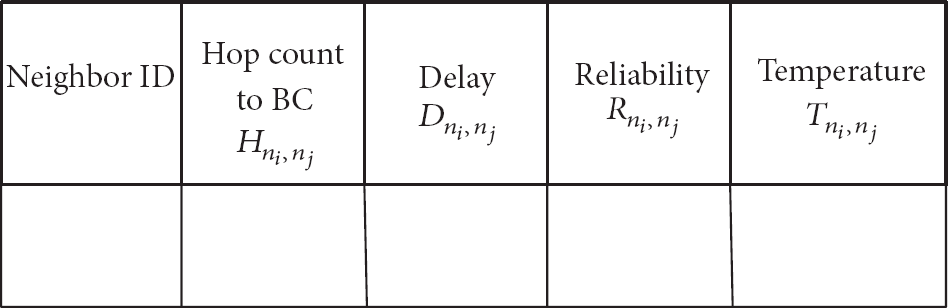
Figure 3 illustrates the routing table structure of a node,
Routing table structure.
Algorithm 1 presents the procedures for the construction and update of a routing table at every node
Notation in Algorithm 1.

of values from Delay Estimator, Reliability Estimator or Temperature Estimator) (1) (2) (3) (4) ADD (5) (6) (7) (8) (9) (10) (11) (12) UPDATE according to line (5–9) (13) (14) (15) Drop the beacon packet (16) (17) (18) (19) DELETE (20) (21) (22) (23) (24) (25) (26) (27) (28) (29) (30) (31)
The routing table entries also need to be updated when any amendments are indicated for the parameters
The beacon constructor module at every node, 


The value of
Figure 4 illustrates the example of a routing table and a beacon packet formation for TMQoS. For the topology as shown in Figure 4(a), only the routing table formation for node 3 has been shown in Figure 4(b). The black colour nodes indicate all possible downstream nodes from node 3 to the node 0 (BC) according to Algorithm 1. As shown in the figure, node 3 has three neighbour nodes, 2, 4, and 6. Here,

Example of the routing table and the beacon packet formation.
4.3. Hotspot Avoidance
TMQoS aims to avoid hotspot(s) while building up a route to the BC. We refer the hotspot as the node when its estimated average temperature exceeds a certain threshold. If the temperature of the hotspot is not cooled down by preventing it from further communication activities, it could cause serious damage to the body tissue.
When the temperature estimator module of a node identifies it as a hotspot, then immediately it sets all the
Figure 5 presents a graphical example of hotspot avoidance considering the topology as shown in Figure 4(a). Here, upon identifying node 4 as a hotspot by its temperature estimator module, all the

Example of hotspot avoidance.
4.4. Estimation of the Parameters
4.4.1. Delay Estimation
The Delay estimator module of a node 
Here,
TMQoS avoids the queuing delay for nondelay constrained packets since the delay parameter is considered for the route selection of delay constrained packets only as to be discussed in Section 4.5. The 
The initial value of
The transmission delay, 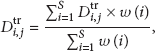

The TWMA places heavier weight on more recent samples so the estimation can be more adaptive to temporal changes of the link quality.
4.4.2. Reliability Estimation
The reliability estimator module at node 
Here, α is a smoothing factor which controls the history of the estimator and
4.4.3. Temperature Estimation
The temperature estimator module estimates the temperature of a node 
Another reason for temperature increase [3] is the power dissipation of the sensor node circuitry, which can be quantified as power dissipation density, 
Equation (11) exploits Finite-Difference Time-Domain (FDTD) modeling technique [16] that discretizes the differential form of time and space and the problem space is discretized into small grids. In (11),
4.5. Multiconstrained QoS-Aware Route Selection
Upon obtaining a path to the BC, a WBAN node starts sending data packets received from the other nodes, or its own sensed data packets. TMQoS selects the appropriate route for a data packet based on its multiconstrained QoS demand. The multiconstrained QoS-aware route selector module consults the routing table to choose the next hop after receiving a data packet of particular type. A node,
(1) (2) Select (3) (4) (5) Select (6) (7) (8) Select (9) (10) (11) Select (12) Select (13)
As presented in Algorithm 2, if a data packet belongs to the class C4 (nondelay, nonreliability constrained), the minimum temperature path will be selected so that it does not increase the temperature of the minimum delay or maximum reliable path. In case of C3 (delay constrained, nonreliability constrained) and C2 (reliability constrained, nondelay constrained) classes of packet, the algorithm selects minimum delay path and maximum reliable path, respectively, to ensure the appropriate QoS for the corresponding classes. However, the packet belongs to C1 class which is both delay and reliability constrained, the algorithm first selects the next hop which ensures minimum delay, and then it selects another next hop node that guarantees the maximum reliability. The minimum delay path ensures that at least one packet reaches the BC with shortest possible time while the maximum reliable path ensures that the desired path reliability for the packet has been attained. Moreover, sending the multiple copies of the packet on two paths also increases the data reliability [17].
Notably, since the hotspot avoidance is performed while building up the routing table, TMQoS guarantees that no packet will be routed to a HOTSPOT even though, in reality, the HOTSPOT is on the minimum delay, maximum reliable, or minimum temperature path.
4.6. Multiconstrained QoS-Aware Queuing
Upon selecting the next hop(s), the data packets are passed to the multiconstrained QoS-aware queuing module, which maintains two separate queues, namely, DCPQ and NDCPQ for storing delay constrained packets (C1 and C3) and nondelay constrained packets (C2 and C4), respectively. The DCPQ has the higher priority than that of NDCPQ. It signifies that the packets from NDCPQ will not be sent until the DCPQ becomes empty. The rationale behind is the delay intolerance properties of the DCP packets. However, it might cause starvation problem where the packets from NDCP queue could be indefinitely blocked by DCP. To avoid the problem we adopt the similar mechanism as described in [11], in which a time-out based policy has been employed. In this policy, a packet will be moved to a higher priority queue (irrespective of its type) if it waits in a lower priority queue until a time-out occurs.
5. Performance Evaluation
This section presents the simulation-based performance evaluation of TMQoS protocol. The results show that TMQoS successfully achieves its design objectives.
5.1. Simulation Environment
We consider a

A
Table 2 presents the different parameters and their values used in the simulation. The values for tissue properties and dielectric characteristics are obtained from [18, 19]. Initially, the temperature of all the sensors is set to 37°C. In this topology, among 15 WBAN nodes (BC is excluded), C1, C2, and C3 traffic classes are equally distributed to the 12 nodes while traffic class C4 is assigned to the remaining 3 nodes. To distribute the traffic class, nodes are chosen randomly. In this study, we compare TMQoS with LTRT and TARA. The performance of the algorithms is compared for different data generation rates. In this study, each sensor of a particular traffic class sources traffic at a given rate. We randomize the initial data generation of the sensors to avoid the synchronized periodic reports. We implemented the basic functionalities of nonbeacon enabled mode of IEEE 802.15.4 MAC protocol with the default values defined the standard [20]. The links are randomly assigned Bit Error Rate (BER) values ranging from
Parameters and their values used in the simulation.

As a proactive protocol, exchanging beacon packets increases the network traffic and has significant impact on the protocol performance. Too frequent exchange of beacon packets degrades the performance of TMQoS. In contrast, if the beacon packets are exchanged too infrequently, the actual network status is not updated in time. Therefore, to select a suitable beacon interval, we simulated TMQoS with varying beacon intervals. Here, we fix the data generation interval as 1 packet/sec with the same topology as shown in Figure 6. Figure 7 illustrates the result. We choose beacon interval as 5 s based on the result.

TMQoS performance varying beacon interval.
5.2. Performance Metrics
To evaluate TMQoS, the following metrics are used.
End-to-End Latency. End-to-end latency of a packet is measured as the time difference between the packet generation time and the time when it is received by the BC. Delays experienced by distinct data packets are averaged over the total number of distinct packets received by the BC.
Reliability. It is the ratio of the total number of unique packets received by the BC to the total number of packets generated by the WBAN nodes.
Maximum Temperature Rise. Maximum temperature rise denotes the highest temperature rise of any node inside the whole WBAN. The metric signifies the performance of the protocols regarding the hotspot formation and the associated tissue damage.
Average Temperature Rise. The average temperature rise of the nodes presents the average change in temperature of the nodes from that at the initial simulation period.
Energy Efficiency. In this study, we define the energy efficiency as
5.3. Simulation Results
This section presents the simulation results obtained through evaluating TMQoS using the metrics as stated above.
5.3.1. Delay Performance
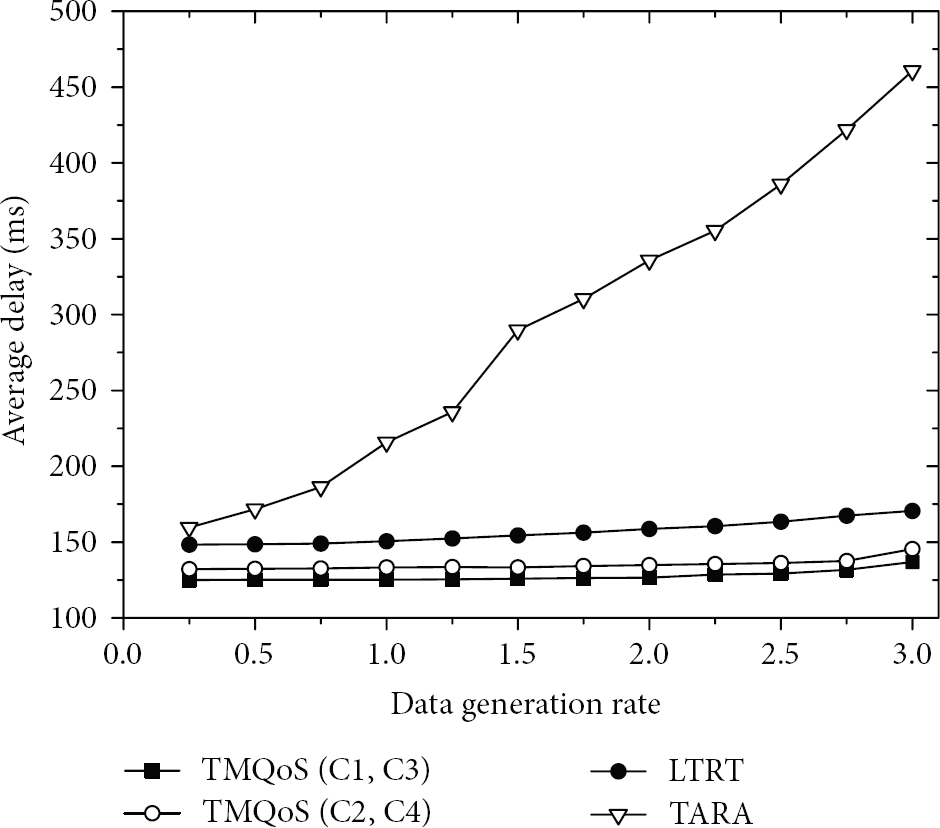
Figure 8 illustrates the average end-to-end latency of the protocols for different data generation rates. TMQoS exhibits the lowest end-to-end delay for the delay constrained traffic (C1 and C3) for all traffic loads as it chooses the least delay path for the delay constrained traffic. Interestingly, the nondelay constrained traffic (C2 and C4) also shows better delay performance than those of LTRT and TARA. The reason is TMQoS chooses the path with minimum hop count value to the BC even for the nondelay constrained traffic. However, both TARA and LTRT have the poor average delay performance irrespective of the traffic class since both the protocols exploit the temperature metric only in choosing the next hop. Comparatively, TARA exhibits the highest delay as the packet traverses a large number of hops due to its withdrawal strategy.
Average end-to-end latency varying data generation rate.
Figures 9 and 10 exhibit the percentage of packets meeting the deadline for different delay deadline of delay constrained traffic at low traffic (0.25 packet/sec) and high traffic (3 packet/sec) load, respectively. As Figure 9 shows, at low traffic load, for a very strict delay deadline of 100 ms, more than 90% of C1 and C3 traffic meet the deadline while for the same traffic class the percentage is slightly more than 50% for LTRT and 40% for TARA. However, for the more relaxed deadlines, the percentage increases rapidly for all the protocols. While the deadline is set to 200 ms, all the packets reached the deadline for TMQoS, which is 350 ms for LTRT and 450 ms for TARA. In contrast, at higher traffic load as shown in Figure 10, all the protocols show poor performance while the deadline is set strictly to

Percentage of packets meeting deadline for different delay deadline at low traffic load.

Percentage of packets meeting deadline for different delay deadline at high traffic load.
5.3.2. Reliability Performance
Figure 11 portrays the reliability of reliability constrained traffic (C1 and C2) for different traffic load. Here, the BER for the links varies randomly ranging from

Reliability for reliability constrained traffic varying data generation rate.
Comparatively, TARA has the lowest reliability as it experiences large number of hops by detouring the packet away from the heated zone.
5.3.3. Temperature Rise
The maximum temperature rise of any node in the network for the protocols till the simulation period is illustrated in Figure 12. As the figure shows, the maximum temperature increases with the increasing traffic load for all the protocols. However, the presence of hotspot detection and avoidance mechanism in all the protocols prevents the maximum temperature rise exceeding the threshold value (0.1°C). LTRT shows the best performance in this case as it always chooses the least temperature route. TARA also shows considerable performance as it chooses the next hop based on the minimal temperature. However, the maximum temperature rise for TMQoS is higher than the other protocols. The reason behind is that, although TMQoS avoids the route containing hotspot, to ensure the QoS of the corresponding traffic classes, it prioritizes the desired QoS metric while choosing the next hop than the temperature metric, which eventually increases the temperature of the nodes, still beneath the threshold.

Maximum temperature rise varying data generation rate.
Figure 13 shows the average temperature rise of the nodes for different traffic load. LTRT still exhibits the best performance for average temperature rise. Interestingly, TMQoS shows comparatively better performance than TARA in this regard. The result is characterized by the fact that TARA employs withdrawal mechanism whenever it encounters a hotspot and reroute the packet through alternate paths. It involves many nodes in the network in routing packets which in turn increases the average temperature of the nodes. TMQoS, in contrast, always chooses the path having minimum hop count to the BC along with the desired QoS metrics. Hence, although the maximum temperature rise of TMQoS is higher than TARA, it shows better performance in average temperature rise.

Average temperature rise varying data generation rate.
5.3.4. Energy Efficiency
Figure 14 illustrates the energy efficiency of the protocols for different traffic load. All the protocols exhibit poor energy efficiency as the traffic load increases. TARA shows the worst performance as the packets need to traverse too many hops along with the poor reliability. Due to the lesser hop count per arrived packet, LTRT also shows better performance than TARA. TMQoS exhibits the highest energy efficiency in all traffic loads as the packet traverses least number of hops to reach the destination, and also TMQoS has the least retransmitted packets due to its higher reliability performance.

Energy efficiency varying data generation rate.
6. Conclusion
This paper presents TMQoS—a thermal-aware multiconstrained intrabody QoS routing for wireless body area networks that mainly concerns about both achieving multiconstrained QoS requirements of different application types and maintaining acceptable temperature rise throughout the network. TMQoS is a proactive routing protocol that maintains an ongoing routing table through periodic beacon exchanges among neighbour nodes. It exploits cross-layer functionality through estimating hop-to-hop delay, link reliability, and node temperature at the MAC layer to construct the routing table that includes multiple shortest path routes for diverse QoS demands of traffic classes. TMQoS employs a hotspot avoidance mechanism to prevent traffic traversing through hotspot(s) to maintain low temperature rise.
To evaluate the efficiency of TMQoS, we performed extensive simulations comparing TMQoS with TARA and LTRT. The results reveal that TMQoS achieves significant lower delay and higher reliability performance for delay constrained and reliability constrained traffic, respectively, as compared to both TARA and LTRT. TMQoS also maintains a moderate average temperature rise throughout the network. Furthermore, TMQoS exhibits the highest energy efficiency than the other thermal-aware routing protocols. In summary, TMQoS successfully ensures the desired QoS demands of diverse application types, maintains moderate temperature in the entire network, and shows higher energy efficiency.
Footnotes
Conflict of Interests
The authors declare that there is no conflict of interests regarding the publication of this paper.
Acknowledgments
The authors would like to extend their sincere appreciation to the Deanship of Scientific Research at King Saud University for its funding of this research through the Research Group Project no. RGP-VPP-281.