




Abstract
Temperature profiling in both fluid and pipe walls had not been explained theoretically. The equations of energy balance and heat conductivity were queried by introducing known parameters to solveheat transfer using virtual mathematical experimentation. This was achieved by remodelingPoiseuille's equation. Distribution of temperature profiles between pipe wall, fluid flow, and surrounding air was investigated and validated upon comparison with experimental results. A new dimensionless parameter (unified number (U)) was introduced with the aim of solving known errors of the Reynolds and Nusselts number.
1. Introduction
Flow is an important phenomenon in hydraulic engineering concept. The dynamics of differential temperature of fluids through pipe wall is important to analyze accurately the fluid flow and its effects over long distances, for example, transporting fluids within or outside an industrial zone. Many factors have been listed to affect the thermal flow in either turbulent or laminar flow. Some of the factors include friction loss in laminar and turbulent pipe [1]; viscoelastic properties of fluids [2, 3]; the temperature gradient between the pipe and fluid [4]; circumferential heat flux variations [5]; introduction of nanoparticles [6]; diameter of the pipe [7].
The temperature profile which explains the differential temperature, energy, and fluid flow gives details of the dynamics of fluid to its natural heat transfer. However, the heat transfer of the moving fluid had been investigated in past time [8–10] with greater successes recorded in the nonlinear conduction model [11, 12]. The convergence of the temperature profile to the desired profile is established by Lyapunov criteria [13]. In this paper, Poiseuille's criteria were theoretically improved upon the inclusion of two salient parameters, that is, unified number (U) and temperature profiles. The basic operation of this model concentrates along one-dimensional temperature profile, that is, preferable along the z-axis.
2. Theoretical Background
The heat transfer processes based on energy balance and heat conductivity could be summarized in one-dimensional analysis (profile dynamics along the length of the pipe as shown by the red line) shown in Figure 2:


C
p
is the specific heat at constant pressure (Jkg−1 K−1), C is the species concentration in the fluid (kgm−3), k is the thermal conductivity (Wm−1 K−1), T is the temperature profile (K), D is the mass diffusion coefficient (m2s−1), t is the time (s), u is the velocity of the fluid, and ρ is the density of the material (kgm−3). Equation (1) is a restructured equation of motion of the fluid where ε, ε*, and D have a fundamental element

(See Figure 1).
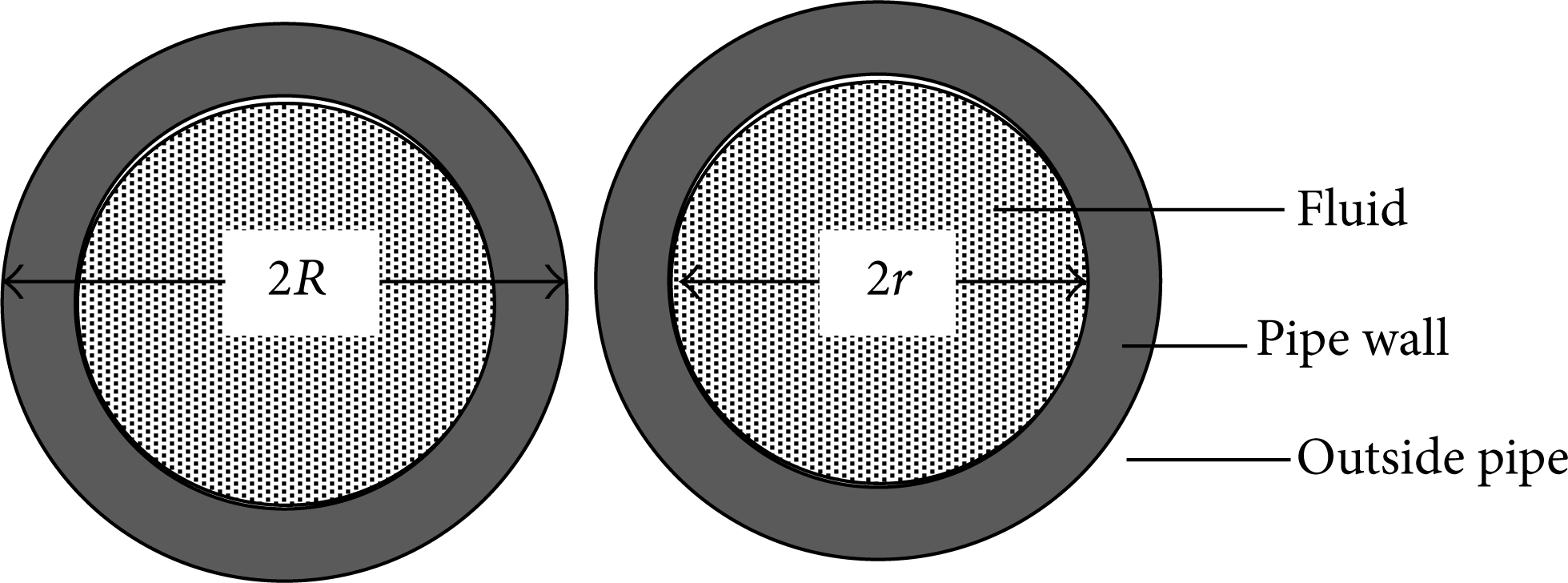
Cross-sectional area of the pipe.

Profile dynamics of pipe.
The geometry of the pipe and the nonlinear conduction would constantly alter the conservation of mass as shown below:

Therefore, the influence of the radius is assumed to be negligible under the above condition. Before deriving a unified differential equation, the most significant dimensionless parameters are highlighted as
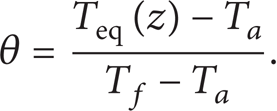
Equation (5) is the dimensionless parameter for temperature which expresses the scale or magnitude of the temperature gradient of the fluid with respect to the pipe wall. The condition H p >H f is a relative term on the account that the temperature of the pipe may not necessarily be dependent on the surrounding air. To avoid complexities of various possible heat sources of the pipe, we assume it takes its temperature from the surrounding air. Again, this assumption is also relative because of the influencing heat source which might be weather or artificial (heat generated from machineries). Another vital factor of the condition H p >H f is the fluid flow of very cold liquids. In this case, the pipe absorbs heat from the environment so that
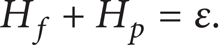
The condition H f >H p might also be relative. For clarity, we assume that the fluid temperature is dependent only on its source, that is, the machine from which it is flowing.
The other key dimensionless parameters are the Reynolds numbers which are defined as ratio between inertial and viscous forces. Therefore, we shall be looking at the external airflow and for the internal fluid flow which is expressed as

ρ is the density, μ is the viscosity of the fluid flowing in the pipe, D i is the internal diameter of the pipe, and U f is the mean velocity of that fluid. Due to the overall convective exchange of heat between the liquid and surrounding air, it is also necessary to state the Reynolds number for the air as

Another dimensionless quantity is the Prandtl number which is the ratio between momentum diffusivity and thermal diffusivity. Prandtl number of liquids varies correspondingly to the temperature of the fluid even though it is not shown in its expression:

μ is the viscosity of fluid, C p is specific heat at constant pressure, and k is the thermal conductivity of the fluid. The other dimensionless parameter is the Nusselt number which is the ratio between total heat transfer in a convection dominated system and the estimated conductive heat transfer:

D i is the internal diameter of the pipe and k is the thermal conductivity of the fluid.
3. Mathematical Experimentation
Solving the second order differential equation in (1)–(2) enables the discovery of other dimensionless quantities. If (11) below is introduced to (1), (12) emerges with introduction of a decelerating parameter af which is due to the presence of friction loss as the fluid flows through a lengthy pipeline.


The generalized temperature model (Figure 3) in [14–18] is summarized as

This scheme shall be used to solve the flow rate which is dependent on the thermal equilibrium of the pipe wall and fluid. This is made possible when (13) is substituted into (12) with the condition that

We shall be investigating two cases; that is, kz = 0 and >0. First, let kz = 0,

where

Leaving the temperature profile (Teq) of the fluid to be


T0 is the initial temperature of the fluid, Teq is the temperature profile/gradient between the fluid and pipe, m is mass of water flowing through the pipe, A is the cross-sectional area of the pipe, and ρ is the density of the pipe. Combine (8)–(10); that is,


Effects of θ to the temperature profile.
4. Practical Application of Proposed Model
This theoretical model was applied to check the behavioral peculiarities of the unified number (U) on the temperature profiles of buoyancy effects in horizontal pipe flows of drag-reducing viscoelastic fluids. We assumed a highly dense metallic/ceramic pipe through which any nonvolatile fluid of lower viscosity (say η>1 but η<100) flows through. The specific parameters used for the experiment include T0 = 303 K, h = 0.4 W/mK, ρ>1000 Kg/m3, C p = 381 J/KgK, D = 1 mm3 to 7 mm3, and U a = 0.003 m/s. The major objective of this section is to investigate the usual experimental errors noticed in the Nusselt number of a turbulent flow. Basically, Poiseuille's equation is not obeyed when the Reynolds number exceeds 2000; however, regardless of the type of flow, few unseen factors present the anomaly found when calculating the Reynolds number across two distant points on the pipe. Therefore, we shall compare our theoretical model with known experimental results (Figures 4(a) and 4(b)), that is, to ascertain the accuracy of the unified number (U).
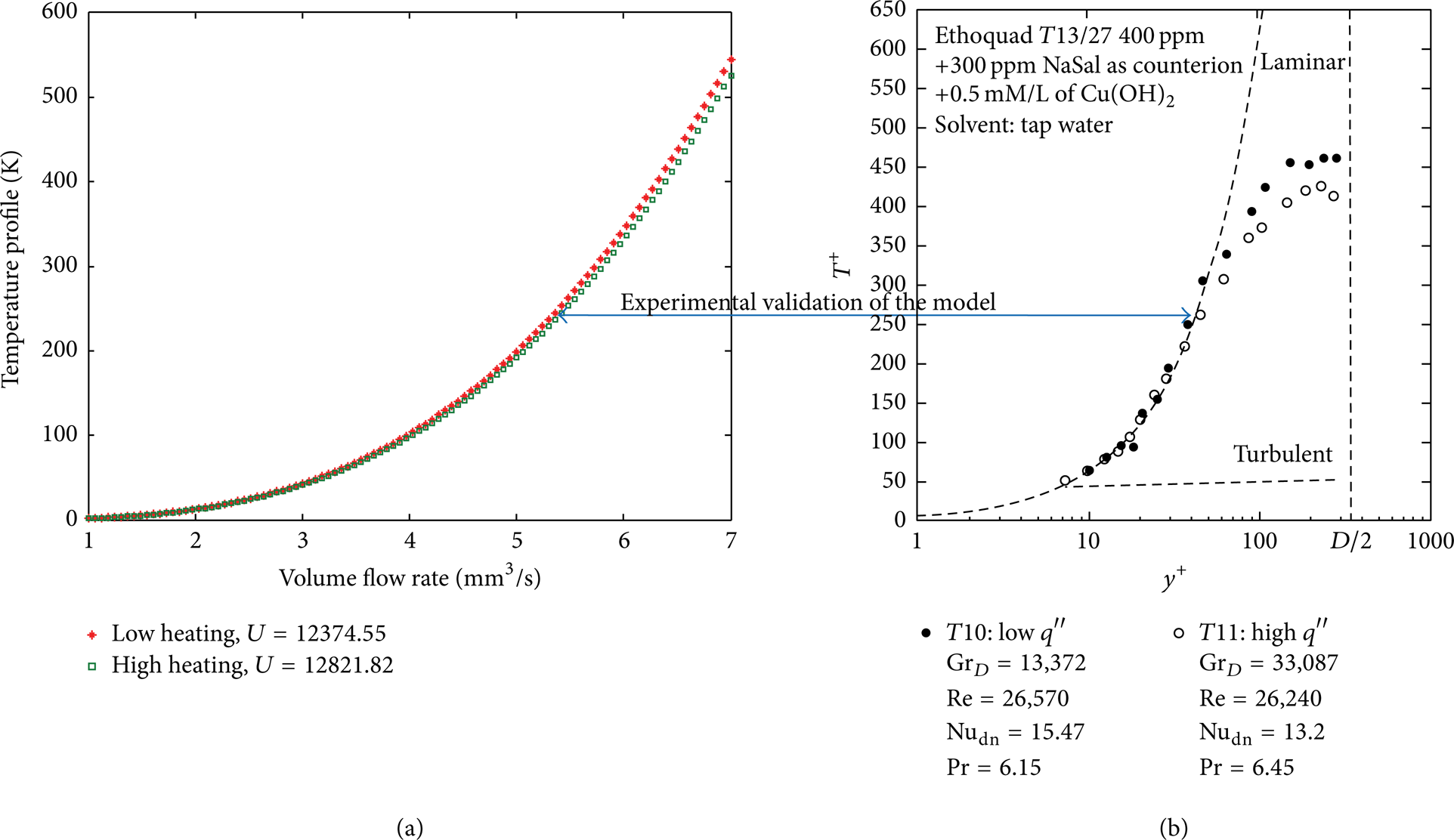
(a) Theoretical model using the unified number in laminar flow. (b) Experiments of two turbulent flows (Gasljevic et al., 2000) [19].
5. Results and Discussion
Our theoretical model is an improvement on the deficiency of Poiseuille's equation to analyze complex problems in hydraulic engineering. One of the major adjustments made to incorporate both the unified number (U) and the temperature profiles of the fluid flow was the volume flow rate which varies to the third power of the diameter (D). This simply means that when the diameter of the pipe is doubled, the flow rate increases by a factor 8. This idea was used to solve the shortcomings of the application of Reynolds number greater than 2000; that is, Re>2000. The behavioral content of the unified number exactly mimics the behavioral trend of experimental results of the Reynolds, Nusselt, and Prandtl number (Figures 4(a) and 4(b)). The experimental confirmation of the model is, therefore, a major success in solving flow rate problems in hydraulic engineering and blood flow rate. The unified number governs the convective phenomena between two interacting fluids that are separated by a conductive medium. In this case, the conductive medium is the pipe whose properties are defined by its density and specific heat capacity as shown in (18).
The second condition (refer to (14)) when kz>0, the mass diffusion coefficient is neglected on the assumption of the nonconservation of mass along the r-axis.
The temperature profile of the collective pipe wall and fluid (Equilibrium Temperature) is analyzed in Figure 5. The temperature distribution undulates at constant volume flow rate. Despite the viscosity of the fluid and the properties of the pipe wall, the shear stress on the wall pipe is paramount because it determines the temperature profile as the fluid makes uneven contact with the pipe wall. This is the idea of the unified number in solving hydraulic problems in machinery [20].

Temperature distribution trend in a pipe wall and fluid.
6. Conclusion
The theoretical model had enabled the confirmation of a scheme known as the unified number which is believed to govern the convective phenomena between two interacting fluids that are separated by a conductive medium. The validity of the hypothesis by experimental results shows the importance of the conductive medium whose properties were defined by its density and specific heat capacity. More revelations on the unified number may be achieved in analyzing the effects of distortion to laminar and turbulent flow through conductive pipes (copper, steel, etc.) and nonconducting pipes (blood vessels, ceramic pipes, etc.).
Conflict of Interests
The author declares that there is no conflict of interests regarding the publication of this paper.
Footnotes
Acknowledgment
The author appreciates the continuous support of the Covenant University for partial sponsorship of this research.