




Abstract
Ethanol is a promising alternative fuel, due to its renewable biobased origin. Also, it has lower carbon content than diesel fuel and it is oxygenated. For this reason, ethanol is providing remarkable potential to reduce particulate emulsions in compression-ignition engines. In this study, performance of ethanol-diesel blends has been investigated experimentally. Tested fuels were mineral diesel fuel (E0D100), 15% (v/v) ethanol/diesel fuel blend (E15D85), and 30% (v/v) ethanol/diesel fuel blend (E30D70). Firstly, the solubility of ethanol and diesel was experienced. Engine tests were carried out to reveal the performance and emissions of the engine fuelled with the blends. Full load operating conditions at various engine speeds were investigated. Engine brake torque, brake power, brake specific fuel consumption, brake thermal efficiency, exhaust gas temperature, and finally exhaust emissions were measured. Performance of the tested engine decreased substantially while improvement on smoke and gaseous emissions makes ethanol blend favorable.
1. Introduction
The global fuel crises in the 1970s led to awareness amongst many countries of their incapability to oil embargoes [1]. Moreover, limited source and high price of petroleum as well as the global warming have led to investigations for renewable fuels. Even though the taken precautions with Kyoto to the United Nations, during the period 1990–2004, as a result of the demand of transport sector, global CO2 emission level increased by 27% [2, 3]. Renewable Energy Directive was declared by the European Parliament to create legal frameworks [2]. The consumed energy from renewable sources of transport sector must be 10% or higher of the final energy consumption according to Renewable Energy Directive [2, 4]. Therefore, considerable attention was focused on the investigation of renewable fuels, with particular reference to the ethanol.
Diesel engines are one of the major contributors to the pollutant emissions because they are widely used due to their high torque and combustion efficiency [5]. Soot particles and oxides of nitrogen are highly emitted by diesel engines as a result of diesel combustion. These pollutants are really hazardous for human health and environment [6]. It is very difficult to achieve the regulated levels of PM, NO x , through the improvement of combustion chamber and injection system design [5]. Posttreatment systems, such as diesel oxidation catalysts, lean NO x traps, selective catalytic reduction, and diesel particulate filter, are implemented as industry standards for automotive applications, although these technologies create additional cost to manufacturers. Combustion of diesel engines can be fulfilled only if engine development is coupled with using alternative fuels [7]. The introduction of oxygenated compounds such as ethanol into diesel fuel is one of the alternative ways to reduce smoke emission [8]. Previous investigations on different kinds of renewable fuels such as raw vegetable oil, waste cooking oil, biodiesel, methanol, and ethanol have been well studied [9]. The first three are able to be applied to diesel engines [10–16] and the last two are mostly applied to petrol engines [17–20].
Ethanol and petrol mixture as fuel has been used in Brazil since 1975 [21–23]. Moreover, a blend of 10% dry ethanol and unleaded gasoline (E10) was commercially introduced into the US and continues to be marketed mainly in the Midwestern states [1]. Ethanol can be produced by several raw materials such as sugarcane, sorghum, corn, barley, cassava, and sugar beets. Also, ethanol is a biomass-based renewable fuel and it has some advantages such as high octane rating and clean combustion characteristics [24]. However, ethanol is generally consumed by spark ignition engines as a component of blended fuel; it is a candidate for using as component of diesel-ethanol mixture in diesel engines. The possibility of using ethanol-diesel blend in diesel engines was investigated in the 1980s by researchers and it was concluded that using this fuel mixture in diesel engines was technically acceptable [1]. However, ethanol cannot be used as neat fuel in diesel engines, because it has low density and low viscosity and also its cetane number is not sufficient [9]. The technical details of diesel and ethanol were presented in Table 1. If the ratio of ethanol-diesel blends does not exceed 15%, diesel engines will run without any modifications [25, 26]. Dual fuel or fumigation systems may be required for usage of higher ethanol percentage in blended fuel [27]. Combustion noise and pollutants can be reduced using high percentage of ethanol in mixture but the requirement of complex engine control system is the drawback of this method [8]. Neat ethanol implementation requires considerable technical modifications and powerful procetane and lubricant additives [18]. Experiments of this type gave good results, but the costs of the implementation were, in practice, often an obstacle [9].
Typical properties of diesel and ethanol.
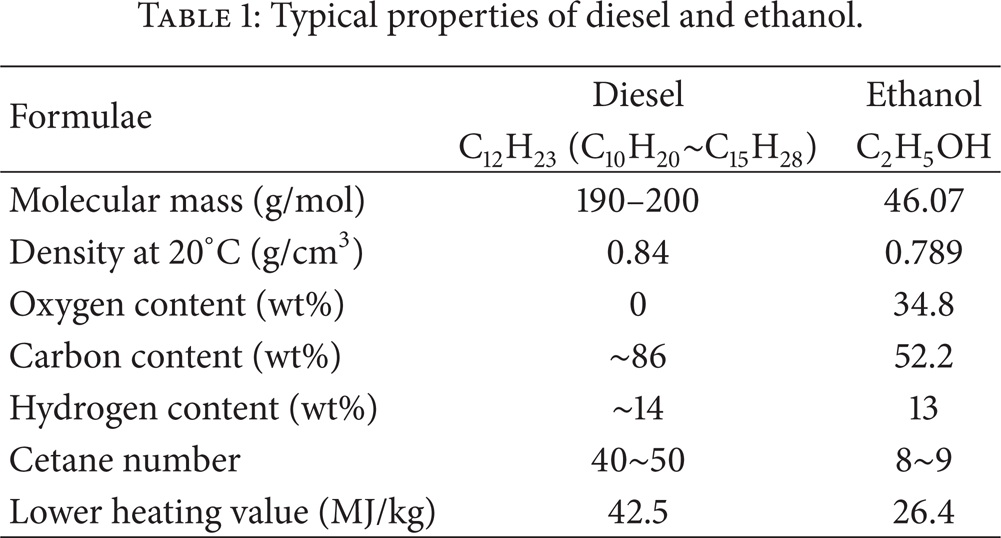
The initial investigations into the use of ethanol in diesel engines were carried out in South Africa in the 1970s and continued in Germany and the United States during the 1980s [8, 28]. Most of these works indicate a reduction in the smoke and particulate levels emitted. The application of ethanol-diesel blend as compression-ignition fuel will improve smoke emission. Considering the price and rising demand of diesel fuel in recent years, production of ethanol will become much more economically favorable. Consequently there has been renewed interest in the ethanol-diesel blends because of the reduction of smoke emission [8]. Even though researchers have carried out study about using ethanol-gasoline blend in spark ignition engines, ethanol-diesel blend in diesel engine has not been investigated enough yet [24, 29–31]. Also, a few researchers have accomplished their studies in heavy-duty diesel engines but performance and emissions of a light-duty diesel engine with ethanol-diesel blends must be investigated [24].
2. Experimental Study
The experimental investigation was conducted in two stages. Firstly, the blends of ethanol and diesel are tested in terms of solubility. And then the fuel blends were used to operate a diesel engine to investigate the performance and emissions.
2.1. Tests of Solubility of the Blends of Diesel with Ethanol
Emulsions are visually homogeneous but in fact heterogeneous systems. They are not durable thermodynamically, because the large surface area between inner and outer phase differentiates the internal energies of constituents. There are several physical instability problems which are called creaming, flocculation, coalescence, phase separation, and phase transformation. For this reason, when emulsions are used as fuel, stability of prepared emulsion must be ensured until the fuel is entirely consumed. Therefore, when prepared emulsion mixture waits for a long time before being consumed, emulsifiers must be added to the mixture. The system shown in Figure 1 allows instant production and consumption of the ethanol-diesel mixture. Usage of emulsifiers is not commercially widespread. The most important step in the preparation of durable emulsion is the formation of emulsification process [32].
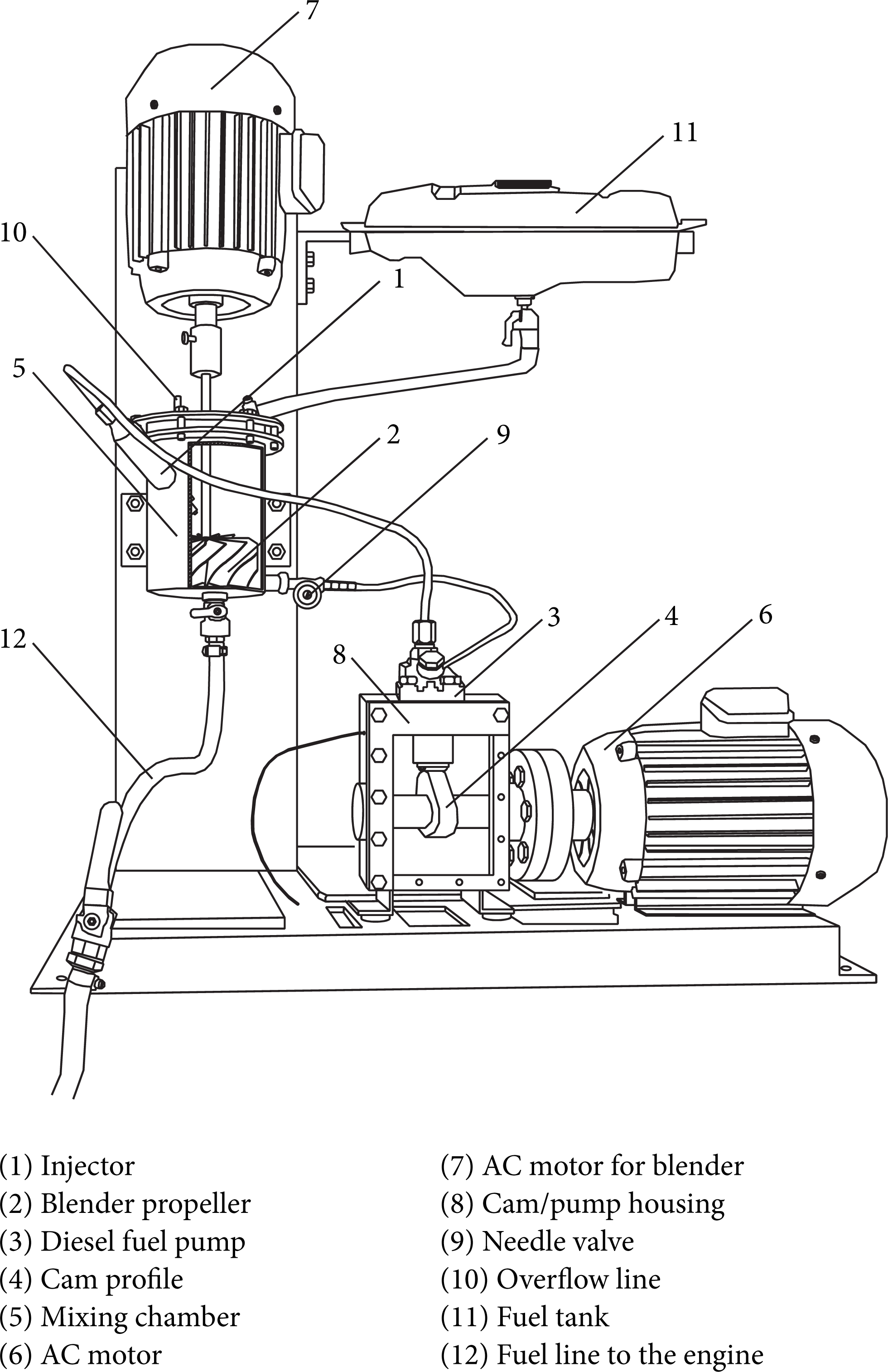
Electrical mixture system.
The mixer used in this study is designed to combine the characteristics of both mechanical mixer and homogenizer type of equipment. An impeller in the mixing chamber driven by an electric motor ensured the characteristics of a mechanical mixer. Injecting the liquid dispersions from a very small orifice under high pressure provides the characteristics of homogenizer. A single cylinder diesel fuel pump was integrated with a diesel injector. Cam profile that drives the diesel fuel pump for delivering fuel and mixer impeller were actuated by two electric motors. To show the variation of time dependent emulsion stabilities of ethanol-diesel mixtures (E15D85 and E30D70), images were taken with one-minute intervals as shown in Figures 2 and 3. The prepared mixture in the electrical mixer system was consumed by the engine simultaneously. The blend fuel which has 30% ethanol and 70% diesel by volume (E30D70) was selected as fuel which may include maximum ethanol ratio.

Stability of E15D85 mixture respect to time. ((a) 1 minute, (b) 2 minutes, (c) 3 minutes, (d) 4 minutes, and (e) 5 minutes).

Stability of E30D70 mixture with respect to time. ((a) 1 minute, (b) 2 minutes, (c) 3 minutes, (d) 4 minutes, and (e) 5 minutes).
The properties of diesel and ethanol are listed in Table 1. The purity of ethanol was 99%. A series of tests were performed to observe the solubility of two fuels in different mixing ratios. The volume percentages tested were 15% and 30% of ethanol, respectively, which were named as E15D85 and E30D70. Table 2 and Figures 2 and 3 show the test results of the solubility and the physical stability of the blends.
Stratification of ethanol-diesel fuel blends.

According to the Figures and table, blends were not stratified into layers at least in 5 minutes. E15D85 lasted 30 h when it became separated and E30D70 was separated 5 min later after mixing. There was no instability problem in ethanol-diesel mixtures observed within the first 5 minutes after preparation. So, the use of an emulsifier is not necessary. The images shown in Figure 2 were taken with one-minute intervals. The results show that if the ethanol-diesel mixtures are consumed in approximately 5 minutes by the engine, ethanol-diesel blends may use fuel without using additive in the diesel engine. For this reason, the prepared ethanol-diesel blend was consumed in 5 minutes for each test point.
2.2. Experimental Procedure and Test System
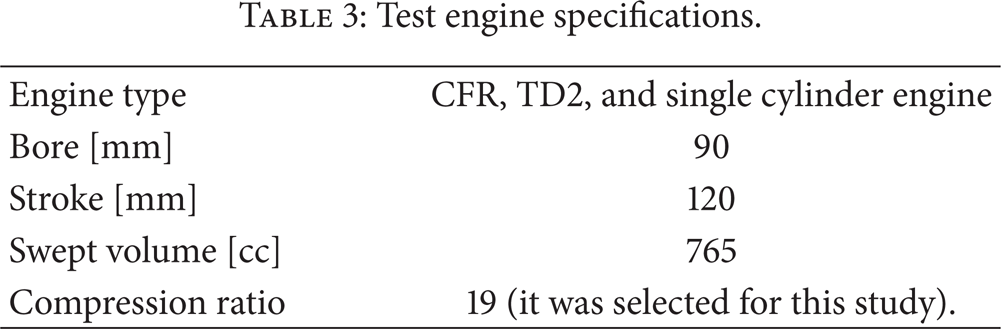
Test engine is a four-stroke, water cooled, and single cylinder research engine, specifications of which are listed in Table 3. Compression ratio of the engine could be varied between 23: 1 and 11: 1; it was set up to 19 during the tests.
Test engine specifications.
Engine torque was measured using the REP Transducers S-type load cell with a capacity of 300 kg adapted to the DC dynamometer. Engine speed was measured with an encoder which was coupled to cam shaft, intake air temperature was measured with T-type thermocouple on the intake manifold, and exhaust temperature was measured by using a K-type thermocouple on exhaust manifold. Also, cooling water inlet and outlet temperatures were measured with T-type thermocouples. Engine fuel consumption was measured with SIKA brand turbine type flow meter. In addition, CO, HC, CO2, and NO x emissions in the exhaust gases were measured with AVL Dicom 4000 gas analyzer; the smoke emission was measured with an AVL 415S. Schematic diagram of the experimental test rig is shown in Figure 4.

Schematic diagram of the experimental system.
A test plan was designed to carry out the engine tests on the diesel fuel (E0D100) and the blends of E15D85 and E30D70. Produced ethanol-diesel blends were consumed in 5 minutes by the engine for each test point and then new blend was prepared for another test point to prevent the problem of stratification. Each test was repeated three times to make sure the data were reliable. The relevant parameters such as engine speed, torque, and fuel consumption of the engine were recorded and the specific fuel consumption and thermal efficiency were calculated. The engine emissions of CO, CO2, unburned THC, NO x , and smoke were measured with exhaust gas analyzers and recorded by the data acquisition system. Four different engine speeds, which are 1100 rpm, 1350 rpm, 1700 rpm, and 1950 rpm, were selected. The engine was operated at full load operating conditions with various engine speeds.
Figures 2 and 3 show the stability of ethanol/diesel mixtures. According to the figures, no phase separation occurred in five minutes which is acceptable for instant producing and consuming cycle, although mentioned storage problem of this application limits its implementation in automotive applications.
3. Results and Discussion
Effect of using different quantities of ethanol at various engine speeds on engine brake power is shown in Figure 5. Engine power slightly decreased with increasing volumetric ethanol ratio in the mixture.

Engine brake power output versus engine speed using ethanol-diesel emulsion.
Maximum engine brake torque was obtained by using E0D100 fuel, as can be seen in Figure 6. While operating below 1350 rpm engine speed, engine brake torque reduced to 18.2% and 21.5% with E15D85 and E30D70 blends, respectively. Lower torque output of the engine can be attributable to the blend's heating value which was lower compared to diesel fuel. Additionally, combustion related issues become considerable especially at high load and low speed zones.
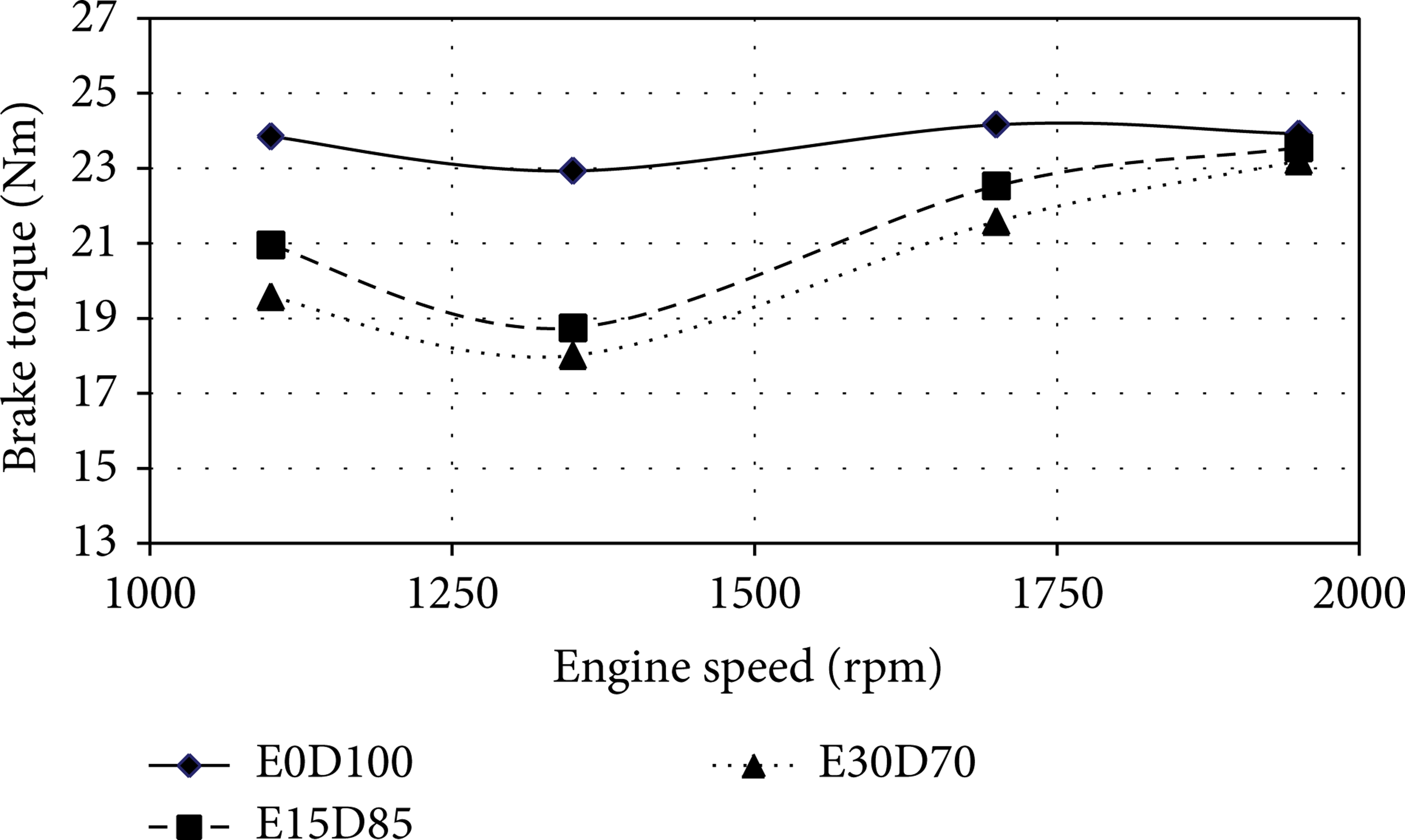
Engine brake torque output versus engine speed using ethanol-diesel emulsion.
Figure 7 shows the BSFC results of the blends. The lowest BSFC was obtained with E0D100 fuel; however a 14.5% increase was measured with E30D70 fuel. Increasing ethanol content in the mixture also increases the brake specific fuel consumption depending on the decreasing heating value.

Brake specific fuel consumption versus engine speed using ethanol-diesel emulsions.
The highest thermal efficiency was obtained with E0D100, as depicted in Figure 8. When operating below 1100 rpm, thermal efficiency is reduced by 3.8% and 5.5% by using E15D85 and E30D70 fuels, respectively. Lower power output of the blends is also a result of lower thermal efficiency. There were no modifications made on test engine which is originally designed to operate with diesel fuel and, hence, several engine parameters have to be optimized for ethanol usage such as injection advance, but this is beyond the scope of current study.

Thermal efficiency versus engine speed using ethanol-diesel emulsions.
The highest CO emission value was obtained by using E30B70 fuel as indicated in Figure 9, and also variation of CO2 emission can be seen in Figure 10. Using E15D85 and E30D70 fuels reduces the CO2 emissions up to 27.9% and 33.9% at 1950 rpm, respectively.

CO emissions versus engine speed using ethanol-diesel emulsion.
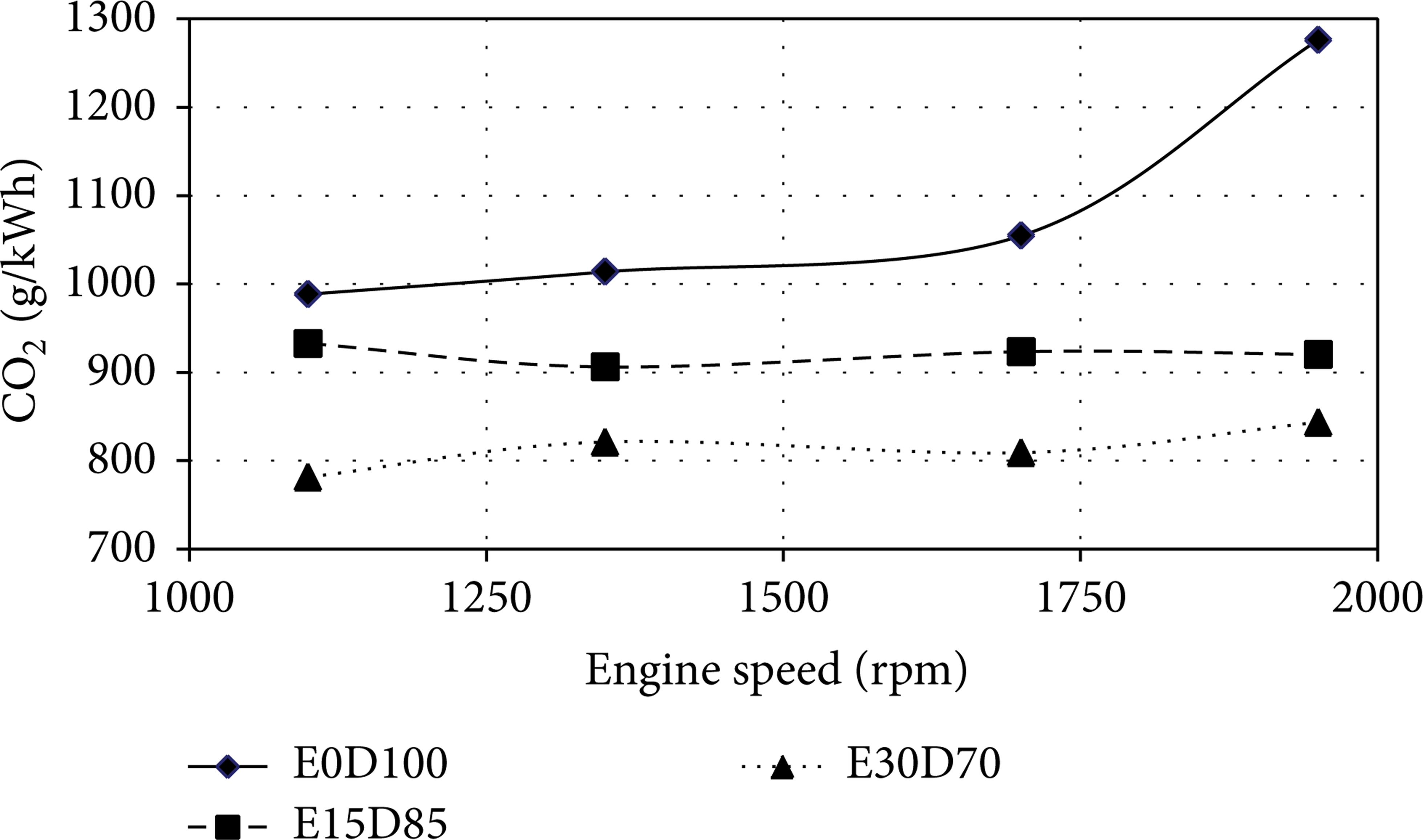
CO2 emissions versus engine speed using ethanol-diesel emulsion.
Increasing ethanol content in mixture decreases the C/H ratio and also increases the O2 content in cylinder. This circumstance creates lean mixture conditions and lowers the end of combustion temperature. As well as the decrease in CO2 being parallel with C/H ratio, the rise in CO can be explained by occurrence of low temperature and locally insufficient mixture preparation due to heterogeneity in the cylinder.
The lowest THC emission value was observed while the engine was operating with E0D100 and the highest value was measured with E30D70. As it can be seen from Figure 11, blending ethanol with diesel fuel increases the total hydrocarbon emissions at entire operation range, but it can be clearly seen that the THC emission results were at fairly low level with all fuel types.

THC emissions versus engine speed using ethanol-diesel emulsion.
Variation of the smoke quantity with ethanol ratio and engine speed is shown in Figure 12. The highest smoke value was observed with E0D100 fuel and lowest smoke value was observed with E30D70 for all of the operation speeds. As the ethanol quantity in the mixture increases, smoke emission in the exhaust gas decreases. Remarkable reduction on smoke emissions was obtained with E15D85 and E30D70 fuels which are 52.5% and 86.5%, respectively. Decrease of smoke quantity in the exhaust gases is a result of lower carbon ratio of blends; additionally fuel originated oxygen can be accepted as secondary factor.
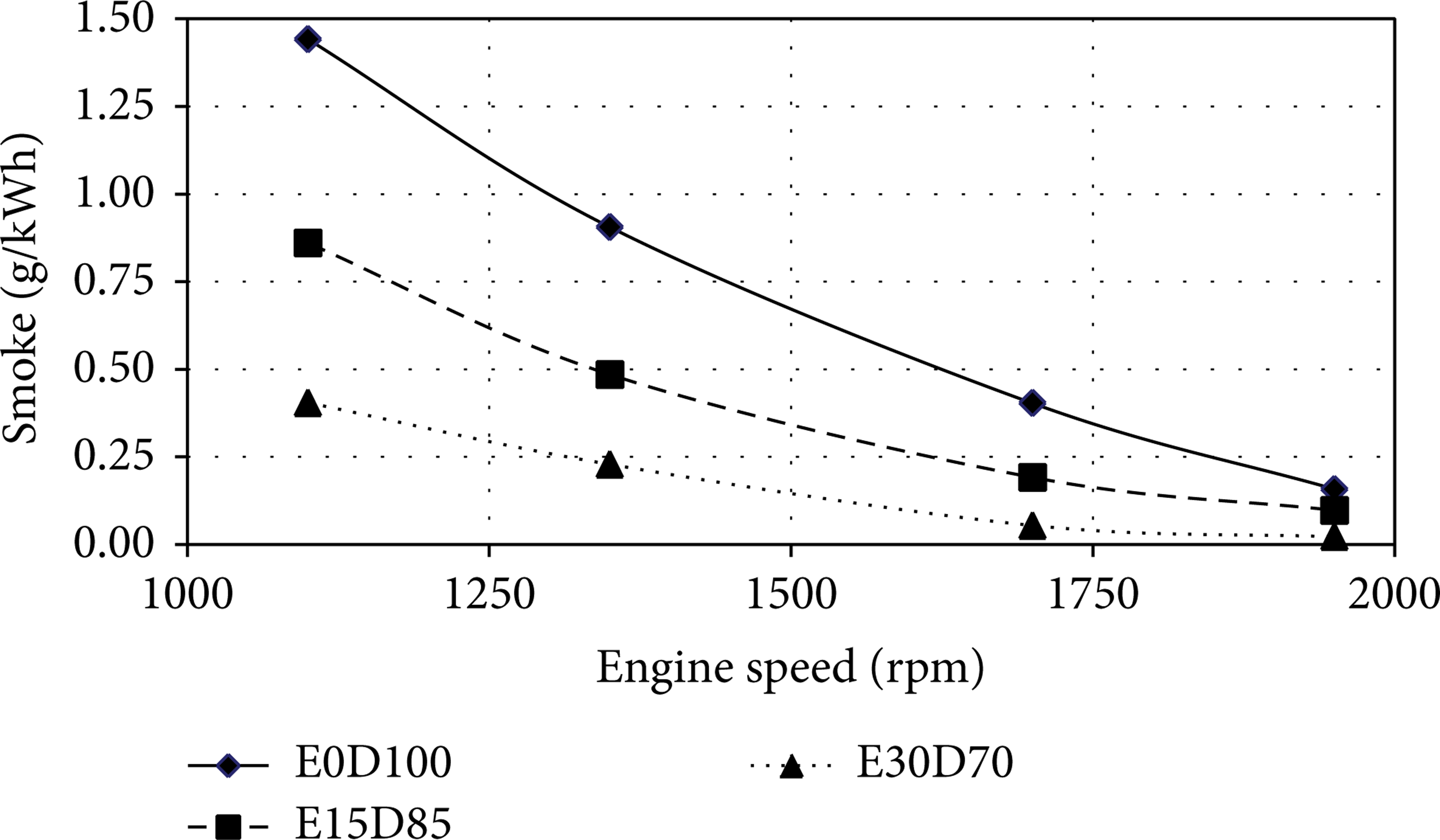
Smoke emissions versus engine speed using ethanol-diesel emulsion.
Figure 13 shows the exhaust temperature variation versus engine speed. As it can be seen from the figure, exhaust temperature reaches its maximum when E0D100 fuel was used and increasing ethanol quantity in mixture also decreases the exhaust temperatures for all operation speeds. The maximum decrease in exhaust temperature occurs when E30D70 fuel is used and exhaust temperature decreases by 7.7% and 10.2% with E15D85 and E30D70 at 1100 rpm, respectively.

Exhaust gas temperature versus engine speed using ethanol-diesel emulsion.
According to Figure 14, nitrogen oxide emissions of the blends are lower compared to diesel fuel. As expected, the highest reduction in NO x was observed with E30D70 fuel due to the lowest heating value of the blend.

NO x emissions versus engine speed using ethanol-diesel emulsion.
4. Conclusions
The main aim of this study is to investigate the effect of ethanol-diesel mixture on engine performance and exhaust emissions. According to experimental results, it can be concluded that the ethanol-diesel blend can be used in diesel engines without any modification. According to test results, the following expressions were obtained.
E15D85 lasted 30 h when it became separated and E30D70 were separated 5 min later after mixing. There was no instability problem in ethanol-diesel mixtures observed within the first 5 minutes after preparation.
The highest CO emission value is obtained by using E30B70 fuel. The lowest THC emission value was observed, while the engine was operating with E0D100, and the highest value was measured, while the engine was operating with E30D70.
The highest smoke value was measured with E0D100 fuel and lowest smoke value was obtained with E30D70 blend. As the ethanol quantity in the mixture increases, smoke emission in the exhaust gas decreases. Very remarkable reduction on smoke emissions was achieved.
NO x emission quantities with all types of blends were lower than the E0D100 fuel. As expected, the highest reduction in NO x was observed with E30D70 fuel.
Considering the abovementioned conclusions, ethanol can be used for simultaneous reduction of NO x and smoke in diesel engines, although a precise engine optimization is required to improve emissions while maintaining acceptable engine performance.
Footnotes
Nomenclature
Conflict of Interests
The authors declare that there is no conflict of interests regarding the publication of this paper.