




Abstract
Cognitive Radio (CR) is a dynamic spectrum access approach, in which unlicensed users (or secondary users, SUs) exploit the underutilized channels (or white spaces) owned by the licensed users (or primary users, PUs). Traditionally, SUs are oblivious to PUs, and therefore the acquisition of white spaces is not guaranteed. Hence, a SU must vacate its channel whenever a PU reappears on it in an unpredictable manner, which may affect the SUs' network performance. Spectrum leasing has been proposed to tackle the aforementioned problem through negotiation between the PU and SU networks, which allows the SUs to acquire white spaces for a guaranteed period of time. Through spectrum leasing, the PUs and SUs enhance their network performances, and additionally PUs maximize their respective monetary gains. Numerous research efforts have been made to investigate the CR, whereas the research into spectrum leasing remains at its infancy. In this paper, we present a comprehensive review on spectrum leasing schemes in CR networks by highlighting some pioneering approaches and discuss the gains, functionalities, characteristics, and challenges of spectrum leasing schemes along with the performance enhancement in CR networks. Additionally, we discuss various open issues in order to spark new interests in this research area.
1. Introduction
Cognitive Radio (CR) network, which is the next-generation wireless network, aims to improve the efficiency of spectrum utilization through dynamic spectrum access. There are two categories of users, namely, primary users (PUs) and secondary users (SUs). Traditionally in CR networks, the PUs are the licensed users, and they have exclusive right to use their respective channels, while SUs are the unlicensed users, and they use the underutilized channels (or white spaces) opportunistically whenever PUs are not transmitting any packets. Hence, PUs are oblivious of the presence of SUs. There are two main challenges associated with the traditional CR Networks (CRNs) that adopt the opportunistic channel access approach. Firstly, the unpredictable PUs' activities at any given time can significantly degrade SUs' network performance (e.g., throughput and end-to-end delay) [1–4]. Secondly, channel sensing [1], which is one of the main functions in the traditional CRNs, may require SUs to exchange channel sensing outcomes among themselves, and this incurs high amount of communication overhead resulting in higher energy consumption and packet latency [5]. In addition to the traditional CRNs [2, 3], there have been research activities in the area of CR sensor networks [4]. CR sensor networks are the next-generation wireless sensor networks that exploit white spaces through dynamic spectrum access.
Spectrum leasing is a dynamic spectrum access technique in which PUs and SUs form a partnership for mutual benefits. In spectrum leasing, the SUs negotiate with PUs and acquire their white spaces [6], while the PUs lease their channels and receive rewards in the form of monetary gain or network performance enhancement through packet forwarding by SUs [7]. Hence, PUs are fully aware of the presence of SUs. Figure 1 presents a taxonomy of spectrum leasing, which covers its advantages, functionalities, characteristics, and challenges. Further descriptions about the taxonomy are found in the rest of this section, as well as Sections 2, 3, and 4, respectively. Generally speaking, with the use of spectrum leasing, PUs and SUs receive the following advantages represented by (A1) and (A2) (see Figure 1), respectively.
PU's Gain
Monetary Gain. PUs may lease its licensed channels during idle periods for financial reward or revenue. For instance, Jayaweera et al. [6] propose a PU's utility function based on its monetary gain (e.g., the price set by PUs of white spaces). Network Performance Enhancement. The PU links may deteriorate due to shadowing and interference. Through spectrum leasing, one or more SUs form an alternative route and relay PUs' traffic, and this enhances the PUs' network performance, such as successful transmission rate, throughput, end-to-end delay, and energy efficiency [8]. Dedicated Channel Access. The SUs access white spaces allocated by PUs. Subsequently, this enhances the SUs' throughput performance. Since spectrum leasing enhances the throughput performance of PUs (A1.2), it reduces the transmission time of PUs, therefore leaving more white spaces and transmission opportunities to SUs for dedicated access [9].

Taxonomy of spectrum leasing in CRNs.
The advantages motivate PUs and SUs to participate in spectrum leasing. For instance, in [5], spectrum leasing maximizes a weighted sum of PUs' and SUs' throughput performance.
This paper provides an extensive survey on existing spectrum leasing schemes in CRNs. The purposes are to establish a foundation and to spark new interests in this research area covering new kinds of CR networks such as CR sensor networks [4]. Our contributions are as follows. Sections 2, 3, and 4 present the functionalities, characteristics, and challenges, respectively. Section 5 presents various spectrum leasing schemes in CRNs. Section 6 presents performance enhancement achieved by spectrum leasing schemes. Section 7 presents open issues. Finally, we present conclusions.
2. Functionalities of Spectrum Leasing in Cognitive Radio Networks
This section discusses the functionalities of PUs and SUs for spectrum leasing in CRNs. Generally speaking, spectrum leasing is comprised of the following functionalities.
PU's Function
Determination of the Cost of White Spaces. PUs determine the cost (e.g., monetary price) of white spaces to be imposed on SUs. Determination of PUs' and SUs' Channel Access Time. PUs are the rightful owners of the licensed spectrum, and so the PU Base Station (BS) may determine suitable channel access time for transmission opportunities for both PUs and SUs. For instance, in centralized networks, the PU hosts send their respective information (e.g., idle time) to PU BS. Subsequently, the PU BS allocates transmission opportunities for PU and SU networks. In other words, the PUs determine the amount of white spaces to be leased to SUs. The objective is to maximize the network performance (e.g., throughput) of PUs and SUs [10, 11]. Relay Selection. PUs select the SUs that provide the highest gain (e.g., PU-SU links with the best-known signal-to-noise ratio (SNR)) as relays in order to maximize throughput performance. PUs' Packet Transmission. PUs transmit their own packets to destination in order to enhance their network performance.
SU's Function
Collaborator Selection. SUs select the suitable PUs to collaborate with. This covers the evaluation of the gain (e.g., the amount of white spaces with sufficient SNR) and cost (resources required to relay PUs' traffics, such as energy consumption). Determination of SU's Channel Access Time. SUs determine the amounts of white spaces, which increase with channel access time, to request from PUs based on the cost imposed by the PUs. For instance, in a Time-Division Multiple Access (TDMA) system, SUs must determine the optimal time duration in which they must involve as relay to transmit PU packets and to transmit their own packets [8]. SUs' Packet Transmission. SUs transmit packets, and this involves two phases. Firstly, the SUs relay PU packets. To ensure continuous collaboration with PUs, the SUs must achieve a certain level of network performance enhancement while relaying the PUs' packets. Secondly, the SUs transmit their own packets. Spatial reuse is possible, and so the SUs must minimize interference among themselves [12]. For instance, in centralized networks, SU BS and hosts may serve as relays to transmit PU packets, and subsequently the SU BS allocates the white spaces offered by PUs to its SU hosts fairly [10, 13].
Spectrum leasing involves several steps and message handshaking, and we describe a general procedure in Figure 2. Consider two centralized PU and SU networks, which are collocated in the same area. Several PU hosts (or SU hosts) are associated with a PU BS (or SU BS). The procedure is as follows.
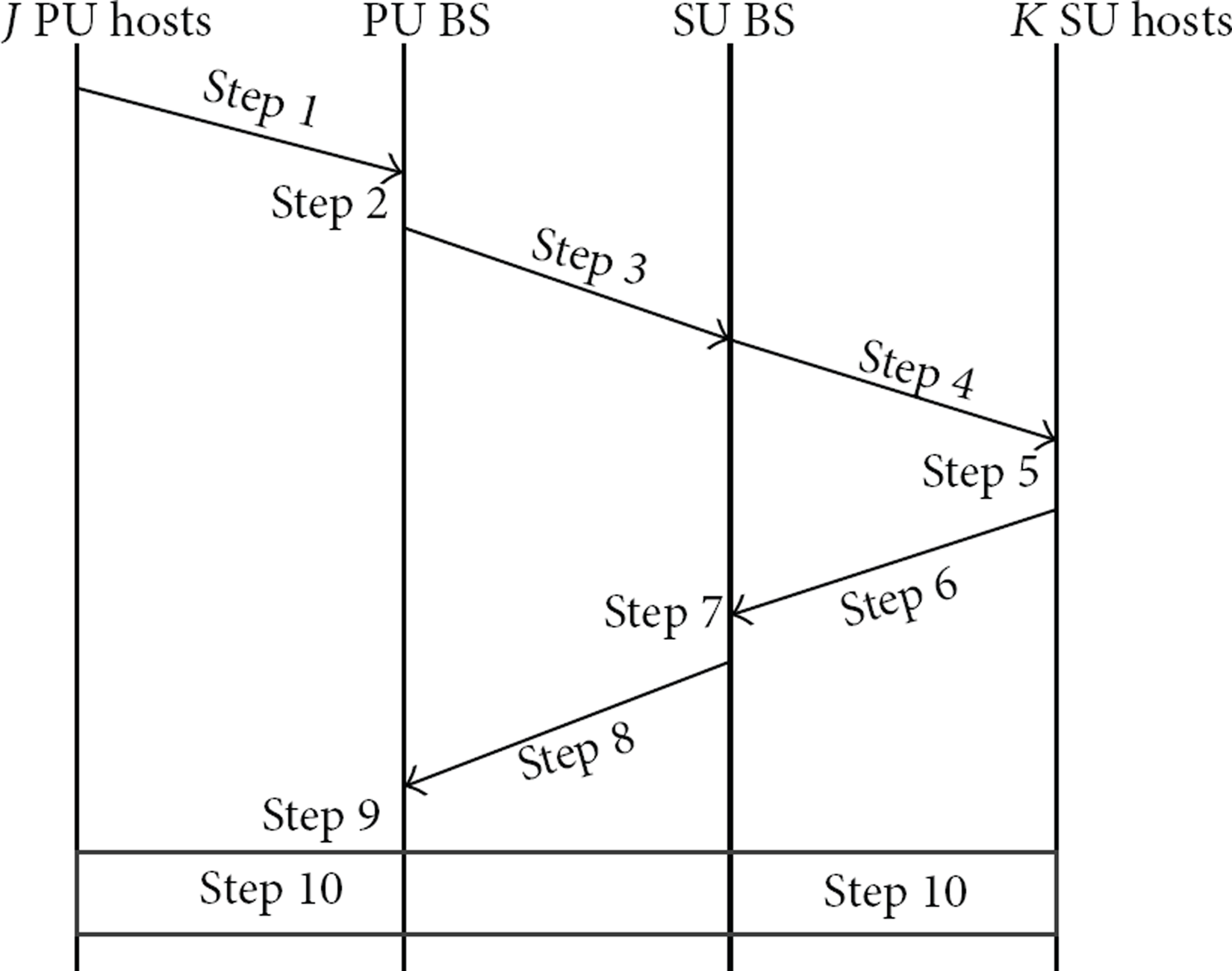
A general spectrum leasing procedure.
Step 1.
The PU hosts send information on their respective idle periods (or white spaces) to PU BS.
Step 2.
The PU BS determines the cost (F1.1) and duration (F1.2) of white spaces. There are J PU hosts to be leased to SUs.
Step 3.
The PU BS sends the cooperation information (e.g., the cost and duration, as well as SNR of the white spaces) to SU BS.
Step 4.
The SU BS broadcasts the cooperation information to its SU hosts.
Step 5.
The SU hosts determine the optimum transmission and relaying strategies (i.e., (F2.2) and (F2.3)) using the cooperation information. If auction mechanism is applied, the SU hosts may determine bid values.
Step 6.
The SU hosts send their respective decisions (e.g., strategies and bid values) to SU BS.
Step 7.
The SU BS decides to accept the lease or not and select the suitable PUs to collaborate with (F2.1).
Step 8.
The SU BS sends its decisions to PU BS.
Step 9.
The PU BS decides to lease or not and select the suitable SUs as relays (F1.3).
Step 10.
Finally, based on the lease, the PU BS transmits its packets (F1.4) directly through a single hop, or indirectly through SU relay nodes, to the PU BS's destination node. The SU BS may divide the white spaces and assign the access time of each white space to each SU hosts (F2.2). The SUs transmit packets accordingly (F2.3).
3. Characteristics of Spectrum Leasing in Cognitive Radio Networks
This section discusses the characteristics of spectrum leasing in CRNs. There are three characteristics as follows.
Network Topology: Centralized (C1.1) and Distributed (C1.2). In centralized networks (C1.1), a central entity which is usually referred as Base Station (BS) is responsible for communications between PU and SU networks [14], whereas, in distributed networks (C1.2), BS does not exist, and PUs and SUs share their information through a common control channel [14]. For instance, in [5], a centralized network (C1.1) topology is used, in which PUs are leaders and responsible to select the most appropriate SU for cooperative communication and hence the SUs are followers. Intracooperative Mode: Intracooperative (C2.1) and Nonintracooperative (C2.2). The PUs may cooperate among themselves through an intra-cooperative approach in order to achieve the advantages (A1.1)-(A1.2) and (A2.1). Likewise, the SUs may adopt the same approach. In Figure 3, the intracooperative (C2.1) mode is shown in (a) and (c) and from the SU's perspective, the SUs may cooperate among themselves and jointly improve network-wide performance such as throughput performance, as well as to reduce the monetary and nonmonetary spectrum leasing costs imposed by PUs. In other words, a group of SUs may lease a channel and subsequently share the channel among themselves in order to reduce spectrum leasing costs. In Figure 3, the nonintracooperative (C2.2) mode is shown in (b) and (d) and from the PU's perspective, each PU may compete with each other to lease their respective white spaces and hence each PU may set a competitive price based on the demand of channel access from SUs. From the SU's perspective, the SUs may also compete with each other to acquire the white spaces through auction-based mechanisms [15]. For instance, in [5], each SU optimizes its power allocation in the transmission of PU packets in order to fulfill the packet transmission requirements of PUs. This helps each SU to remain competitive in order to obtain white spaces in the upcoming auctions and this has been shown to improve SU throughput performance. Intercooperative Mode: Intercooperative (C3.1) and Nonintercooperative (C3.2). PUs and SUs may cooperate with each other in order to achieve the advantages (A1.1)-(A1.2) and (A2.1). In Figure 3, the intercooperative (C3.1) mode is shown in (c) and (d) and the PUs and SUs cooperate with each other, and so this improves the overall network-wide performance such as throughput performance. In Figure 3, the nonintercooperative (C3.2) mode is shown in (a) and (b) and the PUs and SUs are referred to as selfish users, and they do not cooperate with each other. For instance, in [16], the PUs attempt to maximize their profit or reward out of the white spaces, while the SUs attempt to reduce their cost.

Mode of cooperation between PU and SU network.
4. Challenges of Spectrum Leasing in Cognitive Radio Networks
This section discusses the challenges associated with spectrum leasing in CRNs. There are three challenges as follows.
Increasing the Monetary Gain of PUs. PUs aim to increase their monetary gain through spectrum leasing. This encourages the PUs to participate in spectrum leasing by increasing the amount of white spaces available to SUs. Subsequently, this increases PUs' and SUs' throughput performance [10]. The PUs may cooperate or compete with each other to lease their white spaces. As an example, in [10], PUs cooperate with each other, and linear programming is applied to set the optimal price of the white spaces in order to increase their monetary gain. As another example, in [16], PUs compete with each other, and game theory is applied to set the optimal price of the white spaces in order to increase their monetary gain. Selecting an Optimal Channel with White Spaces by SUs. SUs aim to access the licensed channel or white spaces in order to increase their network performance (e.g., throughput). So, this encourages the SUs to participate in spectrum leasing and subsequently increases PUs' and SUs' network performance [17]. However, the access to white spaces by SUs requires monetary cost, and so there is a need to find an optimal channel that provides the best possible network performance while incurring the least possible cost. For instance, Cao et al. [5] propose a spectrum sharing policy in which white spaces are being leased to SUs, in order to increase the network capacity of SU network. Scheduling the Channel Access of PUs and SUs. The PUs schedule the time for the transmissions of PUs' and SUs' packets in order to enhance their respective QoS performance (e.g., throughput). The time allocation for SUs' links must be sufficiently higher compared to that of PUs' links in order to reap the benefits of spectrum leasing [9]. Otherwise, the queue size at SU relay nodes may grow and eventually become insufficient to accommodate new packets from both PUs and SUs leading to packet loss. However, the white spaces being leased to SUs may not be sufficient to cater for PUs' and SUs' packets. For instance, Huang et al. [18] propose a coalition game to allocate a suitable fraction of channel access time among PUs and SUs, so that SUs transmit PUs' packets as well as their own packets. Continuous Monitoring of White Spaces Being Leased to SUs by PUs. Upon negotiation, the PUs and SUs may need to monitor the white spaces (e.g., amount and channel quality) and the Quality of Service (QoS) of packet transmission in order to make sure that each party follows suit. However, the continuous monitoring of SUs requires more intelligence to be incorporated into the PU network. For instance, in [15], PUs additionally acts as an online auctioneer to monitor the SUs activities. Likewise, in [19], PUs need to ensure that the interference caused by SUs is less than the acceptable interference level. Furthermore, SUs also need to monitor the SUs' signal level in order to reduce interference with PUs [20].
5. Spectrum Leasing Schemes in Cognitive Radio Networks
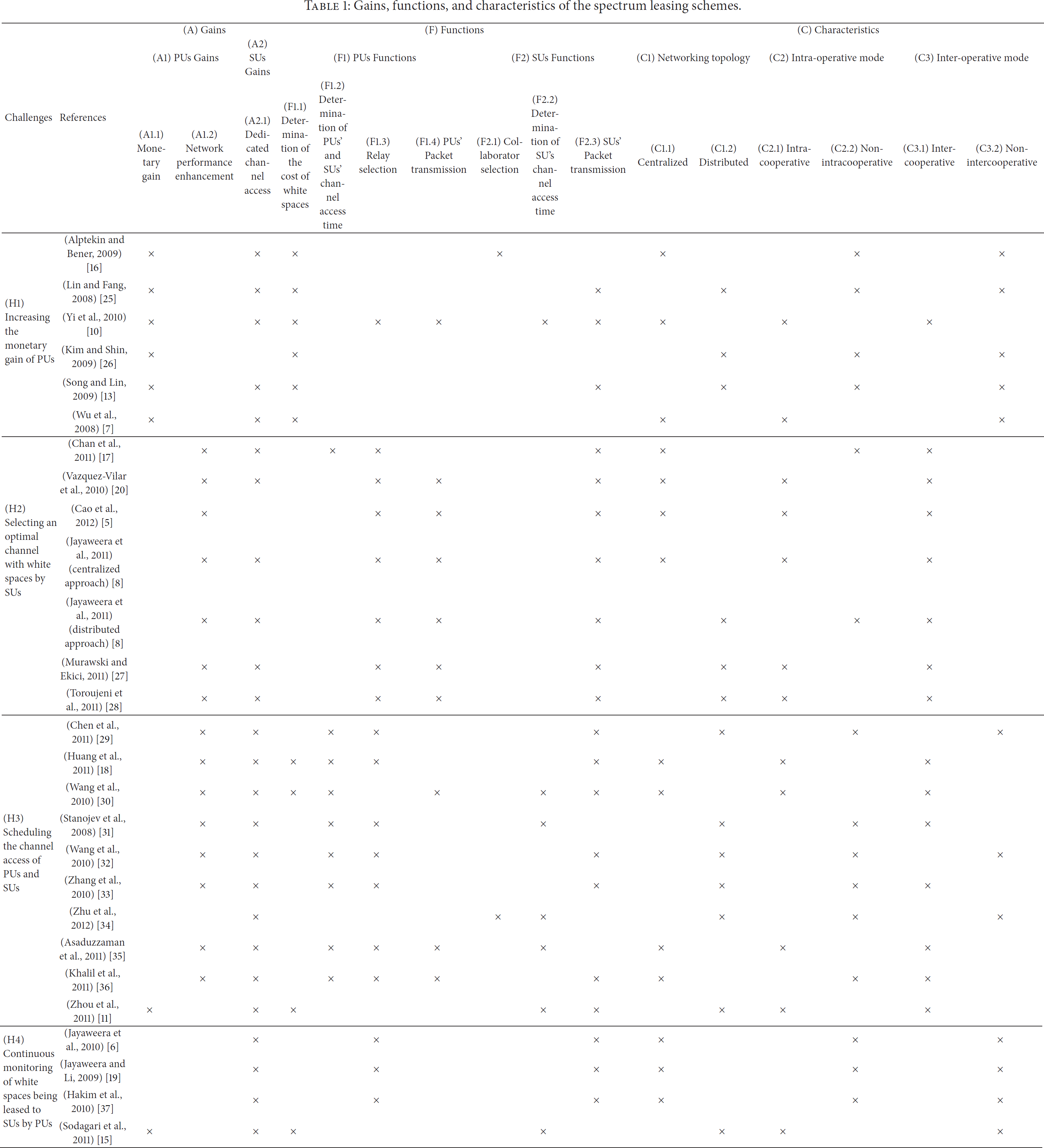
This section presents existing work on spectrum leasing schemes in CRNs. The schemes are categorized with respect to the challenges (see Section 4) and on the basis of adopted approaches (e.g., game theoretic approaches and nongame theoretic approaches) to address the challenges. The game theoretic approaches, such as Stackelberg game [21], are used to achieve the equilibrium state (e.g., Nash equilibrium [22]) and it involves PUs and SUs as players of the game. Examples of the nongame theoretic approaches are reinforcement learning [23] and convex optimization [24]. Table 1 presents the gains, functions, and characteristics of the spectrum leasing schemes. The performance enhancement achieved by each scheme is shown in Table 2 (see Section 6).
Gains, functions, and characteristics of the spectrum leasing schemes.
Performance enhancements achieved by the spectrum leasing schemes.

5.1. Increasing the Monetary Gain of PUs
There are six spectrum leasing schemes that focus on addressing the challenge of increasing the monetary gain of PUs that motivates the PUs to participate in spectrum leasing. These schemes have been shown to increase the monetary gain of PUs, as well as to enhance PUs' or SUs' QoS performance (e.g., throughput).
5.1.1. Schemes That Use Game Theoretic Approaches
Alptekin and Bener [16] propose one PU F(1) and one SU F(2) functionalities, namely, determination of the cost of white spaces (F1.1), as well as collaborator selection (F2.1) in order to increase PUs' monetary gain (A1.1) and to provide dedicated channel access to SUs (A2.1) in centralized (C1.1) SU networks. The purpose is to maximize the PUs' profit as seller in terms of its utility function 
Lin and Fang [25] propose one PU F(1) and one SU F(2) functionalities, namely, determination of the cost of white spaces (F1.1), as well as SUs' packet transmission (F2.3) in order to increase PUs' monetary gain (A1.1) and to provide dedicated channel access to SUs (A2.1) in distributed (C1.2) SU networks. The purpose is to maximize the PUs' and SUs' utility functions 

Yi et al. [10] propose three PU F(1) and two SU F(2) functionalities, namely, determination of the cost of white spaces (F1.1), relay selection (F1.3) and PUs' packet transmission (F1.4), as well as determination of SU's channel access time (F2.2), and SUs' packet transmission (F2.3) in order to increase PUs' monetary gain (A1.1) and to provide dedicated channel access to SUs (A2.1) in centralized (C1.1) SU networks. The purpose is to maximize the PUs' and SUs' network utility functions, 

5.1.2. Schemes That Use Nongame Theoretic Approaches
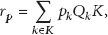
Kim and Shin [26] propose one PU F(1) function, namely, determination of the cost of white spaces (F1.1) in order to increase PUs' monetary gain (A1.1) in distributed (C1.2) SU networks. The purpose is to maximize the PUs' profit by controlling the SUs' admission and eviction strategies. The admission strategy allows the SUs to utilize PUs' channels on the basis of the requested amount of white spaces, which basically yields the PUs' profit. Hence, if SUs demands a small amount of white spaces, then PUs may reject their admissions due to the less monetary gain. This is because the PUs are interested to allocate white spaces to SUs that request larger amount of white spaces in order to maximize their monetary gain, whereas the eviction strategy is set so that SUs evacuate the channel immediately if PUs' activities reappear. The function is modeled and solved using semi-Markov decision process and linear programming in a non-intracooperative (C2.2) mode and non-intercooperative (C3.2) mode, respectively. The PUs allocates their underutilized channels to a group of k SUs. The expected revenue of PUs is defined as
Song and Lin [13] propose one PU F(1) and one SU functionalities, namely, determination of the cost of white spaces (F1.1), as well as SUs' packet transmission (F2.3) in order to increase PUs' monetary gain (A1.1) and to provide dedicated channel access to SUs (A2.1) in distributed (C1.2) SU networks. The purpose is to maximize the profit of PUs while allocating the white spaces to SUs. The function is modeled and solved using auction-based property-rights model mechanism in a nonintracooperative (C2.2) mode and nonintercooperative (C3.2) mode, respectively. In a property-rights model, SUs are divided into non-overlapping groups and a leader is elected from each group. The auction mechanism is divided into time windows, and each window is further divided into two phases, namely, auction and communication. There are four main purposes in regard to the auction mechanism. Firstly, it maximizes the overall spectrum utilization. Secondly, it maximizes the number of SU winners (or SU groups that gain a channel). Thirdly, it fulfills the bandwidth requirement of SUs. Note that the channels are heterogeneous and each channel has different amount of bandwidth (or white spaces). Fourthly, it maximizes the PUs' revenue. In a round of bidding, each SU leader determines a bid value based on hungry degree, which takes into account the amount of white spaces required by its group of SUs. During the auction phase, the PU auctions off n channels with white spaces to m SU leaders in two phases. Each SU leader uses an auction phase, which is based on its bandwidth requirement, to bid for a leasing channel. Higher value of hungry degree leads to higher bid value. During the first phase of auction, in order to meet the first, second, and third purposes, the PU grants channels to as many groups of SUs as possible to meet their respective minimum requirement on the amount of white spaces. During the second phase of auction, in order to achieve the fourth purpose, the PU allocates the channels with white spaces to SU leaders that offer higher bid values (F1.1). During the communication phase (F2.3), the SUs transmit packets and the PU keeps track of available white spaces for auctions in the next time window. The spectrum leasing scheme has been shown to increase throughput performance in regard to vacant channels.
Wu et al. [7] propose one PU F(1) function, namely, determination of the cost of white spaces (F1.1) in order to increase PUs' monetary gain (A1.1) and to provide dedicated channel access to SUs (A2.1) in centralized (C1.1) SU networks. The purpose is to maximize the PU monetary gain and SUs network utility function
5.2. Selecting an Optimal Channel with White Spaces by SUs
There are six spectrum leasing schemes that focus on motivating the SUs to participate in spectrum leasing by increasing the amount of white spaces for SUs. These schemes have been shown to enhance PUs' or SUs' QoS performance (e.g., throughput).
5.2.1. Schemes That Use Game Theoretic Approaches
Chan et al. [17] propose two PU F(1) and one SU F(2) functionalities, namely, determination of PUs' and SUs' channel access time (F1.2) and relay selection (F1.3), as well as SUs' packet transmission (F2.3) in order to enhance the network performance of PUs (A1.2) and to provide dedicated channel access to SUs (A2.1) in centralized (C1.1) SU networks. The purpose is to maximize the spectrum utilization of PU and SU networks by adopting the cooperation strategies in between of J PUs and K SUs in the form of 

Vazquez-Vilar et al. [20] propose two PU F(1) and one SU F(2) functionalities, namely, relay selection (F1.3), and PUs' packet transmission (F1.4), as well as SUs' packet transmission (F2.3) in order to enhance the network performance of PUs (A1.2) and to provide dedicated channel access to SUs (A2.1) in centralized (C1.1) SU networks. The purpose is to maximize the PUs' and SUs' utility functions 

5.2.2. Schemes That Uses Nongame Theoretic Approaches
Cao et al. [5] propose two PU F(1) and one SU F(2) functionalities, namely, relay selection (F1.3) and PUs' packet transmission (F1.4), as well as SUs' packet transmission (F2.3) in order to enhance the network performance of PUs (A1.2) in centralized (C1.1) SU networks. The purpose is to maximize the spectrum utilization of PU and SU networks, where the PU and SU BSs operate in an intracooperative (C2.1) mode and intercooperative (C3.1) mode, respectively. The PU source node i selects the best available SU relay node k, and establishes communication with the PU destination node j. The SU relay is used to transmit PU and SU packets using a quadrature modulation scheme, which depends on two factors, namely, power allocation factor 
Jayaweera et al. [8] propose two PU F(1) and one SU F(2) functionalities, namely, relay selection (F1.3) and PUs' packet transmission (F1.4), as well as SUs' packet transmission (F2.3) in order to enhance the network performance of PUs (A1.2) and to provide dedicated channel access to SUs (A2.1) in centralized (C1.1) and distributed (C1.2) SU networks. The purpose is to maximize the PUs' and SUs' utility functions 

Murawski and Ekici [27] propose two PU F(1) and one SU F(2) functionalities, namely, relay selection (F1.3) and PUs' packet transmission (F1.4), as well as SUs' packet transmission (F2.3) in order to enhance the network performance of PUs (A1.2) and to provide dedicated channel access to SUs (A2.1) in distributed (C1.2) SU networks. The purpose is to maximize the throughput of PUs and SUs in an intra-cooperative (C2.1) mode and inter-cooperative (C3.1) mode, respectively. The network considers a single PU source node that communicates with a PU destination node through direct PU-PU transmission or indirect PU-SU-PU transmission via SU relay node. The PU destination node transmits Request to Send (RTS), while the SU replies with Request to Cooperate (RTC) composed of channel state information upon receiving RTS from the PU. Subsequently, the PU destination node selects the suitable SUs as relay nodes using the channel state information. The criterion adopted by PU for selecting a suitable SU relaying node is based on the basis of higher throughput value of a given PU-SU-PU link with respect to the throughput value of PU-PU direct link. The PU destination node sends clear to coordinate (CTC) message to a selected SU relay node, which indicates that a given PU-SU-PU link offers higher throughput than the PU-PU direct link; whereas, if the throughput being offered by the PU-SU-PU link is lower than the PU-PU direct link, then the PU destination node sends clear to send (CTS) message to the SU relay node, which indicates that the direct link of PU-PU communication can take place. For the calculation of expected throughput value either from PU-SU-PU link or from PU-PU direct link, abackoff mechanism of distributed coordination function [38] is used. The expected throughput value is dependent on the probability of successful packet transmission
Toroujeni et al. [28] propose two PU F(1) and one SU F(2) functionalities, namely, relay selection (F1.3) and PUs' packet, transmission (F1.4), as well as SUs' packet transmission (F2.3) in order to enhance the network performance of PUs (A1.2) and to provide dedicated channel access to SUs (A2.1) in distributed (C1.2) SU networks. The purpose is to increase the link reliability by maximizing the transmission rate of a PU communication node pair and K SUs. The functionalities are modeled and solved using Orthogonal Frequency Division Multiplexing (OFDM) [39] symbols in an intra-cooperative (C2.1) mode and inter-cooperative (C3.1) mode, respectively. There are a total of 

5.3. Scheduling the Channel Access of PUs and SUs
There are ten spectrum leasing schemes that focus on scheduling of channel access time in between of PUs and SUs for their respective transmission. These schemes have been shown to enhance PUs' and SUs' QoS performance (e.g., throughput).
5.3.1. Schemes That Use Game Theoretic Approaches
Chen et al. [29] propose two PU F(1) and one SU F(2) functionalities, namely, determination of PUs' and SUs' channel access time (F1.2) and relay selection (F1.3), as well as SUs' packet transmission (F2.3) in order to enhance the network performance of PUs (A1.2) and to provide dedicated channel access to SUs (A2.1) in distributed (C1.2) SU networks. The purpose is to maximize the PUs' and SUs' network utility functions 

Huang et al. [18] propose three PU F(1) and one SU F(2) functionalities, namely, determination of the cost of white spaces (F1.1), determination of PUs' and SUs' channel access time (F1.2), and relay selection (F1.3), as well as SUs' packet transmission (F2.3) in order to enhance the network performance of PUs (A1.2) and to provide dedicated channel access to SUs (A2.1) in centralized (C1.1) SU networks. The purpose is to maximize the PUs' and SUs' utility functions
Wang et al. [30] propose three PU F(1) and two SU F(2) functionalities, namely, determination of the cost of white spaces (F1.1), determination of PUs' and SUs' channel access time (F1.2), and relay selection (F1.3), as well as determination of SU's channel access time (F2.2) and SUs' packet transmission (F2.3) in order to enhance the network performance of PUs (A1.2) and to provide dedicated channel access to SUs (A2.1) in centralized (C1.1) SU networks. The purpose is to maximize the PUs' and SUs' utility functions 

Stanojev et al. [31] propose two PU F(1) and one SU F(2) functionalities, namely, determination of PUs' and SUs' channel access time (F1.2) and relay selection (F1.3), as well as SUs' packet transmission (F2.3) in order to enhance the network performance of PUs (A1.2) and to provide dedicated channel access to SUs (A2.1) in distributed (C1.2) SU networks. The purpose is to maximize the PUs' transmission rate and the SUs' utility function. The PU divides a unit time slot into three subslots for primary transmission (PU-PU and PU-SU), relayed transmission (SU-PU), and secondary transmission (SU-SU), respectively. The length of the primary transmission subslot is
Wang et al. [32] propose two PU F(1) and one SU F(2) functionalities, namely, determination of PUs' and SUs' channel access time (F1.2) and relay selection (F1.3), as well as SUs' packet transmission (F2.3) in order to enhance the network performance of PUs (A1.2) and to provide dedicated channel access to SUs (A2.1) in distributed (C1.2) SU networks. The purpose is to maximize the PUs' and SUs' utility functions 

Zhang et al. [33] propose two PU F(1) and one SU F(2) functionalities, namely, determination of PUs' and SUs' channel access time (F1.2), relay selection (F1.3), and SUs' packet transmission (F2.3) in order to enhance the network performance of PUs (A1.2) and to provide dedicated channel access to SUs (A2.1) in distributed (C1.2) SU networks. The purpose is to maximize the PUs' and SUs' utility functions 

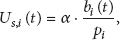
Zhu et al. [34] propose two SU F(2) functions, namely, collaborative selection (F2.1) and determination of SU's channel access time (F2.2) in order to provide dedicated channel access to SUs (A2.1) in distributed (C1.2) SU networks. There are two types of markets, namely, primary market (comprised of SU service providers and PUs) and secondary market (comprised of SU service providers and SU hosts). The functionalities are modeled and solved using a hierarchical game theoretic framework comprised of upper- and lower-level games and in a non-intracooperative (C2.2) mode and non-intercooperative (C3.2) mode, respectively. The purpose is to maximize the SUs' service provider and SU network utility functions, Secondary market allows SU hosts to purchase white spaces from SU service providers on a short-term basis (e.g., minutes), and it is a lower-level game modeled by evolutionary game. Each SU service provider i offers white spaces, which are represented by bandwidth where α is a constant based on network performance requirement, in order to maximize its network performance satisfaction. The number of SUs that choose service provider i is represented by Primary market allows SU service providers to purchase white spaces from PUs (or spectrum brokers) on a long-term basis (e.g., weeks or months), and it is a upper-level game modeled by differential game. Each SU service provider i purchases some amount of white spaces where

5.3.2. Schemes That Uses Nongame Theoretic Approaches
Asaduzzaman et al. [35] propose three PU F(1) and one SU F(2) functionalities, namely, determination of PUs' and SUs' channel access time (F1.2), relay selection (F1.3), and PUs' packet transmission (F1.4), as well as determination of SU's channel access time (F2.2) in order to enhance the network performance of PUs (A1.2) and to provide dedicated channel access to SUs (A2.1) in centralized (C1.1) SU networks. The purpose is to minimize the outage probability of PUs' network and to maximize the outage capacity of SUs' network. The outage probability indicates the halt of PUs' packet transmission for a certain period of time when the transmission signal power is less than a certain threshold value while the outage capacity is the SUs' transmission rate during outage. Hence, generally speaking, the functionalities are based on transmission rate and channel access duration of PUs and SUs in an intra-cooperative (C2.1) mode and inter-cooperative (C3.1) mode, respectively. The network considers a PU communication node pair, and it is separated by a single centralized SU network comprised of potential SU relaying nodes K. The PU source node i selects the best available SU relaying node
Khalil et al. [36] propose three PU F(1) and one SU F(2) functionalities, namely, determination of PUs' and SUs' channel access time (F1.2), relay selection (F1.3), and PUs' packet transmission (F1.4), as well as SUs' packet transmission (F2.3) in order to enhance the network performance of PUs (A1.2) and to provide dedicated channel access to SUs (A2.1) in centralized (C1.1) SU networks. The purpose is to maximize the PUs' and SUs' utility functions 

Zhou et al. [11] propose one PU F(1) and two SU F(2) functionalities, namely, determination of the cost of white spaces (F1.1), as well as determination of SU's channel access time (F2.2) and SUs' packet transmission (F2.3) in order to increase PUs' monetary gain (A1.1) and to provide dedicated channel access to SUs (A2.1) in distributed (C1.2) SU networks. The purpose is to enable the SUs to acquire the white spaces efficiently when PUs intends to lease it in order to maximize the monetary gain of PU and transmission rate SU networks. The functionalities are modeled and solved by introducing rules for spectrum management and spectrum leasing in an intra-cooperative (C2.1) mode and inter-cooperative (C3.1) mode, respectively. The spectrum management rule is set by the PU BS to regulate the spectrum leasing process in order to maximize PUs' revenue F(1.1) and guarantee a fair spectrum trade market by offering the discounted spectrum price to SUs in combination with spectrum and time optimization. The spectrum leasing rule is set by the SUs, through which SUs takes the decision to acquire the white spaces from PUs if it fulfills the bandwidth requirements desired by SUs for a specified period of time (F2.2), which SUs mentioned to PU BS for its packet transmission (F2.3). It has been shown that as PU allocates more channel bandwidth to SUs while increasing the number of transmission slots, it maximizes the SUs transmission rate and throughput.
5.4. Continuous Monitoring of White Spaces Being Leased to SUs by PUs
There are four spectrum leasing schemes that focus on the monitoring of SUs' channel access activities in spectrum leasing by PUs', so that SUs are ensued to follow (or fulfill) suit according to spectrum leasing contract with PUs. These schemes have been shown to enhance PUs' or SUs' QoS performance (e.g., throughput).
5.4.1. Schemes That Use Game Theoretic Approaches
Jayaweera et al. [6] propose one PU F(1) and one SU F(2) functionalities, namely, relay selection (F1.3) and SUs' packet transmission (F2.3) in order to enhance the network performance of PUs (A1.2) and to provide dedicated channel access to SUs (A2.1) in centralized (C1.1) SU networks. The purpose is to maximize the PUs' and SUs' utility functions, In [19], the purpose is to examine the power control mechanism and its effect on the utility function of PUs. The PUs' utility function, which aims to achieve the required QoS performance of PUs and SUs, is defined as:
Whereas, the SU utility function, which aims to achieve SUs' energy efficiency, is defined as
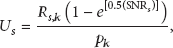
where In [37], the propose is to adjust the PUs' interference level in accordance with the SUs' transmission requirements of SNR and QoS levels, so that PUs and SUs maximize their respective utility functions. The PUs' utility function is defined as
where where 




5.4.2. Scheme That Uses Nongame Theoretic Approaches
Sodagari et al. [15] propose one PU F(1) and one SU F(2) functionalities, namely, determination of the cost of white spaces (F1.1), as well as determination of SU's channel access time (F2.2) in order to increase PUs' monetary gain (A1.1) and to provide dedicated channel access to SUs (A2.1) in distributed (C1.2) SU networks. Generally speaking, SUs send private information to PUs regarding their channel access time (i.e., arrival and departure times) and bid values during the auction process in which the PUs provide suitable channel allocations to SUs. There are two types of SUs, namely, truthful SUs and collusive SUs. Truthful SUs provide the private information to PUs while the collusive SUs collaborate among themselves through sharing the private information and subsequently misreport the information in order to gain the channel access. There are two approaches to misreport the information. Firstly, the collusive SUs share the bid values so that the SUs either set the bid value to the lowest or slightly higher values. Secondly, the collusive SUs share the arrival time so that the SUs either set to the arrival time to the latest or slightly earlier values, and this minimizes the competitiveness among the SUs for channel access in auctions and subsequently minimizes the bid values. The functionalities are modeled and solved using an approach called Dominant Strategy Incentive Compatible (DSIC) in which a SU can reduce its payment to the PUs in an auction process without collusion, in an intracooperative (C2.1) mode and nonintercooperative (C3.2) mode, respectively. Specifically, with respect to SU k, denote the bid value by
6. Performance Enhancement of Spectrum Leasing Schemes
Table 2 presents the performance enhancement achieved by the spectrum leasing schemes compared to conventional and traditional approaches in CRNs. The performance metrics are as follows.
Lower Outage Probability. Lower outage probability indicates lesser interruptions of packet transmissions in which transmission does not take place for a certain period of time. For instance, the interruption may be caused by transmission power which is less than a certain threshold value [41], as well as lack of white spaces [42]. Lower outage probability has been shown to enhance QoS (P3) [32]. Higher Outage Capacity. Outage capacity is the maximum achievable transmission rate during any instances of outage. Higher outage capacity indicates higher achievable transmission rate in the presence of outages from time to time, and so it also indicates lower occurrence of outages [41]. Higher outage capacity has been shown to enhance QoS (P3) [35]. Better QoS Level. Through spectrum leasing, the PUs and SUs achieve QoS enhancement. For instance, higher throughput indicates higher rate of successful data transmission over a channel, which provides better QoS [5]. Higher throughput may also indicate more white spaces, in terms of time duration, being offered to SUs by PUs at a specified cost [16]. Higher Energy Efficiency Indicates Lower Energy Consumption by PUs [8]. This is because the SUs help the PUs to relay their packets due to the low channel quality in PUs' direct transmission to PU destination node [37]. With reduced unsuccessful transmission attempts by PUs, the PUs consume lower transmission power and there are more white spaces available to be leased to SUs for monetary gain (P5). Higher Monetary Gain, Which is the Gain Exclusive for PUs A(1.1). The PUs receive monetary gain as revenue based on the price of the white spaces being offered to SUs through spectrum leasing [10]. Balanced Trade-off between Cost of White Spaces and Monetary Gain. Generally speaking, the cost of white spaces paid by the SUs is set by the PUs. Higher cost provides higher monetary gain received by PUs at the expense of SUs. Hence, a balanced trade-off between the cost of white spaces and monetary gain provides a win-win solution for both PUs and SUs [16]. Balanced Trade-off between PUs' and SUs' Channel Access Time. Generally speaking, higher channel access time among the PUs may provide better QoS level (P3) among the PUs at the expense of reduced channel access time among SUs and vice versa [35]. Hence, a balanced trade-off between PUs' and SUs' channel access times provides a win-win solution for both PUs and SUs. Better Security Level. Through the detection of malicious SUs that access PUs' channels in an illegitimate manner, better security level can be achieved contributing to better QoS level (P3) (e.g., throughput) and monetary gain (P5). For instance, in [15], the SUs report their respective channel access time, which is closely monitored by PUs. Hence, malicious SUs that mislead PUs with incorrect information (e.g., channel access time) in order to compete for channel access can be detected by PUs. Subsequently, the PUs evict the malicious SUs from their channels, and this has been shown to achieve higher throughput for PUs and SUs, as well as an increase in PUs' monetary gain. Lower PUs' Interference Level. Lower interference level to PUs in the use of white spaces by SUs provides better QoS (P3) to PUs. For instance, in [6], a PUs' interference cap, which is the maximum interference level that PUs can tolerate in the use of white spaces by SUs, is set in order to increase PUs' and SUs' throughput performance.
7. Open Issues
This section discusses important open issues that can be pursued in this research area.
7.1. Enhancing Auction and Coordination Mechanisms
Generally speaking, auction enhances the performance matrices (i.e., better QoS level (P3) and higher monetary gain among PUs (P5)), and it requires proper coordination in which the PUs (or SUs) make decisions on the selection of SUs (or PUs) participating in spectrum leasing, so that both PUs and SUs mutually agree to fulfill each others requirements. For instance, in [8], the PUs choose the SUs that allocate higher transmission power to relay PUs' packets based on the bid values received from SUs through auction. The disadvantages are that the PUs incur high energy consumption while exchanging control messages and making decisions on the outcomes of auctions. Hence, a third-party auctioneer has been proposed to receive control messages from both PUs and SUs, as well as to make decisions on the auction outcomes [15]. Additionally, the purpose-built third-party auctioneer may reduce latency associated with auction because of the auction being its main and only task. Further investigation can be pursued to investigate a balanced trade-off between energy consumption and monetary gain in order to enhance the network performance of both the networks in the presence of a third-party auctioneer.
7.2. Investigating Distributed Spectrum Leasing Schemes
Current research focuses on centralized networks (C1.1) in which PU BS and SU BS exist; however, this may not be the case in distributed networks (C1.2), and so further investigation can be pursued to investigate spectrum leasing in distributed networks. While there are investigations into distributed SU networks [8], this is not the case for PU networks in which most schemes in the literature assume the presence of a PU BS or a single PU node pair. The major challenge in distributed SU networks is that SU BS does not exist, and so the SUs must coordinate among themselves to determine a control channel for the purpose of control message exchange in spectrum leasing. The control channel is important for the exchange of control messages for spectrum leasing. The lack of a control channel has been investigated based on the assumption that the SUs are equipped with learning capabilities [8], specifically through past experience. Further investigation can be pursued to relax this assumption.
7.3. Implementation of Security Measures
Generally speaking, the implementation of security measures to prevent malicious SUs by PUs may increase the performance matrices (e.g., better QoS level (P3) and higher monetary gain by PUs (P5)). Since the PUs can provide continuous monitoring on SUs' channel access the PUs can detect malicious SUs. The challenge is to reduce the additional overheads, such as energy consumption, incurred by the PUs. This is particularly important because malicious SUs may access the channel (white spaces) in an illegitimate manner, and this minimizes the amount of white spaces for genuine SUs, which subsequently degrades the performance of PUs and SUs. Three examples of security vulnerabilities associated with spectrum leasing are as follows.
SUs attempt to acquire the white spaces from PUs in an illegitimate manner through untruthfully raising their respective bid values (e.g., SU's transmission power used to relay PUs' packets) [15]. The winning SUs may further sublease their channels to losing SUs for monetary gain [15]. The SUs may launch collusion attacks in which SUs participating in an auction collaboratively reduce their bid values that may significantly reduce the monetary gain (P5) of PUs [7].
Further investigations can be pursued to address the aforementioned security vulnerabilities.
7.4. Investigating Energy-Efficient Spectrum Leasing Schemes
In spectrum leasing, the SUs may serve as relay nodes to transmit both PUs' and SUs' transmission packets; hence, they incur higher energy consumption. However, current literature primarily focuses on reducing energy consumption at PUs [8, 32] and so further investigation can be pursued to reduce energy consumption at SUs. By reducing the transmission power at SUs, there are two main advantages as follows.
Firstly, it reduces the interference to PUs and its neighboring SUs, and this helps to enhance the PUs' and SUs' performance (e.g., better QoS level (P3)). Secondly, it reduces SUs' monetary cost, which may be related to energy consumption used to relay PUs' packets [32].
Further investigation can be pursued to achieve a balanced trade-off in order to utilize the channel and energy in an efficient manner.
7.5. Investigating Common Assumptions of Spectrum Leasing
Future investigation can be pursued to relax the following common assumptions, as well as their effects, applied to the investigation of spectrum leasing in CRNs.
Each node is equipped with two transceivers, namely, control transceiver and data transceiver. The control transceiver is always tuned to a single common control channel, which is available at all times; however, the existence of a common channel among nodes may not be realistic [13]. Each SU observes the similar white spaces, and the transmission from each SU can be observed by all of the other SUs [13]. This assumption may not be realistic because each SU may observe different white spaces. Each SU BS makes decision on spectrum leasing. For instance, in [8], the SU BS makes decision for SUs' participation in spectrum leasing. However, the presence of a SU BS as a decision maker may not be feasible in distributed networks. There has been very limited literature on distributed approaches (see Section 7.2).
7.6. Defining the Selection and Eviction Criterion of SUs by PUs
Generally speaking, there has been very limited research on the selection and eviction criterion of SUs, which are used by PUs. This helps PUs to enhance the overall QoS performance (P3) of PUs' and SUs' networks. Two types of selection and eviction criterion are as follows.
PUs may allocate white spaces to SUs that demand higher amount of white spaces in order to maximize their respective throughput and the monetary gain while neglecting other SUs that demand lower amount of white spaces. PUs may monitor the SUs' activities so that PUs can evacuate SUs who breach the spectrum leasing contract upon negotiations [26].
Therefore, further investigation can be pursued to define the selection and eviction criterion in order to achieve higher network performance.
7.7. Implementation of Hybrid Model
Generally speaking, there has been limited research on the enhancement of QoS performance (P3) along with the monetary gain received by PUs (P5) in spectrum leasing. In the current literature, the exclusive-use model has been widely used in which PUs share their white spaces to SUs on lease for a definite period of time but cannot reclaim these white spaces even if the PUs encountered the shortage of spectrum, whereas, Kim and Shin [26] propose a hybrid model comprised of a shared-use model and an exclusive-use model. In shared-use model, SUs opportunistically use the spectrum while there is no advantage for PUs, neither in terms of monetary gain nor as an improvement of PU network enhancement. The inclusion of shared-use model gives PUs an additional privilege to evict the SUs whenever the PUs needs the white spaces for their own transmission. The challenge that arises in the hybrid model is the suspension of white spaces to SUs which is crucial for the PUs to fulfill their spectrum requirement at the expense of lower PU monetary gain due to deteriorating SU packet transmission. Further investigation can be pursued to investigate a balanced tradeoff that fulfills the PUs spectrum shortage as well as to ensure the minimum transmission requirements of SUs.
8. Conclusions
This paper presents a comprehensive review on spectrum leasing schemes along with the advantages, functionalities, characteristics, and challenges of each scheme in CR networks. Spectrum leasing schemes have been shown to address the concerns poised to the traditional CR networks, so that PUs can enhance their network performance and maximize their monetary gain, while the SUs can enhance their network performance through exclusive access to white spaces. Examples of PU's gains are monetary gain and network performance enhancement, while example of SU's gain is dedicated channel access. To achieve these gains, PUs need to determine the cost of the white spaces, the PU's and SU's channel access time, SU's selection as a relay nodes, and PU's own packet transmission, while SUs need to select the appropriate PUs according to the SUs' QoS requirements and the cost of white spaces, as well as to determine channel access time between SUs. In the literature, the network topology of PUs and SUs can be either centralized or distributed and the PUs and SUs operate among themselves using intracooperative and intercooperative modes, respectively. The challenges associated with PUs are the selection of the appropriate SUs to increase the monetary gain, the distribution of channel access time between PUs and SUs and continuous monitoring of SUs' activities, while the challenge associated with SUs is the selection of optimal channels in order to reap the benefits of spectrum leasing. Additionally, we discuss various performance enhancement achieved by the spectrum leasing schemes (e.g., lower outage probability and higher outage capacity). Finally, we recommend some open issues in order to spark new interests in this research area(e.g., enhancing auction and coordination mechanism and investigation of energy-efficient spectrum leasing schemes), as well as new kinds of CR networks such as CR sensor networks.
Footnotes
Conflict of Interests
The authors declare that there is no conflict of interests regarding the publication of this paper. The views and opinions expressed in this paper are those of the authors and do not necessarily reflect those of the Malaysian Ministry of Science, Technology and Innovation (MOSTI).
Acknowledgment
This work was supported by the Malaysian Ministry of Science, Technology and Innovation (MOSTI) under Science Fund 01-02-16-SF0027.