




Abstract
Nowadays public safety networks are widely deployed to support highly reliable wireless communications in case of emergency. The adoption of standardized systems such as WiMAX for emergency communications represents a significant advance in the off-the-shelf technologies for error detection and error correction. Since it is difficult to fully eliminate the Doppler effect under high speed moving environment, we propose an enhanced CRC-based error correction scheme that carries as much extra segmented frame Check Sequence (FCS) information as subblocks of emergency multicast/broadcast service (MBS) frame, called progressive and selective frame check sequence (PSFCS). In a mobile multihop relay (MMR) environment, a high-mobility mobile station might receive an emergency MBS frame more than once, so the PSFCS could be cross-referenced by duplicated frames received. Therefore the PSFCS achieves a significant performance improvement over the legacy FCS scheme in terms of error detection and correction of emergency MBS frames in a WiMAX MMR network operating in transparent mode. The experimental results show that the goodput and utilization of high-mobility mobile stations can be improved remarkably.
1. Introduction
More and more natural disasters and anthropogenic hazards have been causing great damage around the world [1–4]. One often cited use case for vehicular networks is applications that relate to vehicles emergency communications [3, 5]. Emergency communications are methods whereby local, regional, or national authorities can contact masses to warn them of an impending emergency such as weather emergencies, geological disasters, industrial disasters, radiological disasters, medical emergencies, and warfare or acts of terrorism. Today, emergency communication system is an important constitution part of traffic monitoring on modern expressway systems. As soon as an emergency event occurs, the adjacent communication infrastructure may be overloaded, degraded, or destroyed. Ensuring communication among first responders, especially during a crisis, is a major challenge for public safety agencies. Since interoperability is critical for success, we need a versatile system which can rapidly be deployed at every emergency scene. For this reason, the robust channel of emergency communication system is studied. To meet the actual condition of expressway systems, a so-called progressive and selective frame check sequence (PSFCS) for robust emergency communication based on WiMAX MMR networks is developed and the corresponding structure of hardware and software is depicted. This paper focuses on the high mobility of WiMAX application which we call “WiMAX Mobile Emergency Communication System.”
The rest of the paper is organized as follows. The WiMAX MMR-based emergency communications for expressway systems are described in Section 2. In Section 3, we discuss the proposed scheme in detail. In Section 4, the simulation and numerical results are presented for evaluating the performance. Section 5 concludes the work.
2. Emergency Communications for Expressway Systems and Problem Statements
2.1. Intelligent Traffic Systems (ITS) and Vehicle Ad Hoc Networks (VANET) and Emergency Communications Systems
Emergency communication system could use wireless communication to warn other vehicle drivers or to preempt traffic lights. Such an application can reduce accident risks during emergency response trips and help save valuable time [3, 5]. We outline a comprehensive design of such an emergency vehicle warning system that makes full use of intervehicle communication (a.k.a. vehicle-to-vehicle, V2V) but also encompasses roadside wireless communication infrastructure (a.k.a. vehicle-to-infrastructure, V2I). In such systems, vehicle drivers are not simply warned of an approaching accident location; they also receive detailed route information. Based on such emergency information, timely and appropriate reaction of other vehicle drivers is possible. Therefore, drivers can react early or correctly, which may be useful in responding to and recovering from emergencies.
VANET is one of the representative emerging technologies in telematics and intelligent traffic systems (ITS). Coordination of communications among vehicles (V2V), or between vehicles and road-side-units (V2I), can provide various intelligent and telematics-related services. The recent emergence of ubiquitous wireless connectivity such as dedicated short range communication (DSRC) and WiMAX has triggered immense interest in the possibilities of connectivity among moving vehicles. Regarding the V2I communications of VANET, orthogonal frequency division multiple access (OFDMA) has become a popular modulation technique for high speed wireless communications. By using the multicarrier modulation when transmitting signals through noisy channels, OFDMA is able to mitigate the detrimental effects of multipath fading using a simple one-tap equalizer. There is a growing need to quickly transmit information wirelessly and accurately, and OFDMA is a suitable technique for high data rate transmission with an appropriate error control scheme over wireless channels, and it has been developed into popular wideband digital communication systems such as WiMAX, which is already widely deployed in many countries and is igniting the mobile broadband revolution.
Recently, mobile stations in vehicles or trains have been gradually encountering some communication problems such as intersymbol interference (ISI), intercarrier interference (ICI), and fading and Doppler effect. This research will mainly focus on the Doppler effect of signals between a transmitter and a fast moving receiver. The Doppler shift not only changed the frequency of the incoming signal, but also squeezed it into a slightly shorter time period. As a result, the OFDMA receiver may be unable to recognize the timing pulse in its expected time interval; thus the incoming data stream may become unreadable, and that can seriously affect the performance of mobile communications. In such case, effective error control schemes must be deployed to ensure the reliability of OFDMA-based wireless networks. Two mechanisms are commonly deployed to accommodate the error control, automatic repeat request (ARQ) mechanism, and the hybrid ARQ (HARQ) mechanism, which are implemented in the logical link control (LLC) sublayer of the medium access control (MAC) layer and the physical layer (PHY), respectively.
2.2. Deploying Emergency Communications Systems Using WiMAX MMR Technologies
A plethora of potential applications for high speed vehicle environments has been proposed in the areas of public safety, traffic infrastructure management, information notification, and entertainment [3, 4, 6]. Among them, safety-related applications attract the most attention through V2I wireless communications [1]. Future emergency communications for public safety will demand a mobile broadband service, migrating from the currently dominant voice-only mode to multimedia applications. The use of common standard-based commercial technologies as an alternative approach to conventional land wireless network infrastructures was introduced. Many public safety organizations have used WiMAX systems to take advantage of the common access and minimal costs available in the license-exempt spectrum bands. Several shortfalls to using this method for public safety communications were also addressed [2]. One of the major issues related to WiMAX is the limited range resulting from the maximum mobility available coupled with the restrictions associated with the interference acceptance requirements. This paper addresses the emergency communications of high speed mobile WiMAX and suggests how to improve it as well as make it a viable candidate for use by public safety agencies. The enhanced multicast/broadcast service (E-MBS) feature of the mobile network is a promising technology for providing emergency services, because it allows simultaneous delivery of emergency messages to large-scale user communities in a cost effective manner. Using E-MBS, a certain part within each superframe can be set aside for multicast-only or broadcast-only data. The entire frame can also be designated as a downlink-only broadcast frame. A major task of the E-MBS module is to provide a reliable sequence of E-MBS frames to multiple recipients simultaneously. Thus, the emergency message transfer might repeat until all data are received by all the receivers, whether intended or unintended. If the E-MBS feedback is enabled, one or multiple cells would receive the information about downlink multicast and broadcast service. Typically the multicast and broadcast service is a downlink-only transmission and has no uplink mechanism to send feedback to the base station; however, if a bidirectional RF carrier is aggregated with a downlink-only RF carrier, the feedback may be sent through the bidirectional RF carrier. In this situation, the mobile stations can use a common uplink channel to transmit E-MBS feedback. If the predefined feedback condition was satisfied, an ACK or NACK is transmitted through this E-MBS feedback channel [7].
Most safety-related applications, particularly for high speed vehicles, require fast and reliable emergency message dissemination through broadcast [6, 8]. However, the conventional broadcast mechanism is neither efficient nor reliable because it results in low network performance and high network deployment cost. Therefore, the relay station (RS) is an effective technology to achieve cost effective deployment that provides methods for high data rate delivery with high correctness. To achieve a more cost effective solution, picocell/femtocell relay stations capable of decoding and forwarding the emergency messages from macrocell/microcell BS to MSs through radio interface would help operators achieve higher SINR in a cost effective manner. Relay stations do not need a wire-line backhaul, and the deployment cost of RSs is expected to be much lower than the cost of BSs. The performance could be further improved by intelligent resource scheduling and cooperative transmission in systems employing relays. Deploying RS can improve the performance of IEEE 802.16 m network in various aspects. Figure 1 illustrates an emergency communication system that can be established by deploying RS within an IEEE 802.16 m network. Nowadays, mobile multihop relaying has become one of the most important subsystems for deploying new distributed base stations.

Proposed scenario considered in the simulations.
Due to the extreme fast mobility and unpredictable environmental aspects in a real road environment, the major challenges of the VANET are reducing number of rebroadcasting and improving the robustness, particularly for emergency message communications. Little is known about the reliable emergency broadcasting performance of such wireless technologies in real world VANET scenarios. In this paper, evaluation of a V2I VANET, using mobile WiMAX relay networks for the emergency communication, is performed and presented. We first propose a novel CRC-based error correction scheme—progressive and selective frame check sequence (PSFCS)—for emergency broadcasting in high Doppler shift environments based on 802.16 m mobile multihop relay (MMR) networks. The scheme performs multiple checks to ensure the accuracy of received data; hence, it reduces the frequency of retransmissions. Our major objective is to fully utilize the OFDMA padding to extend the original CRC information. Besides the original frame check sequence (FCS), we subdivide the entire payload of emergency messages into several independent data blocks and calculate the FCS of each block. These sub-FCS (s-FCS) blocks are then inserted into the original padding position until the padding space is full. In our approach, if an error occurs in a received frame due to the Doppler effect, a corrupted frame still contains correct subblocks that could help the receiver combine two corrupted frames to derive a correct frame based on the corresponding correct subblocks.
2.3. Orthogonal Frequency Division Multiple Access (OFDMA) Systems and Their Drawbacks
Considering the problem of data-burst grooming in OFDMA-based networks, a data burst (a.k.a. data region) is a transmission unit in which assembled frames have the same edge-node destination [9–11]; it is a two-dimensional allocation of contiguous logical subchannels in a group of contiguous OFDMA symbols (or slots). Partial usage of subchannels (PUSC) or full usage of subchannels (FUSC) allocates the subchannels on the OFDMA downlink. For downlink FUSC and downlink optional FUSC using the distributed subcarrier permutation, one slot is a subchannel with one OFDMA symbol. For downlink PUSC using the distributed subcarrier permutation, one slot is a subchannel with two OFDMA symbols. This allocation may be visualized as a rectangle, such as a
Further, modulation and coding schemes (MCS) are critical factors affecting the growth of the padding overhead. In an OFDMA-based system, for both variable-length frames and fixed-length frames, a padding overhead of data burst varies according to factors such as the type of subframe, the modulation and coding scheme, the resource allocation scheme, and the frame length distribution. Generally the smaller the number of OFDMA symbols in a burst is, the larger the padding overhead will be. According to [12–14], the overhead to payload ratio may be over 30% depending on the frame length distribution, modulation rate, coding rate, and burst length.
Several proposed methods can reduce the padding overhead in OFDMA-based systems [13, 14]. Unlike previous approaches, our method does not attempt to reduce the padding overhead. Instead, it tries to fully exploit the overhead to (1) develop a robust OFDMA-based error detection/correction scheme and (2) construct a highly efficient OFDMA-based transmission system to support high-mobility emergency broadcasting environments.
3. System Model
In this section, we consider the behavior of the transmitter (i.e., base station), receiver (i.e., mobile station), and relay node (i.e., relay station) under our proposed error correction scheme.
3.1. Base Station (BS)
Based on the size of data burst we can calculate the padding length
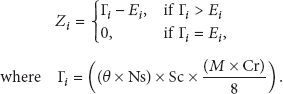
Before a frame is transmitted, the BS needs to decide the padding length and padding content. The padding length of the frame in ith transmission can be denoted as


3.2. Mobile Station (MS)
In a high speed MMR network environment, an MS will receive a multicast frame twice. When the first multicast frame arrives, the MS checks the FCS and all s-FCSs simultaneously. If the frame passes the FCS check, it means that there is no corruption in the received data. In case the FCS fails the check, but all the s-FCSs pass it, then only the FCS is corrupted and the received data is correct. In these two cases, it is not necessary to wait for the second frame. However, if both the FCS and any s-FCS fail the check, the MS must record the correct data blocks that already passed the s-FCS check and wait for the second frame. Algorithm 1 shows the pseudocode for the detailed procedure at the receiver. The check procedure is the same for the second frame which is via an RS. If any s-FCS fails the check in the second frame, the MS can use the “correct data block information” of any two frames from either RS or BS to correct the received data. Although the FCS and some s-FCSs may fail the check in the second frame, the MS can still obtain the correct data using the record of correct data blocks. Figure 2 shows the flow diagram of error correction procedure in a MMR network.
Input: #n arrival of emergency packet Output: emergency packet Z or send NACK (1) (2) count ← 0; (3) (4) (5) (6) (7) (8) (9) (10) s-FCS ( (11) (12) (13) count ← count + 1; (14) (15) (16) (17) (18) (19) count ← count + 1; (20) (21) (22) (23) (24) (25) (26) (27) (28) (29) (30)

The error correction procedure in a WiMAX MMR network.
As its name implies, our scheme proposes new strategies for the challenges in error correction techniques. To reduce the transmission cost of existing error correction scheme, we couple the error detection and retransmission procedures. Instead of adding redundancy to the transmitted information using FEC scheme, our algorithm progressively and selectively replaces subblocks with incorrect checksums of entire data burst (frame) when necessary. We refer to this strategy as progressive and selective FCS. However, there is a small error probability in Algorithm 1. The retransmission procedures will be resumed at next BS/RS if necessary.
3.3. Relay Station (RS)
In the proposed scheme, the RSs forward multicast frames in the same way as that in the original relay network environment, and these RSs perform the new error correction method that is like an MS attached to the BS directly.
4. Performance Evaluation
4.1. Simulation Scenarios
The network parameters used to evaluate the performance of the proposed error correction scheme are summarized in Table 1 [16–18]. We assume that the BS, RSs, and MSs always use the higher modulation rate to achieve better performance. Only one BS is used in the transparent-mode relay networks, and the cell coverage in transparent-mode relay networks is the same as the BS BPSK coverage.
Parameters.

We developed programs in EstiNet 7.0 (previously NCTU-ns) [19] simulator to compare our proposed scheme with the original scheme from various viewpoints and parameters. The model is based on the Stanford University Interim (SUI) path loss model recommended by the 802.16 task group [20]. The BS is located in the middle of a straight highway that extends 10 km. The deployment of RSs considered in this paper is along the highway. The distance between the BS and adjacent RS is 1.5 km, and the distance between the RSs on the boundary is 1 km. The simulation coverage of highway section contains 1 BS and 8 RSs. The proposed scenario considered in the simulations is shown in Figure 1.
4.2. Radio Propagation and Interference Model
In a production network, the signal quality may be attenuated due to several factors between the sender and the receiver, including the shadowing, fading, and path loss, which are critical features of any model in a wireless system. In this section, we describe the radio and interference models used in this work.
First we consider attenuation caused by path loss due to signal propagation over the distance. The fading and shadowing effects are not considered. In SUI path loss model, some assumptions about the sender's power and antenna gains can be used to determine the power of the signal received at MS as well as the SNR. The SNR at the receiver is calculated as follows:

MSC and SNR threshold.

The SNR between the BS and the MS depends on the signal power, distance d, and the noise and can be calculated as follows [16]:

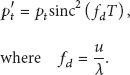
Second, we consider the LOS propagation. The effective transmitting power is reduced with Doppler effects and can be derived as follows [21]:

4.3. PERs versus Speeds
The bit error probability (BEP) of various types of modulation can be derived by using the SNR. In the case of Multilevel-QAM, the BEP 


In a general VANET, BS/RS coverage is always a key point that the industry must take into account when designing a robust emergency communication system. For instance, a macrocell base station with a greater coverage area is commonly applicable to a less populated area in which vehicles move fast. Without loss of generality, suppose that probability of successful transmission 
Figure 3 shows the PERs of the original error correction scheme and proposed error correction scheme in various distances between BS and MS when the packet size is 128 bytes. Figure 3(a) shows that both schemes can achieve good communication with MS in low speed. However, the proposed scheme has better performance than the original error correction scheme. The PER is lower than 20% for the whole coverage. Figure 3(b) shows that, by using the original scheme, the PER is higher than 50% for some coverage. This means that the condition of communication is not quite satisfactory and the MS may be temporarily disconnected in some sections when the speed reaches 120 km/hr. On the other hand, the proposed error correction scheme can effectively reduce PER. The PER is lower than 20% for 89.51% of the coverage and lower than 50% for all of the coverage. When ARQ mechanism works, the second transmission can also reduce PER. After second transmission, there is only 3.98% coverage in which PER is higher than 20% when the speed of MS reaches 120 km/hr. The proposed error correction scheme with retransmission will achieve the best transmission effect. After retransmission, the PER is lower than 20% for the whole coverage when the speed of MS reaches 120 km/hr. But the retransmission will cause the additional transmission latency which is a critical drawback for an emergency messaging system.

PER of the original error correction scheme and proposed error correction scheme, when packet size is 128 bytes and the speed of MS is (a) 90 km/hr, (b) 120 km/hr, and (c) 150 km/hr.
With the increase in the speed of the MS, the condition of communication will become worse. From Figure 3(c), when the MS uses the original scheme with speed reaching 150 km, the PER is higher than 50% in 33.38% of the coverage. For part of the coverage, PER is even more than 90%. However, using the proposed scheme, the coverage where the PER is higher than 50% drops to 13.52%. Table 3 shows the actual coverage probabilities for confidence PERs versus various speeds with two schemes.
Actual coverage probabilities for confidence PERs**.

**Packet sizes = 128 bytes.
4.4. PERs versus Packet Sizes
We also consider the packet size
Average PER reduction in different speeds.


PER of the original error correction scheme and proposed error correction scheme in various packet sizes, when the distance between BS and MS is (a) 1.1 km, (b) 2.1 km, and (c) 4.1 km.
4.5. Actual Transmitted Data (Packet Delivery Ratio)
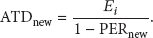
The actual transmitted data (ATD) is the size of the transmitted data, including the total frame and the retransmitted frame. The ATD will be no smaller than 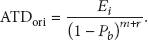
Goodput integral in different speed.

5. Concluding Remarks
Understanding the constraints imposed by public safety applications and usage scenarios is a key in establishing, deploying, and operating public safety communication networks. It is challenging to provide a highly reliable, mission-critical emergency communications system for a high-mobility environment. Based on the characteristics of emergency communications, the adoption of the WiMAX with mobile multihop relaying for emergency communications represents a significant advance in the technologies available for error detection and error correction operations.
We presented a novel framework—PSFCS—for reliable emergency communications in WiMAX MMR networks operating under the transparent mode. In a high-mobility environment, if an MS receives the same frame from the BS and an RS, the error subblocks can be corrected during the two repeated transmissions. Clearly, our approach can improve the throughput of WiMAX-based emergency communications systems.
In HARQ, the original data is encoded with a forward error correction (FEC) code such as turbo code. By increasing the code rate the error correction capability of FEC can be enhanced. However, with the expansion of code rate, the decoding time and the amount of data transmission are also increasing. Unlike HARQ, the proposed scheme uses the padding space to carry s-FCS and needs no extra bandwidth to transfer redundancy bits. “HARQ with soft combining” is used at the MAC and PHY layer. The MAC is used for signaling control messages such as ACK/NACK, while PHY layer is used for retention of transmission blocks and soft combining [22]. The proposed scheme is used at MAC layer and can be used with “HARQ with soft combining” together to achieve better error correction capability.
The simulation results show that the PER is improved significantly in a highway where the mobile stations have high packet error rates. Even if the moving speed of an MS reaches 150 km/hr, our approach still achieves a superior error correction performance for all types of modulation and/or coding rates. Therefore, the scheme would be also useful in environments with extremely poor radio conditions. In addition, the scheme's error detection capacity is slightly better than that of the original CRC scheme. Moreover, the proposed scheme is also expected to achieve high energy efficiency because the number of retransmissions could be reduced.
Footnotes
Conflict of Interests
The authors declare that there is no conflict of interests regarding the publication of this paper.