




Abstract
Conventional static fuzzy reliability models cannot be directly extended for dynamic reliability analysis of mechanical systems, which consist of correlative components with strength degradation, due to the difficulties in describing the strength degradation process of components under fuzzy load and considering the failure dependence between different components in a system in the possibility context. To deal with these problems, fuzzy dynamic reliability models of mechanical systems in terms of stress and strength are proposed in this paper, which take into account the degradation mechanism of mechanical components in the failure mode of fatigue. The proposed models can be used to represent the dynamic characteristics of fuzzy reliability and analyze the influences of the variation in the parameters of fuzzy stress and strength on the failure dependence of components in a system and the dynamic behavior of fuzzy system reliability. Besides, the explosive bolts for connection between launch vehicle and satellite are chosen as a representative example to illustrate the proposed method. The results show that different parameters of fuzzy stress have different influences on fuzzy system reliability and the failure dependence of components in a system.
1. Introduction
With the high requirements for safe launch and operation of modern technological systems in aerospace engineering, considerable efforts have been involved in the research on developing reliability models and much progress has been made in the methods for reliability estimate associated with their application in practical systems [1–6]. The reliability evaluation of mechanical systems, which are an integral part of most technology systems, plays an important role in the risk assessment of technology systems [7]. Owing to the comprehensive usage of series configuration in mechanical systems [8, 9], we will concentrate our work on dynamic reliability assessment of series mechanical systems in this paper.
For mechanical components and mechanical systems, the stress-strength interference (SSI) model is the most important method for reliability assessment, which is suitable for static reliability calculation. However, as indicated by Martin, it is imperative to extend the static reliability model to dynamic reliability models to take into account the gradual failure of mechanical components due to fatigue, corrosion, wear, and so forth, which exists commonly in practical engineering [10]. In practice, various computational intelligence algorithms have been adopted in the estimation of dynamic reliability. For example, the support vector machines approach is always used in the numerous reliability calculation due to its advantage in computational efficiency, which has applied to particle identification, face identification, data base marketing, and so forth [11, 12]. Xu and Wong extended least squares support vector machines to the domain of hysteresis modeling [13]. Besides, Fu and Xu proposed a method to predict the location of impact on a clamped aluminum plate structure by integrating principal component analysis and support vector machines [14].
In the last two decades, dynamic system reliability models have been well documented with most research focused on electronic systems. Lewis analyzed the time-dependent behavior of a 1-out-of-2: G redundant system via a Markov model [15]. Brissaud proposed a mathematical framework for dynamic reliability analysis of digital-based transmitters by introducing data variables [16]. Ding presented an approach to dynamic reliability analysis of bilateral contract electricity providers in restructured power systems by combining the stochastic process theory and the universal generating function technique [17]. Distefano introduced a methodology for evaluating dependent dynamic systems by using dynamic reliability block diagrams [18]. As pointed out by Moss, the methods for reliability analysis of electronic elements and systems are also effective for reliability assessment of mechanical components [7]. However, these methods should be used with some caution [7]. For mechanical systems in the spacecraft, some problems may be encountered in reliability assessment when directly using the existing dynamic reliability models.
It is difficult for mechanical systems in spacecraft to obtain the distribution of stress at any time instant due to insufficient load history samples.
The failure modes and the corresponding degradation behavior of mechanical systems are different from electronic systems. Therefore, dynamic reliability models of mechanical systems should be developed based on the failure modes analysis and the corresponding degradation mechanism of mechanical components.
To address the problems mentioned above, fuzzy dynamic reliability models of mechanical systems consisting of degraded mechanical components in the failure mode of fatigue are established in this paper. As a matter of fact, fuzzy sets theory has been comprehensively used in the performance analysis of various systems under uncertain environment. With the employment of membership function of fuzzy variables, both experimental data and expert information can be used to cope with the uncertainty in the system analysis [19]. For example, neural networks (NNs) and fuzzy logic can be used for robotic control. Li and Liu dealt with dynamic modeling and task-space trajectory following issues for nonholonomic mobile manipulators moving on a slope by using an adaptive neural-fuzzy controller [20] and presented an algorithm for automatic tip-over prevention and path following control of a redundant nonholonomic mobile modular manipulator by using NNs and fuzzy logic [21].
In recent years, some efforts have been made to analyze fuzzy reliability of various engineering systems by employing the fuzzy set theory introduced by Zadeh in 1965 [22]. Ma et al. proposed a method to analyze the dynamic response and reliability of fuzzy-random truss systems under the stationary random load [23]. Roberts presented an approach to analyzing fuzzy system reliability by modeling a single fuzzy probability distribution for a component from some possible distributions [24]. Zhou put forward a fuzzy reliability model of pressure piping system considering both the randomness of assessment parameters and the fuzziness of failure areas [25]. However, these models mainly focused on static fuzzy reliability analysis of systems. Fuzzy dynamic reliability models of mechanical systems are seldom reported. Besides, when considering the gradual failure of mechanical systems, the existing static fuzzy models cannot be directly extended to fuzzy dynamic reliability models of mechanical systems due to the difficulties listed as follows.
Failure dependency takes place commonly in mechanical systems because the mechanical components in the system share the same working environment. Fuzzy dynamic reliability models of mechanical systems in terms of stress and strength, which take account of failure dependence of mechanical components, are seldom reported.
In the case where stress at each load application is a fuzzy variable, methods to determine the statistical characteristics of strength in its degradation process are seldom reported, which is one of the main difficulties of extending static fuzzy reliability models to fuzzy dynamic reliability models.
The fuzzy dynamic reliability models proposed in this paper provide a method for dynamic reliability estimation of mechanical systems in the possibility context, which can also be used to quantitatively analyze the influences of the variation in material parameters and stress parameters on dynamic reliability of mechanical components. The remainder of this paper is organized as follows. In Sections 2 and 3, fuzzy dynamic reliability models of mechanical systems are developed, In Section 4, numerical examples are given to illustrate the proposed models and analyze the impacts of fuzzy characteristics of stress on both the failure dependence of components in a system and the dynamic behavior of reliability and failure rate of a system. Besides, Monte Carlo simulations are carried out to validate the proposed models. Finally, conclusions are summarized in Section 5.
2. Fuzzy Stress
Due to the limitations of technology and cost, it is difficult or impossible to acquire accurate distribution of stress at each time instant with statistical tools. An alternative method is to model the stress at each time instant as a fuzzy variable characterized by its membership function (MF) by employing the fuzzy set theory as shown in Figure 1.
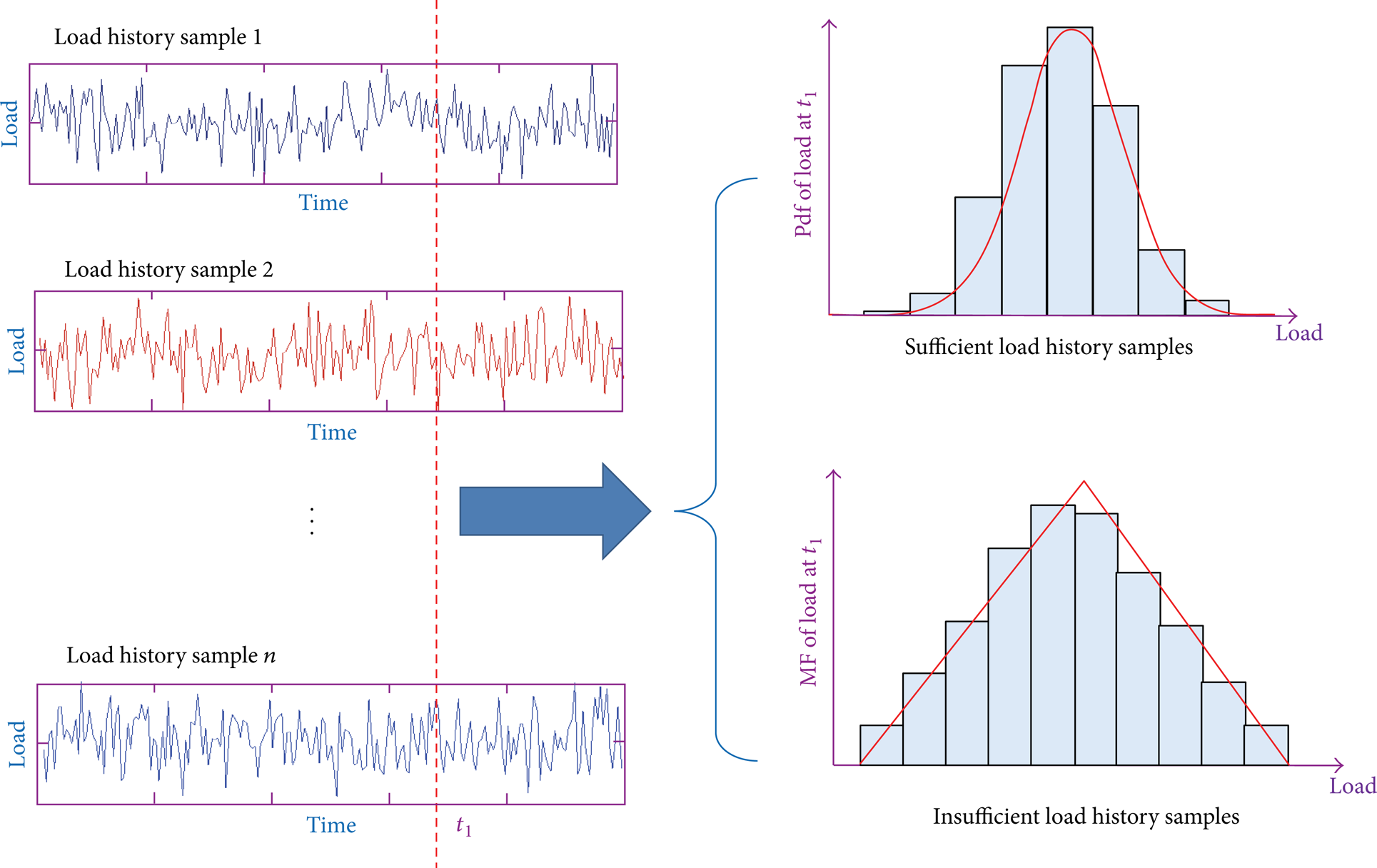
Pdf and MF of load.
The fuzzy set theory provides a mathematical tool to deal with the uncertainty of parameters involved in reliability models in the possibility context [26]. A fuzzy set

where b is the center point, whose degree of membership is equal to one. a and c are left parameter and right parameter, respectively, which determine the upper bound and lower bound of the fuzzy set, respectively.
For mechanical components, the fuzzy stress can be obtained by integrating the fuzzy linear regression method and the finite element method as follows [31].
(1) Express the fuzzy stress y in the following form:

where A j (j = 1,2, …, i) is the fuzzy regression coefficients and u j (j = 1,2, …, i) are the parameters related to stress, such as Youngs modulus of material, weight density, and geometry dimensions.
(2) Obtain the fuzzy regression coefficients in (1), which is denoted by triplets (a j , b j , c j ) (j = 1,2, …, i), by solving the following linear programming problem:

where α is the threshold of the fuzzy estimate.
(3) Calculate the MF of the fuzzy stress according to the MF of the fuzzy regression coefficients and (2).
3. Fuzzy Dynamic Reliability Model of Dependent Mechanical Systems
Under the failure mode of fatigue, the strength does not degrade in the absence of load application. Therefore, the change of strength is discontinuous and it is more straightforward to establish reliability model with respect to load application times rather than time. Then, the reliability model of mechanical components with respect to time under the failure mode of fatigue can be further developed based on the relationship between load application times and time.
3.1. Fuzzy Dynamic Reliability Models of Dependent Systems with respect to Load Application Times
In a series system with statistically independent components, the strength degradation of each component can be determined independently based on the material properties of the component and the characteristics of load applied on the component as shown in Figure 2(a). However, in practice, the components may be correlative with each other due to sharing the same load, which is a common phenomenon in series mechanical systems, such as the transmission system and kinematic mechanisms. In this case, the strength degradations of the components in the system are mutually correlative. The strength of the components changes simultaneously at the moment when the load appears as shown in Figure 2(b). Besides, the statistical properties of the strength degradation processes of the components are jointly determined by the properties of the load shared by the components.

(a) Schematic strength degradation process of independent components. (b) Schematic strength degradation process of dependent components.
In addition, even in the probability context, it is difficult to determine the strength degradation process of a component due to the randomness of the magnitude of stress at each load application. Hence, it is more difficult to describe the strength degradation under fuzzy stress, which is seldom reported in the existing literatures. To cope with the problems mentioned above, fuzzy dynamic reliability models of dependent system will be developed in this section.
According to fuzzy probability theory proposed by Zadeh, the fuzzy probability that a random variable x belongs to a fuzzy set

where f(x) is the probability density function (pdf) of x and


MF of the triangular fuzzy number.
In practice, the uniform distribution has been widely used as the distribution of a fuzzy variable on the interval of an α-cut in fuzzy reliability calculation according to the maximum entropy approach [33]. In this paper, the uniform distribution is adopted to characterize the uncertainty of stress on the interval of the α-cut. In general, the residual strength of a mechanical component after the application of load for n times can be expressed in the following form [34]:

where r(n) is the residual strength after the application of load for n times and r represents initial strength. D i stands for the damage of a component caused by the ith load application and ε is a material parameter. According to the Miner linear damage accumulation rule [35], the damage caused by the stress s for once is
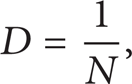
where N is the lifetime of a component under the stress s. In addition, the S-N curve of mechanical components presents the relationship between the magnitude of the stress s on components and the corresponding lifetime N of components under the stress, which can be mathematically expressed as

where m and C are material parameters, which can be determined by tests. Therefore, the damage caused by the application of load for once can be written as

Denote the fuzzy stress at the ith load application by (a i , b i , c i ). Then, the distribution of the fuzzy stress on the interval of α-cut at the level of α can be given by

When considering the distribution of the fuzzy stress on the interval of α-cut, the damage caused by the ith application of load at the level of α can be approximately expressed as follows:

Therefore, for a deterministic mechanical component with the initial strength of r, the residual strength of a mechanical component after the application of load for n times at the level of α can be written as follows:

From the system reliability theory, it can be learned that the reliable operation of a series system is determined by the weakest component in the system. Therefore, the reliability of a dependent series system at each load application can be obtained by calculating the probability that the minimum residual strength is greater than the stress. For illustrative convenience, in this section, the series system is assumed to be composed of identical components, which are subjected to identical stress in the case of sharing the same environmental load. Denote the fuzzy stress at the ith load application by (a i , b i , c i ). When the minimum initial strength of the components in the system is r min , the fuzzy dynamic reliability of the system under the application of load for n times at the level of α can be given by

where

For a dependent series system that consists of k identical components with the initial strength characterized by the pdf of f r (r), the pdf of the minimum initial strength of components in the system can be given by [36]

Therefore, the fuzzy system reliability under the application of load for n times at the level of α can be given by

From (5), the fuzzy dynamic reliability of a dependent series system with respect to load applications times can be calculated by the integral of the fuzzy reliability at different levels of α in the following form:
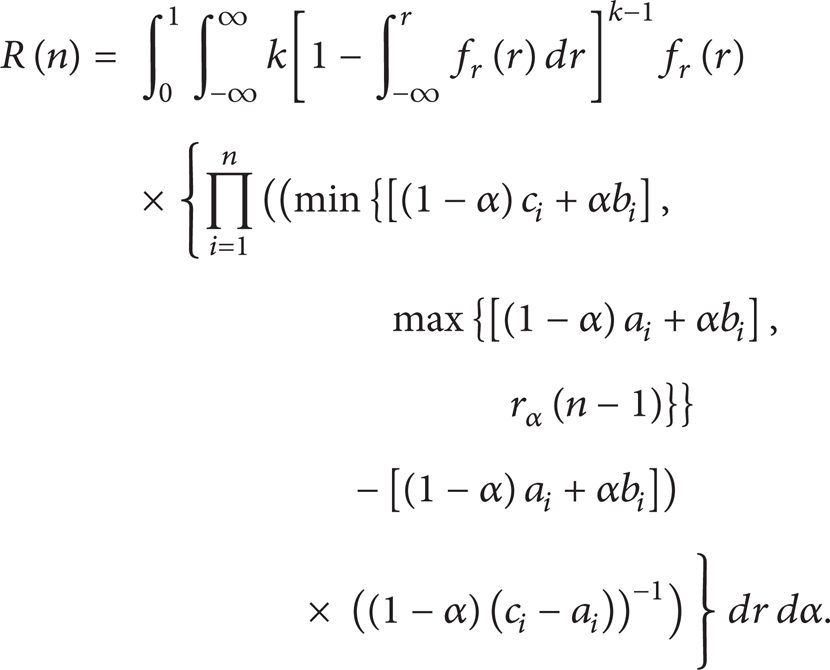
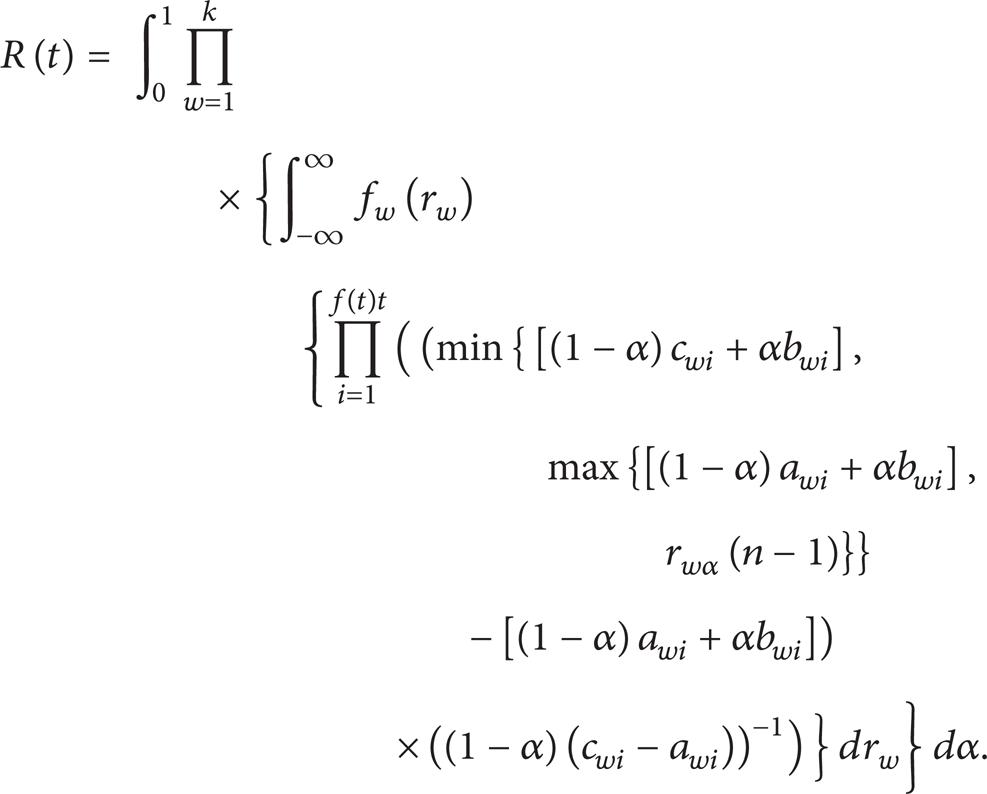
In addition, when the components in the system are statistically independent, the fuzzy dynamic system reliability can be analogously derived as follows:
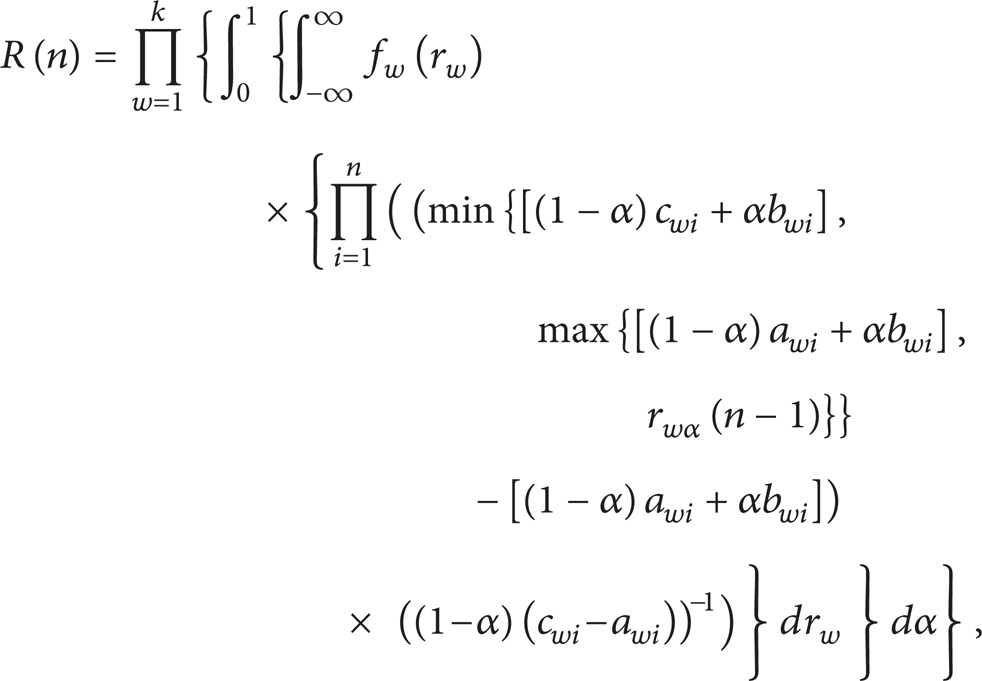
where

f w (r w ) is the pdf of the initial strength of the wth component in the system, and (a wi , b wi , c wi ) (w = 1,2, …, k) is the fuzzy stress on the wth component at the ith application of load.
3.2. Fuzzy Dynamic Reliability Models of Dependent Systems with respect to Time
The fuzzy reliability model developed in Section 3.1 is with respect to load application times. When the frequency function of the occurrence of load is available, which is denoted by f(t), the fuzzy dynamic system reliability with respect to time can be written as
However, in the case where the load application times in a given time period is a random variable, it is difficult to provide a straightforward deterministic frequency function of load occurrence times for dynamic reliability analysis, which can only be expressed with the statistical tools. As a matter of fact, the Poisson process has been proved to be an effective stochastic process to describe the randomness of the arrival time of load within a specified time period [15]. Provided that the intensity of the Poisson process is λ(t), the probability that the load appears for n times in the time period of t can be given by

In the case where the load process follows the Poisson process, the fuzzy dynamic reliability of the dependent system with respect to time at the level of α can be obtained according to the total probability theorem in the following form:
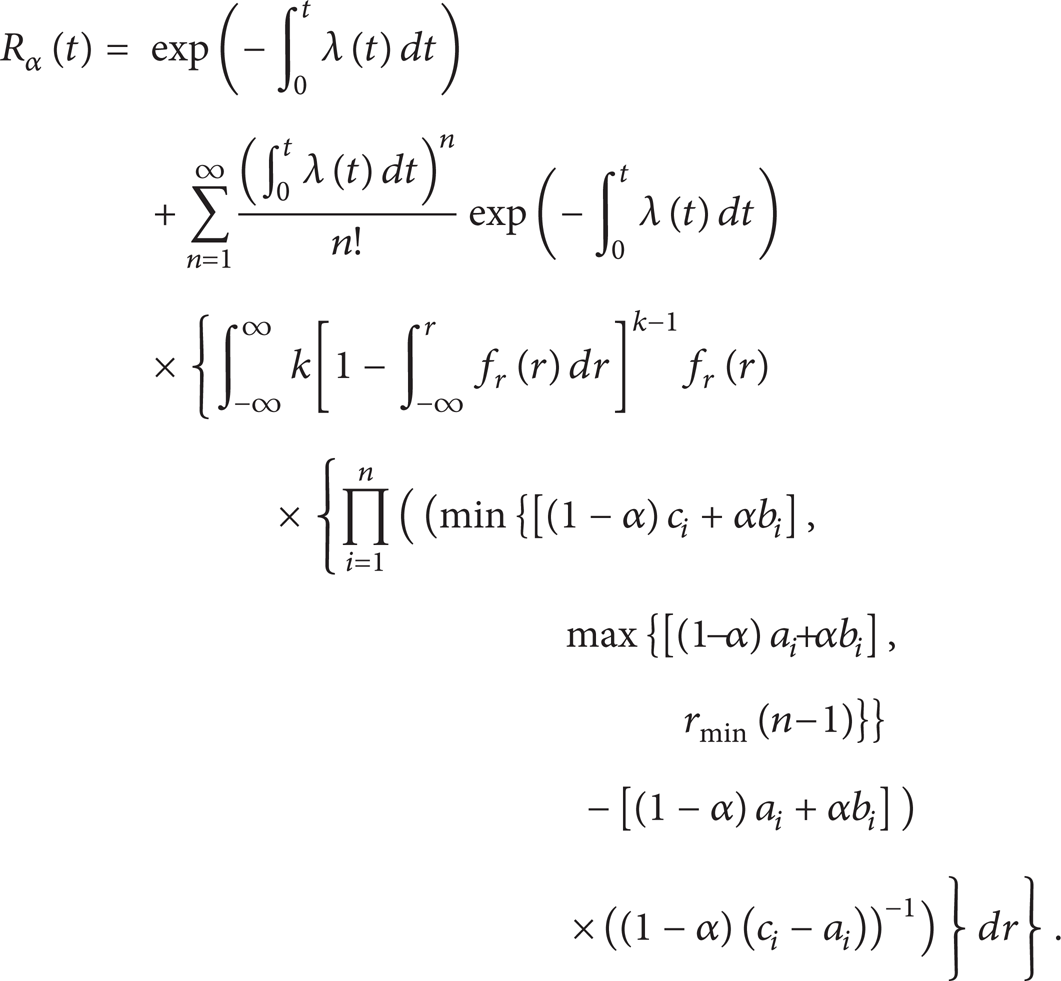
According to (5), the fuzzy dynamic reliability of dependent system with respect to time can be given by

Correspondingly, the fuzzy failure rate of the dependent system at the level of α can be expressed as
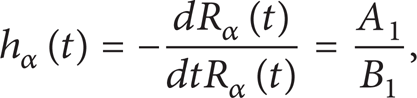
where
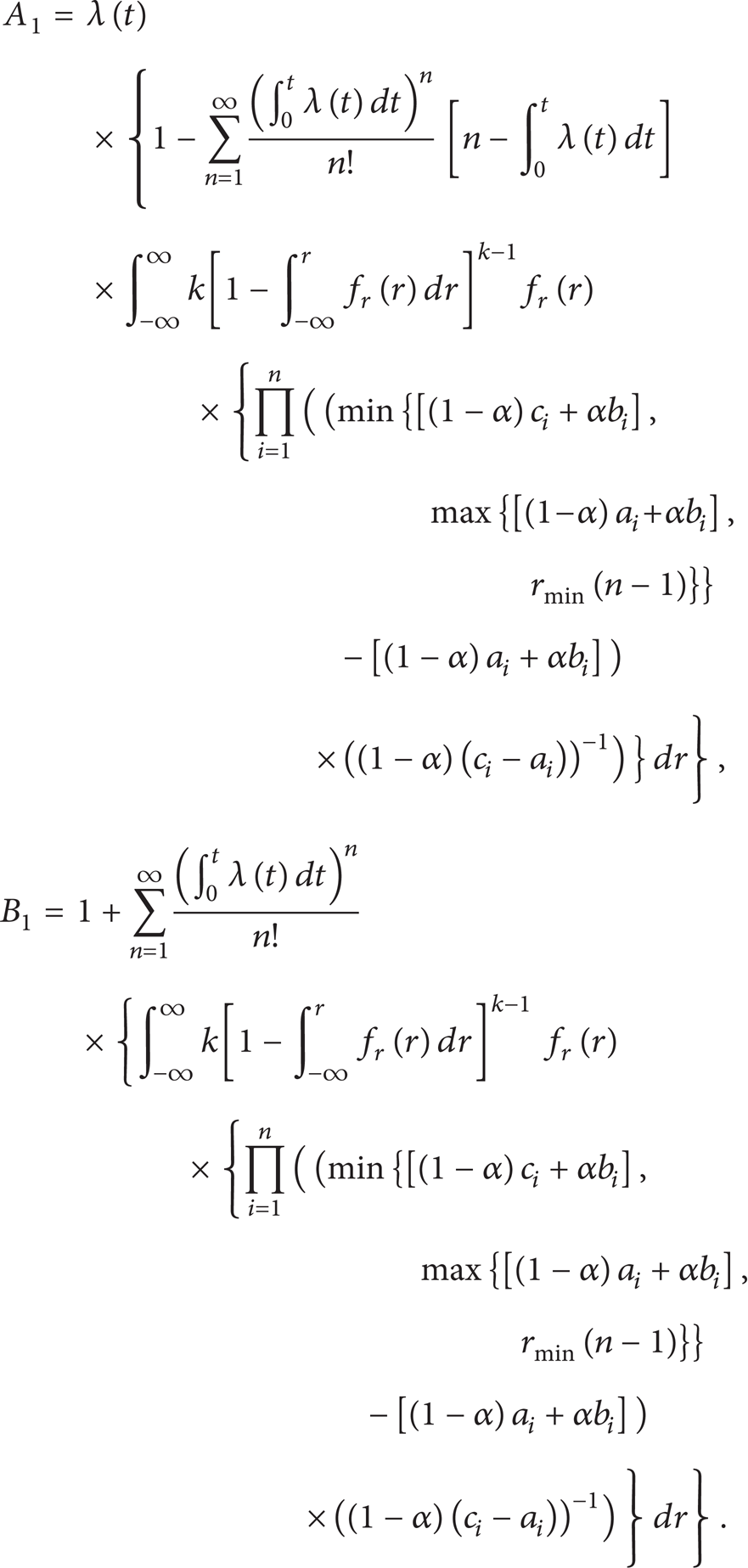
The fuzzy failure rate of the system can be written as

where

4. Numerical Examples
The explosive bolt has been widely used as a connection and pyrotechnical separation device in the aerospace industry, which can provide the joint system with adequate connection strength and produce few pollutants. An important application of the explosive bolt is for the connection and separation of the payload adapter and the interface ring, which are connected to the launch vehicle and the satellite, respectively. The schematic structure and the finite element model of the joint system are shown in Figures 4 and 5, respectively. In the launch process of satellites, the explosive bolts are used to sustain the applied tensile forces and bending moments through the metal belts and the V-segments [37]. In the separation process of the satellite and the launch vehicle, the explosive bolt fractures at the site where a groove is designated with the help of internal power source generated by explosive charge.
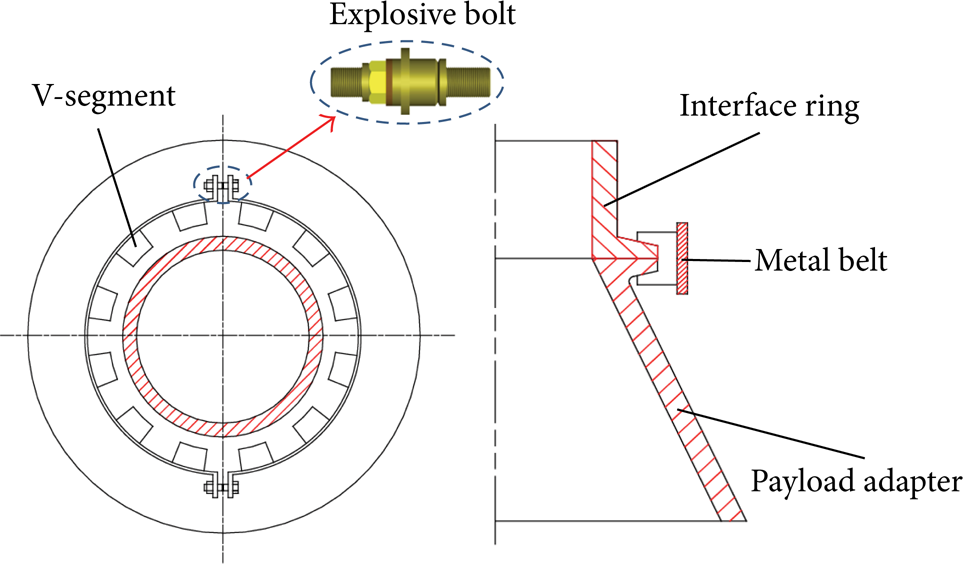
Structure of the joint system.
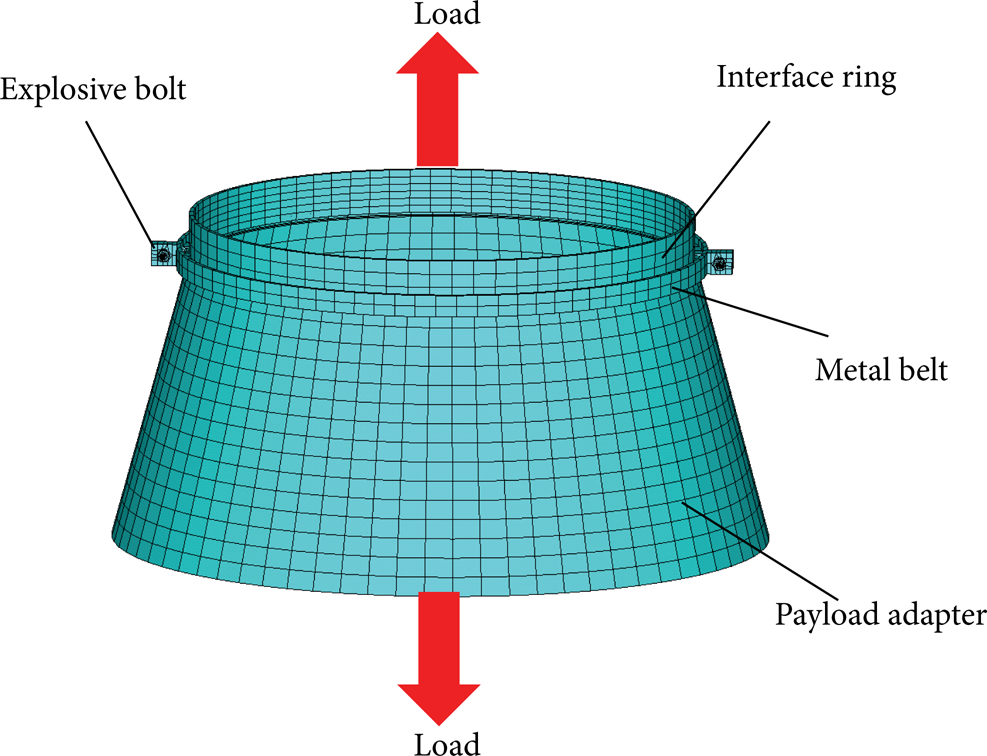
Finite element model of the joint system.
To guarantee successful separation of the satellite and the launch vehicle, more than one explosive bolt is always adopted in the joint system. At the separating stage of launch vehicle and the satellite, the explosive bolts constitute a parallel system as shown in Figure 6(a), whose reliability can be analyzed by using the static SSI model. However, in the launch process of satellites, the explosive bolts share the same external load and the failure of a single explosive bolt will result in the failure of the whole joint system. Therefore, the explosive bolts compose a dependent series system in the launch process of satellites as shown in Figure 6(b). Moreover, the fatigue failure of bolts may be caused due to the fluctuating bolt stress in the launch process of satellites, which is a significant and costly failure mode for explosive bolts [38]. Therefore, the reliability of the dependent series system should be estimated considering strength degradation of components. In this section, explosive bolts are chosen as representative examples to illustrate the fuzzy dynamic reliability models proposed in this paper. Moreover, the impacts of various factors on the correlation between different components in a dependent system and further on the fuzzy dynamic reliability will be analyzed through numerical examples.
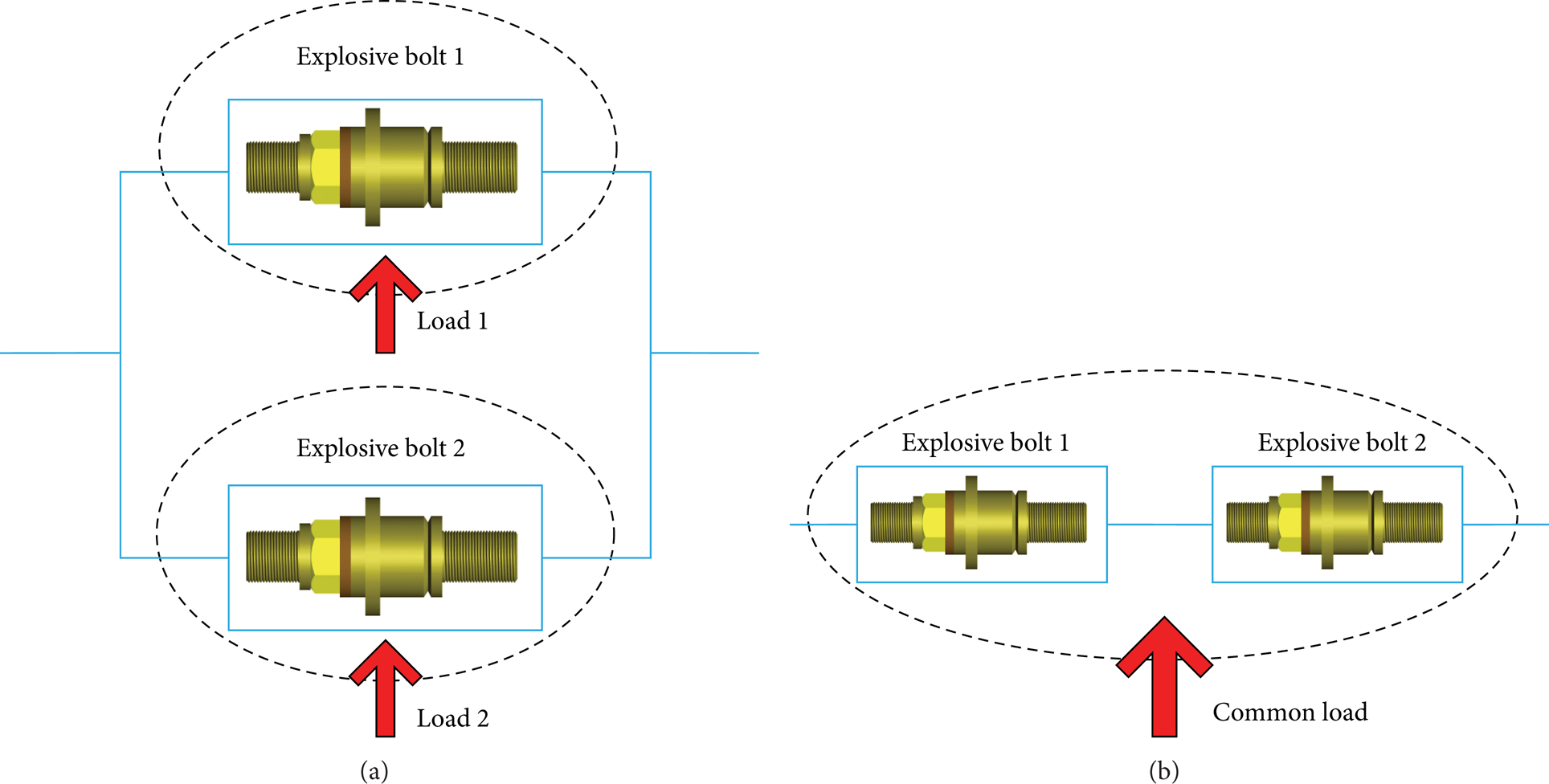
(a) Block program of the independent parallel system, and (b) block program of the dependent series system.
Consider a joint system with two explosive bolts, which constitute a dependent series system. The fuzzy stress and the material parameters of the explosive bolts are listed in Table 1. The fuzzy dynamic reliability of the dependent system at different levels of α is shown in Figure 7. In addition, to validate the proposed fuzzy dynamic reliability model, the Monte Carlo simulation is carried out in this section with its flow shown in Figure 8. In the Monte Carlo simulation, the actual strength degradation process is simulated based on the fuzzy stress in a strength degradation process, whose occurrence time and magnitude are generated randomly, with the degradation mechanism of the components. The results from the Monte Carlo simulation and the fuzzy dynamic reliability of both the dependent system and the system with independent components are shown in Figure 9.
Stress parameters and material parameters of explosive bolts.

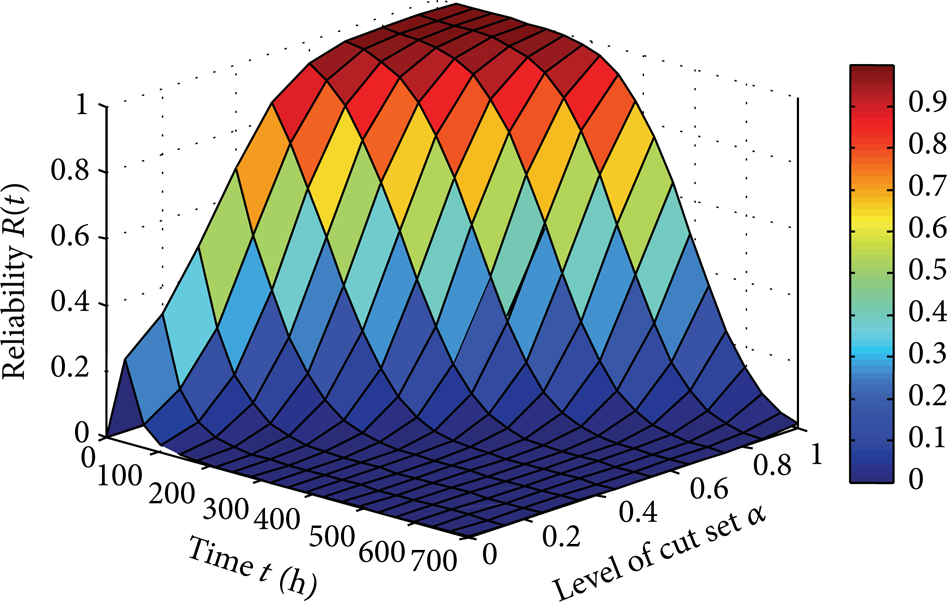
Reliability of explosive bolts at different levels of α.

Flowchart of Monte Carlo simulation.

Comparison between the results by using the proposed method and the results from Monte Carlo simulation.
From Figure 7, it can be learned that the proposed reliability models provide a method to quantitatively analyze the dynamic changing process of fuzzy system reliability that decreases with time. Besides, the level of the cut set has great influences on the assessment of fuzzy system reliability. An increase in the level of the cut set results in a higher reliability. From Figure 9, we can learn that the fuzzy reliability calculated by using the method proposed in this paper shows good agreement with the results obtained from Monte Carlo simulations. In addition, in the case of fuzzy stress, the failure dependence of components in a series system leads to a higher reliability.
In order to analyze the impacts of the fuzzy characteristics of the stress on the failure dependence of the components in a dependent system and the dynamic behavior of fuzzy system reliability, consider the following three cases.
Case 1. To analyze the influences of the left parameter a of the fuzzy stress on the fuzzy dynamic reliability and fuzzy failure rate of the system, the center point b and the right parameter c of the fuzzy stress and the material parameters are kept constant as listed in Table 2. The reliability and failure rate of both the dependent system consisting of correlative components and the system composed of independent components under the fuzzy stress with different left parameters are shown in Figures 10 and 11, respectively.
Stress parameters and material parameters of explosive bolts.


Reliability of independent system and dependent system with different left parameters.
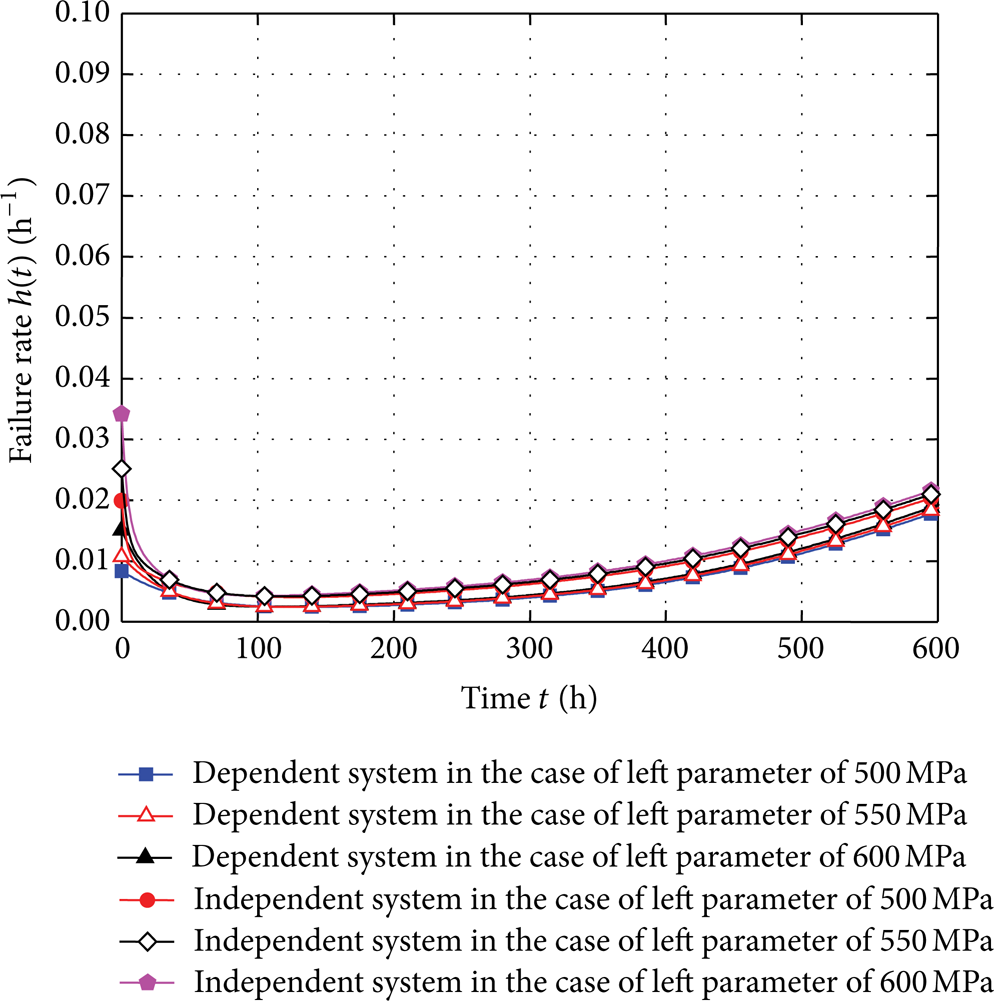
Failure rate of independent system and dependent system with different left parameters.
From Figures 10 and 11, we can learn that the left parameter of the fuzzy stress has few influences on the fuzzy system reliability and the fuzzy failure rate. In general, the fuzzy reliability increases and the fuzzy failure rate decreases with the decrease in the left parameter of the fuzzy stress. Furthermore, the failure dependence of the components in a series system causes the fuzzy system reliability less sensitive to the variation in the left parameter of the fuzzy stress. Besides, when considering strength degradation of components under fuzzy stress, the fuzzy failure rate calculated by using the method proposed in this paper is consistent with the bathtub curve assumption used in the probability context.
Case 2. To analyze the influences of the right parameter c of the fuzzy stress on the fuzzy dynamic reliability and fuzzy failure rate of the system, the left parameter a and the center point b of the fuzzy stress and the material parameters are kept constant as listed in Table 3. The reliability and failure rate of both the dependent system and the system with independent components under the fuzzy stress with different right parameters are shown in Figures 12 and 13, respectively.
Stress parameters and material parameters of explosive bolts.


Reliability of independent system and dependent system with different right parameters.

Failure rate of independent system and dependent system with different right parameters.
From Figures 12 and 13, we can learn that the right parameter of the fuzzy stress has great influences on the fuzzy system reliability and the fuzzy failure rate. The fuzzy system reliability decreases and the fuzzy failure rate increases with the increase in the right parameter of the fuzzy stress. Moreover, the fuzzy system reliability is more sensitive to the variation of the right parameter of the fuzzy stress when the value of right parameter is lower. In addition, the right parameter of the fuzzy stress has considerable influences on dependence of components in a system. The failure dependence of the components in a series system becomes more obvious when the right parameter of the fuzzy stress is larger. Correspondingly, the difference between the reliability of the dependent system and the reliability of the independent system increases with the increase in the right parameter of the fuzzy stress.
Case 3. To analyze the influences of the center point b of the fuzzy stress on the fuzzy dynamic reliability and fuzzy failure rate of the system, the left parameter a and the right parameter c of the fuzzy stress and the material parameters are kept constant as listed in Table 4. The reliability and failure rate of both the dependent system and the independent system composed of independent components under the fuzzy stress with different center points are shown in Figures 14 and 15, respectively.
Stress parameters and material parameters of explosive bolts.


Reliability of independent system and dependent system with different center points.

Failure rate of independent system and dependent system with different center points.
From Figures 14 and 15, we can learn that the center point of the fuzzy stress has significant influences on the fuzzy system reliability and the fuzzy failure rate. The fuzzy system reliability decreases and the fuzzy failure rate increases with the increase in the center point of the fuzzy stress. Furthermore, in the case where the value of the center point of the fuzzy stress is higher, the fuzzy system reliability is more sensitive to the variation of the center point of the fuzzy stress. Besides, the center point of the fuzzy stress has great influences on the dependence of components in a system. The failure dependence of the components in a series system is more obvious in the case of smaller center point of the fuzzy stress, which results in a larger difference between the reliability of the dependent system and the reliability of the independent system.
In addition, to analyze the influences of the number of components in the system on the correlation between the components in a dependent system, the material parameters and the parameters of the fuzzy stress are summarized in Table 5. The fuzzy dynamic reliability and fuzzy failure rate of the dependent system and the system consisting of independent components with different number of components are shown in Figures 16 and 17, respectively.
Stress parameters and material parameters of explosive bolts.

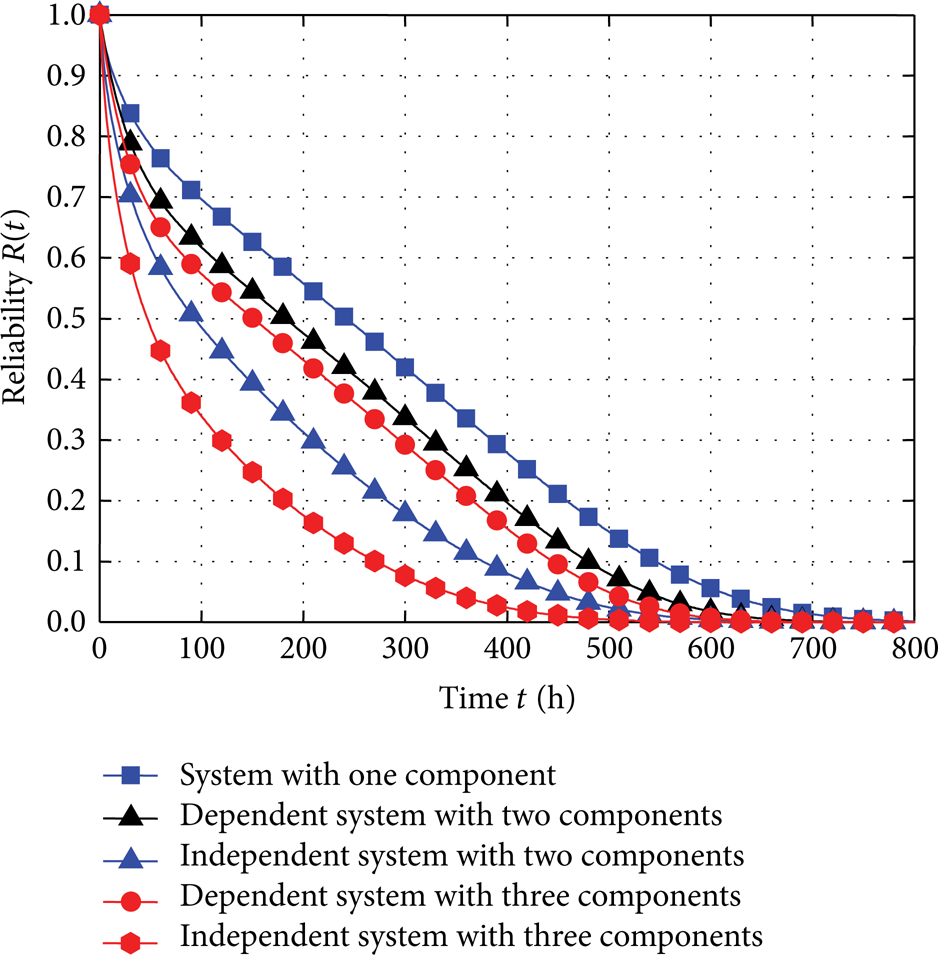
Reliability of independent system and dependent system with different number of components.
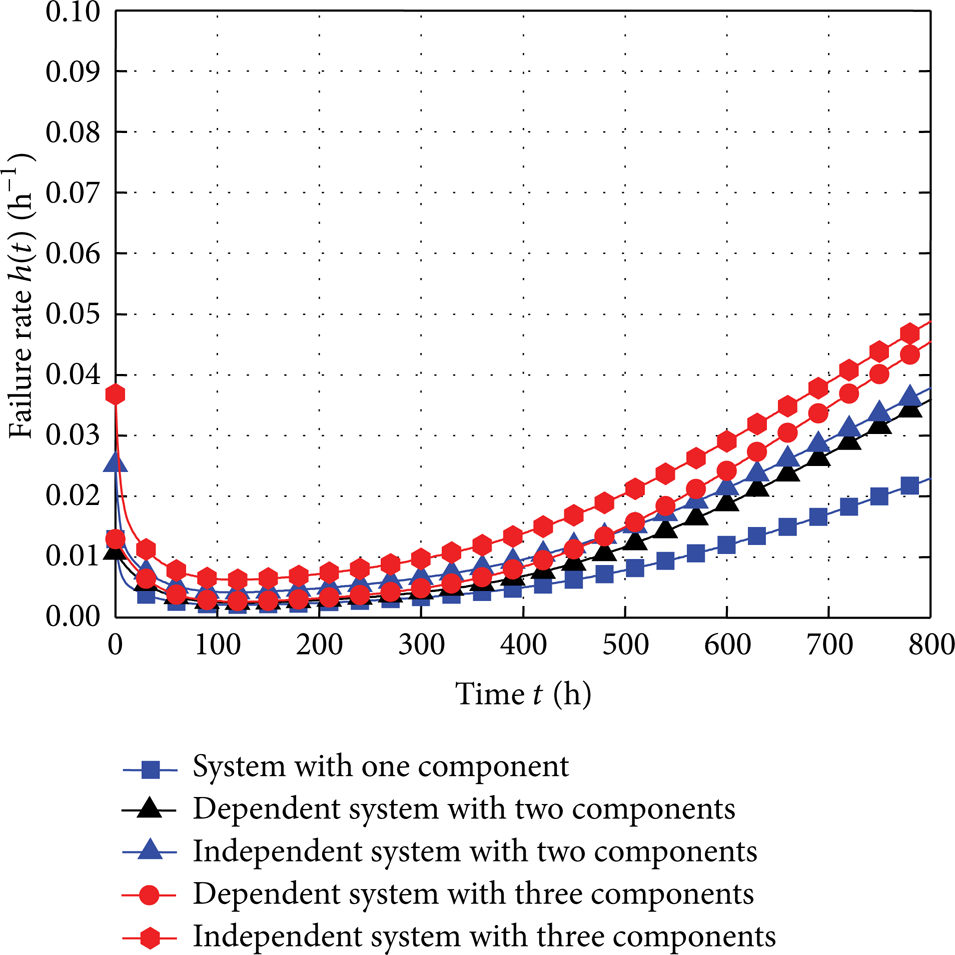
Failure rate of independent system and dependent system with different number of components.
From Figures 16 and 17, it can be learnt that the number of components in a system has great influences on the fuzzy system reliability and the fuzzy failure rate. The fuzzy system reliability decreases and the fuzzy failure rate increases with the increase in the number of components. Furthermore, compared with the reliability of the dependent system, the fuzzy reliability of the independent system is more sensitive to the change of the number of the components in the system. Besides, for both the dependent system and the independent system, the fuzzy system reliability is more sensitive to the variation of the number of components in the system when the number is small. In addition, the number of components has considerable impacts on the failure dependence of components in a system. The failure dependence of the components in a series system becomes more obvious when the number of components is larger, which leads to a larger difference between the reliability of the dependent system and the reliability of the independent system.
5. Conclusion
In this paper, a method for fuzzy dynamic reliability assessment of mechanical systems in terms of stress and strength is presented. The reliability models proposed in this paper take into account the degradation mechanism of mechanical components and can be used to represent the dynamic characteristics of the fuzzy reliability and failure rate of mechanical systems.
Moreover, the reliability models proposed in this paper provide a method for dynamic reliability analysis of mechanical systems with correlative components in the possibility context. Furthermore, the proposed models can be used to quantitatively analyze the influences of the variation in parameters of fuzzy stress on the failure dependence of components in a system and the dynamic behavior of fuzzy system reliability. The results show that the left parameter of the fuzzy stress has few influences on the fuzzy system reliability. The right parameter and the center point of fuzzy stress and the number of components in a system have significant effects on the fuzzy system reliability and the failure dependence of components in a system.
Further work is in progress to include other variables in the reliability models to achieve more accurate predictive results. Besides, extension of the proposed method to problems of reliability-base design optimization is currently being pursued by the present authors.
Footnotes
Acknowledgments
This work was supported by the National Science Foundation of China under Contract no. 11072123, the National High Technology Research and Development Program of China (863 Program) under Contract no. 2009AA04Z401, the Major State Basic Research Development Program of China (973 Program), and the Project-sponsored by SRF for ROCS, SEM.