




Abstract
Wireless sensor networks (WSNs), which are a promising technology for the implementation of long-span bridge health monitoring, have gained increasing attention from both the research community and actual users. The limited energy of sensor emphasizes the importance of performance optimization of WSNs. In this paper, a methodology and strategy of node arrangement are developed to improve the performance of WSN for long-span bridge health monitoring, including balancing energy consumption, increasing data capacity, and reducing deployment cost. A composite WSN organized by sensor nodes and relay nodes is introduced for structural health monitoring. The energy consumption model of the composite WSN is firstly presented. And then, the data acquisition efficiency (DAE) defined as data capacity per unit deployment cost is suggested to evaluate the performance of WSN. Subsequently, the node arrangement is divided into two phases of sensor node arrangement and relay node arrangement. An improved general genetic algorithm is proposed to configure sensor nodes, and a nonuniform node arrangement method is developed to distribute relay nodes. Based on the DAE, the theoretical formulae of nonuniform node arrangement are deduced. The process of two-phase node arrangement is also provided for practical bridge engineers.
1. Introduction
Long-span bridges, which are characterized by low stiffness, low damping, and long service period, are susceptible to random vibration, such as vehicle load, strong wind, ambient vibration, and seismic motion [1, 2]. Structural health monitoring (SHM), which can assess existing or newly built bridges, has been implemented on bridges in Europe, USA, Canada, Japan, Korea, China, and other countries [3]. Because the modal parameters, for example, frequency, modal shape, and damping ratio, are the sensitive indexes of the structural properties such as stiffness and damage, vibration-based methodology has been widely developed in the past few decades to evaluate structural performance and identify structural damage or deterioration [4–7]. So vibration monitoring is an important component in SHM system of bridges. In most cases, traditional wired accelerometers are employed. However, the span of long-span bridges almost exceeds 1000 m; miles of cables used for data communication induce the costs of sensor installation, maintenance, and repair extremely high. The Bill Emerson Memorial Bridge is instrumented with 84 accelerometer channels with an average cost per channel of over
The advancement in wireless technology has made the low cost, on-board computation, small size, ease of installation, and wireless communication sensors feasible. Those attractive features of wireless sensors motivate the shift of long-span bridges vibration monitoring away from traditional wired schemes towards the use of wireless sensor networks (WSNs), which provide a promising alternative to traditional wired sensor networks [10]. Many researchers have contributed to employ WSNs to monitor long-span bridges vibration, and several types of wireless accelerometer are developed [11–13]. Recent successful implementations of such WSNs for full-scale SHM have demonstrated the potential of the technology [14–19]. The dimension of long-span bridges in the longitudinal direction is much larger than that in the other two directions, so the linear array is employed to arrange the wireless accelerometer networks in general. The wireless accelerometers (collectively referred to as sensor nodes in WSNs) are uniformly placed on the girder along the span one by one. The data collected by wireless accelerometers is transmitted to the sink by multihop. Most of the wireless accelerometers are powered by battery, which means that the energy of a sensor is limited. The sink has distinctive characteristics when compared to other nodes, such as more energy capacity, more processing power, and more memory, which makes them perfect to perform high demand processing and storing tasks. In this type of WSN, the nodes close to the sink are responsible for not only collecting data and transmitting those data to next node but also retransmitting data from other nodes. The nearer the node is away from the sink, the heavier the traffic load is. As a result, nodes near the sink would deplete their energy quickly, leading to what is called an “energy hole” near the sink. Once the “energy hole” appears, no more data can be transmitted to the sink, and the network life ends. But a great amount of energy of nodes far from the sink is unused. Existing experimental results show that if nodes are distributed uniformly in the network, up to 90% of the total initial energy of those nodes is left when the network lifetime is over [20]. So the performance of the WSN is very poor. However, the application research of WSNs in civil engineering mainly focuses on wireless accelerometer development, WSNs implement on bridges, and data processing. The optimal wireless accelerometer arrangement, which aims to eliminate “energy hole,” balance energy consumption in WSNs, and improve the performance of network, attracted little attention. But this is the prior work to carry out vibration monitoring using WSNs which cannot be neglected.
In the field of WSNs, some achievements about the “energy hole” had been made. Li and Mohapatra [21] presented an analytical model for the “energy hole” problem in WSNs with uniform node distribution. Then, Olariu and Stojmenović [22] proved that the “energy hole” problem is unavoidable in WSNs under the conditions that the nodes in the network are distributed uniformly and data are collected uniformly. At the same time, they discussed the nonuniform node distribution strategy and stated that a balanced energy depletion is possible [23]. Afterward, Lian et al. [20] proposed a nonuniform node distribution strategy to enhance the total amount of sensed data (data capacity) of WSNs. More recently, Wu et al. [24] assumed that all the nodes are deployed in a circular area and developed a nonuniform node distribution that the number of nodes in the outer annulus is geometric proportional to that in the inner annulus. Hossain et al. [25] provided an analytical method for placing a number of nodes in a linear array such that each node dissipates the same energy per data gathering cycle. All of the algorithms presented above assume that the architecture and responsibility of all nodes in WSNs are identical and the energy consumption of data sensing can be negligible. Furthermore, the performance involving deployment cost and data acquisition capability of the WSNs is unconsidered. This is fit for general applications of WSNs, such as habitat monitoring, medical care, precision agriculture, or military surveillance. But in WSNs for long-span bridge vibration monitoring, the sampling rate is extremely high, more than 50 Hz sometimes, and the energy consumption relating to data sensing is an important component in all of the node energy dissipation. On the other hand, the wireless accelerometer usually consists of a wireless network node platform and a sensor board. The cost of sensor board almost accounts for 50% of the total sensor cost. So, in order to balance the monitoring cost and data capacity, employing some nodes without sensor board, which are named as relay nodes in this paper, in retransmitting data is an advisable choice. A rational WSN for long-span bridge vibration monitoring should contain senor nodes and relay nodes. When integrating energy consumption, network cost, data capacity, and inhomogeneous nodes, the nonuniform node distribution strategy of WSNs has much difference. Until recently, there is some lack of knowledge about this topic. The purpose of this paper is to provide an analytical framework for arranging sensor nodes and relay nodes in WSN nonuniformly, so that the energy dissipation of each node is uniform, and the performance of the network is maximized. We preliminarily focus on the composite WSN for structural vibration monitoring of long-span bridges that is organized by sensor nodes and relay nodes.
The remainder of this paper is organized as follows. Section 2 gives a system description of the composite WSN, energy consumption model, and network performance index. In Section 3, the improved general genetic algorithm (GGA) for sensor nodes configuration, the nonuniform node arrangement method for relay nodes configuration, and the process of two-phase node arrangement are presented. Finally, some concluding remarks are given.
2. WSN Performances
2.1. System Description
As mentioned before, the WSN for long-span bridges vibration monitoring can be set as a linear array. The composite WSN including sensor nodes and relay nodes is placed on one side of the girder as a line, as shown in Figure 1. Total n sensor nodes are deployed along a straight line of length d. The hop-by-hop communication is performed from the source node (sensor node) to sink. The sensor nodes are in charge of sensing data, receiving data, and transmitting data. The transmitted data include the data sensed by local sensor node and the data from other nodes. The relay nodes, which have the same wireless network node platform as the sensor node and without sensor board, are only responsible for retransmitting data. The locations of sensor nodes can be optimized by traditional wired sensor place method to fulfill the requirements of structural model identification and condition assessment. The relay nodes are arranged to balance energy dissipation in the composite WSN and improve performance of the composite WSN.

The linear composite WSN for bridge vibration monitoring.
In order to use the mathematical description expediently, the composite WSN for long-span bridge vibration monitoring is simplified. The following reasonable assumptions and stipulations are applied in the analysis.
Assume that all nodes in WSN cannot be moved and do not have energy replenishment capabilities in the process of vibration monitoring. Once energy is exhausted, the node can not work anymore. Each sensor node collects data continuously at a predetermined sampling frequency and generates l bits data per collecting cycle. All sensor nodes are identical, and each one has an ID number. Let The sensor node placement is specified by All nodes in the WSN have same initial energy of Assume that the maximum radio range of each node in WSN is
2.2. Energy Consumption Model
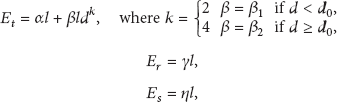
A typical wireless accelerometer used for bridge vibration monitoring comprises three basic units: sensing unit, processing unit, and transceivers. The processing energy, which depends on the computation hardware architecture and the computation complexity, is another meaningful topic and not accounted for here. So the energy for sensing, energy for receiving, and energy for transmitting are considered and can be formulated as [26]
2.3. Data Acquisition Efficiency
Theoretically, the more sensor nodes are used, the better the dynamic response of long-span bridges is described. But the cost of monitoring is increased correspondingly. On the other hand, there are tens of thousands of DOFs in a bridge. It is impossible that all DOFs are placed with wireless accelerometers. As a result, for a specific bridge, the investment is always limited, and the WSN scale is constrained. So it is very significant for vibration monitoring of long-span bridges that the data capacity is maximized through optimizing locations of nodes. Therefore, the metrics of WSN performance should contain two aspects, deployment cost and data capacity, which is more reasonable than the single index of lifetime or cost. In this paper, the data acquisition efficiency (DAE) defined as data capacity per unit deployment cost is proposed to evaluate the performance of WSN for long-span bridge vibration monitoring. The DAE is expressed as

3. Theoretical Model
Two types of nodes are integrated in the WSN for long-span bridge health monitoring. The function of sensor nodes is dynamic response monitoring, and that of relay nodes is retransmitting data and balancing energy consumption in WSN. Because of the different functions, two-phase node arrangement is developed in this paper. The first phase is sensor node arrangement, and the second phase is relay node arrangement.
3.1. Sensor Node Arrangement
The objective of structural vibration monitoring is measuring the dynamic responses of bridge, so the sensor node arrangement is the most important work in the course of WSN deployment. Because of the existence of relay nodes, there is no need to take communication range of wireless sensor into account. Therefore, a conventional wired sensor optimization method, the GGA that is based on some modern biologic theories such as the genetic theory by Morgan, the punctuated equilibrium theory by Eldridge and Gould, and the general system theory by Bertalanffy, is employed to optimize the locations of sensor nodes [2, 27]. This algorithm is superior in biologics to the classical genetic algorithm (GA). The dual-structure coding system, in which the chromosomes of individual are composed of append code and variable code, is used to initialize the population. This coding system can assure that the total number of sensor nodes is unchanged in the crossover and mutation. The two-quarter selection, whose process is two-parent selection → crossover → a family of four → two-quarter selection → mutation → a family of four → two-quarter selection → next generation, is introduced in the evolution. For improving the convergence speed and reliability of globally optimal solution, the worst elimination policy is proposed here. In every generation, the individual with the worst fitness value is firstly selected as one parent. By this way, the worst one is eliminated inevitably, and the population always moves toward higher fitness value.
In the process of evolution, the gradual change and sudden change are combined. In general, the gradual change is adopted. When the best fitness value of the population keeps constant in several generations, it reveals that the iteration falls into local optimal solutions. The evolutionary processing turns to sudden change. Until the best fitness value changes, the evolutionary processing turns back to the gradual change. If the sudden change happens at preset times sequentially, it indicates that the global optimal solution is achieved and the iteration can be stopped. In the stage of gradual change, crossover is first, and mutation is second, while in the stage of sudden change, mutation is first and crossover is second. In this way, the drawbacks of GA that the results incline to local optimal space easily can be avoided effectively.
The partially matched crossover (PMX) is applied in the crossover. Two crossover points in append code are selected randomly. The interval between the two crossover points forms a matched segment. The two parents exchange the two matched segments. The repeated append code in one parent is replaced by the matched append code at the specified arbitrary element in the other parent and vice versa. In the stage of gradual change, the swap mutation is employed. The two append codes at the randomly selected points exchange within each parent, which makes the mutation slight. Accordingly, the solutions move a small step toward adjacent area. And in the stage of sudden change, the inversion mutation is used. The segment between two randomly selected points flips left to right, which results in a serious mutation. So the solutions jump out of local area and arrive in a new space. It can be concluded that the combing of swap mutation and inversion mutation can avoid that the results fall into local optimal space.
It is well known that the measured data with high signal-to-noise ratio, which is critical for model identification and damage detection, can be obtained on the DOFs with possible large amplitudes of vibration. The modal strain energy (MSE) provides a rough measure of the dynamic contribution of each candidate sensors to the target mode shapes and tells which DOFs capture most of the relevant dynamic features of the structure. Therefore, the objective of sensor node arrangement can be interpreted as finding a reduced configuration of sensor node placements, which maximizes the measured MSE of the bridge, so that the structural dynamic behavior can be well characterized. So in this paper, the MSE is taken as the fitness function in GGA. Suppose that the mode shape matrix of a long-span bridge is

3.2. Relay Node Arrangement
Further analyzing the DAE indicates that if the number of sensor nodes and relay nodes in different WSNs is the same, the longer the network lifetime is, the higher the DAE is. Ideally, the WSN has the longest lifetime if all nodes exhaust their energy simultaneously. And the most excellent performance of WSN can be obtained. So pursuing high DAE can be realized by balancing energy consumption in WSN. The “energy hole” is avoided accordingly. And the effective way of balancing energy consumption of nodes is adjusting data transmission distance. In linear WSN, the data transmission distance relates to node location. Therefore, the optimization of WSN performance is selecting optimal locations of relay nodes, so that the energy consumption per second of every node in WSN is identical. The nonuniform node arrangement method is deduced for configuring the relay nodes.
According the energy consumption model formulated by (1), the energy consumption of sensor node
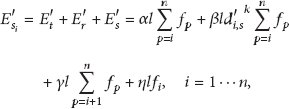
And the energy consumption of relay node





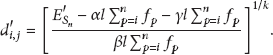

Because

There is no data generated between any two adjacent sensor nodes, so the data quantity retransmitted by relay nodes between two adjacent sensor nodes is uniform. Therefore,
As a result, the final energy consumption


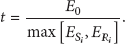

3.3. Implementation Procedures
The theoretical model that is present in last two sections looks very complex on the surface. The whole flow chart to find the optimal nodes locations is shown in Figure 2, so that the proposed two-phase node arrangement method in this paper can be easily implemented. Some details are also listed as follows.

The flow chart of two-phase node arrangement.
Phase I (sensor node arrangement)
Step 1.
Initializing the population. In each individual, the append code is generated by shuffle method, and the variable code (0 or 1) is created randomly.
Step 2.
Calculating the fitness value of every individual in the population.
Step 3.
Selecting the individual with the worst fitness value as one parent and selecting an individual randomly from the left individual as another parent.
Step 4.
Judging the type of change according to the best fitness value in the population.
Step 5.
Executing two-quarter selection to generate two new individuals.
Step 6.
Selecting two-parent randomly and repeating Steps 4 and 5 until the time of iteration is equal to half of the population size.
Step 7.
Updating individuals and fitness values of the population.
Step 8.
Repeating Steps 3~7 until the stopping criteria are achieved.
Phase II (relay node arrangement)
Step 1.
Setting i to be equal to n and
Step 2.
Step 3.
Adjusting
Step 4.
Replacing n with i and repeating Steps 2 and 3. Calculating all parameters
Step 5.
Step 6.
Increasing
Step 7.
Selecting the arrangement with the maximum μ as the best configuration.
4. Conclusions
WSNs, which are characterized by cable independence, low cost, easy installation, and on-board processing capability, attract more and more attentions in structural vibration monitoring of long-span bridges. It is meaningful to improve the performance of WSNs through maximizing the data capacity and reducing the deployment cost. The composite WSN constituted by sensor nodes and relay nodes is a good configuration for SHM of long-span bridges. The DAE defined by data capacity per unit WSN cost is a promising index to evaluate the performance of WSNs. Two-phase node arrangement methodology and strategy are proposed to configure the composite WSN. The locations of sensor nodes are firstly optimized by GGA to satisfy the structural condition assessment. And then, the nonuniform node arrangement method is proposed to configure the relay nodes to fill the blanks between sensor nodes, which is deduced from the principle of maximizing DAE, balancing energy consumption, eliminating “energy hole,” and maximizing network performance. The step-by-step procedures make the theoretical formulates implemented easily in practice. It should be pointed out that the proposed method is a tentative work about the topic of WSN optimization for long-span bridge health monitoring, and more extensively research will be conducted in the future.
The further work is applying the method and strategy developed in this paper to arrange a composite WSN for a long-span suspension bridge, so that the efficiency of the proposed approach can be demonstrated extensively.
Footnotes
Acknowledgments
This research work was jointly supported by the Science Fund for Creative Research Groups of the NSFC (Grant no. 51121005), the National Natural Science Foundation of China (Grant nos. 51308186 and 51222806), the Starting Research Fund from the Hohai University (Grant no. 2013B01414), and the Research Fund of State Key Laboratory of Subtropical Building Science (Grant no. 2013KB10).