




Abstract
In wireless sensor networks (WSNs), homogeneous or heterogenous sensor nodes are deployed at a certain area to monitor our curious target. The sensor nodes report their observations to the base station (BS), and the BS should implement the parameter estimation with sensors' data. Best linear unbiased estimation (BLUE) is a common estimator in the parameter estimation. Due to the end-to-end packet delay, it takes some time for the BS to receive sufficient data for the estimation. In some soft real-time applications, we expect that the estimation can be completed before the deadline with a probability. The existing approaches usually guarantee the real-time constraint through reducing the number of hops during data transmission. However, this kind of approaches does not take full advantage of the soft real-time property. In this paper, we proposed an energy-efficient scheduling algorithm especially for the soft real-time estimations in WSNs. Through the proper assignment of sensors' state, we can achieve an energy-efficient estimation before the deadline with a probability. The simulation results demonstrate the efficiency of our algorithm.
1. Introduction
Wireless sensor networks (WSNs) are emerging technologies, which can be widely applied in medicine, military, surveillance, and aerospace fields. Several sensors collaborate to accomplish high-level tasks. A WSN typically consists of a Base Station (BS) and several homogeneous or heterogenous sensor nodes. The sensor nodes are responsible for sampling the analog signal and transmit their local data to the BS. The BS acquires data from sensor nodes and does some relevant applications.
The parameter estimation is an important task in WSNs. Because the sensors' observations are corrupted by the noise, the BS should estimate the real value with the corrupted observed data. An estimator which achieves an acceptable estimation Mean Square Error (MSE) should be designed at the BS. Best Linear Unbiased Estimation (BLUE) [1] is a popular estimator in parameter estimation. Due to the bandwidth constraint in WSNs, authors in [2] propose the Quasi-Best Linear Unbiased Estimation (Quasi-BLUE). The estimator is simple and can give unbiased estimation. The works [2–6] are examples that employ Quasi-BLUE as the estimator in WSNs.
Since sensors may be deployed in hostile or remote areas, sometimes, the batteries replacement is impossible. To a certain sensor network, there is an upper bound on the lifetime [7]. Therefore, energy saving is very important in the applications of WSNs. The communication is the primary source of energy consumption [8]. The data transmission from sensor nodes to the BS can be directly sensor-to-destination scheme or multihop routing scheme. Due to the transmission power is proportional to the αth power of the transmission distance [9, 10], multihop routing scheme is widely applied in WSNs. In order to save energy, not all the sensor nodes in the network need to send their observations to the BS. In [11], the authors proposed a new topology management scheme by switching the state of the sensors. The radios of nodes can be turned off in a so-called “monitoring” state and will be switched to the “transfer” state when required. The transfer state nodes report their observations to the BS and the monitoring state nodes will not send any packet to the BS. Many works employ the idea of [11] and schedule the state of sensor nodes to reduce energy consumption [12–15]. In this paper, an energy-efficient state scheduling scheme is designed especially for Quasi-BLUE in WSNs.
The BS should collect sufficient data from sensor nodes to implement the Quasi-BLUE. Because of the delay during data transmission, it takes some time for the BS to implement the Quasi-BLUE. The performance metric event detection delay (EDD) is used to describe the time when sufficient number of packets are delivered to the BS [16]. Because of stochastic behavior of end-to-end delay in WSNs, the previous works usually use a probabilistic model to describe the delay [17, 18]. The probability distribution of the end-to-end delay is researched in [17, 18]. That the EDD is less than a bound also satisfies a probability distribution. In some real-time applications, long EDD is not expected. However, the existing researches of Quasi-BLUE in WSNs do not consider the timing constraint. It calls for a scheme that can implement the real-time Quasi-BLUE. The real-time can be classified into hard real-time and soft real-time. In hard real-time, the system needs to finish a task before a hard deadline. The soft real-time, on the other hand, just requires the task be accomplished before the deadline with a probability. In this paper, we focus on the scheduling for the soft real-time estimation. Because the more number of hops during data transmission results in longer delay [19], the existing works usually reduce the number of hops during data transmission [20–24]. However, these approaches do not take advantage of property of soft real-time estimation. The soft timing constraint only requires a task to be finished before the deadline with a probability. In the Quasi-BLUE with an MSE constraint, more sensor nodes' data will increase the probability that the timing constraint is satisfied. Through turning some redundant nodes to transfer state, the soft timing constraint can still be guaranteed. In this paper, we add some redundant transfer state nodes to guarantee the soft timing constraint rather than reducing the number of hops during data transmission.
In this paper, we focus on soft real-time parameter estimation of WSNs. We employ Quasi-BLUE to implement the parameter estimation at the BS. The packets that carry the observations of sensors are transmitted the BS through multihop. The multihop path is the energy minimum path that can be obtained through Dijkstra's algorithm. We propose the MSE constraint function based nodes assignment (MBNA) algorithm to schedule the state of sensor nodes. MBNA schedules the state of sensor nodes to implement the soft real-time estimation with an MSE constraint. The contributions of this paper can be concluded as follows.
We first consider the real-time for the Quasi-BLUE in WSNs. The probability that the EDD is less than the timing constraint is quite difficult to calculate. Our approach takes advantage of linear property of Quasi-BLUE and calculates the probability in a heuristic way. Our MBNA can achieve low energy consumption under MSE and soft timing constraints.
The paper is organized as follows. Section 2 provides some related works. In Section 3, we introduce the system model and give some assumptions in this paper. In Section 4, we show the possibility of energy reduction through adding redundant transfer state nodes. In Section 5, the energy-efficient scheduling algorithm for soft real-time estimation, MBNA, is introduced; the performance of MBNA is shown in Section 6. In Section 7, we conclude the paper.
2. Related Works
A lot of researches have been done on parameter estimation in WSNs. BLUE is a popular estimator for the parameter estimation [1, 25]. Luo makes some adjustments on BLUE, and proposes the Quasi-BLUE [2]. In Quasi-BLUE, the data is quantized to several bits, and the estimation is implemented with the quantized data. Although MSE through Quasi-BLUE increases compared to BLUE, Quasi-BLUE is quite suitable for the digital communication environment. In order to save energy, not all the sensor node will send their observations. Only part of sensors will report the observations to the BS according to the demand [11]. The estimation cannot be implemented until the BS receives sufficient data from sensor nodes, because the packet that is transmitted from source to the BS suffers an end-to-end delay. In some real-time applications, the estimation should be finished before a deadline. It requires sufficient data arrives at the BS before the deadline, and the packet delay should be considered.
Because of the randomness of wireless communication, the end-to-end packet delay shows the stochastic characterization. Many researches try to describe the delay through statistics method. In the studies in [26–28], the worst case end-to-end delay is analyzed. The low delay routing algorithms always guarantee the worst case of delay. But due to the large variance of end-to-end delay in WSNs, the worst case cannot accuratly describe the end-to-end delay. The works in [16–18, 29] employ a probability distribution to describe the delay. The delay distribution is built in [17, 18, 29], and the probabilistic description is quite suitable for the delay analysis. In this paper, we follow the probabilistic model of delay and implement our scheduling based on the results in [16–18, 29].
In order to guarantee the timing constraint, many works focus on designing the low delay routing algorithm [20–22, 24]. In WSNs, the delay during data transmission consists of the queueing delay, the transfer delay and the processing delay. Since more number of hops will increase the delay, the routing scheme decreases the delay by decreasing the number of hops. However, the energy consumption increases at the same time. The tradeoff between delay and energy is the major topic. But most low delay routing schemes do not take advantage of the probabilistic property of the delay. The approaches in [20–22, 24] are designed for the fixed delay bound and are not suitable for soft real-time scenario. The energy consumption sometimes can drop a lot while employing the soft timing constraint [30]. Through a proper scheduling scheme, heterogenous sensor nodes can cooperatively implement tasks under soft timing constraint. The works in [13, 15, 30] are examples that implement the optimization.
In this paper, we guarantee the soft timing constraint of Quasi-BLUE through adding redundant transfer state nodes. The BS just requires sufficient data from sensors in an area for the estimation but does not specify a certain sensor. So one sensors' data can be replaced by the other sensors. If there are enough transfer state nodes, the estimation can still be finished before the deadline with a high probability. The depth-first search method is suitable for the multilevel soft real-time scheduling problem [15, 30, 31]. However, the node state scheduling problem of Quasi-BLUE is a single-level scheduling problem, and there are multiple equivalent nodes in the same level. The approaches in [15, 30, 31] are not suitable for this kind of problem. The problem is also not easy to solve through breadth-first search because a huge number of node state combinations should be listed. Our MBNA algorithm, on the other hand, does not employ the traditional search method to implement the optimization. It exploits the properties of Quasi-BLUE in WSNs, and provides the energy-efficient scheduling in a heuristic way.
3. System Model
3.1. Network Model
In this paper, we assume the WSN consists of many sensor nodes and a BS. The sensors are uniformly distributed in the sensing area. The sensor node has two states: transfer state and monitoring state. In transfer state, sensors detect the environment and transmit the observed value to the BS. In monitoring state, sensors detect the environment but do not communicate with others. The mode of a sensor node can be switched according to the command from the BS. The transfer sensors will send their observations to the BS, and the BS implements the estimation with the observed data. The state of sensor nodes is determined by the BS. Based on some performance metrics, the BS comes up with the scheduling of sensor nodes and sends the scheduling command to the sensor nodes. The sensor nodes change their states according to the command.
The sensor nodes can communicate with each other in the network. In order to save energy, the packets will be transmitted to the BS through multihop. Some nodes will be selected as the intermediate nodes during multihop packet relay. Because the BS is usually powered by the external electric source, we do not care about the energy consumption of the BS. Therefore, the BS communicates with sensor nodes directly without any intermediate nodes. In the wireless communications, we assume that the quadrature amplitude modulation (QAM) is employed. The sensor node or the BS sends an L-bit message by using QAM with a constellation size
3.2. Quasi-BLUE
The sensors keep observing the curious parameters. The observation

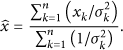
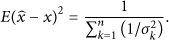
The BLUE gives us a relatively accurate estimation, but it is impractical in a WSN system because of the bandwidth and energy limitation [2]. Therefore, the data is quantized to some bits at each sensor, and the estimations are implemented with the quantized data.
Suppose the value

We employ Quasi-BLUE to construct a linear estimator of x similar to BLUE estimator, and the estimator


3.3. Energy Model
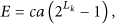
The energy consumption of a sensor node contains two main parts: (1) the communication energy and (2) the circuit energy. In long-range application, the data transmission consumes most of the energy in a WSN and the other energy can be neglected compared to the communication energy. Therefore, we only consider the communication energy in this paper.
When a sensor
3.4. Probabilistic Delay
Within the communication range, a link can be built between two nodes. For two sensor nodes

The probability that the delay

4. Node State Scheduling for Soft Real-Time Estimation
4.1. Motivational Example
In the multihop transmission, increasing the number of hops will increase the delay. More hop means extra processing delay, queueing delay, and transmission delay. Transmitting the packets along a path with less number of hops is a method to guarantee the timing constraint [20–24]. We call this kind of approaches the delay sensitive energy aware (DSEA) routing scheme. Through the tradeoff between energy and delay, a path will be generated based on the timing constraint. However, this method has the two drawbacks.
The energy minimum path planning with timing constraint is an NP-complete problem. The existing approaches can only provide the near-optimal solution. In order to decrease the path delay, the path that satisfies the soft timing constraint has less number of hops, which will increase the communication energy.
In this paper, on the other hand, we try to guarantee the soft timing constraint through adding redundant nodes. In the estimation process, the BS only requires sufficient data but does not care for the source of the data. Transmitting redundant data is able to increase the
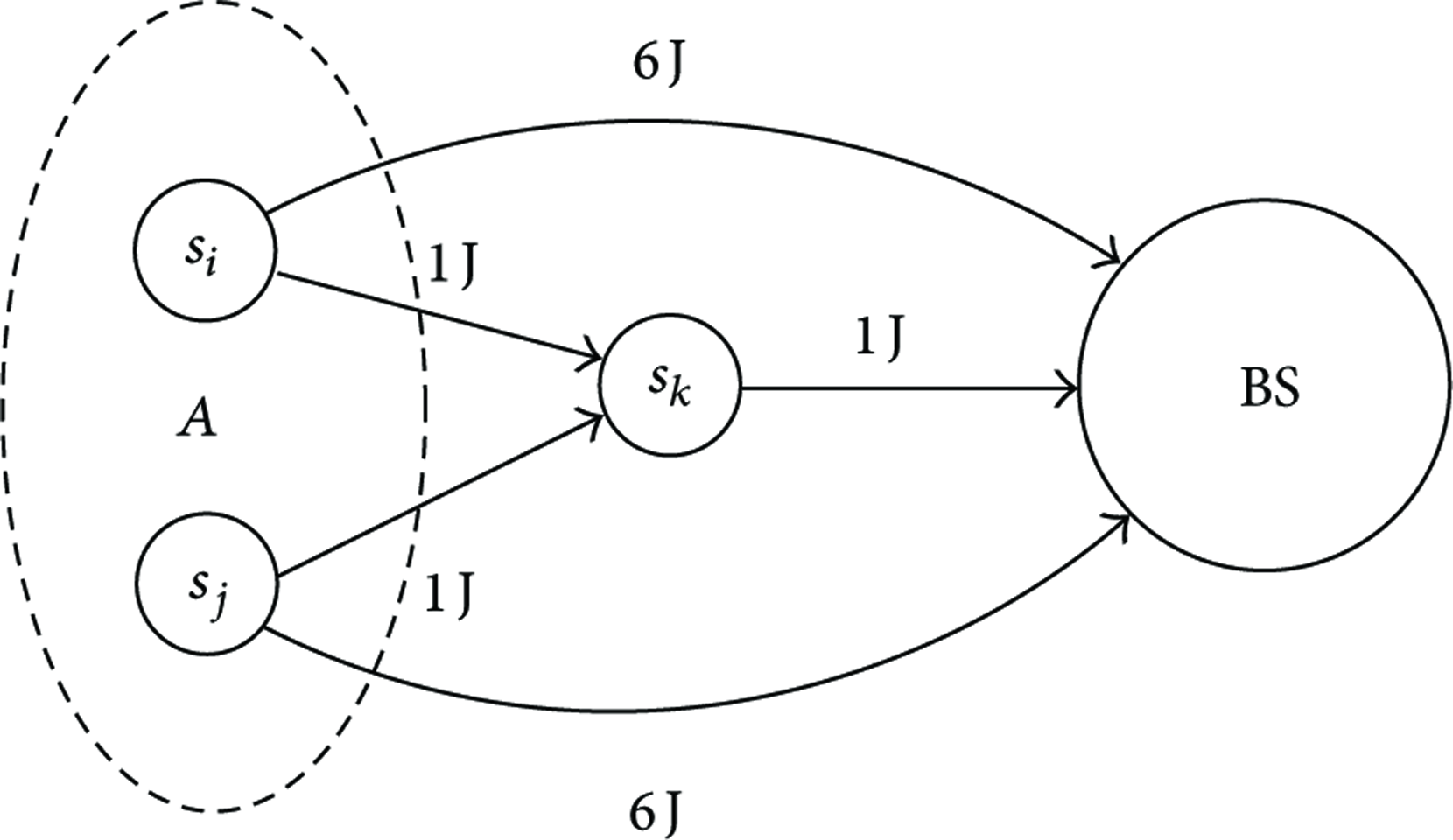
A simple sensor network.
The delay of the two paths with the intermediate node


We should still note that the approach through adding redundant transfer state nodes may not perform better than DSEA routing. The performance is tightly related to the value of end-to-end packet delay. In the Section 6, we will discuss the problem in detail.
4.2. CDF of End-to-End Delay
For a source node, the energy minimum path to the BS can be obtained through Dijkstra's algorithm with energy metric. Each path is associated with an end-to-end delay distribution. Because each sensor node corresponds to a path, we can assume that the end-to-end packet delay distributions with the same source node are identical.
The packets are sent from source node to the BS through multihop relay. In the end-to-end delay analysis, the CDFs of multihop end-to-end delay are similar among the works in [17, 29]. Because there is a physical limit in how short a delay can be (shorter than that it is impossible that a message arrives at the other end), the end-to-end delay will be larger than a lower bound. The lower bound of delay is denoted by

The parameter

4.3. Guarantee Soft Timing Constraint with Redundant Nodes
Suppose the BS requires data from an area A to implement the estimation on a parameter. The MSE constraint for the estimation is
We denote on


4.4. Energy-Efficient Soft Real-Time Parameter Estimation
In the parameter estimation process, the BS should provide the accurate estimation with sensors' data. In this paper, we employ the MSE between the estimated value and the actual value to evaluate the accuracy of the estimation. In order to save energy, not all the sensor nodes need to send data to the BS. We just need some sensors' data to accomplish the estimation with a certain MSE constraint.
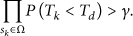
The BS collects sufficient data from different sensors, and implements the estimation. There is an event detection delay (EDD) for the WSNs [32]. The EDD is the time when sufficient number packets are delivered to the BS for the data fusion. In some real-time applications, the EDD should not be too large. A packet that is transmitted from source node to the BS corresponds to an end-to-end delay distribution [16, 17, 29]. In the network, the transfer state nodes send their packets to the BS, and the EDD is determined by the end-to-end delay distribution of each packet. In order to guarantee the soft timing constraint, the EDD should be less than a bound with a probability, that is,

The assignment of transfer state nodes will affect EDD. If the transfer state nodes are not enough, the Quasi-BLUE cannot be finished within the soft timing constraint. On the other hand, if we turn too many nodes to transfer state, the energy consumption will increase. We need to schedule the state of node to achieve low energy soft real-time estimation, that is,

5. Redundant Nodes Assignment
5.1. MSE Constraint Function
In Quasi-BLUE, more sensors' data results in small MSE. Under a certain MSE constraint, the BS has to wait for sufficient data to guarantee the MSE constraint. Thus, the timing constraint for Quasi-BLUE is not satisfied and can also be expressed as the estimation cannot be finished with the data that arrives before the deadline. Therefore,
In this paper, we define the MSE constraint function (MSECF)

If the MSE constraint is a static value, we have


The MSEPF with static
The Quasi-BLUE is implemented with sensors' data, and there is an estimation MSE D. If
In the Quasi-BLUE of WSNs, the MSE constraint is usually a certain value, and the MSECF can be formulated as (21). In order to guarantee the MSE constraint, we should determine a

When a packet from
We denote the probability that

The missing data will not be used while calculating
5.2. Probability for Satisfying MSE Constraint
At first, we assume that all the packets can reach the BS before the deadline, and original reciprocal MSE is
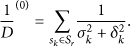
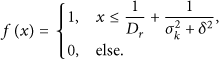


The MSEPF after one ⊕ operation.
Theorem 1.
Consider the following:

Proof.
Consider the following:
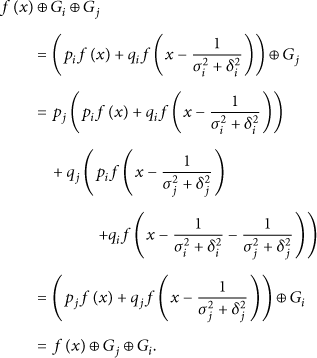
According to Theorem 1, the order of ⊕ operation will not affect the final MSECF. All the packets in


5.3. Nodes Assignment through MSECF
length L, timing constraint MSE constraint (1) (2) calculate (3) (4) (5) add a transfer state node to (6) (7) (8) calculate (9) (10) (11) (12) (13) add a transfer state node to (14) (15) (16) (17) (18)
6. Simulation Results
In this section, we present the simulation results for the MBNA algorithms.
6.1. Simulation Setup
In the simulations, we randomly deploy 100 sensor nodes in a 1000 m × 1000 m area. We make the BS located at the (500,500). The two constants of the communication energy in (8) is set as
We assume that the sensors observe a parameter with the range of

6.2. Normal Distribution Single Hop Delay Case
Normal distribution single hop delay is a common assumption in the delay analysis in WSNs. In this subsection, we simulate the performance of MBNA with the normal distribution single hop delay. The single hop delay is assumed to satisfy the normal distribution with the PDF
We investigate the performance of MBNA versus

Energy consumption versus timing constraint.
The two curves in Figure 4 represent the average energy consumption required to implement the Quasi-BLUE. Short timing constraint means the low probability that the packet can reach the BS before the deadline. Therefore, when the timing constraint increases, the energy consumption decreases. Compared to DSEA routing, MBNA has lower energy consumption when the timing constraint is small. In Figure 4, DSEA routing achieves lower energy consumption than MBNA when
MBNA is designed for the soft timing constraint. We need the estimation to be implemented before the deadline with a probability γ. To verify that MBNA can guarantee the soft timing constraint, the number of successful estimations should be investigated. The successful estimation can be expressed as the MSE constraint is satisfied when the data arrives before the deadline. Figure 5 shows the number of successful estimations before deadline. We choose 11 different timing constraints from 50 ms to 100 ms and simulate the estimation process for 1000 times per timing constraint. We let

Number of successful estimation before deadline.
Then we investigate the MSE constraint's influence on the performance of MBNA. We make
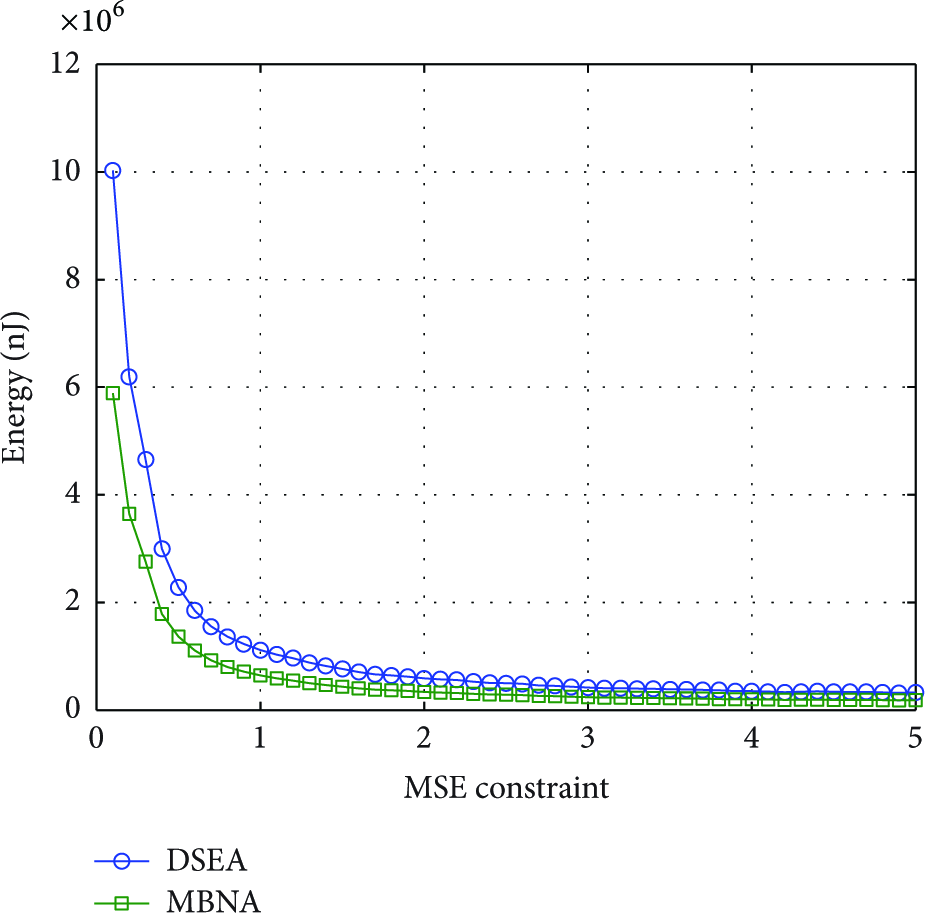
Energy consumption versus MSE constraint.
The result in Figure 6 represents the average energy consumption with MBNA and DSEA routing. MBNA can achieve lower energy consumption when
The probability γ affects the number of redundant transfer state nodes. We make

Energy consumption versus γ for
6.3. Simulation for Different Single Hop Delay Distributions
The single hop delay distribution will affect the performance of DSEA routing. In DSEA routing, the worst case of single hop delay is used in the route planning. If the worst case is not far away from the common case, DSEA routing may achieve lower energy consumption than MBNA. The general hypothesis of single hop delay distribution are normal distribution, negative exponential distribution and uniform distribution. We make

Energy consumption with normal distribution single hop delay.

Energy consumption with negative exponential distribution single hop delay.

Energy consumption with uniform distribution single hop delay.
In the normal distribution case, the single hop distribution is assume to satisfy the
The above results reflect the fact that DSEA routing guarantees the hard timing constraint. In DSEA routing, the packets travel along a path whose maximum end-to-end delay is less than the timing constraint. In general, the worst case will happen with a small probability, and DSEA routing over considers the end-to-end delay. Therefore, DSEA routing is not energy-efficient compared to MBNA. However, if the end-to-end packet delay varies in a small range, that is, the variance of delay distribution is small, the worst case of delay will not be far from the mean value of delay. In this case, the property of soft timing constraint is not notable, and DSEA routing may achieve lower energy consumption than MBNA. In the three single hop distribution cases, MBNA can reduce the energy consumption a lot when the variance is large. For the network traffic with large uncertainty, the single hop delay usually varies in a large range. And our MBNA can achieve lower energy consumption in this situation.
7. Conclusion
In this paper, we focused on the energy-efficient scheduling for soft real-time parameter estimation in WSNs. The estimator at the BS is Quasi-BLUE, which is a quite common estimator in WSNs. In order to save energy, not all the sensor nodes will send the data to the BS. Only part of sensor nodes will be at the transfer state so that the Quasi-BLUE can be implemented with an MSE constraint. In some real-time applications, we always expect the estimation can be finished before a deadline with a high probability. The EDD describes the time that the BS receives sufficient data from sensor nodes to implement the estimation. The traditional approaches usually try to reduce the number of hops to decrease the end-to-end packet delay, which will increase the communication energy. However, in the scenario of Quasi-BLUE, the BS just needs the data from an area instead of a unique sensor. A sensor node's data can be replaced by another sensors. Therefore, adding some redundant transfer state nodes will increase the probability that EDD is less than the timing constraint, that is,
Because a packet from a sensor node corresponds to a delay distribution, the calculation of
Footnotes
Acknowledgments
This work was supported in part by the National Natural Science Foundation of China under Grants 61222310, 61174142, 61071061, 61134012, and 60874050, the Zhejiang Provincial Natural Science Foundation of China under Grants R1100234 and Z1090423, the Program for New Century Excellent Talents (NCET) in University under Grant NCET-10-0692, the Fundamental Research Funds for the Central Universities under Grant 2011QNA4036, the ASFC under Grant 20102076002, the Specialized Research Fund for the Doctoral Program of Higher Education of China (SRFDP) under Grants 20100101110055, and 20120101110115, the Zhejiang Provincial Science and Technology Planning Projects of China under Grants 2012C21044 and the Marine Interdisciplinary Research Guiding Funds for Zhejiang University under Grant 2012HY009B. This work was also supported by the “151 Talent Project” of Zhejiang Province. The work is also partially supported by NSF CNS-1249223 (M. Qiu).