




Abstract
Cognitive radio (CR) is a regulated technique for opportunistic access of idle resources. In CR, spectrum sensing is one of the key functionalities. It is used to sense the unused spectrum in an opportunistic manner. In this paper, we have proposed two-stage detectors for spectrum sensing in cognitive radio networks (CRN). The first stage consists of multiple energy detectors (MED), where each energy detector (ED) is having single antenna with fixed threshold (MED_FT) for making a local binary decision, and if required, the second stage comprised of ED with adaptive double threshold (ED_ADT) is invoked. The detection performance of the proposed scheme is compared with cyclostationary-based sensing method and adaptive spectrum sensing scheme. Numerical results show that the proposed scheme improves detection performance and outperforms the cyclostationary-based sensing method and adaptive spectrum sensing by 12.3% and 14.4% at signal to noise ratio (SNR) setting of as low as −8 dB, respectively. Performance was also measured in terms of sensing time. It is shown that the proposed scheme yields smaller sensing time than cyclostationary detection and adaptive spectrum sensing scheme in the order of 4.3 ms and 0.1 ms at −20 dB SNR, respectively.
1. Introduction
In CR systems, the unlicensed users can utilize the licensed frequencies while the primary user (PU) is not active. For achieving good spectrum sensing performance, several methods based on single CR user have been proposed [1–3]. Basically, there are three spectrum sensing techniques, namely, matched filter detection, energy detection, and cyclostationary feature detection [1, 4, 5]. In [6], authors have proposed a CR system with two-stage spectrum sensing is which consists of coarse and fine detections in IEEE 802.22 WRAN systems. Further in [7], authors have proposed a “two-stage” spectrum sensing scheme to improve detection performance. This scheme consists of two detectors, energy detector in the first stage and cyclostationary detector in the second stage that provides better detection, but it is computationally more complex and needs longer sensing time. In [8], authors have proposed the adaptive spectrum sensing scheme. The proposed scheme chooses either the energy detection or the one-order cyclostationary detection based on the estimated SNR. However, to the best of our knowledge, no technique is focused on spectrum sensing failure problem [9]. In the present work, we focused on spectrum sensing failure problem and improved system detection performance.
In this paper, we proposed two-stage detectors, first stage consists of multiple energy detectors with fixed threshold (MED_FT) [10], in MED, suppose that one ED fails then the rest of the process will not be affected because of redundancy. The second stage contains energy detector, with adaptive double threshold (ED_ADT) scheme, and optimizes the detection performance at a fixed probability of false alarm
In the first stage, MED based on selection combiner scheme using fixed threshold detects the PU signal. If the received signal energy
The rest of the paper is organized as follows: Section 2 presents system description. Section 3 describes proposed system model. Section 4 presents the numerical results and analysis. Finally, Section 5 concludes the paper.
2. System Description
CRs utilize unused channel of PU where the spectrum sensing mechanism allows them to determine the presence of a PU. In this method, the locations of the primary receivers are not known to the CRs as there is no signaling between the PUs and the CRs. To detect the PU signal, we have used following hypothesis for received signal [1, 12]:

In the testing,
2.1. Energy Detector
For the detection of unknown deterministic signals corrupted by the additive white Gaussian noise, an ED is derived in [13], which is called conventional energy detector (CED). This is an easily implemented detector for detection of unknown signals in spectrum sensing. It collects the test statistic and compares it to a threshold
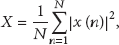
where

where
2.2. Adaptive Double Threshold Scheme for Spectrum Sensing
In energy detection (ED) based spectrum sensing [16], noise uncertainty increases the difficulty in setting the optimal threshold for a CR and thus degrades its sensing reliability [17]. Also, this may not be optimum in low SNR conditions where the performance of fixed single threshold
Figure 1 shows energy distribution graph of primary user signal and noise where intersection area of upper bound threshold

Energy distribution of primary user signal and noise.
The novelty of this paper is that our main focus is to detect PU signal, if signal is not detected in the first stage, only then the second stage detector will come on picture. To detect PU signal, we proposed two detection stages for sensing the PU signal, MED with fixed threshold is performed in first stage, and ED with adaptive double threshold scheme is performed in the second stage. This detection scheme is applicable to mitigate multipath and shadowing effects of the wireless channels, improve bit error rate (BER) performances, reduce computational complexity, give longer sensing time, and overcome sensing failure problem.
Figure 1 shows the energy distribution graph of PU signal and noise. The intersection area is known as confused region. In this region, detection between noise and PU signal is difficult using single threshold. To overcome this problem, we designed adaptive double threshold scheme to determine the local decision at the CR user as the following logic function rule (LR):
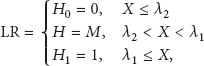
where M is the quantization decision and X denotes received signal energy by CR user.
In Figure 2, two-bit quantization method divides confused region into four equal quantization intervals as (



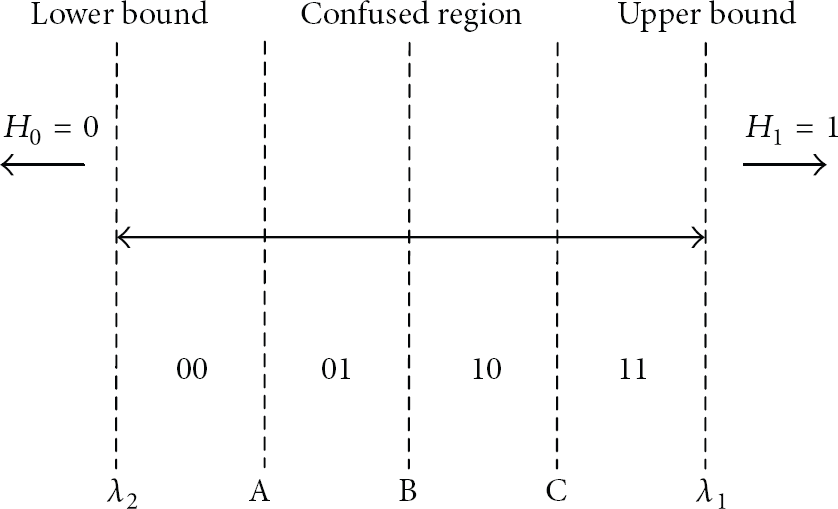
Confused region divided into four equal quantization intervals using two-bit quantization method.
In conventional single threshold case, the false alarm probability
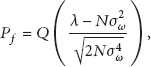
where

where
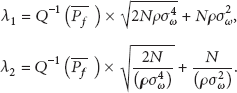
If detected signals fall inside any of the quantized intervals of the confused region, then it will generate its respective decimal values (DV) as

In (11), M gives two-bits binary values of the respective quantized levels as shown in (7). Then, the decimal values (DV) check the values of M and gives its respective decimal values accordingly. Further, these values are compared with threshold
3. Proposed System Model
3.1. Two-Stage Spectrum Sensing Scheme
Figure 3 shows the system model of the proposed two-stage spectrum sensing detectors having two energy detectors. The first stage consists of multiple energy detectors with fixed threshold (MED_FT), and the second stage consists of energy detector with adaptive double threshold (ED_ADT) scheme.
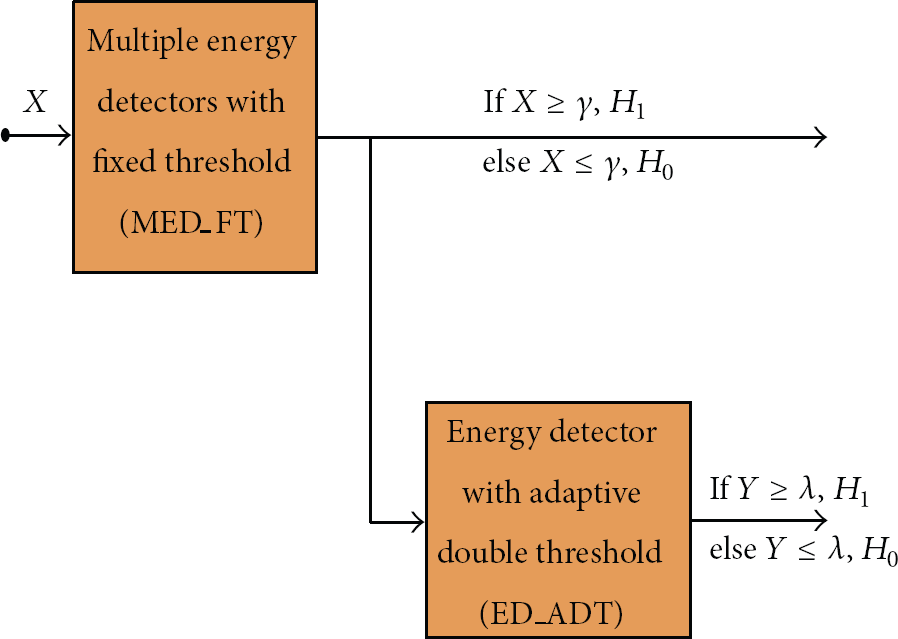
Two-stage spectrum sensing detectors.
3.1.1. The First Stage (Multiple Energy Detectors with Single/Fixed Threshold) (MED_FT)
Figure 4 shows the internal architecture of MED with single threshold

Internal architecture of multiple energy detectors with single threshold (MED).
Suppose that

The first stage local decision rule (LF) used by multiple energy detectors with single threshold is given by

3.1.2. The Second Stage (Energy Detector with Adaptive Double Threshold)
If signal is not detected in stage first, then the second stage detector comes on picture as shown in Figure 5. Figure 5 shows model of ED with adaptive double thresholds (ED_ADT). Square-law device detects the signal and shows signal energy

Internal architecture of energy detector with adaptive double threshold (ED_ADT).
If detected energy values

where m and n are the output values of upper part, and lower part respectively. After that, values of m and n are added using adder,

Finally, second stage local decision (LS) is expressed using (14) and (15), which is the final output of ED_ADT as follows:

Equation (16), comparing the resultant value
(1) Given (2) Given (3) Given (4) Given (5) Distribute uniformaly as (6) Define Range (7) Values for Ranges n = {0, 1, 2, 3} for (8) X = 0; (9) X = (10) LF = m = m = n = j; (11) Y = (12) LS = LS =
4. Numerical Results and Analysis
In the present system model, we have assumed total number of samples
Figure 6 shows the comparative performance of the proposed scheme with other two previous schemes. It is found that our scheme at

Probability of detection versus SNR at
Figure 7 shows that the proposed scheme with

Total error probability versus SNR at
Receiver operating characteristics (ROC) is depicted in Figure 8. ROC curves exhibit the relationship between sensitivity (probability of detection alarm) and specificity (probability of false alarm) [19] of a spectrum sensing method under different SNR values for propose scheme. For
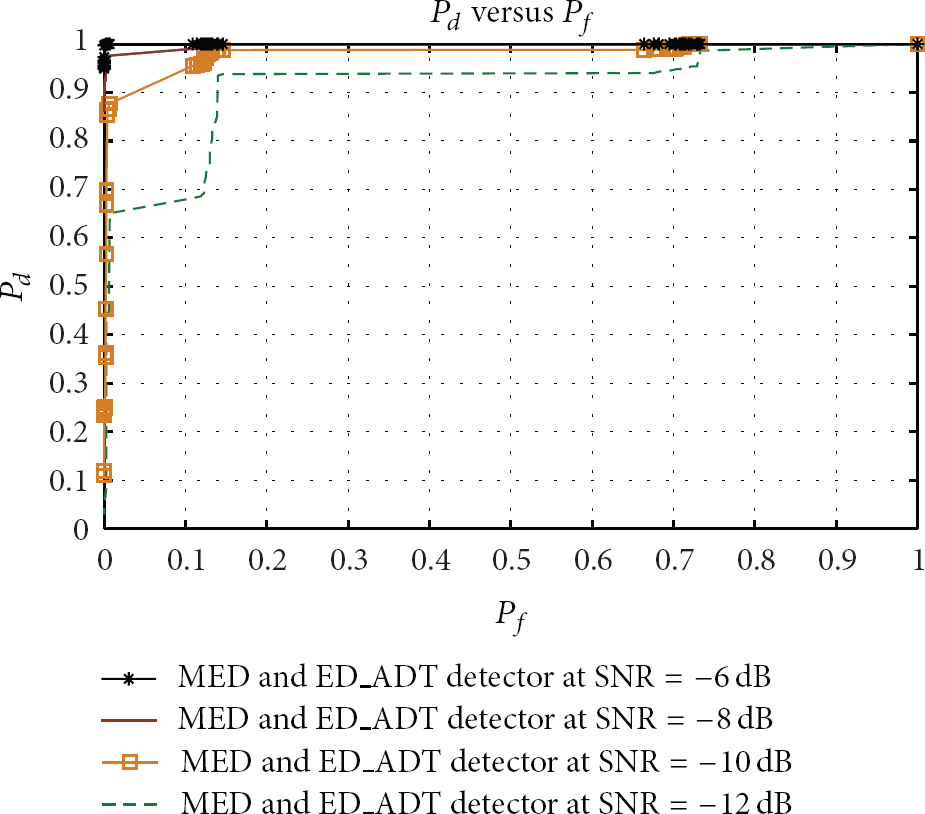
ROC curves for proposed two-stage detectors at
The spectrum sensing time is the time taken by CR user to detect a licensed PU signal. If the sensing time is increased then PU can make better use of its spectrum and the limit is decided that SU cannot interfere during that much of time. The more the spectrum sensing, the more PUs will be detected and, less will be the interference because PUs can make best use of their priority right. CR users will have more time for data transmission so as to improve their throughput. The sensing time is proportional to the number of samples taken by the signal detector. The more time is devoted to sensing, the less time is available for transmissions and thus reducing the CR user throughput. This is known as the sensing efficiency problem [22] or the sensing-throughput tradeoff [5] in spectrum sensing.
Figure 9 shows the graph of spectrum sensing time versus SNR. The proposed scheme requires less sensing time as compared to previously proposed schemes and increases throughput as well. It is observed that there is an inverse relation between spectrum sensing time and SNR. As SNR increases, sensing time decreases. At −20 dB SNR, proposed scheme with

where consider T is total spectrum sensing time of CR user.
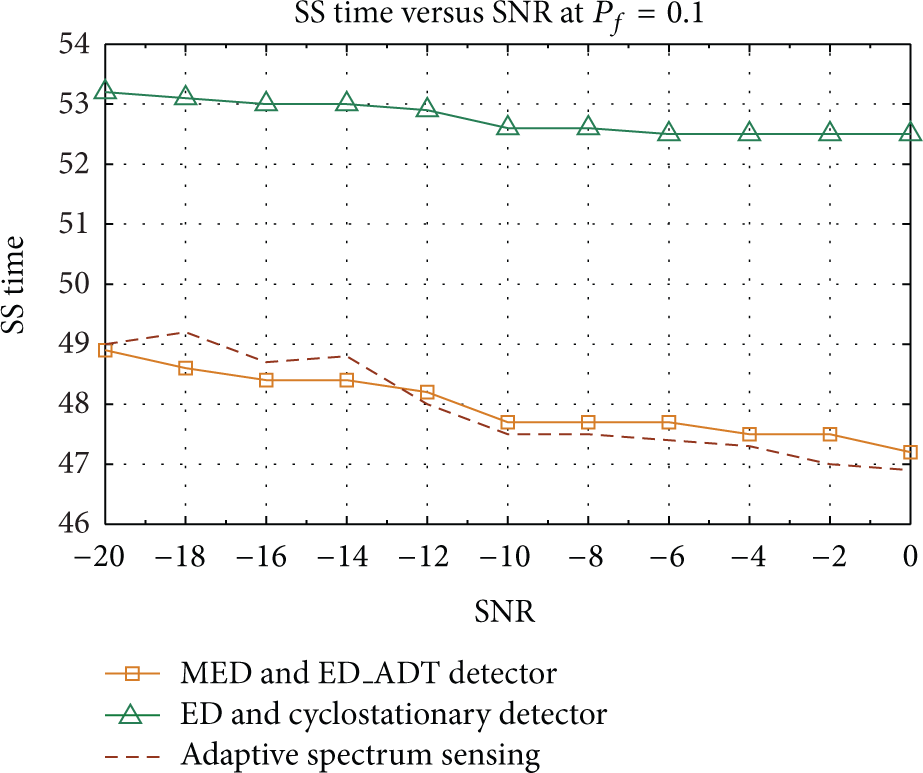
Spectrum sensing time versus SNR with
In Figure 10, we have plotted the probability of detection (

Probability of detection versus threshold values at SNR = −4 dB, −6 dB, −8 dB, −10 dB, −12 dB, with
5. Conclusion
In this paper, we have proposed two-stage detectors with multiple energy detectors and adaptive double threshold scheme. This scheme mitigates multipath and shadowing effects, improves BER performances, reduces computational complexity, gives longer sensing time, and overcomes sensing failure problem. Numerical results show that proposed two-stage spectrum sensing scheme outperforms the other two previous schemes by 12.3% and 14.4% at −8 dB SNR. Performance was also measured in terms of sensing time. It is shown that the proposed scheme yields smaller sensing time than cyclostationary detection and adaptive spectrum sensing scheme in the order of 4.3 ms and 0.1 ms at −20 dB SNR, respectively, these increases, throughput as well. Our results indicate that the proposed scheme performs better than previous schemes in terms of spectrum detection and spectrum sensing time.
Footnotes
Acknowledgment
The authors wish to thank their parents and God for supporting and motivating them for this work because without their blessings this would have been impossible.