




Abstract
This paper presents a theoretical study for verifying the impact of using smart nodes in motor monitoring systems in industrial environments employing Wireless Sensor Networks (WSNs). Structured cabling and sensor deployment are usually more expensive than the cost of the sensors themselves. Besides the high cost, the wired approach offers little flexibility, making the network deployment and maintenance a complex process. In this context, wireless networks present a number of advantages compared to wired networks as, for example, the ease and speed of deployment and maintenance and the associated low cost. However, WSNs have several limitations, such as the low bandwidth and unreliability, especially in harsh environments (e.g., industrial plants). This paper presents a theoretical study on the performance of WSNs for motor monitoring applications in industrial environments, taking into account WSNs' characteristics (i.e., unreliability and communication and processing latency). The results obtained through mathematical models were analyzed together with experimental results, and it was demonstrated that employing intelligent nodes with local processing capabilities is essential for the applications under consideration, because it reduces the amount of data transmitted over the network allowing monitoring even in scenarios with high interference rate, paying off the extra latency resulting from local processing.
1. Introduction
The optimization of power usage, by decreasing costs and reducing environmental impact, has been of great concern to various sectors in the society. In this context, intelligent and low cost industrial automation systems for motor monitoring can be a very useful tool, by reducing electricity consumption in the industrial sector. Electric motors are used in most industrial processes and account for more than two-thirds of electricity consumption in this sector [1].
Wireless networks present a number of advantages compared to wired networks as, for example, the ease and speed of deployment and maintenance, in addition to their low cost. Wireless Sensor Networks (WSNs) extend the advantages with their self-organization and local processing capabilities. Therefore, WSNs appear as a flexible and inexpensive solution to build industrial monitoring and control systems [2, 3].
Mainly due to high cost of monitoring systems, in general only motors over
Among the parameters that can be monitored, torque is crucial to prevent motor failures, avoiding losses in the production process [5]. The shaft torque can be estimated from the motor electric signals. Although this technique is less accurate when compared to the direct measurement methods, it is less invasive and allows shaft torque monitoring using low cost voltage and current sensors that can be easily integrated into a WSN [6]. The shaft torque can also be used for estimating motor efficiency, which is also the most important factor when targeting power consumption reduction [7, 8].
Other methods for fault analysis in motors may also be employed, like methods based on electrical signature analysis, which verify variations in voltage and current signals, in order to relate the signature characteristics with electrical and mechanical conditions [9–11] or methods based on vibration analysis using accelerometers, which are based on parameters such as displacement, velocity, and acceleration for detecting faults in motors [12, 13].
However, employing WSNs in automation systems in industrial environments presents a number of challenging aspects. Wireless networks have unreliable communication links [14], which can be worsened due to noise and interference in the communication spectrum range. The unreliability of the transmission medium in wireless networks makes it difficult to define quality of service guarantees.
Furthermore, sensor nodes must have low cost, which results in a number of constraints such as low bandwidth and low processing power. For instance, the IEEE 802.15.4 standard presents a nominal throughput of
Industrial monitoring systems need to measure signals that change rapidly, in a dynamic manner [15]. Applications such as efficiency monitoring and fault detection in induction motors fit this type of application. Due to the limitations of WSNs, mainly regarding the low bandwidth and the lack of reliability in the transmissions, the implementation of such systems becomes even more challenging.
In this context, this paper aims at analyzing the impact of using smart nodes for motor monitoring applications in industrial environments employing WSNs, through theoretical and experimental studies. By performing local processing, it is possible to mitigate the intrinsic limitations of WSNs. However, the processing latency should be considered, especially because the sensor nodes usually have low processing power and reduced memory.
Mathematical models for estimating the information delivery rate in several scenarios are properly described, and the results obtained from the models were analyzed together with experimental results. To perform this analysis, we take into account applications for torque and efficiency monitoring in induction motors. This type of motor corresponds to about
The proposed mathematical model can be used to assess the impact of using local processing with respect to the information delivery rate of different applications. Some factors affect this metric as, for example, processing delay, the amount of data gathered from sensors, and the packet error rate. Thus, it may be advantageous or not to use local processing, depending on these parameters. Specifically, for the motor monitoring applications analyzed in this paper, it is shown that local processing effectively improves the WSN performance, with a direct impact on the application itself.
2. Industrial Wireless Sensor Networks
In an industrial WSN, sensor nodes are deployed in machinery for monitoring critical parameters such as vibration, temperature, pressure, and efficiency. Measurements are transmitted wirelessly to a sink node, which later provides the gathered information for analysis in a central station. Based on this information, it is possible to repair or replace devices before major damages take place [16].
Although WSNs have several advantages, the deployment of this technology presents some challenges. Wireless communication is inherently unreliable and is subject to a larger number of transmission errors when compared to wired networks, mainly due to channel failures and interference. Nodes can suffer interference from the coexistence with other nodes in the network, from the coexistence with other networks, and from other technologies operating in the same frequency range.
In industrial environments, there may be other sources of interference such as thermal noise, interference from motors and devices that cause electromagnetic interference in the band used for communication [16]. Besides, in industrial environments there is usually a large amount of metallic objects, which can impair the communication. In general, industrial wireless systems are prone to high error rates and often with high variance [17].
2.1. IEEE 802.15.4 Standard
The IEEE 802.15.4 standard was designed for WSN applications. This standard provides wireless communication with low power consumption and low cost for monitoring and control applications that do not require high bandwidth. Compared to other standards, such as IEEE 802.11 (WiFi) and IEEE 802.15.1 (Bluetooth), the IEEE 802.15.4 standard has advantages related to energy consumption, scalability, reduced time for node inclusion, and low cost [18].
The IEEE 802.15.4 standard defines the physical layer and the MAC layer. It has three frequency ranges (868 MHz, 915 MHz, and 2.4 GHz). As these bands are unlicensed, radios share the communication medium with devices that implement other technologies. For example, the IEEE 802.11 and the IEEE 802.15.4 standards both operate in the 2.4 GHz frequency range. However, as the spectrum is divided into channels, it is possible to multiple networks operating simultaneously, without interfering much with each other.
The network topology can be organized in three ways: star, mesh, and tree. However, the standard does not define the network layer. There are two types of nodes: full function device (FFD) and reduced function device (RFD). The FFD nodes can act both as network coordinator or end node. The coordinator is responsible, among other functions, for the initialization, address allocation, network maintenance, and the recognition of all other nodes. RFD nodes work only as end nodes, which are responsible for the functions of sensing or action. FFD nodes can also perform the function of intermediate routers between nodes, without the intervention of the coordinator [6].
The IEEE 802.15.4 radios reach a nominal throughput of
Some upper layer protocols have been proposed for IEEE 802.15.4 based WSNs. Following, we present a short description for some of such protocols, as well as implementation issues that impact on the communication reliability.
2.1.1. ZigBee
The most employed protocol in WSNs' applications is the ZigBee protocol [12, 18, 20–24]. This protocol has a number of desirable characteristics for WSN applications as, for example, low power consumption and low cost.
ZigBee's network protocol supports the three available topologies (i.e., star, tree, and mesh), allowing the implementation of an ad hoc WSN. When using a mesh topology, the routing process becomes more complex, but the robustness and fault tolerance of the network increase, due to the ability to find and maintain routes.
ZigBee does not implement mechanisms to mitigate the coexistence problem. For instance, it does not switch channels during periods of high contention and interference; instead, it adopts only a low duty-cycle and medium access control algorithms to minimize data losses from packet collisions [25].
2.1.2. MiWi
The MiWi protocol [26], developed by Microchip, is an alternative for small networks with at most
An interesting feature that sets MiWi apart from ZigBee is MiWi's ability to perform dynamic channel switching. This mechanism, called Frequency Agility, is optional and allows moving the network to operate into a different channel once the current operating conditions are not favorable. To set the new channel, a node, called initiator, performs an energy scan in all channels, for finding the least busy one. After that, the initiator broadcasts a message to all nodes conveying information regarding the new channel. If a node does not receive the broadcast message from the initiator (probably due to a transmission failure), it performs a resynchronization after many recurring failed transmissions. Resynchronization consists of scanning all channels to find out the channel currently in use by the network.
Although this mechanism tends to improve communication quality in general, it incurs an overload on initiators. The network may spend much time without providing new data, if the initiators perform scans very often. Another important factor is the scanning period. In case it is too long, it is possible to obtain greater accuracy in estimating the best channel; however, the network will be idle for too long. On the other hand, if the scanning period is too short, the network spends little time idle, but then it might present lower accuracy in estimating the best available channel.
Although the Frequency Agility mechanism is provided by the MiWi suite, there is a strong dependence on the application layer, since the application determines when a scan and a possible channel switch must occur.
2.1.3. WirelessHART
The WirelessHART standard is considered the first open communication standard designed for wireless industrial monitoring and control applications [27]. The other standards, such as ZigBee and Bluetooth, do not completely meet the requirements of industrial applications.
The WirelessHART is based on the physical layer of IEEE 802.15.4 but implements its own link layer. It is based on the
To improve the coexistence with other networks and other technologies based on the
In a WirelessHART network all nodes on the network must be able to perform routing. It is used a mesh topology with redundant routes. This feature allows increasing the reliability and fault tolerance, since redundant routes can replace obstructed paths. The routes are generated by a central entity (network manager). The network manager is also responsible for scheduling time among the nodes of the network, ensuring the correct operation of the TDMA mechanism.
WirelessHART networks are centralized, because the entire network operation is managed by a single entity. In MiWi or ZigBee networks, end nodes discover their route to the destination. Moreover, each node can decide when to initiate a transmission independently, using the CSMA/CA mechanism. In WirelessHART, the network manager defines the moment when each node should transmit or receive packets.
Petersen and Carlsen [28] performed studies on the performance of WirelessHART radios. The performance of these radios was also verified when subject to interference from three IEEE 802.11 g access points (operating in channels 1, 6, and 11). The results showed that, during interference periods, nodes experienced an average packet error rate of
A large latency of around two seconds for the network operating without interference and around
WirelessHART is a recent standard, released in 2007. Until 2009 there was no complying component available on the market [29]. However, more experimental studies should be conducted to verify the performance of WSN that comply with this standard.
2.1.4. ISA100
The Instrumentation, Systems, and Automation Society (ISA) idealized the ISA100 standard [30], which is also designated for industry. As the WirelessHART, the ISA standard is based on the IEEE 802.15.4 physical layer but defines its own MAC layer. The MAC layer characteristics are very similar to the characteristics presented on WirelessHART. It also applies TDMA and frequency hopping to improve reliability. The network layer is a bit different, since it uses header formats based on the IP protocol [27].
2.1.5. Comparison among the Standards
Table 1 presents a brief comparison among the standards under consideration with respect to some aspects.
Comparison among the standards.

ZigBee is the only protocol that presents no special mechanism for coexistence. The MiWi protocol provides a mechanism for switching channels, but there is still much dependence on the application layer.
On the other hand, the WirelessHART and ISA100 standards offer more complex mechanisms to improve the coexistence for industrial WSN. The main drawbacks are the heavy network centralization and the high communication latency, which results in a low information delivery rate [31]. Furthermore, from [28] we can see that, if there is no proper blacklist management, network performance can suffer a significant drop in the presence of interference.
WirelessHART and ISA100 also implement redundant routes, which can increase the reliability, since multiple paths may be defined for data transfer. However, as this mechanism is implemented at the network layer, it can also be implemented in radios that comply with the physical and MAC layers of IEEE 802.15.4.
Although WirelessHART and ISA100 are intended for industrial WSN applications, these are pretty new standards, and they do not have high availability of complying transceivers on the market. On the other hand, there is a wide availability of transceivers that implement the physical and MAC layers of IEEE 802.15.4 and are compatible with ZigBee and MiWi.
The results of this paper consider radios fully compatible with IEEE 802.15.4. However, it is important to notice that they are totally applicable to other protocols. The use of local processing still remains very important, due to the low throughput of the IEEE 802.15.4 physical layer. In addition to that, WirelessHART and ISA100 present reliability concerns [28].
3. Motor Monitoring Systems
This section describes some works [6–8, 15, 32–35] focusing on the application of WSN in industrial environments. There is a relatively small amount of work towards the development of monitoring and control systems in industry based on WSNs. This is due to the complex requirements of the system and severe work environment [15]. Some recent works address the performance evaluation of radios in an industrial environment [2, 25, 36–38], while some other works address the challenges of using WSN technology in industry [16, 17, 39–41].
Salvadori et al. [32] proposed a digital system for evaluation of power usage, diagnosis, control, and supervision of electrical systems employing WSNs. The system is based on two hardware topologies responsible for signal acquisition, processing, and transmission: intelligent sensor modules (ISMs) and remote data acquisition units (RDAUs). However, only wired communication RDAUs are used to perform acquisition of voltage and current of motors. ISMs were used only for temperature measurements. The work focuses mainly on the energy consumption of sensor nodes and does not provide detailed studies on transmission errors and communication channel quality.
Hsu and Scoggins [42] presented a method to estimate motor efficiency from the air-gap torque, which is obtained from the motor electrical signals (current and voltage). It is the noninvasive method for determining torque and efficiency that has less uncertainty [43]. Recent works have also used this technique to estimate the efficiency and torque of induction motors [6–8, 35]. These studies have also employed WSN for data transmission.
Lu et al. [7, 8] identify in their work the synergies between WSNs and analysis of motors based on electrical signals, also following a noninvasive pattern. They propose a scheme to apply WSNs for online and remote monitoring and fault diagnosis of industrial motors.
The main limitation of the work presented in [7, 8] is derived from the low throughput provided by the WSN based on the IEEE 802.15.4, since the proposed system does not employ local processing. Thus, it is necessary to transmit a large amount of data to estimate the desired parameters. This limits, among other things, the acquisition rate from the sensors, which consequently limits the accuracy of the estimation. In a WSN with a large number of nodes, the situation becomes even worse, since all nodes share the same physical medium. Moreover, the wireless networks are inherently unreliable, which can result in transmission errors, affecting the estimation process.
Hou and Bergmann [33] developed a motor monitoring system using WSN with local processing. A prototype was implemented and validated in a single-phase induction motor in laboratory. Motor current signature analysis (MCSA) is employed in this application, where motor stator current signal waveforms are given under different working conditions. Using local processing, a reduction of around
Hou and Bergmann [15] also developed a system for fault detection in motors using accelerometers and WSN. In this system, a reduction of
Hu [34, 35] presents a DSP-based system for motor monitoring using the air-gap torque method and WSN for data transmission. The estimation of various parameters such as power factor, efficiency, speed, and torque was proposed. However, the tests were conducted in laboratory, which does not characterize a realistic experiment. As in [15, 33] there was no detailed study on the impact of using local processing on the WSN performance.
In a previous work [6], we developed an embedded system integrated into a WSN for online dynamic torque and efficiency monitoring in induction motors. The air-gap torque method was employed for estimating the shaft torque and motor efficiency. The computations for estimating the targeted metrics are performed locally and then transmitted to a monitoring base unit through an IEEE 802.15.4 WSN.
Experimental tests were performed to analyze the torque values obtained by the system and then compared with torque values based on the workbench dynamic model. The paper also showed an experimental study aiming at identifying the correlation between spectral occupancy and packet error rate (PER) for the proposed WSN. The experiments were conducted inside a shed, with typical characteristics of industrial environments.
The study demonstrated that the addition of new interference sources can significantly affect the spectral occupancy by also having a direct impact on the communication performance. Even for harsh condition scenarios, the system was able to provide useful monitoring information, since all processing is done locally (i.e., only the computed metric is transmitted over the network). Without local processing, it might be impossible to use the WSN technology for this particular application, considering an unreliable transmission medium.
In [6] a theoretical study was conducted to determine the number of packets transmitted over the network, comparing the approaches with and without local processing, as well as with and without packet retransmission. In this paper, we extend the mathematical model described in [6], to verify the information delivery rate in different scenarios, with varying PER and taking into account processing delay. In addition to that, we analyze the impact of retransmissions and aggregation. The results obtained through the analytical model were analyzed together with experimental results to show the impact of using local processing for motor monitoring applications based on WSN in industrial environments.
4. System Description
In this section, we describe the system designed for performing our studies. The system (Figure 1) consists in a WSN running an application for torque and efficiency measurements in induction motors. More details about this system can be found in [6].

Proposed WSN [6].
End nodes are composed of embedded systems located close to the electric motors. Sensors provide motor voltage and current measurements, and the embedded system performs the required processing for computing torque and efficiency. After local processing, the metrics are transmitted to the base station through the WSN.
Internally, end nodes (Figure 2) are composed of current and voltage sensors and an acquisition and data processing unit (ADPU), which is responsible for data acquisition and A/D conversion, besides data processing. Finally, an IEEE 802.15.4 transceiver is used for communication in the WSN.

: Embedded system [6].
Torque and efficiency are computed from the motor electrical signals, using the air-gap torque method, since this is the noninvasive method that presents less uncertainty [43]. To perform the estimation using this method in a three-phase induction motor, it is necessary to acquire two voltage signals and two current signals. More details about the air-gap torque method can be found in [4, 6–8].
Figure 3 shows a flowchart of the embedded system's operation. When the system starts, all embedded system's parameters are configured, such as the A/D converter and the network parameters. Then, the system performs a cycle that includes the acquisition of current and voltage values, sampling shaping (e.g., offset removal), data processing to estimate torque and efficiency, and transmission of the target values through the WSN.

Flowchart of the embedded system.
5. Theoretical Analysis
5.1. Information Delivery Rate
In this section we present a model to analyze the latency for information delivery (torque and efficiency values) in the WSN. The propagation time was considered null in the model. Thus, the latency for information delivery by the WSN is computed only in terms of transmission time and processing time. We considered a WSN with star topology, which is the most prevalent topology today [29].
The latency 
Note that the value of W represents the number of bits transmitted per second, regardless of transmission errors.
The latency 
5.1.1. Impact of Packet Loss
The transmission of a packet consists on a Bernoulli event with successful probability p, with a number of trials until the first success as defined by a geometric distribution. In a geometric distribution, the average number of events until the first success is
Thus, the probability of successfully transmitting the data necessary for estimating the torque and efficiency is
Considering that the probability of successfully transmitting an acknowledgment packet is also p, then the probability of successfully transmitting a packet in the scenario with retransmission is
5.1.2. Scenario without Local Processing
Each node in the WSN obtains data from two current sensors and two voltage sensors. Current and voltage signals have a frequency of 60 Hz, and computing one value of air-gap torque requires a complete cycle of voltage and current. Therefore, the total number of bits for estimating the target values 
Then, without using local processing, the number of packets, 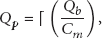
The average size of the packet payload, 
Thus, in the scenario without local processing
In the scenario without local processing, only the time to acquire the values, equal to
As demonstrated in Section 5.1.1,
Therefore, the latency for receiving one torque value and one efficiency value from the WSN, in the scenario without local processing and without retransmission 
The latency for receiving one torque value and one efficiency value, in the scenario without local processing and with retransmission 
5.1.3. Scenario with Local Processing
With local processing, the nodes acquire
Let
Let
Since
Therefore, the average latency for receiving one packet from the WSN in the scenario with local processing and without retransmission 
In the scenario with retransmission and with local processing, the average latency 
5.1.4. Error Estimation
The mathematical model described here still presents some limitations, due to the assumptions made. In the scenarios with retransmission, the processing time from the acknowledge mechanism and the timeout for lost packets was also not considered.
It is also important to consider some relations, which are not directly supported by the models. Although the value of W is not directly affected by the value of p, since W is the number of bits transmitted per second, regardless of transmission errors, there is some correlation between these parameters. W is affected by the CSMA/CA mechanism, and when the interference level in the environment is high or the network has many nodes, the packet error rate is likely high. At the same time, there is an increase in backoff periods, having a direct impact on W. Therefore, some scenarios are very unlikely to happen as, for example, the scenario with
The relation between packet size and packet error rate was not taken into account in the analytical model. Thus, in practice the WSN performance will be lower than the one computed through the models. However, the model is useful for comparing the performance of several possible approaches. Particularly, it can be observed that the use of local processing can significantly increase the WSN performance. It should also be noted that when local processing is not used, the real performance suffers even more with the assumptions made, because there are more and larger packets being transmitted over the network.
To verify the precision of the models, some tests were performed using the embedded system developed (described in Section 4) and a coordinator node, to measure the information delivery rate and compare the results with the results obtained using the models. It is important to note that only some scenarios were analyzed. It was not possible to validate the scenarios with retransmission, since the radios used in our testbed do not provide information about transmission errors. Thus, it was not possible to identify the packet error rate. When retransmission is not used, to obtain the packet error rate, it is only necessary to verify the number of packets transmitted and the number of packets received at the upper layer.
During these experiments, the radios were configured to operate on channel
With the results obtained from the experiments, it was possible to compute the values of
To relate these two parameters a nonlinear regression (exponential) was performed. Through these regressions, we obtained (10), (11), (12). Since the error is different in each scenario, a model for each one was obtained



In the next section, we will analyze the model accuracy, compared with values obtained by the experiments.
6. Results
Using the generic mathematical model described above, we will conduct an analysis considering the IEEE 802.15.4 characteristics. In this standard,
6.1. Number of Transmitted Packets
Figure 4 shows the number of packets that must be transmitted, on average, for the four scenarios. In the chart, the values for

Average number of transmissions.
It is important to notice that as torque and efficiency values occupy only
6.2. Latency
At first, we considered

Latency to receive information in the WSN (without local processing).

Latency to receive information in the WSN (with local processing).
Latency values are shown for various values of p and for different bit rates (10 kbps, 50 kbps, and 80 kbps). The maximum effective bit rate for the IEEE 802.15.4 standard is around 150 kbps, but this rate may be much lower with an increasing number of nodes in the network, leading to longer backoff periods before nodes perform packet transmissions. For example, in [19] it was demonstrated that the data rate in a WSN with four nodes reaches a maximum of around 80 kbps.
From the charts, we can see that when local processing is used, latency is short, even in scenarios with high PER and low bit rate. The charts do not include values for
With local processing, in the worst scenario (i.e.,
6.3. Information Delivery Rate
If many values of torque and efficiency are aggregated into a single packet, latency increases due to an increase in the overall processing time. However, the information delivery rate may be larger, because each packet carries more information. Therefore, to verify the WSN performance when using aggregation, we will analyze the information delivery rate, that is, the amount of torque and efficiency information received per second for a specific node (the inverse of latency).
The chart in Figure 7 shows a comparison between the values obtained from the experiments (reference) and the values obtained from the model (8), for the scenario with local processing, and

Validation of the model for the scenario with local processing, without retransmission, and
Since it is not possible to observe with accuracy the value of W, the two first curves were obtained from the model for
The third curve obtained from the model considers the value of
For
When
The chart in Figure 8 shows a comparison between the values obtained from the experiments (reference) and the values obtained from the model, for the scenario with local processing, without retransmission, and

Validation of the model for the scenario with local processing, without retransmission, and
When
When assuming
The chart in Figure 9 shows a comparison between the values obtained from the experiments (reference) and the values obtained from the model, for the scenario without local processing and without retransmission.
Validation of the model for the scenario without local processing and without retransmission.
When
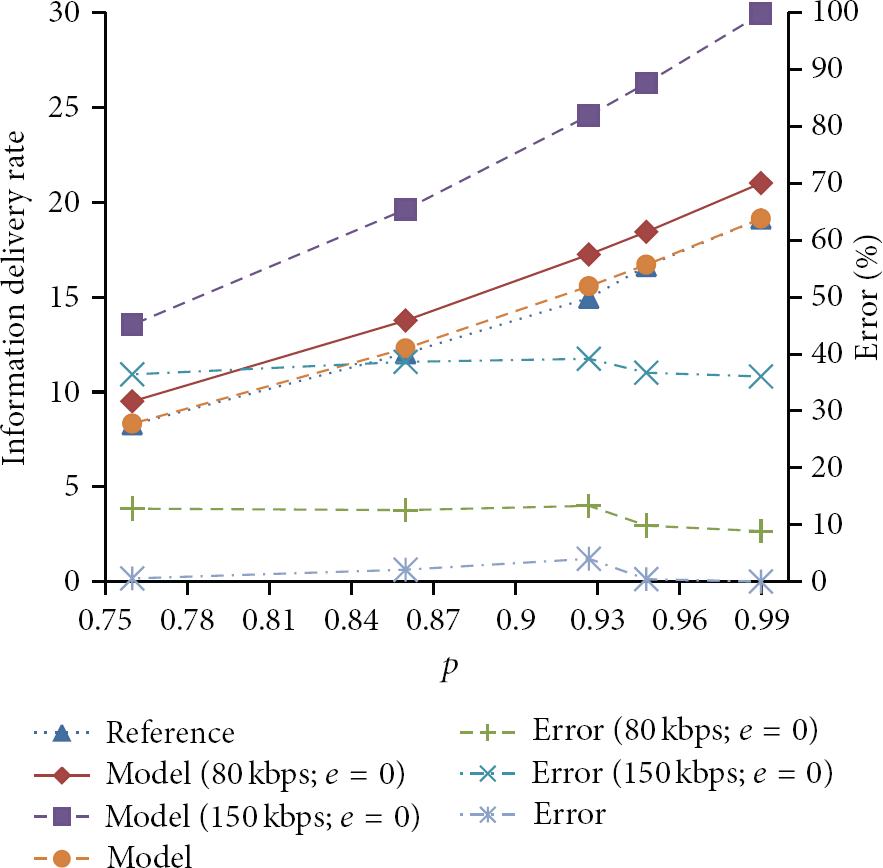
Figure 10 shows the information delivery rate (obtained by the models) with p varying from

Information delivery rate of the WSN, considering the values of e.
As it was not possible to validate the scenarios with retransmission, for this analysis we considered that the errors in the scenarios with retransmission are equal to the errors when retransmission is not used. However, the error values for the scenarios with retransmission are larger, due to the assumptions made regarding the ACK mechanism.
We can conclude that when employing local processing and for
For
The use of retransmission indicates an improvement in the information delivery rate for
To verify the WSN performance when using retransmission, more experimental studies will be necessary. From these studies, it is also possible to refine the model for the scenarios with retransmission.
7. Discussion
In scenarios with high level of interference, the use of local processing becomes very important. Many recent works address the performance evaluation of radios in an industrial environment [2, 25, 36–38], when subject to interference.
In our previous work [6] a study to verify the impact of interference sources (microwave oven and IEEE 802.11g network) in the communication quality of the WSN described in Section 4 in an industrial environment was performed. We will relate these results with the theoretical results obtained in this paper.
Based on the theoretical study in Section 5, Table 2 shows the information delivery rate for some values of p.
Information delivery rate.

LP: with local processing.
LPR: with local processing and with retransmission.
NLPR: without local processing and with retransmission.
NLP: without local processing.
We can observe once more that when p is small, the information delivery rate is very small when local processing is not used. On the other hand, when using local processing, it is possible to perform monitoring even with high packet error rate.
From the studies in [6], we observed that when the WSN (operating on channel 18) was exposed to the interference of an IEEE 802.11g network operating in channel 6, the packet error rate reached about
For a packet error rate of
From these studies we can notice that the deployment of a WSN in industrial environment still presents serious challenges related to the communication reliability. However, despite the high packet error rate in some cases, it is important to notice that, due to the local processing capability, all packets that are received in the destination carry useful information, even considering the processing latency by the embedded system. Without local processing, it is necessary to transmit many packets to provide the desired information, and it is practically impossible to obtain useful data from the WSN without using local processing, for scenarios with high interference.
Besides the application for torque and efficiency monitoring, other applications may suffer even more with the unreliability and low bandwidth of WSNs. For example, in [7] the motor current signature analysis method for fault detection was employed. The ADC was configured to operate with an acquisition rate of 4 kHz and
8. Conclusions and Future Work
In this paper, we have presented a theoretical study for verifying the performance of motor monitoring systems in industry employing WSN. First, a discussion about the standards and protocols already proposed for WSN and about some implementation aspects which can impact the quality of service in WSN based applications in industrial environments was performed. Finally, mathematical models were developed for verifying the performance of an IEEE 802.15.4 based WSN for applications of torque and efficiency monitoring in induction motors, which are widely used in industries. Methods for estimating torque and efficiency in a noninvasive manner have been studied for years, and some works [6–8, 35] have already proposed the integration of these methods with the WSN technology.
From the models, it was possible to verify the performance of the WSN in several scenarios and the benefits from performing local processing, taking into account the lack of reliability of the transmission medium, the characteristics of the IEEE 802.15.4 standard, and processing latency. The analytical results were validated and analyzed together with experimental results obtained in a previous work. It was shown that the use of local processing is essential for the application under consideration, mainly when the WSN is subject to interference sources. In scenarios with high level of interference, it can be almost impossible to perform monitoring without using local processing.
In other applications, such as the fault detection from motor current signature analysis, the use of local processing can be even more essential, since the amount of data that must be processed to perform the analysis is even higher in comparison with the estimation of torque and efficiency. Besides, by performing local processing, the end nodes can be configured to transmit data only if an important event (i.e., a failure) is detected. However, the processing latency to perform the fault detection is also high. Thus, it is important to analyze the performance of the WSN taking into account the node's processing capacity too. The models developed in this paper can be instantiated to evaluate the performance of other applications, such as the fault detection application, verifying the impact of local processing. As one of the future works, we intend to develop fault detection applications using WSN.
Using the results obtained from the model, it is possible to compare several configurations, which can guide de development of WSN applications. This kind of study is especially useful for industrial applications, due to the lack of reliability of wireless networks in this particular environment, and for any application that needs to acquire a large amount of data from sensors.
As future work, we intend to perform detailed performance studies using a WSN with a large number of nodes inside an industrial environment. From these studies we will verify the scalability of the system and characterize the main interference sources in the environment. We also intend to develop spectrum-aware protocols, in which radios can choose the operating channel dynamically, allowing embedded systems to self-adapt to the environment and improving the quality of service of the network. Through more detailed experimental studies, it will be possible to refine the analytical models, increasing their accuracy. Some topics of interest include
experimental evaluation of the WSN with an increasing number of nodes in an industrial environment; development and evaluation of protocols for dynamic channel allocation; exploration frequency redundancy, employing multiple transceivers; experimental evaluation of the WSN using retransmission; development of techniques for data summarization, reducing even more the amount of packets transmitted in the network.
Footnotes
Acknowledgments
This work was supported by the National Council of Scientific and Technological Development (CNPq, Brazil), by the Coordination of Improvement of Higher Education Personnel (CAPES, Brazil) and by Eletrobras—CEAL.