




Abstract
Building roofs play a very important role in the energy balance of buildings, especially in summer, when they are hit by a rather high solar irradiance. Depending on the type of finishing layer, roofs can absorb a great amount of heat and reach quite high temperatures on their outermost surface, which determines significant room overheating. However, the use of highly reflectivecool materials can help to maintain low outer surface temperatures; this practice may improve indoor thermal comfort and reduce the cooling energy need during the hot season. This technology is currently well known and widely used in the USA, whilereceiving increasing attention in Europe. In order to investigate the effectiveness of cool roofs as a passive strategy for passive cooling in moderately hot climates, this paper presents the numerical results of a case study based on the dynamic thermal analysis of an existing office building in Catania (southern Italy, Mediterranean area). The results show how the application of a cool paint on the roof can enhance the thermal comfort of the occupants by reducing the operative temperatures of the rooms and to reduce the overall energy needs of the building for space heating and cooling.
1. Introduction
The roof surface represents about 20–25% of urban surfaces and 60–70% of the building envelope on average in Italy, depending on the building typology [1]; thus, it plays a very important role in the energy balance of buildings, and it is important to find appropriate solutions to improve its energy performance, also in relation to the specific climate.
In particular, the solar radiation impinging on the roofs can easily raise their outer surface temperature up to 50–60°C, that is to say, 10–15°C higher than the surrounding green areas [2].
Now, most of the energy regulations in Mediterranean countries currently prescribe high thickness for the insulation of the envelope, especially for roofs. Actually, this approach is appropriate to reduce the energy needs in winter, but it is not very effective in summer as a tool for reducing the room overheating. As a matter of fact, the use of high insulation levels in hot climates strongly reduces the effectiveness of passive cooling strategies, traditionally based on high thermal inertia, air permeability, and light colors as far as roof is concerned [3]. Moreover, as discussed by Masoso and Grobler [4], it is not always true that lower values of the thermal transmittance of the envelope reduce the annual energy consumption for space heating and cooling. In fact, it is possible to determine a threshold value of thermal transmittance (point of thermal inflexion) that, if overtaken, brings to negative energy savings on an annual basis.
Similar results were determined by Li et al. [5], who highlighted how insulation in general tends to be more effective in heating-dominated buildings in colder climates than in cooling-dominated ones, because of the heat trapped inside the building.
Moreover, the use of a high thickness of insulation material, by breaking the thermal behavior of the inner part of the envelope (depending on the interior conditions) and the upper part (subject to climatic conditions), leads to a rapid decay of the roof.
As an example, D'Orazio et al. [6] and Gagliano et al. [7] performed a series of thermal analyses for different types of roof technology (ventilated and nonventilated) by varying the thickness of insulation. The results show how all the roofs exhibit similar behavior on the inner side but a very different one on the outer side: the mean difference between ventilated and non-ventilated roof, in terms of inner surface temperature and incoming heat flux, is constant and amounts to 1.5°C and 3 W·m−2, respectively, whatever the common insulation thickness is.
On the other hand, a sensible difference holds between the outer surface temperatures, due to the overheating of the finishing layer; in fact, clay tile roofs show better performance than copper roofs (or metal roofs in general), because of their air permeability and their more balanced radiant properties (solar reflectance and infrared emissivity).
In this context, cool materials represent an efficient way to cope with both the increase of energy consumption in summer and the urban heat island effect, without introducing sensible changes in the aesthetic feature [8].
In this paper, a further contribution will be provided to the discussion about the suitability of cool roofs as a passive cooling strategy in Mediterranean climates. However, in comparison with other works available in the scientific literature, a more comprehensive approach will be adopted, thus also investigating the connection between cool roofs and both indoor thermal comfort and winter energy performance.
In particular, the paper presents the results of a case study in Catania (southern Italy), based on simulations with the software tool EnergyPlus. The simulations will allow evaluating the results to be expected from the application of a commercial cool paint on a low-rise office building; this intervention has already been performed, and it will be the object of an experimental monitoring campaign in summer.
The results will show the benefits of using cool roofs on existing buildings, both in terms of reduction of cooling demand and decrease of the hours of thermal discomfort. However, attention will be also paid to the winter condition, when the presence of the cool paint reduces the heat absorbed by the roof, with important consequences in terms of heating demand. Actually, this is a drawback of cool materials not always addressed in the scientific literature.
2. Main Properties of the Cool Materials
Cool materials are characterized by high values of solar reflectance (r > 0.6), which strongly reduces the amount of solar radiation absorbed by the roof outer layer, and by high infrared emissivity values (∊ > 0.8), which contributes to dissipate the heat accumulated during the day through an intensive radiant heat exchange at night. Nowadays, cool materials are commercialized in a range of products: paints, coatings, membranes, tiles, and prepainted steel panels.
In this way, lower surface temperatures are achieved, so reducing heat transfer from the roof to the built environment and limiting the cooling load of the building; Kolokotsa et al. [9] have recently tested the efficacy of the technology on a laboratory building in Iraklion (Crete), finding annual energy savings for the cooling loads of about 27% using a paint with r = 0.89.
Several research studies have pointed out these aspects, also focusing their attention on the aesthetic problem; Levinson et al. [10] have developed some materials (mainly paints) whose chromatic result is as close as possible to the existing original color of the untreated roof, showing how this is obtainable by maximizing the near infrared reflectance without affecting the behavior of the paint in the visible field, which is strictly related to the perceived color.
Furthermore, Akbari et al. [11] have monitored six commercial buildings in three different sites in California (USA) and demonstrated that the use of the cool roof technology is very effective in a hot-humid climate; an average reduction of 30°C is measured on the daily peak of the outer surface temperature of the roof, while the mean savings for air conditioning range from 42 Wh·m−2·day−1 to 81 Wh·m−2·day−1, depending on the local weather conditions of the three sites considered and on the main features of the buildings monitored.
These remarkable results have led to the publication of standard rules for the trade of these products in the USA under the supervision of the Cool Roof Rating Council [12, 13].
In the EU the Cool Roofs Project has collected the results of five case studies in different countries (Greece, France, Italy, and UK), showing the effectiveness of this technology especially for hot climates like the Mediterranean one [14, 15]; the most important achievements are disseminated by the European Cool Roof Council that has also published a database of cool materials now commercialized and certified under its control.
3. Methodology
The study has been developed in two different phases: the first stage involved the characterization of the building envelope in terms of thermal and optical properties, whereas in the second stage the calculation of the energy performance and the study of the thermal comfort were carried out through a series of dynamic simulations.
3.1. Measurement of the Thermal Transmittance
The evaluation of the thermal transmittance (U-value) of the opaque envelope components is normally based on the well-known relationship:

where h i and h o are the inner and outer surface heat transfer coefficients s j and k j are the thickness and the thermal conductivity of the j-layer of the building component.
In this work, this approach was supported by a measurement campaign of the envelope transmittance values, carried out through a Heat Flux Meter. The instrument chosen to this purpose is the TESTO 435-2 multifunction instrument, which is provided with
a probe for the measurement of the indoor air temperature;
a radio probe for the measurement of the outdoor air temperature;
a circular plate, which has to be applied on the inner surface of the envelope component for the measurement of the heat flux exchanged on this surface;
a datalogger for the management and the storage of all the data acquired.
The data measured by the heat flux meter allow calculating the real thermal transmittance of the opaque component. According to the ISO standard 9869 [16], the measured values must be reelaborated through a series of progressive means, in order to provide a well-stabilized value that can be considered very close to the real one. To this aim, the following equation should be used:

where φ is the incoming heat flux through the envelope component, T i – T o is the temperature difference between the indoor and the outdoor environment, measured at the same time τ as for φ, and P is the duration of the measurement campaign.
In the above equation only the acquisitions that respect the condition T i (τ) – T o (τ) > 7°C were retained, as suggested by the manufacturer of the instrument to guarantee reliable results.
Data were acquired with a timestep of 5 minutes; the duration of the measurement campaign was seven days.
3.2. Optical Measurement for the Cool Paint
In this case study, a brown cool paint provided by an Italian manufacturer has been chosen for testing the effectiveness of the cool roof technology.
The choice of this product is justified by many reasons:
this cool material is certified by the ECRC;
it is a milk-vinegar paint that also contributes to prevent the formation of humidity on the roof;
it is a walkable paint that does not compromise the usability of the terrace.
Before applying the product to the roof, laboratory tests were conducted to characterize its spectral reflectance. To this aim the Perkin Elmer Lambda 750 UV/Vis/NIR spectrophotometer was used, according to ASTM E 903-96 standard [17].
This instrument allows the characterization of the optical properties of a wide range of sample materials by using two different radiant sources (prealigned tungsten-halogen and deuterium lamps) on the sample; a detector gains the spectral intensity of the reirradiated beam, directed by a series of mirrors.
Finally, the global reflectance value r is calculated through the following equation:

where G(λ) is the solar spectral irradiance in the wavelength field 250 < λ < 2500 nm, as defined by the ASTM G173 Standard [18], and r(λ) is the spectral reflectance of the cool paint in the same wavelength field, as measured by the spectrophotometer.
3.3. Energy Simulation of the Building
The assessment of the energy performance and the thermal comfort conditions in the sample building are carried out using the dynamic thermal analysis software EnergyPlus v.7.0 [19].
The solution of the thermal field inside the walls in EnergyPlus is based on the conduction finite difference algorithm. As concerns the discretization of the time variable, in this work a time step Δτ = 3 minutes was adopted, as additional simulations permitted to verify that no changes in the results occur if using smaller time steps. On the other hand, the space interval Δx is determined by the software itself for each material as a function of the space discretization constant C:
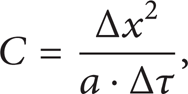
where a is the thermal diffusivity.
The value of this coefficient can be introduced by the user and corresponds to the inverse of the Fourier number. In this work, C = 2 was chosen to assure a good stability of the solution [20].
3.4. Thermal Comfort Analysis
The operative temperature is an index closely related to the comfort condition perceived by the occupants, so a reduction of its value during the period of observation implies better conditions for the building occupants.
An effective way to quantify the intensity of uncomfortable thermal sensation due to overheating in a living space is the measure of the difference between the room operative temperature and a threshold value; however, the duration of such overheating should also be taken into account.
To this aim we will adopt an indicator called Intensity of Thermal Discomfort for overheating (ITDover), introduced by Sicurella et al. [21], which is defined as the time integral, over the occupancy period P (from 9:00 to 18:00 for weekdays in this case), of the positive differences between the current operative temperature and the upper threshold for comfort:
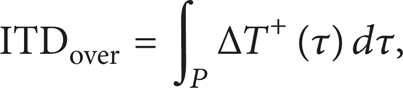
where

The value of the threshold temperature T lim depends on the choice of a specific thermal comfort theory. In this paper, the adaptive approach is chosen, as described in the ISO EN 15251 Standard [22]; hence, the threshold value is not constant in time, but it should be determined daily as a function of the running mean outdoor air temperature Trm. The formulation of the threshold temperature is given in (7) and corresponds to the fulfillment of Category I introduced by the EN Standard (high level of expectation):

The definition of the ITDover is similar to that of integrated discomfort degree introduced by Zhang et al. [23] and Zeng et al. [24]. However, their parameter is built by using the indoor air temperature and a constant threshold value, so neglecting that the operative temperature—and not the indoor air temperature—is the key parameter for the measure of thermal comfort; furthermore, by using a constant threshold value, they do not take into account the most recent concept of adaptive thermal comfort; these limits are overcome by the approach followed in the present paper.
4. The Case Study
4.1. Description of the Building
The building considered in this case study is an existing office building in Catania (Southern Italy), a town on the eastern coast of Sicily, whose main features are summarized in Table 1.
Features of the building.

The ground floor hosts a series of offices used by the teachers of the local university, while the basement is occupied by laboratories; the roof is walkable and hosts the air-conditioning devices.
The composition of the outer walls and the roof is reported in Table 2. As one can observe, the outer walls are composed of a double leaf of concrete blocks (12 cm) and hollow clay blocks (8 cm), separated by an air gap (17 cm) with a thin layer of polystyrene (3 cm).
Characteristics of the opaque envelope.

R = 0.23 [m2·K·W−1];
R = 0.18 [m2·K·W−1].
The roof is based on a load-bearing attic, a prefabricated structure very common for low-rise office buildings, covered by a layer of mineral wool panels (3 cm) and a lightened cement screed (10 cm). A false ceiling (2 cm) covers the air gap underlying the prefabricated structure. The floor is made of clay shingles (1.2 cm) which rest directly on the same prefabricated structure as for the roof (6 cm) through a layer of mortar (2 cm).
The windows consist of double-glazing filled with argon (4-12-4 mm), and the aluminum frame is provided with thermal cutting; the shading system consists of white curtains. The whole window system shows a thermal transmittance value U = 2.80 W·m−2·K−1, calculated according to UNI EN ISO 10077-1 [25].
In Table 2 the most important thermal properties of the building materials are also collected, as reported by the national standards UNI 10351 [26] and UNI 10355 [27] and by the UNI EN ISO 6946 [28] international standard; the U-values calculated according to (1) are reported in Table 1.
On the other hand, the results of the measurement campaign, carried out as explained in Section 3.1, are shown in Figure 2. As one can observe, the curves of the experimental progressive U-values, calculated according to (2), are well stabilized after three days of measurement and show a very good agreement with the U-values determined with (1) using the data of Table 1, with only slight deviations mainly due to the variability of the thermal resistance R of the air gap, both in the outer walls and in the roof.
4.2. Performance of the Cool Paint
The results of the laboratory tests, carried out as described in Section 3.2 and aimed at determining the solar reflectance of the cool paint, are shown in Figure 3. Here, the curve of the reflectance r(λ) is plotted together with the ASTM solar irradiance. It can be observed that the paint has a high spectral reflectance values in the range 200 < λ < 2500 nm, so as to limit the heat flux due to the solar action (in this range the sun emits about the 98% of its radiant energy).
The global reflectance, calculated according to the ASTM G173 Standard for the reference solar spectral irradiances using (2), results in r = 0.45. Actually, this value is lower than the expected value declared by the manufacturer (r = 0.65), maybe because of the addition of some chemical pigments needed to obtain the same color as the original clay tiles.
For the existing clay finishing layer, the value r = 0.25 has been assumed according to [28, 29].
Moreover, in Figure 4, the procedure for the application of the cool paint is shown; after washing the existing finishing layer of the roof three different coats are applied. The first one is the primer, whose main role is gripping firmly the second coat (the high-reflective layer) on the roof; finally, the third coat provides a protection from the atmospheric agents and a renewable layer for the ordinary maintenance.
4.3. Description of the Simulations
In order to simulate the dynamic energy performance of the building with EnergyPlus, the following assumptions were made:
annual simulation period with hourly time step;
the local weather file for the site of Catania is derived from the library available on the EnergyPlus weather data;
occupancy pattern: from Monday to Friday, 09:00–18:00;
electrical heat gains: 150 W per workstation;
lighting systems: 6 W·m−2;
people sensible load: 60 W per person;
outdoor air infiltration rate: 0.5 h−1 during the occupancy period, 0.2 h−1 during the remaining time.
In the next section the results of the simulations will be presented under four different scenarios:
no paint (solar reflectance r = 0.25 for the nontreated existing roof);
cool paint actually applied on the roof (r = 0.45);
more performing paint (r = 0.65);
best performing paint (r = 0.85).
All the paints mentioned above are listed in the Cool Roof Database [14] and commercialized throughout the EU after a series of laboratory tests that certificate the products in terms of solar reflectance and infrared emissivity.
The simulations focus both on the thermal comfort and energy performance of the building, as well as on the thermal behavior of the cool paint.
The thermal behavior of the cool paint is characterized through the temperature reduction of the roof outer surface.
The comfort analysis shows the hourly evolution of the operative temperature for a reference room of the building. In addition, an indicator for measuring the length and the intensity of thermal discomfort is calculated for three rooms having different exposures.
The energy analysis evaluates the hourly heating and cooling loads, the design loads for summer and winter, and the global annual energy need.
5. Results and Discussion
5.1. Roof Temperature
One of the most noticeable aspects related to the use of a cool paint on the finishing layer of a roof is the sharp reduction of its outer surface temperature; according to several case studies [29–31], a mean reduction of 12°C is expected when using a product with average quality (r = 0.45), whereas the use of a high-reflective paint (r = 0.85) can introduce a temperature reduction up to 25°C.
As concerns this case study, Figure 5 shows that the outer surface temperature for the existing roof is always higher than that reached by the painted roof. The minimum difference pertains to the less performing paint (r = 0.45) and ranges around 5–10°C, but in the case of the best performing paint such temperature difference actually increases up to 20–30°C.
Furthermore, as shown in Figure 6 for the hottest days of the year, the use of a cool paint on the roof leads to a sensible reduction of the peak outer surface temperature while at night this difference is more limited. In fact, when the solar irradiance is at its maximum (12:00–14:00) and a peak of about 60°C is reached for the untreated roof, a paint with r = 0.45 shows a reduction of 10°C and the one with r = 0.85 has a reduction of 25°C.
At night, these differences are of 1°C and of 3°C, respectively, which lowers the risk of vapor condensation on the roof.
5.2. Comfort Analysis
The sensible reduction in the surface temperature of the roof leads to a significant reduction in the operative temperature of the underneath rooms. The reference room for this analysis is the office n.3, placed in the middle of the northern side of the building (see Figure 1). This office is representative of the whole set of offices due northeast.

Ground plan with building orientation and picture of the main façade.

Experimental values of the thermal transmittance for the roof and the outer walls, obtained through (2).
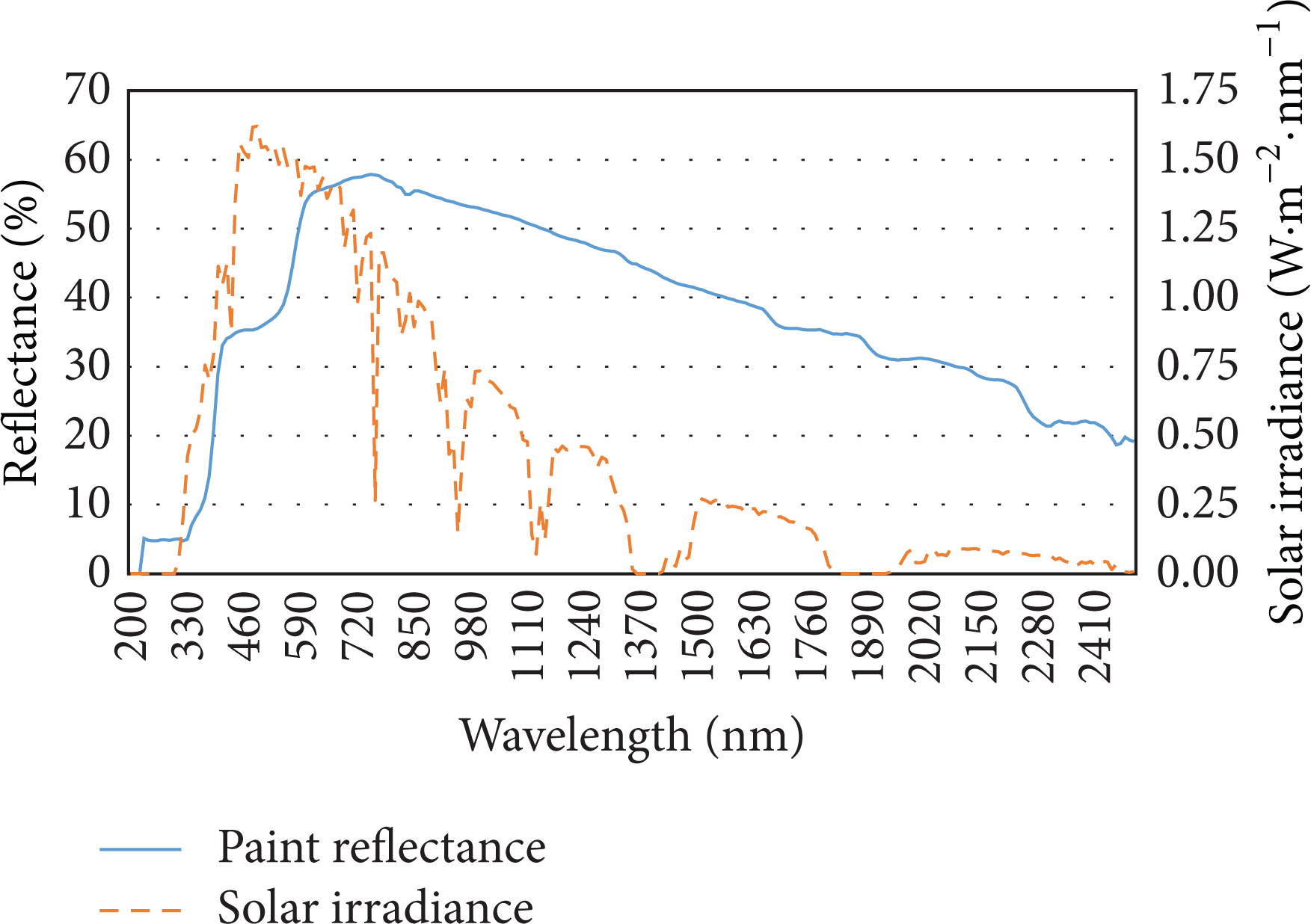
Spectral reflectance of the cool paint versus ASTM solar irradiance.
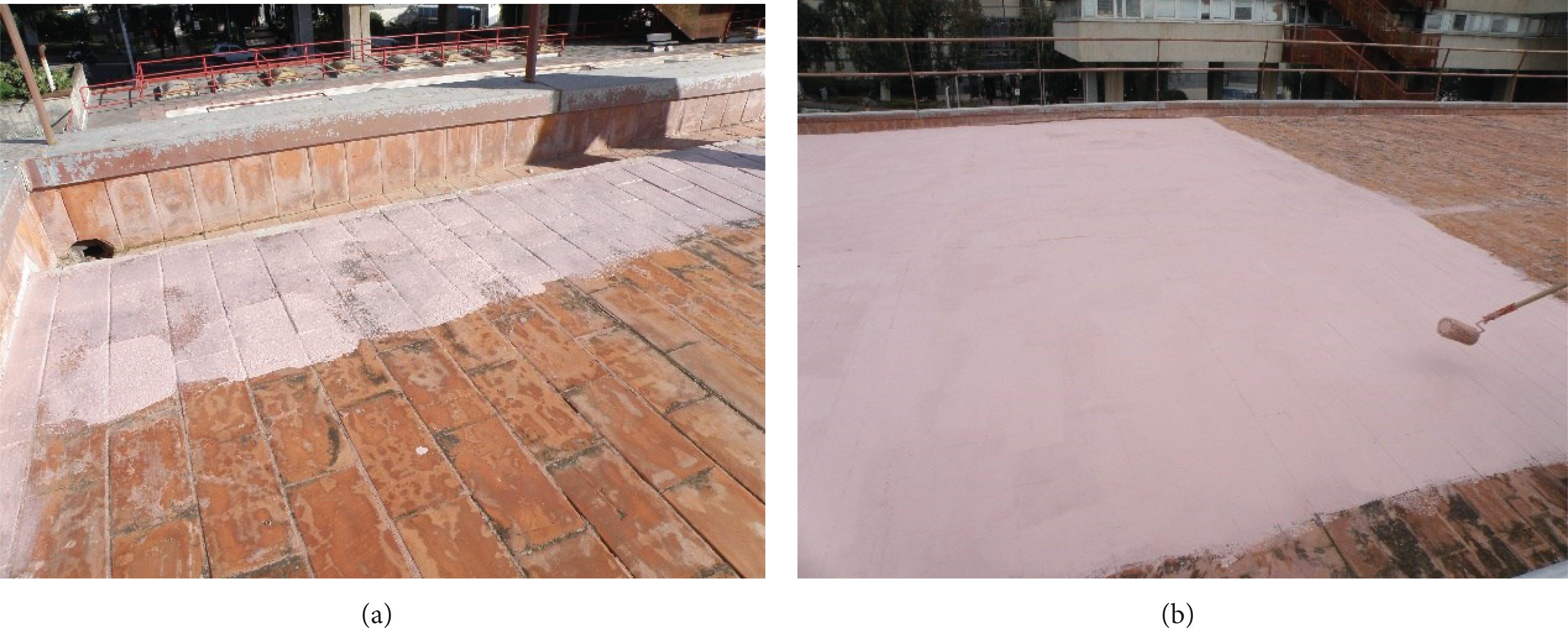
Application of the cool paint on the existing clay tiles.
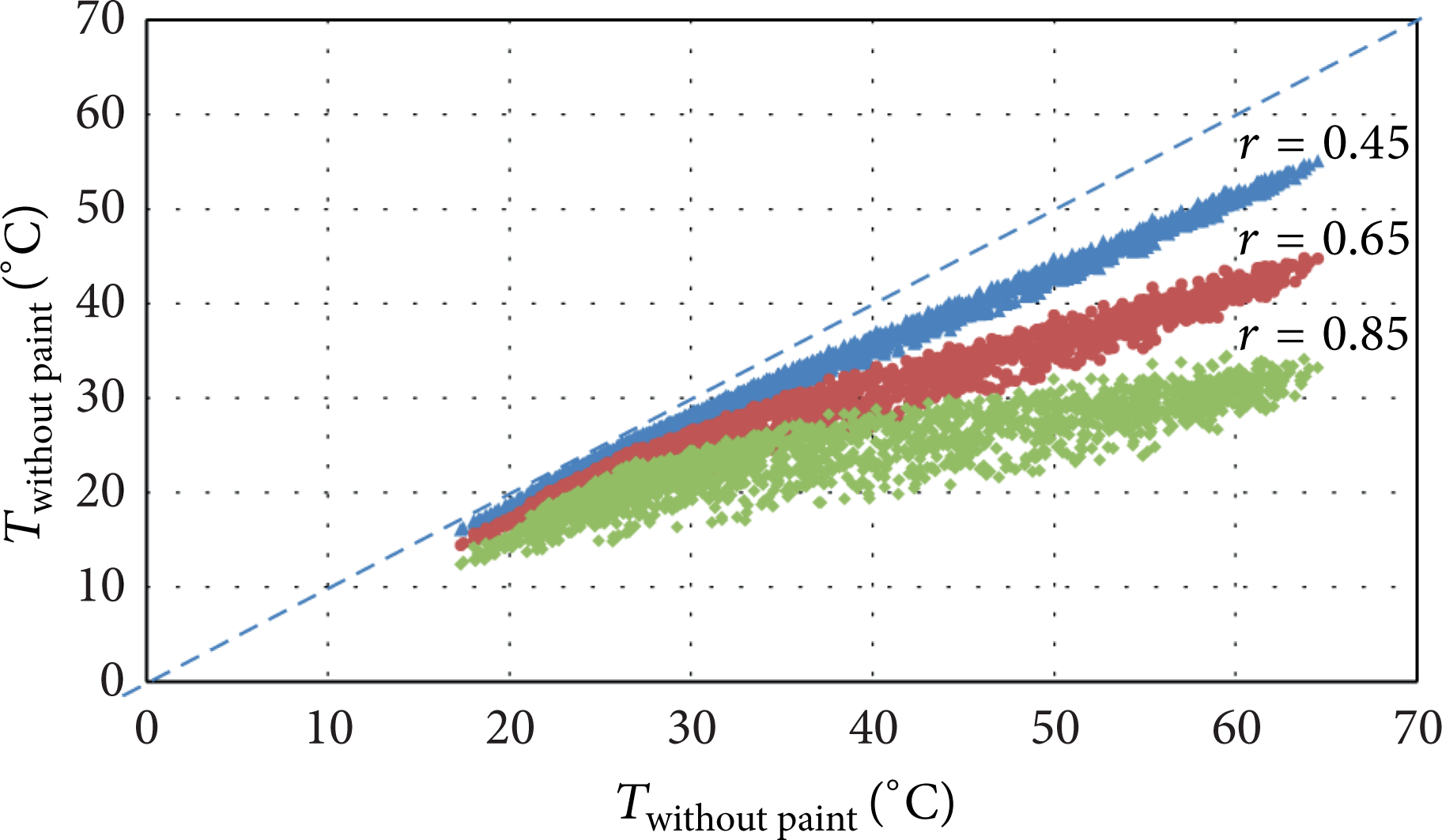
Comparison between the outer surface temperature of the roof without paint and with growing reflectance values (data from June to August are plotted).

Outer surface temperature of the roof without paint and with growing reflectance values during the hottest days of the year (August 8th–10th).
As shown in Figure 7, during the three hottest days of the year (from the 8th to the 10th of August) a peak value of 36°C for the operative temperature is expected without paint during the occupancy period (9:00–18:00); it can also be observed that a reduction of around 1°C every Δr = 0.20 is achieved when using cool paints with increasing reflectance values.

Operative temperature in the office n.3 during the hottest days of the year (August 8th–10th).
In this case study, three rooms are investigated from the comfort perspective: the office n.3 which is representative of the northeast rooms, the office n.6 which is due southwest and the assembly room that is characterized by many glazed surfaces and by double exposure.
The values of the ITD discomfort index, calculated as described in Section 3.4, are shown in Figure 8. Here, the expected effectiveness of the real cool paint (r = 0.45) in reducing the thermal discomfort of the occupants is clear, as it implies a reduction of the ITD of about 21% with respect to the case without cool paint.

ITD index for three different rooms during the summer season.
However, even better results can be obtained when using the most performing paint (r = 0.85), since the expected reduction of ITD is 63%, and this is true for all the rooms considered.
5.3. Energy Analysis
Another positive aspect closely related to the use of the cool roof technology is the sensible reduction of the cooling load of the building, thanks to the lower rate of heat flux penetrating through the plain roof. This effect is shown in Figure 9 with reference to the hottest days of the year; the curves represent the building sensible cooling load, determined through the simulations with a cooling set point temperature of 26°C for the air-conditioning system during the occupancy period in summer (09:00–18:00 for weekdays, from May to September). This set point temperature has been chosen according to Fanger's comfort theory and is not related to the threshold temperature T lim defined in Section 3.4; actually, the latter is introduced in the framework of the adaptive approach described by the ISO EN 15251 Standard that is suitable for free running conditions but not when a mechanical air-conditioning device is used.
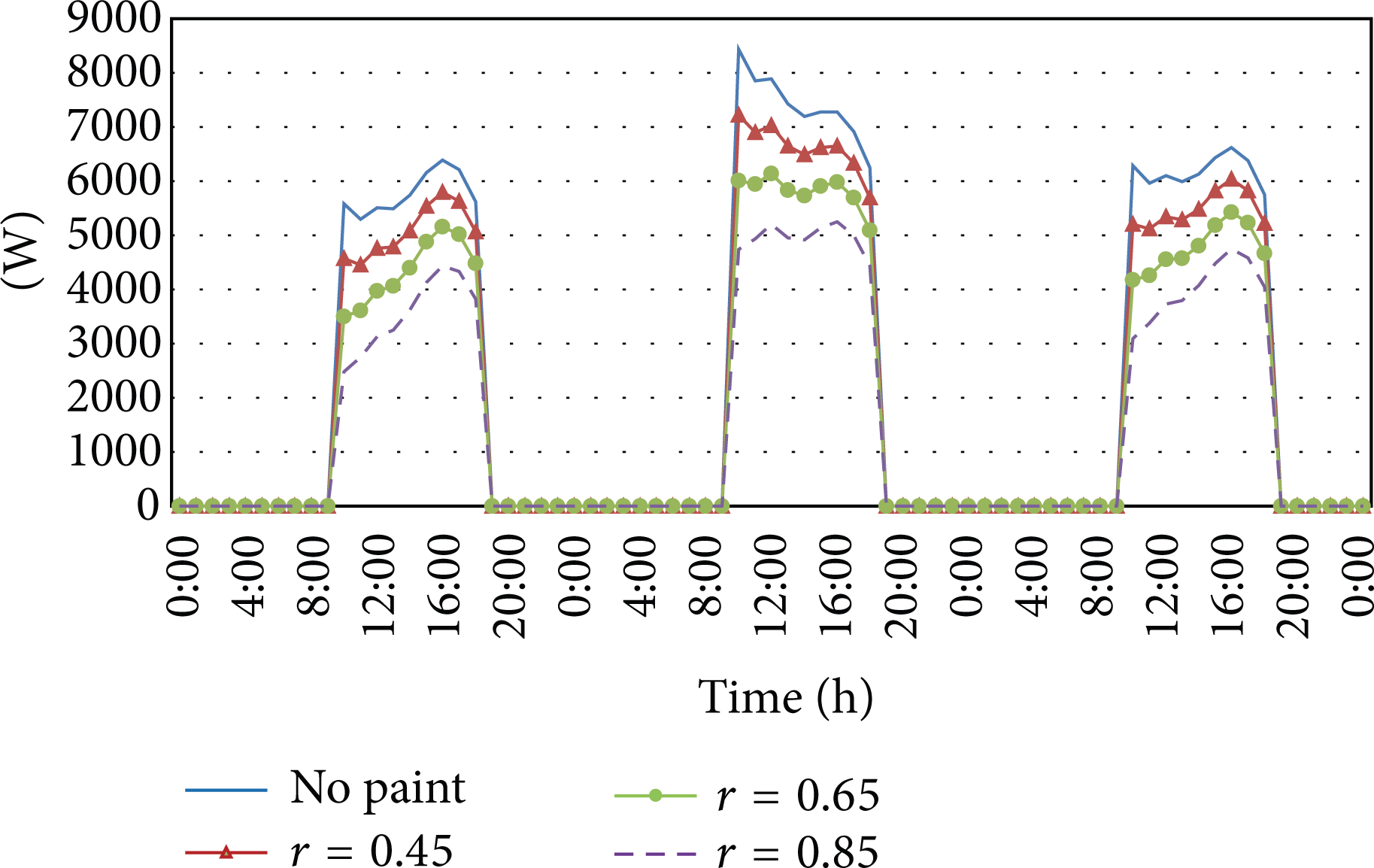
Sensible cooling load of the building during the hottest days of the year (August 8th–10th).
As one can observe, the peak of the cooling load is usually reached at about 16:00, as on the 8th and on the 10th of August, because the glazed surfaces are mainly due west; however, in some cases, as on the 9th of August, the peak cooling load is reached in the morning, at around 10:00. This trend is related to the schedule of the air conditioning system that is activated only during the occupancy period. Thus, if the building gets too hot at night, the air-conditioning system has to face a considerable cooling load when it starts operating.
In any case, the peak cooling load can be cut by 14% in comparison with the case without cool paint when using the real paint with r = 0.45 (from 8440 W to 7230 W), and the result is far more encouraging when using a very performing paint (r = 0.85), as the peak load is reduced by 44%, that is, from 8440 W to 5206 W.
However, the reduction of the cooling load in summer is not the only effect of the cool paint on the energy performance of the building. In fact, the low absorptance of the roof also implies lower heat gains in winter, which determines a potential increase of the winter heating load. To this aim, the simulations were repeated for the winter season (from October to April), by imposing a heating set point temperature of 20°C during the occupancy period.
The resulting trend of the design thermal loads as a function of the solar reflectance r is reported in Table 3 for summer and winter; as a matter of fact, the increase of the peak heating load due to the presence of the cool paint in winter is not negligible. Actually, the peak heating load raises from 14.9 kW to 15.6 kW (+4.7%) if using a paint with r = 0.45 and from 14.9 kW to 17.1 kW (+14.7%) when using a paint with r = 0.85.
Heating and cooling design thermal loads.

In any case, the most important parameter from the perspective of the overall energy savings is the annual energy need of the building for space heating and cooling, obtained by integrating over time the curves of the sensible load for heating and cooling.
As shown in Figure 10, the annual energy need for space cooling is strongly reduced by increasing the value of the roof solar reflectance r; the expected reduction is around 15% when using a paint with r = 0.45 and around 45% for a paint with r = 0.85. On the other hand, an increase of the energy need for space heating should be expected (11% for a paint with r = 0.45 and 31% with r = 0.85).

Annual building energy need as a function of the solar reflectance of the roof.
As a result, the total expected annual energy need is reduced by 5% (from 8760 to 8340 kWh) and by 12% (from 8760 to 7740 kWh) in comparison with the case without cool paint, respectively, when r = 0.45 and r = 0.85.
Thus, the results of the simulations seem to be very encouraging, thus justifying the use of very performing cool paint for roofs in hot climates. However, the increase of the heating energy need shown in Figure 10 for this case study suggests that the use of these products in regions with intense or long winter period has to be evaluated carefully.
6. Conclusions
The aim of this paper was to investigate the effectiveness of the cool roof technology for the refurbishment of an existing low-rise office building in Catania, a city in southern Italy with a hot-humid Mediterranean climate, in which the energy demand for space cooling in summer is predominant if compared to that for space heating in winter.
The simulations carried out through the software EnergyPlus have pointed out that the comfort sensation of the occupants in free running conditions in summer can be significantly improved by applying a cool paint with an average value of solar reflectance (r = 0.45), which corresponds to the performance of a commercial paint actually applied to the roof in the framework of an experimental campaign. Such improvement is testified both by the reduction of the operative temperature in comparison with the case without cool paint and by the reduction of the indicator called intensity of thermal discomfort (ITD). However, further enhancements might be expected when using a very-performing cool paint (up to r = 0.85).
Moreover, the application of the cool paint leads to a noticeable reduction of the building energy need for space cooling; however, an increase of the energy need for space heating in winter should also be expected. Even if in this case study the overall annual energy demand is lowered by the use of a cool paint, this solution should be carefully evaluated in regions with intense or long winter period.
To this aim, further studies about the energy demand in terms of primary energy are in progress and will be treated in a future work.
Footnotes
Nomenclature
Acknowledgment
The authors would like to thank the Laboratori Ecobios S.r.l. manufacturer for supplying the cool paint used in this study.