




Abstract
The present study is aimed at investigating the natural convection heat transfer from discrete heat sources to nanofluids. The behavior of nanofluids was investigated numerically inside a heated cavity to gain insight into convective recirculation and flow processes induced by a nanofluid. A computational model was developed to analyze heat transfer performance of nanofluids inside a cavity taking into account the solid particle dispersion. The model was validated through the comparison with available experimental data, and the results showed good agreement. The influence of the solid volume fraction and the aspect ratios on the flow pattern and heat transfer inside the cavity was investigated. The results show that the intensity of the streamlines increases with the volume fraction. The influence of the loading factor is more distinguished in the vicinity of the upper heaters and, in particular, at the highest heater. The heat transfer increases with the increase in the volume fraction of the nanoparticles in the range of 2 to 10%. As the aspect ratio (AR) increases (channel width is reduced), the streamlines change and the intensity of the streamlines increases slightly, showing flow in the middle of the channel. The stagnation region disappears, and interaction between the two boundary layers at the hot and cold walls is evident.
1. Introduction
The growing demand from different industries such as electronics has influenced the design of heat exchanger devices and resulted in the need for equipment that can provide high performance while having small size and light weight. Conventional fluids often have low thermal conductivity of conventional heat transfer, thus, limiting the enhancement of the performance and the compactness of many electronic devices for engineering applications. Many investigations are being conducted in recent years to develop fluids with high heat transfer properties. These fluids are called nanofluids and have suspended metallic nanoparticles within them. Jou and Tzeng [1] showed a significant increase in the average heat transfer coefficient by increasing the volume fraction. In their investigation of heat transfer due to buoyancy forces Oztop and Abu-Nada [2] concluded that the heat transfer enhancement is more pronounced at a low aspect ratio.
Nanofluids have great potential for heat transfer enhancement and are highly suited to application in practical heat transfer processes. Several published articles show that the main reasons for the heat transfer enhancement of the nanofluids may be [3] due to the fact that the suspended nanoparticles increase the thermal conductivity of the fluids, and the chaotic movement of ultrafine particles increases fluctuation and turbulence of the fluids which accelerates the energy exchange process. Currently, the development of the nanofluids is still in its early stages. Therefore, further research work is needed in order to understand and predict their thermal characteristics. The following is a summary of the previous studies related to the present work. These are divided to investigations of nanofluids natural convection in general, investigations of nanofluids properties, and investigations of natural convection of conventional fluids.
1.1. Investigations Related to Nanofluids Heat Transfer
The nanofluids, with different particle volume percentages, were used by Li and Xuan [4] and Xuan and Li [5] to determine the effect of the nanoparticle concentration on the heat transfer coefficient. The volume percentages ranged from 0.3 to 2%. The experimental results indicated that the convective heat transfer coefficient of the nanofluids varied with the flow velocity and volume fraction. Xuan and Roetzel [6] presented two different approaches to determine some fundamentals for the prediction of the convective heat transfer coefficient of nanofluids. Both the effects of transport properties and thermal dispersion of the nanofluid were included.
Buoyancy-driven heat transfer enhancement in a two-dimensional enclosure utilizing nanofluids was investigated by Khanafer et al. [7]. Heat transfer enhancement in a two-dimensional enclosure utilizing nanofluids was investigated for various pertinent parameters. A model was developed to analyze heat transfer performance of nanofluids inside an enclosure. The transport equations were solved numerically using the finite-volume approach. The effect of suspended ultrafine metallic nanoparticles on the fluid flow and heat transfer processes within the enclosure was analyzed, and effective thermal conductivity enhancement maps were developed for various controlling parameters. An analysis of variants based on the thermophysical properties of nanofluid was developed and presented. It was shown that the variances within different models have substantial effects. A heat transfer correlation of the average Nusselt number for various Grashof numbers and volume fractions was presented.
1.2. Investigations Related to Nanofluid Properties
Avsec and Oblak [8] presented a mathematical model for computation of thermodynamic and transport properties for nanofluids including thermal conductivity and viscosity. The analytical results were compared with the experimental data and showed relatively good agreement. The natural convection heat transfer of Newtonian nanofluids in a laminar external boundary-layer was investigated using the integral approach by Polidori et al. [9]. The problem of natural convection flow and heat transfer of Newtonian alumina-water nanofluids over a vertical semi-infinite plate was investigated for a range of nanoparticle volume fractions up to 4%. Based on a macroscopic modeling and under the assumption of constant thermophysical nanofluid properties, it was shown that special care has to be exercised in drawing generalized conclusions about the heat transfer enhancement with the use of nanofluids. It was found that natural convection heat transfer is not solely characterized by the nanofluid effective thermal conductivity and that the sensitivity to the viscosity model used seems to play a key role in the heat transfer behavior.
The effect of temperature and particle volume concentration on the dynamic viscosity for the water-Al2O3 nanofluid has been experimentally investigated by Nguyen et al. [10]. Viscosity database has been established for the water-Al2O3 nanofluid with 36 and 47 nm particle sizes. The viscosity data have been obtained for the ambient condition and particle volume fraction varying from 1 to 13%. The temperature and particle-size effects were investigated, considering temperature ranging from 22 to 75°C and particle volume fraction from 1 to 9.4%. It has been found that the nanofluid viscosity depends on both temperature and concentration; while the particle-size effect seems to be important only for sufficiently high particle fraction.
Namburu et al. [11] presented an experimental investigation of rheological properties of copper oxide nanoparticles suspended in 60: 40 (by weight) ethylene glycol and water mixture. Nanofluids of particle volume percentage ranging from 0% to 6.12% were tested. For the particle volume concentrations tested, nanofluids exhibited Newtonian behavior. The viscosity of nanofluids was shown to increase when the volume concentration of nanoparticles increases. It was concluded that the viscosity of copper oxide nanofluids decreases exponentially as the temperature increases. The relative viscosity of copper oxide nanofluids was found to be dependent on volume percentage and decreases substantially with temperature for higher concentrations. An experimental correlation was developed based on the data which relates viscosity with particle volume percent and the nanofluid temperature. Murshed et al. [12] used a transient hot-wire apparatus with an integrated correlation model to measure the thermal conductivities of these nanofluids more conveniently. The thermal conductivity of nanofluids was found to increase remarkably with increasing volume fraction of nanoparticles. Particle size and shape were found to influence the thermal conductivity enhancement of nanofluids. The experimental results were compared with theoretical predictions by several existing models. It was found that the experimental results are remarkably higher than those predicted by existing models for solid-liquid mixtures.
A combined experimental and theoretical study on the effective thermal conductivity and viscosity of nanofluids was conducted by Murshed et al. [13]. The effective thermal conductivity and viscosity of nanofluids were found to significantly increase with the particle volume fraction. A linear increase in the effective thermal conductivity of nanofluids with temperature was also observed. The models, which consider particle size, interfacial layer, and volume fraction, were found to show good agreement with the experimental results and give better predictions for the thermal conductivity of nanofluids compared to the existing models. Besides the volume fraction of particle, it was also concluded that particle size, shape and temperature influence the thermal conductivity of nanofluids. It was indicated that the effect of temperature on the enhanced effective thermal conductivity of nanofluids is important and needs to be considered for the model development. It was also found that the enhancement of viscosity may diminish the effectiveness of nanofluids in practical applications. In order to develop an explanation for the abnormal convective heat transfer enhancement observed in nanofluids, Buongiorno [14] developed a general two-component nonhomogeneous equilibrium model for transport phenomena in nanofluids.
The convective heat transfer coefficients of several nanofluids were measured under laminar flow in a horizontal tube heat exchanger by Yang et al. [15]. They provided a study for the effects of the Reynolds number, volume fraction, temperature, nanoparticle source, and type of base fluid on the convective heat transfer coefficient. The experimental results showed that the nanoparticles increase the heat transfer coefficient of the fluid system in laminar flow. The experimental results indicate that the heat transfer coefficient increased with the Reynolds number and the particle volume fraction. The type of nanoparticles, particle loading, base fluid chemistry, and process temperature are all important factors to be considered while developing nanofluids for high heat transfer coefficients. It was concluded that investigation are needed to develop an appropriate heat transfer correlation for nonspherical nanoparticle dispersions.
Xuan and Li [16] presented a method for preparing some nanofluid samples and introduced a theoretical study of thermal conductivity. They suggested a single-phase model to describe the heat transfer performance of nanofluids in a tube. Natural convection of nanofluids was investigated by Putra et al. [17]. The study dealt with one aspect of natural convection of nanofluids inside horizontal cylinder heated from one end and cooled from the other. A behavior of heat transfer deterioration was observed in the experimental study. Nature of this deterioration and its dependence on parameters such as particle concentration, material of the particles and geometry of the containing cavity was investigated.
1.3. Natural Convection of Nanofluids
Very few studies have been reported in the literature on nanofluids heat transfer under natural convection conditions. These include studies by Khanafer et al. [7], Putra et al. [17], Nanna et al. [18], Nanna and Routha [19], Wen and Ding [20], and Ding et al. [21]. Khanafer et al. [7] predicted, using a numerical technique, that nanofluids enhanced natural convective heat transfer. Putra et al. [17] found experimentally that the presence of nanoparticles in water systematically decreased the natural convective heat transfer coefficient. The enhancement was also observed experimentally by Nanna et al. [18] for Cu/ethylene glycol nanofluids and by Nanna and Routha [19] for alumina/water nanofluids. Wen and Ding [20] reported that both transient and steady heat transfer coefficients show a systematic decrease in the natural convection heat transfer coefficient with increasing particle concentration. Also, the decrease in the natural convective coefficient was also reported by Nanna et al. [18] for alumina/water nanofluids, which is in contradiction to the observation of Nanna and Routha [19] cited previously. Ding et al. [21] reported a maximum enhancement of thermal conductivity around 5% for nanofluids heat transfer under natural convection conditions. They concluded that nanofluids research has been carried out for more than 10 years and that significant progress has been made over the years, particularly in the past few years. However, as can be observed, some studies have revealed increase in the heat transfer coefficients while some have yielded decrease in the heat transfer coefficients for nanofluids heat transfer under natural convection conditions. Such controversial results call for further investigations on the subject and the reasons behind the increase or decrease of heat transfer coefficients for nanofluids heat transfer under natural convection conditions.
A recent review of convective heat transfer of nanofluids was presented by Daungthongsuk and Wongwises [3] and Das et al. [22]. They indicated that several published articles focused on measuring and determining the effective thermal conductivity of nanofluids and few articles taking the nanofluid into account as the multiphase feature. The authors indicated that there are two different approaches to analyze the heat transfer enhancement. Two models were considered. Their work aimed to develop a modified single-phase model to describe the heat transfer process of nanofluids in tubes. Heat transfer enhancement in horizontal annuli using nanofluids was investigated by Abu-Nada et al. [23]. In this work, water-based nanofluid containing various volume fractions of Cu, Ag, Al2O3, and TiO2 nanoparticles were used. The addition of the different types and different volume fractions of nanoparticles was found to have adverse effects on heat transfer characteristics. Their results showed that, for high values of Rayleigh number and high L/D ratio, nanoparticles with high thermal conductivity cause significant enhancement of heat transfer characteristics. On the other hand, for intermediate values of Rayleigh number, nanoparticles with low thermal conductivity cause a reduction in heat transfer.
Heat transfer enhancement utilizing nanofluids in a two-dimensional enclosure was investigated by Jou and Tzeng [1] for various pertinent parameters. The Khanafer model was used to analyze heat transfer performance of nanofluids inside an enclosure taking into account the solid particle dispersion. Based upon the numerical predictions, the effects of Rayleigh number and aspect ratio on the flow pattern and energy transport within the thermal boundary layer were presented. The diameter of the nanoparticle was taken as 10 nm in nanofluids. The buoyancy parameter was 103 < Ra < 106 and aspect ratios of two-dimensional enclosure were 1/2, 1, 2. The results showed that increasing the buoyancy parameter and volume fraction of nanofluids cause an increase in the average heat transfer coefficient. Finally, the empirical equation was built between average Nusselt number and volume fraction. Ogut [24] investigated natural convection heat transfer of water-based nanofluids in an inclined square enclosure where the left vertical side is heated with a constant heat flux, the right side is cooled, and the other sides are kept adiabatic. The governing equations were solved using polynomial differential quadrature method. This work investigates the heat transfer enhancement of water-based nanofluids in a 2D inclined enclosure. Calculations were performed for different inclination angles and Rayleigh numbers and show that as the solid volume fraction increases, the effect is more pronounced. The variation of the average Nusselt number was found to be nearly linear with the solid volume fraction.
Trisaksri and Wongwises [25] presented a review that summarizes recent developments in research on the heat transfer characteristics of nanofluids for the purpose of suggesting some possible reasons why the suspended nanoparticles can enhance the heat transfer of conventional fluids and to provide a guideline or perspective for future research. It was found that nanofluids containing small amounts of nanoparticles have substantially higher thermal conductivity than those of base fluids. The thermal conductivity enhancement of nanofluids depends on the particle volume fraction, size and shape of nanoparticles, type of base fluid and nanoparticles, pH value of nanofluids, and type of particle coating. The natural convective heat transfer of nanofluids is different from that of the common suspensions in that the particles concentration gradient is absent. The suspended nanoparticles remarkably increased the forced convective heat transfer performance of the base fluid. At the same Reynolds number, the heat transfer of the nanofluid increased with the particle volume fraction. It was also concluded that theoretical and experimental researches both on microscale and macroscale are needed in order to clarify the causes of the enhancement of heat transfer, which would be of help in understanding the transport of nanofluids.
The mechanism of heat transfer enhancement of the nanofluids was investigated by Xuan and Roetzel [6]. It was found that the nanoparticles enhance heat transfer rate by increasing the thermal conductivity of the nanofluid and incurring thermal dispersion in the flow, which is an innovative way of augmenting heat transfer process. Daungthongsuk and Wongwises [3] indicated that the main reasons for the heat transfer enhancement of the nanofluids may be attributed to the increase ofthe thermal conductivity of the fluids due to the presence of the suspended nanoparticles. The chaotic movement of ultrafine particles increases fluctuation and turbulence of the fluids which accelerates the energy exchange process. The uses of the nanofluids are still remaining in early stages of development. They indicated that urgent theoretical and experimental research works is needed in order to clearly understand and accurately predict their hydrodynamic and thermal characteristics. It was indicated that nanofluids behave like pure fluids because the suspended particles are ultrafine. However, no formulated advanced theory exists to explain the behavior of nanofluids by considering them as multicomponent materials.
Kakaç and Pramuanjaroenkij [26] have conducted a review on experimental studies and numerical models focusing on enhancement of heat transfer in forced convection using nanofluid. They presented the different models used for the effective properties of nanofluids. They have also presented different heat transfer correlations for these fluids as functions of the fluid characteristics and the flow geometry. Lee et al. [27] have presented a critical review of the experimental data published for a variety of nanofluids. They have also presented the theoretical models developed for nanofluid thermal conductivity. They discussed the controversial issues faced by researchers in explaining the enhancement obtained experimentally by possible physical mechanisms. A similar review was conducted by Eapen et al. [28] based on large data set, and they indicated that the thermal conductivity of nanofluids depends strongly on the dispersion of the nanoparticles in the base fluid. Similarly, Fan and Wang [29] presented a thorough review focusing on the physical mechanisms of thermal conduction in nanofluids. They have also presented a new theoretical model based on first principles of thermal waves which explains well the experimental data and gives good predictions for nanofluid thermal conductivity.
On the applications side, Sheikholeslami et al. [30] presented a numerical study on magnetic field effects on natural convection around a horizontal circular cylinder inside a square enclosure filled with nanofluid. They used the Lattice Boltzmann technique, and they looked at the Nusselt number as function of the Hartmann number, nanoparticles volume fraction, and Rayleigh number. Soleimani et al. [31] studied numerically the problem of natural convection heat transfer in a nanofluid filled semiannulus enclosure. They varied the nanoparticles volume fraction, Rayleigh number, and the total angle of the enclosure. Grosan and Pop [32] developed a model for steady fully developed mixed convection flow between two vertical parallel plates with asymmetrical thermal and nanoparticle concentration conditions at the walls filled by a nanofluid taking into account the Brownian diffusion and the thermophoresis effects. They have also obtained analytical expression for the fully developed velocity, temperature, and nanoparticle concentration profiles as well as for the Nusselt and Sherwood numbers at the enclosure walls. Recently, Mahian et al. [33] presented a review on the applications of nanofluids in solar energy. The main part of the review focuses on the effects of nanofluids use on the performance of solar collectors and solar water heaters including the efficiency, economic and environmental considerations.
The present study was focused on the analysis of the main parameters on the heat transfer characteristics of nanofluids inside a cavity. The review of the available literature shows a clear lack of consistency on the comparison of the heat transfer coefficient of the natural convection of nanofluids. To the best knowledge of the authors, the problem of buoyancy-driven heat transfer enhancement of nanofluids in a two- and three-dimensional cavity heated by discrete heat sources has not been investigated. The problem is relevant to some electronic cooling applications. The review also indicates a lack of the measurements of the flow field in natural convection application. The flow field is needed to explain the features of the thermal field. Hence, there is a need to undertake an experimental study to provide velocity characteristics of the natural convection problem in cavities with discrete heat sources. Most of the previous studies involved temperature measurements only, with no investigation of the flow field. At best the flow field studies have been largely through numerical computations, without any experimental validation. Since the effect of fluid motion is normally superimposed on convective heat transfer, the dynamics of the fluid/heater interaction will give an insight into how convective heat transfer from the heater can be enhanced. The present study is focused on the analysis of the main parameters on the heat transfer characteristics of nanofluids inside a cavity.
2. Problem Statement
Flow and heat transfer characteristics of nanofluids in an enclosure were investigated. The enclosure has a height L = 0.1905 m and width W = 0.0254 m. It has three equally spaced heaters on the left side along the vertical wall located at L/4, 2L/4 and 3L/4 from the bottom wall. The upper and lower walls are adiabatic, and the right wall (opposite to the heated wall) is cooled. The spaces between the three heaters are insulated. The geometry of enclosure is shown in Figure 1. Flow streamlines, velocity magnitudes, and thermal field as well as local Nusselt number are presented. The study provides the influence of nanoparticle volume fraction and aspect ratio on heat transfer characteristics.

Schematic of physical model of discretely heated cavity and coordinate system.
3. Mathematical Formulation
The present calculations consider a 2D, steady and incompressible flow. It is also assumed that both the base fluid and the nanoparticles flow at the same velocity, and they are in thermodynamic equilibrium. Apart from the density, the properties of the nanofluid are assumed to be constant. The Boussinesq approximation is used to estimate the density variation. The viscosity of the nanofluid is estimated using the existing relations for the two-phase mixture. The equations for steady two-dimensional flow are the following.
3.1. Mass Conservation
Consider

3.2. Momentum Conservation Equations
Consider the following momentum conservation equations.
x-Momentum Equation

y-Momentum Equation.
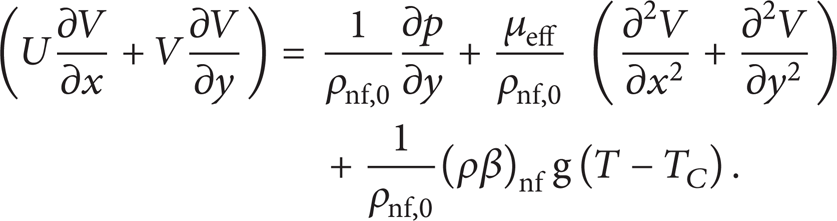
Energy Equation.

where

The viscosity of the nanofluid containing a dilute suspension of small rigid spherical particles [34] is used for effective viscosity in this work as follows:

The effective density of the nanofluid at reference temperature is defined as [6]

Here, ϕ is the volume fraction of solid particles, and the subscripts f, nf, and s stand for base fluid, nanofluid and solid, respectively. Neglecting the ratio of the nanolayer thickness to the radius of the original particle, the effective thermal conductivity of the nanofluid can be calculated as follows:

The local heat transfer coefficient is defined as
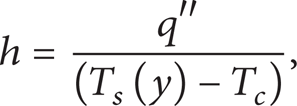
where h represents local heat transfer coefficient and T s the heated surface temperature. The following relation is used to calculate the local Nusselt numbers:

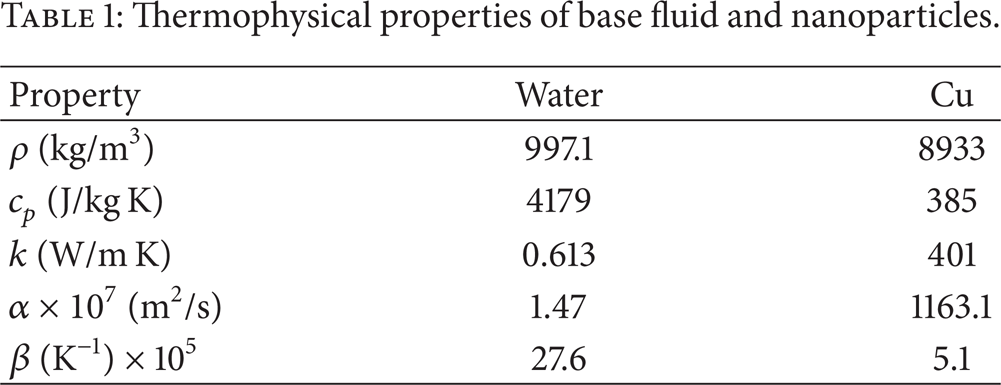
The properties of the base fluid and the nanoparticles are shown in Table 1.
Thermophysical properties of base fluid and nanoparticles.
3.3. Validation
The present model was validated against the experimental results of Chadwick et al. [35]. The two-dimensional enclosure used in the experimental study was 19.05 cm tall with variable aspect ratio of 2, 5, and 10. The cavity was 30.48 cm in the spanwise direction and, thus provides two-dimensionality of the flow and heat transfer. The horizontal surfaces were insulated. Pure copper was used for the constant temperature vertical surface (isothermal wall) to ensure a constant temperature boundary. An interferometer was used to visualize the temperature field and to quantify the local heat transfer along each heat source.
The results are shown in Figures 2 and 3. Figure 2 shows the comparison between the experimental and theoretical predictions for the temperature and flow field. The predicted isotherms are qualitatively similar to the experimental isotherms. The comparison of the calculated and measured Nusselt numbers is shown in Table 2 and is presented in Figure 3. The difference between the average Nusselt number found by Chadwick et al. [35] and that obtained by the present computational procedure is well within the acceptable limit.
Summary of cases simulated in this study.


Comparison of experimental data [35], (a) Interferogram results; (b) predicted isotherms; (c) predicted flow structure.
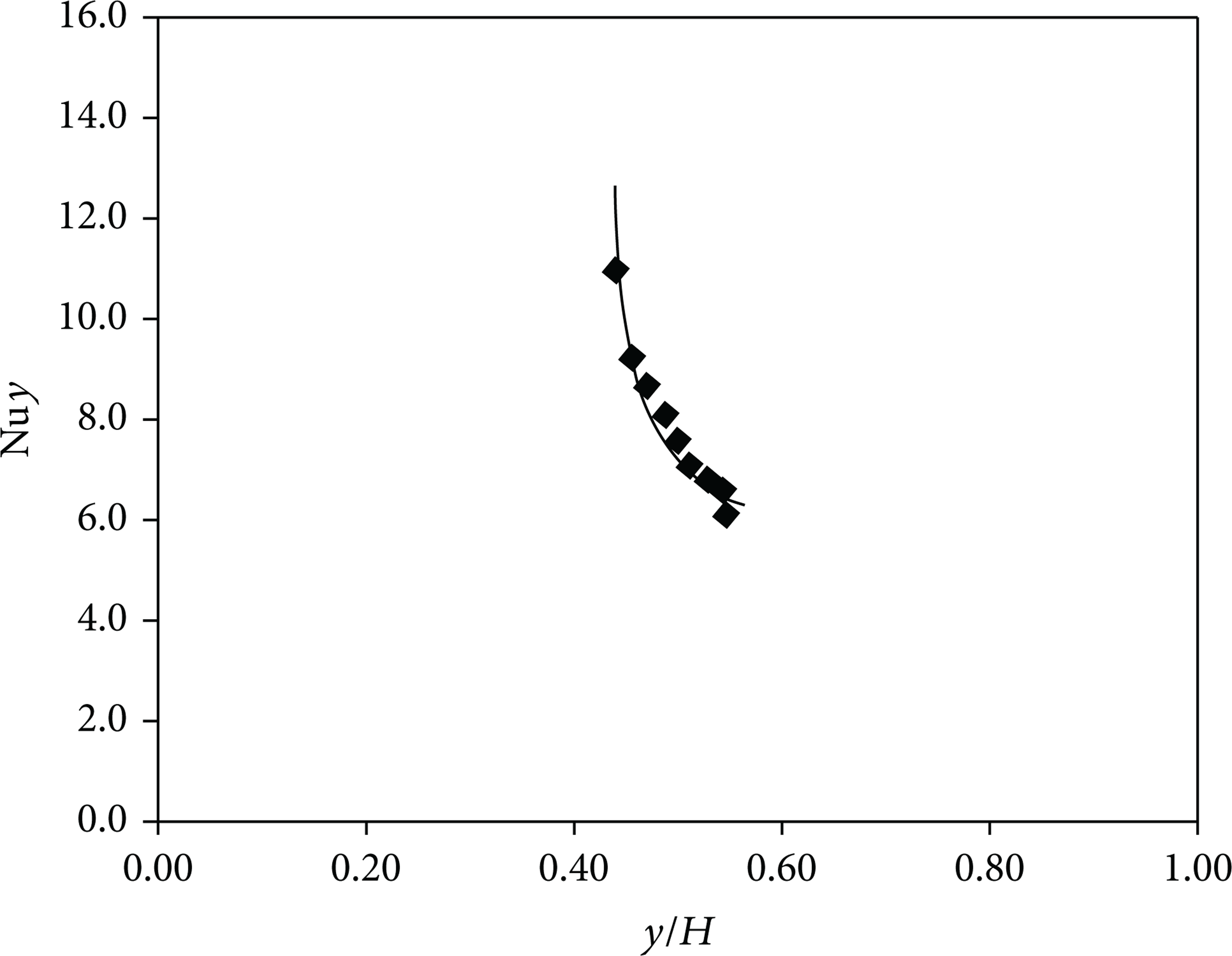
Calculated (Present) and experimental [35] results of Nusselt number.
4. Results and Discussion
4.1. General Features of Nanofluids Flows
The present study provides calculations of the natural convection heat transfer of water-based nanofluids in an enclosure with a constant heat flux heater. The cases studied are shown in Table 2. The computational results were obtained for different nanoparticle volume fraction of 0%, 2%, 5%, and 10% and for different aspect ratios of 2, 5, and 10. The base case nanofluid is taken as water with 2% (by volume) copper nanoparticles. The properties of the fluid are taken at 300 K. We first present the base case results compared to the case of the fluid being pure water at the same conditions. The heat flux imposed at the three heaters is constant and is the same for all heaters. The Rayleigh number Ra is fixed at 1 × 10⁷ for all cases. This value is the limit of the laminar steady regime for natural convection in vertical enclosure [36]. The results show the normalized temperature contours, the stream function contours, and normalized velocity magnitude contours for the base-case nanofluid versus water case.
Comparisons of the streamlines, velocity magnitude, and isotherms contours between nanofluid and the conventional fluid were conducted and are shown in Figures 4, 5, and 6. Figure 4 presents the stream function contours inside the enclosure for the base case of AR = 5 and Ra = 107. The predicted stream function was calculated to visualize the flow field within the enclosure. The fluid is heated at the discrete source and rises due to buoyancy forces. The warmed fluid, then, turns in the vicinity of the adiabatic top of the enclosure and descends along the cooled wall, thus, completing a recirculation flow pattern that occupies the entire enclosure. This recirculating flow pattern is clearly evident in Figure 4. A central vortex appears as a dominant characteristic of the fluid flow. Secondary recirculation zones were predicted in the cavity central region and close to hot and cooled walls. Thus, the flow is mainly single cellular with secondary cells occurring in the central region. The flow indicates that convection is the dominant mechanism for heat transfer in the enclosure. Figure 4 also shows that the intensity of the streamlines increases slightly. This may be attributed to high-energy transport through the fine particles.
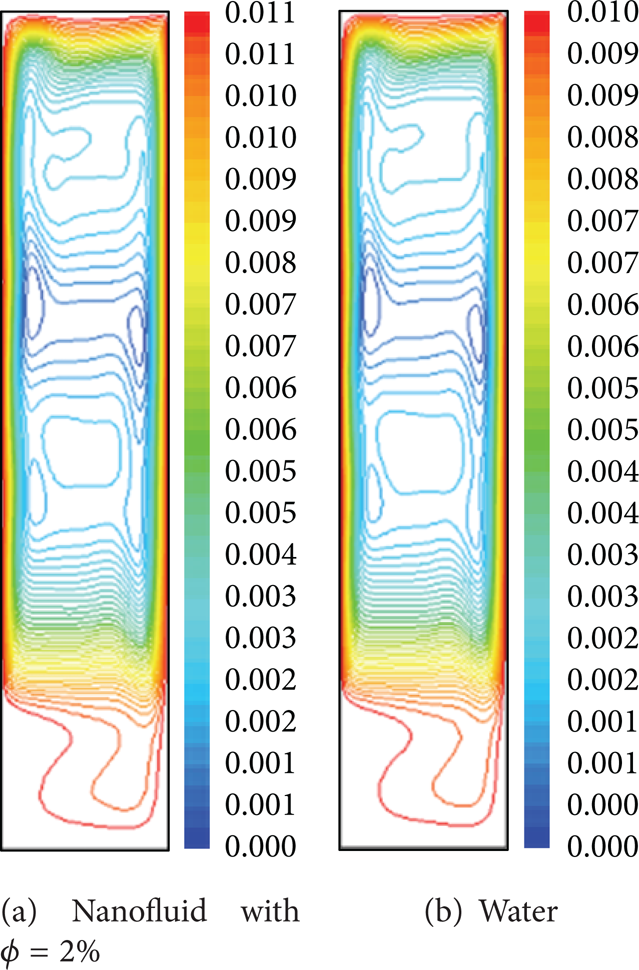
Streamlines inside the cavity for nanofluid base case (AR = 5, ϕ = 2%, Ra = 107) and pure water (AR = 5, Ra = 107).

Contours of normalized velocity magnitude inside the cavity for nanofluid base case and pure water (AR = 5, ϕ = 2%, Ra = 107).

Contours of normalized velocity magnitude inside the cavity for nanofluid base case and pure water (AR = 5, ϕ = 2%, Ra = 107).
Figure 5 indicates that the velocity magnitude is thehighest at the right and left walls. The central region is dominated by small velocity magnitudes. The isotherms in the enclosure for the water-based copper nanofluid case are shown in Figure 6 in comparison with clear water. Figure 6 clearly shows the impact of the presence of nanoparticles on the isotherms. The isotherms of the clear fluid are horizontal (stratification in the vertical direction) at the center of the cavity and become vertical only inside the thermal boundary layers at the vertical walls. The streamlines of the clear fluid show that the central vortex occupies a larger zone than that for nanofluid.
Figures 7 and 8 present the velocity and temperature variations along the x-direction at different y-locations inside the cavity. Figure 7 shows slight increase in the velocity as the nanoparticles are introduced. Moreover, it is shown that a central recirculation in the opposite direction to the main circulating flow exists. Figure 8 shows a thermal boundary layer with isotherms in the vicinity of the high heat transfer region along the discrete heater. The temperature of the heat source is shown to rise with increasing distance from its leading edge. The central region of the enclosure exhibits a thermally stable stratification, similar to the classical result for buoyancy-driven flow in an enclosure with differentially heated walls.
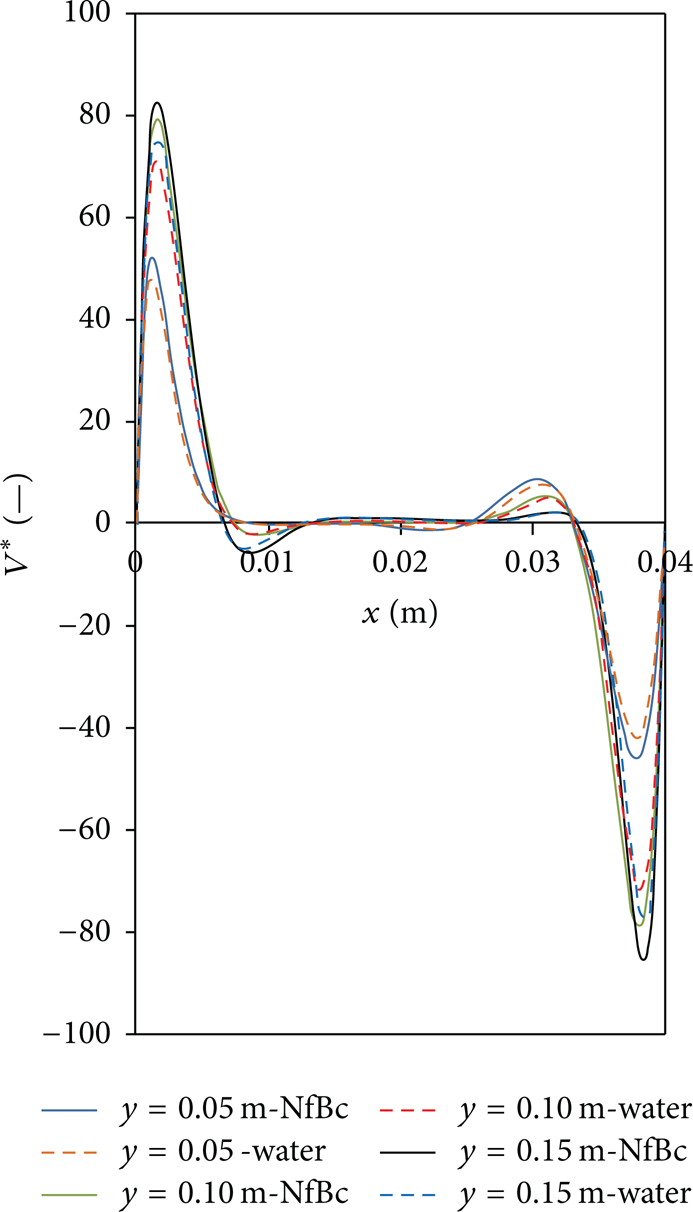
Comparison of normalized fluid upward velocity for water and nanofluid base cases.
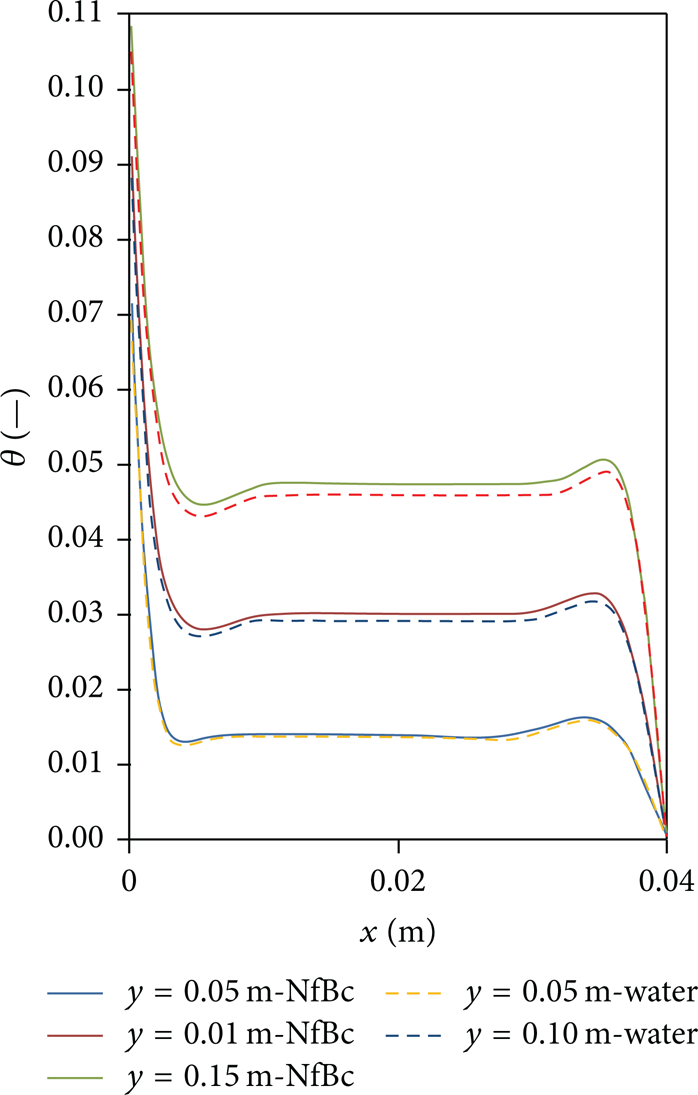
Comparison of normalized fluid temperature for water and nanofluid base cases.
Figures 9 and 10 present the surface heater temperature (Figure 9) and the local Nusselt number (Figure 10) along y-direction for each heater. The changes in local Nusselt number for water-based copper nanofluids at the heated wall are shown in Figure 10. The local Nusselt number is shown to decrease along the heater for the present case of constant heat flux being applied through the left sidewall. The variations of the average Nusselt number are given in Table 3 for various governing parameters. The values of the average heat transfer rate increase according to the ordering of heaters 1, 2 and 3 (from the lower to upper positions).
Average Nusselt number over discrete heaters.

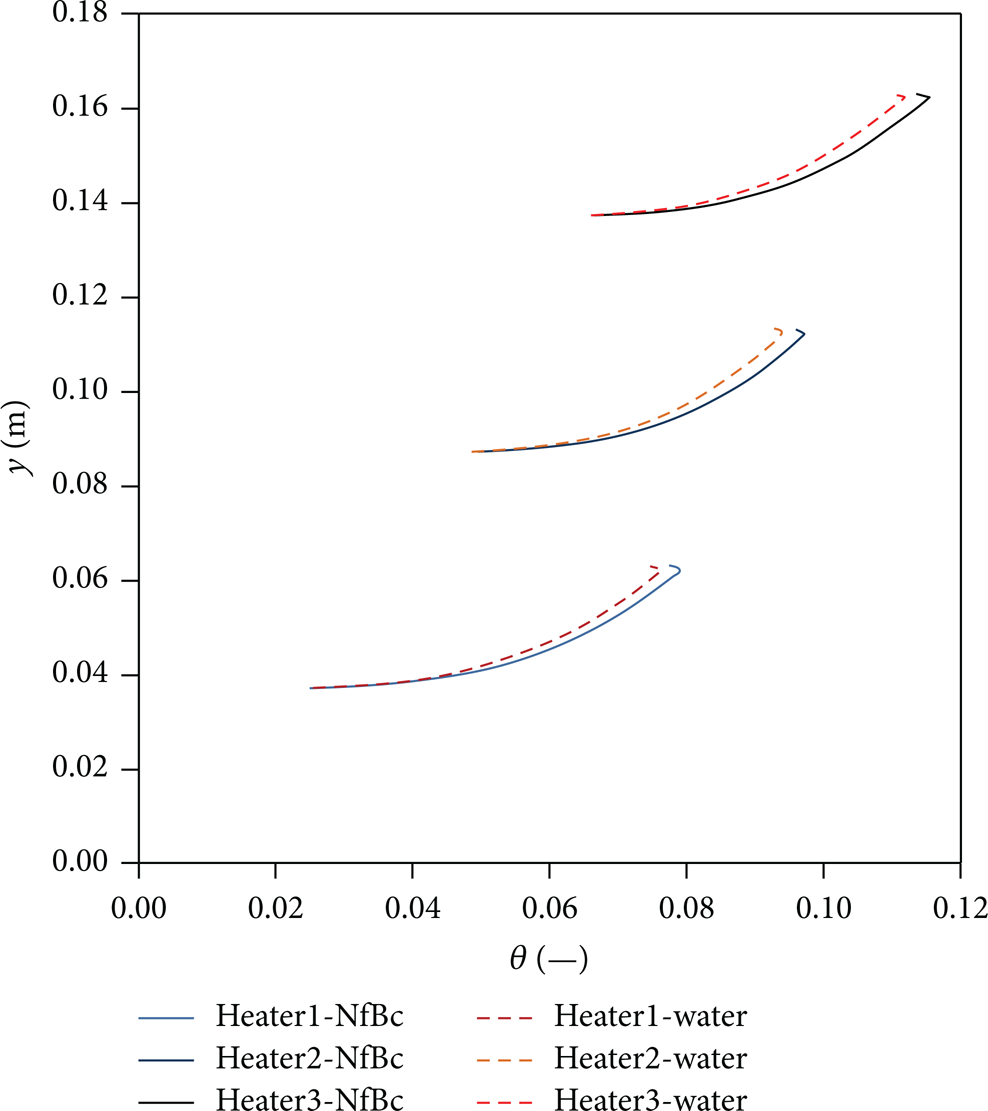
Comparison of normalized surface heater temperature for water and nanofluid base cases.

Comparison of local Nusselt number over heaters for water and nanofluid base cases.
4.2. Influence of Nanoparticles Volume Fraction
To investigate the effect of nanoparticle volume fraction on the flow and heat transfer characteristics inside the discretely heated cavity, two additional different cases have been simulated. These are Case 2 for water with 5% copper nanoparticles and Case 3 for water with 10% copper nanoparticles. Figures 11, 12 and 13 present the influence of particle volume fraction on the streamlines, velocity magnitude, and fluid temperature inside the enclosure. The effect of the volume fraction on the streamlines and isotherms of nanofluid is shown in Figures 11 and 12. In the absence of nanoparticles, a central vortex appears as a dominant characteristic of the fluid flow. Figure 11 also shows that the intensity of the streamlines increases with an increase in the volume fraction as a result of high-energy transport through the nanoparticles.
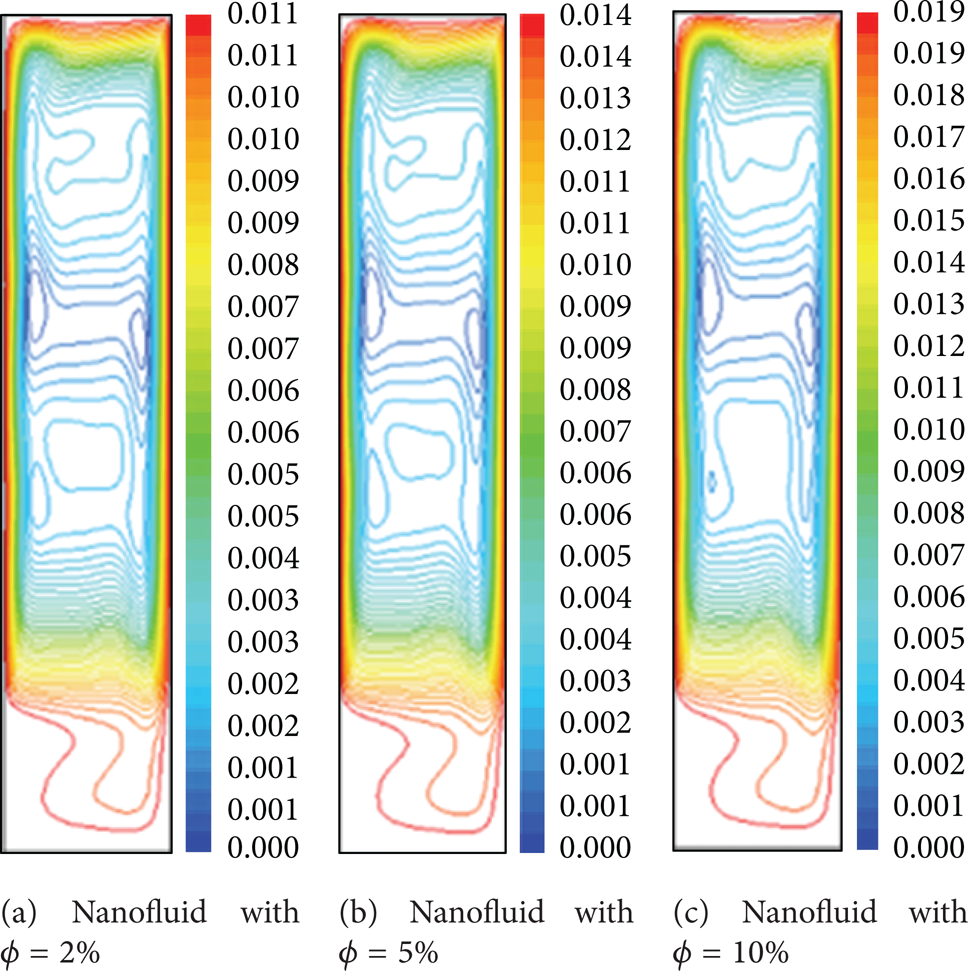
Streamlines inside the cavity for three nanofluid cases (a) ϕ = 2%, (b) ϕ = 5%, and (c) ϕ = 10% with AR = 5 and Ra = 107.
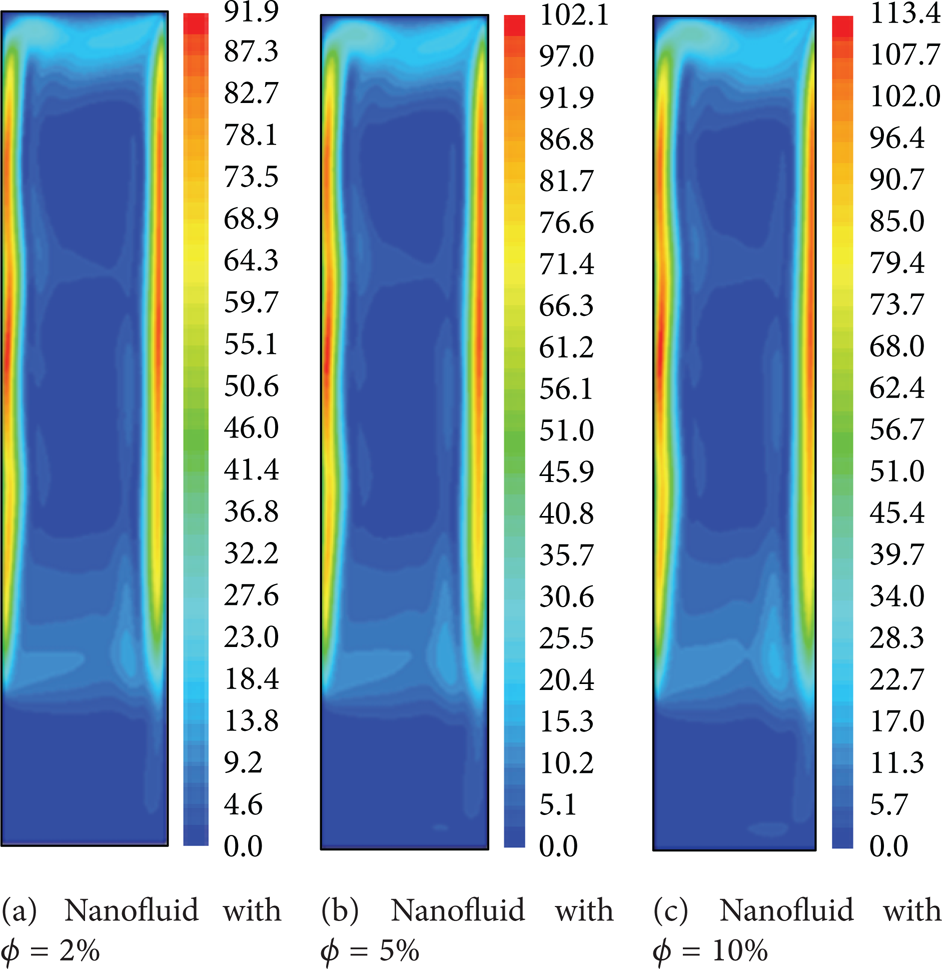
Normalized velocity magnitude inside the cavity for three nanofluid cases (a) ϕ = 2%, (b) ϕ = 5%, and (c) ϕ = 10% with AR = 5 and Ra = 107.

Normalized fluid temperature inside the cavity for three nanofluid cases (a) ϕ = 2%, (b) ϕ = 5%, and (c) ϕ = 10% with AR = 5 and Ra = 107.
As solid volume fraction increases, the flow becomes single-cellular because of increasing energy exchange. Figure 11 also shows that the intensity of the streamlines increases with an increase in the volume fraction as a result of high-energy transport through the nanoparticles. This is attributed to the high-energy transport through the flow associated with the irregular motion of the fine particles. The figure indicates higher velocities along the centerline of the enclosure as the volume increases. As the volume fraction increases, the velocities at the center of the cavity increase as shown in Figure 12. This is a result of the transportation of heat by higher solid-fluid. Moreover, the velocities show a higher level of activity along the vertical walls of the cavity. This is due to the vertical velocity component variation, for various volume fractions, along the horizontal centerline of the cavity. The isotherms in Figure 13 show that the vertical stratification of the isotherms breaks down with an increase in the volume fraction.
Figures 14, 15, and 16 present the influence of the nanoparticle volume fraction on the distribution of the velocity magnitude. The velocity profiles along the x-direction at the center of the three heaters are presented. The numerical results of the present study indicate that the heat transfer feature of a nanofluid increases with the volume fraction of nanoparticles. The effect of an increase in the volume fraction on the velocity gradients along the x-direction at different values of y-direction of the cavity is shown in Figures 14–16. As the volume fraction increases, irregular and random movements of particles increase energy exchange rates in the fluid and, thus, enhance the thermal dispersion in the flow of nanofluid. Moreover, the velocities at the center of the cavity are very small compared with those at the boundaries where the fluid is moving at higher velocities. This behavior is also present for a single-phase flow. As the volume fraction increases from 0% to 10%, the velocity components of nanofluid increase slightly as a result of an increase in the energy transport through the fluid. High velocity peaks of the vertical velocity component are shown in these figures at high volume fractions.

Effect of nanoparticle volume fraction on normalized upward velocity along normal line to heater 1 (AR = 5, Ra = 107).

Effect of nanoparticle volume fraction on normalized upward velocity along normal line to heater 2 (AR = 5, Ra = 107).
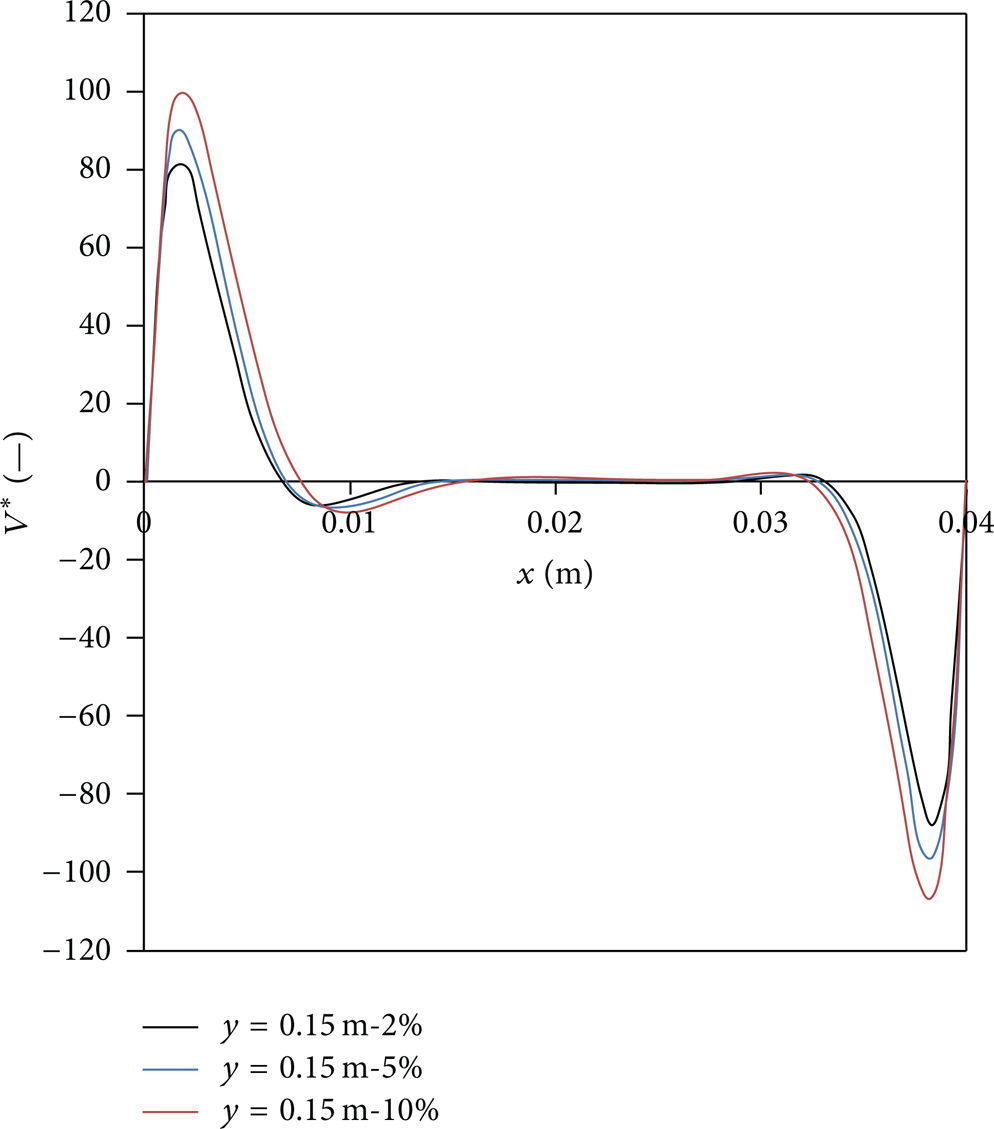
Effect of nanoparticle volume fraction on normalized upward velocity along normal line to heater 3 (AR = 5, Ra = 107).
The corresponding temperature profiles are shown in Figures 17, 18, and 19. The nanoparticle volume fraction does not significantly influence the temperature at heater 1 (the lower heater). The influence of the loading factor (nanoparticle volume fraction) is more distinguished at the upper heaters and, in particular, for heater 3. The isotherms in the enclosure for the water-based copper nanofluid case are shown in Figure 19 for various values of solid volume fractions. Thermal stratification in the core region is small. The changes in the normalized temperature are shown in Figure 20. The changes in local Nusselt number for water-based copper nanofluids at Ra = 107 for several values of solid volume fractions, at the heated wall where constant heat flux is being applied, are shown in Figure 21. The figure indicates a reduction in the Nusselt number as the volume fraction is increased. In order to provide the influence on heat transfer enhancement, the distribution of the heat transfer coefficient is shown in Figure 22. The heat transfer increases (Figure 22) as the volume fraction of the nanoparticles increases from 2 to 10%. Moreover, the heat transfer coefficient decreases as we move from heater 1 towards heater 3. This is attributed to the increase in temperature as one move up the heated wall.
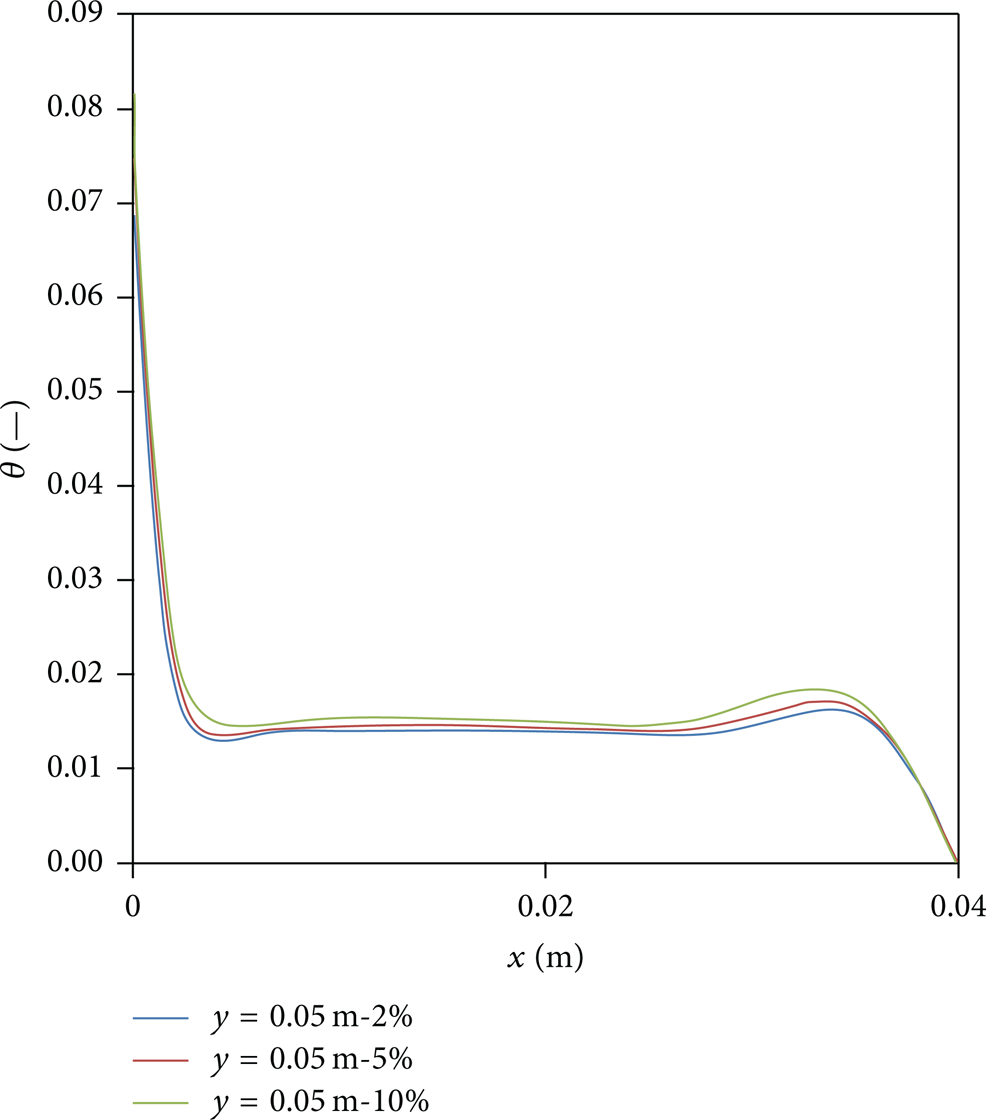
Effect of nanoparticle volume fraction on normalized fluid temperature along normal line to heater 1 (AR = 5, Ra = 107).

Effect of nanoparticle volume fraction on normalized fluid temperature along normal line to heater 2 (AR = 5, Ra = 107).
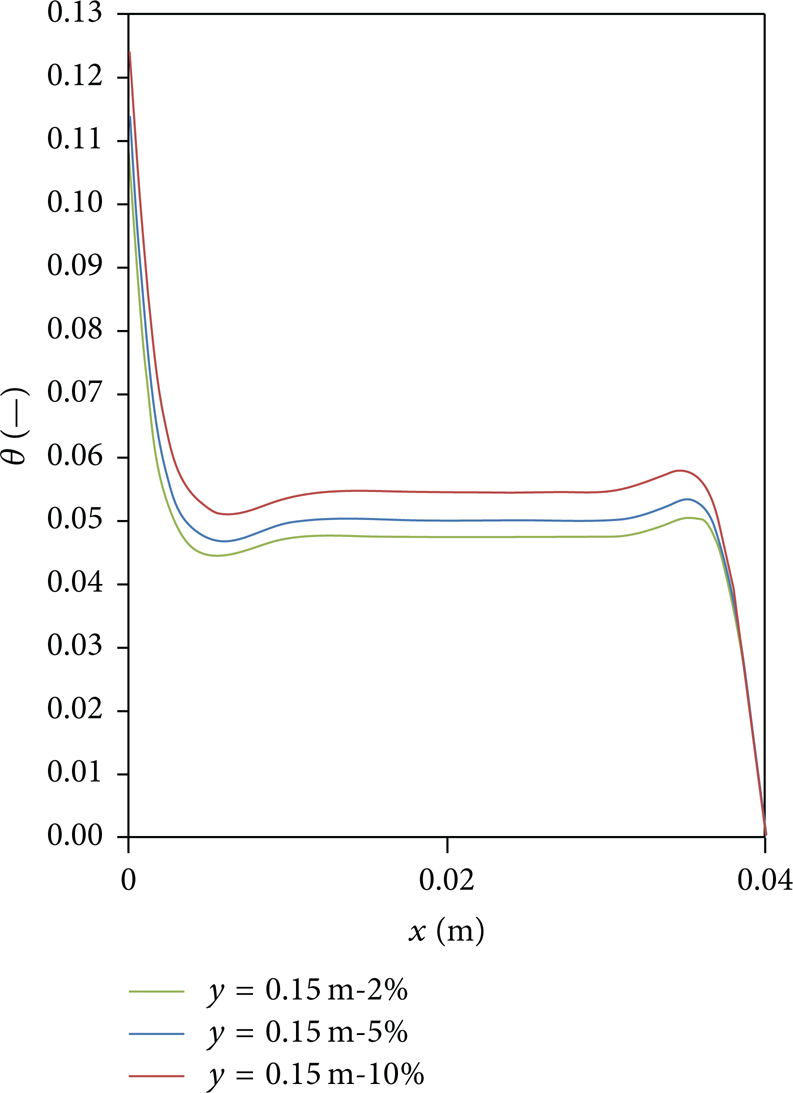
Effect of nanoparticle volume fraction on normalized fluid temperature along normal line to heater 3 (AR = 5, Ra = 107).

Effect of changing nanoparticle volume fraction on normalized surface heater temperature.
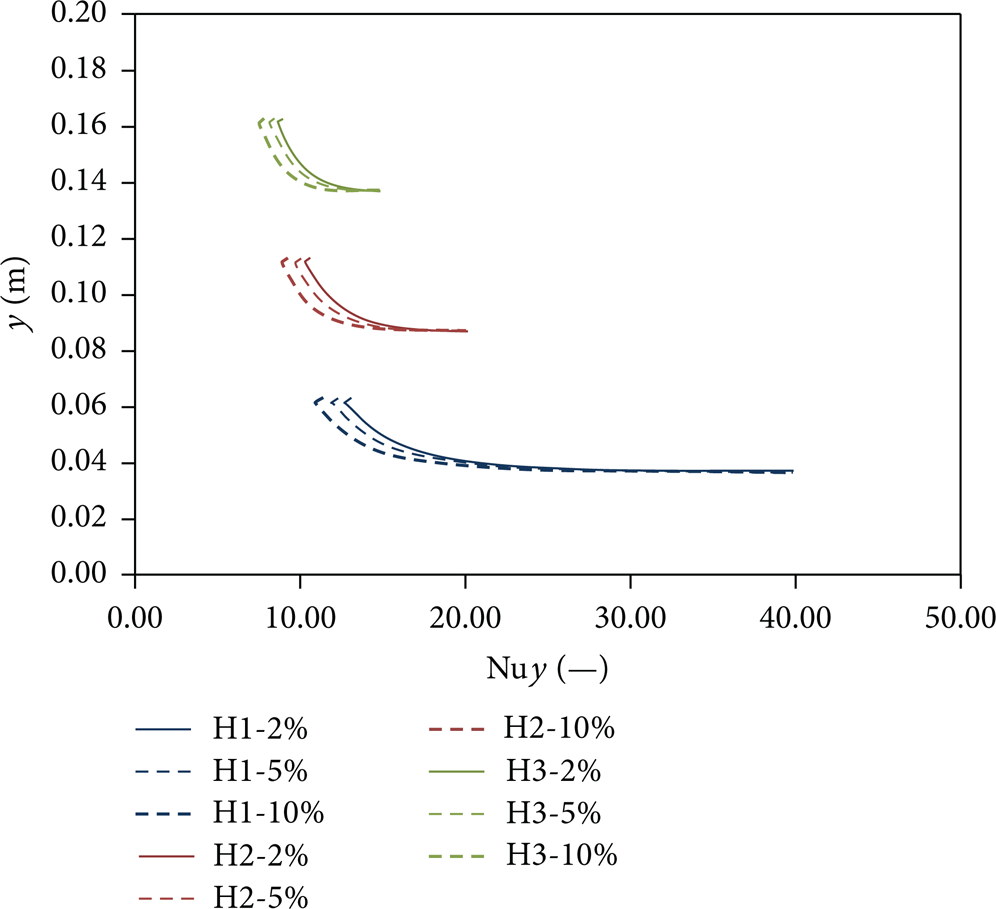
Effect of changing nanoparticle volume fraction on local Nusselt number over heaters.
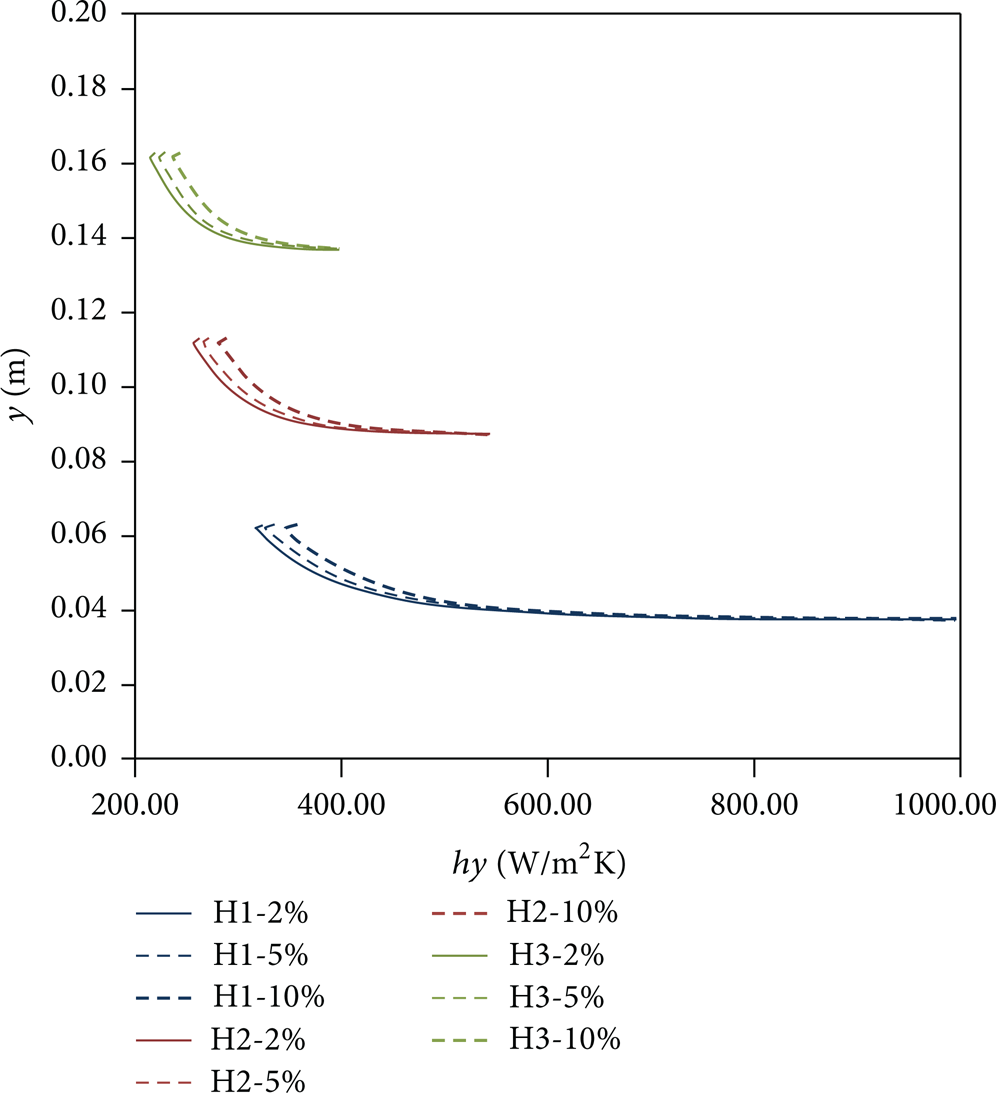
Effect of changing nanoparticle volume fraction on local heat transfer coefficient over heaters.
4.3. Effect of Cavity Aspect Ratio
In order to investigate the effect of aspect ratio on the flow and heat transfer characteristics in a nanofluid filed cavity heated with three discrete heat sources (heaters), we have simulated two additional cases with AR = 10 and AR = 2 (base case). As the aspect ratio increases (channel width is reduced), the streamlines (Figure 23) change and the intensity of the streamlines increases slightly, showing flow in the middle of the channel. The stagnation region disappears and interaction between the two boundary layers at the hot and cold walls is evident. As the aspect ratio is reduced from 5 to 2, the intensity is reduced drastically. Different circulation regions close to the hot and cold walls appear.

Streamlines inside the cavity for three aspect ratio cases (a) AR = 5, (b) AR = 10, and (c) AR = 2; all case are at ϕ = 2% and Ra = 107.
The velocity magnitudes of Figure 24 confirm the results of the stream function in that the aspect ratio has insignificant effect on the velocity values. As AR is reduced from 5 to 2, different regions of high and low velocities appear with the velocity magnitudes reduced drastically (Figure 25). The increase in AR from 5 to 10 results in stratification of the thermal stable region in the middle, but the temperature level remains unchanged. As AR is reduced, the temperature levels increase to around 5 times with heated regions limited in the vicinity of the heaters reflecting drop in the convection heat transfer.

Normalized velocity magnitude inside the cavity for three aspect ratio cases (a) AR = 5, (b) AR = 10, and (c) AR = 2; all case are at ϕ = 2% and Ra = 107.
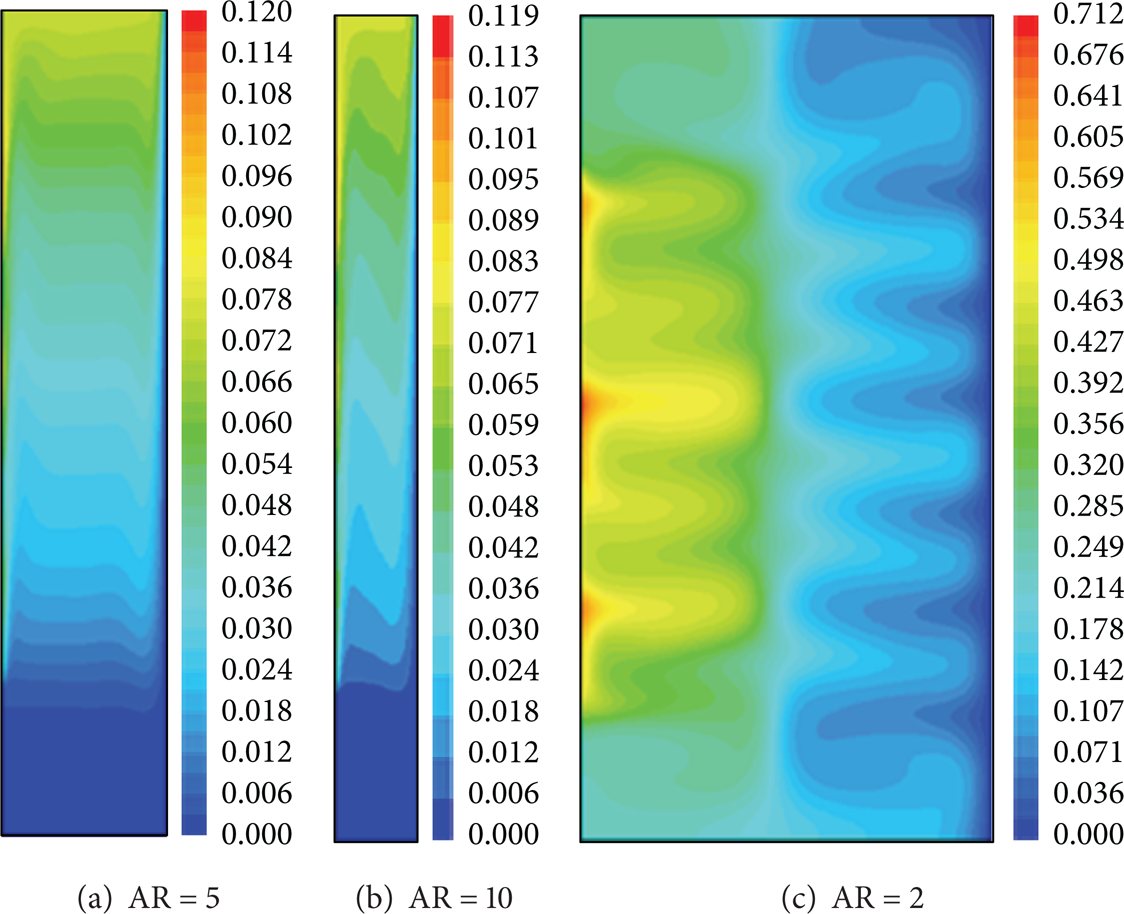
Normalized fluid temperature inside the cavity for three aspect ratio cases (a) AR = 5, (b) AR = 10, and (c) AR = 2; all case are at ϕ = 2% and Ra = 107.
5. Conclusions
The present study is aimed to investigate numerically the natural convection heat transfer from discrete heat sources to nanofluids. Heat transfer in a two-dimensional enclosure is studied numerically for a range of aspect ratios and volume fractions. The behavior of nanofluids was investigated numerically inside a heated cavity to gain insight into convective recirculation and flow processes induced by a nanofluid. A computational model was developed to analyze heat transfer performance of nanofluids inside a cavity taking into account the solid particle dispersion. The transport equations were solved numerically using the finite-volume approach along with the alternating direct implicit procedure. The model was validated through the comparison with available experimental data. The results showed good agreement. The influence of the solid volume fraction and the aspect ratios on the flow pattern and heat transfer inside the cavity was investigated. The results show that the average heat transfer rate increases significantly as particle volume fraction increase. The results illustrate that the nanofluid heat transfer rate increases with an increase in the nanoparticles volume fraction. The presence of nanoparticles in the fluid is found to alter the structure of the fluid flow. The results show that the presence of nanoparticles causes an increase in the heat transfer rate. The results also illustrate that as the solid volume fraction increases, the effect is more pronounced. The variation of the average Nusselt number is nearly linear with the solid volume fraction.
The numerical results of the present study indicate that the heat transfer feature of a nanofluid increases with the volume fraction of nanoparticles. The intensity of the streamlines increases with the increase in the volume fraction. This is attributed to the high-energy transport through the flow associated with the irregular motion of the fine particles. The results indicate higher velocities in the middle of the enclosure as the volume increases. The nanoparticle volume fraction does not significantly influence the temperature at heater 1 (the lower heater). The influence of the loading factor (volume fraction of nanoparticles) is more distinguished at the upper heaters and in particular for the upper heaters. The heat transfer increases as the volume fraction of the nanoparticles increases from 2 to 10%. Moreover, the heat transfer coefficient decreases as we move from heater 1 towards heater 3. This is attributed to the increase in temperature as one move up the heated wall.
As the aspect ratio increases (channel width is reduced), the streamlines change and the intensity of the streamlines increases slightly, showing flow in the middle of the channel. The stagnation region disappears, and interaction between the two boundary layers at the hot and cold walls is evident. The intensity is reduced drastically with the reduction in aspect ratio from 5 to 2. Different circulation regions close to the hot and cold walls appear. As the aspect ratio is reduced from 5 to 2, different regions of high and low velocity values appear with the velocity magnitudes reduced drastically. The increase in AR from 5 to 10 results in stratification of the thermal stable region in the middle, but the temperature level remains unchanged. As AR is reduced, the temperature levels increase to around 5 times with heated regions limited in the vicinity of the heaters reflecting drop in the convection heat transfer.
Footnotes
Nomenclature
Acknowledgment
The authors wish to acknowlegde the support received from King Fahd University of Petroleum and Minerals for funding this work through Sabic project no. SB080014.