



Abstract
In self-organized wireless sensor networks (WSNs), any two sensor nodes can connect if they are placed in each other's communication range. Therefore, the physical topology of WSNs is usually a strongly connected topology. Sensor nodes should frequently receive and process data from their large number of neighbors, which will consume great amounts of energy. Shocking wireless channel collision also causes low throughput and high loss packets ratio during data transmission. To improve the transmission performance and save scarce energy, a logical topology generating from the physical one is necessary for the self-organized WSNs. Based on the complex network theory, this paper proposed a novel betweenness addition edges expansion algorithm (BAEE). With betweenness calibration, BAEE algorithm expanded the minimum-cost edges to optimize the network topology. Two performance metrics-connectivity functions, robustness function
1. Introduction
Wireless sensor networks (WSNs) are a class of self-organized wireless communication networks, in which many sensor nodes collect, process, and exchange information acquired from the physical environment or the monitor objects and then send it to the external base station, called Sink [1]. WSNs have a wide range of potential applications including environment monitoring, smart grid, medical systems, and robotic exploration [2].
There are two main difficulties in WSNs’ design: (1) the limited and nonreplenishable energy supply and (2) the limited transmission bandwidth and high packet loss rate caused by the out-of-order distributed communication. Hence, the energy control algorithm and robust infrastructure are necessary to prolong the networks’ lifetime and improve the communication performance.
Topology optimal control (TOC) is to design a good logical network infrastructure, one of the key techniques used in wireless self-organized sensor networks [3]. In a network, if there is at least one route to connect any two sensor nodes, such network is regarded as a connected one. Because of the omnidirectional antenna, any two nodes in WSNs can communicate if the Euclidean distance between them is less than the communication range. Therefore, the physical topology of WSNs is usually a strongly connected topology. Any node will frequently receive and process data from the quantity of its neighbors, which will consume great amounts of energy. The minimum energy network connectivity (MENC) problem was defined and proved to be an NP-complete problem [4].
In the research on TOC, the previous research can be classified into two types based on the optimized objects: physical topology control algorithms (PTCA) and logical topology control algorithms (LTCA) [5, 6]. PTCA adjust sensor nodes’ transmission power to control the physical topology. On the other hand, LTCA restrict one node connected with a certain number of neighbors to satisfy the network connectivity. This neighbor reduction mechanism helps to reduce the routing overhead and relieve the channel collision problems.
Different from the wired communication network, such as IP network, WSN is one type of dynamic networks. There are many factors causing the dynamic structure—from system hardware to application—for unattended sensor nodes with miniature sizes (mm scale for smart dust motes), limited battery-power, and low reliable hardware circuits when coping with harsh conditions. Other factors that may affect network connectivity and communication among sensor nodes are fading, signal strength, obstacles, weather conditions, interference, and so forth [7, 8]. An immutable topology structure is not enough for the WSNs, and any dynamic change will break original optimization and reduce the network performance.
To overcome this critical problem, this paper proposed a novel betweenness addition edges expansion algorithm (BAEE). With the betweenness parameter, BAEE algorithm expanded the minimum-cost edges to optimize the network topology with maximum improving of the efficiency function values. The preliminary simulation results, compared with Fiedler-vector-based strategy, showed that our algorithm could obtain more robust topology with higher invulnerability under both the random failures and intentional attack scenarios.
This paper is organized as follows. Section 1 introduces the TOC problem in WSNs, and Section 2 presents the related work. The problem's mathematic description and model building are presented in Section 3. Section 4 proposes the BAEE algorithm in detail. Section 5 presents simulation results to demonstrate the effectivity of the algorithm. Section 6 concludes the paper.
2. Related Work
There are three types of approaches in the previous TOC research presented as follows. (1) Control each node's emission power to reduce the strong connectivity of the physical topology and to effectively save the energy consumption and prolong network lifespan. Rodoplu and Meng [9] introduced the notion of relay region and enclosure for the purpose of power control. It was shown that the network was strongly connected if every node maintained links with the nodes in its enclosure. With reducing the transmission power, the topology connectivity becomes thin. Building a minimum-power-connected topology is a multiobjective optimization problem. (2) Reduce the total number of working nodes in WSNs, and let other nodes suspend to hibernate. It can also reduce the topology complexity. Moreover, the approach helps to reduce the interference that exists in wireless network, which means that a greater signal-to-noise ratio will be obtained at receiving nodes. The most common schemes based on this principle are sensor-MAC (S-MAC) [10], timeout-MAC (T-MAC) [11], and data-gathering MAC (D-MAC) [12]. (3) Control sensor node's logical degree in its logical topology, thus helping to reduce MAC layer contention and improve space reuse. A less node's logical degree may also help to mitigate the hidden and exposed terminal problems. Clustering topology control strategy is one of the effective approaches, similar to spanning-tree structure in WSN. The low-energy adaptive clustering hierarchy (LEACH) [13] is the most notable clustering algorithm for wireless sensor networks. LEACH combines the ideas of energy-efficient cluster with application-specific data aggregation to achieve good performance. Its improved algorithm, power-efficient gathering in sensor information systems (PEGASIS) [14], is a chain-based clustering scheme. Another effective topology structure is the spanning-tree [15]. Li et al. [16] proposed a fully distributed topology control algorithm called LMST. A similar method, k-local MST, was addressed by Li et al. [17].
With the number of sensor nodes increasing, the topology of large-scale WSNs becomes more and more complex, and TOC, as a type of multiobjective optimization problems, is very difficult to explore the global optimal solution, such as the degree-constrained minimum spanning-tree problem. Some heuristic methods were developed to improve the optimization performance [18–23]. In [18], the authors proposed two heuristics based on a minimum spanning-tree algorithm and a broadcast incremental power method, respectively. Konstantinidis developed a genetic algorithm with local search that performs better than the MST heuristic [19]. Guo presented an improved discrete particle swarm optimization algorithm for generating topology schemes [20]. A simulated annealing algorithm was designed in [21], and it is also applied to solve the problem of minimizing broadcast tree, one type of the physical topology control problems [22]. In [23], ant colony optimization, a framework inspired by the ant foraging behavior in the area of swarm intelligence, is applied to physical topology control.
The above heuristic algorithms focused on the solution procedure of optimization problem itself, in which topology control had been abstracted into the multiobjective optimization problem. On the different view to analyze the topology control problem, we use the complex network theory to calculate the network's long-range and short-range connectivity, and then a novel BAEE algorithm is proposed to improve the networks’ robustness and invulnerability with the minimum-cost edges expanded.
3. The Network Model and the Parameters of Complex Network
The formal definition of the TOC problem in WSNs is presented as follows. In a special sensor area, there are a set of n wireless nodes
3.1. The Parameters of Complex Network
A complex network's attribute can be described by its key parameters: degree distribution, clustering coefficient, average path length, and betweenness [24, 25].
(1) Cumulative Degree Distribution Function. The degree of a node in a network is the number of connections, and the degree distribution

(2) Clustering Coefficient. In graph theory, a clustering coefficient is a measure of the degree to which nodes in a graph tend to cluster together. Firstly, the local clustering coefficient

The clustering coefficient for the whole network is given as the average of the local clustering coefficients of all of the nodes N as follows:

Evidence suggests that, in most real-world networks, nodes tend to create tightly knit groups characterized by a relatively high density of ties; this likelihood tends to be greater than the average probability of a tie randomly established between two nodes.
(3) Average Path Length. Average path length L is defined as the average number of steps along the shortest paths for all possible pairs of network nodes. It is a measure of the efficiency of information or mass transport on a network. The definition is shown as

Average path length is one of the most robust measures of network topology.
(4) Betweenness. There are two definitions: the vertex betweenness

Here,
3.2. Two Evaluation Functions for Measuring the Network's Robustness and Invulnerability
Based on the above four parameters, connectivity robustness function and efficiency function can be defined and utilized to evaluate the network's robustness and invulnerability.
(1) Connectivity Robustness Function

Here,
(2) Efficiency Function

The local efficiency function can be defined as the average efficiency of local subgraphs as follows:

where
Both the global and the local efficiency are already normalized; that is,
In the efficiency-based formalism, a network is extremely efficient in exchanging information both on a high global and local efficiency functions value. Moreover, the description of a network in terms of its efficiency can be extended to unconnected networks and, more important, with only a few modifications, to weighted networks. A weighted network is a case in which there is a weight associated with each of the edges. Such a network needs two matrices to be described. Consider the following.
The usual adjacency matrix

The second weights matrix associated with each link
In this paper, we focus instead on the simpler case of unweighted networks topology. We will use the connectivity robustness function and the global efficiency function to evaluate the network's robustness and invulnerability under the random failures and the intentional attacks.
4. Description of Betweenness Addition Edges Expansion Algorithm
In order to improve the network's robustness and invulnerability under the random failures and the intentional attacks, a novel betweenness addition edges expansion algorithm is proposed. Based on the traffic analysis in practical WSNs, we find that the communication connection is established usually by events driven, in which both the vertex betweenness
According to the vertex betweenness

Using the vector betweenness column vector
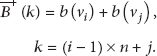
Sort
The process of the bubble method is shown as follows
Compare the first element, that is, 0th, with the latter element; if smaller, then switch. Sequentially compare m times element and eventually change the smallest value element into mth unit; the element
Repeat step (a), and sequentially compare until the
⋮
Compare
Check
Else, if
If both
BAEE algorithm is presented in Algorithm 1.
(1) Calculate each vertex's betweenness with the vertex betweenness (2) Save each vertex betweenness (3) (4) (5) (6) (7) (8) (9) (10) (11) Switch (12) (13) (14) (15) (16) (17) (18) (19) Break; (20)
According to the above optimization approach, the experimental simulation was taken to evaluate the algorithm's performance. The detailed analysis about results was shown in the following section.
5. Simulation and Performance Evaluation
The simulation scenario is that 100 sensor nodes were randomly placed in a 900 m × 900 m field. Each node's radio propagation range is 300 m. After the self-organized process, a strongly connected physical topology is established. To reduce the interference, the neighbors of each sensor node are control based on the traffic requirements, and then a logical topology is generated, which is the topology that we really need for data transmission, shown in Figure 1.

Original logical topology of WSN.
The connectivity robustness function
In the simulation, firstly, using BAEE and FVBS to optimize the original topology, the new topologies
Added edges in

Then, the identical random failures and the intentional attacks are applied on the two
5.1. The Experiments under Random Failures
Random failures mean that nodes in the network are randomly failed, and at the same time the edges connecting with the failure nodes are also failed. Because of the low reliable hardware circuits, the limited battery-power, and the harsh wilderness conditions, the case of sensor node failed often occurs in the practical application. Figure 2 shows the connectivity robustness function value for the increasing of the number of random failure nodes. From Figure 2, we can observe that the two optimized topologies have higher R value than the original network confronting random failures. Moreover, BAEE is better than FVBS; the R value has an average 5.23% increase, which means that the optimized network has the stronger capability of maintaining connectivity. Different from the other two curves, the

Connectivity robustness function versus the number of failed nodes under random failures.
Figure 3 shows the efficiency function

Efficiency function versus the number of failed nodes under random failures.
5.2. The Experiments under Intentional Attacks
Intentional attack is another kind of accident for wireless sensor networks. Based on partial information of network, enemy can accurately attack the weakest parts and break down the whole system. So a network should have more robust topology to resist intentional attacks. In the following experiments, two types of attacks are simulated: (1) make nodes with high vertex betweenness fail; (2) make links with high edge betweenness fail. The two metrics
Figure 4 presents the connectivity robustness function

Connectivity robustness function versus the number of failed nodes under intentional attack.
The efficiency function

Efficiency function versus the number of failed nodes under intentional attack.
Another attack strategy, high-betweenness links failed, is implemented in the experiments. The top 20 high-betweenness links are sequentially broken to evaluate the network's performance; the curves of

Connectivity robustness function versus the number of failed links under intentional attack.
Figure 7 presents the efficiency function

Efficiency function versus the number of failed links under intentional attack.
6. Conclusions
Because of the omnidirectional antenna, in WSNs, any two sensor nodes can connect if they are placed in each other's communication range. Therefore, the physical topology of WSNs is usually a strongly connected topology. Anyone should frequently receive and process data from the quantity of its neighbors, which will consume large amounts of energy. Shocking wireless channel collision also causes low throughput and high loss packets ratio in data transmission. To improve the WSNs transmission efficiency and save scarce energy, a logical topology generating from a physical one and further dynamic optimization are necessary for the self-organized wireless sensor networks.
With topology vulnerability analysis, this paper proposes one topology optimization control algorithm—BAEE. The algorithm calculates the vertex betweenness and expanded special edges with the minimum cost. Two metrics, the connectivity robustness function
Footnotes
Acknowledgments
This work was sponsored by the National Natural Science Foundation of China no. 61172014, the Natural Science Foundation of Tianjin no. 12JCZDJC21300, and the National Program of International S&T Cooperation no. 2013DFA11040.