




Abstract
In wireless networks, wireless sniffers are distributed in a region to monitor the activities of users. It can be applied for fault diagnosis, resource management, and critical path analysis. Due to hardware limitations, wireless sniffers typically can only collect information on one channel at a time. Therefore, it is a key topic to optimize the channel selection for sniffers to maximize the information collected, so as to maximize the Quality of Monitoring (QoM) for wireless networks. In this paper, a Multiple-Quantum-Immune-Clone-Algorithm- (MQICA-) based solution was proposed to achieve the optimal channel allocation. The extensive simulations demonstrate that MQICA outperforms the related algorithms evidently with higher monitoring quality, lower computation complexity, and faster convergence. The practical experiment also shows the feasibility of this algorithm.
1. Introduction
With the growing application of wireless networks (e.g., WiFi, WiMax, Mesh, and WLAN), high quality management of wireless device and networks is becoming more and more important [1–3]. It has been a key point to monitor network status and performance accurately and in real time, so as to implement effective management.
Wireless monitoring is usually realized using Simple Network Management Protocol (SNMP) and base-station logs. Since they reveal detailed PHY (e.g., signal strength and spectrum density) and MAC behaviors (e.g., collision and retransmission), as well as timing information, they are essential for network diagnosis and management [4–9]. But wireless monitoring equipments are usually single-radio multichannel device [10–12]. That is to say, it has multioptional channels (In IEEE 802.11.b/g WLAN, there are 3 orthogonal channels, and in IEEE 802.11.a WLAN, there are 12 orthogonal channels). So, it is a key topic to allocate channels and other resources for these monitoring equipments to optimize the monitoring quality of entire network [13–17]. In the literature [16], it has turned out to be a NP-hard problem in user-center mode, and an effective solution for the problem will be with great significance to the performance improvement of all kinds of wireless application networks.
In this paper, we carry out the full investigation on the current wireless monitoring networks and establish a system monitoring model based on the undirected bipartite graph. Then, compared with existing algorithms, we propose an optimization solution “Multiple Quantum Immune Clone Algorithm (MQICA)” to solve the problem. Finally, the algorithm has been proved to be with good performance both in theory and experiments.
The rest of the paper is organized as follows. In Section 2, we provide a brief review of existing work on wireless monitoring. The problem formulation is presented in Section 3. The Multiple Quantum Immune Clone channel allocation algorithm (MQICA) is detailed in Section 4. Then we prove the validity of the proposed algorithm in Section 5 followed by extensive simulation experiments in Section 6. Finally, we conclude this paper with some future work in Section 7.
2. Related Work
In recent years, wireless monitoring networks have become a hot topic. The research mainly contains monitoring device, system design, fault diagnosis and so forth [4–9]. In 2004, “passive monitoring” utilizing multi-wireless sniffers was first introduced by Yeo et al. [4, 5]. He analyzed the advantages and challenges of wireless passive monitoring and preliminarily set up an application system, which fulfilled the network fault diagnosis based on time synchronization and data fusion of multisniffers. In 2005, Rodrig et al. [6] used sniffers to capture wireless communication data and analyze the performance characteristics of 802.11 WiFi network. In 2006, Cheng et al. [7] investigated a large-scale monitoring network composed of 150 sniffers and discussed the time synchronization method for distributed sniffers. In 2007, Yang and Guo et al. [8] studied the lifetime model of wireless monitoring networks and proposed to adjust the sensing and communication radius of sniffers in real time to maximize the lifetime of networks. In 2010, Liu and Cao [9] researched the relationship between the number of monitoring sniffers and false alarm rate and put forward an algorithm based on poller-poller structure, which can limit the false alarm rate and minimize sniffers.
It has become an important subject to optimize the channel selection of monitoring sniffers so as to improve the network monitoring quality. In 2009, Shin and Bagchi [13] researched the channel selection of sniffers in Wireless Mesh network to maximize the coverage of users. He described it as a maximum coverage problem based on group budget constraints [14, 15] and solved it using Greedy and Linear Programming (LP) algorithms, which achieved good performance. Based on the previous research, Chhetri et el. [16] formulated the problem of channel allocation of sniffers and proved it to be NP-hard to maximize the Quality of Monitoring (QoM) of wireless network under universal network model. Greedy and LP algorithms were employed to solve the problem. Greedy algorithm always seeks the solution with maximal current benefit during the process of resolution and misses the global optimal solution or approximate of it. Although LP algorithm can achieve better solution than others, its complexity is too high to meet the real-time optimization in dynamic wireless networks. In 2011, we applied Gibbs Sampler theory to address the problem and proposed a distributed channel selection algorithm for sniffers to maximize QoM of network [17]. This method utilizes the local information to select the channel with low energy but cannot achieve the global optima in most of the cases.
In [15–20], we can get an overview of much excellent work in multichannel selection of wireless network itself. In 2006, Wormsbecker and Williamson [18] studied the impact of channel selection technique on the communication performance of system and applied soft channel reservation technique to select channels, so as to reduce link layer data frame losses and provide higher TCP throughput. In 2007, Kanthi and Jain [19] proposed a channel selection algorithm for multiradio and multichannel mesh networks. It is based on Spanner conception and combined with network topology. The experiment results showed that it can improve data throughput in communication link layer. In 2009, You et al. [20] investigated the end-to-end data transmission and the optimal allocation of channel resource in wireless cellular networks and figured it out with stochastic quasi-gradient method. In 2010, Hou and Huang [21] researched the channel selection problem in Cognitive Ratio networks, described it as a binary integer nonlinear optimization problem, and proposed an algorithm based on priority order to maximize the total channel utilization for all secondary nodes. In 2011, an interface-clustered channel assignment (ICCA) scheme was presented by Du et al. [22]. It can eliminate the collision and interference to some extent, enhance the network throughput, and reduce the transmission delay.
From what has been discussed previously, there exist great shortcomings in solution of wireless monitoring network channel allocation problems. All of these studies most focused on the wireless network itself, rather than the wireless monitoring sniffers. Existing algorithms will have high algorithm complexity, slow convergence speed, and, in most cases, it is difficult to get global optimal solution in the cases of large-scale networks or having more optional channels. Therefore, in this paper, a so-called Multiple-QICA (MQICA) algorithm, taking full advantage of the parallel characteristics of Quantum Computing (QC), is proposed. Compared with traditional Quantum Immune Clone Algorithm (QICA), MQICA possesses lots of characteristics inherited from both immune and evolution algorithms. Meanwhile, allele and Gaussian mutations are introduced in MQICA to further improve the performance of the algorithm. Extensive simulations and practical experiments demonstrate that the proposed algorithm outperforms other algorithms not only in quality of solution, but also in time efficiency.
3. Problem Description
3.1. Network Model
Consider a wireless network of m monitoring sniffers, n users, and k optional channels.
In wireless networks, the relationship between sniffers and users can be described by an undirected bipartite graph

undirected bipartite graph G.
3.2. Problem Formulation
Definition 1.
Monitoring quality of node (MQN): when wireless monitoring network works on channel

Given a channel selection scheme
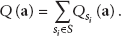
So, the higher QoM is, the more active users can be monitored in the network and the higher quality of service the wireless monitoring network provides.
The problem of maximizing of QoM (MQM) can be described as follows: finding an optimal channel allocation scheme for sniffers to collect the largest amount of information transmitted by users, that is, to maximize the QoM of the network.
The channel allocation scheme will be changed according to probability during different time slot. So the maximal information collected by monitoring network in a certain period can be expressed as

From (3), the optimal channel allocation scheme will be got as follows:

For this complicated combination optimization problem, an effective heuristic algorithm is needed. In 2005 Jiao and Li proposed a brand new Quantum-Inspired Immune Clone Algorithm (QICA) [23]. QICA constructs antibodies in view of the superposition characteristics of quantum coding and enlarges the original population via clone operation, thus expanding the searching space and improving the performance of the algorithm when doing local search. It is very suitable for this complicated combination optimization problem because of the attributes of parallelism and provable rapid convergence. But the results in QICA are expressed in a binary form [24], which are more appropriate for solving problems in a binary encoding. Thus we need to extend it to k-resolution coding before applying the algorithm to this MQM problem in wireless monitoring network. Then, Multiple-QICA channel selection algorithm is proposed and described in detail as follows.
4. Multiple Quantum Immune Clone Channel Allocation Algorithm (MQICA)
4.1. Fundamental Definitions
To accurately describe the evolutionary process of the MQICA algorithm, the following fundamental definitions are proposed.
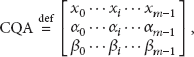
Definition 2 (Channel Quantum Antibody (CQA)).
We define the Channel Quantum Antibody as the following triploid chromosome:
Definition 3 (mapping between antibody to channel).
Note that in the CQA,



Definition 4 (channel affinity).
Channel affinity refers to the affinity degree between the CQA and the channel antigen, which is the approximate level between feasible solution and optimal solution. With the affinity value increased, the feasible solution will be much closer to the optimal one. On the contrary, the feasible solution will gradually deviate from the optimal one. Channel affinity is the foundation of immune selection operation.
Definition 5 (evolutionary entropy of the CQA).
To measure the extent of the evolution, we introduce evolutionary entropy to the CQA:

4.2. Process Design
The population is denoted as

4.2.1. Cloning Operation
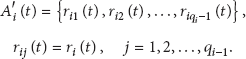
A self-adaptive clone operation is proposed in [23]:


4.2.2. Immune Genetic Variation
MQICA algorithm implements a single-gene mutation on every triploid chromosome during the evolution. Compared with full-gene mutation, it has been proved in the literature [27] that single-gene mutation can dramatically improve the search efficiency of the algorithm. Denote


Gaussian mutation consists of two operations: one performs a local search around the current solution with a variance of
After the Gaussian mutation indicated by (15) and (16), the algorithm will calculate the channel affinity of the new antibody and compare it with the original one, that is, to decide which one is better between the two feasible solutions

During the evolution, the probability of composite vector If If If

Sketch map of QRD operation.
To sum up,


4.2.3. Immune Selecting Operation
There shall form a new population:


For each CQA in population

4.2.4. Full Interference Crossover
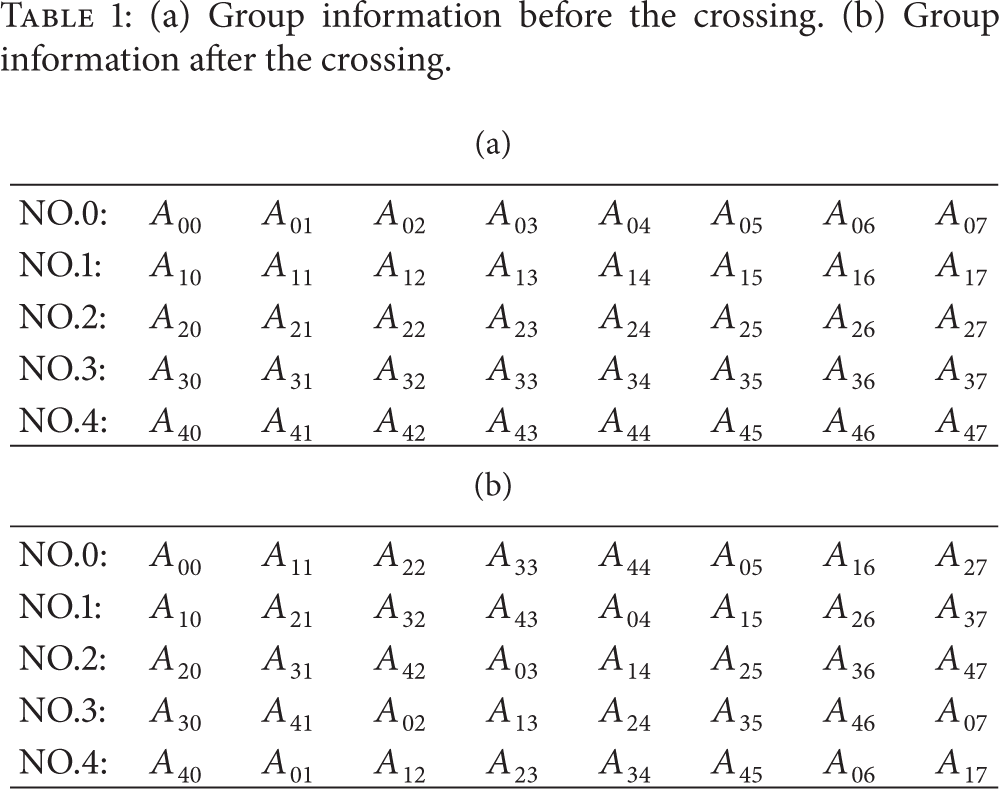
To make full use of the information of all CQAs in the population, thus to guarantee that new antibodies will be generated in case of antibody precocity, which may cause the algorithm converge to a local optimal solution, a full interference crossover strategy [28] is adopted in this paper. Denote the jth allele in the ith antibody before and after the crossover operation to be
(a) Group information before the crossing. (b) Group information after the crossing.
4.3. Algorithm Description
Based on the discussion, the process of MQICA is described as follows.
Step 1.
Set algorithm parameters and initialize population
Step 2.
Calculate the clone scale of each CQA according to (12) and then execute clone operation. After this step,
Step 3.
Do mutation operation on
Step 4.
Do immune selection, and those selected antibodies constitute the new population
Step 5.
Calculate the channel affinity of each CQA in the new population as well as the evolutionary entropy of the population: if the former does not change any more and the latter tends to be close to zero infinitely or
The pseudo code of the algorithm is also given in Pseudocode 1.
the iterative terminal entropy ε and the maximum iterations (1) (2) Do mappings between antibody to channel, calculate the evolutionary entropy of each CQA and get (3) affinity of each antibody according to (2)*/ (4) (5) (6) (7) (8) Update immune memory set (9) /*immune selection operation*/ (10) (11) (12) Calculate the evolutionary entropy update (13) (14) (15) Do full interference cross and update (16) (17)
5. Performance Analysis of MQICA
We will firstly prove that MQICA, just like traditional QICA, has a dramatic ability on global optimization searching. And in next chapter, lots of experiments are given to further identify the outstanding performance of MQICA, especially on MQoM problems.
Lemma 6.
The population sequence
Proof.
Suppose that the state space of a single CQA is Ω,
Furthermore, the operations adopted in MQICA, including clone (
Definition 7.
Denote
Lemma 8.
The transition probability matrix
Proof.
For Gaussian mutation operation G, shown in (15), assume that after the mutation 


When the state of α in a specific allele of an antibody is changed from 
Lemma 9.
The state transition matrix P for MQICA is a regular one.
Proof.
The state transition process of the population in 

Because the full interference cross has fixed relationships, that is,
Condition 1.
When 
Condition 2.
When 
Condition 3.
When 
Lemma 10.
The Markov chain derived from MQICA is ergodic.
Proof.
Lemma 9 indicates that the state transition matrix P for MQICA is regular, and because the Markov cycle is 1, based on the basic Markov limit theorem, a unique limit
Lemma 11.
MQICA converges to the global optimal solution on a probability of 1.
Proof.
MQICA adopts a so-called survival of the fittest strategy, which means that the channel affinities of this Markov sequence, generated by the evolution, are monotone and will not decrease.
Based on the basic Markov limit theorem, MQICA will definitely reach state 
This indicates that MQICA converges to the global optimal solution on a probability of 1.
6. Experiment Results
6.1. Simulations
In this paper, we conduct extensive experiments to validate the effectiveness of the algorithm. The program is run on a PC with Intel(R) Core(TM)2 CPU @2.40 GHz, 2 GB memory. The software platform is Windows XP. Table 2 lists the parameters of MQICA.
Parameters setting.

N is the population scales. Large N can promote the searching ability of the algorithm, meanwhile extend the running time of program. The other parameters are all set as the experiential value for MQICA applications, and the experiments result also shows the validity in this case.
From Section 5 we have known the validity of the proposed algorithm, MQICA, in solving multichannel allocation problems. Now a mass of experiment results also elaborate the effectiveness in another way. Firstly, we tentatively do three different experiments 5 times, respectively, according to the size. For small scale,

(a) The convergence of small scale. (b) The convergence of medium scale. (c) The convergence of large scale.
Secondly, in order to validate the correctness of the algorithm and eliminate the possibility of local optimal solution, we take traversal method for the small scale monitoring network. Ergodic results are shown as follows: 1.1, 1.1, 0.8, 0.767, 1.15, 1.15, 0.767, and 0.75. Obviously, MQICA can quickly find the optimal solution in small time. For medium and large scale, we both do the test fifty times. The results are expressed in Tables 3 and 4.
Result for medium scale.

Results for large scale.
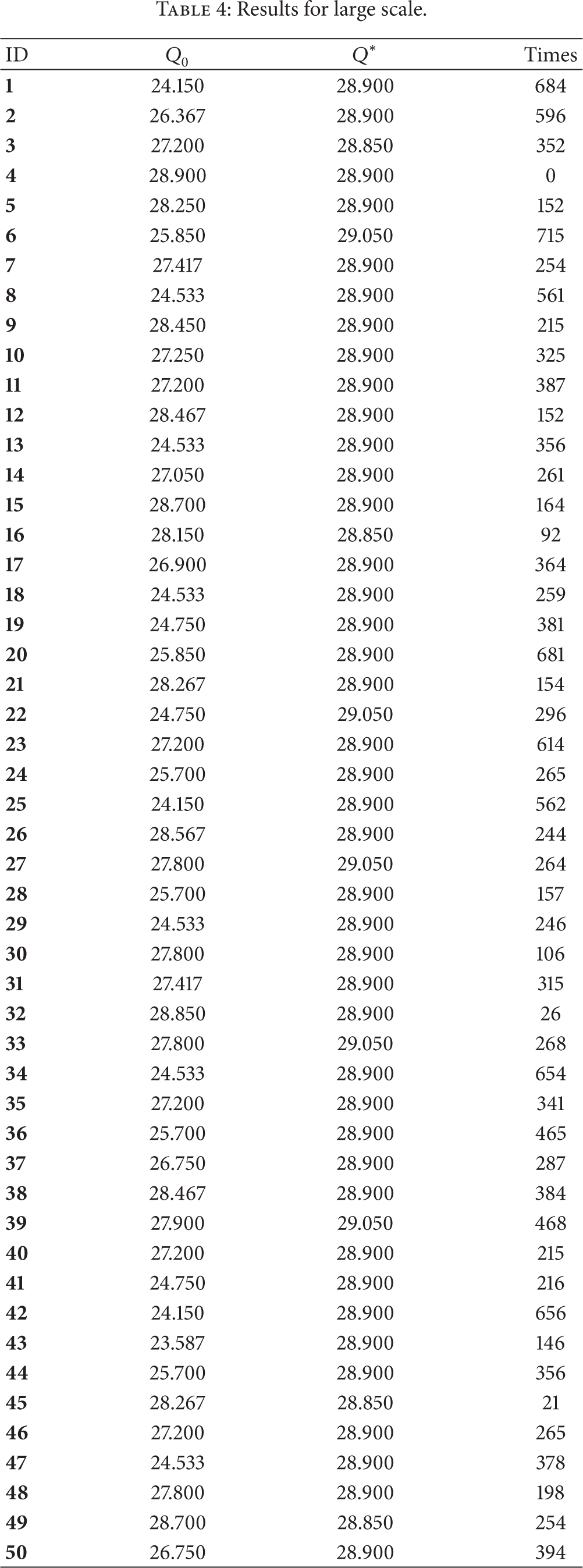
From Table 3, During 50-times experiment, we can see that initial channel scheme is random so the initial QoM value is not optimal. But after a certain number of iterations, the network monitoring quality has been converged to or close to the optimal value of 9.345. Similarly, Table 4 shows that the algorithm can still do a better performance for the distribution of channel options under lager networks.
Now we can easily conclude that MQICA will generate a good performance in channel allocation problems. It can be quickly uniform convergence to the optimal solution when the size of monitoring networks is small or moderate. If the scale is large; MQICA can also be better converged to the optimal or near optimal solution in most cases. These experimental results have proved the effectiveness of the proposed algorithm from various scales.
We also evaluate the performance of MQICA comparing three baseline algorithms.
Greedy. Select channel for each sniffer to maximize the sum of transmission probability of its neighbor users.
Linear Programming (LP). Solve the integer programming problem from formula (4).
Gibbs Sampler. Sniffer computes the local energy of optional channels and their selection probability, then chooses one channel according to the probability.
We conducted four sets of experiments, and the number of optional channels is 2, 6, and 9, respectively. In each experiment, the four algorithms are compared in different aspects of performance. The algorithm program runs 30 times to get the average result for evaluation.
In the first set of experiment, 1000 users are distributed in

Wireless network topology Hexagonal layout with users (purple “+”), sniffers (solid dots), and base stations (isosceles triangles) of each cell (different color representing working on different channels).
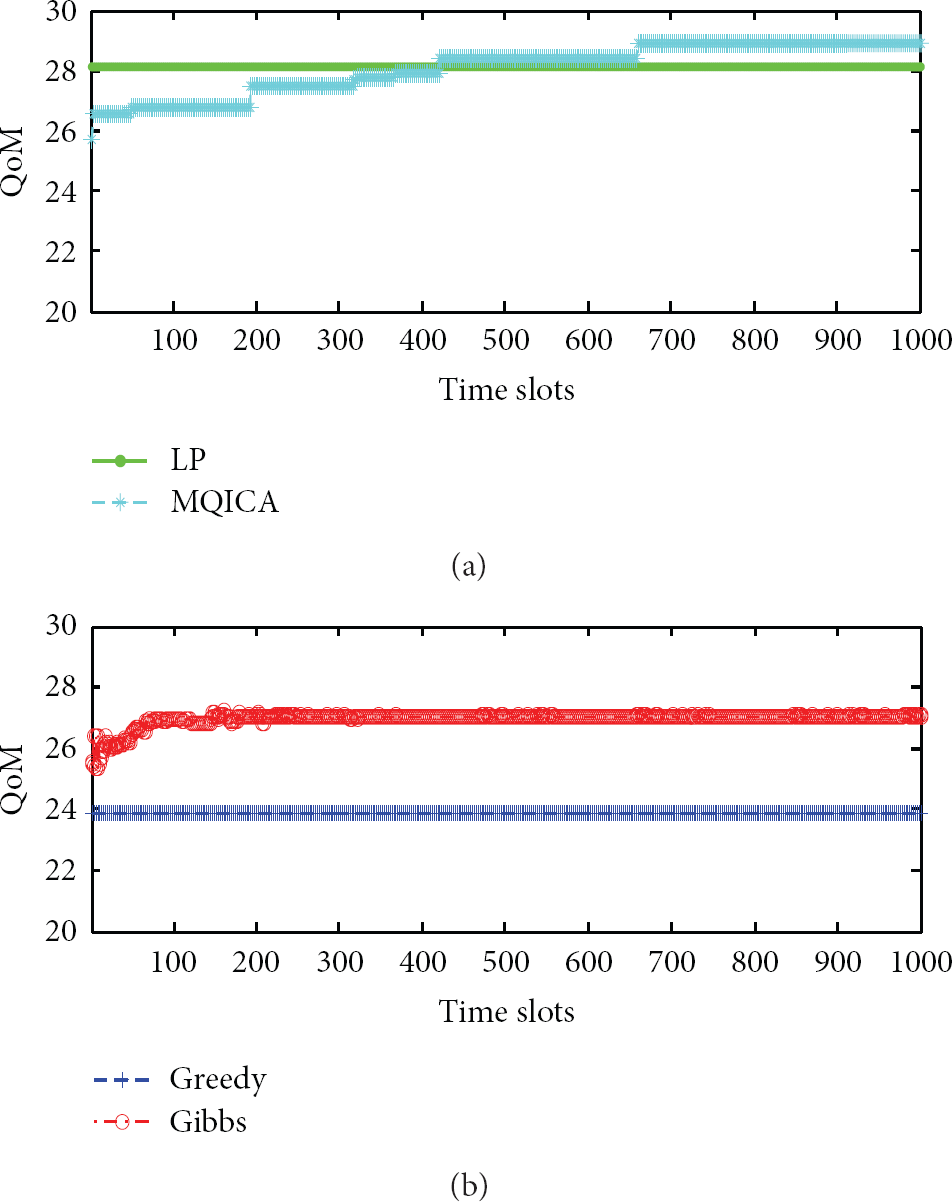
Performance comparison of the four algorithms in the first set of experiments (3 optional channels).
As depicted in Figure 5, after 700 iterations, the proposed MQICA algorithm converges to the extremely optimal solution
Table 5 demonstrates the statistical results of the three sets of experiments. Among the four algorithms, MQICA and Gibbs Sampler both run 20 times in each set of experiments to get the average optimal solution and its QoM value. As deterministic methods, LP and Greedy just run once. From Table 5, we can see that MQICA outperforms LP in three sets of experiments and evidently better than Gibbs Sampler and Greedy. Furthermore, MQICA converges fast, with shorter running time than Gibbs Sample.
Statistical results of three sets of experiments.

6.2. Practical Network Experiment
In this section, we evaluate the proposed MQICA algorithm by practical network experiment based on campus wireless network (IEEE 802.11.b WLAN). 21 WiFi sniffers were deployed in a building to collect the user information from 1 pm to 6 pm (over 5 hours). Each sniffer captured approximately 320,000 MAC frames. Totally 622 users were monitored working on 3 orthogonal channels. The number of users in 1st, 2nd, and 3rd channels is 349, 118, and 155, respectively. The activity probabilities (active probability of a user is computed as the percentage of the user's active time in a unit time.) of these users were recorded in Table 6. It is shown that the activity probabilities of most users are less than 1%. The average activity probability is 0.0026.
Parameters setting.

Figure 6 depicted the QoM of network with different number of sniffers. It is clear that the QoM (the number of monitored active users) is growing up with the increment of sniffers (from 5 to 21). Except the experiment with 21 sniffers, the other sets of experiments were conducted repeatedly with different sniffers selected randomly from the 21 sniffers, and the statistical average value of QoM was recorded and shown in Figure 6. Since the average activity probability is 0.0026, the largest number of active users is less than 1.7 during every time slot. By comparing with LP, Gibbs Sampler, and Greedy, the proposed MQICA exhibits its superiority and feasibility in the practical network environment.

QoM of campus wireless network with different number of sniffers.
7. Conclusion
In this paper, we investigate the channel allocation for sniffers to maximize the Quality of Monitoring (QoM) for wireless monitoring networks, which is proved to be NP-hard. A Multiple-Quantum-Immune-Clone-based channel selection algorithm (MQICA) is put forward to solve the problem. By theoretical proof and extensive experiments, we demonstrate that MQICA can solve the channel allocation problem effectively, and outperform related algorithms evidently with fast convergence. As an ongoing work, we are reducing the computation complexity and proving the convergence performance of algorithm in theory.
Footnotes
Acknowledgments
This work is funded by the National Science Foundation of USA (CNS-0832089), the National Natural Science Fund of China (61100211 and 61003307), and the Postdoctoral Science Foundation of China (20110490084 and 2012T50569).