




Abstract
The mathematical model of heat transfer phenomena is considered at the combustion chamber wall in an internal combustion (IC) engine. The mathematical model of proposed phenomena is established with respect to the crank angle. An inverse heat conduction problem is derived at the cylinder wall, and this problem is investigated numerically using Alifanov's regularization method. This problem studied as an optimization problem in which a squared residual functional is minimized with the conjugate gradient method. To show the ability of the proposed method, some test problems are considered.
1. Introduction
The solution of inverse heat transfer problems is becoming an essential part in the development of several relevant applications in engineering, such as design of thermal equipment, systems, and instruments. The use of inverse methods represent a new research direction, where the results obtained from numerical simulation and from experiments are not simply compared a posteriori, but a closed synergism exist between experimental and theoretical researches during a course of study, in order to obtain the maximum of information regarding the physical problem under consideration. Most of the methods for the solutions of inverse problems, which are currently in common use, were formalized in the last four decades in terms of their capabilities to treat ill-posed unstable problems. The basis of such formal methods resides on the idea of reformulating an inverse problem in terms of an approximate well-posed problem, by utilizing some kind of regularization techniques [1–10].
In the inverse analysis, most studies employed the nonlinear least-squares method [10–12] to determine the inverse problem. This method minimizes the formulation from the sum of the squares of the difference between the experimental measurements and the calculated response of the system. Based on the nonlinear least-squares method, various researchers have put their efforts in the field of inverse problems. In solving the problems, different algorithms have been adopted such as the conjugate gradient method, the Davidson-Fletcher-Powell method, the Monte-Carlo technique, the covariance analysis, and the dynamic programming. More sophisticated methods also have been developed such as the nonlinear least-squares formulation modified by the addition of a regularization term, the sequential estimation approach, and the adjoint equation approach coupled to the conjugate gradient method [1–7].
Motivation for the problem investigates here arises from the area of modeling of heat transfer phenomenon at the combustion chamber wall in an internal combustion (IC) engine. Heat transfer between the working fluid and the combustion chamber in an IC engine is one of the most important parameters for cycle simulation and analysis. High temperatures request to combust the fuel, so it is necessary to keep the temperature at a controllable level in order to operate the engine safely. Once the temperature in the engine has reached intolerable values, the engine blocks and components may suffer damage. Therefore it is essential to have a heat removal process which will maintain the engine at a safe operating condition. Heat transfer measurement by thermal sensors such as thermocouples lead to poor bandwidths and large uncertainties [1–4]. After the compression stroke and during combustion stroke, there is heat transfer to the surroundings from the hot gas through the cylinder walls. The peak gas temperatures of combustion are the order of 3000 (k) and that is why the cylinder walls of the chamber overheat. The only way in which energy can be transferred away from the combustion chamber is through convection and conduction. The heat transfer phenomena in internal combustion engines has been investigated by many authors [1–6].
In comparison with previous works, The heat transfer problem in the cylinder wall is studied by using the crank angle information. Heat transfer and cylinder pressure are two closed problems in IC engines. Cylinder pressure can be analyzed as a function of crank angle, so for this reason, the amount of temperature in the cylinder chamber can be state as a function of crank angle [1, 2, 7]. The goal of this study is estimation of internal temperature as a function of crank angle by solving an inverse heat conduction problem (IHCP). It is assumed that internal temperature are unknown function of crank angle and at the external surface heat flux are known. In addition we suppose that temperature at the some angles are available as overspecified data.
The inverse problem considered in this work is solved by using a function estimation approach [4–6], where no information is a priori available regarding the forms of the unknown function, except for the functional space that they belong to. It is assumed that the unknown function belong to Hilbert space of square integrable function in the spatial domain of interest (
The solution of inverse problems by using the conjugate gradient method with adjoint problem for function estimation consists of the following basic steps: (i) direct problem formulation, (ii) inverse problem formulation, (iii) sensitivity problem formulation, (iv) adjoint problem formulation, (v) gradient equations, (vi) iterative solution procedure, (vii) iterative procedure stopping criterion, and (viii) computational algorithm. Highlights of such steps are presented below as applied to the inverse problem of interest.
2. Direct Problem Formulation
The physical model is presented in Figure 1. The following hypotheses have been taken into account.
A cylinder of internal radius
The thermophysical properties are constant, and heat transfer is one-dimensional.
Thermal and physical properties are considered constant.
The cylinder wall is treated as thin rectangular sheet.

A simple view of cylinder chamber of an IC engine.
Under these conditions, the mathematical model of heat transfer process in cylinder wall is given by the following system of equations:

where

In the engine
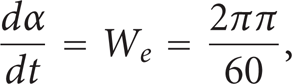
where W e is the engine angular speed, and N is the engine speed Therefore, for the one cycle, the problem (1) can be rewritten as follows:
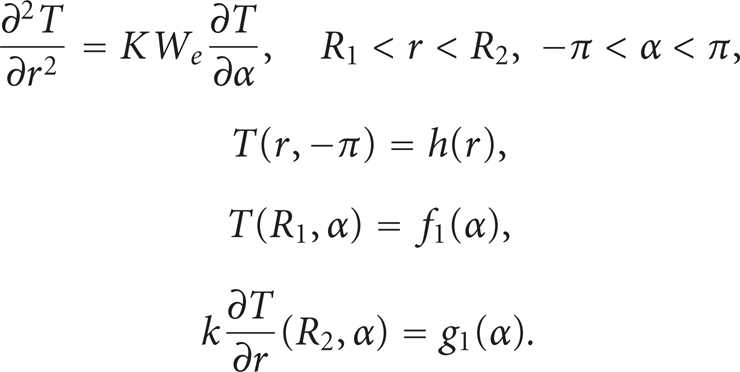
Now, suppose

Then, the problem (4) is reduced to the following standard heat conduction problem


where

3. Inverse Problem
In the problem (6)–(9) suppose that
As mentioned before, the peak gas temperatures of combustion are the order of 3000 (k) and for this resason, the exact measurement of internal wall temperature is impossible. To this end, for the estimation of internal temperature, that is,

where
This inverse heat conduction problem (IHCP) is recast as an optimum control problem of finding the unknown control function
4. Sensitivity Problem
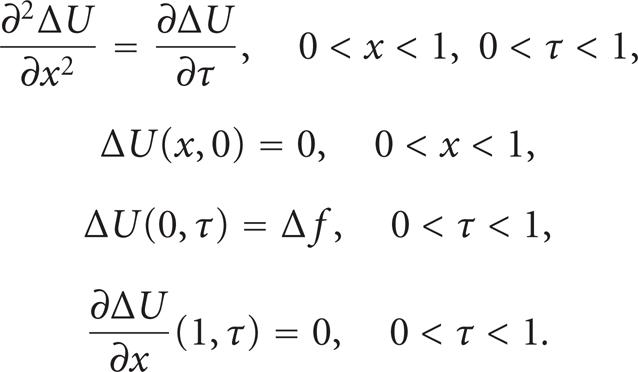
The sensitivity function, solution of the sensitivity problem, is defined as the directional derivative of

where
5. Adjoint Problem
A Lagrange multiplier

Directional derivatives of

where

6. Conjugate Gradient Method
In this section, we consider that the unknown function

where m is the number of approximation parameters, c
j
are unknown approximation parameters, and
As a result the IHCP is reduced to the estimation of a vector of parameters
The iterative procedure of the conjugate gradient method is written as

where n is the iteration index,

where the parameter
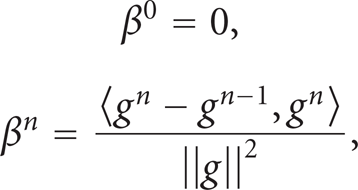
where

where
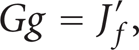
where G is the Gram's matrix for basis functions

This matrix is positive definite and symmetric. The most effective method for calculating the adjoint
During the limiting processes used to obtain the adjoint problem, applied to the directional derivatives of

The gradient of the residual functional is determined by solving adjoint problem. The following expression for the gradient components can be derived:

Determination of descent parameter γ in each iteration deals with solution of sensitivity problem.
Descent parameter is determined minimizing the residual functional (11) with respect to γ. By using a Taylor series expansion,

The iterative regularization method is used here to obtain stable solution of the proposed inverse heat transfer problem. The main idea is to terminate the iterative procedure with the residual criterion:

where
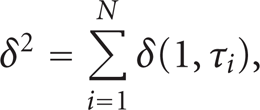
where
7. Results and Discussion
In order to examine the ability and accuracy of this model and the inverse analysis presented here for the estimation of the internal temperature, in problem (6)–(9) we consider that

Here we try to recover the function
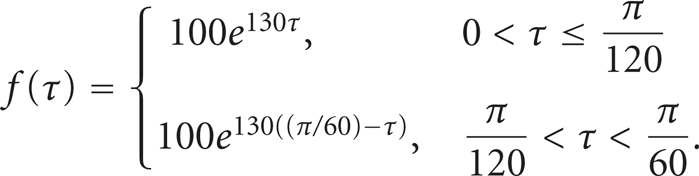
Since experimental data were not available we generate simulated transient temperature data

where
Figures 1, 2, 3, and 4 show the results after 30 iterations when we use m = 10, m = 20, and m = 30 basis functions for estimating
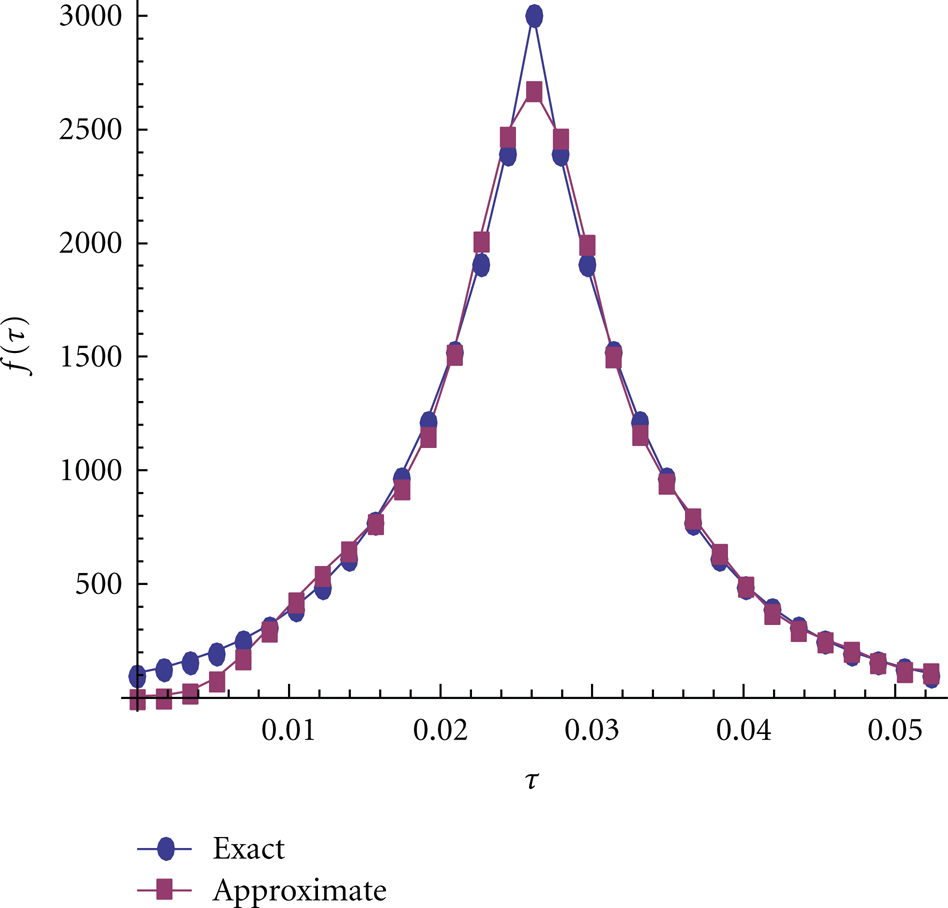
The comparison between exact and approximate solutions using m = 10 cubic B-spline basis functions.
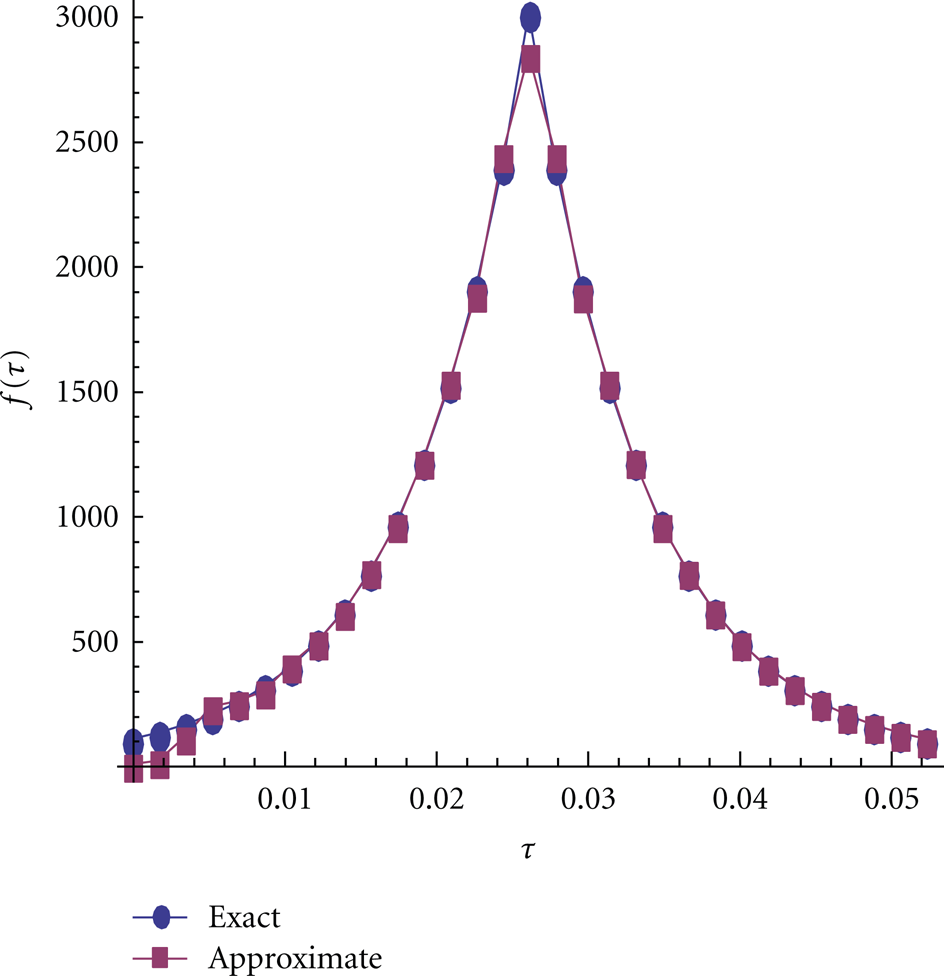
The comparison between exact and approximate solutions using m = 20 cubic B-spline basis functions.

The comparison between exact and approximate solutions using m = 30 cubic B-spline basis functions.
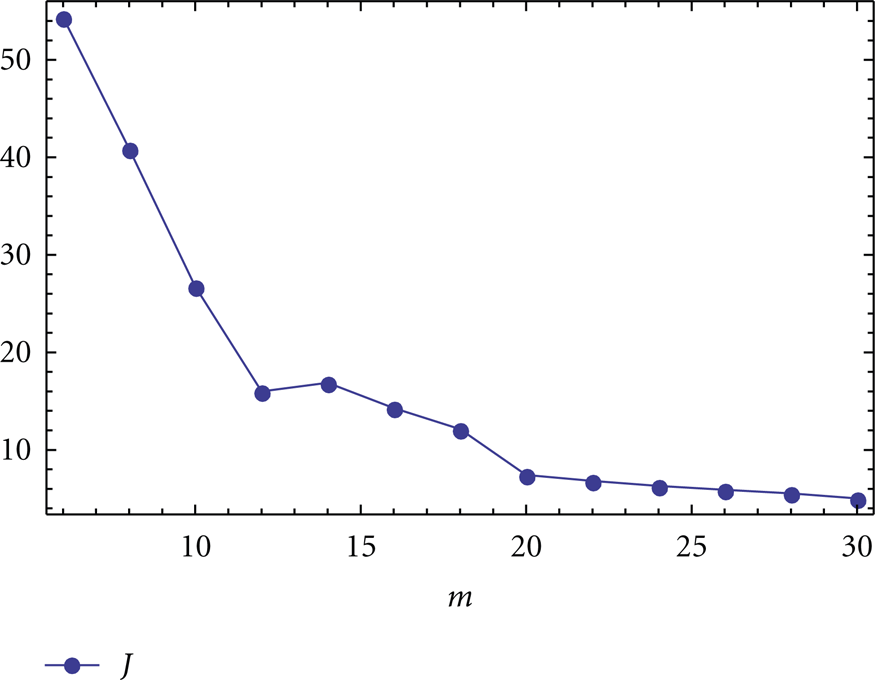
The behavior of the functional J with respect to the number of basis functions.
8. Conclusion
This paper presents a new differential model of heat conduction in the cylinder wall of internal combustion engine based on crank angle. Since a lot of information about cylinders problem such as in-cylinder pressure and temperature amount could be found by using crank angle, it is convenient to use crank angle to estimate temperature at the internal surface of cylinder wall. This model can be used to estimate heat flux and temperature at the other parts of engine that deal with combustion chamber as a function of crank angle.