




Abstract
One of the crucial aspects in the adoption of alternative fuels (e.g., GtL fuel) in aviation industry is to investigate their compatibility with elastomeric materials used in current gas turbine engines. This study employed stress relaxation technique to investigate the effects of three solvents, namely, decalin (cycloparaffin), n-decane (normal paraffin), and ShellSol T solvent (isoparaffins) on O-rings made from different materials. Results indicated that both fluorosilicone and fluorocarbon O-rings showed excellent compatibility with all 25 blends tested. The stress relaxation characteristic of nitrile O-ring was highly dependent on the composition of the solvents; the more decalin (n-decane) is in the blend, the better (worse) its sealing performance becomes. Effects of the three solvents presented in the tests indicated aromatics are not the only compounds that can swell nitrile O-ring. It is also important to notice that although decalin presents good O-ring swelling ability, it does not mean all cycloparaffins have the same property. n-decane also showed certain O-ring swelling ability but its main effect during the polymer-fuel interaction process is to extract materials out of nitrile O-ring. Isoparaffins do not participate in the O-ring swelling process. They only extract polymer materials; however, its extraction ability is relatively weaker than n-decane.
1. Introduction
Global petroleum crisis and environmental stress have boosted the research and development of alternative fuels in aviation industry. Due to more restrictions in alternative fuel usage than in any other sector [1], development of “drop-in” fuels has been the main interest in aviation. One of the crucial “fit-for-purpose” properties of “drop-in” fuels is their compatibility with elastomeric sealing components, most commonly O-rings, in an engine fuel system.
An O-ring is an elastomeric material that is squashed between two mating faces in a fuel system. The material deforms into the gap between the faces and thus provides a seal between them [2]. To guarantee a good sealing service, it is important to understand the interaction between O-ring material and fuel which is being sealed. Physically speaking, two processes occur when a new O-ring material is exposed to fuel for the first time. First, the material may absorb components from the fuel (such as alkanes, aromatics, etc.), which would generally cause the material to swell and soften. Second, the fuel may extract components from the material (such as plasticizers, processing aids, etc.), which would generally cause the material to shrink and harden. The overall effect the fuel has on the material will be the balance of these two processes. Once the material has been in service for some time, the fuel-extractable components will have been removed and all subsequent changes in physical properties will result from a shifting equilibrium between the material and the overlying fuel, which in turn will depend on the composition of the fuel [3].
Previous experiences indicated O-rings that are being used, particularly nitrile O-rings create a good seal because they swell in the presence of aromatics in the kerosene. When alternative fuels are used, normally trace or no aromatics in their compositions, O-rings either shrink or no longer swell to the volume that could provide a good seal [4–6]. Gas-to-Liquid (GtL) kerosene produced via the Fisher-Tropsch process is one of the alternative fuels which could potentially be adopted. This type of kerosene mainly consists of normal and isoparaffins, with no aromatic content. As aromatics are responsible for the soot formation from the emission, GtL kerosene has the benefits of reducing its footprint on environment. However, as paraffins are relatively large and nonpolar molecules, their ability to penetrate into the polymer structure in order to swell the O-rings are much worse than aromatic compounds, which are more compact and exhibit polar and hydrogen bonding character [3]. To overcome this drawback and also to keep its benefit on emissions, attention has been drawn to look for alternative ways to promote its O-ring swelling property, without adding aromatic species. Cycloparaffins are a class of compound which has the potential because research has been done on Coal-to-Liquid (CtL) kerosene (mainly cycloparaffins) suggested it has the same swelling characteristics for nitrile O-ring as JP-8 does (contains 17% aromatics and diaromatics and significant levels of polar compounds) [7]. It would be beneficial if it can be proved that cycloparaffins can be blended into the composition of GtL fuel to promote its O-ring swelling property without sacrificing other promising fuel properties. Meanwhile, further understanding on the roles of normal and isoparaffins play in the O-ring swelling process is also needed.
The aim of this paper is to investigate the impact of normal, iso-, and cycloparaffins on O-ring materials commonly used in the fuel system of an aircraft engine. n-decane and decalin were chosen as the candidate solvents to represent normal and cycloparaffins, as they are commonly found in the composition of jet fuel. ShellSol T, a synthetic isoparaffinic hydrocarbon solvent provided by Shell, was used as candidate isoparaffins. Three types of O-rings were tested, which were nitrile, fluorocarbon, and fluorosilicone. Rather than only immerge the O-rings in these solvents, stress relaxation technique was employed to look at how O-rings would perform under simulated service conditions. A “normal-iso-cycloparaffins” triangle sample matrix was prepared to look at what proportions of the three solvents could be possibly adopted to provide effective O-ring swelling property.
2. Experimental Details
2.1. Procedure
The equipment employed for the stress relaxation test was the Elastocon Relaxation Tester EB 02 (Figure 1). It has four rigs in a cell oven which all have the same specification for compression test. According to the test standard ISO 3384, test method “A” was used; therefore, the samples were compressed and all counterforce measurements were made at the test temperature [8]. The sample O-ring was inserted between two compression plates and compressed by 25% of its original size. Then, 150 mL of fuel was injected into the container to immerse the sample O-ring. Each rig contained a different type of solvent. The test temperature was set at 30°C in order to keep the rigs running safely. Counterforce and temperature of each rig were monitored and recorded continually throughout the experiment on a computer connected to the Elastocon. Normally the test period was one week, but may vary depending on how long it took to illustrate different relaxation characteristics between the various solvents.

Elastocon Relaxation Tester EB 02 (source: Elastocon AB).
2.2. Solvent Matrix
n-decane, decalin (both were purchased from VWR), and ShellSol T solvent (provided from Shell) were blended to prepare 25 solvents within the triangle shown in Figure 2. Each vertex of the triangle represented one neat solvent. The big triangle was divided into six small triangles by the medians on each side. Then, the vertexes, intersection point of the medians, and the midpoints on all sides of each small triangle were set as the sample points for blending. Detailed proportions of each solvent in these blends are in Table 1.
Solvent matrix for testing.

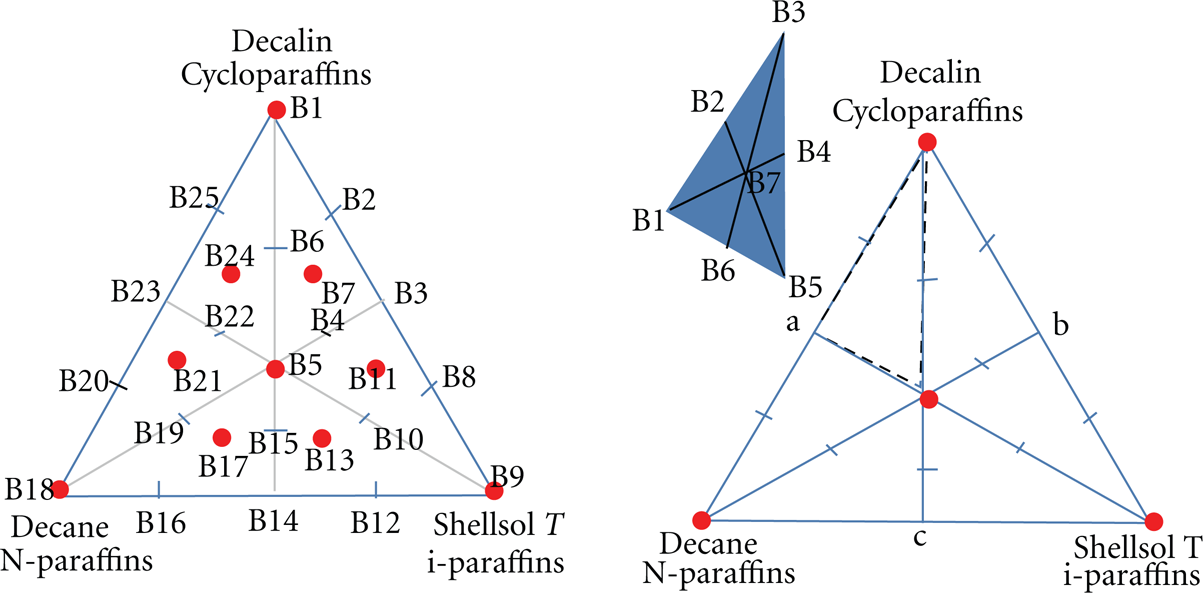
“Normal-iso-cycloparaffins” solvent triangle.
2.3. Sample O-Rings
Three types of O-ring materials were chosen for testing: nitrile, fluorocarbon, and fluorosilicone. They were chosen not only because they represent the types of O-rings used in the current market, but also the trend of changing standard of O-ring materials employed in the aviation industry. Fluorosilicone O-rings were supplied by Parker Hannifin Corporation and both nitrile and fluorocarbon O-rings were provided by Trelleborg. All O-rings have the standard AS568 113 size [9], and each type of O-rings was from the same batch to ensure the similar specification and quality. Specifications of each material are provided in Table 2.
Specification of sample O-rings.

3. Results and Discussion
When raw data was obtained from the stress relaxation tests,
3.1. Nitrile
3.1.1. Vertexes of the Triangle
Nitrile O-rings performed quite differently in these three solvents. In decalin and n-decane, its stress relaxation process could be divided into three phases (see Figure 3(a)).

Relaxation process of nitrile O-ring: (a) in three single solvents, respectively; (b) normalized by Jet A-1, with comparison to GtL kerosene.
Phase 1 (Reduction).
Counterforce decreased sharply with time during this phase as elastomeric material is viscoelastic, which means it has both the properties of viscous and elastic materials and, as such, exhibits time-dependant strain [10]. Time periods of this phase for decalin and n-decane lasted for 3 hours since compressions were applied.
Phase 2 (Increase).
Instead of continuous relaxation after the initial counterforce reduction, counterforce increased in this phase which was due to O-ring swelling. This observation proved that both decalin and n-decane have the ability to diffuse into the polymer structure of nitrile O-ring due to their relatively small molecular size. Decalin may also benefit from its ring-shape molecular geometry which is similar to naphthalene (diaromatics). Previous research suggested that alkanes are relatively “inactive” in swelling O-rings and that is a main reason why a certain percentage of aromatics are needed in the composition of jet fuel. Result here indicated alkanes are also capable to participate in the O-ring swelling process if their sizes are small enough. The load cell of the relaxation rig sensed the pressure imposed by the volume swell of the O-ring which resulted in the increase of compression force. The relaxation curves reached their peak points at around 40 and 15 hours for decalin and n-decane, respectively, which also indicated the maximum volume swell points.
Phase 3 (Reduction).
When the volume swell and the compression force reached equilibrium, counterforce began to decrease again gradually due to the solvents extracting chemical components from the O-rings [6]. The speed of relaxation in n-decane was much faster than that in decalin, indicating n-decane's ability to extract component out of nitrile O-ring is greater than decalin.
By contrast, nitrile O-ring tested in isoparaffins did not present any swelling behavior (see Figure 3(a)). After the initial counterforce quick reduction, O-ring relaxed gradually, with similar relaxation speed as that in decalin in its phase 3. This suggests isoparaffins might not participate in the O-ring swelling process, which means this class of hydrocarbon compound is not a contributor with regard to fuel's O-ring swelling property.
When normalized by the stress relaxation characteristics in Jet A-1 fuel with comparison to GtL [11] (Figure 3(b)), it can be seen that nitrile O-ring in decalin showed even better relaxation performance than that in Jet A-1. O-ring swelled to a larger amount of volume and relaxed slower afterwards, which suggests that pure decalin has good nitrile O-ring swelling property. Isoparaffins, GtL kerosene, and n-decane solvents presented weaker O-ring swelling ability than Jet A-1 fuel. GtL kerosene, whose main components are normal and isoparaffins, presented a combined characteristic of both n-decane and isoparaffins as its relaxation curve lied between those of the two solvents. Its ability to swell nitrile O-ring was weaker but relaxed the O-ring slower than pure n-decane solvent, due to the effect of isoparaffins. Regarding the ability to swell nitrile O-rings, these five types of fuels or solvents could be graded in Table 3.
O-ring swelling property (OSP)* of five solvents.
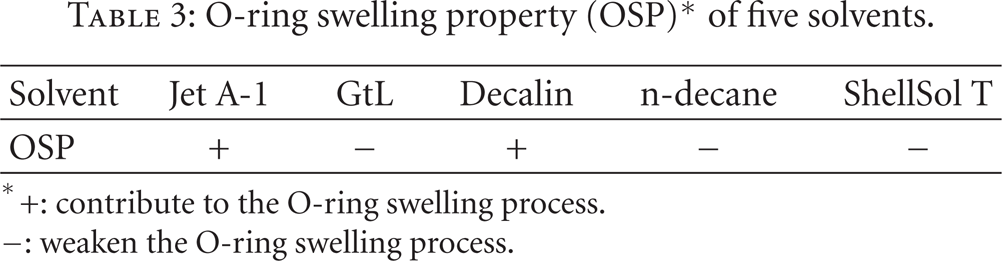
+: contribute to the O-ring swelling process.
−: weaken the O-ring swelling process.
3.1.2. Edges of the Triangle
Decalin ↔ n-Decane
Figure 4 showed the stress relaxation characteristics of nitrile O-rings in decalin blended with n-decane by 0%, 25%, 50%, 75%, and 100% (v/v). It can be seen clearly that as the proportion of decalin (n-decane) increased (decreased) in the blends, nitrile O-ring relaxed slower, or its sealing performance was improved dramatically. Without considering the influence by the temperature fluctuation, its degree of relaxation was reduced roughly proportional to the percentage of decalin in the blends. It was proved again that the OSP of decalin is much better than that of n-decane. The relaxation behavior of the blend could be comparable to that of Jet A-1 when the proportion of decalin reached 75%.
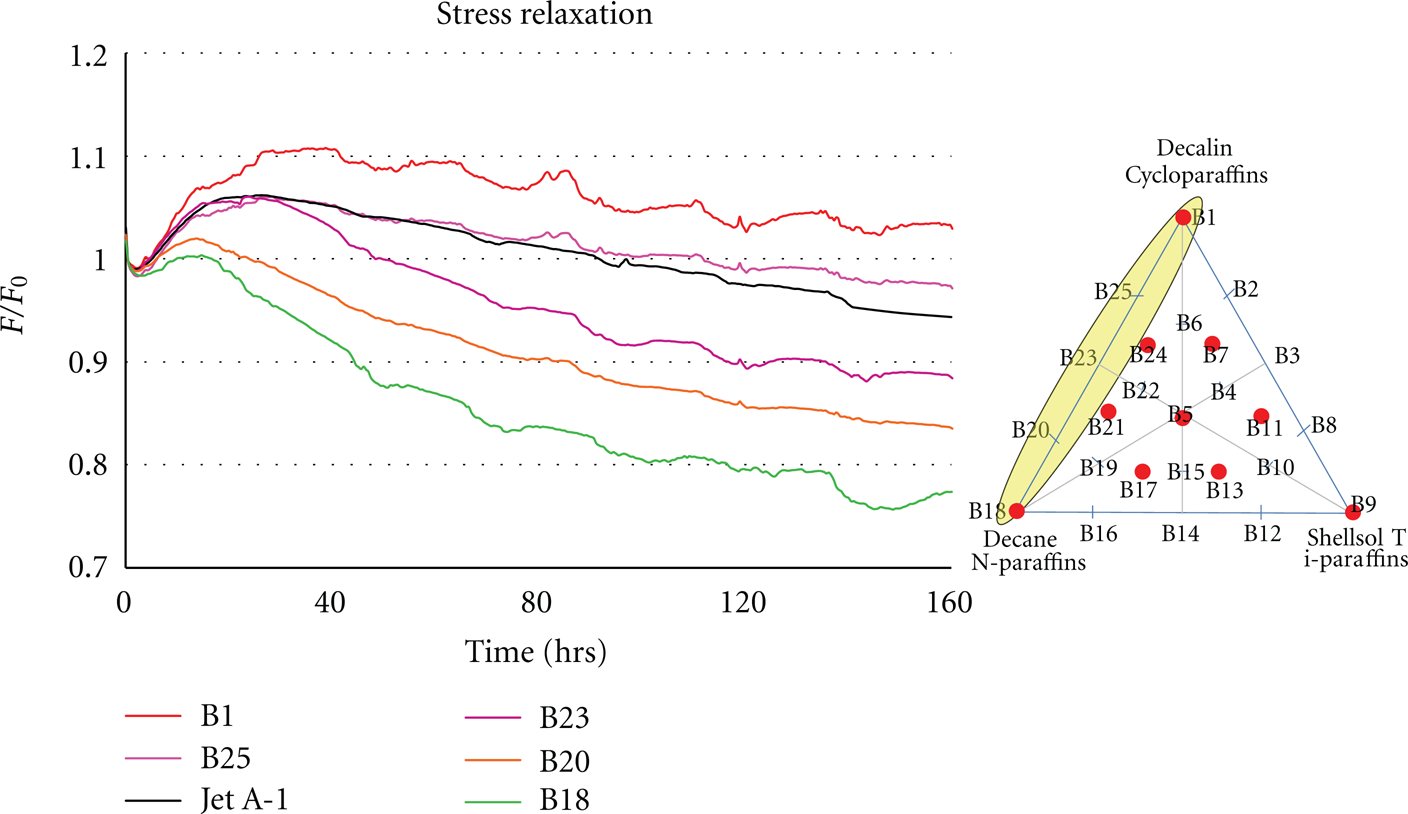
Relaxation process of nitrile O-rings in the blends of decalin and n-decane solvents.
Decalin ↔ ShellSol T (Isoparaffins)
Figure 5 showed the stress relaxation behaviors of nitrile O-rings in decalin blended with ShellSol T solvent by 0%, 25%, 50%, 75%, and 100% (v/v). As the proportion of decalin (ShellSol T) increased (decreased) in the blends, nitrile O-ring's sealing performance was improved dramatically. The degree of relaxation was also reduced roughly proportional to the percentage of decalin in the blends, when not taking the influence by the temperature fluctuation in consideration. It could be said that the OSP of decalin is also better than that of isoparaffins. The relaxation behavior of the blend could also be comparable to that of Jet A-1 when the proportion of decalin reached 75%.
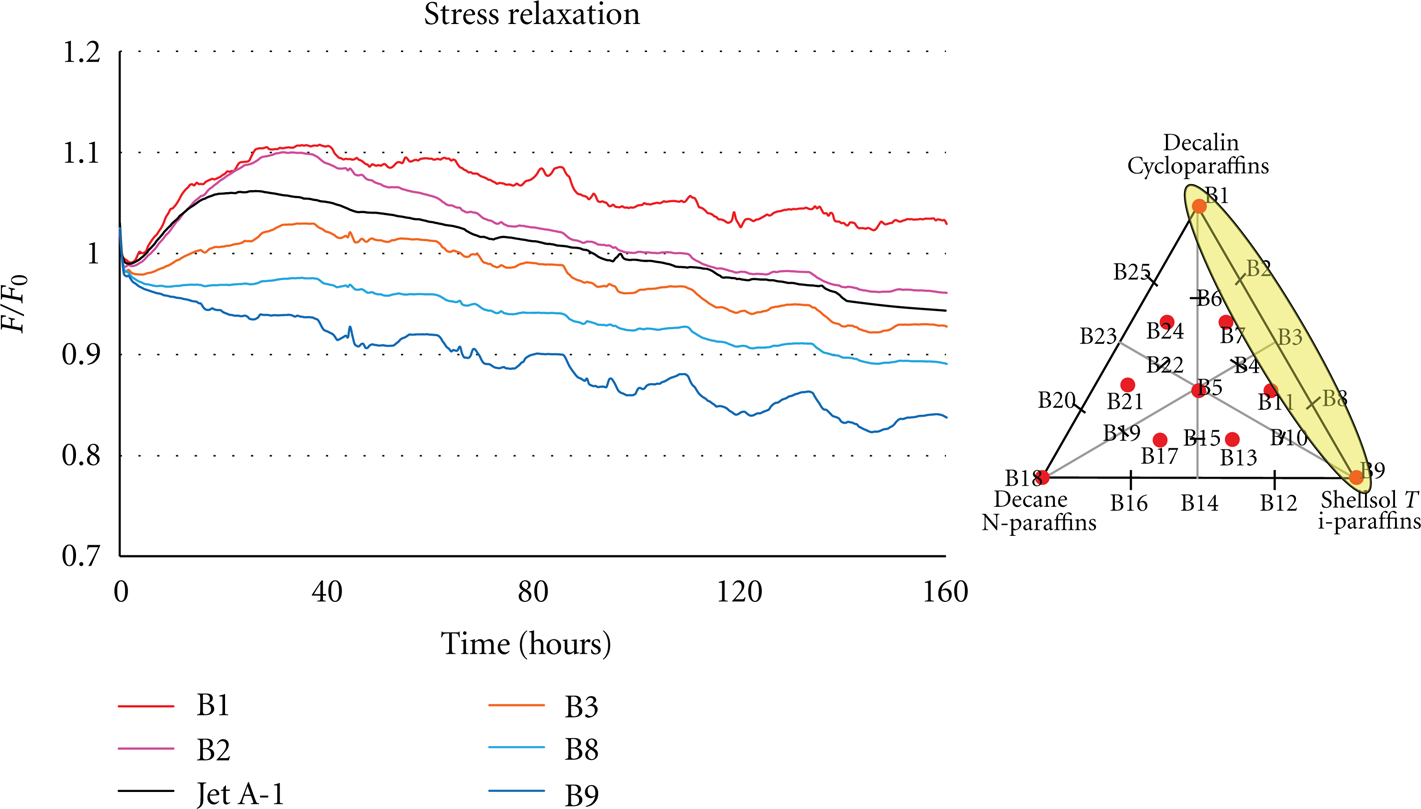
Relaxation process of nitrile O-rings in the blends of decalin and ShellSol T solvents.
ShellSol T (Isoparaffins) ↔ n-Decane
Figure 6 showed the stress relaxation behaviors of nitrile O-rings in ShellSol T blended with n-decane solvent by 0%, 25%, 50%, 75%, and 100% (v/v). As the proportion of ShellSol T (n-decane) increased (decreased), the relaxation curves raised slightly. Although isoparaffins do not participate in the O-ring swelling process, their ability of extracting material out of the O-ring is weaker than n-decane, which makes them an “improver” when blended with the latter. So overall, their OSP is slightly better than that of n-decane. However, only mixing isoparaffins and n-decane cannot provide enough O-ring swelling property to the blended solvents, no matter by what proportions; as O-ring relaxed much faster than that in Jet A-1.

Relaxation process of nitrile O-rings in the blends of ShellSol T and n-decane solvents.
From the results obtained from the “edge of the triangle,” it can be concluded that when blending two of the three solvents together, only decalin can promote the OSP of the final blends. However, in order to be comparable to Jet A-1, the proportion of decalin in the blend need to be around 75%. The OSP of the three solvents in two component blends can be compared as
Decalin > Isoparaffins > n-decane.
3.1.3. Insides of the Triangle
In order to compare the respective effect of the three solvents in three-component blends, the insides of the triangle were divided into three regions, based on their relative positions towards each vertex.
Decalin Region
The “decalin region” consisted of six blends, which were B4, B5, B6, B7, B22, and B24. The percentages of decalin in the blends ranged from 33.3% to 66%, while the contents of both isoparaffins and n-decane were between 11.1% and 41.5%. O-rings in these blends all presented a certain degree of swelling; and as the proportion of decalin increased, the relaxation characteristics were improved (Figure 7). When the amount of decalin was certain, the more n-decane was in the blends, the worse the relaxation behavior became. It seemed that more than 60% of decalin was needed in the composition of the blends (B6 and B7) in order to be comparable to Jet A-1.
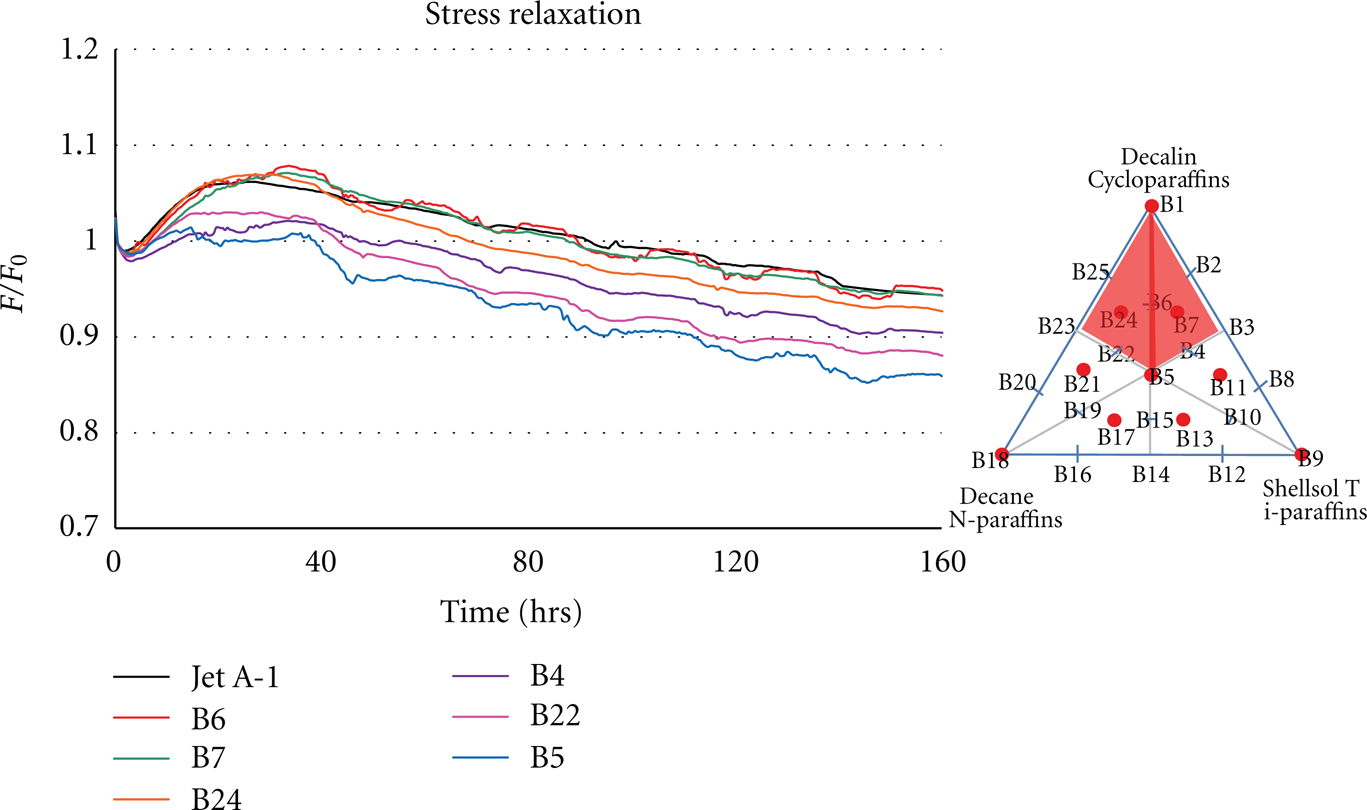
Relaxation process of nitrile O-rings in the blends of “decalin region” (red).
Isoparaffin Region
The “isoparaffin region” consisted of six blends, which were B4, B5, B10, B11, B13, and B15. The percentages of isoparaffins in the blends ranged from 33.3% to 66%, while the contents of both decalin and n-decane were between 11.1% and 41.5%. Compared with the “decalin region,” the whole spectrum of relaxation curves shifted downwards dramatically (Figure 8). Slight difference in the composition of the blends seemed not change the relaxation behavior much (e.g., B10 and B13), though generally it was still improved with the increase of decalin content.
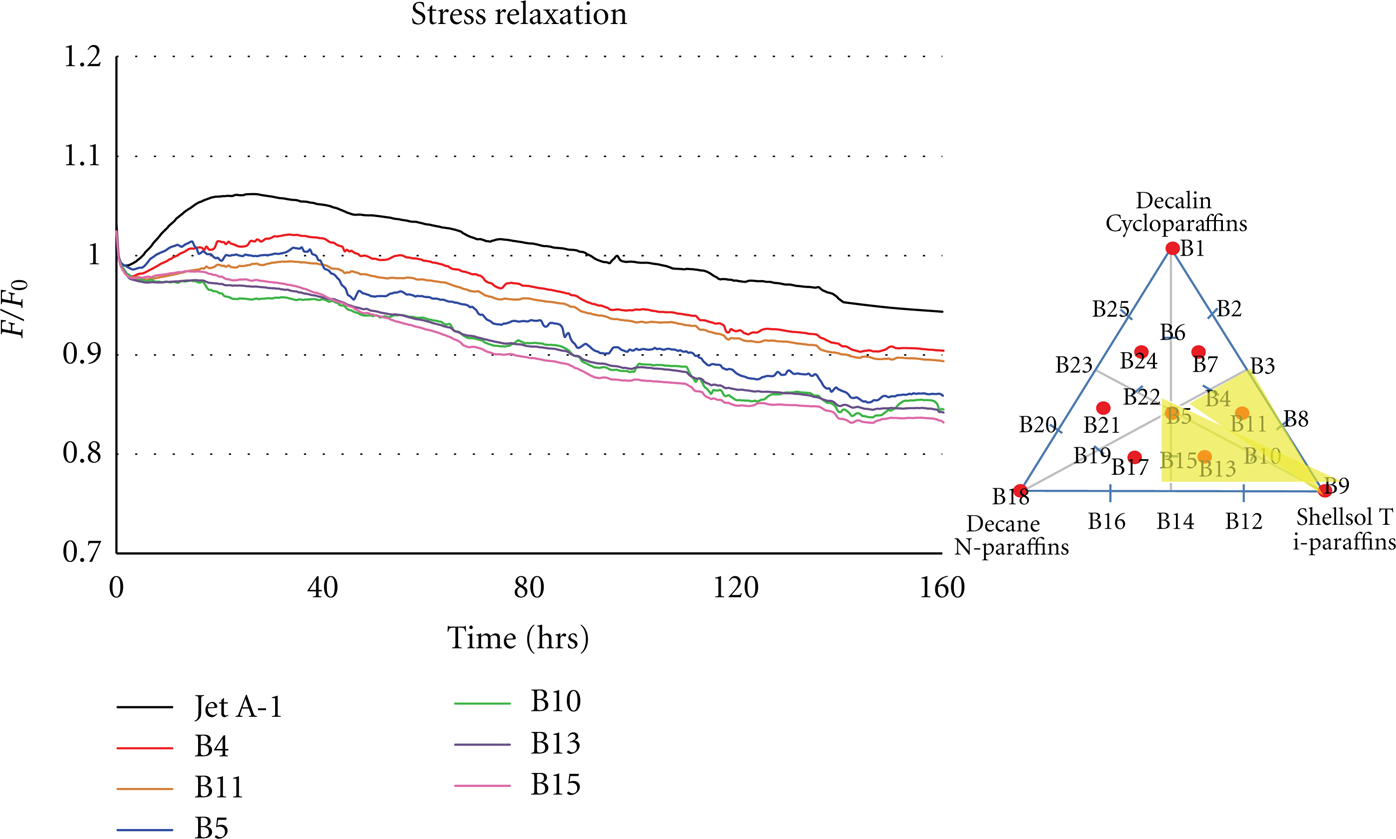
Relaxation process of nitrile O-rings in the blends of “isoparaffin region” (yellow).
n-Decane Region
The “n-decane region” also consisted of six blends, which were B5, B15, B17, B19, B21, and B22. The percentages of n-decane in the blends ranged from 33.3% to 66%, while both decalin and isoparaffins were between 11.1% and 41.5%. Compared with the “isoparaffin region,” the whole spectrum of relaxation curves shifted further downwards (Figure 9). Generally, the closer the blend was towards the vertex of n-decane, the lower the relaxation curve would be; or the quicker O-ring relaxed in this blend. Although n-decane is able to swell the O-ring during the initial stage of relaxation, its main effect is “negative” during the whole process.

Relaxation process of nitrile O-rings in the blends of “n-decane region” (blue).
Results obtained from the “insides of the triangle” indicated the same conclusion as that of the “edges of the triangle,” which further proved decalin's ability to promote the OSP of the final blend. The proportion of decalin in the blend needs to be more than 60% to be considered comparable to Jet A-1 fuel. The OSP of the three solvents in three component blends were still as
Decalin > Isoparaffins > n-decane.
If all the stress relaxation curves were drawn in one graph, the effects of the three solvents during the relaxation process of nitrile O-ring could be seen more clearly as shown in Figure 10. Generally, the relaxation curves shifted upwards with the increase of decalin in the blends, while moved downwards if the amount of n-decane became significant. Isoparaffins played a similar role as n-decane in this process but its effect was slightly weaker. To make the blend comparable to Jet A-1 fuel, over 60% (v/v) of decalin is needed in the composition, while the proportions of other two solvents are not as significant.
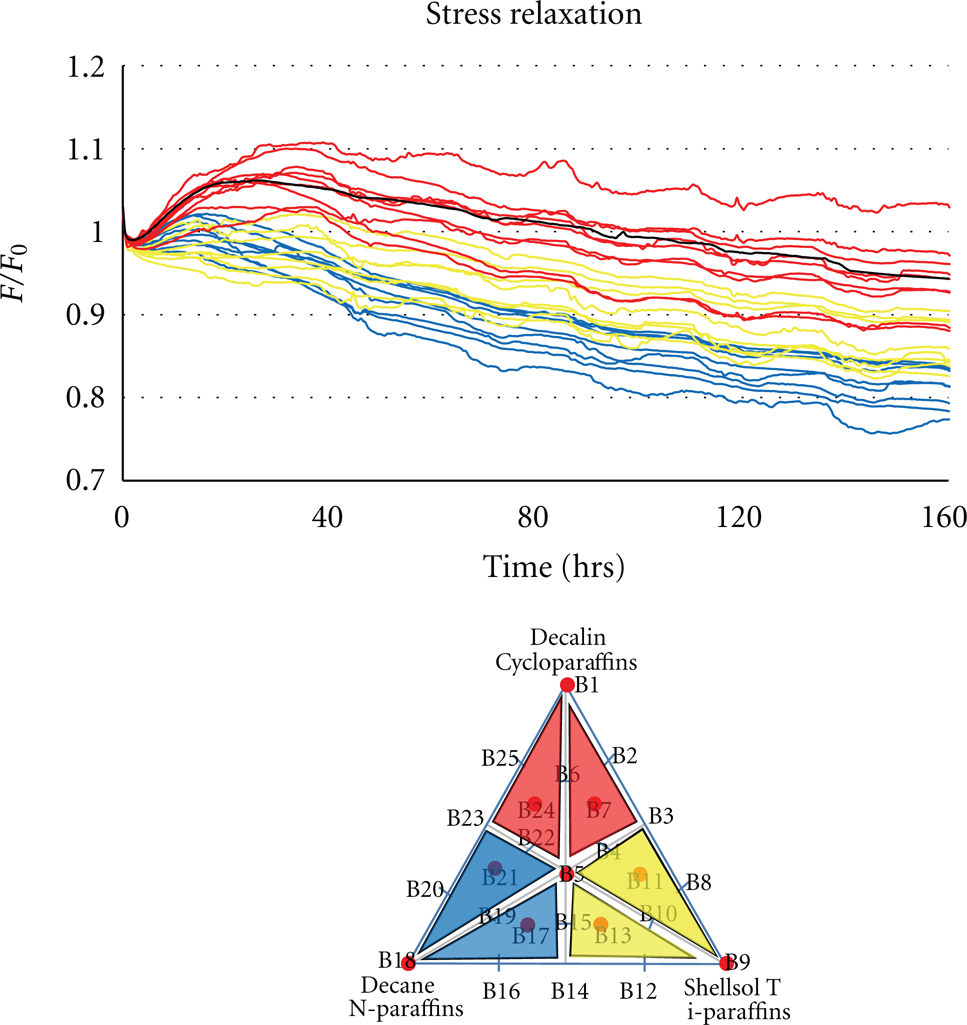
Summary of the relaxation behavior of nitrile O-rings in the triangle.
3.2. Fluorosilicone
3.2.1. Vertexes of the Triangle
Fluorosilicone O-rings presented very similar relaxation characteristics in all three solvents (Figure 11(a)). No swelling process or obvious acceleration in the relaxation was observed. When compared with Jet A-1 and GtL kerosene (Figure 11(b)), the relaxation curves almost overlapped each other, indicating excellent compatibility with all solvents.

Relaxation behavior of fluorosilicone O-rings: (a) in three single solvents, respectively; (b) normalized by Jet A-1, with comparison to GtL kerosene.
3.2.2. Edges of the Triangle
Relaxation behaviors of the sample blends on all three edges of the triangle were plotted in Figure 12, with Jet A-1 as a reference. All relaxation curves lied closely to that of Jet A-1 which meant fluorosilicone O-ring exhibited quite similar relaxation characteristics in all these two-component solvents. It is relatively inert to the changes of fuel composition.

Relaxation behavior of fluorosilicone O-rings in the blends on the edges of the triangle.
3.2.3. Insides of the Triangle
When three solvents were blended together, fluorosilicone O-ring presented even closer relaxation characteristics to that in Jet A-1 fuel (Figure 13). No solvent preference was observed as the changes of blend composition did not affect O-ring's relaxation process.

Relaxation behavior of fluorosilicone O-rings in the blends inside the triangle.
Results from the triangle solvents indicated excellent compatibility of fluorosilicone O-rings with three solvents (Figure 14).

Summary of the relaxation behavior of fluorosilicone O-rings in the triangle.
3.3. Fluorocarbon
3.3.1. Vertexes of the Triangle
Fluorocarbon O-ring also presented good compatibility with the solvents (Figure 15(a)). A slight difference was observed in decalin solvent as O-ring relaxed more than those in the other two solvents. By the end of the 80-hour test, fluorocarbon O-ring relaxed less than fluorosilicone O-ring, with the F/F0 value ranged from 0.9–0.85 for the former and around 0.8 for the latter. When compared with Jet A-1, with comparison to GtL kerosene, all solvents showed excellent compatibility with fluorocarbon O-ring (Figure 15(b)). Although in decalin, the relaxation curve was below all the others, but the F/F0 value was still higher than 9.3.
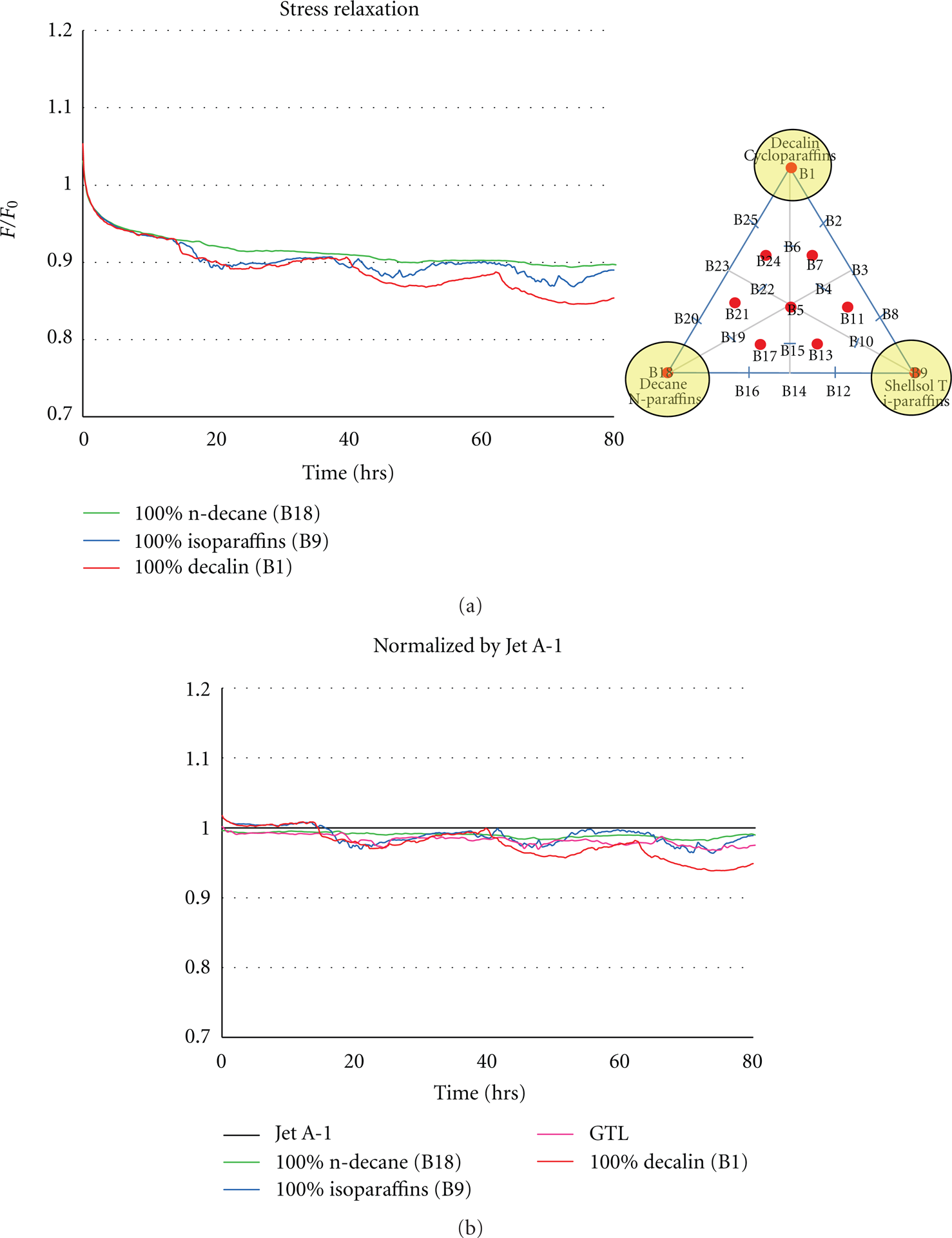
Relaxation behavior of fluorocarbon O-rings: (a) in three single solvents, respectively; (b) normalized by Jet A-1, with comparison to GtL kerosene.
3.3.2. Edges of the Triangle
Relaxation behaviors of the sample blends on all three edges of the triangle were plotted in Figure 16, with Jet A-1 as a reference. All relaxation curves lied closely to that of Jet A-1 which meant fluorocarbon O-ring exhibited quite similar relaxation characteristics in all these two-component solvents.

Relaxation behavior of fluorocarbon O-rings in the blends on the edges of the triangle.
3.3.3. Insides of the Triangle
When three solvents were blended together, fluorocarbon O-ring presented quite similar relaxation characteristics to that in two-component blends (Figure 17). No solvent preference was observed as the changes of blend composition did not affect O-ring's relaxation process.
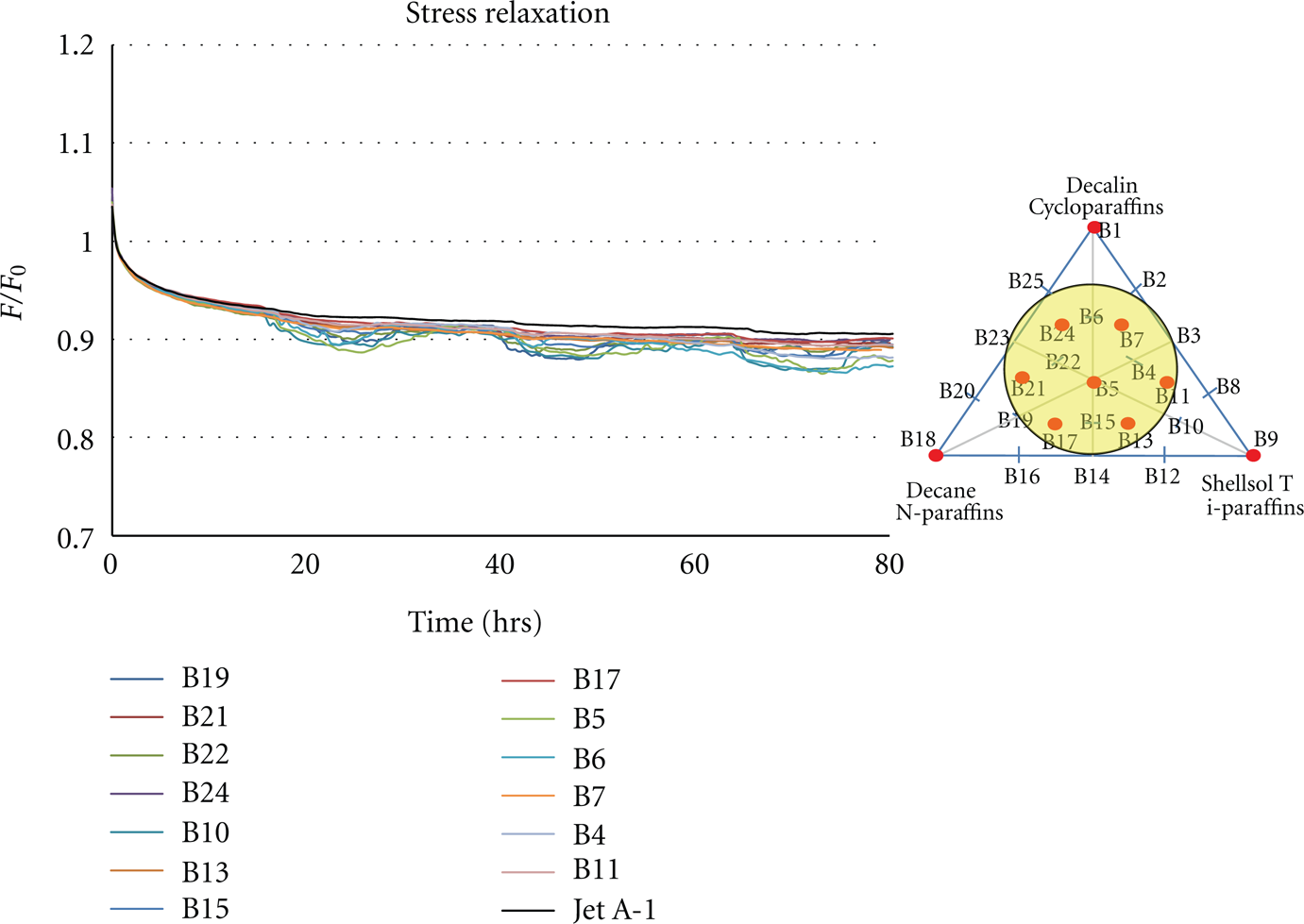
Relaxation behavior of fluorocarbon O-rings in the blends inside the triangle.
Generally, fluorocarbon O-ring also has excellent compatibility with all three solvents tested (Figure 18).

Summary of the relaxation behavior of fluorocarbon O-rings in the triangle.
4. Conclusions
Results obtained in this paper further proved excellent compatibility of both fluorocarbon and fluorosilicone O-rings with alternative fuels. Solvents consist of n-decane, isoparaffins, and decalin have very limited impact on the relaxation characteristics of these two polymer materials, no matter what composition they are in the blends. The relaxation behavior or sealing performance of nitrile O-ring is highly dependent on the composition of the fuel being sealed. As the composition shifts within the “triangle”, its relaxation characteristics change dramatically. Generally, the more decalin is in the blends, the better its sealing performance becomes.
Effects of three solvents presented in the tests indicate aromatics are not the only compounds that can swell the O-ring in order to enhance its sealing performance. Decalin, as a representative of cycloparaffins, is also capable to swell nitrile O-rings. However, the proportion of decalin in a fuel blend has to be no less than 60% to be comparable to Jet A-1 fuel, which is too high to be an ideal additive to GtL kerosene. It is also important to notice that although decalin presents good O-ring swelling ability, it does not mean all cycloparaffins have the same property. Further tests are needed on other cycloparaffinic compounds to see if they have similar or different properties. n-decane also showed certain O-ring swelling ability but its main effect during the polymer-fuel interaction process is to extract materials out of nitrile O-rings. Isoparaffins do not participate in the O-ring swelling process but only extract polymer materials; however, its extraction ability is relatively weaker than n-decane.
Footnotes
Nomenclature
Acknowledgments
The research described in this paper was a part of an international research program funded by Qatar Science and Technology Park (QSTP). The authors would like to acknowledge the support of QSTP in carrying out this work.