




Abstract
This paper presents a novel Multihop Aperiodic Scheduling (MAS) algorithm which guarantees energy-efficient data collection by Wireless Sensor Networks (WSNs) under delay constraints. Present Medium Access Control (MAC) protocols in WSNs typically sacrifice packet latency and/or the reliability of packet transfer to achieve energy-efficiency. Thus, the paper is concerned with developing a novel protocol to achieve energy efficient and reliable multihop data transfer in WSNs satisfying given latency requirements. Energy efficiency is achieved by optimizing the scheduling of the underlying Time Division Multiple Access (TDMA) system by minimizing the wake-up number of the nodes. Schedule optimization is transformed into a quadratic programming (QP) task, which is then solved by the Hopfield net in polynomial time. In this way, an energy efficient scheduling can be obtained which meets a given delay requirement in TDMA systems. The performance of the new algorithm has been evaluated by simulations and compared to the performance of well-known scheduling methods, such as SMAC, UxDMA (a slot assignment algorithm for WSN), and traditional tree-based protocols. The simulations have demonstrated that our method reduces global power consumption for time-driven monitoring.
1. Introduction
Due to the recent developments in communication technologies and microelectronics, Wireless Sensor Networks (WSNs) are capable of conveying high-resolution information processes to a Base Station (BS) [1, 2]. However, the longevity of such networks has become of crucial importance in applications like environment and health monitoring, where WSNs might have to be operational for several years [3, 4]. Therefore one of the most important problems of WSNs stems from the limited energy storage capacity which imposes severe limits on the longevity [5, 6].
The major energy consumption of a sensor node results from the active state of its radio component [7]. Thus, by “sleeping” (i.e., switching off the radio module), one may save a considerable amount of energy [8]. Therefore the lifespan of a wireless network is roughly defined by how often the electricity consuming parts are turned on. In WSN, the physical layer was designed with short radio range to meet the requirement of low energy consumption. As a result, the network frequently relies on multihop communication schemes to the BS but this procedure leads to asymmetry in the energy consumption; nodes close to the BS are forced to be engaged in higher forwarding activity [6]. Existing routing approaches of load and energy balancing employ periodical route changes [9, 10], however, most of the work does not take into account the underlying channel access method. Hence, the proper design of medium access (MAC) gives rise to new challenges and it is intensively researched [8, 11–13]. A large number of research work have proposed low power MAC protocols for multihop WSNs [14–17], which is going to be detailed in Section 2.
In WSN, the reduction of energy consumption must be one of the primary goals in the design, however, collision avoidance capability can also be a crucial metric. To achieve energy efficiency, we need to identify what are the main sources that cause inefficient use of energy as well as what tradeoffs we can make to reduce energy consumption. The following factors have been identified as the most significant ones regarding energy consumption [18].
Collision
When a transmitted packet is not delivered it has to be discarded and the retransmissions increase energy consumption as well as the latency.
Overhearing Overhead
This is due to the fact that a node accidentally picks up packets that are destined to other nodes.
Idle Listening
When the node listens to receive possible packets, which are not sent.
Control Packet Overhead
Sending and receiving control packets.
Plenty of channel access methods are proposed to overcome these drawbacks. There are two common solutions: (i) contention based; (ii) TDMA solutions. In case of contention-based MACs, nodes try to assign the channel themselves competitively. Since nodes do not cooperate, collisions happen and increase energy consumption and latency severely. However, collision can be eliminated by using four handshaking RTS/CTS strategies, the energy overhead is huge due to the extra energy consumption of control packets. Overhearing and idle listening are also typical in contention-based MACs and consume about half of the energy (one can see more details of exact measurements presented in [19]). These distributed protocols are reactive to environment changes, however they do not exploit the topology, routing, and traffic information, which with more efficient channel assignment could be achieved. In case of stochastic traffic pattern, contention-based solutions transmit the data in a very fast manner to the BS, but it still fails to provide energy efficient communication. On the other hand, the fully cooperative TDMA-based solutions communicate on different time slots to prevent conflicts and offer several advantages for data collection as compared to contention-based protocols. They eliminate collisions, overhearing, and idle listening and the network does not suffer from extra energy overhead (i.e., RTS/CTS overhead). Note, that idle listening inherently appears in TDMA systems, since the time slot has to be greater than the packet duration. On the other hand, they also permit nodes to enter into sleep modes during inactive periods, thus, achieving low duty cycles and conserving energy. From the point of quality of service (QoS) TDMA-based communications can provide provable guarantee on the completion time of data collection, for instance, in timely detection of events. On the other hand, TDMA needs tight synchronization and accurate traffic and topology information, which implies extra communication overhead compared to a contention-based MAC.
In this work, we present a novel scheduling algorithm to unite the advantages of TDMA and contention-based protocols, that is, energy-efficient communication with acceptable latency. Namely, we are seeking an energy optimal schedule for a given traffic demand and routing topology, while a given end-to-end latency requirement is satisfied (i.e., the length of the schedule does not exceed a predefined threshold). This gives a cross layer perspective to our work, as the application and the routing information are used to determine the schedule. This cross layer optimization will be carried out by Binary Quadratic Programming (BQP). BQP is a well-known NP-hard problem, but we solve it by the Hopfield neural network (HNN). However, other solvers (e.g., semidefinite relaxation [20]) can also be used.
The rest of this paper is organized as follows: (i) Section 2 discusses the related works; (ii) Section 3 describes the system model; (iii) Section 4 introduces the optimization problem to be solved; (iv) Section 5 presents the HNN to minimize the penalty functions mapped into quadratic programming and realize feasible schedules; (v) Section 6 evaluates the performance by extensive simulations; (vi) some concluding remarks can be found in Section 7.
2. Related Works
In the recent years, a large number of the energy-efficient MAC schemes in the data link layer have been proposed for WSNs in recent years [8, 21]. Current MAC design for WSNs can be broadly divided into two common solutions, contention based and scheduled based (or TDMA protocols).
In the contention-based scheme, nodes try to access the channel randomly, independently from each other, such as ALOHA [22]. ALOHA has been improved in many ways to achieve different performance requirements (e.g., no collision) by using such methods as the four-way handshaking carrier sense multiple access with collision avoidance (CSMA/CA) [23]. In WSN, B-MAC [24] is the most popular example of the contention-based protocol, and it is mainly built on the well-known standardized protocol for wireless ad hoc networks the IEEE 802.11 [25]. The B-MAC protocol reduces idle listening and provides an asynchronous channel access method, however X-MAC [26] and C-MAC [27] made an improvement on it by trying to use shorter preambles and avoid the overhearing among neighboring nodes. Contention-based protocols are very important channel access methods in the case of rare, but bursty traffic, which is the typical in event driven mode.
TDMA-based packet transmission scheduling schemes could be very efficient if the users are known and their number is fix, the data arrives regularly (e.g., every one minutes the temperature value must be delivered to the BS and topology are static). Time-slotted communication is robust during heavy traffic loads while contention-based access protocols may fail to allocate the medium successfully when the data rates and the number of sources are high. The TDMA-based protocols can also save more energy, since each node can stay in sleep mode and wakes up during its own slot time. For these reasons, TDMA has been a subject of extensive research and there are also several TDMA commercial standards and applications [28]. Scheduled or TDMA-based protocols use topology information as a basis of scheduling. Based on tight synchronicity among their neighbors, time slots are scheduled for access in such a way that no two interfering nodes access the channel at the same time. Note that the synchronization method is out of the scope of this paper, however, one must note that clock drifts can cause energy overhead in TDMA systems (i.e., since synchronicity could only be guaranteed only with a certain accuracy, hence receiver must wake up a certain guard time before the sender does). The most popular TDMA-based MAC protocols proposed for WSNs are as follows: S-MAC [29] is one of the standard solution in the TinyOS [30] operating system designed to be used with networked sensors and it supports the Mica2 platform [31]. The S-MAC is a method using loose synchronization and RTS/CTS handshaking which occurs significant energy overhead in case of small packets. Furthermore, the paper [32] proposes SMACS as an energy-efficient interference free TDMA-based protocol. A link is only active (i.e., it consumes energy) in its own slot when a packet is generated to be sent and one frame contains all the slots. Hence time slot assignment is the main component of TDMA protocols in wireless networks. Slot assignment problem is NP hard [28]. In paper [33], the protocols RAND, MNF, and PMNF are proposed which provide heuristic solutions to the slot assignment problem. In [34] authors presents DRAND a distributed version of RAND, which runs fast and efficiently. This slot assignment solution uses constant frame size such as SMACS or SMAC, however, a hybrid protocol Z-MAC [35] protocol contains DRAND and adapts the size of the frame. Static frame size is not optimal because of the asymmetry of the data collection tree and traffic pattern [28]. Figure 1 summarizes the typical frame constructions.

Traditional scheduling solutions of different MAC protocols. The possible active time slot indicates the fact that the node has the right to send (having the time slot) but it has no packet to transmit.
In [36] scheduling for QoS routing is presented, where QoS means that traffic requires a given number of slots per frame in the QoS route and formulates it as a slot shortage problem. This paper proposed a distributive solution for the slot shortage problem, which even works in mobile multihop wireless networks. However the protocol presented in this paper assumes static topology and the primary QoS metric is latency instead of data rate. Goldsmith et al. [37] also uses cross-layer-based optimization perspective as Jurdak et al. [38, 39], however, none of them build energy optimal schedules with respect to a given data collection time.
In the rest of the section we analyze the solutions assuming that the topology and the data collection tree are given. A very good summary of such scheduling algorithms for tree networks can be found in [28]. According to [28], schedules can be optimal in terms of the following performance metrics: (1) energy consumption: the energy consumed by the data gathering operation; (2) schedule length/data collection time: the time duration in which the last generated packet is gathered; (3) latency: the maximum end-to-end latency of data gathering; (4) fairness: a metric to determine whether users or applications are receiving a fair share of system resources. Ukai et al. presented a novel formulation for scheduling in [40], whereas one can find suboptimal schedule by shortest path search algorithm. In [41], Furuta et al. proposed an integer linear programming formulation of the same TDMA scheduling problem, which can be a practical real-time solution for large-scale sensor networks. Goldsmith et al. have also provided very elegant ways to build energy optimal schedule in [42], where the authors analyzed the tradeoff between data collection time (i.e., the schedule length) and energy consumption and proposed a scheduling algorithm which is proven to be energy optimal. Energy optimality is achieved under the condition that sensor nodes should wait for transmission completion of its child nodes. Hence, relay nodes have to only wake up at once, which minimizes the number of switches from sleep mode to active mode. Minimization of this number is crucially important, since (1) transient mode consumes extra energy; (2) guard time affects overhead. Hence, if a node waits for the transmission of its children then it is possible to aggregate the received packets. Thus, no extra energy is consumed by switches from sleep mode to active mode, which also minimizes the listening duration because of guard time. On the other hand, Varaiya et al. minimize schedule length (i.e., the data collection time) with centralized and distributed algorithms, respectively, in [43]. A previous work of Varaiya called PEDAMACS, can be found in [44]. Moreover the TreeMAC protocol [45] arranges schedule in order to maximize the throughput of the network.
In this paper, we define the scheduling problem such as Varaiya did in [43], thus the optimal schedule depends on the number of generated packets and the data collection tree. However, most of the solution only optimizes schedules in terms of minimizing either the schedule length or energy consumption (see Figure 2). We consider both performance metrics in order to strike an optimal trade-off between longevity and QoS. To demonstrate this point, in Figure 2 the energy and the schedule length minimal solutions are presented: (i) scheduling of Goldsmith et al. [42] does not exploit time slots for a given node until each packet arrived from its children; (ii) scheduling of [43] exploits time slots in a parallel way to minimize schedule length, but it suffers from significant energy overhead arisen from the extra on/off switches. In most health monitoring application a given data collection time is given, but energy minimization is still the primary objective. This paper presents a fast data gathering (comparable to [43]) with minimal energy consumption (comparable to [42]). This improvement is achieved from reducing the number of wake-ups using the information of application and routing layer.
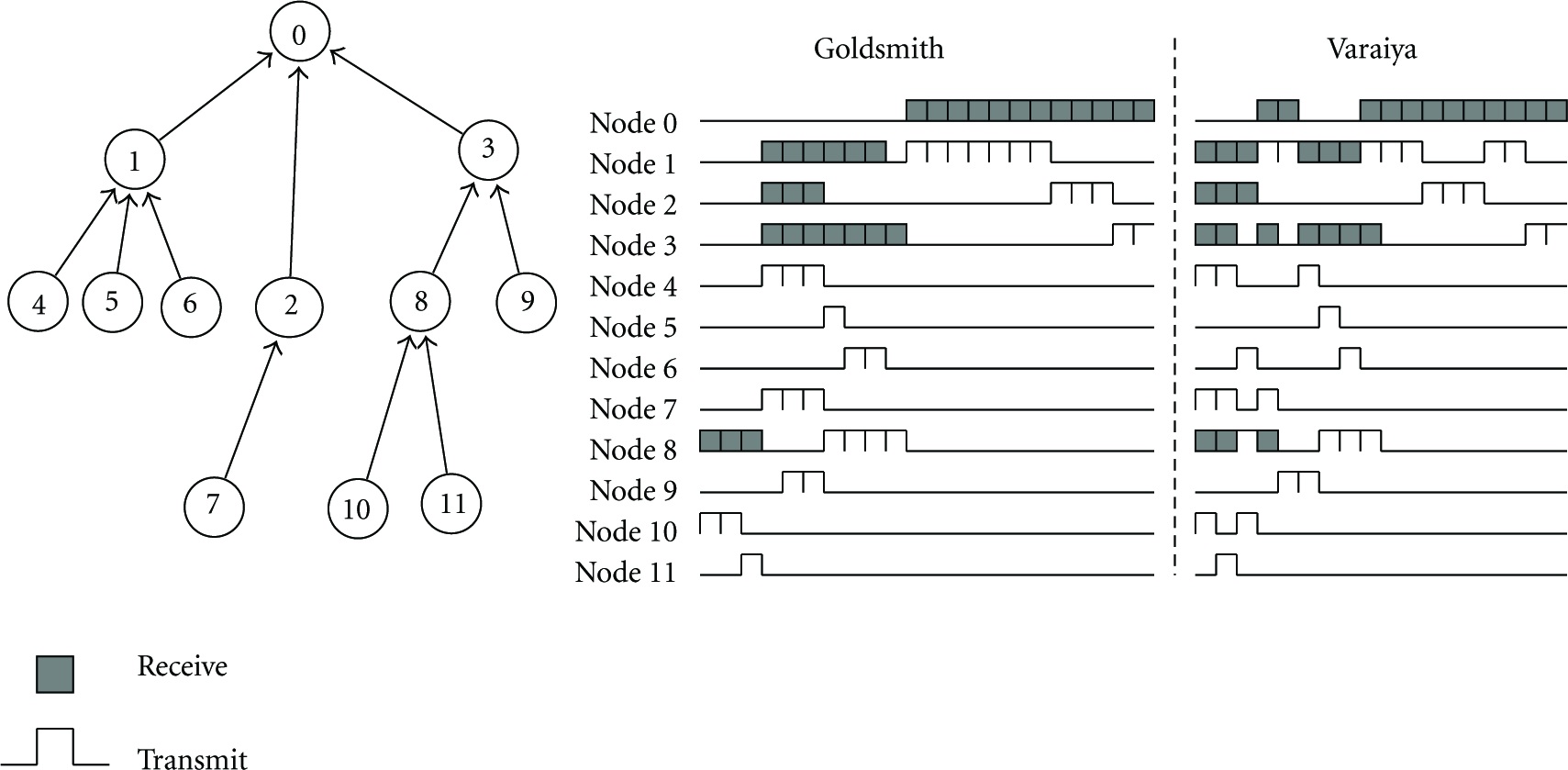
Recent scheduling solutions: Goldsmith et al. optimizes for energy consumption, Varaiya et al. optimizes for latency and throughput.
3. The System Model
In this section, we present the system model concerning (i) the basic data collection framework; (ii) the energy model; (iii) the network model; (iv) the interference model.
3.1. The Data Collection Framework
In the case of wireless body-area monitoring network, sensor nodes worn on or implanted in the body continuously gather information about the monitored patient's physiological condition, such as electrocardiogram (ECG), pulse, blood oxygen saturation, skin temperature, blood pressure, and hemodynamic calculator [46]. These important measurements are stored in the local memory buffer of the node until the data is downloaded to the BS, when the patient arrives at a data collection point in a hospital. In this case it is imperative that the sensed data is acquired by the BS in an energy efficient way. This can be ensured by a proper scheduling algorithm. The sensor nodes located at different points on the human body transmit data in a multihop manner to the BS. Note, that both on-body and out-body sensors can be used to relay packets. In order to achieve efficient data transfer only a few protocols are designed specifically for multihop wireless body area network (WBAN) communication. One concern is to minimize the thermal effects of the implanted devices by balancing the traffic over a tree-like topology network.
In this paper, we are interested in developing an optimal scheduling for downloading the data from the low-power body sensors to BS. More specifically, the sensor nodes powered by limited capacity batteries, forward packets to other relay nodes by using a single-transmit and a single-receive antenna. The sensor nodes transmit the sensed information at a constant low power to their parents (i.e., parent node is the one which is selected from the routing table to relay the packet in the next hop) in a time-division manner based on the TDMA scheduling. The time axis is not divided into periodical frame periods such as in the case of [43] illustrated in Figure 2. Instead of using fixed frame size, a node is scheduled based on the routing condition and on the traffic requirements of the applications. For example, if a node has more tasks (sensed information and received packets to relay), then it wakes up more frequently. Based on this information each active time slot with a length of
3.2. The Energy Model
The target platform is the Berkeley Mica2 node [31] which is one of the most widely used WSN platforms. The platform has an 8 MHz processor, 4 kB of RAM, 128 kB of flash memory, and a 433 MHz wireless radio transceiver. The transfer rate is 38.4 kbps and it is powered by two AA batteries. Parameters related to energy use are listed in Table 1.
Time, power and energy consumptions of a Mica2 node.
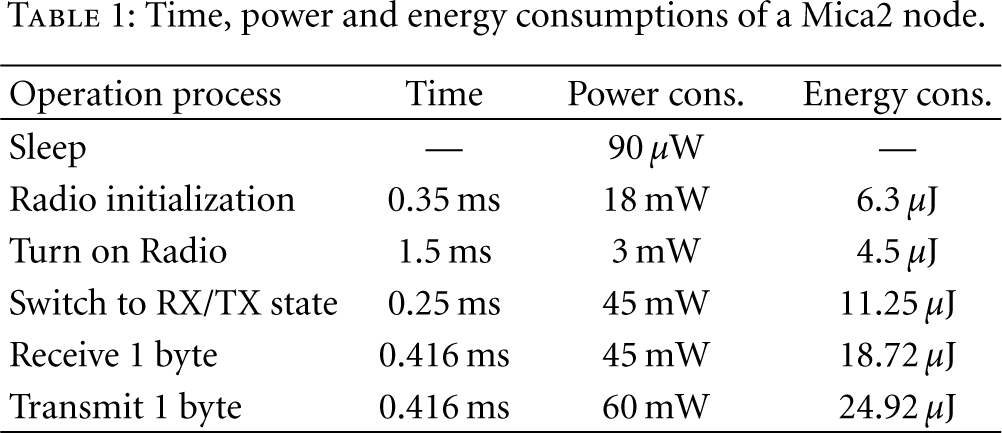
The slot size has to be greater than the length of packet times the duration needed to transmit/receive a byte plus the guard time. Formally we use the following notation:




3.3. The WSN Model
We assume that the WSN has N static sensor nodes, which are able to transmit packets by using single omnidirectional antennas, and there exists a BS node to collect the data from the sensor nodes. These sensor nodes do not only send their own sensed data but they relay packets generated by other sensor nodes, as well. Each node has a local memory buffer, where the generated or received packets are temporarily stored. The WSN can be represented by a graph 

Figure 3 shows a network example, where direct links only exist in limited range. Adjacency matrix of the example in Figure 3 is the following:
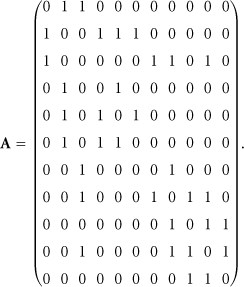

Nodes can only communicate in limited range r.
To collect data a tree is constructed (which the most popular data gathering topology [43, 45]). The data gathering tree is routed at a BS node and each intermediate node collects the data from its children nodes and then forwards the data to its parent node. The routing tree is constructed by running the distributed Bellman-Ford algorithm (such as ESR, DSR). In Figure 4 a typical routing tree is illustrated.

Example of a data collection tree. Nodes forwards the data to its parent node toward BS.
A static routing tree can be represented by a routing matrix with size 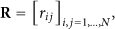

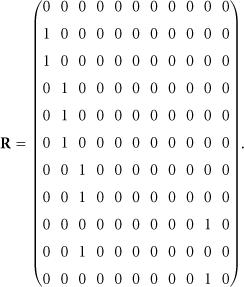
Note that multiple packet transmissions are permitted, however, packet collision or interference has to be avoided.
3.4. The Interference Model
Due to the broadcast nature of the wireless medium, interference or collisions may occur among the nodes within the same transmission range. Two types of interference exist: primary interference and secondary interference [47]. Typical examples of primary interference is sending and receiving or receiving from two different transmitters at the same time slot. Secondary interference occurs when there are two parallel transmissions from different senders to different nodes being in the same collision domain (i.e., one of the transmission disturbs the signal at the receiver of the other transmission). Primary and secondary interferences are to be avoided in our approach. We use the protocol interference model [48] in this paper. In the protocol model, each node 


Figure 5 illustrates the interference domain of a given node. As summary interference can occur during transmission of node 8 (Figure 5) because of the following reasons:
the receiver node (3) tries to send at the same time as node 8; a node (e.g., one of 7 or 10) sends packet to the receiver of node 3; a node in the collision domain of the receiver (e.g., 7, 9 or 10) sends packet at the same time, effecting collision at node 3; the sender node disturbs other receivers' collision domain, when another node (e.g., 11) is transmitting.

Collision situations in WSN. Only a few parallel transmission is possible while node 8 is sending a packet.
Note that we make the diagonal element of matrix 

If the vector contains “1” in a given position then the corresponding node is not allowed to send packet at the same time as node 8 (e.g., 1, 3, 7, 9, 10, 11).
4. The Scheduling Problem
In this section, we formulate the scheduling problem of MAS. In order to do this we need a data structure to represent a schedule.
4.1. Representation of a Schedule
The scheduling is represented by a binary matrix 
A possible schedule is given as follows: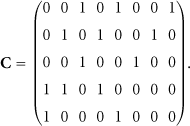

Returning to the challenge, we are seeking an optimal scheduling matrix
Note that if we choose 
Based on the discussion above, a WSN network is defined by its adjacency
4.2. The Objective Function
In this section we develop the objective function the optimization of which will guarantee the energy efficiency in terms of minimizing the RX/TX switches.
Since activation of the radio needs energy, it is worth selecting a schedule, in which the slots requiring radio activities (sending or receiving) follow each other to avoid frequent activations and deactivations. The following function rewards the situation when the receiver remains awake after an active slot, so the number of on/off switches is minimal by fulfilling the following expression:
4.3. Penalty Functions
The following penalty functions are developed to guarantee the feasibility and validity of the scheduling matrix
4.3.1. Minimizing the Interference
In wireless networks minimizing the interference is equivalent with minimizing the number of collisions. Formally it means the minimization of
4.3.2. Fulfilling the Transmission Requirements
Let us assume that the number of packets generated at node
Algorithm 1: Calculating the traffic vector.
Therefore 


4.3.3. Minimizing the Remaining Number of Packets in the Network
The traffic generated at each sensor node (


4.3.4. Minimizing the Number of Idle Wake-Ups
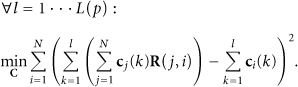
The previous conditions guarantee that the information generated at sensor nodes arrive at the BS without interference. The penalty function developed in this subsection is to ensure that relay nodes should only wake up if there are packets to forward. This can be guaranteed if
4.4. The Overall Objective Function
If we could minimize the previously defined objective function and four penalty functions simultaneously, then it will yield the scheduling matrix having the following properties:
the schedule length is L; all the sensed data packets schedules do not interfere with each other; a node only wakes up if there is packet to send.
Therefore it is expected that the algorithm minimizing these objectives by minimizing the objective function (21) and the penalty functions (22), (25), (30), (32), can construct feasible and energy-efficient scheduling matrix
5. Quadratic Programming for Scheduling
Since the number of binary matrices is exponential with the number of nodes multiplied by the length of the schedule, exhaustive search with complexity
5.1. Quadratic Programming
Let us assume that matrix 

A frequently used powerful heuristic algorithm to solve QP is the Hopfield Neural Network (HNN). This neural network is described by the following state transition rule:

Using the Lyapunov method, authors in [55] proved that HNN converges to its fix point, as a consequence HNN minimizes a quadratic Lyapunov function:
5.2. The Scheduling Problem as QP
First the binary scheduling matrix 
5.2.1. Minimizing the Number of Radio On/Off Switches
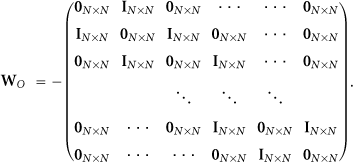
The following mapping has to be carried out in order to construct a QP for this objective function:
Having solved (40) one obtains the following 
5.2.2. Handling the Interference Constraint
In order to obtain the parameter of QP over binary vector 


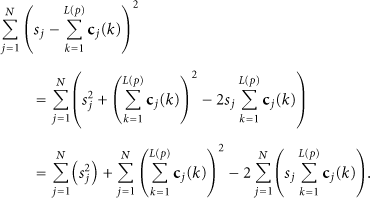
5.2.3. Handling the Transmission Requirements
To obtain the parameters of the corresponding QP the following equation has to be solved for 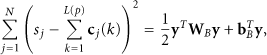

5.2.4. Handling the Constraint on the Remaining Number of Packets in the Network
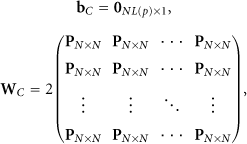
Since the incoming traffic must be the same as the outgoing traffic for each node, we have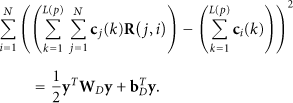



5.2.5. Handling the Constraint on Minimizing the Number of Idle Wake-Ups
In order to map this constraint into a quadratic form the following transformation has to be carried out:



Following this method recursively, we get the matrix of QP defined as

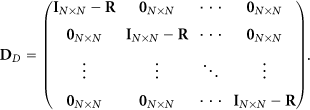
5.3. Constructing the Overall QP for the Scheduling Problem
Based on the previously defined quadratic forms belonging to the different objective functions we combine them into an overall objective function as follows:

In the next section simulation results illustrate the advantages of our novel proposed scheduling algorithm.
6. Performance Evaluation
In this section we evaluate the performance of the novel algorithm and compare it to the traditional solutions.
We use a variety of microbenchmark tests to show how MAS improves channel access functionality. These benchmarks show the throughput and energy consumption of MAS, TreeMAC, PEDAMACS, S-MAC, and UxDMA, protocols developed by Varaiya et al. and Goldsmith et al., respectively. We will demonstrate that there is a tradeoff among throughput, latency, and energy consumptions. The figures obtained from the microbenchmarks empirically characterize the performance of MAS and provides an insight of the expected behavior of the scheduling algorithms in TDMA systems. To illustrate the effectiveness of our centralized scheduling algorithm, we compare MAS to existing MAC protocols, especially with the S-MAC, TreeMAC, protocols developed by Varaiya and Goldsmith and UxDMA-based TDMA protocol.
The protocol developed by Goldsmith et al. [42] minimizes this number and also minimizes the the energy consumption of the nodes in the network, but it provides less throughput. On the other hand the two protocols developed by Varaiya et al. [43] provide relatively high throughput and minimizes the length of schedule, however they are not energy efficient in terms of minimizing the RX/TX switches. We also implemented TreeMAC [45] in order to analyze its throughput, whereas the primary goal was to maximize capacity. Our proposed protocol can achieve high throughput being comparable to protocol developed by Varaiya, on the other hand it works in an energy-efficient manner which extends the lifespan of the corresponding WSN. As a result, we managed to develop an adjustable protocol which provides a good tradeoff between throughput and energy efficiency.
At the last subsection we will summarize the complexity of the algorithms.
6.1. The Simulation Method
Each protocol has been simulated on a large set of traffic and topology parameters, which will characterize the protocol performance empirically. The purpose of these Matlab-based microbenchmarks is to show how the investigated protocols perform with different network topologies.
We simulated TDMA-based protocol variants using time slot assignment method called UxDMA [33]. Three different versions of UxDMA time slot assignment have been implemented. The data payload is the default payload for TinyOS applications; however, the protocols send only packets with length specified by higher level services. When we performed our tests, we used the parameters of Mica2 wireless sensor node to perform our tests (Table 2). All tests performed in an 100 m times 100 m area with nodes with no line-of-sight communication to every other node. The topology of the simulated networks is static, and we used both homogeneous and heterogeneous initial packed load on the sensor nodes. (In case of homogeneous packet load one packet is generated on each sensor node to send. In case of heterogeneous packet loads the initial number of packets are generated in random fashion.)
Length of data and control packets used by protocols MAS, UxDMA, and S-MAC.

The multihop data collection trees were obtained by the Bellman-Ford algorithm using hop count as link metric. To determine the number of radio switches of each protocol, we implemented counters in the simulation that kept track of how many times the various operations were performed.
In all cases, we measured the data throughput, schedule length, and number of radio switches of the network. In all tests “packet size” is referring to the size of the data payload without the header information. The overhead attributed to each protocol is shown in Table 2. Note that control packets in S-MAC are less (18 bytes) than in the case of MAS, however, the S-MAC overheads consume energy at every packets. On the other hand MAS produces control overhead to disseminate the actual schedule but it happens less frequently.
The time synchronization of the nodes could be performed by FTSP protocol [59]. This protocol is fast enough and requires only one dissemination cycle by the BS. The dissemination of the schedule tables can be integrated into the FTSP method. The topology and interference discovery we used is similar as Varaiya et al. introduced in [43]. This protocol operates in two phases: (i) first all nodes determine their neighbors and broadcasts their information about the neighbors, (ii) this information reaches the BS then the BS determines the routing matrix, and interference matrix, topology matrix. The amount of packet which have to be scheduled may be included into the previous data messages, therefore with the discovery protocol the BS can acquire information about the number of packet to be scheduled.
In the simulation the synchronization packets, the network topology discovery packets, and schedule control packets of each protocol are neglected (i.e., each solution requires the same amount of packets to keep the nodes' synchronicity and to disseminate actual schedule).
6.2. Throughput
Throughput or channel utilization is one of the most important metrics for MAC protocols which illustrates protocol efficiency. High channel utilization is critical for delivering a large number of packets in a short amount of time. In sensor networks, the speed of data transfer can be important, for example, to detect emergency situations. MAS minimizes the time to send packets as opposed to TDMA systems with fix frame size. MAS also achieves lower contention than the contention-based protocols. In the test we analyze the performance over 100 different network topologies including 30 nodes and the BS collects total number of 30 packets generated from sensor nodes. Each node generates one packet in homogeneous scenario. The throughput of the network was taken as the average of the 100 different simulation results. The throughput achieved by the different protocols is shown in Figures 6 and 7. Whenever the initial packet load is heterogeneous the achieved throughput is better than in case of homogeneous load. One may notice that the TreeMAC protocol falls back due to the enormous number of unused timeslots.

Throughput comparison of the simulated protocols in case of WSN with 30 nodes and homogeneous packet load.

Throughput comparison of the simulated protocols in case of WSN with 30 nodes and heterogeneous packet load.
Varaiya's method gives the best solution as far as the throughput is concerned, however our solution only slightly differs from that that of Varaiya's. One can see that MAS aims to find the optimal solution which has a maximal throughput. In general, better throughput is accomplished with our novel scheduling algorithm: MAS outperforms S-MAC, PEDAMACS, Goldsmith's method, and all variant of the UxDMA-based TDMA protocols. Furthermore, the TreeMAC solution, which is also developed for good throughput, is also outperformed by MAS. S-MAC has a lower channel utilization performance only because of suffering from the overhead of RTS-CTS (Request To Send, Clear To Send) exchanges. Instead of using control messages like RTS-CTS for hidden terminal support, MAS uses a control packet to inform the nodes about the optimal schedule, this control packets also used for synchronizing the nodes. In Figure 8, one can see as the number of nodes increases in the network the performance of MAS converges to performance of Varaiya's protocol. MAS can utilize several times more time slots, than the static frame-based TDMA solutions. The tests demonstrated that channel utilization of MAS is higher than the traditional MAC solutions and also higher from novel distributed solutions.

Throughput comparison of the simulated protocols in the case of different network size, using homogeneous packet load.
6.3. Energy Efficiency
We designed MAS to operate in an energy-efficient manner by minimizing the number of radio on/off and the number TX/RX switches. In the previous subsection we demonstrated that the throughput of MAS is high and now we show that the novel method is also energy efficient. Low duty cycle applications have extremely low network throughput, and vice versa, high-throughput applications need a lot of energy. However, some applications, such as bulk data transfer also need protocols ensuring high throughput with energy efficiency. In this subsection we evaluate the number of radio switches of different protocols in different network scenarios. Figure 9 shows the number of radio switches of the different methods according to the network size.

Number of radio switches in schedule of the simulated protocols in the case of different network size, using homogeneous packet load.
Figure 10 summarizes the overall number of radio switch overhead of the network, whose result is simulated as the average of 100 different scenarios with 30 nodes and one packet on each node. The protocol designed by Goldsmith is the best from this point of view. Both the traditional TDMA and Varaiya's protocol has more energy overhead than Goldsmith's method.

Average number of radio switches in a network containing 30 nodes, using homogeneous packet load.
In case of heterogeneous initial packet load the differences are even bigger. In Figure 11, one can see the number of radio switches of the different protocols. The scenario is the same: 30 nodes and random number of packets packets. The energy efficiency of the MAS protocol is between the methods developed by Varaiya and Goldsmith.

Number of radio switches in schedule of the simulated protocols in the case of different network size—heterogeneous initial packet load.
6.4. Latency
When the MAC protocol is permitted to increase latency, we can reduce the duty cycle of the node and conserve energy. The latency is measured by the total length of schedule.
Result of test for evaluating end-to-end latency can be seen in Figure 12 for homogeneous packet load and in Figure 13 for heterogeneous load. Figure 14 summarizes schedule length differences amongst the tested protocols. MAS protocol has better values for heterogeneous packet load, outperforms the Goldsmith's method and performs as well as the Varaiya's method. Note that in the case of UxDMA, minimization of frame size is the primary objective in order to yield as low latency as possible. However, it is clear from figures that the end-to-end delay is much worse in the case of static frame sized TDMA protocol than in the case of MAS or S-MAC.

Schedule length comparison of the simulated protocols in the case of different network size—homogeneous packet load.
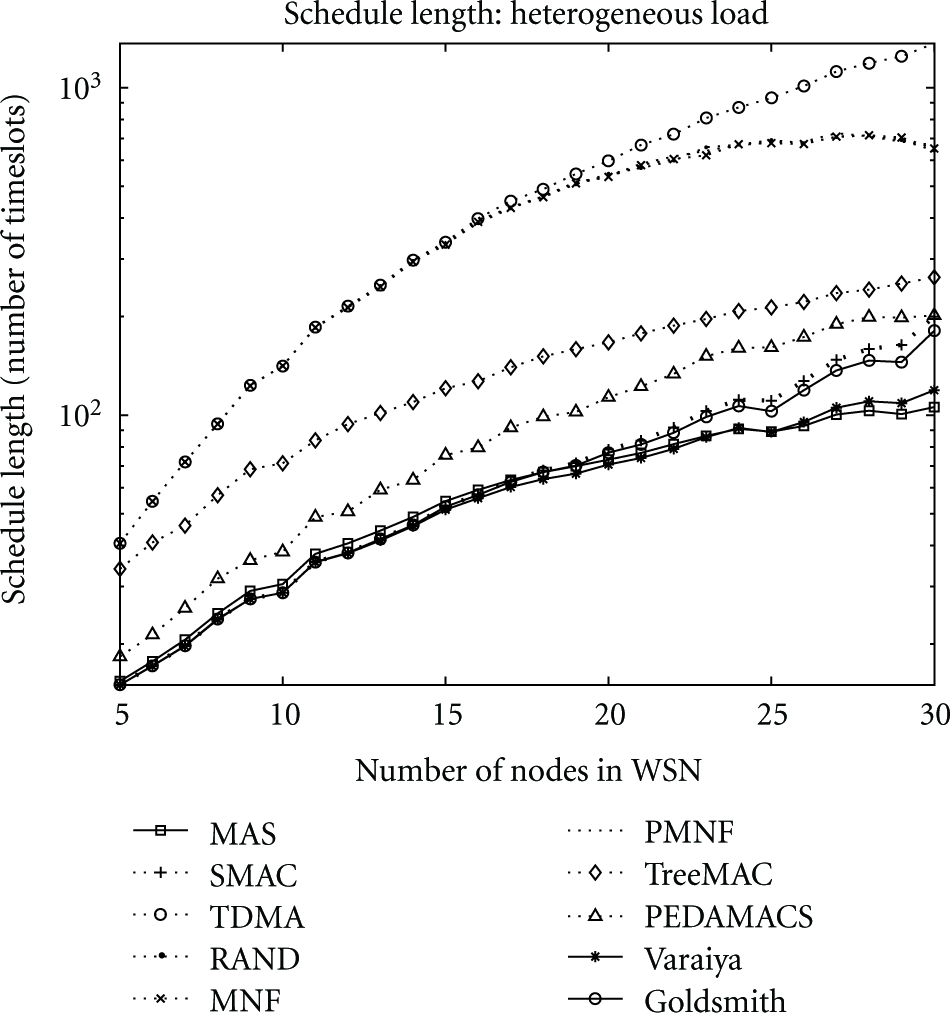
Schedule length comparison of the simulated protocols in the case of different network size—heterogeneous packet load.

Schedule length comparison of the simulated protocols—WSN with 30 nodes.
Based upon the previous test, we have a new protocol which achieves good throughput, minimizes the number of radio switches (and the consumed energy) and has minimal latency as well. It combines the good properties of several protocols.
6.5. Complexity Analysis of the Algorithms
The complexity of the protocols is an important metrics in order to determine how fast we can achieve the scheduling and the corresponding timeslot assignment. Table 3 summarizes the complexity of the investigated protocols. All of tested protocols has polynomial or better complexity, however it is obvious that the novel MAS protocol may be slower than the others.
Algorithmic complexity of investigated protocols, where

7. Conclusions
We have proposed a novel protocol to provide an optimal scheduling for data collection in Wireless Sensor Networks. The objective was to minimize the number of radio RX/TX switches in order to achieve minimum energy overhead. Other factors, such as (i) achieving interference free communication; (ii) minimizing the number of idle wake-ups; (iii) gathering the specified amount of packets within the given latency constraints, have been taken into account as penalties. Then optimal scheduling has been transformed into quadratic functions, which can then be solved heuristically in polynomial time by using the Hopfield Neural Network. Simulations have demonstrated that the novel MAS protocol minimizes energy consumption and delays. The performance evaluation has shown that the achieved end-to-end latency is as good as either the traditional contention or the traditional scheduled based solutions. On the other hand, MAS consumes less energy by minimizing the number of radio switches. Furthermore, MAS manages to achieve high channel utilization (comparable to Varaiya's method), with low energy consumption (comparable to Goldsmith's method).