






Abstract
We consider a multi‐item buyer's make versus buy decision. The buyer sells two substitutable products with uncertain demand. Each product requires a different item, which the buyer procures from two separate suppliers (one for each item) who offer quantity‐payment contracts under asymmetric information. The buyer can make one of the items but not both. We compare the buyer's expected profit between buying both the items and making one item (and buying the other), when it can make the item at the same cost as the supplier, as well as gain reactive production capability by making. We find that the buyer's profit when buying both items is higher than for making one item if product substitutability is above a threshold (but not extremely high). This is because the interaction between the suppliers' contracts increases the buyer's informational rents more when buying from both suppliers, as compared to one supplier, as product substitutability increases. On the contrary, in the complete information scenario (and under wholesale price contracts), we find that the buyer will never prefer to buy both the items as compared to making one item, as long as product substitutability is not extremely high. These are novel findings on how inter‐linked contracts under incomplete information and product substitutability can influence a buyer's make versus buy decision in a counter‐intuitive manner. Managerially, these results imply that a multi‐product buyer may prefer to keep buying from its supplier even when it can produce the item at the same cost as the supplier.
INTRODUCTION
Buyers (in retail or manufacturing) selling different (and substitutable) products have to sometimes purchase the different items corresponding to the products from separate suppliers. If the buyer is a retailer, then the items it purchases are the products themselves, but if the buyer is a manufacturer, then the items is procures are typically the components/materials that are used to make the products. For example, a retailer may sell two different (and substitutable) products in similar category (e.g., television) which it buys from two separate suppliers (brands like Vizio and Samsung). A processed food manufacturer selling two different (but substitutable) types of bottled olives may buy the ingredients (black olives and green olives) from different suppliers/growers. In other situations, the buyer (retailer or manufacturer) can make one of the item (product/component) while it continues to buy the other item from a supplier, for example, a retailer may develop its own private label which it sells along with an existing brand or the manufacturer may start its own production of an input while it continues to buy the other input from a supplier. This paper studies the buyer's make versus buy decision in such situations.
Examples that motivate the problem addressed in this paper come from both the retailing and manufacturing businesses. Best Buy (see Bustillo & Lawton, 2009) replaced some brands, for example, Vizio Inc's flat‐panel TVs, to bring its own private label Dynex televisions; all the while, it continued to sell Samsung's flat‐panel TV. Introduction of private label often results in the retailer changing the assortment of similar (substitutable) products (national brands) in its store. Analyzing data from US retailers Ma and Siebert (2021) find that retailers often remove some branded products (national brands) when introducing private label in a given category. Private labels are controlled by the retailers who are either buying the products from the manufacturers at close to the marginal price or the manufacturer might even be vertically integrated with the retailer (see Connor & Peterson, 1992). In another example, a processed food manufacturer in Australasia sells bottled/canned olives in the regional market (and in fact was the first to introduce them in the region in the late 1980s). It sells different types of bottled olives, for example, from Greek Kalamata olives (black smoothy‐meaty texture) or Greek Halkidiki olives (green, Greek). The olives are purchased from different wholesalers in Europe who offer price schedules based on volume. 1 Climatically, it is possible for the food manufacturer to grow some of these olive varieties in Australasia but it continues to buy them from Europe. In an example from the chemical industry, a regional chemical manufacturer in Asia produces and sells textile chemicals (like fabric finishing agents and softening agents) to the textile manufacturers. 2 The manufacturer sells different types of textile finishing agents, which are primarily differentiated by the use of either natural oil‐based emulsions or silicone‐based emulsions. 3 The manufacturer is producing its own natural oil‐based emulsions but has to buy silicone emulsions from a supplier because silicone, which is the critical feedstock in silicone‐emulsions, is controlled by the supplier who is a much bigger global chemical manufacturer (like Wacker Chemie or Dow Chemicals). 4 The (high) transport cost to price ratio of these emulsions limits the manufacturer to purchase silicone‐emulsion from the only available regional supplier of silicone emulsion. Finally, in the semiconductor industry, manufacturers (mainly in emerging economies) selling poly and mono crystalline silicon photovoltaic (PV) panels/modules might have facilities that produce poly‐crystalline silicon wafer (which are required to make the cell that are then assembled into modules) but are dependent on big suppliers (e.g., LONGi) for buying mono‐crystalline silicon wafer, because the manufacturer may not have the know‐how or capability to undertake the more advanced manufacturing process required for producing mono‐crystalline silicon wafers (see Indian Express).
These examples illustrate some of the salient features of the problem that we study in this paper, namely, a buyer selling two (or more) substitutable products. The items (which can be the products themselves or can be components/material used in manufacturing the products) required for the two products can sometimes be purchased from different suppliers (e.g., retailer buying from different brands within a segment or a regional processed food manufacturer buying foreign products). Sometimes the buyer only buys one of the item from a supplier while it produces the other item itself (e.g., chemical manufacturer making oil‐based emulsion while buying silicone‐based emulsion or PV‐manufacturer producing poly‐crystalline wafers while buying mono‐crystalline wafers), and sometimes the buyer can even replace the item that it was buying from a supplier with its own in‐house produced item while it continues to buy the other item from the respective supplier (e.g., retailer replacing one of the brands in a segment with its private label). Thus, these examples indicate that a buyer can decide whether it continues to buy different items from separate suppliers or whether it makes one of the item itself and only buys the other item from the concerned supplier. Moreover, in some of these cases, the suppliers can determine the contract terms that they offer to the buyer for their items (e.g., in case of brand names selling to retailer, or in case of growers selling regional products to foreign food manufacturers, or chemical suppliers that have regional exclusivity to the material they produce). This paper studies the buyer's make versus buy decision in such situations.
Specifically, we answer the question on whether a buyer (retailer/manufacturer), who sells two substitutable products, should buy the required items from both of the respective suppliers or should it buy only one item from a supplier and make‐in‐house the other item (that it was buying from the other supplier) when the buyer can make the other item at the same make cost of the supplier? We analyze the buyer's decision when supplier(s) offer it optimal menu of (price‐quantity) contracts. We analyze this question under a contractual framework for two reasons: (1) most of the examples that motivate the question include supplier(s) who can determine the contract terms that they offer to the buyer, for example, brands typically determine the contracts that they offer to the retailer or suppliers who have geographic exclusivity determine contracts that they offer to a manufacturer. (2) Many papers in OM literature have studied supplier determined contracts in situations where supplier is providing the exclusive product (see Corbett & de Groote, 2000; Corbett et al., 2004; Ha, 2001; Kostamis & Duenyas, 2011). In particular, Corbett et al. (2004) apply supplier determined contracts in retailing while Kostamis and Duenyas (2011) apply these contracts in manufacturing.
The main trade‐off that we investigate in analyzing the buyer's decision is based on the surplus that two suppliers can extract from the buyer when it buys the two items from the two respective suppliers versus the surplus that a single supplier can extract from the buyer when it buys a single item from the respective supplier and makes the other item itself. When making the item, the buyer saves on the surplus it was giving away to the supplier of the item and thus may save on its input cost (if its make cost is not greater than the price offered by the supplier). However, the supplier (from whom the buyer continues to procure the other item from) may extract a greater surplus because it no longer has to compete for the contract with another supplier. Thus, in making an item and buying the other item, while the buyer benefits in saving surplus it was giving to the supplier (of the item that the buyer now makes), it may instead have to give a higher surplus to the supplier from which it continues to buy. Whereas, in buying both the items from the two respective suppliers, while the buyer can benefit from competition between the contracts offered by the suppliers, it is also giving away surplus to both suppliers. Thus, upfront, it is not clear whether the buyer will increase its profitability by making one item (that it was procuring from the supplier) and buying the other item, as compared to buying both the items from the two respective suppliers, even if it can make the item at the same make‐cost as the supplier.
Although the above trade‐offs are clear, there is no model that characterizes this trade‐off in a buyer's make versus buy decision, which is precisely the objective of this paper. Indeed, there are many other considerations involved in a buyer's make versus buy decision. For instance, the typical advantages of buying include lower input cost from accessing lower cost supplier (adjusted by supplier margins), accessing scale economies, accessing better technology, faster product development times, lower fixed cost, group purchasing (see Peng et al., 2022), and freedom to focus on core competencies. Typical disadvantages include becoming over‐reliant on a supplier and potential loss of control, losing efficiencies in design for manufacturability, possible contractual hold‐ups, and other transactional costs. In this paper, we focus on an as yet unexplored factor that plays an equally relevant role (as the factors mentioned above) in a buyer's make versus buy decision. Specifically, we capture the interaction between suppliers' contracts to explore and compare profits of a buyer selling two substitutable products for which it sources items from two different suppliers to its profits when it sources only one item from the respective supplier and can make the other item at the same make cost as the supplier who supplies it. Note that this comparison will be trivial if the buyer can make both the items at the same make cost as the respective suppliers supplying the items—in which case the buyer can save entirely on the surplus it gives to the suppliers and will therefore have greater profit in making as compared to buying. However, as described in the examples above, technological limitations, manufacturing capability, control of feedstock, patent protection, limitations on capital, etc., may restrict the buyer from making all the items, but it may have the limited but necessary resources and capability to make one item (even more efficiently than the supplier).
To make this comparison in the buyer's profits, we model a buyer who offers two substitutable products in the market and whose demand may or may not be uncertain. Each product requires a different item which it can either procure from two separate suppliers (one for each item) or it can procure only one item from the respective supplier and make the other item itself (at the same make cost as the other supplier). The buyer is privately informed about its other product related cost. For instance, if the buyer is a manufacturer then it is privately informed about its production cost (which is not known to the suppliers). If the buyer is a retailer then it is privately informed of its marketing and retailing (operational) costs which are not known to the suppliers. We first consider the case where the buyer buys both the items from the respective suppliers. Each of the two suppliers offers a quantity‐payment contract (for its respective items) to the buyer, which we characterize in equilibrium using the common agency principal‐agent framework in which the two suppliers are principals and the buyer is the agent. The two suppliers's contracts are inherently interlinked due to substitutability of the two products that the buyer is selling in its downstream market. The common agency framework, developed by Stole and Martimort (see Martimort, 1992; Stole, 1991), is ideal for capturing this interaction between suppliers' contracts under asymmetric information. Specifically, the common agency framework can be used in a setting where multiple principals have to decide the contracts that they offer to a common agent (in our case, the principals are suppliers and the common agent is the buyer). In economics, the common agency framework is often used to study issues related to vertical contracting or in studying regulation (e.g., regulation of public utility [agent] by distinct regulators [principals]) or in lobbying (e.g., several lobbying groups [principals] wanting to influence a decision maker [the agent]). Using this framework, we characterize the buyer's expected profit when it contracts with two suppliers for the respective components. We then consider a buyer who can make the component/material for one of the products in‐house while it buys the component/material for the other product from a supplier. Thus, in the latter (buy) scenario, the buyer's expected profit can be characterized using the existing single principal agency model. Finally, we compare buyer's expected profit in the multi‐principal (buy) scenario versus the single‐principal (make) scenario. Note that we analyze a menu of price‐quantity contracts for two reasons: (1) as mentioned before suppliers can determine contracts and menu of contracts are appropriate for situations involving asymmetric information. In fact, several papers in the literature (mentioned before) have analyzed menu of contracts; however, different from them, we analyze principals competitively determining the menu of contracts in equilibrium. (2) More importantly, we show later that the basic trade‐off in buyer's make versus buy decision exists only in the case of information asymmetry.
We find that for product substitutability higher than a threshold (but not extremely high), the buyer will prefer to procure the respective items from the two suppliers, rather than make one of the items (and procure the other from the second supplier), even when the cost of producing that item is the same for the buyer as for the supplier. Conversely, lower product substitutability (below the threshold) will result in greater profitability when making‐in‐house as compared to buying. Thus, the answer to our original question is that the buyer may find it more profitable to procure from the supplier even when it can produce the item at the same cost as the supplier. The result arises from the differences in buyer's profitability when two suppliers offer optimal contracts in equilibrium under asymmetric information versus only one supplier offering it an optimal contract under asymmetric information.
More specifically, the buyer can extract more informational rents from both the suppliers (cumulatively) due to the interaction between the two suppliers' contracts (when the buyer procures the respective items from the two suppliers) as compared to the informational rents it can extract from a single supplier (when making the other item in‐house), because of the greater competition between the two suppliers as product substitutability increases. We therefore find that beyond a certain threshold on product substitutability (but not extremely high substitutability), the buyer's profits are higher when it buys the two items from two suppliers rather than making one of the items, even when the buyer can make the item at the same cost as the supplier. On the other hand, for product substitutability below this threshold, the buyer will prefer making one item over buying both the items. Note that both information asymmetry (and the resulting differences in the informational rents) and product substitutability are the primary drivers of this result. In fact, we find that when suppliers offer wholesale price contract under complete information (i.e., when suppliers know the buyer's cost information), the buyer will never prefer buying both the items from the respective suppliers over making one item in‐house (and only buying the other item from the supplier), as long as product substitutability is not extremely high. Thus, both information asymmetry and product substitutability are critical for the trade‐off in the buyer's make versus buy decision. Also note that the comparison in profits in both the incomplete and complete information settings becomes less straightforward in the limiting case of extremely high product substitutability (i.e., when products approach perfect substitutability). Moreover, the numerical results indicate that not only the buyer but the entire supply chain's (i.e., the buyer and the supplier(s)) profits are higher beyond a threshold on product substitutability when the buyer buys from both the suppliers as compared to buying from only one supplier (and making the other item itself).
Methodologically, we contribute to the common agency problem by extending the model to consider the impact of demand uncertainty on the make versus buy decision. Including demand uncertainty in the common agency model is challenging since with the introduction of demand uncertainty, the nice structural properties (namely concavity) of the suppliers' objective function are no longer preserved. Our work therefore contributes methodologically to the common‐agency framework by investigating the impact of demand uncertainty in a price‐setting model. In the specific case of demand uncertainty, the longer lead times involved in procurement result in the buyer having to procure items before demand uncertainty is resolved. On the other hand, making‐in‐house provides greater production reactivity (by lowering lead times). As a result, the buyer can postpone production of the item until demand uncertainty is resolved (while it procures the other item from the other supplier before uncertainty is resolved). Thus, under demand uncertainty, the buyer can not only make at the same cost as the supplier, but also gains the benefits of more reactive production when making in‐house as compared to buying. We show that if product substitutability is not extremely high, then under certain sufficient conditions, including both low and high demand uncertainty, there exists a threshold (as in the case of no demand uncertainty) for product substitutability above which the buyer gains greater expected profits from buying as compared to making, and below which it makes greater expected profits from making‐in‐house as compared to buying. As with the certain demand case, the comparison in profits becomes less than straightforward for extremely high product substitutability (i.e, as products approach perfect substitutability).
From a managerial standpoint, our results indicate that a multi‐item buyer procuring different product‐specific items from separate suppliers, via quantity‐payment contract under incomplete information, may actually reduce its profits by making one of the items in‐house as compared to procuring all the items, even if its make cost is the same as the make cost of the supplier, and even when the buyer gains reactive production advantages (due to demand uncertainty) in making the item in‐house. On the contrary, under full information (with wholesale price contracts), the buyer will typically never prefer buying both the items over making one item, if its make cost is same as the make cost of the supplier. Thus, in deciding whether to make or buy an item, the buyer should also consider (besides other concerns) the potential loss of the benefits obtained from the interaction between the suppliers' quantity‐payment contracts (under incomplete information) when it moves from buying to making an item. Thus, this work uncovers new insights into how the interaction between multiple suppliers quantity‐payment contract under asymmetric information and product substitutability may effect the buyer's make versus buy decision by analyzing suppliers' equilibrium contracts using a common‐agency framework.
RELATED LITERATURE
Our work is related to the operations management literature on principal‐agent models that investigates suppliers offering contracts to manufacturer. Özer and Raz (2011) consider a (big) supplier's take it or leave it offer to a monopolistic manufacturer. Wang and Shin (2015) investigate (take‐it‐or‐leave‐it) wholesale price contracts, under complete information, offered by the suppliers of substitutable components to a monopolistic manufacturer when suppliers can determine their innovation level. Ha (2001) considers a supplier offering an optimal menu of quantity‐payment contracts to a manufacturer. Similarly, Kostamis and Duenyas (2011) also consider supplier offering an optimal menu of contract to an OEM who is privately informed of its demand forecast and production cost. Corbett et al. (2004) study a bilateral monopoly structure to investigate the value of information under differ contract types (wholesale, two‐part linear, two‐part non‐linear) and under different information scenarios (complete and incomplete). Corbett and de Groote (2000) characterize the optimal quantity‐discount contract offered by supplier to a buyer. Like these papers, we too consider supplier(s) determining the optimal menu of contract(s) and/or wholesale price contracts to the buyer where the buyer can set prices in its downstream market. However, we depart from this stream of literature by studying the problem of two suppliers (principals) determining their optimal menu of contracts that they offer to a single buyer (agent) under equilibrium. Unlike the optimal menu of contract between single principal and single agent or equilibrium wholesale price contracts between multiple suppliers and a single buyer, the problem of optimal menu of contracts offered by multiple suppliers to a single buyer cannot be investigated by using the standard principal‐agent models. The problem in our paper requires the use of multi‐principal (also referred to as common agency) framework that investigates equilibrium contract offered by multiple principals to a single agent. The main difference between single principal‐agent and common agency models is that the information rents extracted by the principals in a common agency model get moderated by the competition between the two principals, and therefore, the agent might be better off in dealing with multiple principals as compared to a single principal.
Bargaining research in supply chain context has studied interaction in parallel negotiations between competing manufacturers and suppliers—see Feng and Lu (2012, 2013a, 2013b). Similar to this literature, our work also focuses on studying interaction between competing suppliers and the manufacturer as the key driver of buyer's (the manufacturer) profitability in either making or buying the item. However, in contrast to this literature, we look at interaction between principal‐agent contracts rather than interaction in multi‐lateral negotiations. More specifically, we adopt the multi‐principal agent approach in contrast to cooperative game theory approach taken by the bargaining literature.
Our work is also related to the extensive literature on decentralized assembly systems—see Gerchak and Wang (2004), Zhang (2006), Fang et al. (2008), Granot and Yin (2008), Nagarajan and Sošić (2009), Jiang and Wang (2010), and Jiang (2015) for some notable examples. Besides a few exceptions like Kalkanci and Erhun (2012), Chaturvedi (2021), Hu and Qi (2018), and Fang et al. (2014), the literature on decentralized assembly systems does not consider issues regarding asymmetric information between the supplier and assembler. In contrast to this literature, we explicitly model information asymmetry between the suppliers and manufacturer. Hu and Qi (2018) and Fang et al. (2014) consider an assembler's contract design problem when suppliers are privately informed about their costs. Instead, we consider the suppliers' contract design problem (under a common agency setup) when the manufacturer is privately informed about its cost, that is, the suppliers determine the contracts (like Özer and Raz (2011) and Wang and Shin (2015)) rather than the assembler. Thus, unlike Hu and Qi (2018) and Fang et al. (2014), we use a common agency framework, which is more pertinent to our study of the interaction between the suppliers' contracts. Like us, Chaturvedi (2021) also considers a common agency setting with substitutable products, but unlike us, he investigates the impact of production yield uncertainty (and correlation) on suppliers' contracts. We, on the other hand, investigate manufacturer's make versus buy decision, and moreover, we consider demand uncertainty rather than supply uncertainty. Kalkanci and Erhun (2012) have also used the multi‐principal common agency model to derive the optimal menu of contracts for suppliers to offer to a price‐taking newsvendor assembler who assembles complementary components from the suppliers into a single product. In contrast, we look at a price‐setting buyer, under both certain as well as uncertain demand scenarios, who procures substitutable components from the suppliers for each of the substitutable product it is selling in the market.
Finally, our work is also related to economics literature, in particular seminal work on the multi‐principal common agency model done by Martimort (1992) and Stole (1991). We use this framework to determine the optimal quantity‐payment contracts the two suppliers (principals) should offer to the buyer (agent) in the presence of asymmetric information. Methodologically, we extend the boundaries of their work by (1) considering asymmetric principals (suppliers who have different production cost) and (2) more importantly, by including operationally relevant demand uncertainty, which results in formulations that do not have neat concavity properties. We can nevertheless characterize the incentive compatible mechanisms the two suppliers will offer in equilibrium under certain sufficient conditions for the uncertain demand case.
MODEL
A buyer (who can either be a manufacturer or a retailer) sells two substitutable products A and B in the market. Each unit of product A and B requires a unit of a critical product specific item/material (in case of buyer being the retailer, the critical items will be the product themselves), such that the item for product A cannot be used in product B and vice‐versa. We first consider the buyer buys the item for product A from supplier


The buyer faces a downward demand curve for the two substitutable products characterized by:






We assume that θ is the buyer's private information and the suppliers know that θ is distributed uniformly in the range


A supplier i's profit is



We will first characterize the optimal contracts that the two suppliers (principals) will offer to the buyer in equilibrium, under asymmetric information. For this, we will use the multi‐principal mechanism design approach. We will then consider the alternative scenario in which the buyer can make‐in‐house the item which it procures from supplier


ANALYSIS WITHOUT DEMAND UNCERTAINTY
Although the revelation principle is a widely used tool for mechanism design, for multi‐principal models, it loses some of its bite. As Attar et al. (2008) point out, the main issue in using the revelation principle for multi‐principal settings is that at the contracting stage, the agent's (buyer) private information includes both its type (θ) as well as the contract simultaneously offered by the other principal (i.e., the other supplier). Thus, a principal could design a mechanism that is contingent on the other principal's offer, but this in turn gives rise to an infinite regress in which the other principal's contract depends on his mechanism (and so on). Of course, no such problem arises in a single principal single agent setting, wherein by using the revelation principle one can restrict the search to class of direct mechanism. Martimort and Stole (2002) showed that in the multi‐principal common agency setting, there is no loss of generality in looking for an equilibrium in non‐linear prices


The basic idea of the direct mechanism approach in a multi‐principal setting is that a principal, say supplier


Following this approach, we consider the direct mechanism design problem in which suppliers











Moreover, before formulating the suppliers' mechanism design problem, we need to ensure the mechanism satisfies the individual rationality constraint, that is,



Two‐suppliers' contract design problem
To ensure that condition (5) is satisfied, we substitute



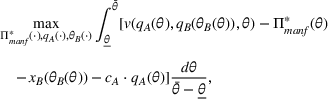



The Hamiltonian of The allocation

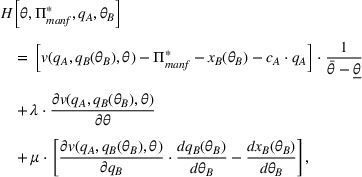


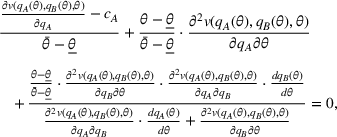


Note that we will verify the assumptions of Lemma 1 ex‐post, that is, after fully characterizing the mechanism offered by both the suppliers (which we do in the next Lemma and Proposition). From the definition of

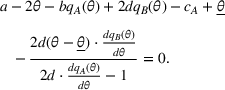

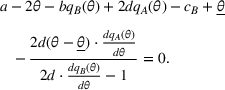
Note that, consistent with typical mechanism design approach, we have reduced the problem to differential equations (11) and (12) in allocations






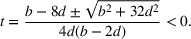
Indeed The equilibrium of the suppliers' incentive compatible mechanism is characterized by allocation q in (13) determined by a unique

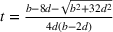


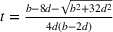

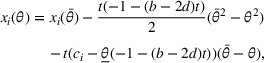

In (16), note that


Single supplier
In this section, we consider that the buyer can make the item for one of its product in‐house. Without loss of generality, we consider that the buyer can make in‐house the item required for product B, that is, it no longer procures the item from supplier


Effectively, the buyer now only procures the item for product A from




The optimal


The payment can be characterized as

Comparison
We first compare the allocations (quantity of products A and B) in the single supplier case with the allocations in the two supplier case. For



The above Proposition states that the buyer will increase the quantity of the item if it produces it in‐house (i.e., in the single supplier case) relative to the quantity if procuring the item from supplier (note that without any loss of generality, we have assumed the buyer produces the item for product B in‐house). Moreover, the buyer will reduce the quantity of the item it procures from the supplier in the single‐supplier case relative to the quantity it was procuring from the same supplier in the two‐supplier case. Indeed, it will cost the buyer less to produce the item for product B as compared to sourcing it from supplier


Intuitive as the result may sound, it is still conditional on



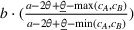





We now compare the buyer's profit in the single supplier case (i.e., when it makes an item) with the two‐supplier case (i.e., when it procures both the items). From (8c) (for For


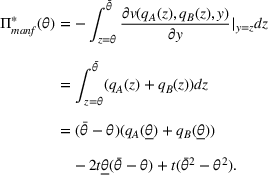


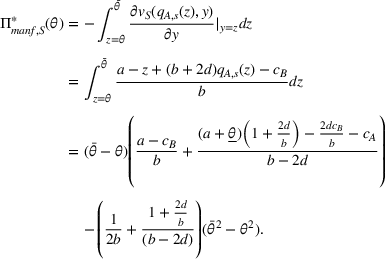



Theorem 1 states that for higher substitutability (i.e, when







The basic intuition behind the result of Theorem 1 is that higher product substitutability increases the competition between the two suppliers (in the two‐supplier case), which allows the buyer to extract greater informational rents from the suppliers (in the two‐supplier case) as compared to the rents that the buyer can extract from a single supplier (in the single‐supplier case). Note that both higher competition and the informational rents that the buyer can extract (due to information asymmetry) are driving this result. With higher substitutability alone (and without information asymmetry, i.e., complete information) the buyer will prefer to produce more of whichever product costs less, which will disincentivize the supplier(s) to increase price in either the two‐ or the single‐supplier setting, because the buyer will otherwise order (or self‐produce) more of the other product in the two‐supplier (or single‐supplier) setting. What differentiates the buyer's profit between the single‐ and two‐supplier setting are the informational rents that it can extract, that is, with greater competition (higher substitutability), the buyer can extract more informational rents cumulatively from the two suppliers as compared to a single‐supplier.
In fact, to shed more light on the role of information asymmetry, we analyze the situation in which suppliers have complete information on the buyer's production cost θ, and they offer wholesale‐price contracts to the buyer. Comparing the buyer's profit between the two‐supplier and the single‐supplier setting in the complete information case we find (as shown in the next proposition and by the subsequent numerical experiments), the buyer will never make higher profits in the two‐supplier setting as compared to the singe‐supplier setting, as long as product substitutability is not extremely high. When suppliers offer wholesale price contracts under complete information, the buyer will have to make greater profits in the single‐supplier case as compared to the two‐supplier case if and only if the below condition is true for


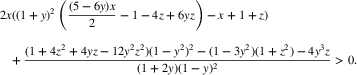

The variables



We thus find that both, high product substitutability and information asymmetry, can together result in the buyer making greater profit with two‐suppliers as compared to one supplier. This result is in line with Martimort (1992) who has shown previously that with symmetric principals, the agent's profit is higher when products are substitutable as compared to when products are complementary. We therefore extend this insights for asymmetric principals and show that not only substitutability, but higher substitutability is required for the buyer to benefit from two principals (suppliers) as opposed to just one. Moreover, extending Martimort (1992), we find that higher substitutability increases the buyer's informational rents much more in the two‐supplier setting as compared to the single supplier, thus increasing the buyer's profits in the two‐supplier as compared to the single supplier setting as product substitutability increases.
Answering the basic make versus buy question we posed (in Section 1), the result of Theorem 1 implies that under information asymmetry and above a certain product substitutability, the buyer may find it more profitable to continue buying from a supplier even when it can produce the item in‐house at the same cost as the supplier. More specifically, for a multi‐product buyer who buys different product‐specific items from different suppliers via quantity‐payment contracts (under information asymmetry), the benefits gained from the interaction between the suppliers' contracts when procuring all the items will offset the savings in supplier margins if the buyer makes one of the items in‐house at the same make cost as that of the supplier. In the next section, we will show a similar result for uncertain product demand, that is, when the buyer makes an additional gain on production reactivity from making in‐house.
In fact the benefits of procuring from both suppliers (in the two‐supplier setting) as compared to sourcing from a single supplier are not just limited to the buyer but also extend to overall supply chain profitability (i.e., the sum of buyer and the supplier(s) profits) as product substitutability increases. In Figure 1, we show the results from numerical experiments comparing supply chain profits in the single‐ versus the two‐supplier setting.
10
Note that the marginal production costs in either setting do not change because the buyer can produce the item for product B at the same marginal cost



Difference in supply chain profits between the single‐supplier and the two‐supplier settings. Here
UNCERTAIN DEMAND
In the previous section, we analyzed a buyer's make‐versus‐buy decision for a setting where there is no demand uncertainty. However, in most real‐life settings, the buyer is faced with demand uncertainty, especially since decisions like make versus buy are made well in advance of the product's launch in the market. In this section, we investigate the implications of uncertain demand on the make‐versus‐buy decision of the buyer. Moreover, the analysis in this section serves as a robustness check on whether the insights of the previous section (on a buyer's profitability from buying being higher than making as product substitutability increases, under asymmetric information) carry over to the uncertain demand scenario. Finally, incorporating demand uncertainty in the common agency model for a price setting buyer is technically challenging since the principals' (suppliers') mechanism design problem, in equilibrium, no longer preserves the neat properties that we had leveraged in the previous section to obtain our results. Thus, this section also contributes methodologically to the common agency literature in deriving the equilibrium contracts (under sufficient conditions) when a price‐setting buyer faces uncertain demand.
We now model the downward demand curve for the two substitutable products by:



Due to longer lead times in procurement as compared to producing and assembling in‐house, we assume that the buyer determines procurement quantities before demand uncertainty is realized, but produces all other components and assembles the products after demand uncertainty is resolved. More specifically, in the case of the buyer procuring both the specific items (required for each product) from two separate suppliers,


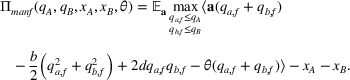


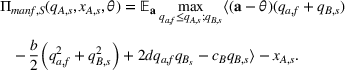


Similar to the two‐suppliers and the single‐supplier case (when demand is certain) which we analyzed in Sections 4.1 and 4.2, respectively, we now analyze the two‐suppliers and the single‐supplier case, when demand is uncertain. Specifically, with uncertain demand: (1) We first characterize the equilibrium contracts offered by the two suppliers (for the items for product A and B respectively). (2) We then characterize the contract offered by supplier

Comparison
We can now compare buyer's expected profit for uncertain demand when it buys items for both the products from the two respective suppliers with its expected profit when it buys only one item from the supplier and makes the other item in‐house at the same cost as the supplier from whom it procured the other item (i.e., we compare the buyer's expected profit For either demand state, that is,




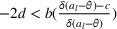


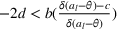
Thus, for either low demand (i.e., low




CONCLUSION
In this paper, we have shown that when suppliers offer optimal quantity‐payment contracts under information asymmetry, the buyer may (under high product substitutability) make higher profit by procuring two items, one for each of its products, from two separate suppliers as compared to procuring only one item from a supplier and making the other item in‐house at the same cost as the other supplier. We have further shown that this result is independent of whether the buyer faces uncertain demand or not. This implies that the buyer may find it more profitable to continue buying from a supplier even when it can produce the item in‐house at the same cost as the supplier and even when it can benefit from production reactivity (while making at similar cost as the supplier, like before) as compared to buying. On the contrary, we find that the buyer will typically never buy the item over making the item (while it buys the other item) when suppliers have complete information and offer wholesale contracts. Thus, indicating that the buyer's make versus buy decision is primarily driven by the benefits that a buyer gains from the interaction between optimal contracts offered by multiple suppliers under asymmetric information. Using the multi‐principal mechanism design approach allows us to capture these interactions and characterize the conditions under which buying or making is more profitable for the buyer under asymmetric information. In particular, we show that if product substitutability is higher than a threshold (but not extremely high), then buying is more profitable, while below that threshold making in‐house is more profitable for the buyer, irrespective of whether demand uncertainty is low (or even inexistent) or high. Essentially, higher product substitutability increases buyer's informational rents more when buying both the items from respective suppliers as compared to making one of the items (and buying the other from a supplier) due to increasing competition between the suppliers in offering the contracts. In contrast, when making one of the items in‐house, the sole supplier can extract a greater surplus and moderates the higher informational rents that the buyer gets (as substitutability increases) since the supplier is the only principal and does not have to compete with the other supplier in offering the contract. Thus, it is the primarily the interaction between the contracts, under asymmetric information, offered by competing suppliers that drives the make‐versus‐buy profitability of the buyer.
These results imply that a multi‐product buyer procuring separate product‐specific items from different suppliers (via quantity‐payment contracts) can actually reduce its profits by making one of the items in‐house (when product substitutability is high), even when its make cost is same as that of the supplier and even when it can gain on production reactivity advantages (due to demand uncertainty) from making it. Of course, other considerations can determine the make versus buy decision, such as the risk of buyer's loss of control (favoring make) or focusing on core competencies or the risk of controlling feedstock for production (favoring buy). What we have shown is that under asymmetric information, the buyer can benefit from the interaction between the suppliers' contracts (when contracting with multiple suppliers) and it gives up these benefits when it decides to make rather than buy some components. Thus, these contractual interactions can also have a relevant impact on buyer's make versus buy decisions.
Conversely, the results also imply that a buyer producing one of the items in‐house as efficiently as any other supplier may want to stop production of the item and instead buy the item from a supplier. In doing so, the buyer will also willingly give up the benefits of reactive production and instead expose itself to demand uncertainty by procuring from a supplier who may have longer lead‐times as compared to making in‐house. In fact, it is not uncommon to see manufacturers spinning‐off production divisions that are as competitive (in production efficiency) as the market. The most common explanation for spinning‐off an efficient (and profitable) division is that the manufacturer can focus assets on its core competencies (i.e., not spreading the assets too thinly). However, we show that spinning‐off an efficient production division can be interesting (in terms of increasing profitability) for a manufacturer even if one ignores the benefits of increasing the return on assets.
We are considering that suppliers have all the bargaining power, that is, the suppliers offer buyer optimal contracts. One can also consider more nuanced scenarios where the buyer and suppliers' bargaining power are more distributed. To understand the impact of more distributed power, consider the opposite extreme in which the buyer has all the bargaining power. In that situation, the buyer will offer take it or leave it contracts to the suppliers. 11 Since the buyer is the only principal, it will be in a position to extract all the surplus from the supply chain where it is fully informed about the suppliers, irrespective of whether the buyer is buying from one supplier or two suppliers. In such a scenario, the buyer would indeed prefer to make one of the item/product itself if it can do so at a cost that is less than one of the supplier's cost. Thus, we see that on one extreme (with buyer having all the power), the buyer will always prefer to make whereas on another extreme (suppliers having all the bargaining power) the buyer might prefer to buy. One can conjecture that as suppliers' power decreases and buyer's increases, the buyer would increasingly prefer to buy. Whether the increase is monotonic or not remains to be seen. A more complete analysis of distributed bargaining power can be done by investigating multi‐party bargaining solution under incomplete information, which would have to be a new study in itself. Finally, we have not endogenized buyer's make option in the contract terms that the suppliers offer. The suppliers contracts will not change (even after endogenizing buyer's make option) for conditions where the buyer prefers to buy under our model. The reason being that suppliers know that buyer will buy so why change contract terms which are optimal for the suppliers in equilibrium. The contract terms would indeed change (when endogenizing for make option) in scenarios where buyer prefers to make as compared to buy, because then the suppliers will offer additional surplus to the buyer in order to incentivize it to buy rather than make. However, our result makes a stronger statement in showing that even without such an outside option, the buyer would still extract sufficient rents from the suppliers to prefer buying over making (even when its make cost is same as that of the supplier).
Footnotes
ACKNOWLEDGMENTS
Open Access Funding provided by The University of Auckland within the CRUI‐CARE Agreement.
1
Kalamata and Halkidi are distinct varieties of olives. Note that within the same variety the green olives are simply picked earlier as compared to black olives, but between varieties some, like Kalamata, are primarily picked as black whereas others, like Halkidi, are picked as green.
2
Both the food manufacturer example and the chemical manufacturer example are based on discussion that the authors had with managers in the respective companies.
3
Silicone is a polymer, not to be confused by the element Silicon.
4
The supplier of silicone emulsions is also the only producer of silicone in the region. This supplier can pool silicone demand from other regional industries, like automotive, cosmetics, textiles, etc., to have the sufficient scale required for cost efficient production of silicone. An entrant (of silicone) in the region will find it difficult to achieve the same scale with the existing market demand.
5
One can consider the other supplier without any loss of generality, that is, the buyer makes in‐house the item that it procures from supplier
6
As we show, introducing demand uncertainty is technically challenging and is one of our methodological contributions along with characterizing expected profits in closed form in a common agency setting that enable us to compare the buyer's profitability in make versus buy decision. Similar to our model, Chaturvedi ( ) also assumes a common agency model with manufacturer buying two components from two different suppliers. However, unlike us, he does not consider demand uncertainty, nor does he compare profits in make versus buy scenarios.
7
We use subscript s to differentiate the single supplier setting (with only supplier
8
Along with the assumption
9
Note that we mentioned at the beginning of Section 4.2 that we consider without any loss of generality that the buyer makes the item for product B. The result of Theorem would remain the same if it chose the other item to make.
10
11
In other instances, a buyer having all the power can even invite suppliers to bid for its business in a reverse auction (see Chaturvedi, 2021; Chaturvedi & Albéniz, ).
References
Supplementary Material
Please find the following supplemental material available below.
For Open Access articles published under a Creative Commons License, all supplemental material carries the same license as the article it is associated with.
For non-Open Access articles published, all supplemental material carries a non-exclusive license, and permission requests for re-use of supplemental material or any part of supplemental material shall be sent directly to the copyright owner as specified in the copyright notice associated with the article.
