






Abstract
A dramatically changing business landscape characterized by volatility and uncertainty (which in turn are driven by unpredictable alterations of conditions by such factors as geopolitical events, climate changes, disasters—natural and human causes, reduction in food, potable water, and critical materials supply along with environmental contamination), has created a situation whereby a rethink of Production and Operations Management (POM) strategies and practices is considered timely and appropriate. Against a backdrop of current POM strengths and weaknesses, and expected POM futures, a response path for POM adoption to deal with such uncertainties and risks is proposed and described in some detail. This involves the treatment of POM as a more interconnected and integrated system than has hitherto been the case. Such an interconnected approach is described as a POM symphony where all key players would be playing from the same script and the POM leader must serve as a coach‐coordinator, that is, the symphony's conductor.
INTRODUCTION
It is postulated in this work that recently observed supply chain (SC) performance shortfalls have not been caused by inadequate POM principles and practices but rather by the sporadic and/or cursory application of those same principles and practices. Further, while the application of those principles and practices has been somewhat better for locally based supply chains, their application to global supply chains has been considerably deficient. It is considered that one of the main causes of deficiencies in the application of POM to global supply chains is attributable to the completely inadequate conduction of risk management processes.
Another deficiency observed is that service supply chains have not and are not receiving the same POM methodology time and attention as physical product supply chains. This has led to the situation whereby, when under stress, service type supply chains are also failing to meet their key performance measures (such as stockouts on essential items and service delivery not being on time, in full, or error‐free). These examples illustrate an intolerable and inexcusable situation for mission‐critical services such as healthcare. Of particular concern, in this regard, was the rush to the offshoring of manufacturing by many Western countries, starting as early as the 1960s. The subsequent inadequate levels of governance applied to such offshore operations led to coordination gaps and exacerbated supply chain delivery failures.
The overview of this paper thus is that a series of recent and substantial business environmental shocks and a refocusing of business leaders’ priorities have exposed deficiencies in POM's disturbance response capability. This has led to global supply shortages, stockouts, and late deliveries. To address such deficiencies and to accommodate identified future POM risk factors, a future POM “manner of being” and “way” is proposed. This involved transitioning POM from a linear focus and from one that is underrepresented in many organizations to one that has a clear voice and acts in a coordinated manner and interconnected way. Finally, a call to action is made that really must start with strong and ongoing organizational leadership support and implementation that utilizes rigorous management processes.
The remainder of the paper proceeds as follows. In Section 2, we describe a last‐decade‐based situation appraisal, followed by the POM implications of such situations and their likely causes. In Section 3, the results of a Delphi‐styled survey of expected POM futures are presented and discussed. Section 4 covers observed current‐day POM trends, and Section 5 outlines a suggested POM response roadmap (or forward path) describing the recommended actions needed to achieve genuine POM mastery. Section 6 concludes the paper by outlining a call‐to‐action and emphasizing the antecedent conditions that must exist and the implementation discipline that must be observed for the desired future state of POM mastery to be achieved. Areas for further research are identified in each of the above sections.
SITUATION APPRAISAL
Over recent times (2010 to 2022), the performance of global and local POM operations has been buffeted by very strong externalities. Such externalities have led to significant supply chain and POM disruptions. Examples of such disruption events are now considered along with the impact of the event and the POM issue associated with the example.
Long‐term disruptions
Long‐term disruptions are classified here as those causing impacts that last for years. Examples include: Japan earthquake and tsunami, March 11, 2011. In what was Japan's most powerful earthquake ever, a magnitude 9.0 earthquake struck 72 km off the east coast of the Tōhoku region of Japan. The massive earthquake launched a gigantic tsunami (estimated to be 40‐m high), which devastated the adjacent Japanese coastline traveling up to 10 km inland.
Damage caused by the tsunami was extensive including the meltdown of three nuclear reactors in the Fukushima Prefecture. Because of the tsunami, power was cut to the reactor cooling pumps and ventilation systems. This led to a build‐up in temperature and a resultant generation of hydrogen, which then accumulated in the reactor containment buildings and eventually exploded.
Global SC impacts were substantial. For example, immediately before the disaster, the Fukushima Prefecture area supplied about 22% of the world's 300‐mm silicon wafers and about 60% of critical auto parts such as engine air flow sensors. The area was also a primary supplier of lithium battery chemicals, flash memory, and anisotropic conductive film used in liquid crystal display (LCD) flat panels.
The SC impact was thus felt by global automotive, computer, tablet, camera, and LCD manufacturers who all suffered supply shortages of critical components. These facts add to the cost of this risk analysis failure.
The social and economic impact was immense with 19,747 people killed in the overall disaster and hundreds of thousands of people evacuated from the region. The World Bank estimated the total cost of the disaster to be of the order of US$235B with a 5‐year recovery period (Kim, 2011). We reiterate that this is a POM failure that could have been avoided with a relatively small investment. An early POM assignment that one of the authors of this paper had was finding optimal locations for various machines and equipment installations as well as storage configurations for a warehouse located near a river that occasionally flooded. Not yet knowing about Gumbel's work on the analysis of extremes (Gumbel, 1958), nevertheless, a common‐sense part of the project was to determine the frequency of different levels of river height and proceed accordingly.
The issue for POM arising from this disaster is chiefly a POM risk analysis one. That is, it is very important to note that if tsunami protection had been considered, it would have been feasible to install the nuclear reactors at a higher and safer elevation with inconsequential relative cost (given the perspective after the fact, and if we had only known). The Japanese utility company belatedly acknowledged this risk analysis failure. Coronavirus Disease of 2019 (COVID‐19) pandemic, December 2019 to 2022. The 2019 pandemic allegedly started in Wuhan, China, when a virulent severe acute respiratory syndrome coronavirus 2 (SARS‐CoV‐2) type virus of uncertain origin was detected among residents. The virus spread from Wuhan to the rest of the world resulting in over 420 million cases, over 5.9 million deaths, and substantial social and economic damage.
The supply chain impacts of the pandemic were felt as severe oscillations in supply and demand, which created availability shortages of microprocessor chips, plastic components for automobiles and medical devices, metals, wood/timber for building and construction, coffee, corn, palm oil, soybeans, wheat, fuel, and shipping containers (He, 2021).
In addition to supply and demand waves, differences were experienced between different industries. For example, despite levels of panic buying and some early product shortages (canned foodstuffs, pasta, rice, and bathroom products), the consumer‐packaged goods (CPG) SC (foods, beverages, and cleaning products) held up reasonably well during the pandemic indicating that the CPG SC is reasonably well‐managed by POM practitioners.
Other SCs did not fare so well, however. Medical equipment such as personal protective equipment, testing kits, laboratory supplies, and ventilators were all in stockout situations. Supplies of pharmaceuticals were also placed under stress during the peak demand phases of the pandemic (Volkin, 2020). The behavior of supply chains differed markedly in different regions of countries as well as between various nations. The degree of resiliency of different supply chains provides excellent data for research by POM academics in the future.
A factor that magnified the pandemic's impact was the world's reliance on China for manufactured goods. For example, at the time the virus struck, 60% of global consumer goods exports and 41% of global technology, media, and telecommunications equipment came from China (Hedwall, 2020).
The average negative revenue impact per organization caused by the pandemic and other concurrent SC shocks was estimated at US$184M (Allen & Green, 2021). Fifty‐one percent of organizations claimed that their SCs were impacted by the COVID‐19 pandemic, and 89% of those reported serious disruptions to their product supplies.
There are two main POM issues arising from this example, to begin, proper POM thinking recognizes that this is a global matter. Airplane travel alone changes the contact rates of infected people with the overall non‐infected population of the world. Early 20th‐century epidemiology models (including data from the Spanish flu epidemic of 1918–1920) can be updated to predict disease spread rates. Just as transportation has amplified contact, so has communication channels enabled speedy exercise of early warning systems that could nip‐in‐the‐bud fast transmission rates of infection. POM health managers had not instituted and perfected such global early alert mechanisms. This disastrous failure to step up to the plate and provide early warning for the pandemic (2010–2022) can be labeled as a POM healthcare malfeasance. It is attributable to the POM managers of organizations such as the World Health Organization, the US Center for Disease Control, and the Wuhan Institute of Virology, which is administered by the Chinese Academy of Sciences.
A second POM issue is the management of the COVID‐19 disease as it spread throughout the world. The pandemic impacted populations in waves, and these in turn caused several wave effects on each of SC's supply and demand. To begin with, lockdowns and social distancing requirements impacted supplies in the early stages of the pandemic and while at the same time demand for essential items rose, demand for non‐essential items fell. Tourism, for example, all but collapsed with a substantial impact felt by airlines, tour operators, resorts, cruise ships, hotels, cafes, restaurants, and pubs. Demand for apparel fell, but demand for home electronic appliances rose. Demand for automobiles rose, while fuel prices initially fell, but then also rose. On‐line sales increased as did the requirement for home deliveries thus impacting courier and trucking systems availability. Supplies of many components were affected by other SC concurrent shocks in addition to the pandemic's disruptions. As vaccination rates and levels rose and peoples’ movement restrictions were eased, consumer spending came rushing back fueled by cashed‐up customers who had accumulated funds during the lockdowns. Such supply and demand waves are often amplified by customer panic buying and/or overordering (hoarding) leading to the classic SC bullwhip effect. POM managers who should anticipate and ameliorate these effects did not provide much evidence of such field‐oriented knowledge and skills. SolarWinds cyberattack, December 2020. SolarWinds is a provider of widely used information technology (IT)/information and communications technology (ICT) software that enables organizations to monitor and manage the performance of their IT/ICT systems. One SolarWinds software product, Orion, designed to provide network monitoring allowing users to assess network performance and to identify and troubleshoot problems, was attacked affecting 18k of the 33k Orion customer base (Lee et al., 2021).
In what was a so‐called “supply chain hack,” the attackers modified an Orion system plug‐in, included as part of Orion “signature” updates, installing malware on SolarWinds customers’ systems that provided a backdoor through which the hackers gained access. This gave the attackers the capability to steal confidential and proprietary information and interfere with business operations.
As well as Fortune 500 companies, the attack also had a widespread impact on US Government department Orion users (Brewster, 2020). Departments affected included the Pentagon, the Army and Navy, the Department of Veterans Affairs, the National Institutes of Health, the Department of Energy, the Department of Homeland Security, and the Federal Bureau of Investigation.
US government agencies responded promptly with the Cybersecurity and Infrastructure Security Agency issuing “Emergency Directive 21‐01” on December 13, 2020, which essentially required that government agencies stop using the Orion product until cleared to do so and block access from other Orion clients (Cybersecurity and Infrastructure Security Agency, 2020).
An IronNet (2021) survey of companies impacted by the attack found that the companies suffered, on average, an 11% hit to their annual revenue because of the attack.
However, the full impact of this cyberattack will not be fully known for some years after the original breach. It is unclear for example, just how much intellectual property was stolen or how it might be used in the future, or what the likelihood of future ransomware demands will be because of this infiltration. What is known is that lawsuits and regulatory enquiries against SolarWinds are likely as is a negative outcome for SolarWinds share price (Westby, 2020). In addition, the SolarWinds Chief Executive Officer (CEO) at the time of the hack, Kevin Thompson, resigned his position effective December 31, 2020, and was replaced by Sudhakar Ramakrishna (Novinson, 2021).
The POM issue here is one of safety and security, that is, POM has an obligation to protect the supply chains that it manages from the damaging effects of hacker intrusions. In fact, POM has the responsibility at ports of entry (shipping, airlines, and trucking) for assuring the safety of cargo without requiring unwanted delays for inspection and clearance. Since hacking can occur without being noticed, there is a further requirement that POM monitors the systems that it manages to pick up on hidden invasions, which deteriorate efficient transportation and delivery. This aspect of POM is an ever‐changing technological challenge, which adds costs for monitoring and protecting to offset more substantial losses when systems are breached. Chinese port slowdowns, June 2021. A mid‐June 2021 outbreak of COVID‐19 in Guangdong, China, led local authorities to shut many businesses to control the spread of the highly infectious “Delta” variant. These shutdowns saw shipping delays in the main ports of Shenzhen and Guangzhou rise from half a day to over 16 days. The two ports are the third and fifth busiest in the world, and so the impact on shipping was substantial and contributed toward higher shipping costs. The cost to ship a 40‐foot (12.2 m) container from Shanghai to Rotterdam in 2020 was US$3500; however, 1 year later, that cost had risen to US$10,500 (Allen, 2021). A further delay occurred on of August 11, 2021 when the Meishan terminal at the world's third busiest container port of Ningbo‐Zhoushan in eastern China was shut for 2 weeks because of a single COVID‐19 case. The terminal handles about 25% of the Port's container cargo, and so its closure significantly impacted world container movements. While the recovery time for the ports directly involved with these closures was of the order of months, the ripple effects of the closures were felt for many more months in ports across the United States and Europe. The Russian invasion of Ukraine, February 2022. While still ongoing at the time of writing, this conflict created a humanitarian crisis with over 10 million refugees and deaths greater than 25,000 (UN, 2022a). The conflict has also caused price spikes and major disruptions to the supply of food, fertilizer, oil and gas, and specialty‐manufactured products (UN, 2022b). Such disruptions may well be felt for years to come.
There may be substantial opportunities to consider such problems as bottlenecks, which must be monitored and controlled. As such, POM is well‐armed to apply queueing theory as well as capacity analysis and scheduling control (as in the “theory of constraints”) to relieve costly bottlenecks. POM can also play a vital role in contingency planning and response coordination.
Short‐term disruptions
Short‐term disruptions are classified here as those causing impacts that last for months, not years. Examples include: Iceland volcanic eruption, 2010. Air traffic across the United Kingdom and Europe was disrupted for 4 weeks causing supply chain instabilities across the region (C. Choi, 2012). Probably, this was well‐handled by POM, and the disruptions could not have been avoided. On the other hand, it would require analysis by competent POM practitioners to determine if the above assumption is justified. This signals an opportunity for continual assessment of POM performance with feedback to enhance future operations. Texas deep freeze, February 2021. A jet stream from the northwest brought a “V” shaped polar vortex over the western, southern, and eastern parts of the United States in February 2021 bringing with it freezing conditions. Temperatures in the Dallas‐Fort Worth area, for example, fell to −19°C (−2°F). The severe cold saw at least 21 lives lost, many millions of people without power and significant disruption to manufacturing plants and all forms of logistics services. This significant adverse weather event further exacerbated SC material shortages. For example, the availability of plastics (used in car‐making, medical devices, building and construction, and consumables) was severely impacted by the shutdown of oil fields, refineries, and petrochemical plants caused by the cold freeze. Total damages were estimated to be in the range of US$195B to US$295B (Ivanova, 2021).
The main POM issue with this event is that such conditions had happened in Texas twice before, in 1989 and 2011. On each of the two previous occasions, recommendations were made to winterize the electrical infrastructure, only to be subsequently ignored (Price & Sechler, 2021). There was also conjecture about the fact that Texas had made major investments in alternative green forms of energy, which could not provide backup in the existing predicament. Since technology moves along at a rapid rate, POM is responsible for determining the impacts of changes that have been made and for protecting against new vulnerabilities. Suez Canal blockage, March 2021. On March 23, 2021, the 400‐m long container ship “Ever Given,” laden with 18,000 containers, was driven by strong winds and poor steerage into both sides of the 300‐m‐wide Suez Canal, blocking it for 6 days. By March 28, 369 ships were held up waiting to transit the canal holding up an estimated US$9.6B worth of trade per day (Harper, 2021). When the ship was finally freed from its jammed position on March 29, it was impounded by the Egyptian authorities and not released until July 7 after a compensation settlement for an undisclosed sum was reached between Egypt and the ship's owners and insurers.
The POM issues here are to do with risk analysis, contingency planning, and contingency enactment. Additionally, POM, maritime law and ship‐handling practices interact in this situation. Research opportunities exist to determine if best practice and competence prevailed in this case. Colonial Pipeline cyberattack, May 2021. The US‐based Colonial Pipeline was subject to a cyberattack starting on May 7, 2021. Colonial's control system was infiltrated by the Russian “Darkside” ransomware hackers and when advised of the attack, Colonial executives decided to shut down the pipeline for safety reasons and because Colonial was unable to bill its customers. At the time of the shutdown, the pipeline supplied 45% of the US East Coast gasoline, diesel, and aviation fuel and ran from the US Gulf Coast to the New York Harbor area. The CEO of Colonial Pipeline admitted that he authorized the payment of a US$4.4M ransom within hours of the attack; however, the pipeline remained offline for 1 week. The result? 16,000 fuel stations ran dry, customers suffered, and Colonial Pipeline lost many millions of dollars of revenue and added many millions of costs to their earnings result (Tidy, 2021). While the hackers may have been initially emboldened, the US Department of Justice advised on June 7 that 52% of the value of the ransom had been recovered (Mallin & Barr, 2021). This is a further example of the need for robust POM risk analysis and is also an excellent opportunity for a POM case study. Redundancy in a system that is subject to hacking may more than pay for itself both in obvious and obscure ways. Fourth of July weekend cyberattack, 2021. An affiliate of Russia's infamous “REvil” hackers launched an SC‐type attack on a US‐based IT/ICT back‐office service provider Kaseya at a time when many IT/ICT professionals in the United States were on leave (ABC News, 2021). Kaseya's CEO Fred Voccola claimed that only 50 to 60 of Kaseya's 37,000 customers were compromised; however, about 40 of those direct customers had, in turn, thousands of mostly small business customers across 17 countries. The Swedish Coop grocery store chain, for example, had to close its doors on Saturday, July 3, 2021, because its Kaseya‐customer‐supported cash register system was compromised. Attack victims reported demands ranging from US$45,000 to US$5M for the hackers to provide decryption keys that victims could use to unlock their data (ABC News, 2021). Victims needed to either pay up or try to recreate their systems from reliable back‐ups.
This is another very good example of the interaction between supply chain efficiency and cyberattacks on what otherwise seems like a strictly information and data management problem. POM can count on the fact that hacking of information will impact the performance of the supply chains that are entrusted to its competency. The POM issue thus is one of vulnerability identification and resolution. Mid to late July 2021. High COVID‐19 case numbers and low vaccination rates saw the closure of many apparel and footwear factories in southern Vietnam. Such shutdowns were in place until the end of 2021. Following a very determined vaccination program for factory workers, and the arrival of the less virulent omicron variant, authorities decided to reopen the factories in early 2022.
The impact of the factory closures was not only the cessation of shipments to waiting customers but the loss of revenue by the factories and the risk of job/incomes for the factories’ employees.
The issue for POM here is that of agility, that is, the ability to adapt and respond quickly and effectively to changing circumstances. The emergence of the omicron variant further complicated the situation with this example, including the fact that many POM measures can be taken that would reduce the probability of further new mutations occurring with unexpected consequences.
POM Implications
As well as the POM issues identified around events such as those described above, several POM strengths and weaknesses become apparent, such as Identified strengths of POM include: POM leader engagement and involvement with POM followers; active listening to customers and a clear understanding of their needs, wants, and desires; supplier appraisal and supplier engagement; advanced planning and scheduling including materials requirements planning; line design, line balancing, line coordination, and bottleneck management; mistake‐proofing (Poka‐Yoke); set‐up time and batch size reductions; optimization (such as mixtures, blending and flow paths using linear, non‐linear, integer; mixed integer, and goal programming); constraint management; inventory control; visible factories (such as via the use of Andon boards and Kanban cards); computer‐integrated manufacturing; continuous improvement; and sustainability awareness.
All of these are more local issues as contrasted to global ones. Identified weaknesses of POM include: end‐to‐end supply chain fragility and lack of resilience, naïve global inventory analysis, multi‐port bottleneck prevention (ineffective constraint management), global queuing mismanagement, nth tier sustainability management, vulnerability to cyberattacks, an observed lack of drive/energy for end‐to‐end supply chain POM process innovation and the continuous improvement of POM methodologies.
All of which are global issues rather than local.
There are perhaps many reasons for such observed POM deficiencies. It is suggested that the main ones are: The frequency and changing nature of the observed business environmental factors such as changing regulations, geopolitical events, supply chain shocks, and customer expectations. The difficulties involved in managing long supply chains spanning different countries with many hand‐offs and disparate organizational ownership. The substantial amount of effort and expertise involved in the attainment of genuine supply chain agility and resilience. Changing and evolving business leaders’ priorities such as the sustainability imperative, governance compliance, and social justice goals. The result is that business leaders’ time is now spread over a diverse area of performance requirements. The organizational “clout” of POM leaders, that is, the strength of the POM “voice.” The level of excellence achieved on the four key POM processes of strategy, design, execution, and people care and development. And last, but very importantly, and as identified by Sodhi and Tang (2008), there is an increasing level of disengagement between research, teaching, and practice in the POM/Operations Research (OR)/Management Science (MS) ecosystem.
POSSIBLE POM FUTURES
As illustrated in the situation appraisal, modern‐era supply chains are facing increasing levels of volatility, uncertainty, complexity, and ambiguity. The drivers of such an operating environment stem from the dynamics of resource, geopolitical, environmental, economic, societal, and infrastructure‐related factors. This section, therefore, attempts to describe possible futures for such factors so that POM leaders and practitioners (POM operatives) can be made aware of what they are likely to face. In other words, this section effectively represents a “heads‐up” for POM operatives.
The resource, geopolitical, environmental, economic, societal, and infrastructure‐related risk factors thus could play out to a worse‐case, expected‐case, or best‐case future as illustrated by Figure 1. It is emphasized that Figure 1 is an opportunity for substantial further research to embellish what the authors have obtained and presented by means of a limited Delphi exercise.
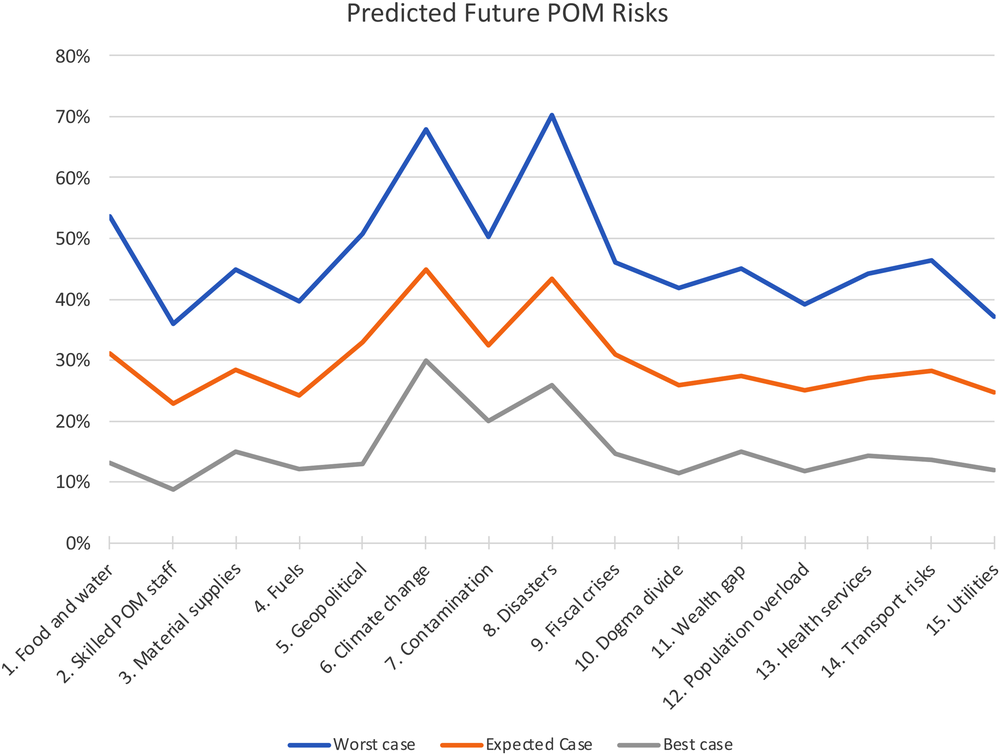
Risk factor ratings for worst, expected and best‐case futures. Note: The data for this figure was obtained by requesting input from the membership of several POM organizations. We obtained 16 replies over the course of a limited time. It is our recommendation that serious research efforts be used with our sources and others to get more information about the POM consensus concerning future supply chain risks.
The changing nature, and in many instances, the unpredictability of such factors, intensifies supply chain risks and layers yet more pressure on POM leaders and practitioners.
As can be seen in Figure 1, the seven standout factors for the expected case include: Shortages of food and potable water. Shortages of material supplies. Geopolitical risks. Climate change and political priority effects. Contamination risks The frequency and impact of disasters (natural or human‐made; S. Gupta et al., 2016). Fiscal crises risks.
It is important to note the risk of climate change that features highly in each future case as shown in Figure 1. There are two reasons for this, first, from the physical risk that climate change per represents (e.g., from extreme weather excursions, resource shortages, and cost increases incurred from resilience building), and second because of the very likely increasing level of community pressure and compliance regulations that will be brought to bear on this issue. This can be viewed as either an additional burden on POM operatives or it can be viewed as an opportunity. The latter strategy is very much recommended.
After conducting this analysis, the authors consider that the expected future case is the one most likely to eventuate. In order to fulfill customer expectations, therefore, POM operatives need to focus determinedly on the above‐listed seven standout factors.
The issue of health services quality and availability is especially recommended as a POM focus item for reasons to do with the humanitarian effect such services influence. There are two reasons for this, first, POM operatives play an important role in the provision of such services “on the ground,” and second, POM operatives may well need access to such services themselves. The risk with the second point, of course, is that any given supply chain will be severely disrupted if there is an inadequate number of skilled personnel to staff key POM positions. We must also recognize that POM is a broad field within which there are many sub‐fields of expertise that are not transferable. The POM healthcare specialist can be assisted by the POM generalist but does not expect the generalist to solve hospital supply chain problems without the close assistance of the healthcare specialists. We should encourage the development of various sub‐field specialists such as anti‐cyberattack, maritime, airline, hospitality, sports, agriculture, and so on.
OBSERVED CURRENT‐DAY POM TRENDS
The production and operations management field has changed in unexpected ways because of the COVID‐19 pandemic. These changes and the reasons for them will now be discussed.
First, there was the jolting actualization of an academia that was forced by life‐style circumstances to alter its traditional face‐to‐face classroom locus for both teaching and learning in favor of online methods. The result was that topical information had to be altered for dissemination in new ways that favored more dynamic forms of visual diagrams, figures, pictures, and videos. It remains to be seen if the amount of information and the rate of dissemination has increased significantly. However, it is quite likely that amounts and rates of transfer have been amplified. It is also a reasonable hypothesis that the situation instilled improved flexibility in researchers. For example, paper submissions to the POM journal increased from a level of 1000/year to 1600 in 2020 and 1400 in 2021 (Singhal & Kumar, 2021). Zoom and similar systems for meeting at a safe distance brought a lot of people together who might otherwise have only casually met at an international conference.
Further, we should note that pre‐pandemic, library facilities had been experiencing a significant change in utilization patterns going from in‐the‐stacks to online. Wikipedia and similar sources of information had pros and cons gaining inputs from a larger number of people with diminished accuracy and reliability. As the number reported above indicates, research (in general, and for POM specifically) has been undergoing changes resulting from energetic Internet expansion and the overstated severity and endurance of the pandemic. To put some dimension to this last statement, the Spanish flu of 1918 to 1920 resulted in the deaths (very conservatively) of 17.4 million people. The world's population at that time was approximately 1.8 billion giving a death rate of 1%. Using less conservative estimates, the death rate was as high as 2.8%. The death toll from COVID‐19, as of February 19, 2022, was some 5.9 million, which, for a current day world population of 7.8 billion, gives a death rate of 0.076%. COVID‐19 thus is significantly less virulent than the Spanish flu and its death rate considerably less than deaths from heart disease, dementia, stroke, cancer, and lung disease. No doubt, modern medicines and healthcare have also aided in keeping the COVID‐19 death rate low as compared to that caused by the H1N1 influenza type A virus (Spanish flu).
Second, POM experienced the rapid development of new fields some of which are still embryonic and have not yet been clearly delineated and accepted. To begin with, POM has ventured into aspects of healthcare and medical management that had not been previously attempted. The pandemic provided new vistas of operation management needs concerning the coordination of the manufacture of vaccines and the optimal distribution of these beneficial therapeutics with global supply chains. By undertaking such work, psychological factors had to be considered such as the willingness of patients to accept vaccines and therapeutics under a variety of conditions. Influence factors play a considerable role that would not be likely to have been considered as the purview of POM practitioners in times prior to the pandemic. However, under the pressure of a mandate to find operationally useful solutions, the concept of what constitutes acceptable research has been considerably enlarged. Because the pandemic is still evolving, the degree to which POM domains have been extended is far from having been determined and cataloged.
Third, not only healthcare systems benefit from the increased scope and capabilities of POM researchers. The demand for new types of POM competence was naturally extended to the problems of managing fabrication and assembly when severe worker shortages occurred as they did globally. Indeed, previously, POM had been exploring with hesitancy the role of robots for worker replacement in both service and manufacturing systems. Automation, which was first proclaimed in the 1960s when it was heralded on the cover of Time magazine, is, at last, becoming broadly applicable in mechanical and electronic systems as well as being economically feasible. The idea of self‐driving cars, which would have been scoffed at in the 1960s, is now a competitive reality 60 years later.
We welcome the conundrum of who is responsible for the development of applications of artificial intelligence (AI). At the minimum, POM and IT have vested interests and shared constituencies. While POM must acknowledge the end of separate fields whenever there exists a synergistic opportunity to cooperate, we firmly believe that POM needs to have substantial input into AI research and application. Pandora's box has been opened. Artificial boundaries that have been promoted by schools of business are coming to an end. Cross‐functional cooperation has always been a necessity for successful businesses. The Master of Business Administration (MBA) degree must promote inter‐discipline research (as contrasted with intra‐discipline) and the same applies to teaching. A good place to begin this transition is with POM, which has always been marginalized and debilitated at the strategic level by functional insularity.
Fourth, a change has been warranted for many years that encourages POM to start model‐building and subsequent analyses at the strategic level rather than at the tactical level. Decisions to offshore production have been strategic. They have been made by business managers without the inputs and consultations of POM executives who are able to perceive the system‐wide implications of moving supply chains (not just fabrication) away from the domestic markets they are serving. Manufacturing offshore immediately necessitates expanded (vulnerable) delivery systems. POM capabilities with evolving technology can put such decisions into a proper frame that compares the cost/benefits of (cheap) labor having lengthy delivery routes with robotic labor that allows efficient delivery times. Quality achievements are another dimension of this equation that almost always favor onshore locations. Also, we must recognize the strategic opportunity (if not necessity) for POM to cooperate with marketing in regulating the demand functions of supply chain management.
Fifth, in view of amazing technological developments, such as robotics for manufacturing and (soon to be pervasive) for fast foods, voice recognition for services including the next jump in command capabilities with our phones, and home controls, the possibility of flexible mass customization of products (e.g., take‐out food) and massive data analysis using AI hypotheses such as what we (as consumers) will be willing to purchase in the future, POM capabilities have become more flexible, creative, and broader‐based. In that arena, there is an urgent requirement that POM operate on a system‐wide basis to achieve productivity enhancement. Poor productivity has been an existing problem for many years (e.g., going back about 50 years, see Starr, 1973). The offshore solution via inexpensive labor was a dressing gown; a cover‐up solution that hid the real productivity problem, which is that POM operates at the wrong (tactical and local rather than strategic and global) levels.
The supply chain chaos that has emerged in 2021 reveals in stark terms the tactical role that POM has played in a system that marches to a strategic drummer. Getting control of productivity will be supported by well‐understood utilization of robotics and AI. However, managing disruptions of supply chains require predictive forecasting with POM managers sitting at the same table with all the “traditional” C‐suite executives. Reflecting on this organizational dilemma, we may note that the absence of POM‐oriented representatives at the C‐level severely damages predictive forecasting and disrupts the activation of appropriate early warning systems, which are increasingly essential as systems become increasingly global. Since POM has the essential capabilities, why not activate this resilient force?
A SUGGESTED ROADMAP TO DELIVER POM MASTERY
The key message of this paper is about the need for (suggested) strategies that can be undertaken to achieve genuine and sustained POM mastery. Such mastery starts with good POM leaders but also includes many other factors ranging from organizational design, POM systems‐based strategy, design and execution processes, POM tools, equipment, methodologies and technologies, POM people administration processes, and last, but importantly, the actual POM culture in any given organization and its overall supply chain.
In the pursuit of such POM mastery, therefore, the following roadmap (response path) of suggestions is recommended for adoption by corporate chiefs, POM leaders (and followers), POM teachers, and POM researchers.
POM organizational representation level
The lack of strong representation of senior POM operatives at the “C” level of organizations is an observation made on many occasions over two lifetimes of POM involvement by the authors. Specifically, this is the issue of the strength and assertiveness of the POM “voice” inside operating businesses. Functions within businesses, such as marketing, human resources, finance, legal, and research and development, seem to have the upper hand in many organizations when it comes to being influential. This refers to making sure that their voices are not only heard but also listened to. In contrast, POM has been relegated to the third tier in many organizations. Often, POM managers have described, firsthand, how they “know their place.”
Such a situation is not culturally universal. Both authors know from visits to Brazil, Japan, South Korea, mainland China, Thailand, Taiwan, Malaysia, Vietnam, and India that POM is often given prominence alongside other organizational functions in those countries. It is perhaps no coincidence that such countries have so many excellent manufacturing facilities today. It must be said though that even given such levels of recognition, POM is still viewed as more tactical than strategic in such countries.
It is our belief that western organizations need to re‐establish the importance of POM to their organization's performance at every level. Early POM leaders such as F. W. Taylor, Henry Ford, Walter Shewhart, Edward Deming, Joseph Juran, and Philip Crosby were all from the west and sparked much of the manufacturing excellence achieved in the east. For example, when asked the question: “What was your source of ideas for the Toyota Production System?” Ohno is famous for replying: “From Today and Tomorrow by Henry Ford.” (Ford, 1926).
This is not to suggest that there is now a dearth of POM expertise in the west because many examples of excellent POM leadership exist including people such as Tim Cook, Lisa Su, Frederick W. Smith, Mary Barra, Randy Pond, and David Taylor. The point we are making, however, is that POM mastery is not endemic. It is not a current global western creed that is actively and consistently lived and experienced every day. Again, this is not, in our perspective, the result of biased or sub‐standard education. Indeed, the POM field has many thousands of very capable, talented, and committed POM academics, and their teaching standards are very high. Several excellent, professional POM societies also exist that promote best practices and active, relevant research in POM methodology.
So why is it then that the POM “rubber is not hitting the road” in the west? There is no doubt that many reasons exist for such an outcome; however, in our observation, the root cause of this dilemma is that the POM voice is insufficiently strong (and consequently drowned out) within many operating organizations. In all such cases, POM needs a definite presence, a voice, one that is grounded in competence, collegial support, confidence, energy, persistence, and even insistence. Such authority in most organizations can only start at the top. It will not take root on the production floor and in back‐room service operations because the risk‐reward system will disincentive its promotion.
To capture such POM expertise, recognition, drive, and energy, it is our belief that a critical precursor would be to develop an inspirational organizational‐wide POM vision followed by the appointment of either a chief POM officer or a chief supply chain officer who is also responsible for all POM activities. If the organizational power elite agrees to this vision, then it has a chance of flourishing. An interesting aspect of non‐zero‐sum game theory emerges. Those entities with knowledgeable and energized POM capabilities will become winners and others will take notice. This has historical precedent having occurred in the automobile industry when the Japanese auto industry, led by Toyota, revealed the benefits of “lean” methods of production (Womack et al., 1990). These included waste reduction, mistake‐proofing, and error‐correction. The new methods were adopted on a world‐wide basis, so the winner's advantage was gradually whittled away by competitive emulation. The lesson learned is readily extended, now using 21st‐century technology, to healthcare, hospitality, agriculture, space systems (such as the James Webb Space Telescope; Real Engineering, 2021), and all other operations‐intensive activities.
We cannot stress enough the importance of a well‐thought‐out vision and set of supporting strategies. Such a vision development needs to be a collaborative exercise, the vision needs to be tested, debated, discussed, and finally agreed on and approved. Too many examples exist where such robust vision and strategy development have either failed to take place or the output produced has been inadequate. Examples include Iridium, Kodak, eBay, Schlitz Brewing Company (Parker, 2022), Nokia, Blockbuster, Yahoo, Segway, Blackberry Motion (Lyam, 2022), and Peloton (Stewart, 2022). The careful and deliberate setting of an owned vision for POM including the defining of sought‐after goals, measures, and targets would facilitate the re‐engagement with POM significance and its performance improvement potential. From such authority, focus, and energy come actions and needed results.
POM scope
The widening of POM's scope to include an increased emphasis on mission‐critical activities such as healthcare, cold chains, nuclear medicines, electrical power grid systems, water reticulation systems, transportation control systems, and transport network flow management—POM has much to offer such industries. It is our belief that such a focus and scope‐widening could be initiated by targeted education followed by engagement with and selling to each of the above industries directly.
Key to this suggestion would be the building of POM marketing expertise. That is, POM operatives need to be coached in upskilling their selling ability. They need to know how to pitch their discipline more effectively and to skillfully outline its potential value‐add. Actual case examples would be key to this undertaking. POM departments in schools of business would be asked to take on another teaching obligation, and the teachers would have to be prepared to handle this assignment. The change would accelerate the much‐needed efforts to achieve cross‐discipline research, teaching, and new curriculum development.
POM process excellence
There are four main processes that POM operatives need to focus on and continuously improve in pursuit of process excellence.
POM strategic processes
This involves a formal process of business environmental scanning, analysis and understanding, own organization as‐is diagnosis, collaborative and aligned vision development, clear and unambiguous purpose definition, goals, objectives, target setting, strategy development and selection, and comprehensive constraint‐based action planning.
POM design processes
This includes POM design for people (proud of the work they do), the provision of a safe and risk‐free working environment; optimal customer service (e.g., delivery of expectations in full, on‐time and with error‐free quality); environmental, social, and economic sustainability; people and process integration; balanced technological development and application; modular production considerations (Starr, 2010); material flow network design, equipment layout and performance; minimum sensible cost; and appropriate risk. All design sub‐processes need to be mapped down to the level‐six process level with associated measures and targets identified along with detailed and approved action plans.
It is useful, at this point in our discussion, to remind ourselves of the roots from which POM sprang forth. Adam Smith in The Wealth of Nations (Smith, 1776) began serious discussions about the nature of processes. He recognized processes as transformation systems that engaged people with technologically evolving equipment. POM developed the myriad complex inter‐relationships of people, power, capital equipment, and designs for their use as a field of study concerning the transformation of inputs (costs) into outputs having value (revenues, health, safety, and well‐being). Today, 246 years later, it is hardly surprising that many who are part of the POM field have lost touch with the beginnings of the field and its continued dependence on understanding that nothing about the fundamentals of the field has changed. Some will point to other beginnings, and that is fine. In fact, POM can surely be traced in many respects to the beginning of farming, which makes the same principles valid for thousands of years starting in Persia or China or whatever source feels comfortable.
POM implementation processes
These are the action steps that must be undertaken to enable the successful implementation of the pre‐defined POM strategies and designs. Key suggestions here for the implementation of future POM strategies and research are the two related and crucial issues of supply chain agility and resilience.
Agility (the ability to adapt and respond quickly and effectively to changing circumstances) and resilience (attenuating the impact of disruptions and recovering from them quickly) are desired characteristics that apply to the whole supply chain. Agility is relevant to projects as well, and a good example of that is the level of POM agility excellence achieved with the successful launch and deployment of the US$11B James Webb Space Telescope project (Berger, 2022).
Supply chain agility and resilience may seem rather straightforward; however, their attainment in real‐life requires undertaking involved improvement processes. One such iterative improvement process is shown in Figure 2 as a supply chain agility and resilience builder methodology. Such a process approach can be used by POM operatives to assist in developing a supply chain's level of agility and resilience to shocks and disturbances (see also Figure B in “Supporting Information”).
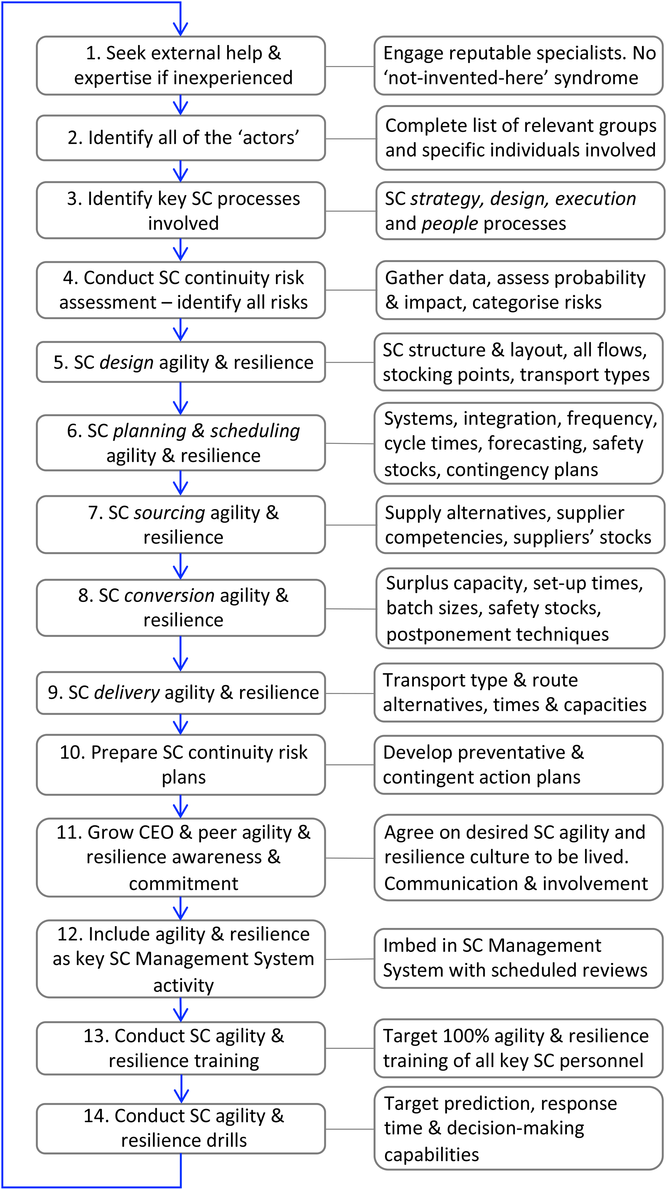
The relationship between supply chain agility and supply chain resilience is key to performance improvement. This is part of the symphony of processes that comprise all realistic POM efforts. The model we have in mind is the POM leader as the conductor of the POM orchestra.
Some researchers have suggested that onshoring (the practice of transferring a business operation that was moved overseas back to the country from which it was originally relocated) may be the answer to supply chain resilience deficiencies. The Economist Intelligence Unit, for example, has projected that global value chains may become shorter, less omnipresent, and more regional. (Productivity Commission, 2021).
Onshoring, however, is but one in a suite of mitigation strategies that exist for lifting a supply chain's level of resilience to defeat supply chain disruptions. Such mitigation strategies include improvements to the supply chain factors of design, planning and scheduling, sourcing, conversion, and delivery. Details of each factor are shown on the right‐hand side of Figure 2.
The effectiveness of the supply chain resilience builder methodology can be heightened as well if it is managed within a formal shock management process (Robertson et al., 2017, pp. 543‐556), including the key steps of; (i) prevention and risk reduction, (ii) preparation, (iii) response, (iv) recovery, and (v) continuous improvement (see Figure A in “Supporting Information”).
POM people processes emphasizing practitioners’ leadership
This includes all the actions necessary to achieve individual POM practitioners’ personal mastery and also all of the administrative procedures that are needed to ensure that POM personnel are adequately and properly looked after.
The first requirement is for the POM leader to take responsibility for setting direction, leveraging the potential of all POM resources, and undertaking self‐improvement actions. Such self‐improvement actions can be expanded to include all the POM leaders’ mastery factors as shown in Figure 3. Quality of learning and development processes are key to this objective.
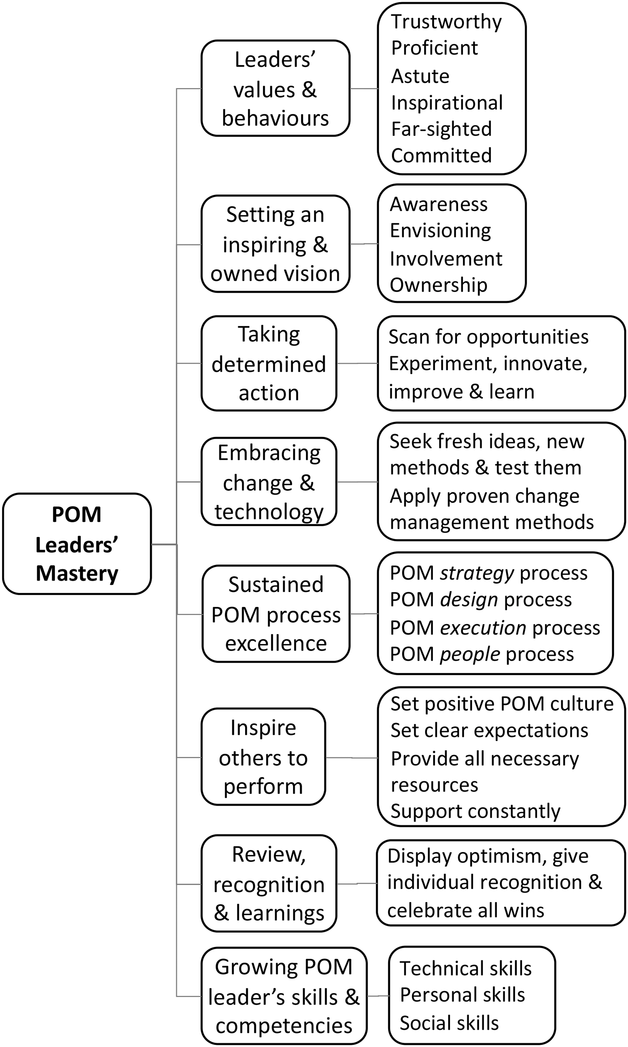
POM leaders’ mastery (Robertson, 2022, modified for this paper)
The second requirement is that an appropriate POM managerial system be put in place. It is recommended that a formal requisite organization methodology be used that includes the following: a modern and relevant organizational design (organizational structure); position descriptions for each and every position; an approved remuneration policy; an active effectiveness appraisal process; an approved code‐of‐conduct; personnel inflow and outflow management system; formal selection, induction, training, and training assessment processes; and a design for the people IT/ICT systems to be used.
The third requirement is that of the POM culture to be created and followed including a description of necessary underlying principles and values, plus a statement specifying expected behaviors and forbidden behaviors. It is crucial that POM leaders live by their professed cultural descriptions and statements.
The fourth and final requirement in this people set is that POM knowledge building needs to be encouraged by the open exploration and sharing of ideas, resources, and best practices. To break down the walls of functional silos, and their associated dysfunctional behaviors, a key initiative is the use of cross‐functional improvement teams and communities‐of‐practice that operate with shared goals and objectives. The goal of this last people factor is to advance POM understanding via knowledge capture (e.g., from scanning, analyses, visitations, presentations), knowledge storage, and a knowledge dissemination system.
POM‐enabled sustainability
POM has a significant level of responsibility over and ability to directly influence, each of the following three core sustainability factors: Environmental factors: POM processes have a direct input into the control of many environmental outcomes. Such outcomes include atmospheric emissions, soil and water contamination, noise and lighting pollution, road traffic congestion, returns, recycling, reuse, and the application of fully circular supply chains (Robertson, 2021b). POM should become increasingly active in a balanced way and be seen as the “go‐to” group for improving the state of each of these environmental issues. Social factors: POM operatives can heighten job attractiveness and job applicant quality from the use of fair and equitable recruitment, selection, training, development, assessment, and promotion processes. Especially important is the provision of a POM work environment that is both emotionally and physically safe. This means a workspace that is free of all forms of risk, harassment, bullying, intimidation, and discrimination. Written and approved position descriptions, a fair and equitable effectiveness appraisal method, genuine appreciation and recognition processes, and a formal safety management system are all very helpful with this factor. Economic factors: POM operatives have major influences over operational and market‐perceived product and service qualities, yield, lead‐times, customer delivery performance, inventory levels, operating equipment effectiveness, product and packaging return/recycling processes, and unit costs. POM's influence over economic sustainability is a very significant one and thus a key lever that POM operatives can use to demonstrate their true value‐add to the organization. To be most effective, POM should operate shoulder to shoulder with those at the highest level, which permits the maximum inclusion of all systems elements that count.
POM and risk management
Professionally applied standard POM risk management processes lead to operational resilience. Such risk management processes have been around for many years, and if applied competently and regularly, they can (and have helped) minimize risk before a forecasted event actually occurs, and they can improve recovery time after a predicted event happens. The before and after actions thereby reduce the impact of the risk if and when it occurs (Sheffi, 2017).
A professional risk management process contains all elements of risk identification, risk analysis and categorization (see Table A in “Supporting Information”), the development and actioning of preventative risk actions, and the development and rehearsal of contingent risk actions, that is, actions to be taken after a predicted event has occurred (Robertson, 2021a, 2021b).
One of the main difficulties experienced in the active ongoing usage of risk management processes has to do with low probability, high impact events of consequence—known as “black swan” events (Taleb, 2007). Because such events happen infrequently, they are often not front‐of‐mind, and as such, they do not receive the attention that is warranted of them. The COVID‐19 pandemic of 2020 is categorized as a black swan event. It is critical to note that while all kinds of resources are marshalled to deal with black swan events, the immediate need for resourceful POM is almost always essential. This is a major area for POM research as the present decade seems to auger a period of volatility and disruption as compared to other periods of time that can be described as comparatively calm.
It is considered, therefore, that when it comes to risk management, POM operatives are presented with, as Masaaki Imai stated, “A mountain of opportunity.” We note that Imai was instrumental in the development of Kaizen, which calls for incremental improvement (often gradual) of operations and processes (Imai, 1988). Resilience is a system's property that is related to Kaizen, which requires perseverance in the face of persistent negative forces and ever‐present threats of fatigue failure. POM operatives, by embracing resilient kinds of stalwart operational opportunities, would greatly lift the level of perceived organizational contribution that other C‐level members expect POM to provide.
POM's adoption of proven technologies
Included here is the sensible, active, and ongoing use of a range of Industry 4.0 type technologies such as robotics, automation, 3D‐printing, radio frequency identification (RFID) for tracking, virtual and augmented reality, Internet of Things, AI, blockchain, digital supply chains (including the concept of digital twins; T. ‐M. Choi et al., 2022), data mining and machine learning plus descriptive, predictive, and prescriptive models using the data obtained from business environmental scanning (see Figure C in “Supporting Information”). POM is a vital participant in this data analytics domain (Robertson, 2021a).
The opportunities for POM involvement, including POM leadership, in this technology field are almost limitless because new ideas and solutions keep arriving. The outstanding dangers for POM are that such technological advances are not accepted by the organization or are made obsolete by other disruptive technological developments. POM is one of the few fields of organizational phenomena that consider training for disruptions to be essential. “Disruption management” is an inherent part of the POM practitioner's “toolbox.” Schools that train operations managers would do well to consider the fact that apprenticeship is one of the traditional means for POM practitioners to educate the trainee (mentee) in both methods and attitudes for adequately dealing with technological disruptors.
POM management system
The active use of a formal and professional POM management system is to achieve not only the necessary levels of POM governance but also to ensure against POM atrophy. Atrophy includes not keeping up as well as forgetting and slipping back. Such a management system needs to include a full set of approved POM safety standards, operational product and process standards, tools, techniques, procedures, and diagnostics. The management system must also include all approved POM strategies, tactics, goals, measures, and targets. Last, the management system must include all POM projects and improvement activities. All such factors need to be monitored via formal, regular, and scheduled audits. Corrective actions are necessary when performance gaps are identified during auditing as are follow‐up audits to ensure the resolution of such gaps.
POM team culture
POM team culture can be positive or negative, and the actual culture that exists within a POM team will greatly influence its effectiveness. We can only partly define a positive POM culture by what it is not. Thus, a negative POM culture is one typified by behavior that is aggressive, devious, cunning, underhand, cut‐throat, self‐serving, ruthless, manipulative, and just straight‐out nasty. A negative POM culture can also include acts of revenge (getting square for perceived injustices or slights of the past), character assassination (making fun of people, vilifying people behind their backs—which may well be tantamount to defamation), malingering, pretense of ignorance (“I did not know!”), malicious compliance (carrying out an instruction knowing it will lead to damaging results, or publicly agreeing to do something, only to do nothing), bullying, threats, intimidation, and even outright malevolence. It needs to be remembered also that such a toxic culture is a perfect hiding ground for psychopaths, which further increases the danger of such a culture for POM operatives.
A positive POM culture on the other hand is more than a non‐negative. It is typified by behaviors such as openness and honesty, inclusion and engagement, self‐respect and respect for others, an unending focus on safety, an ethos of collaboration, cooperation and continuous improvement, equality and performance excellence, acceptance of personal responsibilities, commitment and motivation, supportiveness, appreciation, and recognition. In addition, the positive culture has a belief in its ability to innovate and create while dealing with all forms of disruption. This belief requires self‐confidence, which is often imbued during a successful apprenticeship. As in Section 5.6, schools that train operations managers can use cases to build student skills and belief in their abilities. This new requirement for POM training in schools of business presents another great opportunity for research into effective teaching of the POM discipline and practice.
POM operative performance levels are typically damaged and held back in a negative culture and uplifted in a positive culture. There are many historical examples of negative POM cultures. We believe that, in the future, negative POM cultures must not be tolerated, and positive cultures continuously strived for and reinforced.
POM relationships
Robust relationships and appropriate affiliations with all POM partners—The drive to create robust SC and other operations management relationships must commence with a definite will (as in determination) to establish/maintain such relationships. If such will does not exist, then any effort to improve partner relationships is wasteful.
A clear definition is needed to describe just what is meant by a robust relationship with a POM partner. The derivation of this special word is “strong as oak” from robustus, which conveys both strength and endurance.
Who are the POM partners? Figure 4 identifies the full POM cast of players. Of particular note here is the felt need to actively re‐engage POM operatives with their education providers (researchers and teachers) in what preferably is a dynamic and productive relationship and healthy researcher–teacher–practitioner ecosystem.
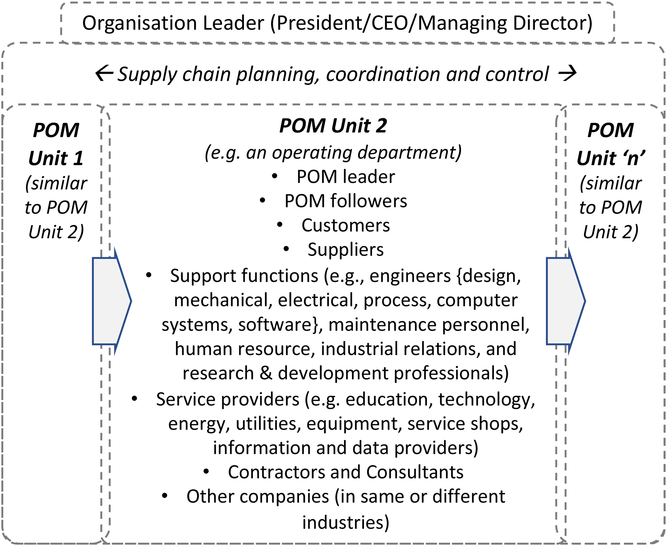
POM cast of players within a connected supply chain (Robertson and Starr, 2022, compiled for this paper)
The time and effort required to develop robust partner relationships may well be considerable. However, both authors can attest to the fact, from first‐hand experience, that the payoffs are well worth such time and effort.
A REASONED CALL FOR ACTION
The level of pre‐planning, business case preparation, approval, implementation, and follow‐up to achieve a level of excellence on each of the nine points in Section 5 of this paper would obviously be far from trivial.
Any such action, if it is to be successful and sustained, must be endorsed, supported, and really “driven” by organizational leaders. For example, when the South Korean steel company POSCO embarked on its Six Sigma campaign in 2002, it was initially driven by Chairman Yoo and later by Chairman and CEO Ku‐Taek Lee. While the performance improvement ramp‐up from the Six Sigma initiative took time, the long‐term results achieved by POSCO are outstanding with POSCO named as the “World's Most Competitive Steel Company” by World Steel Dynamics for 11 consecutive years (2010–2020; POSCO, 2020).
If likewise, other organizational leaders have a strong affiliation with POM, then support for the progression of the nine items in Section 5 may well be forthcoming. However, if an organizational leader is from a discipline other than POM and/or is pre‐occupied with other contemporary organizational priorities, then it really falls to the POM leader to convince their organizational leader of the importance and potential payback from adopting such a POM improvement strategy. The use of real‐life case examples such as POSCO would be essential to meet such a challenge.
If, and only if, the organizational leader agrees to such a course and is prepared to both fully and actively support it and to commit organizational resources to it, then the POM leader can begin the detailed strategy planning and engagement process necessary to launch such an undertaking.
As mentioned already, this level of initiative is no small exercise and would need to involve all of the POM cast of players identified in Figure 4. The POM units shown in Figure 4 illustrate the relationships that exist in a typical product supply chain and “Unit 2” serves as an example of the POM cast of players usually present in such a unit.
Due to the size, complexity, and duration of such a POM improvement task, a formal project readiness and assurance (PRA) process is highly recommended. The PRA process consists of a number of process stages and stage “gates.” The stages are pre‐feasibility, feasibility, business case, approval, detailed pre‐launch planning, project launch, project management, commissioning, handover, project team member re‐entry to day jobs, and project review. The “gates” are check steps to test that the previous stage has been completed successfully and that everything is in place to competently begin the next stage with confidence.
Statements of appreciation, recognition of achievements, celebration of successes, accurate and regular reporting of project status (spend rate and progress to plan), and project challenges faced are the first set of required steps. Then, the sharing of definite wins achieved, corrective actions for performance gaps, and the continual monitoring of team health and safety are further critical aspects of such a project.
There are personal risks involved with such projects. However, if this project is treated formally, resourced appropriately, uses a proven methodology (such as PRA), and calls on proven specialist help where and when needed, then such risks can be dramatically attenuated.
Great levels of support can usually be obtained if the project is done properly because when the project is successful, the potential benefits to the organization and to the individuals involved would be substantial.
A reasoned call for action must also include the ability to identify individuals who have active (and even latent) leadership skills and talents. Leadership abilities can be found by appropriate selection in a hiring system for POM practitioners. Finding and selecting people with leadership potential is normally a human resource (HR) function. However, HR, without the assistance of appropriate POM advisors, may be ill‐equipped to function effectively with this task. This may be one of the reasons that POM managers have been described as shy and unassertive (reluctant to “throw their weight around”), that is, they do not have adequate leadership potential. Research is required to find out if there may be truth to the statement that to know one you have to be one.
POM leaders do not have the same knowledge base and characteristics as general managers or any other C‐suite participants. That is precisely why the best C‐suite is characterized by a diversity of abilities. It is the assembling of different qualities that distinguishes the power of one C‐suite from that of another. The call for action in this regard may open a new dimension for research that can alter the customary approach to teaching at the MBA level and training within organizations by HR departments. There is much to be learned about how, on a global scale, where different cultures interact (M. Gupta & Gupta, 2019), business schools can help to release and augment basic POM leadership strengths.
Finally, the call for action must be seen as applicable to more than corporations and business supply chains. The role of POM is not limited to enhancing margins and making profits. POM has an array of skills that should be put to work improving society and the quality of life of humanity everywhere on the face of the earth and, eventually, beyond.
Footnotes
ACKNOWLEDGMENTS
Open Access Funding provided by University of Wollongong within the CRUI‐CARE Agreement.